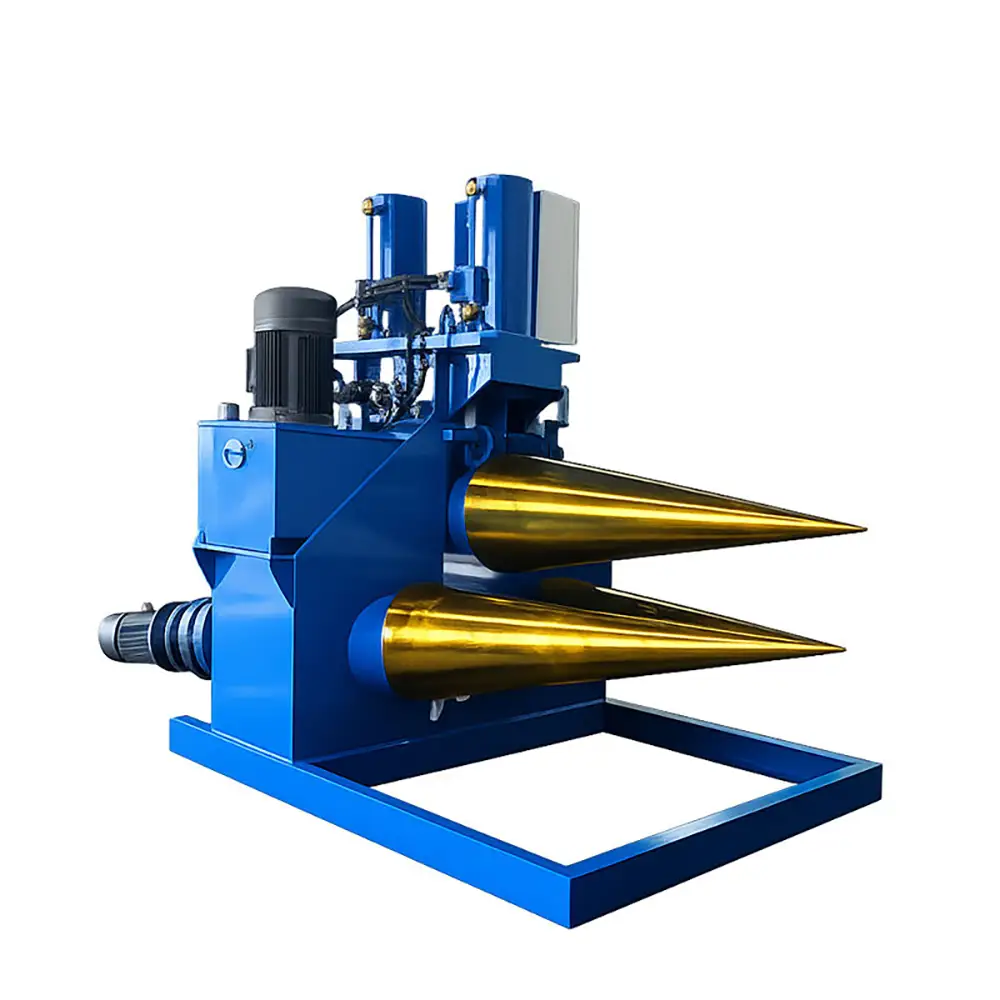
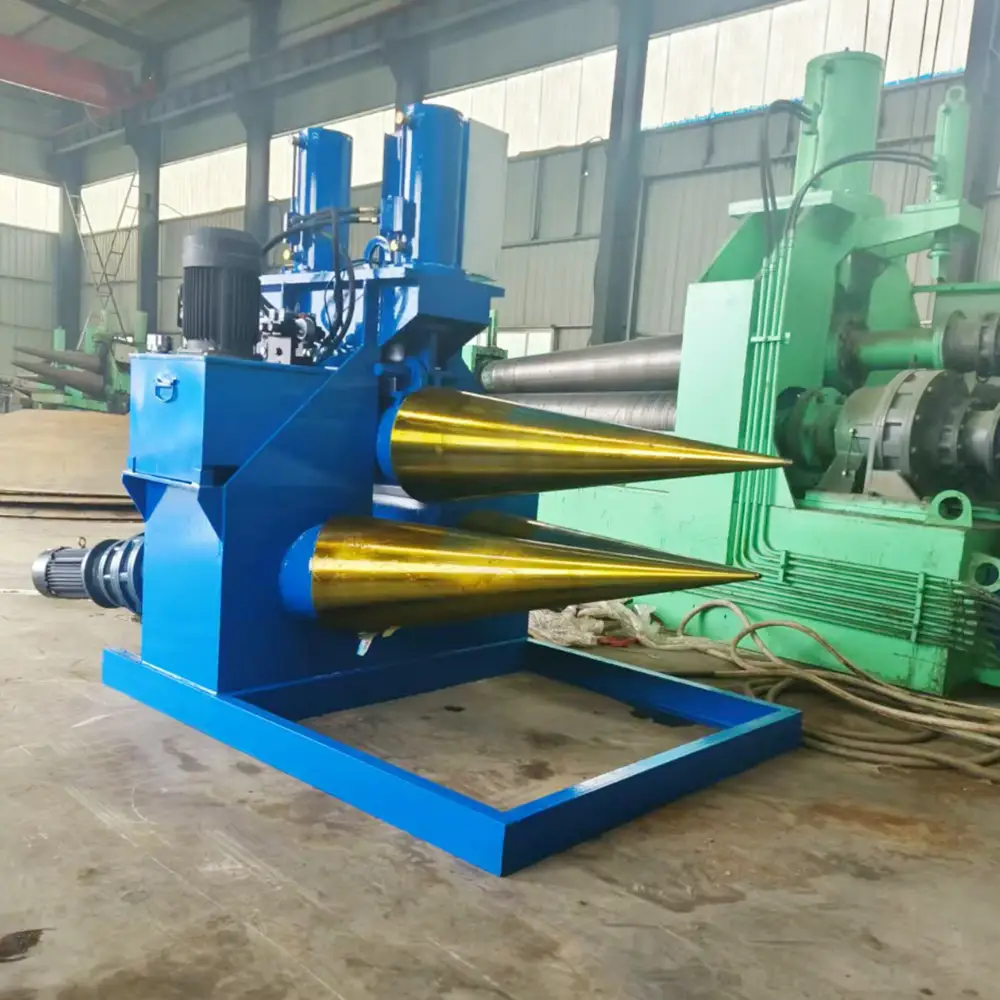
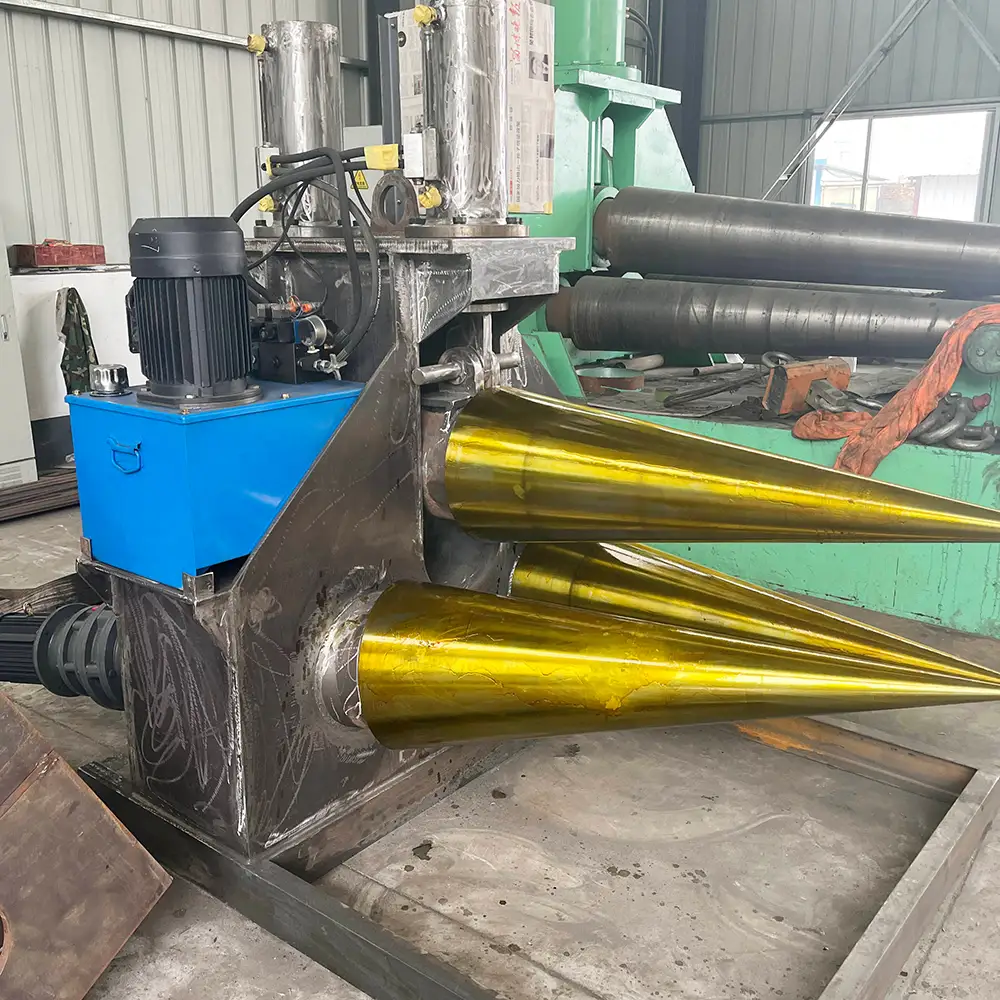
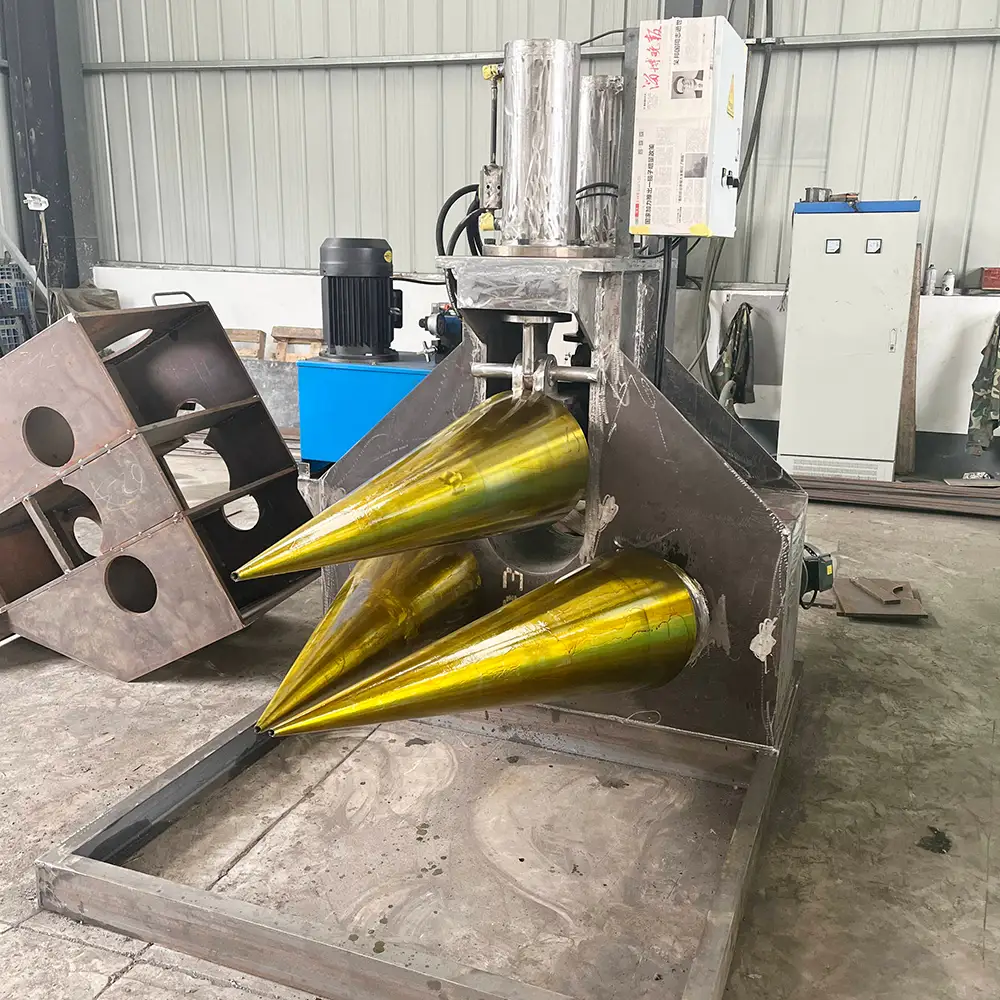
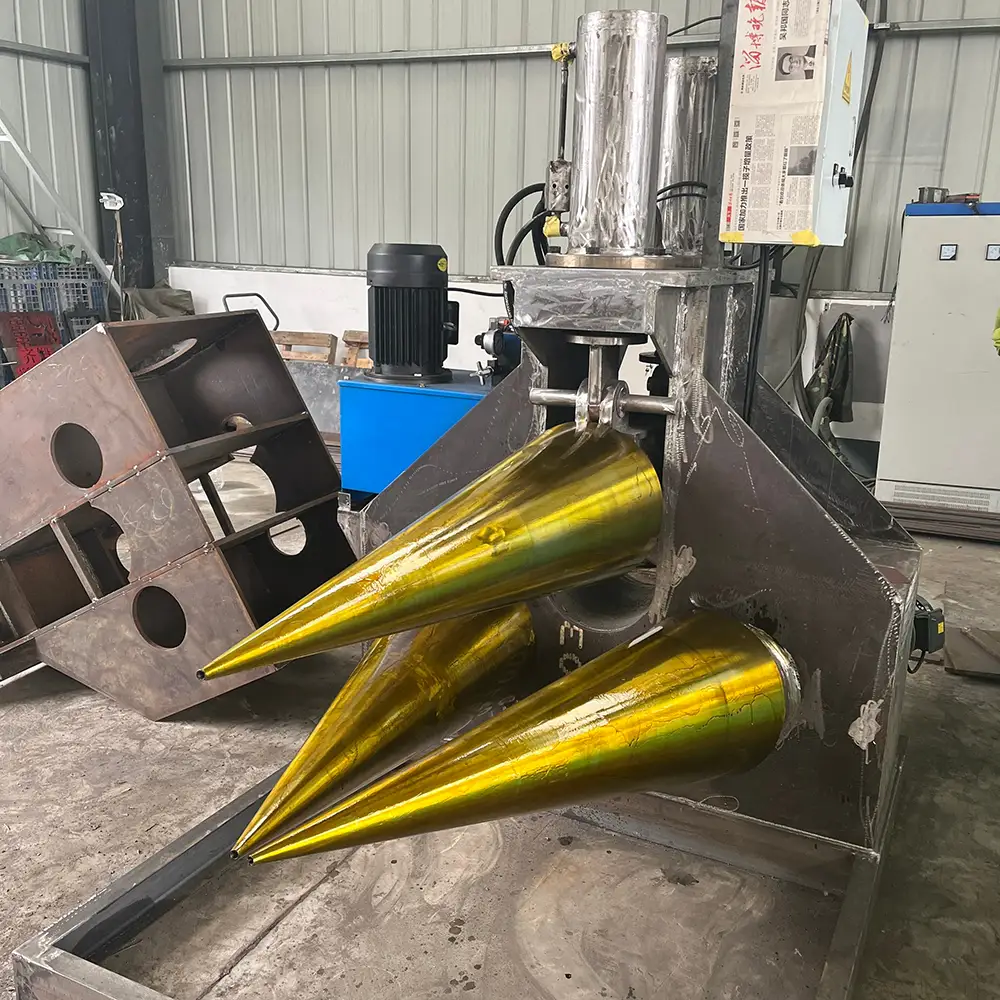
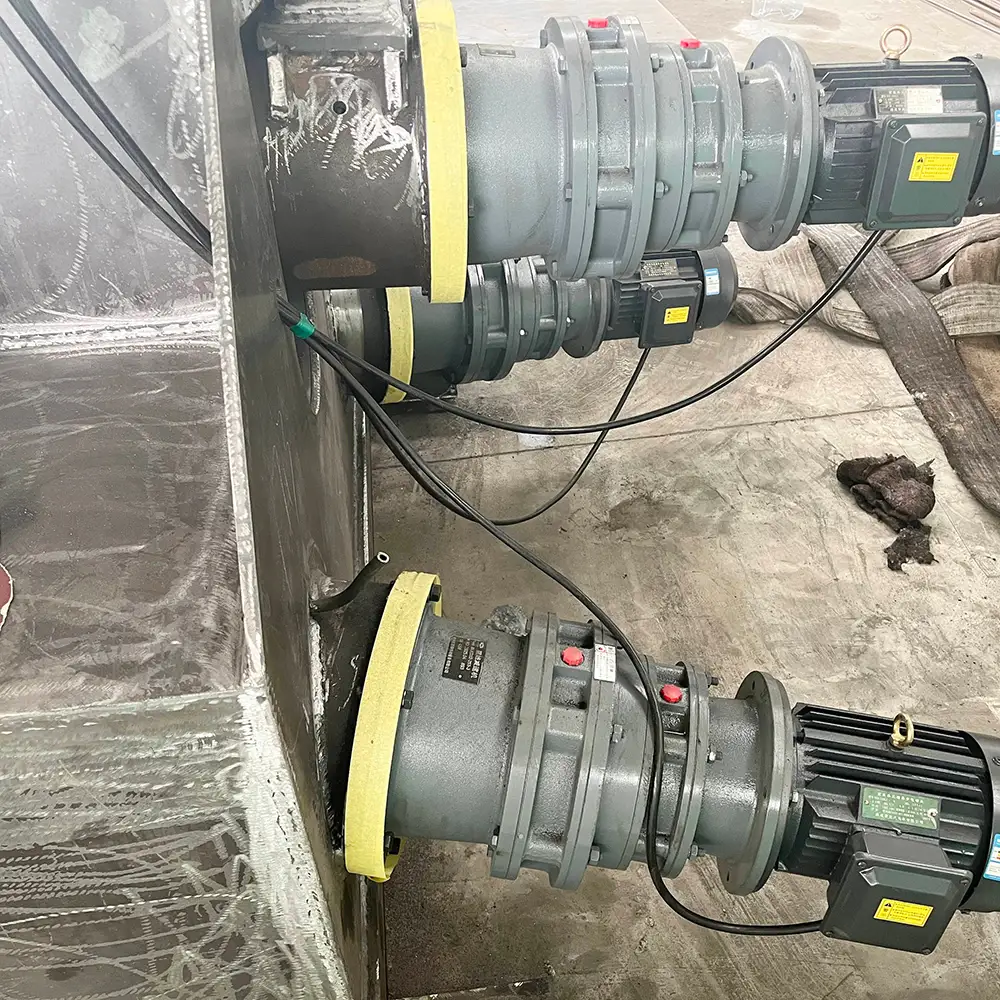
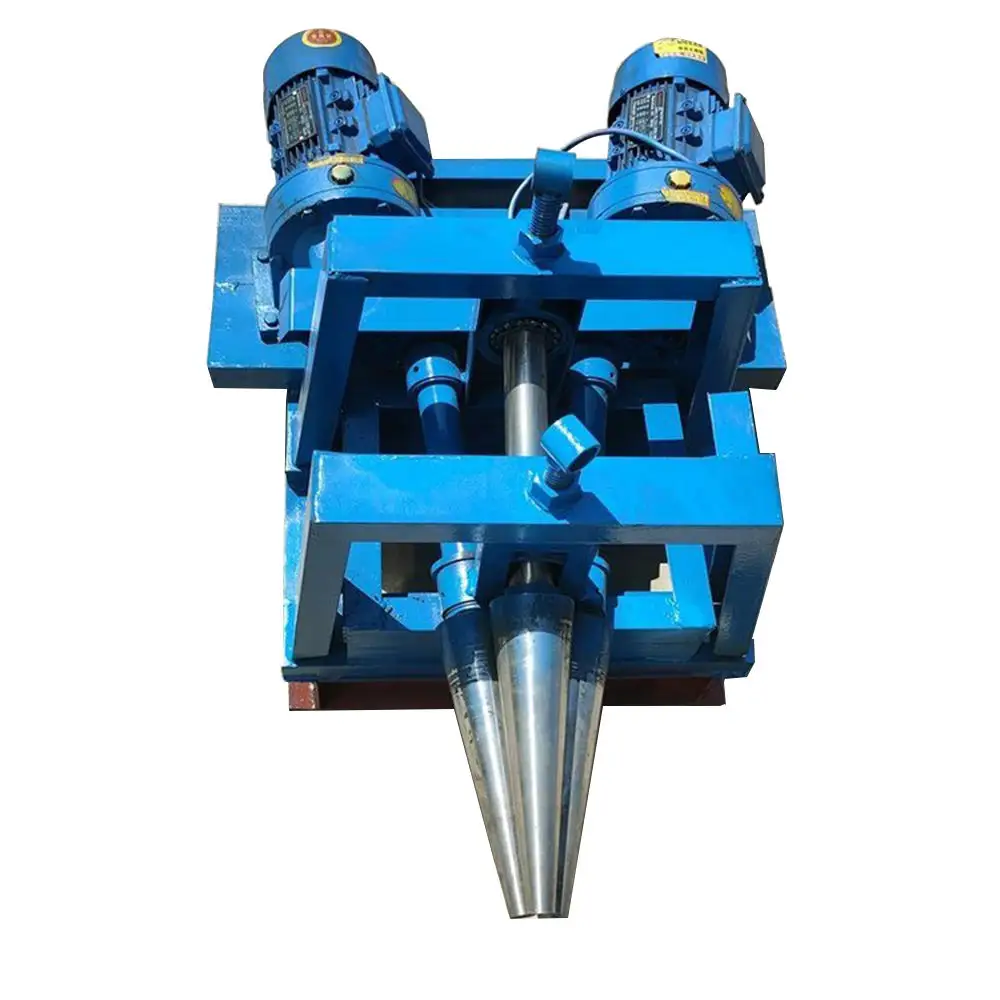
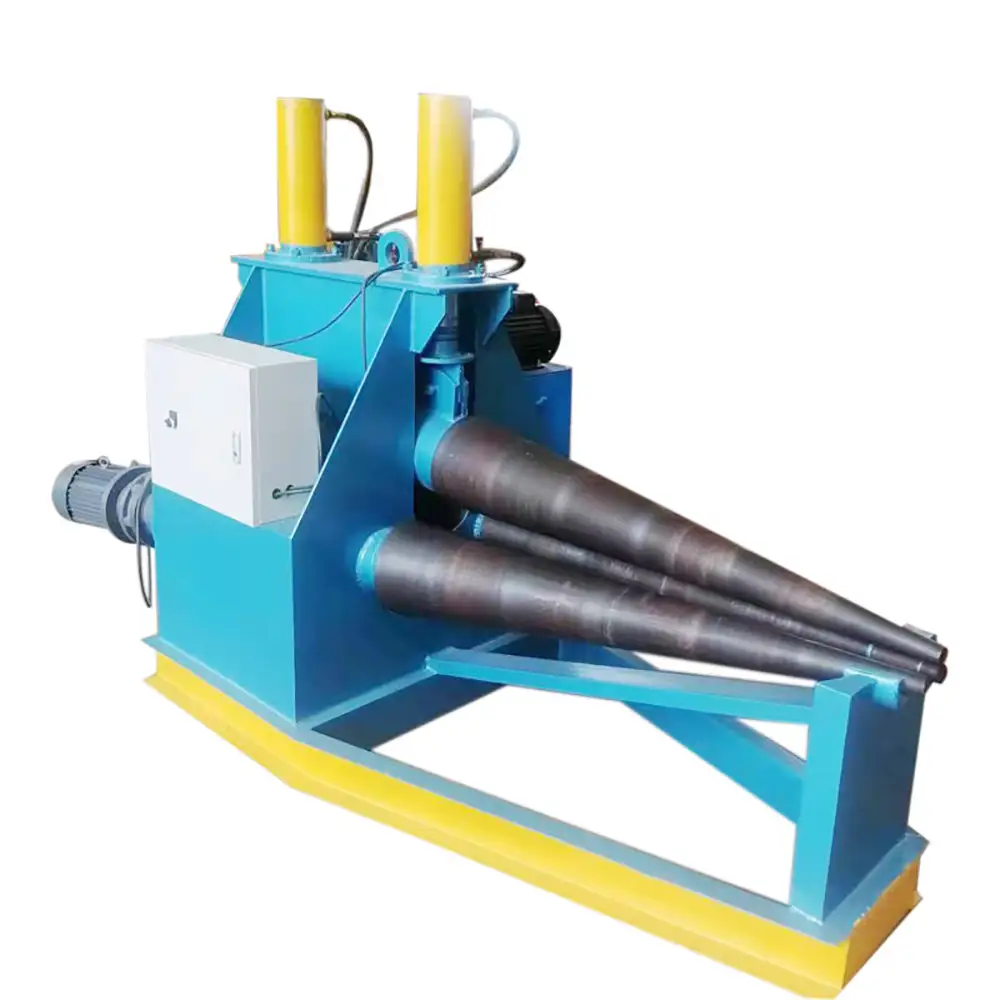
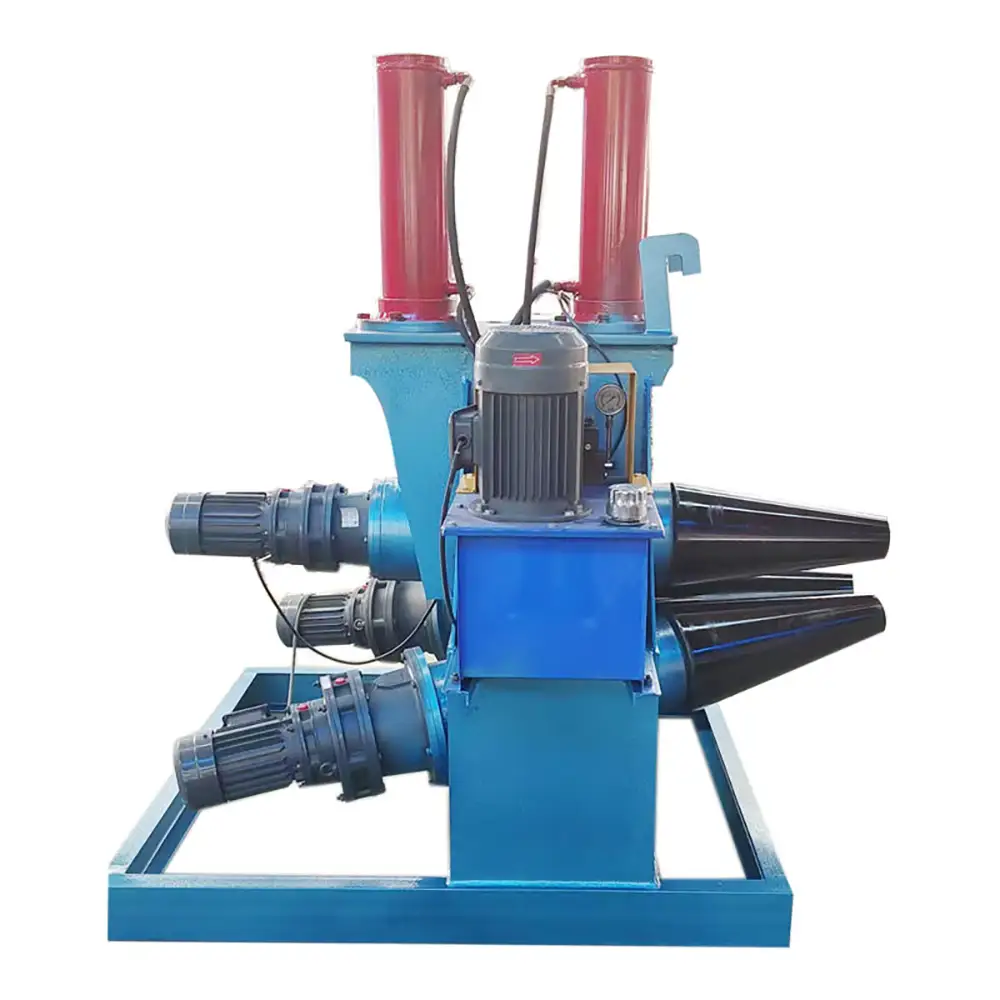
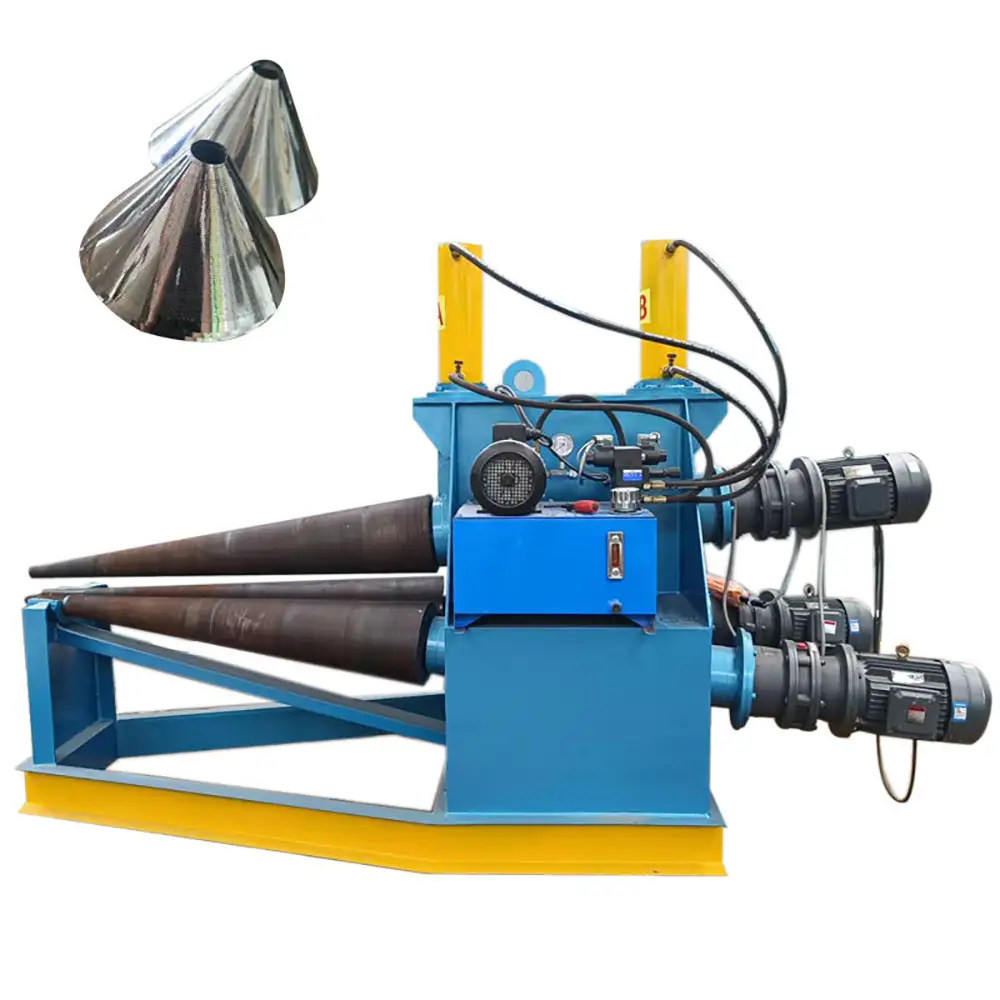
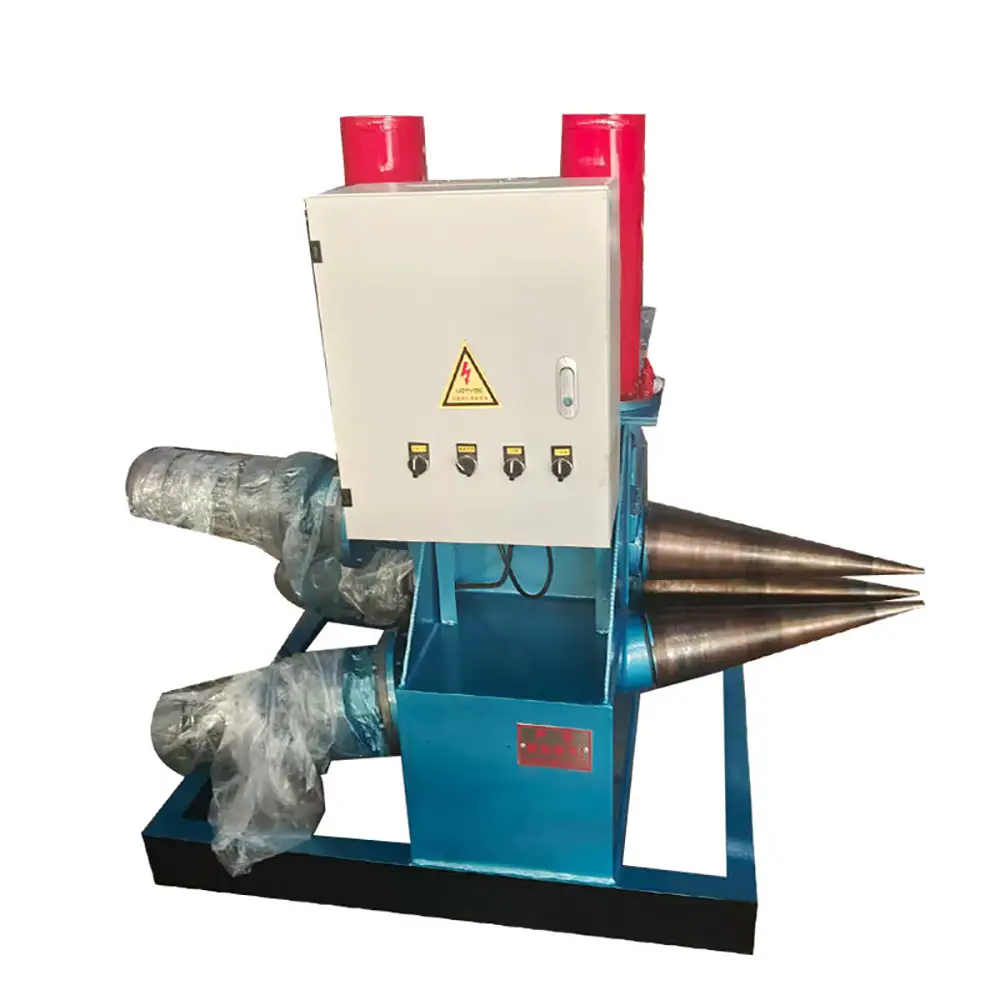
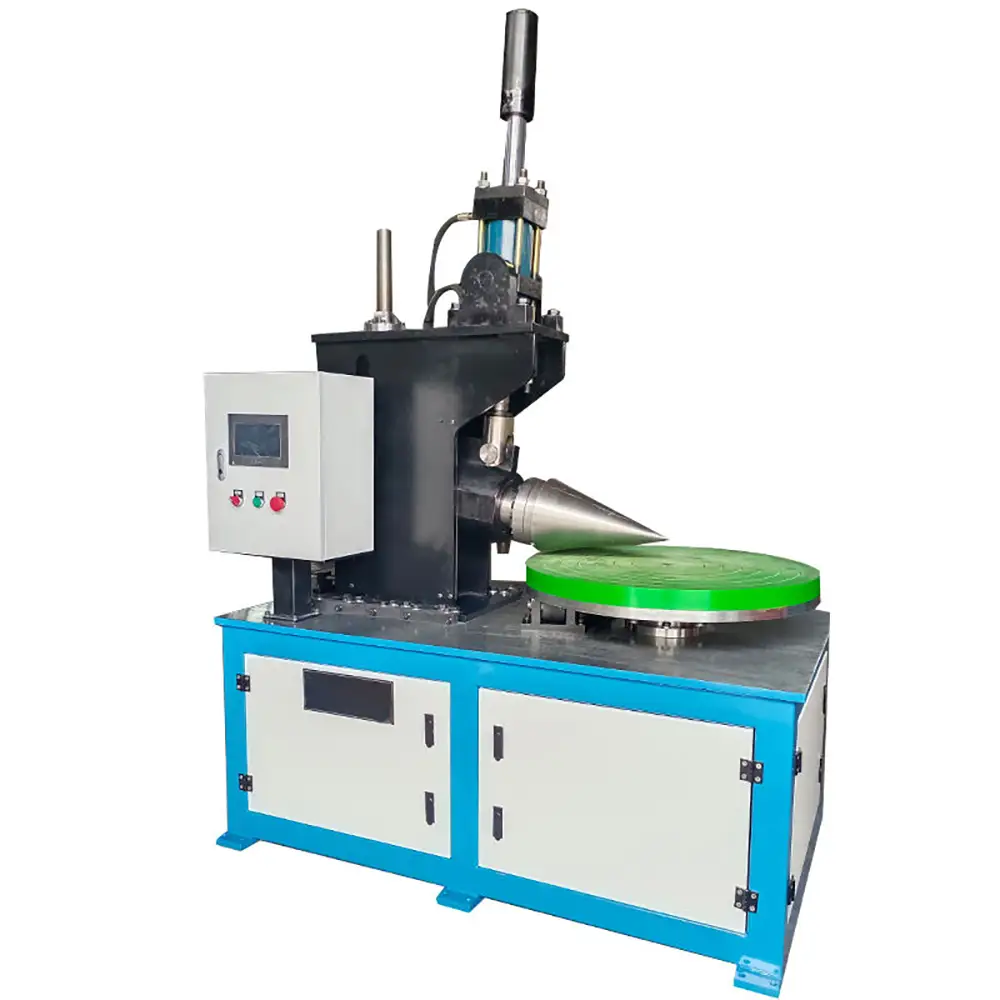
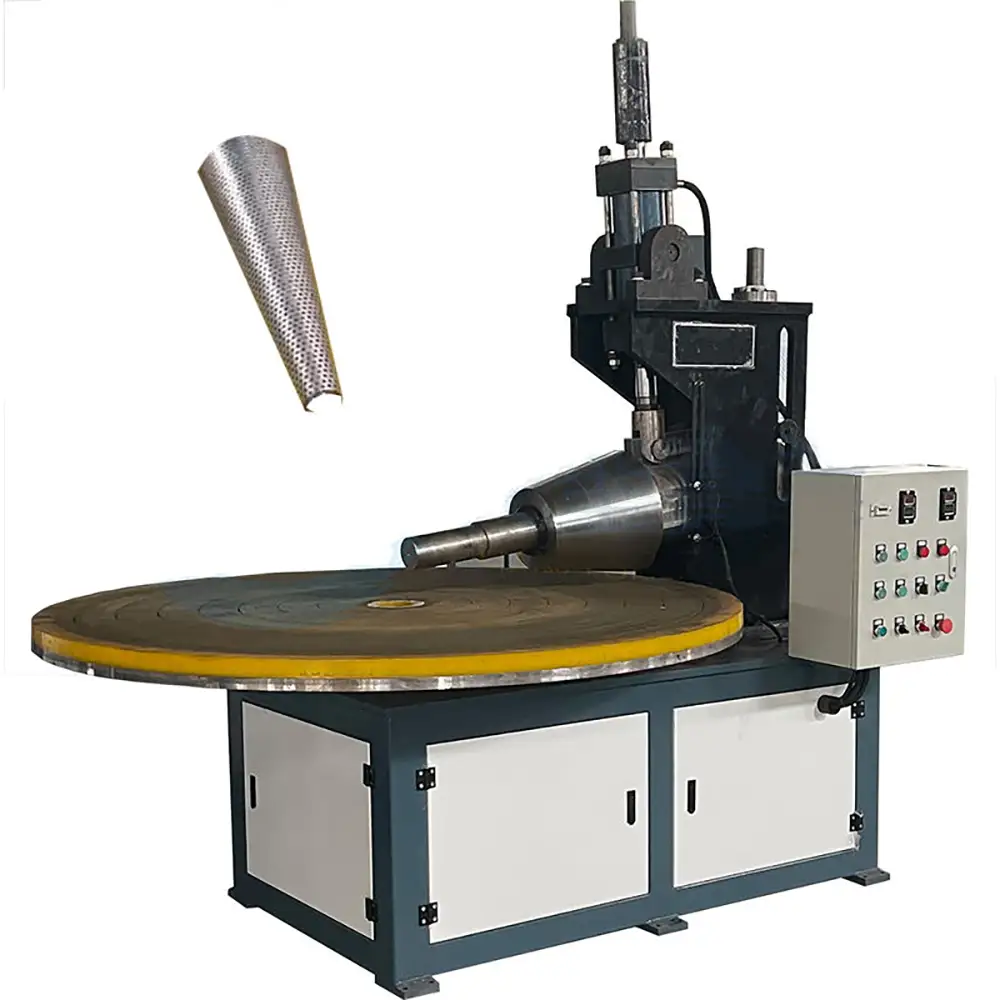
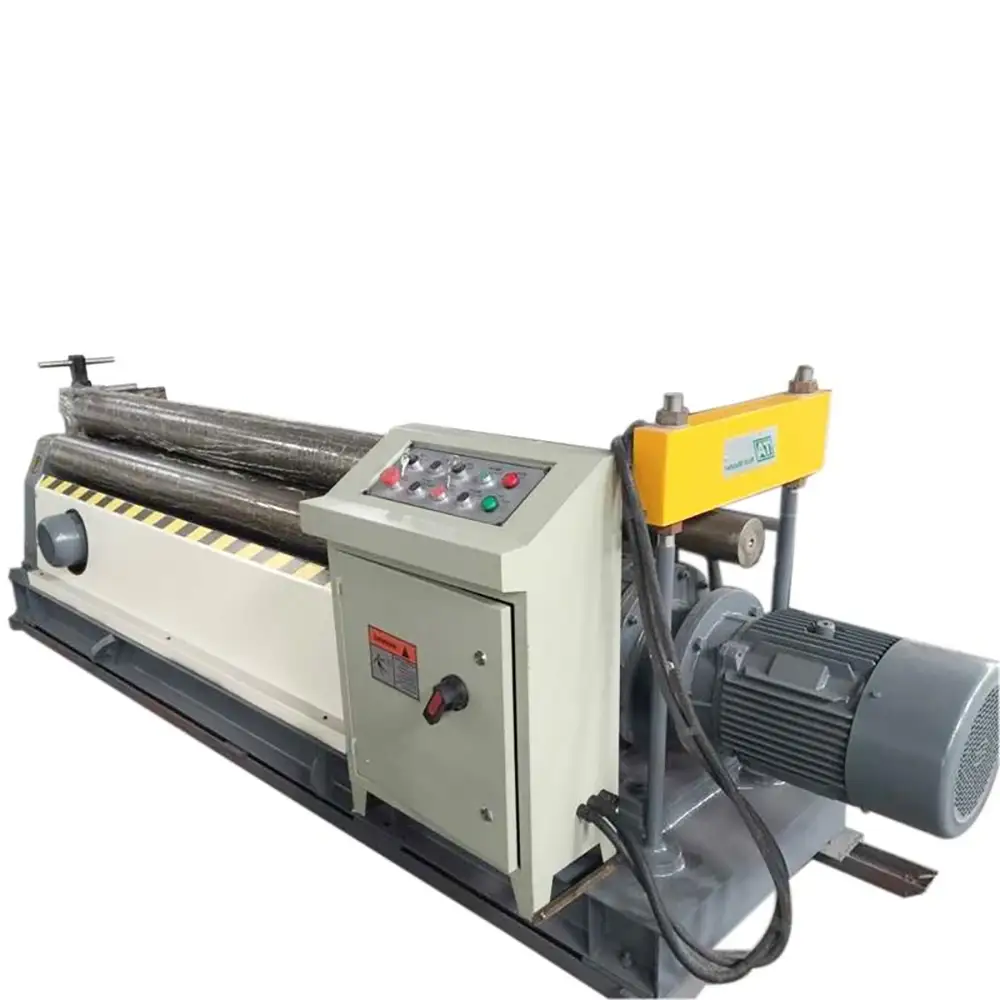
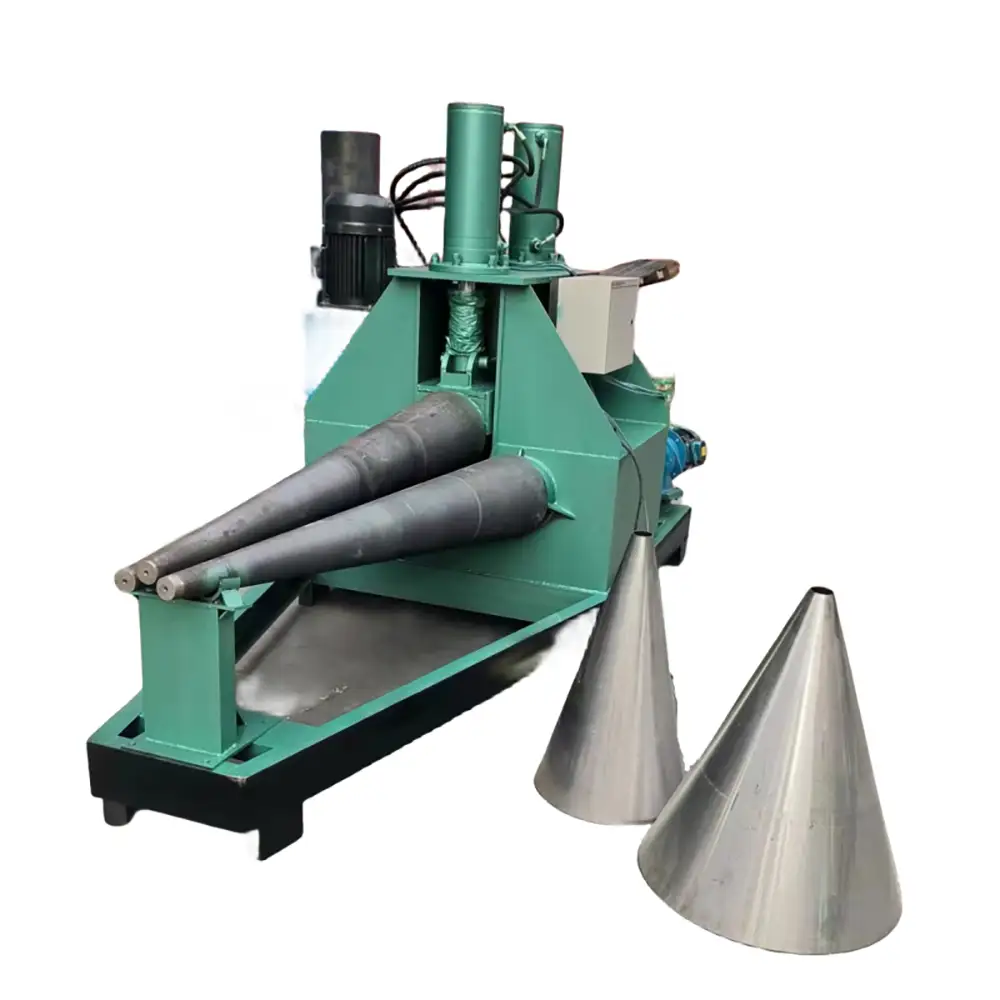
1. High-precision three-axis control The three-axis interlinked control system enables precise adjustment of the cone angle, ensuring high forming accuracy and excellent repeatability.
2. Single-pass cone forming The specially designed conical rollers allow the cone to be formed in a single pass, reducing the need for secondary processing and improving efficiency.
3. Stable and Reliable Hydraulic Drive The fully hydraulic drive system ensures smooth operation and high torque, making it suitable for processing thick plates.
4. Suitable for a Wide Range of Materials Suitable for various metallic materials including carbon steel, stainless steel and aluminium sheets, offering a broad scope of application.
5. Simple Operation (PLC + Touchscreen) Equipped with PLC control and a touchscreen (e.g. WEINVIEW), offering visual parameter display and user-friendly operation.
6. Customisable taper range Supports customisation of different taper angles, diameters and plate thicknesses to meet the needs of various industries.
7. Heavy-duty structural design The machine body features all-welded construction and heat treatment, ensuring high rigidity and a long service life.
The Automatic 3-Axis Cone Rolling Machine for Steel Plate is an advanced metal forming solution designed for controlled production of conical and tapered components from steel plate and other suitable metals. Combining three-axis CNC control, hydraulic roller adjustment, and automatic forming functions, this machine is suitable for manufacturers producing cones, reducers, hoppers, transition sections, funnels, ducts, and other conical metal structures.
Unlike standard cylindrical plate rolling, cone forming requires different forming conditions across the width of the plate because the large and small ends follow different circumferences. The 3-axis CNC system helps coordinate the forming movements to provide more controlled conical bending and repeatable production.
Machine capacity and achievable cone geometry depend on the material grade, plate thickness, plate width, cone angle, large and small diameters, roller dimensions, and specific machine configuration.
3-Axis CNC Cone Rolling Technology
The three-axis control system coordinates the movement of the forming components during the cone rolling process. By controlling roller positioning and forming parameters, the machine can progressively shape flat steel plate into a conical profile.
CNC control is especially useful for repeated production because similar workpieces can be formed using established process parameters. This can reduce manual adjustment and help maintain greater consistency between production batches.
Actual dimensional accuracy depends on machine rigidity, material characteristics, plate preparation, tooling condition, CNC settings, operator procedures, and post-forming inspection.
Hydraulic Forming System
The hydraulic system provides controlled movement and forming force for the rollers. Hydraulic adjustment is particularly useful when processing thicker steel plates or materials that require substantial forming force.
The hydraulic system can be configured to control roller positioning and other machine movements according to the machine design. It provides a practical solution for industrial plate forming applications where stable and controlled mechanical movement is required.
Machine selection should be based on the actual material strength and forming requirements rather than nominal thickness alone.
Precision Conical Bending
Conical bending requires careful control because the two sides of the plate travel through different forming paths. Incorrect roller positioning can lead to uneven cone geometry, twisting, excessive deformation, or dimensional variation.
The CNC system helps coordinate the forming process according to programmed or established parameters. Operators can set suitable values based on cone angle, large diameter, small diameter, material thickness, and material characteristics.
For demanding applications, dimensional inspection after rolling can be used to verify the cone profile before welding or downstream fabrication.
Steel Plate Cone Forming
The machine is designed primarily for steel plate forming applications, including carbon steel and suitable stainless steel grades. Depending on configuration, other formable metals may also be processed.
Carbon steel is commonly used for industrial cones, hoppers, tanks, ducts, and structural components. Stainless steel may be selected for applications requiring corrosion resistance or specific hygiene and surface requirements.
Because stainless steel can exhibit different springback characteristics from mild steel, forming parameters should be established according to the actual material grade and thickness.
Automatic Cone Rolling Applications
The automatic 3-axis CNC cone rolling machine can produce many types of tapered components, including:
Industrial cones
Conical tanks
Reducers
Hoppers
Funnels
Transition sections
Conical ducts
Cyclone components
Pipe reducers
Pressure vessel components
Chemical equipment sections
Exhaust components
Material handling components
Custom tapered metal structures
After rolling, the conical workpiece can proceed to seam welding, grinding, machining, inspection, coating, or assembly according to the final product requirements.
Production Efficiency
Automatic CNC control can help reduce repetitive manual roller adjustment and improve workflow efficiency. Once the forming process has been established, similar cone components can be manufactured using repeatable machine parameters.
This is particularly valuable for manufacturers producing multiple cones with the same or similar dimensions. Production efficiency also depends on plate cutting, material loading, rolling speed, number of forming passes, welding, inspection, and other downstream operations.
The machine can be used as an individual forming unit or integrated into a larger metal fabrication production line.
Different Cone Sizes and Configurations
Cone forming requirements vary significantly between applications. A machine used to produce small duct reducers may require a different configuration from one used for large industrial hoppers or pressure vessel cones.
Important selection factors include:
Maximum plate thickness
Maximum plate width
Minimum rolling diameter
Maximum cone diameter
Minimum cone diameter
Cone angle
Material grade
Material tensile strength
Production volume
Required automation level
Providing these details allows the machine configuration to be matched to the actual production process.
CNC Control and Repeatability
The CNC control system provides a structured approach to managing forming parameters. For repetitive production, storing or repeating appropriate process settings can help reduce differences between workpieces.
However, CNC control does not eliminate the influence of material variation and springback. Operators should verify the first formed component and make appropriate process adjustments when necessary.
For applications requiring close tolerances, final inspection should be incorporated into the manufacturing process.
Industrial Fabrication Applications
The machine is suitable for many industries, including:
Steel fabrication
Pressure vessel manufacturing
Chemical equipment
Petroleum equipment
Mining equipment
HVAC manufacturing
Boiler fabrication
Power generation equipment
Exhaust system manufacturing
Structural steel production
Material handling equipment
General machinery manufacturing
Its ability to form tapered components makes it especially useful where conventional cylindrical rolling equipment cannot efficiently produce the required cone geometry.
Safety-Oriented Machine Design
Plate rolling involves significant mechanical forces and moving components. Depending on the machine configuration, safety-oriented features may include emergency stop controls, protective guards, hydraulic protection, controlled roller movement, electrical safeguards, and operator controls.
Operators should receive appropriate training and follow the manufacturer's operating instructions and applicable local workplace safety requirements.
Safe procedures should cover material loading, plate positioning, cone forming, workpiece removal, machine adjustment, maintenance, and emergency operation.
Maintenance and Service
Regular maintenance is important for maintaining stable CNC and hydraulic performance. Hydraulic oil and filtration systems, rollers, bearings, lubrication points, electrical components, sensors, and mechanical connections should be inspected according to the manufacturer's maintenance recommendations.
Roller surfaces should be kept clean and free from material buildup. Proper maintenance can help reduce unexpected downtime and maintain consistent forming performance over the machine's service life.
Why Choose Us?
3-Axis CNC Control – Coordinated machine movement supports accurate and repeatable conical plate forming.
Hydraulic Forming System – Controlled hydraulic movement provides suitable forming force for demanding steel plate applications.
Automatic Cone Rolling – Reduces repetitive manual adjustment and supports efficient production of tapered components.
Steel Plate Capability – Designed for carbon steel, suitable stainless steel, and other formable metals according to machine configuration.
Precision Cone Forming – Suitable for cones, reducers, hoppers, funnels, ducts, and other tapered components.
Flexible Industrial Applications – Suitable for pressure vessels, chemical equipment, HVAC, exhaust systems, mining, and general fabrication.
Custom Machine Configuration – Working width, forming capacity, roller dimensions, hydraulic system, CNC controls, and other features can be configured according to requirements.
OEM & B2B Support – We provide technical consultation, customized machine solutions, OEM/ODM services, and international export support.
FAQs
1. What is a 3-axis cone rolling machine?
A 3-axis cone rolling machine is a CNC-controlled metal forming machine designed to bend flat plates into conical and tapered shapes through coordinated roller movements.
2. Can it roll steel plate into cones?
Yes. The machine is designed specifically for conical forming of suitable steel plates and can produce various tapered components within its rated capacity.
3. What is the advantage of CNC control?
CNC control allows forming parameters and roller movements to be coordinated more precisely. It is especially useful for repeated production of similar cone components.
4. Can it process stainless steel?
Yes, when properly configured for the required stainless steel grade and thickness. Stainless steel may require different forming parameters because of material strength and springback.
5. What products can be made?
Typical products include cones, reducers, hoppers, funnels, transition sections, ducts, pressure vessel components, exhaust components, and other tapered metal structures.
6. Is the machine fully automatic?
The machine can automate many forming movements through its CNC and hydraulic systems, but the actual automation level depends on configuration. Operator supervision remains necessary.
7. What determines the cone size?
Cone dimensions are determined by the large diameter, small diameter, cone angle, plate thickness, material characteristics, working width, and machine configuration.
8. Can the machine form thick steel plate?
Yes, provided that the plate thickness and material strength are within the machine's rated forming capacity. Heavy-duty applications may require a larger hydraulic and structural configuration.
9. Can it make pipe reducers?
Yes. Conical pipe reducers and transition sections are common applications for CNC cone rolling machines.
10. How do I select the correct machine?
Provide the material grade, maximum plate thickness, plate width, large and small cone diameters, cone angle, production volume, and desired automation level.
11. Can the machine be customized?
Yes. Machine capacity, working width, roller dimensions, hydraulic system, CNC controller, electrical components, and other specifications can be customized according to the project.
12. Does cone rolling require special programming?
The CNC system can use forming parameters appropriate for the required cone geometry. The exact programming method depends on the control system and machine configuration.
Prev:
Hydraulic Plate Bending Rolls Cone Sheet Conical Plate Rolling Machine Cone Roller
Next:Sorry, no information
TAG:
Cone Forming Machine,
Automatic Metal Forming Machine,
Sheet Metal Rolling Machine,
Steel Plate Rolling Machine,
Automatic Cone Rolling Machine,
Industrial Cone Rolling Machine,
Industrial Cone Forming Machine,
Heavy Duty Cone Rolling Machine,
Metal Cone Bending Equipment,
Cone Reducer Forming Machine,
Hopper Cone Forming Machine,
Metal Plate Bending Machine,
Hydraulic Plate Rolling Machine,
CNC Plate Rolling Machine,
Steel Cone Rolling Machine,
Conical Plate Bending Machine,
CNC Cone Rolling Machine,
Metal Cone Rolling Machine,
Metal Cone Forming Machine,
Hydraulic Cone Rolling Machine,
Cone Bending Machine,
Steel Cone Forming Equipment,
Conical Plate Rolling Machine,
Conical Metal Forming Machine,
Automatic Cone Bending Machine,
Steel Plate Bending Machine,
Metal Plate Rolling Machine,
Industrial Plate Rolling Machine,
Hydraulic Steel Rolling Machine,
CNC Metal Forming Machine,
Related Category:
Automatic 3-Axis Cone Rolling Machine,3-Axis CNC Cone Rolling Machine,Hydraulic Cone Rolling Machine China, suppliers, manufacturers, factory, customized, wholesale, quotation, made in China