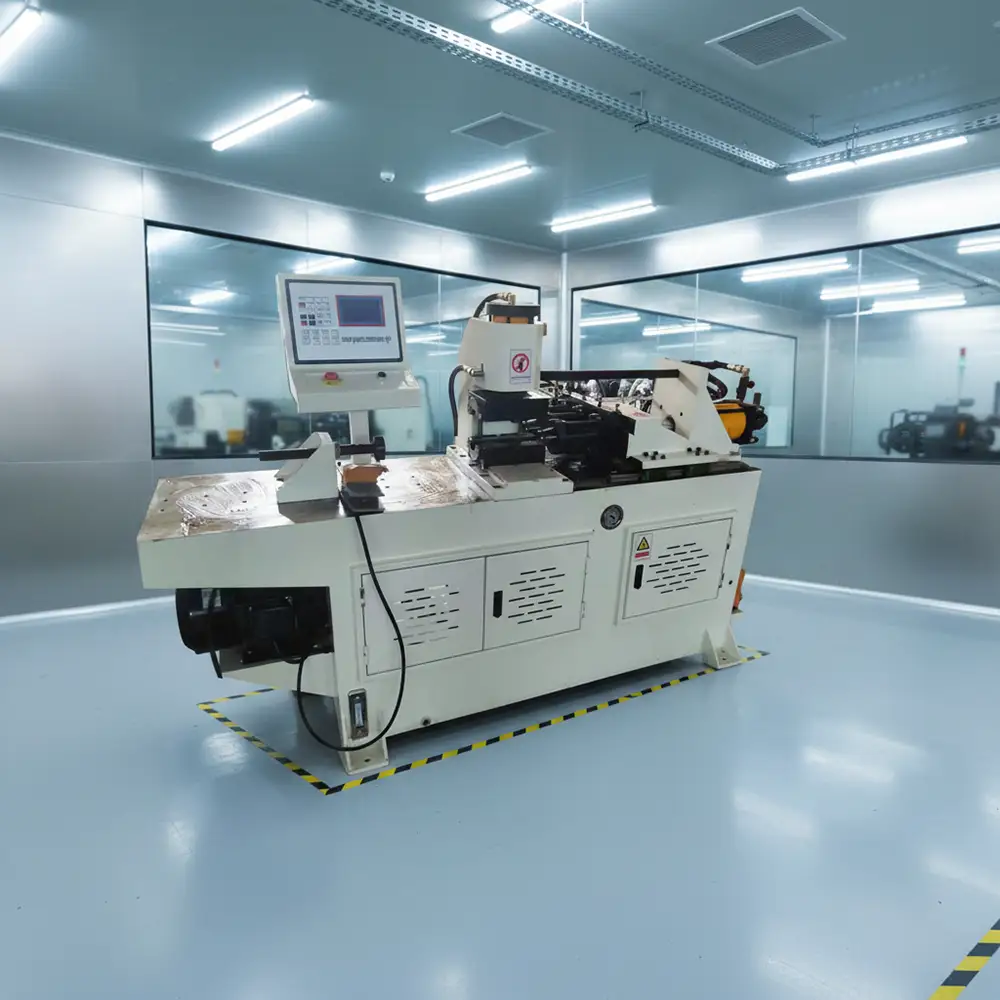
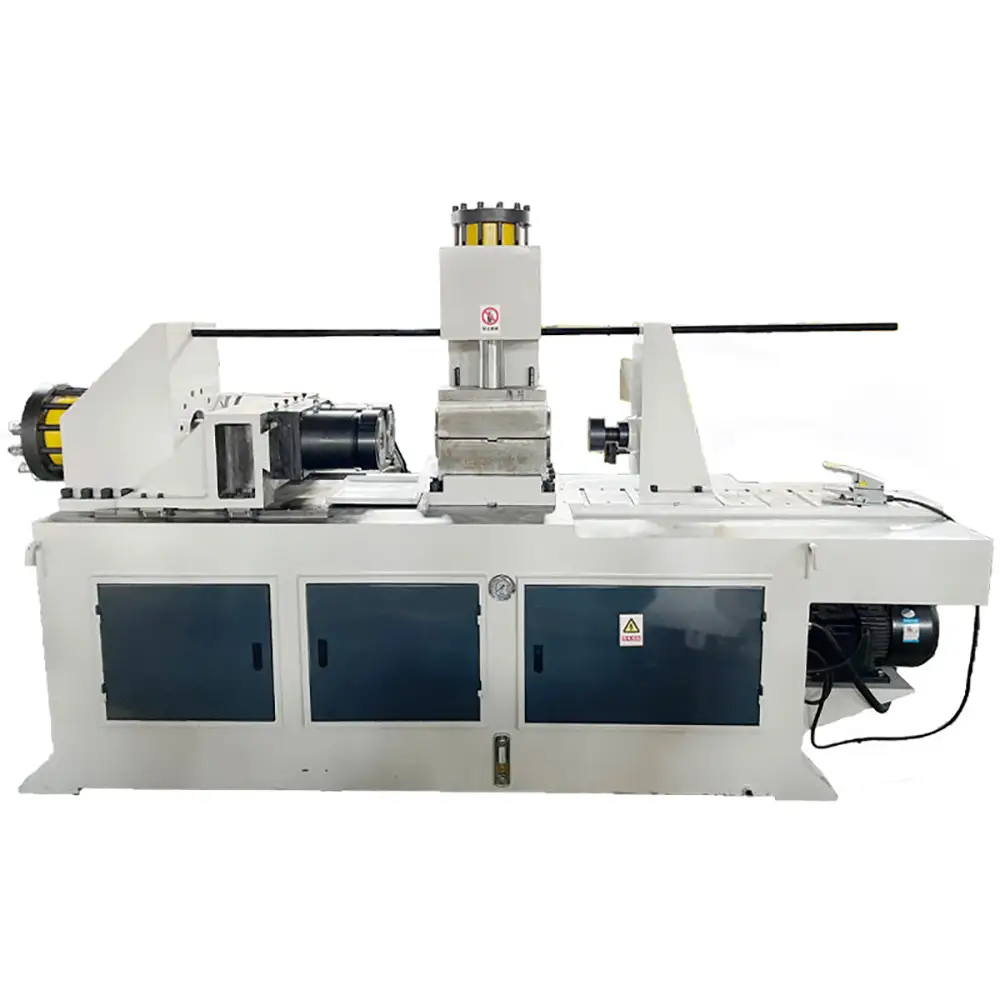
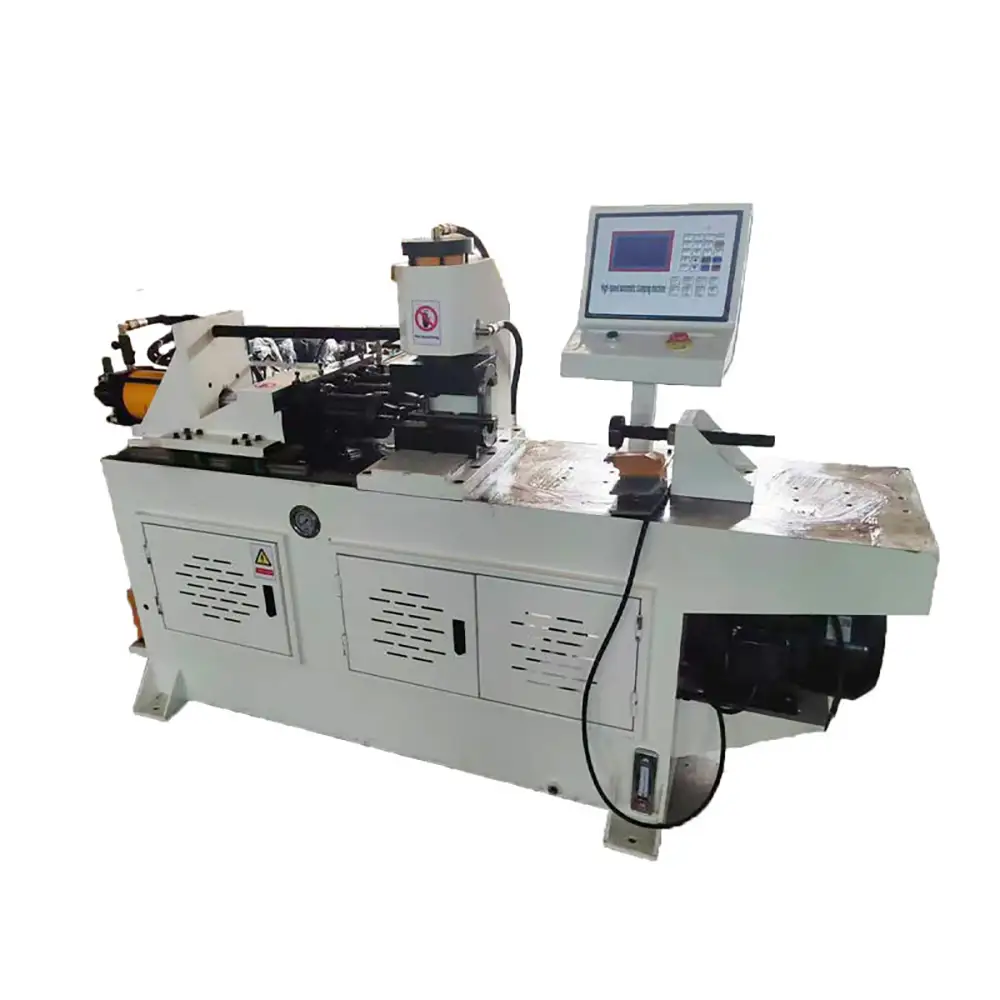
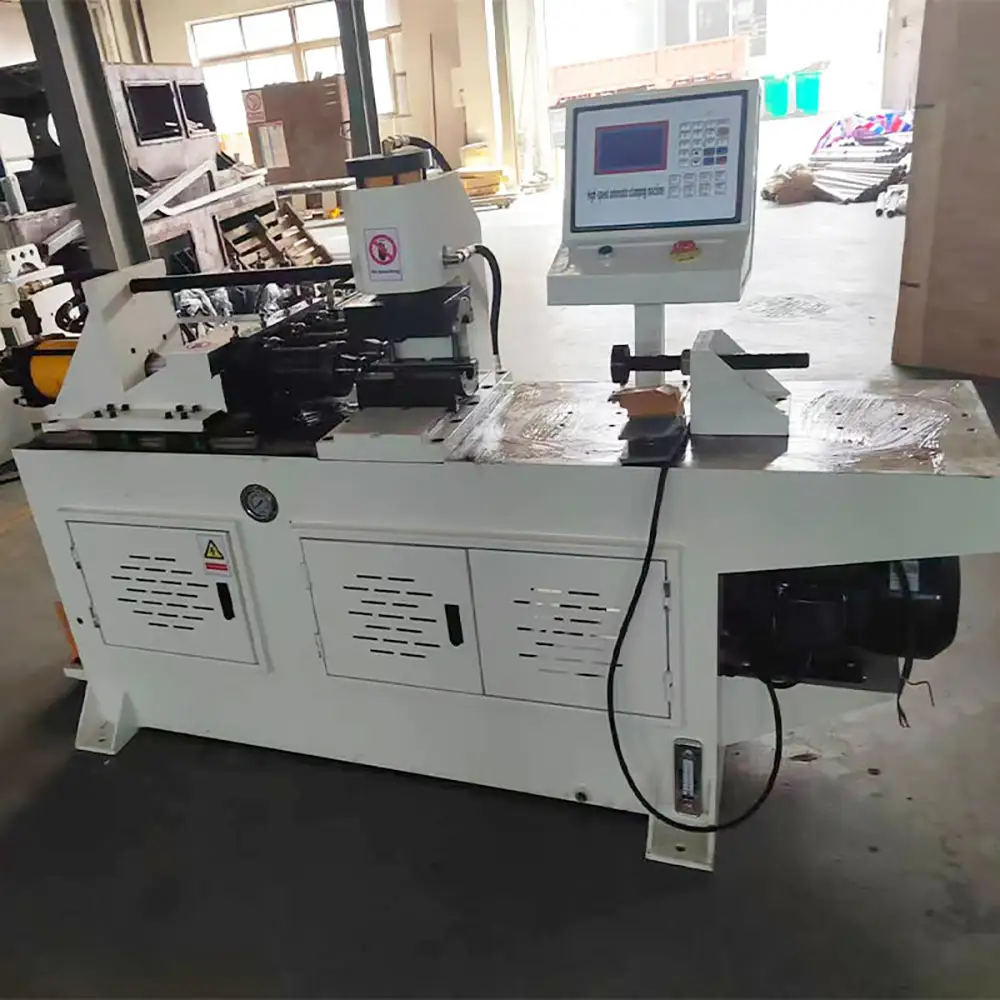
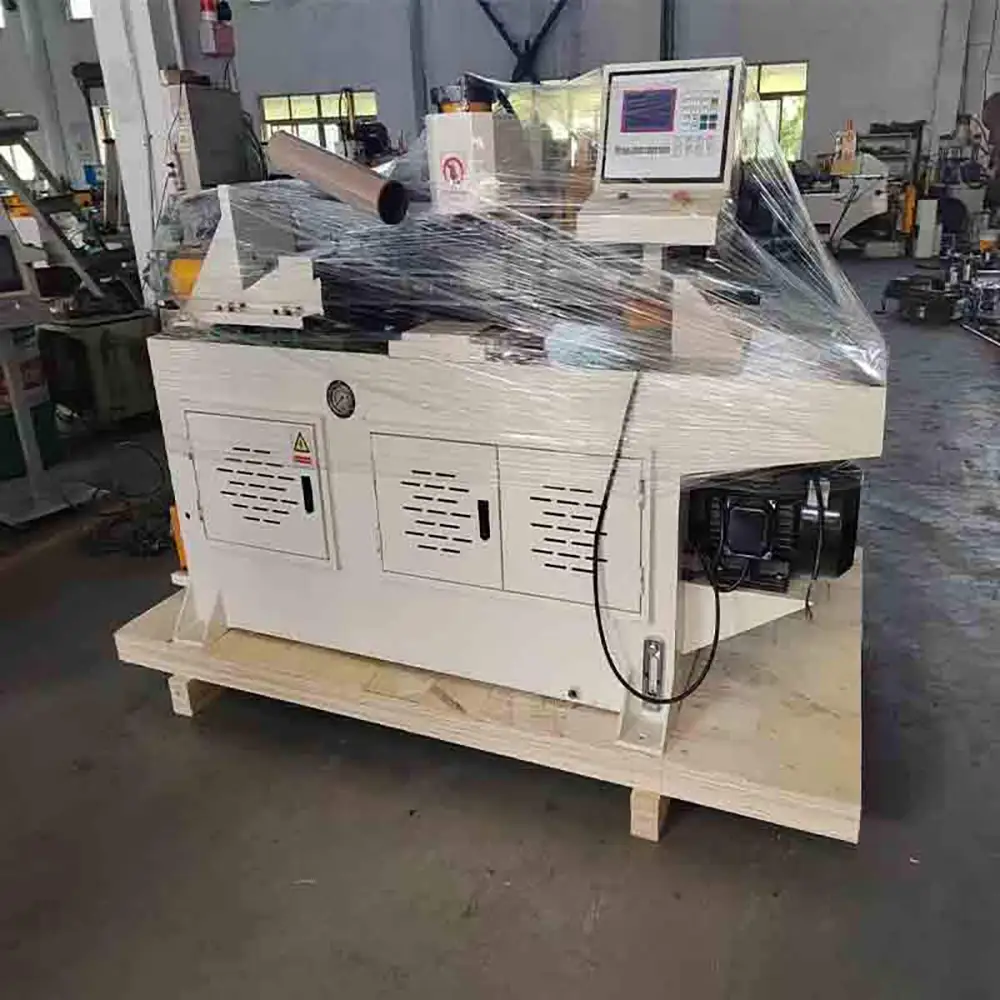
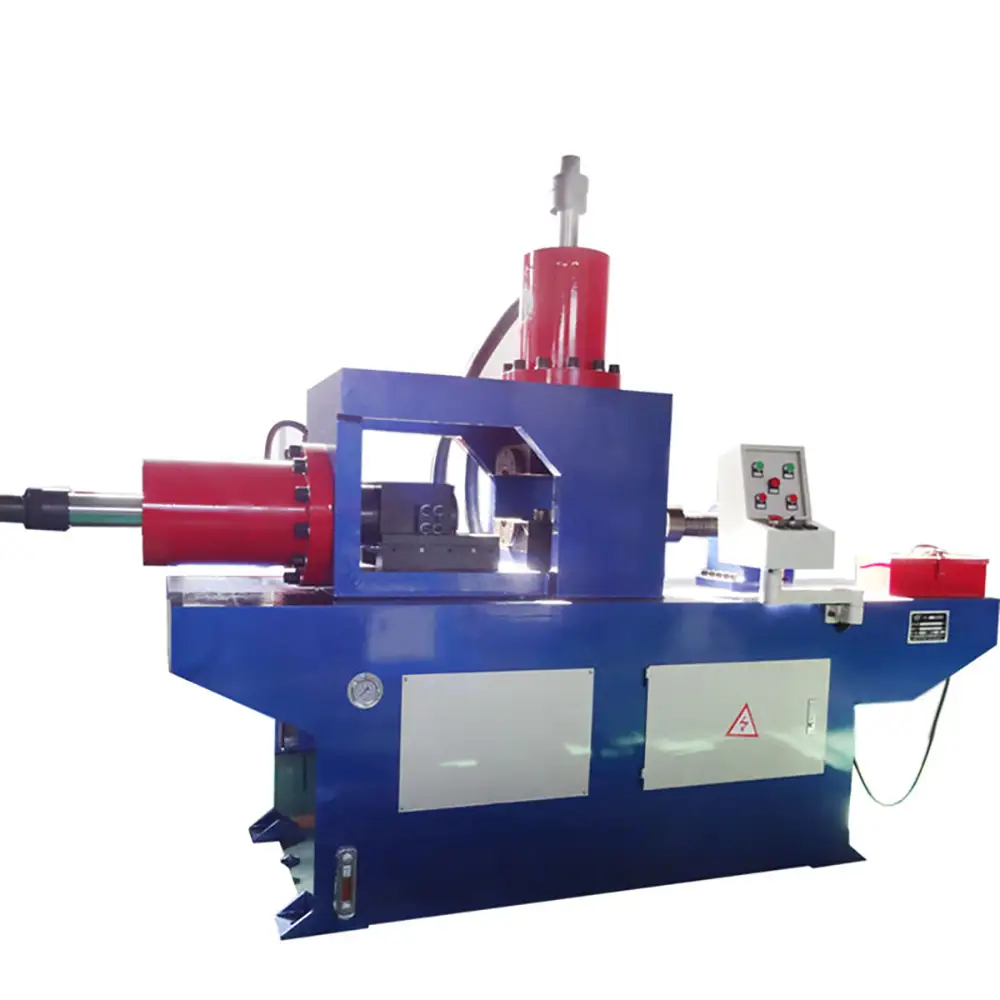
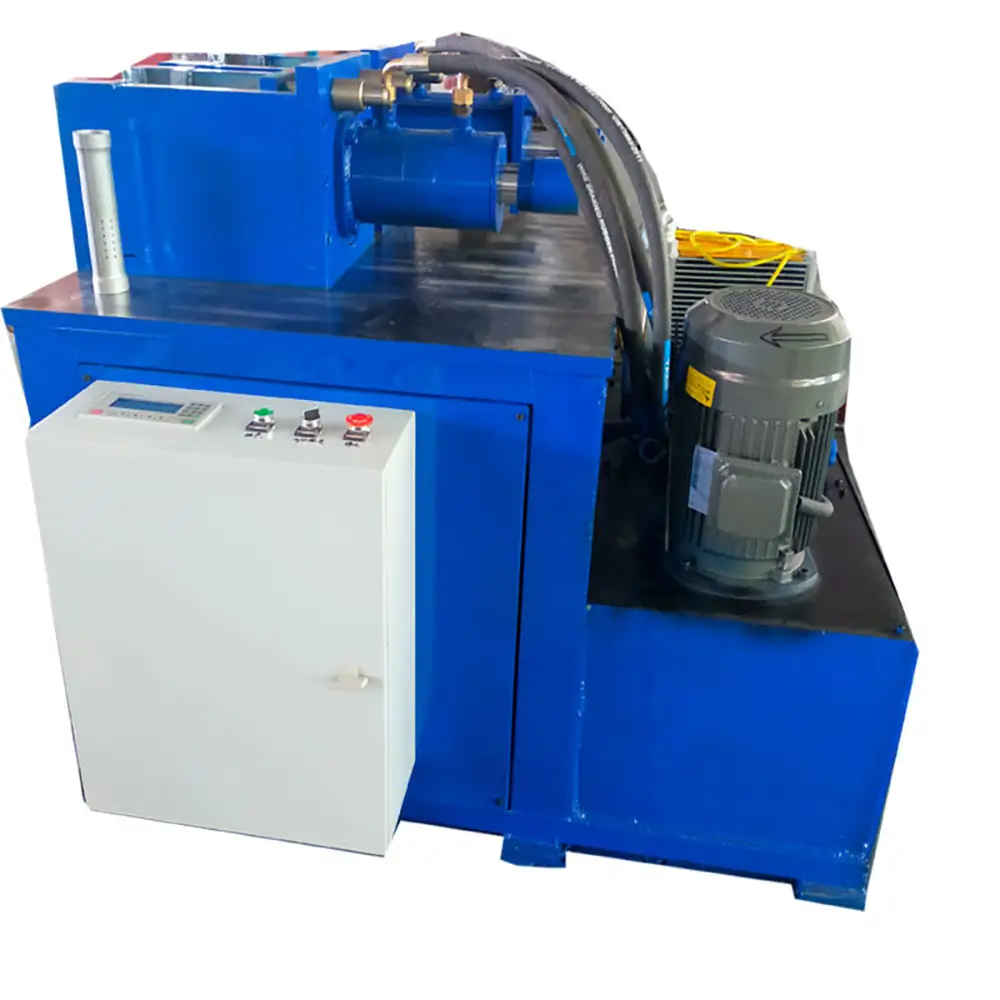
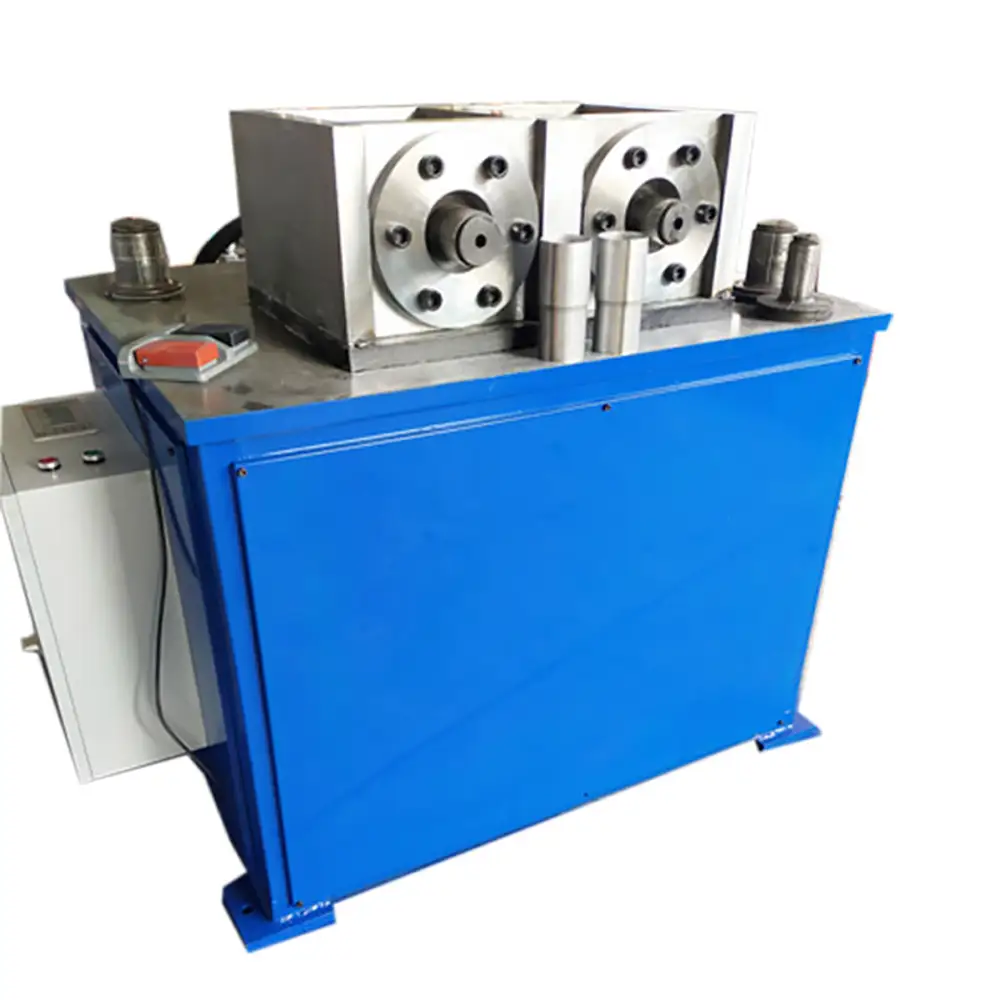
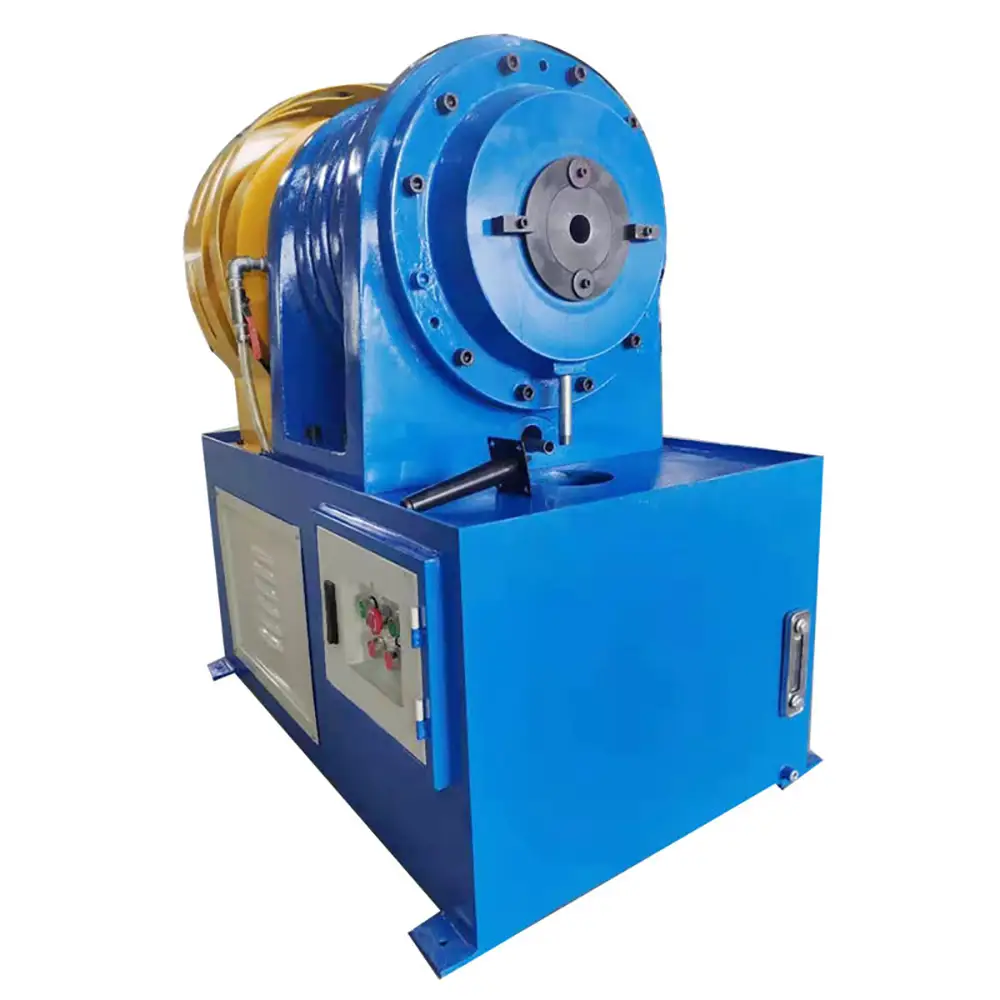
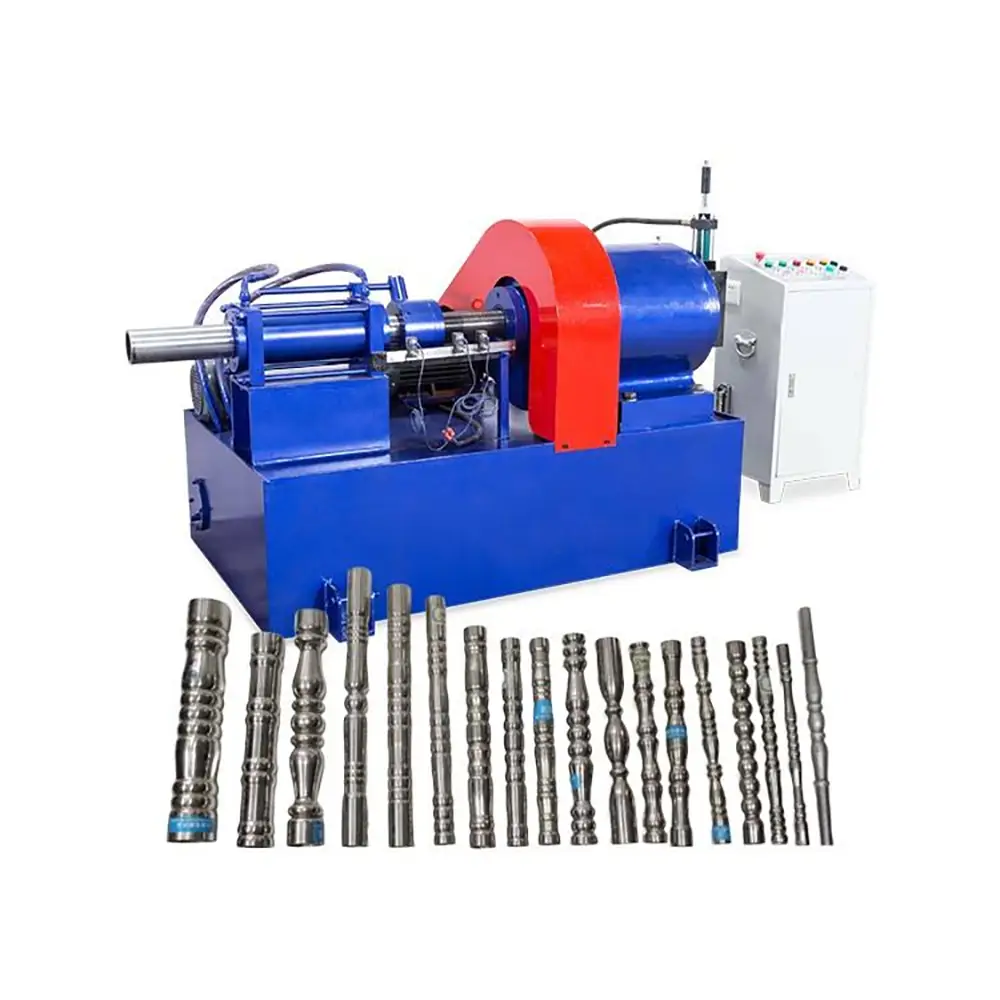
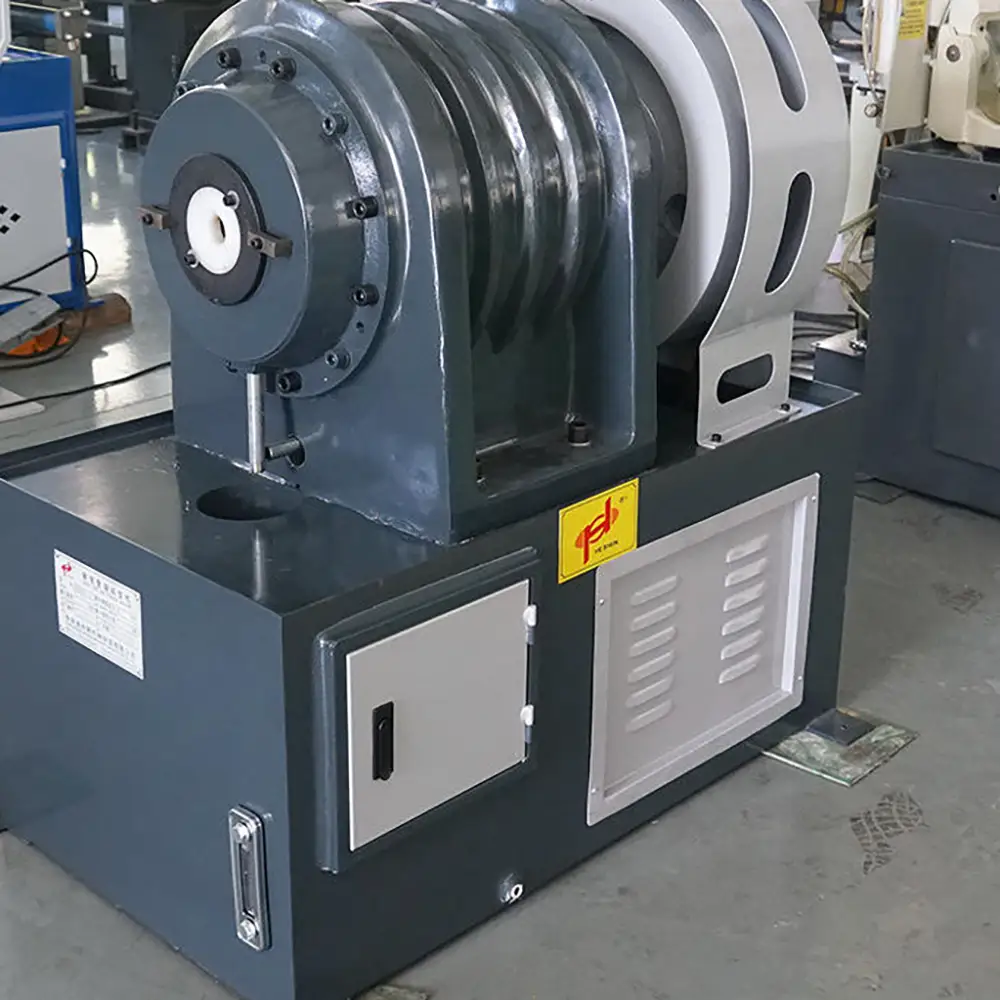
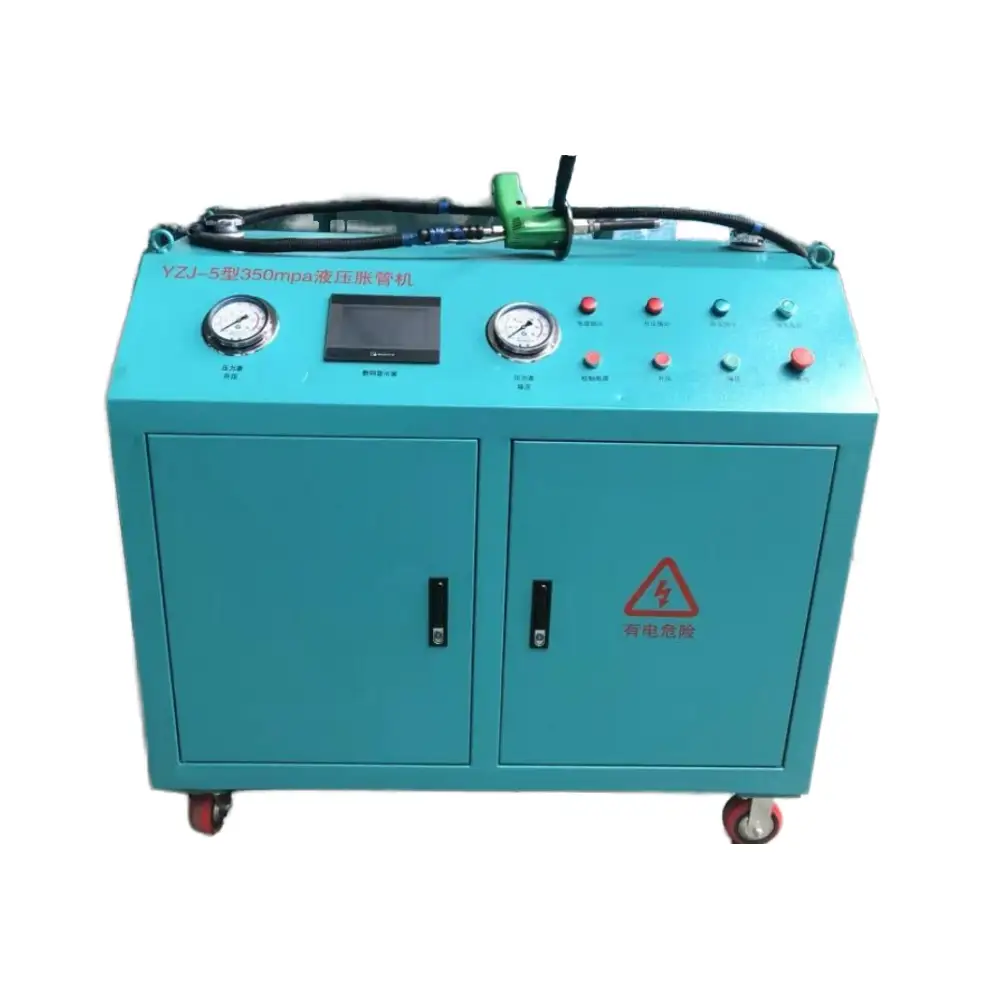
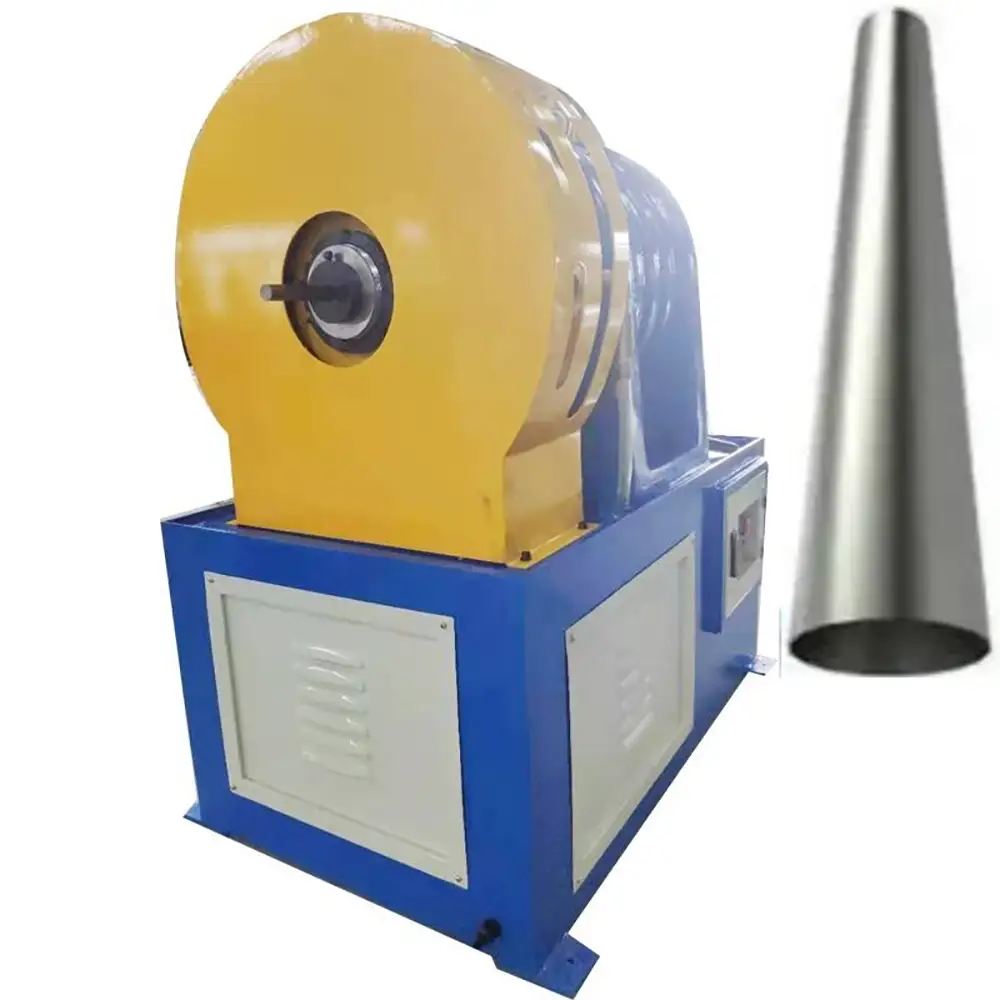
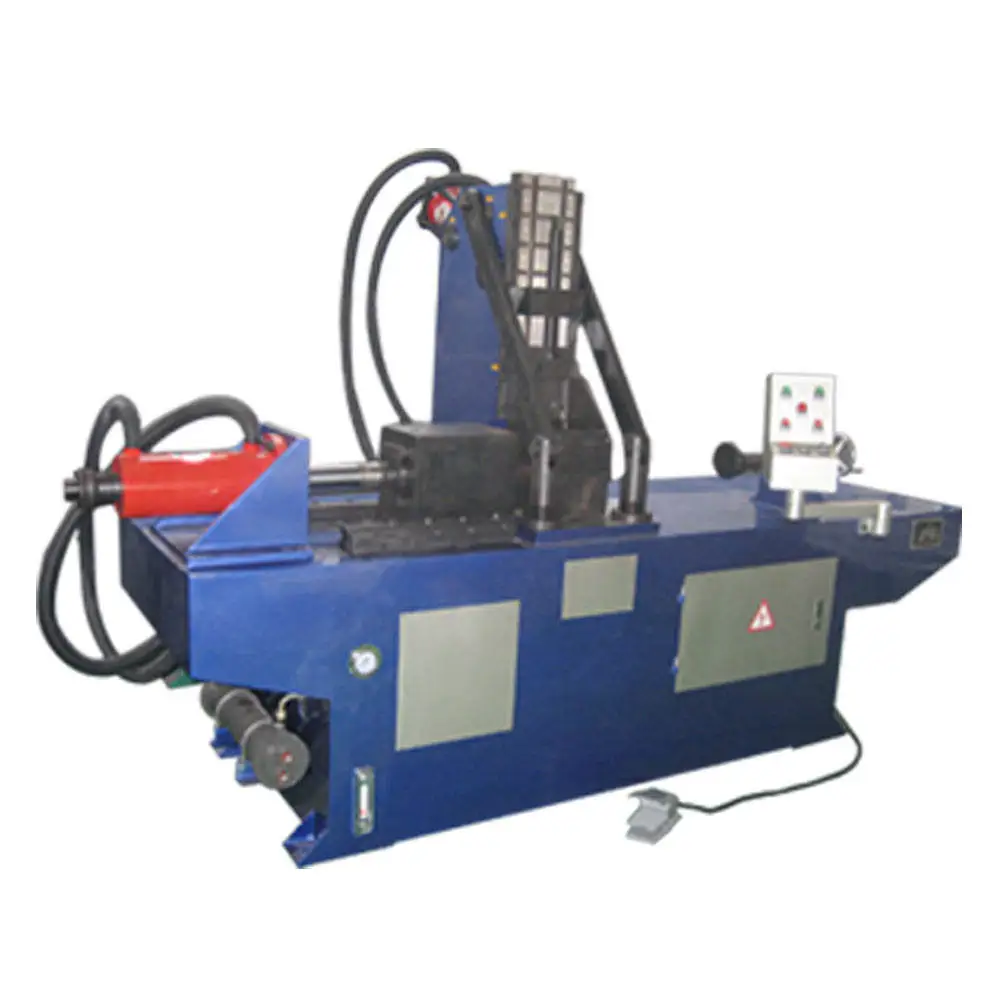
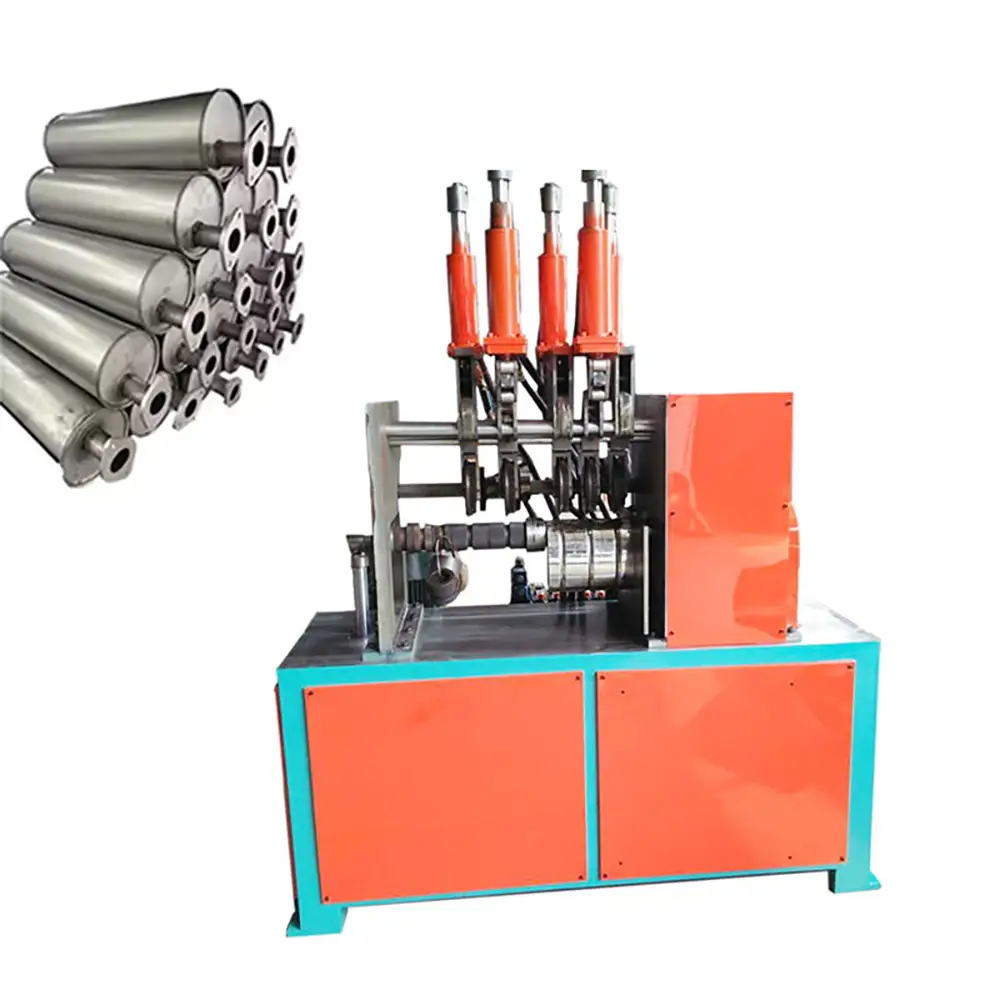
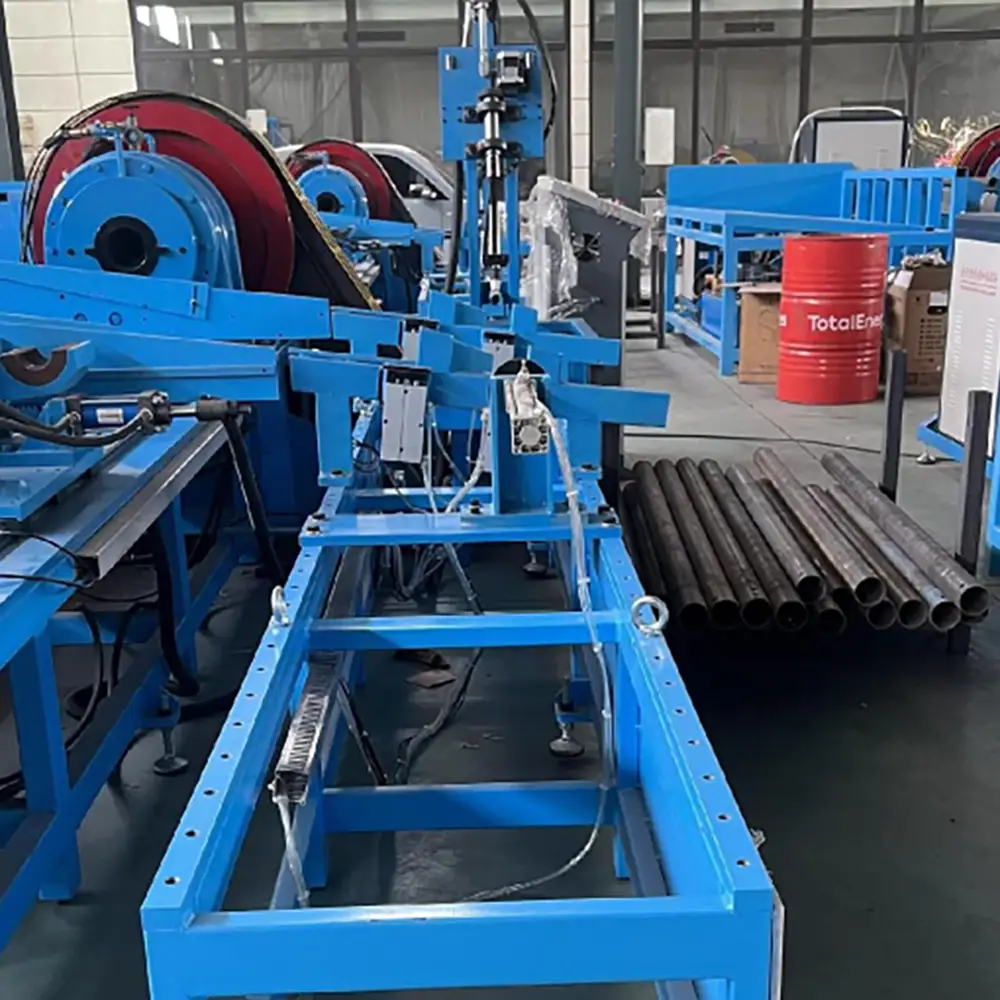
1. Products by the microcomputer control, hydraulic drive, Chinese screen display, man-machine dialogue type operation.
2. Can be arbitrarily selected manual, semi-automatic mode of operation, a one-point foot switch both start, emergency stop two kinds of features
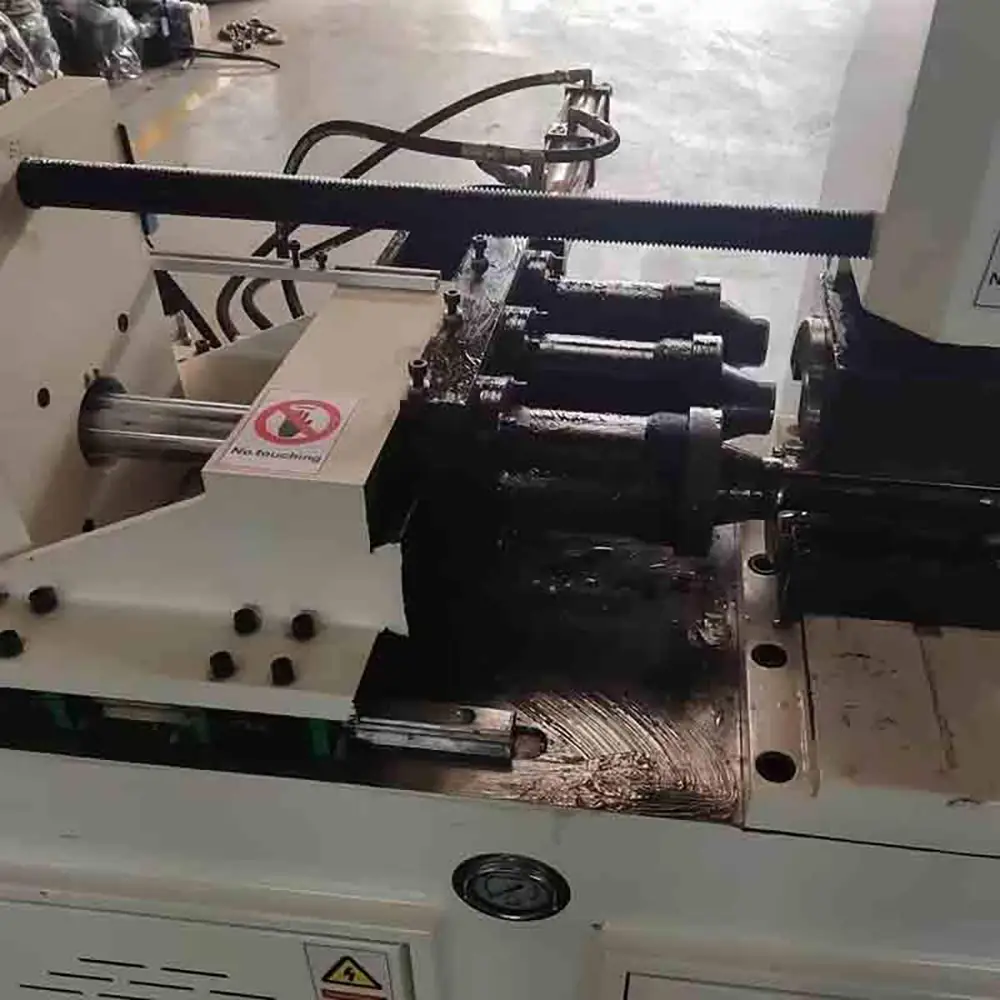
3. Three-station configuration, and the use of linear guides as a carrier, product repeatability is good
4. The whole machine is characterized by easy operation, stable performance, high efficiency and high safety factor, which is the ideal equipment for pipe fitting processing industry.
5. Processing shape: convex, concave, section, long partial, square, top, oblique, V-shaped, open elbow, flat elbow ... etc.,depending on the processing object to change the shape of the mold. PRODUCT SPECIFICATIONS
|
Parameter |
TM60NC-3 |
Note |
|
Maximum Applicable Tubing |
Φ60mm×2 |
1. Maximum working stroke can be customized according to customer requirements |
|
Maximum working stroke |
125mm |
|
hydraulic pressure |
12Mpa |
|
working speed |
100mm in 3-4/s |
|
KW |
5.5KW |
|
Size |
2450mm x 850mm x 1400mm |
|
Weight |
800kg |
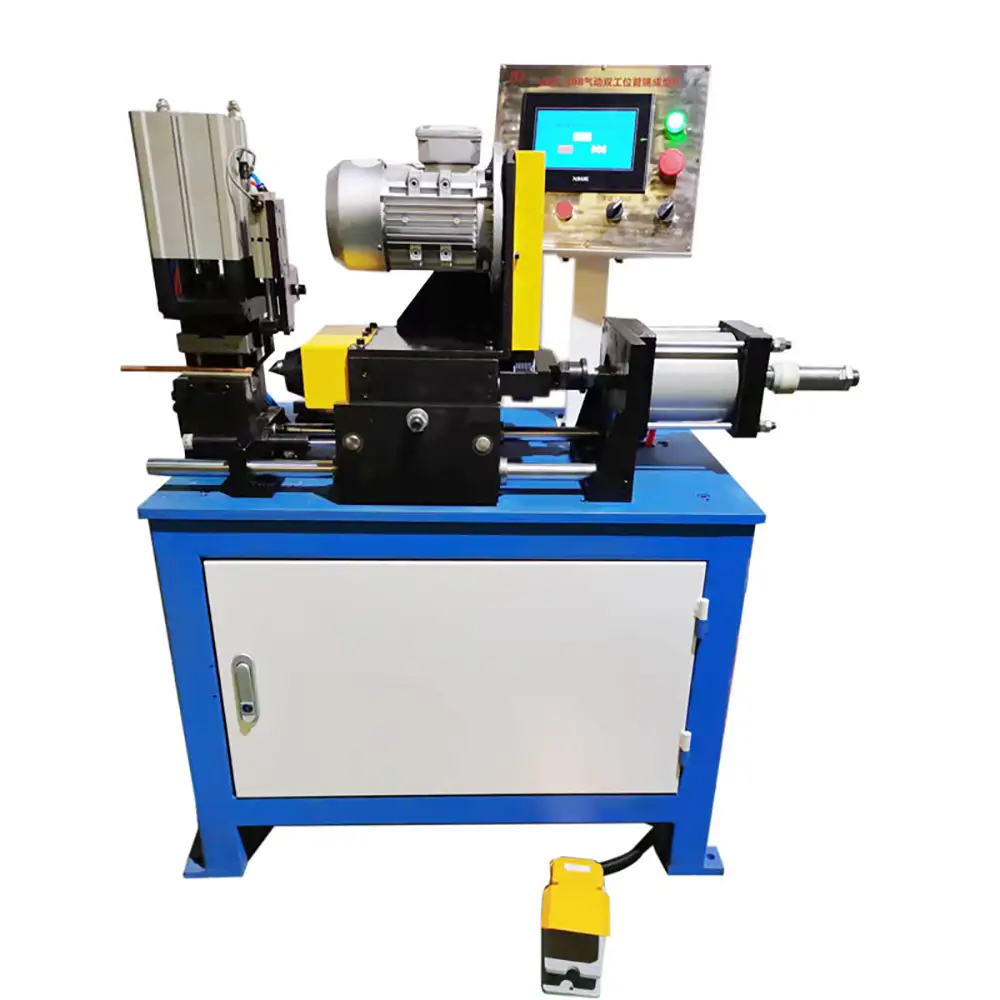
3-Station Expanding Shrinking Tube End Forming Machine
The 3-Station Expanding Shrinking Tube End Forming Machine is designed for multi-stage processing of metal tubes and pipes through controlled expansion,shrinking,reducing,and end-forming operations. With three dedicated forming stations,the machine provides a practical solution for manufacturers that need to complete multiple tube-end processes within one coordinated production system.
Tube end forming is widely used in automotive exhaust manufacturing,furniture production,metal structures,automotive components,agricultural machinery,and general metal fabrication. Depending on the tooling configuration,the three stations can be arranged for different operations such as tube expansion,diameter reduction,shrinking,flaring,beading,swaging,or other specialized end shapes.
The machine can be configured with hydraulic,pneumatic,mechanical,or other suitable forming systems depending on the required application. Actual forming force,workpiece size,wall thickness,cycle time,and production capacity depend on the machine model,tooling,material,and product geometry.
Three-Station Tube End Forming Design
The three-station design allows multiple forming processes to be organized within one machine. This can reduce the need to transfer the workpiece between separate machines when a product requires several sequential forming operations.
For example,one station may be configured for tube expansion,another for shrinking or reducing,and a third for final end shaping. The actual process sequence depends on the workpiece and required finished geometry.
The three-station concept is especially useful for manufacturers producing tube components that require repeatable multi-stage forming.
By using dedicated dies at each station,operators can establish a standardized process for a particular product. This can help reduce setup variation and improve production consistency.
Tube Expanding Process
Tube expansion increases the diameter of a selected section or end of the tube. It may be used to create a connection area,prepare a tube for assembly,or produce a specific end profile.
During expansion,the workpiece is positioned securely while the forming tool applies controlled force to deform the tube.
The amount of expansion depends on the original tube diameter,wall thickness,material properties,die geometry,and forming force.
Suitable materials may include carbon steel,stainless steel,mild steel,aluminum,copper,and other compatible metal tubes.
For applications requiring significant expansion,process trials can help determine whether the selected material and wall thickness can achieve the required geometry without excessive deformation.
Tube Shrinking and Diameter Reduction
Tube shrinking reduces the diameter of a selected tube section. It can also be used to create a tapered end or prepare the tube for connection with another component.
The shrinking operation is performed using dedicated forming dies designed around the required finished diameter.
Tube reduction is common in automotive exhaust pipes,furniture legs,metal frames,and other products where different tube diameters are required along the same component.
The practical reduction range depends on the material,starting diameter,wall thickness,die design,and forming process.
Proper process control is important because excessive reduction can lead to wrinkling,cracking,wall deformation,or dimensional variation.
Multi-Stage Tube Forming
Some products require several forming operations before the final tube geometry is completed. A three-station end forming machine can provide a coordinated platform for these processes.
Typical station configurations may include:
Tube Expansion
Tube Shrinking
Diameter Reduction
End Flaring
Tube Beading
Tube Swaging
End Flanging
End Shaping
The exact configuration depends on the product design.
Using multiple forming stations can simplify the workflow for repetitive production because the operator can process the same workpiece through a defined sequence without moving it between several independent machines.
Hydraulic Tube End Forming
Hydraulic systems are commonly used for applications requiring controlled forming force. A hydraulic cylinder can provide the mechanical force required to deform the tube according to the selected tooling.
Hydraulic forming is suitable for many steel and metal tube applications,particularly where relatively high forming force is required.
However,the hydraulic motor or pump power should not be treated as the direct forming capacity. Actual performance depends on cylinder size,working pressure,pump flow,mechanical structure,tooling,and material characteristics.
Customers should therefore evaluate the complete machine specification when selecting equipment for a particular tube-forming application.
Tooling and Forming Dies
The forming die is a critical component because it determines the final geometry of the tube end.
Different tube sizes and shapes require different dies. A three-station machine can use separate tooling sets for the individual forming operations.
Custom tooling can be developed for:
Expansion Diameters
Reduced Diameters
Tapered Ends
Flared Ends
Beaded Ends
Swaged Ends
Flanged Ends
Special Tube Profiles
For OEM projects,customers should provide product drawings,samples,material information,and dimensional requirements so suitable tooling can be evaluated.
Materials and Tube Types
The machine can be configured for compatible metal tubes such as:
Carbon Steel Tubes
Mild Steel Tubes
Stainless Steel Tubes
Aluminum Tubes
Copper Tubes
Alloy Steel Tubes
Material properties have a direct effect on forming performance. Stainless steel may require different parameters from mild steel,while aluminum and copper can require special attention to deformation and surface quality.
Tube outside diameter,wall thickness,and material strength should be considered when selecting the machine and forming dies.
Automotive Exhaust Applications
One major application for multi-station tube end forming is automotive exhaust manufacturing.
Exhaust pipes often require different diameters and connection profiles along their length. Expansion,shrinking,reduction,and flaring can be used to prepare the tube for connection with mufflers,resonators,flanges,and other exhaust components.
A three-station forming machine can support multiple operations within a standardized production workflow.
It can also be adapted for motorcycle exhaust production when the tube dimensions and forming requirements are within the machine's capability.
Furniture and Metal Tube Applications
Tube end forming is also widely used in furniture manufacturing. Chair legs,table legs,handrails,and metal frames may require reduced,expanded,or shaped ends for assembly.
The three-station machine can provide a flexible solution for manufacturers producing multiple tube products.
Custom dies can be designed for specific furniture components,allowing manufacturers to produce different end profiles while using the same basic machine structure.
Production Efficiency
A multi-station tube forming machine can reduce repeated material handling between separate forming machines.
For repetitive production,the three forming stations can be organized into a standardized sequence. This may improve workflow efficiency and reduce operator movement.
Actual productivity depends on the tube size,material,forming depth,number of operations,loading method,tool changes,and machine cycle time.
For higher-volume production,the machine may also be combined with automatic feeding,material handling,and other production equipment where supported by the selected configuration.
Quality Control
Tube end dimensions should be checked carefully because they affect subsequent assembly and connection.
Important inspection points may include:
Finished Tube Diameter
Expanded Diameter
Reduced Diameter
Forming Length
End Profile
Tube Roundness
Surface Condition
Overall Workpiece Dimensions
First-piece inspection is recommended when introducing new tooling or products.
Regular inspection can also help identify forming-die wear or changes in machine parameters before they affect a larger production batch.
Custom & OEM Manufacturing
Different industries often require application-specific tube-end geometries. The machine can therefore be customized with dedicated dies,fixtures,clamping systems,and other components.
OEM and ODM solutions can be developed according to customer drawings,samples,and production requirements.
Customers can provide tube material,outside diameter,wall thickness,finished end dimensions,production volume,and required forming sequence when requesting a quotation.
This makes the equipment suitable for manufacturers,distributors,wholesalers,and international B2B machinery buyers.
Maintenance and Safety
Routine maintenance should include checking hydraulic oil,hoses,cylinders,pumps,forming dies,clamps,electrical components,and other machine parts according to the manufacturer's maintenance recommendations.
Operators should ensure that tubes are correctly positioned and securely clamped before starting a forming cycle.
Tube forming involves significant mechanical force. Proper operator training and suitable protective equipment are important. Guards,emergency stops,and electrical protection depend on the specific machine configuration and applicable local safety requirements.
Why Choose Us
Three-Station Forming Configuration — Supports multiple tube-end forming operations within one coordinated machine.
Expansion & Shrinking Functions — Designed for tube expansion,diameter reduction,shrinking,and other end-forming applications.
Multi-Stage Processing — Helps reduce repeated workpiece transfer between separate forming machines.
Flexible Material Compatibility — Suitable for compatible carbon steel,stainless steel,aluminum,copper,and alloy tubes.
Custom Forming Dies — Tooling can be developed for specific diameters,tapers,flanges,beads,and end profiles.
Wide Industrial Applications — Suitable for automotive exhaust,furniture,metal frames,machinery,and general tube fabrication.
OEM & ODM Support — Machine configuration,tooling,fixtures,and production solutions can be customized.
B2B Manufacturing Equipment — Suitable for factories,manufacturers,distributors,wholesalers,and international machinery buyers.
FAQs
1. What is a 3-station tube end forming machine?
It is a tube processing machine equipped with three forming stations that can be configured for expansion,shrinking,reduction,flaring,beading,swaging,or other tube-end operations.
2. What does the expanding station do?
The expanding station increases the diameter of a selected tube section or end to create the required connection or formed profile.
3. What does the shrinking station do?
The shrinking station reduces the tube diameter or creates a tapered end according to the required product geometry.
4. Can all three stations perform different operations?
Yes. The stations can be equipped with different forming dies and configured for different processes according to the machine design and product requirements.
5. What materials can the machine process?
Depending on the configuration,it can process compatible carbon steel,mild steel,stainless steel,aluminum,copper,and alloy steel tubes.
6. Can it process stainless steel tubes?
Yes. Stainless steel can be processed when the machine capacity,tooling,and forming parameters are properly matched to the material and tube dimensions.
7. Is it suitable for automotive exhaust pipes?
Yes. Expansion,shrinking,reduction,and other tube-end forming operations are commonly used in automotive and motorcycle exhaust manufacturing.
8. Can custom dies be supplied?
Yes. Custom expansion,reduction,flaring,beading,swaging,and other forming dies can be developed according to drawings or samples.
9. Is this machine fully automatic?
The operating method depends on the configuration. The machine may be manual,semi-automatic,or integrated with automated feeding and handling systems.
10. What affects tube forming quality?
Material properties,tube diameter,wall thickness,forming force,die geometry,clamping,alignment,and process parameters all affect the finished result.
11. What information is needed for a quotation?
Provide tube material,outside diameter,wall thickness,original tube length,required expanded and reduced dimensions,end profile,and expected production volume.
12. Can the machine be customized for OEM production?
Yes. Forming dies,fixtures,clamping systems,feeding arrangements,hydraulic configurations,and control functions can be customized according to application requirements.
Prev:
Hydraulic Molding Flanging Machine Muffler Exhaust Pipe Tube Flanging Machine
Next:
Pipe Expanding Shrinking Machine Three-station End Froming Machine
TAG:
Automatic Tube End Forming Machine,
Chair Leg Tube Forming Machine,
Table Leg Tube Forming Machine,
Automotive Exhaust Pipe Forming Machine,
Furniture Tube End Forming Machine,
Metal Pipe Forming Machine,
Stainless Steel Tube Forming Machine,
Metal Tube Forming Machine,
Stainless Steel Tube Expanding Machine,
Hydraulic Pipe Shrinking Machine,
Carbon Steel Tube Forming Machine,
Stainless Steel Tube Shrinking Machine,
Tube End Forming Equipment,
Pipe Flaring Machine,
Pipe End Forming Equipment,
Pipe Beading Machine,
Tube Beading Machine,
Hydraulic Tube Shrinking Machine,
Pipe Tapering Machine,
Tube Flaring Machine,
Tube Swaging Machine,
Pipe Swaging Machine,
Tube Tapering Machine,
Pipe Reducing Machine,
Pipe Shrinking Machine,
Tube Shrinking Machine,
Tube Reducing Machine,
Tube End Shrinking Machine,
Pipe End Shrinking Machine,
Tube End Forming Machine,
Related Category:
Three-Station Tube Forming Machine,Tube Expanding Machine,Tube Shrinking Machine,Tube End Forming Machine China, suppliers, manufacturers, factory, customized, wholesale, quotation, made in China