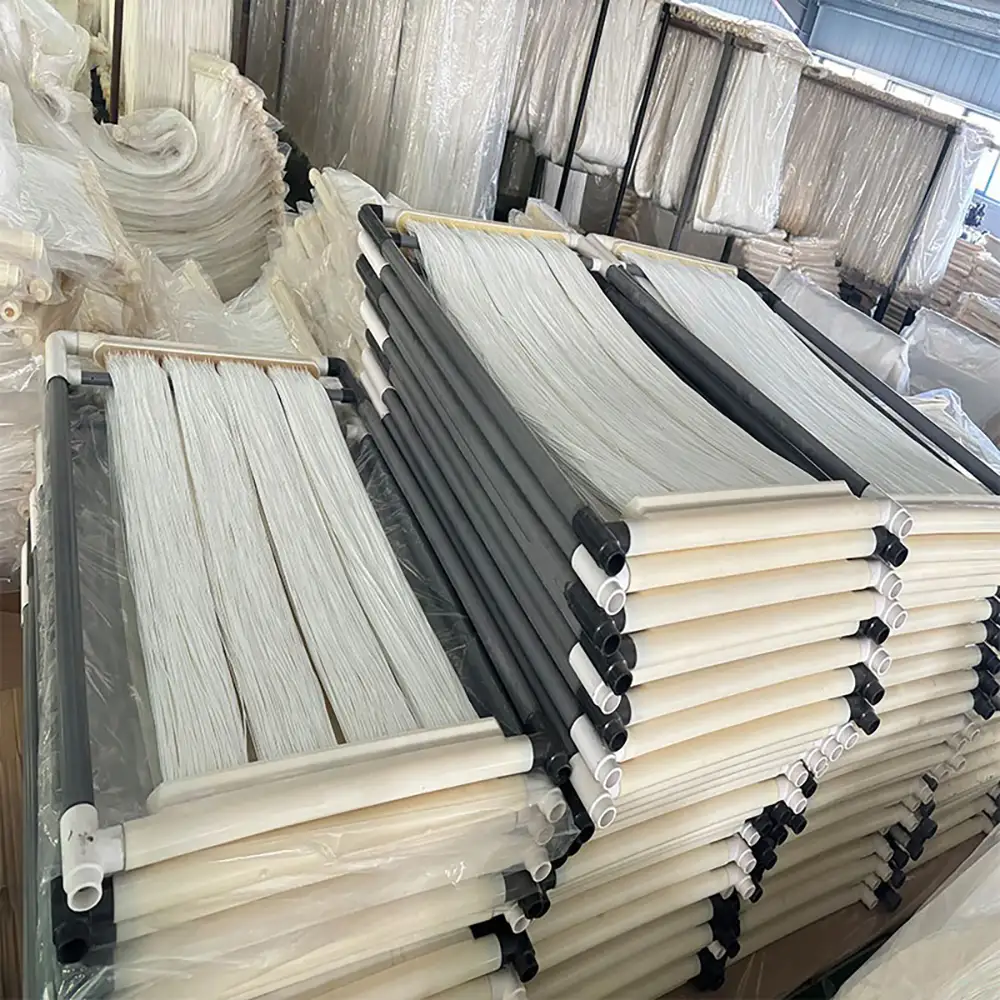
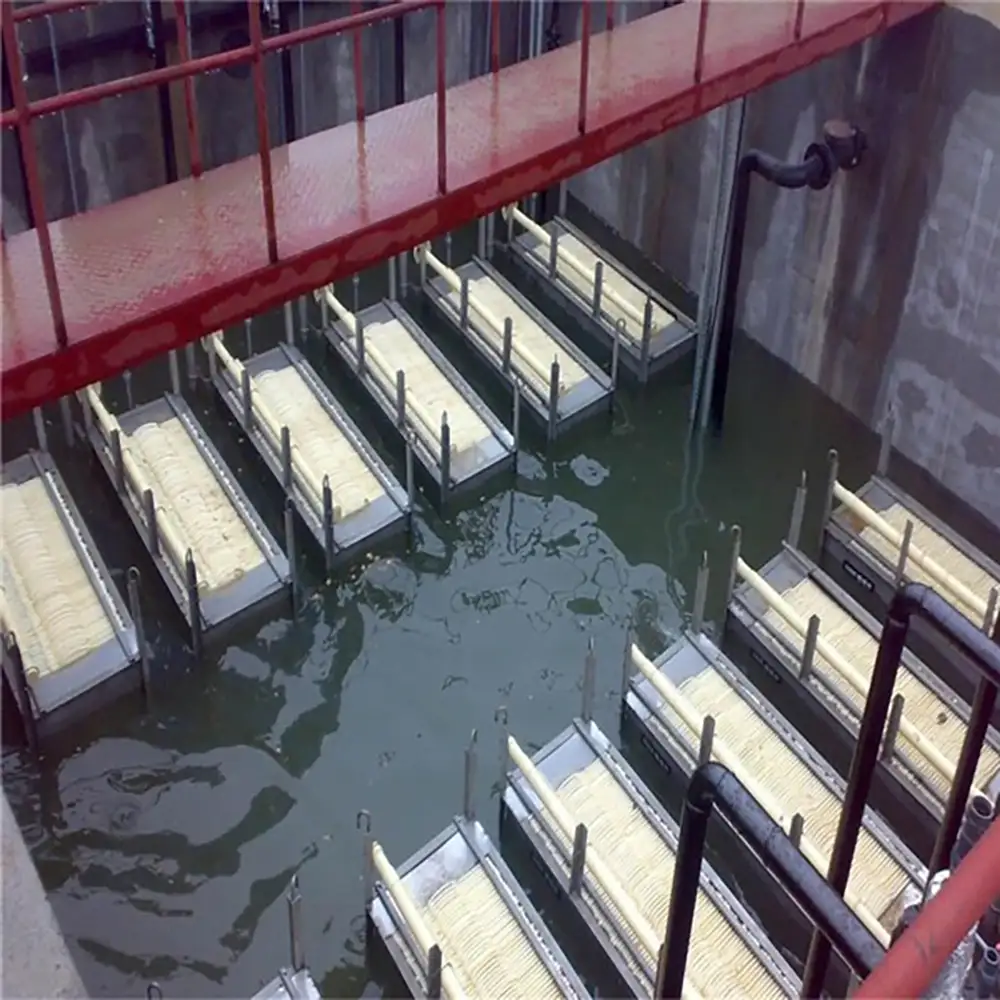
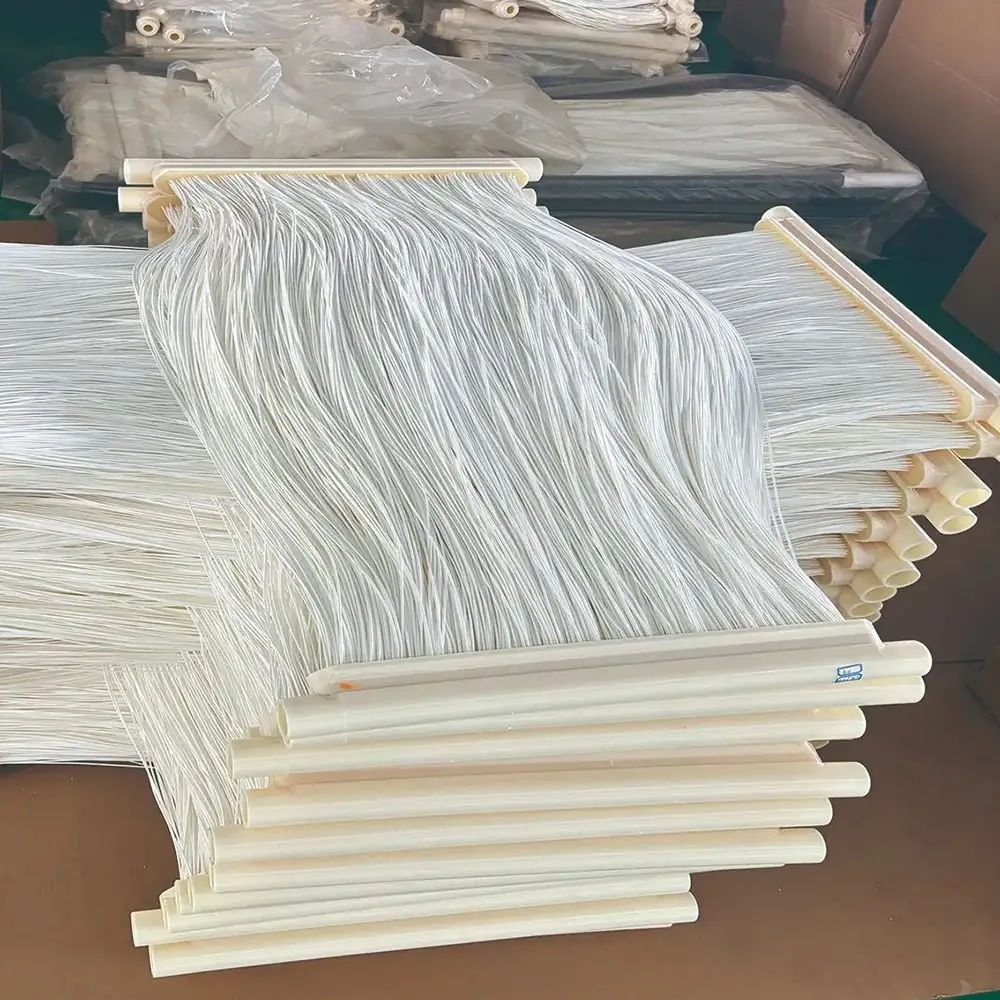
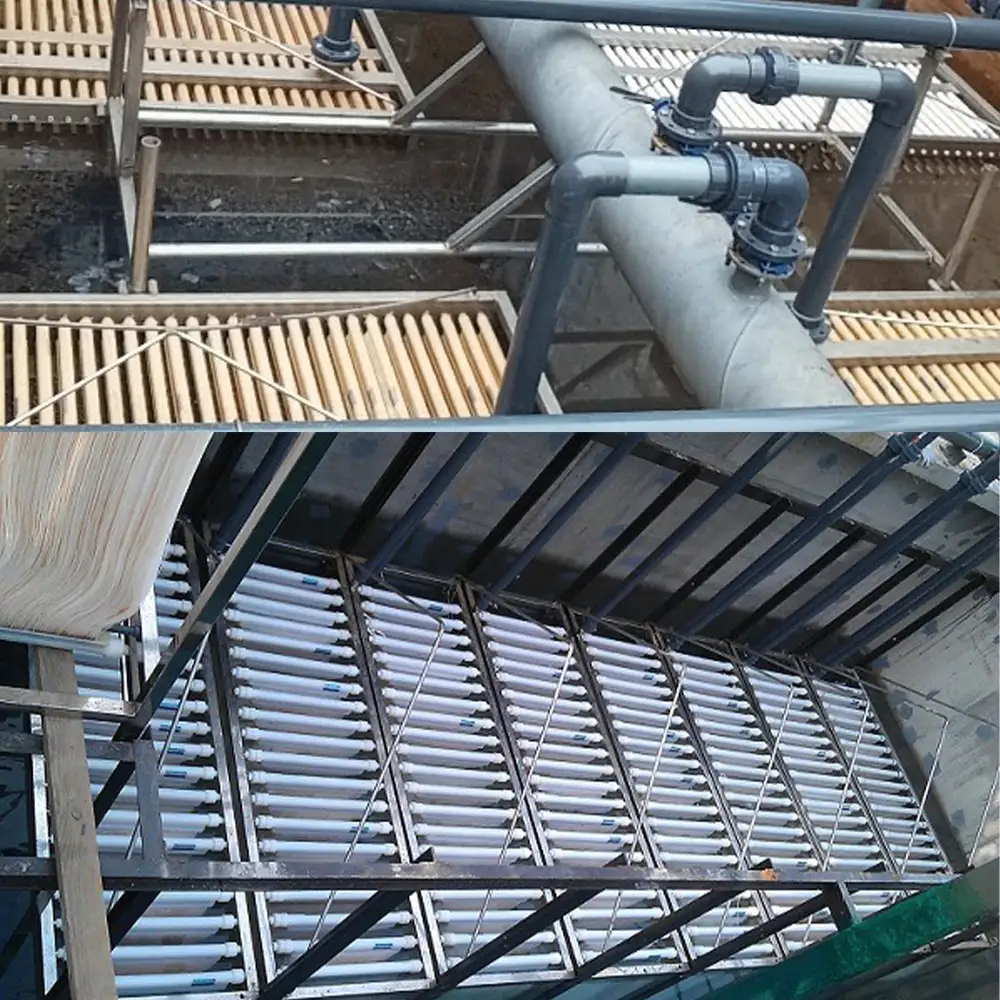
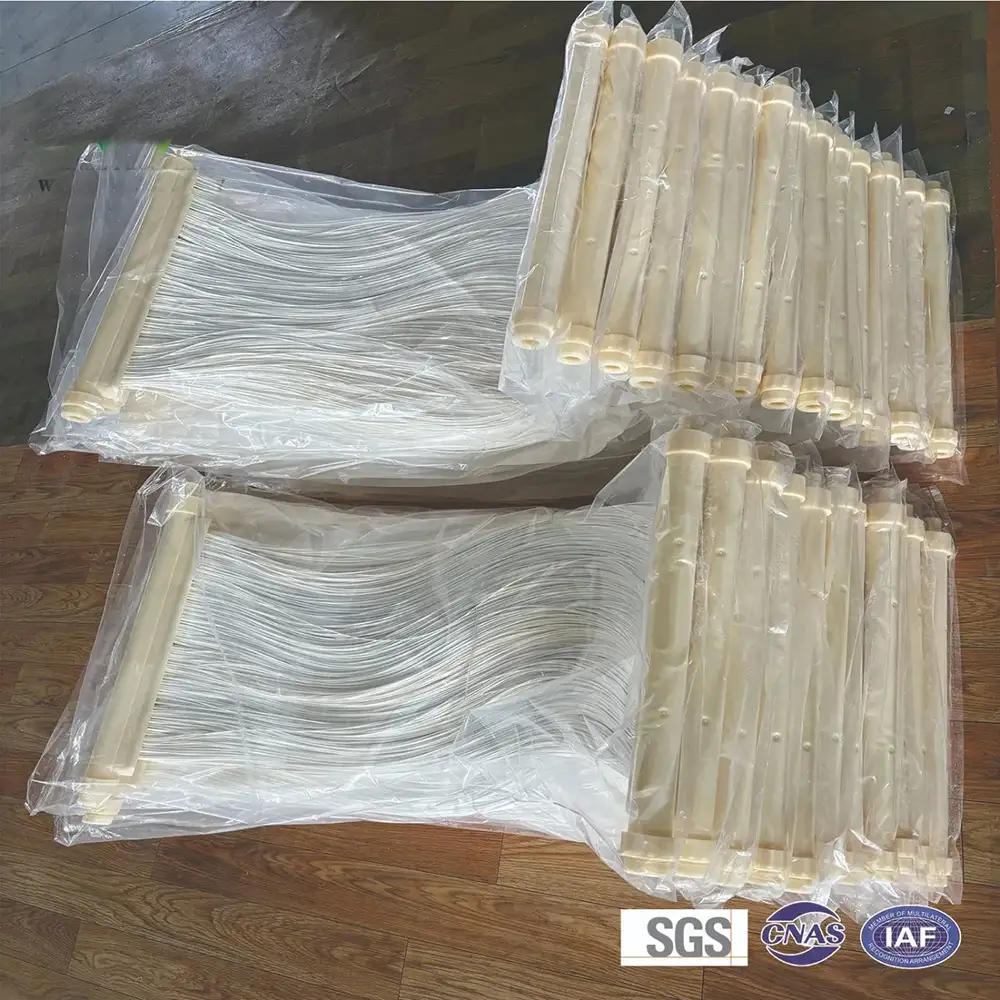
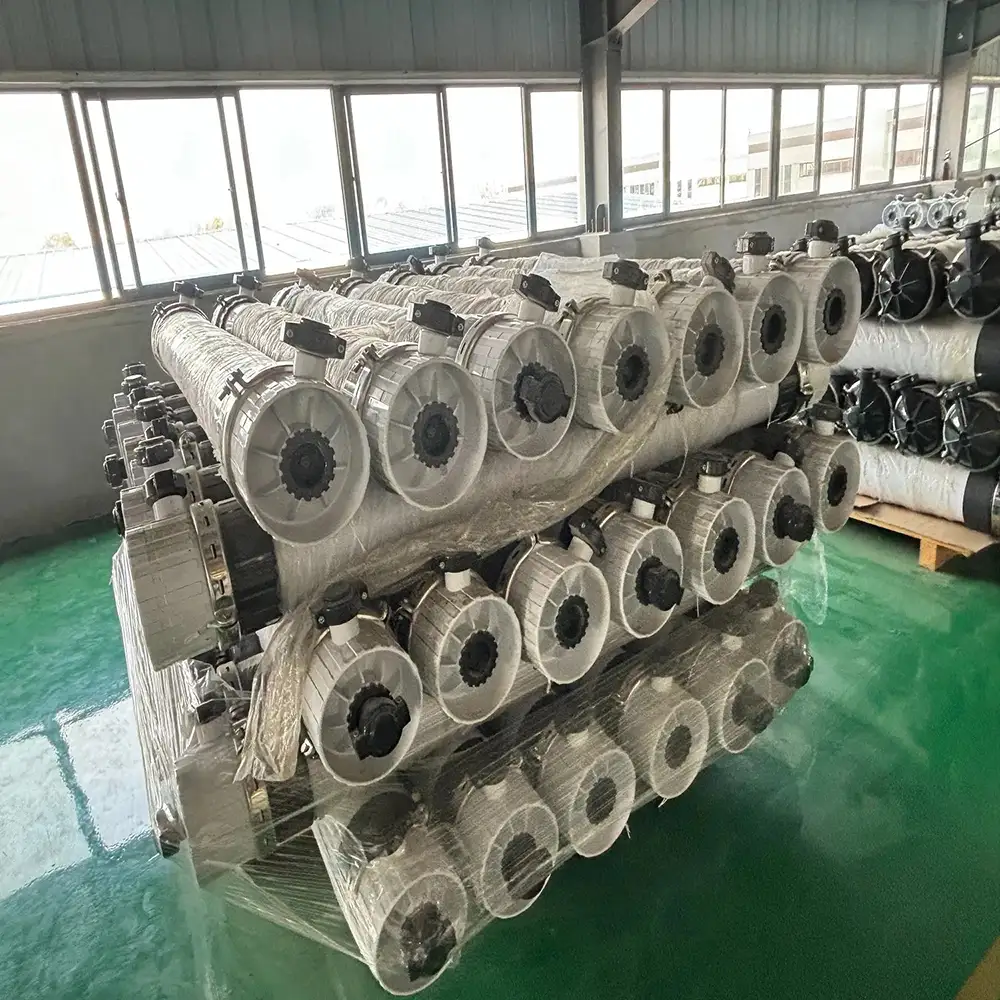
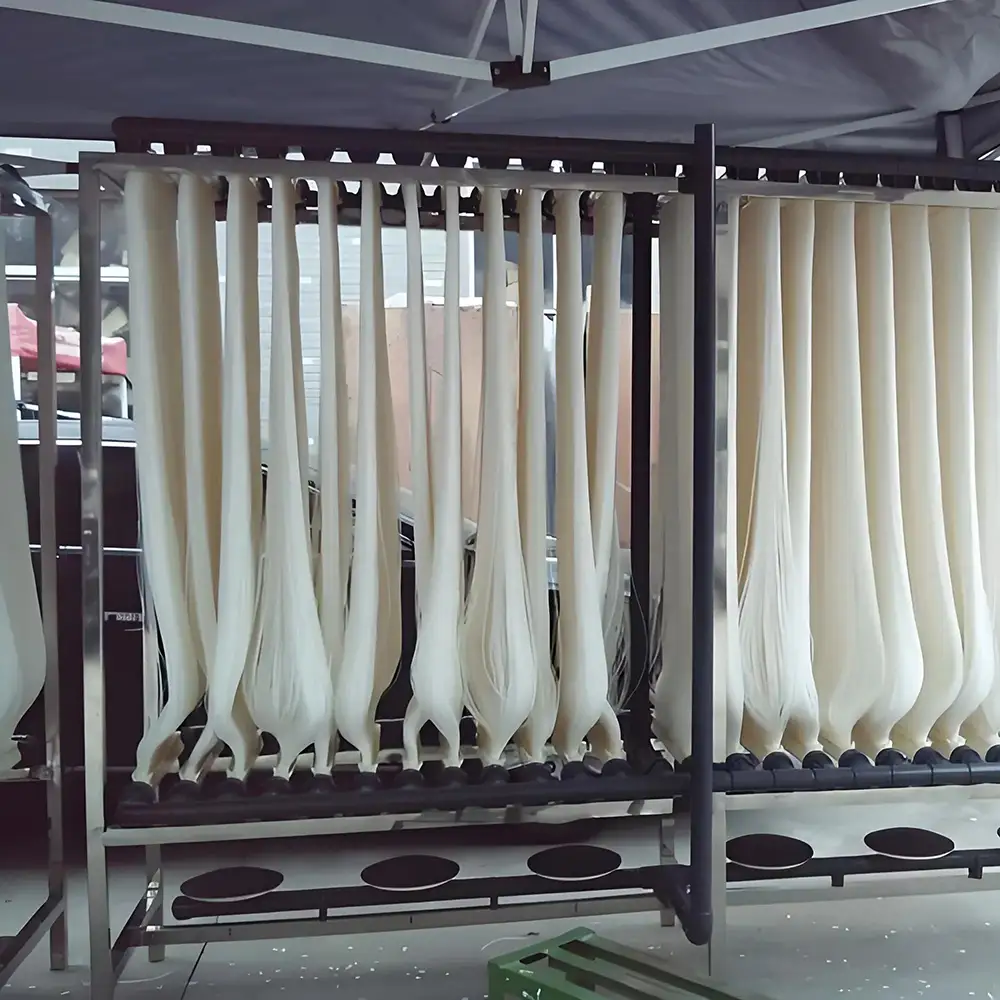
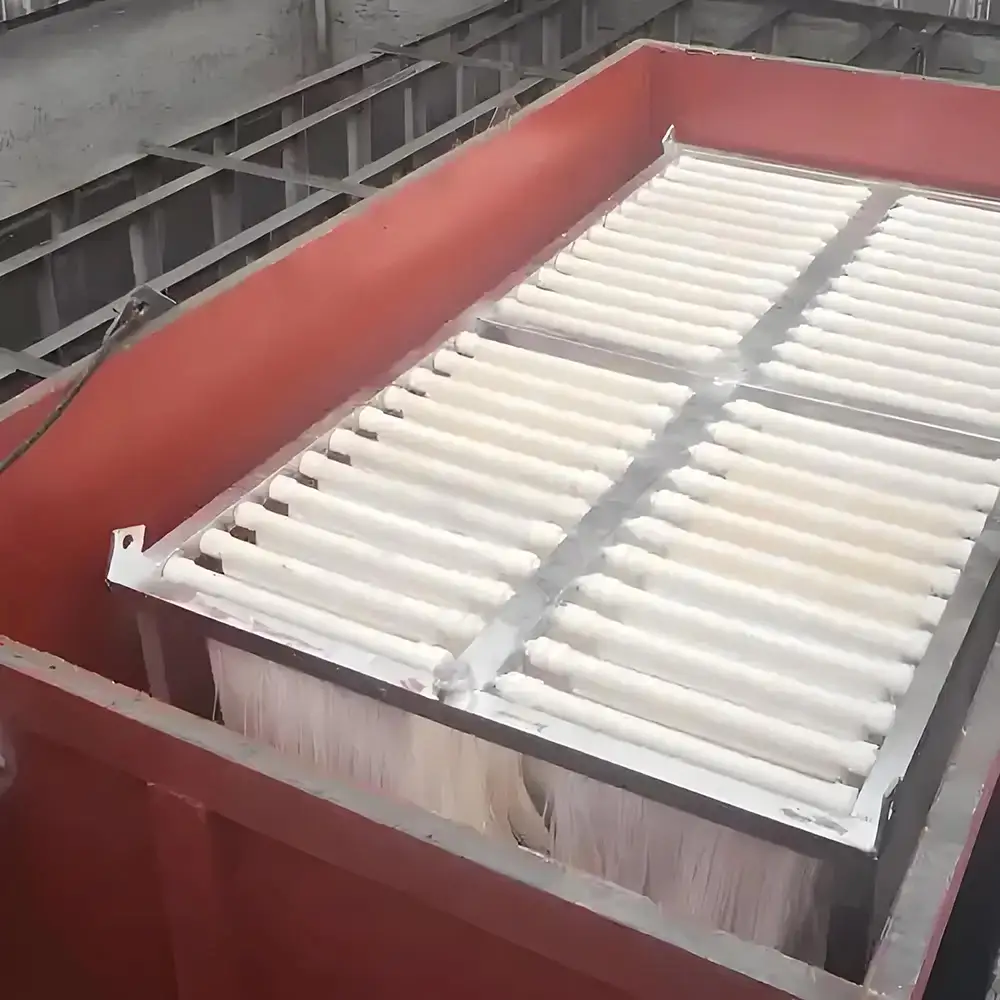
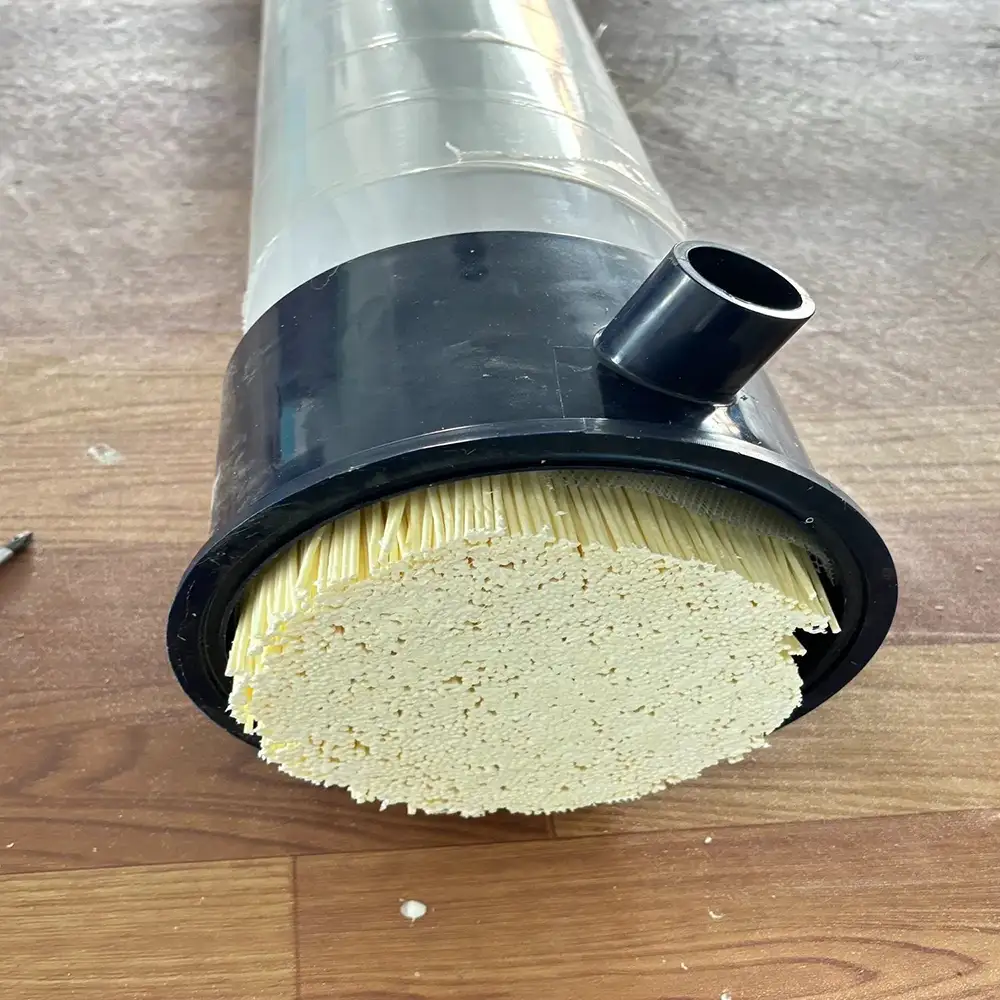
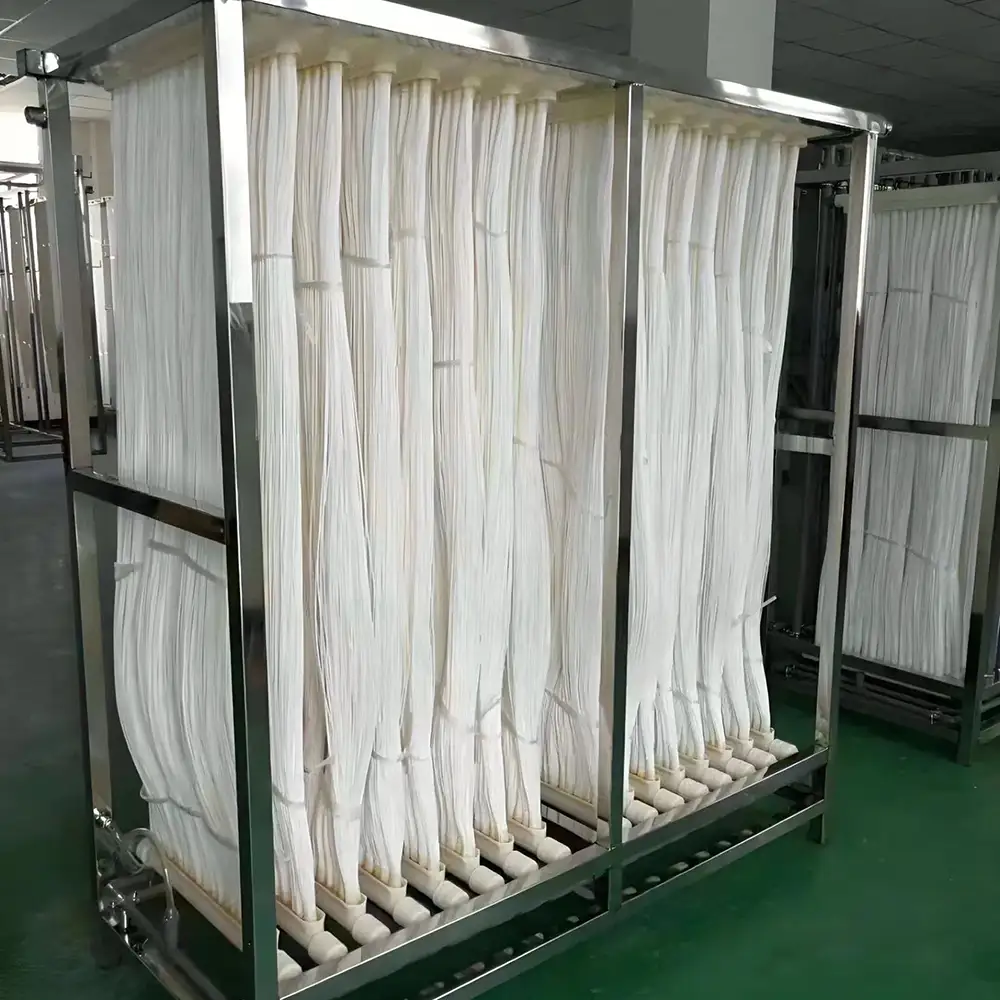
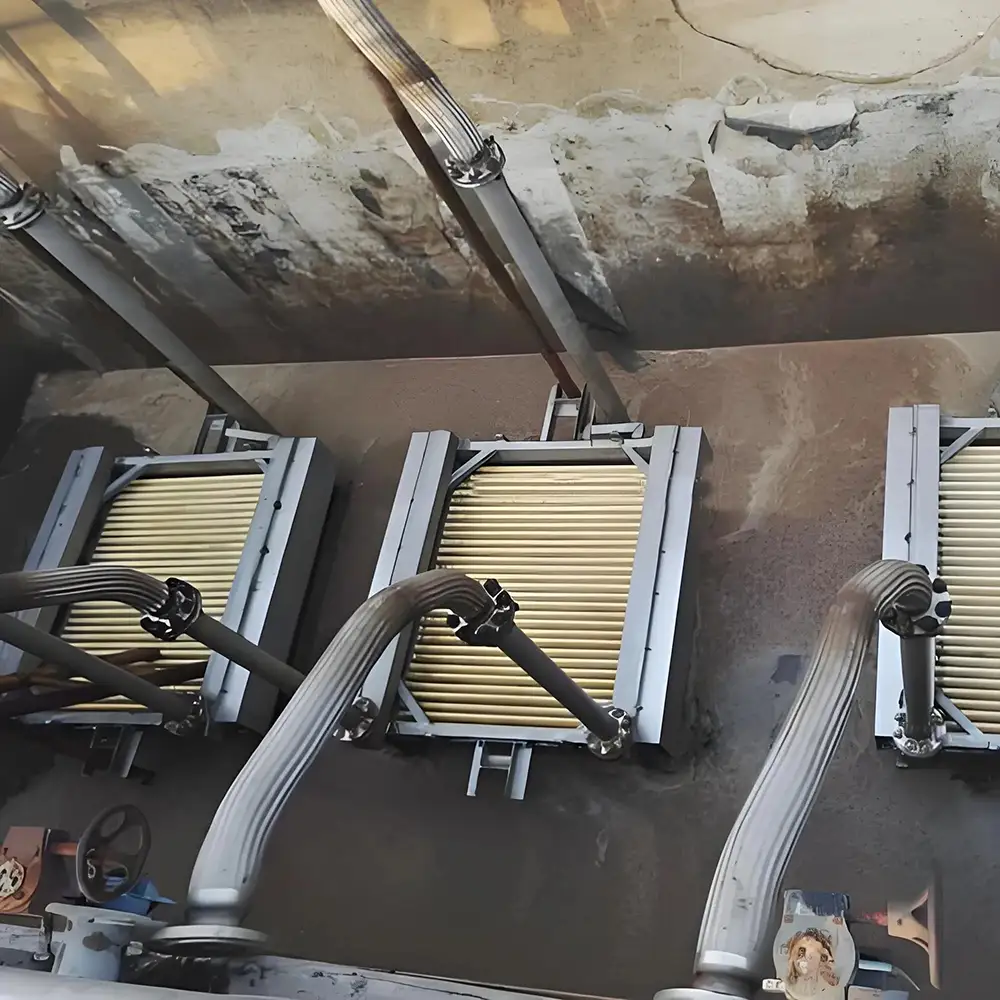
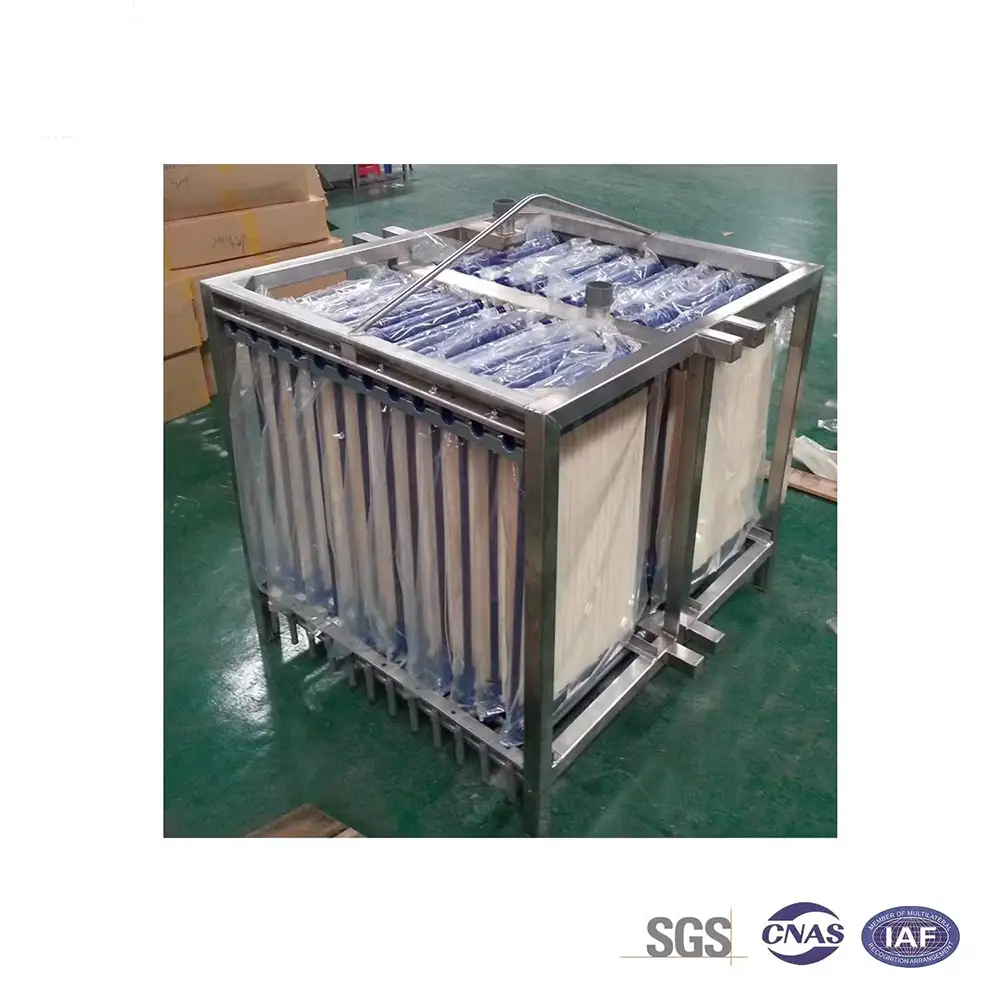
The MBR internally supported hollow fiber membrane made of PVDF membrane material is a new generation of high-performance product successfully launched by our company after years of research and development. This membrane is produced using a composite phase separation process, with polyester braided tubes as the support body. It has high strength (tensile strength ≥ 20.0MPa), anti stripping (peel strength ≥ 1.0MPa), high porosity (≥ 60%), and high flux (≥ 15L/m2 · h-0.01MPa). The filtration pore size of PVDF inner support membrane is 0.01~0.1 μ M.Water Treatment Machine with Hollow Fiber Membrane and Flat Membrane MBR System
The Water Treatment Machine with Hollow Fiber Membrane and Flat Membrane MBR technology is an advanced wastewater treatment solution designed to combine biological treatment with membrane filtration. This type of system can be configured for municipal sewage, industrial wastewater, commercial wastewater, food processing wastewater, brewery wastewater, and water reuse applications.
Membrane bioreactor technology replaces the conventional secondary solid-liquid separation stage with membrane filtration. The biological reactor allows microorganisms to degrade biodegradable pollutants, while the membrane module retains activated sludge and suspended solids and allows treated water to pass through as permeate. EPA technical guidance identifies hollow fiber bundles and flat plate membranes as two common membrane configurations for MBR systems.
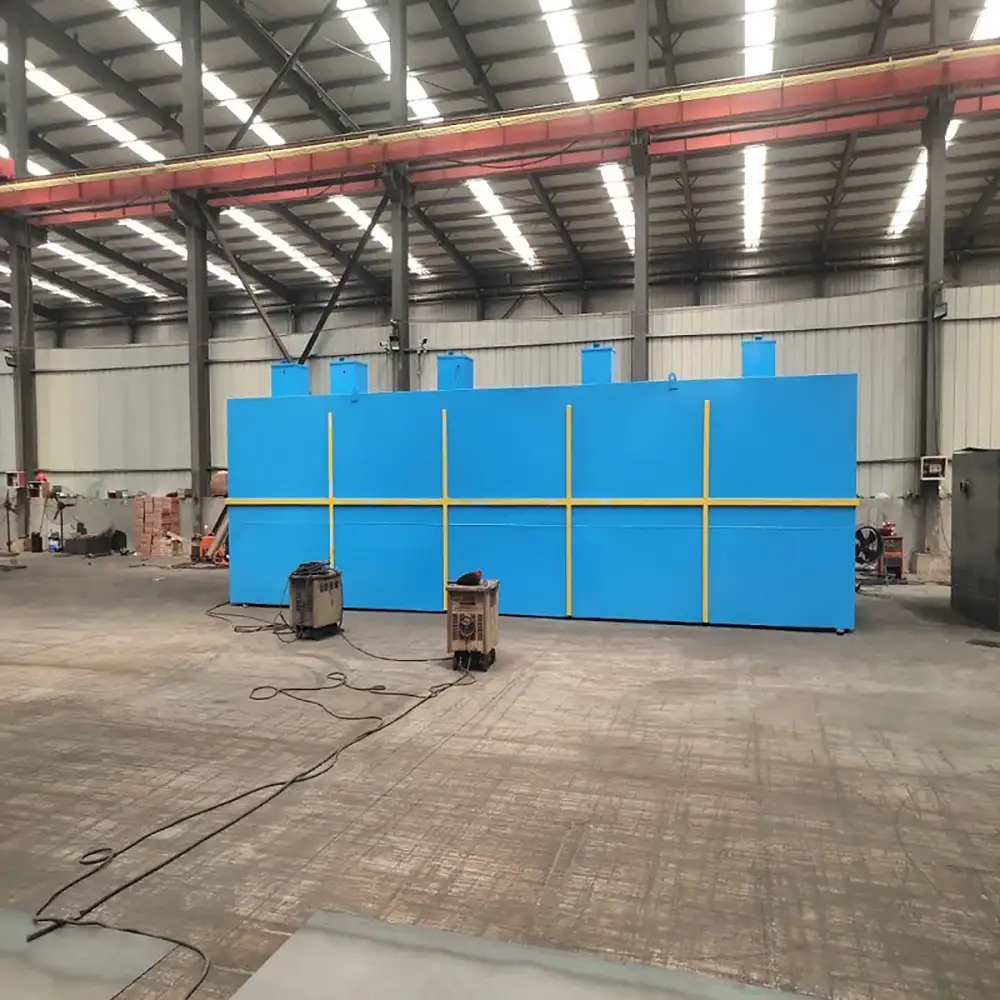
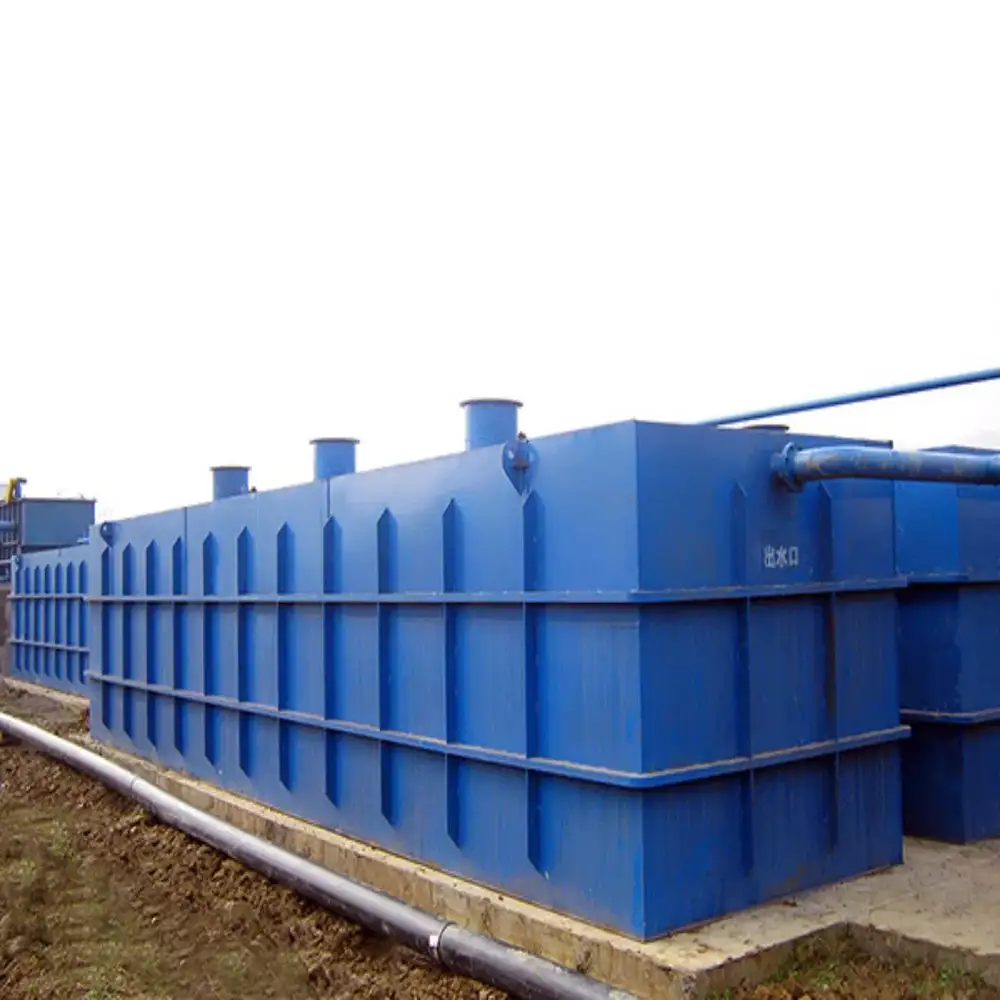
Depending on project requirements, the water treatment machine can use hollow fiber membrane modules, flat sheet MBR modules, or a customized membrane configuration. The system can also be supplied as a complete wastewater treatment plant, modular unit, skid-mounted system, or containerized treatment solution.
What Is an MBR Water Treatment Machine?
MBR stands for Membrane Bioreactor. It is a wastewater treatment process that combines suspended-growth biological treatment with membrane filtration.
In a conventional activated sludge system, treated water is separated from biological sludge in a secondary clarifier. In an MBR system, the membrane performs this solid-liquid separation function.
Wastewater first enters the biological treatment section, where microorganisms consume and break down biodegradable organic matter. The mixed liquor then passes to or remains in contact with the MBR membrane module. The membrane retains biomass and suspended solids while filtered water is collected as permeate.
This configuration allows MBR systems to operate at higher biomass concentrations than many conventional activated sludge systems and can provide a compact treatment footprint. EPA documentation describes MBR as a combination of a suspended-growth biological reactor and solids removal through filtration.
How Does the Membrane Filtration System Work?
A typical MBR water treatment machine includes several treatment stages.
1. Pretreatment
Raw wastewater first passes through screening and other pretreatment equipment. Large solids, plastics, fibers, hair, grit, and other materials are removed before the water reaches the membrane treatment section.
Effective pretreatment is particularly important for protecting hollow fiber and flat membrane modules from excessive fouling, clogging, and mechanical damage.
2. Equalization
An equalization tank can balance variations in wastewater flow and pollutant concentration. This helps provide more stable operating conditions for the biological reactor and membrane filtration system.
Equalization is particularly useful for industrial facilities where production schedules, cleaning operations, or batch processes cause significant variations in wastewater generation.
3. Biological Treatment
The wastewater enters an aerobic or combined aerobic/anoxic biological treatment zone. Air blowers and diffusers supply oxygen where required.
Microorganisms break down biodegradable organic pollutants and can also support nitrification and denitrification when the system is designed for nitrogen removal.
4. Membrane Filtration
After biological treatment, the mixed liquor reaches the membrane modules.
For hollow fiber MBR systems, water passes through the porous walls of numerous hollow membrane fibers. For flat membrane MBR systems, water passes through flat membrane surfaces installed in cassette or panel configurations.
The membrane barrier retains activated sludge and suspended solids while producing treated permeate.
5. Permeate Collection
Filtered water is collected through membrane headers and transferred by a permeate pump or vacuum-driven system depending on the equipment design.
The permeate can be discharged directly when it meets the required standard or sent to additional polishing treatment for water reuse.
Hollow Fiber Membrane MBR
Hollow fiber membranes consist of many small tubular membrane fibers assembled into a compact module.
The large number of fibers provides substantial membrane surface area in a relatively small module volume. Hollow fiber configurations can therefore be attractive when compact equipment and high membrane area are important design considerations.
Typical hollow fiber MBR systems include membrane bundles, headers, permeate connections, air-scouring equipment, support frames, and associated piping.
Hollow fiber membrane modules are available in different materials, dimensions, membrane areas, pore structures, and operating specifications. The correct selection depends on the wastewater characteristics and required treatment capacity.
EPA information notes that hollow fiber bundles are commonly connected through manifolds to form serviceable membrane units.
Flat Membrane MBR
Flat membrane MBR, also commonly called flat sheet MBR, uses flat membrane panels or sheets installed within a supporting frame or cassette.
The flat membrane configuration provides a rigid membrane structure and can be advantageous for applications where module accessibility, physical robustness, and maintenance arrangements are important.
Flat sheet MBR systems are used for municipal and industrial wastewater treatment. They can be configured as submerged membrane systems in which the membrane panels are placed directly in the treatment tank.
EPA technical documentation identifies flat plate membranes as one of the two common MBR membrane configurations and describes their use alongside hollow fiber systems.
Hollow Fiber vs. Flat Membrane MBR
Both technologies can perform biological solid-liquid separation, but their physical designs are different.
Hollow Fiber MBR: Uses bundles of tubular membrane fibers and offers high membrane packing density.
Flat Membrane MBR: Uses flat membrane panels installed in cassette-style modules.
Hollow Fiber: Often selected when compact membrane area and high packing density are priorities.
Flat Membrane: Can be attractive when rigid membrane structures and straightforward module access are important.
There is no universal membrane configuration that is best for every wastewater application. Selection should consider wastewater composition, membrane flux, solids concentration, cleaning requirements, available space, operating strategy, capital cost, and long-term maintenance.
Water Treatment Machine Applications
This MBR membrane filtration equipment can be designed for a wide range of wastewater applications.
Municipal Wastewater
MBR technology can be used for residential sewage, municipal wastewater treatment plants, hotels, schools, hospitals, communities, and decentralized sewage treatment.
Industrial Wastewater
Industrial applications may include manufacturing facilities, chemical plants, electronics factories, machinery plants, and industrial parks.
Food and Beverage Wastewater
Food-processing and beverage wastewater can contain high biodegradable organic loading. MBR systems can be combined with suitable pretreatment and biological treatment processes.
Brewery Wastewater
Brewery wastewater can contain yeast, suspended solids, carbohydrates, proteins, and other biodegradable organic compounds. MBR can be incorporated into a treatment train following screening, equalization, pH adjustment, or other required pretreatment.
Textile and Printing Wastewater
Printing and dyeing wastewater may contain color, organic matter, chemicals, and suspended solids. Depending on the treatment target, MBR can be combined with coagulation, advanced oxidation, activated carbon, UF, NF, or RO.
Commercial Wastewater
Hotels, resorts, office buildings, commercial complexes, and residential developments can use packaged MBR equipment where land availability is limited.
Advantages of MBR Membrane Filtration
Compact Footprint
Because membrane filtration performs the solid-liquid separation function, an MBR system can reduce dependence on a large conventional secondary clarifier. This makes the technology attractive for sites where available land is limited.
High-Quality Solid Separation
The membrane barrier retains biomass and suspended solids while allowing treated water to pass through.
Flexible System Design
The equipment can be configured with different membrane modules, biological tanks, pumps, blowers, and controls according to project requirements.
Modular Expansion
Additional membrane modules can be incorporated into suitable system designs when future treatment capacity needs to be considered.
Water Reuse Potential
MBR permeate can be further treated with RO, UV, activated carbon, or other polishing technologies when the application requires higher-quality reclaimed water.
However, MBR should not automatically be considered a complete solution for every dissolved contaminant. Additional treatment may be necessary depending on the intended reuse application.
Membrane Fouling Control
Membrane fouling is one of the most important considerations in MBR operation.
Organic matter, microorganisms, suspended solids, inorganic deposits, and other contaminants can accumulate on membrane surfaces and reduce permeability.
A properly engineered system may use:
Fine Pretreatment
Stable Biological Operation
Controlled Membrane Flux
Air Scouring
Membrane Relaxation
Backwashing
Chemical-Enhanced Cleaning
Periodic Chemical Cleaning
Proper Sludge Concentration Control
Air scouring is commonly used in MBR systems to reduce material accumulation on membrane surfaces. EPA documentation identifies air scour as an important operating technique for MBR membrane systems.
The actual cleaning schedule should be determined according to membrane material, wastewater characteristics, operating conditions, and the membrane manufacturer's recommendations.
Main Components of the Water Treatment Machine
A complete MBR water treatment machine may include:
Coarse Screen
Fine Screen
Equalization Tank
Biological Treatment Tank
Aeration Blower
Fine Bubble Diffusers
Hollow Fiber Membrane Module
Flat Sheet Membrane Module
Permeate Pump
Air Scouring System
Backwash System
Chemical Cleaning System
Sludge Pump
PLC Control Cabinet
Flow and Pressure Instruments
Not every project requires every component. The final configuration should be determined from wastewater analysis and the required effluent quality.
MBR Water Treatment Equipment for Water Reuse
MBR technology is frequently considered for wastewater reuse projects because membrane filtration provides effective separation of suspended solids and biomass.
A typical industrial reuse process can be designed as:
Screening → Equalization → Biological Treatment → MBR Membrane Filtration → Disinfection → RO → Reclaimed Water
The actual treatment train depends on the intended reuse purpose. Cooling water, process water, boiler feedwater, and other applications can have very different quality requirements.
For applications involving dissolved salts, specific dissolved contaminants, or stringent reuse standards, additional membrane or polishing technologies may be required.
Custom MBR Equipment Design
A professional water treatment machine supplier should select the membrane system based on actual wastewater conditions rather than using a standard configuration for every project.
Important design parameters include:
Average Daily Flow
Peak Flow
COD
BOD
TSS
Ammonia Nitrogen
Total Nitrogen
Total Phosphorus
pH
Temperature
Wastewater Source
Required Effluent Standard
Water Reuse Target
Available Installation Area
For industrial wastewater, pilot testing or detailed wastewater characterization can be useful before final membrane selection.
Why Choose Us?
Complete Water Treatment Solutions: We provide MBR membrane systems and supporting wastewater treatment equipment rather than supplying membrane modules alone.
Hollow Fiber and Flat Membrane Options: Equipment can be configured with hollow fiber or flat sheet MBR membrane technologies according to the project requirements.
Industrial Wastewater Experience: Our solutions can be designed for municipal sewage, food and beverage wastewater, brewery wastewater, textile wastewater, manufacturing wastewater, and other industrial applications.
Customized Engineering: Membrane area, module quantity, biological tank capacity, pumps, blowers, control systems, and cleaning equipment can be customized.
Compact Modular Design: Skid-mounted, packaged, and containerized configurations can be developed for projects with limited installation space.
OEM & Export Support: We provide customized manufacturing, technical documentation, export packaging, and project-oriented support for international customers.
Frequently Asked Questions
1. What Is an MBR Water Treatment Machine?
An MBR water treatment machine combines biological wastewater treatment with membrane filtration. The membrane separates treated water from activated sludge and suspended solids.
2. What Is a Hollow Fiber Membrane?
A hollow fiber membrane consists of many small porous membrane fibers assembled into a filtration module. Water passes through the membrane wall while larger particles and biomass are retained.
3. What Is a Flat Membrane MBR?
A flat membrane MBR uses flat sheet or flat plate membrane panels installed in cassette-style modules for biological wastewater treatment and solid-liquid separation.
4. Which Is Better, Hollow Fiber or Flat Membrane?
Neither configuration is universally better. Selection depends on wastewater characteristics, required capacity, membrane flux, cleaning requirements, installation space, maintenance strategy, and project budget.
5. Can MBR Treat Municipal Wastewater?
Yes. MBR technology is widely used for municipal wastewater treatment and can provide compact biological treatment combined with membrane solid-liquid separation.
6. Can MBR Treat Industrial Wastewater?
Yes. MBR systems can be designed for many industrial wastewater applications, although pretreatment and biological process requirements vary by wastewater source.
7. Does MBR Require a Secondary Clarifier?
A typical MBR uses membrane filtration for solid-liquid separation, so a conventional secondary clarifier is generally not required for that specific separation function.
8. How Is MBR Membrane Fouling Controlled?
Fouling can be controlled through proper pretreatment, air scouring, flux management, relaxation, backwashing, chemical cleaning, and stable biological operation.
9. Can MBR Water Be Reused?
Yes. MBR permeate can be used for suitable reuse applications or further treated with RO, UV, activated carbon, or other polishing technologies when higher-quality water is required.
10. Can Hollow Fiber and Flat Membrane Modules Be Customized?
Yes. Membrane area, module quantity, membrane material, biological tank configuration, pumps, blowers, controls, and cleaning systems can be customized according to the project.
11. Can the MBR System Be Containerized?
Yes. Depending on capacity, the system can be designed as packaged, skid-mounted, or containerized water treatment equipment.
12. What Information Is Needed for a Quotation?
Provide wastewater source, average and peak flow, influent COD, BOD, TSS, pH, temperature, nitrogen requirements, discharge standards, reuse targets, available space, and existing treatment equipment.
Prev:
MBR Sewage Treatment System Hollow Fiber UF Membrane System Water Purifier
Next:
MBR Membrane Filtration System/Sewage Treatment Plant/Sewage Treatment Spare Parts/Ultrafiltration Membrane Module
TAG:
Industrial Wastewater Treatment,
Water Purification Equipment,
Wastewater Treatment Equipment,
Water Treatment Equipment,
Membrane Filtration System,
Membrane Water Treatment,
Industrial Water Reuse,
Water Treatment System,
Sewage Treatment Equipment,
Water Reuse Treatment,
Municipal Wastewater Treatment,
Wastewater Treatment Machine,
MBR Wastewater Treatment,
MBR Sewage Treatment,
Water Treatment Machine,
MBR Membrane Module,
Flat Sheet MBR Membrane,
Hollow Fiber MBR Membrane,
MBR Membrane,
MBR Membrane System,
Membrane Bioreactor,
MBR Membrane Bioreactor,
Hollow Fiber Membrane,
Submerged MBR,
MBR Water Treatment,
MBR Water Treatment Equipment,
Industrial MBR System,
Membrane Filtration Equipment,
Hollow Fiber UF Membrane,
Submerged Membrane System,
Related Category:
Water Treatment Machine,Hollow Fiber Membrane,Membrane Filtration System,Flat Membrane MBR,MBR Membrane System China, suppliers, manufacturers, factory, customized, wholesale, quotation, made in China