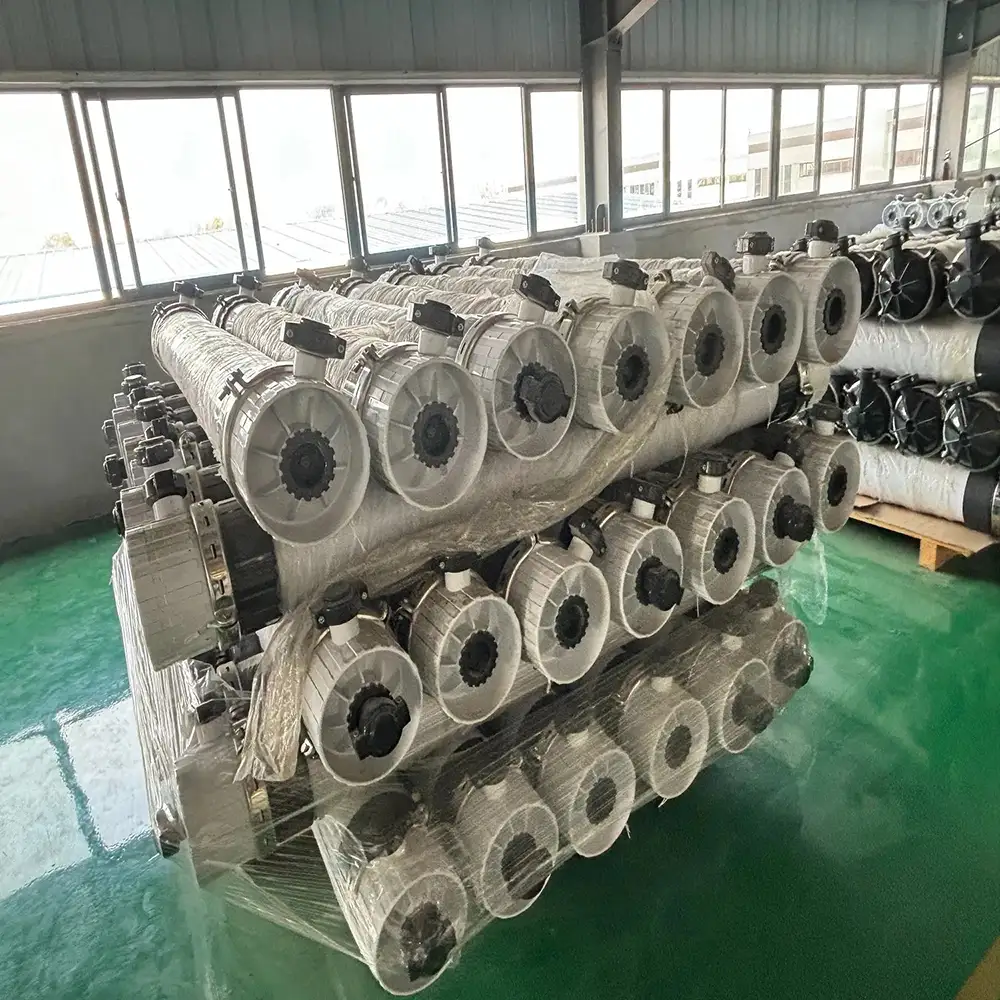
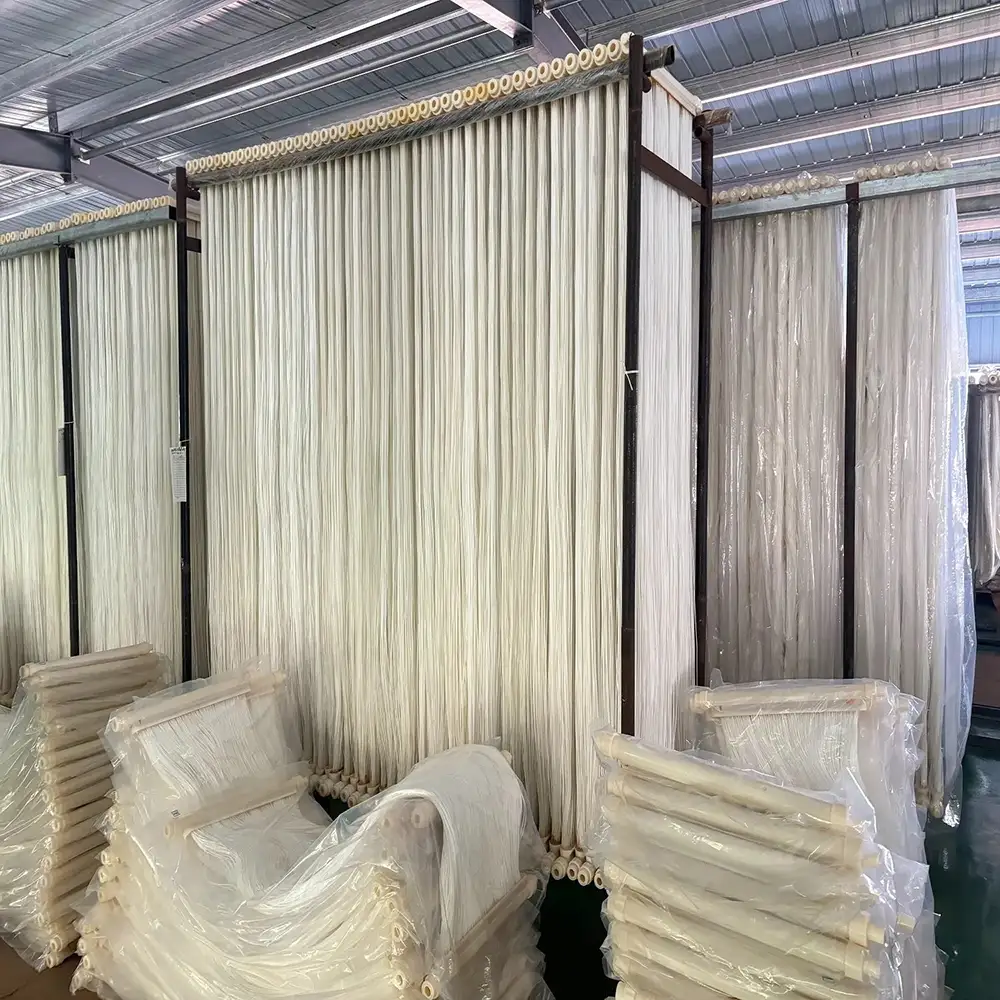
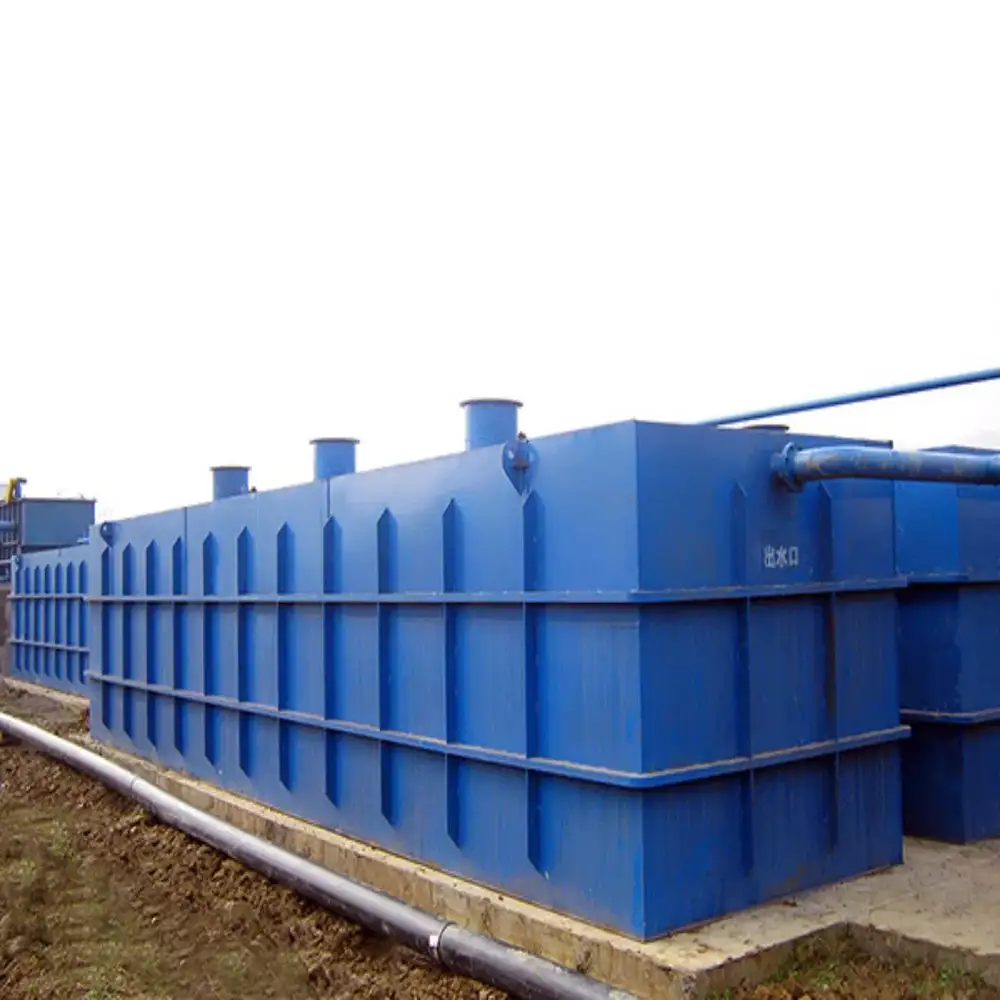
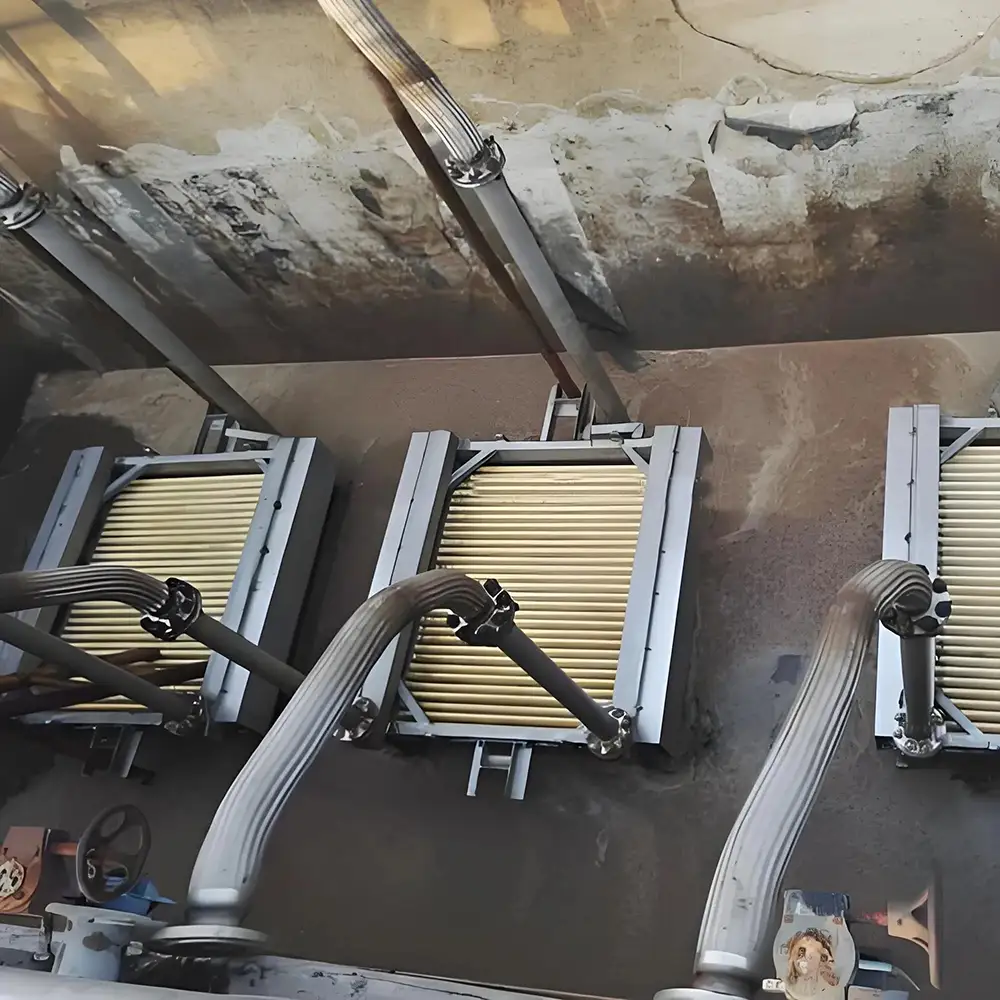
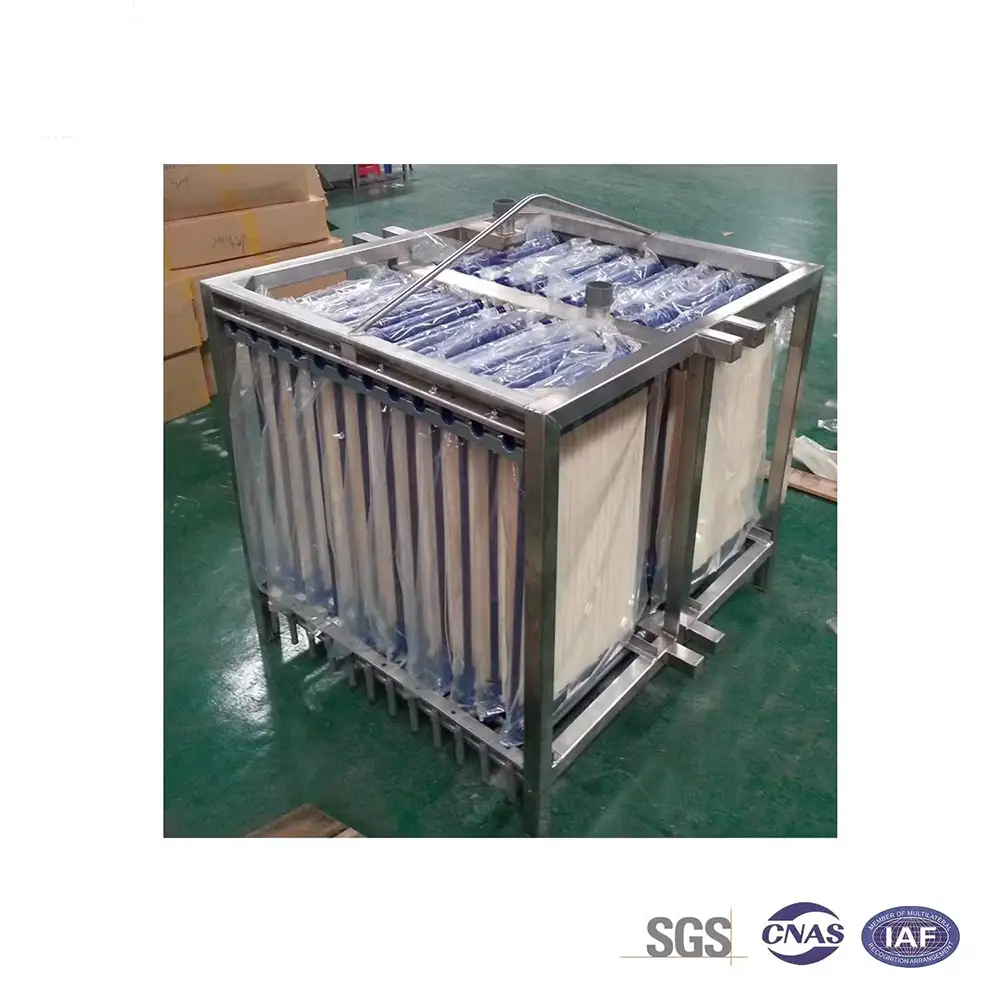
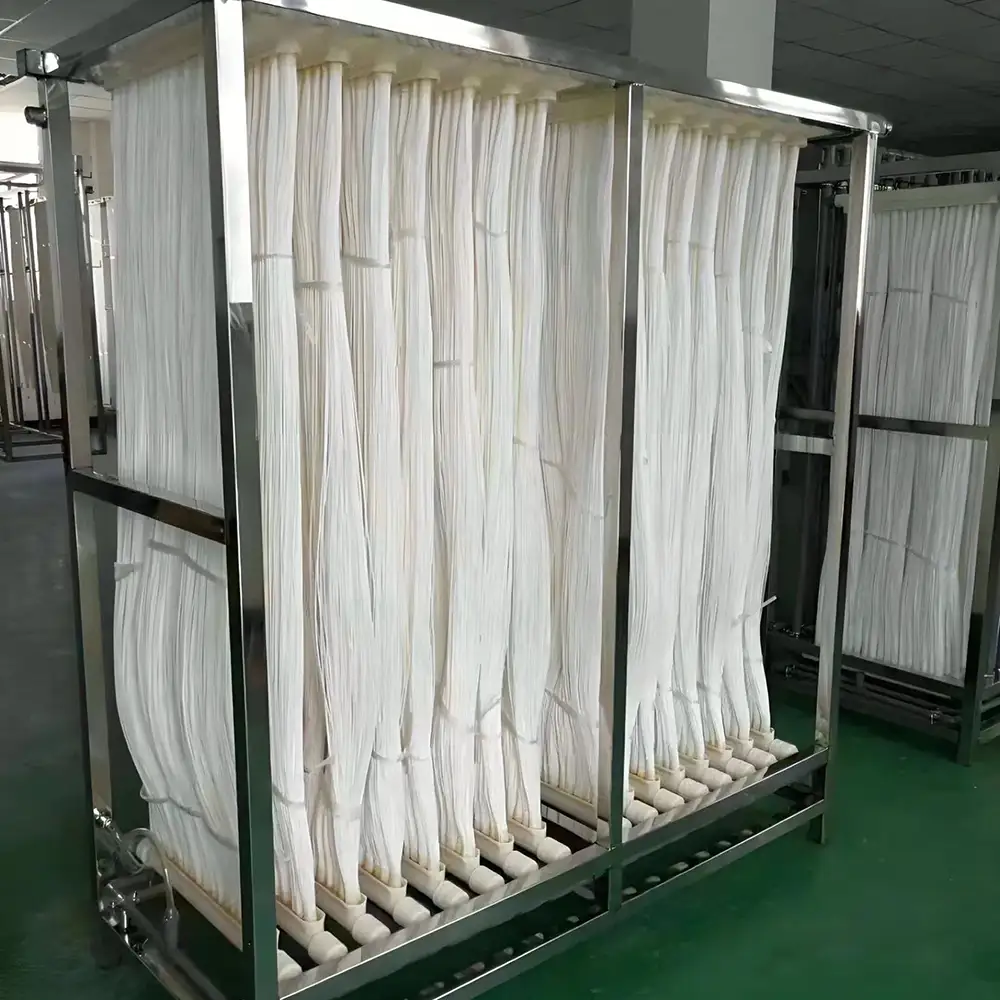
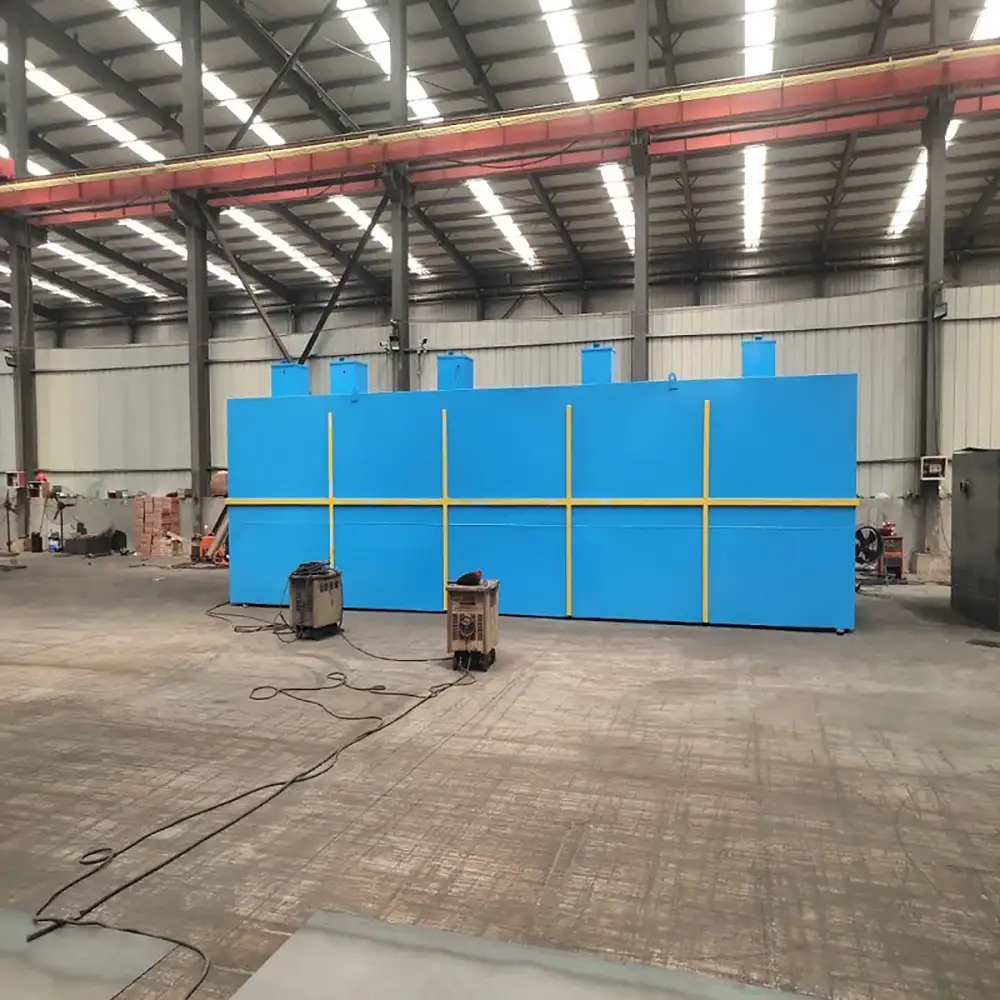
A membrane bioreactor combines a biological reactor with membrane filtration. Instead of depending entirely on a conventional secondary clarifier, the membrane module provides a physical separation barrier for treated water and activated sludge.
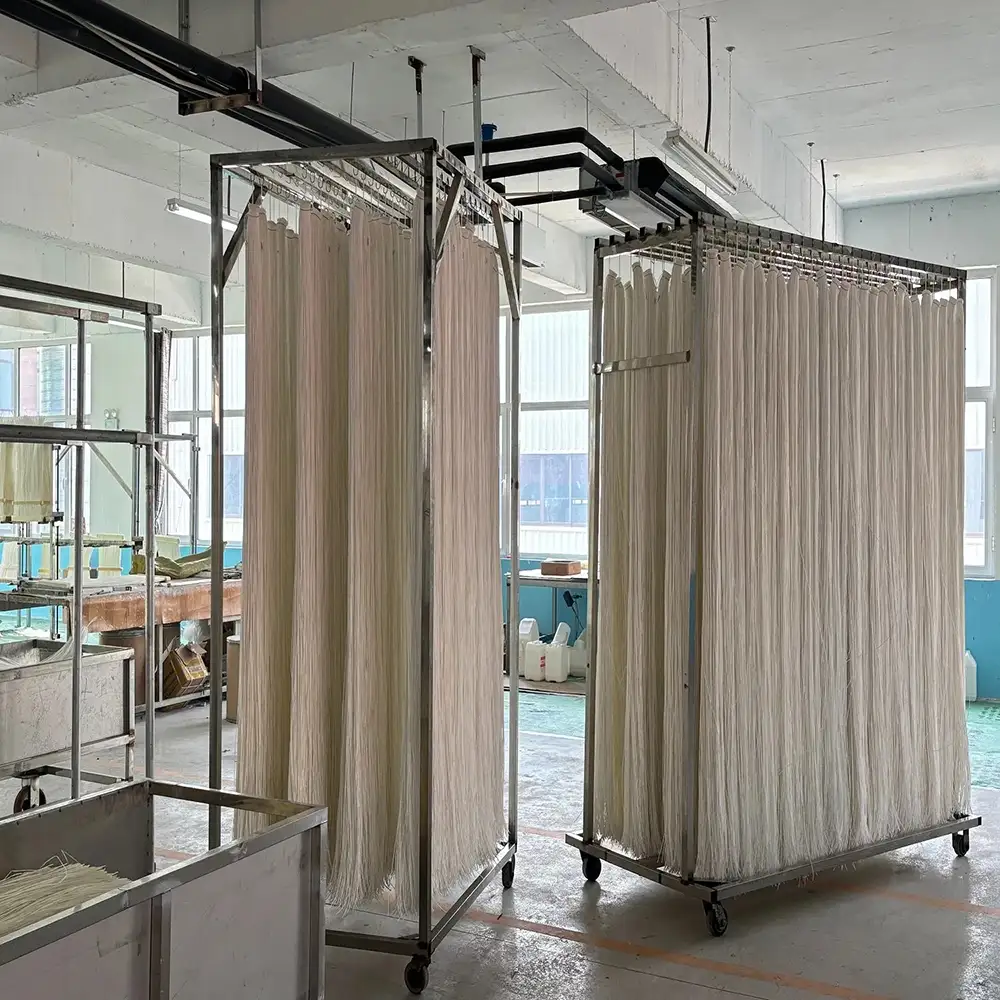
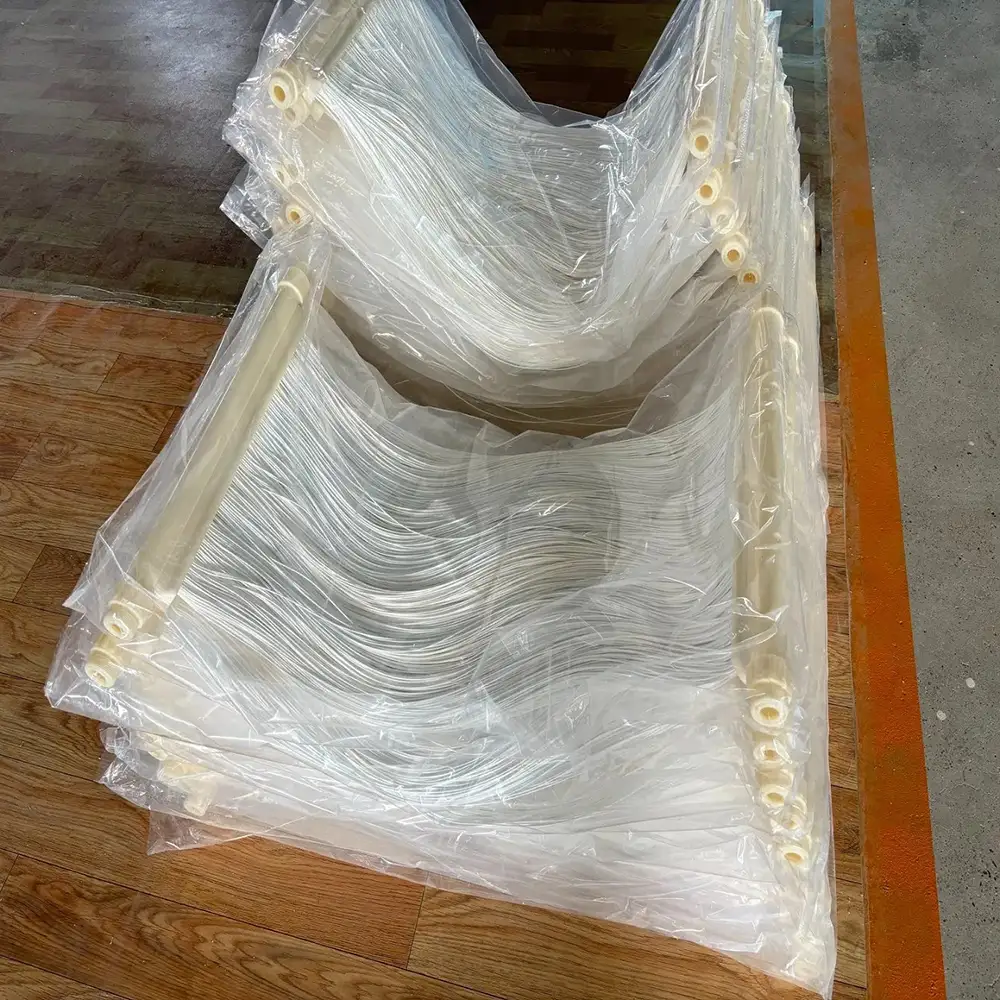
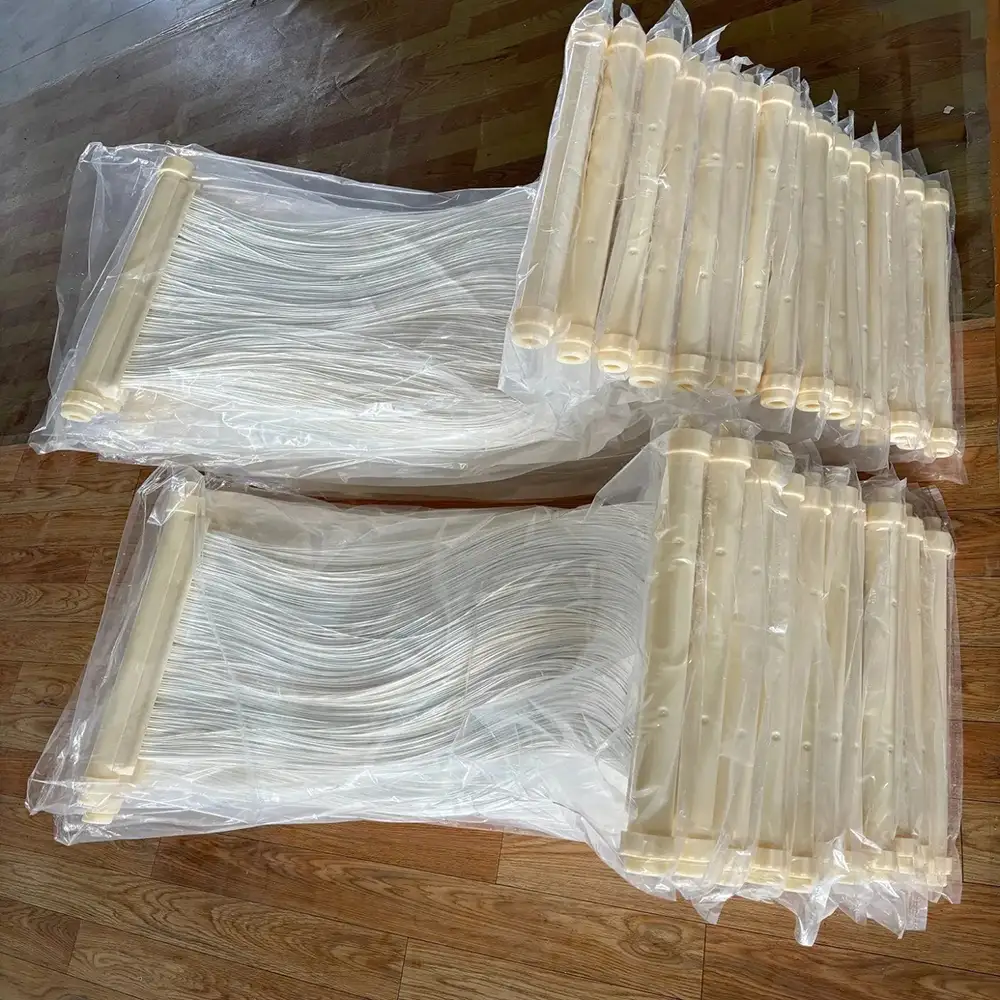
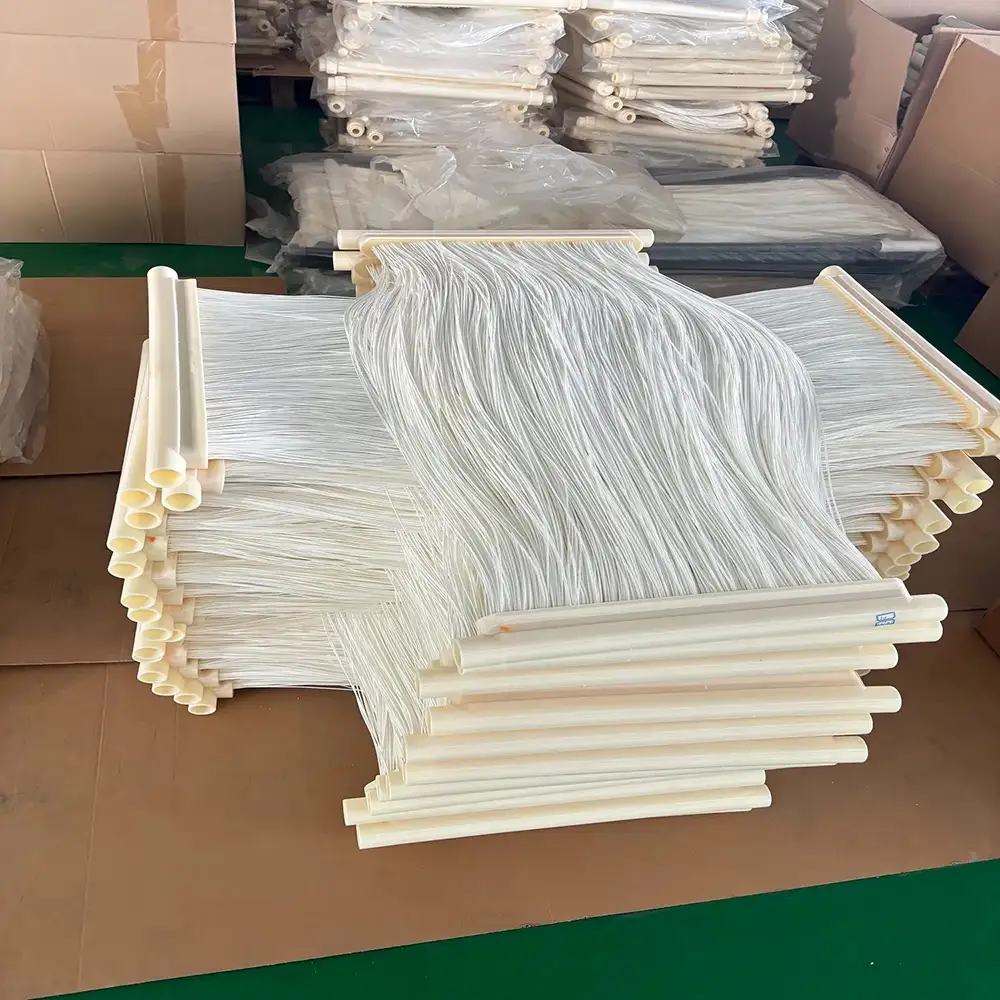
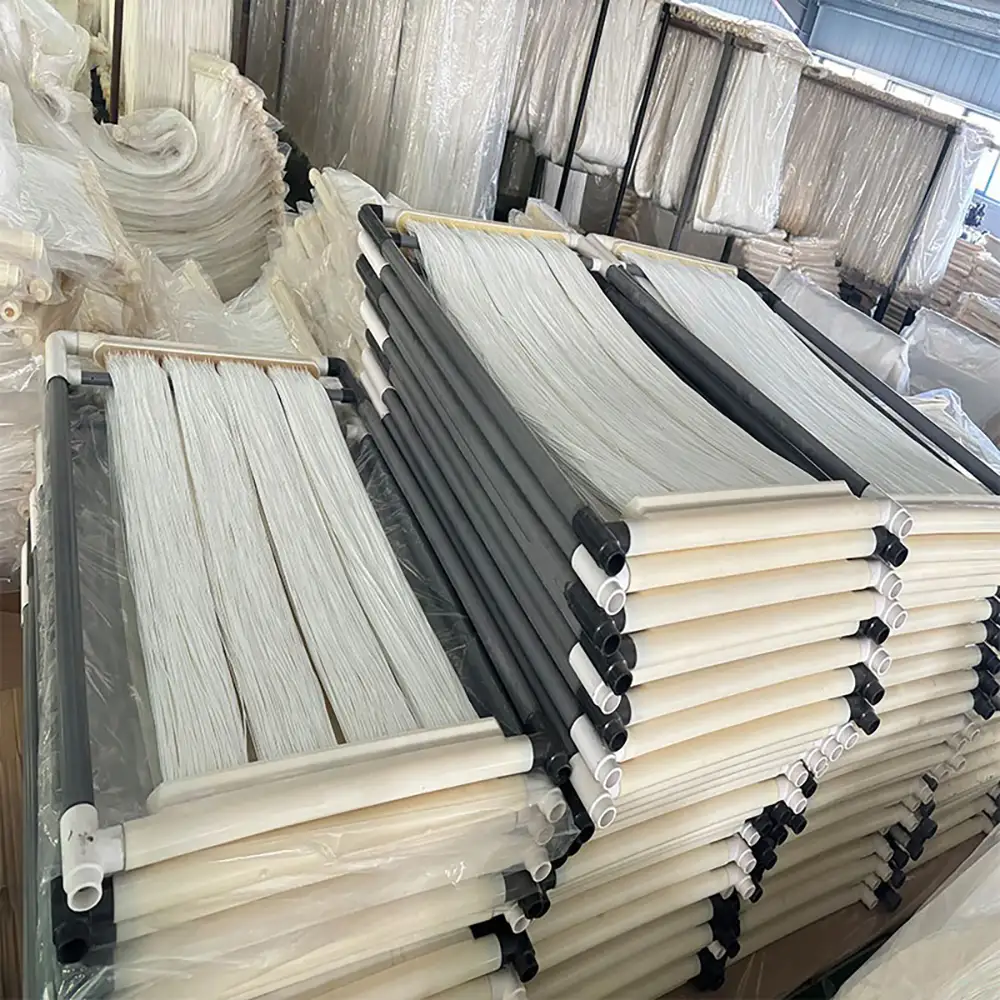
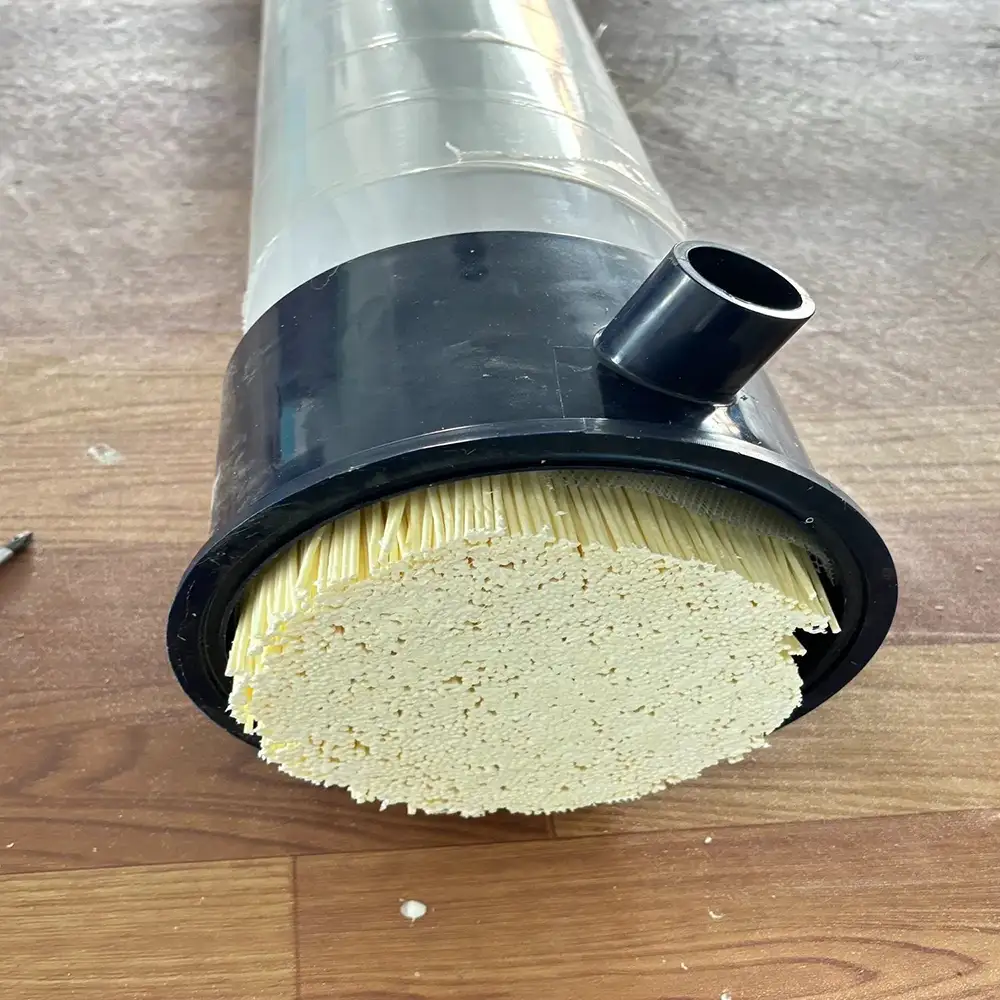
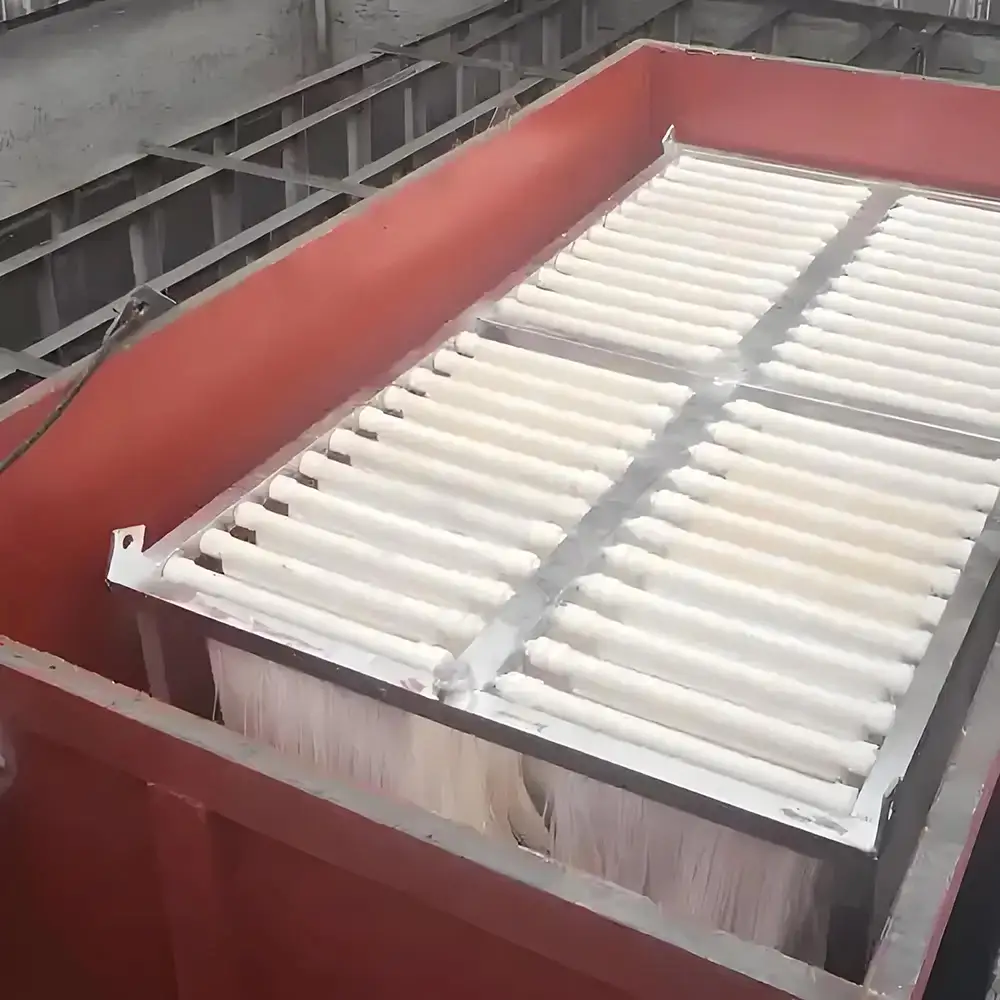
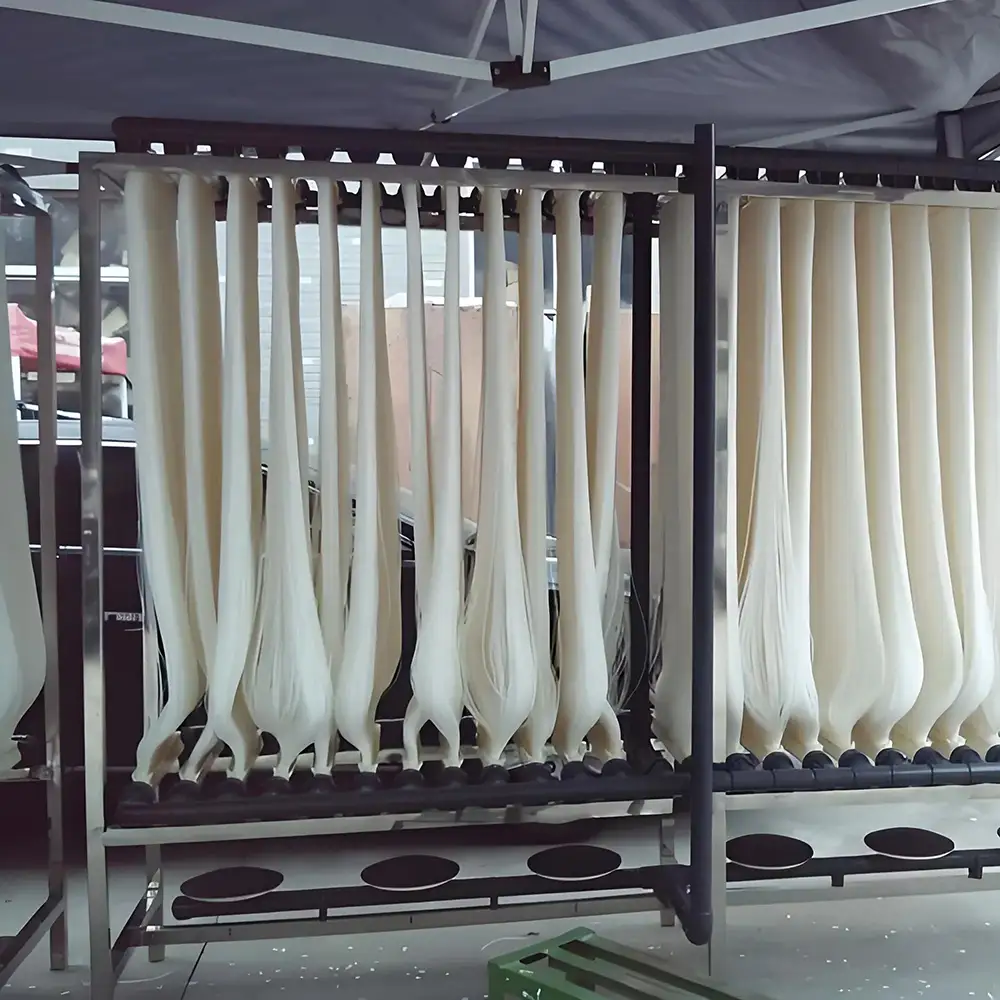
The hollow fiber membrane consists of numerous small tubular fibers with membrane surfaces that provide a large filtration area within a compact module. In submerged MBR applications, the hollow fiber modules are installed inside or adjacent to the biological treatment tank, depending on system configuration.
The membrane allows treated water to pass through while retaining suspended solids and activated sludge. This enables the biological reactor to maintain a higher concentration of microorganisms without relying on conventional gravity sedimentation alone.
Hollow fiber membrane systems are widely associated with municipal wastewater treatment because they provide a compact membrane configuration with a high membrane surface area. Full-scale municipal MBR installations have used submerged hollow-fiber ultrafiltration membranes for long-term wastewater treatment and reuse.
|
Model |
WZ-MBR-II15 |
WZ-MBR-II30 |
|
Element size |
a*b |
1250mm*1300mm |
1250mm*2000mm |
|
Connection |
Ф32 |
Ф32 |
|
Element parameters |
Efective membrane area |
15m² |
30m² |
|
Pore size |
0.03~ 0.1µm |
0.03~ 0.1µm |
|
material |
PVDF membrane with PET support tube & ABS cartridge |
|
Method of integration |
Both ends of the catchment |
|
Filtration mode |
Negative pressure suction by submersed membrane |
|
Operating conditions |
Operation pressure range |
0.02~0.05Mpa |
|
MAX Backwash pressure |
0.1Mpa |
|
Temperature |
10~45ºC |
|
Run PH tolerance range |
5~9 |
|
Clean PH tolerance range |
2~10 |
|
Aeration rate(Nm³)/ projected area |
100-150 m/h |
|
Performance |
Produced water turbidity |
Turbidity <0.3NTU SS≈0 SDI<4 |
|
Working life |
≥ 5 years under normal usuage |
How the MBR RO Water Purification System Works
A typical integrated process can be arranged as:
Municipal Wastewater → Pretreatment → Equalization → Biological Treatment → Hollow Fiber MBR → MBR Permeate → RO Pretreatment → High-Pressure RO → Purified Water → Reuse
1. Pretreatment
Incoming municipal wastewater first passes through screening and other pretreatment equipment to remove coarse solids, plastics, fibers, grit, and other materials that could damage downstream equipment or interfere with membrane operation.
2. Biological Treatment
The wastewater enters an aerobic, anoxic, or combined biological treatment process. Microorganisms consume biodegradable organic pollutants and help reduce parameters such as BOD and COD.
3. Hollow Fiber UF Membrane Filtration
The mixed liquor is separated by the hollow fiber ultrafiltration membrane. The membrane retains suspended solids and biomass while producing a relatively clear permeate.
4. RO Water Purification
Where higher-quality water is required, the MBR permeate can be used as RO feedwater after suitable pretreatment. The RO membrane provides a further separation step for dissolved salts and other dissolved substances.
Research on municipal MBR effluent has shown that combining MBR with RO can provide substantially deeper removal of selected inorganic contaminants than MBR/UF alone in certain reuse applications.
Key Features of the Hollow Fiber MBR System
High Membrane Surface Area
Hollow fiber modules contain many membrane fibers in a compact arrangement, providing substantial filtration surface area without requiring a large membrane footprint.
Efficient Solid-Liquid Separation
The ultrafiltration membrane provides a physical barrier that retains suspended solids and activated sludge, helping maintain stable separation between treated water and biological solids.
Compact Municipal Wastewater Treatment
MBR technology can combine biological treatment and membrane separation in a relatively compact configuration. This is particularly valuable for municipal treatment plants where available land is limited.
Excellent Pretreatment for RO
The MBR process can provide a high-quality feed stream for downstream RO when properly designed and operated. Reducing suspended solids and turbidity before RO helps create more suitable conditions for the high-pressure membrane stage.
Flexible Water Reuse Configuration
The system can be designed for wastewater discharge, non-potable reuse, industrial process water, irrigation applications, or as part of a more advanced water purification train.
Modular System Design
Membrane modules, biological tanks, pumps, blowers, control systems, pretreatment units, and RO equipment can be configured according to required treatment capacity and final water quality.
Municipal Water Treatment Applications
The Hollow Fiber Ultrafiltration MBR System is suitable for many municipal and commercial applications, including:
Municipal sewage treatment plants
Urban wastewater treatment
Residential community wastewater
Hotel and resort wastewater
Commercial wastewater
Decentralized sewage treatment
Water reclamation facilities
Industrial park wastewater
Industrial wastewater recycling
Municipal water reuse
Irrigation water production
Cooling water reuse
MBR-RO advanced water purification
For municipal water reuse, UF and MBR membrane systems can serve as important treatment barriers, while RO can be added where dissolved contaminants and stricter reuse requirements need to be addressed. Modern municipal reuse treatment trains commonly combine membrane processes with downstream RO and disinfection.
Hollow Fiber UF Membrane vs. RO Membrane
Although both technologies use membranes, ultrafiltration and reverse osmosis perform different functions.
The hollow fiber UF membrane primarily provides physical separation of suspended solids, colloids, microorganisms, and other larger contaminants. It is commonly integrated into MBR systems.
RO operates at much higher pressure and uses a much tighter separation mechanism. It is used for deeper purification of dissolved salts and many dissolved contaminants.
Therefore, an MBR-RO system should not be considered two identical membrane filtration stages. Instead, each membrane performs a different role:
MBR/UF: Biological treatment + suspended solids separation + membrane filtration
RO: Advanced dissolved contaminant and desalination treatment
This complementary arrangement makes MBR-RO attractive for advanced wastewater recycling and water reuse projects.
Membrane Fouling and System Maintenance
Membrane fouling is one of the most important operational considerations in an MBR system. Organic substances, biological products, inorganic deposits, and suspended particles can accumulate on membrane surfaces and affect permeability.
Effective operation may include:
Proper wastewater pretreatment
Correct membrane flux control
Adequate aeration
Air scouring
Periodic physical cleaning
Chemical cleaning when necessary
Proper sludge concentration control
Regular transmembrane pressure monitoring
Preventive membrane maintenance
The exact cleaning schedule depends on wastewater characteristics, membrane material, operating flux, temperature, solids concentration, and system design.
RO maintenance also requires appropriate pretreatment and control of scaling and fouling. A well-designed MBR stage can provide an important pretreatment function before RO, but RO feed requirements should still be evaluated according to the specific membrane manufacturer's specifications.
MBR System for Water Reuse
One of the major applications of the Hollow Fiber MBR System is wastewater reclamation.
MBR treatment can produce high-quality effluent suitable for additional polishing. When the required water quality is higher, an integrated process may use:
MBR → UF/Membrane Filtration → RO → UV/Advanced Disinfection → Reclaimed Water
The final treatment configuration depends on the intended application. Cooling water, industrial process water, irrigation, groundwater recharge, and potable reuse have different quality requirements and should not automatically use the same treatment train.
A municipal pilot study evaluating MBR effluent followed by RO found strong removal of selected inorganic contaminants and demonstrated potential for cooling and irrigation reuse applications.
Customized Hollow Fiber MBR and RO Systems
Every wastewater treatment project has different influent characteristics and treatment objectives. A customized system can be configured according to:
Treatment capacity
Daily wastewater flow
Influent BOD and COD
Suspended solids concentration
Nitrogen and phosphorus requirements
Membrane flux
Membrane area
Hollow fiber module configuration
Biological reactor volume
RO capacity
Required recovery rate
Final water quality
Available installation space
Automation requirements
OEM solutions can also include customized membrane modules, stainless steel frames, pumps, blowers, control cabinets, piping, valves, sensors, PLC controls, and complete skid-mounted treatment systems.
Why Choose Our Hollow Fiber MBR System?
Integrated MBR Technology:
We provide membrane-based wastewater treatment solutions combining biological treatment and hollow fiber ultrafiltration.
Municipal Wastewater Expertise:
The system can be configured for municipal sewage, community wastewater, commercial wastewater, and water reclamation projects.
MBR and RO Integration:
For advanced water purification, MBR permeate can be configured as pretreatment for downstream RO.
Flexible Capacity:
Membrane area, module quantity, biological treatment capacity, and RO capacity can be configured according to project requirements.
OEM and Custom Manufacturing:
We support customized membrane modules and complete water treatment systems for engineering contractors, distributors, environmental companies, and international B2B projects.
Complete Project Support:
From individual hollow fiber membrane modules to integrated MBR-RO water purification systems, we can provide solutions according to wastewater characteristics and final treatment objectives.
Frequently Asked Questions
1. What is a hollow fiber MBR system?
A hollow fiber MBR system combines biological wastewater treatment with hollow fiber membrane filtration to separate treated water from activated sludge and suspended solids.
2. What does MBR stand for?
MBR stands for Membrane Bioreactor. It combines biological treatment with membrane separation.
3. What is the function of the hollow fiber UF membrane?
The hollow fiber ultrafiltration membrane provides fine solid-liquid separation and retains suspended solids and biomass while allowing treated water to pass through.
4. Can an MBR system treat municipal wastewater?
Yes. MBR technology is widely used for municipal wastewater treatment and water reuse applications.
5. Can the MBR system be connected to an RO system?
Yes. MBR permeate can be further treated by RO when deeper purification or removal of dissolved contaminants is required.
6. What is the difference between UF and RO?
UF primarily removes suspended solids, colloids, and microorganisms, while RO provides much tighter separation and is used for dissolved salts and other dissolved contaminants.
7. Can MBR water be reused directly?
The answer depends on the intended reuse application and applicable water-quality requirements. Some applications may require additional RO, disinfection, activated carbon, or other polishing processes.
8. How is MBR membrane fouling controlled?
Fouling can be managed through pretreatment, controlled flux, aeration, air scouring, proper sludge management, physical cleaning, and chemical cleaning when required.
9. Is hollow fiber membrane suitable for large wastewater plants?
Yes. Hollow fiber membrane configurations can be scaled by increasing membrane area and module quantity according to the required treatment capacity.
10. Can the MBR system be used as RO pretreatment?
Yes. MBR systems can provide membrane-based solid-liquid separation and can be incorporated into treatment trains feeding RO.
11. Can you customize the MBR system?
Yes. Membrane area, module configuration, treatment capacity, piping, pumps, control systems, and RO equipment can be customized.
12. What information is required for system selection?
Typical information includes wastewater flow, influent water quality, treatment objectives, required effluent quality, operating hours, available space, and intended water reuse application.
13. Is the MBR system suitable for industrial wastewater?
Yes. With appropriate pretreatment and biological process design, MBR systems can be configured for many industrial wastewater applications as well as municipal sewage treatment.