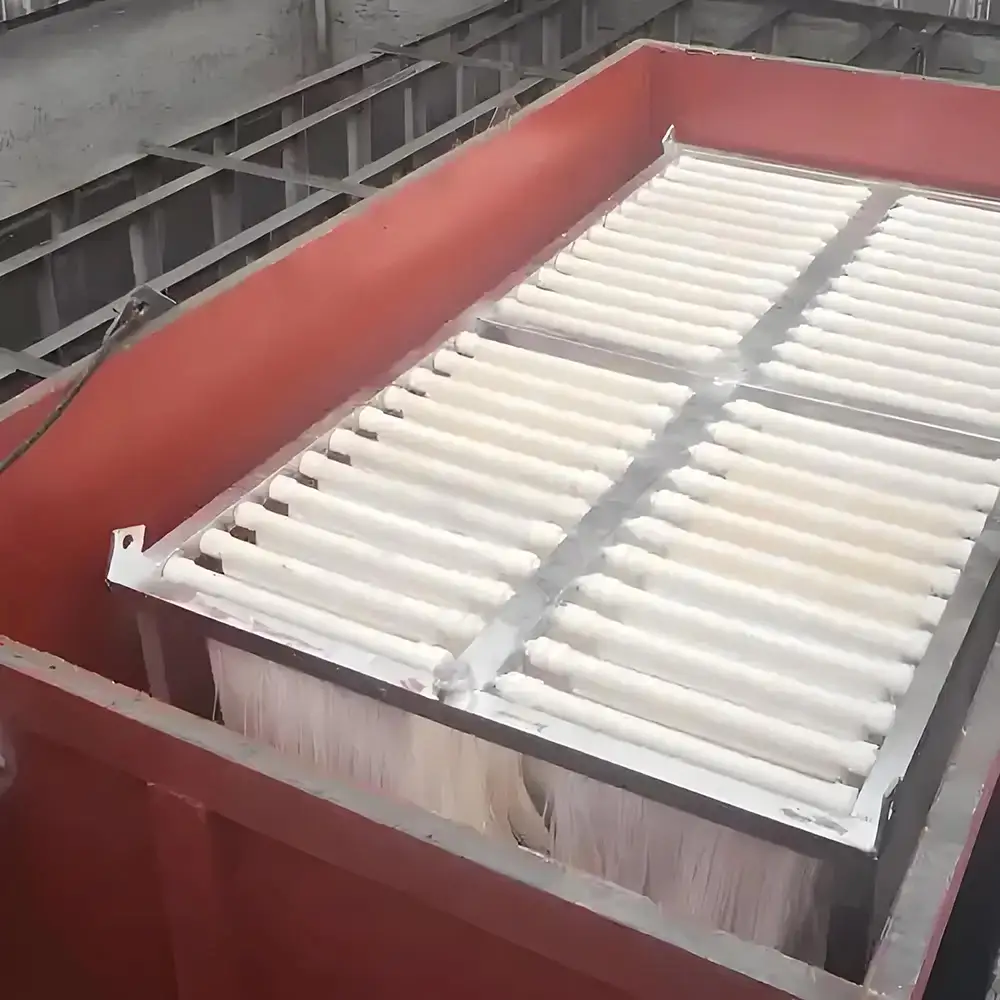
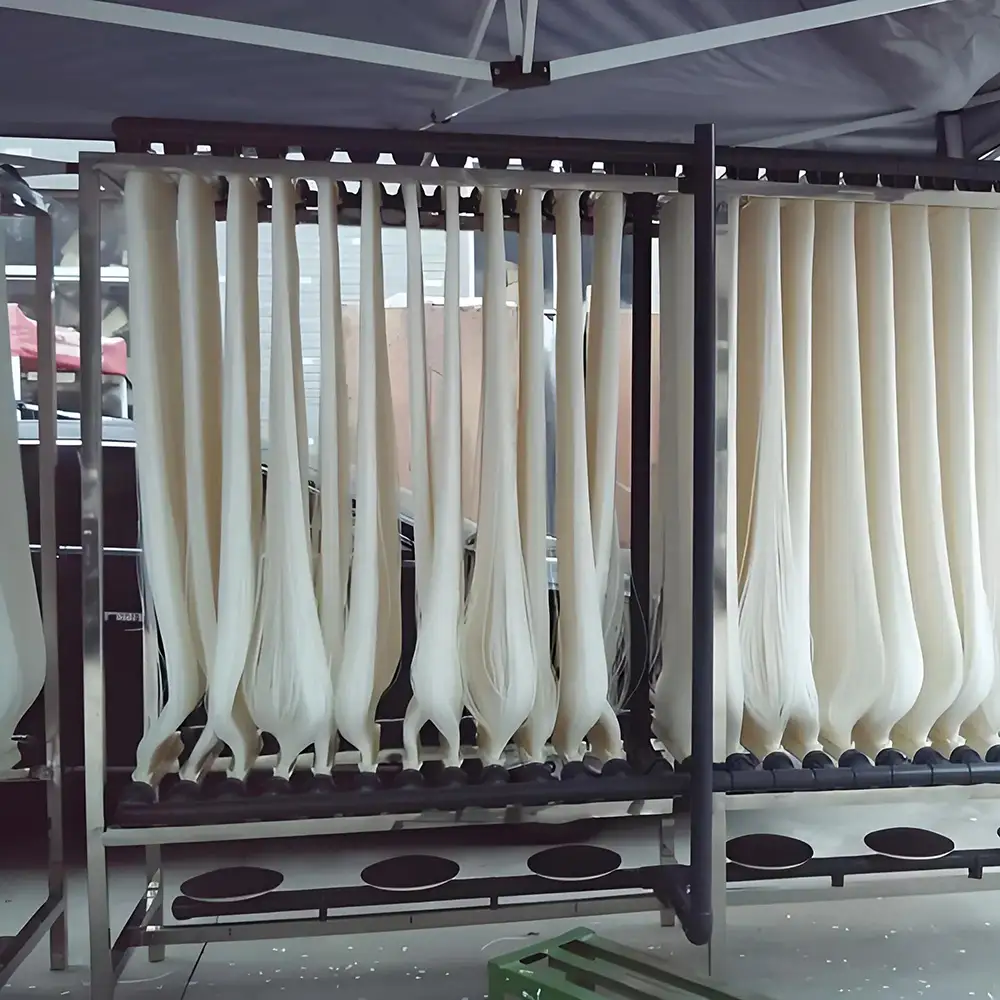
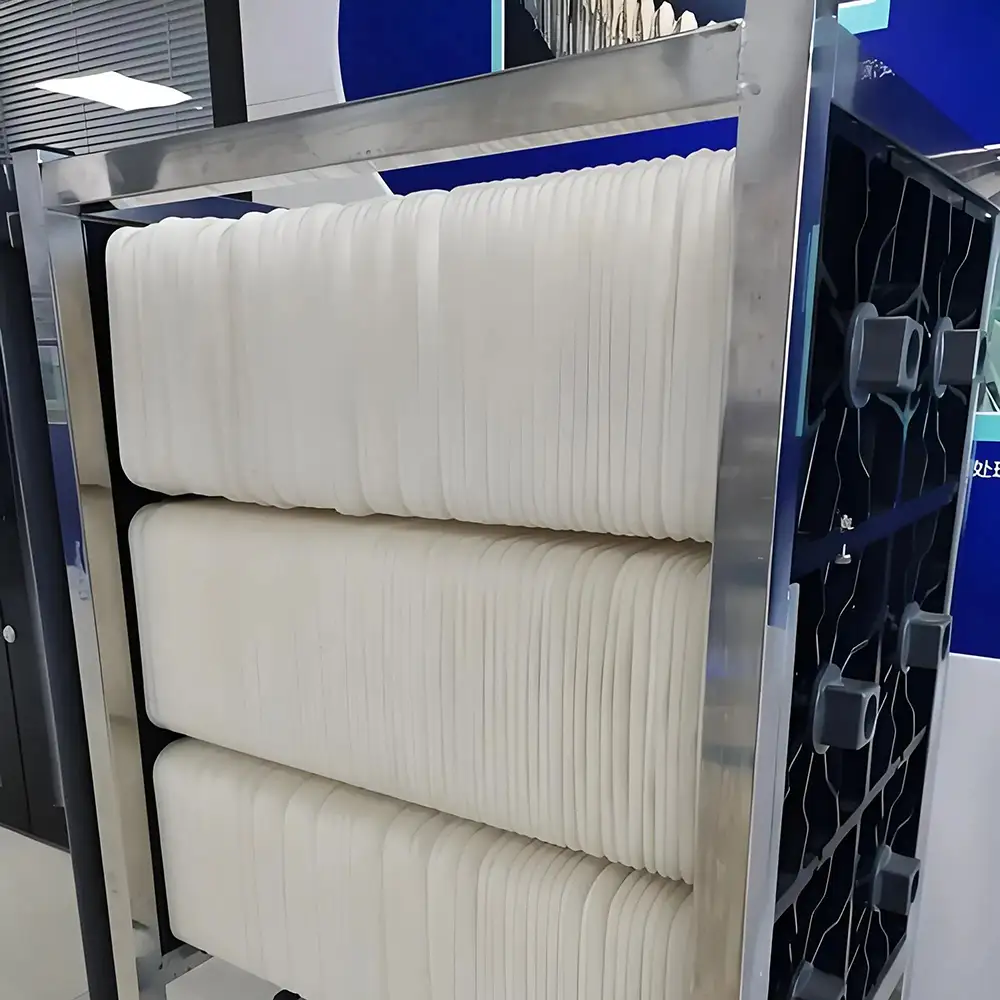
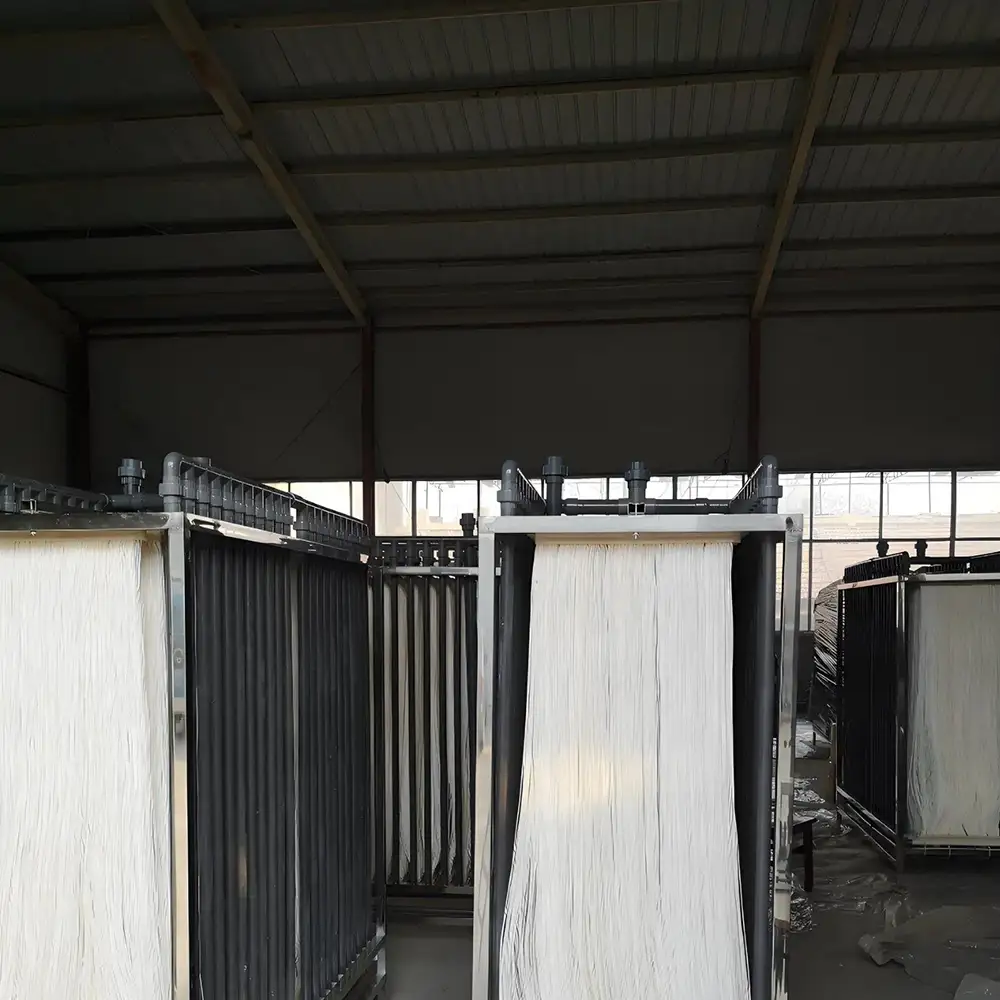
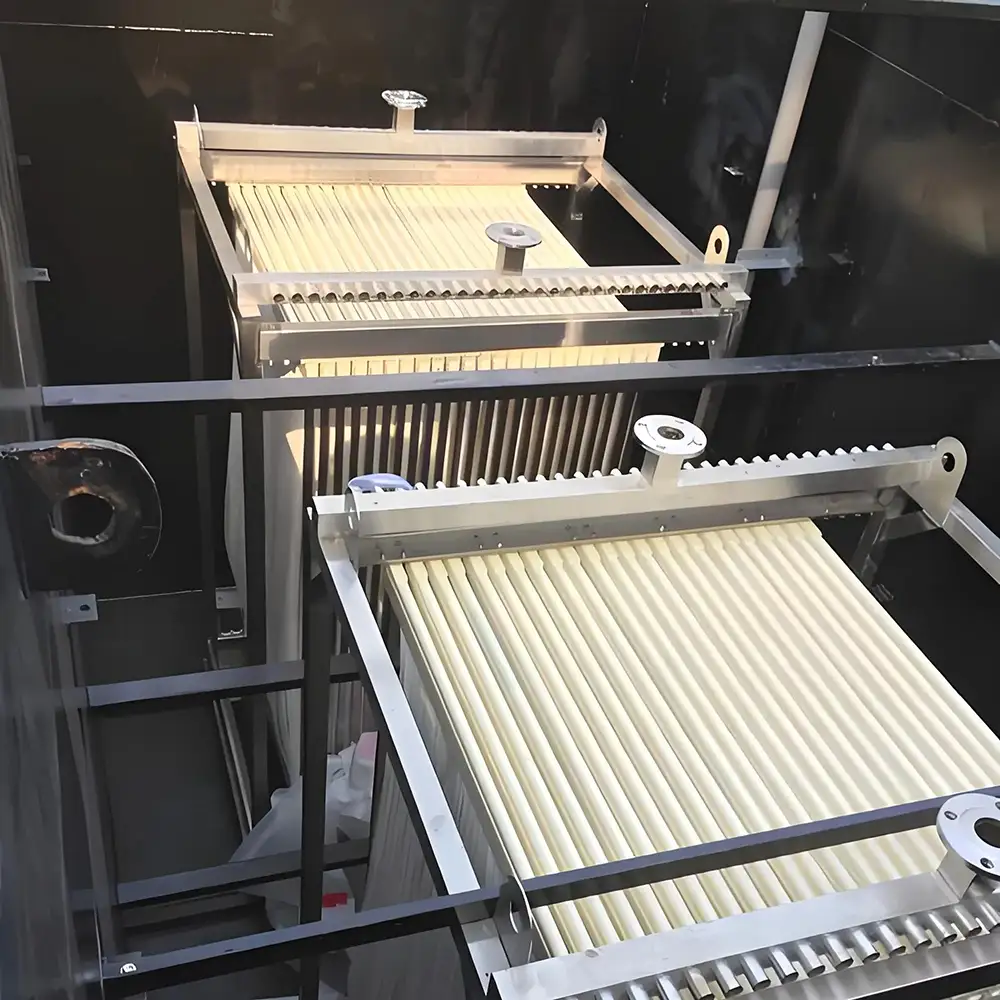
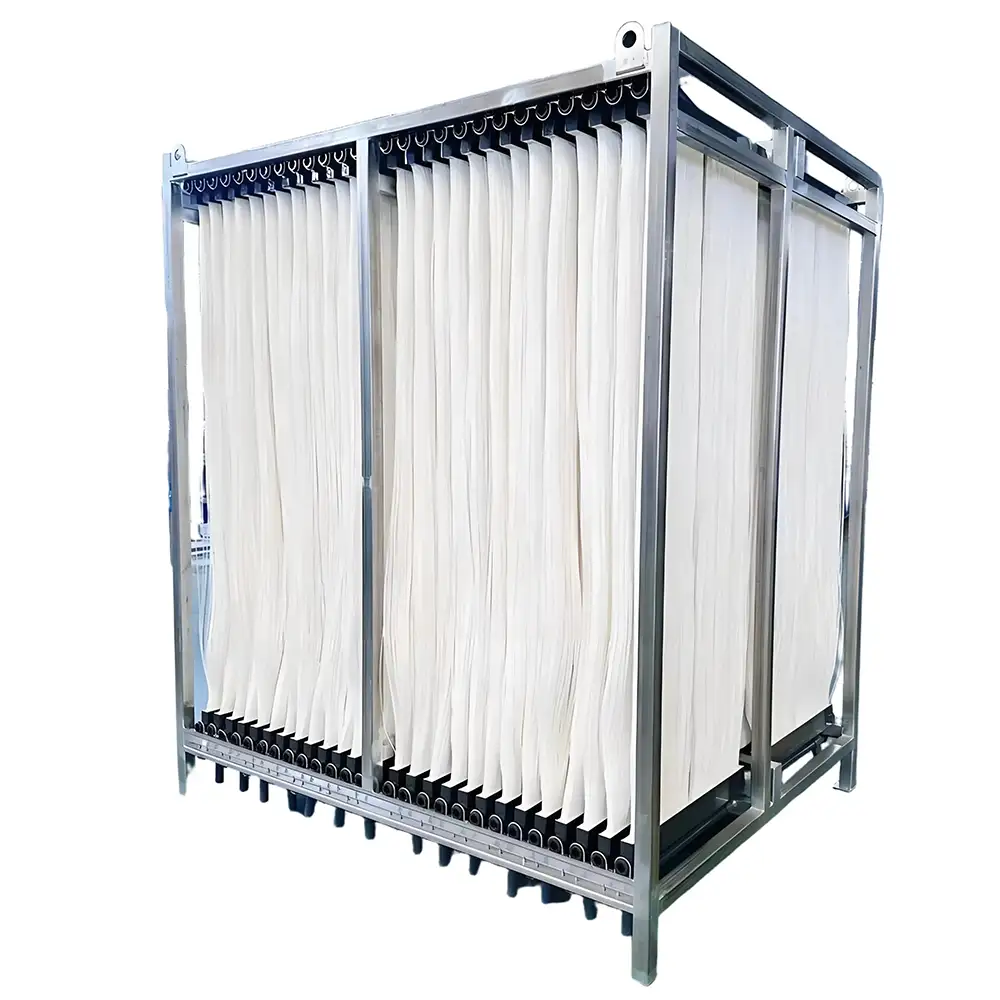
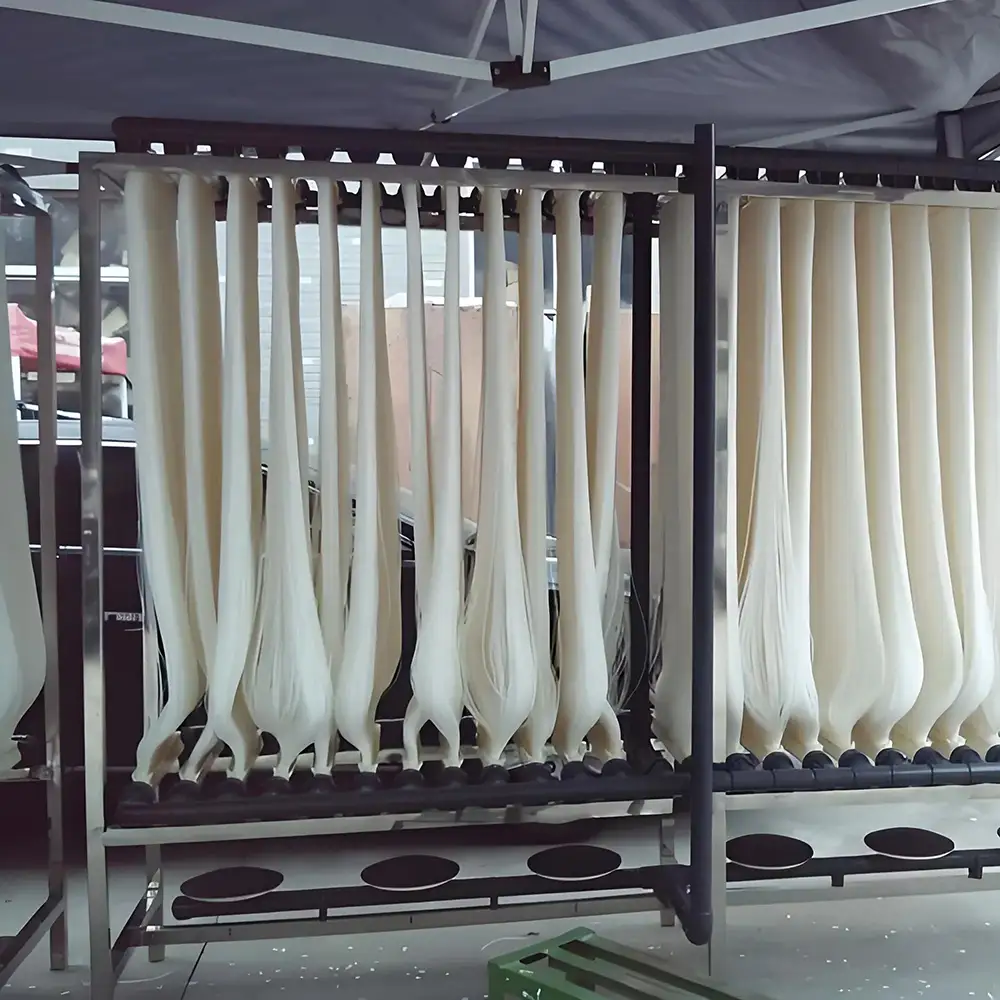
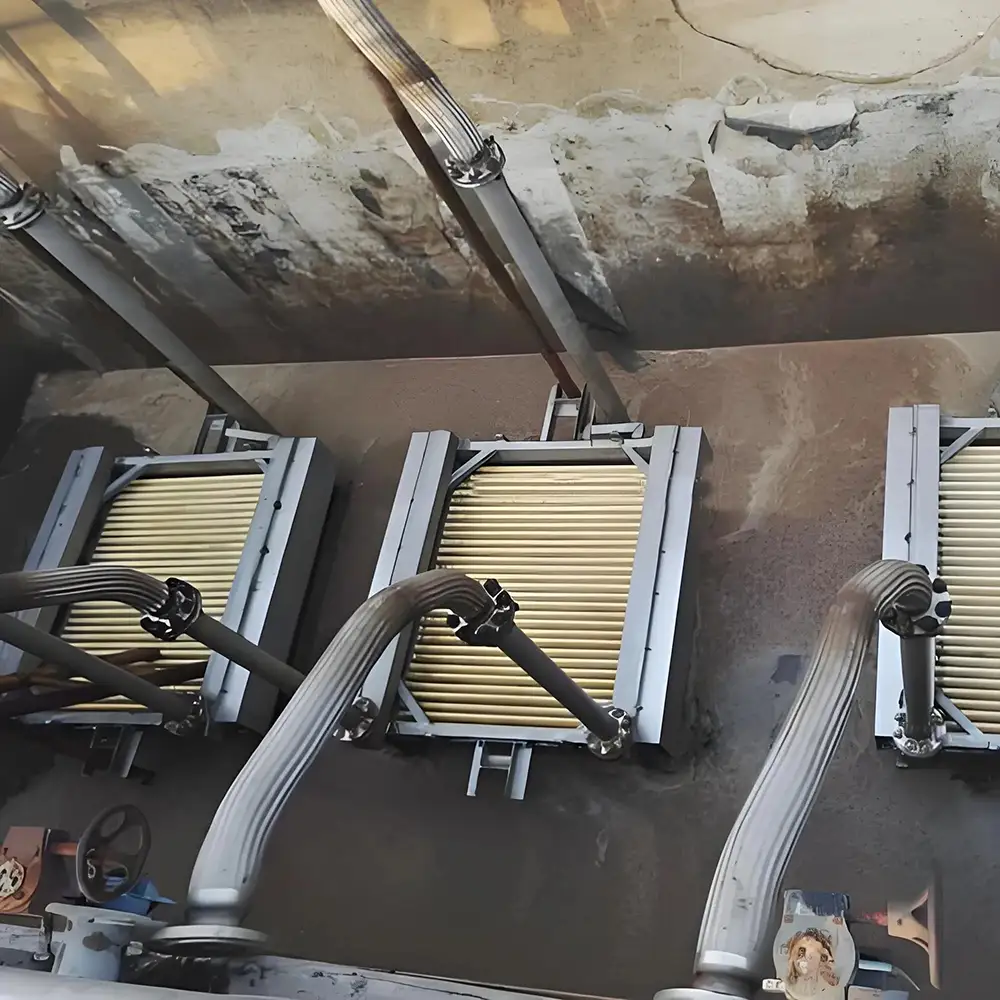
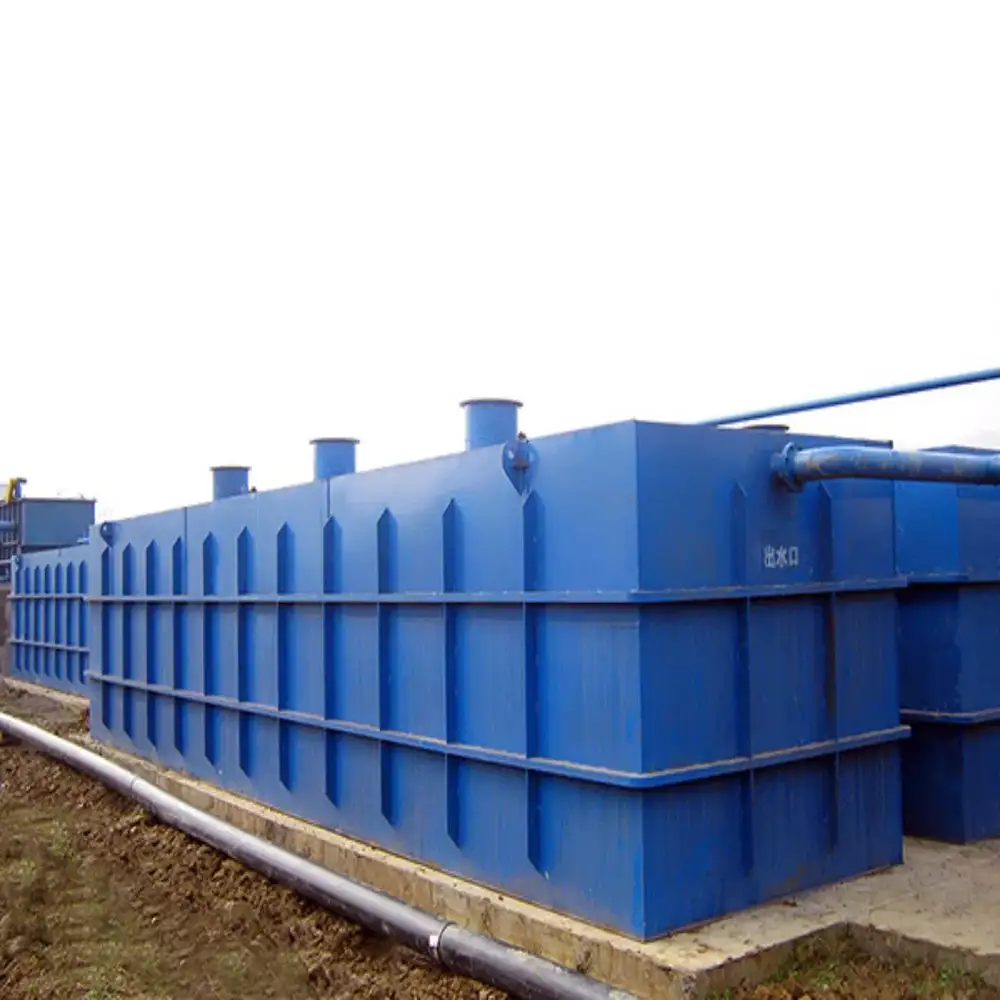
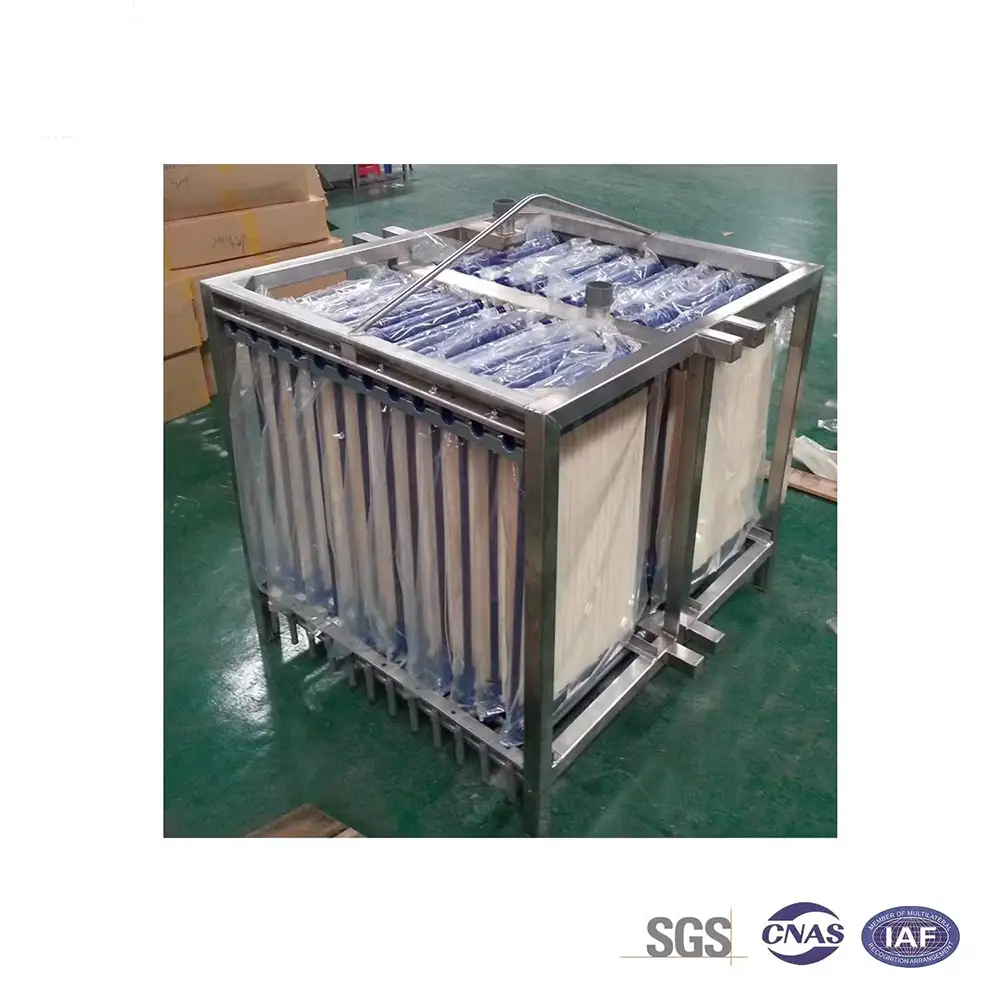
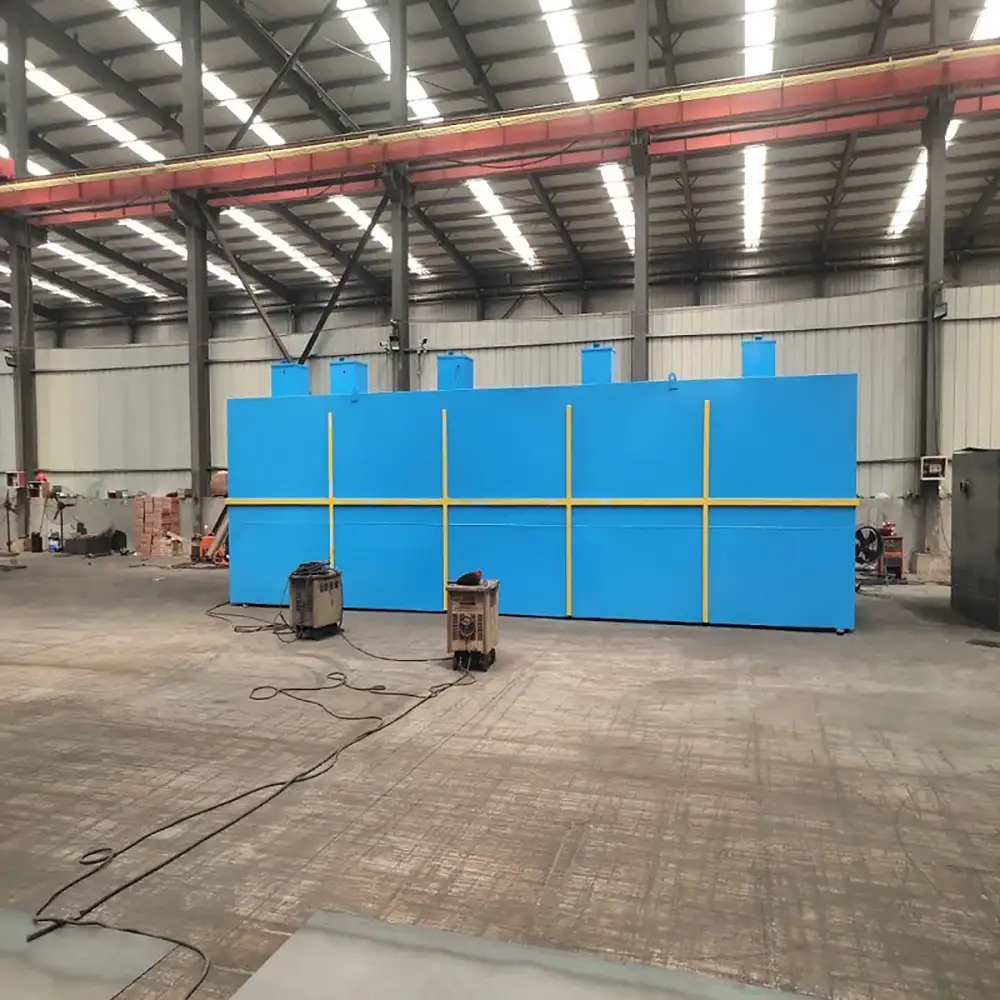
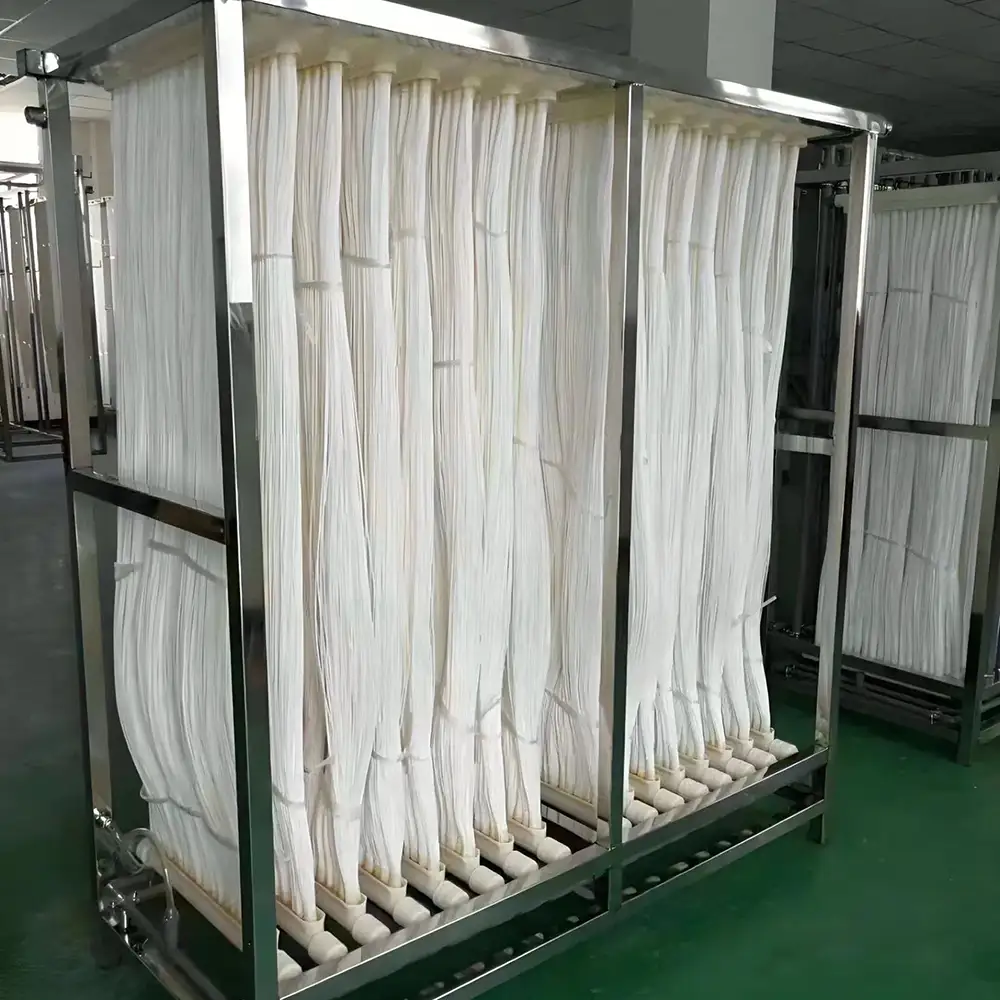
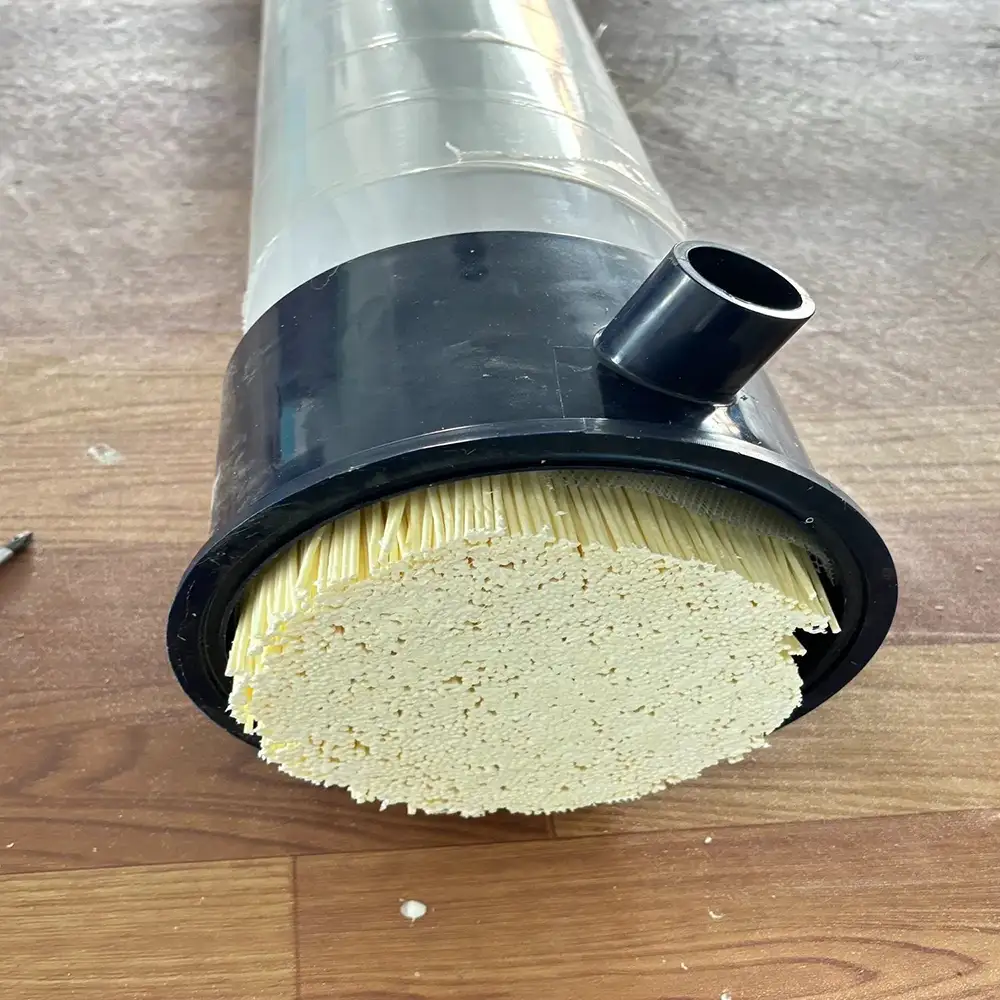
Membrane-Bioreactor (MBR) is the application of membrane separation technology in the field of microbial treatment technology. Membrane modules are used to replace the secondary sedimentation tank at the end of traditional biological treatment technology. The activated sludge and macromolecular organic matter in the biochemical reaction tank are intercepted and left in the biochemical tank to continue biochemical treatment, thereby maintaining a high concentration of activated sludge in the bioreactor. It is convenient to continuously react and degrade difficult-to-degrade substances, so that the biochemical reaction of degrading sewage proceeds more quickly and thoroughly, and the effluent quality is better. Secondly, due to the high filtration accuracy of the membrane separation component in the membrane-bioreactor, the solid-liquid separation capacity of the system is improved, the floor space of the sewage treatment facility is reduced, and the amount of remaining sludge is reduced by maintaining a low sludge load, thereby obtaining High quality produced water.
Product Parameters
|
Model NO. |
PVDF |
Handling method |
Physical Treatment |
|
Usage |
Industrial, Home, Agriculture, Hospital, Urban |
Trademark |
|
|
Types |
Package, Compact, Small, Mini |
Applications |
Industrial, Municipal, Domestic, Medical, Ship |
|
Transport Package |
Container Standard Packing |
Features |
Remove Cod BOD |
|
Service Life |
10 Years |
Operation |
Automatic |
|
material |
PVDF |
Function |
Removing Escherichia coli, harmful bacteria |
|
Voltage |
220V/ 380V/ Customerized |
Installation Type |
Underground / Onground |
|
Colour |
white |
Use for |
Mineral, Printing, Chemical, Dyeing, Starch |
|
Material |
PVDF |
Production Capacity |
2000 Sets/Year |
Efficient Microbial Interception and Organic Matter Removal Sewage Treatment Equipment
Efficient Microbial Interception, Purification and Removal of Organic Matter Sewage Treatment Equipment is an advanced wastewater treatment solution designed to reduce organic pollutants, retain microorganisms and suspended solids, and produce high-quality treated water. By combining biological treatment with membrane filtration, this type of equipment can provide an efficient treatment process for municipal sewage, industrial wastewater, commercial wastewater, and water reuse applications.
The core technology can be configured around a membrane bioreactor (MBR), where microorganisms biologically degrade biodegradable organic matter while an ultrafiltration or microfiltration membrane provides a physical separation barrier. Unlike conventional activated sludge systems that rely on a secondary settling tank for solid-liquid separation, MBR technology uses membrane filtration to retain biomass and suspended solids. This allows biological treatment and advanced solid-liquid separation to operate in a compact system.
The membrane acts as an effective microbial interception barrier. Depending on membrane type and operating conditions, the system can retain activated sludge, suspended solids, bacteria, and other particulate contaminants while allowing treated water to pass through as permeate. MBR systems are therefore widely considered for applications requiring high-quality effluent and consistent filtration performance.
How the Sewage Treatment Equipment Works
The treatment process normally starts with pretreatment. Raw sewage enters a screening system that removes larger debris, plastics, fibers, hair, sand, and other materials that could interfere with downstream equipment or cause membrane fouling.
After screening, the wastewater can enter an equalization tank. Equalization helps balance fluctuations in flow, pollutant concentration, and wastewater characteristics before the biological treatment stage.
The conditioned wastewater then enters the biological reactor or aeration tank. Air is supplied through fine-bubble or coarse-bubble diffusers to maintain the dissolved oxygen level required by microorganisms. These microorganisms consume biodegradable organic compounds and convert them into carbon dioxide, water, and new biomass. Depending on the process configuration, nitrification and denitrification can also be incorporated for nitrogen removal.
After biological treatment, the mixed liquor is transferred to the membrane separation stage. The MBR membrane module provides solid-liquid separation without relying on conventional gravity sedimentation.
The treated water passes through the membrane as permeate, while activated sludge and microorganisms remain within the biological system. This microbial interception mechanism allows the operator to maintain a higher concentration of active biomass and provides a stable separation process.
Efficient Microbial Interception
One of the major advantages of membrane-based sewage treatment is the ability to physically retain biomass inside the treatment system.
In conventional activated sludge treatment, the biological process depends heavily on good sludge settling characteristics. Poor settling sludge can cause suspended solids to escape with the treated water. MBR technology replaces or supplements this separation function with membrane filtration.
The membrane therefore acts as a physical barrier between the treated water and the biological mixed liquor. This can provide very low suspended-solids concentrations in the permeate and support high-quality downstream treatment.
For projects requiring additional purification, MBR permeate can be further treated with UV disinfection, activated carbon, reverse osmosis, or other advanced processes depending on the final water quality objective.
Organic Matter Removal
Organic matter is one of the primary pollutants found in domestic sewage and many industrial wastewaters. Typical indicators include BOD and COD.
The biological reactor provides the main environment for microbial degradation of biodegradable organic pollutants. Microorganisms use organic compounds as substrates for growth and energy, reducing the organic loading of the wastewater.
MBR technology can be particularly useful where consistent organic removal and low suspended solids are required. A properly designed system can combine high biological activity with membrane separation in a relatively compact footprint. The WHO describes MBRs as a technology combining biological and membrane filtration processes and notes their ability to produce effluent with low organic matter, nutrients, and solids.
For difficult industrial wastewater, however, the treatment process should be selected according to actual wastewater characteristics. Pretreatment, chemical treatment, advanced oxidation, activated carbon, or other processes may be required when pollutants are poorly biodegradable or toxic to microorganisms.
Main Equipment Components
A complete microbial interception and organic matter removal sewage treatment system can include:
Coarse Screening System
Fine Screening System
Equalization Tank
Anoxic Tank
Aeration Tank
MBR Membrane Tank
Hollow Fiber Membrane Modules
Flat Sheet Membrane Modules
Air Blowers
Fine-Bubble Diffusers
Permeate Pumps
Sludge Return Pumps
Chemical Cleaning System
Disinfection System
PLC Control Cabinet
Online Monitoring Instruments
The actual equipment configuration depends on wastewater flow, pollutant concentration, required effluent quality, available installation space, and final water use.
MBR Membrane Filtration Technology
The membrane component is the core separation unit of the system. Hollow fiber and flat-sheet membranes are two common configurations.
Hollow fiber membranes provide a large membrane area within a compact module and are widely used in submerged MBR systems. Flat-sheet membranes can provide a robust module configuration and can be selected for specific industrial applications.
Membrane material may include PVDF and other polymeric materials selected according to chemical compatibility, mechanical strength, cleaning requirements, and wastewater characteristics.
Membrane pore size, flux, operating pressure, air-scouring intensity, and cleaning frequency all influence long-term system performance. For this reason, membrane selection should be based on the complete treatment process rather than membrane specifications alone.
Membrane Fouling Control
Membrane fouling is an important operating consideration for MBR equipment. Organic matter, biological materials, suspended solids, inorganic deposits, and fibers can accumulate on membrane surfaces and increase filtration resistance.
Fouling control can include fine pretreatment, appropriate operating flux, membrane aeration, relaxation cycles, backwashing, and periodic chemical cleaning.
Membrane aeration is especially important in submerged MBR systems because air bubbles can create shear at the membrane surface and help reduce the accumulation of solids. Research into MBR systems continues to focus on controlling biofouling and maintaining stable transmembrane pressure.
Good pretreatment is also critical. Hair, fibers, plastics, and other elongated materials can form large agglomerations inside biological tanks and create serious membrane fouling problems if they are not effectively removed.
Applications
Efficient microbial interception and organic matter removal sewage treatment equipment can be used for:
Municipal Sewage Treatment
Domestic Wastewater Treatment
Industrial Wastewater Treatment
Food Processing Wastewater
Beverage and Brewery Wastewater
Pharmaceutical Wastewater
Textile and Printing Wastewater
Chemical Industry Wastewater
Hotel and Commercial Wastewater
Hospital Wastewater
Residential Community Sewage
Industrial Water Recycling
Wastewater Reuse
Advanced Effluent Polishing
Pretreatment Before RO Systems
For industrial applications, the treatment process should be customized according to wastewater composition because high concentrations of toxic compounds, salinity, solvents, oils, or poorly biodegradable chemicals can influence biological treatment performance.
Compact and Modular Design
MBR technology can combine biological treatment and membrane separation in a relatively compact configuration. Eliminating the conventional secondary clarifier can help reduce the overall footprint and simplify the process layout.
Packaged and containerized MBR systems can also be designed for decentralized wastewater treatment, remote facilities, temporary projects, industrial sites, and plant upgrades. Modular equipment makes it easier to expand capacity by adding additional treatment modules when required.
Automation and Control
Modern sewage treatment equipment can be equipped with PLC-based automatic controls. The control system can manage pumps, blowers, membrane filtration cycles, cleaning sequences, valves, liquid levels, and alarms.
Online monitoring can be configured for parameters such as flow, pH, dissolved oxygen, pressure, turbidity, conductivity, and other project-specific indicators.
Automatic operation helps reduce operator workload and provides more consistent control of biological and membrane treatment conditions.
Water Reuse Applications
The treated water produced by an MBR system can be suitable for additional purification when water reuse is required.
Depending on the final application, MBR permeate may be followed by:
UV Disinfection
Chlorination
Ozone Treatment
Activated Carbon Filtration
Reverse Osmosis
Ultrafiltration
Advanced Oxidation
The appropriate polishing process depends on the required reuse standard. MBR systems are commonly considered for reuse because biological treatment and membrane filtration can produce a consistently clarified effluent suitable for further treatment.
Custom Sewage Treatment Equipment
Each sewage treatment project has different influent characteristics. A customized system should therefore be designed using actual wastewater analysis and required discharge or reuse standards.
Important design information includes:
Daily Average Flow
Peak Flow
BOD
COD
TSS
Ammonia Nitrogen
Total Nitrogen
Total Phosphorus
pH
Temperature
Oil and Grease
Salinity or TDS
Required Effluent Quality
Final Water Reuse Requirement
Based on these parameters, the MBR membrane area, biological tank volume, aeration capacity, pump selection, pretreatment, cleaning system, and automation can be appropriately configured.
Why Choose Us?
We provide integrated sewage and wastewater treatment equipment for municipal, commercial, and industrial applications. Our solutions can combine biological treatment, microbial interception, MBR membrane filtration, aeration, disinfection, sludge management, and water reuse into a complete treatment system.
Our engineering approach focuses on matching the equipment configuration to actual wastewater conditions rather than applying a one-size-fits-all solution. We can support membrane selection, process design, equipment configuration, PLC control, OEM manufacturing, system customization, and international B2B supply.
Whether you require a compact packaged MBR system, industrial wastewater treatment plant, sewage treatment membrane module, or customized organic matter removal system, we can configure the equipment according to your treatment capacity and final water quality requirements.
FAQs
1. What is microbial interception in sewage treatment?
Microbial interception refers to the physical retention of microorganisms and biomass by a filtration membrane. In MBR systems, the membrane separates treated water from activated sludge and microorganisms.
2. How does the system remove organic matter?
Microorganisms in the biological reactor consume biodegradable organic compounds. The membrane then separates the treated water from biomass and suspended solids.
3. Is this equipment an MBR system?
It can be configured as an MBR system. MBR technology combines biological wastewater treatment with membrane filtration and is particularly suitable for applications requiring high-quality treated water.
4. What types of membranes can be used?
Common configurations include hollow fiber and flat-sheet membranes. PVDF and other suitable membrane materials can be selected according to wastewater characteristics.
5. Can the system remove BOD and COD?
Yes. Biological treatment is designed to reduce biodegradable organic matter represented by parameters such as BOD and COD. Actual removal performance depends on wastewater composition and process design.
6. Can this equipment treat industrial wastewater?
Yes. The system can be customized for food, beverage, pharmaceutical, textile, chemical, manufacturing, and other industrial wastewater applications.
7. Does MBR require an aeration system?
Most aerobic MBR systems require aeration to supply oxygen for biological treatment. Aeration can also help control fouling on submerged membrane surfaces.
8. How is membrane fouling controlled?
Fouling can be controlled through pretreatment, proper flux selection, membrane aeration, relaxation, backwashing, and periodic chemical cleaning.
9. Can the treated water be reused?
Yes. Depending on the required water quality, MBR permeate can be disinfected or further polished using RO, activated carbon, UV, or other advanced treatment technologies.
10. Can the sewage treatment equipment be customized?
Yes. Treatment capacity, membrane type, tank configuration, aeration system, pumps, controls, disinfection, and other components can be customized.
11. What information is required for equipment selection?
Typical information includes wastewater source, daily and peak flow, BOD, COD, TSS, nitrogen, phosphorus, pH, temperature, salinity, and required final effluent quality.
12. Is MBR suitable for compact wastewater treatment plants?
Yes. Because membrane separation can replace the conventional secondary clarification function, MBR systems can provide a compact treatment configuration for suitable applications.
Prev:
MBR Membrane/Seawater Desalination Equipment/Aeration Tank Water Purifier
Next:
Core Element Efficient Mbr Membrane Sewage Treatment Equipment
TAG:
Industrial Wastewater Treatment,
Organic Wastewater Treatment,
Sewage Treatment Plant,
Industrial Sewage Treatment,
Water Purification Equipment,
Wastewater Treatment Equipment,
Wastewater Treatment System,
Membrane Filtration System,
Wastewater Recycling Equipment,
Water Reuse System,
Industrial Water Reuse,
Advanced Water Treatment,
Ultrafiltration Membrane,
Sewage Treatment Equipment,
Sewage Treatment System,
Membrane Wastewater Treatment,
Advanced Wastewater Treatment,
Biological Wastewater Treatment,
Aeration Tank,
Aerobic Wastewater Treatment,
Biological Sewage Treatment,
Domestic Sewage Treatment,
Municipal Wastewater Treatment,
Organic Pollutant Removal,
MBR Wastewater Treatment,
Wastewater Purification,
MBR Sewage Treatment Equipment,
MBR Sewage Treatment Plant,
MBR Membrane Module,
Flat Sheet MBR Membrane,
Related Category:
Microbial Interception,Purification and Organic Matter Removal,Sewage Treatment Equipment,MBR Sewage Treatment Equipment China, suppliers, manufacturers, factory, customized, wholesale, quotation, made in China