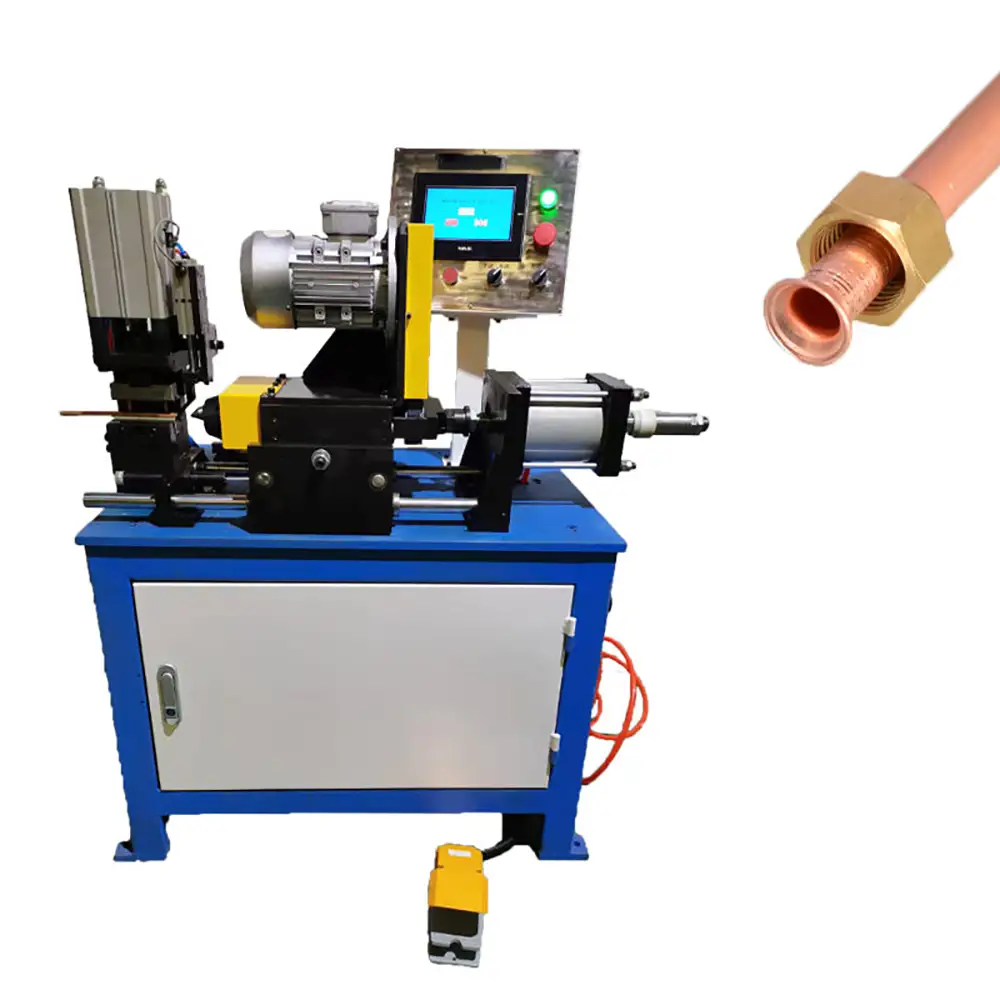
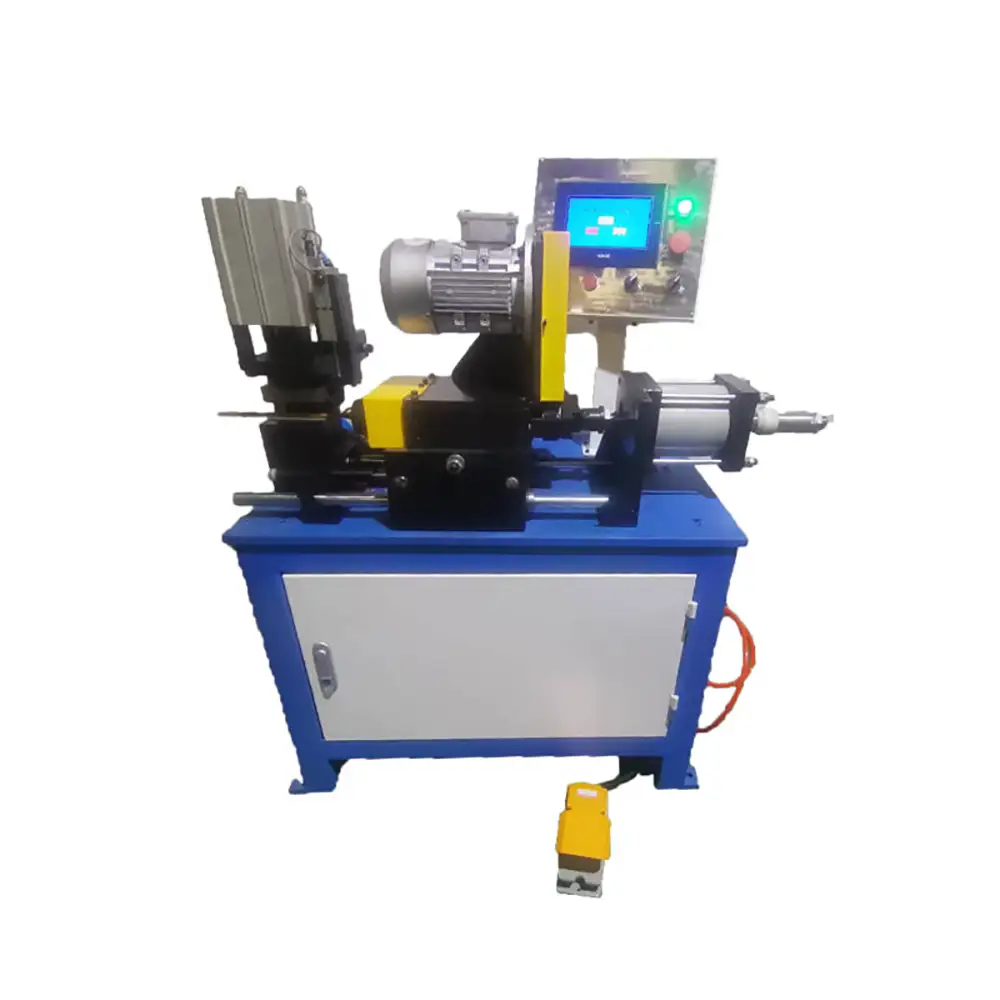
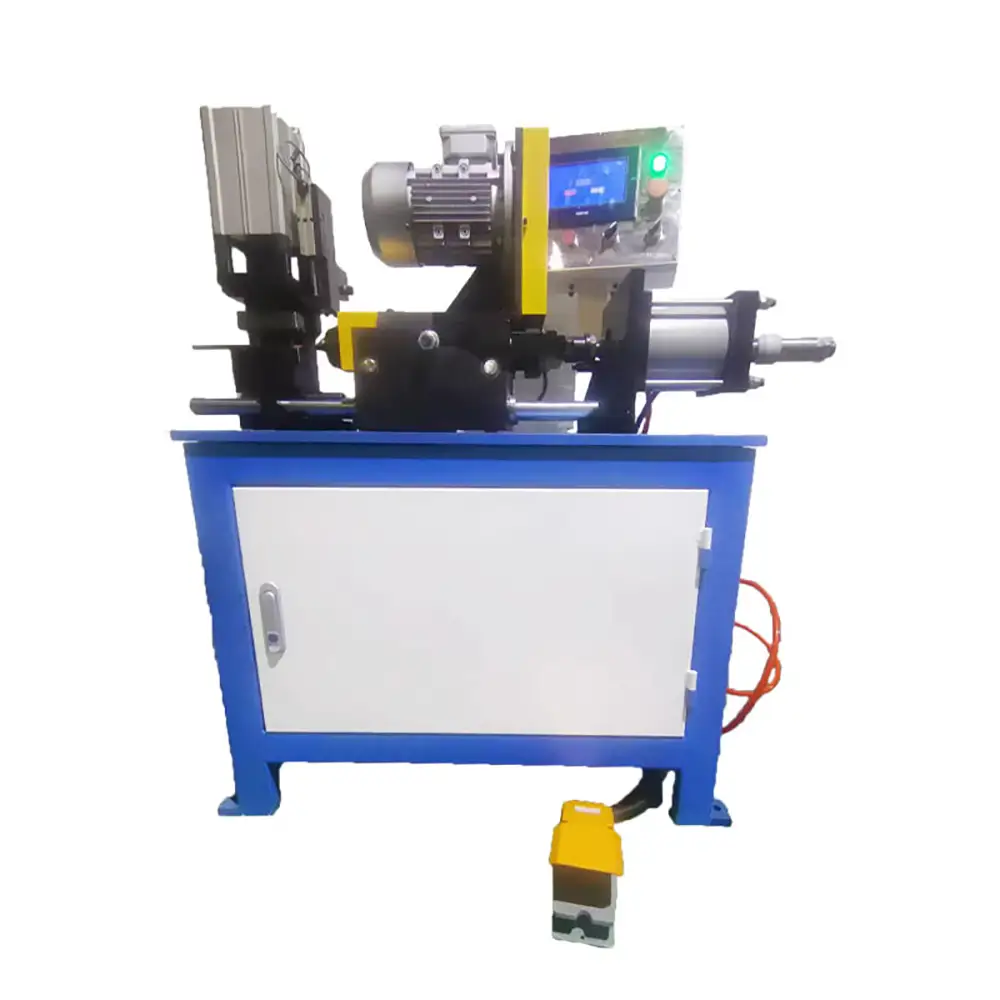
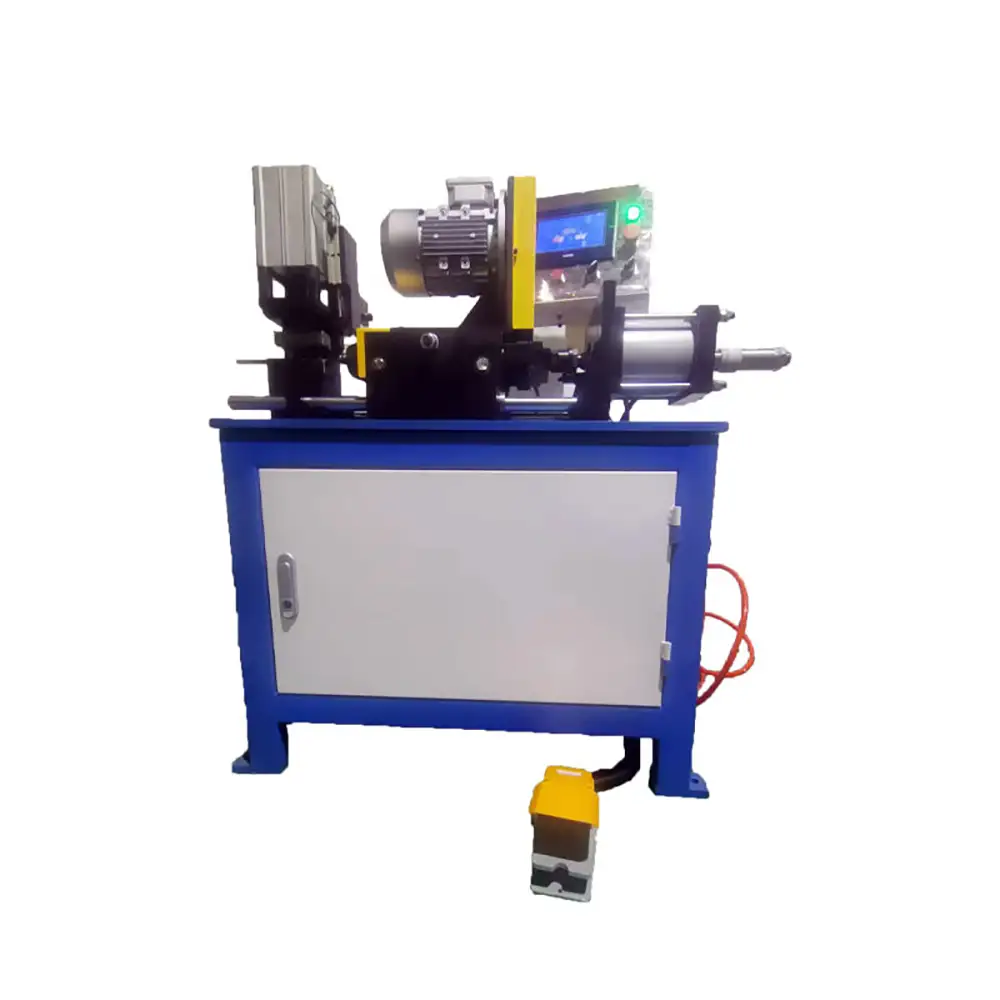
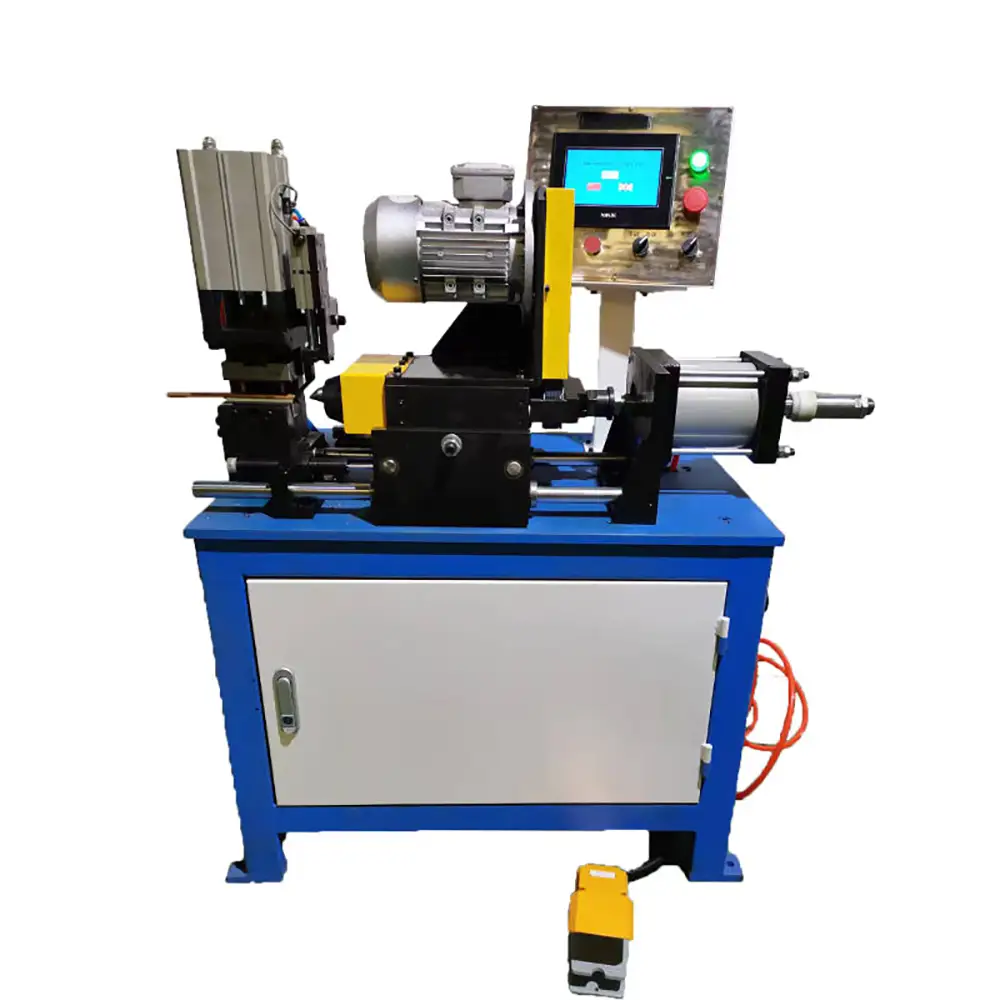
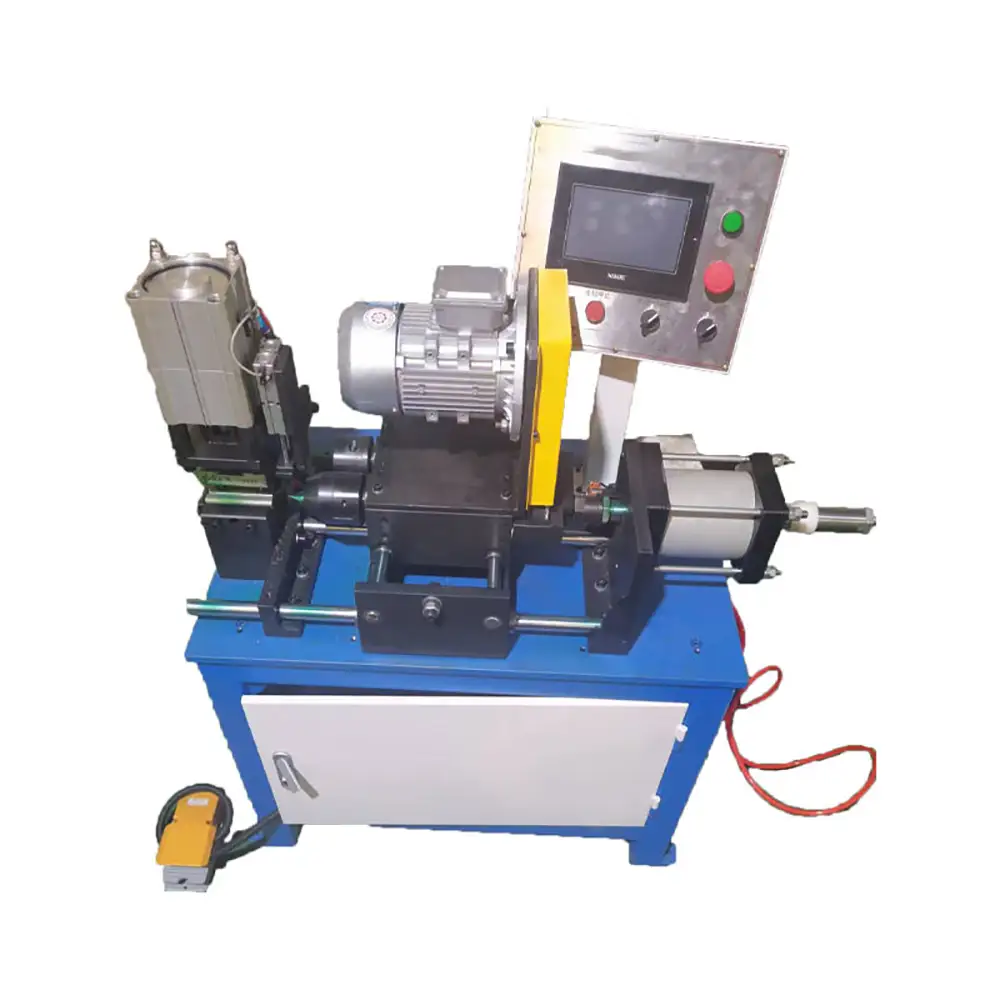
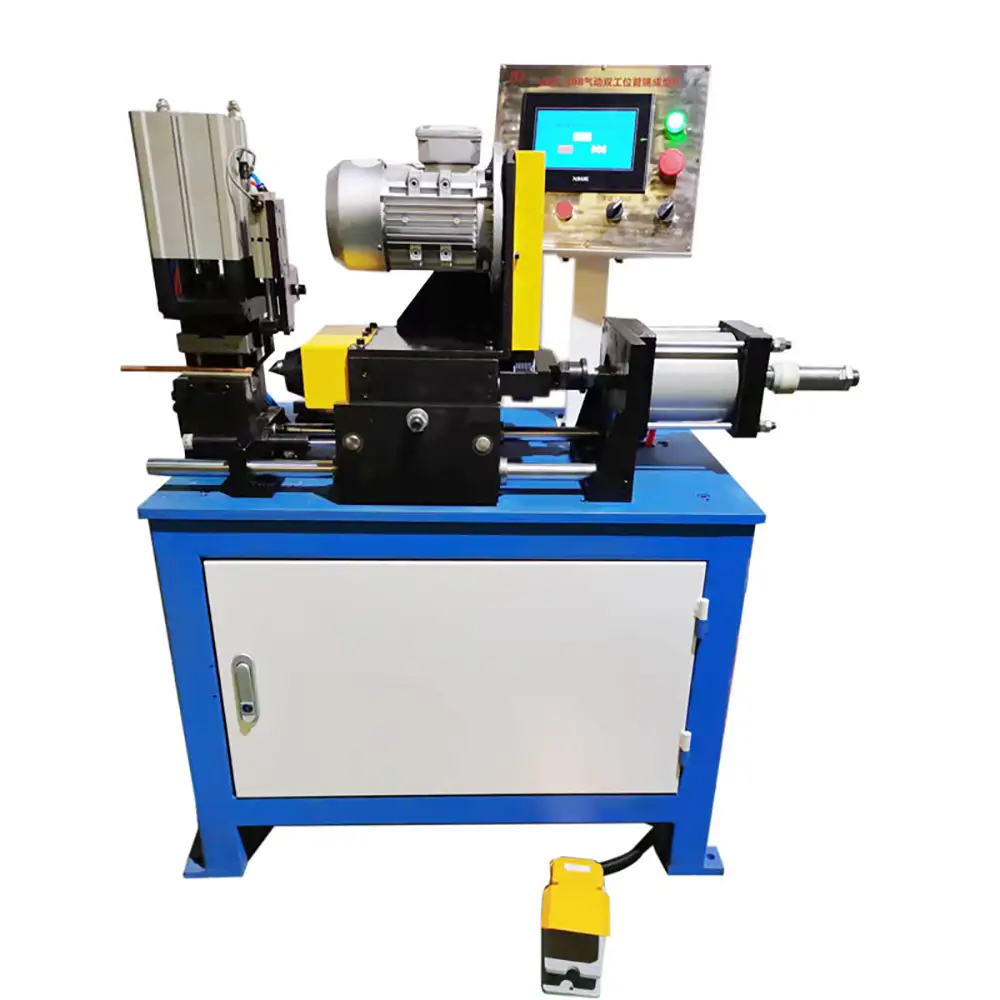
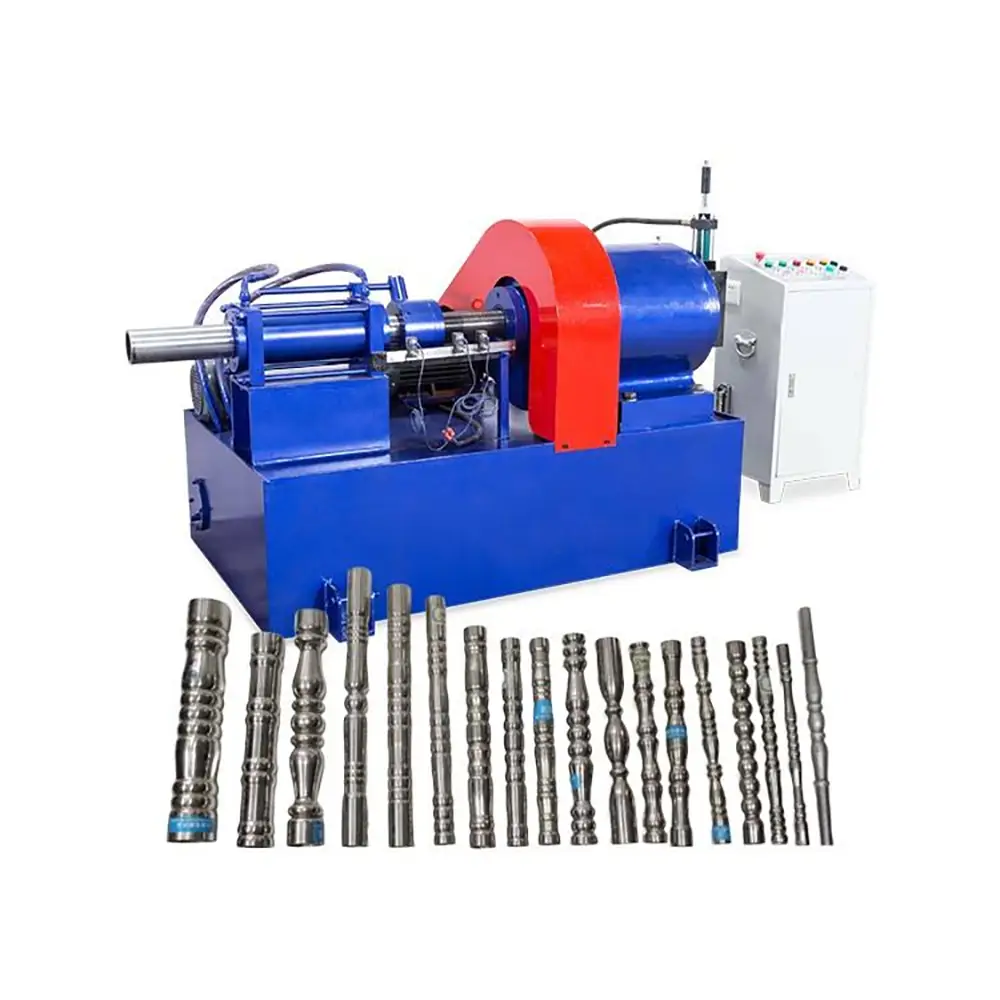
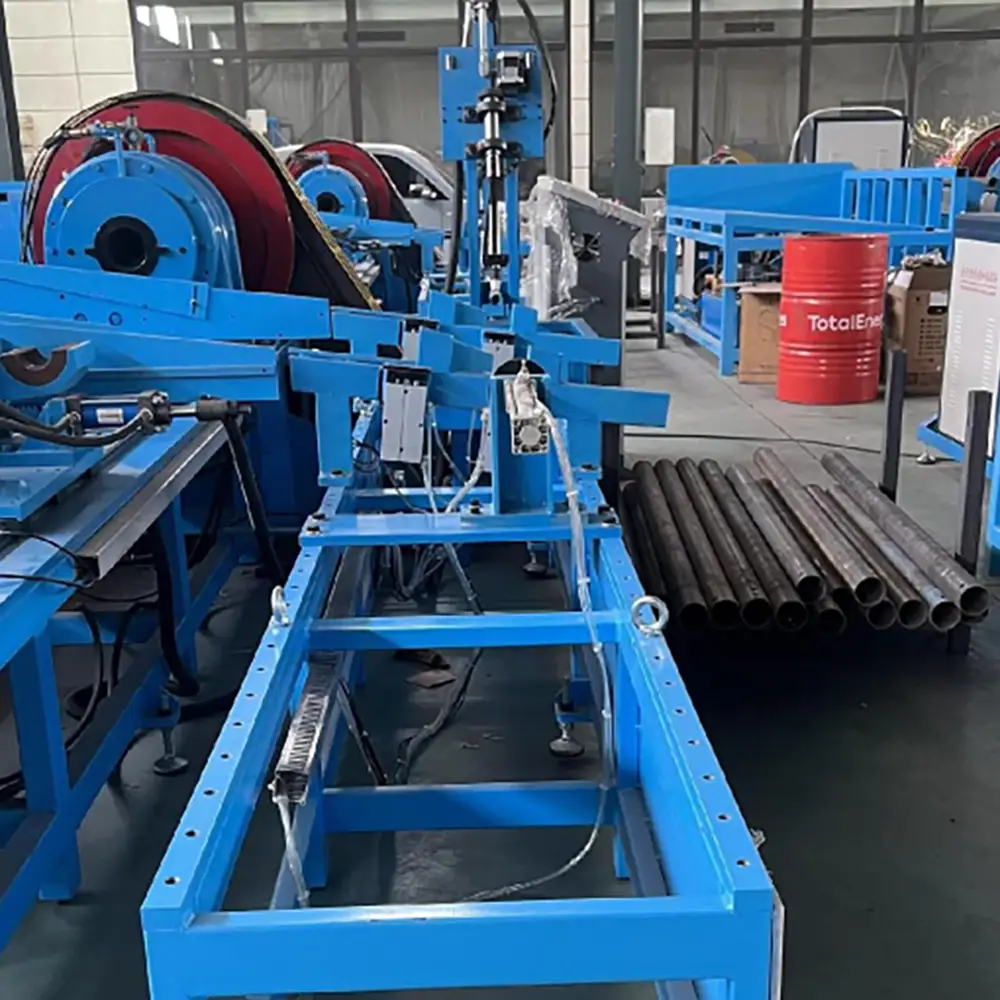
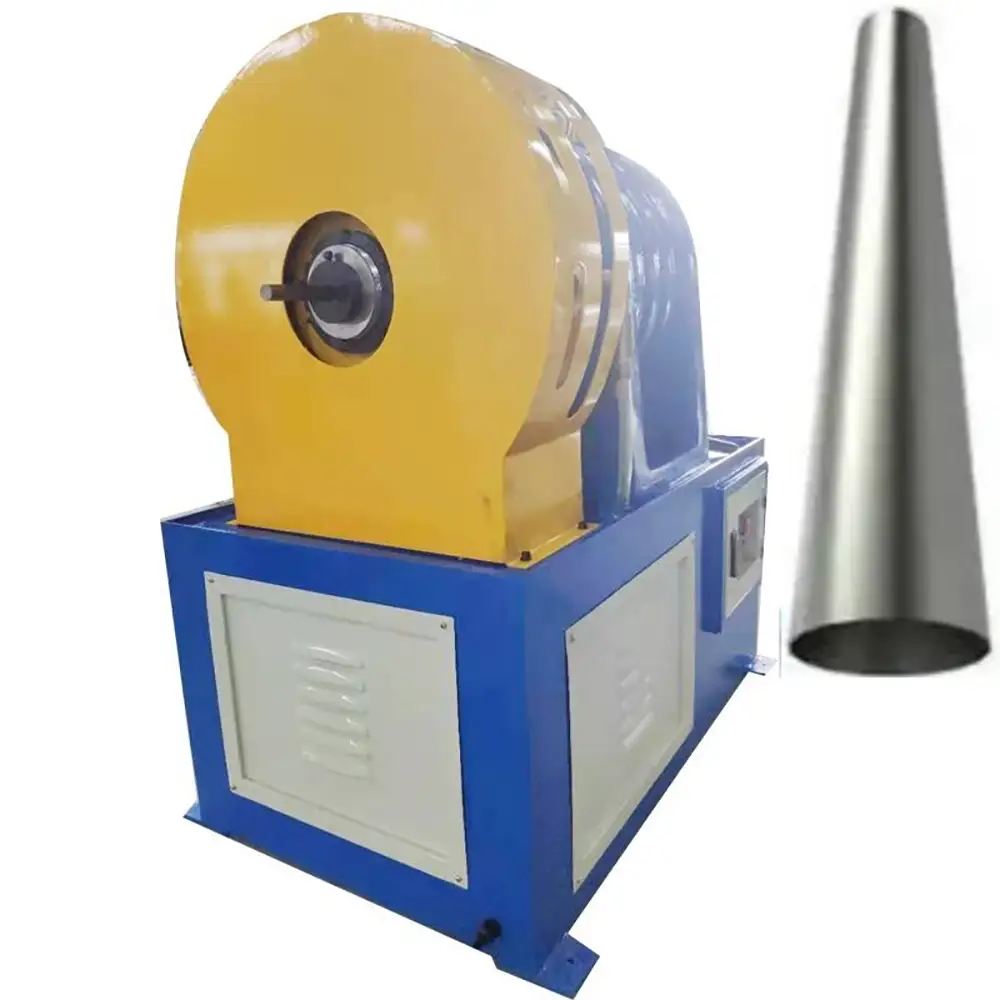
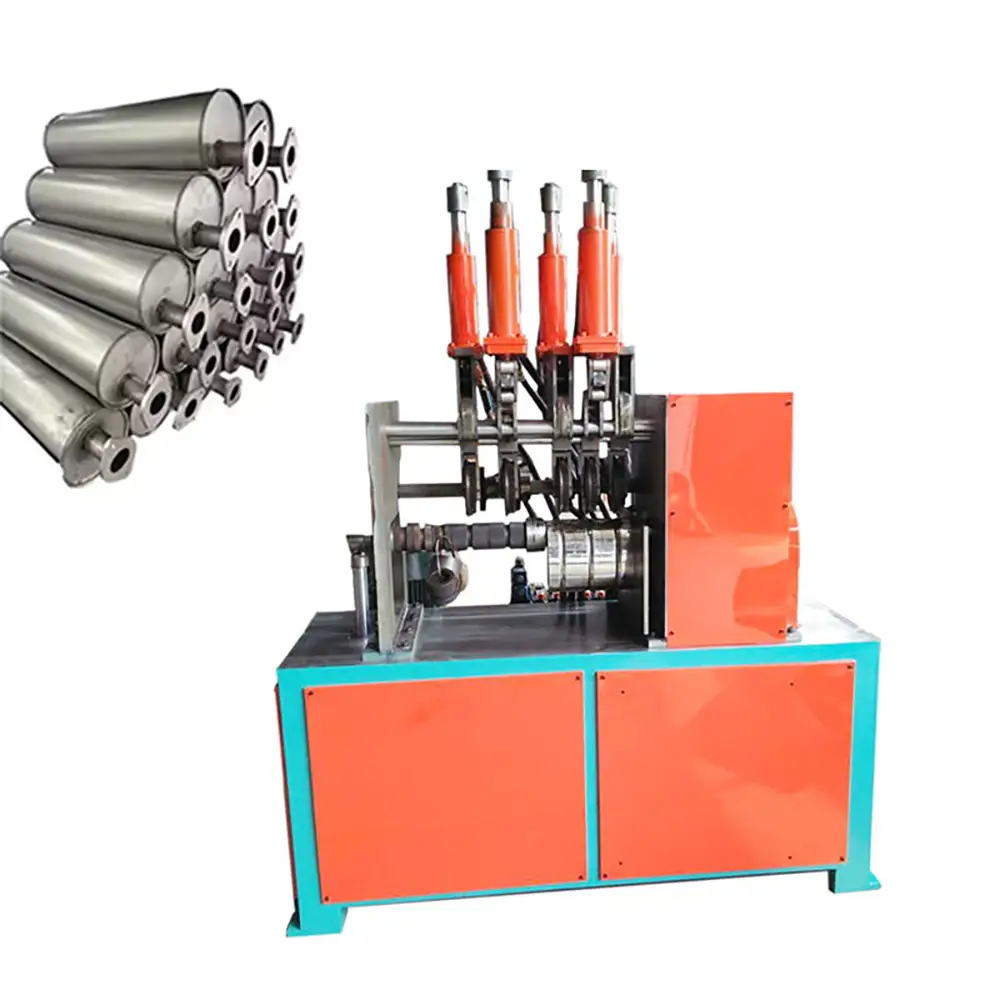
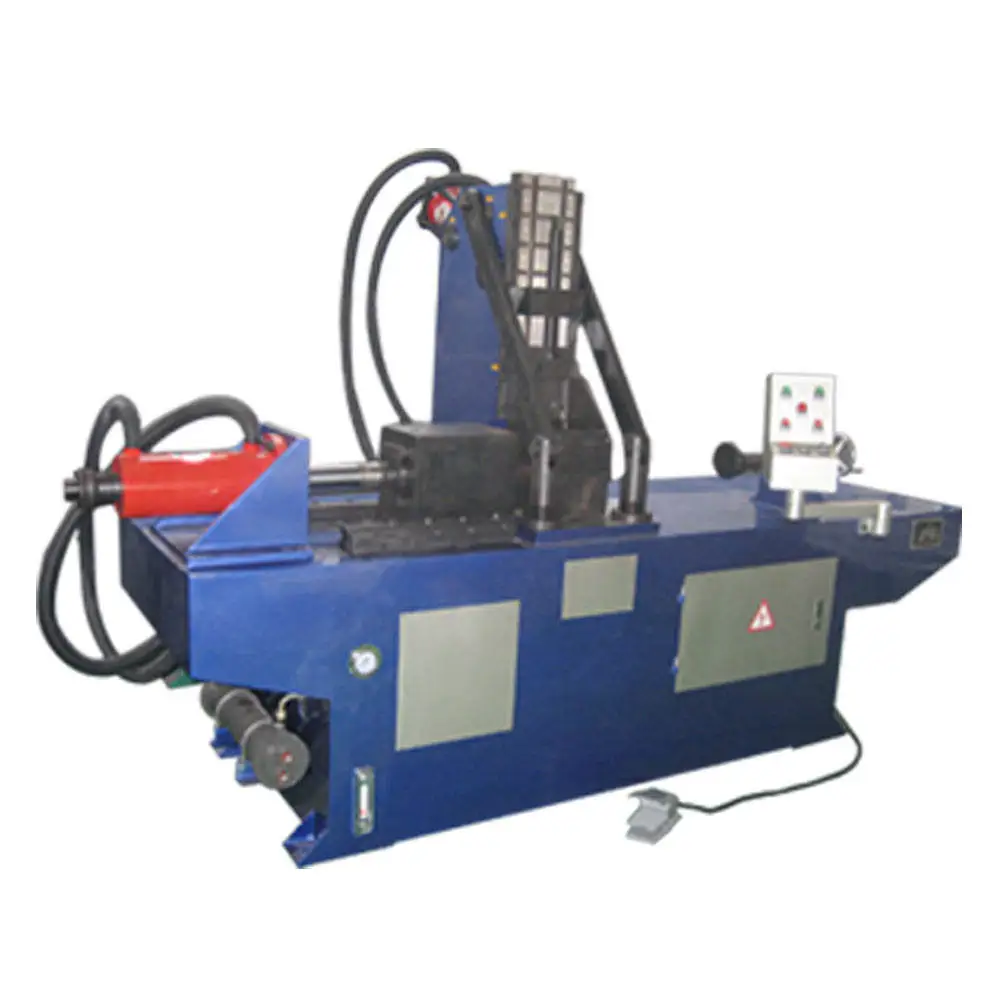
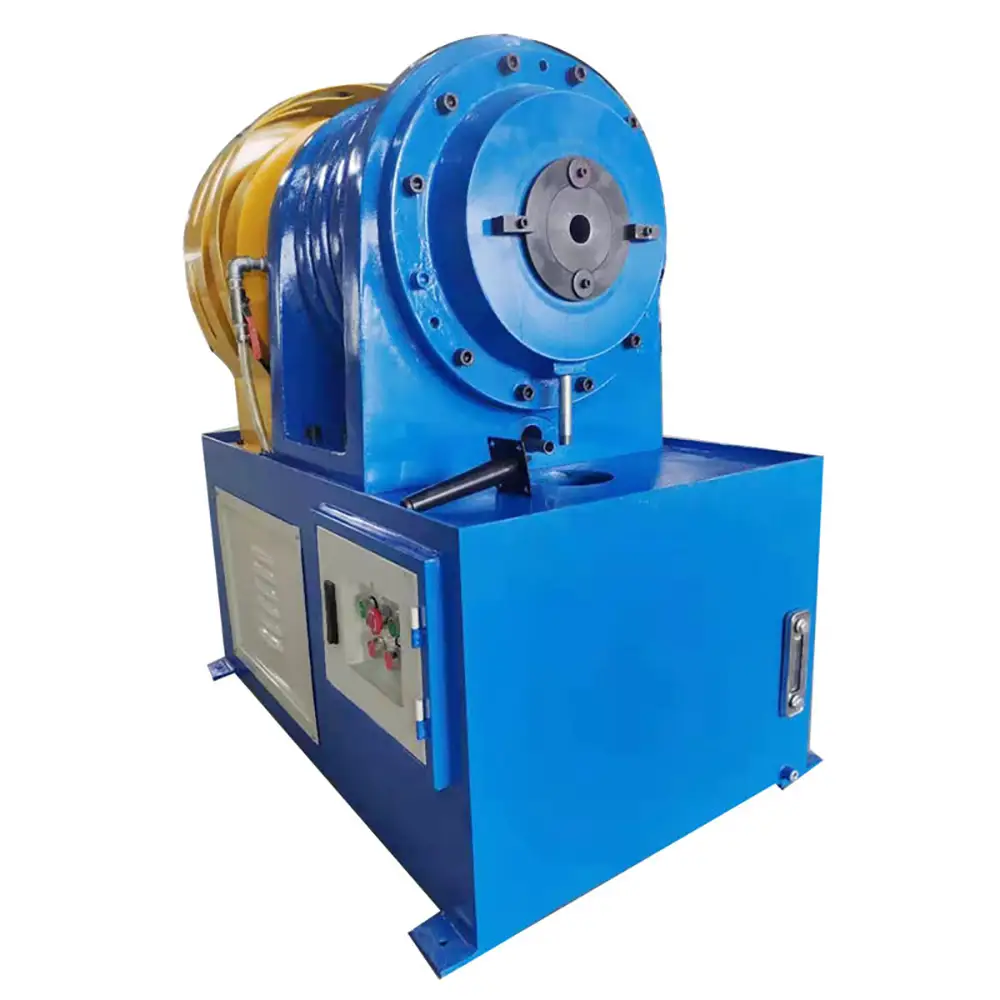
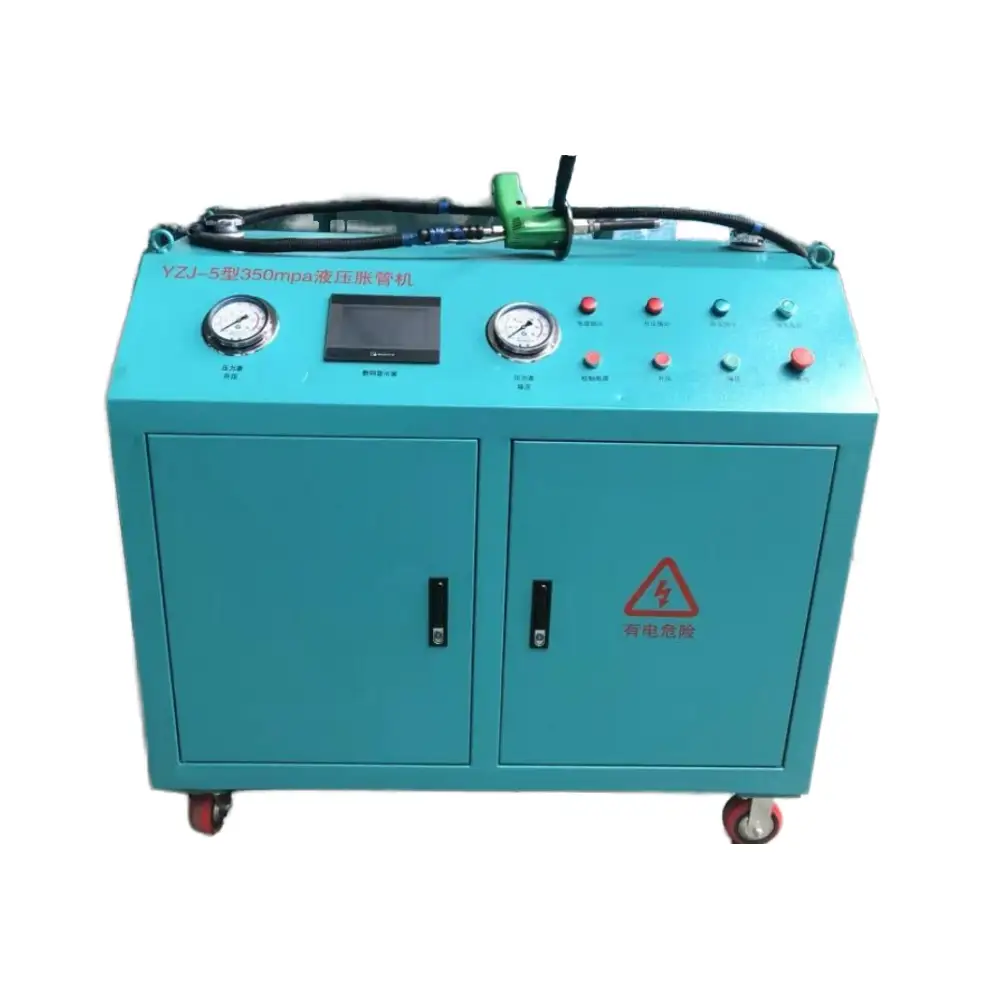
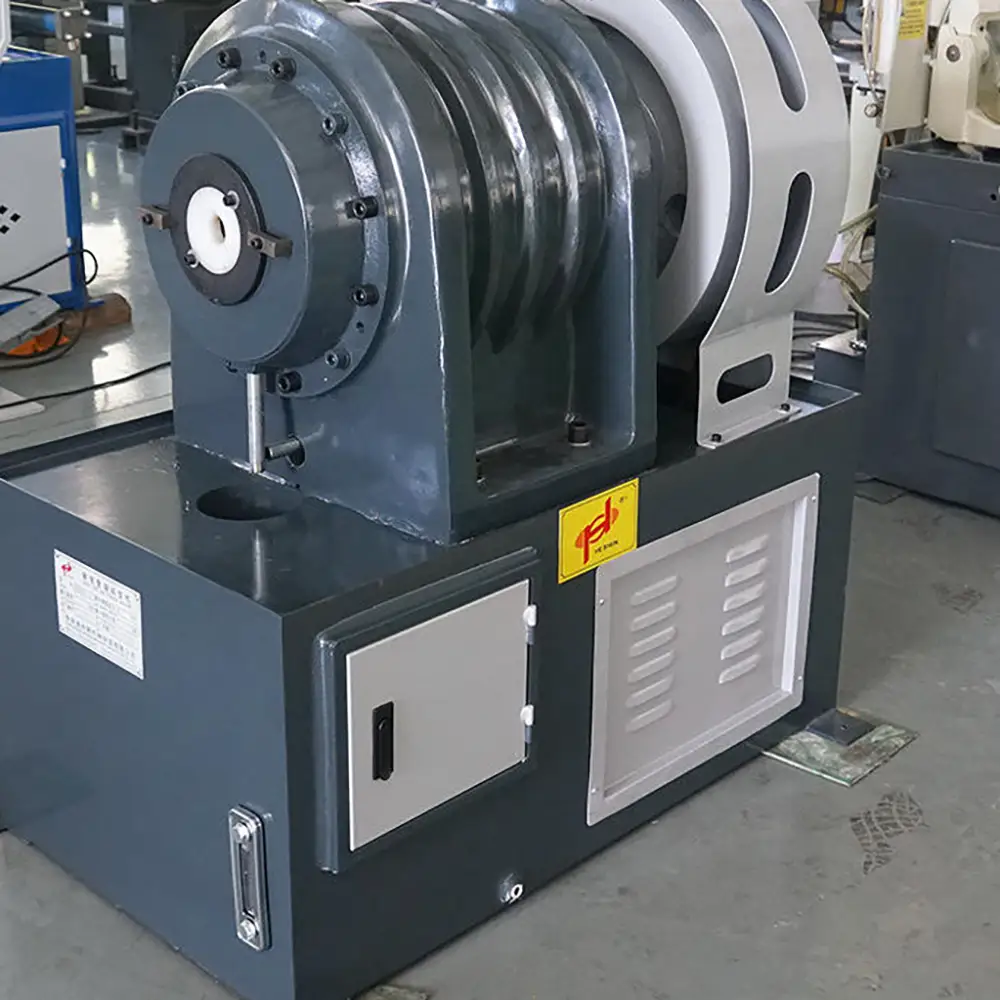
It mainly consists of steel body, pneumatic pipe clamping mechanism, linear guide mechanism rotary whole mouth + rotary flaring, positioning mechanism, pneumatic shifting mechanism, pneumatic flaring mechanism, molds, pneumatic components, electric cabinet and operation panel. Work station selection: single station / double station PRODUCT SPECIFICATIONS
|
model |
HQT-20b |
|
Working air pressure |
0.4-0.8mPa |
|
Using power |
380V/50Hz |
|
Processing Tubes |
copper tube |
|
Processing pipe diameter |
belowΦ19.05 |
|
Flare shape |
Horn shape |
|
Moulds |
Customizable |
|
Dimension |
1000mm*580mm*1250mm |
|
Package Size |
1100mm*650mm*1350mm |
|
Machine weight |
250kg |
Semi-Automatic Pneumatic Rotary Tube Expander for Flared Opening and Pipe End Forming
The Semi-Automatic Pneumatic Rotary Tube Expander Flared Opening Expander Pipe End Forming Machine is designed for expanding,flaring,and forming the ends of metal tubes and pipes. It combines pneumatic drive power with a rotary forming mechanism to provide a practical solution for workshops and manufacturers that need repeatable tube end processing.
Tube expansion and flaring are widely used to prepare pipe ends for connections,assembly,welding,joining,and other downstream manufacturing processes. By enlarging or reshaping a selected section of the tube end,the machine can create a controlled opening or formed profile according to the required application.
The semi-automatic operating concept provides a balance between operator flexibility and machine-assisted forming. The operator can load and position the workpiece while the pneumatic and rotary mechanisms perform the forming operation.
The actual tube diameter,wall thickness,forming length,and flare geometry depend on the machine configuration and tooling. Customers should provide detailed tube specifications when selecting the appropriate model.
Pneumatic Tube Expanding Technology
The machine uses pneumatic power to operate the forming mechanism. Compressed air provides the drive force required for the selected expansion or forming process.
Pneumatic systems are commonly used in industrial equipment because they can provide responsive operation and relatively simple control. They can also be suitable for workshops where compressed-air infrastructure is already available.
The forming process may use rotary tooling,expanding heads,mandrels,rollers,or other components depending on the machine design.
The exact forming method should be selected according to the tube material,diameter,wall thickness,and required end geometry.
Rotary Tube Expander Operation
The rotary tube expander uses controlled rotary movement to form the tube end.
During operation,the tube is positioned in the appropriate fixture or forming area. The expansion tooling is then introduced into the tube end and applies controlled forming force as the mechanism rotates.
Rotary forming can help distribute deformation around the circumference of the tube rather than relying on a single localized forming point.
This can be useful when a consistent circular opening or symmetrical tube-end profile is required.
The final result depends on tooling design,material properties,forming pressure,rotational movement,and workpiece positioning.
Flared Opening Forming
A major application of the machine is creating a flared opening at the end of a metal tube.
Tube flaring enlarges or angles the tube opening to create a suitable connection surface. The resulting flare can be used for joining,assembly,connection preparation,or other tube processing requirements.
Flared tube ends are commonly encountered in applications involving fluid lines,pipe connections,automotive components,heat-transfer equipment,and fabricated metal tubing.
The exact flare angle,diameter,and profile depend on the forming tooling.
For specialized applications,customers should provide drawings or samples showing the required tube-end geometry.
Pipe End Forming Applications
Pipe end forming involves modifying the geometry of a tube or pipe end without removing the entire section of material.
Depending on the tooling,a tube end forming machine may perform operations such as:
Tube expansion
Tube flaring
End opening
End reducing
Taper forming
Beading
Swaging
Other customized end profiles
The machine described here focuses primarily on pneumatic rotary expansion and flared opening applications,but additional functions may be available depending on the tooling configuration.
This flexibility can make the machine useful for manufacturers processing different tube products.
Suitable Metal Tube Materials
The machine can be configured for various compatible metal tubes.
Potential materials include:
Carbon steel
Mild steel
Stainless steel
Aluminum
Copper
Brass
Galvanized steel
Other suitable metal alloys
Different materials have different ductility,strength,and work-hardening characteristics. Therefore,the forming pressure and tooling should be selected according to the actual material.
Copper and aluminum may require different forming parameters from stainless steel or carbon steel.
Before production,operators should confirm that the selected tooling is appropriate for the tube material and wall thickness.
Tube Diameter and Wall Thickness
Tube dimensions are critical when selecting a tube expander.
Important specifications include outside diameter,inside diameter,wall thickness,forming length,and required opening diameter.
Thin-wall tubes can be more sensitive to excessive deformation and may require carefully controlled forming pressure.
Thicker tubes may require greater forming force and stronger tooling.
The machine should therefore be selected according to the actual tube dimensions rather than by tube diameter alone.
Customers can provide the minimum and maximum tube sizes as well as the required flare dimensions to help determine the appropriate machine configuration.
Semi-Automatic Operating Process
The semi-automatic design allows operators to maintain control over loading and workpiece handling while the machine assists with the forming cycle.
A typical workflow includes placing the tube into the fixture,positioning the tube end,adjusting the forming parameters,starting the pneumatic rotary operation,and removing the finished component.
For repeated production,the same tooling and machine settings can be used for similar workpieces.
This can help reduce repetitive manual forming work and provide a more standardized production process.
Actual cycle time depends on tube size,material,forming depth,tooling,operator handling,and machine configuration.
Applications in Metal Fabrication
The pneumatic rotary tube expander can be used in a variety of metalworking applications.
Potential industries include:
Automotive component manufacturing
Motorcycle component production
HVAC equipment
Heat exchanger manufacturing
Refrigeration equipment
Industrial piping
Furniture manufacturing
Machinery production
Metal fabrication
Custom tube processing
Plumbing component manufacturing
General engineering
The actual application depends on the required tube geometry and machine capacity.
Automotive and Exhaust Tube Applications
Tube end forming is commonly used in automotive manufacturing and exhaust component production.
The machine can be evaluated for suitable exhaust tubes,connection sections,and other tubular components that require an enlarged or flared end.
For exhaust fabrication,the tube end may need to be expanded to fit another pipe or component before welding or assembly.
Stainless steel and carbon steel exhaust tubes require appropriate forming tools and process parameters.
The machine may therefore be useful for aftermarket exhaust manufacturers,repair shops,and small-batch custom exhaust production when the tube specifications match the equipment.
Tooling and Forming Dies
Tooling determines the final shape of the formed tube end.
Different tube diameters and profiles require different expanding heads,mandrels,rollers,or forming dies.
The tooling should be properly aligned with the tube to minimize uneven deformation.
Custom tooling can be developed for specific flared openings,expanded diameters,forming lengths,and connection profiles.
For OEM projects,customers can provide technical drawings,samples,material specifications,and required dimensions so that the forming tooling can be evaluated.
Production Efficiency and Repeatability
The pneumatic rotary forming process can reduce the physical effort required for manual tube expansion.
For repeated production,semi-automatic operation can help standardize the forming cycle while still allowing operators to handle different workpieces.
Production efficiency depends on tube material,diameter,wall thickness,forming amount,tooling changes,loading time,and operator workflow.
The machine can be used for both small-batch production and recurring workshop applications where flexible tube end forming is required.
Quality Control
Tube forming quality should be checked during production.
Important inspection points may include:
Final opening diameter
Tube outside diameter
Flare geometry
Forming length
Wall deformation
Surface condition
Connection fit
Dimensional consistency
Operators should inspect the first workpiece after changing tooling or processing parameters.
For critical applications,dimensional gauges or other inspection methods can be used to verify the finished tube end.
Excessive forming force can cause cracks,wrinkles,or unwanted deformation,while insufficient force may produce an incomplete profile.
Maintenance and Safety
Regular maintenance helps maintain stable forming performance.
Operators should inspect pneumatic hoses,air connections,forming tooling,rotary components,fixtures,and other machine parts according to the manufacturer's recommendations.
The forming tools should be kept clean and inspected for wear. Damaged tooling can affect the final tube geometry.
Because the machine contains moving and rotating components,operators should keep hands away from the forming area during operation.
Suitable protective equipment and workplace safety procedures should be followed. Emergency-stop functions,guards,and other safety features depend on the machine configuration.
Custom and OEM Solutions
Different manufacturers may require different tube diameters,flare profiles,forming lengths,and production methods.
The machine can therefore be configured with application-specific tooling and fixtures where appropriate.
OEM and ODM solutions may include customized forming heads,expansion tooling,fixtures,pneumatic systems,and control arrangements.
Customers should provide tube material,diameter,wall thickness,required flare size,forming length,and production volume when requesting a quotation.
Why Choose Us
Pneumatic Rotary Forming – Uses pneumatic drive power with rotary forming for controlled tube-end processing.
Flared Opening Capability – Designed for suitable tube flaring and enlarged tube-end opening applications.
Semi-Automatic Operation – Balances operator flexibility with machine-assisted forming cycles.
Flexible Tube Materials – Suitable configurations can be developed for compatible steel,stainless steel,aluminum,copper,and other metal tubes.
Multiple Tube Applications – Suitable for automotive,HVAC,heat exchanger,furniture,and general metal fabrication applications.
Custom Forming Tooling – Expansion heads,mandrels,and forming dies can be customized for specific tube geometries.
Repeatable Processing – Controlled pneumatic and rotary operation can help improve consistency in repetitive production.
OEM & B2B Support – Suitable for manufacturers,distributors,repair shops,wholesalers,and overseas industrial equipment buyers.
FAQs
1. What is a pneumatic rotary tube expander?
It is a tube end forming machine that uses compressed air and rotary tooling to expand or reshape the end of a suitable metal tube.
2. What is a flared opening?
A flared opening is an enlarged or angled tube end formed to provide a suitable connection or assembly surface.
3. Can this machine expand pipe ends?
Yes. The machine is designed for suitable tube and pipe end expansion applications within its configured operating range.
4. Can it form flared tube ends?
Yes. Appropriate forming tooling can be used to create flared or enlarged tube openings.
5. What materials can be processed?
Depending on the tooling and configuration,the machine may process carbon steel,stainless steel,aluminum,copper,brass,galvanized steel,and other compatible metals.
6. Is the machine fully automatic?
No. The described configuration is semi-automatic,so the operator may be responsible for loading,positioning,and unloading the workpiece.
7. What tube sizes can it process?
The applicable tube diameter and wall thickness depend on the machine model and forming tooling. Specific dimensions should be confirmed before purchase.
8. Can it be used for exhaust pipes?
Yes. Suitable automotive and motorcycle exhaust tubes can be expanded or formed when their material and dimensions match the machine configuration.
9. What is the advantage of rotary expansion?
Rotary forming can provide circumferentially distributed deformation and may help produce a more consistent circular tube-end profile.
10. Can the forming tooling be customized?
Yes. Custom expansion heads,mandrels,rollers,and forming dies can be developed for specific tube-end geometries.
11. What affects flaring quality?
Tube material,wall thickness,diameter,tooling geometry,forming force,rotary movement,alignment,and forming parameters all affect the finished flare.
12. What information is needed for a quotation?
Provide tube material,outside diameter,wall thickness,required opening diameter,flare profile,forming length,production volume,and application. Drawings or samples are also recommended.
Prev:
Semi-Automatic Twisting Machine for Stainless Steel Round Pipes
Next:
Multifunction Expanding Machine Exhaust Repair Modify Shop Tube Pipe Expanding Reducing Shrinking Machine Expander
TAG:
Pipe End Processing Machine,
Tube End Processing Machine,
Exhaust Tube Expanding Machine,
Metal Pipe Forming Machine,
Metal Tube Forming Machine,
Pipe Flaring Machine,
Pipe Beading Machine,
Tube Beading Machine,
Pipe Tapering Machine,
Tube Flaring Machine,
Tube Swaging Machine,
Pipe Swaging Machine,
Tube Tapering Machine,
Pipe End Expanding Machine,
Tube End Forming Machine,
Pipe End Forming Machine,
Tube End Expanding Machine,
Pipe Expanding Machine,
Tube Expanding Machine,
Semi Automatic Tube Forming Machine,
Pipe End Shaping Machine,
Tube End Shaping Machine,
Exhaust Pipe Expanding Machine,
Pneumatic Tube Forming Machine,
Tube End Flaring Machine,
Pipe End Flaring Machine,
Exhaust Tube Expander,
Automotive Tube Expander,
Heat Exchanger Tube Expander,
Stainless Steel Tube Expander,
Related Category:
Semi-Automatic Tube Expander,Pneumatic Tube Expander,Rotary Tube Expander,Tube Flare Expander,Flared Opening Machine China, suppliers, manufacturers, factory, customized, wholesale, quotation, made in China