|
Model NO. |
PVDF |
Handling method |
Physical Treatment |
|
Usage |
Industrial, Home, Agriculture, Hospital, Urban |
Trademark |
|
|
Types |
Package, Compact, Small, Mini |
Applications |
Industrial, Municipal, Domestic, Medical, Ship |
|
Transport Package |
Container Standard Packing |
Features |
Remove Cod BOD |
|
Service Life |
10 Years |
Operation |
Automatic |
|
material |
PVDF |
Function |
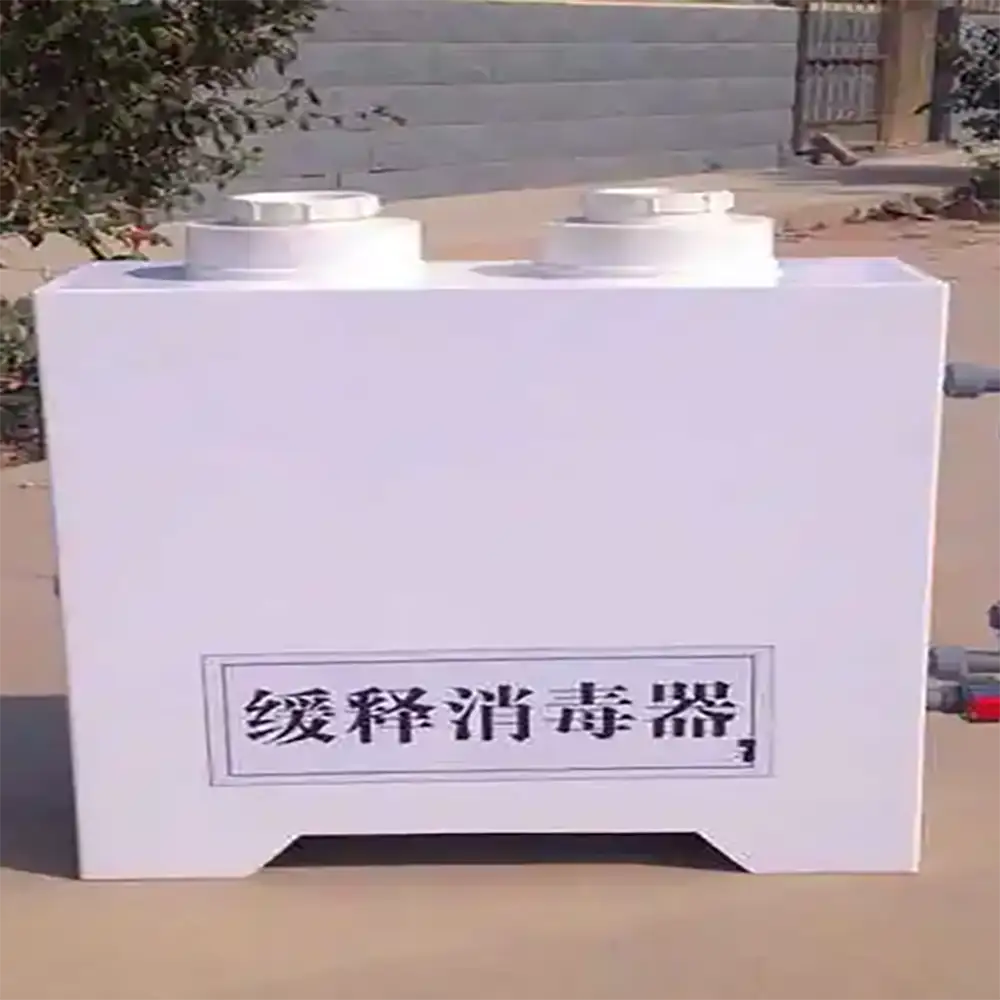
Removing Escherichia coli, harmful bacteria |
|
Voltage |
220V/ 380V/ Customerized |
Installation Type |
Underground / Onground |
|
Colour |
white |
Use for |
Mineral, Printing, Chemical, Dyeing, Starch |
|
Material |
PVDF |
Production Capacity |
2000 Sets/Year |
Seawater Desalination System for Fresh Water Production
Seawater Desalination is a water treatment process that removes dissolved salts and other unwanted substances from seawater to produce freshwater for drinking, industrial processes, commercial facilities, irrigation, and marine applications. Among modern desalination technologies, Seawater Reverse Osmosis (SWRO) is widely used because RO membranes can remove salts and a broad range of dissolved contaminants under high pressure. EPA identifies reverse osmosis as a membrane process capable of removing salts from seawater and brackish water.
A complete seawater desalination system normally includes seawater intake, pretreatment, high-pressure pumping, reverse osmosis membrane separation, post-treatment, product-water storage, and concentrate management. The actual process configuration depends on seawater quality, required freshwater capacity, target water quality, recovery rate, site conditions, and the intended application.
How Does Seawater Desalination Work?
Modern seawater desalination systems commonly use a multi-stage process.
First, seawater is collected through an appropriate intake system and passes through screening or preliminary filtration to remove larger particles and marine debris. Pretreatment then reduces suspended solids, organic matter, microorganisms, and other substances that could contribute to membrane fouling.
After pretreatment, a high-pressure pump supplies the pressure required for reverse osmosis. Seawater passes across a semipermeable RO membrane. Water molecules pass through the membrane to form permeate, while a concentrated stream containing a higher level of dissolved salts leaves as concentrate or brine. EPA describes RO as a pressure-driven membrane process producing a treated-water permeate and a concentrate stream.
The permeate may then receive post-treatment such as pH adjustment, remineralization, disinfection, or other polishing depending on the final application.
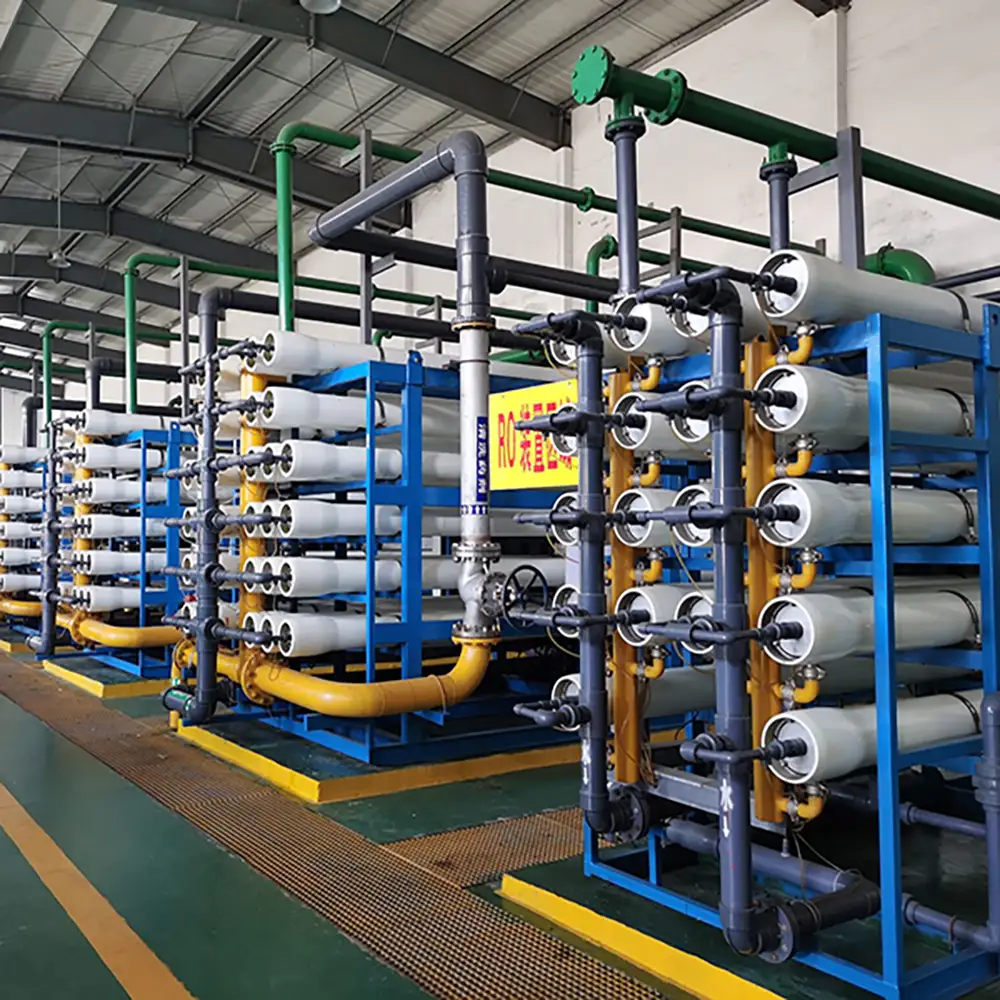
Seawater Reverse Osmosis System
Seawater Reverse Osmosis (SWRO) is one of the most important technologies for modern desalination.
Unlike conventional filtration, RO is capable of reducing dissolved salts and many other dissolved contaminants. EPA notes that RO can remove a wide range of contaminants and can be used to remove salts from seawater.
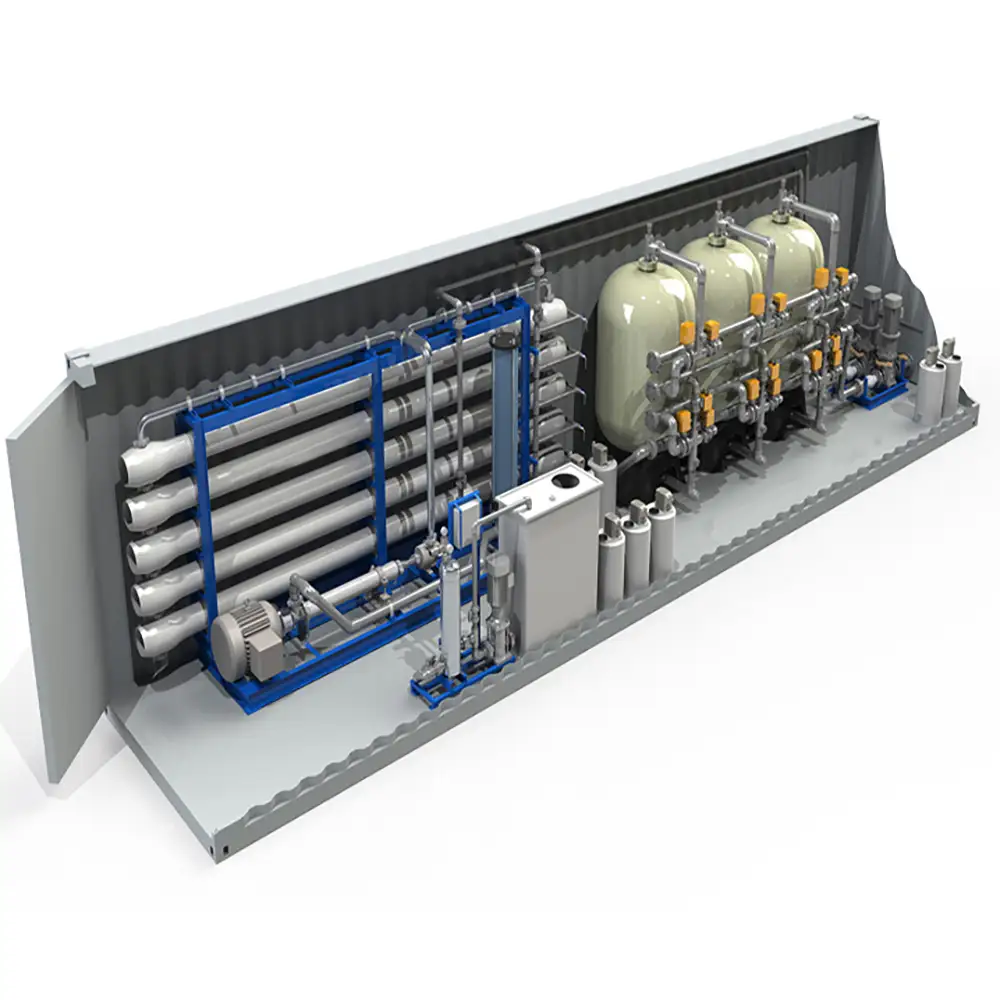
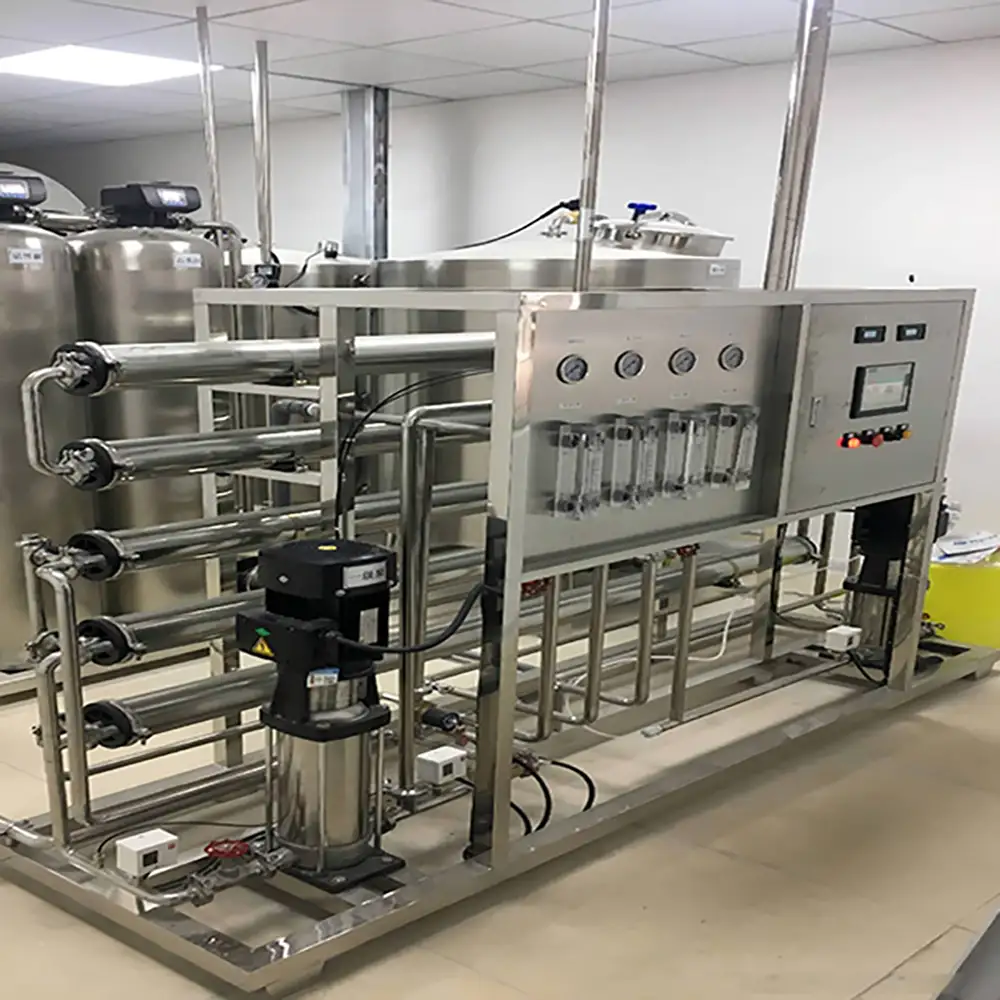
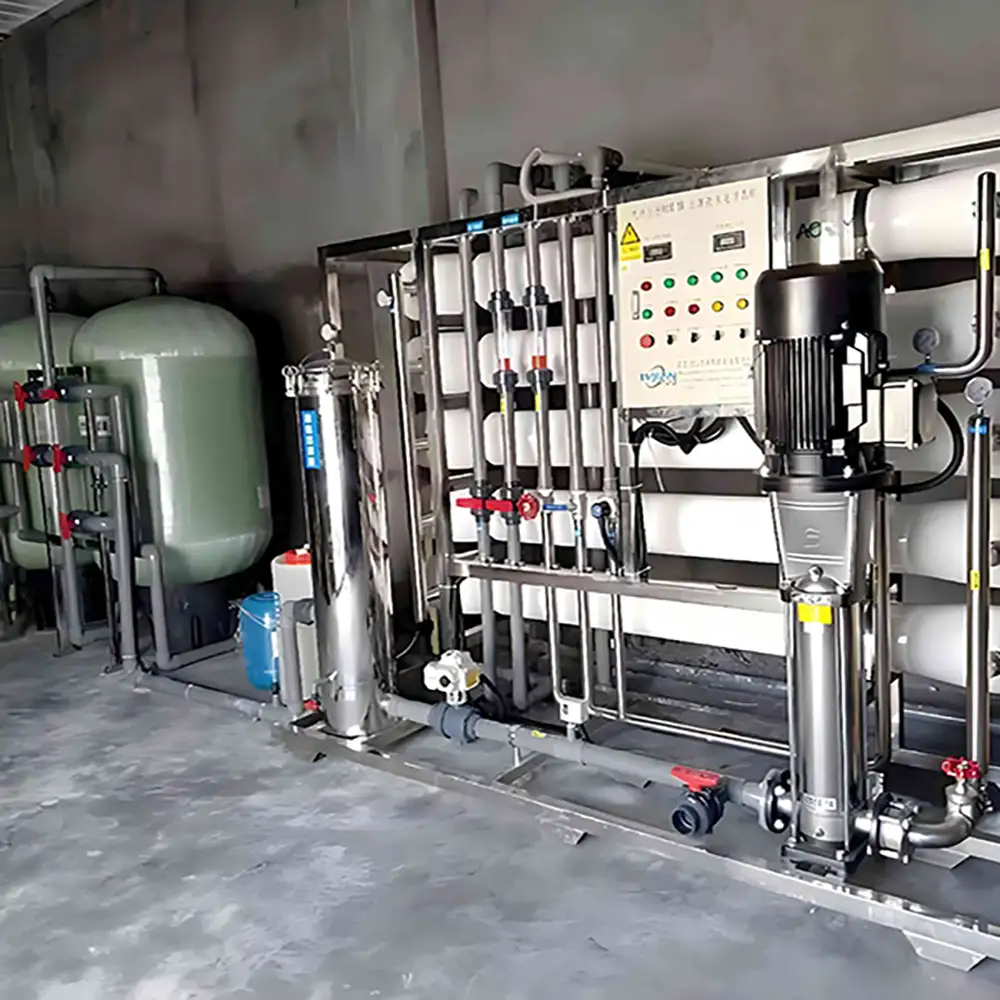
A typical SWRO system includes:
Seawater Intake
Intake Screening
Feed Water Pump
Pretreatment Filters
Cartridge Filters
Chemical Dosing System
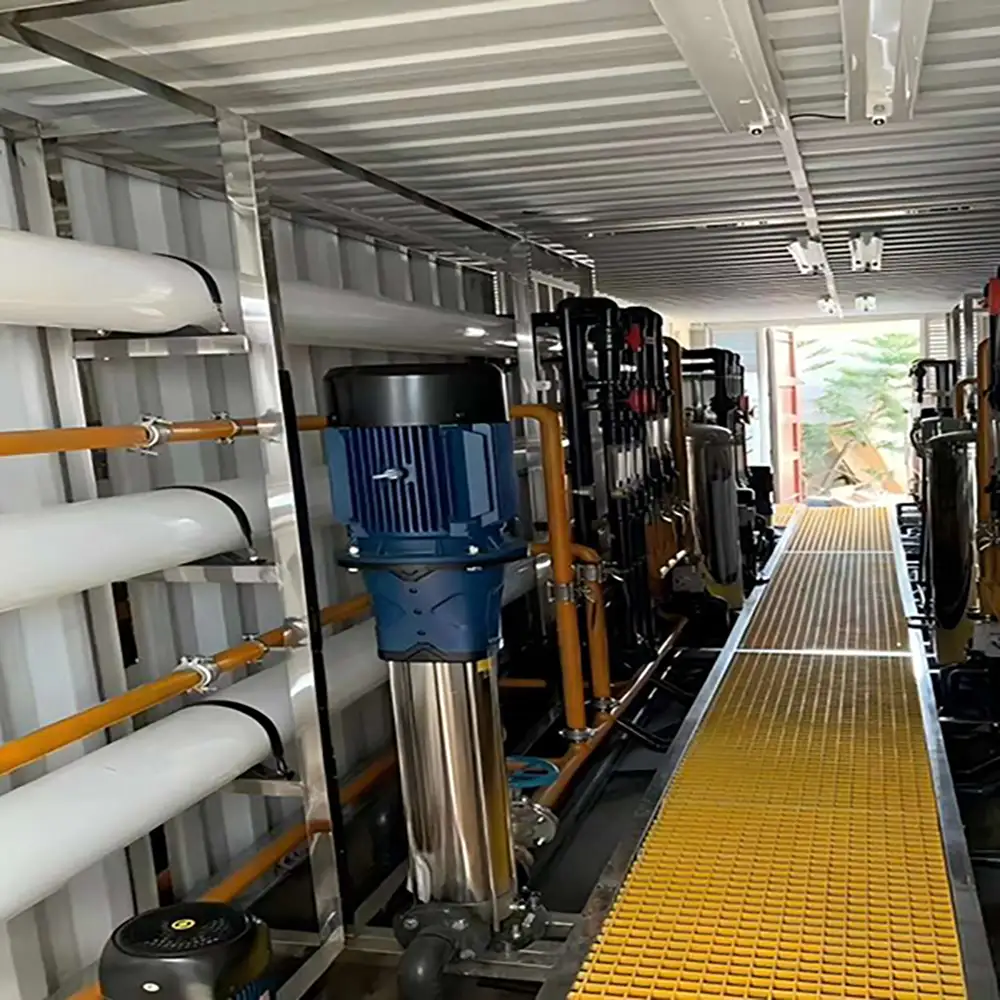
High-Pressure Pump
Energy Recovery Device
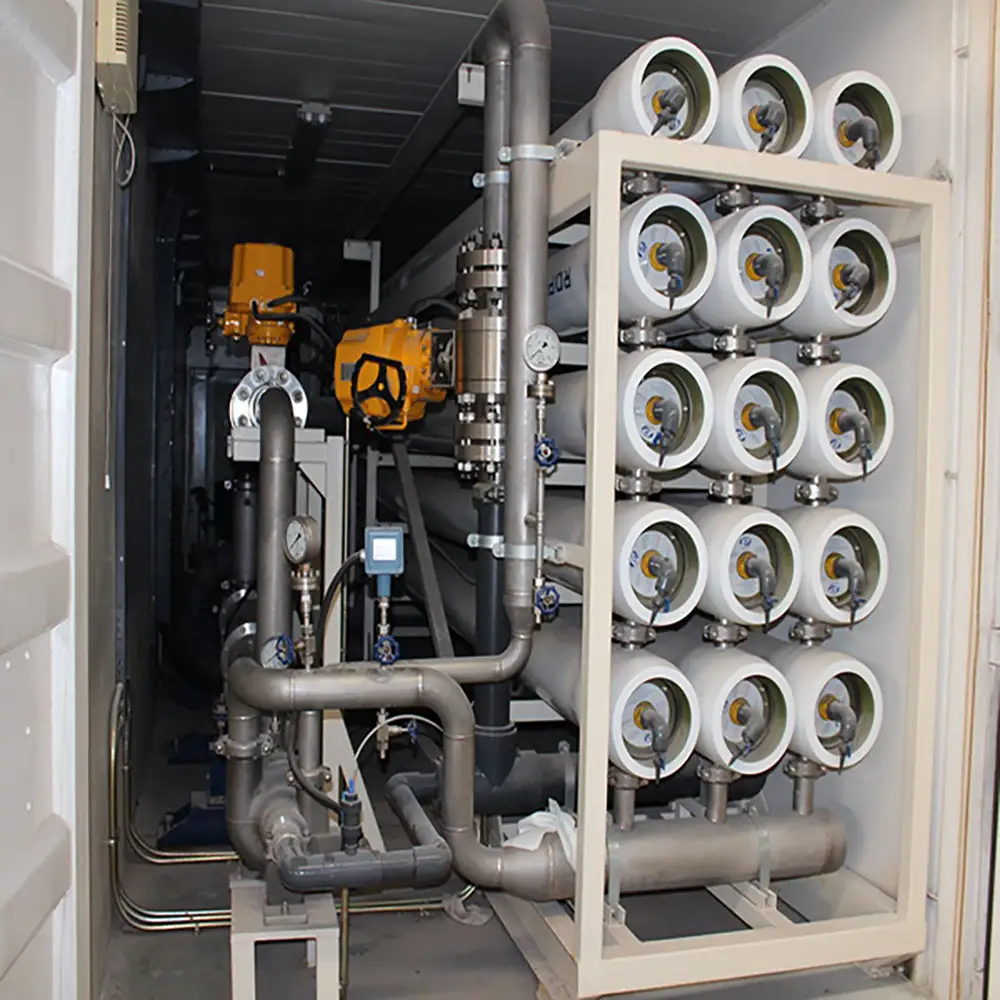
RO Membrane Vessels
Seawater RO Membranes
Permeate Collection System
Concentrate Discharge System
Product Water Tank
Post-Treatment System
Electrical Control System
Monitoring Instruments
The final equipment arrangement depends on the scale and design requirements of the desalination plant.
Why Is Seawater Pretreatment Important?
Pretreatment is one of the most important parts of a reliable seawater desalination system.
Seawater may contain suspended particles, algae, microorganisms, organic matter, colloids, and other substances that can foul or damage RO membranes. EPA technical material emphasizes that adequate pretreatment is important for reliable RO operation because organic colloids, biological growth, and inorganic scaling can reduce membrane performance and increase operating and maintenance requirements.
Depending on source-water quality, pretreatment may include:
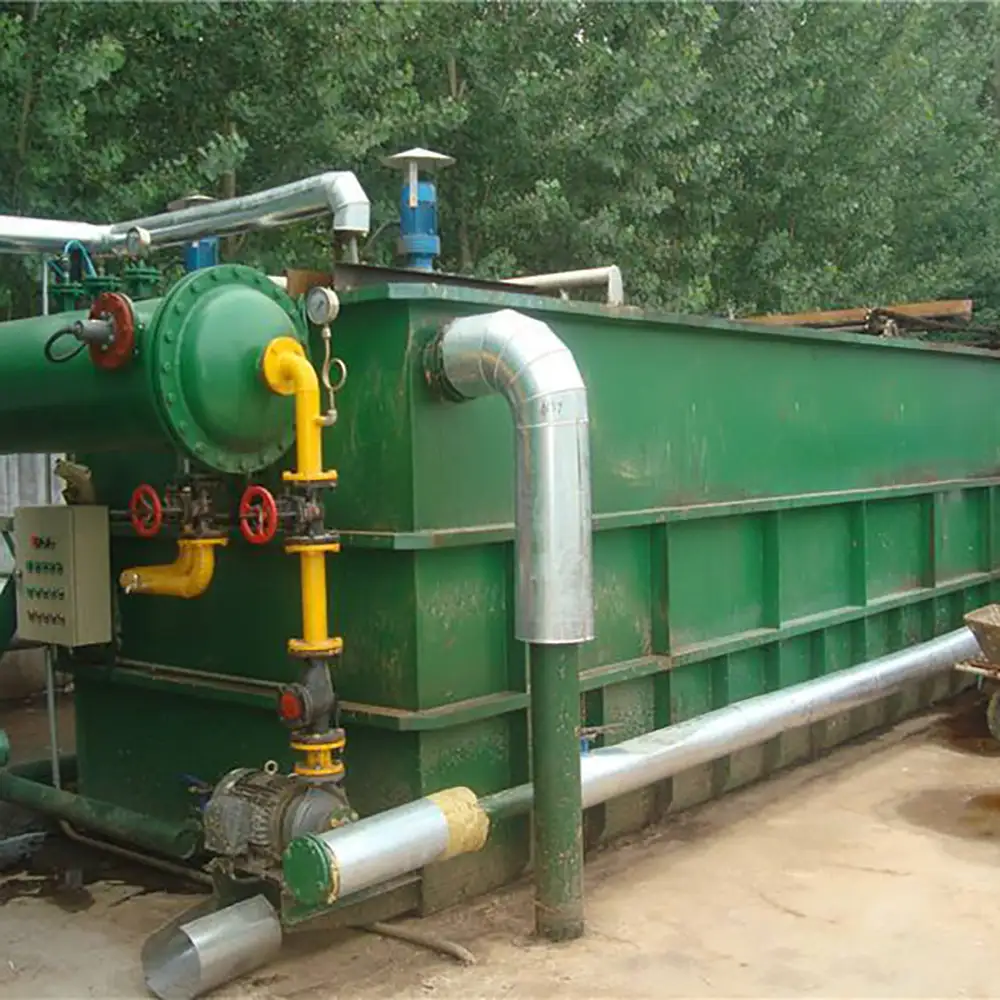
Screening → Coagulation → Flocculation → Sedimentation or DAF → Multimedia Filtration → Ultrafiltration → Cartridge Filtration → SWRO
Not every project requires every stage. The appropriate pretreatment process should be selected based on detailed seawater analysis and seasonal changes in source-water quality.
Ultrafiltration and Microfiltration Pretreatment
UF or MF can be used as membrane pretreatment before SWRO in some applications.
These processes can provide more controlled removal of suspended solids and colloidal materials before water enters the high-pressure RO stage. EPA documentation describes systems using UF pretreatment followed by one- or two-pass RO for seawater treatment.
Membrane pretreatment can be particularly useful when the source water has variable turbidity or significant particulate loading.
Salt and TDS Removal
The main objective of seawater desalination is the reduction of dissolved salts and total dissolved solids.
Seawater contains a much higher dissolved-salt concentration than freshwater. RO applies pressure to overcome the osmotic pressure difference and drive water through a semipermeable membrane.
The result is a low-salinity permeate stream and a concentrated brine stream.
The exact product-water quality depends on seawater salinity, membrane type, operating pressure, temperature, recovery, membrane condition, and system configuration.
For drinking-water applications, additional post-treatment may be required to achieve appropriate chemical stability and disinfection.
Energy Recovery in SWRO
High-pressure pumping is a major energy requirement in seawater reverse osmosis.
Energy recovery devices can capture energy from the high-pressure concentrate stream and transfer part of that energy back into the feed-water process. This can reduce the net energy requirement of an SWRO system.
EPA-related research identifies energy consumption as an important consideration for wider adoption of seawater desalination.
Modern SWRO systems can therefore incorporate energy recovery devices as part of the high-pressure RO package, particularly for larger continuous-flow desalination plants.
Fresh Water Applications
Desalinated seawater can be used for different purposes depending on the treatment and post-treatment configuration.
Potable Water
With appropriate treatment, disinfection, stabilization, and regulatory compliance, desalinated seawater can be used as a source of drinking water.
Industrial Process Water
Industrial facilities may use desalinated seawater where freshwater resources are limited. Applications can include manufacturing, process water, boiler feedwater pretreatment, cooling-water makeup, and utility water.
Hotels and Resorts
Coastal hotels, resorts, islands, and remote communities may use seawater desalination to supplement or replace conventional freshwater sources.
Marine Applications
Ships and offshore facilities can use desalination systems to produce freshwater from seawater for drinking, cleaning, food preparation, and other onboard requirements. EPA notes that reverse osmosis and distillation systems are used aboard vessels to produce freshwater from seawater.
Remote and Water-Stressed Areas
Seawater desalination can provide an alternative water source in coastal areas where conventional freshwater resources are limited or unreliable.
Post-Treatment of Desalinated Water
RO permeate is not necessarily ready for every final application immediately after membrane treatment.
Depending on the intended use, post-treatment may include:
pH Adjustment
Remineralization
UV Disinfection
Chlorination
Ozone Treatment
Fine Filtration
Blending
Product-Water Storage
For potable applications, the final treatment train should be designed according to applicable drinking-water requirements.
For industrial applications, post-treatment should be selected according to the specific process-water quality requirements.
Brine and Concentrate Management
A seawater desalination system produces a concentrated reject stream in addition to freshwater.
The concentrate contains higher concentrations of dissolved salts and may also contain residual treatment chemicals depending on the process configuration. EPA identifies concentrate or reject water as a residual stream generated by membrane desalination.
Brine management should therefore be considered during the initial plant design. Possible approaches depend on local regulations, discharge conditions, environmental requirements, and site characteristics.
Seawater Desalination Plant Design
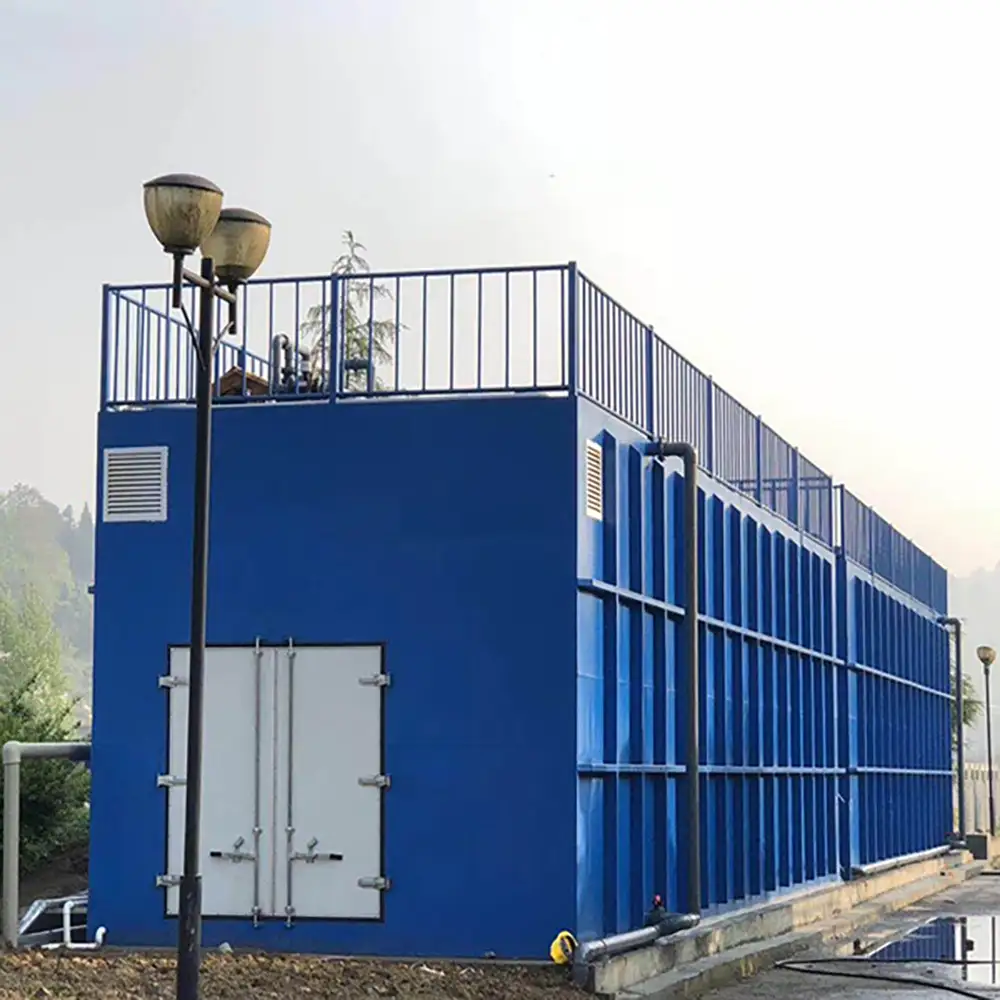
A commercial or industrial SWRO plant can be designed as a modular treatment system.
A typical process may be:
Seawater Intake → Screening → Pretreatment → UF/MF → Cartridge Filtration → High-Pressure Pump → Energy Recovery → SWRO → Post-Treatment → Freshwater Storage
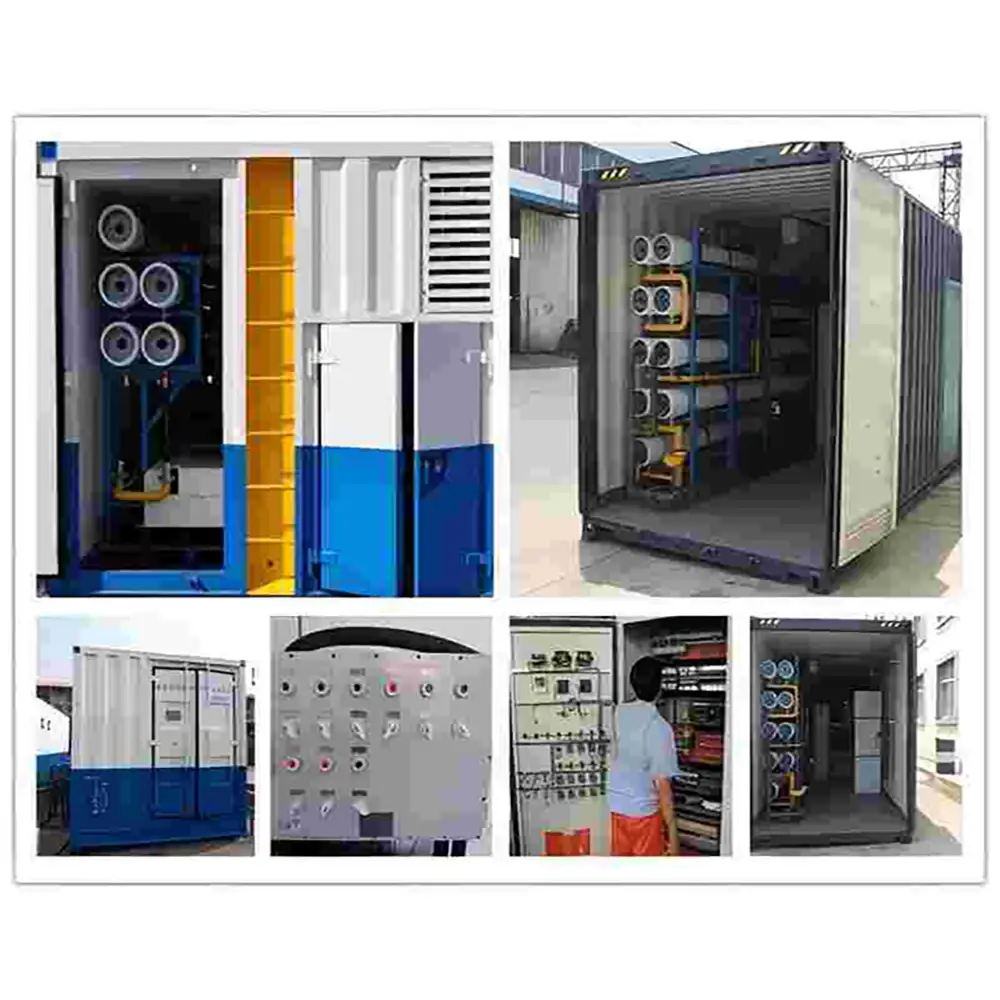
For smaller projects, a compact skid-mounted system may be suitable. Larger desalination plants can use multiple RO trains to provide the required production capacity and operational flexibility.
System sizing should consider average and peak water demand, seawater temperature, salinity, seasonal water-quality changes, required recovery, membrane flux, pretreatment requirements, and concentrate-disposal conditions.
Operation and Maintenance
Regular maintenance is essential for stable SWRO operation.
Operators should monitor feed pressure, permeate flow, concentrate flow, conductivity, differential pressure, recovery, temperature, and other process parameters.
Pretreatment filters should be maintained to prevent excessive particulate loading on the RO membranes. RO membranes require periodic cleaning when fouling or scaling affects system performance.
Chemical dosing should be adjusted according to actual feed-water conditions. Membrane cleaning schedules should be based on operating data rather than a fixed calendar alone.
A well-designed monitoring and control system can help operators identify changes in feed-water quality and membrane performance before they develop into major operating problems.
Why Choose Us?
Complete SWRO Solutions: Seawater intake, pretreatment, RO, post-treatment, storage, and control systems can be integrated into one treatment line.
Advanced Reverse Osmosis Technology: SWRO membranes provide effective dissolved-salt separation for seawater treatment.
Flexible Pretreatment: Screening, filtration, DAF, UF, MF, and chemical pretreatment can be selected according to source-water conditions.
Energy Recovery Options: Energy recovery equipment can be incorporated into suitable SWRO configurations.
Industrial Applications: Suitable for potable-water supply, industrial process water, resorts, islands, marine facilities, and remote coastal projects.
Modular Design: Skid-mounted and multi-train configurations can be considered for different capacity requirements.
Water Quality Monitoring: Pressure, flow, conductivity, recovery, and other key operating parameters can be monitored.
Brine Management Planning: Concentrate handling can be considered as part of the complete desalination process design.
Application-Based Engineering: System configuration is selected according to seawater quality, production capacity, target water quality, and site conditions.
FAQs
1. What Is Seawater Desalination?
Seawater desalination is the process of removing dissolved salts and other unwanted substances from seawater to produce freshwater.
2. What Is the Most Common Seawater Desalination Technology?
Seawater reverse osmosis is one of the most widely used modern desalination technologies. Thermal desalination technologies such as distillation are also used in certain applications.
3. What Is SWRO?
SWRO stands for Seawater Reverse Osmosis. It uses high-pressure pumps and specialized RO membranes to separate freshwater from seawater.
4. Can Seawater RO Produce Drinking Water?
Yes. With appropriate pretreatment, RO desalination, post-treatment, disinfection, and compliance with applicable drinking-water requirements, desalinated seawater can be used as a drinking-water source.
5. Why Does Seawater RO Need Pretreatment?
Pretreatment helps reduce suspended solids, organic matter, microorganisms, algae, and other substances that can cause membrane fouling, scaling, or plugging.
6. Can UF Be Used Before Seawater RO?
Yes. UF can be used as an RO pretreatment technology in some seawater applications, particularly where controlled removal of particles and colloids is beneficial.
7. Does Seawater Desalination Remove Salt?
Yes. Reverse osmosis is specifically capable of removing dissolved salts from seawater and producing a lower-salinity permeate stream.
8. What Is Seawater RO Recovery?
Recovery is the percentage of feedwater converted into product water. The appropriate recovery depends on seawater quality, membrane design, operating conditions, scaling potential, and plant objectives.
9. What Happens to the RO Brine?
The RO concentrate contains a higher concentration of dissolved salts. It requires appropriate discharge, disposal, treatment, or other management according to site conditions and applicable regulations.
10. Does SWRO Consume a Lot of Energy?
SWRO requires significant pressure to overcome the osmotic pressure of seawater. Energy recovery devices can be incorporated to improve system energy efficiency, particularly in larger systems.
11. What Capacity Can a Seawater Desalination System Handle?
SWRO systems can be configured from relatively small modular units to large multi-train desalination plants. Capacity should be determined from water demand, source-water quality, and required operating conditions.
12. How Do I Select a Seawater Desalination System?
A proper design should consider seawater salinity, temperature, turbidity, algae, TDS, flow rate, required freshwater quality, recovery, pretreatment, energy consumption, installation conditions, and concentrate management.
Prev:
Purified Water And Softened Water
Next:
Ro Reverse Osmosis
TAG:
Seawater RO Plant,
Marine Water Desalination,
Sea Water RO Plant,
Seawater Desalination Equipment,
Seawater RO System,
Seawater Reverse Osmosis,
RO Desalination System,
Seawater Desalination System,
Seawater Desalination,
RO Brine Treatment,
RO Water Purification,
RO Water Treatment,
RO Desalination Plant,
Salt Water Desalination,
Desalination System,
Salt Water Treatment,
Seawater Treatment System,
Desalination Equipment,
Seawater Filtration,
Reverse Osmosis Desalination,
SWRO Desalination,
Containerized Seawater Desalination,
Marine Water Purification,
Coastal Water Desalination,
Island Water Desalination,
Seawater Desalination Plant,
Desalination Plant,
Desalination Water Treatment,
Seawater Treatment Equipment,
Seawater Purification System,
Related Category:
Seawater Desalination,Seawater Desalination System,Seawater Desalination Plant,Seawater Reverse Osmosis China, suppliers, manufacturers, factory, customized, wholesale, quotation, made in China