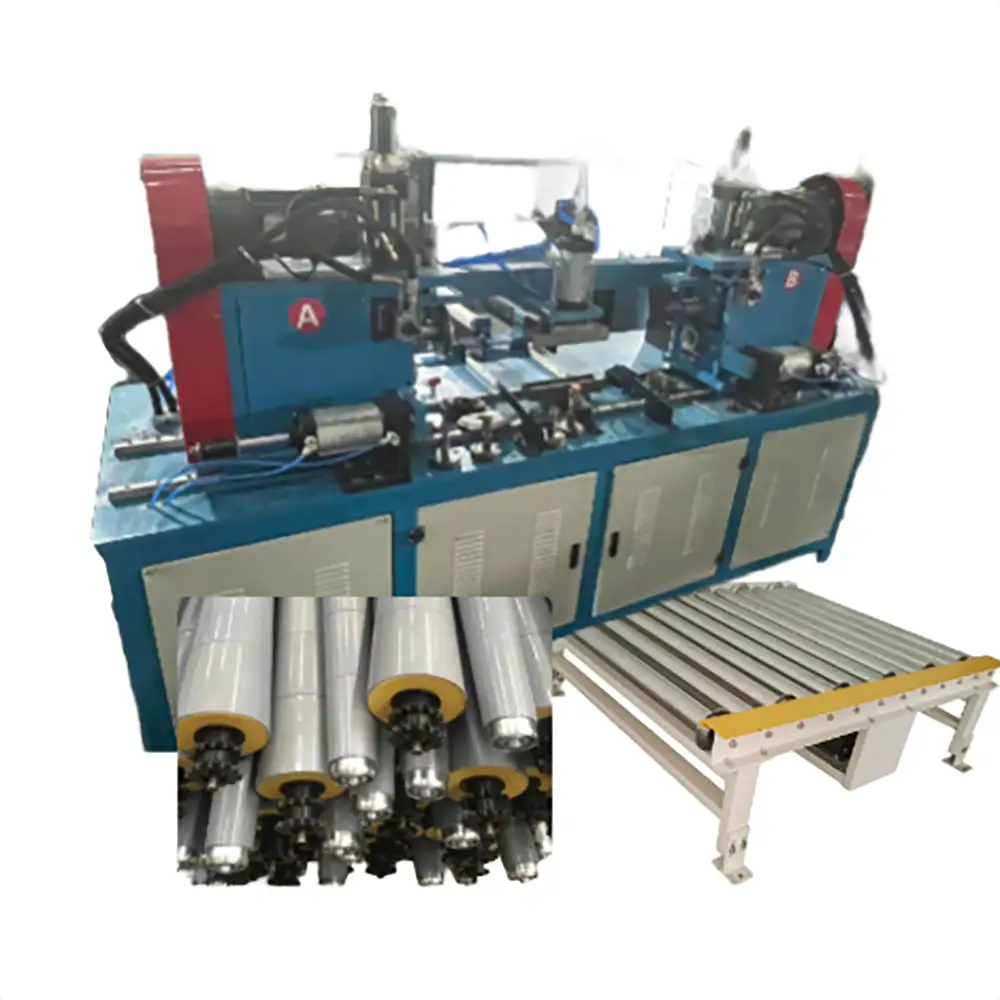
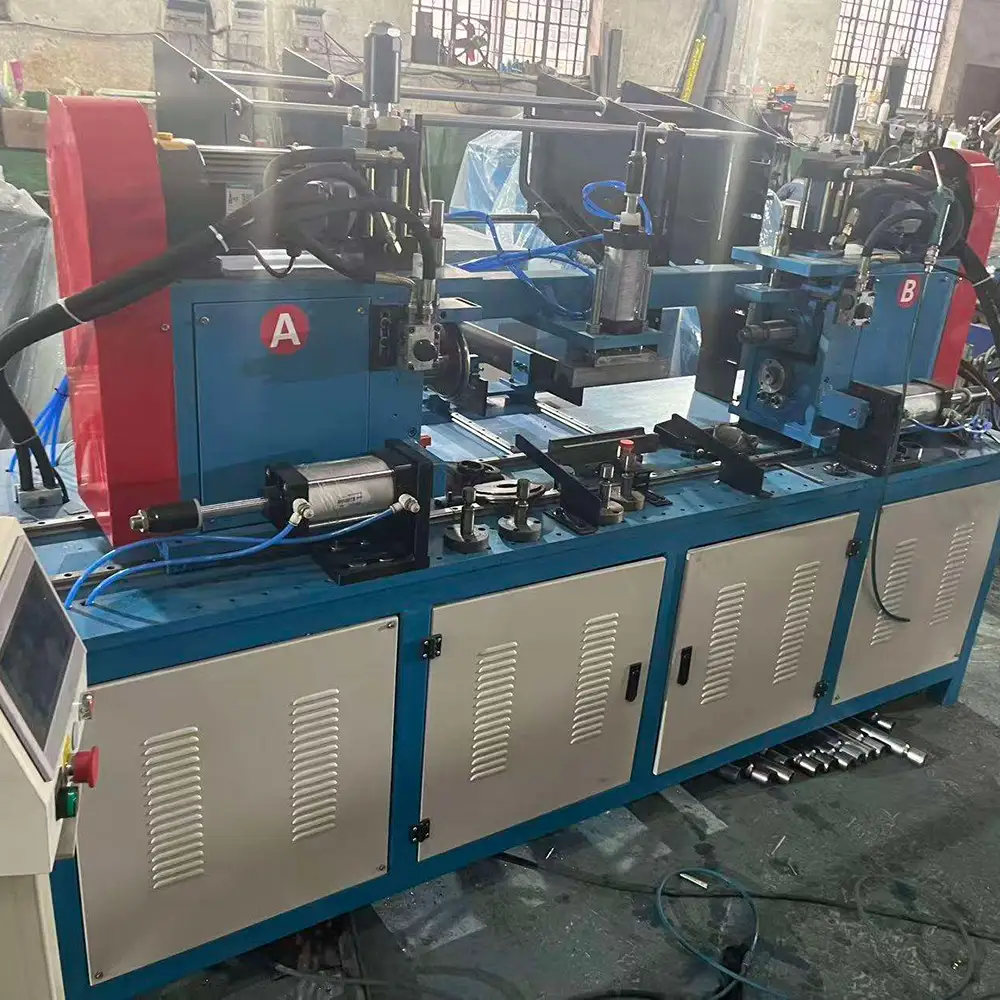
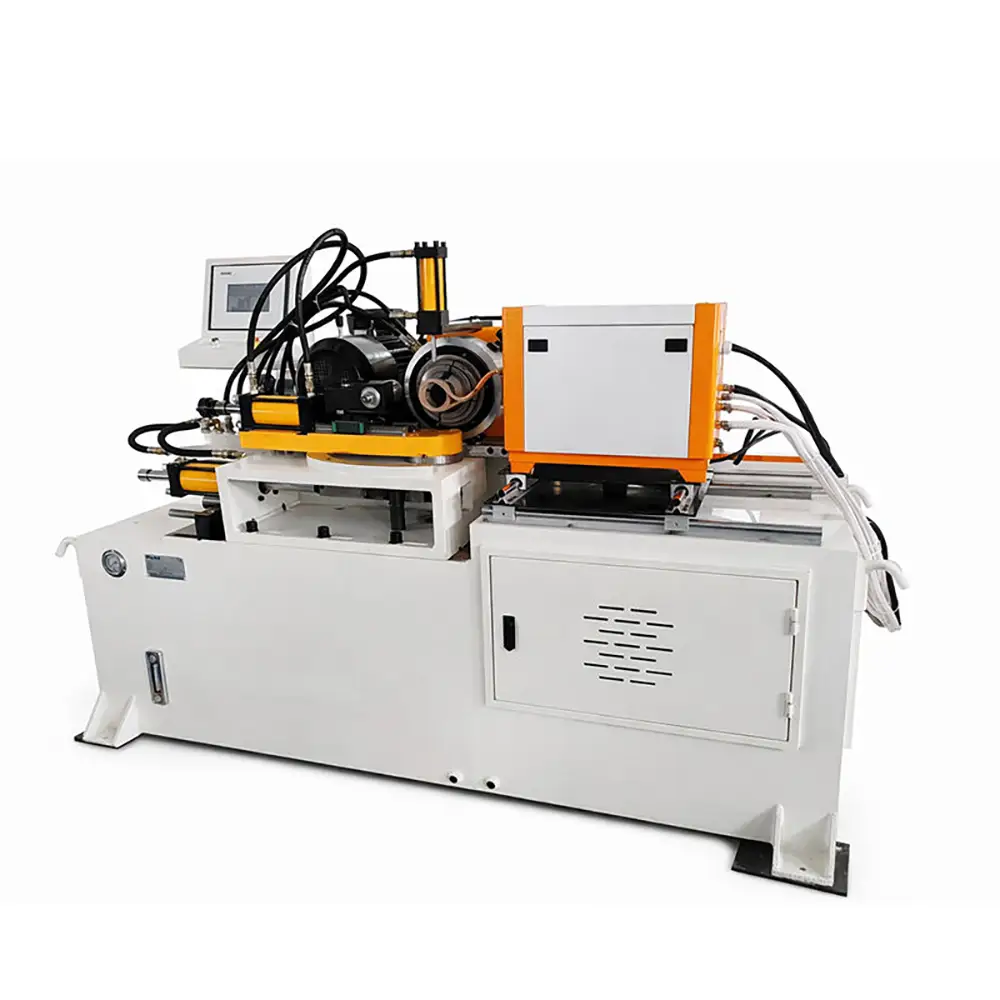
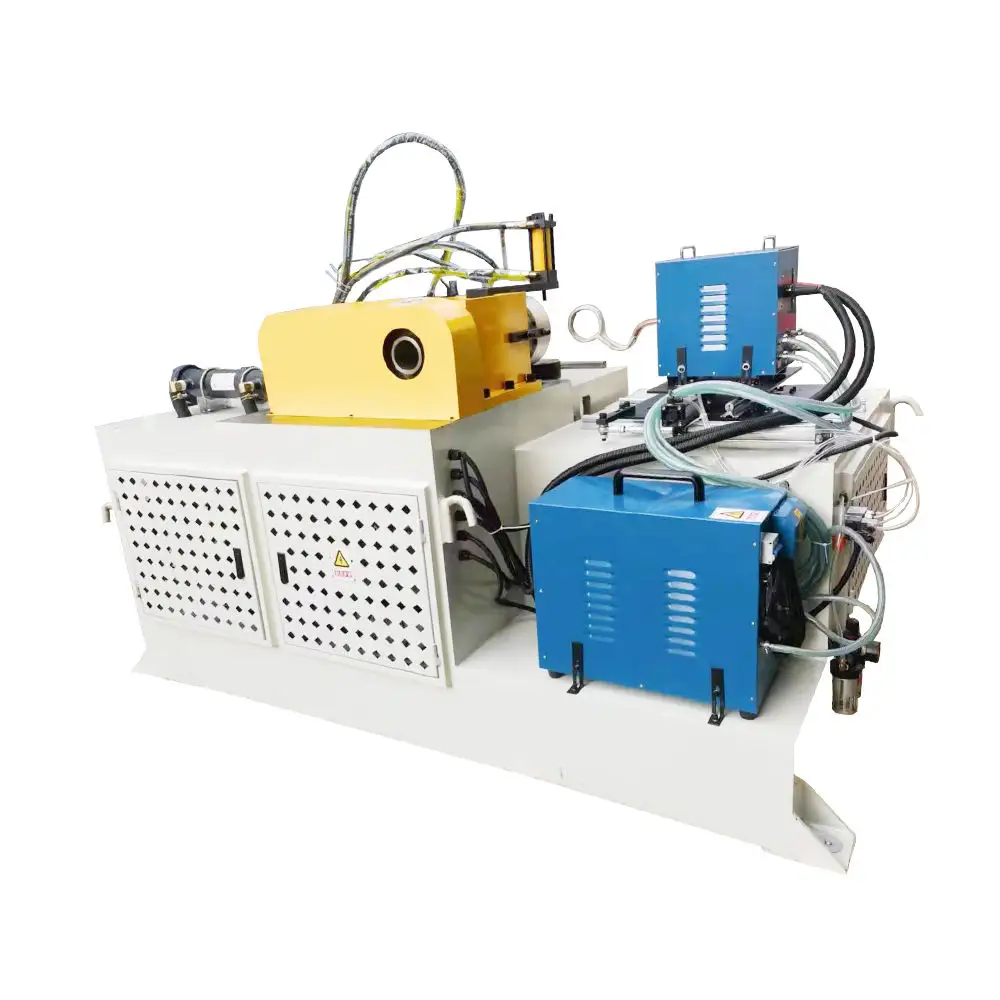
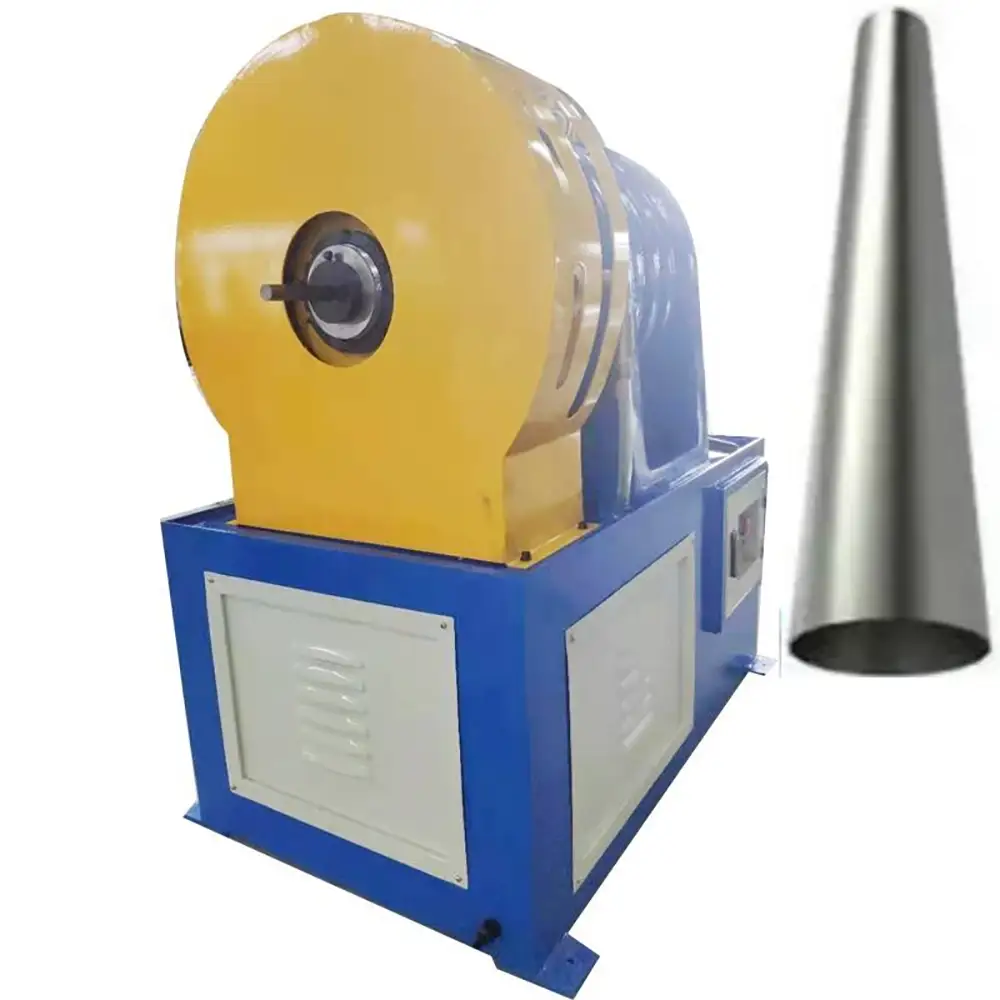
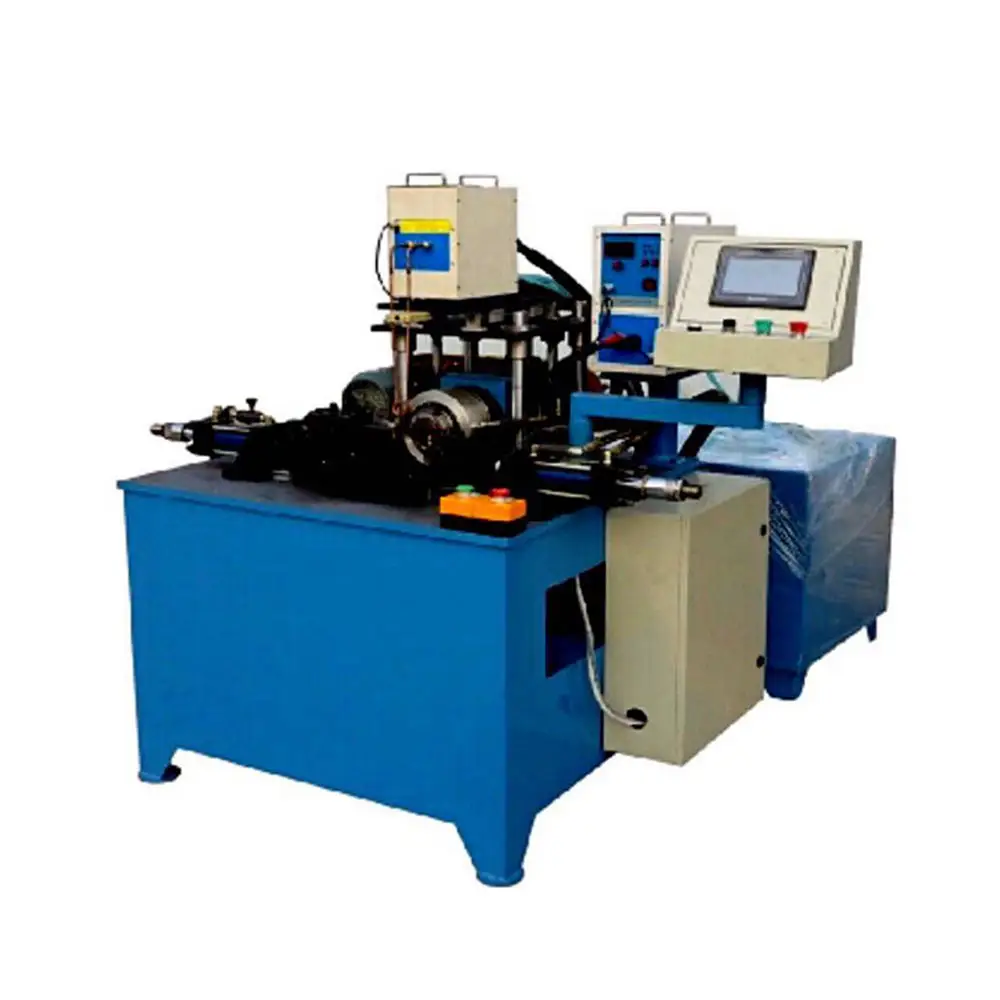
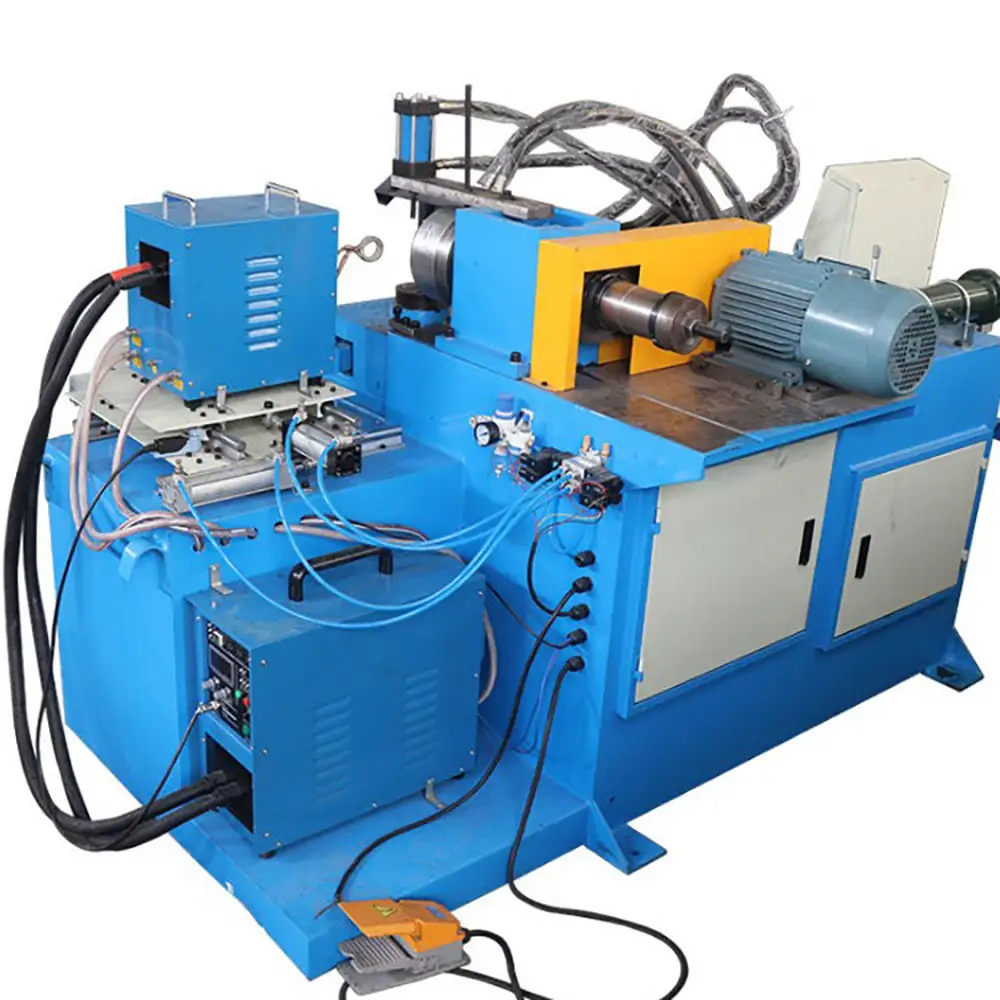
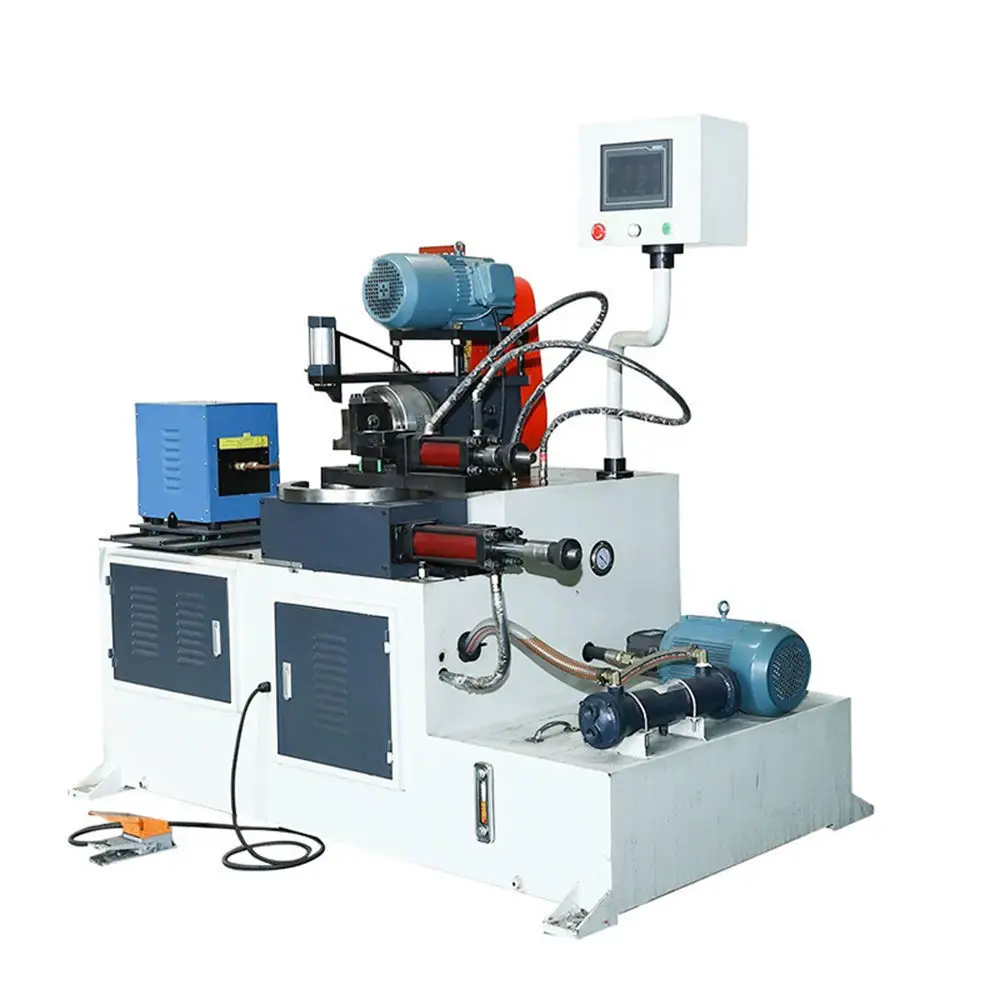
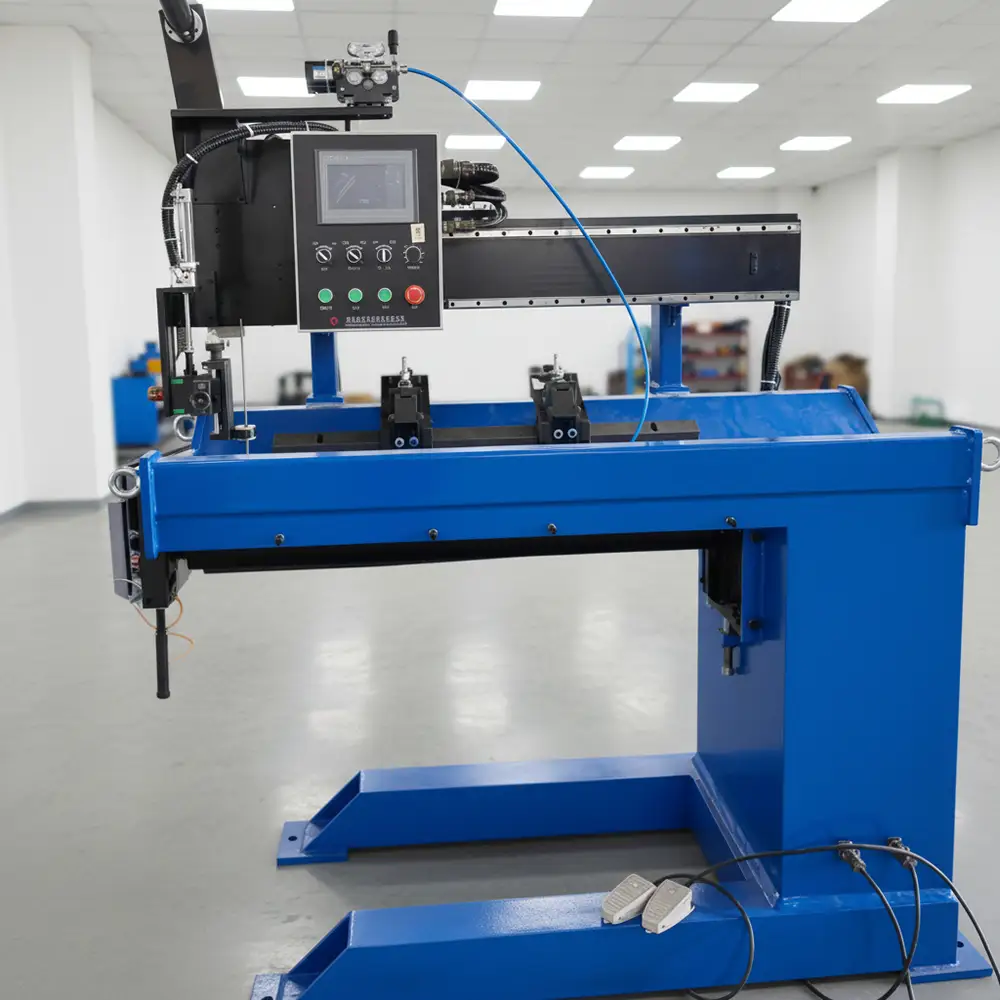
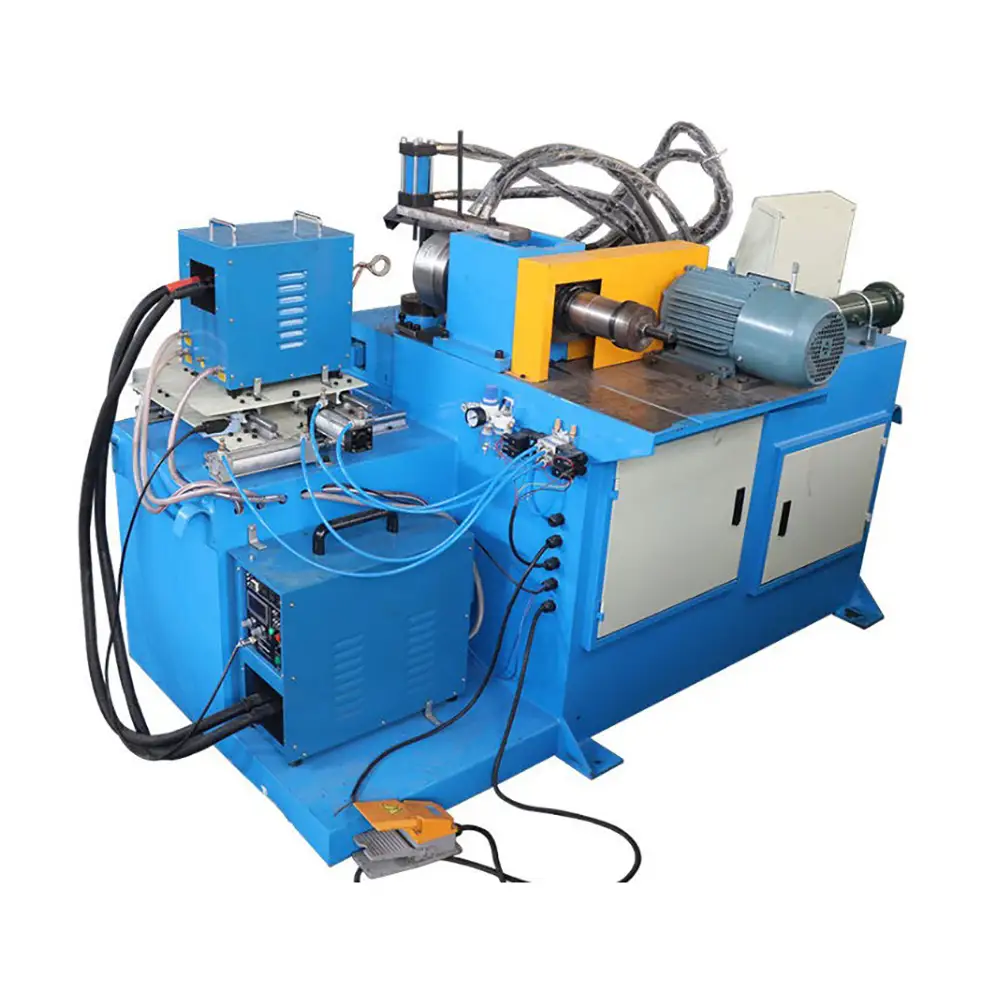
This equipment is a Pipe End Forming and Plug Installation Integrated Machine designed for pipe processing. It integrates functions of precise clamping, efficient pipe end forming, and convenient plug installation. Suitable for pipes with diameters ranging from 10 - 60mm, it meets the end - processing requirements of pipes in various industrial scenarios, helping to improve pipe processing efficiency and quality. Specification
|
item |
value |
|
material / metal processed |
Stainless Steel, Alloy, PVC, Aluminum Alloy, Plastic, Aluminum |
|
max.shrinking capacity (diameter)(mm) |
60 |
|
max. tube contracting length (mm) |
1500 |
|
automation |
Semi-Automatic |
|
power (kw) |
4 |
|
brand name |
SOAR |
|
extra services |
End Forming |
|
key selling points |
Easy To Operate |
|
Clamping cylinde |
80 |
|
Forming cylinder |
100 |
|
Applicable Pipe Diameter |
10 - 60mm |
|
Hydraulic oil tank |
60L |
Pipe End Plugging Machine for Conveyor Roller Manufacturing
The Pipe End Plugging Machine for Conveyor Roller is designed for efficient insertion of end plugs,roller ends,and related components into metal tubes used to manufacture conveyor rollers. It provides a practical production solution for manufacturers that need consistent tube-end assembly across repeated conveyor roller products.
Conveyor rollers are commonly manufactured from steel or other metal tubes with internal or external components installed at both ends. Depending on the roller design,the tube may require bearing housings,end plugs,axle components,or other end fittings before final assembly.
A dedicated pipe end plugging machine can help simplify this process by positioning the tube and applying controlled insertion force to install the selected end component.
The machine can be configured according to tube diameter,wall thickness,roller length,plug dimensions,and production requirements. Different tooling and fixtures may be used for different conveyor roller specifications.
The exact plugging method depends on the component design. It may involve mechanical pressing,hydraulic insertion,pneumatic operation,or another controlled assembly method.
Conveyor Roller End Plugging Process
The end plugging process generally begins with placing the conveyor roller tube into a dedicated fixture. The tube is aligned so that the end opening is correctly positioned relative to the plugging tool.
The end plug or related component is then placed into the required position. The machine applies controlled force to insert the component into the tube end.
Depending on the design,the plug may be press-fitted,inserted to a specified depth,or installed as part of a larger roller-end assembly.
Consistent positioning and insertion force are important because excessive force can damage the tube or plug,while insufficient force may result in an improperly seated component.
A dedicated machine can provide more repeatable results than completely manual installation,particularly when large quantities of conveyor rollers are manufactured.
Designed for Conveyor Roller Production
Conveyor rollers are widely used in material handling systems,warehouse conveyors,mining equipment,logistics systems,manufacturing lines,and distribution facilities.
Their construction varies according to application. Some rollers use simple tube bodies with pressed-in end plugs,while others include bearings,axles,seals,and additional components.
The pipe end plugging machine can be incorporated into a conveyor roller production process where tube ends need to receive plugs or related components.
Potential products include:
Gravity conveyor rollers
Belt conveyor rollers
Roller conveyor components
Steel conveyor rollers
Material handling rollers
Warehouse conveyor rollers
Industrial conveyor rollers
Mining conveyor rollers
Logistics conveyor rollers
Custom conveyor roller assemblies
The actual component compatibility should be confirmed according to the roller design.
Tube and Pipe End Plug Insertion
The machine is designed around the principle of controlled end-component insertion. This can be useful for metal tubes that require an internal plug or end fitting.
Different plug designs may include plastic plugs,metal end plugs,bearing housings,formed inserts,or other components depending on the conveyor roller construction.
The correct insertion method depends on the relationship between the tube inner diameter and the plug dimensions.
For press-fit applications,the dimensional tolerance of both the tube and plug is particularly important. Surface condition,material properties,and component geometry can also affect insertion force.
Customers should provide tube and plug drawings or samples when requesting customized equipment.
Automatic Conveyor Roller Assembly
An automatic or semi-automatic configuration can reduce repetitive manual assembly work. Depending on the machine design,functions may include tube positioning,component feeding,clamping,end plug insertion,and finished-part removal.
Automation can improve production consistency when the same conveyor roller specification is produced repeatedly.
However,the exact level of automation depends on the machine configuration. Some systems may require an operator to load tubes and plugs,while other production lines can incorporate automatic feeding and transfer mechanisms.
For high-volume manufacturing,the end plugging machine can be connected with other conveyor roller production equipment.
Customizable for Different Roller Sizes
Conveyor rollers are manufactured in many diameters and lengths. A flexible plugging machine can therefore be configured around the specific size range required by the factory.
Customization may include:
Tube diameter
Tube length
Tube wall thickness
Plug diameter
Plug insertion depth
Fixture design
Insertion force
Machine stroke
Feeding system
Control system
Interchangeable tooling can make it easier to change between different roller models.
The actual size range should be confirmed according to the machine structure and customer product specifications.
Hydraulic and Pneumatic Plugging Options
Depending on the required insertion force,the machine may use hydraulic,pneumatic,mechanical,or servo-driven movement.
Hydraulic systems can provide controlled and substantial insertion force for applications involving larger or tighter-fitting components.
Pneumatic systems may be suitable for lighter assembly operations where moderate force and rapid cycling are required.
Servo-driven systems can provide programmable motion and position control when more precise insertion depth or production control is required.
The appropriate drive system should be selected according to tube size,plug material,interference fit,and production volume.
Conveyor Roller End Cap Assembly
End plugging is often one step in a larger conveyor roller manufacturing process.
Depending on the product,the overall workflow may include:
Tube cutting
Tube cleaning
Bearing or component preparation
End plug insertion
Axle installation
Bearing assembly
Sealing
Dimensional inspection
Final packaging
The pipe end plugging machine can therefore be used as an individual workstation or integrated into a larger roller production line.
For automated factories,material handling and feeding systems can be evaluated according to production requirements.
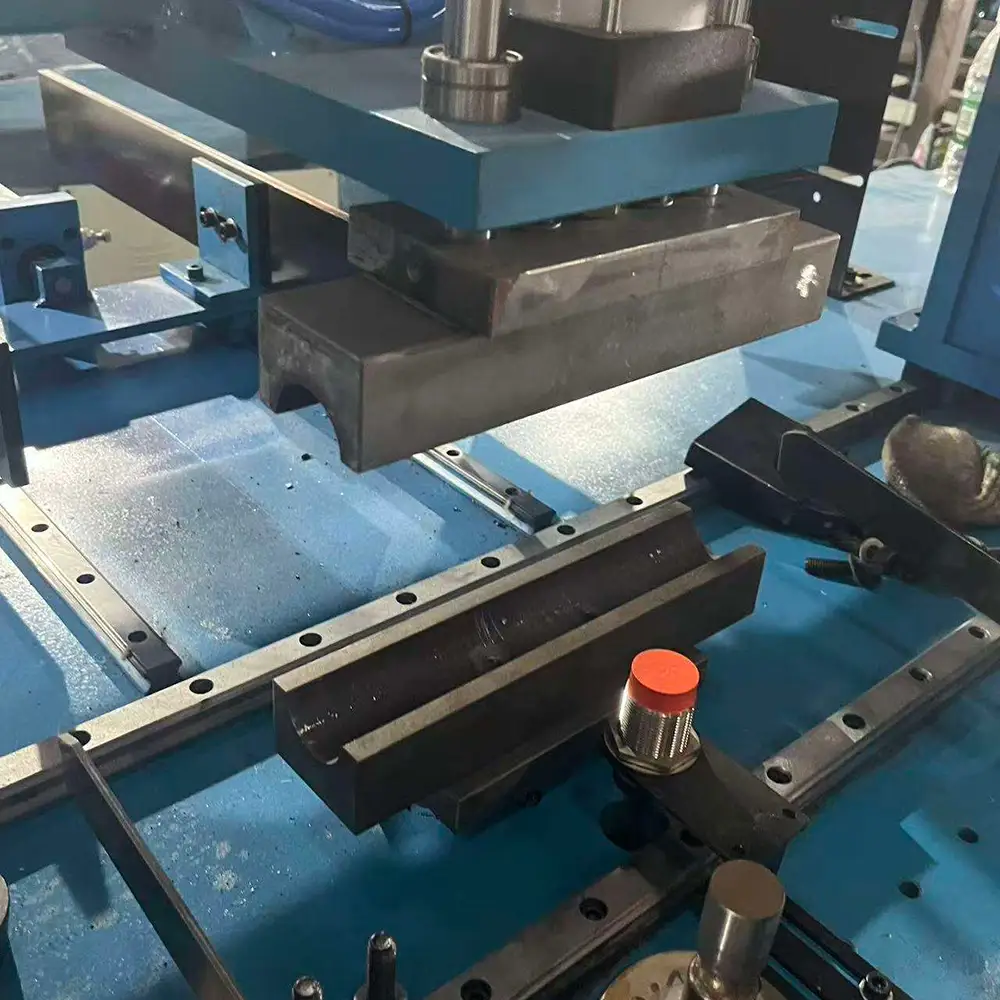
Workpiece Clamping and Positioning
Stable tube positioning is important for successful end plugging. The tube should remain aligned with the insertion tool throughout the operation.
A suitable fixture can support the roller tube and prevent movement during insertion.
For cylindrical conveyor roller tubes,the fixture may use adjustable supports or dedicated locating surfaces.
When different roller sizes are manufactured,the machine may require adjustable or interchangeable fixtures.
Correct alignment helps prevent uneven insertion,plug damage,or tube deformation.
Insertion Quality and Repeatability
The quality of a plugged conveyor roller depends on several factors.
Important considerations include:
Tube inner diameter
Plug outer diameter
Dimensional tolerance
Insertion force
Insertion depth
Tube material
Plug material
Workpiece alignment
Tooling condition
A controlled machine cycle can help maintain consistent insertion conditions across repeated products.
For demanding applications,the first finished parts should be inspected before full production begins. Periodic dimensional inspection can also help maintain production consistency.
Applications Beyond Conveyor Rollers
Although the machine is designed around conveyor roller production,it may also be adapted for other tubular products requiring end-component insertion.
Potential applications include:
Metal furniture tubes
Industrial rollers
Machine frames
Steel tubing assemblies
Material handling components
Agricultural equipment
Storage systems
Automation equipment
Custom tubular products
The suitability for other applications depends on tube dimensions and plug design.
Maintenance and Safety
Pipe end plugging involves mechanical force and moving components. Operators should keep hands away from the insertion area and use appropriate machine safety procedures.
Depending on the configuration,safety features may include guards,emergency-stop controls,and hydraulic or pneumatic protection systems.
Routine maintenance may include checking fixtures,insertion tools,hydraulic or pneumatic components,fasteners,and guide systems.
The plugging tool should be inspected regularly for wear because excessive tool wear can affect insertion depth and alignment.
Operators should follow the manufacturer's operating and maintenance instructions.
OEM and Custom Conveyor Roller Solutions
The machine can be customized for different conveyor roller manufacturing requirements.
OEM and ODM options may include customized insertion tooling,fixtures,feeding systems,roller positioning systems,control systems,and automatic transfer arrangements.
For an accurate quotation,customers should provide:
Roller tube diameter
Tube length
Wall thickness
Tube material
Plug type
Plug dimensions
Required insertion depth
Required insertion force
Production volume
Desired automation level
Drawings,photos,or physical samples can help determine the correct machine and tooling configuration.
For conveyor roller manufacturers,material handling equipment suppliers,and industrial machinery buyers,the Pipe End Plugging Machine for Conveyor Roller provides a practical solution for repeatable tube-end component assembly.
Why Choose Us
Designed for Conveyor Roller Production
Specifically developed for tube-end plugging and component insertion applications used in conveyor roller manufacturing.
Controlled End Plug Insertion
Provides controlled insertion force and positioning for repeatable roller-end assembly.
Flexible Roller Size Configuration
Tooling and fixtures can be adapted to different tube diameters,lengths,and plug dimensions.
Automatic and Semi-Automatic Options
The machine can be configured according to the required production automation level.
Multiple Drive Options
Hydraulic,pneumatic,mechanical,or servo-based systems can be evaluated according to application requirements.
Easy Production Integration
Can be used as an individual workstation or incorporated into a broader conveyor roller production line.
Custom Tooling and Fixtures
Plugging tools and workholding systems can be developed according to specific roller drawings and samples.
OEM and ODM Support
Customized machinery solutions can be evaluated for manufacturers,distributors,and industrial conveyor equipment suppliers.
FAQs
1. What is a pipe end plugging machine?
A pipe end plugging machine is equipment designed to insert plugs,end fittings,or other components into the end of a metal tube or pipe using controlled mechanical,pneumatic,hydraulic,or servo-driven force.
2. What is the machine used for?
This machine is primarily designed for installing end plugs or related components into tubes used to manufacture conveyor rollers.
3. Can it process different conveyor roller sizes?
Yes. The machine can be configured with suitable fixtures and tooling for different roller tube diameters,lengths,and plug dimensions.
4. What types of plugs can be installed?
Depending on the machine and tooling,the system may install plastic plugs,metal plugs,bearing housings,and other compatible tube-end components.
5. Is the machine automatic?
Automatic or semi-automatic configurations may be available. The exact functions depend on the selected machine model and production requirements.
6. Can it install bearing housings?
Potentially,if the bearing housing dimensions and insertion method are compatible with the machine. Drawings or samples should be provided for evaluation.
7. What determines the required insertion force?
Tube material,wall thickness,inner diameter,plug material,plug diameter,interference fit,and insertion depth all influence the required force.
8. Can the machine use hydraulic power?
Yes. Hydraulic operation can be suitable for applications requiring controlled and relatively high insertion force.
9. Can the machine be customized?
Yes. Fixtures,insertion tools,feeding systems,controls,and machine dimensions can be customized according to the roller product.
10. Can it be integrated into a conveyor roller production line?
Yes. The machine can be used as an independent workstation or integrated with tube cutting,assembly,inspection,and other roller manufacturing equipment.
11. What affects plugging quality?
Tube and plug tolerances,alignment,insertion force,insertion depth,material properties,and tooling condition all affect the finished assembly.
12. What information should I provide for a quotation?
Provide roller tube diameter,length,wall thickness,material,plug type,plug dimensions,insertion depth,production volume,and desired automation level. Drawings or samples are recommended.
Prev:
Carbon Steel Stainless Steel Copper Aluminum Pipe End Sealing Machine for 8mm to 40mm Round Pipe
Next:
Hydraulic Double-Head Muffler Sealing Machine | Muffler Shell Manufacture
TAG:
Automatic Pipe Assembly Machine,
Tube Plugging Equipment,
Pipe Plugging Equipment,
Metal Tube Assembly Machine,
Steel Tube Assembly Machine,
Tube Component Insertion Machine,
Pipe Component Insertion Machine,
Automatic Tube Assembly Machine,
Conveyor Roller End Plugging Machine,
Conveyor Roller Plugging Machine,
Conveyor Roller Plug Insertion Machine,
Conveyor Roller End Cap Machine,
Conveyor Roller End Cap Insertion Machine,
Conveyor Roller Manufacturing Machine,
Conveyor Roller Assembly Machine,
Conveyor Roller Production Machine,
Conveyor Roller Production Equipment,
Automatic Conveyor Roller Plugging Machine,
Automatic Conveyor Roller Assembly Machine,
Automatic Pipe End Plugging Machine,
Automatic Tube End Plugging Machine,
Pipe End Plugging Equipment,
Tube End Plugging Machine,
Tube End Plugging Equipment,
Metal Pipe End Plugging Machine,
Steel Pipe End Plugging Machine,
Metal Tube End Plugging Machine,
Steel Tube End Plugging Machine,
Pipe End Plug Insertion Machine,
Tube End Plug Insertion Machine,
Related Category:
Pipe End Plugging Machine for Conveyor Roller,Conveyor Roller End Plugging Machine,Conveyor Roller Plug Insertion Machin China, suppliers, manufacturers, factory, customized, wholesale, quotation, made in China