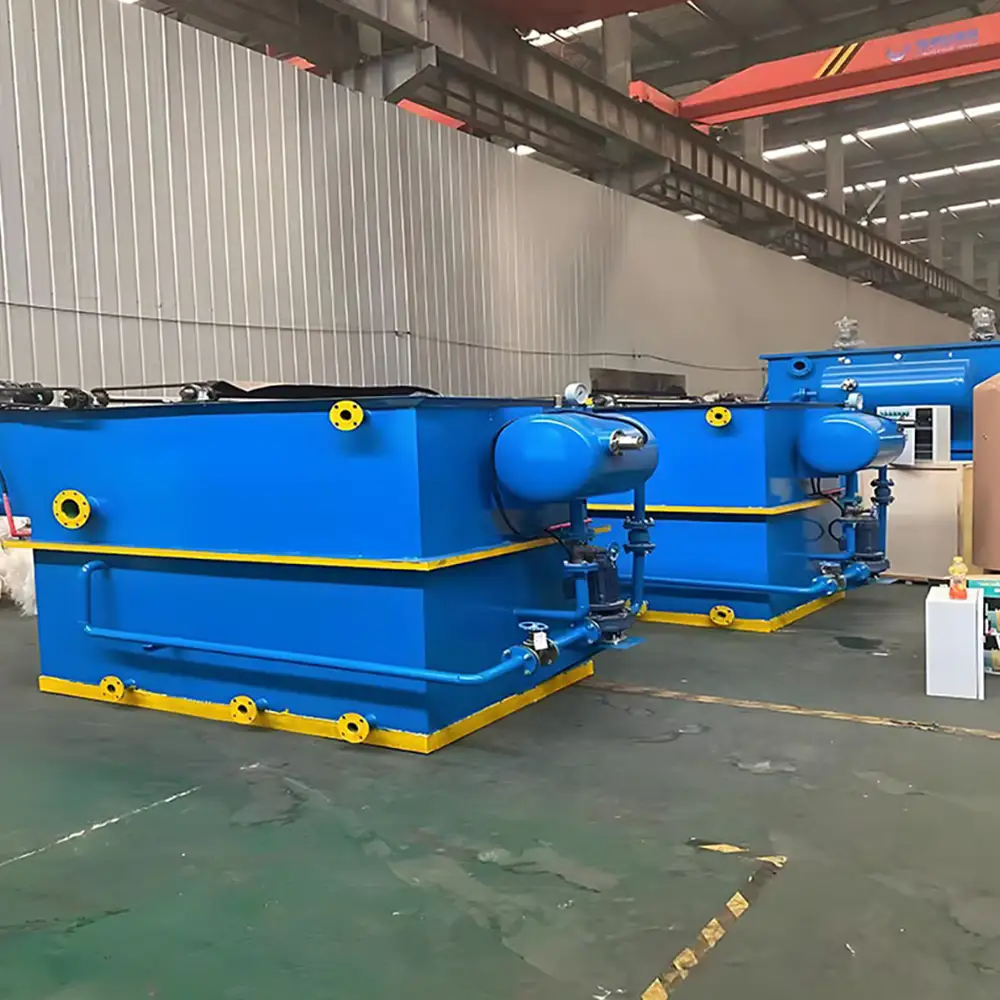
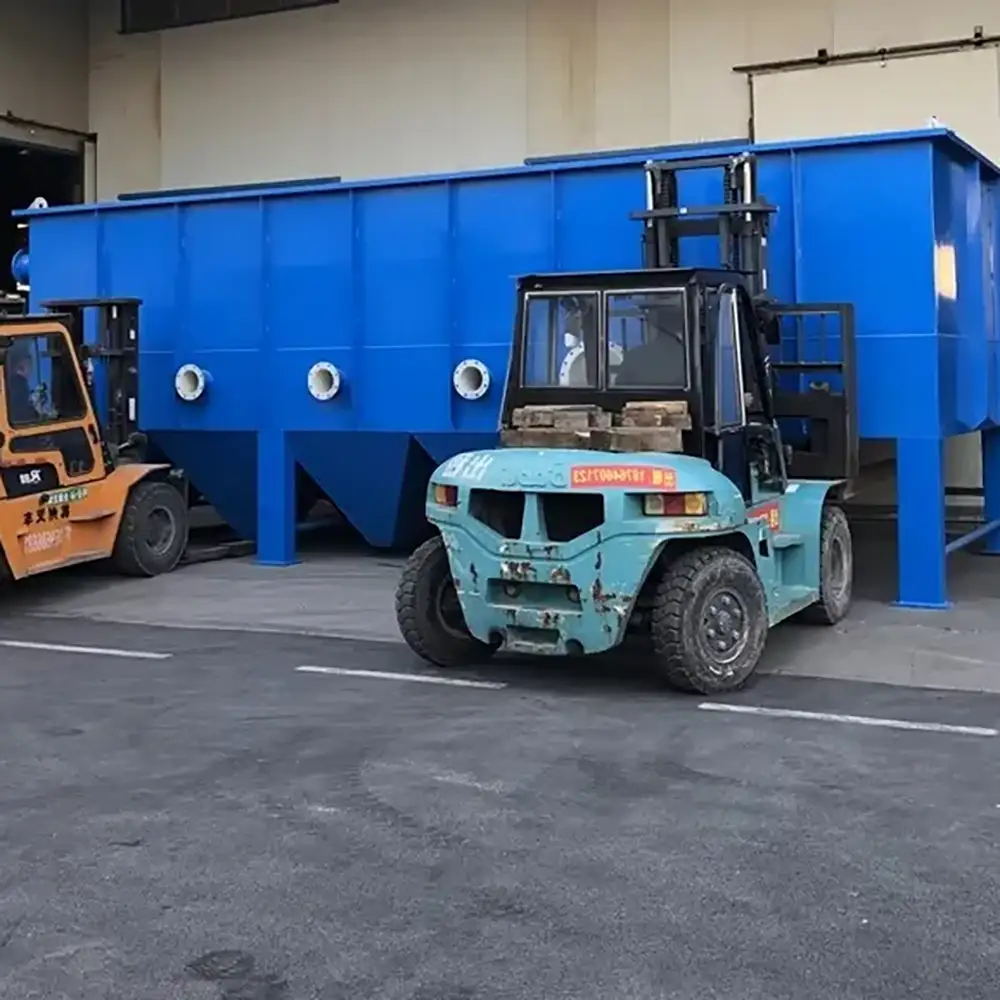
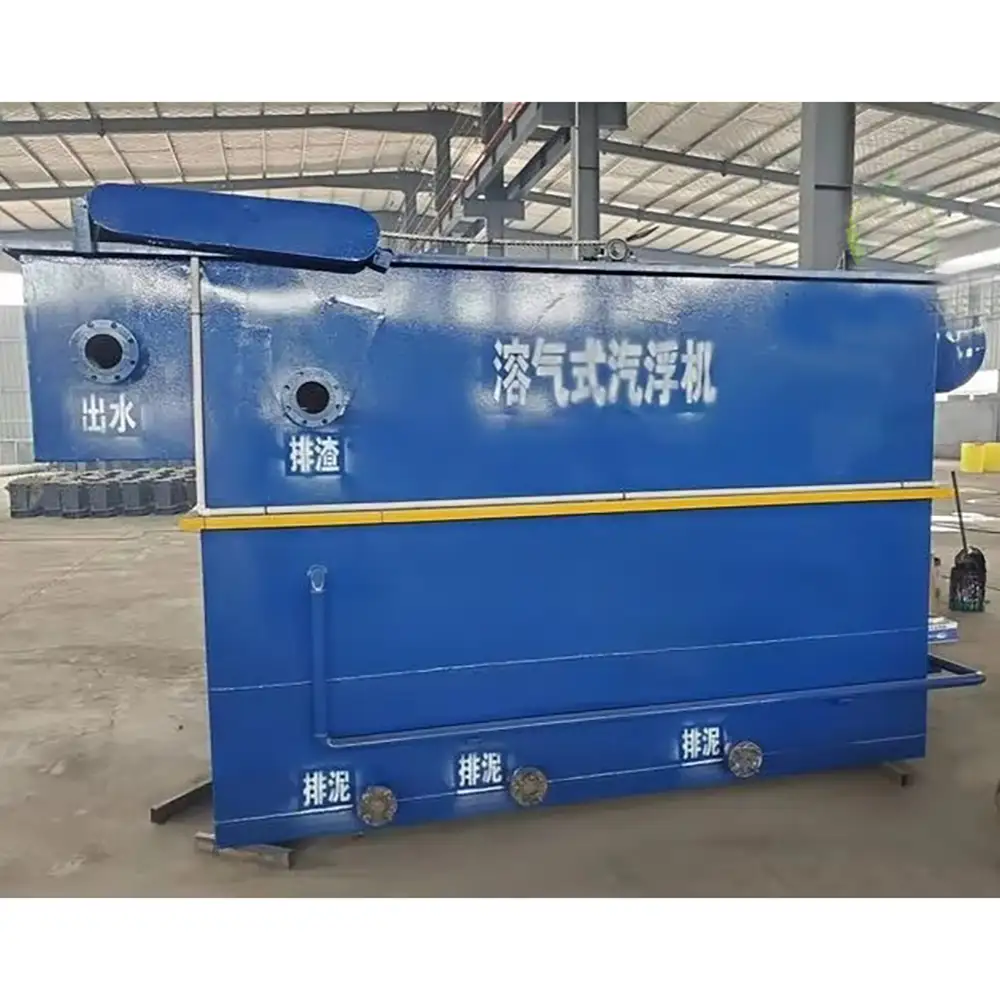
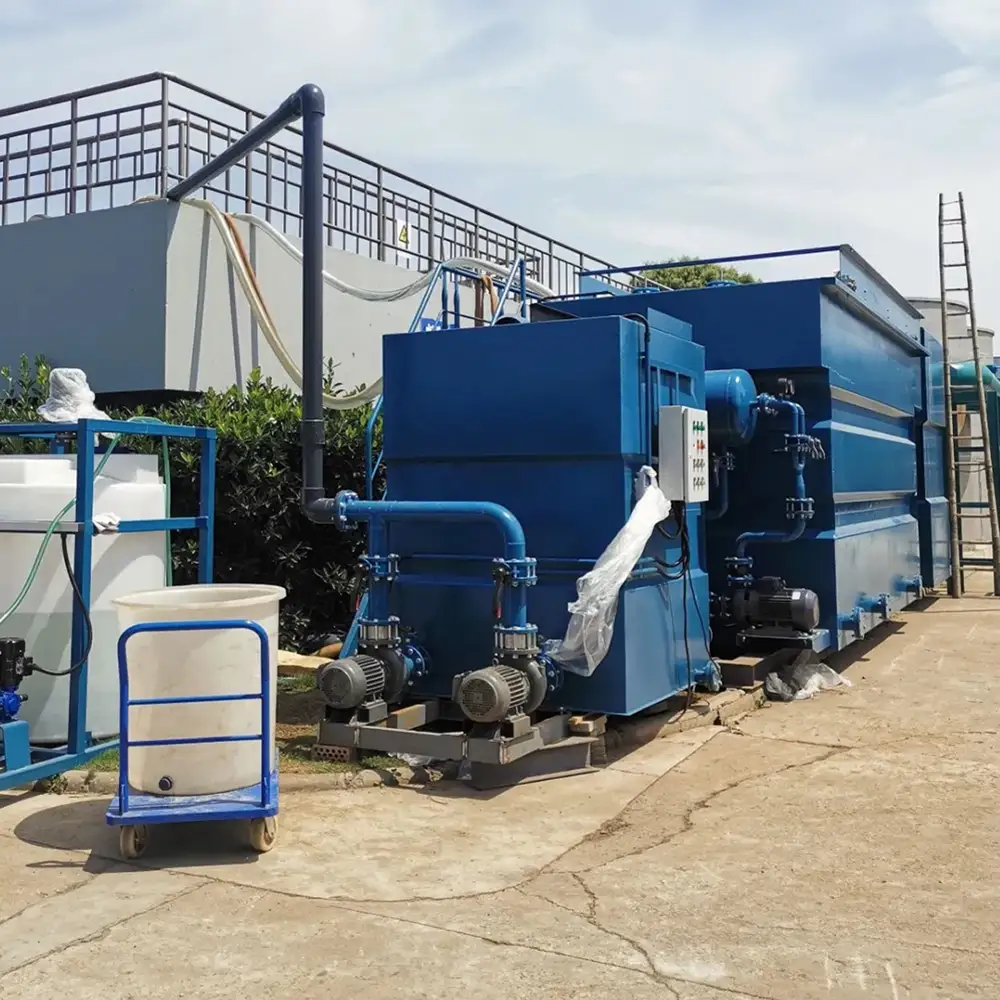
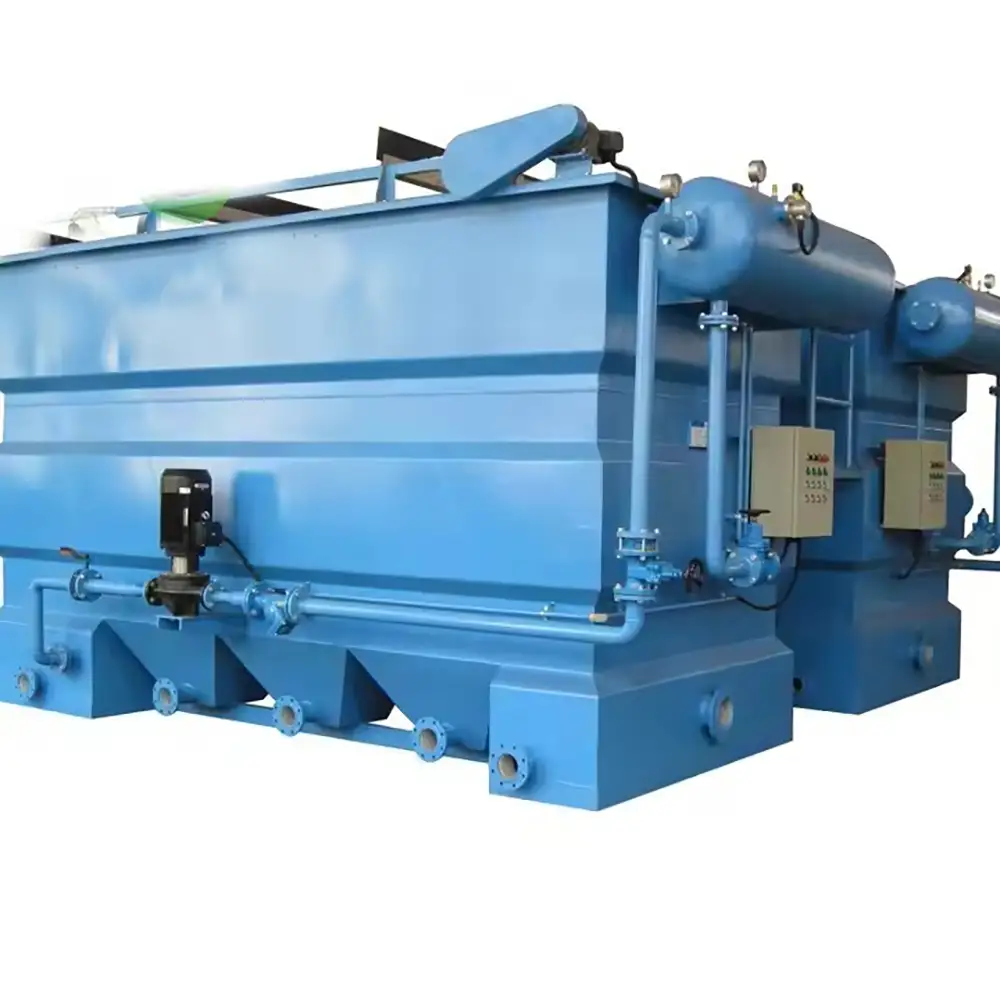
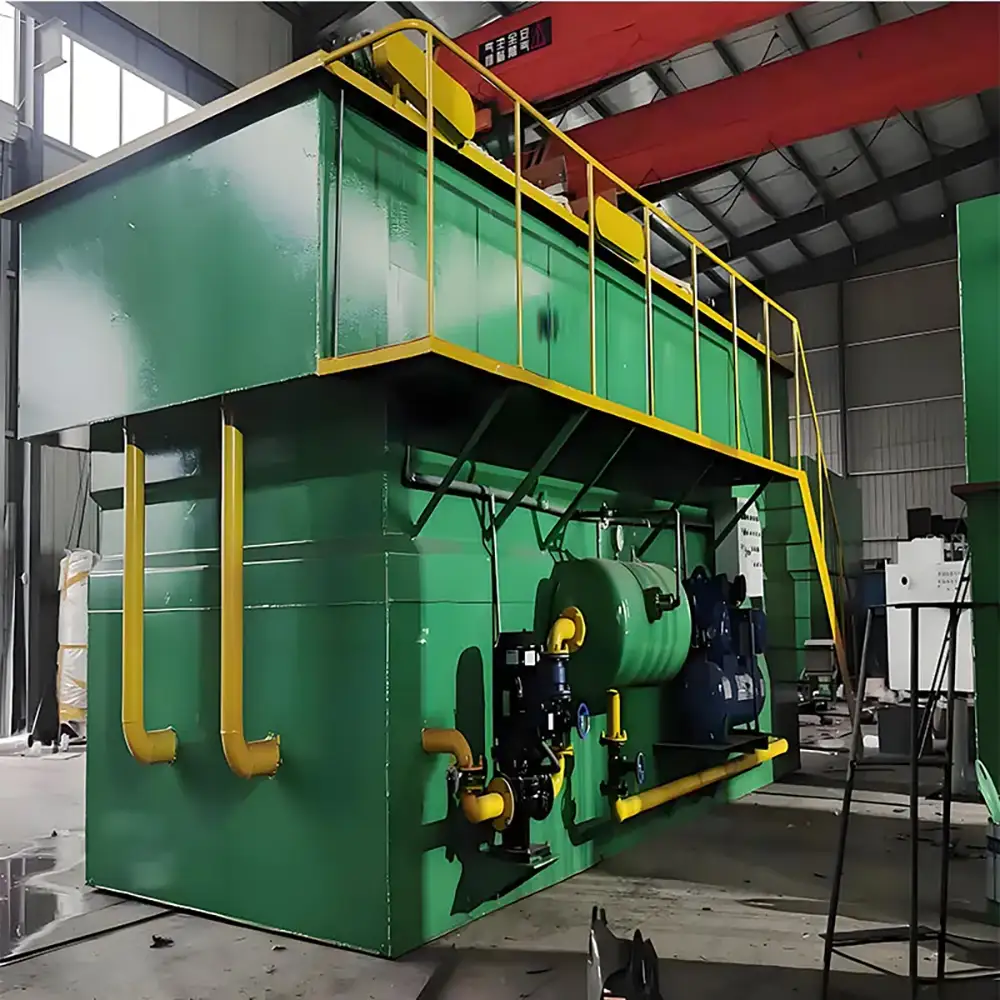
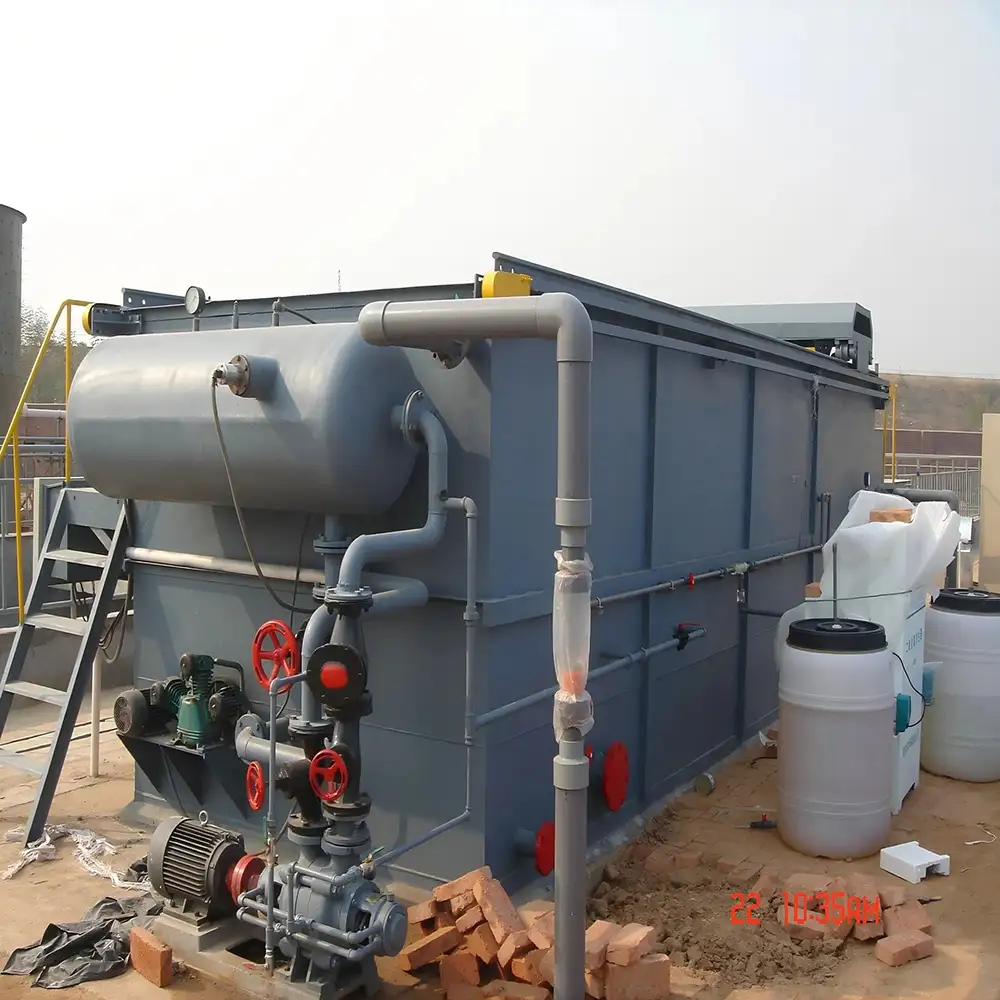
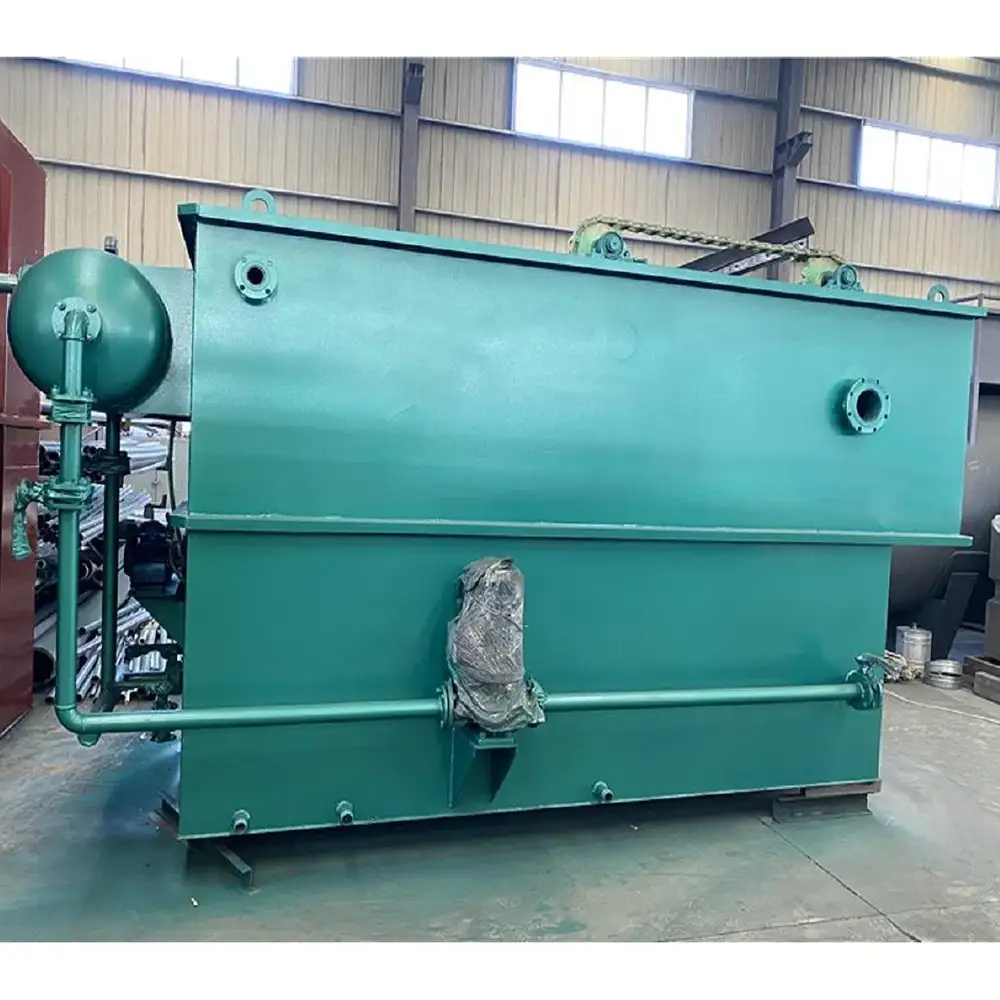
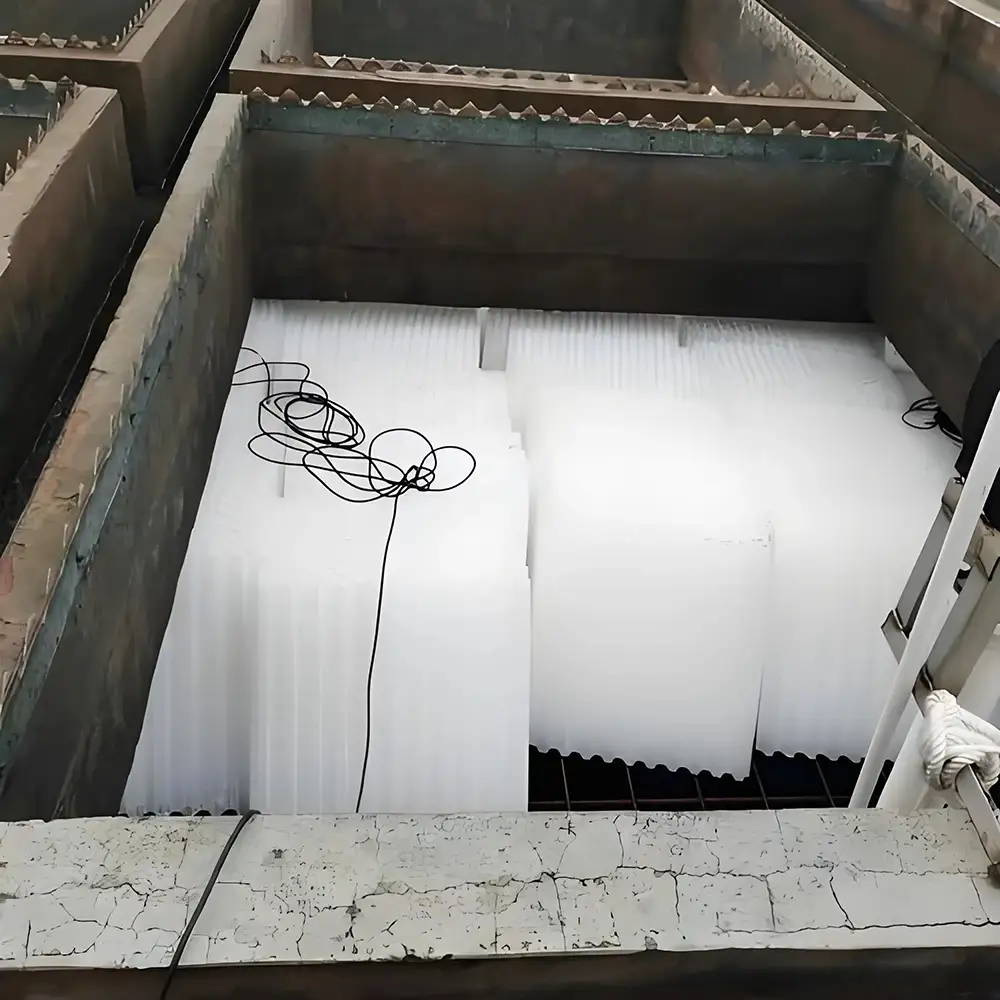
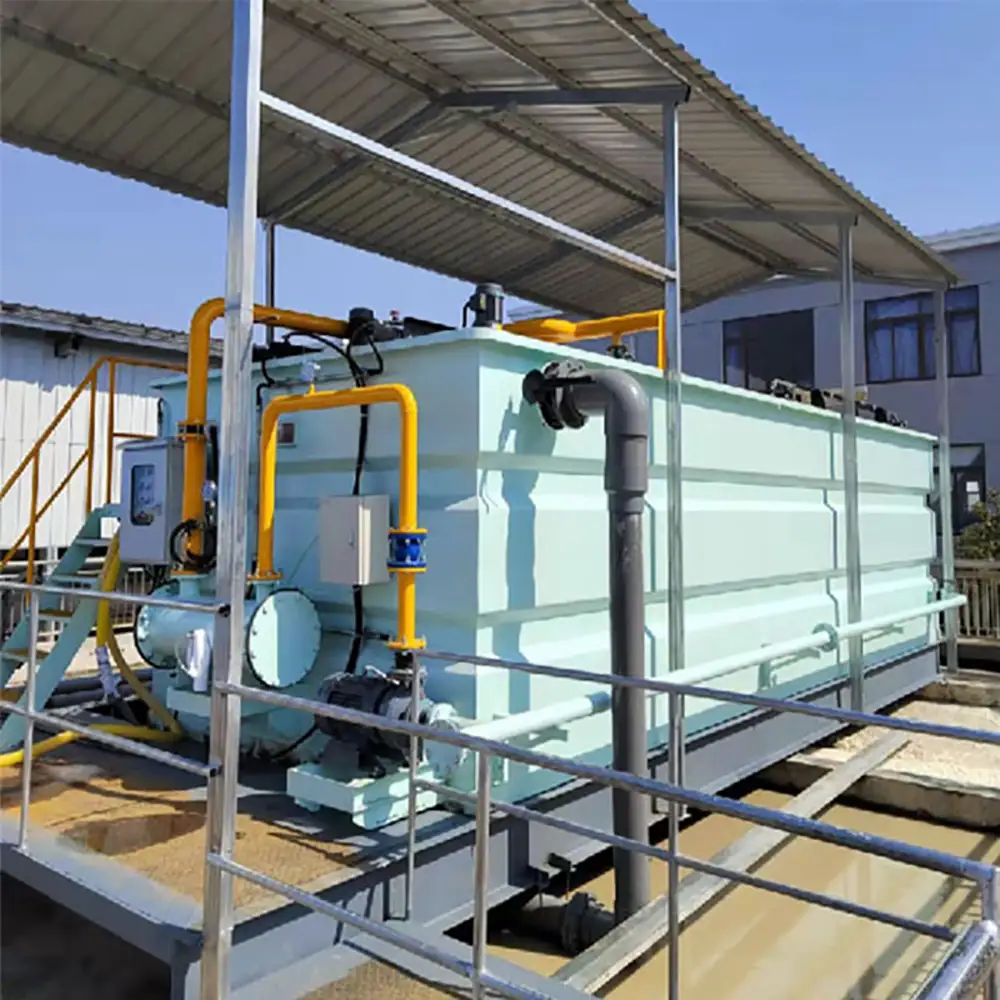
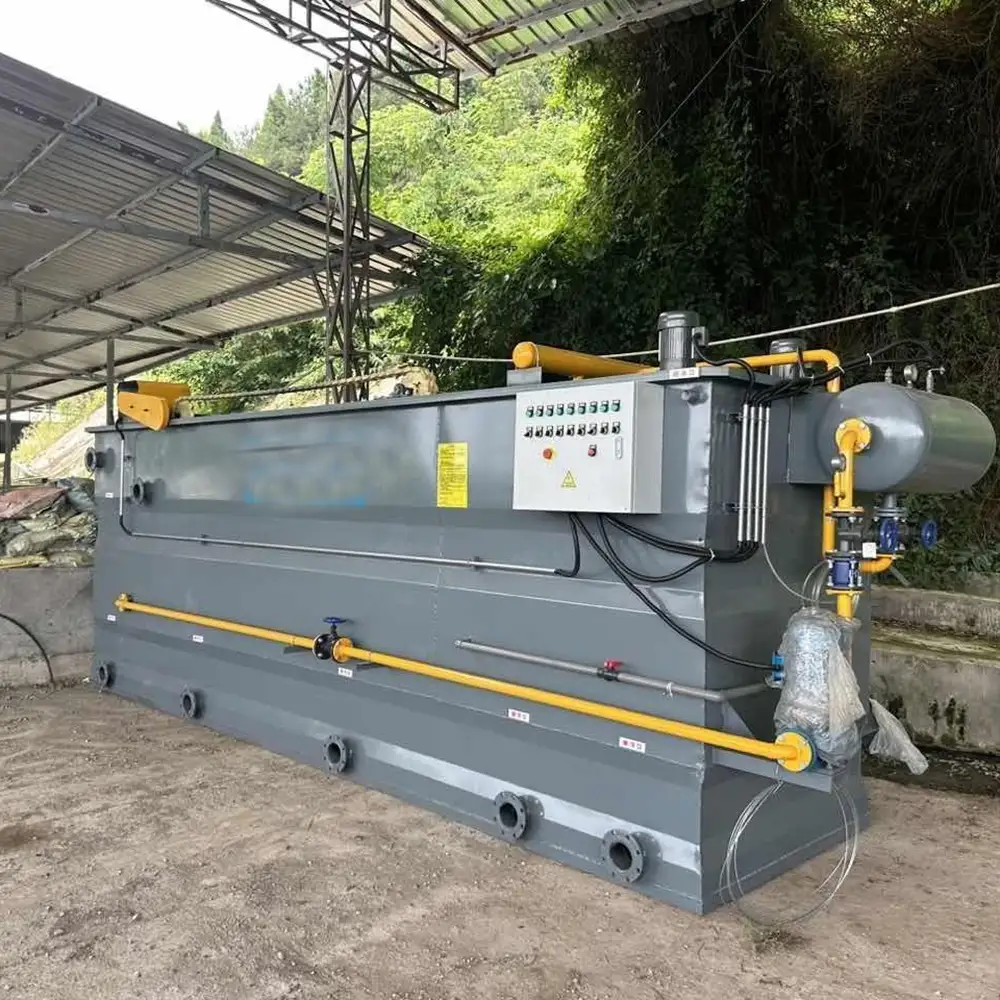
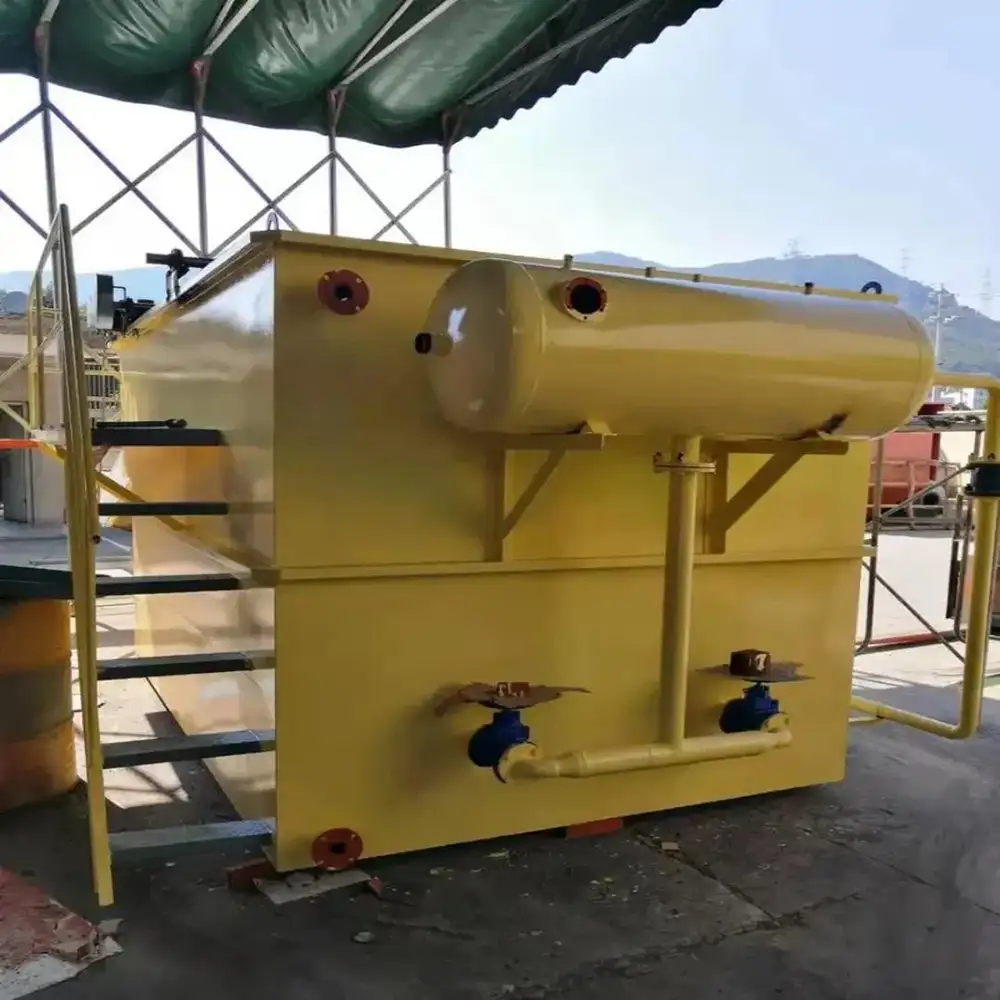
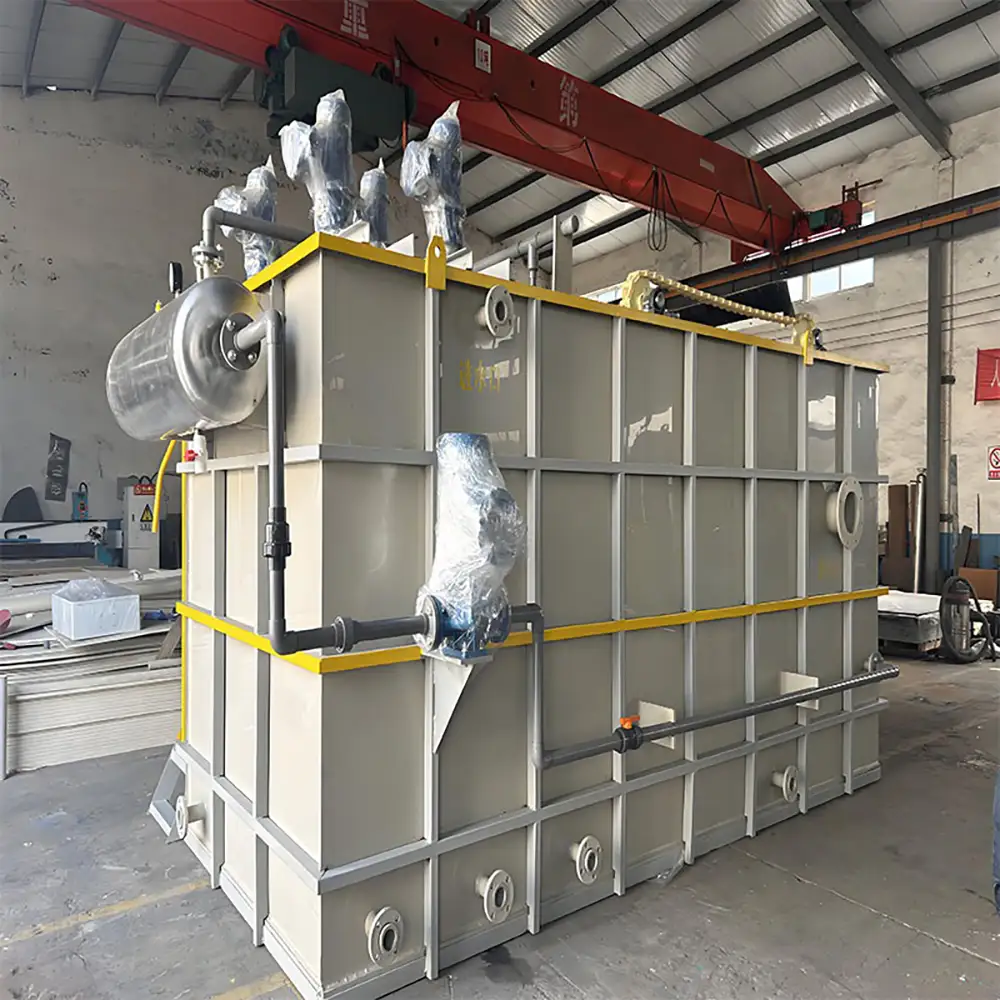
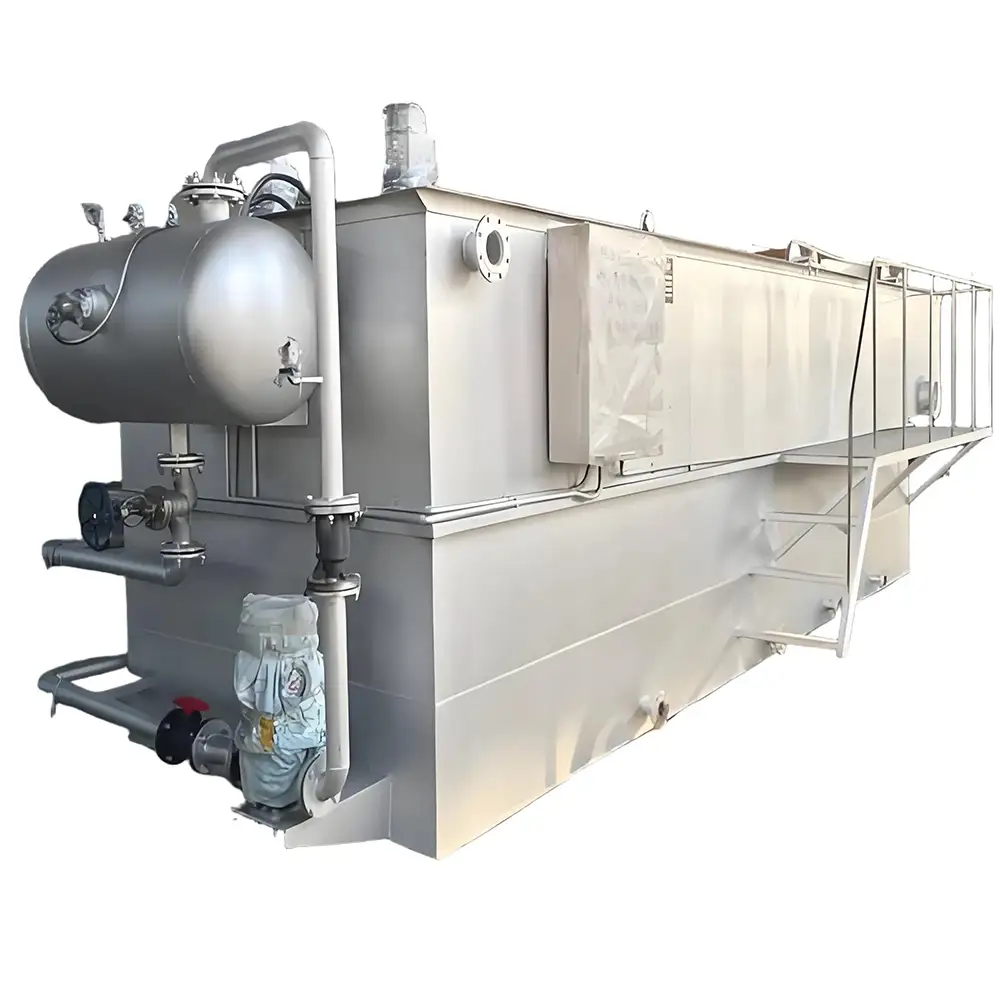
Dissolved Air Flotation DAF Oil Removal Machine
The Dissolved Air Flotation DAF Oil Removal Machine is an industrial wastewater treatment system designed to separate free oil, dispersed oil, grease, suspended solids, and other floatable contaminants from wastewater. Using dissolved air flotation technology, the machine generates fine air bubbles that attach to oil droplets and suspended particles, increasing their buoyancy and carrying them to the water surface for mechanical skimming.
DAF is widely used for oily wastewater because many oil droplets and oil-wet solids are difficult to remove efficiently through conventional gravity sedimentation. EPA technical documentation identifies dissolved air flotation as a common process for removing free and dispersed oil and grease from oily wastewater. It is also useful for suspended particles whose density is close to that of water.
Dissolved air flotation sewage treatment plants are usually used for primary sewage treatment, and the front can be used together with grilles(bar screen). The compact sewage treatment plant is the second treatment, and the disinfection system (sodium hypochlorite, chlorine dioxide) is tertiary.
DAF Oil Removal Working Principle
The DAF oil removal process begins when wastewater enters the treatment system after preliminary screening or other pretreatment. Depending on the wastewater characteristics, coagulation and flocculation may be applied before flotation to destabilize emulsified contaminants and form larger flocs.
A portion of clarified DAF effluent is commonly recycled and pressurized with air. Under elevated pressure, air dissolves into the recycle water. When this pressurized stream passes through a pressure-release device and enters the flotation tank, the sudden pressure reduction releases the dissolved air as fine bubbles.
These bubbles contact oil droplets, grease, suspended solids, and flocs. As the bubbles attach to the contaminants, the combined bubble-particle aggregates become less dense and rise toward the surface. A mechanical skimmer then removes the accumulated floating layer into an oil/sludge collection chamber.
This recycle-pressurization configuration can reduce the amount of wastewater that must be pressurized compared with full-flow pressurization. EPA documentation specifically notes that pressurizing only the recycle stream can reduce the energy required for pressurization.
Dissolved air flotation can remove suspended solids very well, and can be used for breeding, food consumption, slaughtering, food processing, plastic washing, dyeing, and car washing sewage treatment.
It has the characteristics of low price, small footprint, low operating cost and long service life.
Our company has been focusing on the production of air flotation equipment for more than 20 years, with domestic and foreign markets and a good reputation.
|
Model NO. |
GSRF |
Handling method |
physicochemical treatment |
|
Usage |
Industrial, agricultural, food factories, slaughterhouses |
Trademark |
|
|
Types |
Package, Compact, Small, Mini |
Applications |
Industrial, Municipal, Domestic, Medical, Ship |
|
Craft |
Flocculation sedimentation method |
Features |
Water Clarification, Filtration, Purification |
|
Service Life |
20 Years |
Operation |
Automatic |
|
Steel Plate Thickness |
>8mm |
Function |
Remove Suspended solids |
|
Voltage |
220V/ 380V/ Customerized |
Installation Type |
Onground |
|
Colour |
Grey/Silver/Blue/Balck/Customerized |
Use for |
Mineral, Printing, Chemical, Dyeing, Starch |
|
Material |
Carbon Steel, Stain Steel, FRP, PE, PP |
Certificate |
SGS, ISO |
|
Transport Package |
Container Standard Packing |
Specification |
Carbon steel anti-corrosion |
|
Production Capacity |
1000 Sets/Year |
Origin |
China |
Efficient Oil and Water Separation
The main advantage of a DAF oil removal machine is its ability to separate contaminants that do not settle easily by gravity. Free oil naturally tends to rise, but fine dispersed droplets, emulsified oil, grease, and oil-coated suspended solids can remain in the wastewater for extended periods.
DAF accelerates this separation by using fine bubbles as flotation carriers. The bubbles provide additional buoyancy and help transport contaminants to the surface.
For wastewater containing emulsified oil, chemical conditioning or emulsion breaking may be required before DAF. EPA references indicate that DAF can be particularly effective after appropriate pretreatment when emulsified oils are present.
Main Features
1. Effective Oil Removal
The machine is designed to remove free and dispersed oil, grease, fats, and other low-density contaminants from wastewater.
2. Suspended Solids Removal
In addition to oil, DAF can capture suspended solids and oil-wet particles. This makes the system suitable for combined oil and solids removal rather than oil separation alone.
3. Fine Bubble Flotation
Dissolved air flotation generates fine bubbles after pressure release. Their small size provides effective contact with dispersed contaminants and flocs.
4. Mechanical Surface Skimming
A surface scraper continuously or intermittently removes the accumulated floating oil and sludge layer, helping maintain stable separation.
5. Recycle Pressurization
A recycle system can pressurize a portion of clarified water rather than the entire wastewater flow. This arrangement is commonly used for industrial DAF systems and can help reduce pressurization requirements.
6. Compact Treatment Footprint
DAF can provide rapid separation of light suspended material and oil compared with some conventional settling processes. This can make it attractive where installation space is limited.
7. Automatic Control
PLC and HMI controls can be integrated for pump operation, pressure monitoring, liquid-level control, sludge skimming, chemical dosing, alarms, and other process functions.
Typical Applications
Dissolved Air Flotation DAF Oil Removal Machines are suitable for a broad range of industrial wastewater applications, including:
Oil And Gas Wastewater
Petroleum And Refinery Wastewater
Petrochemical Wastewater
Automotive Manufacturing Wastewater
Metal Processing Wastewater
Machining And Cutting Fluid Wastewater
Steel And Rolling Mill Wastewater
Transportation Equipment Cleaning Wastewater
Marine And Shipyard Wastewater
Food Processing Wastewater
Dairy Wastewater
Slaughterhouse Wastewater
Meat Processing Wastewater
Chemical Industry Wastewater
Pulp And Paper Wastewater
Textile And Industrial Process Wastewater
The equipment is particularly useful where wastewater contains oil, grease, fine suspended solids, or oil-coated particles that are difficult to separate by gravity alone. EPA references describe air flotation as useful for oil, grease, and fine suspended solids and for particles with densities close to water.
Oil Removal From Industrial Wastewater
Different oily wastewater streams contain different forms of oil. Free oil consists of larger droplets that can often be separated by gravity or mechanical skimming. Dispersed oil consists of smaller droplets that remain suspended for longer periods. Emulsified oil is more difficult to separate because droplets can be stabilized by chemicals, surfactants, or other wastewater constituents.
The DAF process can be configured according to the specific oil condition. For difficult emulsified wastewater, pH adjustment, coagulation, polymer addition, or chemical emulsion breaking may be incorporated upstream.
Proper pretreatment is important because DAF performance depends on bubble attachment, particle characteristics, wastewater chemistry, flow rate, temperature, pH, and bubble-size distribution.
Coagulation and Flocculation Integration
Many industrial DAF systems include chemical conditioning before the flotation tank. A coagulant can destabilize colloidal particles and emulsified contaminants, while a polymer can help form larger flocs.
These flocs provide better targets for bubble attachment and can improve the separation of suspended solids and oil.
EPA technical data show that chemical conditioning can significantly improve DAF removal performance. One EPA reference reports oil and grease removal ranges of approximately 60–80% without chemicals and 85–99% with chemical treatment under the referenced conditions. These figures are technology-reference ranges, not guaranteed results for every installation.
For this reason, chemical selection should be determined through wastewater analysis, jar testing, pilot testing, or other appropriate process evaluation.
Complete DAF Oil Removal System
A complete DAF oil removal system may include:
Wastewater Inlet
Pretreatment Screen
Equalization Tank
Coagulation Tank
Flocculation Tank
Recycle Water Pump
Air Compressor
Air Saturation System
Pressure Release Device
DAF Flotation Tank
Fine Bubble Diffusion System
Surface Oil Skimmer
Floating Sludge Collection Chamber
Bottom Sludge Collection System
Chemical Dosing Pumps
PLC Control Cabinet
HMI Control Panel
Flow And Pressure Instruments
The final configuration depends on wastewater characteristics, treatment capacity, oil concentration, required effluent quality, and downstream treatment processes.
Integration With Other Wastewater Treatment Processes
The DAF oil removal machine can operate as a standalone oil and solids separation unit or as part of a larger wastewater treatment plant.
A typical industrial process may be:
Screening → Equalization → Oil Conditioning → Coagulation → Flocculation → DAF Oil Removal → Biological Treatment → Filtration → Disinfection
For advanced wastewater treatment, DAF can also be used before MBR, UF, activated carbon, or RO systems. Removing oil and suspended solids upstream can reduce the contaminant load placed on downstream treatment equipment.
DAF should not be regarded as a universal treatment technology for dissolved salts or all dissolved pollutants. Additional biological, chemical, adsorption, or membrane processes may be required depending on the wastewater treatment target.
Oil Sludge and Skimming
The flotation process produces a concentrated surface layer containing oil, grease, suspended solids, and water. The mechanical skimmer transfers this material to a collection chamber or sludge tank.
Efficient skimming is important because excessive accumulation on the flotation surface can destabilize the process and allow previously captured solids to return to the water. EPA documentation notes that delayed removal of the surface layer can cause particulate release back into the liquid.
The collected material can then be transferred to an oil recovery, sludge thickening, dewatering, or waste disposal process according to the project requirements.
Operation and Maintenance
Routine inspection helps maintain stable oil removal performance. Operators should check the recycle pump, air compressor, pressure-release device, bubble-generation components, skimmer, sludge discharge system, chemical dosing equipment, valves, and sensors.
Important operating parameters may include wastewater flow, recycle flow, pressure, pH, temperature, oil concentration, suspended solids, chemical dosage, and sludge production.
If oil removal efficiency decreases, possible causes may include excessive hydraulic loading, insufficient chemical conditioning, incorrect pH, poor bubble generation, inadequate recycle flow, changes in oil characteristics, or insufficient sludge removal.
Why Choose Us?
Selecting a DAF Oil Removal Machine requires more than choosing a flotation tank according to flow rate. The equipment should be matched to the type of oil, oil concentration, suspended solids, emulsification condition, wastewater temperature, pH, peak flow, chemical requirements, and downstream treatment objectives.
Our DAF solutions focus on practical oil-water separation, efficient flotation, reliable mechanical operation, and flexible system integration.
Key advantages include:
Dedicated Oil And Grease Removal Design
Efficient Dissolved Air Flotation Technology
Free And Dispersed Oil Separation
Suspended Solids Removal Capability
Recycle Pressurization Options
Automatic Surface Oil Skimming
Integrated Coagulation And Flocculation Options
PLC And HMI Automation
Flexible Material And Capacity Configurations
Compact Industrial Treatment Design
Easy Integration With Complete Wastewater Systems
For challenging oily wastewater, equipment selection can be based on actual wastewater testing and pilot results to achieve an appropriate balance between oil removal, energy use, chemical consumption, sludge production, and operating cost.
FAQs
1. What Is a DAF Oil Removal Machine?
A DAF oil removal machine is a dissolved air flotation system designed to separate oil, grease, suspended solids, and other floatable contaminants from wastewater using fine air bubbles.
2. What Does DAF Stand For?
DAF stands for Dissolved Air Flotation. Air is dissolved into water under pressure and released into the flotation tank to create fine bubbles.
3. What Type of Oil Can DAF Remove?
DAF is commonly used for free and dispersed oil and grease. Emulsified oil may require chemical conditioning or emulsion breaking before flotation.
4. Can DAF Remove Oil From Industrial Wastewater?
Yes. DAF is widely used for oily industrial wastewater, including refinery, petrochemical, metal processing, food processing, and machinery-related wastewater.
5. Does DAF Remove Suspended Solids?
Yes. DAF can remove suspended solids, particularly fine, light, or oil-wet particles that may be difficult to settle by gravity.
6. Does the DAF System Need Chemicals?
Not always. However, coagulation and flocculation can significantly improve oil, grease, and suspended-solids removal for many industrial wastewater streams.
7. Can DAF Remove Emulsified Oil?
It can, but stable emulsified oil may require pH adjustment, chemical demulsification, coagulation, or polymer conditioning before flotation.
8. What Is the Difference Between an Oil Separator and DAF?
A gravity oil separator primarily relies on density differences and settling/rising. DAF uses fine bubbles to accelerate flotation and is better suited to dispersed oil and fine suspended contaminants.
9. Can DAF Be Used Before MBR?
Yes. DAF can serve as pretreatment before MBR by reducing oil, grease, and suspended solids loading on downstream biological and membrane processes.
10. How Is DAF Oil Removal Efficiency Improved?
Performance can be improved through proper hydraulic loading, bubble generation, recycle flow, pressure control, pH adjustment, coagulation, flocculation, and timely surface sludge removal.
11. How Is the DAF Machine Sized?
Sizing depends on wastewater flow, peak flow, oil concentration, suspended solids, oil droplet characteristics, wastewater chemistry, temperature, chemical treatment, and required effluent quality.
12. Can the DAF Oil Removal Machine Be Automated?
Yes. PLC control, HMI, automatic skimming, pump control, pressure monitoring, chemical dosing, level control, alarms, and online monitoring can be integrated.
13. What Happens to the Removed Oil and Sludge?
The floated oil and solids are collected by the surface skimmer and transferred to a collection or sludge-handling system. The final disposal or recovery method depends on the material characteristics and local requirements.
Prev:
STP/High Efficiency Flotation Equipment/Micro-Nano Bubbles Wastewater Treatment Equipment
Next:
Modular Expandable Dissolved Air Flotation Equipment
TAG:
Suspended Solids Removal,
Dairy Wastewater Treatment,
Meat Processing Wastewater Treatment,
Oil And Grease Wastewater Treatment,
Industrial Wastewater Treatment,
Food Wastewater Treatment,
Metal Processing Wastewater Treatment,
Industrial Effluent Treatment,
Slaughterhouse Wastewater Treatment,
Oil Separation Equipment,
Oil Separation System,
Oil Removal Equipment,
Oil And Grease Separator,
Industrial Oil Separator,
Oil Wastewater Treatment,
Petrochemical Wastewater Treatment,
DAF Coagulation System,
DAF Flocculation System,
Microbubble Flotation,
Oil And Grease Removal,
Oily Wastewater Treatment,
Industrial DAF Equipment,
DAF System,
DAF Wastewater Treatment,
Dissolved Air Flotation Equipment,
Dissolved Air Flotation System,
Dissolved Air Flotation,
Air Flotation Equipment,
Air Flotation System,
DAF Clarifier,
Related Category:
Dissolved Air Flotation DAF Oil Removal Machine,DAF Oil Removal Machine,Dissolved Air Flotation Oil Removal Equipment China, suppliers, manufacturers, factory, customized, wholesale, quotation, made in China