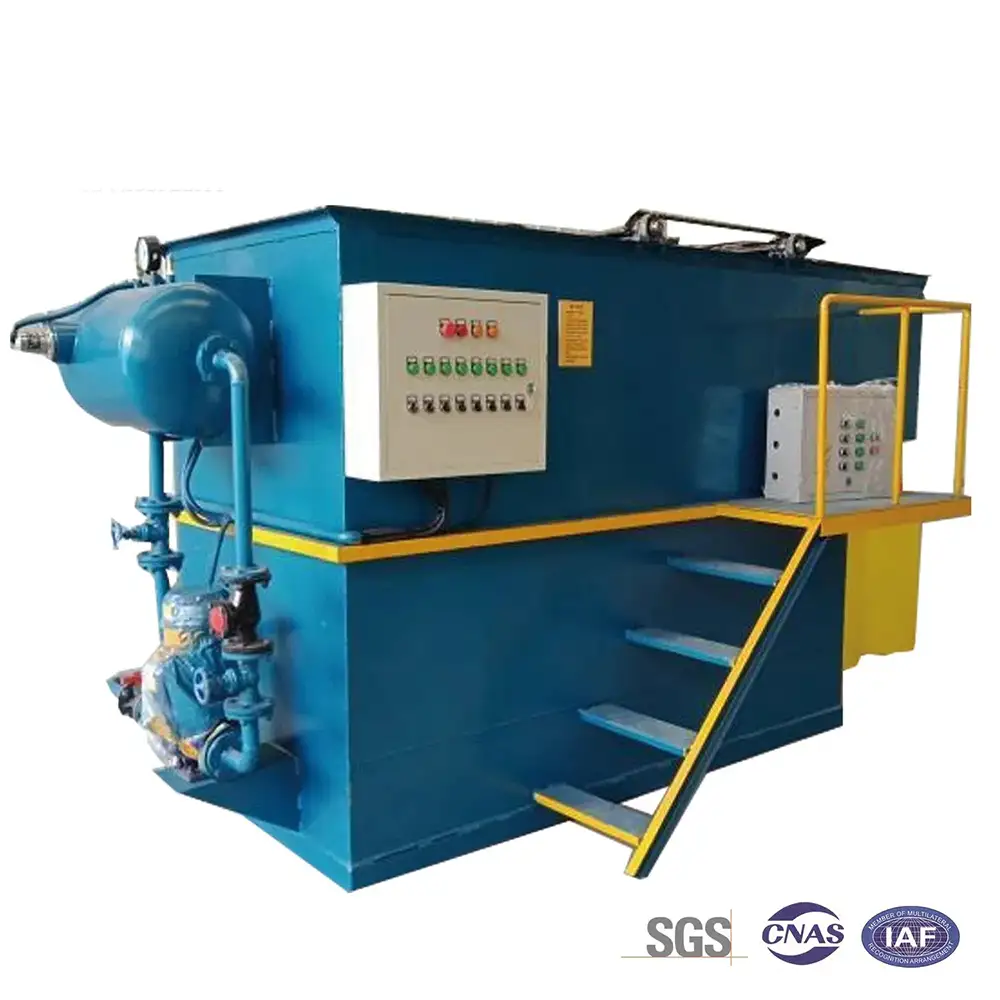
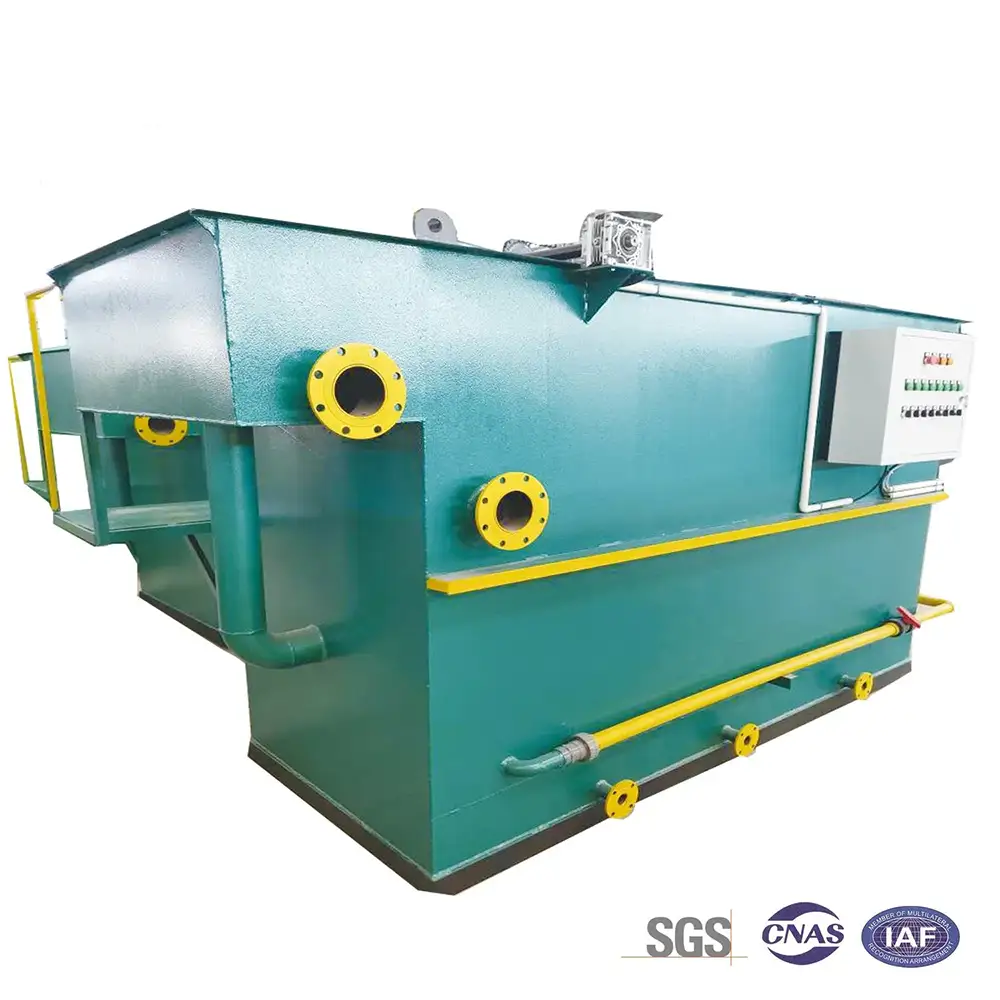
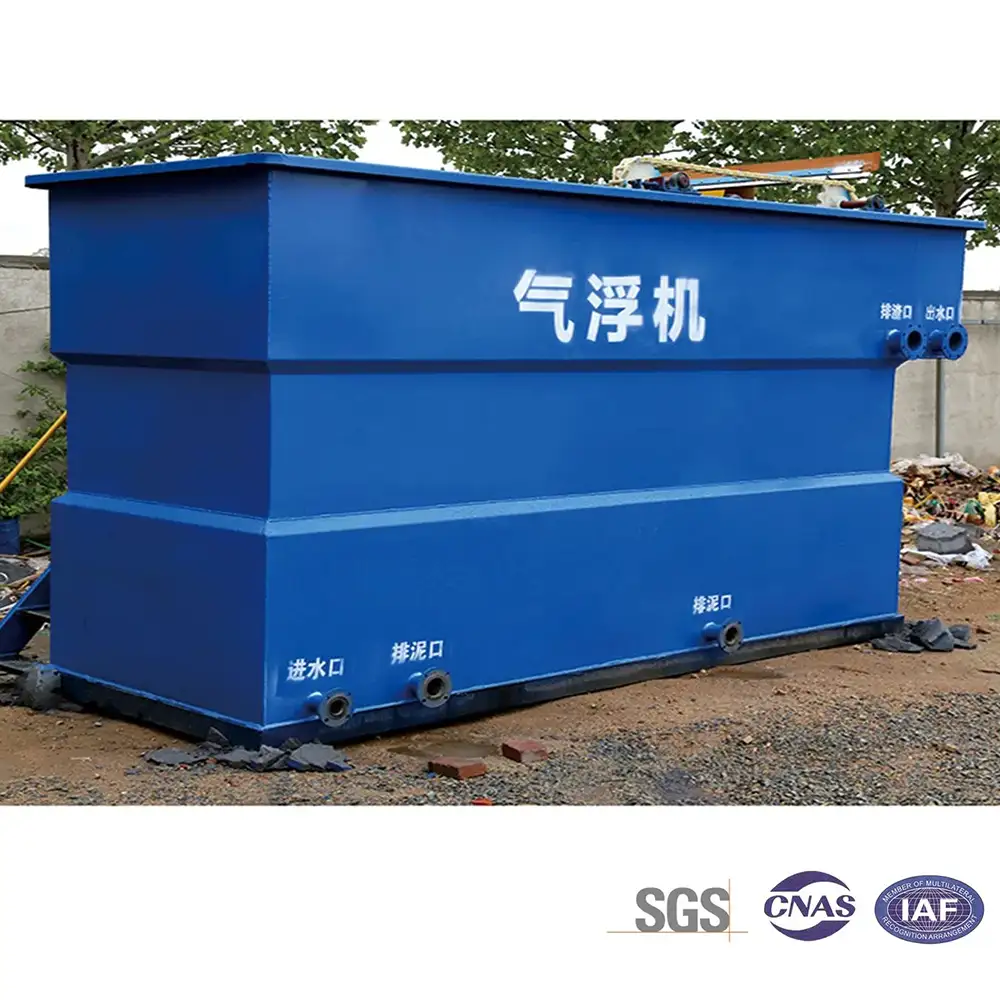
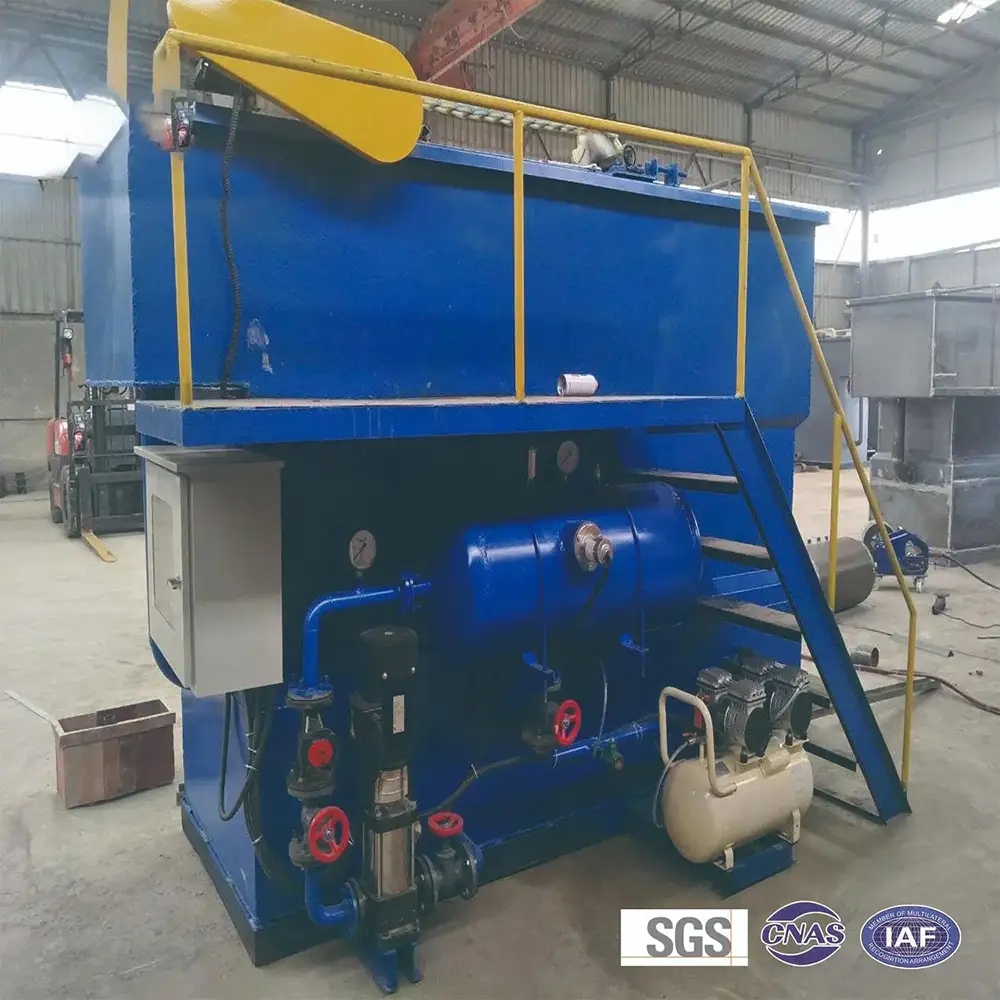
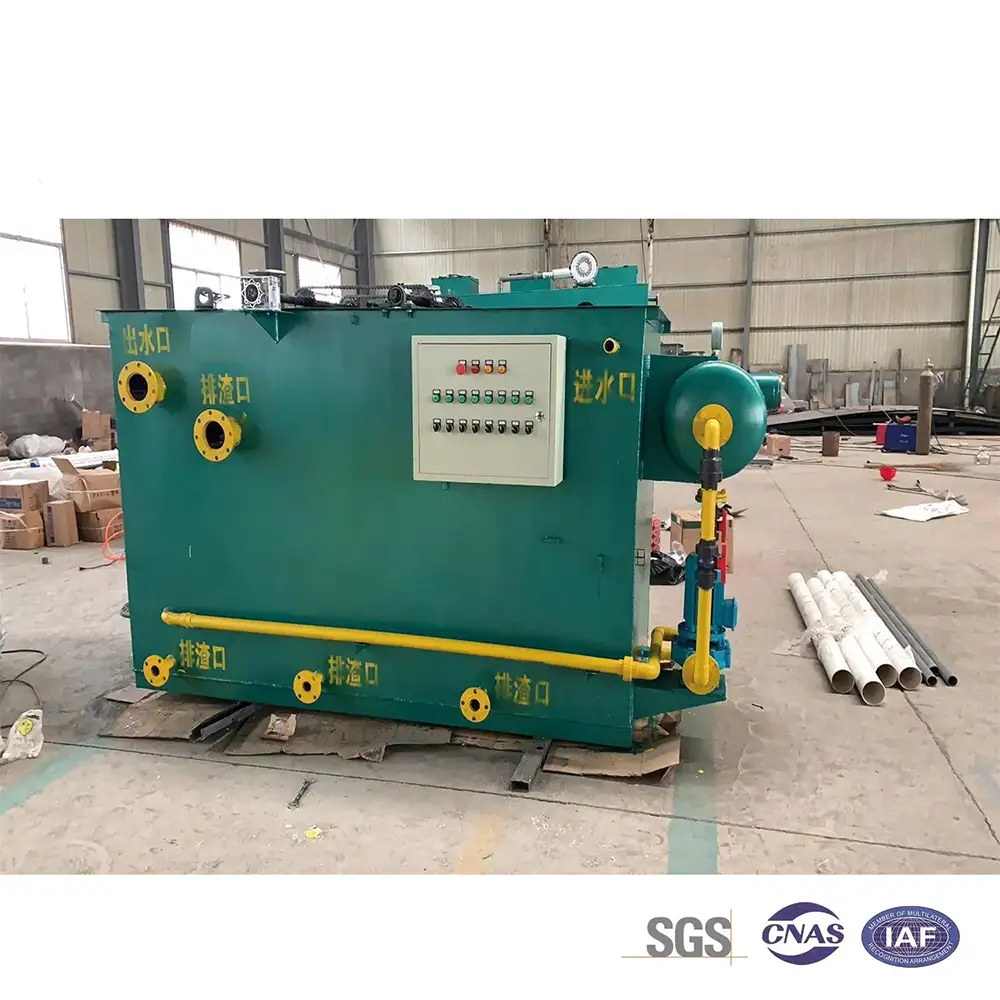
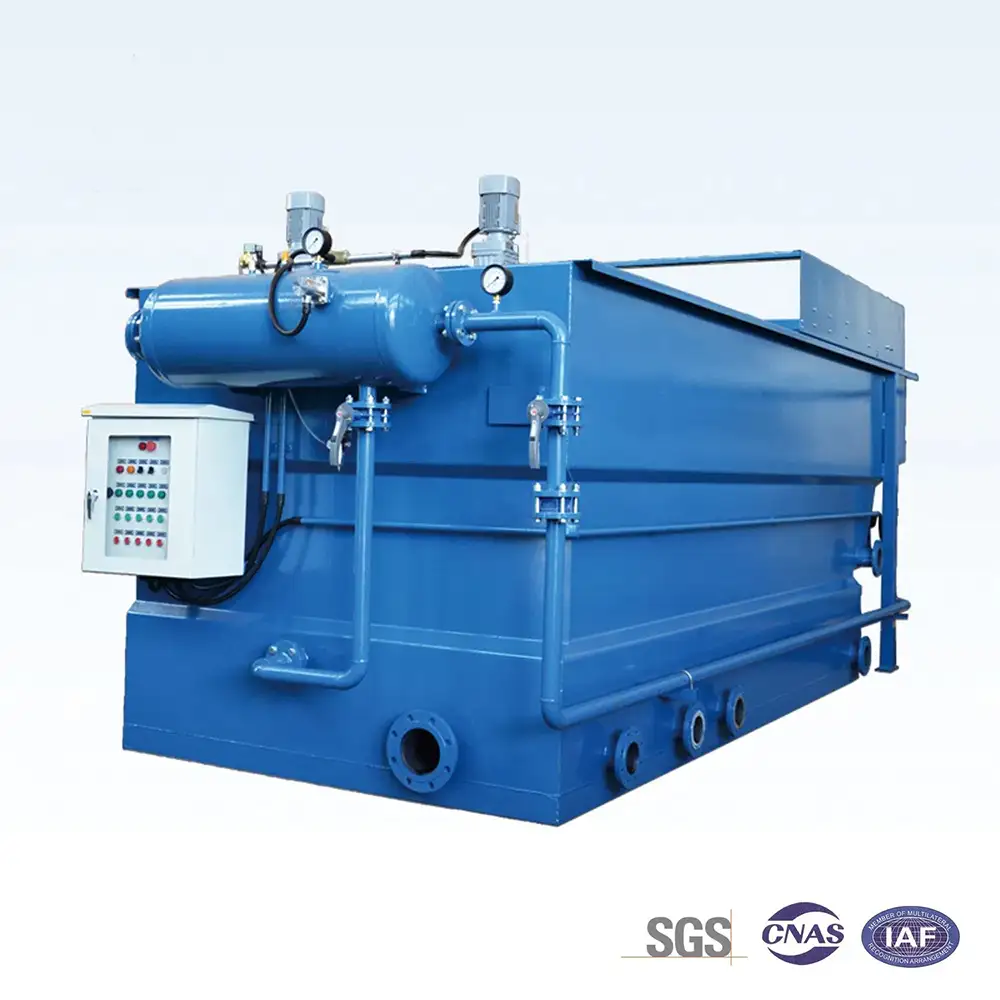
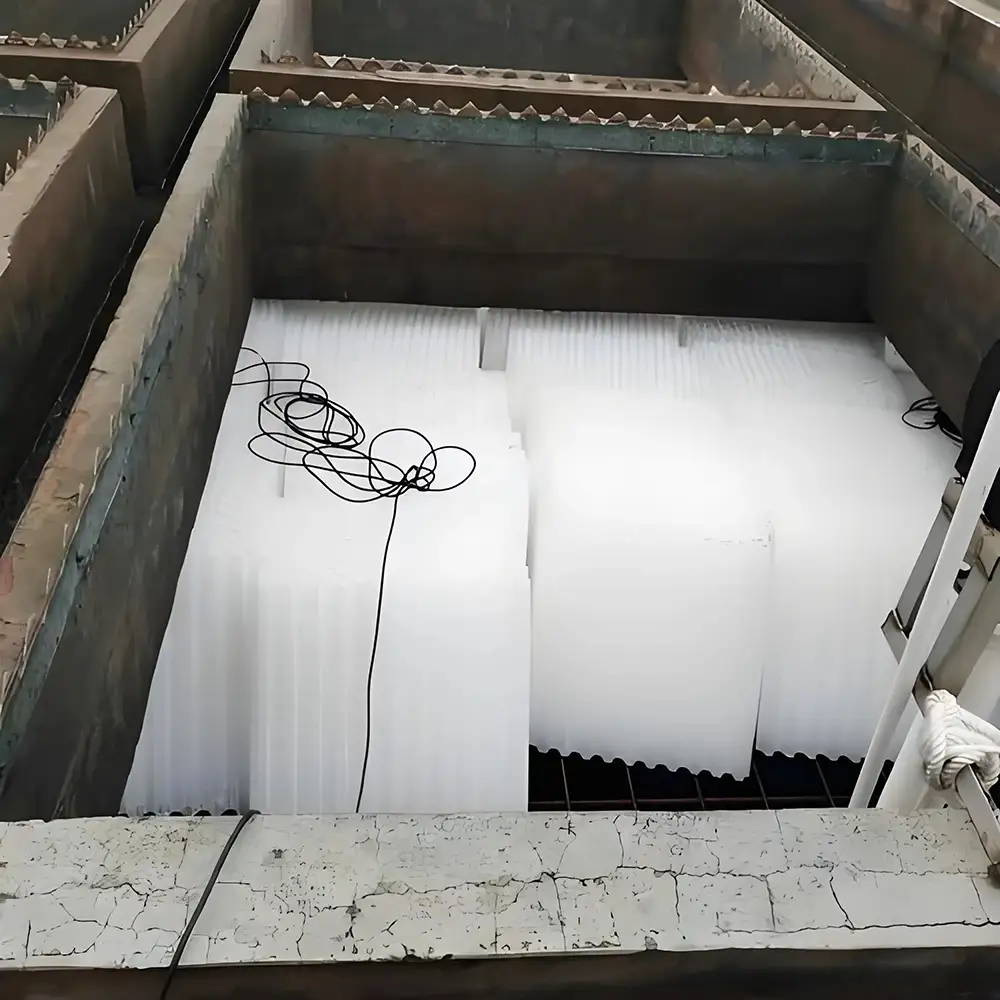
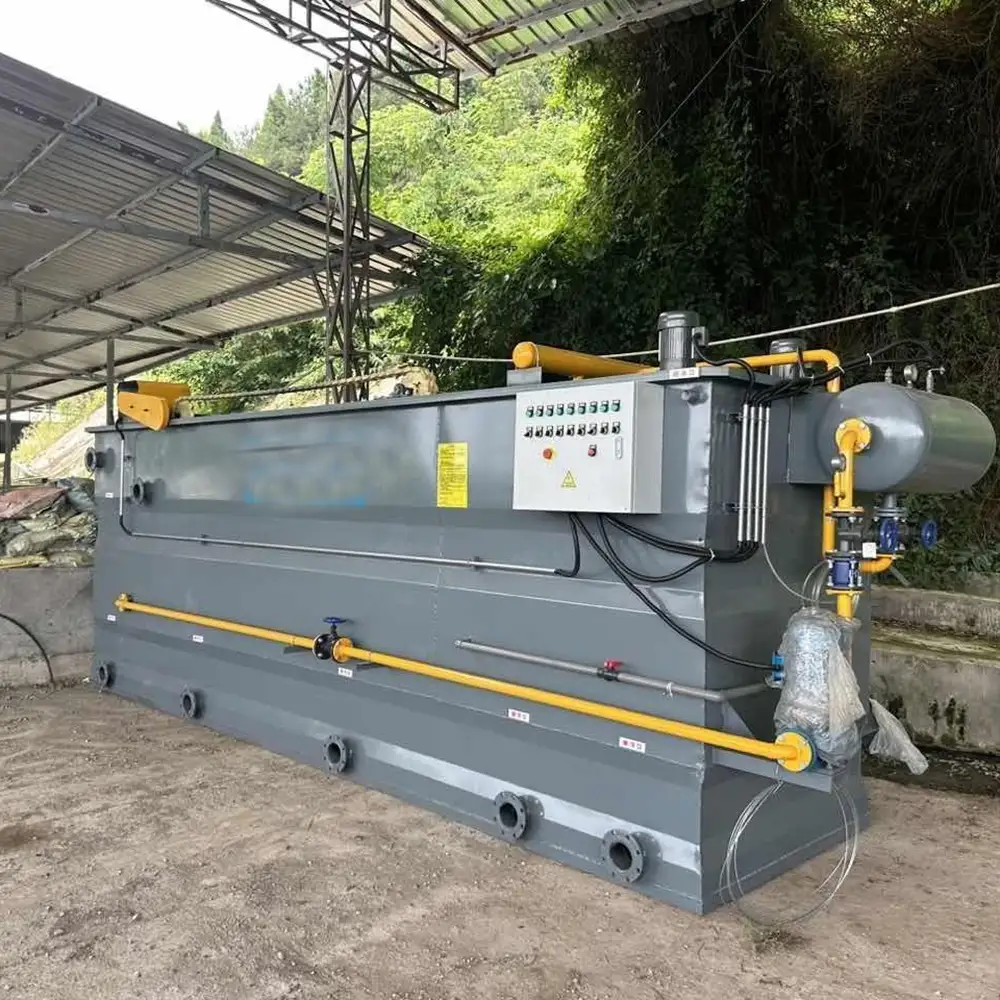
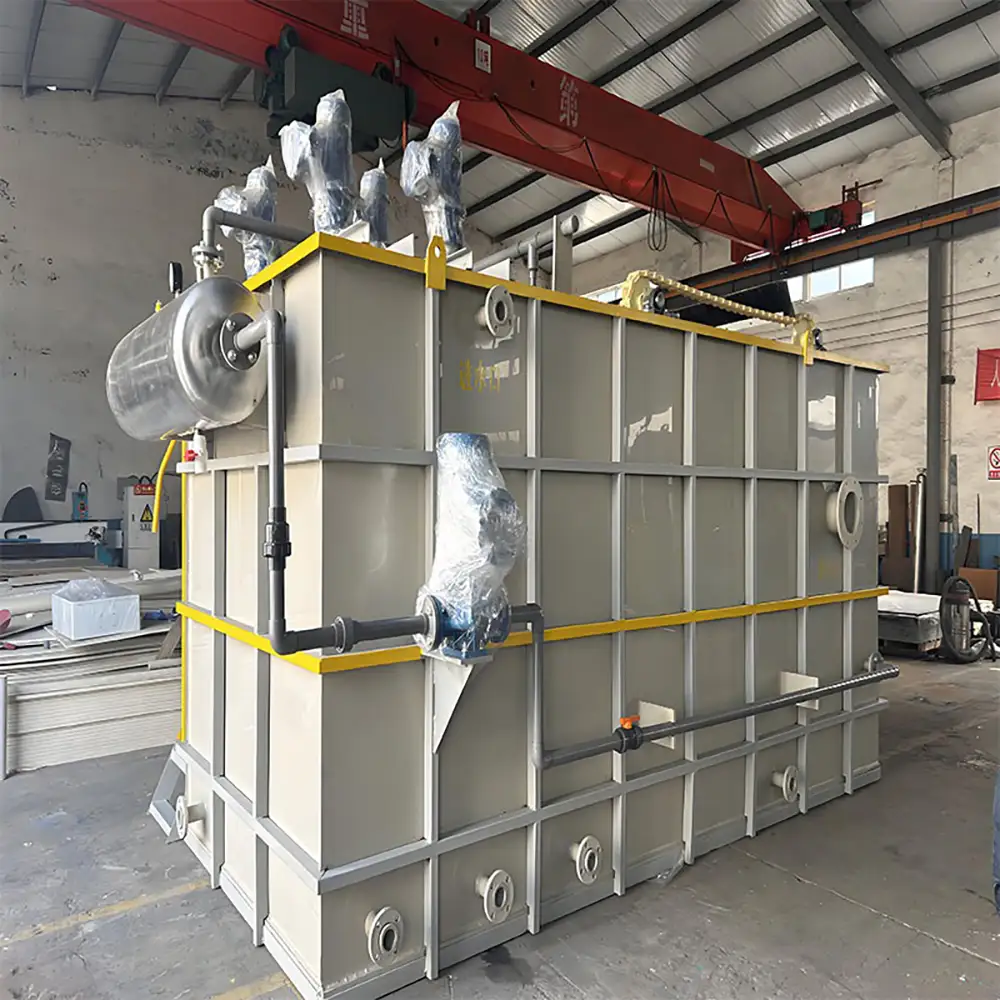
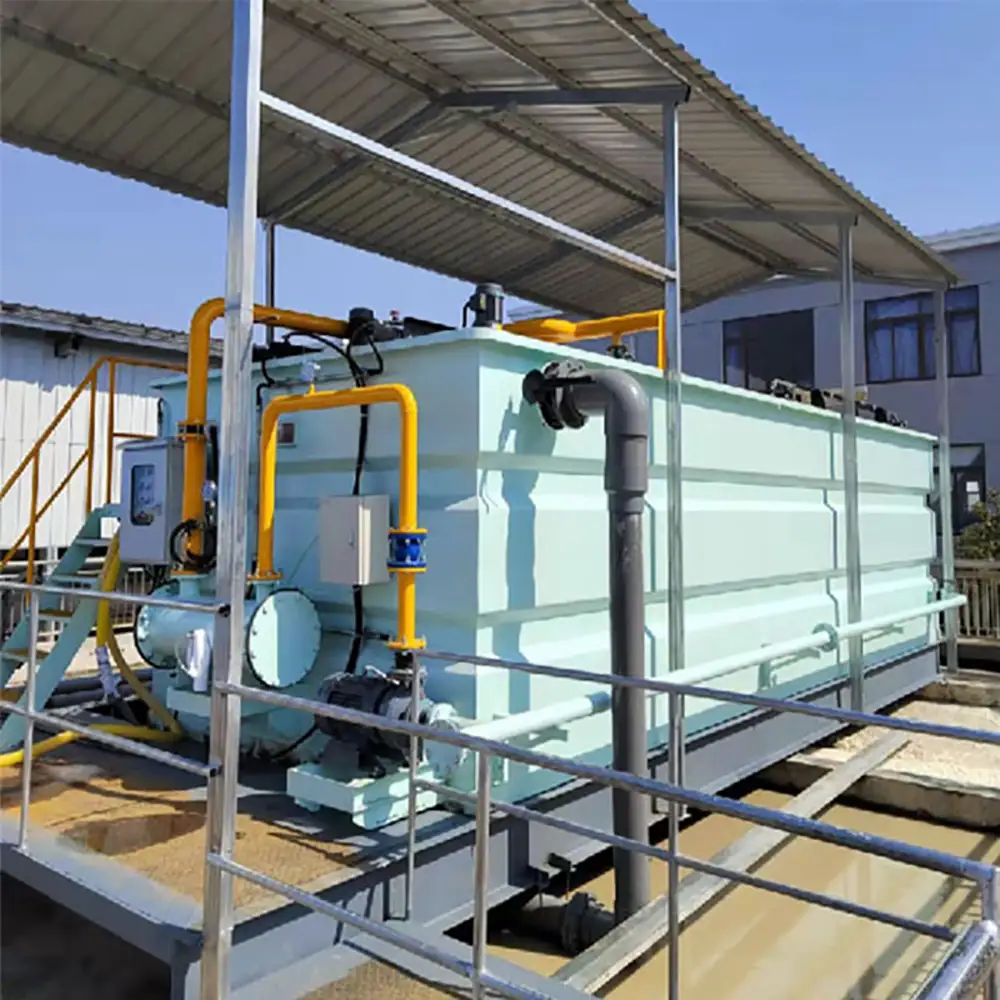
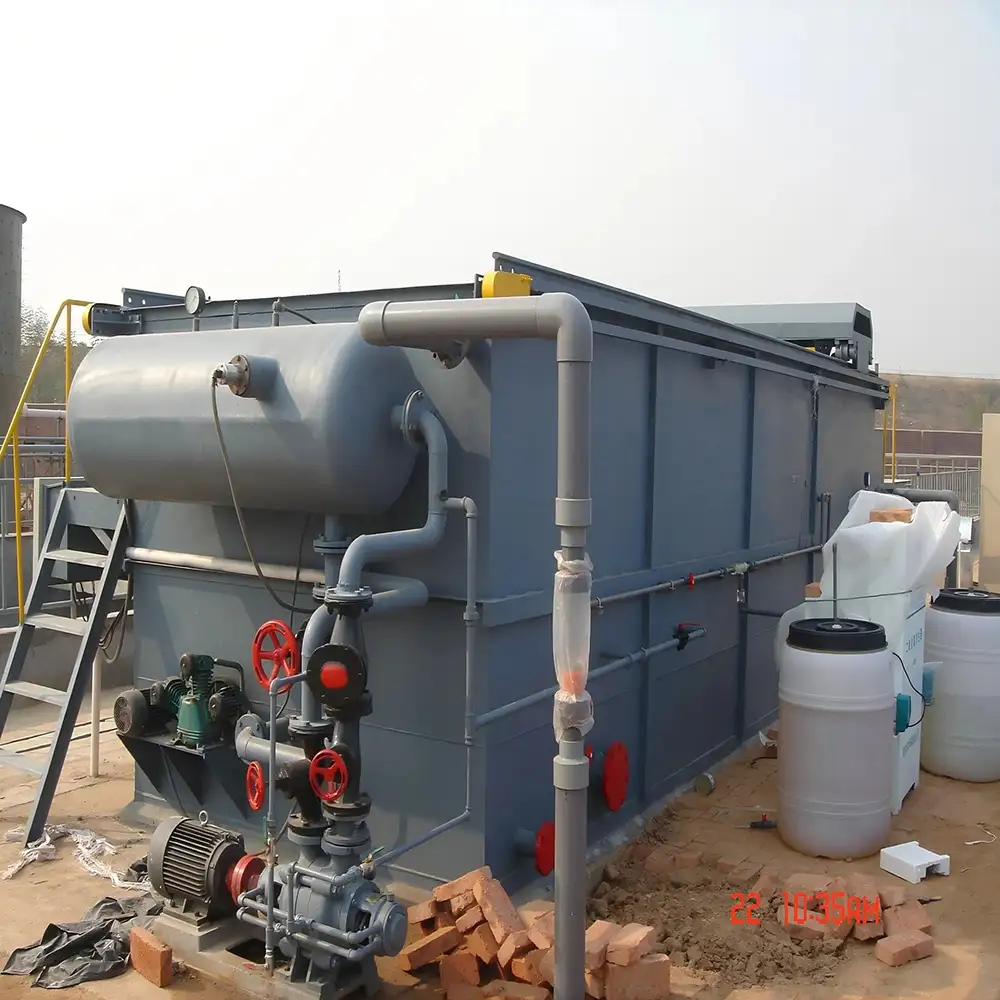
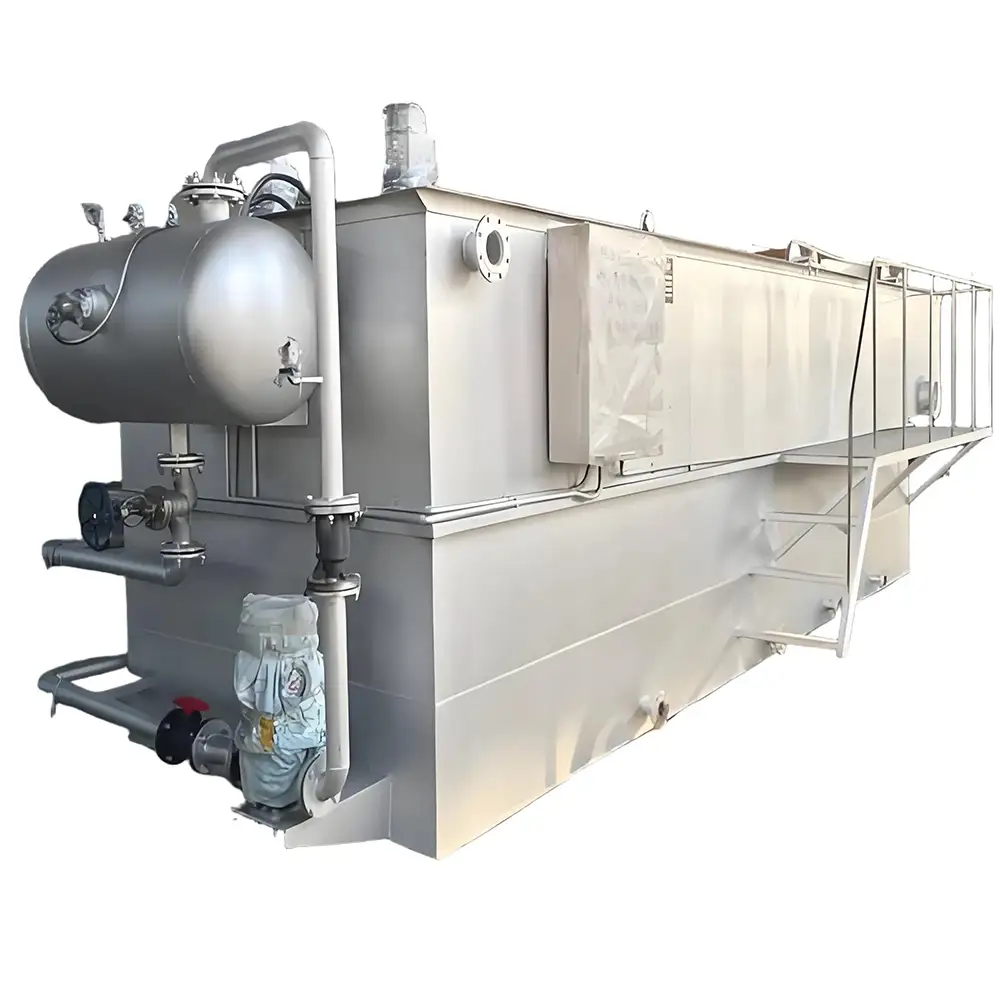
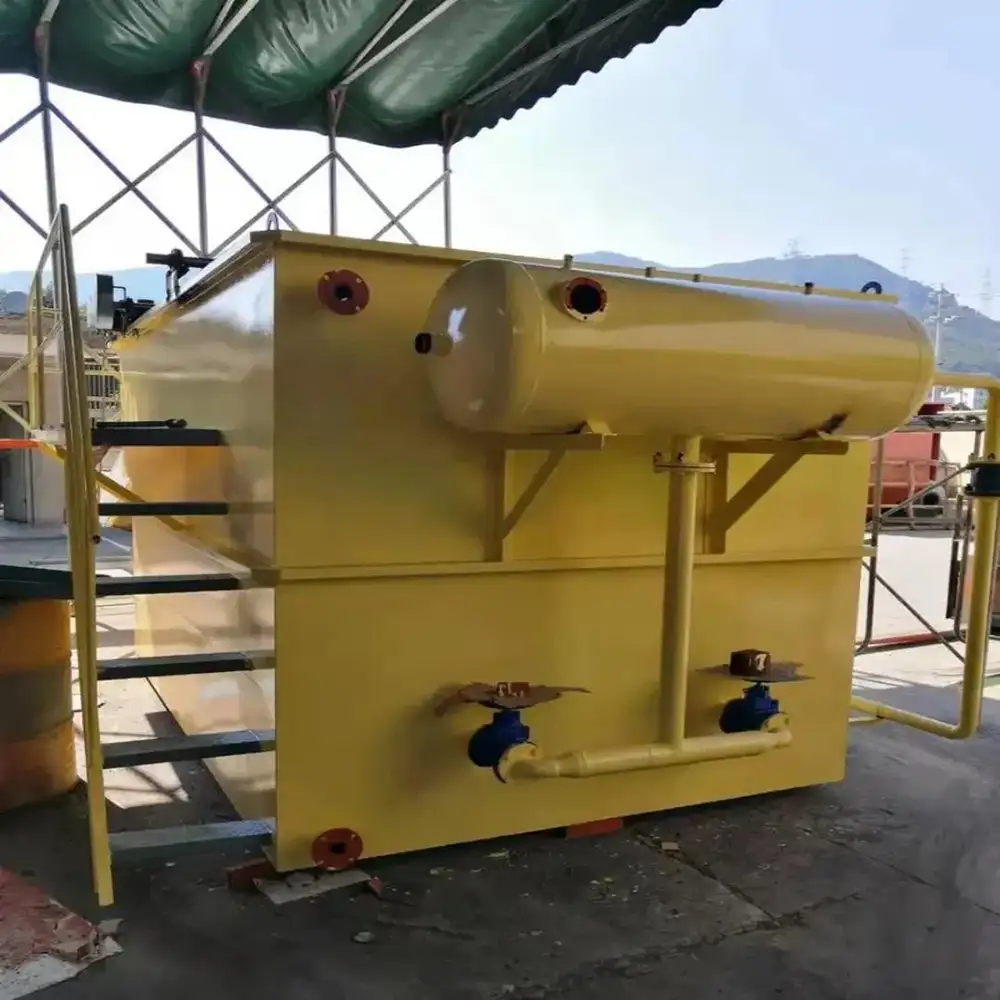
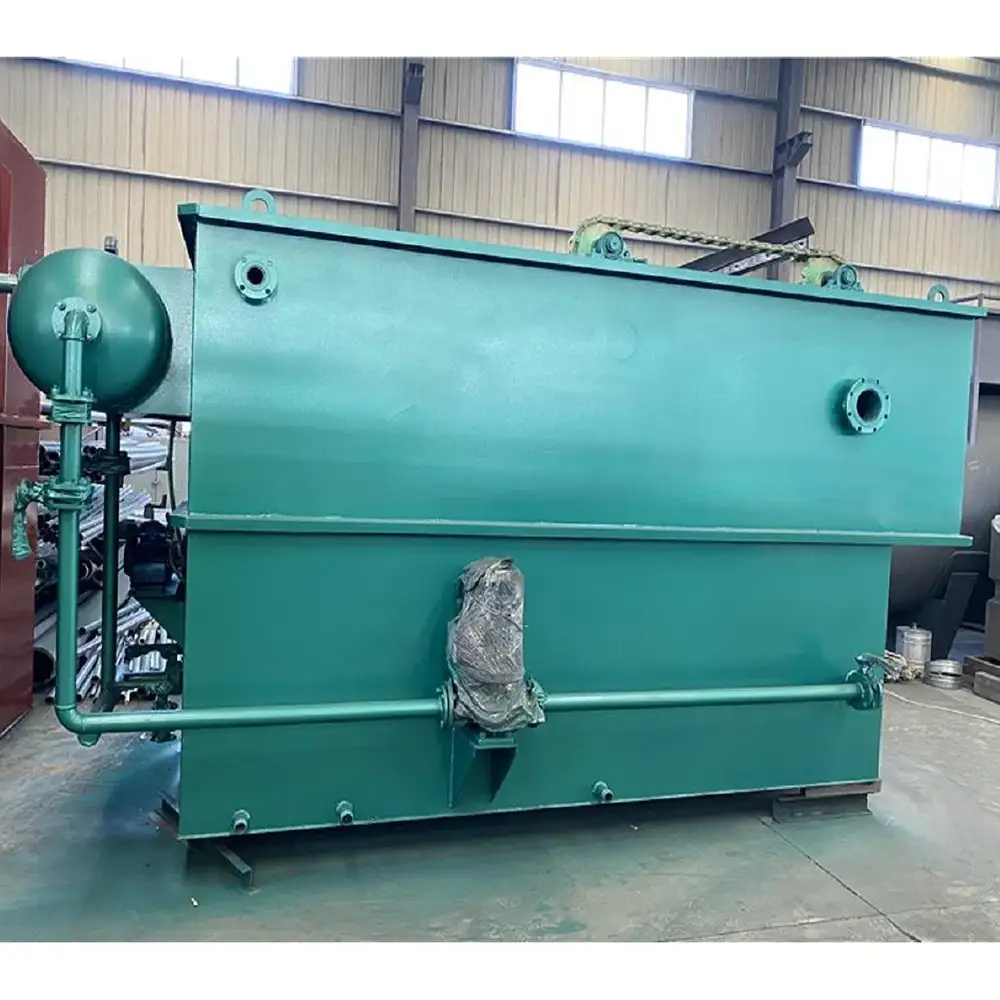
Air flotation machine is a machine that uses small bubbles or small bubbles to surface impurities in the medium. This air flotation device can be used for small particles with a specific gravity close to that of water, which are difficult to sink or float due to their own weight.
In terms of water supply and drainage, the pre-treatment water quality, except for some raw water bodies with high sand content and sewage with heavy mechanical impurities, is mostly composed of lightweight suspended particles. For example, algae in lakes, reservoirs, and some rivers; Plant residues and small colloidal impurities; Dye particles in the printing and dyeing industry; Short fibers in the papermaking and chemical fiber industries; Microdroplets of petroleum and organic solvents in the refining and chemical industries; Heavy metal ions in electroplating and pickling wastewater; Electrophoretic paint wastewater, etc; They are lightweight particles with a specific gravity very close to that of water. For these raw water, if traditional sedimentation methods are used, the effect will inevitably be poor, especially in low temperature winter conditions, where coagulation and hydraulic conditions deteriorate, making it more difficult to ensure the treatment effect. It can be imagined that if it is difficult to settle flocs, forcing them to sink will inevitably result in half the effort. Instead, it is better to use the situation to artificially introduce bubbles into the water body, making them adhere to the flocs, thereby greatly reducing the overall density of the flocs, and using the speed of bubble rise to force them to float up, thus achieving rapid solid-liquid separation. In this sense, the emergence of air flotation technology is a revolution in the gravity sedimentation method, which has opened up new fields of solid-liquid separation technology.
COD & BOD Reduction Air Flotation Sewage Treatment Equipment
COD & BOD Reduction Air Flotation Sewage Treatment Equipment is an industrial wastewater treatment solution designed to remove suspended solids, fats, oils, grease, colloidal particles, and particulate organic matter from sewage and industrial wastewater. By combining dissolved air flotation with optional coagulation and flocculation, the system can improve water clarification and reduce the organic load entering downstream biological or advanced treatment processes.
Dissolved air flotation, commonly called DAF, is widely used as a primary or pretreatment process for industrial wastewater. Fine air bubbles attach to suspended particles and float them to the water surface, where a mechanical skimmer removes the concentrated float sludge. EPA technical documentation identifies DAF as a treatment technology capable of removing suspended solids, fatty tissue, oils, and grease from meat and poultry wastewater, while also reducing BOD and COD.
What Is COD and BOD Reduction by Air Flotation?
COD, or Chemical Oxygen Demand, represents the amount of oxygen required to chemically oxidize organic and oxidizable substances in wastewater. BOD, or Biochemical Oxygen Demand, represents the oxygen consumed by microorganisms as they biologically degrade biodegradable organic matter.
DAF does not directly destroy all dissolved organic compounds. Instead, it reduces COD and BOD primarily when organic matter is associated with suspended solids, fats, oils, grease, colloids, or other floatable materials. This distinction is important when selecting a complete wastewater treatment process.
EPA documentation has reported that DAF can provide significant suspended-solids removal and incidental BOD reduction, with actual performance depending on wastewater characteristics and chemical conditioning.
For wastewater containing a high proportion of dissolved biodegradable organics, DAF is generally used as pretreatment before activated sludge, MBR, UASB, SBR, MBBR, or other biological treatment technologies.
How Does the DAF Wastewater Treatment System Work?
The treatment process generally starts with screening or preliminary separation to remove large debris. Depending on the wastewater characteristics, an equalization tank may be installed to stabilize flow, pH, temperature, and pollutant loading.
The wastewater can then enter a coagulation and flocculation stage. Coagulants destabilize fine particles, while polymers or flocculants can promote the formation of larger flocs.
A portion of the treated water is pressurized and saturated with air. When the pressurized recycle stream enters the flotation chamber and pressure is released, dissolved air forms microscopic bubbles. These bubbles attach to suspended solids, oil droplets, grease, and suitable flocs.
The air-solid aggregates rise to the surface and form a concentrated floating sludge layer. A mechanical scraper continuously or intermittently removes this material. Clarified water is collected from the flotation tank and sent to the next treatment stage.
The DAF process depends on parameters such as recycle flow, hydraulic loading, air-to-solids ratio, chemical dosage, particle characteristics, and wastewater temperature. EPA documentation notes that the air-to-solids ratio and operating conditions are important factors affecting flotation performance.
COD and BOD Reduction Applications
This Air Flotation Sewage Treatment Equipment is suitable for wastewater where organic pollutants are significantly associated with suspended or floatable matter.
Typical applications include:
Slaughterhouse Wastewater
Meat Processing Wastewater
Poultry Processing Wastewater
Food Processing Wastewater
Dairy Wastewater
Seafood Processing Wastewater
Rendering Plant Wastewater
Edible Oil Wastewater
Beverage Industry Wastewater
Textile Wastewater
Chemical Industry Wastewater
Industrial Process Wastewater
Municipal Sewage Pretreatment
Industrial Water Reuse Pretreatment
DAF is particularly useful for wastewater containing fats, oils, grease, fine suspended solids, and light organic particles. EPA materials describe its extensive use in industrial wastewater treatment and its ability to remove lighter suspended materials and oil and grease.
Benefits of DAF Sewage Treatment Equipment
A properly designed DAF system can provide several benefits for industrial wastewater treatment.
Effective Solid-Liquid Separation: Fine air bubbles help separate suspended particles that may be difficult to remove efficiently by conventional gravity settling.
Oil and Grease Removal: DAF is well suited to wastewater containing dispersed or emulsified oil and grease when appropriate pretreatment and chemical conditioning are provided.
Organic Load Reduction: Removing suspended and floatable organic matter can reduce part of the incoming COD and BOD load to downstream biological treatment.
Compact Treatment Footprint: DAF can provide rapid flotation and clarification and may require less surface area than some conventional settling arrangements.
Downstream Protection: Lowering TSS, oil, grease, and particulate organic matter can reduce the loading on biological reactors, filters, membranes, and other downstream equipment.
Flexible Configuration: The equipment can be combined with screening, equalization, coagulation, flocculation, biological treatment, filtration, membrane systems, and sludge dewatering.
Chemical Coagulation and Flocculation
Chemical conditioning can substantially improve DAF performance when wastewater contains fine particles, colloids, emulsified oils, or poorly floatable solids.
Common treatment chemicals may include coagulants and polymers. The correct chemical type and dosage depend on wastewater chemistry and should be established through laboratory jar testing or pilot testing where appropriate.
EPA data for meat and poultry wastewater indicate that chemical addition can improve suspended-solids and oil-and-grease removal compared with DAF without chemical conditioning.
Because chemical requirements vary from one wastewater stream to another, the treatment system should not be designed around a universal dosage.
Integration With Biological Treatment
DAF is often most effective as one stage within a complete wastewater treatment train rather than as a standalone solution for all COD and BOD.
A typical industrial treatment process may include:
Screening → Equalization → pH Adjustment → Coagulation → Flocculation → DAF → Biological Treatment → Secondary Clarification → Filtration/MBR → Disinfection
For high-strength wastewater, biological processes such as MBBR, SBR, activated sludge, UASB, or MBR can provide additional removal of dissolved biodegradable organic matter.
This combination allows DAF to remove particulate and floatable pollutants first while reducing the loading placed on the biological treatment stage.
Equipment Features
The COD BOD Reduction DAF System can be equipped with:
DAF flotation tank
Recycle water pump
Air dissolving and saturation system
Pressure release device
Air compressor
Coagulation tank
Flocculation tank
Chemical dosing system
Surface sludge scraper
Bottom sludge collection
Automatic control cabinet
Flow and pressure monitoring
Sludge discharge system
Equipment materials and control configurations can be selected according to wastewater chemistry, capacity, installation conditions, and operating requirements.
Why Choose Us?
We focus on designing wastewater treatment systems around actual influent conditions instead of relying only on nominal equipment capacity.
For a DAF project, important design parameters include flow rate, peak flow, TSS, COD, BOD, oil and grease, pH, temperature, particle size, wastewater variability, chemical requirements, and required effluent quality.
We can configure DAF equipment as a standalone flotation unit or integrate it with screening, equalization, coagulation, biological treatment, filtration, membrane treatment, sludge dewatering, and disinfection.
For applications with strict COD or BOD limits, laboratory or pilot testing can help determine how much pollutant reduction can realistically be achieved by DAF and how much additional treatment is required.
Operation and Maintenance
Routine inspection is essential for stable DAF performance. Operators should check the recycle pump, air saturation system, pressure controls, bubble-release components, scraper mechanism, chemical dosing pumps, valves, and sludge discharge equipment.
The flotation surface should be monitored to prevent excessive sludge accumulation. Chemical dosing should be adjusted when wastewater characteristics change.
Regular cleaning of pipes, valves, pumps, and air-release components helps maintain consistent bubble distribution. Sludge should also be removed and transferred to appropriate thickening or dewatering equipment.
Frequently Asked Questions
1. What is COD reduction air flotation?
It is a DAF-based wastewater treatment process that reduces part of the COD by removing suspended, colloidal, oily, and particulate organic matter through flotation.
2. Can DAF reduce BOD?
Yes. DAF can reduce BOD when biodegradable organic matter is associated with suspended solids, fats, oils, grease, and other floatable materials. Dissolved biodegradable BOD generally requires additional biological treatment.
3. Can DAF remove both COD and BOD?
Yes, but the removal level depends heavily on the form of the organic matter. DAF is more effective when COD and BOD are associated with suspended or floatable pollutants.
4. Is DAF a biological treatment process?
No. DAF is primarily a physical-chemical separation process. Biological treatment is normally required when significant dissolved biodegradable organic matter remains.
5. What wastewater is suitable for DAF?
DAF is suitable for many industrial wastewater streams containing suspended solids, oils, grease, fats, colloids, and floatable organic matter.
6. Can DAF treat slaughterhouse wastewater?
Yes. DAF is widely used in meat and poultry wastewater treatment for suspended solids, fatty tissue, oils, grease, and associated organic loading.
7. Is coagulation required?
Not in every application, but coagulation and flocculation can improve flotation when particles are fine, colloidal, emulsified, or otherwise difficult to separate.
8. What is the difference between DAF and sedimentation?
Sedimentation primarily separates particles by gravity. DAF uses microscopic air bubbles to reduce the apparent density of suitable particles and float them to the surface.
9. Can DAF be used before an MBR?
Yes. DAF can be used as pretreatment before MBR or other membrane systems to reduce suspended solids, oil, grease, and particulate loading.
10. Can the DAF system operate automatically?
Yes. PLC-based control can automate pumps, valves, chemical dosing, sludge scraping, alarms, and other operating functions.
11. How is DAF capacity selected?
Capacity should be selected according to average and peak flow, wastewater characteristics, hydraulic loading, pollutant concentrations, treatment objectives, and downstream requirements.
12. Can DAF alone meet strict COD and BOD discharge limits?
Not necessarily. DAF performance depends on the fraction of COD and BOD that is removable by flotation. Biological or advanced treatment may be necessary for dissolved organic pollutants.
13. What information is needed for DAF system design?
Typical design information includes wastewater flow, TSS, COD, BOD, oil and grease, pH, temperature, particle characteristics, required effluent limits, and the proposed downstream treatment process.
Prev:
High Performance Suspended Solids Removal/ Water Treatment System
Next:
Dissolved Air Flotation Machine Food Factory Oil Sewage Treatment Equipment / DAF
TAG:
Industrial Water Treatment System,
Industrial Wastewater Treatment Equipment,
Suspended Solids Removal,
Dairy Wastewater Treatment,
Meat Processing Wastewater Treatment,
Food Processing Wastewater Treatment,
Industrial Organic Wastewater Treatment,
Industrial Wastewater Treatment System,
DAF Wastewater Treatment System,
Industrial Wastewater Treatment,
Food Wastewater Treatment,
Organic Wastewater Treatment,
Sewage Treatment Plant,
Industrial Sewage Treatment,
Industrial Wastewater Treatment Plant,
Wastewater Treatment Equipment,
Wastewater Treatment Plant,
Industrial Wastewater Sludge Treatment,
Solid Liquid Separation Equipment,
Solid Liquid Separation System,
Wastewater Treatment System,
Industrial Water Treatment Equipment,
Industrial Water Treatment,
Suspended Solids Removal Equipment,
Suspended Solids Removal System,
Wastewater Pretreatment Equipment,
Industrial Water Purification,
Industrial Sewage Treatment Plant,
Sewage Treatment Equipment,
Sewage Treatment System,
Related Category:
COD Reduction Air Flotation Equipment,BOD Reduction Air Flotation Equipment,Dissolved Air Flotation Sewage Treatment Equ China, suppliers, manufacturers, factory, customized, wholesale, quotation, made in China