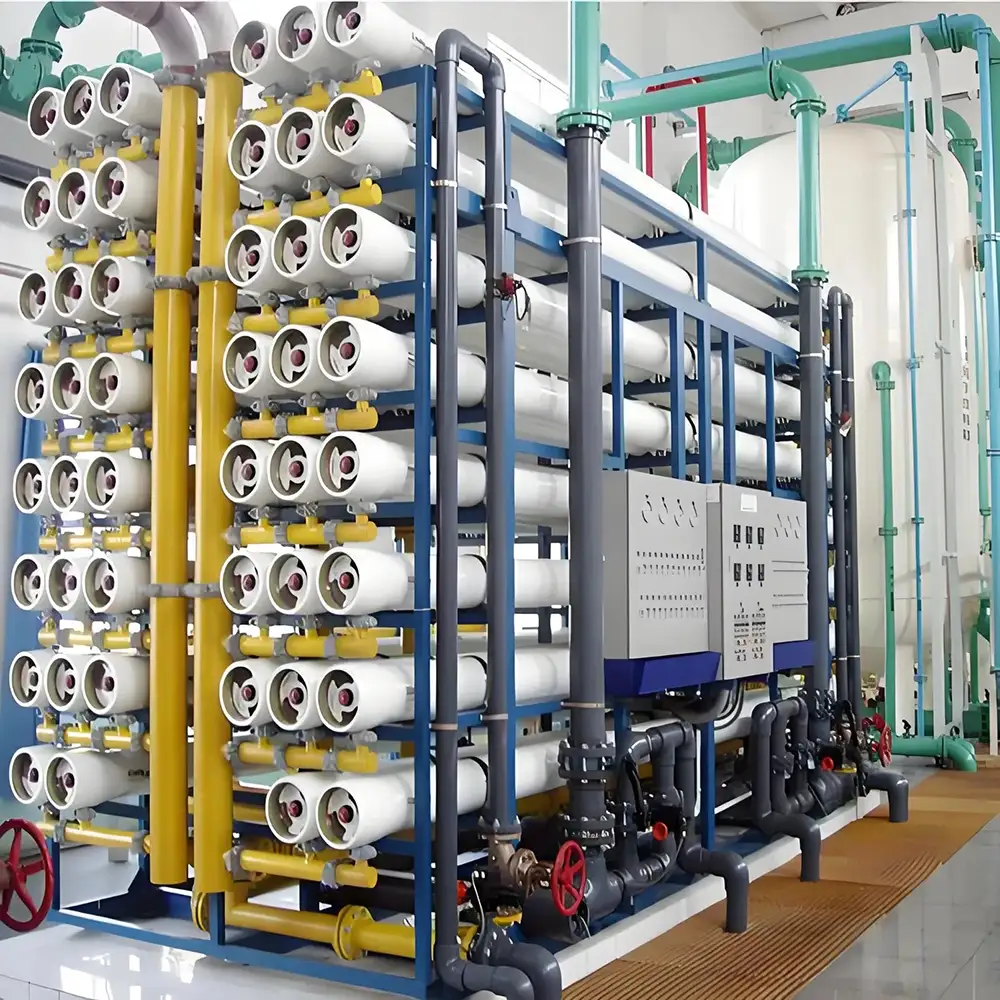
The meaning of filtration. In the process of water treatment, filtration generally refers to the process of using quartz sand, Anthracite and other filter material layers to intercept suspended impurities in water, so as to make water clear. The porous material used for filtration is called filter material, and quartz sand is the most common filter material. There are various types of filter materials, including granular, powdered, and fibrous. Common filter materials include quartz sand, Anthracite, activated carbon, Magnetite, garnet, porous ceramics, plastic balls, etc.
Multi medium filter (filter bed) is a medium filter that uses two or more types of media as the filter layer. In industrial circulating water treatment systems, it is used to remove impurities, adsorbed oil, etc. from wastewater, so that the water quality meets the requirements of recycling. The function of filtration is mainly to remove suspended or colloidal impurities in water, especially small particles and bacteria that cannot be removed by sedimentation technology. BOD5 and COD also have a certain degree of removal effect
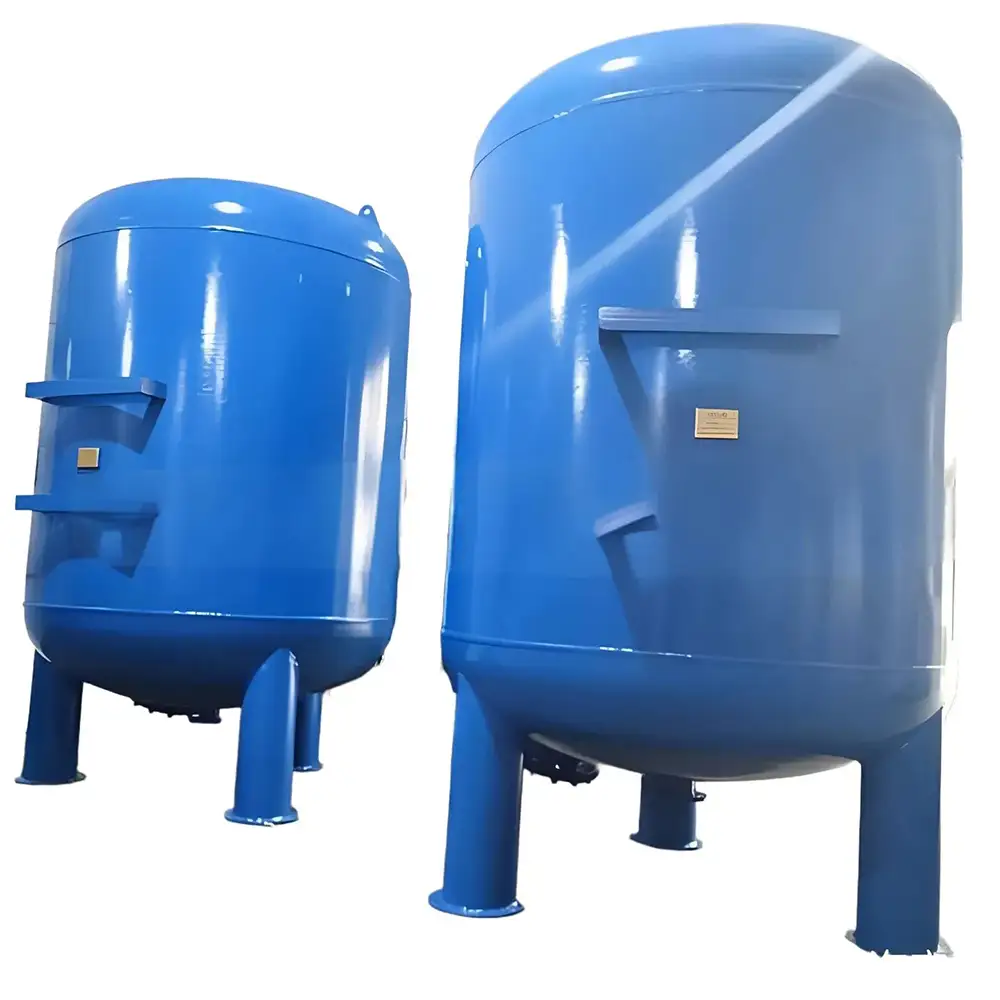
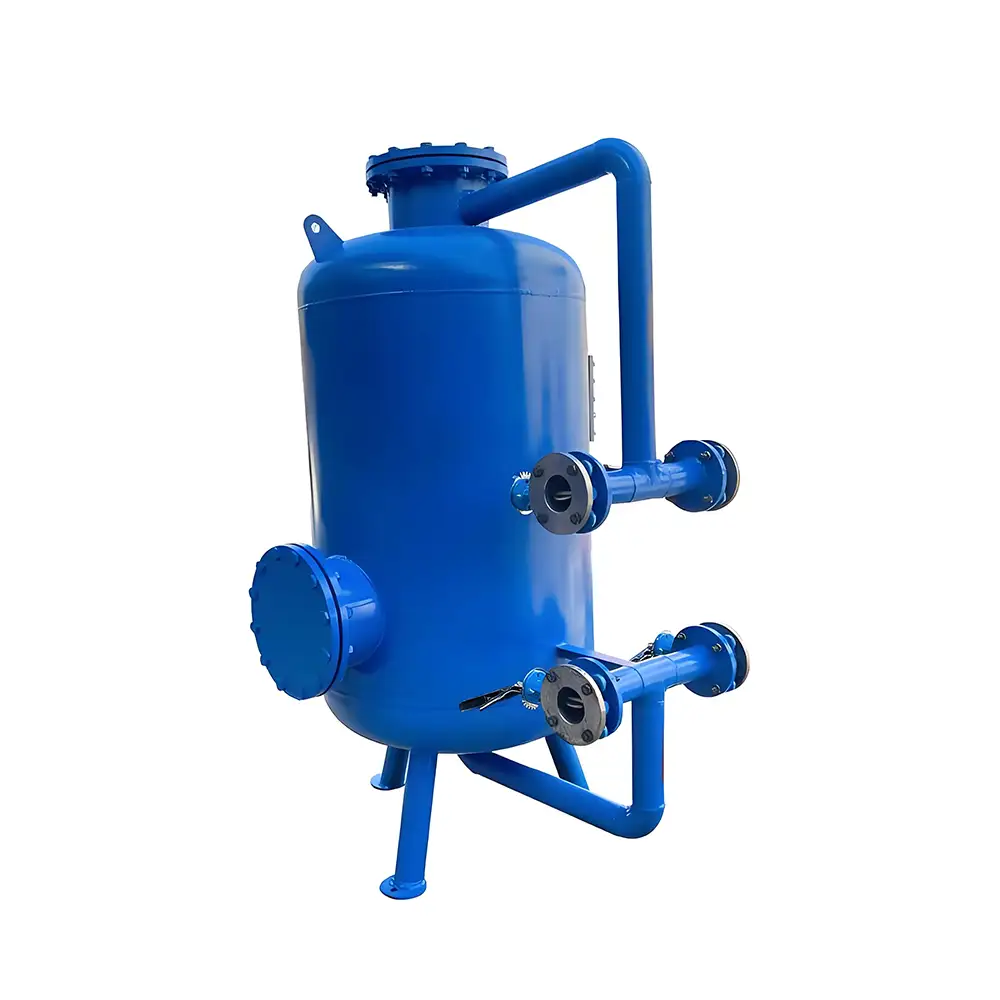
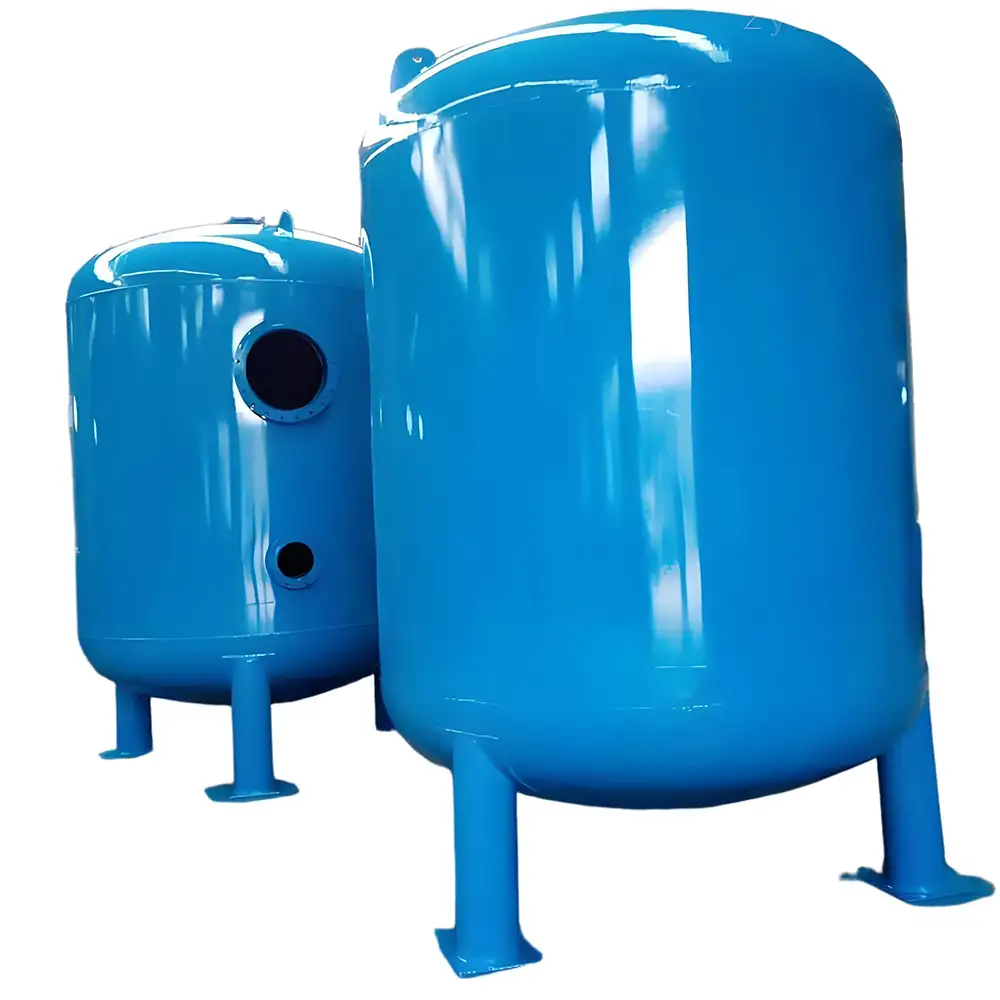
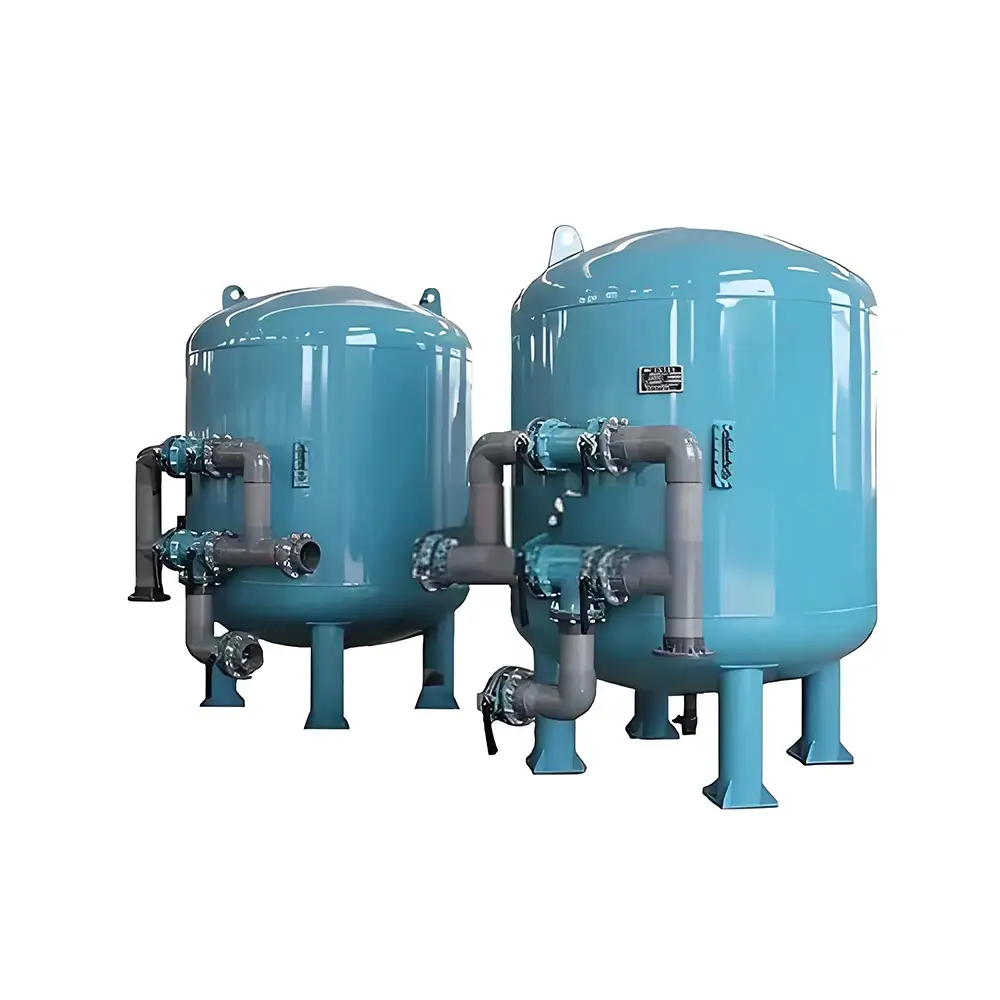
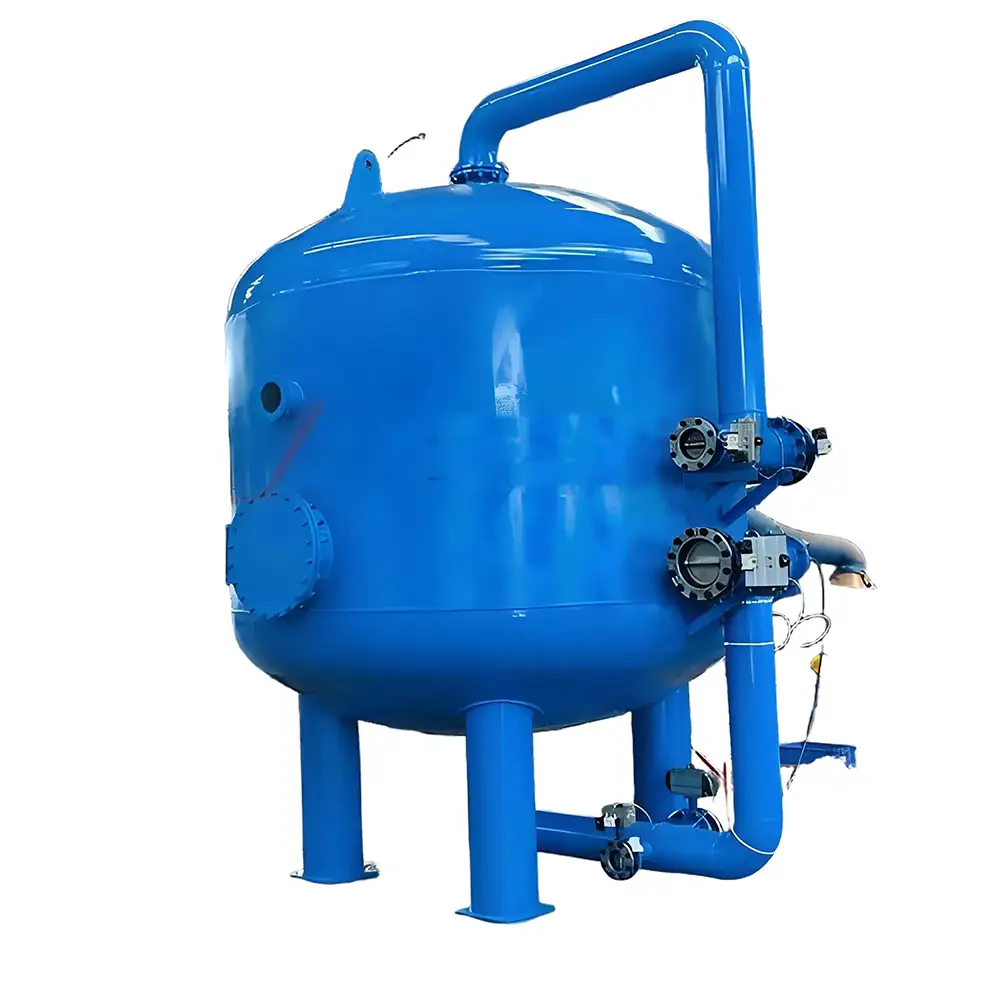
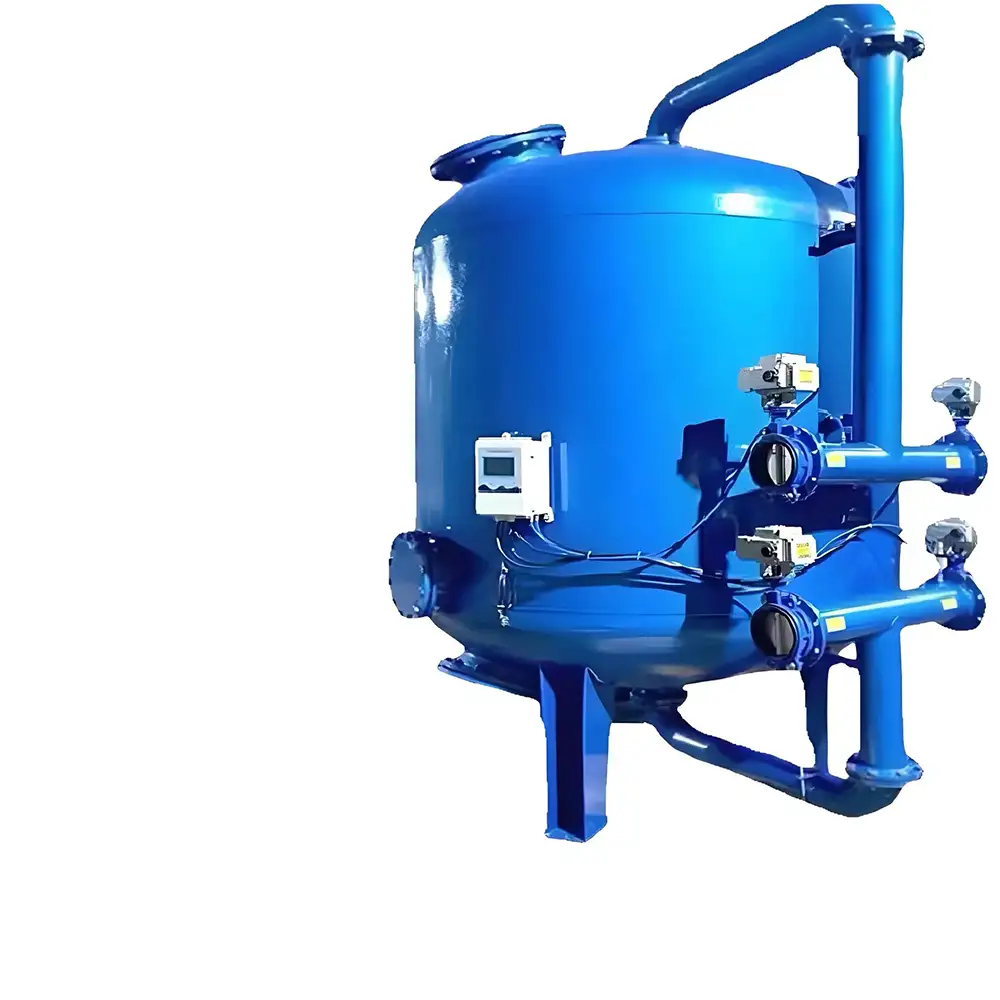
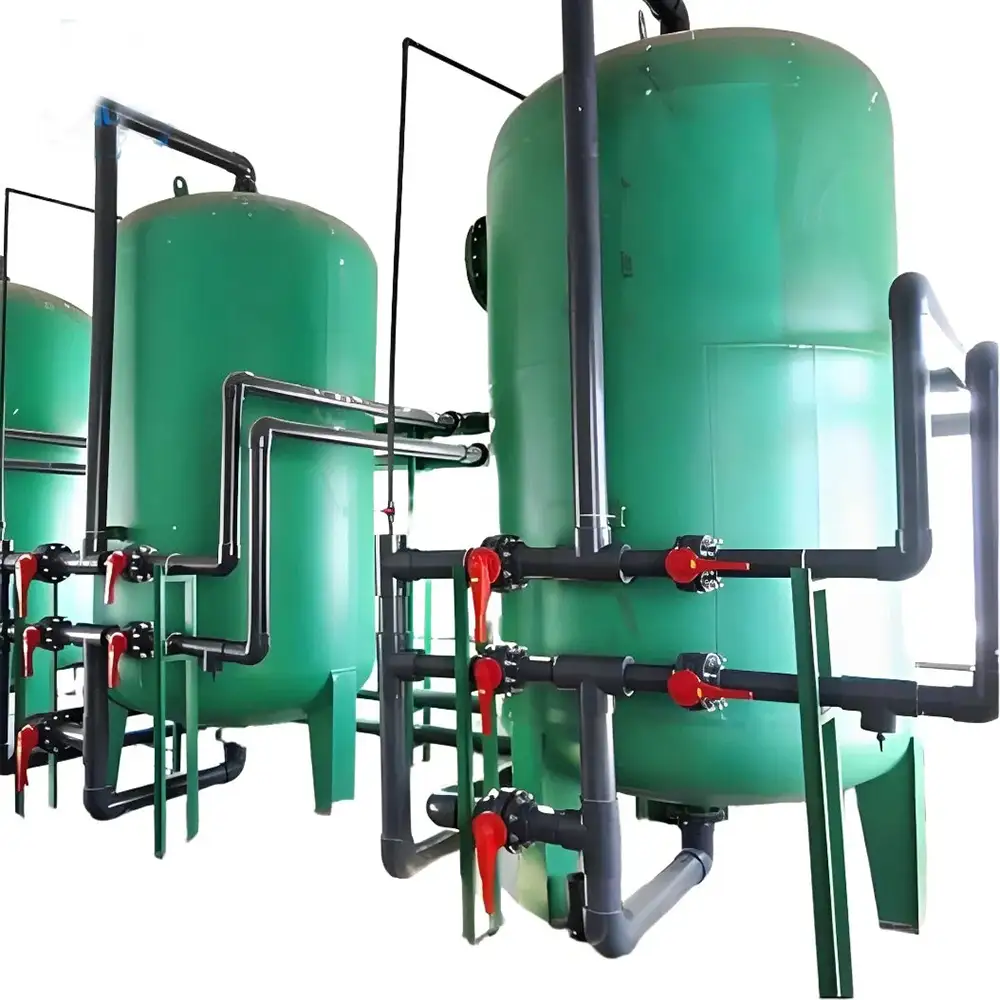
Water Purification Pretreatment Multi-Media Filter
A Water Purification Pretreatment Multi-Media Filter is an important filtration unit designed to improve raw water quality before downstream purification processes such as reverse osmosis (RO), ultrafiltration (UF), ion exchange, and other advanced water treatment technologies. By combining different grades and types of filtration media inside a pressure vessel, the system provides effective depth filtration and helps reduce suspended solids, sediment, turbidity, and other particulate impurities.
Multi-media filtration is widely used because different media layers can capture particles at different depths of the filter bed. Common media include quartz sand, anthracite, activated carbon, manganese sand, and graded support materials. The specific configuration can be selected according to the source water, contaminant profile, treatment capacity, and downstream process requirements.
For industrial water purification systems, proper pretreatment is especially important. A well-designed filtration stage can reduce the particle load entering sensitive downstream equipment and provide more stable feedwater conditions for membrane systems. Multi-media filters are therefore commonly integrated into complete RO and UF pretreatment lines.
What Is a Multi-Media Filter?
A multi-media filter is a pressure filtration vessel containing two or more layers of filtration media. Unlike a simple single-media sand filter, the multi-layer design creates a deeper filtration bed. Larger particles can be captured in the upper layers while smaller particles penetrate deeper into the filter bed.
Typical media combinations include anthracite and quartz sand, while other configurations may incorporate activated carbon, manganese sand, garnet, or other specialized media depending on the treatment objective.
The filtration process generally consists of three basic stages:
Filtration – Raw water flows through the layered media and suspended particles are retained within the filter bed.
Backwashing – Clean water flows in the reverse direction to loosen the media and remove accumulated contaminants.
Rinsing – The filter is flushed before returning to normal filtration operation.
This filtration and backwash cycle allows the equipment to operate repeatedly without replacing the filter media after every filtration cycle. Differential-pressure or timer-based control can also be incorporated into automatic systems.
Water Purification Pretreatment Function
The primary purpose of this equipment is to provide reliable pretreatment before more advanced purification stages.
Depending on the media configuration and raw-water quality, the filter can help reduce:
Suspended solids
Sand and sediment
Turbidity
Colloidal particles
Rust particles
Fine particulate matter
Some organic impurities
Certain color and odor compounds when activated carbon is included
Iron and manganese when suitable specialty media are selected
A multi-media filter should not be considered a universal contaminant-removal device. Its performance depends on media selection, filtration velocity, vessel design, influent water quality, and operating conditions.
Multi-Media Filter Construction
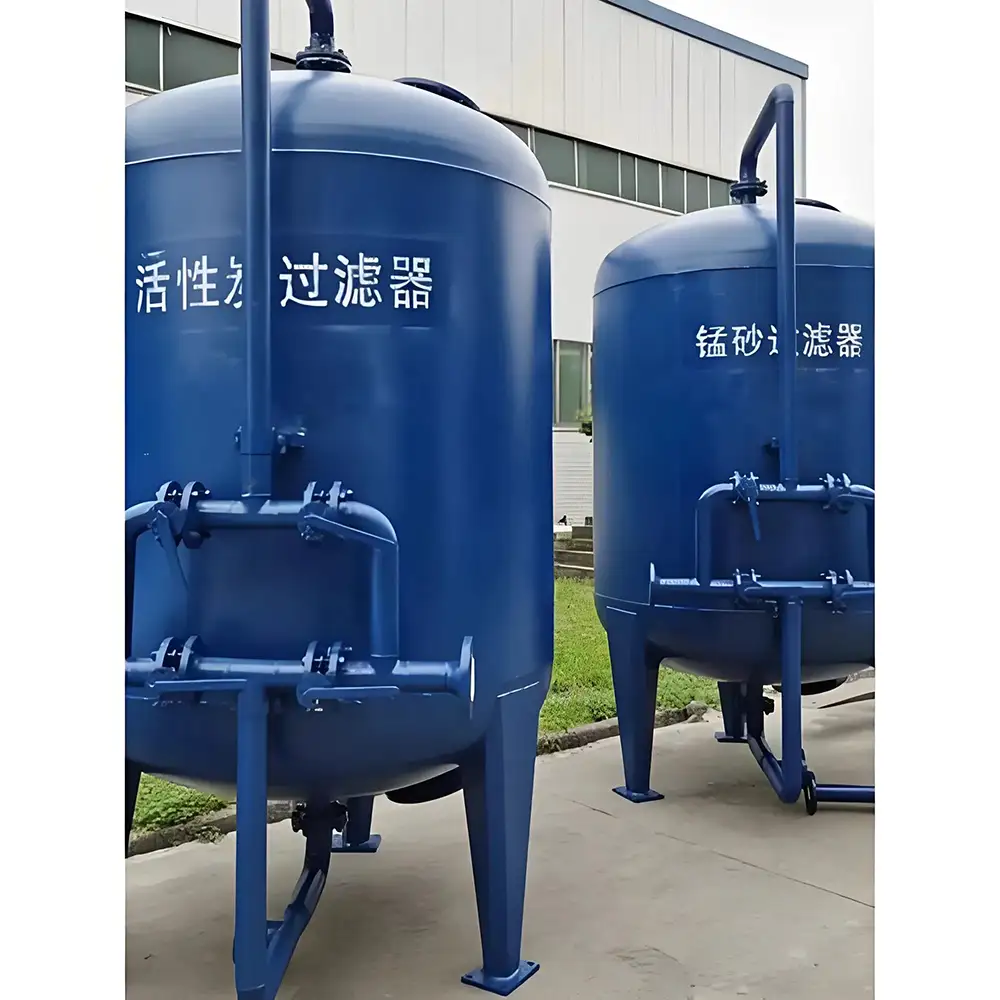
A typical industrial multi-media filtration system consists of a pressure vessel, filtration media, internal water distributors, support layers, valves, piping, pressure gauges, and a control system.
The vessel can be manufactured from materials such as FRP, carbon steel, stainless steel 304, or stainless steel 316 depending on the application, installation environment, corrosion requirements, and project budget.
The filter bed may contain several layers. Quartz sand provides effective physical particle filtration, while anthracite can improve depth filtration by providing a larger and lighter upper filtration layer. Activated carbon can be incorporated when adsorption of chlorine, odor, color, or certain organic compounds is required.
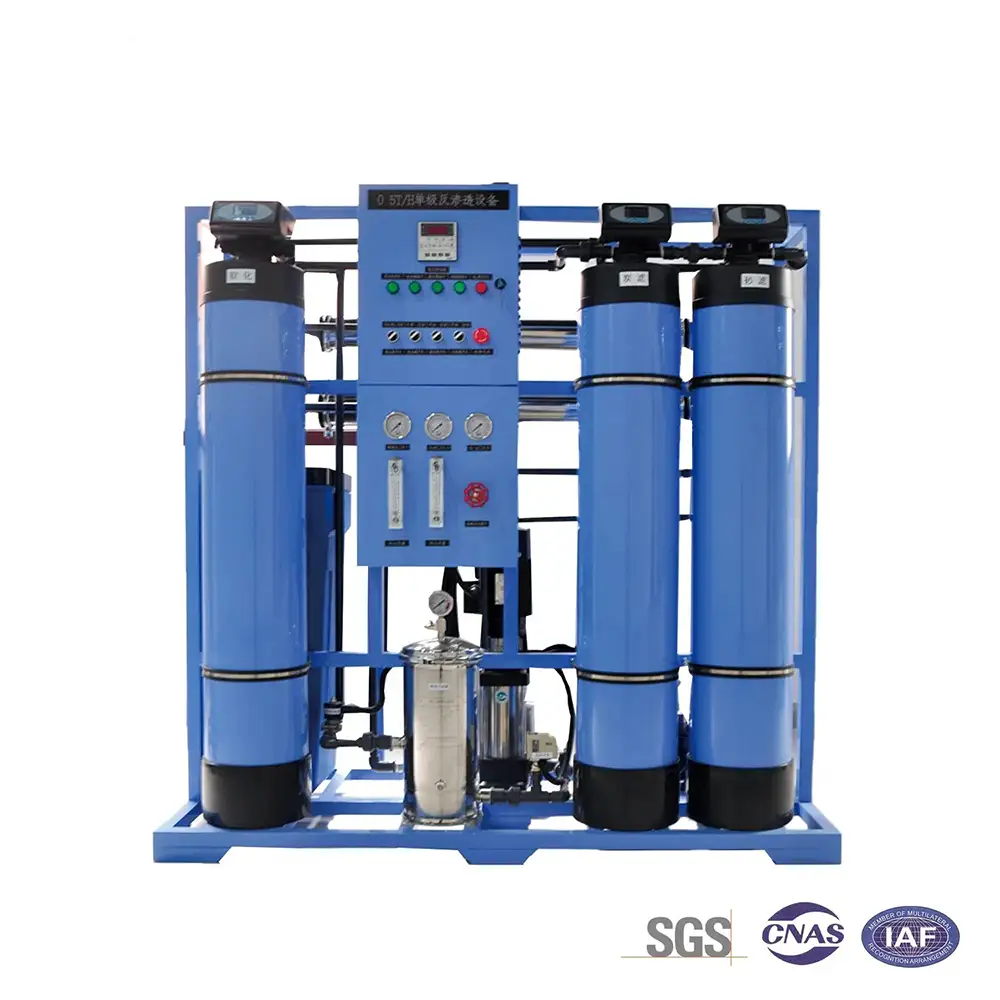
Multi-Media Filter for RO Pretreatment
One of the most common applications is RO pretreatment.
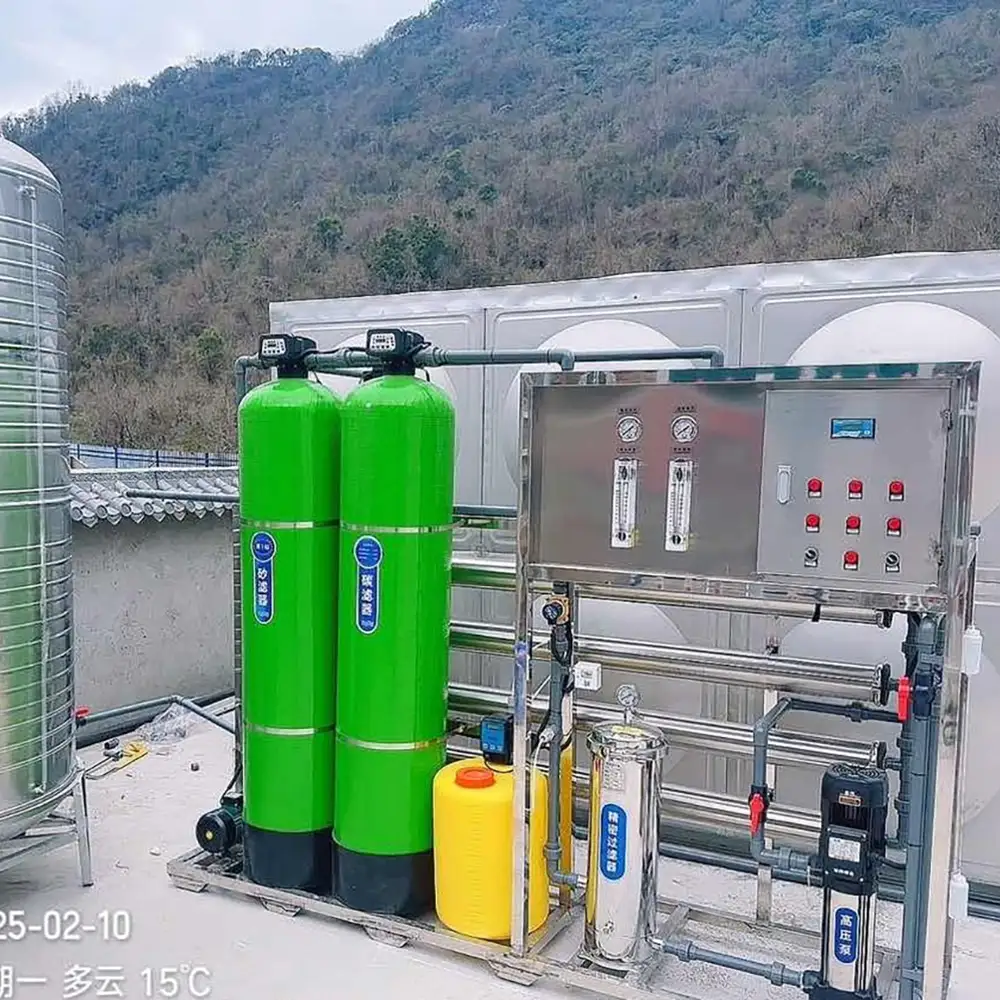
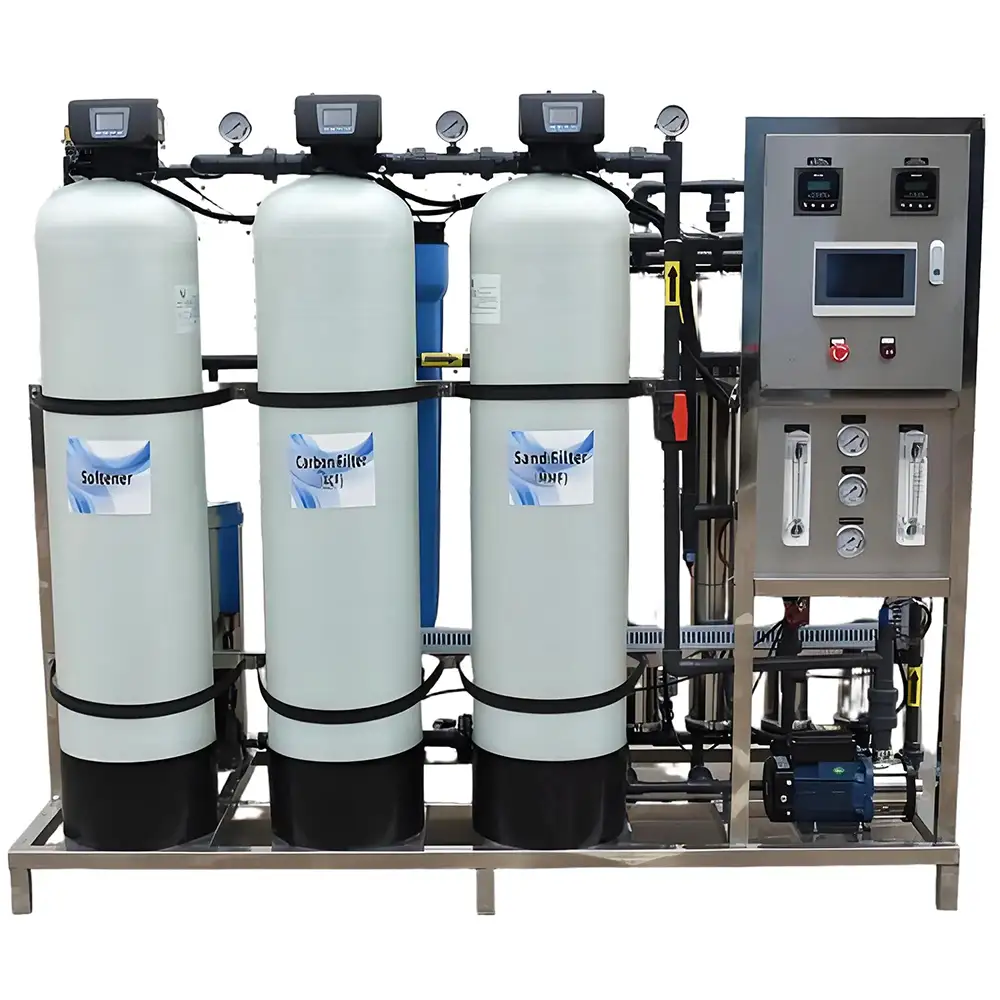
Reverse osmosis membranes are sensitive to suspended solids and fouling conditions. A pretreatment train may therefore include a multi-media filter followed by activated carbon filtration, softening, cartridge filtration, or other treatment stages depending on the feedwater.
A typical process can be:
Raw Water → Raw Water Pump → Multi-Media Filter → Activated Carbon Filter → Softener → Cartridge Filter → RO System → Purified Water
The exact configuration should be determined from a water analysis and the required product-water quality.
For example, the multi-media filter can primarily handle particulate and turbidity reduction, while activated carbon provides a different adsorption function. Cartridge filtration can then provide finer downstream protection before the RO membrane. This division of treatment functions is more practical than expecting one filter to remove every contaminant.
Key Features and Benefits
1. Deep-Bed Filtration
Multiple layers of filtration media provide depth filtration rather than relying on a single surface layer. This can improve the utilization of the filter bed and provide stable particulate removal.
2. Flexible Media Configuration
The system can be configured with quartz sand, anthracite, activated carbon, manganese sand, or other suitable media according to water quality and treatment objectives.
3. Automatic Backwash
Automatic valves, PLC controls, timers, or differential-pressure monitoring can be incorporated to simplify operation and maintain filtration performance.
4. Protection for Downstream Equipment
By reducing particulate loading and turbidity before RO, UF, ion exchange, or other treatment units, the pretreatment system helps create more suitable feedwater conditions for downstream processes.
5. Industrial-Scale Capacity
Multi-media filtration systems can be designed for small commercial installations or large industrial water treatment projects. Multiple vessels can also be installed in parallel when higher flow capacity or continuous operation is required.
6. Customizable Design
The vessel diameter, media combination, filtration area, valve configuration, control method, piping, material, and number of filter units can be customized according to project requirements.
Applications
Water Purification Pretreatment Multi-Media Filters are suitable for a wide range of water treatment applications, including:
Industrial water purification
RO pretreatment
UF pretreatment
Drinking water pretreatment
Municipal water treatment
Groundwater filtration
Surface water treatment
Food and beverage processing
Pharmaceutical water systems
Electronics manufacturing
Boiler feedwater pretreatment
Cooling water treatment
Process water filtration
Wastewater polishing
Water reuse systems
Commercial water purification plants
For industrial applications, the correct system should be selected according to the raw-water analysis, required flow rate, turbidity, suspended solids concentration, temperature, pressure, and final water-quality target.
Operation and Maintenance
Regular maintenance is essential for stable filtration performance. Operators should monitor inlet and outlet pressure, differential pressure, flow rate, backwash performance, valve operation, and water quality.
Backwashing should be performed when the differential pressure reaches the manufacturer's recommended level or according to the programmed operating schedule. A suitable backwash cycle helps remove accumulated particles and restore the filter bed.
Filter media should also be inspected periodically. Media replacement intervals vary according to feedwater quality, operating conditions, backwash efficiency, and media type. Activated carbon, for example, has different service requirements from quartz sand.
Why Choose Us?
As an experienced Water Treatment Equipment Manufacturer and Industrial Water Filtration Supplier, we provide customized multi-media filtration solutions for different raw-water conditions and treatment capacities.
Our advantages include:
Customized Multi-Media Filter Design
Industrial-Grade Filter Vessels
Quartz Sand, Anthracite, Activated Carbon and Specialty Media Options
Manual or Automatic Backwash Systems
PLC and Differential-Pressure Control Options
FRP, Carbon Steel and Stainless Steel Construction
Complete RO Pretreatment Solutions
OEM and ODM Manufacturing
Flexible Flow-Capacity Configuration
Export-Oriented Engineering and Technical Support
We can help customers select appropriate filtration media, vessel size, piping configuration, control method, and pretreatment process according to water analysis and project requirements.
Frequently Asked Questions
1. What is a multi-media filter?
A multi-media filter is a pressure filtration system containing two or more layers of filtration media. It is primarily used to reduce suspended solids, sediment, and turbidity in raw water.
2. What media are commonly used?
Common media include quartz sand, anthracite, activated carbon, manganese sand, garnet, and graded support gravel. The final selection depends on the treatment objective.
3. Can this filter be used before an RO system?
Yes. Multi-media filtration is commonly used as an RO pretreatment stage to reduce particulate loading and turbidity before the water reaches downstream membrane equipment.
4. What is the difference between a sand filter and a multi-media filter?
A sand filter generally uses one primary filtration medium, while a multi-media filter uses multiple layers with different characteristics. Multi-media filtration can provide deeper and more distributed particle capture.
5. Can activated carbon be included?
Yes. Activated carbon can be included when the process requires adsorption of chlorine, odor, color, or certain organic compounds. However, activated carbon performs a different function from physical sand filtration.
6. Does the filter require chemicals?
The basic physical filtration process does not inherently require chemical dosing. However, a complete water treatment plant may use chemicals elsewhere depending on the raw water and treatment objectives.
7. How is the filter cleaned?
The filter is normally cleaned through a backwash cycle. Water flows upward through the media bed to loosen the accumulated solids and carry them to the drain.
8. Can the system operate automatically?
Yes. Automatic multi-port valves, PLC controllers, timers, pressure-differential controls, and automatic backwash systems can be incorporated.
9. What materials are available?
Common vessel materials include FRP, carbon steel, stainless steel 304, and stainless steel 316. Material selection depends on water chemistry and installation conditions.
10. Can the filtration capacity be customized?
Yes. Flow capacity, vessel diameter, media depth, number of vessels, inlet and outlet connections, valve arrangement, and control system can all be customized.
11. Can it be used for wastewater treatment?
Yes. Multi-media filtration can be used as a polishing or tertiary filtration stage when the wastewater has already undergone appropriate primary and biological treatment.
12. How do I choose the right multi-media filter?
The selection should consider raw-water quality, flow rate, turbidity, suspended solids, temperature, operating pressure, required filtration level, and downstream equipment. A water analysis is recommended for engineering design.
13. Can you provide a complete pretreatment system?
Yes. A complete pretreatment package can combine multi-media filtration with activated carbon filtration, softening, cartridge filtration, RO, UF, or other treatment equipment according to the project requirements.
Prev:
Secondary Water Supply Tank /Fiberglass / Solar Water Heating System /Fire Protection Available
Next:
Water Filtration System / Water Purification System / Reverse Osmosis System
TAG:
Food And Beverage Water Treatment,
Industrial Water Purification System,
Industrial Water Treatment System,
Suspended Solids Removal,
Water Purification Equipment,
Industrial Water Purification Equipment,
Industrial Water Treatment Plant,
Industrial Water Treatment Equipment,
Automatic Water Filtration System,
Water Recycling Filtration,
Process Water Purification,
Process Water Filtration,
Water Filtration Equipment,
Water Filtration System,
Industrial Water Filter,
Water Treatment Plant,
Water Treatment Equipment,
Industrial Water Purification,
Water Purification System,
Process Water Treatment,
Commercial Water Purification,
Drinking Water Filtration,
Commercial Water Filtration,
Commercial Water Treatment,
Pharmaceutical Water Treatment,
RO Pretreatment System,
RO Pretreatment Equipment,
Activated Carbon Filter,
Activated Carbon Water Filter,
Multimedia Water Treatment,
Related Category:
Water Purification Pretreatment Link,Multi-Media Filter,Multimedia Water Filter,Water Purification Pretreatment China, suppliers, manufacturers, factory, customized, wholesale, quotation, made in China