Vertical Wave Conveyor Belt Wall Stand,
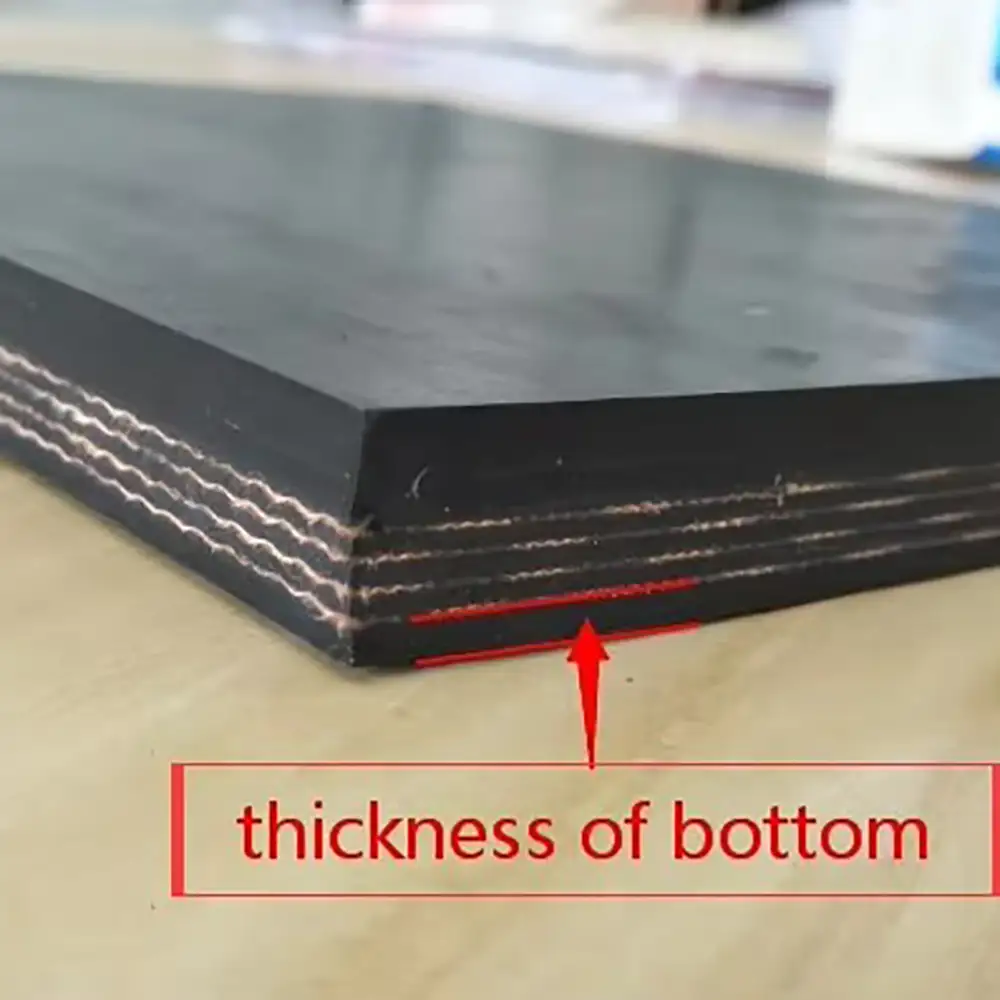
Special treated steel mesh inserted into both top cover and bottom cover,creating an excellent combination of longitudinal flexibility and transverse rigidity
Vertical Conveyor Belt, Vertical Wave Conveyor Belt Wall Stand
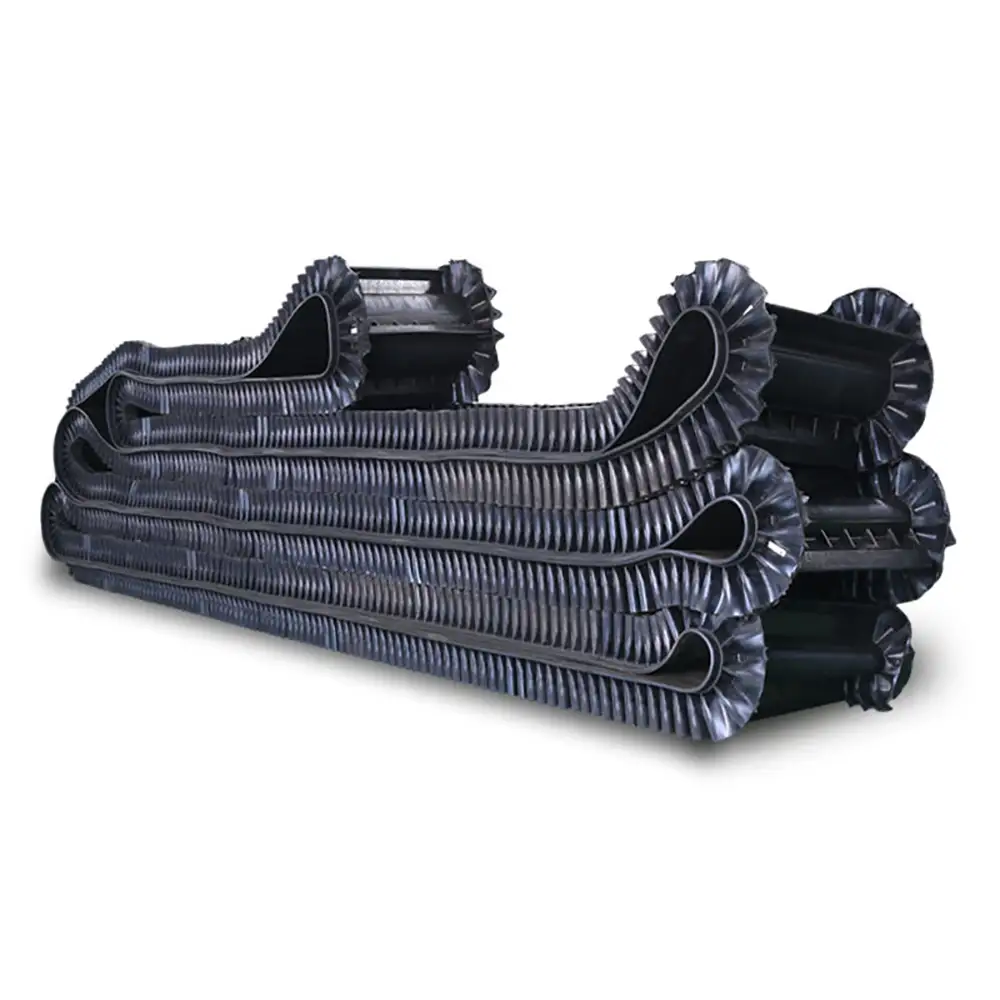
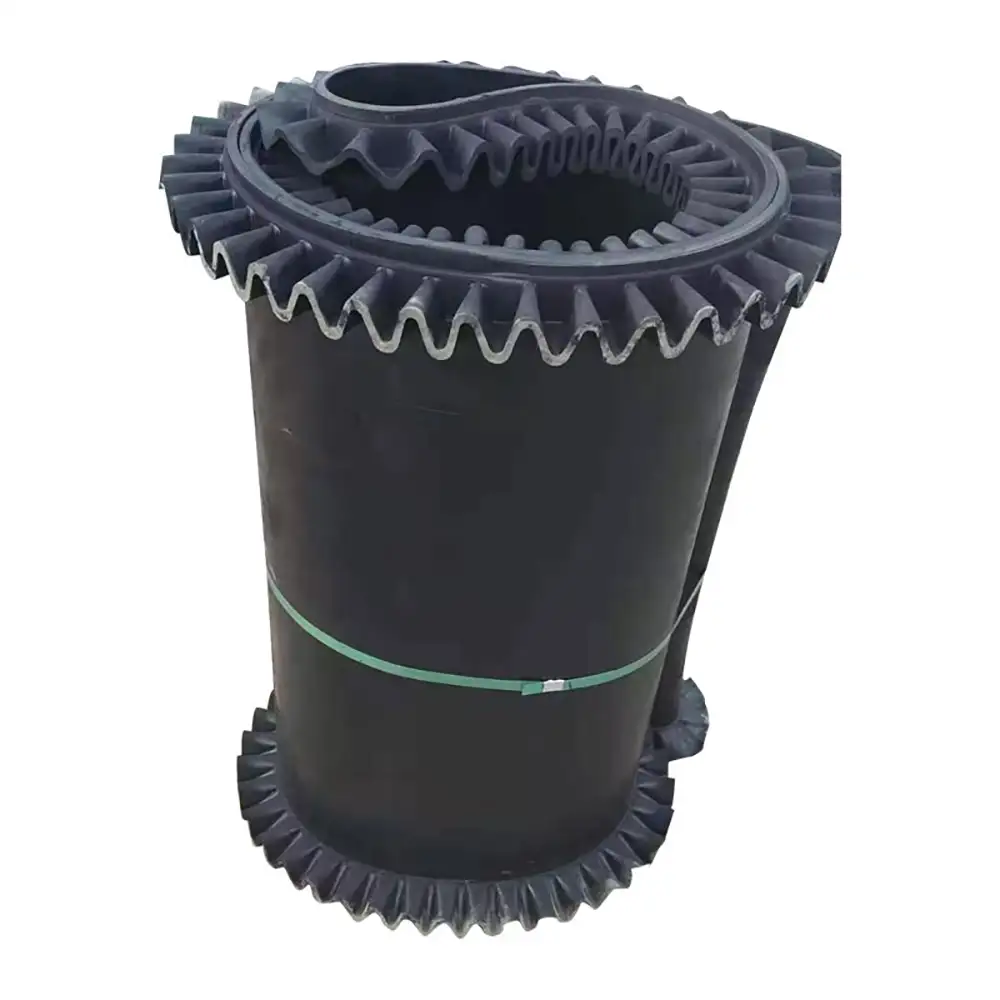
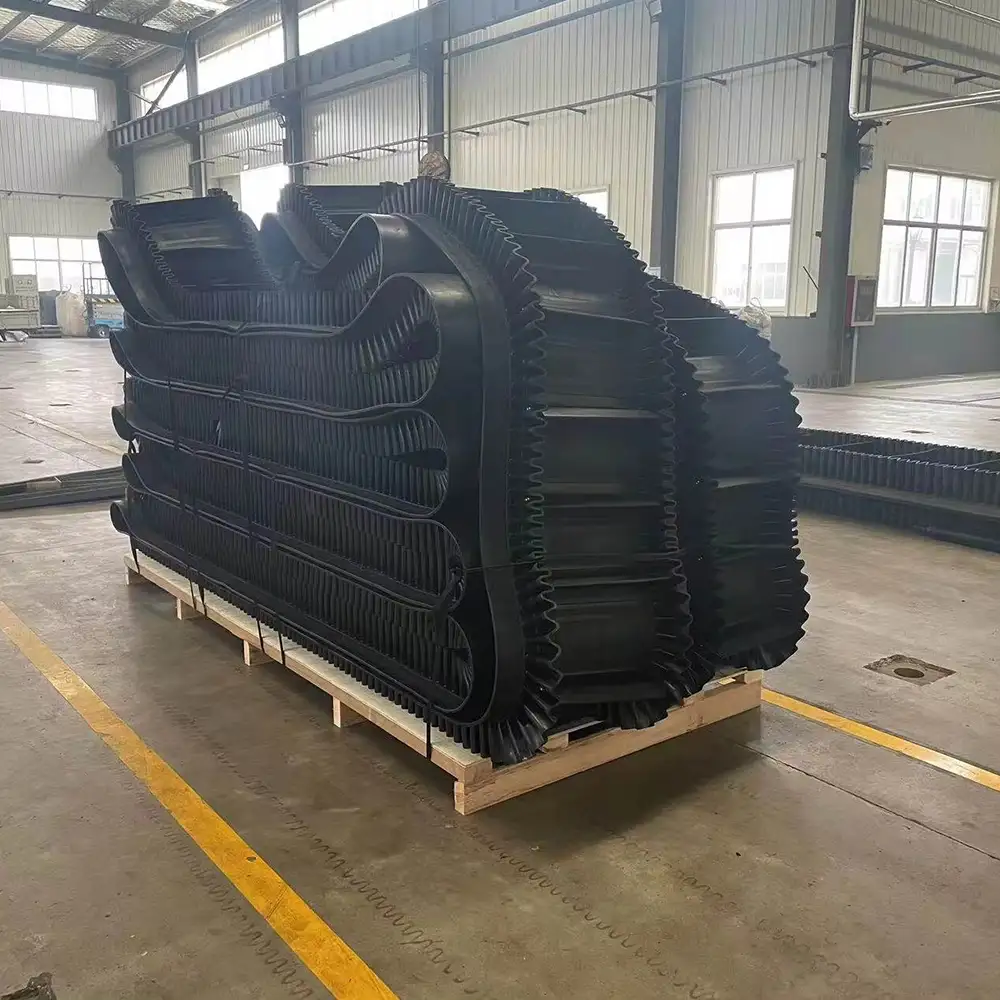
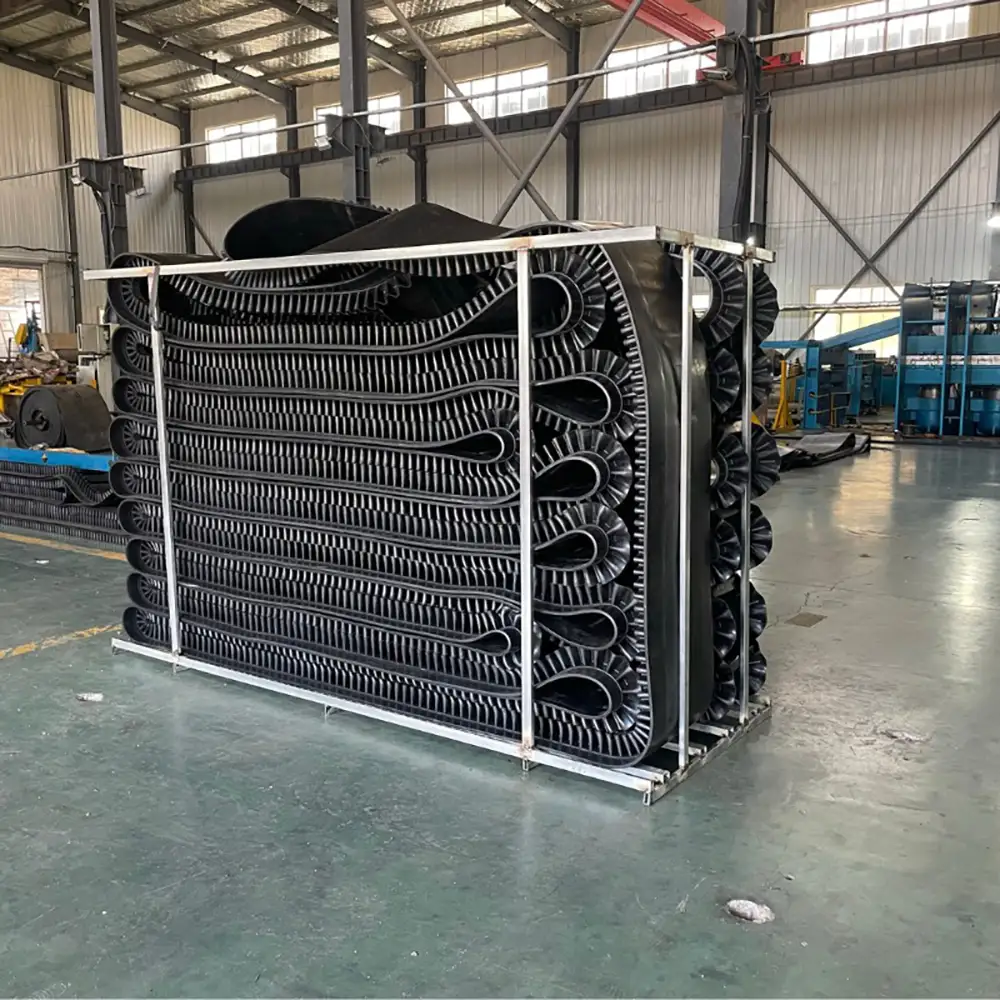
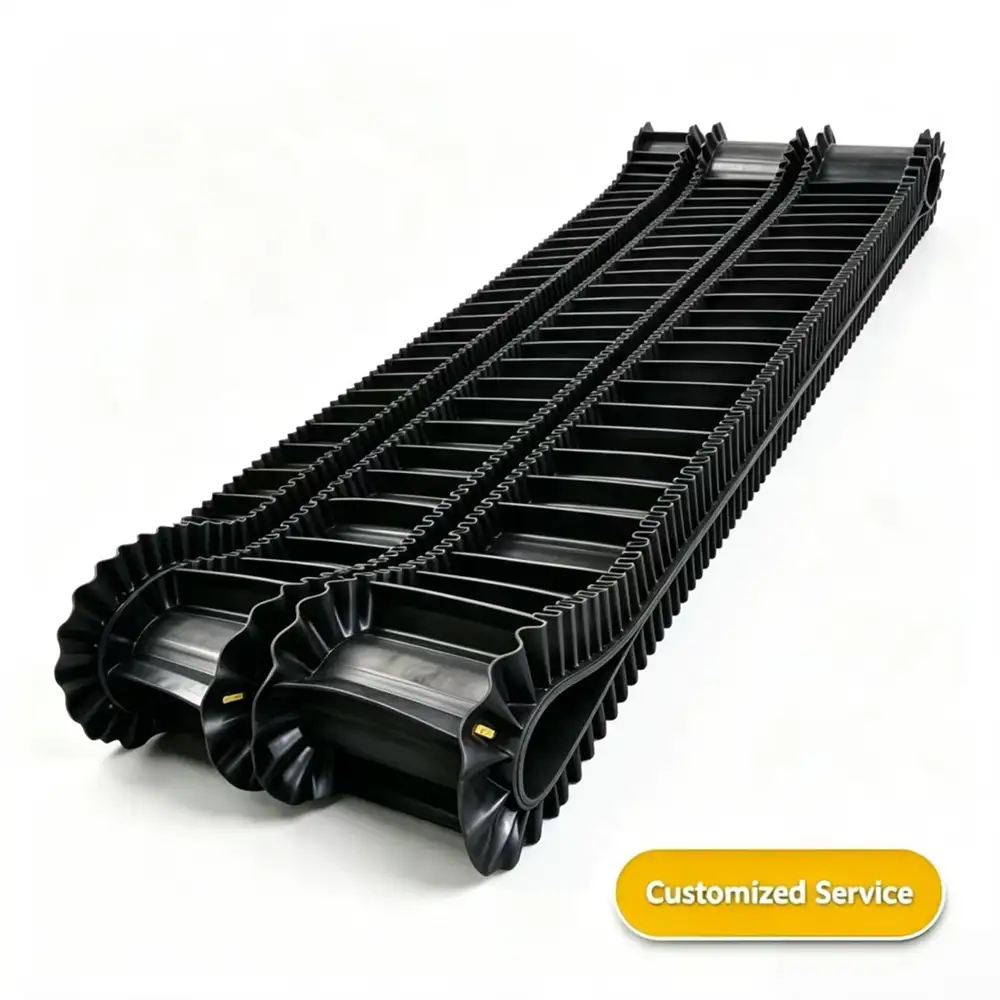
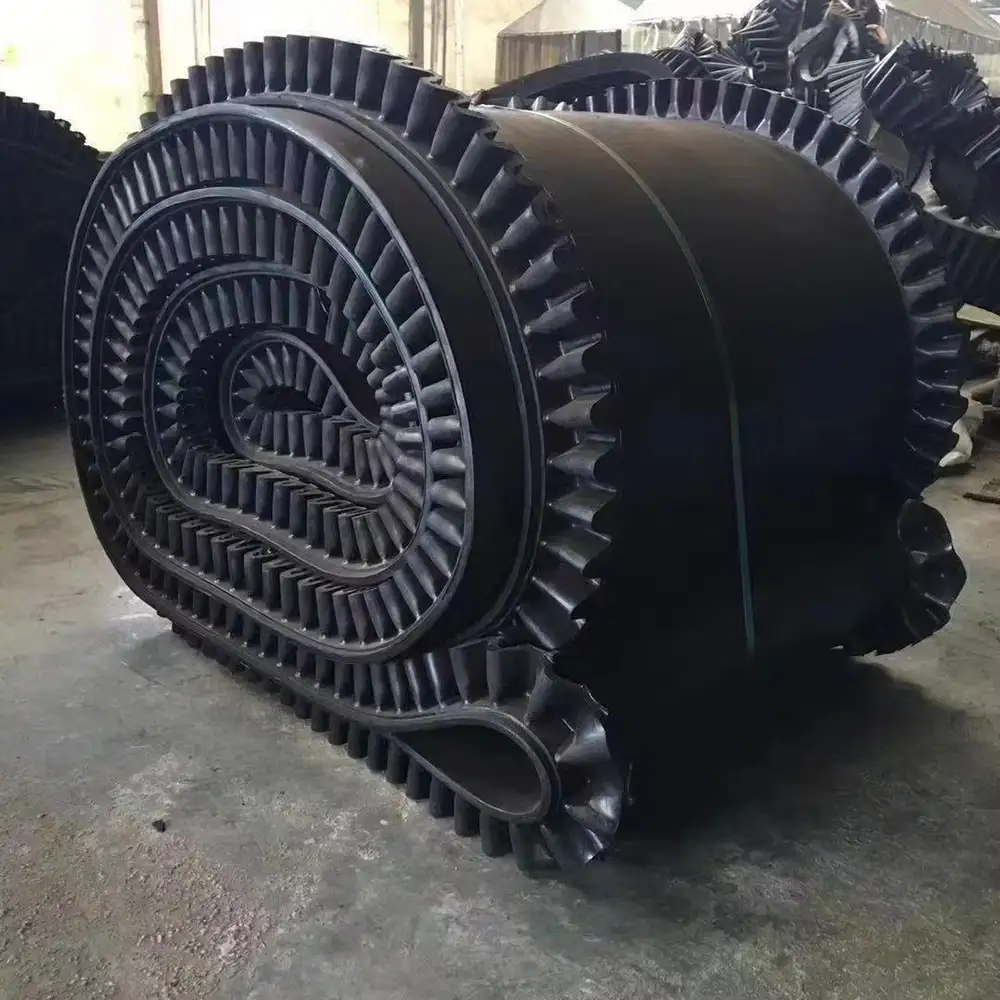
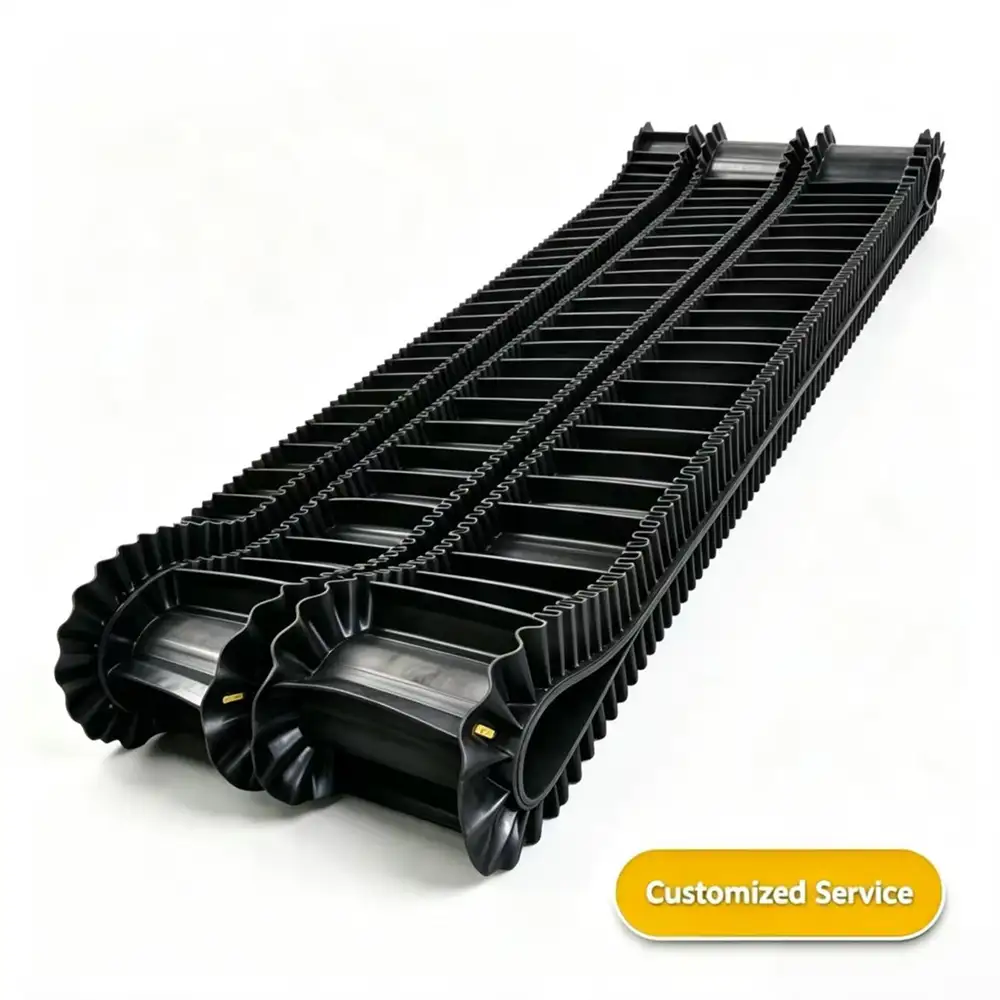
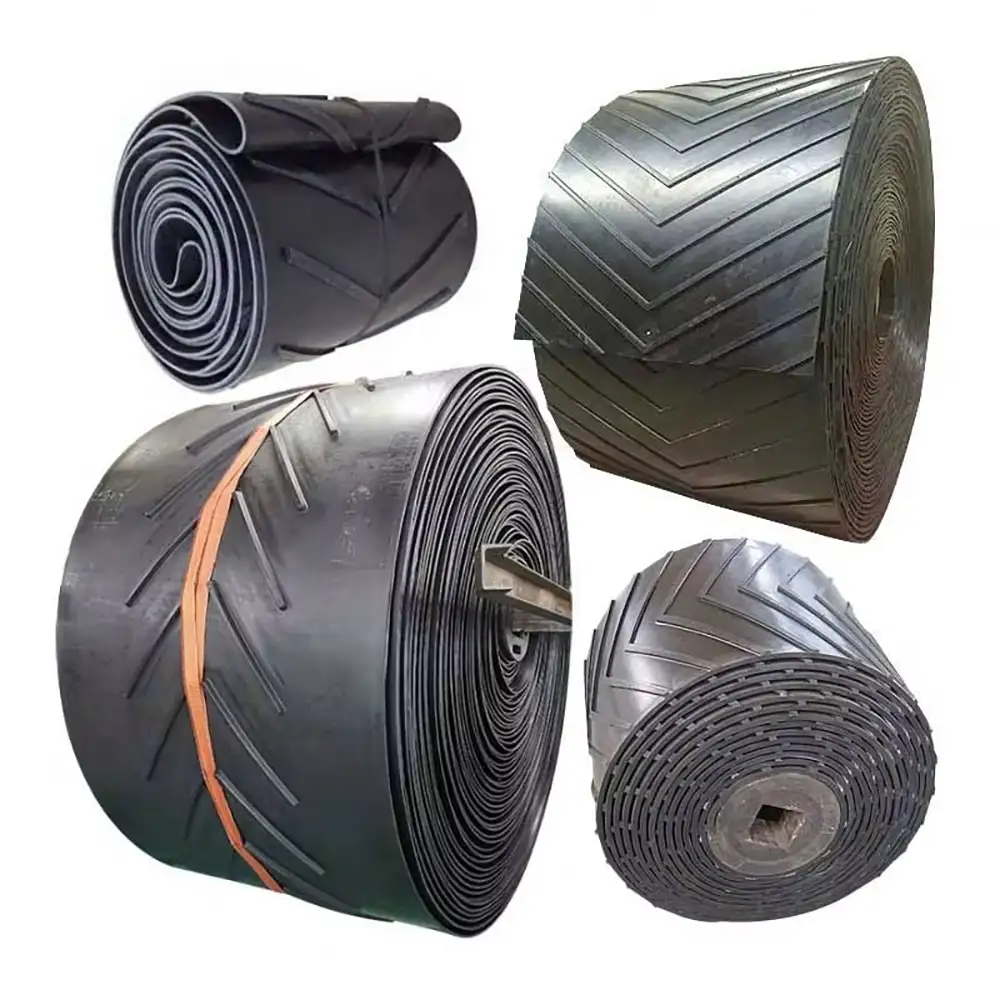
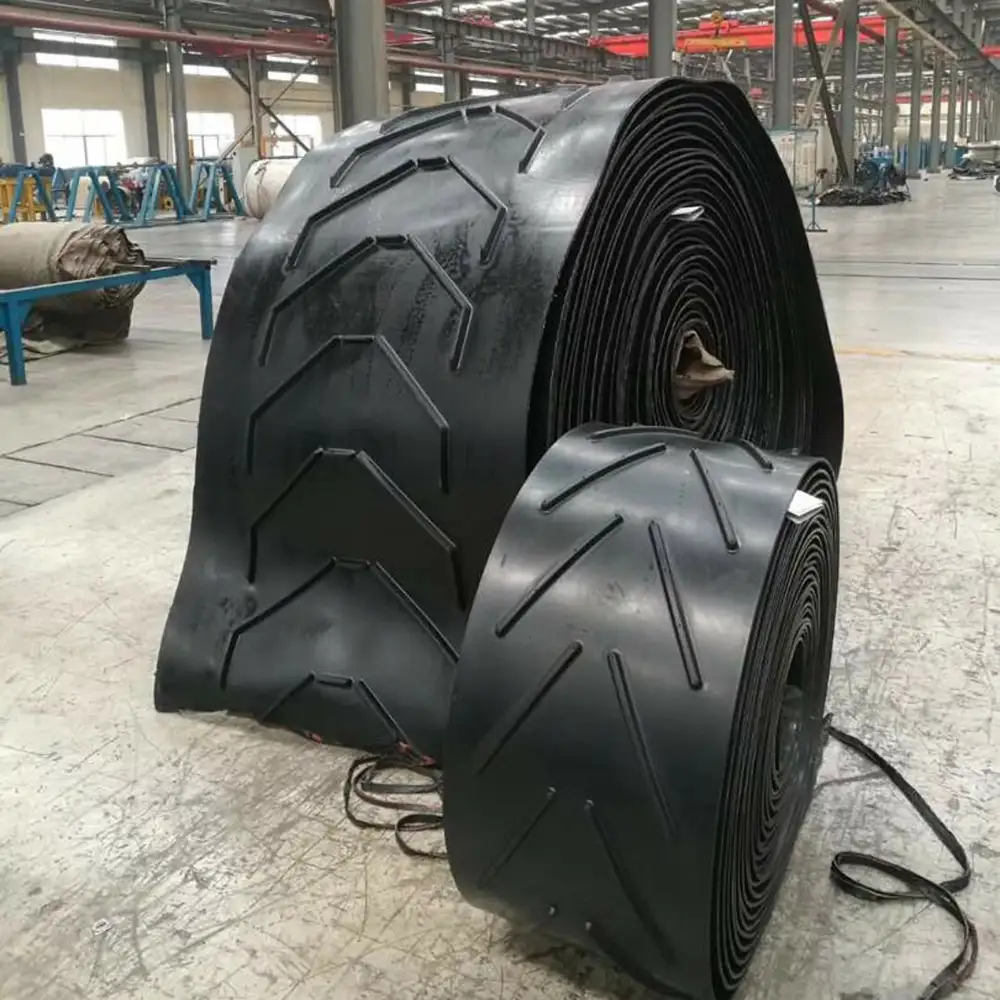
A Vertical Conveyor Belt is a specialized conveying solution designed to move bulk materials upward at steep inclines or in vertical lifting applications. Also known as a Corrugated Sidewall Conveyor Belt, Wave Sidewall Conveyor Belt, or Steep Incline Conveyor Belt, this system uses corrugated sidewalls and transverse cleats to create contained carrying pockets on the belt surface. These pockets help prevent material rollback and spillage when conventional flat conveyor belts are no longer suitable for the required conveying angle.
The vertical wave conveyor belt design is particularly useful when a factory, mine, quarry, cement plant, fertilizer plant, recycling facility, or bulk-material handling system needs to achieve substantial vertical lift while minimizing floor space. Depending on the belt construction and complete conveyor layout, sidewall conveyor systems can be configured for steep inclines and, in suitable designs, vertical conveying up to approximately 90 degrees.
|
|
|
|
Bottom width of sidewall(B1)
|
|
|
|
|
|
|
|
|
|
|
|
|
|
|
|
|
|
|
|
|
|
|
|
|
|
|
|
|
|
|
|
|
|
|
|
|
|
|
|
|
|
|
|
|
|
|
|
|
|
|
|
|
|
|
|
|
|
|
|
|
|
|
|
|
|
|
|
|
|
|
|
|
|
|
|
|
|
|
|
|
|
|
|
|
|
|
|
|
|
|
|
|
|
|
|
|
|
|
|
|
|
|
|
|
|
|
|
|
|
|
|
|
|
|
|
|
|
|
|
|
|
|
|
What Is a Vertical Wave Conveyor Belt?
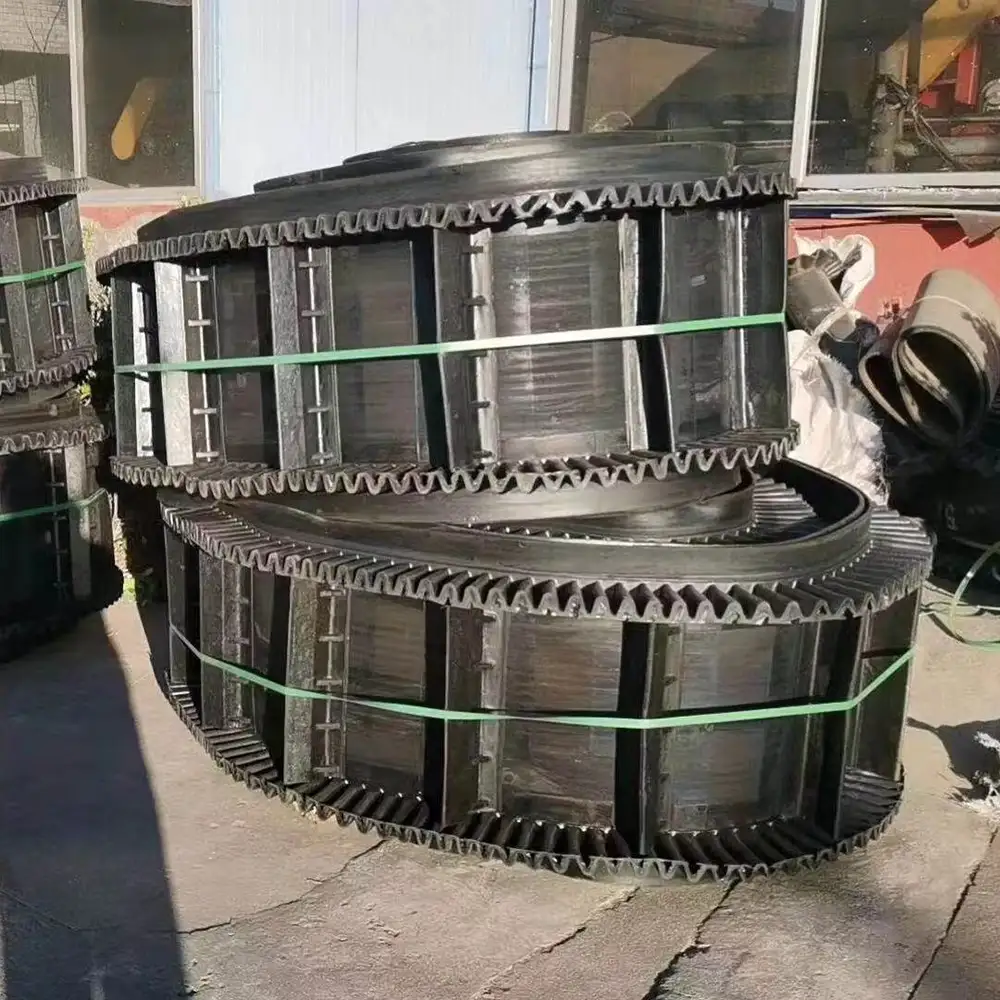
A vertical wave conveyor belt normally consists of three major functional elements: a reinforced base belt, corrugated sidewalls, and transverse cleats.
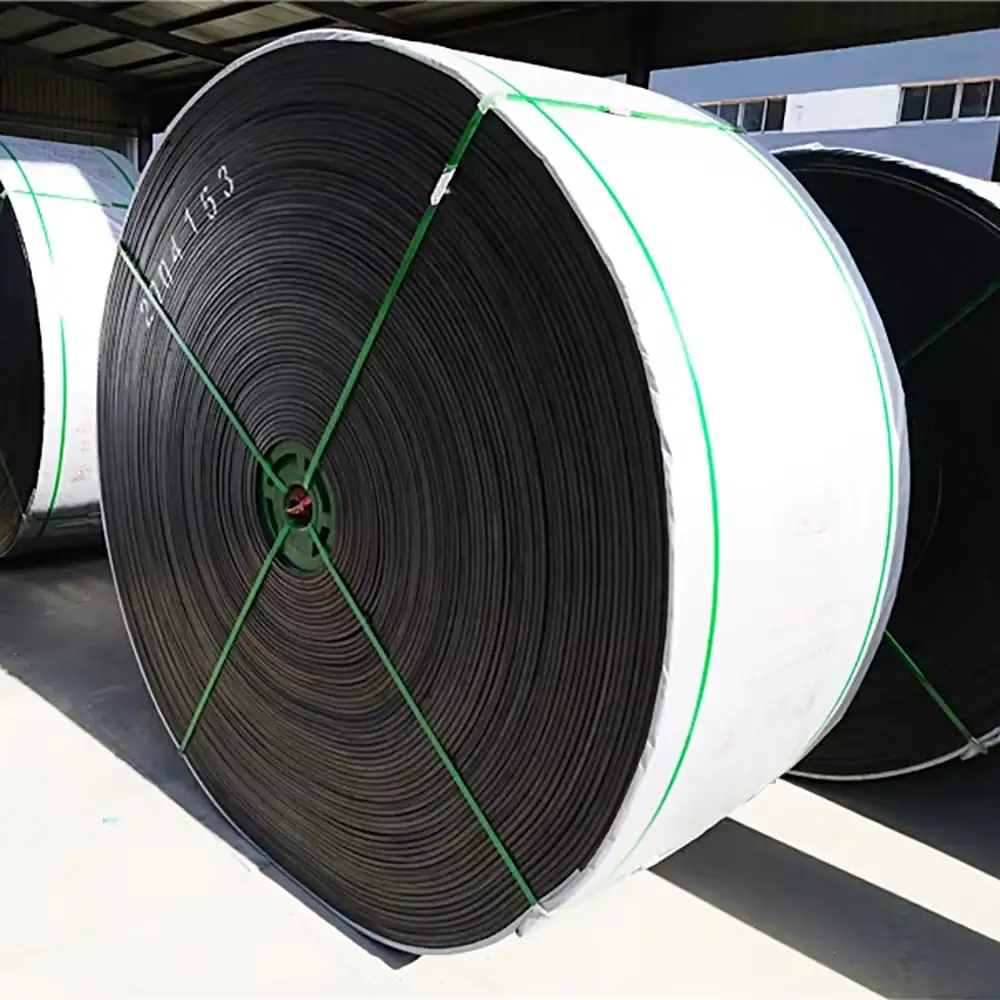
The base belt provides the primary tensile strength and supports the conveying load. Depending on application requirements, the carcass can be manufactured using EP, NN, CC fabric constructions or steel-cord reinforcement for higher-strength applications.
The corrugated sidewalls are flexible wave-shaped rubber walls installed along both sides of the base belt. They form a continuous barrier that helps retain bulk material during steep-angle conveying.
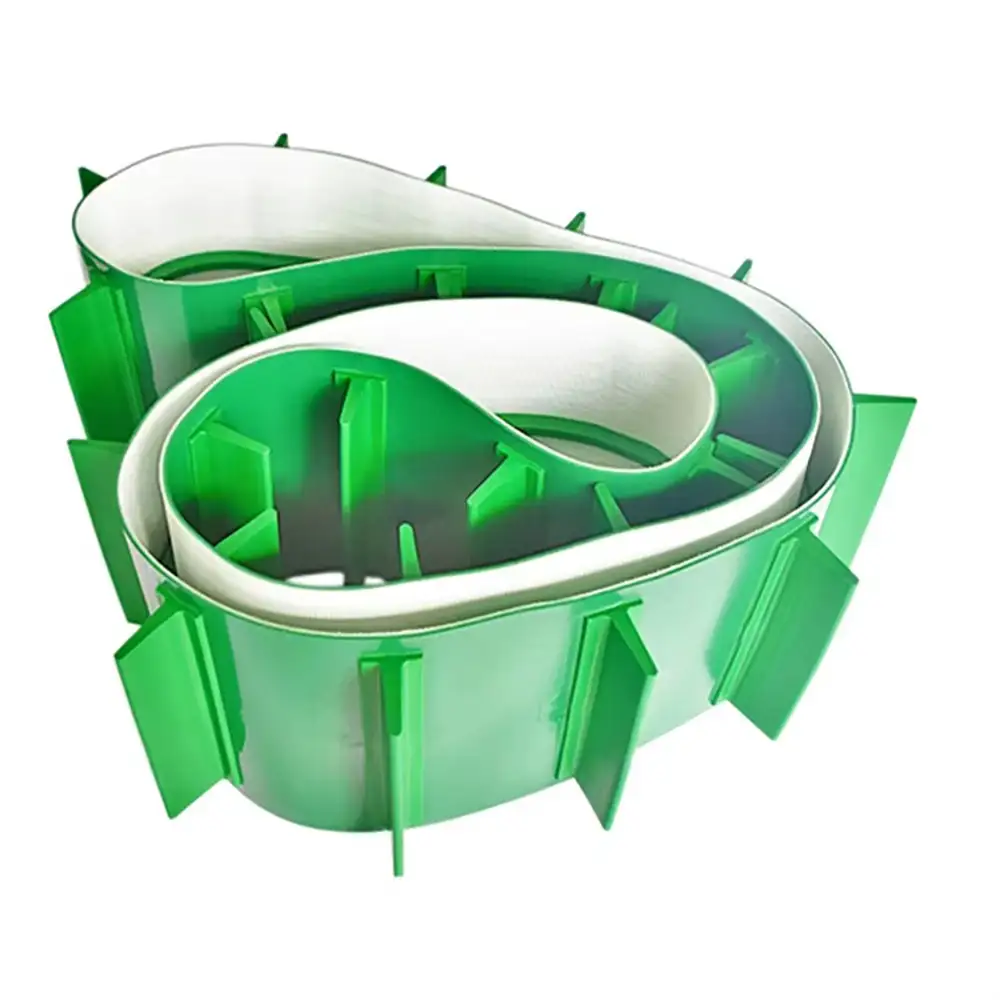
The transverse cleats or cross baffles are installed between the sidewalls. Together with the sidewalls, they create individual pockets that carry material upward. Cleat styles can include T, C, TC and other configurations depending on the manufacturer and conveying requirements.
This construction is different from a conventional chevron conveyor belt. A chevron belt mainly increases surface traction, while a sidewall conveyor physically contains material between the sidewalls and cleats. This makes the sidewall design particularly suitable for steep-angle and vertical material elevation.
Working Principle
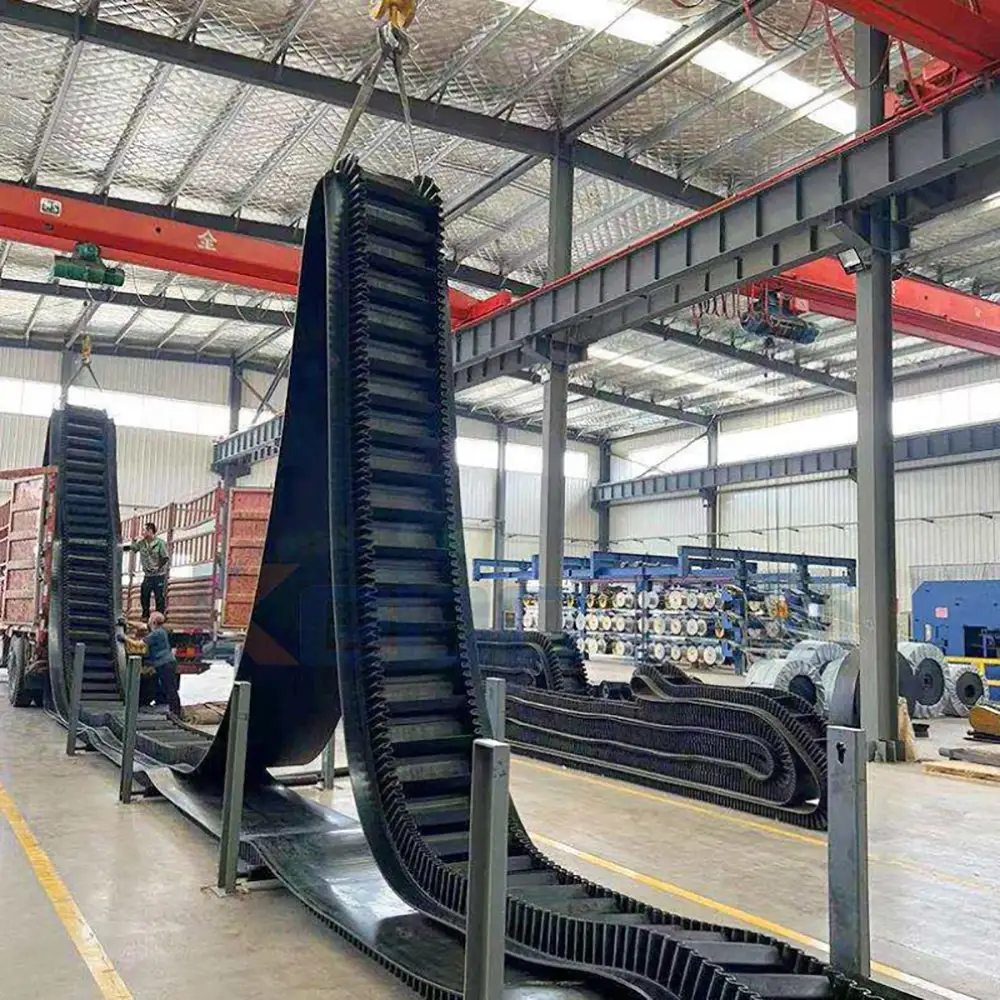
Material is fed onto the carrying surface of the belt at the loading section. As the belt moves, the corrugated sidewalls prevent material from moving laterally outside the conveying area, while the transverse cleats provide support against backward movement.
The material is therefore carried inside a series of moving pockets as the belt travels upward. At the discharge point, the belt passes around the head pulley and the material leaves the pockets through the discharge section.
The complete conveyor can be designed in different configurations, including inclined, Z-type, S-type and vertical layouts, depending on the required lift height, feeding arrangement and discharge position. This flexibility can reduce the need for multiple transfer conveyors in applications where elevation changes are significant.
Key Features of Vertical Sidewall Conveyor Belt
1. Steep-Incline and Vertical Conveying
The main advantage is the ability to transport bulk materials at angles that are difficult for conventional flat belts. Properly designed sidewall systems can support very steep inclines and vertical lifting.
2. Corrugated Wave Sidewalls
Flexible wave-shaped sidewalls provide lateral containment while allowing the belt to travel around pulleys. Sidewall height can be selected according to material characteristics, required capacity and pocket volume.
3. Transverse Cleats
Cleat design affects pocket capacity, material stability and conveying performance. Different cleat shapes and spacing can be selected for different materials and conveying angles.
4. Space-Saving Layout
Vertical conveying can significantly reduce the horizontal footprint required to achieve a specific lifting height. This is valuable in plants where available floor space is limited.
5. Customized Construction
The belt can be customized according to width, tensile strength, carcass structure, sidewall height, cleat type, cleat pitch, cover compound and other operating requirements.
6. Heavy-Duty Material Handling
Rubber sidewall conveyor belts can be configured for demanding applications involving aggregate, coal, ore, cement clinker, fertilizer and other bulk materials. Material properties and operating conditions should be considered when selecting the belt compound and reinforcement.
Applications
Vertical wave conveyor belts are widely used in bulk material handling industries where steep lifting, compact layouts and continuous conveying are required.
Typical applications include:
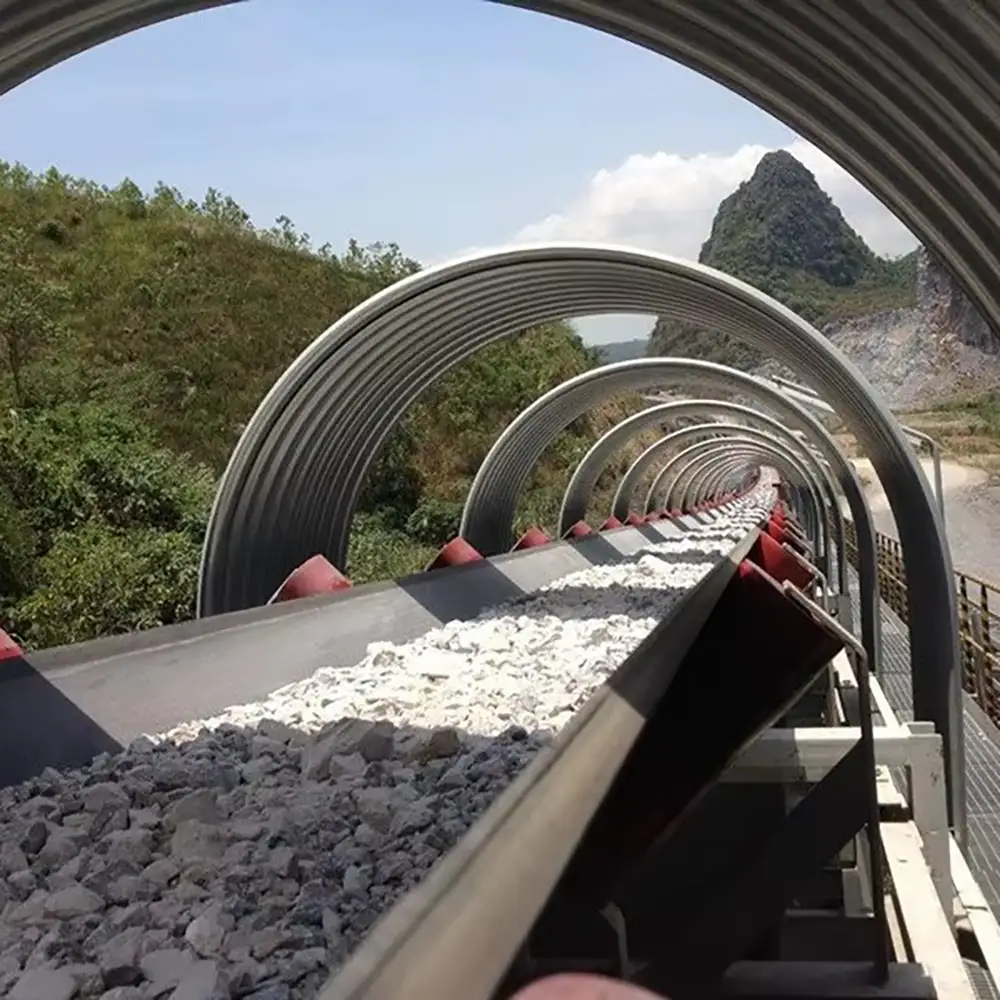
Mining and mineral processing
Coal handling
Quarry and aggregate processing
Cement plants
Steel and metallurgical plants
Power plants
Fertilizer production
Chemical processing
Ports and bulk terminals
Grain and agricultural processing
Recycling plants
Construction material handling
Foundries
Sand and gravel plants
Common materials include coal, limestone, ore, sand, gravel, cement clinker, fertilizer, grain, slag, aggregates and other bulk solids. The correct belt construction depends on particle size, bulk density, moisture, temperature, abrasiveness and chemical properties.
How to Select a Vertical Conveyor Belt
Choosing a vertical sidewall conveyor belt should be based on the complete conveying system rather than belt width alone.
Important parameters include conveying capacity, material type, bulk density, particle size, moisture content, lift height, conveying angle, belt speed, belt width, sidewall height, cleat height, cleat spacing, base-belt strength and pulley arrangement.
The sidewall height determines how much material can be retained within each pocket. Cleat height and pitch affect pocket volume and material stability. The base belt must provide sufficient tensile strength and structural stability for the conveyor's operating tension.
Pulley diameter is also important because the belt, sidewalls and cleats must flex properly as they travel around the conveyor. The selected belt construction should therefore be matched to the conveyor's pulley arrangement and mechanical design.
For abrasive materials such as crushed stone and ore, a suitable wear-resistant rubber compound may be required. For elevated-temperature applications, heat-resistant construction can be considered. For coal or other applications with specific fire-safety requirements, the belt may need an appropriate flame-resistant specification.
Installation and Maintenance
Proper installation is essential for reliable sidewall conveyor operation. The belt should be correctly aligned, tensioned and supported according to the conveyor manufacturer's design.
Particular attention should be given to sidewall and cleat condition. Excessive material buildup can affect tracking and loading, while damaged sidewalls or cleats may reduce the effective carrying capacity of the belt.
Routine inspection should include:
Belt tracking
Belt tension
Sidewall bonding
Cleat condition
Pulley surfaces
Idlers and rollers
Splices and joints
Material buildup
Abnormal vibration or noise
Cleaning frequency should be determined by the material being conveyed and the operating environment.
Custom OEM Vertical Conveyor Belt
As an industrial conveyor belt manufacturer and supplier, we can provide customized Vertical Conveyor Belt solutions according to the customer's conveyor drawings and operating conditions.
Available customization can include:
Belt width
Belt tensile strength
EP/NN/CC or other carcass construction
Steel-cord reinforcement
Corrugated sidewall height
Sidewall profile
Cleat type
Cleat height
Cleat pitch
Belt cover thickness
Abrasion-resistant rubber
Heat-resistant rubber
Flame-resistant rubber
Oil- or chemical-resistant compounds
Belt length
Endless or spliced configuration
Custom packaging and labeling
OEM production is available for machinery manufacturers, conveyor system integrators, mining equipment suppliers and bulk-material handling companies.
Why Choose Us
Industrial Conveyor Belt Manufacturing
We focus on industrial conveyor belting and bulk-material handling applications, providing solutions for standard, steep-incline and vertical conveying requirements.
Application-Based Recommendations
Instead of selecting a belt only by width, we consider the material, capacity, conveyor angle, lift height, belt speed, sidewall dimensions, cleat configuration and pulley layout.
Custom Manufacturing
Different projects require different sidewall heights, cleat arrangements and belt strengths. We support OEM customization to match the customer's conveyor design.
Multiple Rubber Options
Depending on the application, suitable rubber compounds can be selected for abrasion, heat, flame, oil, chemical or general industrial service.
B2B Export Support
We provide technical communication, customized production, inspection, packaging and export support for international machinery manufacturers, distributors and conveyor system integrators.
FAQs
1. What is a Vertical Conveyor Belt?
A Vertical Conveyor Belt is a specialized belt conveyor designed to transport bulk materials at steep inclines or vertical lifting angles. It normally uses corrugated sidewalls and transverse cleats to retain material.
2. What is another name for a Vertical Wave Conveyor Belt?
Common industry terms include Corrugated Sidewall Conveyor Belt, Sidewall Conveyor Belt, Steep Incline Conveyor Belt, Sidewall Cleated Conveyor Belt and Vertical Belt Conveyor.
3. Can a sidewall conveyor belt convey material vertically?
Suitable sidewall conveyor systems can be designed for vertical conveying, including configurations approaching or reaching 90 degrees. The achievable angle depends on the complete belt and conveyor design.
4. What materials can be conveyed?
Typical materials include coal, ore, aggregates, sand, gravel, cement clinker, fertilizer, grain, slag and other bulk solids. Belt construction should be selected according to the material properties.
5. What is the purpose of the corrugated sidewall?
The corrugated sidewall creates a flexible barrier along both sides of the belt. It helps prevent bulk material from spilling sideways during steep-angle or vertical conveying.
6. What is the purpose of the cleats?
Transverse cleats divide the belt into carrying pockets and help support material against rollback when the conveyor operates at a steep angle.
7. How do I choose the sidewall height?
Sidewall height should be selected according to the required conveying capacity, material characteristics, pocket volume, belt width, cleat design and conveyor angle.
8. Can the Vertical Conveyor Belt be customized?
Yes. Belt width, tensile strength, carcass, sidewall height, cleat type, cleat spacing, rubber compound, length and other specifications can be customized according to the project requirements.
9. Is a Vertical Sidewall Belt better than a Chevron Conveyor Belt?
They are designed for different applications. Chevron belts improve traction on inclined surfaces, while sidewall belts use sidewalls and cleats to contain material in pockets for much steeper conveying.
10. What information should I provide for a quotation?
For an accurate quotation, provide the material type, capacity, particle size, bulk density, conveying angle, lifting height, belt width, belt speed, operating temperature and conveyor layout or drawing whenever available.
Prev:
Fire Resistant Conveyor Belt, High Temperature Conveyor Belt with Safe
Next:
Antifatigue Rubber Sheet
TAG:
Mining Conveyor Belt,
Gravel Conveyor Belt,
Coal Conveyor Belt,
Aggregate Conveyor Belt,
Steep Incline Conveyor Belt,
Incline Conveyor Belt,
Heavy Duty Conveyor Belt,
Cement Conveyor Belt,
Vertical Bulk Material Conveyor,
Industrial Sidewall Conveyor,
Sidewall Cleated Conveyor Belt,
Wave Sidewall Conveyor Belt,
Large Inclination Conveyor Belt,
Sidewall Belt Conveyor,
Vertical Belt Conveyor,
Vertical Conveyor Belt,
High Angle Conveyor Belt,
Steep Angle Conveyor Belt,
Vertical Sidewall Conveyor Belt,
Rubber Sidewall Conveyor Belt,
Sidewall Conveyor Belt,
Corrugated Sidewall Conveyor Belt,
Vertical Rubber Conveyor Belt,
Bulk Material Conveyor,
Corrugated Wave Conveyor Belt,
Cleated Sidewall Conveyor,
Vertical Material Handling Conveyor,
Vertical Conveyor System,
Vertical Wave Conveyor Belt,
Related Category:
Vertical Conveyor Belt,Corrugated Sidewall Conveyor Belt,Vertical Wave Conveyor Belt,Sidewall Conveyor Belt,Steep Inclin China, suppliers, manufacturers, factory, customized, wholesale, quotation, made in China