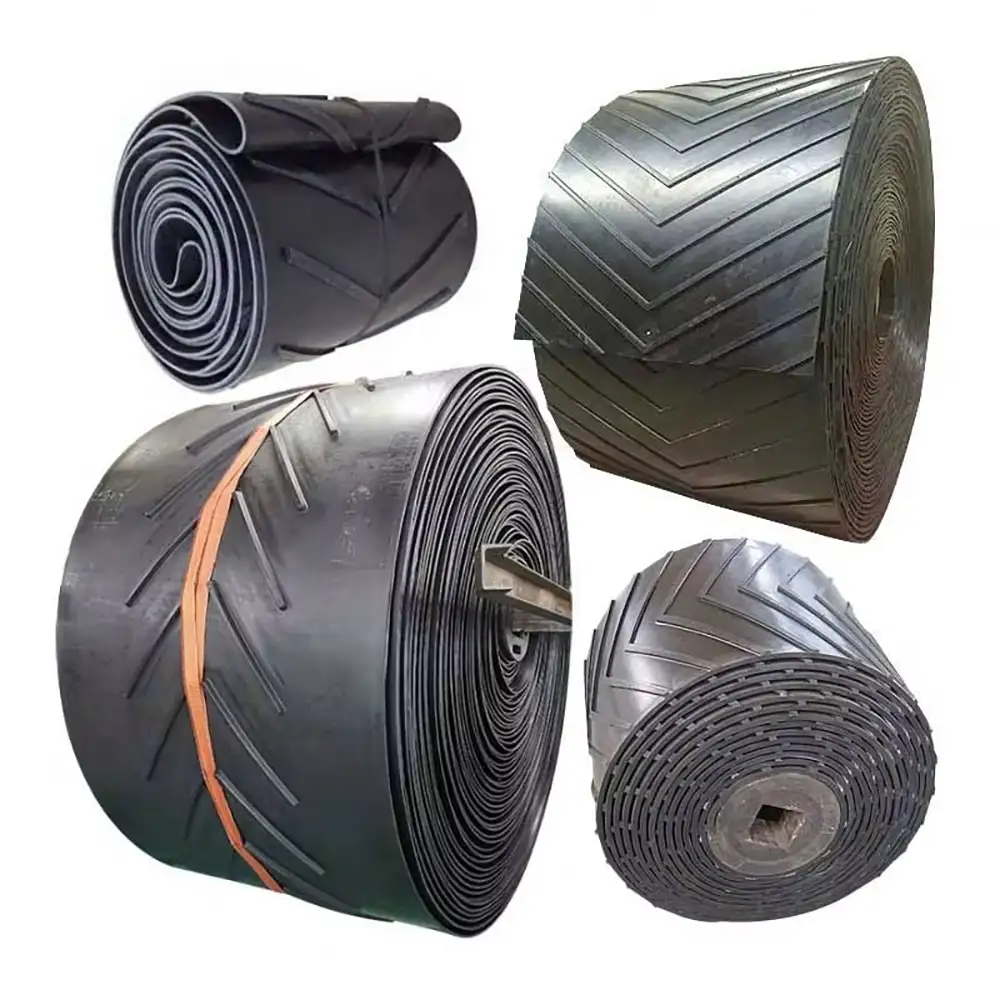
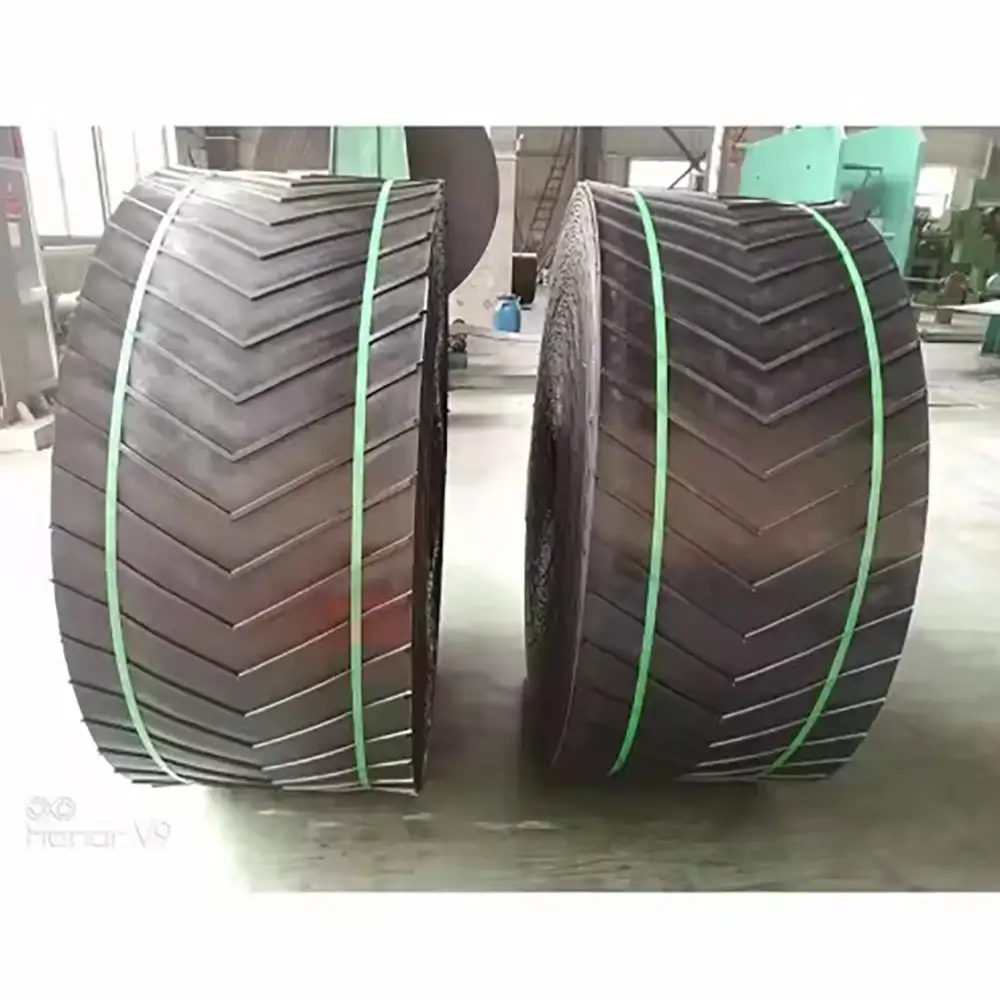
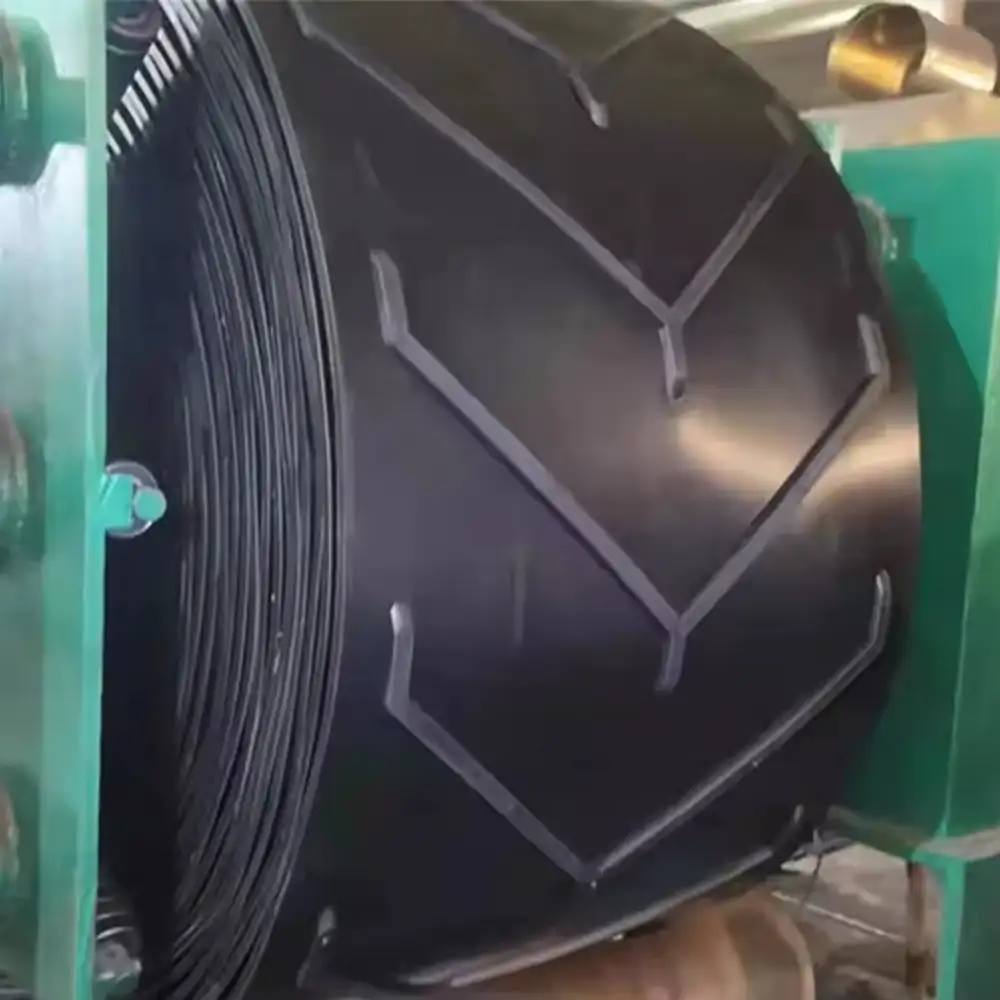
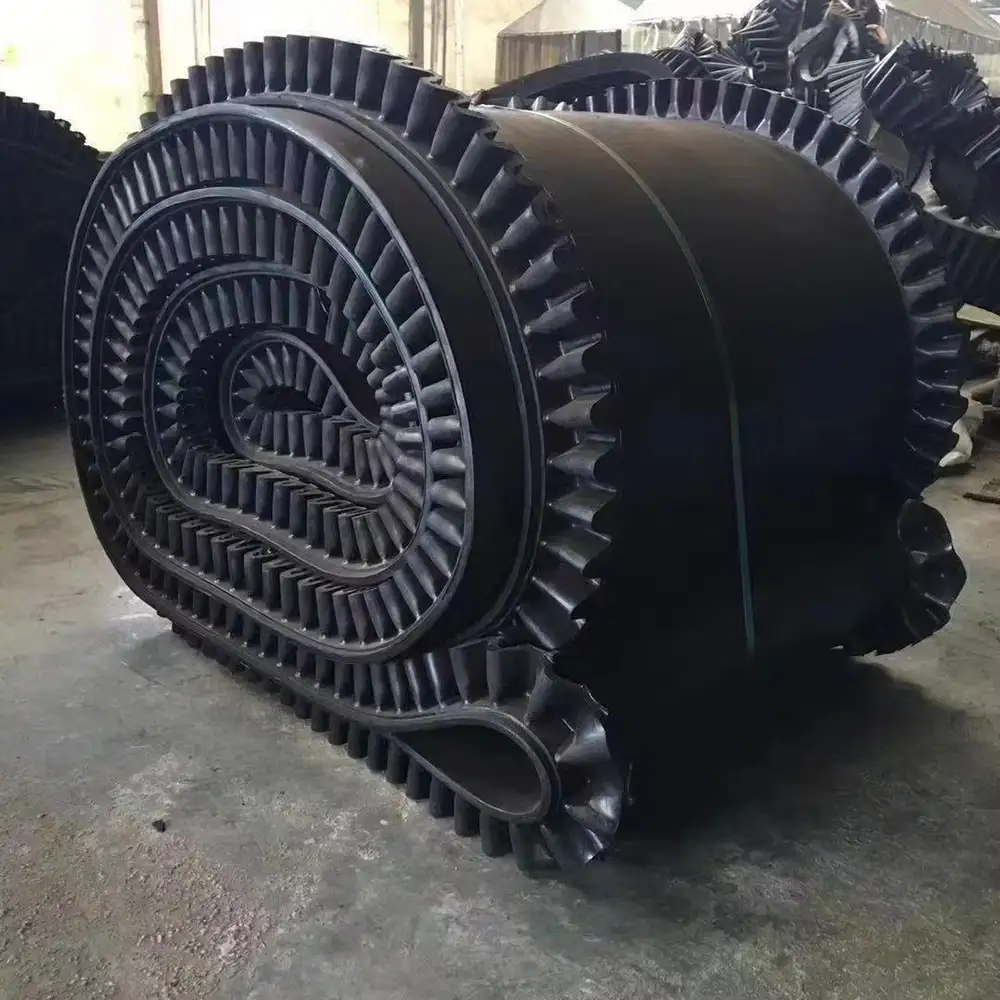
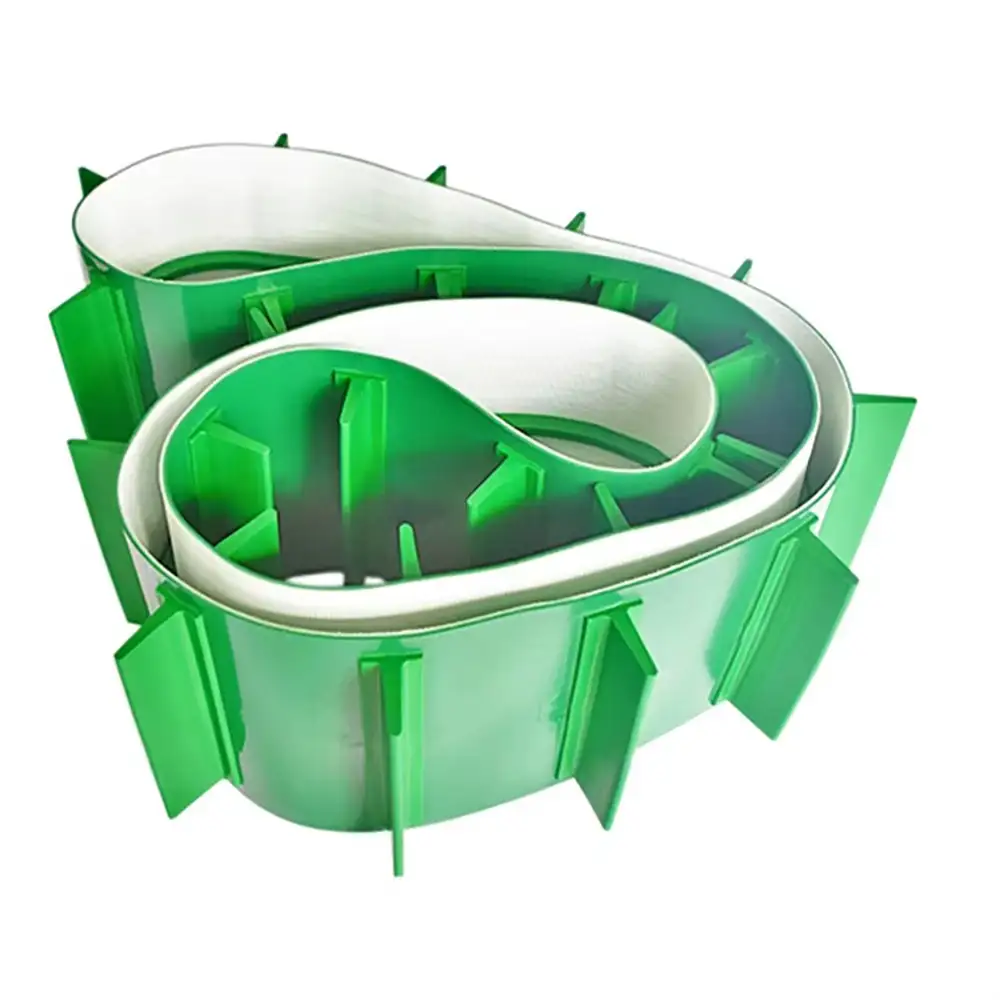
Chevron/Patterned Conveyor Belt
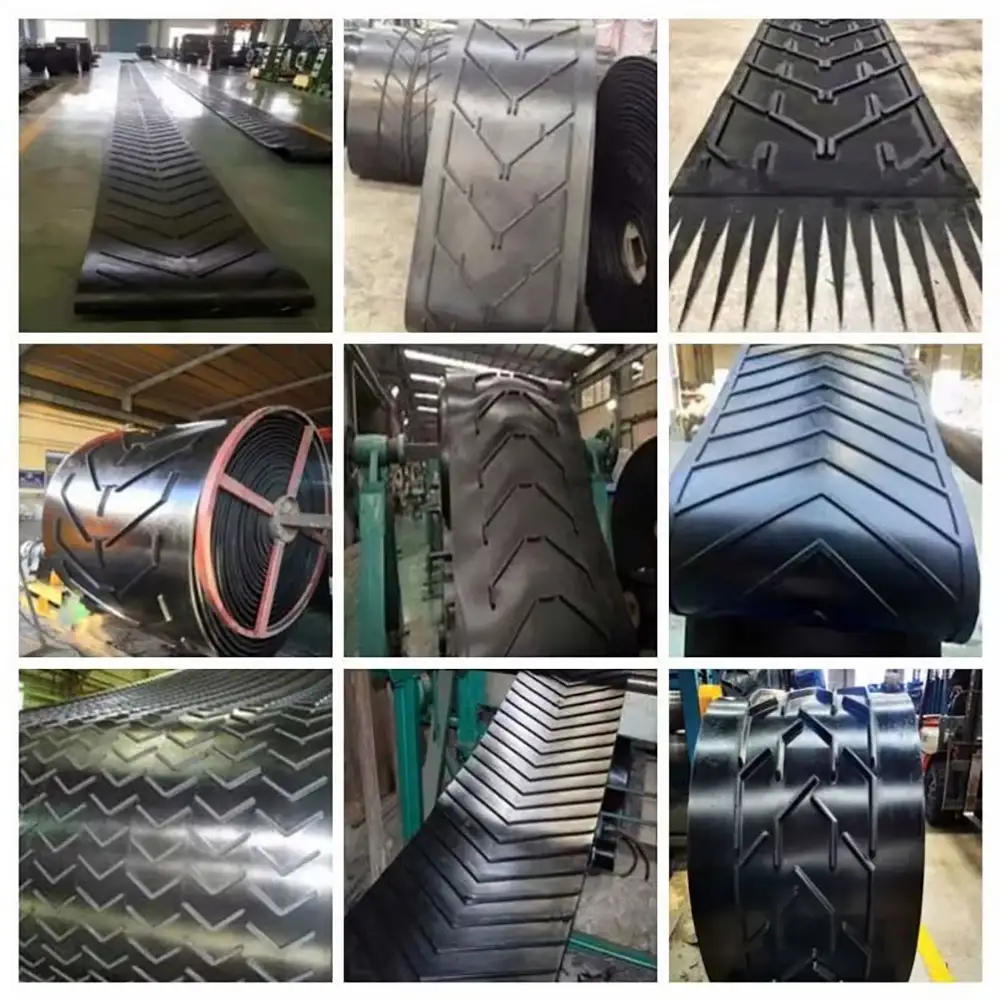
It inclination angle conveyor belt composed of working surface patterned cover rubber,nonworking surface cover rubber and carcass.According to different cover rubber properties,they are calssified into different type s of conveyor belts including general use,oil resistant ,acid/alkali resistant and heat tesistant etc.
Features:
0-45 inclination angle to prevent material from sliding downward,and improve conveying capacity Materials:
Cotton canvas.Nylon canvas and Polyester canvas.
Pattern types:
V shaped pattern,column shaped,U shaped pattern and special shaped pattern.
Producing width:300-2000mm, No.of canvas layers:3-10;
Technical index:Refering to relative standards for general use textile conveyor belt and nylon conveyor belt.
Patterned Conveyor Belt, Construction Industrial Chevron Rubber Conveyor Belt
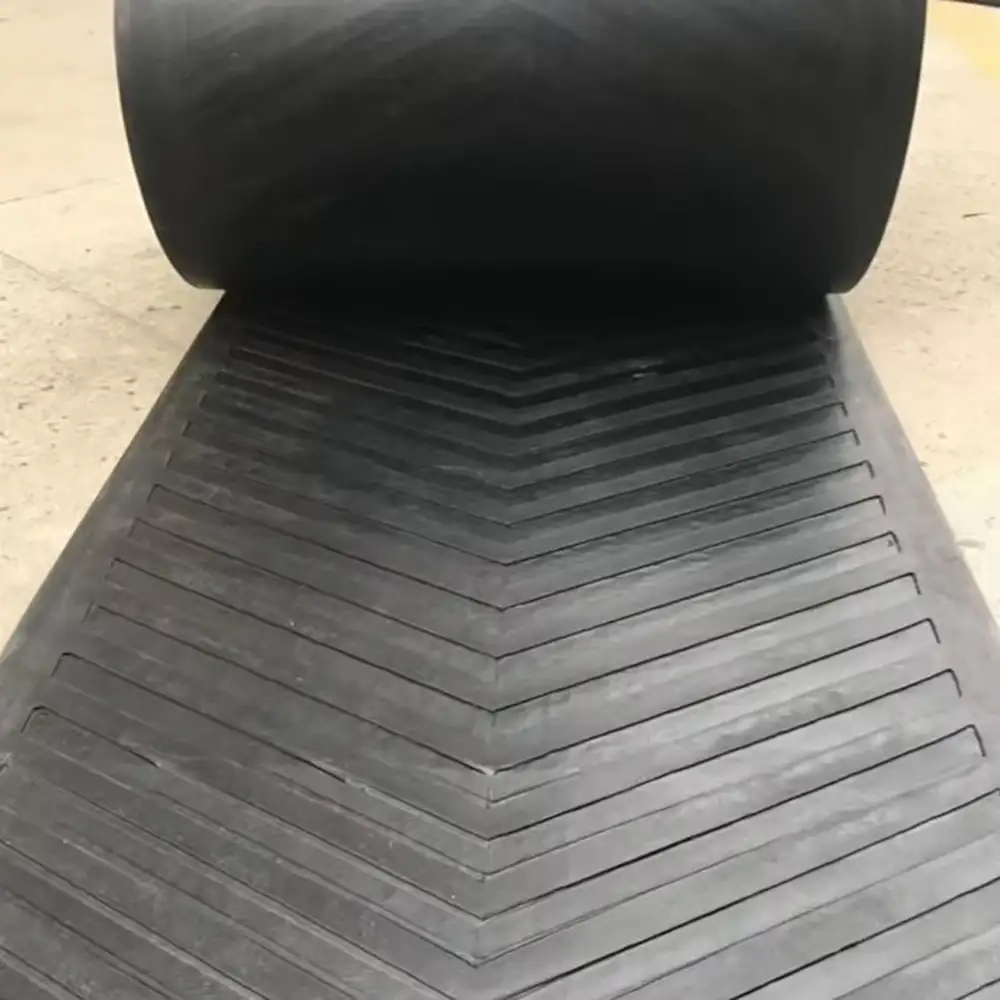
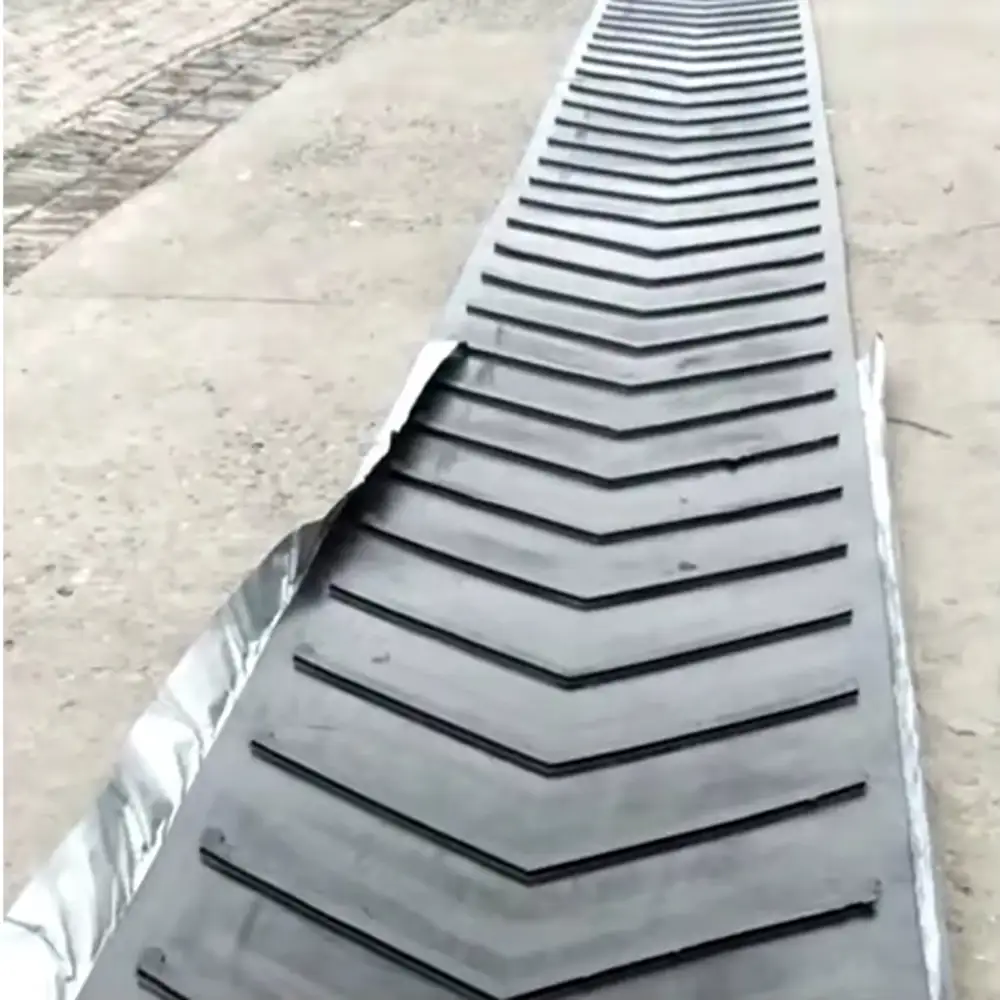
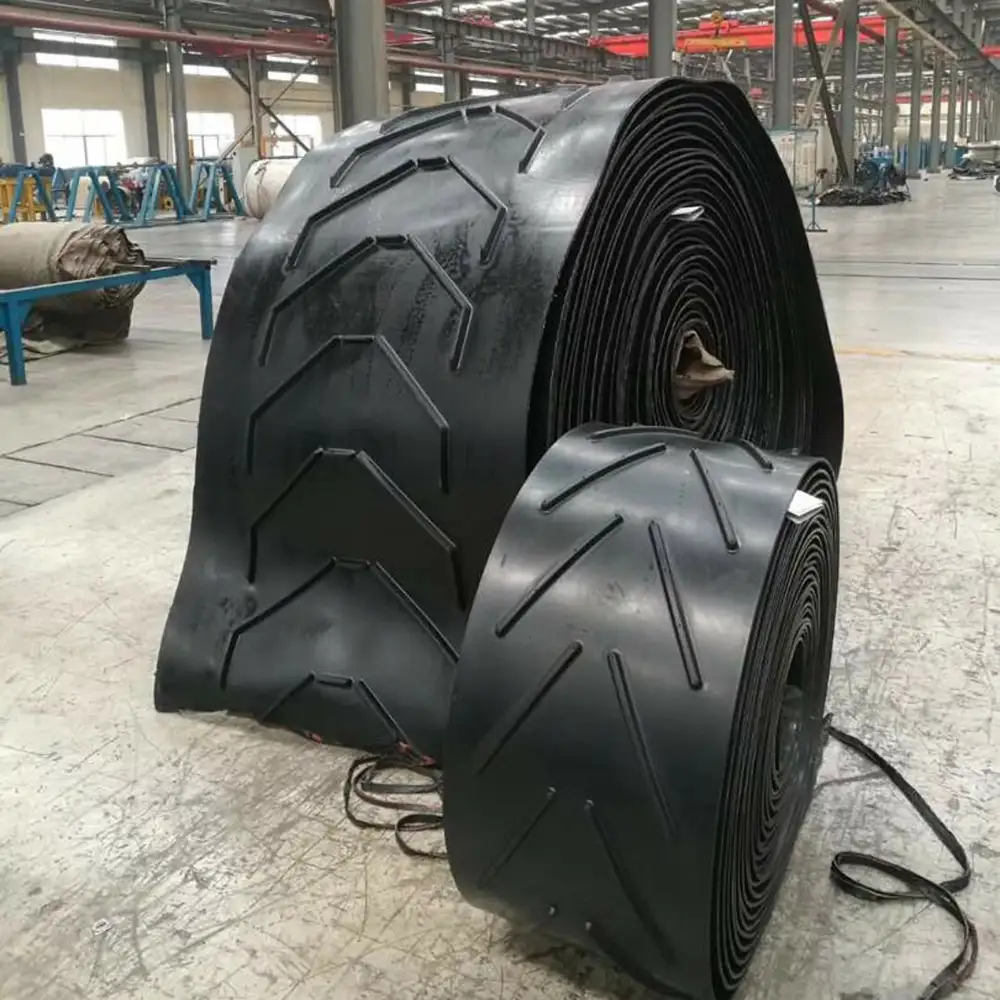
A Patterned Conveyor Belt is a rubber conveyor belt manufactured with a raised surface profile to improve traction, material control and conveying performance. Among the most widely used patterned designs is the Chevron Conveyor Belt, which features a V-shaped or herringbone-style profile molded into the top cover.
A Construction Industrial Chevron Rubber Conveyor Belt is particularly suitable for conveying bulk materials where a smooth belt may allow material to slide backward, especially on inclined conveyors. The raised pattern creates additional grip between the conveyed material and the belt surface, helping maintain material movement toward the discharge point.
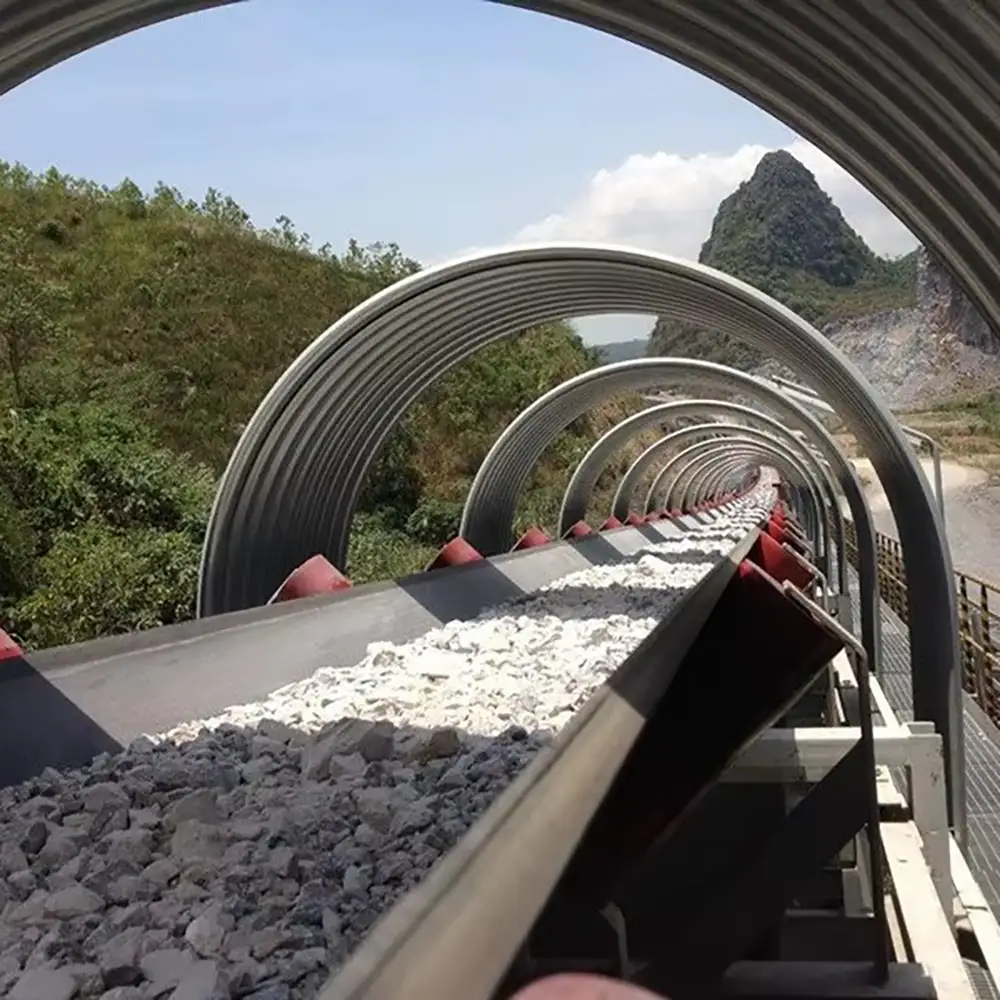
Chevron and other cleated belt designs are commonly used for stone, sand, gravel, wood products, recycling materials and other bulk materials. The appropriate profile depends on the material, loading conditions and required conveyor inclination.
Unlike a flat conveyor belt, a patterned belt provides additional surface geometry. The profile can be selected to balance grip, material retention, cleaning, loading stability and return-side operation.
What Is a Patterned Conveyor Belt?
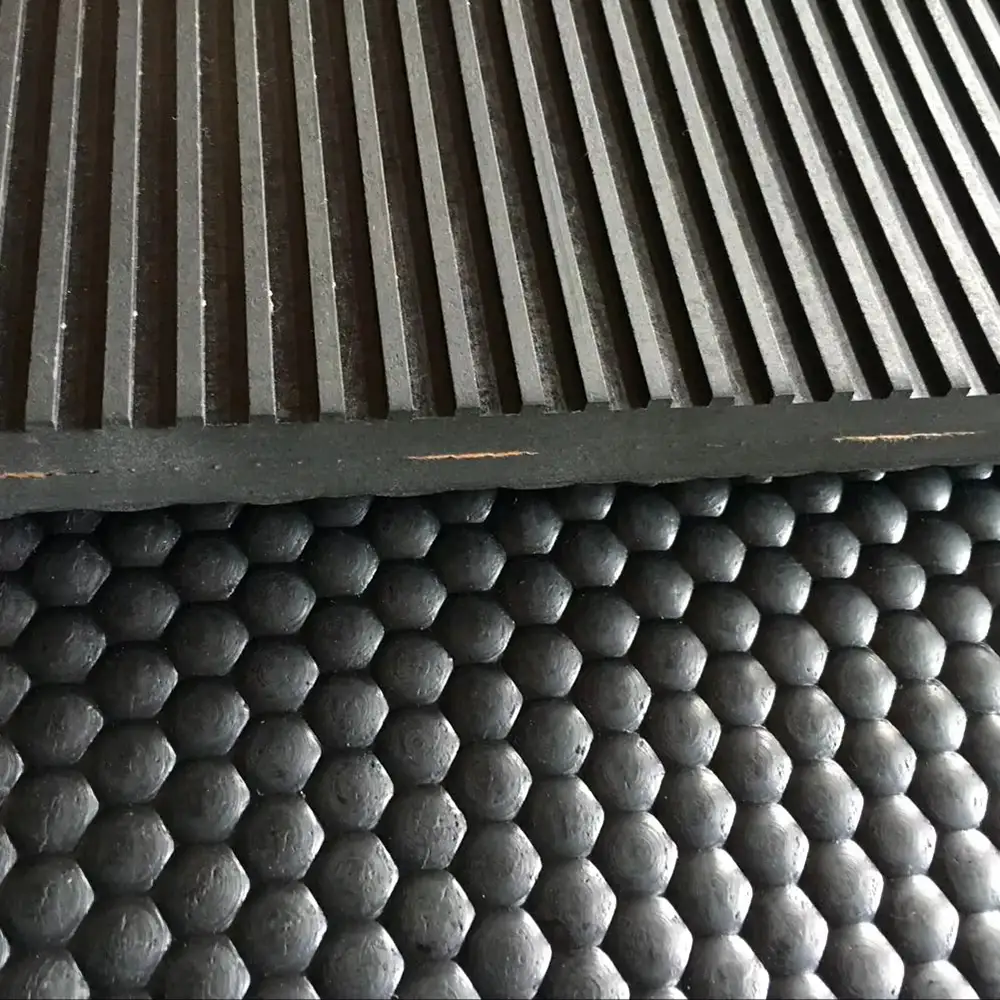
A Patterned Conveyor Belt is an industrial belt with a specially designed top surface rather than a completely smooth rubber cover. The raised pattern can consist of V-shaped chevrons, ribs, herringbone profiles, diamonds, grooves, transverse cleats or other engineered designs.
The pattern is normally molded or vulcanized into the rubber cover so that it becomes an integral part of the belt surface. This provides a durable conveying surface without relying on separate temporary attachments.
For bulk material handling, the pattern can help improve traction and reduce material rollback. The actual conveying angle achievable with a particular pattern depends on material characteristics, belt design, profile dimensions and loading conditions.
What Is a Chevron Conveyor Belt?
A Chevron Conveyor Belt is a patterned rubber conveyor belt with raised V-shaped profiles across its carrying surface. The chevron pattern is designed to provide additional grip for bulk materials, especially where the conveyor operates at an incline.
The exact chevron geometry can vary by manufacturer. Different patterns may be designed for different material sizes, belt widths and conveying conditions.
Common chevron profile configurations include:
V Pattern
Y Pattern
L Pattern
F Pattern
H Pattern
Continuous Chevron
Open Chevron
Multi-Chevron Profiles
The correct profile should be selected according to the conveyed material, particle size, moisture, bulk density, belt width, loading method and required inclination.
Construction of Chevron Rubber Conveyor Belt
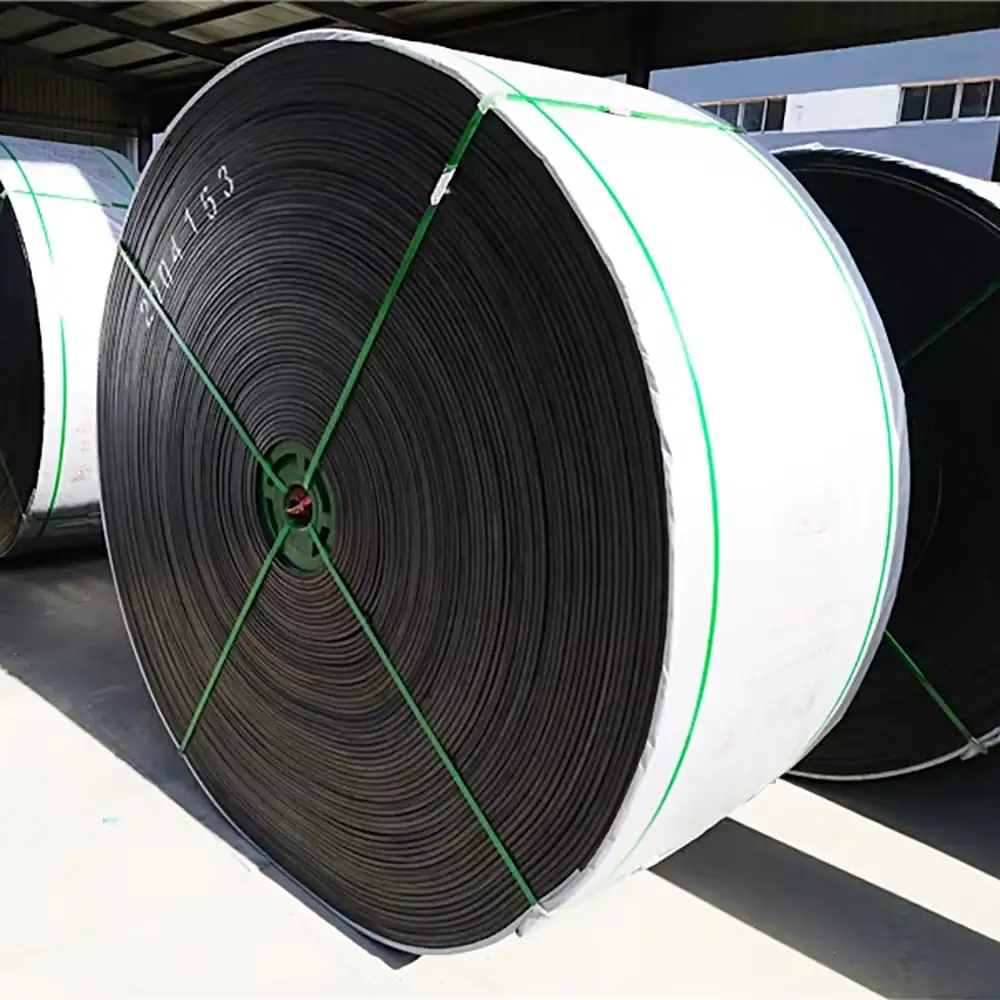
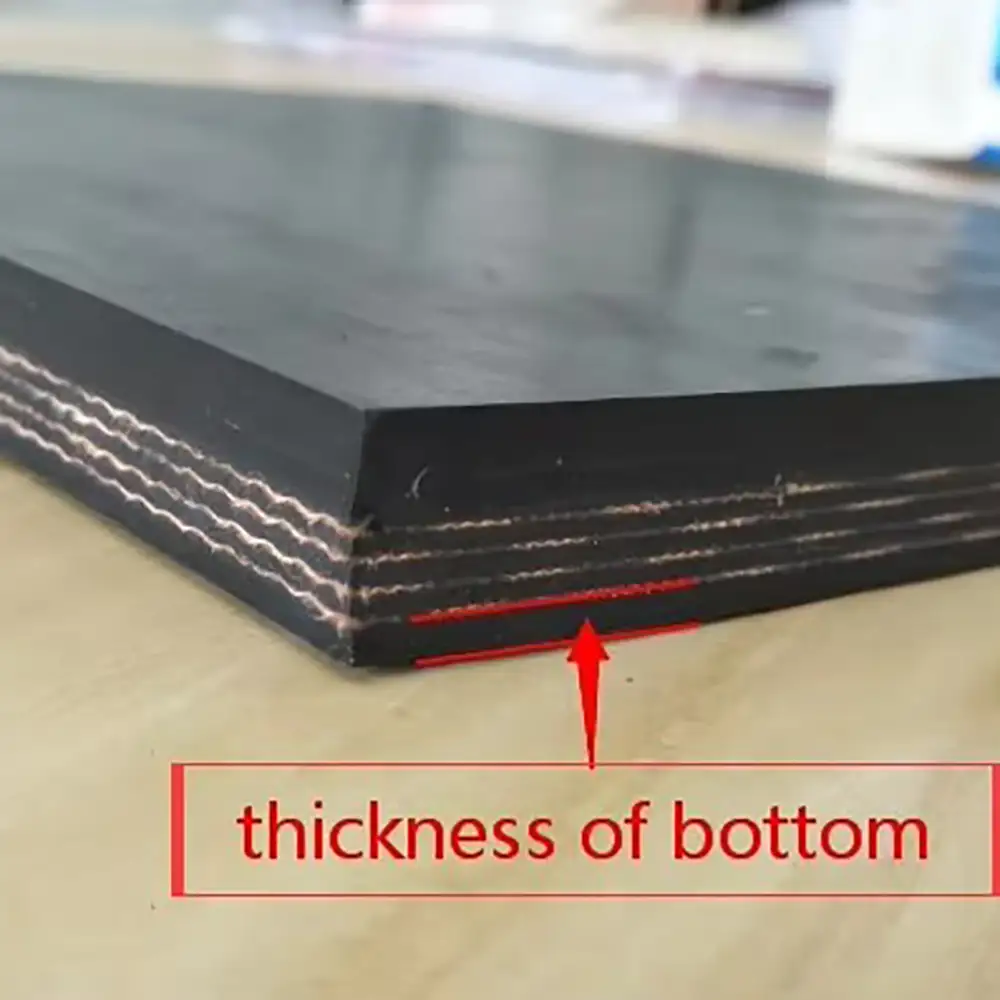
A typical Chevron Rubber Conveyor Belt consists of a reinforced carcass, rubber skim layers, top cover and bottom cover. The chevron pattern is incorporated into the top rubber cover.
The carcass provides tensile strength and dimensional stability. Common reinforcement options include EP polyester-nylon fabric, NN nylon fabric and other textile constructions. Heavy-duty applications may require higher-strength carcasses depending on conveyor tension and operating conditions.
The top rubber cover is designed to resist abrasion and mechanical impact while providing the patterned profile required for material handling.
For demanding applications, different cover compounds can be specified for:
General Purpose
Abrasion Resistance
Heat Resistance
Oil Resistance
Flame Resistance
Weather Resistance
Cut And Gouge Resistance
The complete belt specification should be selected according to the material and operating environment.
Main Features
1. Raised Chevron Pattern
The raised V-shaped profile improves the contact between the conveyed material and belt surface, helping reduce rollback on inclined conveyors.
2. Improved Incline Conveying
Chevron patterns can provide greater traction than a smooth belt for many bulk materials. The appropriate inclination depends on material properties and profile geometry rather than the belt name alone.
3. Durable Rubber Construction
The patterned rubber cover is designed for continuous industrial operation and can be combined with abrasion-resistant compounds for demanding applications.
4. Strong Reinforced Carcass
Fabric reinforcement provides tensile strength and dimensional stability. The appropriate carcass depends on belt tension, conveyor length, capacity and operating conditions.
5. Multiple Pattern Designs
Different chevron and cleat profiles can be selected to accommodate different material characteristics and conveyor configurations.
6. Custom Manufacturing
Belt width, thickness, tensile strength, pattern height, profile design, cover grade and length can be customized for OEM conveyor systems.
Pattern Types and Applications
V Chevron Pattern
The V-shaped profile is one of the most recognizable chevron designs. It is commonly used for inclined transportation of aggregate, sand, gravel, coal and other bulk materials.
Y Pattern
Y-style profiles provide directional traction and can be selected for certain inclined bulk handling applications.
L Pattern
L profiles can be used where specific product retention and conveying characteristics are required.
H Pattern
H-style profiles offer an alternative surface configuration for specialized material handling requirements.
Transverse Cleat Pattern
Transverse cleats provide more distinct pockets or sections for material movement. They can be used for higher incline applications where a conventional chevron surface may not provide the required material control.
The pattern and cleat height should be selected according to material size and conveying angle. Continental notes that cleat height is related to the desired inclination and particle size, while the actual incline also varies with material and loading conditions.
Construction Industry Applications
The Construction Industrial Chevron Rubber Conveyor Belt is suitable for a wide range of construction and bulk-material applications, including:
Sand Conveying
Gravel Conveying
Crushed Stone
Aggregate Handling
Limestone
Concrete Materials
Cement Plants
Asphalt Materials
Quarry Materials
Recycling Materials
Soil Handling
Building Material Processing
Construction sites and aggregate processing plants often need to transport bulk materials over inclined conveyor sections. A patterned belt can improve material stability and help optimize the conveyor layout.
Mining and Industrial Applications
Chevron rubber conveyor belts are also used in:
Coal Mining
Quarrying
Mineral Processing
Cement Manufacturing
Steel Plants
Power Generation
Foundries
Recycling
Wood Processing
Agriculture
Fertilizer Handling
Bulk Material Terminals
Industrial fabric-reinforced conveyor belts are widely used across aggregate, cement, coal, mining, steel, power generation, grain and sand-and-gravel applications.
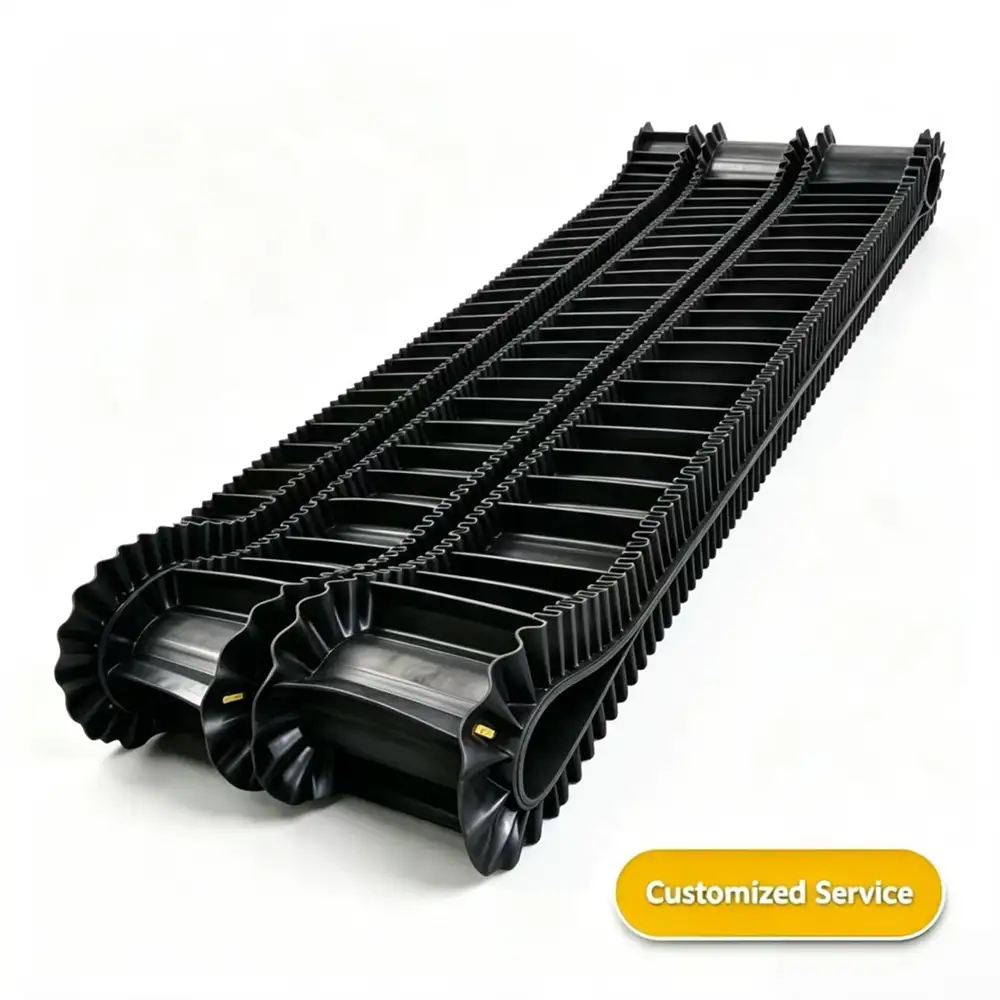
For steep-angle applications requiring substantially greater material containment, a conventional chevron belt may not be sufficient. Corrugated sidewall conveyor systems combine a base belt, sidewalls and transverse cleats to provide more enclosed material transport.
Chevron Conveyor Belt vs Smooth Conveyor Belt
A smooth conveyor belt provides a flat carrying surface and is commonly used for horizontal or relatively low-incline transportation.
A Chevron Conveyor Belt has raised profiles that provide additional traction. This makes it useful for inclined bulk material handling where rollback is a concern.
The choice depends on:
Conveyor Inclination
Material Size
Material Moisture
Bulk Density
Loading Rate
Belt Speed
Required Capacity
Pulley Diameter
Cleaning Method
Return Belt Configuration
A patterned belt is not automatically better for every application. For horizontal conveying of flat products or packages, a smooth belt may be more appropriate.
How to Select the Right Patterned Conveyor Belt
1. Identify the Material
Specify whether the belt will convey sand, gravel, crushed stone, coal, cement, grain, wood chips or another material.
2. Check Particle Size
Large lumps may require a robust profile and suitable carcass construction. Smaller materials may work better with a different pattern and height.
3. Determine Conveyor Inclination
Provide both the normal operating angle and any maximum incline.
4. Check Belt Width
The belt width must match the conveyor frame, loading equipment and required capacity.
5. Select the Rubber Grade
Abrasive aggregate and mining materials may require abrasion-resistant rubber. Hot materials may require heat-resistant compounds.
6. Check Pulley Diameter
The belt construction and total thickness should be compatible with the drive and tail pulley diameters.
7. Evaluate Cleaning Requirements
The profile should be compatible with available belt cleaners and return-side components.
Installation and Maintenance
Correct installation is essential for long-term patterned conveyor belt performance.
Before installation, inspect the belt for transportation damage and confirm the belt width, length, pattern height, carcass type and cover specification.
The conveyor frame should be properly aligned, and pulleys and idlers should be correctly positioned. Poor alignment can cause edge wear, tracking problems and uneven profile wear.
During operation, inspect the belt regularly for:
Chevron Profile Wear
Surface Cracking
Edge Damage
Longitudinal Cuts
Cover Separation
Splice Damage
Tracking Problems
Material Build-Up
Because the raised pattern can retain material under certain conditions, proper belt cleaning and return-side inspection are important.
For sticky or wet materials, the rubber compound and surface profile should be selected with material-release characteristics in mind. Non-stick conveyor-belt compounds are also available for applications where material buildup is a concern.
Custom Chevron Rubber Conveyor Belt
As a professional Patterned Conveyor Belt Manufacturer and Supplier, we can provide customized Chevron Rubber Conveyor Belts for construction, mining, quarrying, cement and general industrial applications.
OEM options can include:
Belt Width
Belt Length
Belt Thickness
Tensile Strength
EP Or NN Carcass
Top Cover Thickness
Bottom Cover Thickness
Chevron Pattern
Profile Height
Pattern Pitch
Rubber Grade
Abrasion Resistance
Heat Resistance
Oil Resistance
Flame Resistance
Edge Configuration
Splice Method
Custom Packaging
Customers can provide an existing belt sample, drawing, conveyor dimensions or application requirements for technical evaluation.
Why Choose Us?
Application-Based Belt Selection
We evaluate material characteristics, conveyor inclination, capacity, belt speed and operating conditions when selecting the patterned belt.
Multiple Chevron Profiles
Different V, Y, L, F, H and other patterned designs can be considered for different conveying requirements.
Heavy-Duty Rubber Construction
Suitable reinforcement and rubber compounds can be selected for aggregate, quarry, mining, cement and construction applications.
Custom OEM Manufacturing
Belt width, length, tensile strength, thickness, pattern height and rubber grade can be customized.
Abrasion-Resistant Options
For stone, gravel, aggregate and mining applications, suitable abrasion-resistant cover compounds can be specified.
B2B Export Support
We support conveyor distributors, construction-equipment companies, quarry operators, mining projects and industrial material-handling customers.
FAQs
1. What Is a Patterned Conveyor Belt?
A patterned conveyor belt is a belt with a raised or textured carrying surface designed to improve traction, product control or material handling performance.
2. What Is a Chevron Conveyor Belt?
A Chevron Conveyor Belt is a patterned rubber belt with raised V-shaped or similar profiles on the top cover. It is commonly used for inclined bulk material conveying.
3. What Materials Can Chevron Conveyor Belts Convey?
They can be used for materials such as sand, gravel, crushed stone, coal, cement materials, wood products, recycling materials and other bulk solids.
4. Can Chevron Conveyor Belts Be Used for Construction Materials?
Yes. They are commonly suitable for aggregate, sand, gravel, crushed stone, cement-related materials and other construction-industry bulk handling applications.
5. What Is the Maximum Incline for a Chevron Conveyor Belt?
There is no single maximum angle applicable to every chevron belt. Actual inclination depends on material characteristics, profile design, cleat height, belt speed and loading conditions.
6. What Is the Difference Between a Chevron Belt and a Cleated Belt?
A Chevron Belt uses an integrated V-shaped or similar patterned surface, while a cleated belt uses more distinct raised transverse or longitudinal cleats. The appropriate design depends on the required material control and conveyor inclination.
7. Are Chevron Conveyor Belts Abrasion Resistant?
They can be manufactured with abrasion-resistant rubber compounds. This is particularly useful for aggregate, quarry and mining applications.
8. Can the Chevron Pattern Be Customized?
Yes. Depending on the manufacturing process, belt width, pattern type, profile height, pitch, cover thickness and rubber compound can be customized.
9. Can Patterned Conveyor Belts Be Used for Wet Materials?
Yes, but material moisture and stickiness should be considered when selecting the profile and rubber compound. Wet or sticky materials may require a specialized surface design or material-release compound.
10. Can You Manufacture Custom Industrial Chevron Conveyor Belts?
Yes. We can provide custom belt width, length, tensile strength, carcass, cover thickness, pattern design, profile height and rubber grade according to conveyor and OEM requirements.
Prev:
Antifatigue Rubber Sheet
Next:
Endless Conveyer Belt, Quality Endless Rubber Conveyor Belt
TAG:
Industrial Rubber Conveyor Belt,
Heavy Duty Rubber Conveyor Belt,
Mining Conveyor Belt,
Quarry Conveyor Belt,
Coal Chevron Conveyor Belt,
Aggregate Conveyor Belt,
Heavy Duty Chevron Conveyor Belt,
Industrial Chevron Conveyor Belt,
Patterned Conveyor Belt,
Incline Conveyor Belt,
Inclined Conveyor Belt,
Patterned Rubber Conveyor Belt,
Rubber Pattern Conveyor Belt,
Chevron Conveyor Belting,
Chevron Rubber Conveyor Belt,
Herringbone Conveyor Belt,
Chevron Conveyor Belt,
Abrasion Resistant Conveyor Belt,
Stone Conveyor Belt,
Crushed Stone Conveyor Belt,
Construction Conveyor Belt,
Cement Conveyor Belt,
Cleated Conveyor Belt,
V Pattern Conveyor Belt,
Patterned Conveyor Belting,
Sand And Gravel Conveyor Belt,
Profiled Conveyor Belt,
Chevron Rubber Belting,
Construction Rubber Conveyor Belt,
V Chevron Conveyor Belt,
Related Category:
Patterned Conveyor Belt, Construction Industrial Chevron Rubber Conveyor Belt, Chevron Conveyor Belt China, suppliers, manufacturers, factory, customized, wholesale, quotation, made in China