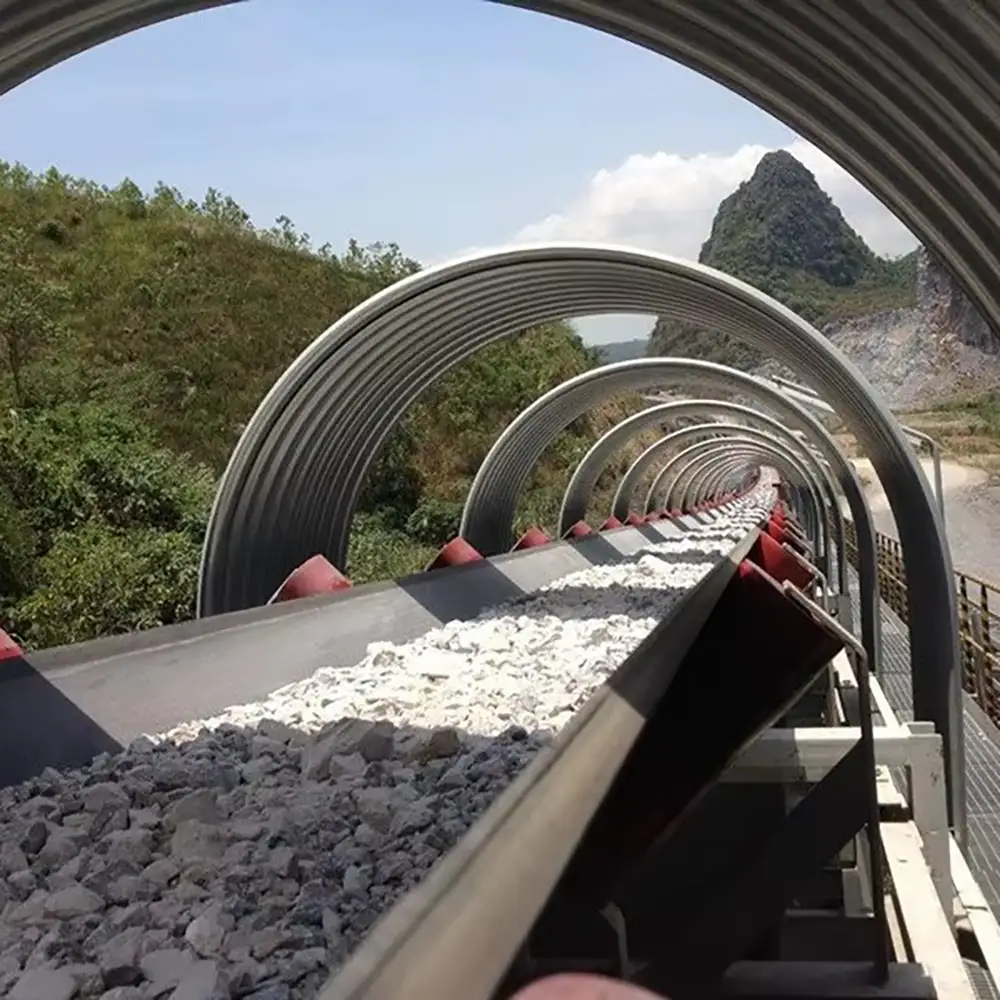
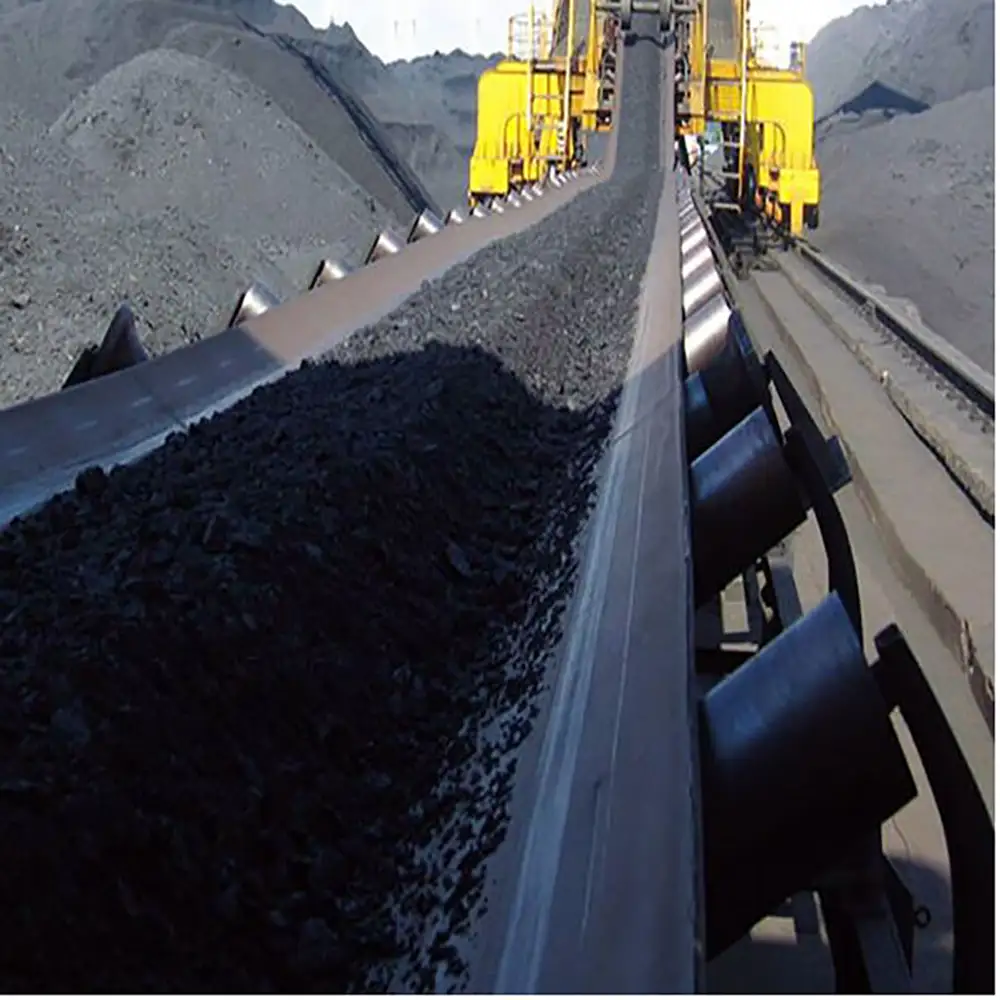
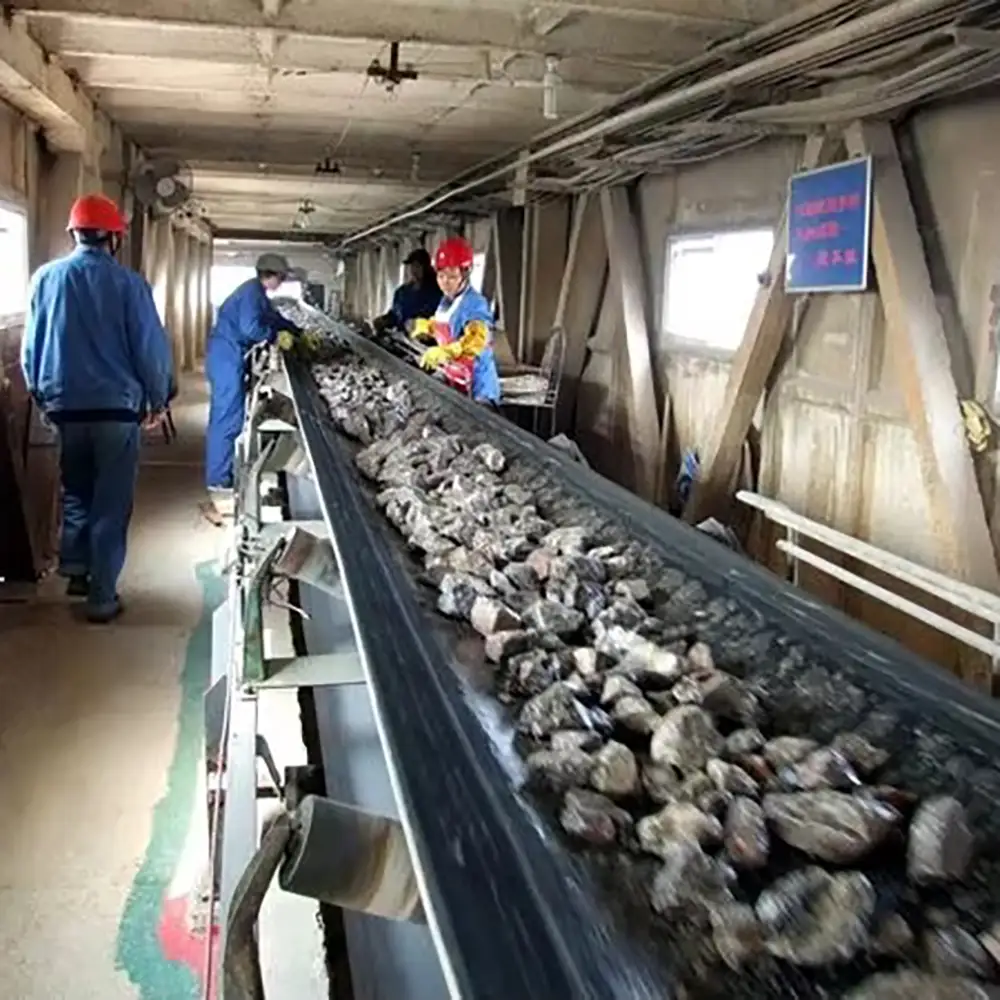
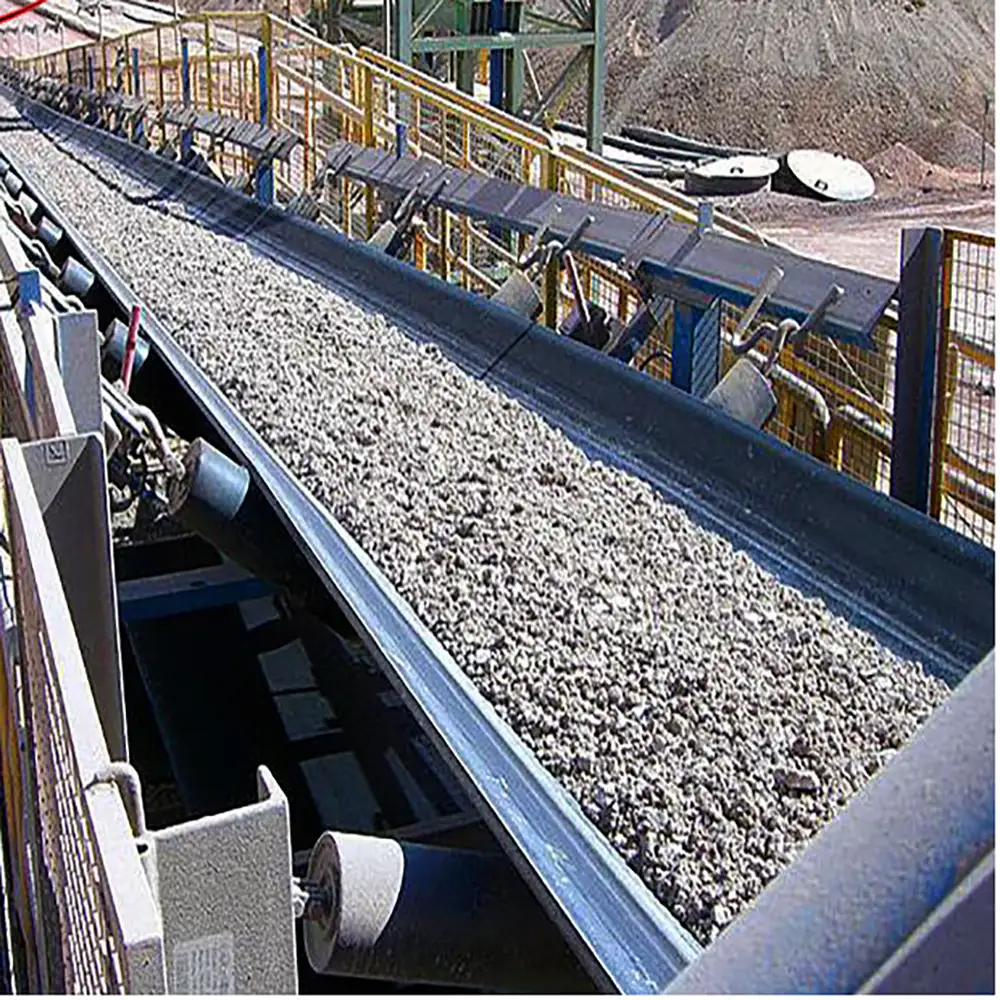
Mine Conveyor Belt
rubber conveyor belts can be horizontal, tilt and vertical transmission, but also the composition of space transmission lines, transmission lines are generally fixed. rubber conveyor belts transport capacity, long-distance, but also in the transportation process while completing a number of process operation, it is widely used. Main belt conveyor:plate conveyor, scraper conveyor, screw conveyor,bucket conveyor, bucket elevator, overhead conveyors and so on. rubber conveyor belts for conveying bulk density of less than 1.67 / t / cubic meter, easy to dig a powder, granular, small block of low-abrasive materials and bags of materials, such as coal, gravel, sand, cement, fertilizer, and grain. Sent material temperature is less than 60 °C. The form of their captain and assembly can be determined according to user requirements, transmission can be electric drum can also be used with a drive rack drive.
rubber conveyor belts Features:
1.Economical and practical
2.Effective to use bulk material transporting over long distance
3.Effective for those places that require wide range of paths to travel
4.Durable, dependable and low cost operation
5.Belt width range is 400 mm to 1200 mm
6.Capacity is from 30 ton per hour to 480 ton per hour
rubber conveyor belts Technical Data:
|
Width(mm) |
Length(m)/Power(kw) |
Speed(m/s) |
Capacity(t/h) |
|
400 |
≤12/2.2 |
12~20 /2.2~4 |
20~25/3.5~7.5 |
1.25~2.0 |
30~60 |
|
500 |
≤12/3 |
12~20/3~5.5 |
20~30/5.5~7.5 |
1.25~2.0 |
40~80 |
|
650 |
≤12/4 |
12~20/4~5.5 |
20~30/5.5~11 |
1.25~2.0 |
80~120 |
|
800 |
≤10/4 |
10~15/4~5.5 |
15~30/5.5~15 |
1.25~2.0 |
120~200 |
|
1000 |
≤10/5.5 |
10~20/5.5~11 |
20~40/11~22 |
1.25~2.0 |
200~320 |
|
1200 |
≤10/7.5 |
10~20/7.5~15 |
20~40/15~30 |
1.25~2.0 |
290~480 |
Mine Conveyor Belt for Mining Material Handling
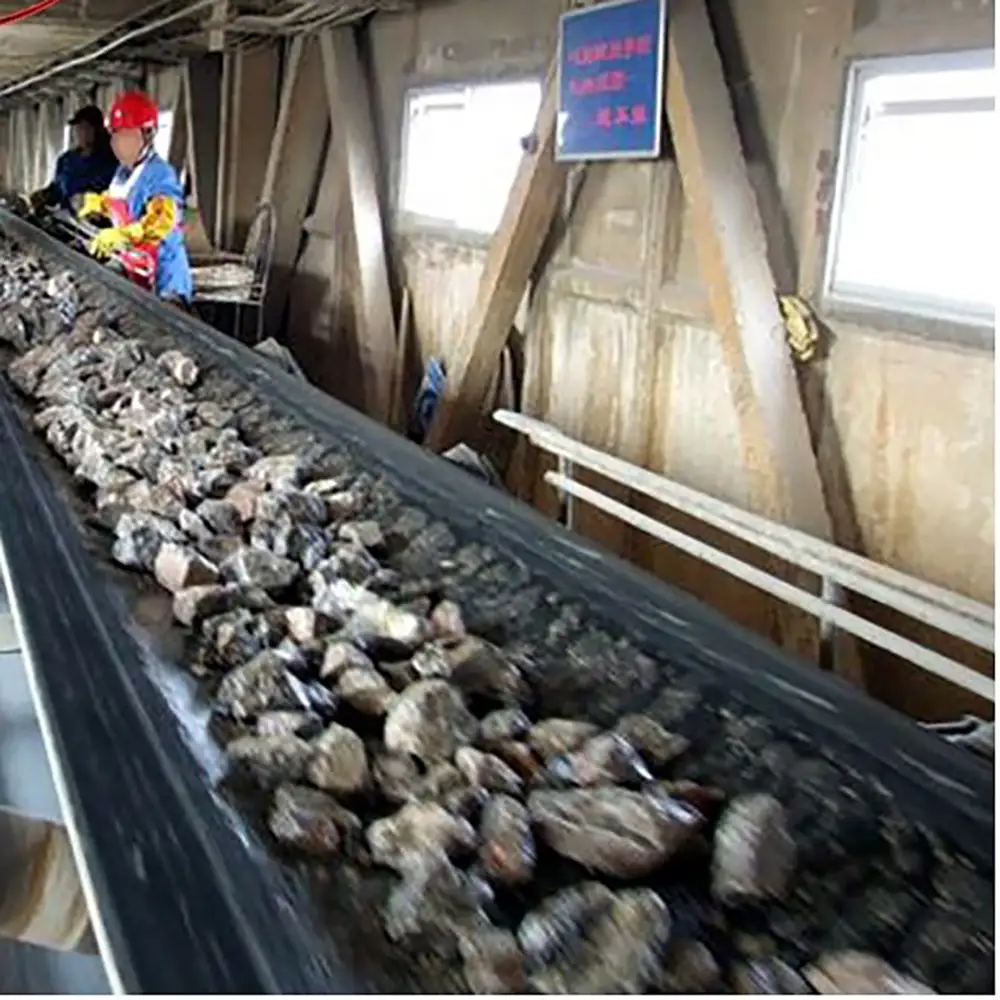
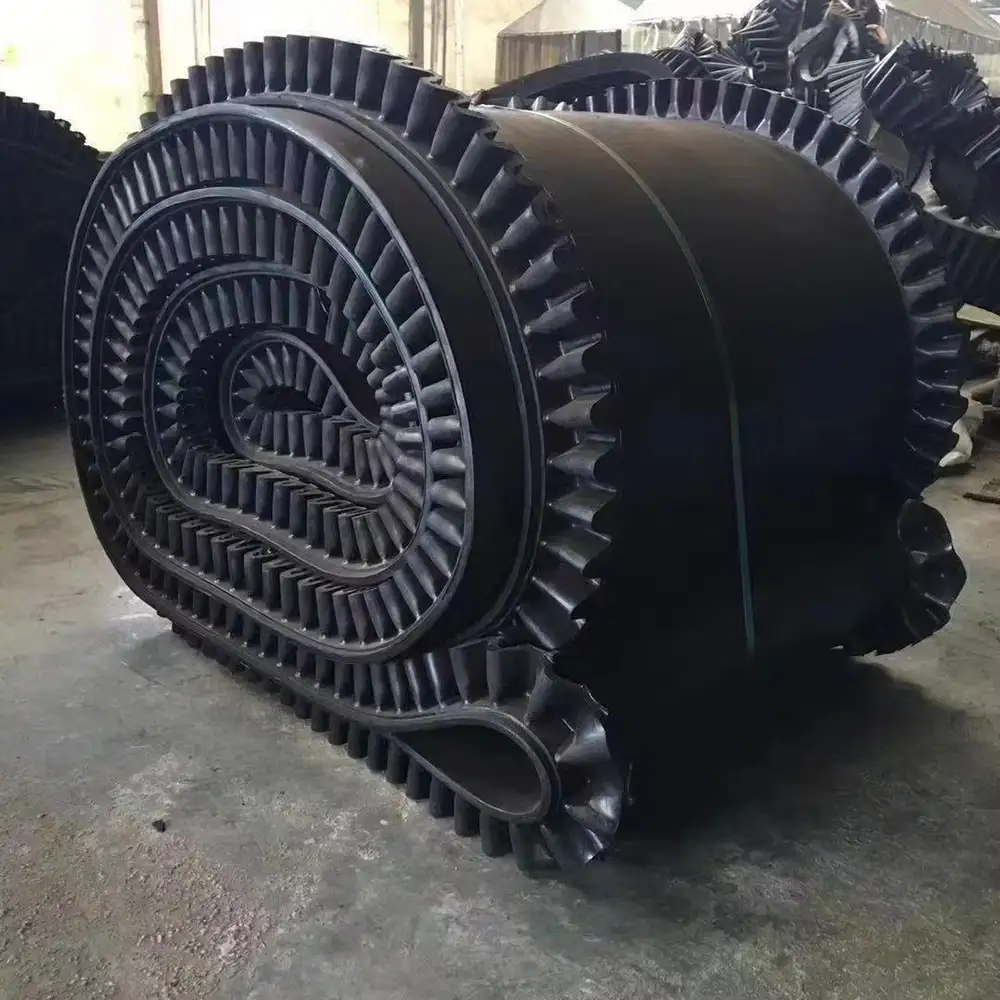
A mine conveyor belt is a continuous rubber conveying belt designed for transporting mined materials such as coal, ore, rock, gravel, crushed stone, and overburden. Conveyor belt systems are widely used in underground and surface mining operations to move bulk materials between extraction areas, crushers, screens, processing facilities, stockpiles, and loading points.
Mining environments can place demanding requirements on conveyor belts. Abrasive materials, sharp rocks, heavy loading, impact at transfer points, dust, moisture, long conveying distances, and continuous operating cycles can all affect belt performance. A properly selected mining rubber conveyor belt combines a reinforced carcass with durable rubber covers to provide the strength, flexibility, and wear resistance required for the specific conveyor system.
Mine conveyor belts are available in different constructions, including fabric-reinforced EP and NN belts as well as steel-cord conveyor belts for applications requiring higher longitudinal tensile strength. Rubber cover compounds can also be selected according to abrasion, heat, oil, weather, flame, or other operating requirements.
What Is a Mine Conveyor Belt?
A mine conveyor belt is the moving component of a belt conveyor system. It forms a continuous conveying surface that carries bulk material from one location to another while traveling around drive and return pulleys.
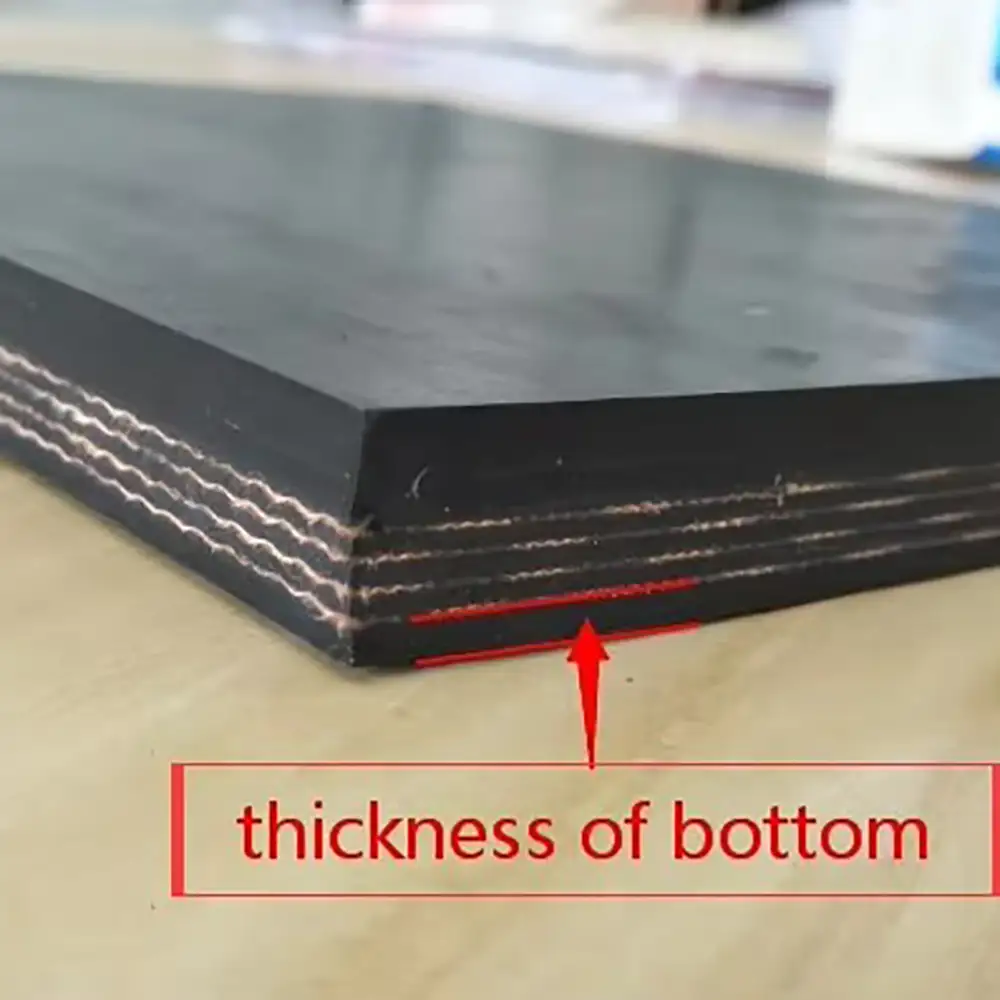
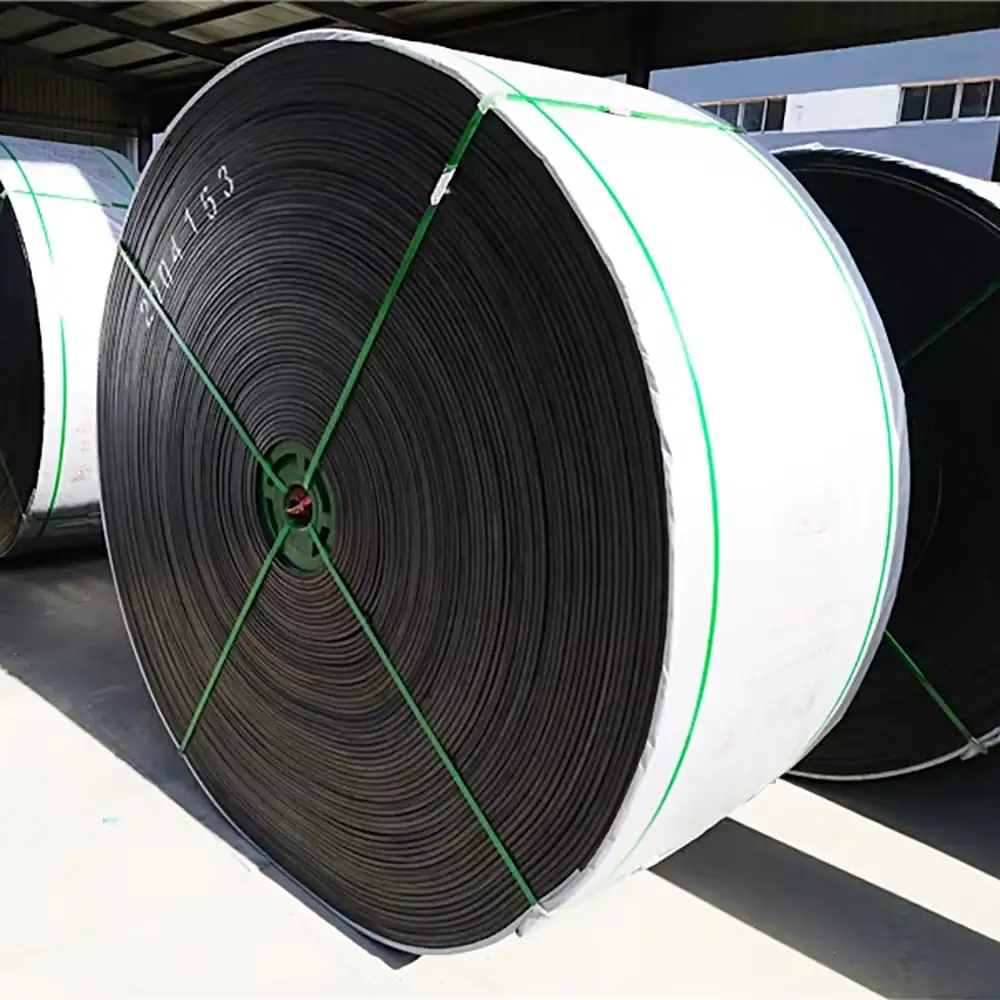
A typical conveyor belt consists of a top rubber cover, reinforcement carcass, bottom rubber cover, and edges. The reinforcement provides tensile strength and dimensional stability, while the rubber covers protect the internal structure from the material and operating environment.
In mining applications, belt selection should be based on the entire conveyor system rather than simply the type of material being transported. Conveyor length, capacity, belt speed, pulley diameter, inclination, loading method, material particle size, and environmental conditions all influence the appropriate belt construction.
Key Features of Mining Conveyor Belts
Heavy-Duty Reinforcement
Mining conveyor belts can be manufactured with reinforced fabric or steel-cord constructions. EP polyester fabric and NN nylon fabric are common options for suitable applications, while steel-cord belts can be considered for long-distance or high-tension conveyor systems.
Abrasion Resistance
Coal, ore, crushed rock, and other mining materials can wear the rubber cover through continuous contact. Suitable abrasion-resistant rubber compounds help protect the belt surface during demanding material handling.
Impact Resistance
Material falling from hoppers, crushers, feeders, or transfer points can create localized impact. A suitable belt construction combined with correctly designed loading equipment can help manage these operating conditions.
Flexibility
Despite their strength, conveyor belts must flex around pulleys and operate smoothly over idlers. The carcass construction should therefore provide an appropriate balance between tensile strength and flexibility.
Low Elongation
Polyester-reinforced EP conveyor belts provide good dimensional stability and relatively low elongation, which can support stable operation when the conveyor is correctly designed and tensioned.
Custom Rubber Compounds
Depending on the working environment, specialized rubber compounds can be considered for abrasion, heat, oil, weather, flame, and other requirements.
Applications of Mine Conveyor Belts
Mining conveyor belts are used across a wide range of mining and mineral-processing operations.
In coal mining, conveyor systems can transport mined coal from underground or surface extraction areas to transfer stations, preparation plants, stockpiles, and loading facilities.
In metal and nonmetal mining, conveyor belts can transport ore, crushed rock, limestone, aggregates, and other minerals. Conveyors can connect crushers, screens, washing systems, processing equipment, and stockpiles.
Surface mining operations may use conveyor systems for overburden, aggregate, and extracted material. Quarry operations also rely on rubber conveyor belts for moving rock and processed stone between different production stages.
Mining conveyor belts may also be used in ports, bulk terminals, power plants, cement facilities, recycling operations, and other industries handling large volumes of bulk material.
Fabric Mine Conveyor Belt Construction
Fabric-reinforced conveyor belts are widely used in many mining applications. EP construction combines polyester reinforcement in the longitudinal direction with polyamide or nylon in the transverse direction. This provides a useful combination of tensile strength, dimensional stability, and flexibility.
NN conveyor belts use nylon fabric reinforcement and can be selected for applications where flexibility and particular mechanical characteristics are required.
The number of plies, belt tensile strength, cover thickness, and rubber compound can all influence overall belt performance. These parameters should be selected according to the conveyor's operating conditions.
Steel Cord Mine Conveyor Belt
For long-distance, high-capacity, or high-tension conveyor systems, steel-cord conveyor belts may be considered. Steel cords provide high longitudinal tensile strength and can support demanding conveyor configurations.
However, fabric and steel-cord belts serve different engineering requirements. The correct construction should be determined according to conveyor length, tension, capacity, take-up system, pulley arrangement, and other design parameters.
How to Choose the Right Mine Conveyor Belt
Several factors should be evaluated before ordering a mining conveyor belt.
Material Type: Identify whether the belt will transport coal, iron ore, copper ore, limestone, rock, aggregate, overburden, or other materials.
Particle Size: Large and sharp material can create greater impact and abrasion.
Conveyor Length: Long conveyors may require higher tensile-strength constructions.
Material Capacity: Belt width and strength should correspond to the required conveying capacity.
Belt Speed: Operating speed influences material flow, loading, and belt wear.
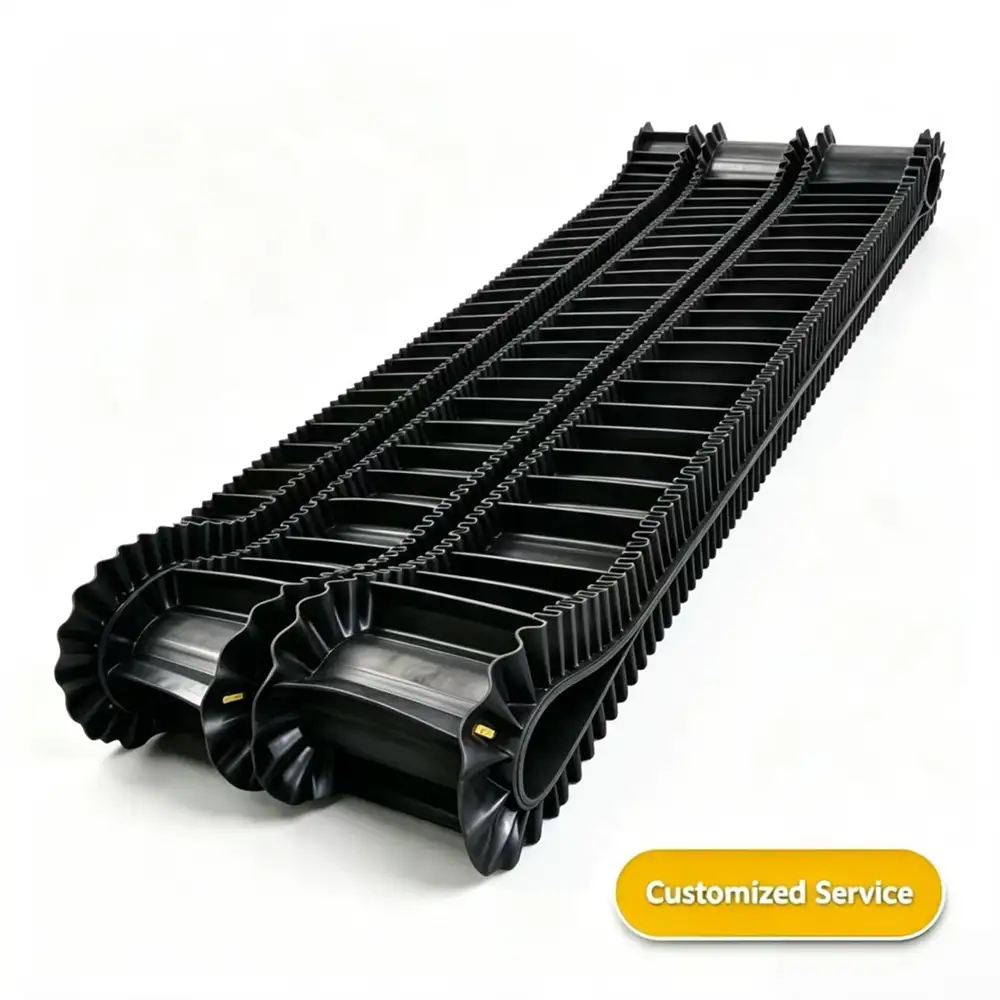
Conveyor Inclination: Inclined conveyors may require appropriate surface characteristics and conveyor design to maintain material stability.
Transfer Conditions: Loading height, chute design, and impact conditions should be considered.
Operating Environment: Underground and outdoor mining systems can have different requirements concerning moisture, temperature, weather, dust, and safety.
Mine Conveyor Belt Safety
Certain mining environments have specific requirements concerning flame resistance, antistatic properties, and other safety characteristics. Requirements can vary depending on the country, mine type, conveyor location, applicable regulations, and customer specifications.
Where flame-resistant or antistatic performance is required, the belt should be specified according to the applicable standard before production. A general-purpose rubber conveyor belt should not automatically be assumed to meet the requirements of a regulated underground mining application.
Customers should provide the relevant mine safety standard or technical specification when requesting a belt for a regulated environment.
Installation and Maintenance
Correct installation is essential for reliable mine conveyor belt operation. Before installation, inspect the conveyor frame, pulleys, idlers, cleaners, take-up equipment, and transfer points.
The conveyor should be correctly aligned, and belt tension should be set according to the manufacturer's recommended procedure. Poor alignment can cause belt mistracking, edge wear, and uneven loading.
Routine inspections should check for cuts, cracks, abrasion, exposed reinforcement, edge damage, splice deterioration, and abnormal tracking. Transfer points should also be inspected for excessive impact and material spillage.
Keeping pulleys, idlers, and conveyor areas clean can help prevent unnecessary belt damage. Any abnormal belt movement or damage should be investigated promptly.
Custom Mine Conveyor Belt Solutions
We provide customized rubber conveyor belts for mining, coal handling, quarrying, aggregate processing, mineral processing, cement, power, and other bulk material-handling applications.
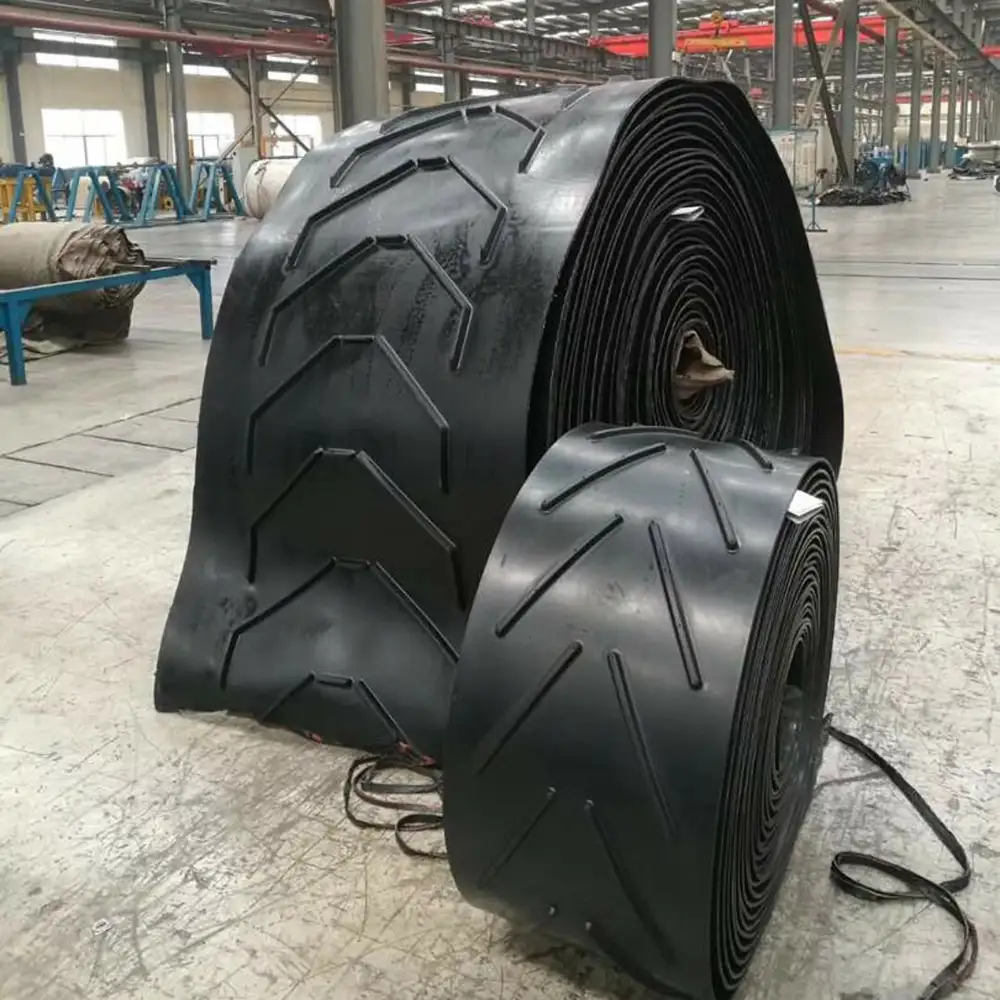
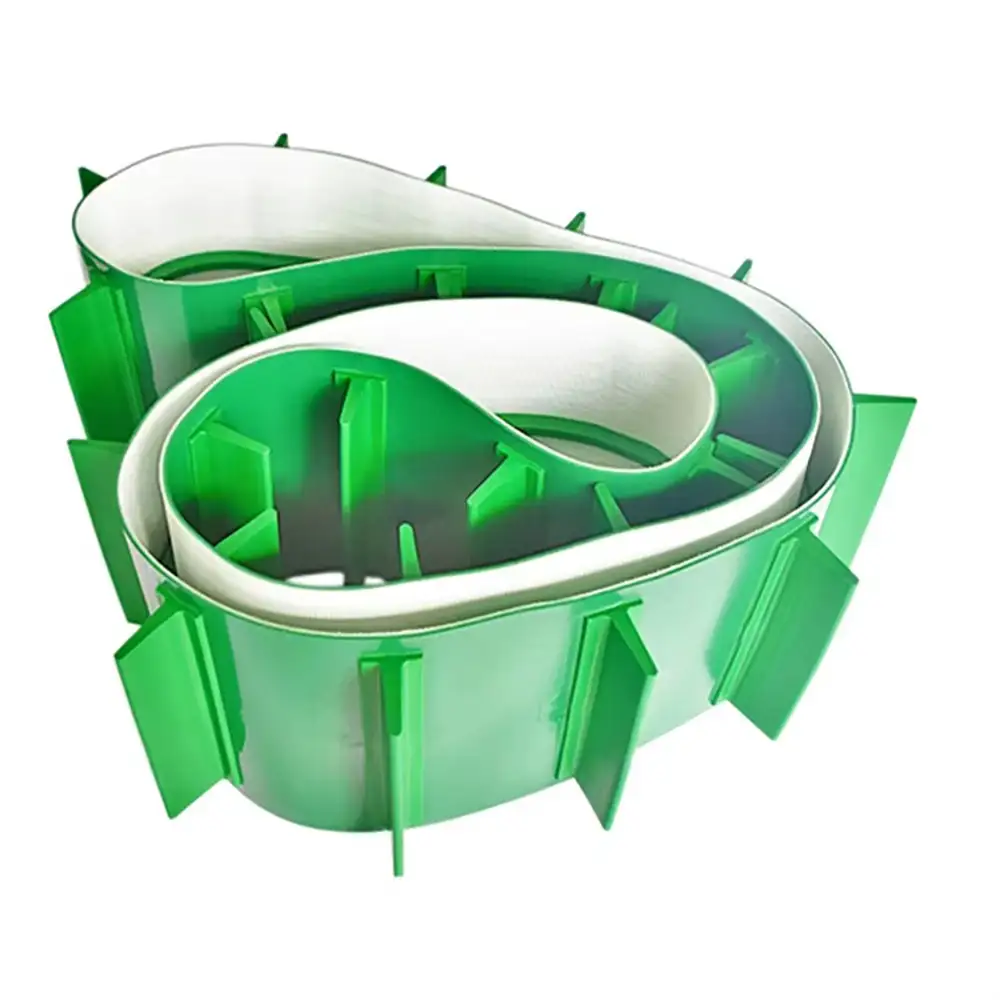
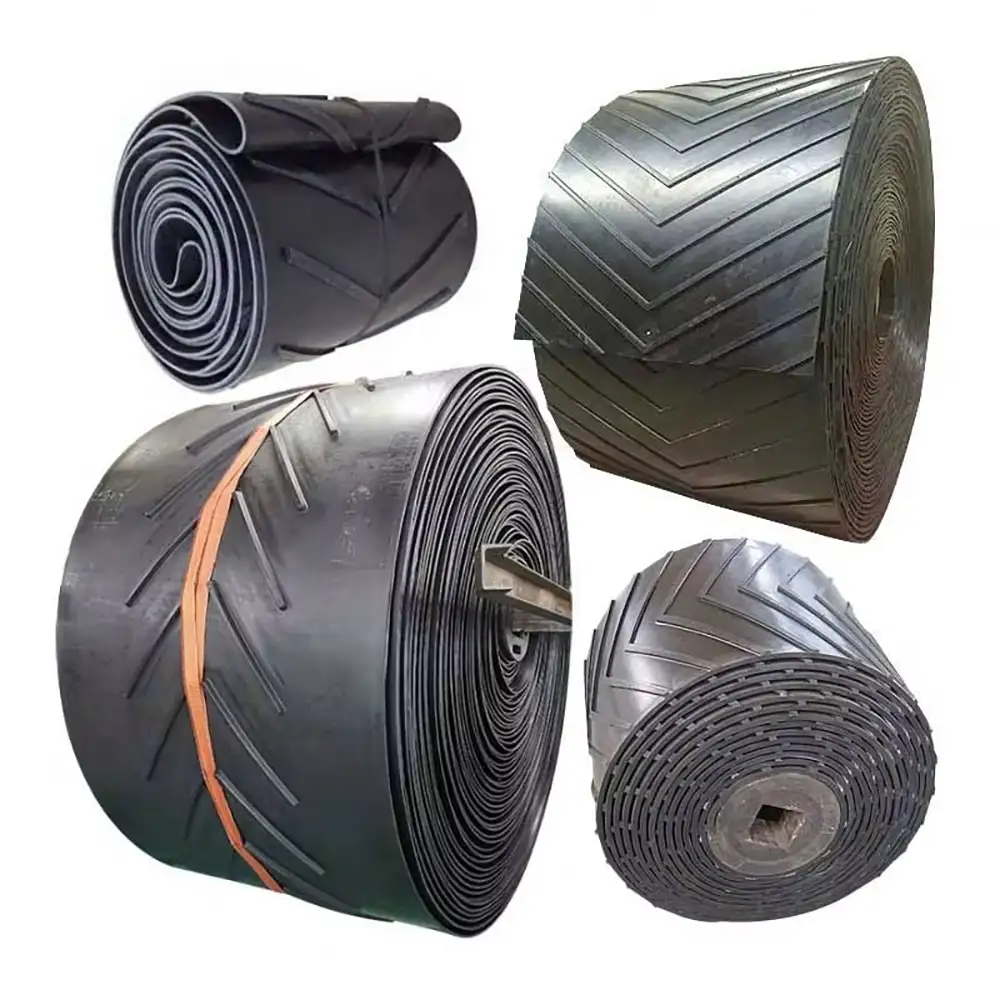
Available customization can include belt width, belt length, tensile strength, number of plies, EP or NN fabric construction, steel-cord construction where appropriate, cover thickness, rubber compound, edge construction, and surface pattern.
Depending on project requirements, specialized rubber properties can be considered for abrasion, heat, oil, weather, flame, and other working conditions.
OEM and bulk supply services are available for mining companies, conveyor system manufacturers, contractors, distributors, and industrial purchasing projects.
Why Choose Us?
Mining Conveyor Belt Manufacturing: We provide industrial rubber conveyor belts for demanding mining and bulk material handling.
Heavy-Duty Construction: Belt carcasses and rubber covers can be selected according to mining conditions.
Multiple Reinforcement Options: EP, NN, and steel-cord constructions can be considered according to conveyor requirements.
Application-Based Selection: We evaluate material, conveyor configuration, loading conditions, and environment.
Custom Specifications: Width, length, tensile strength, plies, cover thickness, and rubber properties can be customized.
Specialized Rubber Options: Suitable abrasion, heat, oil, weather, and flame-resistant constructions can be considered where required.
OEM & ODM Service: Custom production is available for distributors, contractors, conveyor manufacturers, and mining projects.
International B2B Supply: We support bulk orders and industrial replacement belt requirements.
FAQs
1. What is a mine conveyor belt?
A mine conveyor belt is a reinforced rubber belt used to continuously transport coal, ore, rock, aggregates, and other mined materials through mining and processing operations.
2. What type of conveyor belt is commonly used in mining?
Fabric-reinforced EP and NN belts are widely used for suitable mining applications. Steel-cord belts can be considered for long-distance and high-tension systems.
3. Can mine conveyor belts transport coal?
Yes. Suitable mining conveyor belts can transport coal from extraction areas to preparation plants, stockpiles, transfer stations, and loading facilities.
4. Are mining conveyor belts abrasion resistant?
Suitable rubber cover compounds can provide abrasion resistance for mining materials. The required cover grade should be selected according to material characteristics and operating conditions.
5. Can a mine conveyor belt handle large rocks?
Suitable heavy-duty constructions can handle rock and aggregate, but particle size, impact energy, loading height, belt strength, and transfer-point design should all be considered.
6. What is the difference between EP and steel-cord conveyor belts?
EP belts use fabric reinforcement, while steel-cord belts use steel cords for longitudinal reinforcement. Steel-cord constructions may be considered for higher-tension and longer-distance applications.
7. Can mining conveyor belts be customized?
Yes. Width, length, tensile strength, plies, carcass construction, cover thickness, rubber compound, and other specifications can be customized.
8. Is flame-resistant construction available for coal mining?
Specialized flame-resistant conveyor belts are available for applications where the applicable mine regulations and technical specifications require them. The required standard should be confirmed before ordering.
9. How can I extend mine conveyor belt service life?
Proper alignment, correct tension, suitable loading, effective cleaning, regular inspection, and timely repair of cuts and splice damage can help improve belt service life.
10. What information is needed to select a mining conveyor belt?
Useful information includes belt width, length, tensile strength, material type, maximum particle size, conveying capacity, belt speed, conveyor inclination, loading conditions, and operating environment.
Request a Quote
If you are looking for a mine conveyor belt manufacturer or heavy-duty mining rubber conveyor belt supplier, send us your conveyor specifications and material-handling requirements. We can help select a suitable EP, NN, or steel-cord belt construction for coal, ore, rock, aggregate, and other mining applications.
Prev:Sorry, no information
Next:
Rubber Conveyor Belt for Stone Crusher Plant
TAG:
Steel Cord Conveyor Belt,
Industrial Rubber Conveyor Belt,
Heavy Duty Rubber Conveyor Belt,
Multi Ply Conveyor Belt,
Heat Resistant Conveyor Belt,
Oil Resistant Conveyor Belt,
Fire Resistant Conveyor Belt,
Mining Conveyor Belt,
Antistatic Conveyor Belt,
Flame Resistant Conveyor Belt,
Weather Resistant Conveyor Belt,
Bulk Material Conveyor Belt,
Material Handling Conveyor Belt,
Ore Conveyor Belt,
Rock Conveyor Belt,
Coal Conveyor Belt,
Quarry Conveyor Belt,
Aggregate Conveyor Belt,
Coal Handling Conveyor Belt,
Mining Rubber Conveyor Belt,
Coal Mining Conveyor Belt,
Abrasion Resistant Conveyor Belt,
Polyester Rubber Conveyor Belt,
Polyester Conveyor Belt,
Fabric Reinforced Conveyor Belt,
Rubber Conveyor Belt,
Coal Mine Conveyor Belt,
Long Distance Conveyor Belt,
High Tension Conveyor Belt,
NN Conveyor Belt,
Related Category:
Mine Conveyor Belt,Mining Conveyor Belt,Mining Rubber Conveyor Belt,Heavy Duty Mine Conveyor Belt China, suppliers, manufacturers, factory, customized, wholesale, quotation, made in China