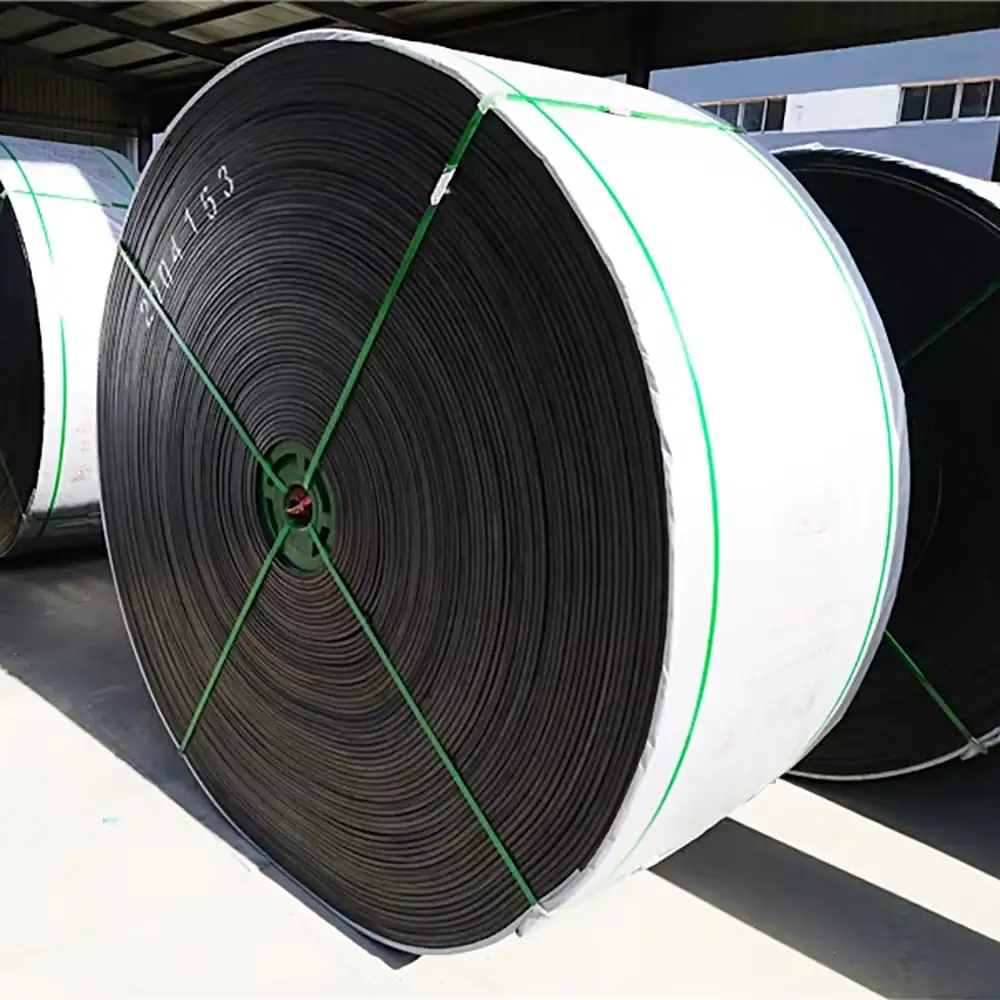
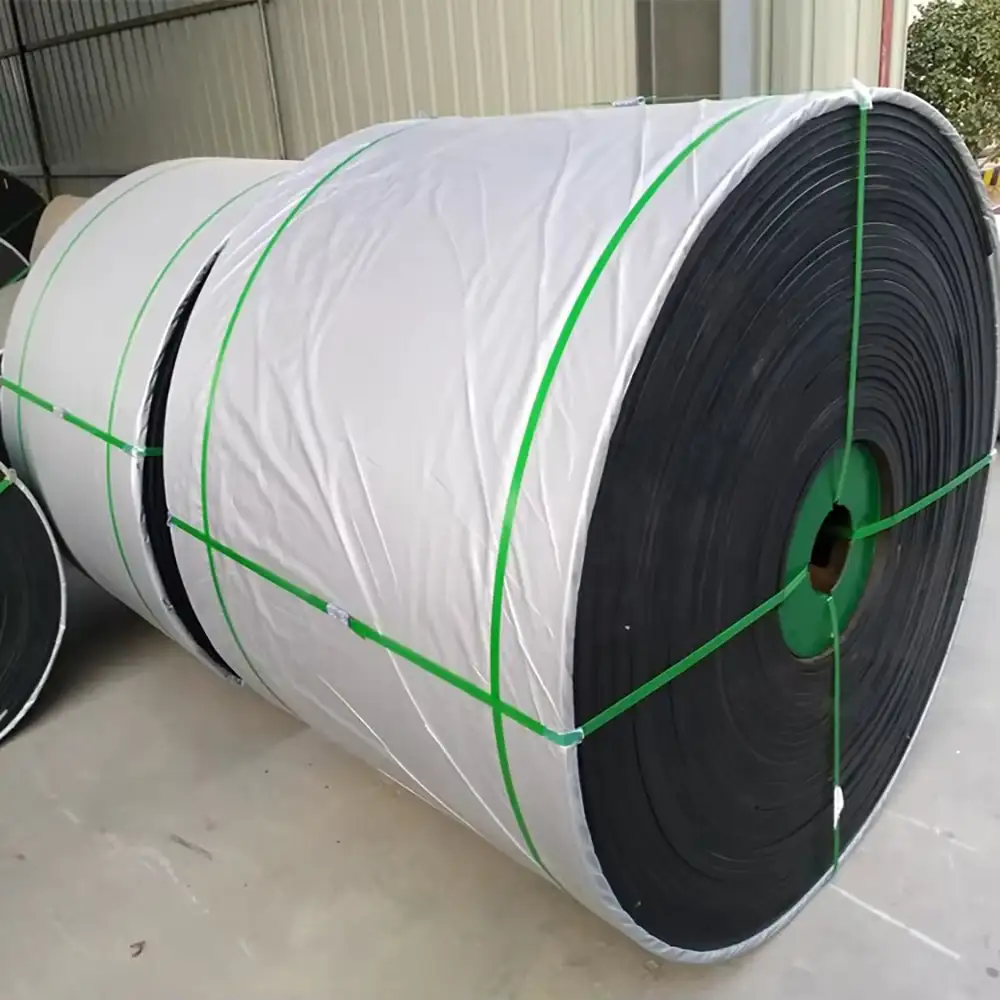
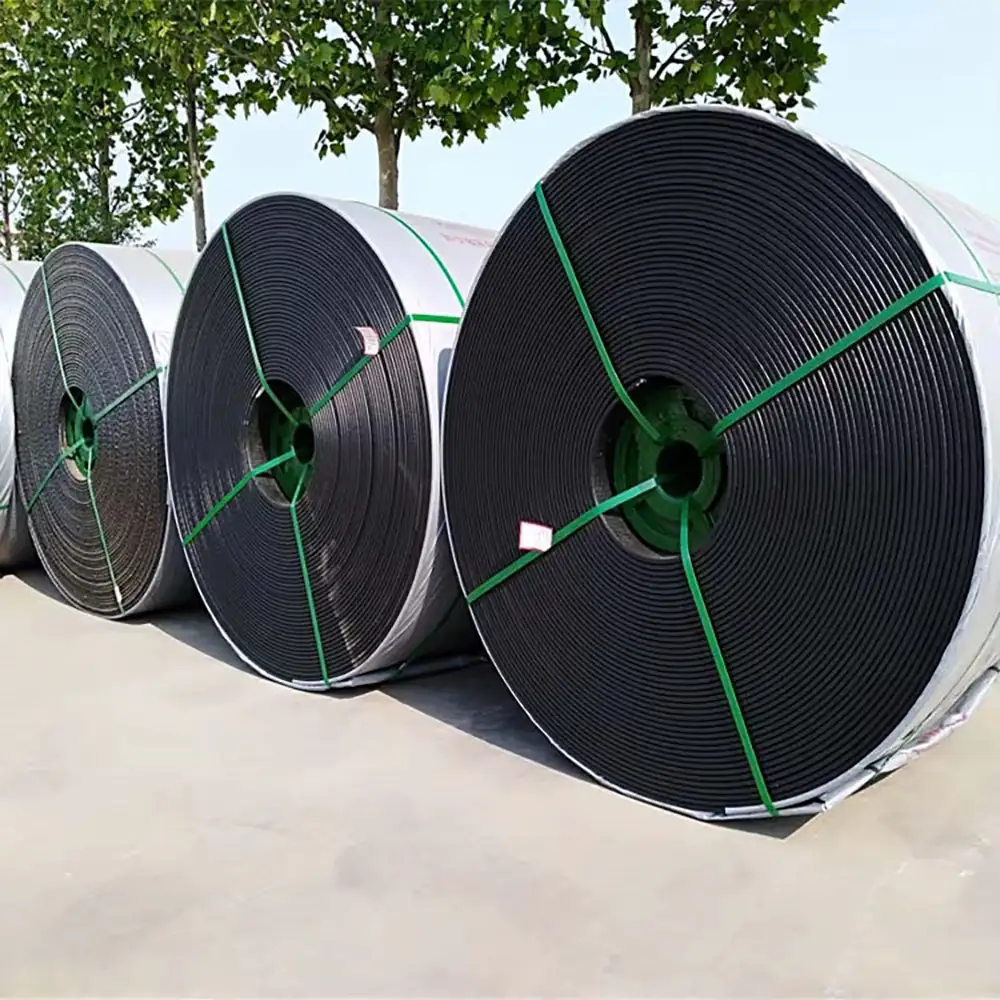
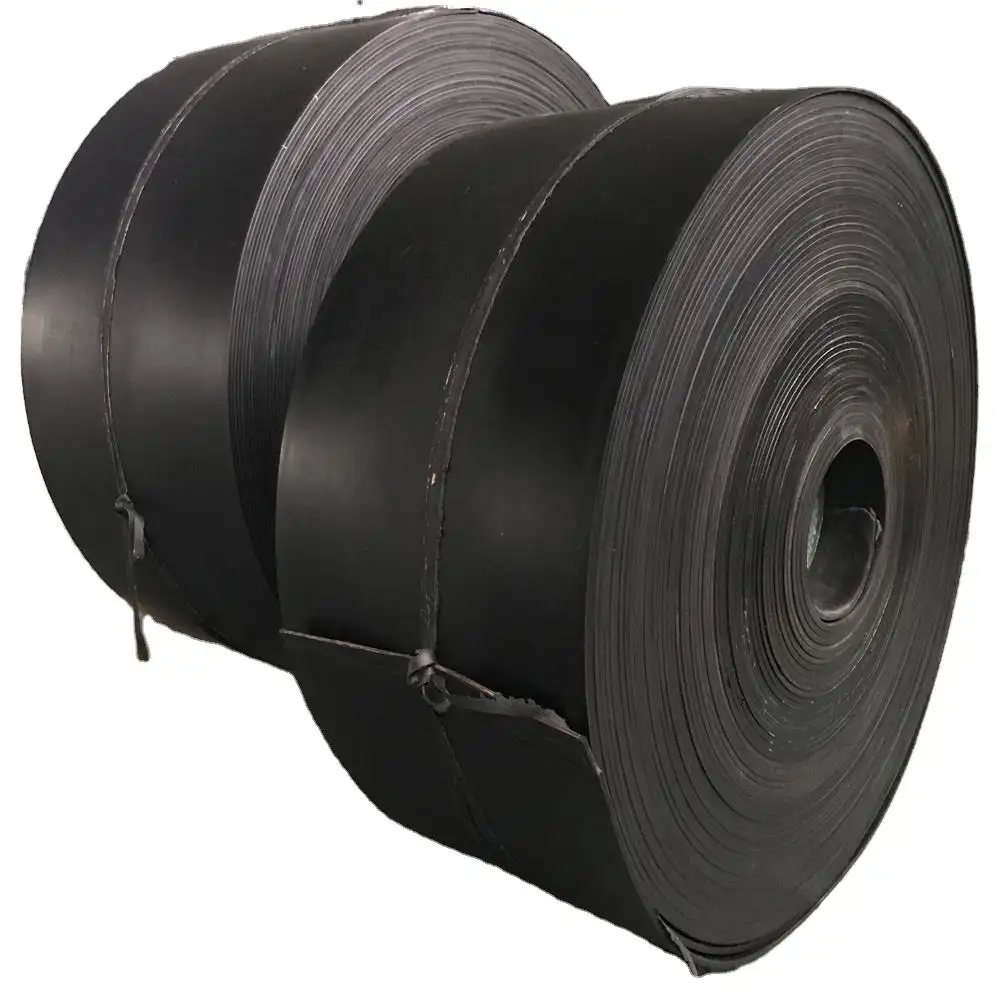
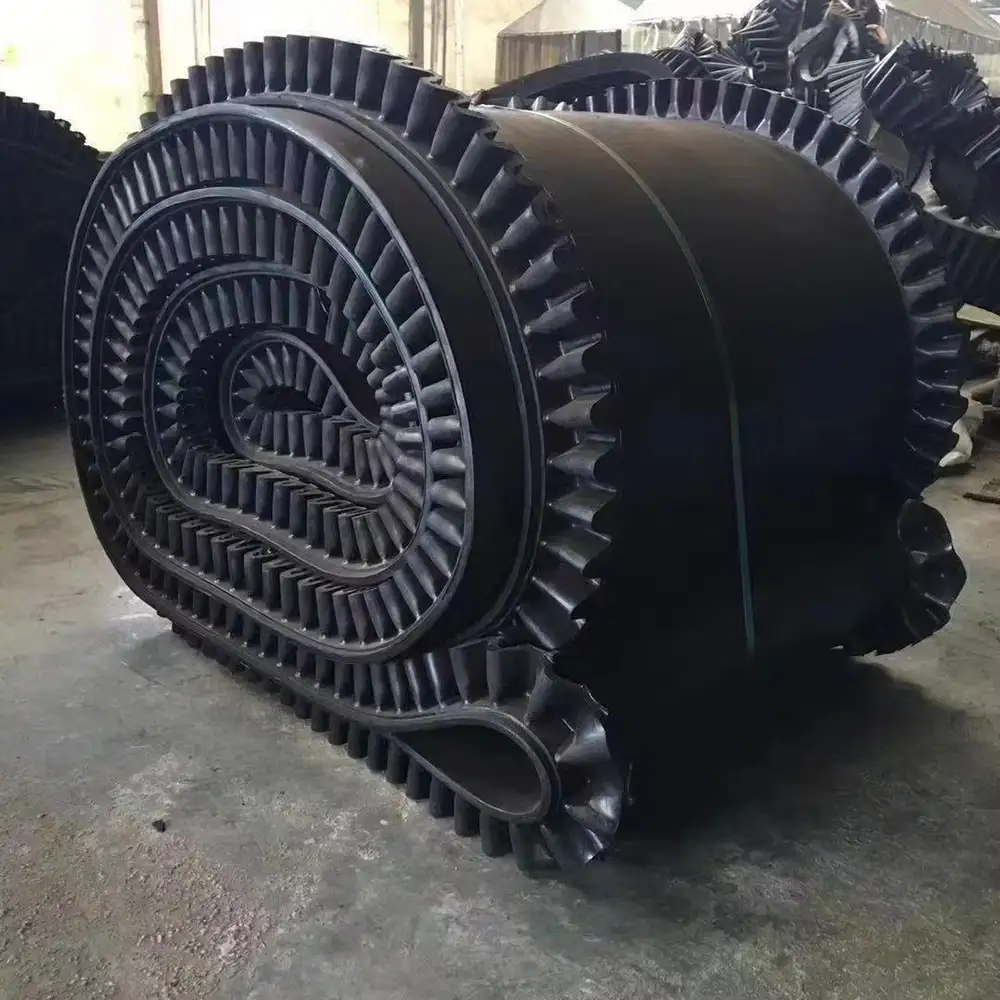
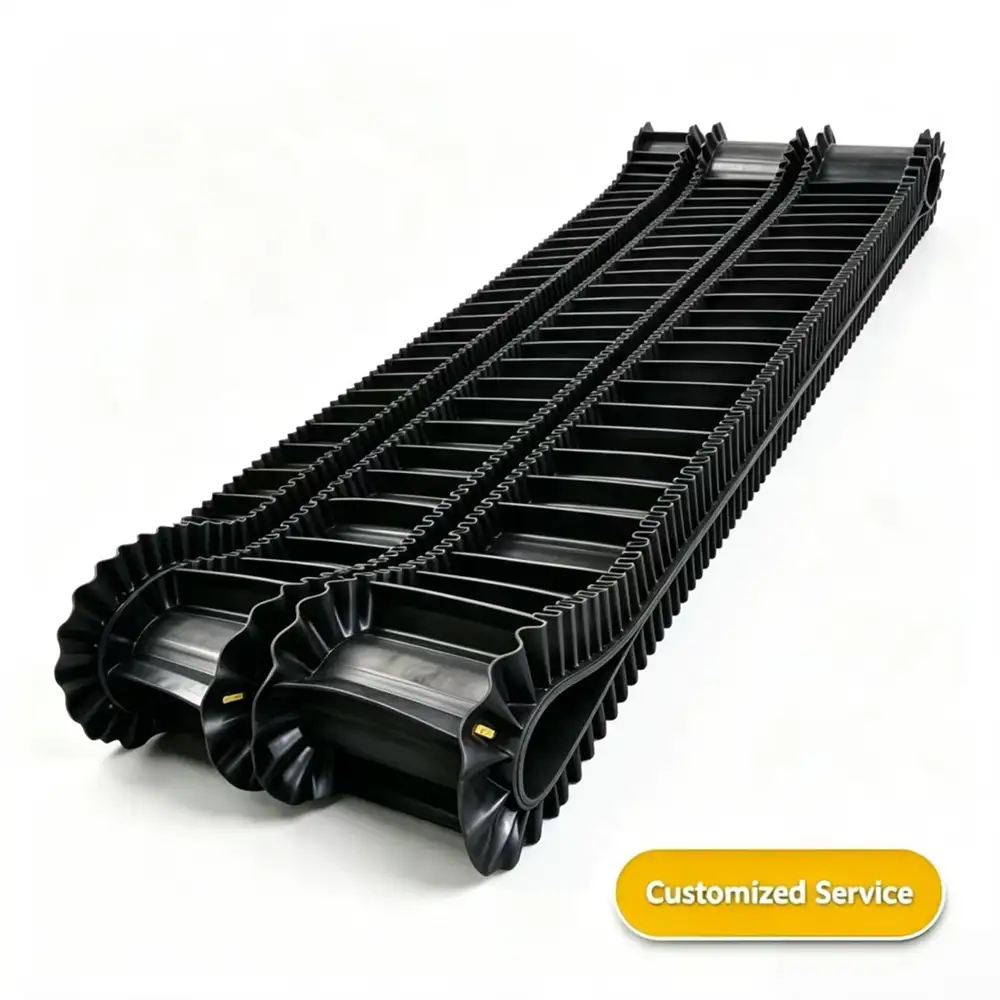
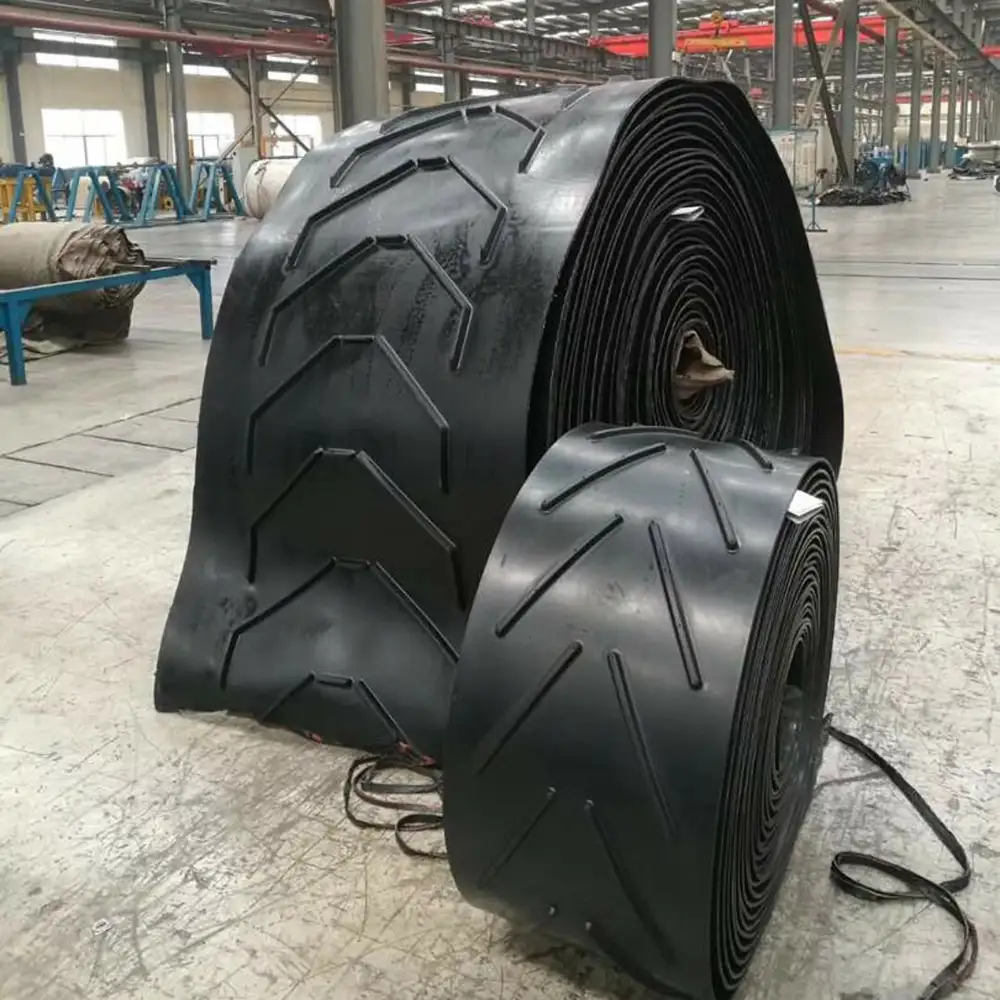
Flame Resistant Conveyor Belt
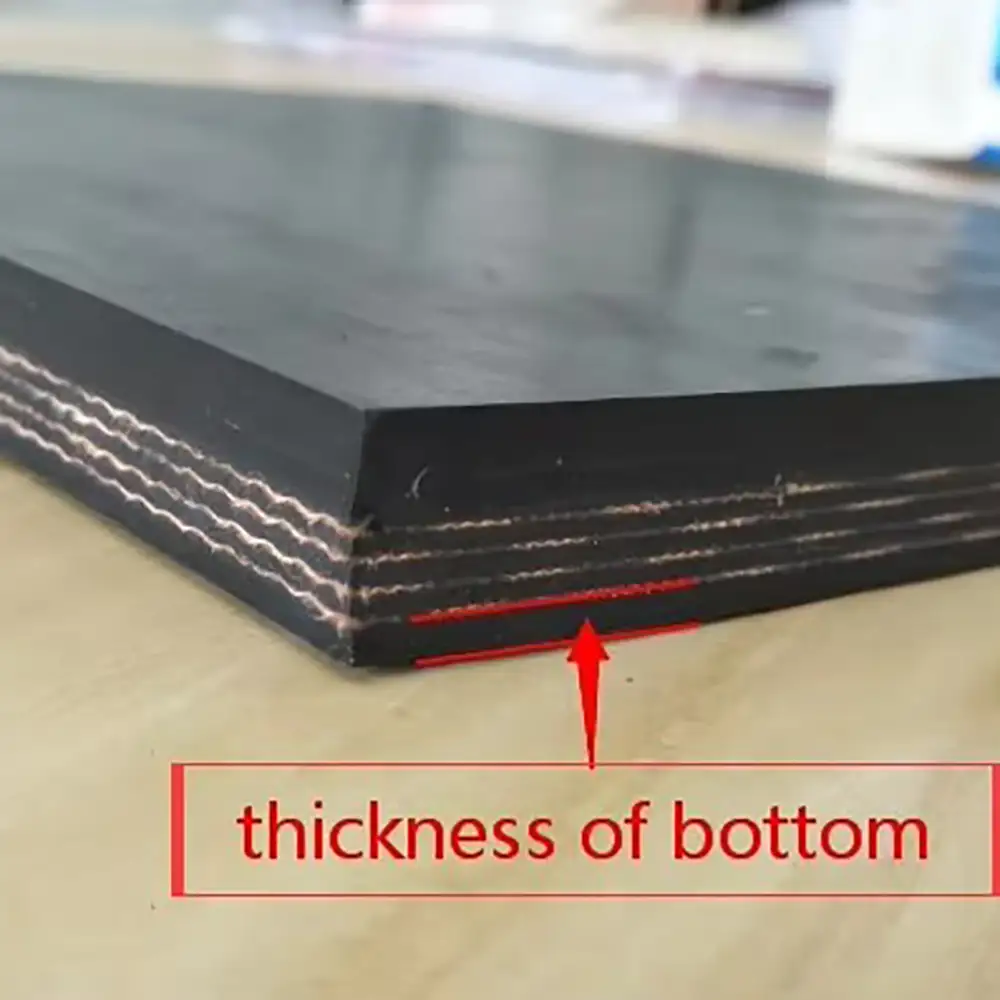
Polyester core conveyer belt is a multi-layer polyester canvas bonded together by a certain way, from top to bottom coverage of high strength, good wear-resistant flexible rubber, no special corrosion for the transmission of small and medium-sized block, powder, granular and other materials.
1.Standards:
GB/T7984-2001, DIN22102, BS490, AS1332, RMA, JISK6322, SABS1173 etc
2.Features:
Good flexibility, groove formation property and cost-effective. It is mainly used to transport powder,small and medium granular or less wearing materials at common temperature.
3.Application:
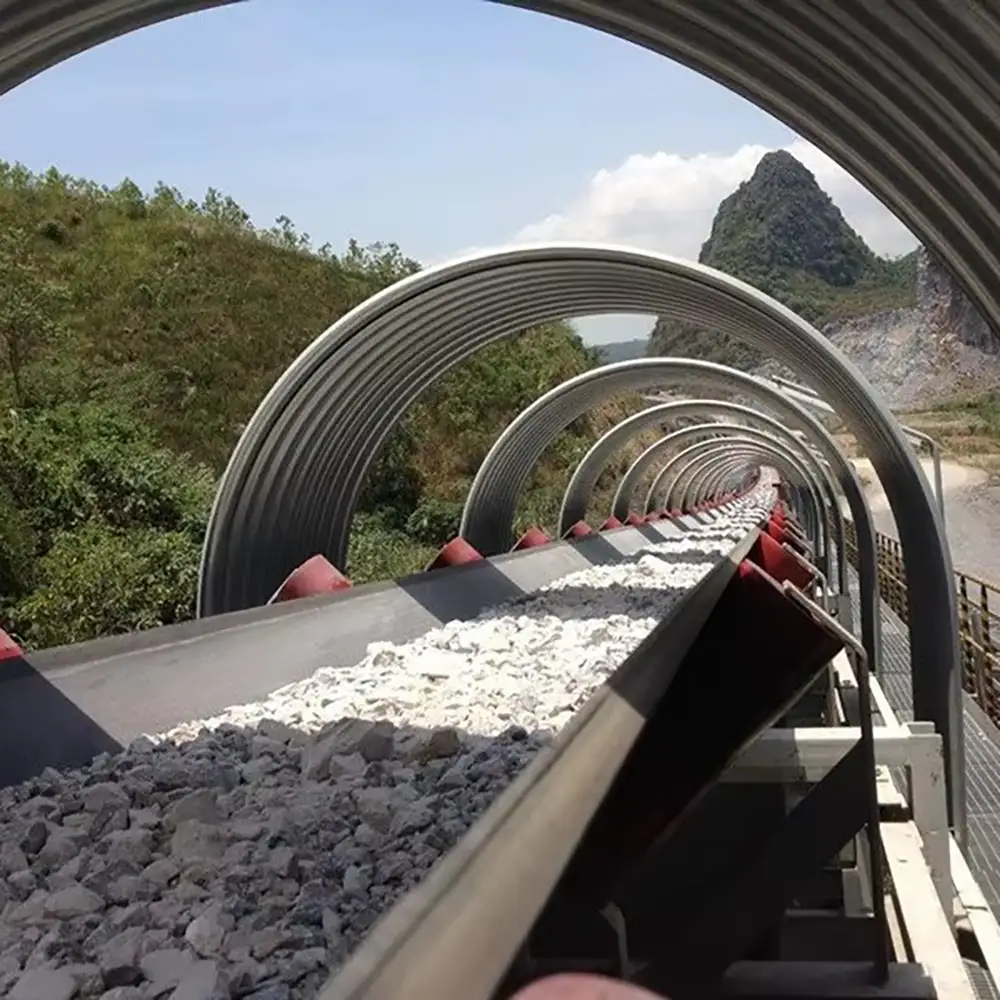
Applicable to long-distance, high capacity, high-speed delivery of materials under the conditions.
Used in mining, quarries, chemical plants, architectural industry and etc.
Flame Resistant Conveyor Belt
A Flame Resistant Conveyor Belt is an industrial rubber conveyor belt designed for material handling applications where fire hazards, combustible materials, sparks or elevated operating risks require enhanced flame resistance. Unlike a standard conveyor belt, a flame-resistant belt uses specially formulated cover compounds and belt construction designed to resist flame propagation and meet specified fire-performance requirements.
Flame-resistant conveyor belts are commonly used in coal handling, underground mining, power generation, cement plants, steel mills, chemical facilities, recycling operations, tunnels and other industrial environments where conveyor systems may transport combustible or potentially flammable materials. Depending on the belt construction and certification, products can be designed for above-ground or underground applications.
The exact fire performance of a conveyor belt should always be evaluated according to the applicable standard and the conditions of the complete conveyor system. ISO 340:2022 specifies a laboratory-scale method for assessing the reaction of conveyor belts to an ignition flame source and applies to both textile-carcass and steel-cord conveyor belts.
What Is a Flame Resistant Conveyor Belt?
A Flame Resistant Conveyor Belt is generally constructed with a reinforced carcass, rubber skim layers and specially formulated flame-resistant covers. The carcass may use EP polyester/nylon fabric, NN nylon fabric, solid woven construction or steel cord depending on the required tensile strength and conveyor design.
The outer rubber compound is formulated to reduce the tendency of the belt to sustain or propagate flames when exposed to an ignition source. Some flame-resistant conveyor belt designs also incorporate anti-static properties because static electricity can be an additional ignition concern in environments containing combustible dust or gases.
The combination of flame resistance, mechanical strength, abrasion resistance and appropriate electrical properties makes these belts suitable for demanding bulk material conveying applications.
Flame Resistant vs Fire Resistant Conveyor Belt
The terms Flame Resistant Conveyor Belt, Fire Resistant Conveyor Belt and Flame Retardant Conveyor Belt are commonly used in industrial conveyor-belt markets to describe belts with enhanced resistance to ignition and flame propagation.
However, these terms should not be treated as interchangeable with a guarantee that a belt will withstand any fire or unlimited temperature. A flame-resistant belt is not a fireproof belt. Performance depends on the rubber compound, belt construction, exposure conditions, certification and applicable test method.
For this reason, buyers should specify the required standard, operating environment and material being conveyed when ordering an FR conveyor belt.
Main Features
1. Flame Retardant Rubber Compound
The belt cover uses a specialized rubber formulation designed to improve resistance to flame propagation. Depending on the specification, the compound can be formulated throughout the cover rather than relying only on a surface treatment.
2. Anti-Static Performance
Many flame-resistant conveyor belts are also designed with electrical properties suitable for applications where static accumulation must be controlled. Some industrial specifications use defined electrical resistance requirements in combination with flame testing.
3. High Tensile Strength
The belt can be manufactured with EP, NN or other carcass constructions for different conveyor tensions. For very long or high-tension conveyors, steel cord constructions can also be considered.
4. Abrasion Resistance
Coal, ore, aggregate and other bulk materials can create significant wear on conveyor covers. Flame-resistant belts can therefore be specified with suitable abrasion-resistant cover grades where the application requires both fire performance and mechanical durability.
5. Flexible Belt Construction
Different carcass constructions and ply configurations can be selected to provide the required flexibility, troughability and tensile strength for the conveyor system.
6. Multiple International Standards
Depending on the destination market and application, flame-resistant conveyor belts may be manufactured or tested to standards such as ISO 340, DIN S/K, MSHA, AS, SANS and CAN/CSA. The exact certification should be confirmed for the individual belt specification.
Carcass Options
EP Flame Resistant Conveyor Belt
EP carcass combines polyester in the warp direction with polyamide/nylon in the weft direction. It provides good tensile strength, dimensional stability and relatively low longitudinal elongation. EP FR conveyor belts are widely considered for mining, coal, cement and general bulk material handling.
NN Flame Resistant Conveyor Belt
NN conveyor belts use nylon fabric in the reinforcement. They offer good flexibility, impact resistance and troughability and can be manufactured with flame-resistant rubber covers for suitable applications.
Steel Cord Flame Resistant Conveyor Belt
For long-distance, high-capacity and high-tension conveying systems, steel cord reinforcement can be combined with a flame-resistant cover compound when the complete design and applicable standard permit it. ISO 340 specifically covers both textile-carcass and steel-cord conveyor belts for its laboratory flammability assessment.
Applications
Flame Resistant Conveyor Belts are used across a wide range of industries:
Underground Coal Mining
Above-Ground Coal Handling
Mining And Mineral Processing
Cement Plants
Power Generation
Steel Mills
Foundries
Chemical Plants
Fertilizer Plants
Recycling Facilities
Wood And Paper Industries
Grain Processing
Sugar Processing
Tunneling Projects
Bulk Material Handling
Coal and mining applications are particularly important because the conveyed material and surrounding environment can create additional fire hazards. Flame-resistant conveyor belts are also used in enclosed industrial conveyor systems where limiting flame propagation is an important safety consideration.
How to Select the Right Flame Resistant Conveyor Belt
Choosing the correct FR conveyor belt requires more than selecting a belt labeled “flame resistant.” Buyers should consider the complete operating environment.
1. Identify the Applicable Standard
Determine whether the project requires ISO 340, MSHA, DIN, AS, SANS, CAN/CSA or another regional specification.
2. Determine Conveyor Strength
Provide the required belt width, conveyor length, operating tension, material capacity, belt speed and incline. These parameters help determine the appropriate carcass and tensile rating.
3. Check the Material Being Conveyed
Coal, ore, coke, fertilizer, grain, wood products and other materials have different abrasion, temperature and fire-risk characteristics.
4. Evaluate Abrasion
If the material is highly abrasive, select an appropriate abrasion-resistant cover compound in addition to flame resistance.
5. Consider Anti-Static Requirements
For underground or enclosed environments where combustible dust or gases may be present, the required electrical properties should be confirmed as part of the belt specification.
6. Confirm Temperature Conditions
Flame resistance and heat resistance are not identical properties. If the conveyor transports hot clinker, sintered material or other high-temperature products, a suitable heat-resistant compound may also be required.
Installation and Maintenance
Proper installation is essential for reliable conveyor performance. Before installation, inspect the belt for damage and verify its width, length, cover thickness, carcass specification and identification markings.
The conveyor structure should be correctly aligned, and pulleys, idlers and take-up equipment should be properly adjusted. Incorrect alignment can cause edge damage, tracking problems and premature wear regardless of the belt's flame-resistant properties.
Regular inspection should focus on cover wear, longitudinal cuts, edge damage, splice condition, tracking and abnormal heat or friction. Any material accumulation around pulleys and transfer points should be addressed because poor conveyor housekeeping can increase operational risks.
For critical applications, maintenance procedures should also follow the requirements of the conveyor manufacturer, site safety program and applicable regulatory standards.
Custom Flame Resistant Conveyor Belt
As a professional Flame Resistant Conveyor Belt Manufacturer and Supplier, we can provide customized belt specifications for different industries and conveyor systems.
Available customization can include:
Belt Width
Belt Length
EP Or NN Carcass
Steel Cord Construction
Number Of Plies
Tensile Strength
Top And Bottom Cover Thickness
Flame Resistant Rubber Grade
Abrasion Resistant Cover
Anti-Static Properties
Edge Type
Splice Method
Packaging
OEM Marking
For an accurate recommendation, customers can provide the conveyor width, belt length, conveying material, capacity, belt speed, conveyor inclination, operating temperature, working environment and required safety standard.
Why Choose Us?
Application-Specific Belt Selection
We evaluate conveyor strength, material characteristics, operating environment and applicable safety requirements instead of recommending a belt based on width alone.
Multiple Carcass Options
EP, NN and steel cord constructions can be considered for different conveyor tension and application requirements.
Flame Resistant And Anti-Static Options
FR and FR-AS configurations can be supplied according to the required application and applicable testing specification.
OEM Customization
Belt width, thickness, tensile strength, cover grade, carcass construction, packaging and other specifications can be customized for industrial projects.
Industrial Export Experience
We support mining, cement, steel, power, chemical and bulk material handling customers with project-based conveyor belt requirements.
Technical Specification Support
Send your conveyor parameters and required standard, and we can help determine a suitable Flame Resistant Conveyor Belt specification for your application.
FAQs
1. What Is a Flame Resistant Conveyor Belt?
A Flame Resistant Conveyor Belt is a rubber conveyor belt manufactured with specialized materials and construction designed to resist ignition and limit flame propagation under specified test conditions.
2. Is a Flame Resistant Belt the Same as a Fireproof Belt?
No. Flame-resistant means the belt has defined resistance to ignition or flame propagation according to a specified test. It does not mean the belt is completely fireproof or can operate indefinitely in a fire.
3. What Standards Are Used for Flame Resistant Conveyor Belts?
Common standards and specifications include ISO 340, DIN grades, MSHA requirements, AS standards, SANS specifications and CAN/CSA requirements. The correct standard depends on the application and destination market.
4. Can Flame Resistant Conveyor Belts Be Used in Coal Mines?
Yes, FR conveyor belts are commonly used for coal handling and mining applications. Underground applications may require specific regulatory approval or certification, such as applicable MSHA requirements in the United States.
5. Does Flame Resistance Mean the Belt Is Heat Resistant?
Not necessarily. Flame resistance concerns ignition and flame propagation, while heat resistance concerns continuous or intermittent exposure to elevated material and ambient temperatures. A belt may require both properties for certain applications.
6. Are Flame Resistant Conveyor Belts Anti-Static?
Many FR conveyor belt specifications incorporate anti-static requirements, but not every belt should automatically be assumed to have the same electrical properties. The required anti-static specification should be confirmed when ordering.
7. What Carcass Materials Are Available?
Common constructions include EP fabric, NN fabric, solid woven and steel cord reinforcement. The appropriate construction depends on conveyor length, tension, capacity and system design.
8. Can the Belt Also Be Abrasion Resistant?
Yes. Flame resistance and abrasion resistance can be combined in suitable rubber compounds. This is particularly useful for coal, ore, aggregate and other abrasive materials.
9. Can You Manufacture Custom Flame Resistant Conveyor Belts?
Yes. Width, length, tensile strength, carcass, ply count, cover thickness, rubber grade, edge configuration and other specifications can be customized according to project requirements.
10. What Information Is Needed for a Conveyor Belt Quotation?
Useful information includes belt width, belt length, tensile strength or operating tension, carcass type, top and bottom cover thickness, material conveyed, capacity, belt speed, conveyor length, inclination, operating temperature and required flame-resistant standard.
Prev:
Heat Resistant Conveyor Belt By Polyester Cotton Covered
Next:Sorry, no information
TAG:
Steel Cord Conveyor Belt,
Industrial Rubber Conveyor Belt,
Fire Resistant Conveyor Belting,
Heat Resistant Conveyor Belt,
Fire Resistant Conveyor Belt,
Fire Resistant Rubber Conveyor Belt,
Mining Conveyor Belt,
Industrial Conveyor Belt,
Flame Resistant Conveyor Belt,
Coal Conveyor Belt,
Coal Handling Conveyor Belt,
Heavy Duty Conveyor Belt,
EP Conveyor Belt,
Mining Conveyor Belting,
NN Conveyor Belt,
Underground Mining Conveyor Belt,
Flame Resistant Rubber Conveyor Belt,
Flame Resistant Belt,
Flame Retardant Conveyor Belt,
Fire Retardant Conveyor Belt,
Fire Resistant Mining Belt,
Fire Resistant Belt,
FRAS Conveyor Belt,
MSHA Conveyor Belt,
FR Conveyor Belt,
FR Conveyor Belting,
Flame Retardant Conveyor Belting,
Anti Static Conveyor Belt,
Fire Resistant Rubber Belting,
Flame Resistant Rubber Belting,
Related Category:
Flame Resistant Conveyor Belt, Fire Resistant Conveyor Belt, Flame Retardant Conveyor Belt, Fire Resistant Rubber Convey China, suppliers, manufacturers, factory, customized, wholesale, quotation, made in China