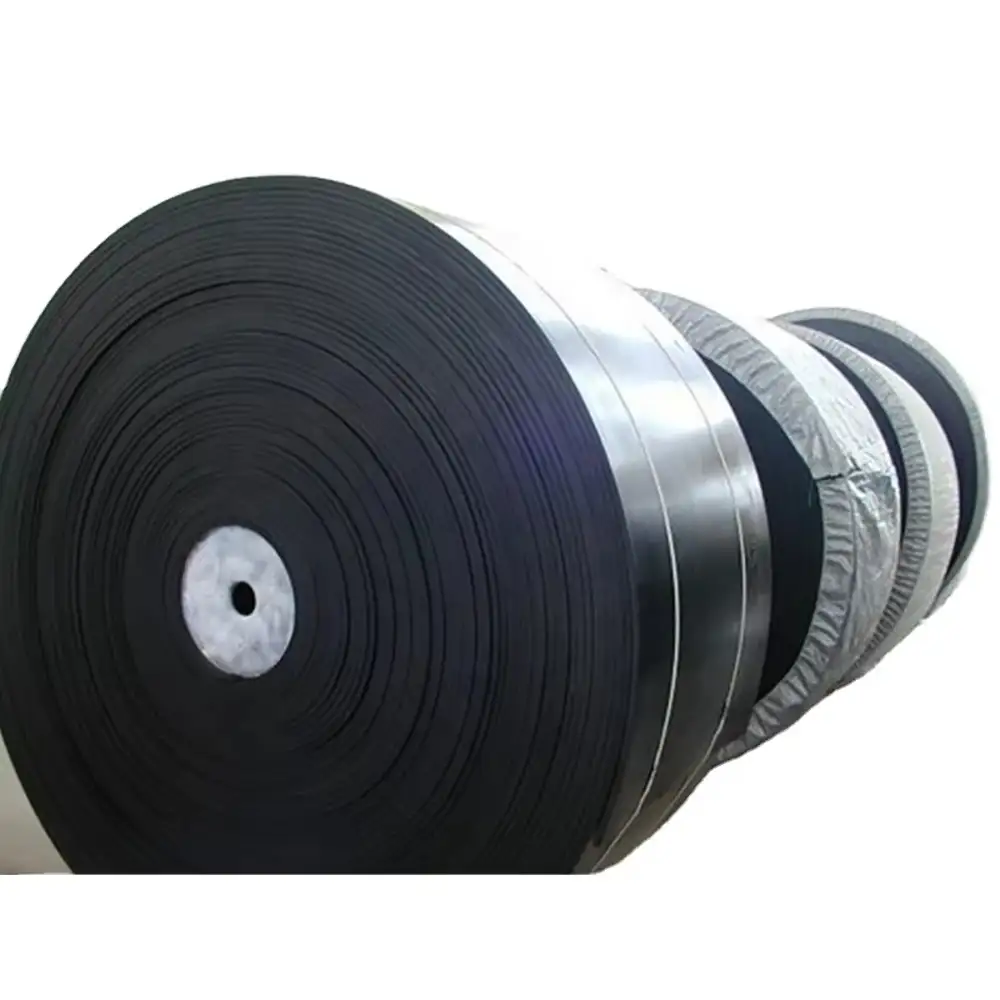
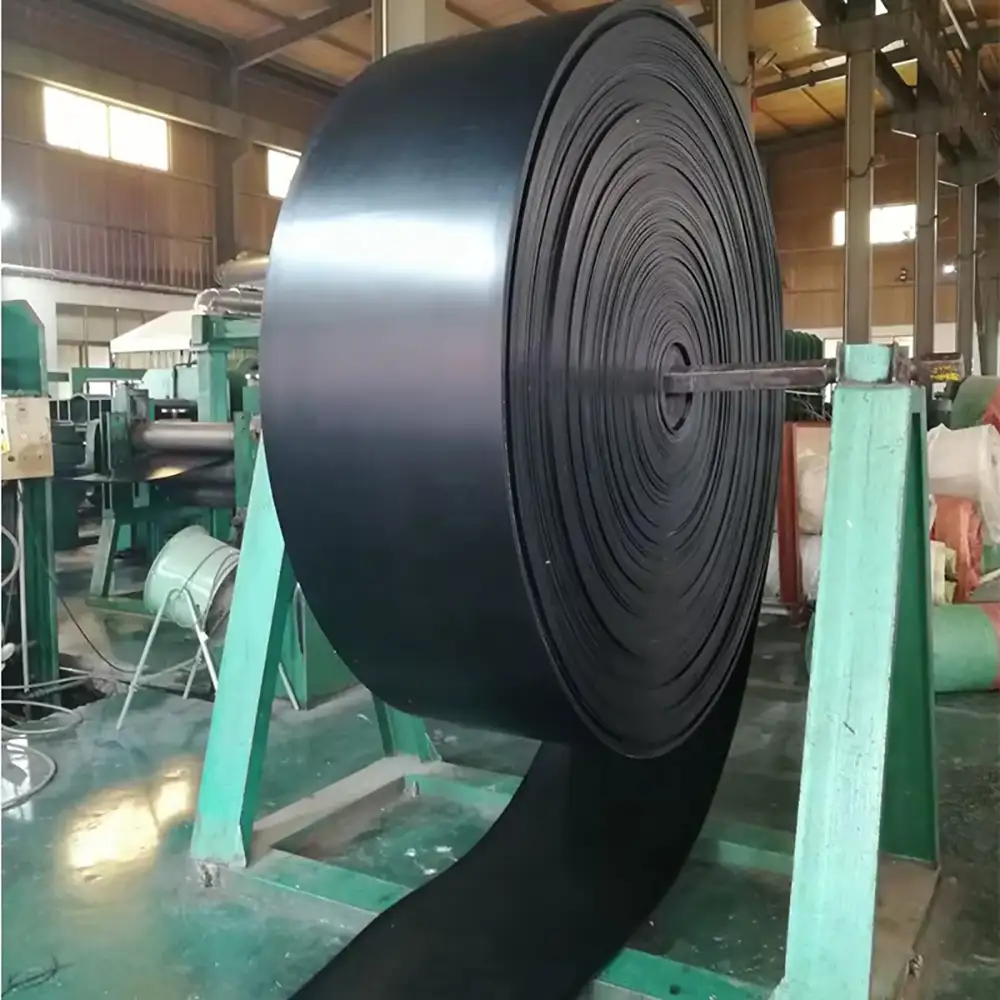
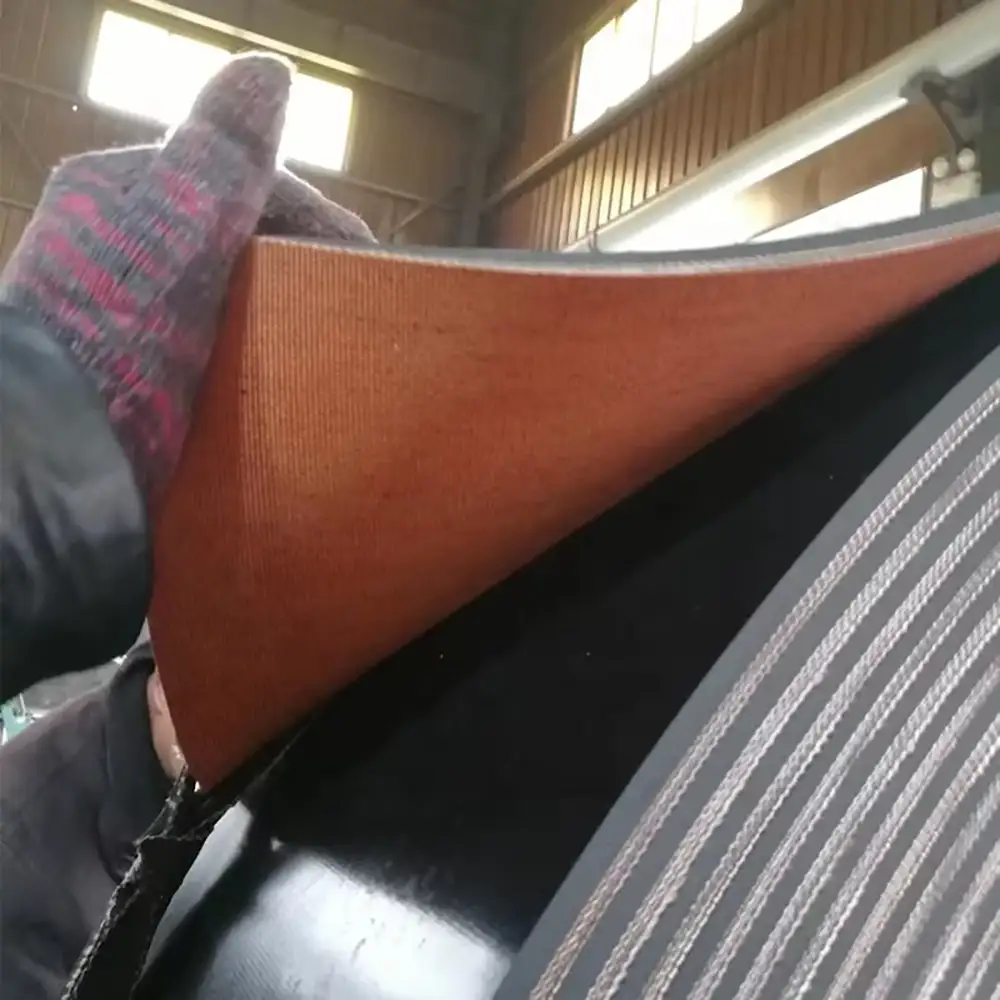
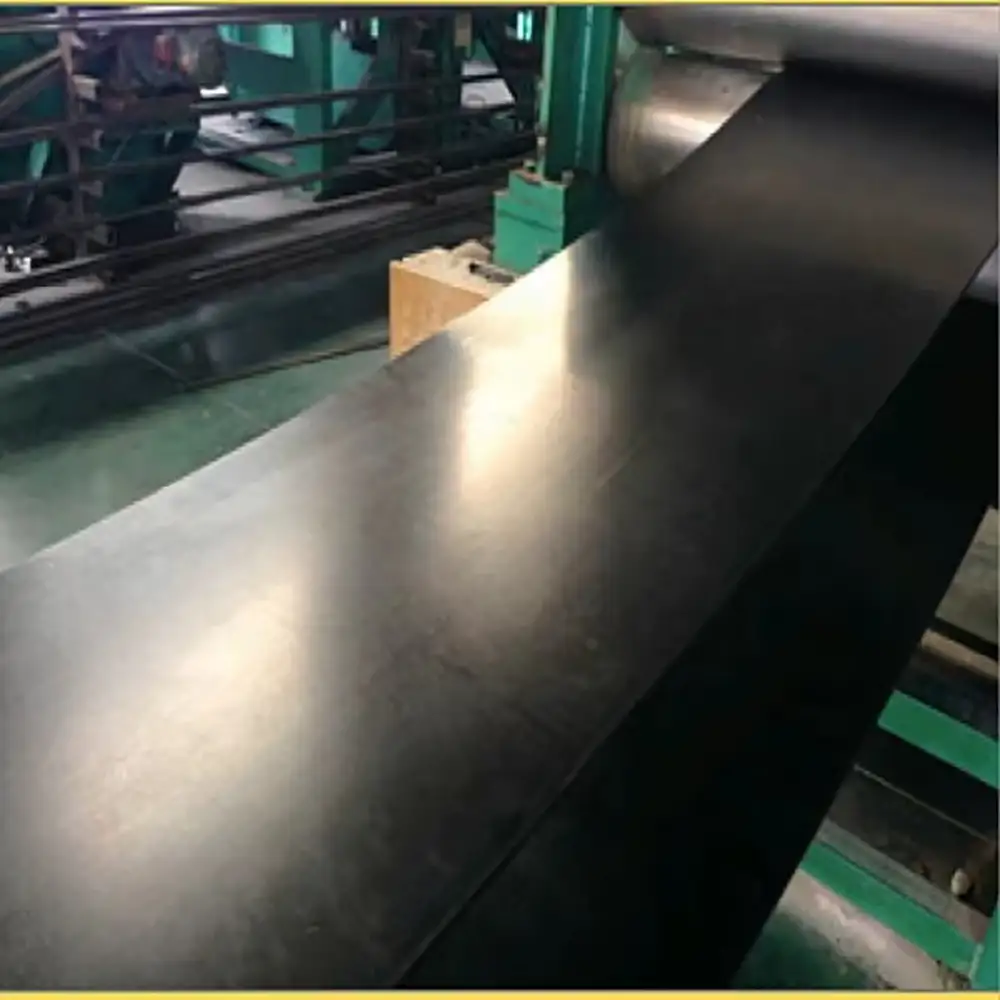
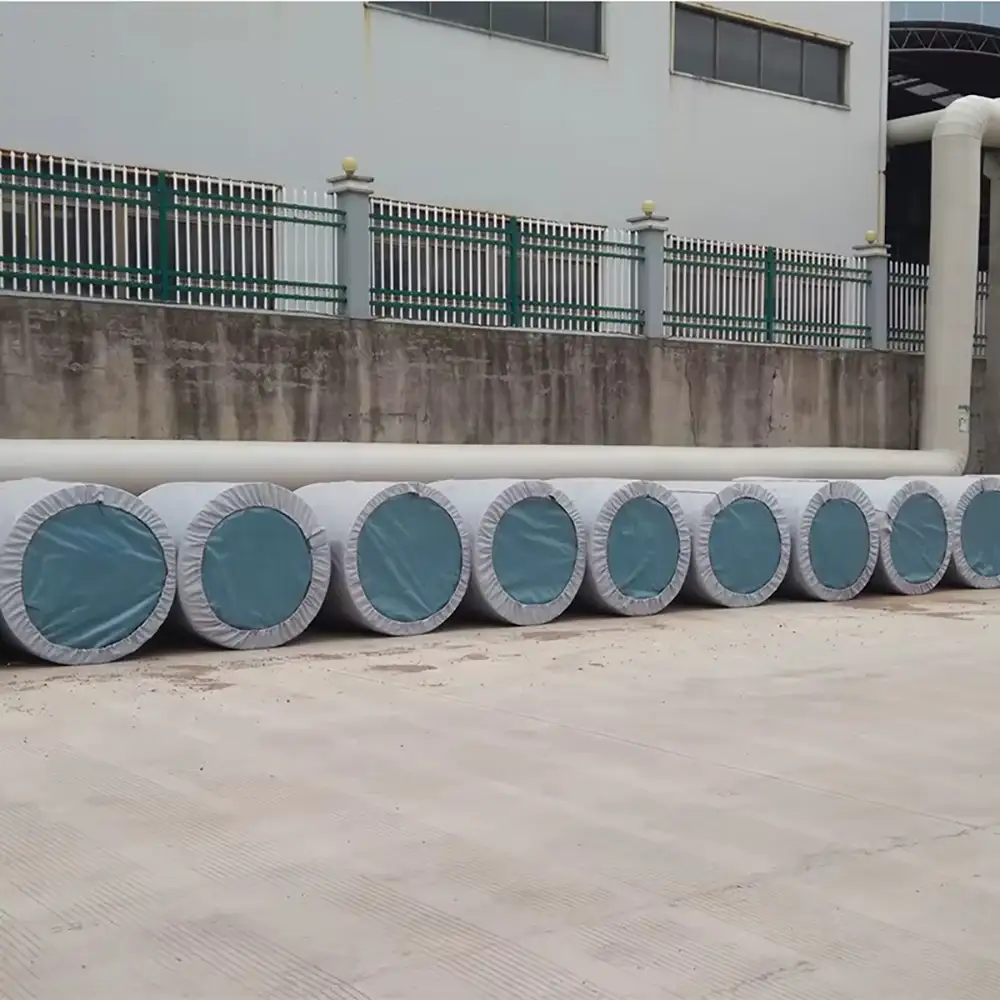
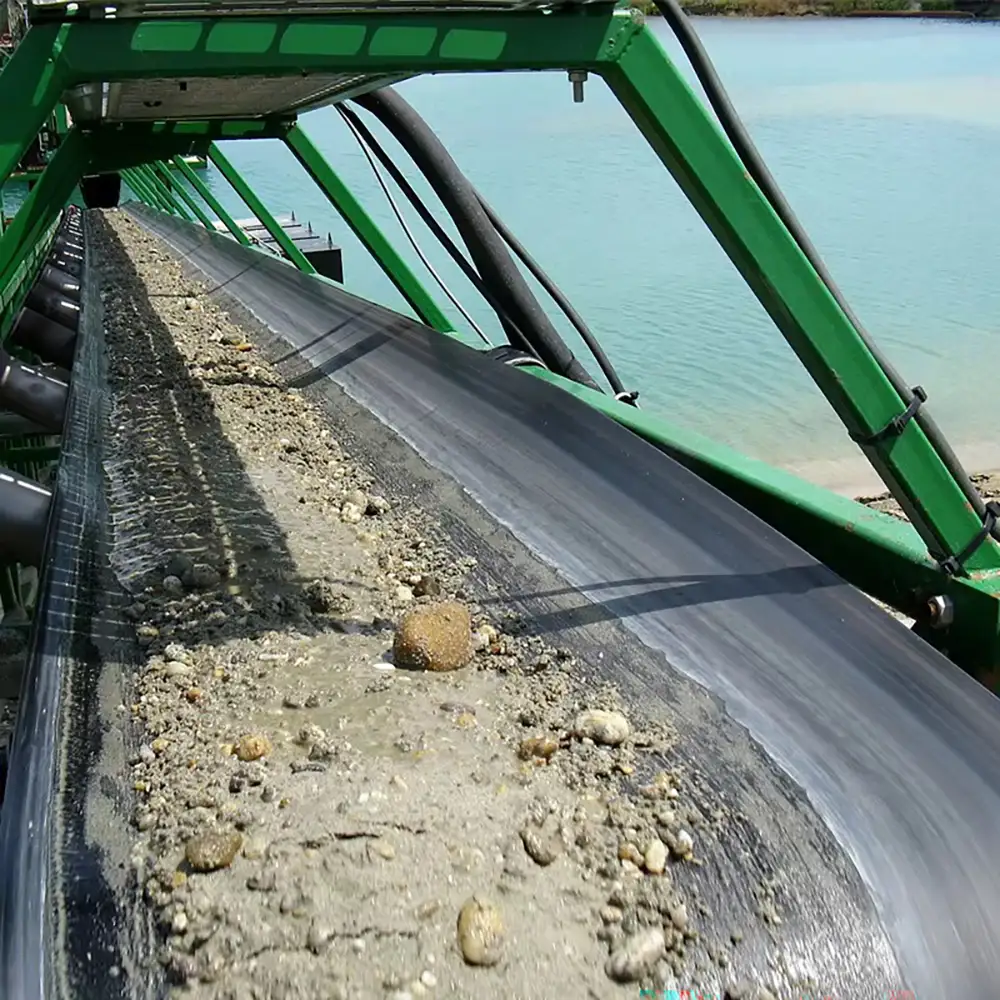
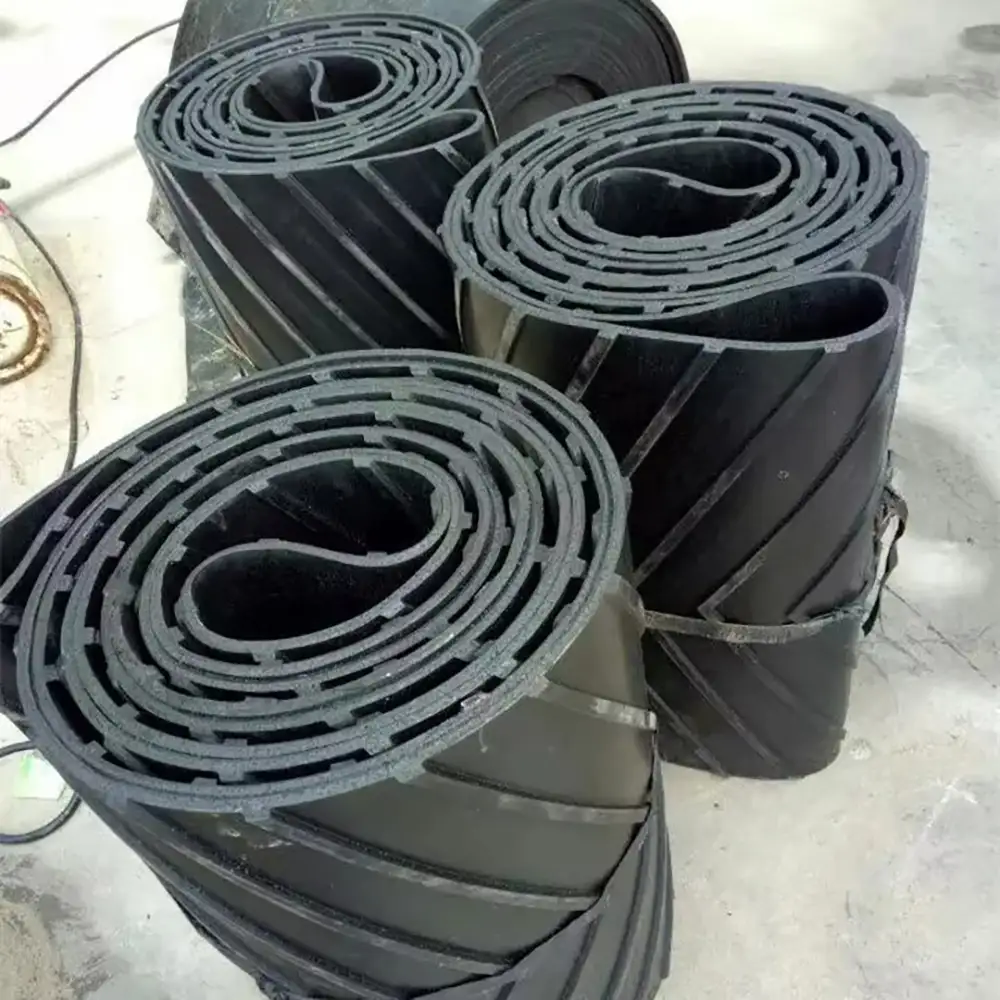
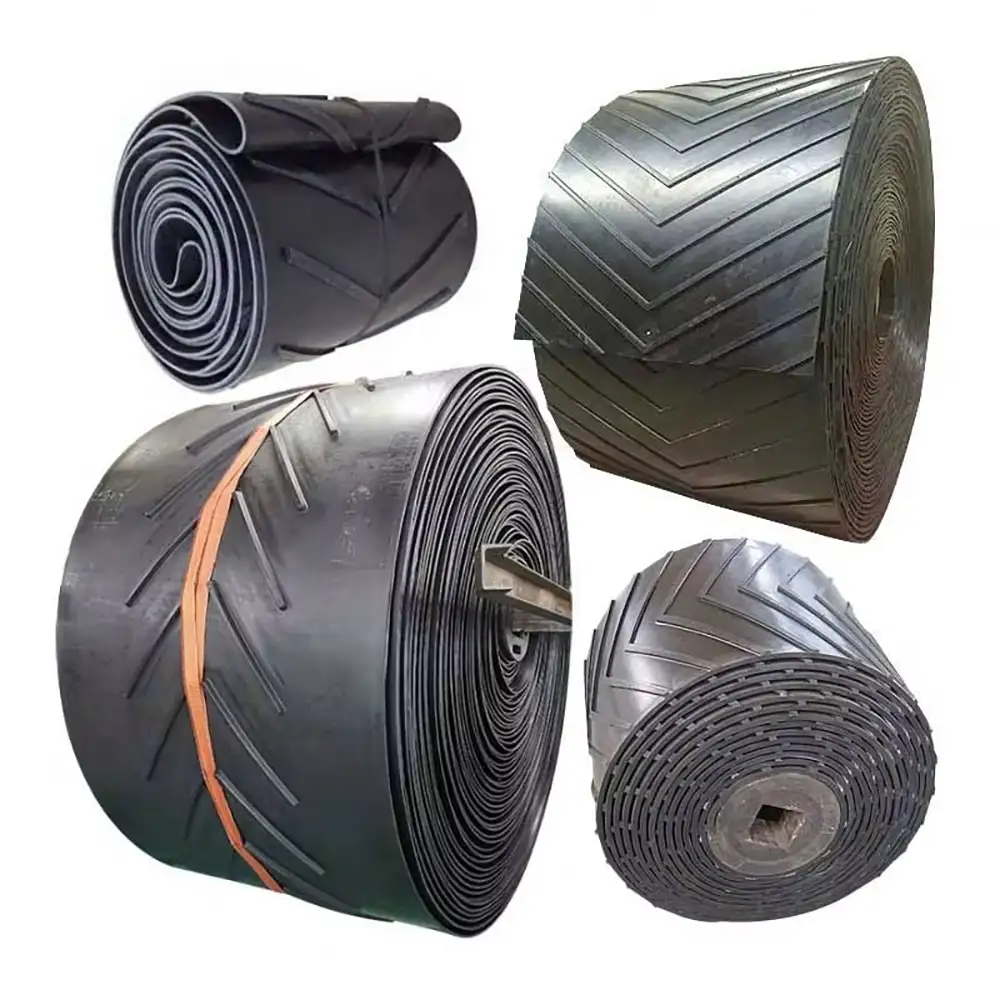
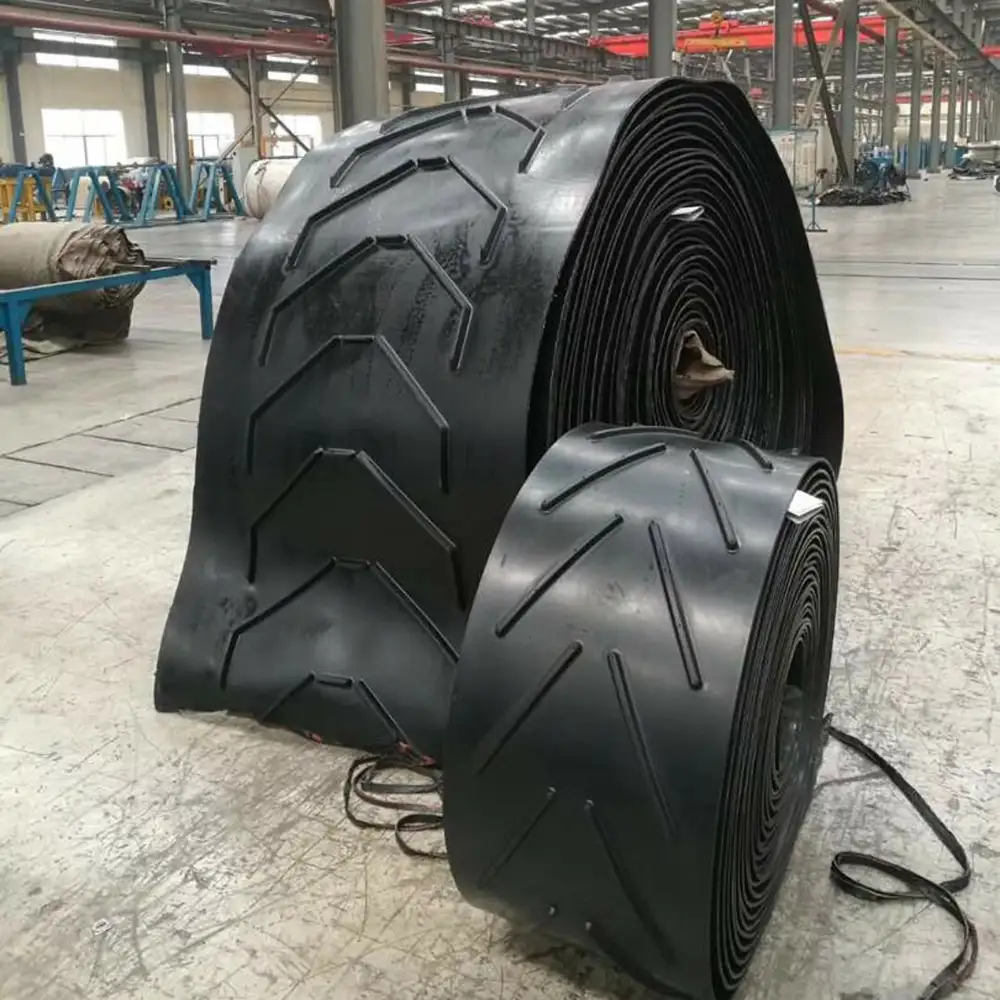
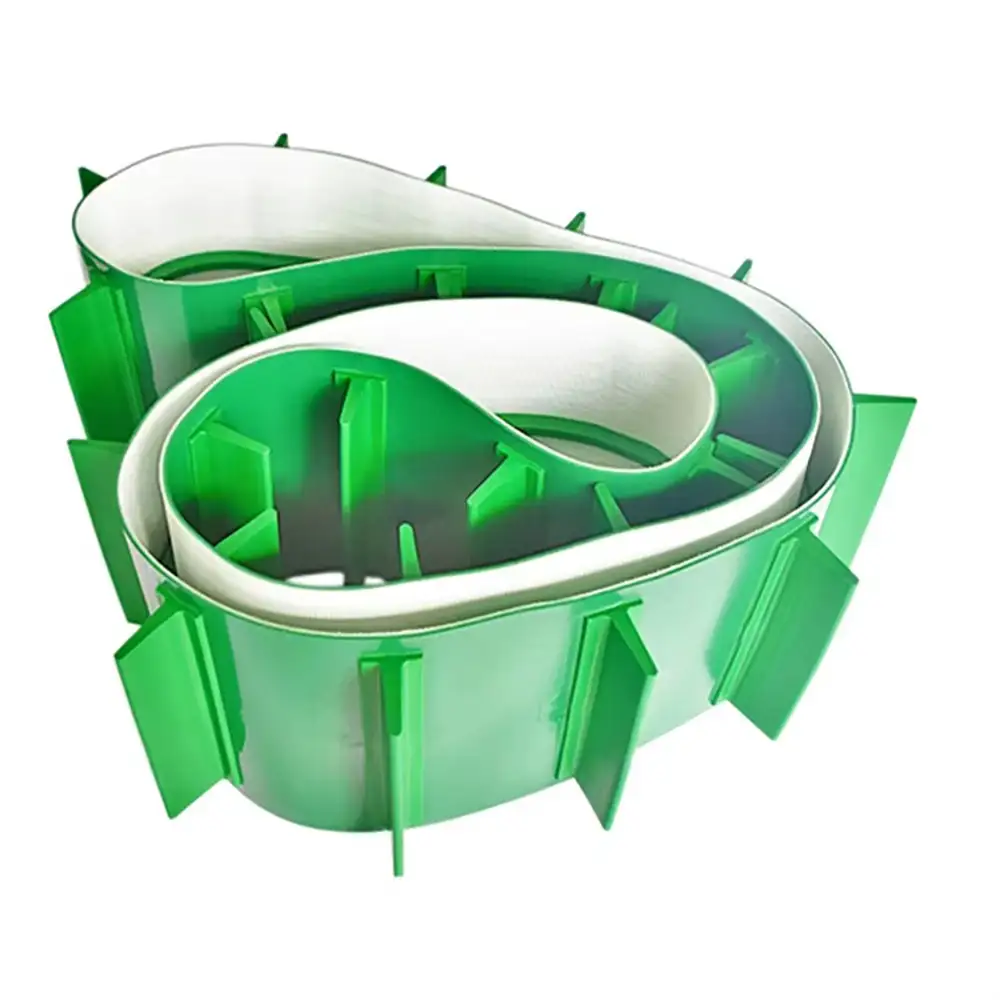
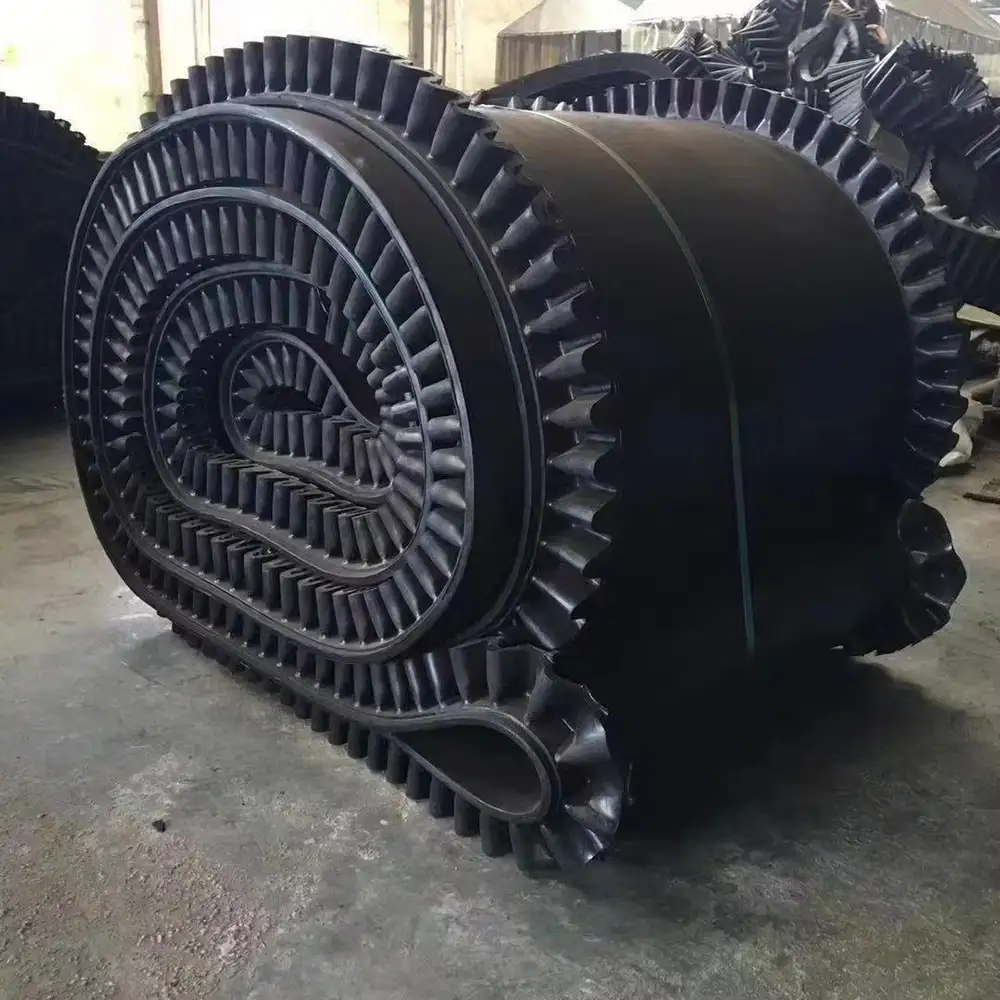
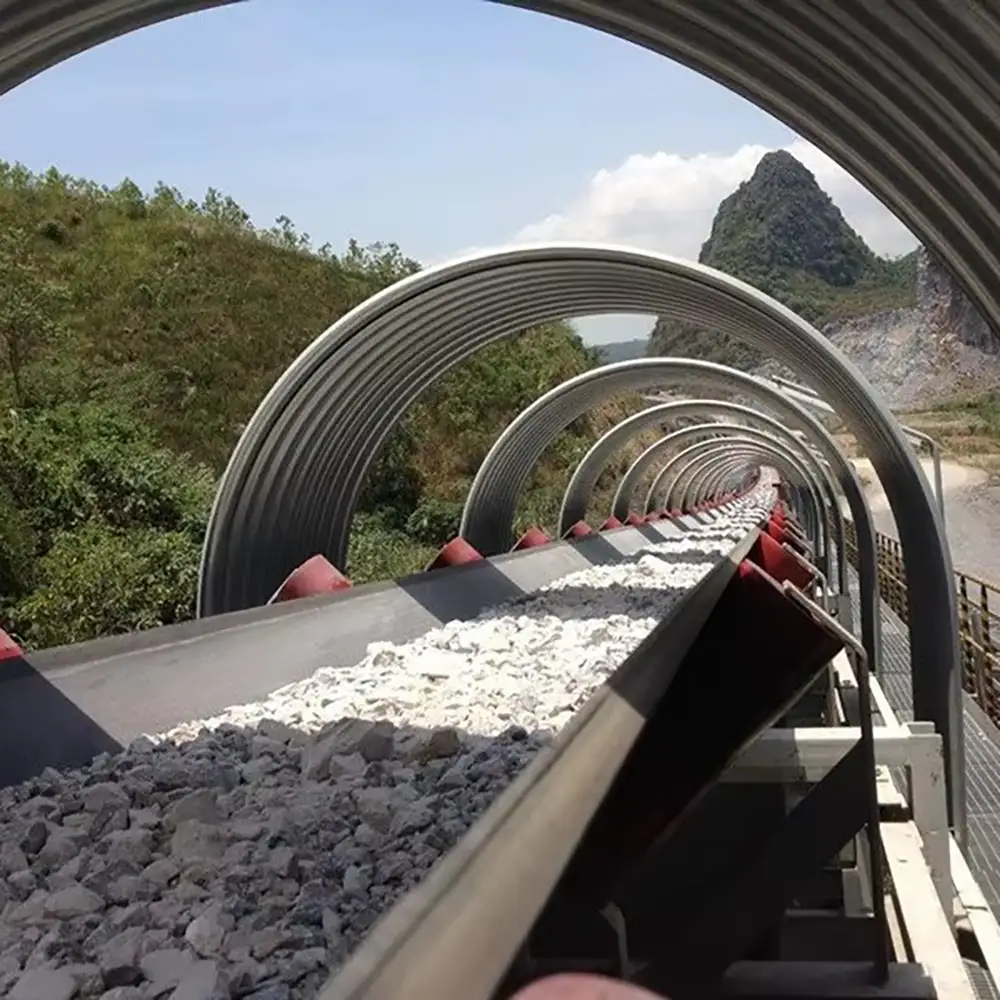
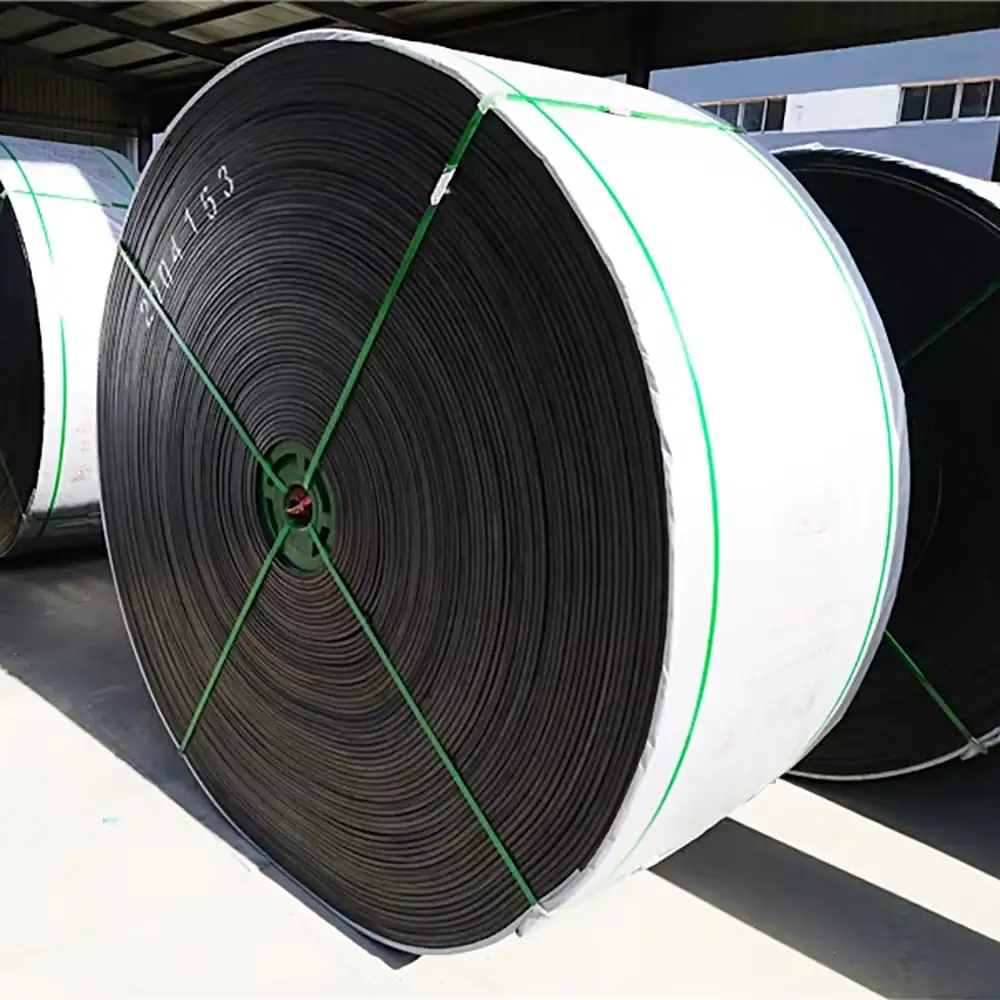
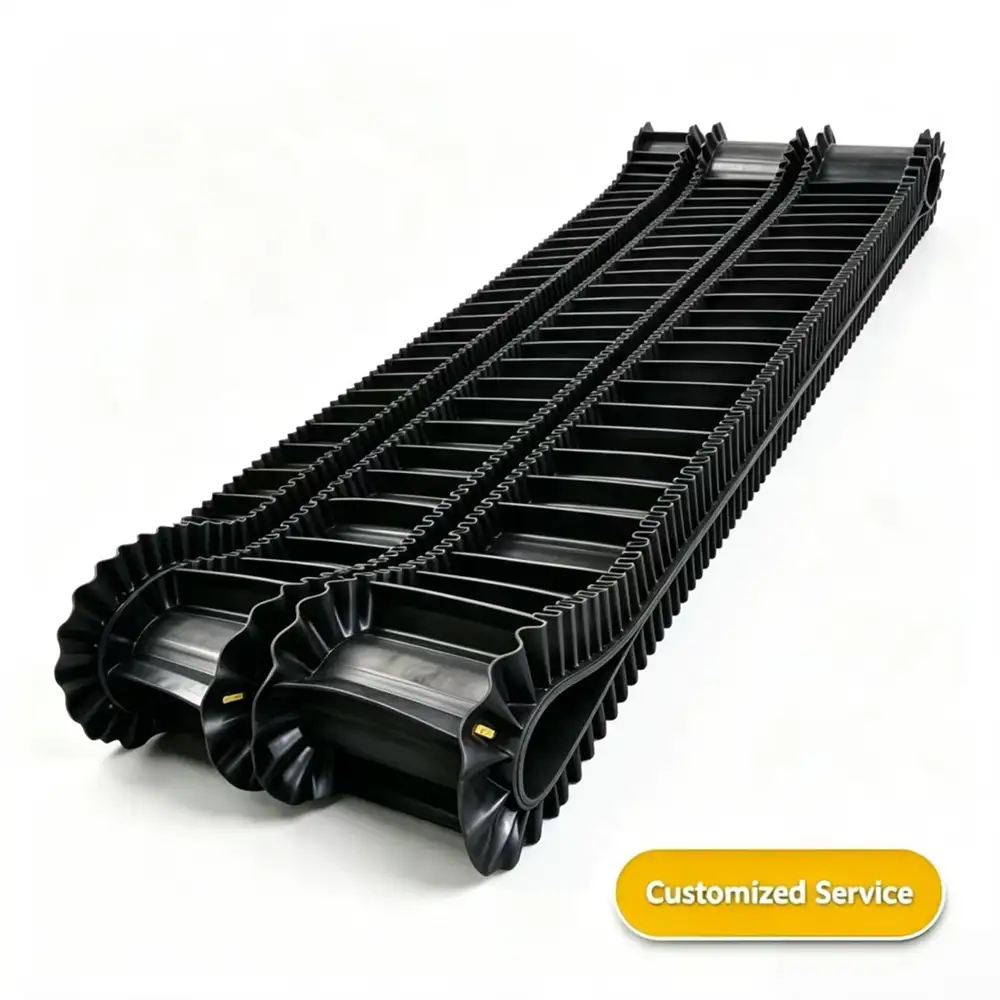
The Heat Resistance Conveyor Belt is made of the multilayer rubber cotton canvas 'polyester cotton' covered with the high temperature or heat resistant rubbers, which are bonded through high temperature vulcanization, it is applicable to conveying of the coke, cement, clinker and hot casting etc.
1,The heat resistance conveyor belt's specification shall be identical with that of the conventional conveyor belt.
2,The heat resistance conveyor belt shall be in accordance with HG2297-92.
3,The heat resistant conveyor belt contains three types.
Type I; it is able to resist the test temperature of no more than 100ºC, the max. short-time operating temperature is 150ºC,the symbol is T1.
Type II; it is able to resist the test temperature of no more than 125ºC, the max. short-time operating temperature is 170ºC,the symbol is T2.
Type III; it is able to resist the test temperature of no more than 150ºC, the max. short-time operating temperature is 200ºC,the symbol is T3.
Type IV; it is able to resist the test temperature of no more than 175ºC, the max. short-time operating temperature is 230ºC,the symbol is T4.
4,The Heat Resistance Conveyor Belt physical property of the cover rubber after heat test shall conform to the values specified in the table.
|
Item |
type |
type I |
type II |
type III |
|
variable range |
|
Hardness |
Difference before and after ageing (IRHD) |
|
±20 |
Max. Value after ageing (IRHD) |
85 |
|
Tensile strength |
variable rate in performance ≤ |
25 |
30 |
40 |
|
Min. value after ageing Mpa |
12 |
10 |
5 |
|
Rate of elongation at break |
variable rate in performance% ≤ |
50 |
55 |
|
Min. value after ageing |
200 |
180 |
5,The heat resistance conveyor belt abrasive wear of the cover rubber
Type
Item
level |
Abrasive wear |
type I |
type II |
type III |
First quality |
0.8 |
1.0 |
1.0 |
accepts |
1.0 |
1.2 |
1.2 |
6,The heat resistance conveyor belt layer to layer adhesion strength
Item |
interlayer of cloth |
cover layer and cloth interlayer |
|
Thickness of the cover layer≤1.5mm |
Thickness of the cover layer>1.5mm |
|
The average value of the longitudinal specimen shall be no less than |
3.0 |
2.2 |
2.6 |
|
The peak value of the longitudinal specimen |
2.0 |
1.6 |
2.0 |
Heat Resistant Conveyor Belt By Polyester Cotton Covered
A Heat Resistant Conveyor Belt By Polyester Cotton Covered is an industrial rubber conveyor belt designed for transporting hot materials where conventional conveyor belting may experience accelerated aging, hardening, cracking, deformation or loss of mechanical properties. The belt combines a polyester-cotton fabric carcass with specially formulated heat-resistant rubber covers to provide a practical solution for demanding high-temperature material handling.
Polyester-cotton fabric, commonly described as TC fabric, combines polyester in the warp direction with cotton in the weft direction. This type of fabric is used as a carcass option in heat-resistant conveyor belts, while other constructions such as EP, NN and CC are also available for different conveyor requirements.
Heat-resistant conveyor belts are commonly used for transporting materials such as cement clinker, hot coke, sintered materials, hot castings and other high-temperature bulk materials. They are widely applied in cement, metallurgy, steel, foundry, power generation, mining, chemical processing and related industries.
What Is a Polyester Cotton Heat Resistant Conveyor Belt?
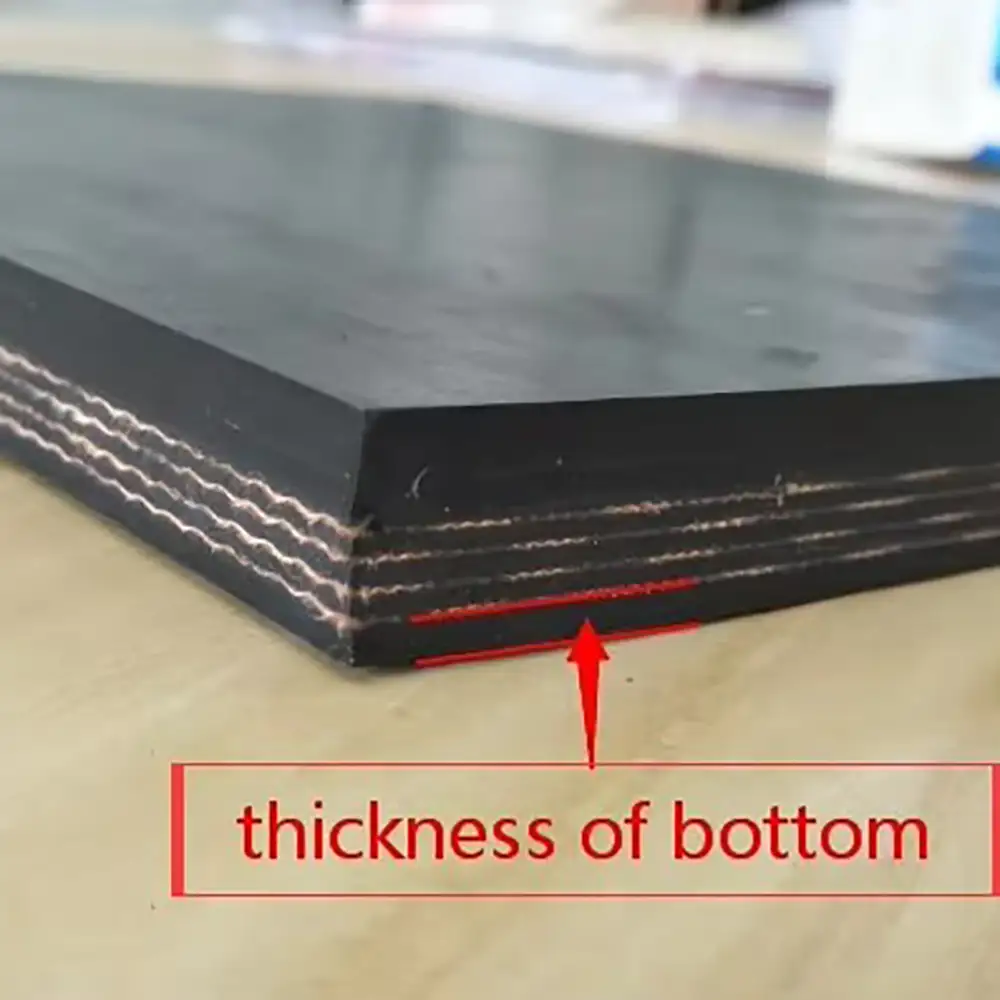
A polyester cotton heat-resistant conveyor belt consists of several functional layers, including the top rubber cover, fabric carcass, bottom rubber cover and bonding layers. The carcass provides tensile strength and dimensional support, while the specially formulated rubber covers are designed to resist the damaging effects of elevated temperature.
The polyester-cotton carcass is particularly suitable for certain conventional and medium-duty heat-resistant conveyor applications. Depending on the conveyor length, load, belt speed and operating conditions, customers may also select EP or other fabric constructions.
The heat-resistant rubber compound is one of the most important components of the belt. When exposed to elevated temperatures, unsuitable rubber can age rapidly, lose elasticity and develop surface cracking. A properly specified heat-resistant compound helps maintain the belt's mechanical integrity for the intended operating conditions.
Polyester Cotton Carcass Structure
The term polyester cotton covered can refer to a polyester-cotton fabric reinforcement used inside the conveyor belt rather than the outer rubber cover itself.
In a TC construction, polyester is typically used in the warp direction and cotton in the weft direction. This construction provides a combination of strength, flexibility and fabric characteristics suitable for selected conveyor applications. Commercial heat-resistant belt manufacturers list polyester-cotton TC fabric alongside CC cotton and EP polyester constructions.
The appropriate carcass should be selected according to:
Conveyor Length
Belt Width
Belt Speed
Material Capacity
Operating Tension
Material Temperature
Inclination
Impact Conditions
Pulley Diameter
Troughing Requirements
For longer, higher-tension conveyors, EP or steel-cord constructions may be more appropriate depending on the complete conveyor design.
Heat Resistant Rubber Cover
The outer cover is designed specifically for elevated-temperature service. Its function is to protect the carcass from direct exposure to hot conveyed materials while maintaining sufficient abrasion resistance and flexibility.
Different rubber formulations are available for different temperature conditions. Some commercial specifications classify heat-resistant belts into several temperature grades, such as T1, T2 and T3, while higher-temperature designs can use different carcass and rubber technologies. The exact temperature capability should always be confirmed against the manufacturer's specification rather than assumed from the product name.
Heat resistance should also be distinguished from short-term peak temperature. A belt may tolerate a brief exposure to a higher temperature while having a lower recommended continuous operating temperature.
Main Features
1. Heat Resistant Construction
The belt uses heat-resistant rubber compounds designed to reduce thermal aging and maintain useful mechanical performance under specified temperature conditions.
2. Polyester Cotton Fabric Carcass
The TC polyester-cotton carcass provides a flexible reinforcement option for suitable heat-resistant conveyor applications.
3. Good Abrasion Resistance
Hot materials such as clinker, coke and sintered materials can also be abrasive. The rubber cover can therefore be formulated to balance heat resistance with wear resistance.
4. Flexible Belt Body
A properly selected fabric construction can provide good troughability and flexibility, helping the belt conform to the conveyor carrying idlers.
5. Multiple Temperature Grades
Heat-resistant belts can be manufactured for different operating temperature ranges. Common commercial classifications include T1, T2 and T3, while higher-temperature applications may require specialized constructions.
6. Custom Belt Specifications
Width, tensile strength, number of plies, top cover thickness, bottom cover thickness, edge configuration and other specifications can be customized for different conveyor systems.
Typical Applications
A Polyester Cotton Heat Resistant Conveyor Belt can be used for:
Cement Clinker
Hot Coke
Sintered Ore
Hot Castings
Cement Raw Materials
Metallurgical Materials
Steel Mill Products
Foundry Materials
Hot Aggregate
Mineral Processing Materials
Power Plant Materials
Chemical Industry Materials
Cement and metallurgical industries are particularly common applications because conveyors may transport materials at temperatures that exceed the practical limits of ordinary general-purpose rubber belts.
Heat Resistant Conveyor Belt Temperature Grades
Temperature grade selection should be based on the actual material temperature and the belt manufacturer's test data.
For example, commercial products may use classifications in which lower grades are designed around approximately 100°C, 125°C or 150°C operating conditions, while specialized high-temperature products are available for more demanding service. However, these values are not universal across all manufacturers or standards.
When evaluating a conveyor belt, buyers should distinguish between:
Continuous Material Temperature:
The normal temperature of the material during regular conveying.
Peak Material Temperature:
The maximum temperature that may occur temporarily.
Belt Surface Temperature:
The actual temperature transferred to the belt cover.
Operating Environment:
Ambient temperature, ventilation, conveyor speed and cooling conditions.
These factors can produce significantly different belt temperatures even when the conveyed material has the same nominal temperature.
How to Select the Right Belt
Choosing the correct Heat Resistant Conveyor Belt requires a complete review of the conveyor system.
Material Temperature:
Provide both normal and maximum material temperatures.
Material Type:
Coke, clinker, sinter, castings and other materials can have different thermal and abrasive characteristics.
Belt Width:
The belt width should match the conveyor design and required conveying capacity.
Tensile Strength:
The belt strength should be suitable for conveyor length, loading and operating tension.
Cover Thickness:
Thicker covers may be appropriate for abrasive materials, but the final specification should consider heat transfer and belt flexibility.
Carcass Construction:
Polyester cotton, EP, NN and other carcass structures can be selected according to the conveyor design.
Pulley Diameter:
The minimum pulley diameter should be compatible with the selected belt construction and ply configuration.
Splice Design:
The splice must be compatible with the belt construction and operating temperature.
Installation and Maintenance
Before installation, inspect the belt for transportation damage and confirm the width, length, carcass, cover thickness and temperature specification.
The conveyor should be correctly aligned, and pulleys and idlers should be properly installed. Incorrect tracking can cause edge wear and localized heating. Material accumulation around pulleys should also be avoided.
During operation, inspect the belt regularly for surface cracking, hardening, blistering, edge damage, longitudinal cuts and splice deterioration. Excessive temperature exposure can accelerate rubber aging, so unusual changes in material temperature should be investigated.
Proper storage is also important. The belt should be protected from direct sunlight, ozone, excessive heat and chemicals that could damage the rubber compound.
Custom Polyester Cotton Heat Resistant Conveyor Belt
As a professional Heat Resistant Conveyor Belt Manufacturer and Supplier, we can provide customized polyester-cotton conveyor belt solutions for industrial material handling.
Customization can include:
Polyester Cotton TC Carcass
Number Of Plies
Belt Width
Belt Length
Tensile Strength
Top Cover Thickness
Bottom Cover Thickness
Heat Resistant Rubber Grade
Abrasion Resistant Rubber
Cut Edge Or Molded Edge
Splice Configuration
OEM Packaging
Custom Marking
Customers can provide their conveyor specifications, existing belt sample, drawings or technical requirements for evaluation.
Why Choose Us?
Application-Based Belt Selection
We consider material temperature, conveyor tension, belt speed, material characteristics and operating conditions when recommending a belt.
Polyester Cotton And Other Carcass Options
TC polyester-cotton, EP, NN and other constructions can be evaluated for different conveyor requirements.
Customized Heat Resistance
Different rubber compounds and temperature grades can be selected according to the required operating conditions.
Balanced Heat And Wear Performance
For abrasive hot materials, the cover compound can be specified to provide an appropriate balance between thermal resistance and abrasion resistance.
OEM Manufacturing
Belt width, thickness, strength, ply construction, edge type and packaging can be customized for distributors and industrial users.
Export-Oriented B2B Service
We support conveyor belt distributors, equipment manufacturers, cement plants, steel mills, mining companies and industrial material-handling projects.
FAQs
1. What Is a Polyester Cotton Heat Resistant Conveyor Belt?
It is a heat-resistant rubber conveyor belt using polyester-cotton fabric as a reinforcement carcass and specialized heat-resistant rubber covers for transporting hot materials.
2. What Does Polyester Cotton Mean in Conveyor Belts?
Polyester cotton, often referred to as TC fabric, generally means polyester is used in the warp direction while cotton is used in the weft direction. It is one of the carcass options used in industrial conveyor belts.
3. What Materials Can This Belt Convey?
Typical applications include hot coke, cement clinker, sintered materials, hot castings and other hot bulk materials used in cement, metallurgy, steel and related industries.
4. What Temperature Can a Heat Resistant Conveyor Belt Handle?
The allowable temperature depends on the rubber compound, carcass construction, material characteristics and applicable standard. Commercial products use different temperature grades, so the exact operating and peak temperatures should be confirmed before ordering.
5. Is Polyester Cotton Better Than EP for Heat Resistant Belts?
Neither is universally better. Polyester-cotton and EP have different mechanical characteristics and should be selected according to conveyor tension, length, speed, load and operating temperature.
6. Can the Belt Handle Cement Clinker?
Yes. Heat-resistant conveyor belts are commonly used for cement clinker conveying, provided the belt's temperature and abrasion specifications match the actual application.
7. Can This Belt Be Used for Hot Coke?
Yes. Hot coke is a common application for heat-resistant conveyor belts. The belt should be selected according to the coke temperature, particle size, impact conditions and conveyor design.
8. Is Heat Resistant the Same as Flame Resistant?
No. Heat resistance is primarily related to performance under elevated temperatures, while flame resistance concerns ignition and flame propagation characteristics. A belt may require one or both properties depending on the application.
9. Can You Customize the Polyester Cotton Conveyor Belt?
Yes. Belt width, length, tensile strength, ply count, cover thickness, carcass construction, rubber grade, edge type and packaging can be customized.
10. What Information Should I Provide for a Quotation?
Provide belt width, length, conveying material, material temperature, capacity, belt speed, conveyor length, inclination, tensile strength if known, cover thickness and required temperature or quality standard.
Prev:
Endless Conveyer Belt, Quality Endless Rubber Conveyor Belt
Next:
Flame Resistant Conveyor Belt
TAG:
Industrial Heat Resistant Conveyor Belt,
Heat Resistant Conveyor Belting,
Heat Resistant Conveyor Belt,
Heat Resistant Rubber Conveyor Belt,
High Temperature Conveyor Belting,
Hot Material Handling Conveyor Belt,
Hot Material Conveyor Belt,
High Temperature Conveyor Belt,
Polyester Conveyor Belt,
Heat Resistant Rubber Belting,
Cement Conveyor Belt,
Cement Clinker Conveyor Belt,
Metallurgy Conveyor Belt,
Heat Resistant Industrial Belt,
Heat Resistant Conveyor Belt Manufacturer,
Heat Resistant Conveyor Belt Supplier,
Polyester Cotton Conveyor Belt,
Polyester Cotton Heat Resistant Belt,
TC Conveyor Belt,
TC Fabric Conveyor Belt,
Hot Coke Conveyor Belt,
Steel Mill Conveyor Belt,
Mining Heat Resistant Conveyor Belt,
Heat Resistant Fabric Conveyor Belt,
Cotton Conveyor Belt,
EP Heat Resistant Conveyor Belt,
NN Heat Resistant Conveyor Belt,
Related Category:
Heat Resistant Conveyor Belt By Polyester Cotton Covered, Polyester Cotton Conveyor Belt, Heat Resistant Conveyor Belt China, suppliers, manufacturers, factory, customized, wholesale, quotation, made in China