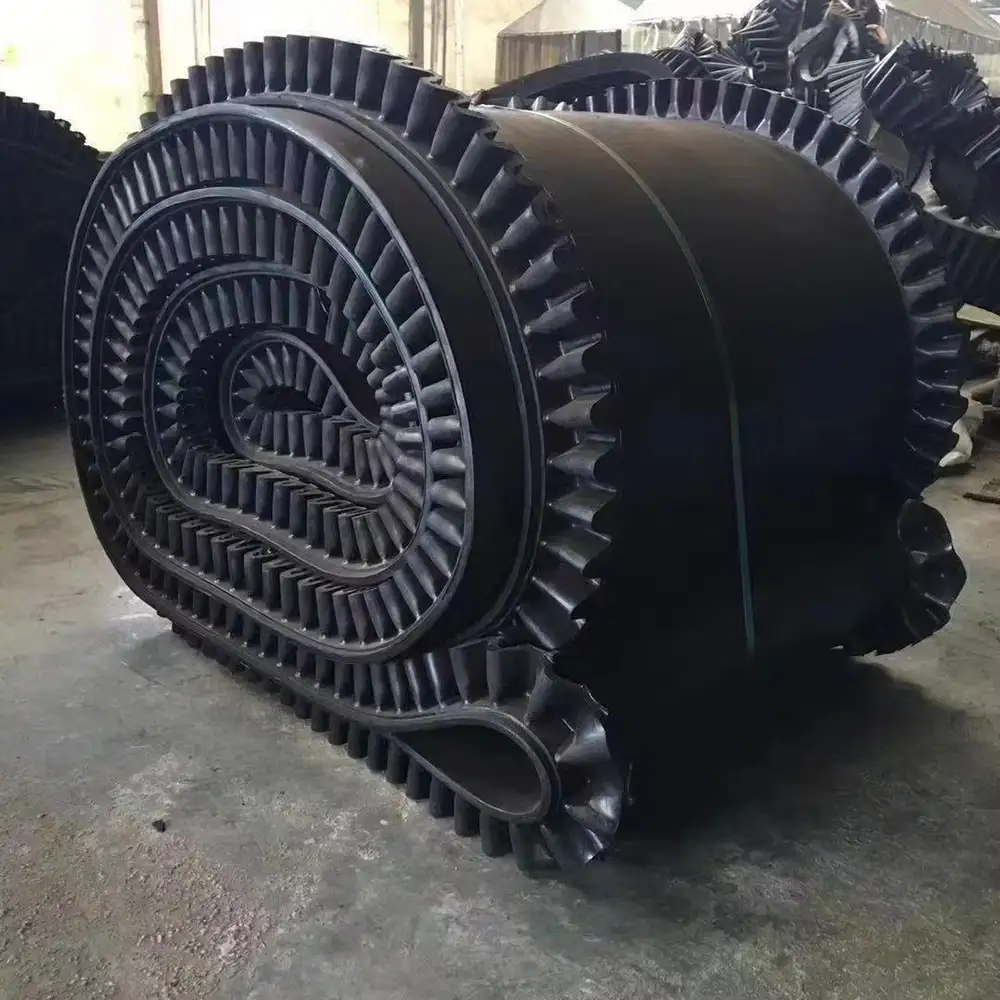
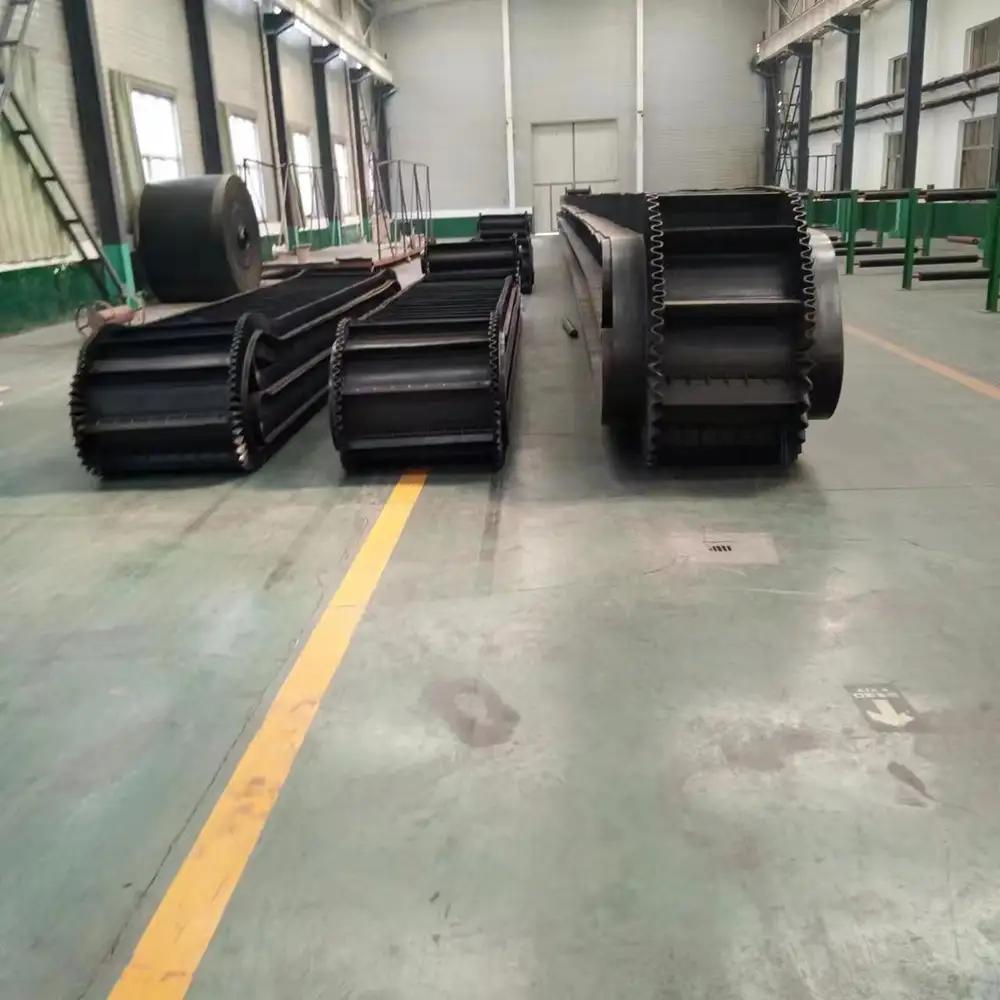
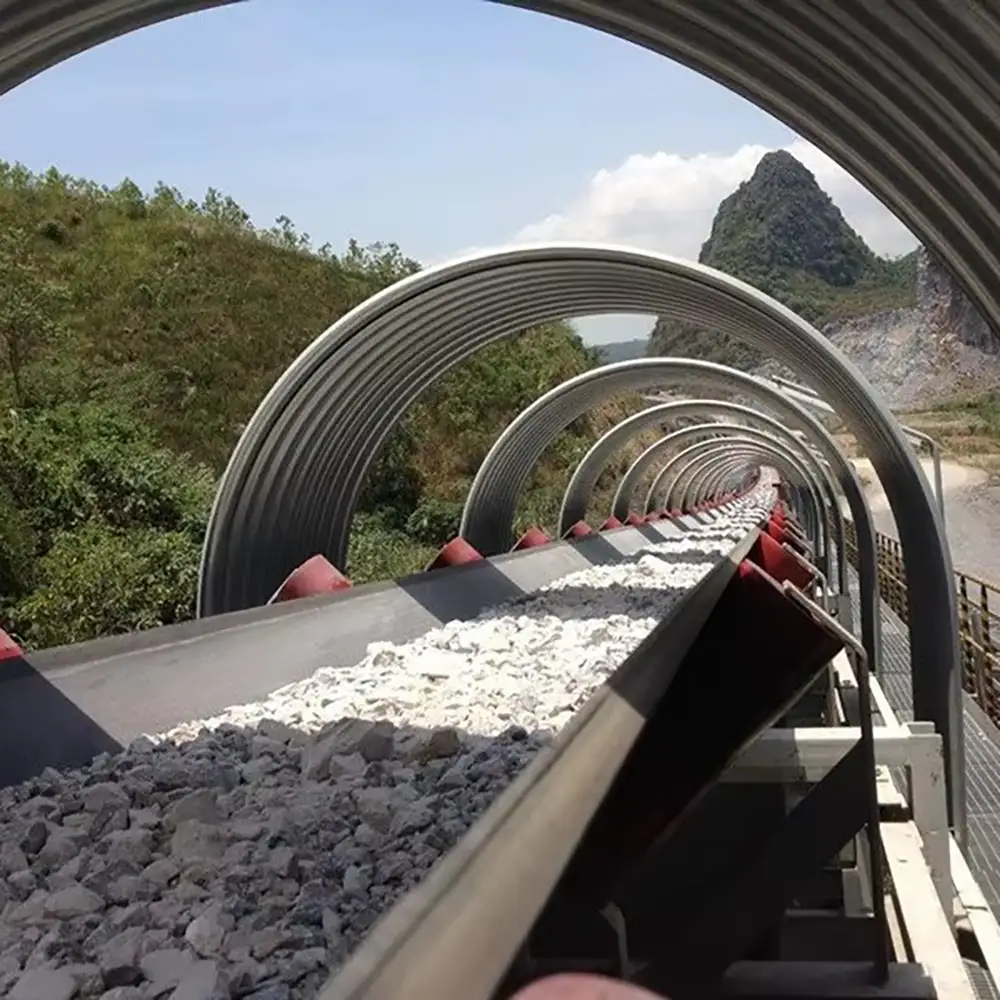
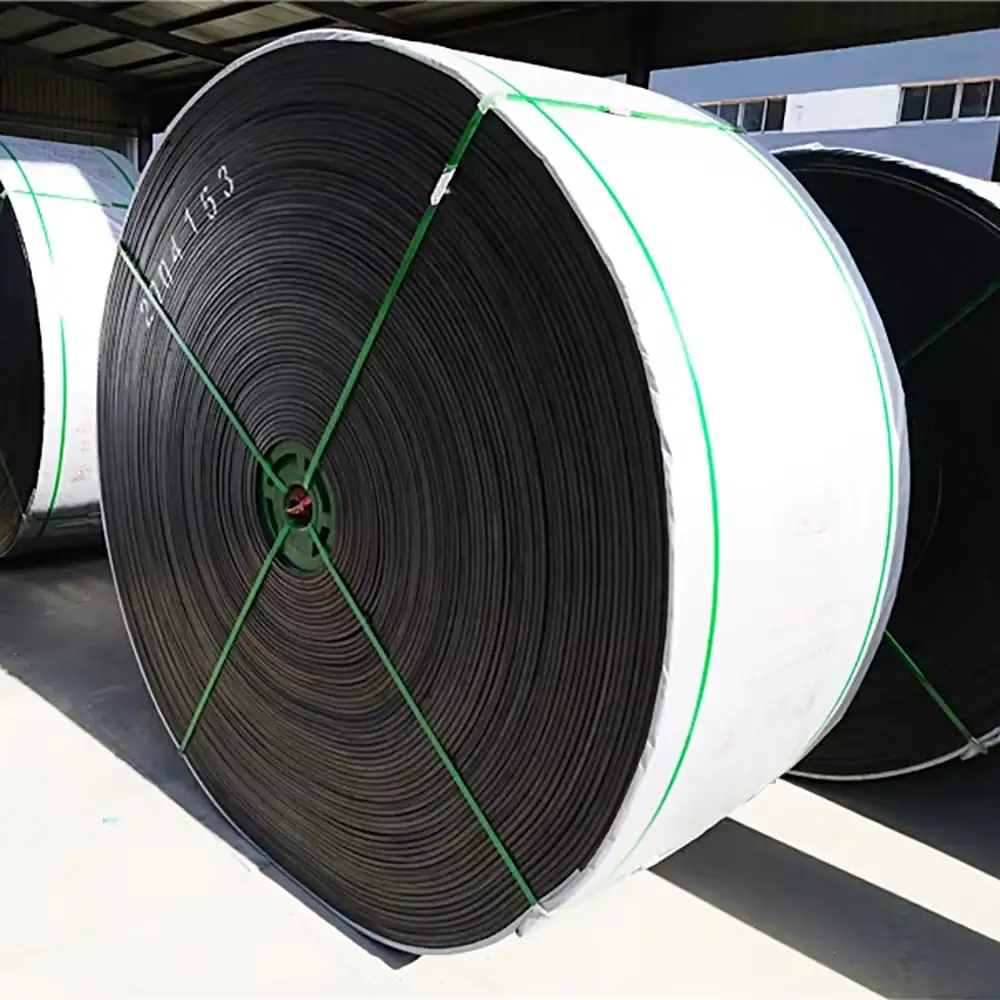
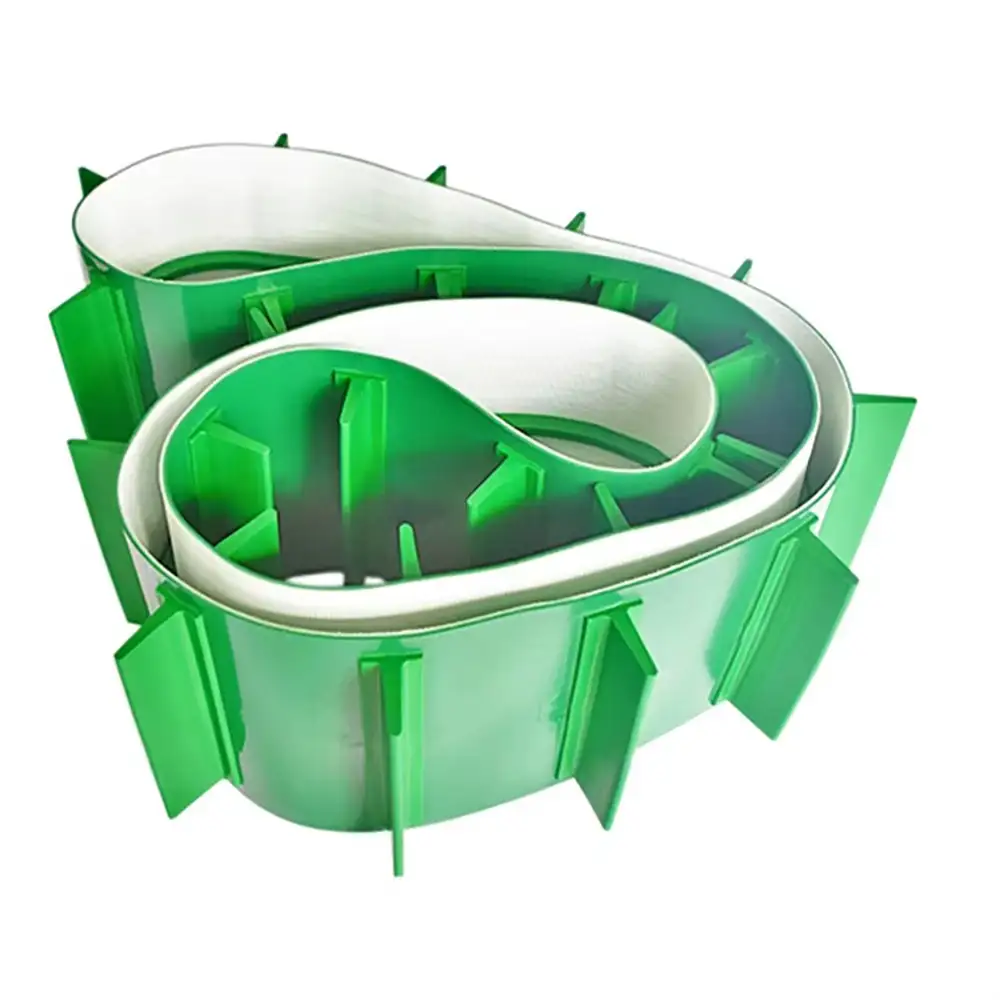
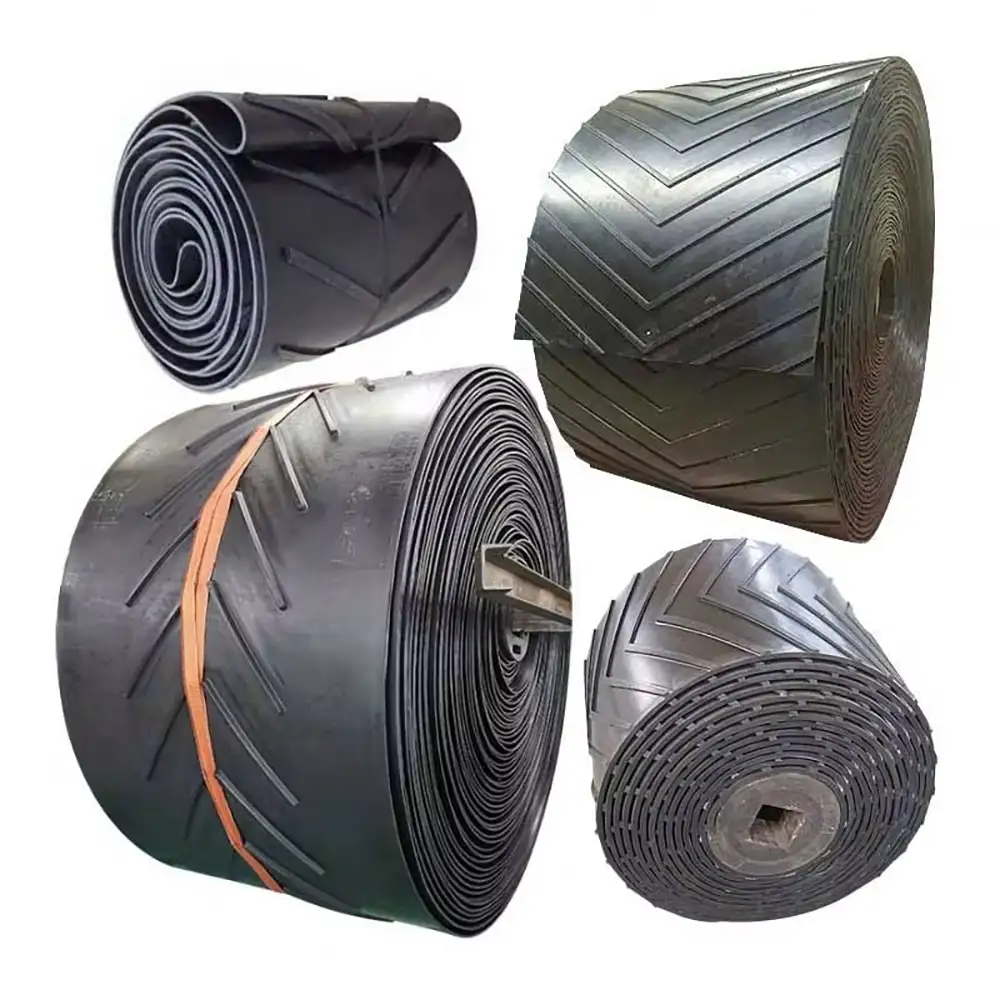
Our range of Flexible Rubber Sidewall Belting is custom manufactured for both incline conveying (up to 90DEG.) & flat conveying.
Available in a range of belt constructions, widths and with Flexible Rubber Sidewalls up to 400mm in height, Beltwall Cross-Rigid (cross stabilized) Belting provides lateral rigidity for side to side support, whilst still allowing longitudinal flexibility. Beltwall Belts are is use worldwide with thousands of successful installations in virtually every type of industry.
Our Design Information Data Sheet provides a guide for the information necessary to accurately select the optimal Beltwall design.
Product Use
Corrugated sidewall belt is widely used for bulk material lifting in harbors, metallurgy, tunneling, power plant, chemical industry, cement and metro, etc. The conveying capacity can be reached to 6000 m³ / h.
Product Feature
Steep incline conveying from 0 to 90 degrees.
No transfer points.
No spillage with steep angle conveying.
Maximum utilization of space.
Minimum maintenance, long belt Life.
Wide range of materials can be handled.
Sidewall belts require a certain tensile strength and abrasion resistance. For belt has to have enough cross rigidity and flexibility longitudinally to meet up with the requirement of the deflection part of the conveyor. The specially designed base belt with cross rigidity solved the problem of belt deformation. The belt standard are in accordance with international
standard. Main Rubber Types
Normal Standard High Abrasion Resistant
Moderate Oil Resistant
Heat Resistant to 120ºC
Heat Resistant to 150ºC
High Heat Resistant to 180ºC
Flame Retardant(Self-extinguishing)
Our sidewalls represent the latest in design ideas and manufacturing techniques. The sidewall design ensures maximum flexing without fatigue, the profile has excellent vertical stability for load retention and return side support. The design allows for high compression to ensure smooth inner deflection around small radii. Another important design feature is that the sidewalls can be pressed form both sides when being applied to the base belt, this offers much higher bond strengths and security. The fabric insertion is of the diagonal type which gives excellent tear resistance and also allows the sidewall to flex more easily. The rubber compounds used have been tested to ensure maximum flexibility along with high abrasion resistant and high tensile strength and provide additional resistances where needed.
|
Type |
H
(mm) |
BW (mm) |
TW
(mm) |
P
(mm) |
Weight(kg/m) |
Min Pulley Din(mm) |
S |
40 |
30 |
20 |
25 |
0.45 |
125 |
|
|
60 |
50 |
45 |
40 |
1.38 |
160 |
|
|
80 |
50 |
45 |
40 |
1.70 |
200 |
|
|
100 |
50 |
45 |
40 |
2.00 |
250 |
|
|
120 |
50 |
45 |
40 |
2.65 |
315 |
MDSF |
120 |
75 |
65 |
63.5 |
3.20 |
315 |
|
|
160 |
75 |
65 |
63.5 |
4.20 |
400 |
|
|
200 |
75 |
65 |
63.5 |
5.02 |
500 |
|
|
240 |
75 |
65 |
63.5 |
7.50 |
630 |
|
|
250 |
75 |
65 |
63.5 |
7.80 |
630 |
|
|
280 |
75 |
65 |
63.5 |
8.70 |
800 |
|
|
300 |
75 |
65 |
63.5 |
9.40 |
800 |
HHDF |
300 |
100 |
90 |
83 |
10.10 |
800 |
|
|
400 |
100 |
90 |
83 |
14.80 |
1000 |
|
|
500 |
105 |
95 |
89 |
19.10 |
1250 |
Our sidewalls type 120mm and higher have special diagonal fabric reinforcement in the corrugations as standard, but smaller sidewalls can have this feature where required.
The above pulley diameter is limited to ordinary grade and standard coating rubber thickness. When the special grade of coating rubber and strength are different, a larger pulley diameter may be required. Please consult for specific specifications.
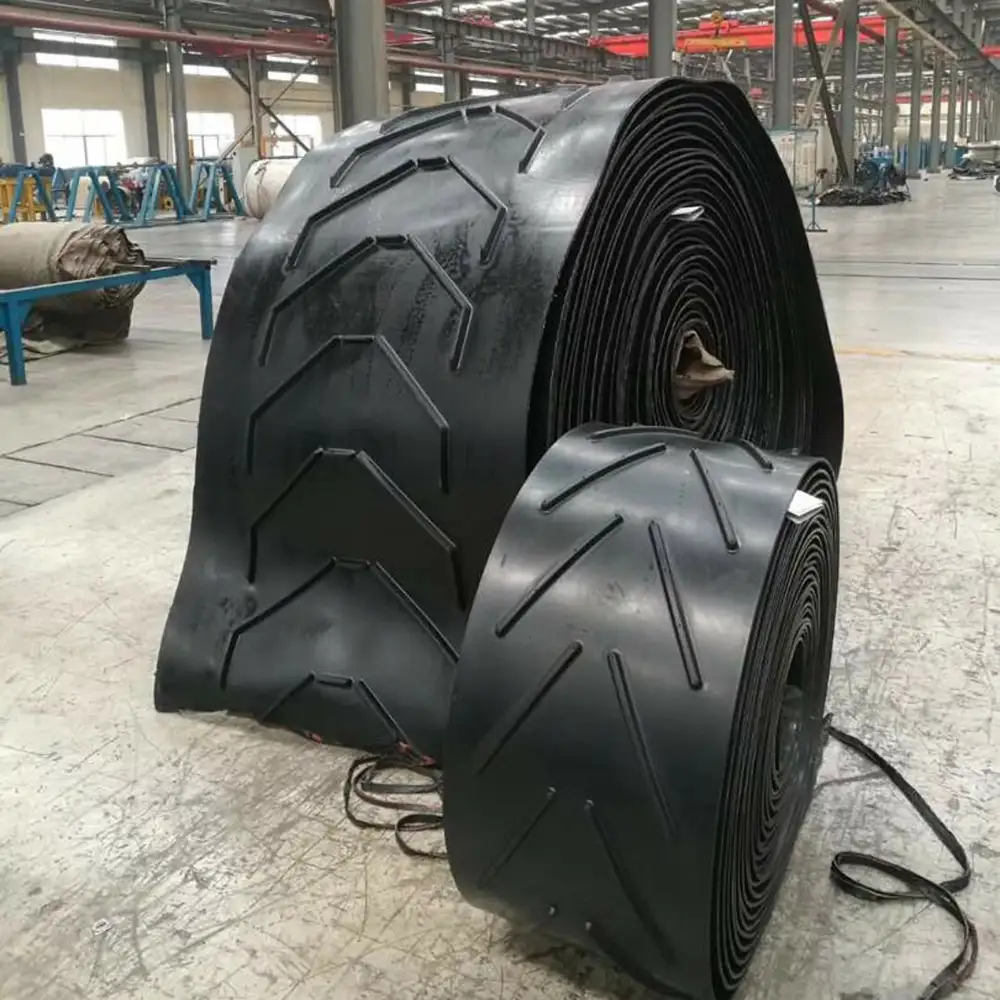
Cleat Range
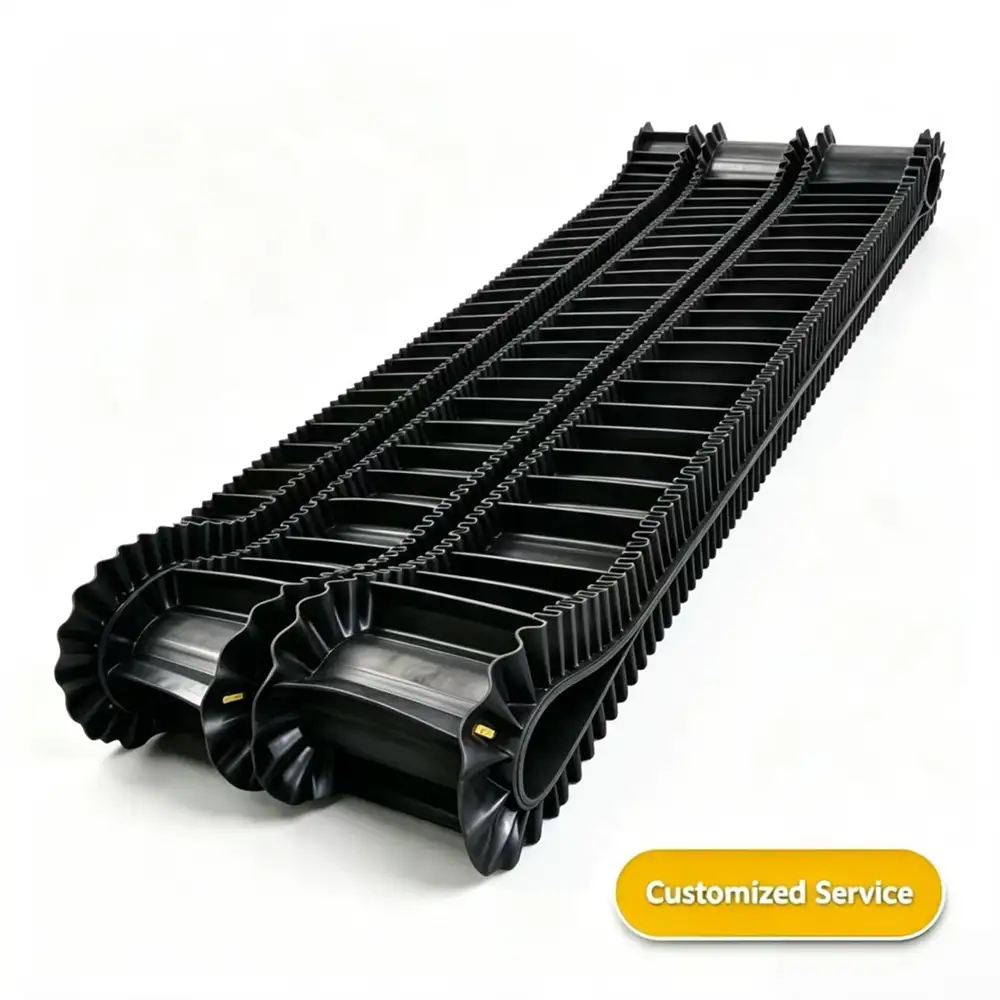
The design of the cleat guarantees its best performance. C-type and TC-type cleat design can provide the maximum conveying capacity and have good self-cleaning performance. The production of the cleats adopts the molding process, and the specially developed rubber materials produce the cleats with large stiffness and strong impact resistance, and they are not easy to deform even if the cleats carry higher density materials. The unique rubber formula of the cleat is designed to be stiff, and it also enhances the impact resistance of the cleat, thereby preventing the cleat from deforming due to long-term stress.
When the conveying angle is less than 40 degrees, the cleat is generally T type; when the conveying angle is greater than 40 degrees, the cleat is generally C type, TC type or TCS type. The fine adjustment of the cleat distance needs to consider the correspondence with the sidewall wave crest, and the side bolt fastening device matched with different types of cleats can prevent materials from leaking from the gap between the cleats and unloading to cause accumulation of dead ends.
|
Cleat Type |
Height(mm) |
Base Width(mm) |
Weight(Kg/m) |
Min Pulley Dia(mm) |
|
C |
55 |
100 |
1.45 |
125 |
|
75 |
100 |
2.00 |
150 |
|
T |
90 |
110 |
2.81 |
250 |
|
110 |
110 |
3.27 |
315 |
|
55 |
100 |
1.61 |
125 |
|
75 |
100 |
2.20 |
150 |
|
90 |
110 |
2.70 |
250 |
|
110 |
110 |
3.23 |
315 |
|
140 |
160 |
5.49 |
400 |
|
180 |
160 |
6.67 |
500 |
|
230 |
160 |
8.60 |
630 |
|
TC |
55 |
75 |
1.13 |
125 |
|
75 |
100 |
1.82 |
150 |
|
90 |
110 |
3.22 |
250 |
|
110 |
110 |
3.94 |
315 |
|
140 |
150 |
5.49 |
400 |
|
180 |
150 |
6.81 |
500 |
|
230 |
160 |
8.68 |
630 |
|
280 |
180 |
14.90 |
800 |
|
230 |
160 |
13.80 |
630 |
|
TCS |
280 |
160 |
15.30 |
800 |
|
360 |
230 |
22.80 |
1000 |
|
470 |
230 |
30.80 |
1250 |
Our cleats form 110mm and higher have special diagonal fabric reinforcement in the vertical and angled parts, but smaller cleats can have this feature when required.
A rubber sidewall conveyor belt is a specialized conveying belt designed to transport bulk materials at steep inclines or in vertical conveying systems. Unlike a conventional flat conveyor belt, it features flexible corrugated rubber sidewalls and transverse cleats that help contain materials and reduce spillage during transportation.
This construction makes the belt suitable for applications where floor space is limited, conveying routes need to rise sharply, or bulk materials must be transferred between different elevations. Rubber sidewall conveyor belts are used in mining, cement production, power generation, ports, fertilizer processing, aggregate handling, and other industries that require efficient material transportation.
As an industrial conveyor belt manufacturer and supplier, we can discuss belt specifications according to the conveyor design, material characteristics, lifting height, operating conditions, and required conveying capacity. Options may include different carcass constructions, sidewall profiles, cleat designs, and rubber compounds.
What Is a Rubber Sidewall Conveyor Belt?
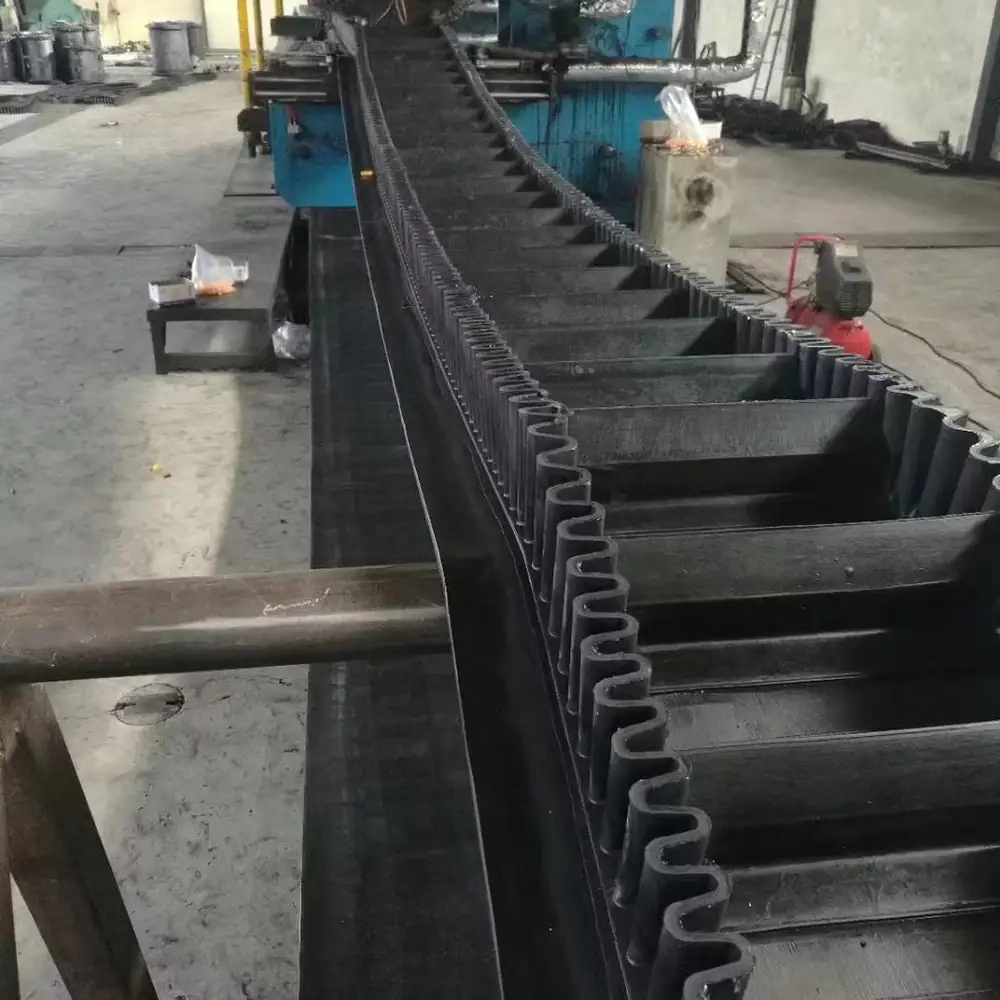
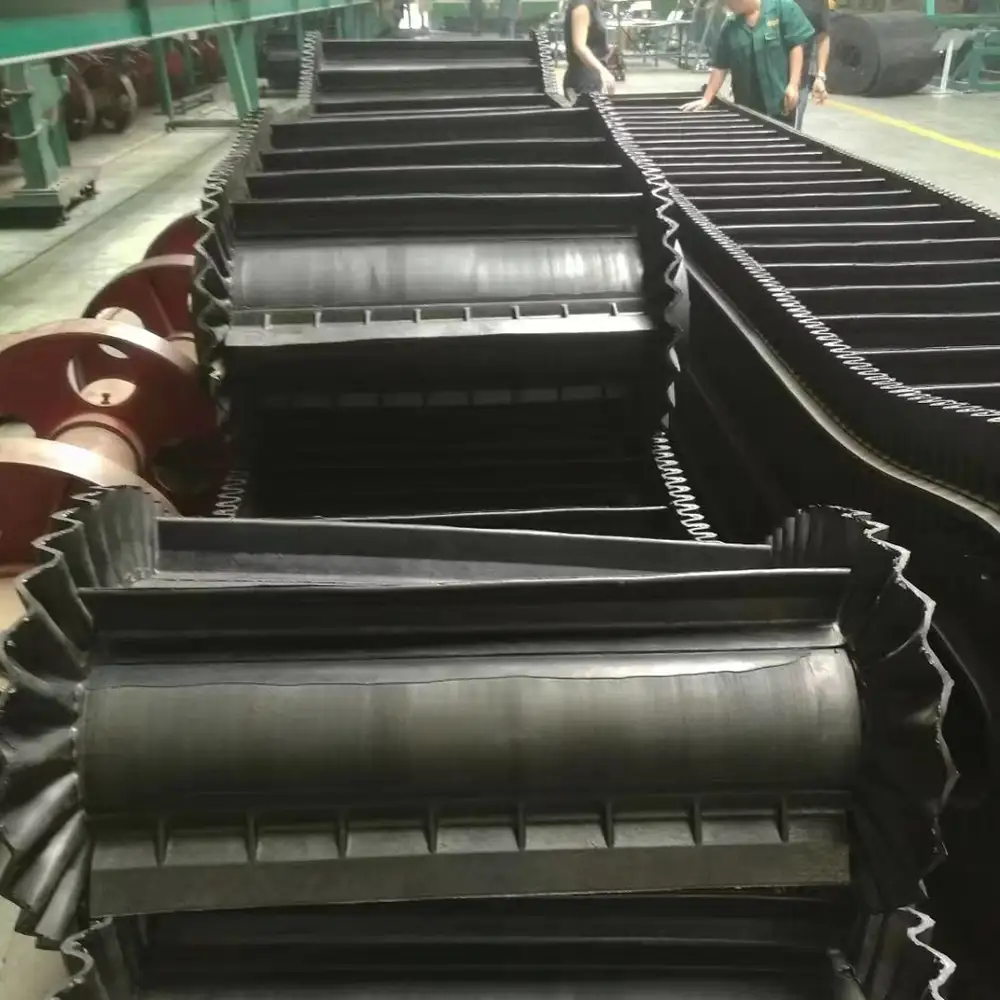
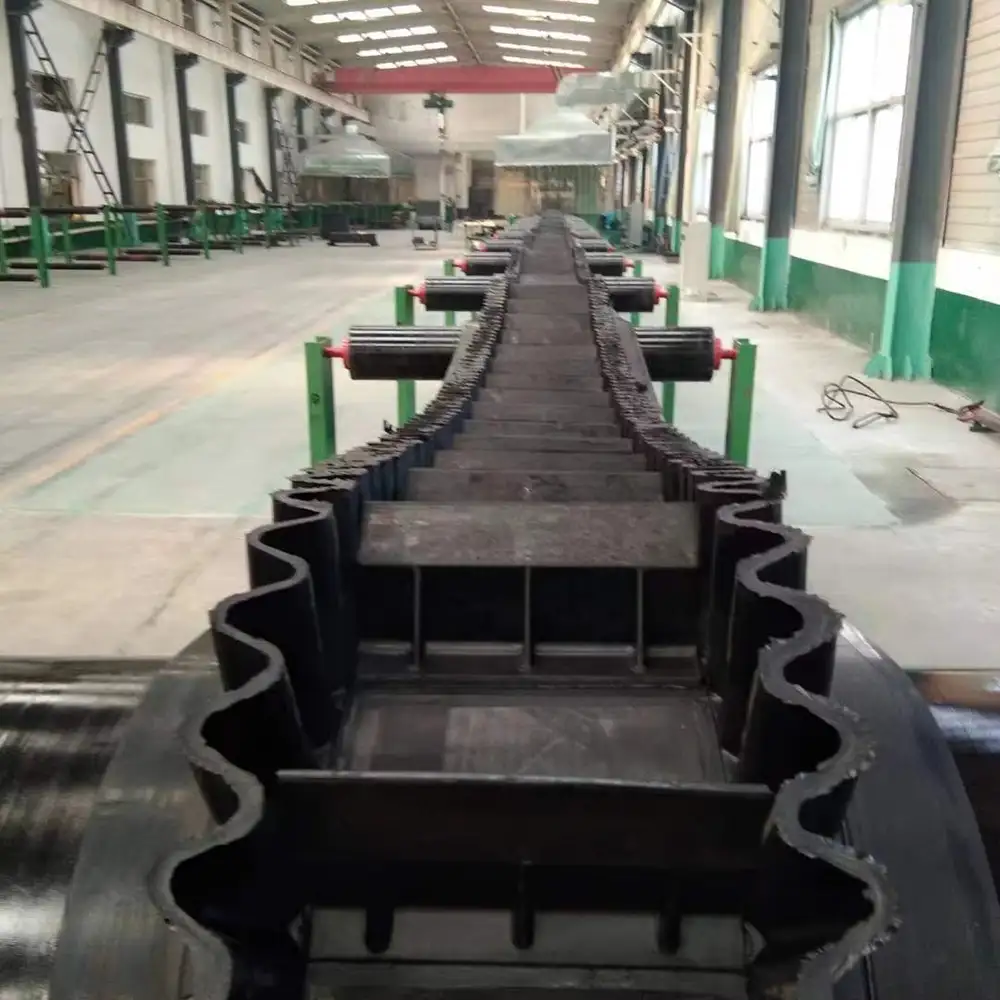
A rubber sidewall conveyor belt is generally composed of three main elements: a reinforced base belt, corrugated sidewalls, and transverse cleats.
Base Belt: The base belt provides tensile strength and supports the conveyed material. Depending on the application, it may use EP fabric, NN fabric, or other suitable reinforcement constructions. The base belt must be compatible with the sidewall system and the conveyor's mechanical requirements.
Corrugated Sidewalls: Flexible rubber sidewalls are attached along the belt edges. Their corrugated shape allows the belt to bend around pulleys while forming containment walls that help prevent bulk materials from falling off the sides.
Transverse Cleats: Cleats are mounted across the belt surface to create carrying compartments. They help support material as the belt travels upward and reduce rollback on steep conveying routes.
Together, these components form a conveying surface that can handle bulk materials on inclines that may not be practical for ordinary flat belts. The achievable angle and capacity depend on the complete conveyor design, material properties, cleat arrangement, and operating conditions.
Key Features and Benefits
1. Steep Angle Conveying
The sidewalls and cleats help retain bulk materials as the belt moves upward. This design can reduce the need for long, gradual conveyor routes and may help save installation space.
2. Vertical Material Transportation
For suitable materials and conveyor configurations, sidewall belts can be used in high-angle or vertical conveying systems. The cleats form compartments that support material during lifting.
3. Reduced Material Spillage
Corrugated sidewalls help contain material along the belt edges, while cleats divide the carrying surface into sections. Correctly selected profiles can help reduce material loss during conveying.
4. Flexible Belt Construction
The corrugated sidewalls are designed to flex as the belt passes around pulleys. The belt structure must balance flexibility with strength, adhesion, and resistance to the operating loads.
5. Adaptable Cleat Profiles
Cleat height, spacing, shape, and arrangement can be selected according to the material and conveying conditions. Different designs may be used for fine powders, granules, aggregates, or larger bulk materials.
6. Space-Efficient Layout
Steep angle conveying can reduce the horizontal distance needed to raise materials to a higher level. This can be useful in compact production facilities, transfer stations, and plants with limited space.
Applications of Rubber Sidewall Conveyor Belts
Rubber sidewall conveyor belts are used in various bulk material handling operations.
Mining: Transporting ore, coal, mineral products, and other bulk materials between processing stages.
Cement Plants: Moving limestone, clinker, raw materials, and other compatible products.
Power Plants: Conveying coal, ash, and other bulk materials within suitable systems.
Ports and Terminals: Transferring bulk cargo where compact conveying routes are needed.
Fertilizer Industry: Handling granules and other processed materials.
Quarries and Aggregate Plants: Moving sand, gravel, crushed stone, and mineral products.
Chemical Processing: Conveying compatible granular and powdered materials.
Recycling Facilities: Transporting selected recyclable materials between processing and sorting equipment.
The belt compound and construction should be selected for the specific material, including its temperature, abrasiveness, moisture, and chemical characteristics.
Available Belt Construction and Customization
Rubber sidewall conveyor belts can be specified according to the equipment and material handling requirements. Common purchasing parameters include:
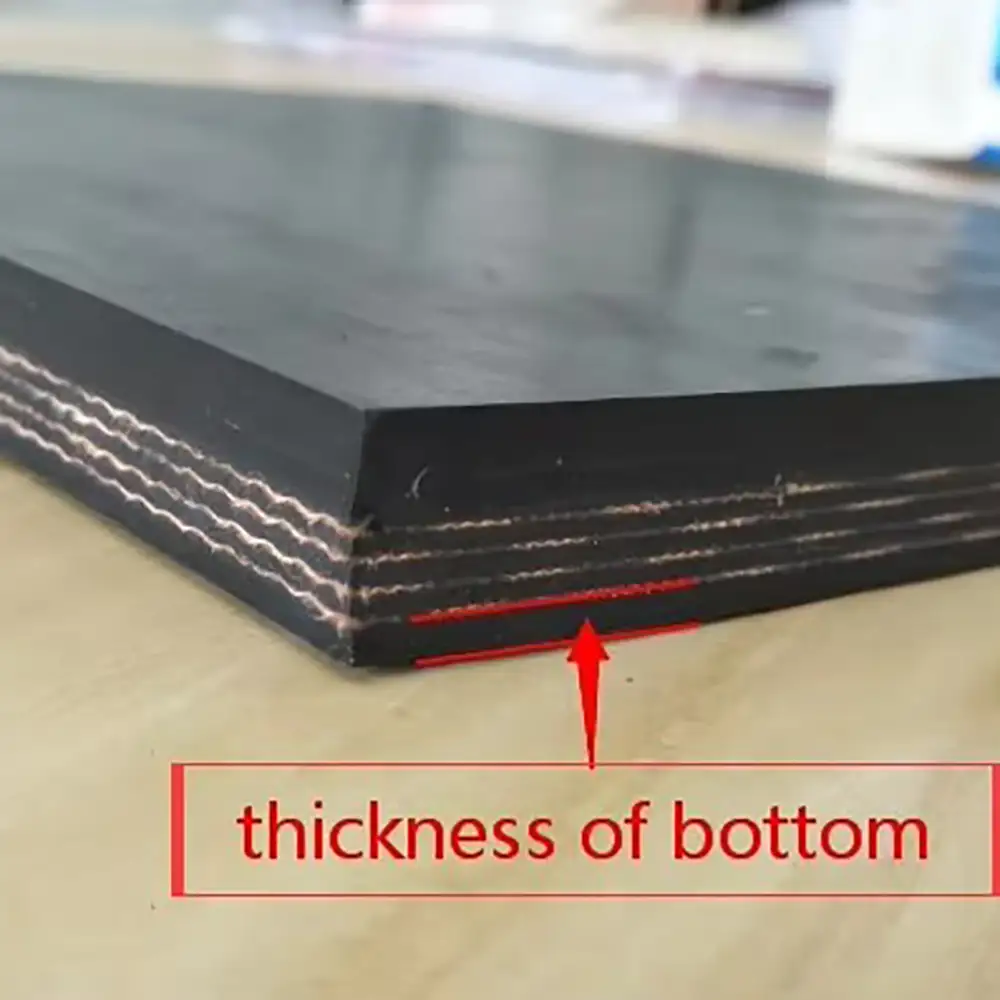
Base Belt Reinforcement: EP, NN, or another suitable construction, depending on tensile strength and system design.
Belt Width: Selected according to the conveyor frame, material flow, and required carrying capacity.
Sidewall Height: Chosen based on material volume, cleat height, and the required containment arrangement.
Cleat Height and Pitch: Determined by material size, bulk density, incline, and conveying performance requirements.
Rubber Compound: Selected according to abrasion, weather, heat, oil, or other service conditions.
Cover Thickness: Specified according to wear, impact, and operating requirements.
Belt Length and Jointing: Based on the conveyor layout, installation method, and maintenance requirements.
Special Configurations: Certain systems may require additional design considerations for cross-rigid construction, pulley arrangements, or customized cleat profiles.
Exact dimensions, adhesion requirements, tensile properties, and permissible operating conditions should be confirmed against the manufacturer's technical specifications.
How to Choose the Right Sidewall Conveyor Belt
Selecting a suitable belt begins with the material and conveyor layout.
First, identify the material being conveyed. Particle size, bulk density, moisture, temperature, and abrasiveness all affect the belt design. Fine powders and coarse aggregates may require different cleat profiles and containment arrangements.
Next, confirm the conveyor's inclination, lifting height, belt speed, and required capacity. These parameters influence the sidewall height, cleat spacing, and overall belt construction.
The pulley diameter and belt path are also important because the sidewalls and cleats must flex appropriately during operation. A belt that is too stiff or incorrectly matched to the pulley arrangement may experience excessive stress or premature wear.
Finally, review the expected operating environment. Outdoor exposure, oil contact, heat, and abrasive materials may require a specialized rubber compound. Provide conveyor drawings or existing belt details when requesting a quotation.
Installation and Maintenance
Correct installation helps protect the base belt, sidewalls, and cleats from unnecessary stress. Before installation, inspect the belt for transport damage and verify the dimensions and construction against the purchase specification.
Check pulley alignment, belt tracking, take-up settings, idler condition, and loading point geometry. The conveyor should be configured to avoid material buildup, uneven loading, and interference with the sidewalls.
During operation, inspect the sidewall-to-base bonding areas, cleat edges, belt surface, and splice. Look for cracking, tearing, delamination, unusual wear, or tracking problems. Remove accumulated material using a cleaning method suitable for the belt compound and cleat design.
Maintenance intervals should be based on operating conditions and the manufacturer's recommendations. Correct loading, alignment, and tension can help reduce avoidable wear and extend service life.
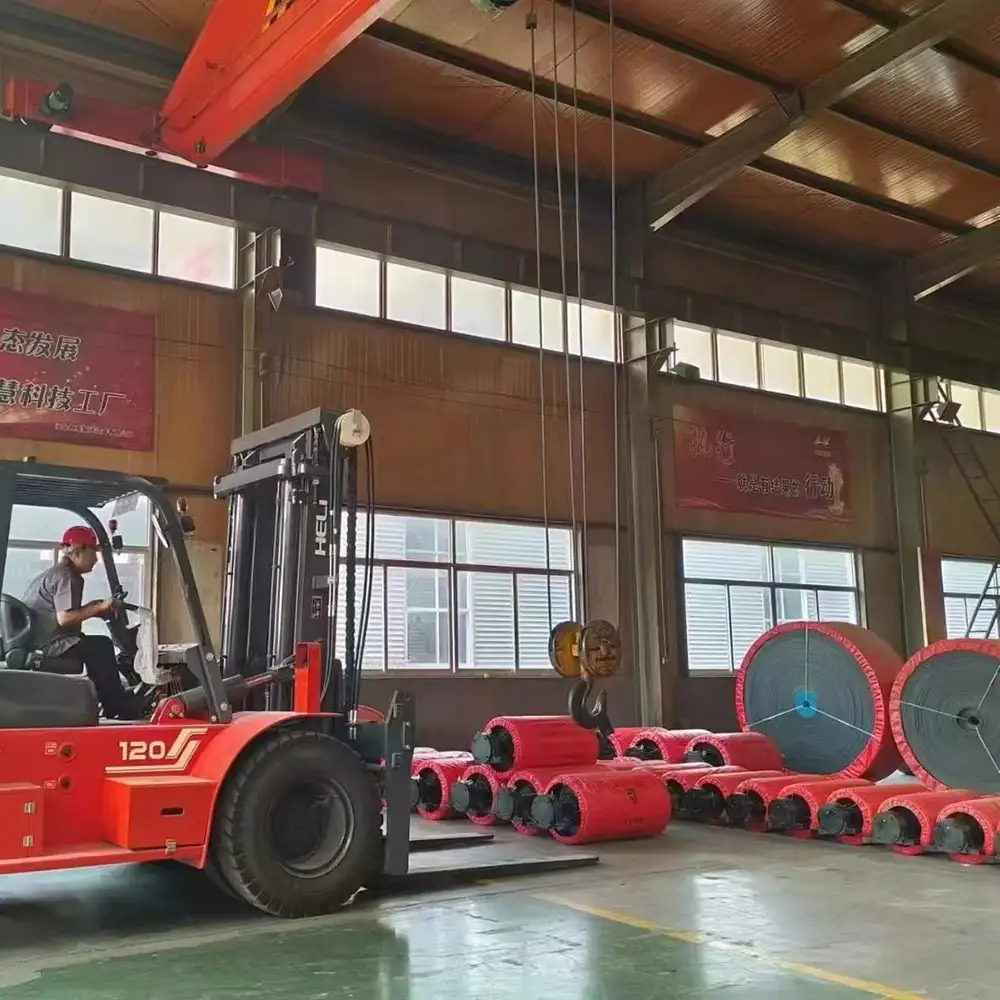
Why Choose Us
Industrial Conveyor Belt Supply: Options for bulk material handling and specialized steep angle conveying projects.
Custom Sidewall and Cleat Designs: Discuss sidewall height, cleat profile, spacing, and belt dimensions for your application.
Material-Based Selection: Compare available rubber compounds and reinforcement constructions according to operating conditions.
OEM and Wholesale Support: Supply discussions for conveyor manufacturers, industrial users, distributors, and project contractors.
Specification Review: Share your conveyor drawing, belt details, and material data to help identify a suitable construction.
Export-Oriented Service: Clear communication on specifications, order quantities, packaging, and technical requirements.
Frequently Asked Questions
1. What is a rubber sidewall conveyor belt used for?
It is used to transport bulk materials at steep inclines or in vertical conveying systems. Its corrugated sidewalls and transverse cleats help contain and support material during lifting.
2. What is the difference between a sidewall conveyor belt and a regular conveyor belt?
A regular flat belt has a relatively simple conveying surface. A sidewall belt adds corrugated rubber walls and cleats to help retain material on steep or vertical routes.
3. Can a rubber sidewall conveyor belt convey materials vertically?
Some sidewall belt systems are designed for vertical conveying. Suitability depends on material characteristics, cleat design, belt construction, and the complete conveyor configuration.
4. What materials can be conveyed?
Depending on the belt design, applications may include coal, ore, limestone, sand, gravel, fertilizer granules, and other bulk materials. Abrasiveness, temperature, moisture, and particle size should be considered.
5. What are corrugated sidewalls?
They are flexible, wave-shaped rubber walls attached along the edges of the belt. Their corrugated structure allows bending around pulleys while helping contain material.
6. What is the function of transverse cleats?
Transverse cleats form carrying compartments and help support bulk materials as the belt moves upward. Their height, profile, and spacing depend on the application.
7. Can sidewall height and cleat spacing be customized?
Many designs allow these dimensions to be specified according to the conveyor and material requirements. Confirm available profiles and manufacturing limits with the supplier.
8. What reinforcement is used in sidewall conveyor belts?
The base belt may use EP fabric, NN fabric, or another suitable reinforcement construction. Selection depends on the required tensile strength, flexibility, and system design.
9. How do I prevent sidewall damage and cleat separation?
Use a belt matched to the conveyor's pulley arrangement and loading conditions. Maintain proper alignment and tension, avoid material buildup, and inspect bonding areas regularly.
10. What information should I provide when requesting a quotation?
Provide belt width, length, base belt construction, sidewall height, cleat profile and spacing, material type, conveying angle, capacity, and operating conditions. A drawing or existing belt specification is helpful.
Request a Quote
Contact us with your conveyor layout, material details, required lifting height, and belt specifications. We can discuss suitable rubber sidewall conveyor belt options for your steep angle or vertical conveying project.
Prev:
Sidewall Conveyor Belt, Corrugated Sidewall Conveyor Belts
Next:
Industrial Conveyor Belts, Heat resistant Industrial Conveyor Belts
TAG:
Industrial Rubber Conveyor Belt,
Bulk Material Conveyor Belt,
Gravel Conveyor Belt,
Ore Conveyor Belt,
Incline Conveyor Belt,
Inclined Conveyor Belt,
Heavy Duty Conveyor Belt,
Stone Conveyor Belt,
Fertilizer Conveyor Belt,
EP Sidewall Conveyor Belt,
NN Sidewall Conveyor Belt,
Heat Resistant Sidewall Conveyor Belt,
Abrasion Resistant Sidewall Conveyor Belt,
High Angle Belt Conveyor,
Steep Incline Belt Conveyor,
Mining Sidewall Conveyor Belt,
Cement Sidewall Conveyor Belt,
Coal Sidewall Conveyor Belt,
Aggregate Sidewall Conveyor Belt,
Vertical Bulk Material Conveyor,
Sidewall Rubber Belt,
Bulk Material Handling Conveyor,
Industrial Sidewall Conveyor,
Flexible Sidewall Conveyor Belt,
Heavy Duty Sidewall Conveyor Belt,
Sidewall Cleated Conveyor Belt,
Cleated Sidewall Conveyor Belt,
Wave Sidewall Conveyor Belt,
Large Inclination Conveyor Belt,
Corrugated Rubber Conveyor Belt,
Related Category:
Rubber Sidewall Conveyor Belt, Corrugated Sidewall Conveyor Belt, Steep Angle Conveyor Belt China, suppliers, manufacturers, factory, customized, wholesale, quotation, made in China