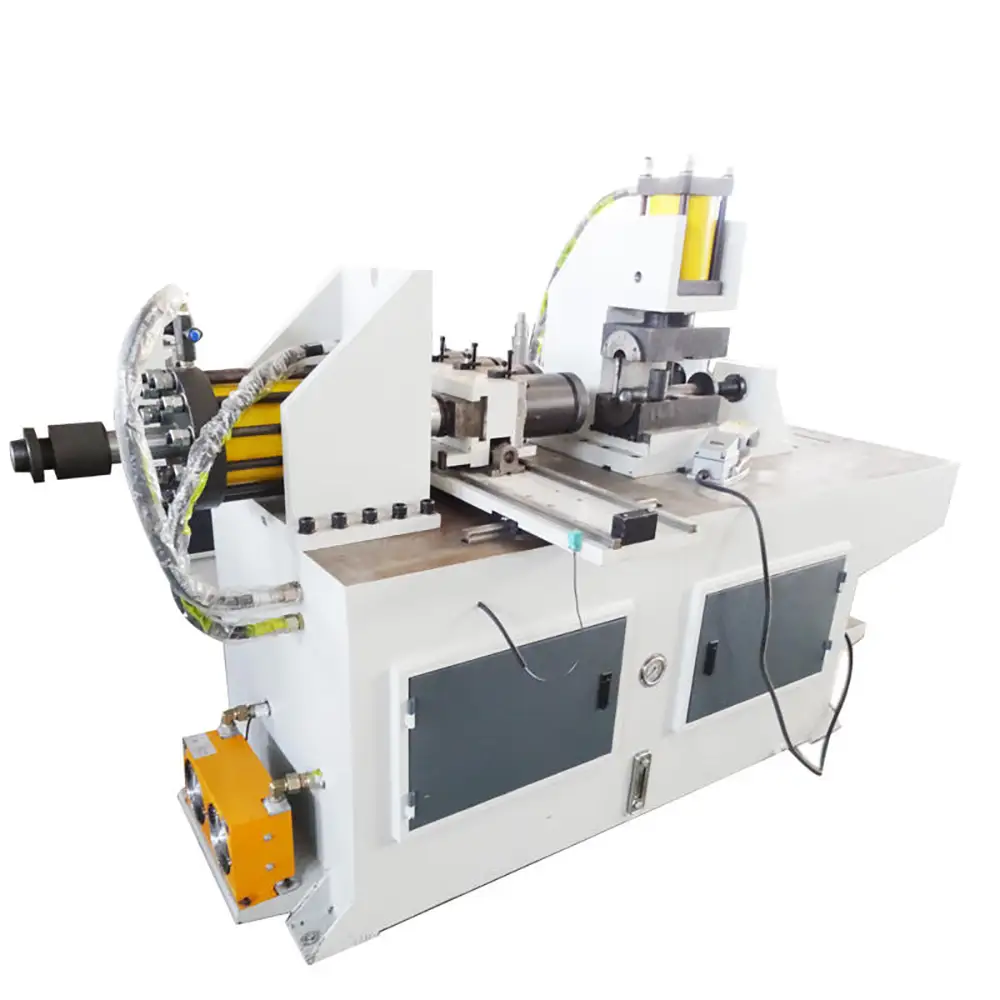
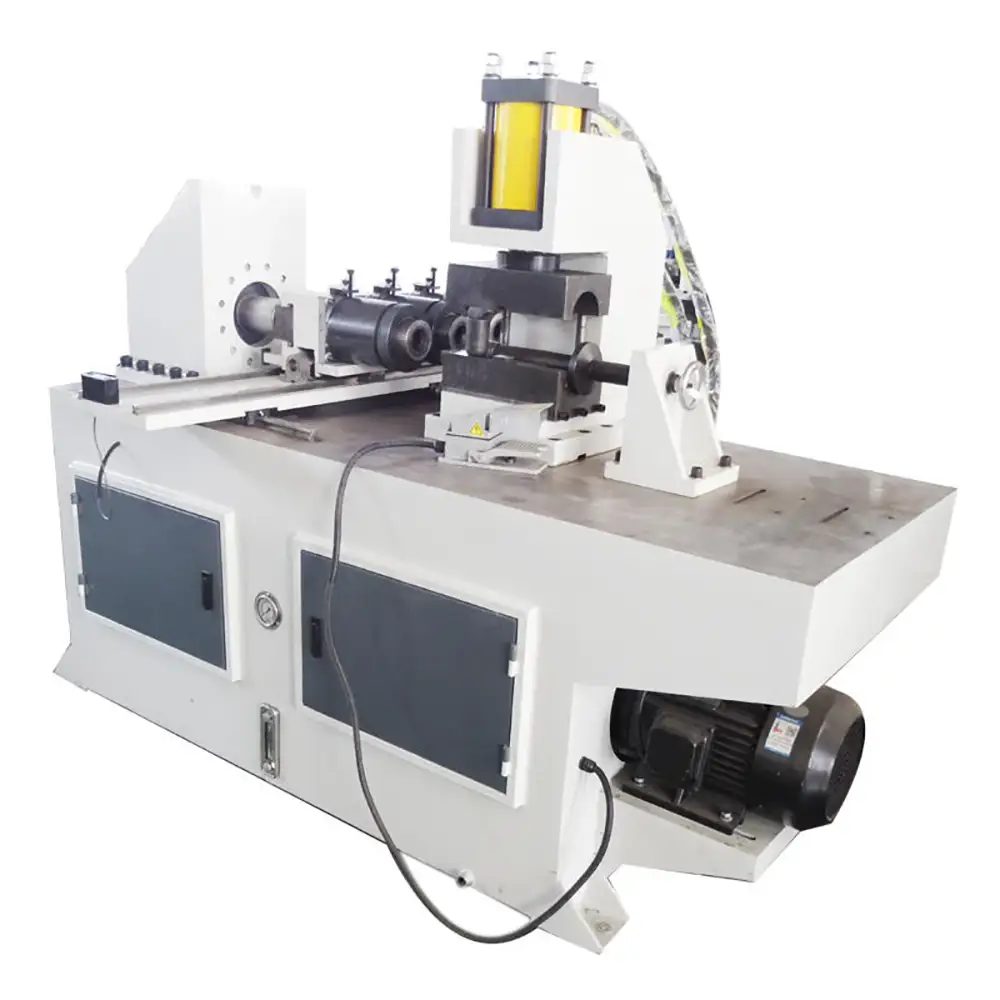
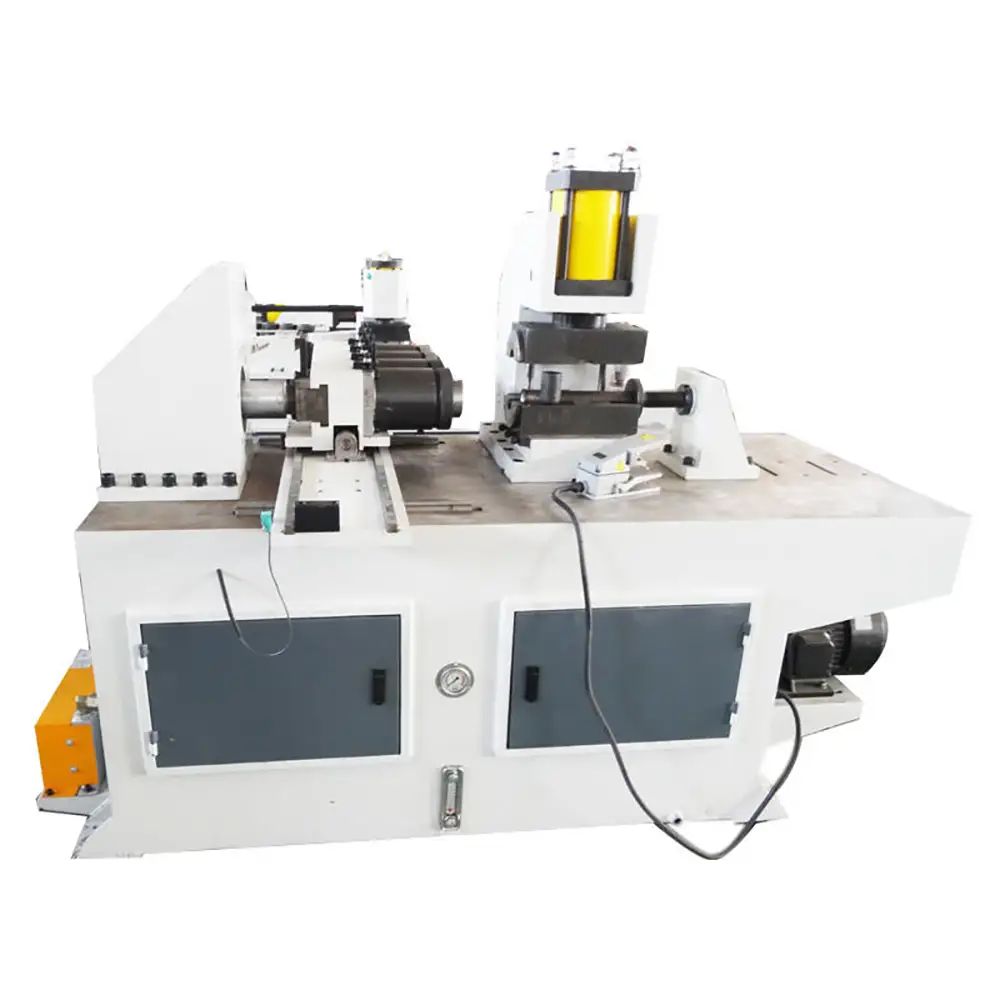
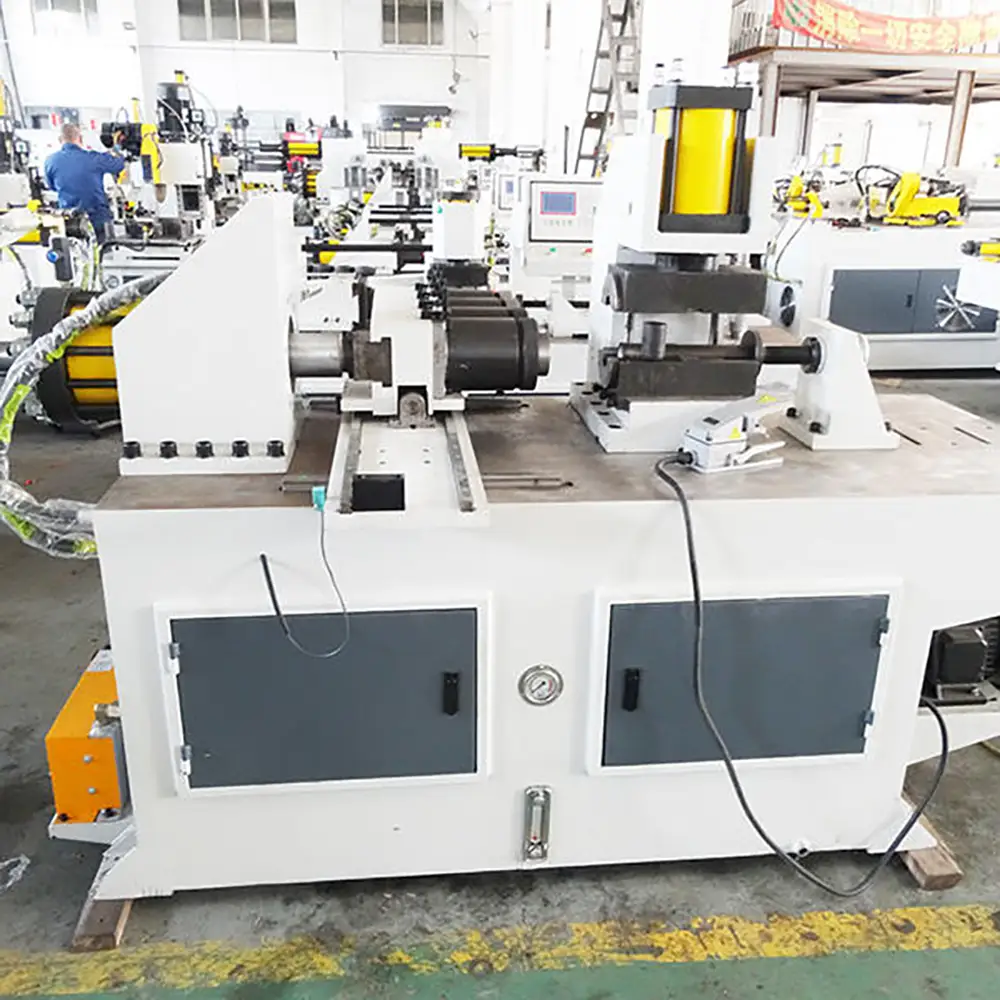
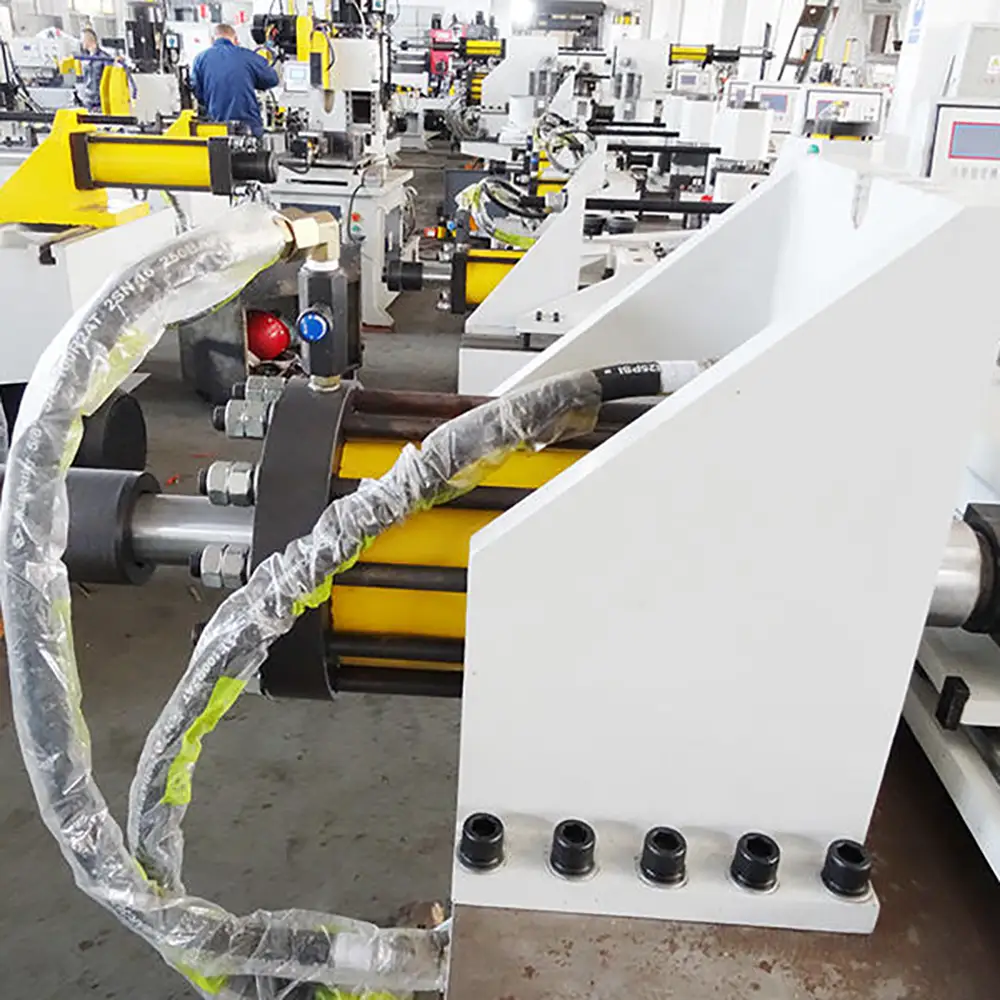
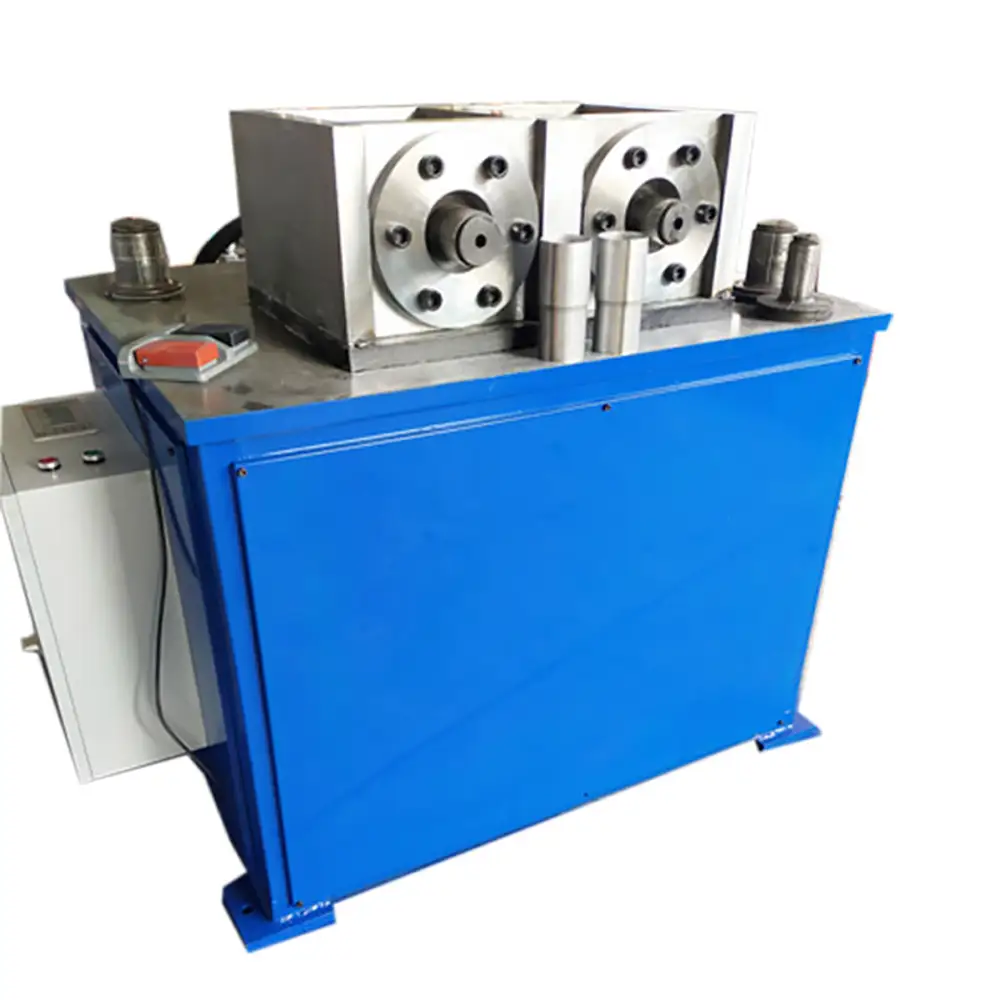
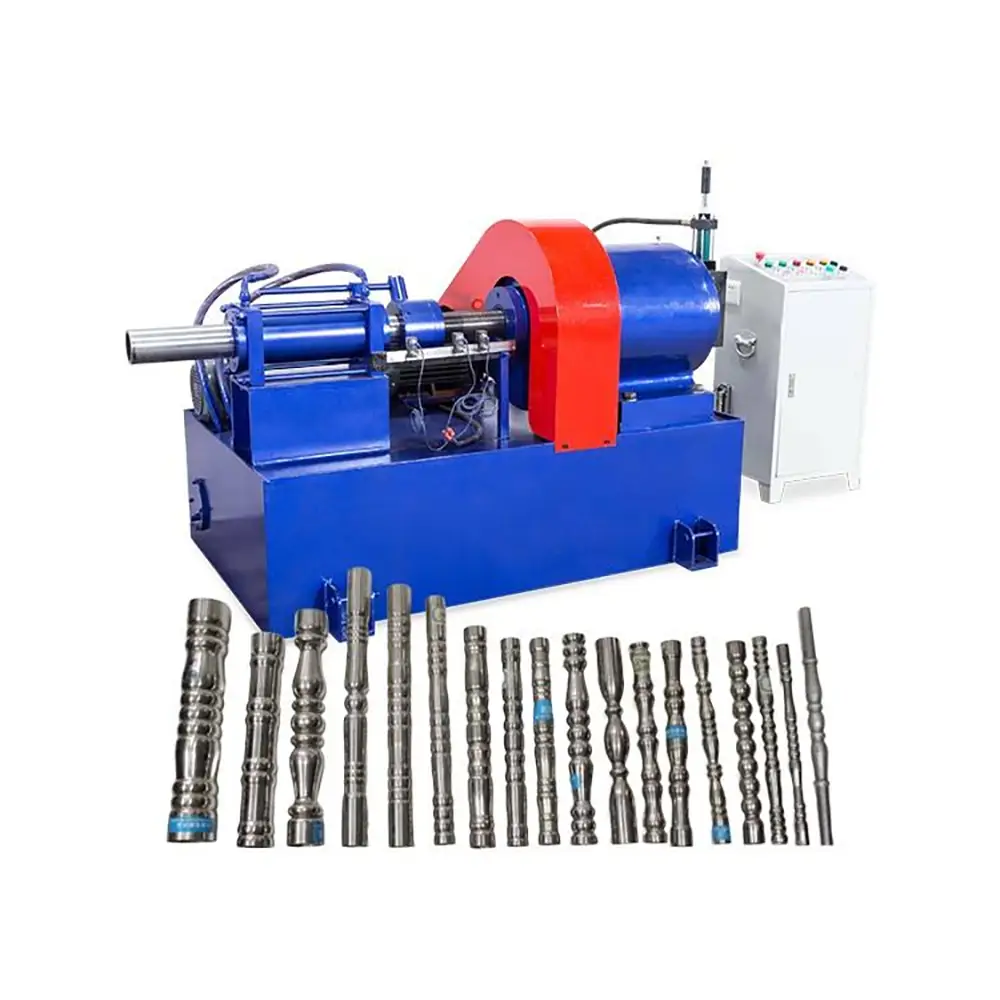
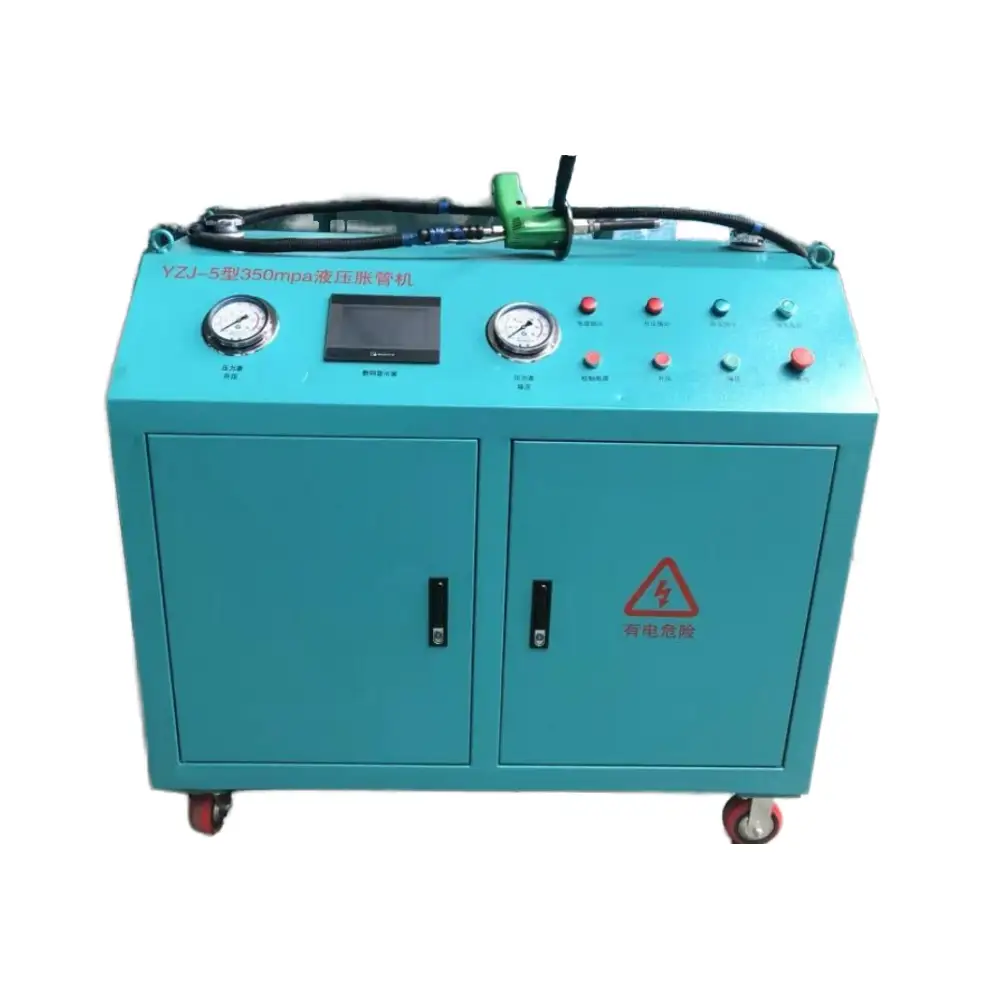
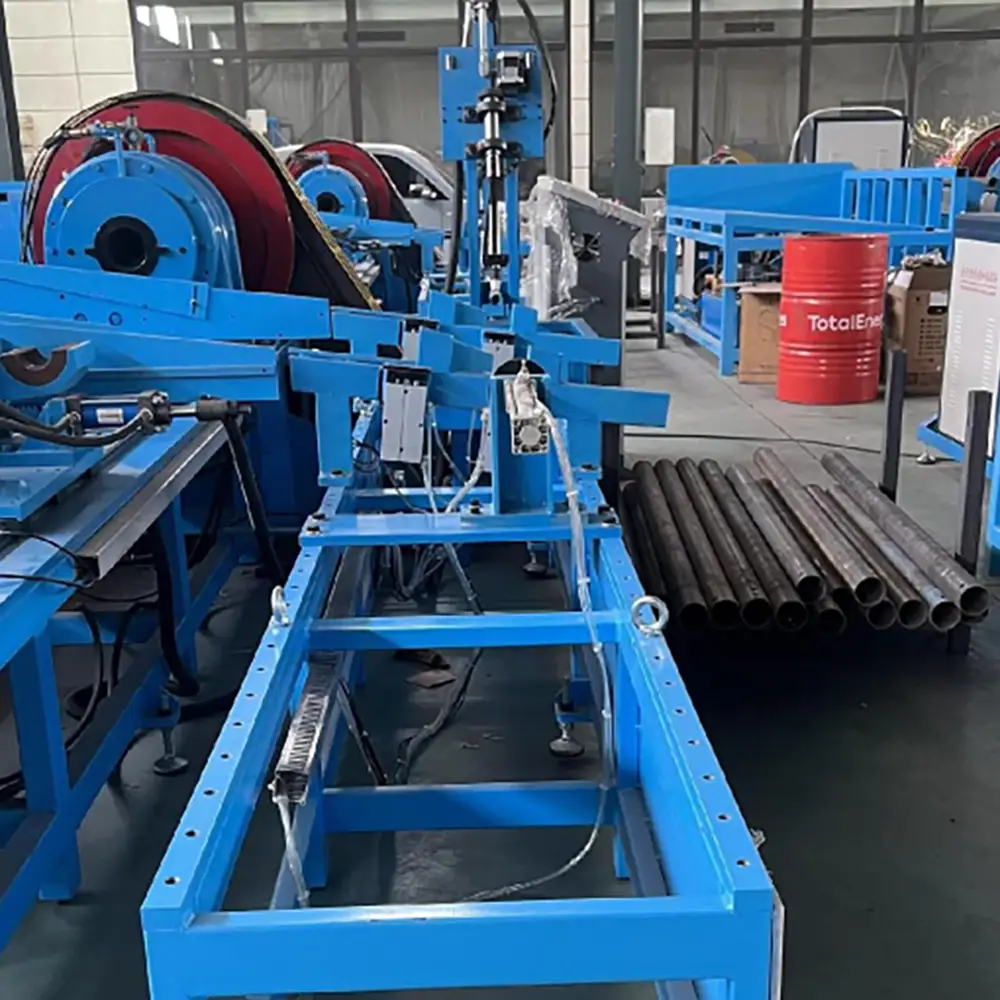
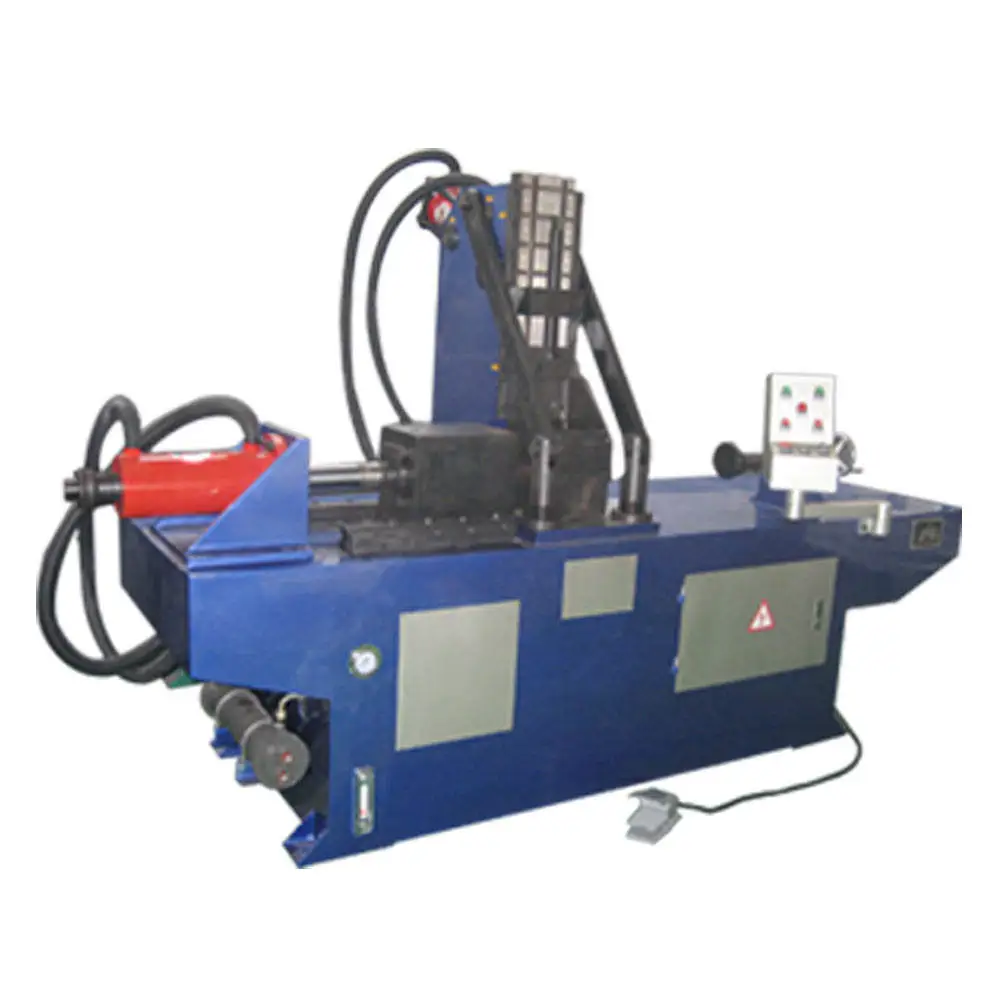
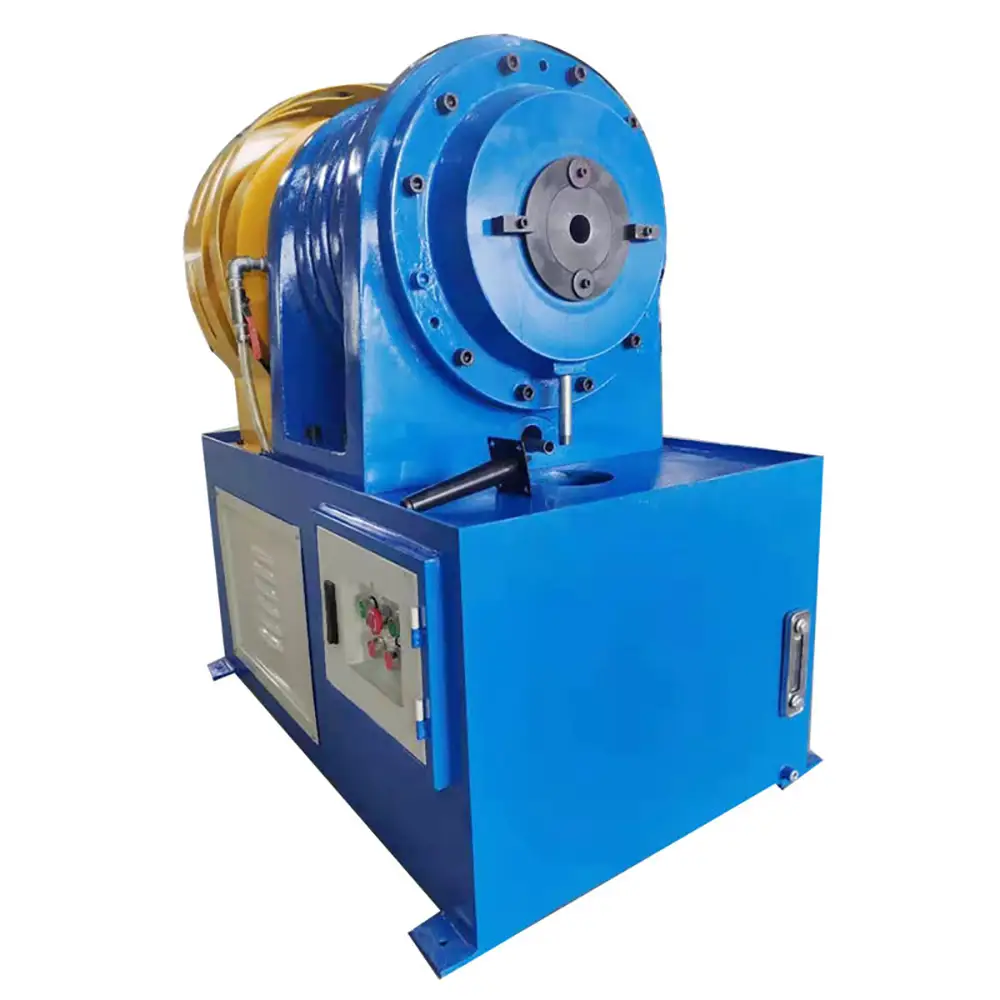
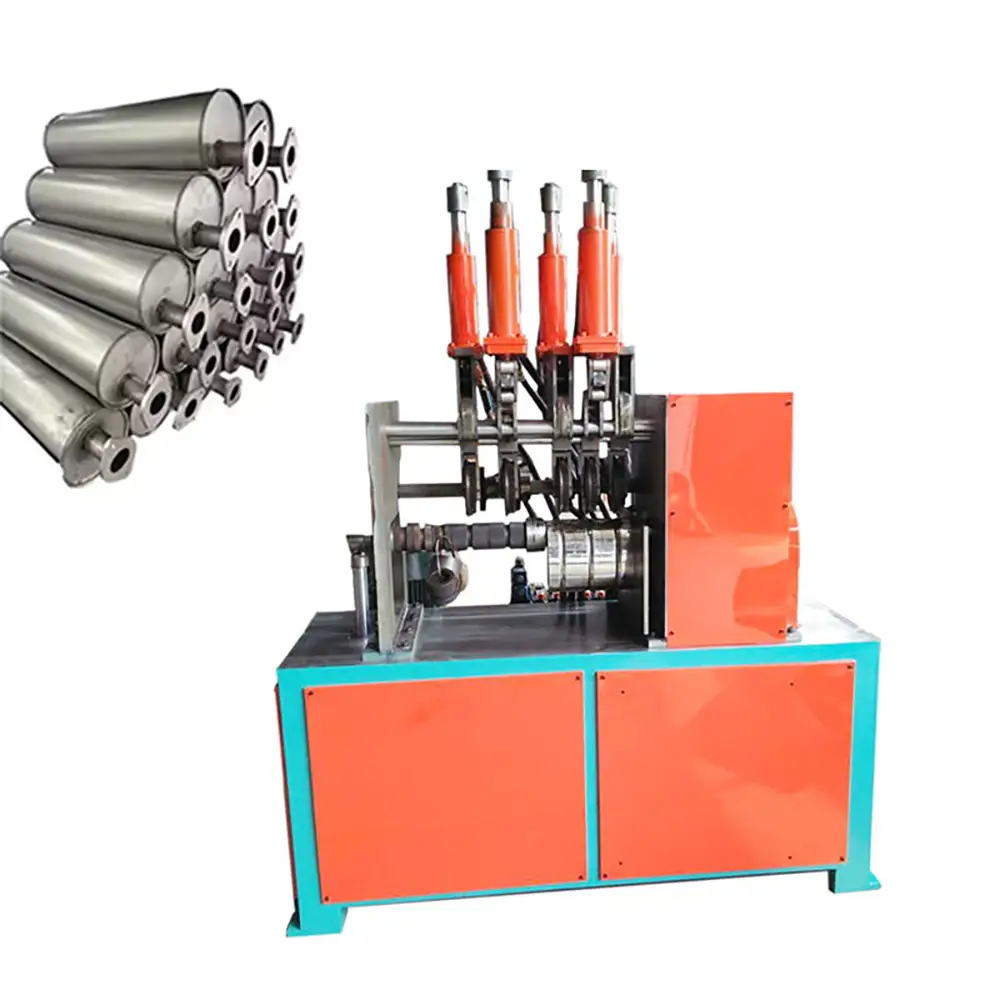
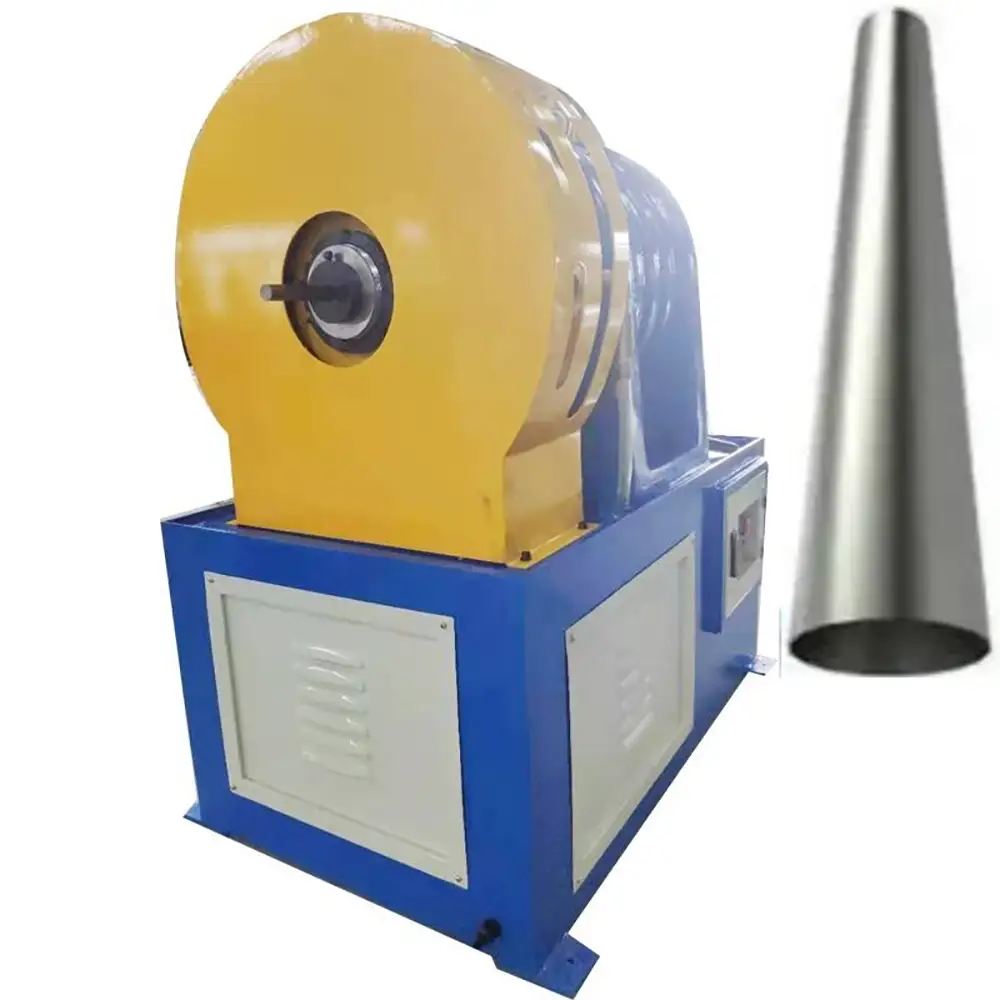
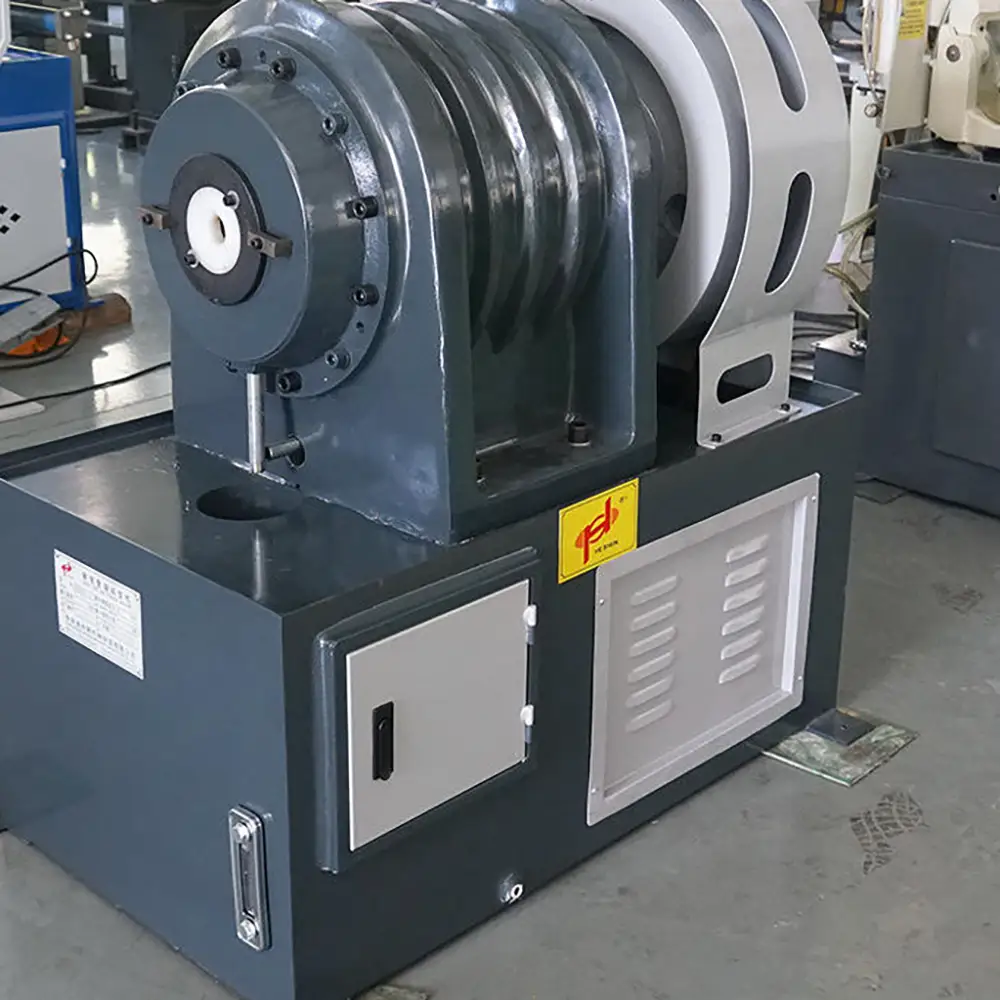
Semi-Automatic Double Station Pipe Tube End Forming Machine
The Semi-Automatic Double Station Pipe Tube End Forming Machine is designed for efficient reducing,shaping,and end forming of metal pipes and tubes. Featuring a double-station working concept,the machine can support a more organized production workflow for manufacturers processing tubular components in repeated batches.
Tube end forming is widely used when a straight metal tube needs to be modified at one or both ends for assembly,connection,welding,or further processing. Depending on the tooling and machine configuration,the equipment can be used for tube reducing,swaging,tapering,shrinking,necking,and other end-forming operations.
The double-station design provides two designated processing positions according to the machine configuration. This can allow operators to perform different setup or forming tasks within the same production cycle,although the exact operating sequence depends on the machine design.
Actual processing capacity depends on tube material,diameter,wall thickness,forming length,tooling,and machine configuration.
|
Model |
SG50NC |
SG60NC |
SG80NC |
SG100NC |
SG120NC |
|
Max pipe capacity |
φ50×3 MM |
φ60×3 MM |
φ80×6 MM |
φ100×8 MM |
φ120×8 MM |
|
Pipe cycle |
4 |
4 |
4 |
5 |
6 |
|
Power |
5.5 |
7.5 |
11 |
11 |
18.5 |
|
Overall size (L×W×H)m |
2.4×0.5×1.6 |
3×1.1×1.9 |
3×1.1×1.9 |
4×1.2×1.9 |
4×1.2×1.9 |
|
Weight(T) T |
0.9 |
1.7 |
2 |
3.6 |
3.8 |
|
Applicable to pipe shape |
convex-shaped, concavity-shaped, nodular shape, long partial shape, square shape, topological shape, oblique shape, V-shape,
cracking type and flat type.
|
|
Applicable to material of pipe |
Carbon steel,stainless steel copper pipe, aluminium alloypipe |
Double Station Tube End Forming
The main feature of this machine is its double-station configuration. A two-station design can provide greater flexibility when processing tubular components that require multiple operations or repeated production steps.
Depending on the specific machine,the two stations may be used for different forming operations,successive tube-end processes,or separate workpiece positions.
This can reduce unnecessary movement between individual machines and help organize production when multiple tube-forming steps are required.
The exact relationship between the two stations should be confirmed according to the selected model because double-station configurations can differ in tooling arrangement and operating sequence.
Pipe Reducing Function
Pipe reducing decreases the diameter of a selected tube or pipe section. This is one of the most common applications for tube end forming machines.
A reduced tube end can be used for insertion into another tube,connection with a fitting,preparation for welding,or creation of a tapered product profile.
The required reduction depends on the original tube diameter,wall thickness,material properties,and final product design.
For larger reductions,multiple forming stages may be required to achieve the desired geometry without excessive deformation.
Tube Swaging and Tapering
Swaging is a controlled tube-forming process that changes the diameter or profile of a metal tube. Tapering creates a gradual transition between the original tube diameter and the reduced section.
The machine can be equipped with suitable dies for swaging or tapering applications.
These operations are commonly used for furniture legs,automotive components,exhaust pipes,industrial tubing,frames,and other metal products.
The finished profile depends on die geometry,forming force,material characteristics,and process parameters.
Semi-Automatic Production
The semi-automatic design provides a balance between machine-assisted processing and operator control.
A typical production cycle may involve loading the tube,positioning it in the fixture,starting the forming operation,and removing the processed workpiece.
Depending on the machine configuration,the forming sequence may be controlled through hydraulic,electric,pneumatic,or other mechanical systems.
Semi-automatic operation can be useful for manufacturers that need repeatable tube forming while still requiring flexibility for different products and tube dimensions.
Production efficiency depends on loading time,forming time,tool changes,workpiece dimensions,and operator workflow.
Suitable Tube Materials
The machine can be configured to process a range of compatible metal tubes,including:
Carbon Steel Tubes
Mild Steel Tubes
Stainless Steel Tubes
Aluminum Tubes
Copper Tubes
Galvanized Steel Tubes
Alloy Steel Tubes
Other Compatible Metal Tubing
Material strength,ductility,and wall thickness influence the required forming force.
Stainless steel and high-strength steel may require different tooling and forming conditions compared with mild steel.
Thin-wall tubes require particular attention because excessive forming force can result in wrinkles,cracking,or unwanted deformation.
Customers should provide complete material and tube specifications before selecting the machine.
Furniture Tube Applications
Tube end forming is commonly used in furniture manufacturing. Chair legs,table legs,sofa legs,bed frames,and furniture supports may require reduced or tapered tube ends.
A double-station machine can be useful when furniture components require more than one tube-forming operation.
Custom tooling can be designed for different furniture tube diameters and end profiles.
The machine can also be evaluated for metal display stands,shelving frames,handrails,and other tubular furniture components.
Automotive and Exhaust Applications
Automotive and motorcycle exhaust components often require tube reducing,expanding,swaging,or other end-forming processes.
A pipe reducer machine can prepare tube ends for welding,clamping,connection,or assembly with another exhaust component.
The machine may also be suitable for selected automotive structural and tubular components where the required dimensions fall within its forming capacity.
For automotive production,the customer should provide tube material,diameter,wall thickness,and finished-end dimensions.
Industrial Tube Processing
The machine can be used in a variety of industrial tube-forming applications,including:
Automotive Components
Exhaust Pipes
Furniture Frames
Chair Legs
Table Legs
Sofa Legs
Fitness Equipment
Agricultural Machinery
Construction Components
Steel Structures
Industrial Equipment
Custom Metal Tubes
The actual application range depends on machine capacity,tooling,and workpiece specifications.
Production Efficiency
A dedicated double-station tube end forming machine can help reduce repeated material handling between separate forming operations.
For batch production,the operator can use dedicated fixtures and tooling to establish a consistent forming process.
The double-station structure may also provide flexibility when different forming operations are required within the same production workflow.
Actual output depends on tube size,material,forming depth,number of operations,loading method,tool changes,and machine cycle.
For high-volume production,the complete cycle should be evaluated rather than relying only on the machine's nominal forming speed.
Tooling and Custom Dies
Forming dies are critical for achieving the required tube-end profile.
Depending on the application,tooling can be developed for:
Tube Reducing
Pipe Reducing
Tube Swaging
Pipe Swaging
Tube Tapering
Tube Shrinking
Tube Necking
Tube Expanding
Customized Tube Ends
The die geometry should match the tube material,diameter,wall thickness,and final dimensions.
For OEM projects,customers can provide drawings,samples,3D models,or finished-part specifications for tooling evaluation.
Quality Control
Finished tubes should be inspected for outside diameter,end length,taper angle,wall condition,and overall dimensional consistency.
For products requiring precise assembly,first-piece inspection can help verify the forming process before continuing with batch production.
Tool wear should also be monitored. Damaged or worn forming dies can affect dimensions and surface quality.
Material springback may vary between different metals and should be considered when establishing the forming process.
Maintenance and Safety
Routine maintenance is important for stable machine performance. Operators should inspect forming dies,fixtures,hydraulic or mechanical systems,electrical components,and other wear parts according to the manufacturer's recommendations.
The work area should be kept clean and free from unnecessary materials.
Operators should receive appropriate training and keep hands away from moving forming components. Guards,emergency stops,and other safety features depend on the actual machine configuration and applicable local requirements.
Custom & OEM Tube Forming Solutions
Different manufacturers require different tube diameters,end profiles,and production sequences. The machine can therefore be customized around the customer's specific requirements.
OEM and ODM options may include custom dies,fixtures,feeding systems,hydraulic systems,electric drive systems,and control configurations.
For an accurate quotation,customers should provide tube material,outer diameter,wall thickness,tube length,required reduced diameter,forming length,number of operations,and production volume.
This information helps determine the appropriate semi-automatic double-station pipe and tube end forming machine configuration.
Why Choose Us
Double Station Design — Provides two dedicated working positions for flexible tube-forming production workflows.
Semi-Automatic Operation — Balances machine-assisted forming with operator flexibility for different workpieces.
Pipe Reducing Function — Designed for controlled reduction and shaping of compatible tube ends.
Multiple End-Forming Options — Suitable tooling can support reducing,swaging,tapering,shrinking,and other forming processes.
Wide Material Compatibility — Configurations can be developed for suitable steel,stainless steel,aluminum,copper,and other metal tubes.
Custom Tooling — Forming dies and fixtures can be developed according to specific tube-end requirements.
OEM & ODM Support — Machine configurations can be customized according to drawings,samples,and production requirements.
B2B Industrial Solution — Suitable for manufacturers,distributors,wholesalers,furniture suppliers,automotive component producers,and industrial buyers.
FAQs
1. What is a double-station tube end forming machine?
It is a tube-processing machine equipped with two working stations for supporting multiple forming operations or workpiece positions according to the machine configuration.
2. What does the pipe reducer function do?
The pipe reducer function decreases the diameter of a selected tube or pipe section to create a smaller or tapered end.
3. Can the machine perform tube swaging?
Yes,when equipped with suitable swaging dies,the machine can perform compatible tube diameter-reducing and shaping operations.
4. Can it taper metal tubes?
Yes. Suitable forming dies can create tapered tube ends according to the required geometry.
5. What materials can be processed?
Depending on the configuration,it can process compatible carbon steel,mild steel,stainless steel,aluminum,copper,galvanized steel,and alloy steel tubes.
6. Is the machine fully automatic?
The described configuration is semi-automatic. The operator may still load and unload tubes or perform setup tasks depending on the machine design.
7. What is the advantage of two stations?
Two stations can provide greater flexibility for sequential forming operations,different tooling setups,or organized processing of multiple workpieces.
8. Can it process furniture tubes?
Yes. Suitable chair legs,table legs,sofa legs,bed frames,and other furniture tubes can be processed within the machine's rated capacity.
9. Can it be used for exhaust pipes?
Yes. Tube reducing,swaging,tapering,and other end-forming operations can be used for suitable automotive and motorcycle exhaust components.
10. Can custom dies be supplied?
Yes. Custom reducing,swaging,tapering,shrinking,and other tube-forming dies can be developed according to drawings or samples.
11. What affects tube forming quality?
Material properties,tube diameter,wall thickness,tooling design,forming force,forming sequence,and machine setup all affect the final result.
Prev:
Double Heads Stainless Steel Pipe End Forming and Punching Hole Machine for Trampoline
Next:
Taper Tube End Forming Machine Pipe Reducing Taper Forming Machine for Furniture Chair Table Sofa Legs
TAG:
Pipe Diameter Reducing Machine,
Tube Diameter Reducing Machine,
Pipe End Processing Machine,
Automatic Tube End Forming Machine,
Tube End Processing Machine,
Semi Automatic Tube End Forming Machine,
Chair Leg Tube Forming Machine,
Sofa Leg Tube Forming Machine,
Table Leg Tube Forming Machine,
Metal Pipe Forming Machine,
Metal Pipe Reducing Machine,
Metal Tube Reducing Machine,
Metal Tube Forming Machine,
Hydraulic Tube Forming Machine,
Tube End Forming Equipment,
Hydraulic Pipe Forming Machine,
Pipe End Forming Equipment,
Pipe Tapering Machine,
Pipe End Reducing Machine,
Tube Swaging Machine,
Pipe Swaging Machine,
Pipe Necking Machine,
Tube Necking Machine,
Tube Tapering Machine,
Tube End Reducing Machine,
Pipe Reducing Machine,
Pipe Shrinking Machine,
Tube Shrinking Machine,
Tube Reducing Machine,
Industrial Tube Forming Machine,
Related Category:
Semi-Automatic Tube End Forming Machine,Double Station Tube End Forming Machine,Pipe Tube End Forming Machine China, suppliers, manufacturers, factory, customized, wholesale, quotation, made in China