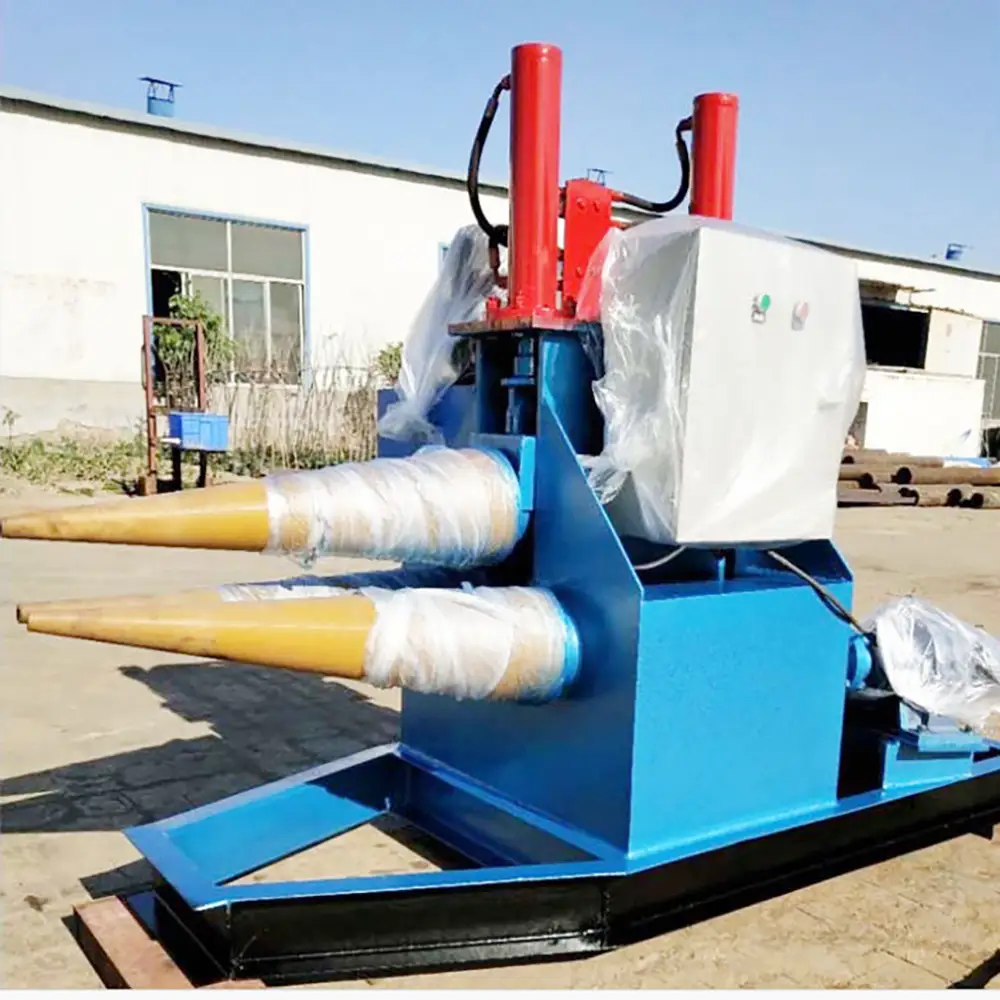
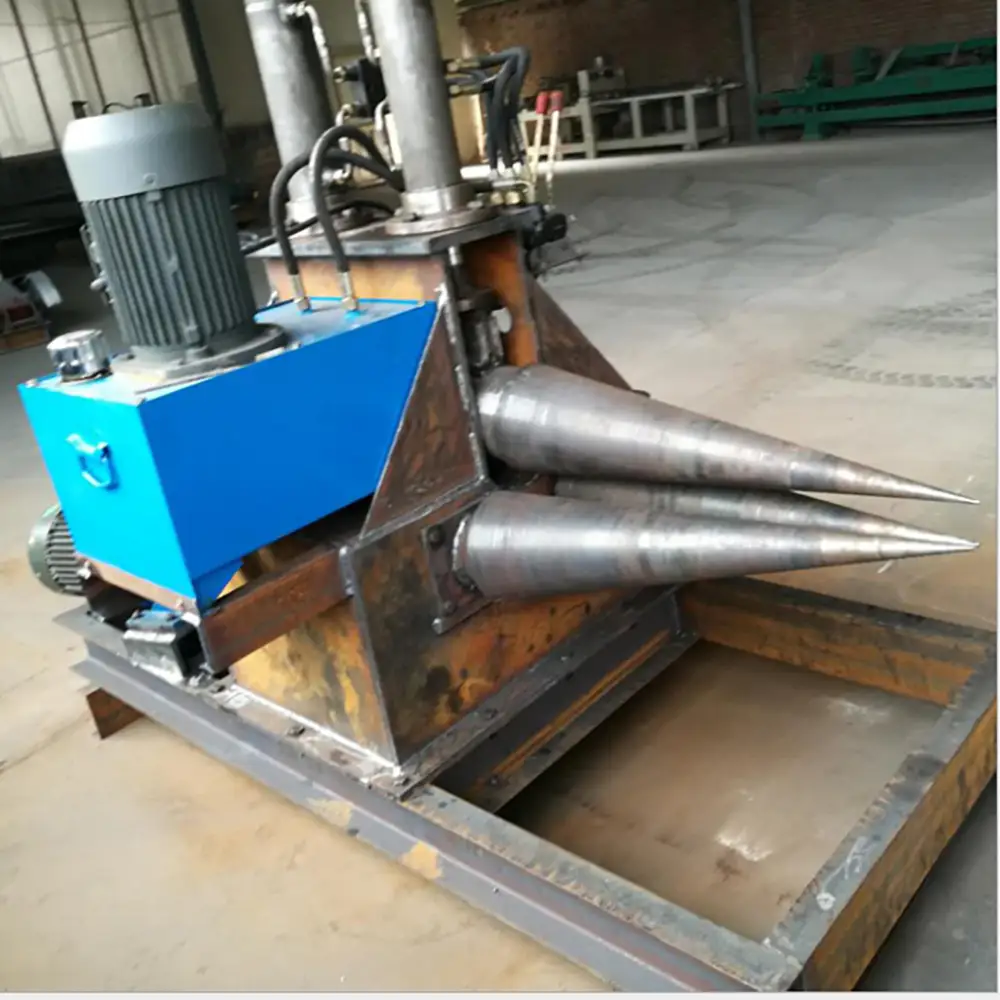
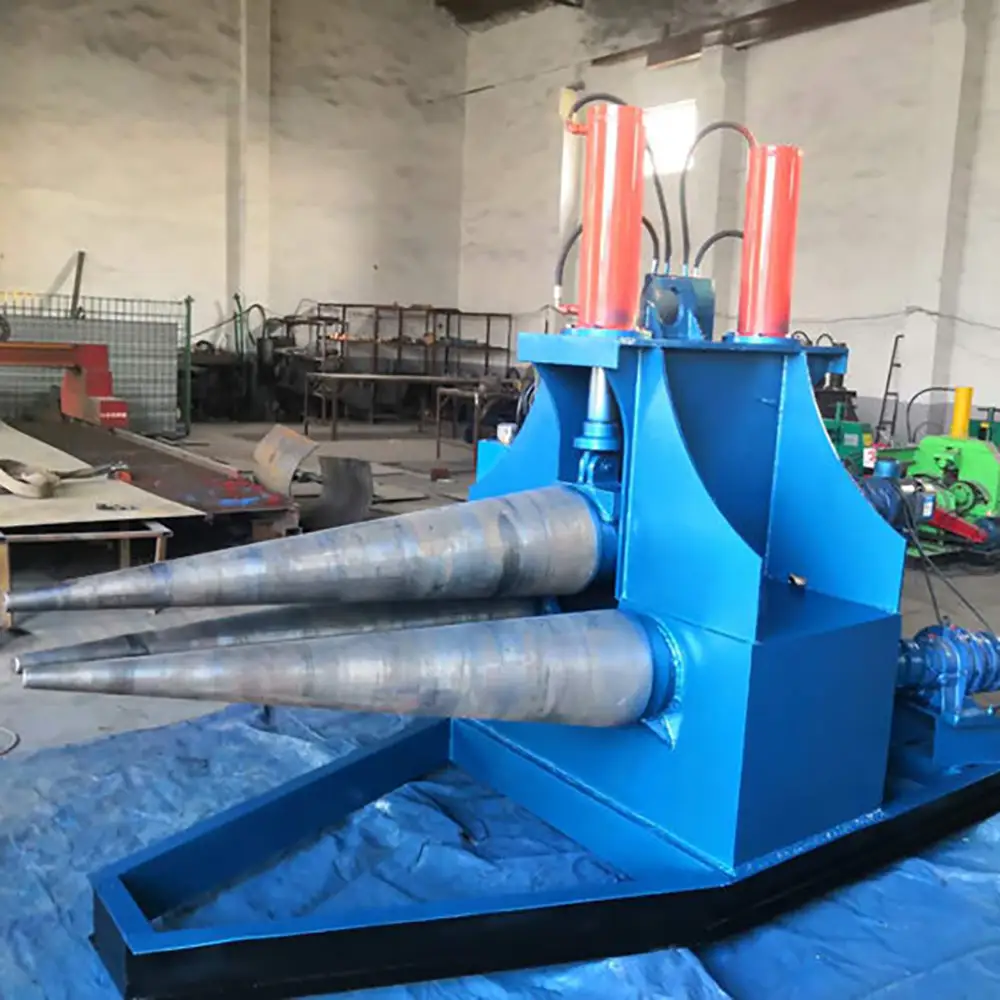
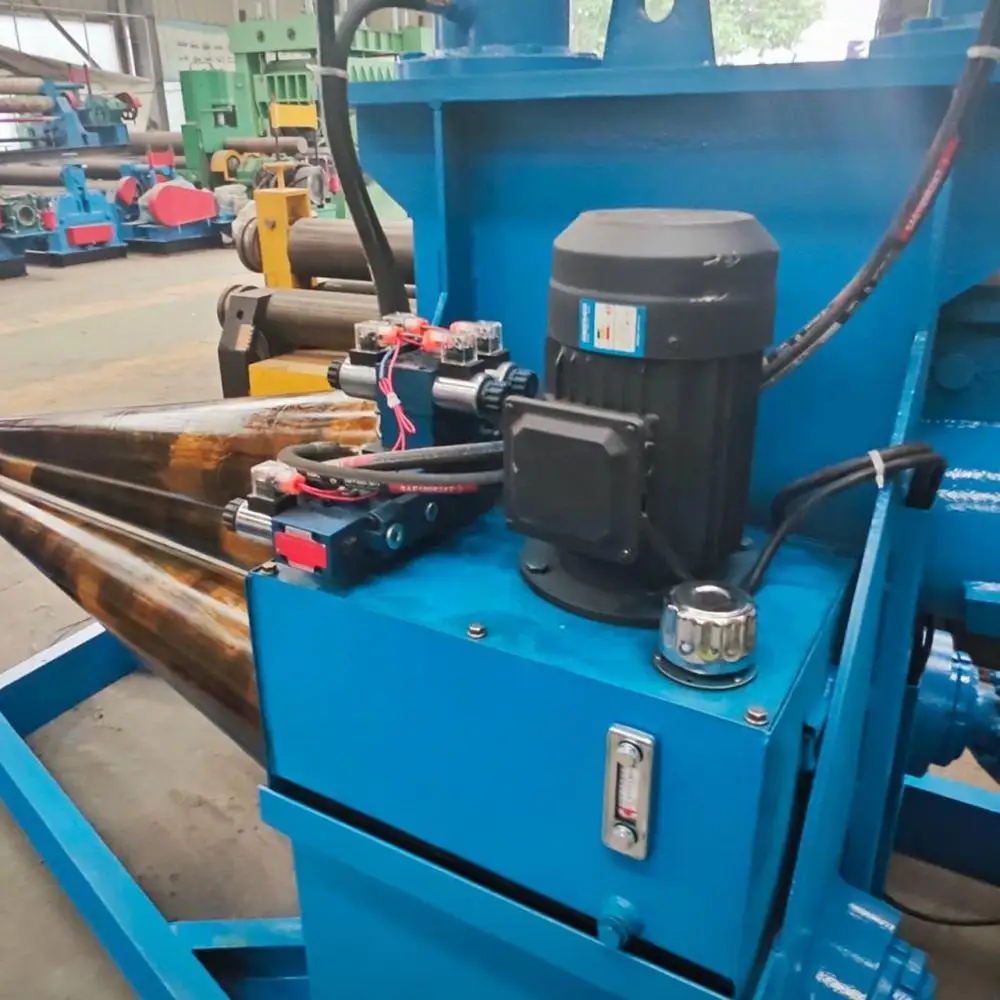
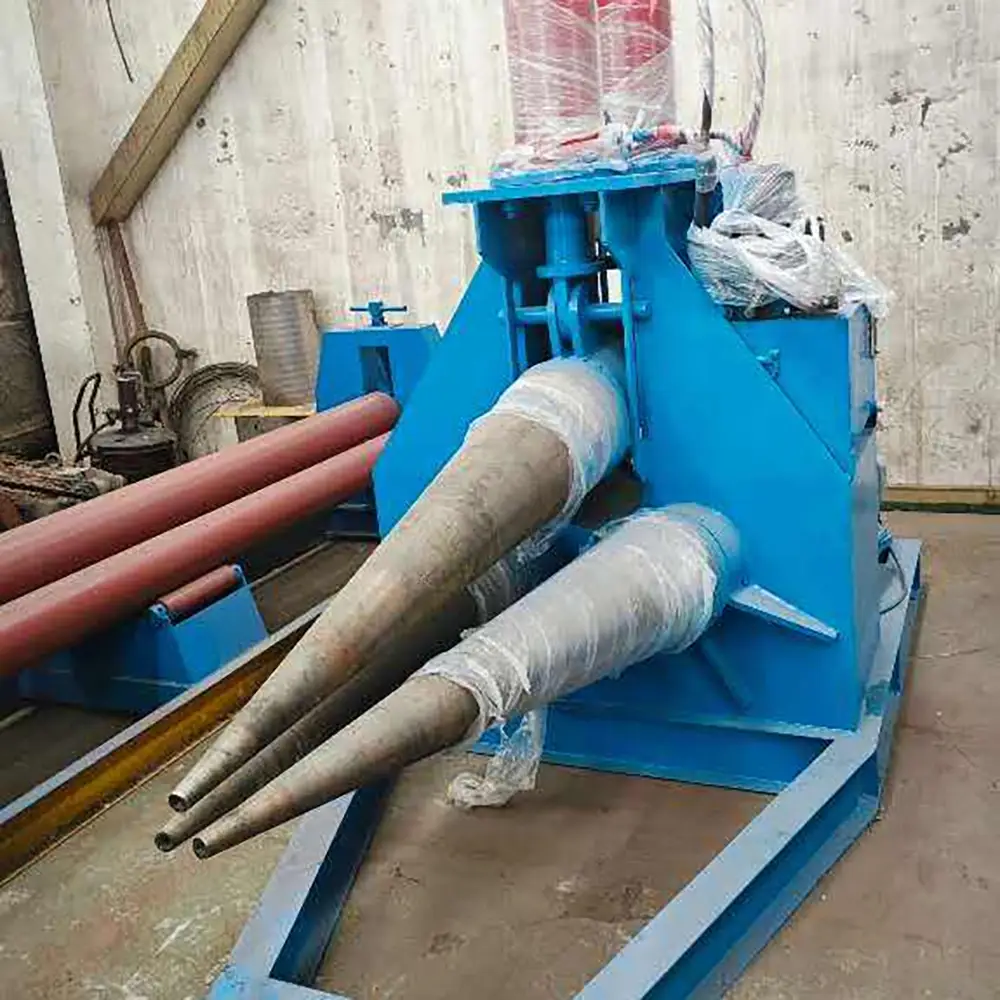
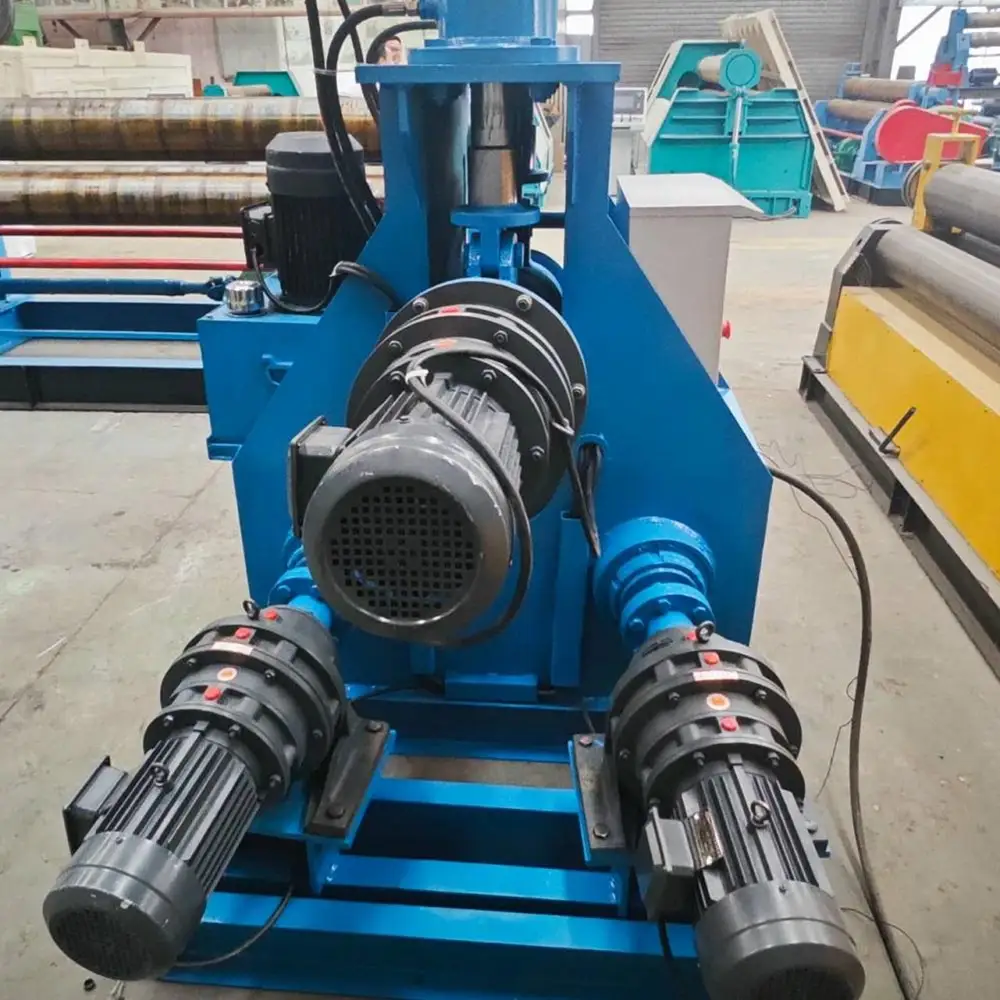
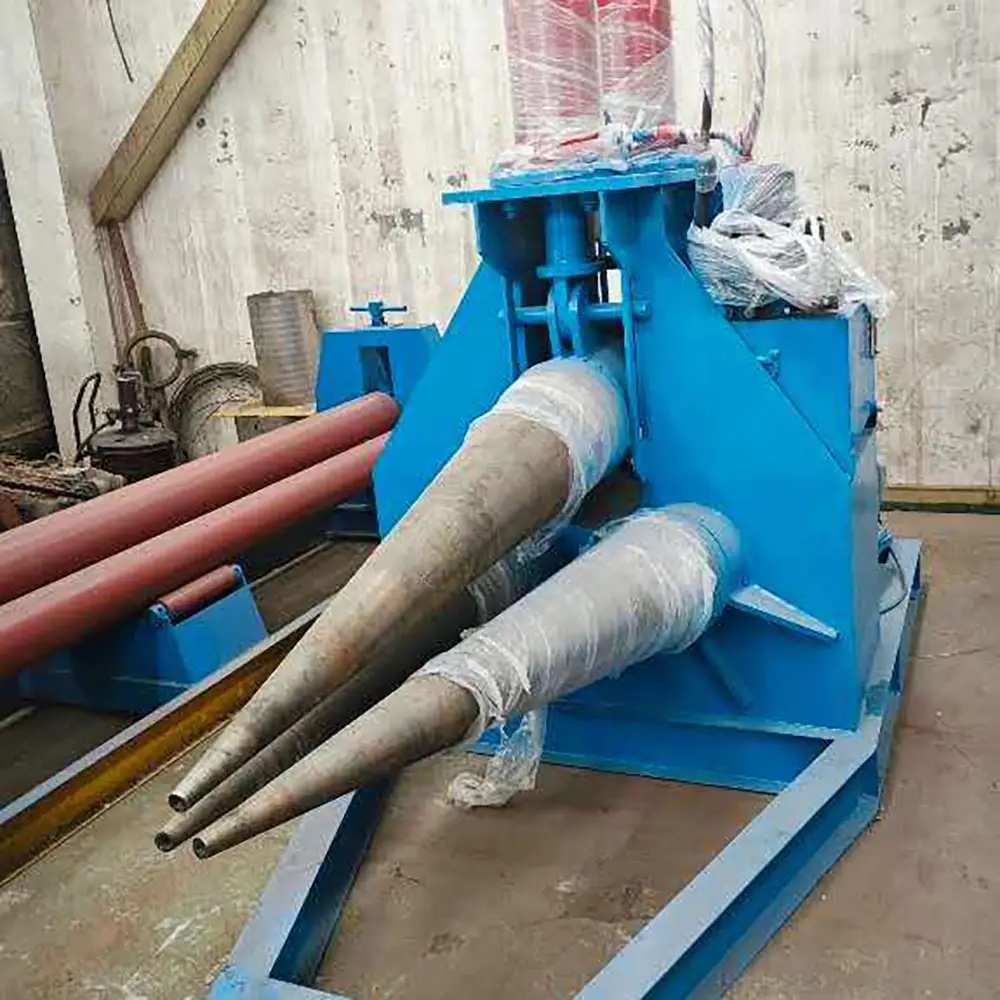
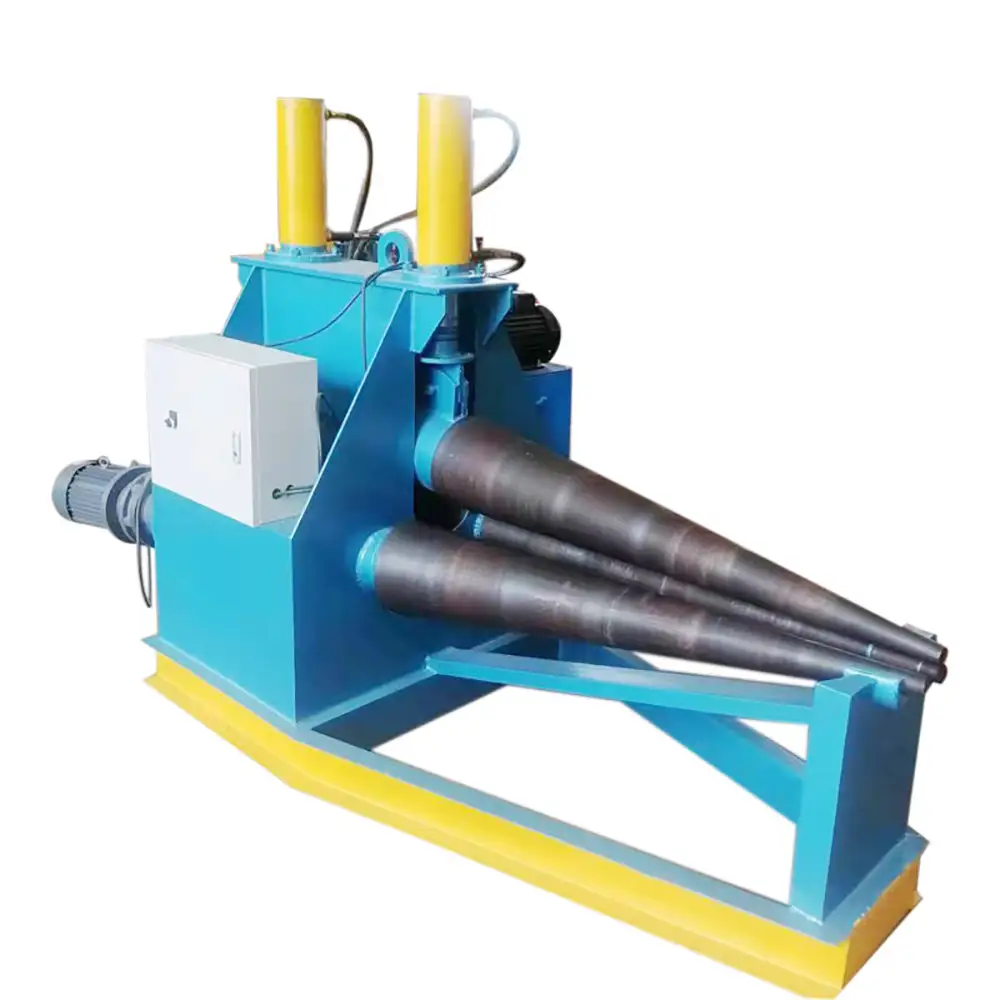
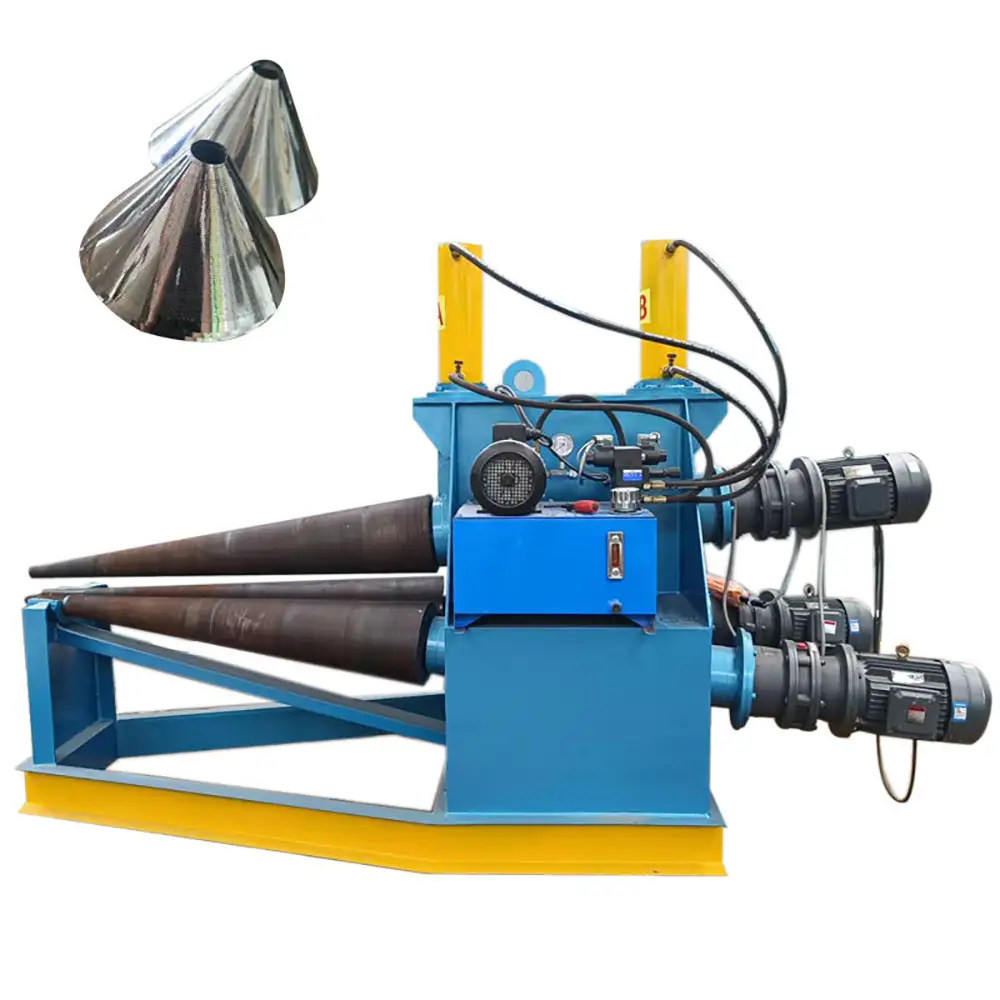
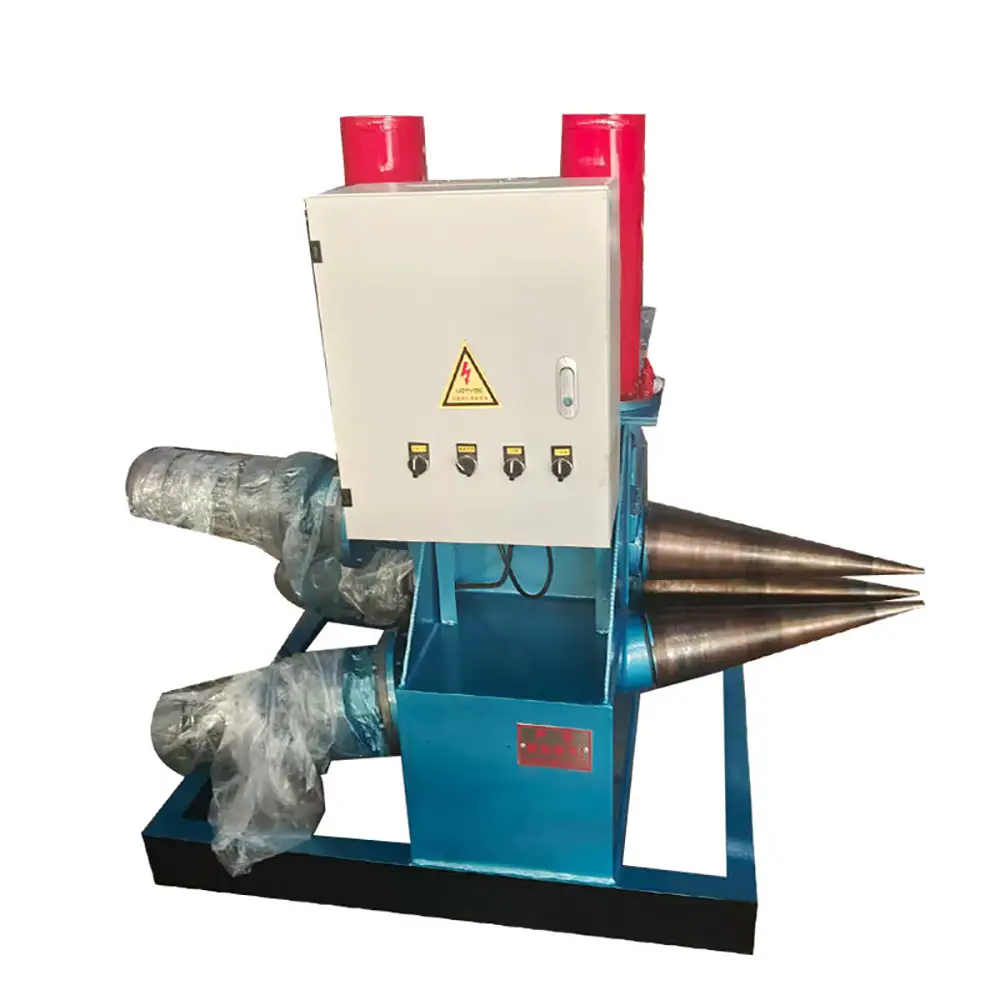
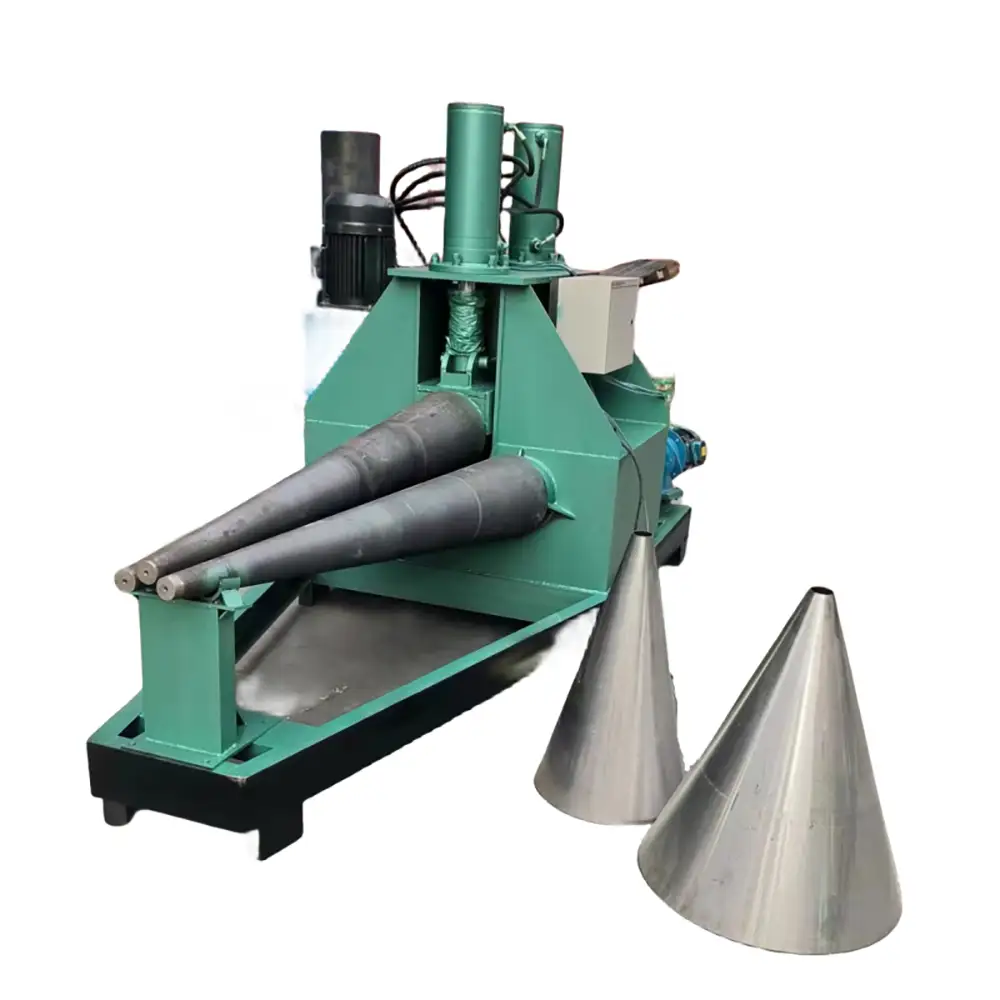
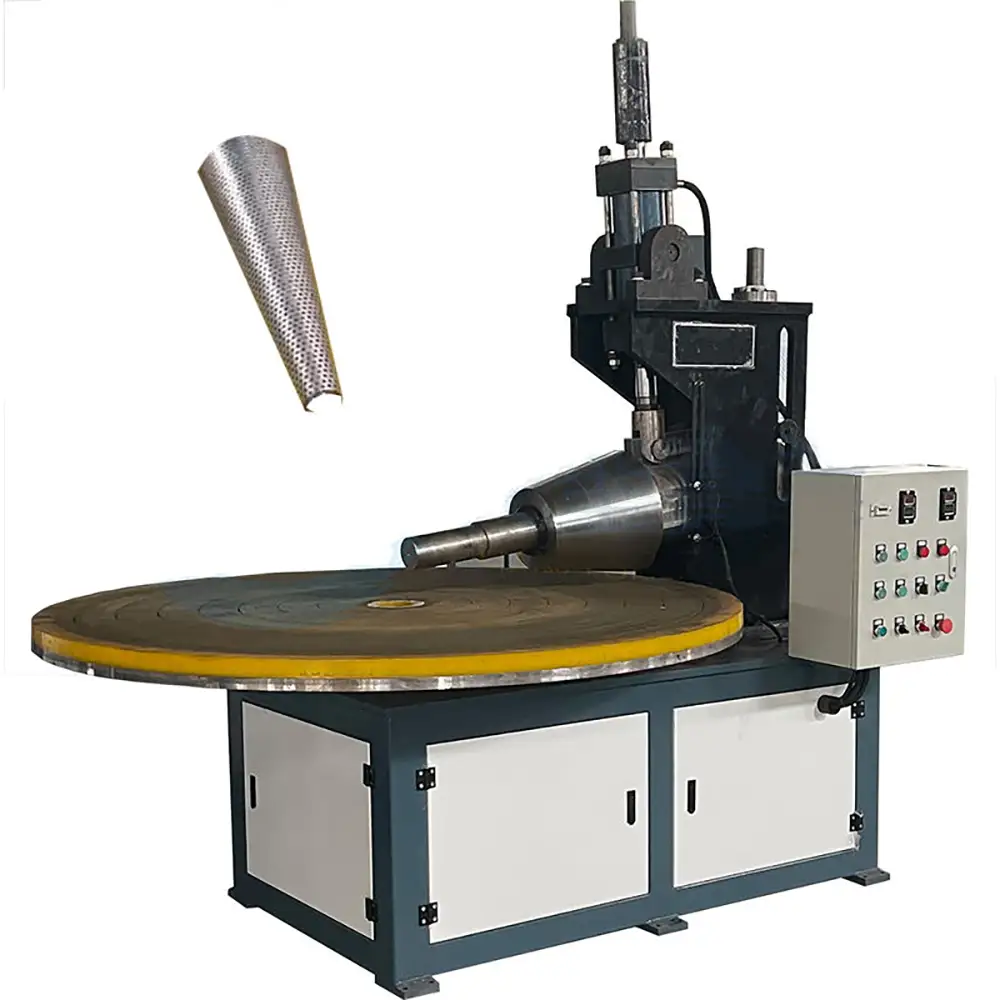
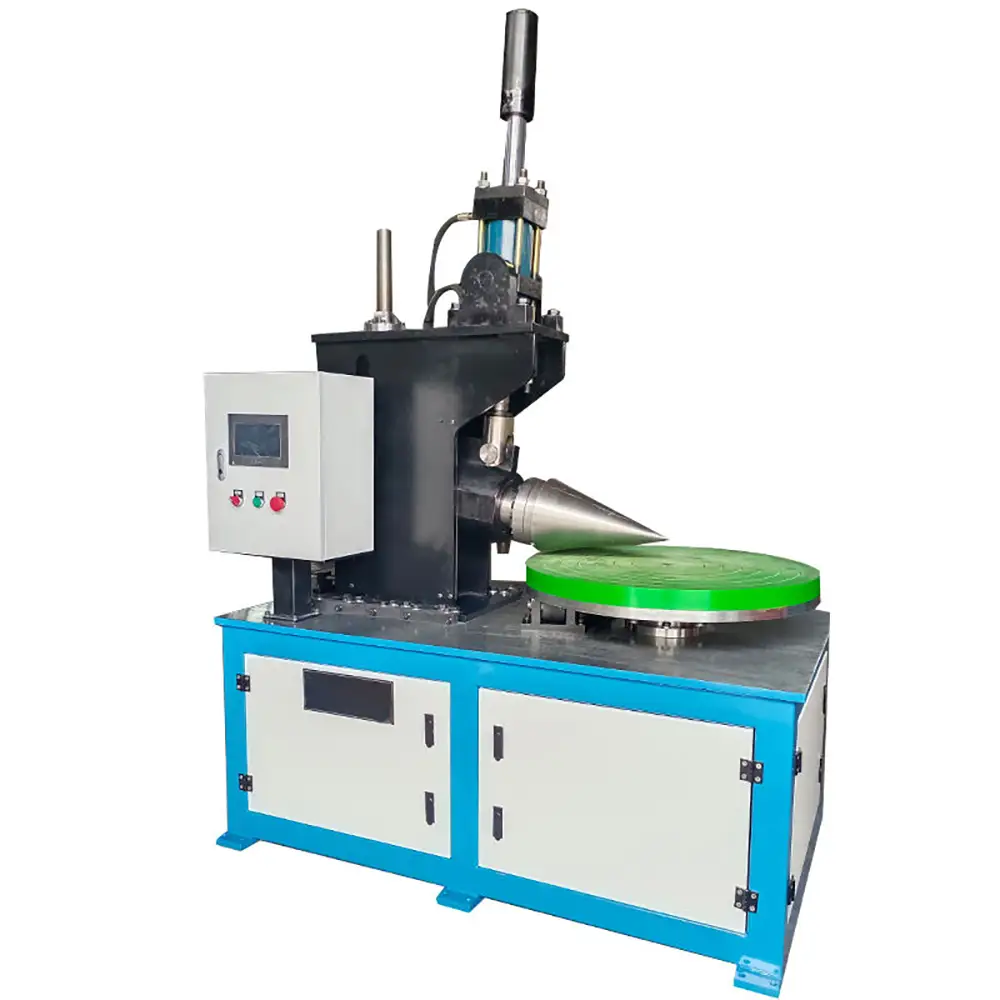
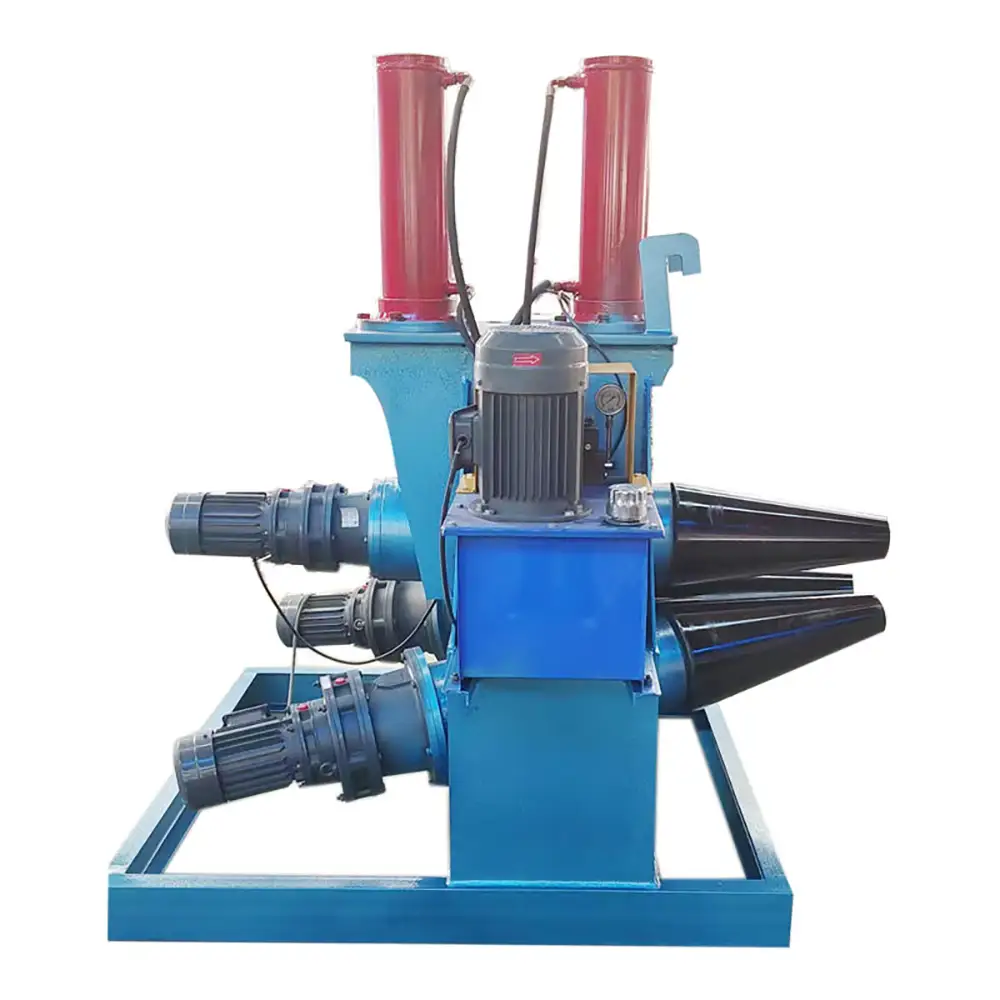
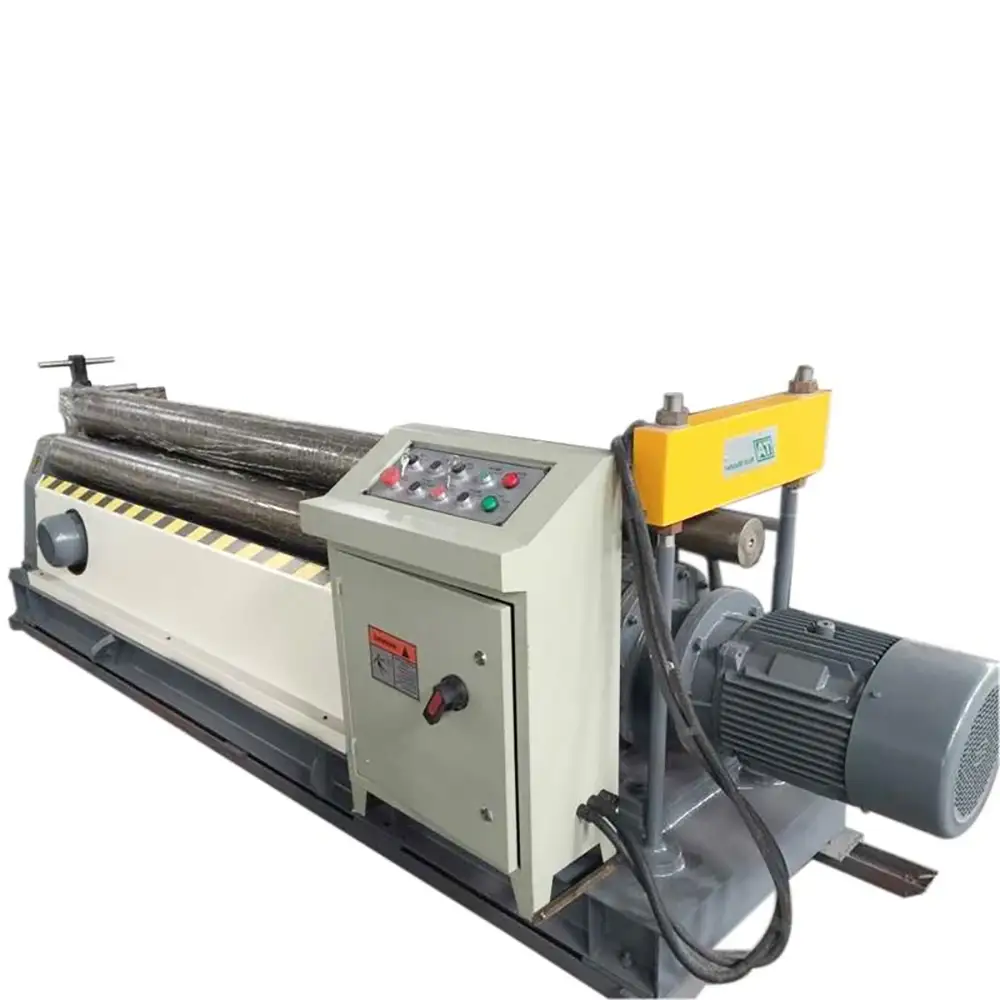
The Semi-Automatic Cone Rolling Machine for Forming Conical and Tapered Metal Sections is designed for manufacturers that need to produce conical components, tapered metal sections, pipe transitions, reducers, and other curved or tapered parts. Combining powered rolling with operator-controlled setup, the machine provides a practical solution for sheet and plate forming applications where flexibility and repeatable production are important.
The equipment can be configured for suitable carbon steel, stainless steel, aluminum, and other compatible metal materials. It is particularly useful for fabricating tapered sections that connect different pipe diameters, transition components for ducting systems, conical shells, funnels, hoppers, and industrial pipe-related components.
Unlike ordinary cylindrical plate rolling, cone rolling requires differential forming across the workpiece width. The larger end and smaller end of a conical blank travel different distances during forming. The machine therefore requires appropriate roller adjustment and forming procedures to achieve the desired tapered geometry.
Semi-Automatic Cone Rolling Technology
The machine uses forming rolls to gradually bend a prepared metal blank into a conical or tapered shape. Depending on the configuration, powered roller rotation and hydraulic or mechanical adjustment can be used to support the forming process.
Semi-automatic operation allows the operator to remain involved in loading, positioning, setup, inspection, and process monitoring while powered functions reduce some of the physical effort associated with manual rolling.
The workpiece may require multiple forming passes depending on its thickness, material strength, cone angle, diameter, and required dimensional accuracy.
The actual forming capacity depends on the machine model, roller dimensions, plate width, material properties, and target workpiece geometry. Customers should select the machine based on actual drawings and production requirements.
Forming Conical and Tapered Metal Sections
A major application of this equipment is forming tapered metal sections used in industrial fabrication. These sections can connect components with different diameters or create a gradual change in flow direction or cross-sectional area.
Typical products include:
Conical pipe sections
Pipe reducers
Pipe transition pieces
Tapered ducts
Cone-shaped shells
Industrial funnels
Hoppers
Exhaust transitions
Dust collection components
Tank transition sections
Custom tapered fittings
Machinery components
After rolling, the formed section may be transferred to tack welding, seam welding, trimming, grinding, calibration, or inspection.
The cone rolling process itself creates the required curved or tapered geometry, while welding and finishing operations complete the final component.
Pipe Reducer and Transition Applications
Pipe reducers and transition sections are common applications for conical forming equipment. These components gradually connect a larger opening to a smaller opening and can be used in piping, ventilation, exhaust, dust collection, material handling, and industrial processing systems.
For custom fabricated reducers, the sheet or plate blank is developed according to the required large diameter, small diameter, cone height, and wall thickness. The blank is then formed using the cone rolling machine.
The finished tapered section can subsequently be welded along the longitudinal seam and prepared for connection to other pipe or equipment components.
For pressure-related applications, the final component design, material, welding process, inspection, and applicable engineering standards should be evaluated separately from the rolling operation.
Steel Cone and Pipe Forming
Carbon steel is widely used for industrial pipe transitions, reducers, hoppers, and cone-shaped components. A suitable semi-automatic cone rolling machine can provide controlled forming for carbon steel plates within its rated capacity.
Stainless steel is also widely used where corrosion resistance, cleanability, or appearance is important. Stainless steel generally requires careful attention to forming force, springback, work hardening, and surface protection.
Aluminum can be selected for lightweight components and applications where lower material weight is beneficial. Its forming parameters differ from steel, so the machine should be configured according to the specific alloy and thickness.
The suitability of any material should be confirmed against its mechanical properties and the rated capability of the selected machine.
Semi-Automatic Operation for Flexible Production
Semi-automatic operation provides a balance between manual flexibility and powered production. Operators can adjust the forming process based on the developing shape while the machine assists with roller movement and material forming.
This approach is useful for manufacturers producing different pipe diameters, cone angles, and tapered sections rather than one standardized product.
For repeat production, operators can establish standardized procedures for blank preparation, roller setup, forming passes, and inspection. This can help improve consistency between similar workpieces.
Actual cycle time depends on material, plate thickness, cone geometry, number of passes, loading method, and operator experience.
CNC and Digital Control Options
Depending on the machine configuration, CNC or digital control can be incorporated to assist with roller positioning and repeat production.
CNC-assisted functions can be useful when manufacturers produce multiple tapered sections with similar dimensions. Stored or repeatable settings can help reduce setup variation.
However, semi-automatic operation generally still requires operator involvement. The operator may need to load the blank, verify its position, monitor the forming process, inspect dimensions, and make adjustments when necessary.
Actual automation level, positioning accuracy, and repeatability depend on the selected machine configuration.
Industrial Applications
The cone rolling machine can be used in a variety of industries where tapered metal sections are required.
Applications include:
Pipe and Fitting Fabrication:
Production of reducers, tapered pipe sections, transition components, and custom fabricated fittings.
HVAC and Ventilation:
Manufacturing of conical transitions, duct reducers, funnels, and airflow-related components.
Exhaust Systems:
Forming tapered transitions and cone-shaped sections used in industrial exhaust assemblies.
Dust Collection:
Producing tapered sections, hoppers, and transition cones for dust collection systems.
Chemical Equipment:
Fabricating suitable cone sections, hoppers, funnels, and transition components.
Material Handling:
Manufacturing hoppers, chutes, funnels, and discharge sections.
General Metal Fabrication:
Producing custom tapered components according to customer drawings.
Quality Control During Cone Forming
Accurate cone production begins with correct blank development. The blank must be prepared according to the required large diameter, small diameter, cone height, and material thickness.
During rolling, operators can monitor the taper and curvature and make adjustments as required. Multiple passes may be used to progressively achieve the desired shape.
After forming, the workpiece can be inspected for large and small diameters, cone angle, height, roundness, seam alignment, and surface condition.
For components requiring precise dimensional control, additional measuring equipment can be used during final inspection.
The final accuracy is influenced by machine construction, roller alignment, material properties, blank accuracy, forming sequence, and operator technique.
Production Integration
Cone rolling is often one stage within a larger metal fabrication workflow. A typical process may include CAD design, CNC cutting, edge preparation, cone rolling, seam alignment, tack welding, final welding, grinding, dimensional inspection, and surface treatment.
Integrating the cone roller with upstream cutting and downstream welding operations can help create an efficient production process.
For manufacturers producing custom pipe transitions, having a flexible cone rolling machine can reduce dependence on dedicated tooling for every individual diameter combination.
Maintenance and Safe Operation
Routine maintenance is important for reliable machine operation. Rollers, bearings, drive components, hydraulic components if equipped, electrical connections, fasteners, and other mechanical parts should be inspected according to the manufacturer's recommendations.
The roller surfaces should be kept clean and free from debris that could affect forming quality.
Operators should receive appropriate training before operating the machine. Hands, clothing, and tools must be kept away from rotating rollers and moving components.
Depending on the configuration, safety features may include emergency-stop devices, guards, electrical protection, and other safety-oriented systems. The machine should always be operated within its rated capacity and according to the manufacturer's instructions.
OEM and Custom Manufacturing Support
Pipe and cone fabrication projects often involve non-standard dimensions. A professional manufacturer can evaluate the required machine configuration according to actual workpieces.
Customers should provide material type, material thickness, maximum and minimum diameters, cone height, cone angle, plate width, production volume, and drawings when available.
OEM and custom options may include working width, roller dimensions, drive system, hydraulic configuration, control system, electrical standards, machine size, tooling, documentation, and packaging.
This makes the semi-automatic cone rolling machine suitable for international B2B buyers looking for flexible equipment for custom pipe and metal fabrication.
Why Choose Us
Specialized Cone Rolling Solutions
We provide equipment designed for conical and tapered metal section forming.
Pipe Transition Applications
The machine can be configured for suitable reducers, tapered pipe sections, duct transitions, and custom conical components.
Semi-Automatic Operation
Powered forming functions reduce manual effort while allowing operators to control setup and inspection.
Multiple Material Capability
Suitable configurations can process carbon steel, stainless steel, aluminum, and other compatible materials.
Flexible Production
The equipment is suitable for custom fabrication, prototypes, small batches, and repeated industrial production.
CNC-Assisted Options
Selected configurations can include digital or CNC-assisted functions for repeatable forming operations.
OEM and Custom Support
Machine dimensions, roller configuration, controls, hydraulic systems, and other options can be discussed according to customer requirements.
International B2B Service
We support overseas buyers with technical communication, configuration assistance, documentation, packaging, shipping coordination, and after-sales service.
FAQs
1. What is a semi-automatic cone rolling machine?
It is a powered metal-forming machine used to roll sheet or plate into conical and tapered sections while keeping the operator involved in loading, setup, monitoring, and inspection.
2. Can this machine form pipe reducers?
Yes. It can be used to form suitable tapered sections for fabricated pipe reducers when the workpiece dimensions are within the machine's rated capacity.
3. Can it bend complete pipes?
The machine is primarily designed for rolling sheet or plate into conical and tapered sections. It should not be confused with a tube or pipe bending machine designed to bend finished pipes.
4. What materials can be processed?
Depending on the machine configuration, suitable materials may include carbon steel, stainless steel, aluminum, and other compatible metals.
5. Can it make stainless steel pipe transitions?
Yes. Stainless steel sheet or plate can be formed into suitable tapered transition sections when the machine has adequate forming capacity.
6. Can it make aluminum cones?
Yes. Aluminum can be processed when the machine configuration and forming parameters are appropriate for the alloy, thickness, and required geometry.
7. What determines the maximum plate thickness?
Material strength, plate width, roller diameter, machine structure, forming force, cone diameter, and other machine parameters all affect the maximum forming capacity.
8. Does cone rolling require multiple passes?
It may. Multiple passes are commonly used when forming thicker materials or when a controlled conical shape is required.
9. Can the finished tapered section be welded?
Yes. After rolling, the tapered section can normally proceed to tack welding and seam welding according to the component design.
10. Is CNC control available?
CNC or digital control can be available depending on the selected configuration. The required automation level should be specified before ordering.
11. What information is needed for machine selection?
Provide material type, thickness, large diameter, small diameter, cone height or angle, plate width, production volume, and workpiece drawings if available.
12. Can the machine be customized?
Yes. Working width, roller specifications, drive system, hydraulic system, control configuration, electrical standards, and other features may be customized depending on the machine model.
Prev:
Small Three-Axis Taper Forming Plate Bending Rolls Machine
Next:
Semi-Automatic Cone Rolling Machine for Hopper Funnel Shapes Stainless Steel/Aluminum/Carbon Steel CNC Power Engine Core
TAG:
Industrial Pipe Forming Machine,
Pipe Cone Forming Machine,
Pipe Reducer Machine,
Cone Forming Machine,
Conical Pipe Forming Machine,
Tapered Pipe Forming Machine,
Three Roller Cone Rolling Machine,
Industrial Cone Rolling Machine,
Industrial Cone Forming Machine,
Hydraulic Plate Rolling Machine,
Stainless Steel Cone Rolling Machine,
Steel Cone Rolling Machine,
Carbon Steel Cone Rolling Machine,
Steel Cone Forming Machine,
Sheet Metal Cone Bending Machine,
Cone Rolling Machine,
Conical Plate Bending Machine,
CNC Cone Rolling Machine,
Metal Cone Rolling Machine,
Metal Cone Forming Machine,
Hydraulic Cone Rolling Machine,
Cone Bending Machine,
Hydraulic Sheet Metal Rolling Machine,
Conical Plate Rolling Machine,
Three Roll Cone Rolling Machine,
Sheet Metal Cone Rolling Machine,
Metal Cone Bending Machine,
Three Roller Cone Bending Machine,
Aluminum Cone Rolling Machine,
Pipe Reducer Rolling Machine,
Related Category:
Semi-Automatic Cone Rolling Machine,Conical Metal Section Rolling Machine,Tapered Metal Section Forming Machine China, suppliers, manufacturers, factory, customized, wholesale, quotation, made in China