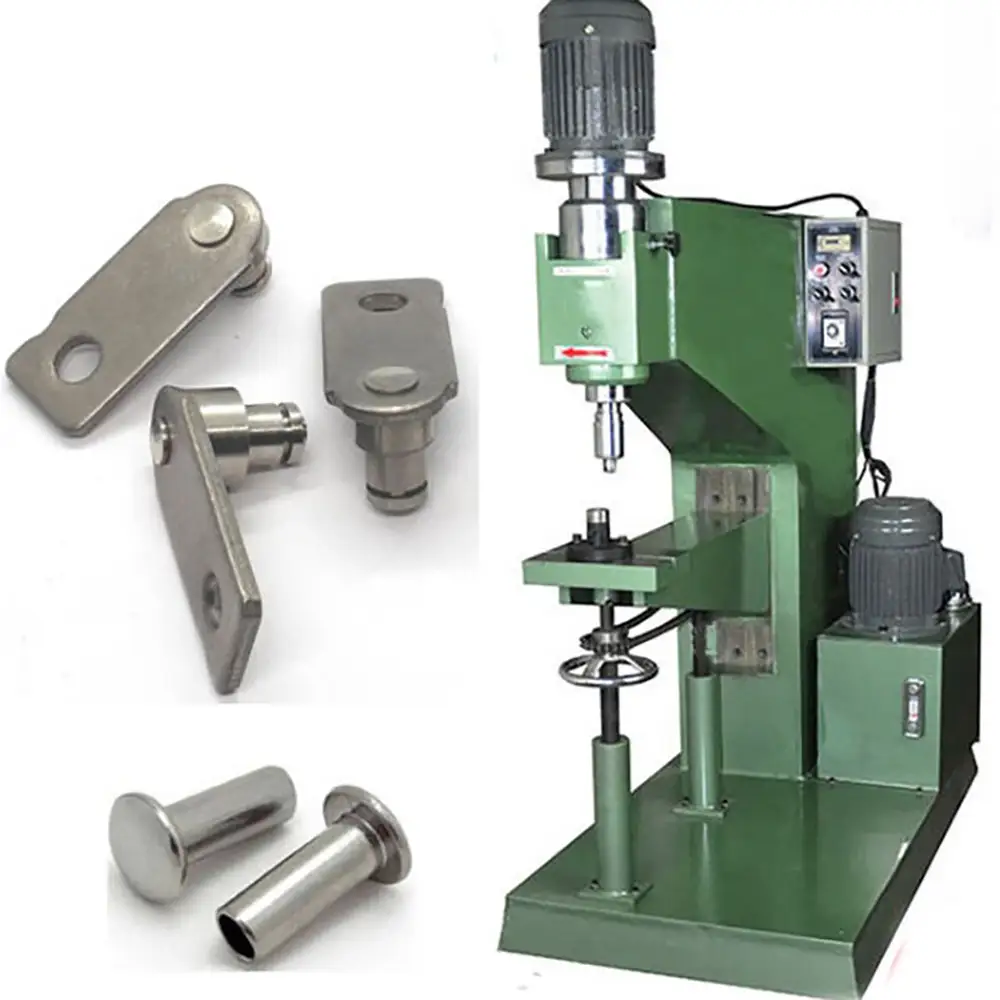
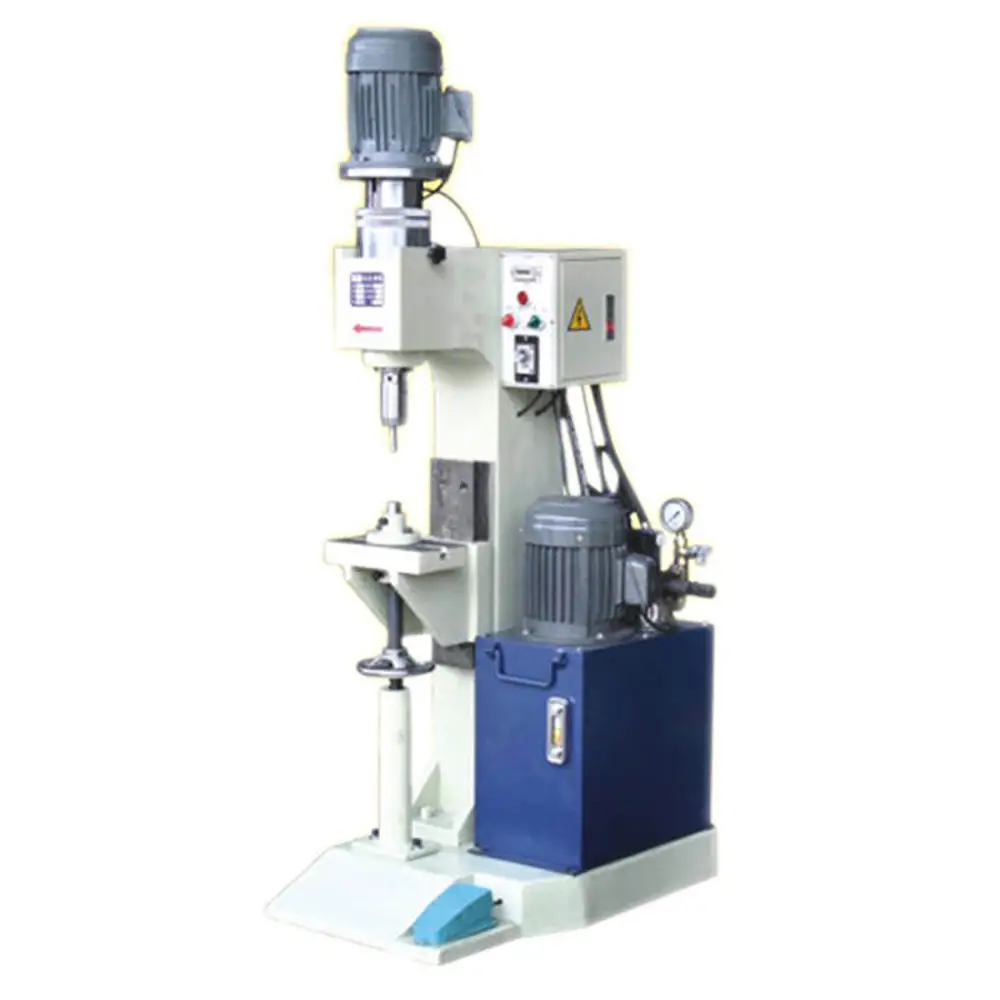
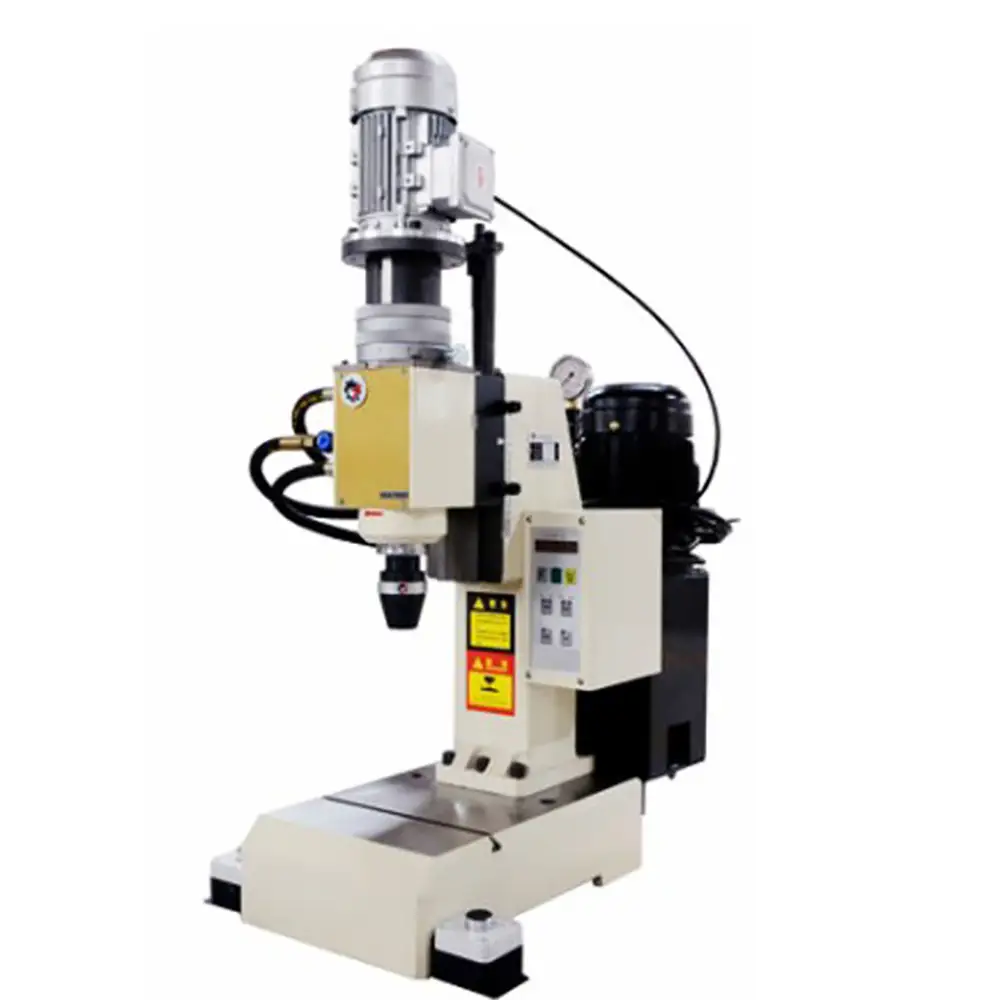
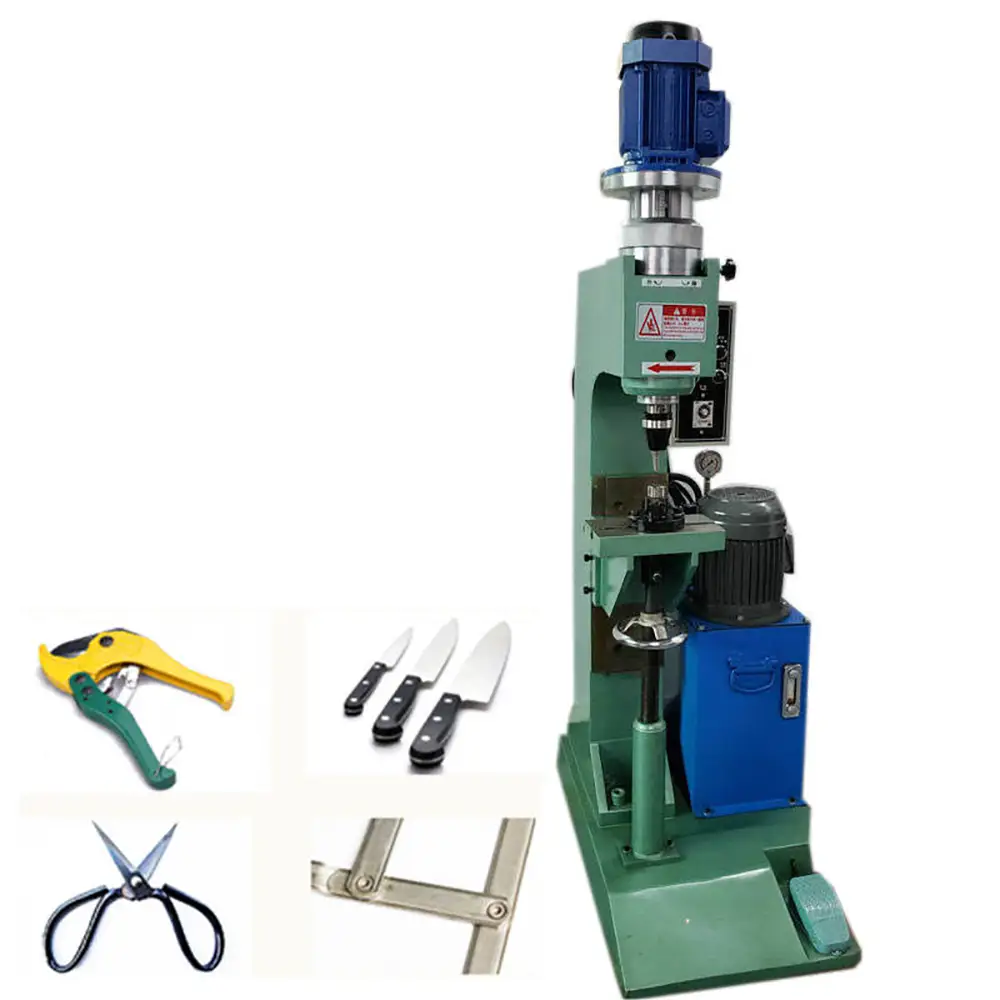
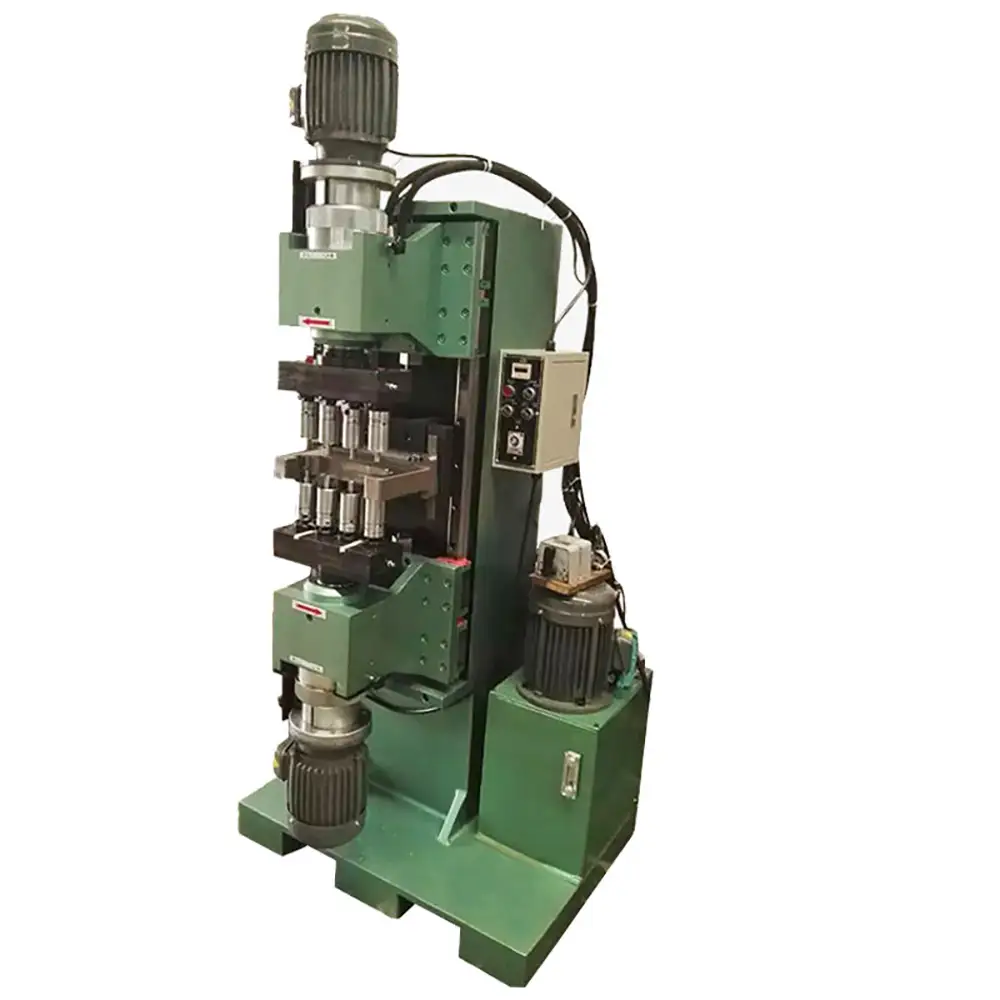
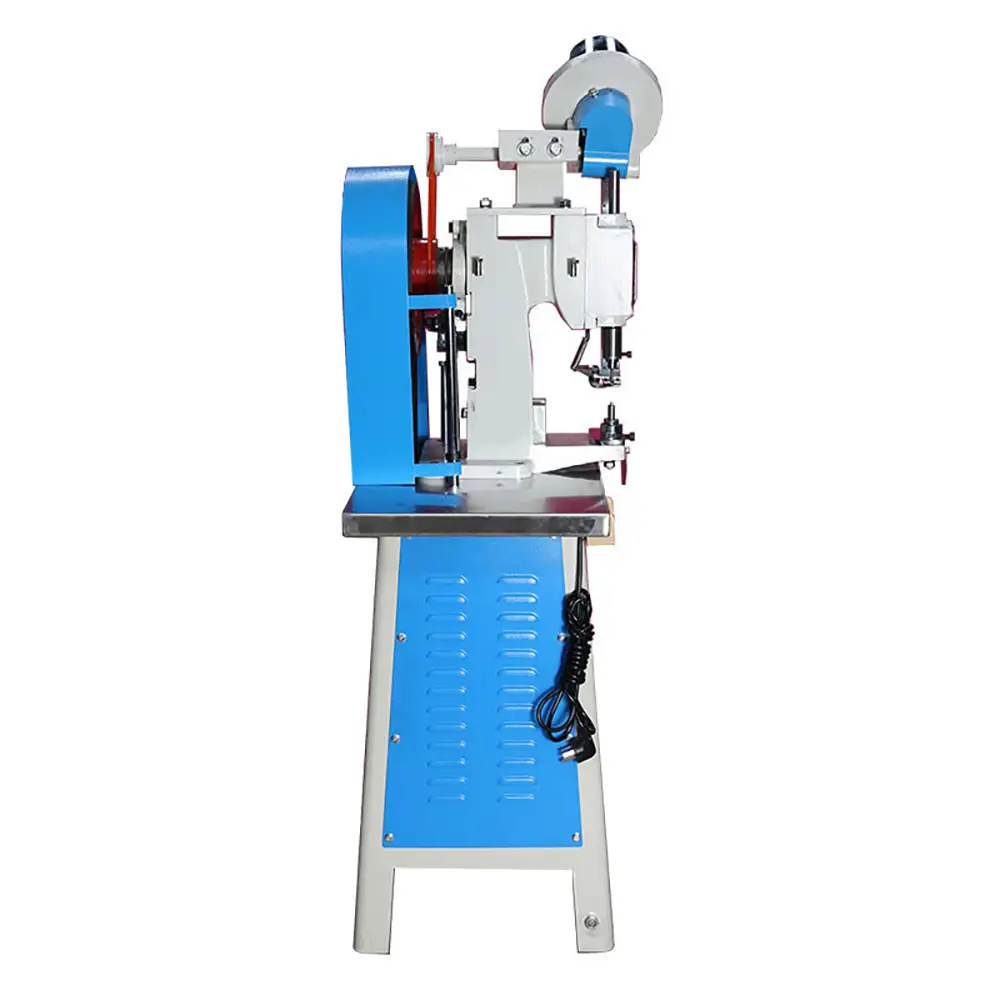
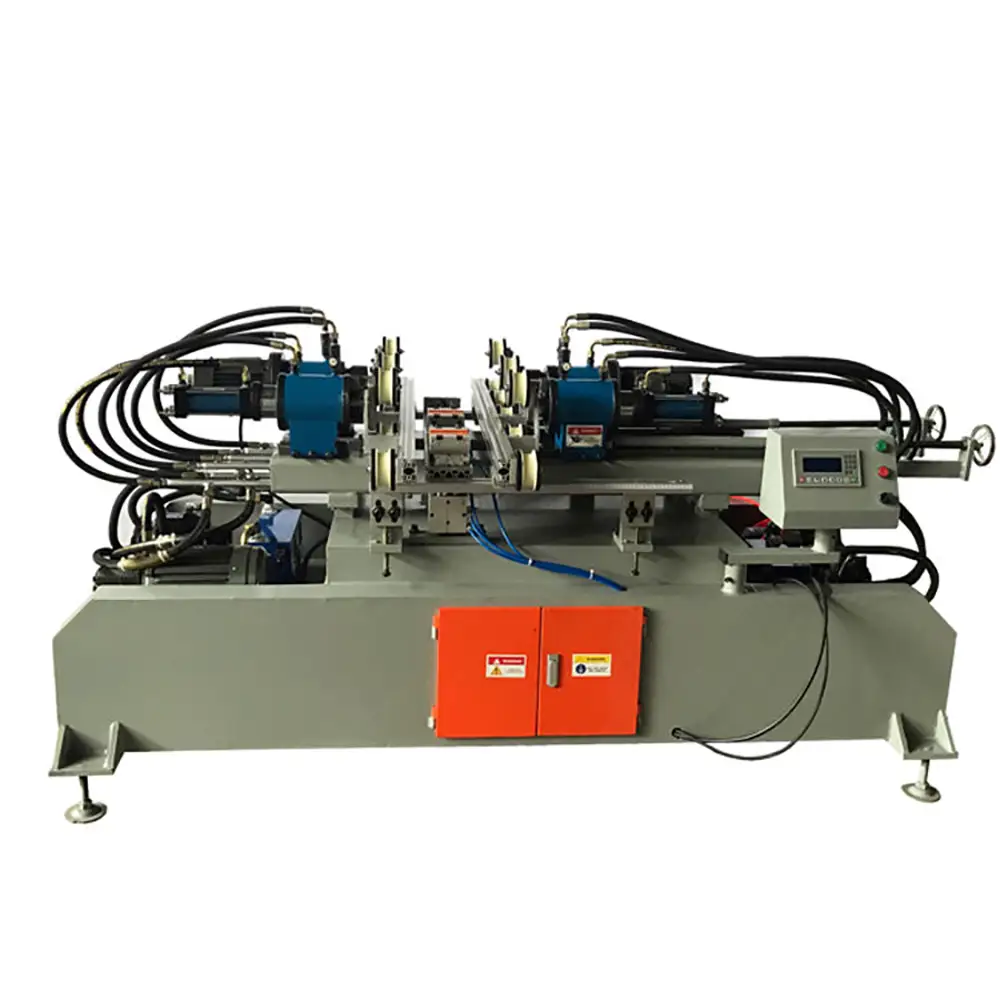
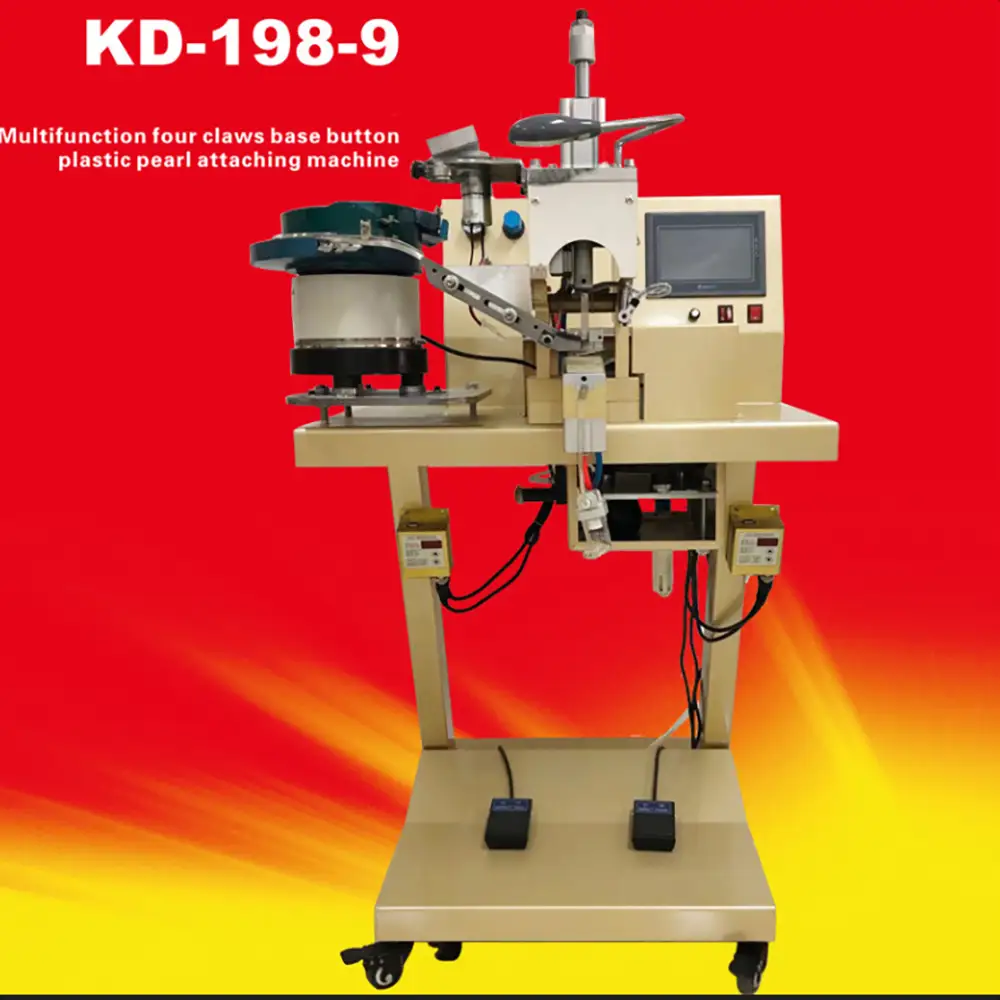
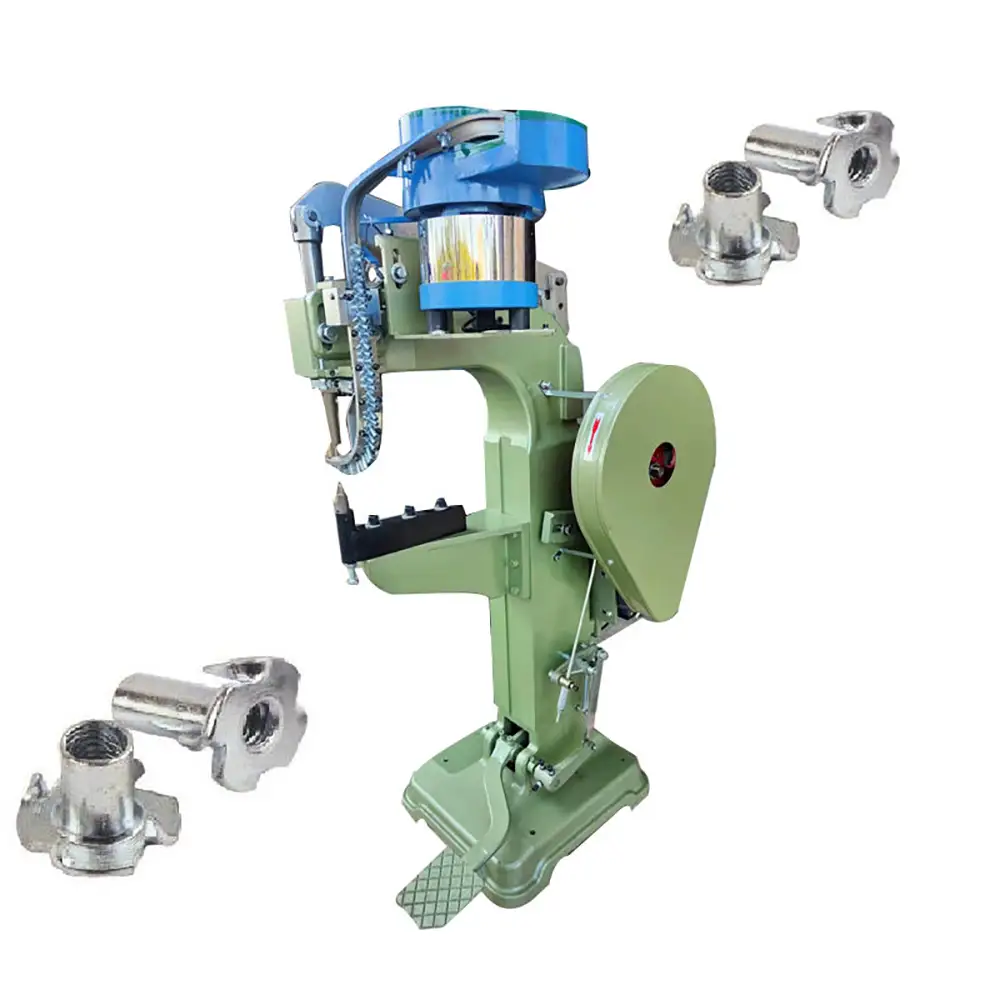
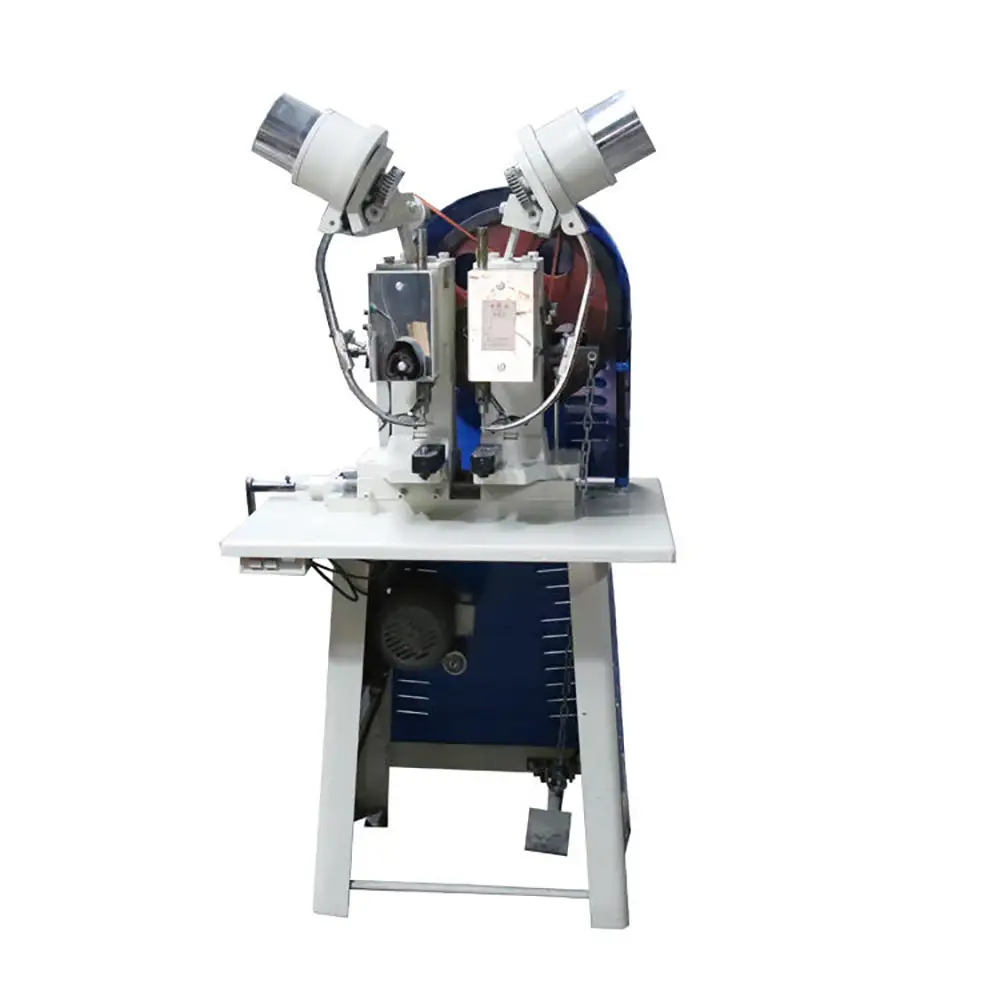
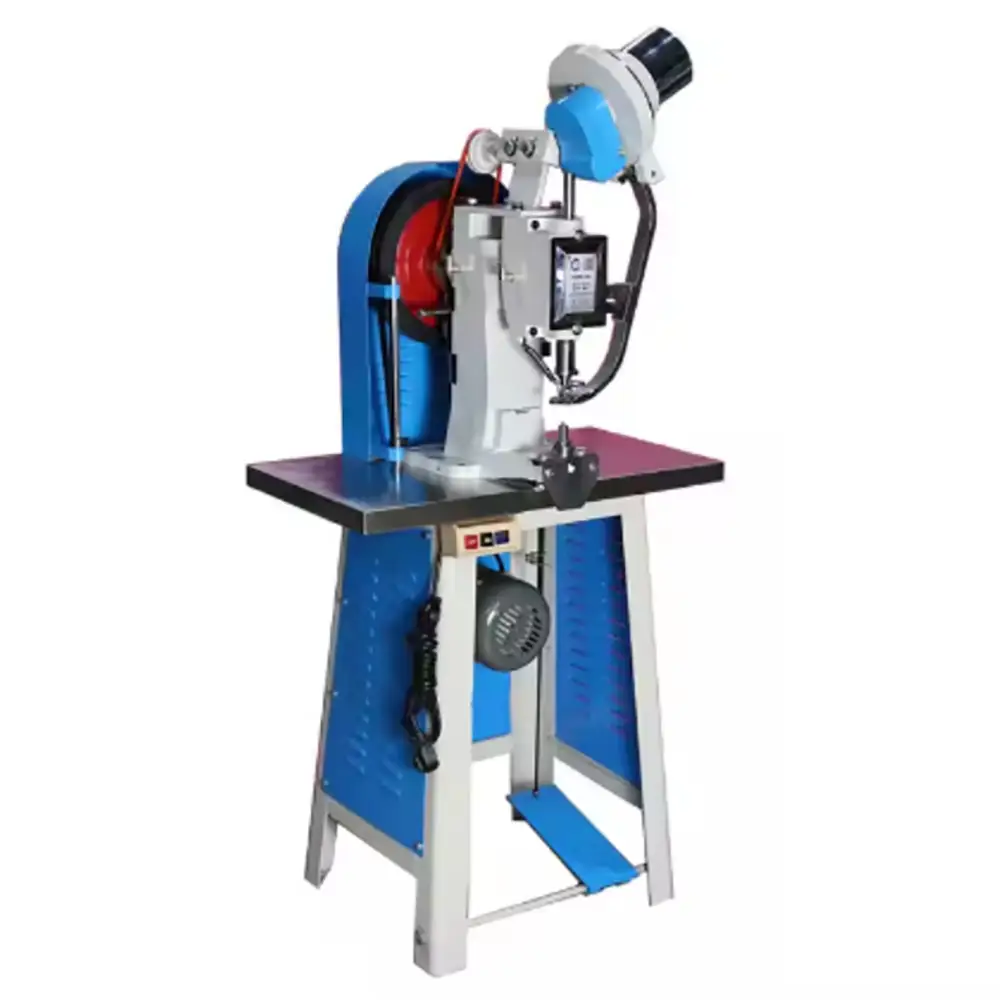
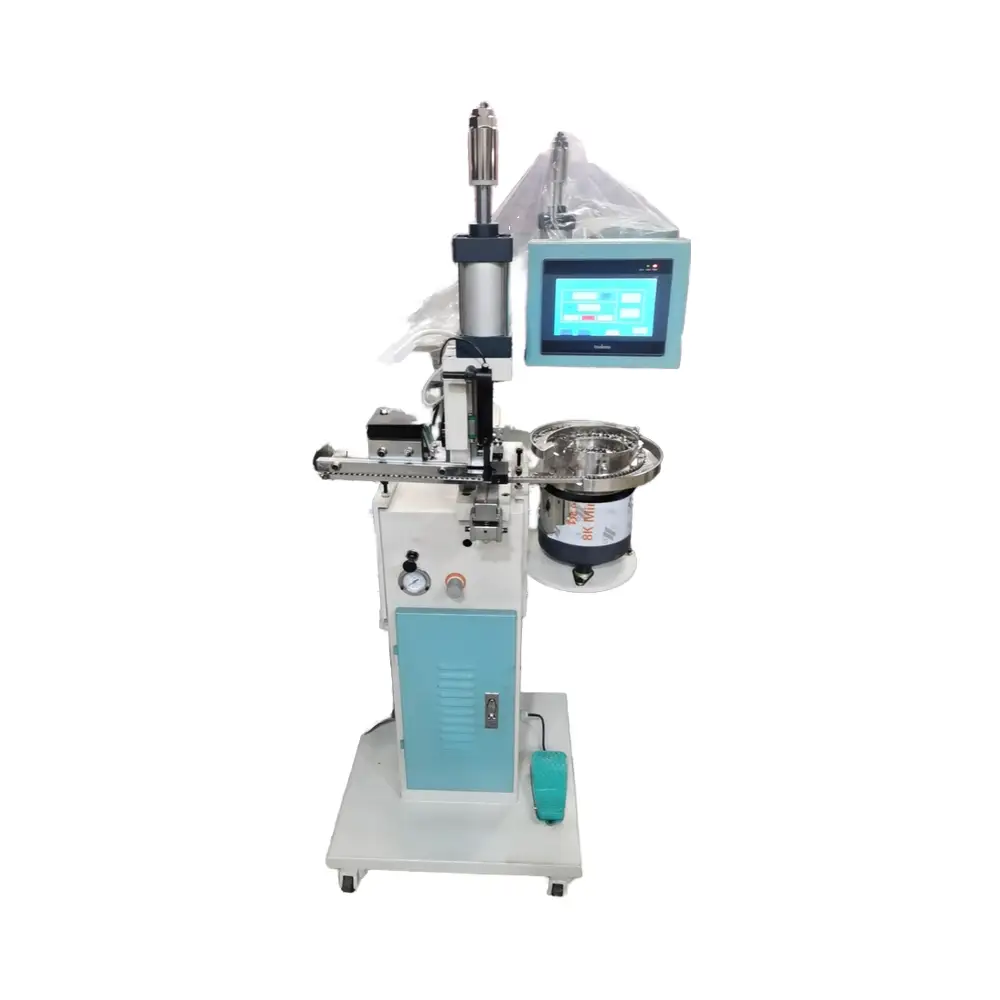
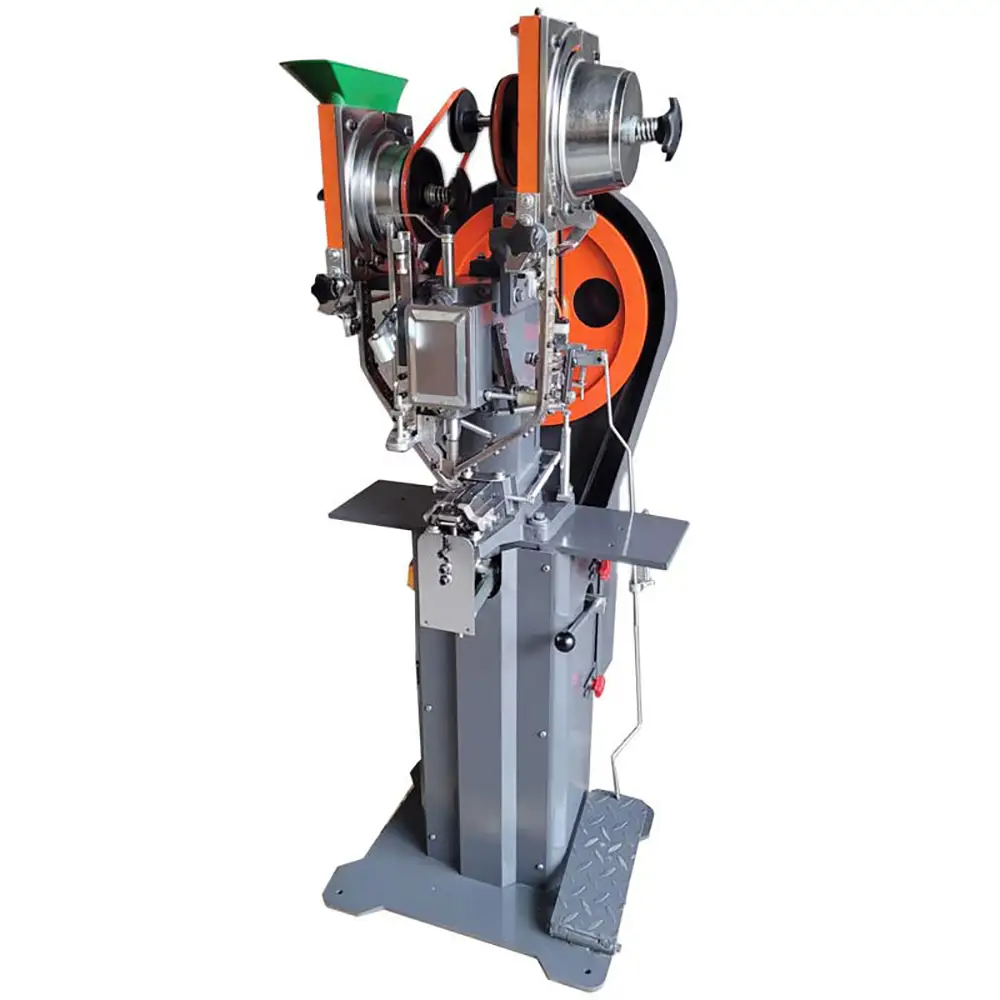
1 Progressive design:
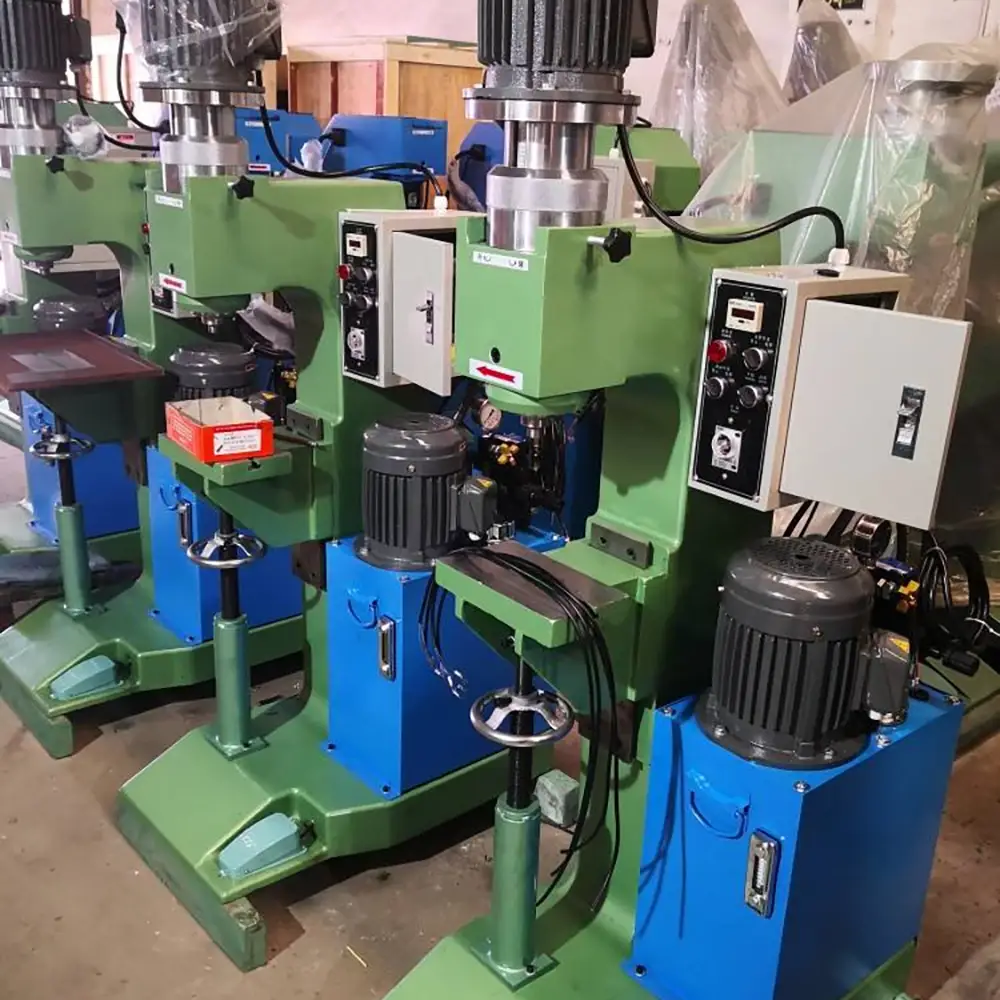
Low center of gravity, strong rigidity, simple structure, no noise, no impact, no vibration, two-stage weight adjustment, small size and no space.
2 Easy operation:
Strong working pressure, strong safety, easy operation, can be operated without experience, fast and convenient tool replacement, high work efficiency, good riveting effect
3 Standard configuration:
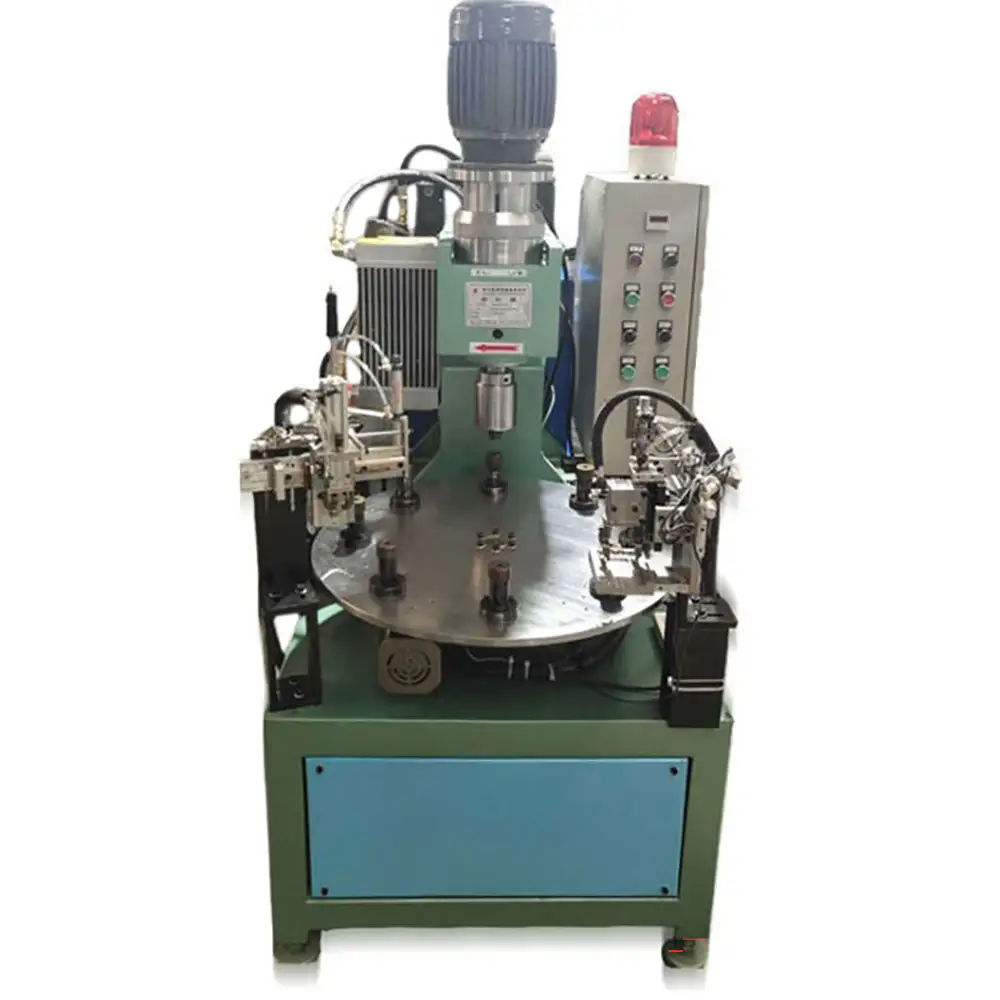
Standard electronic accessories are used for each model. When using automatic operation, the timer can be adjusted to the appropriate time at will
4 Usage
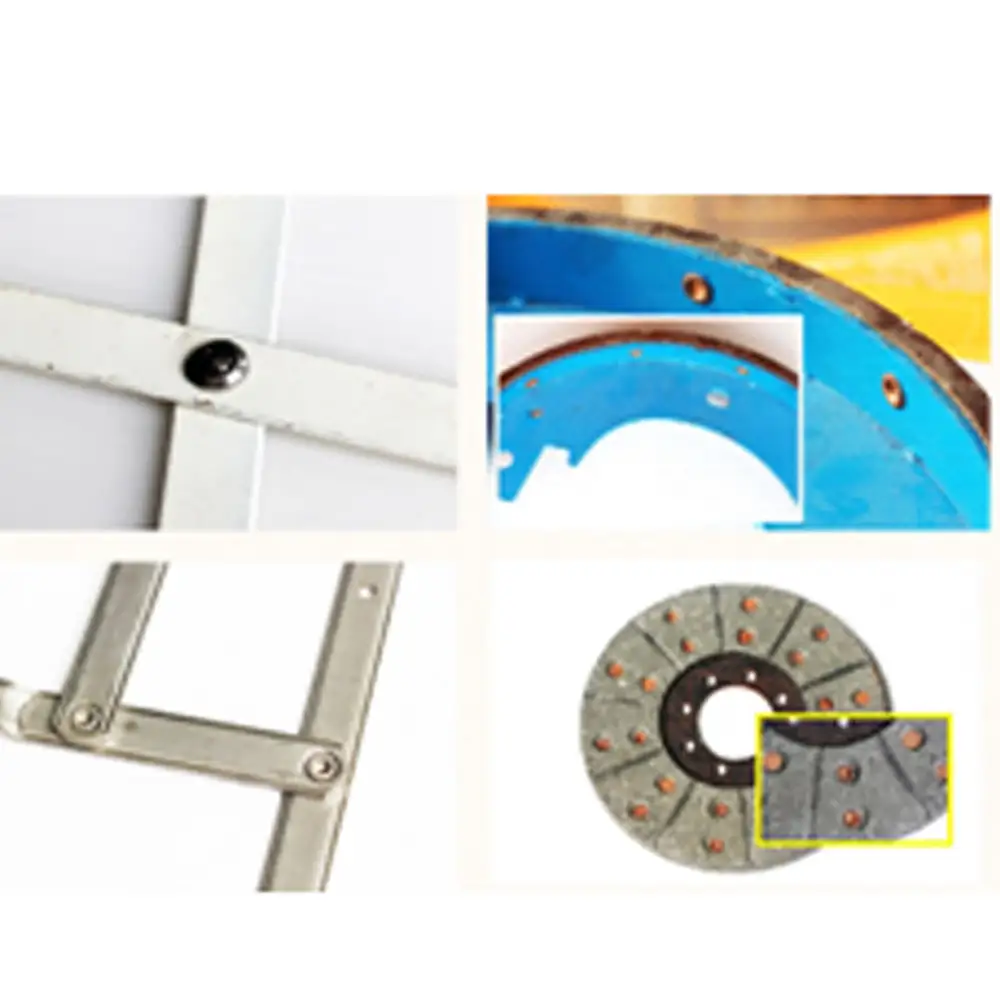
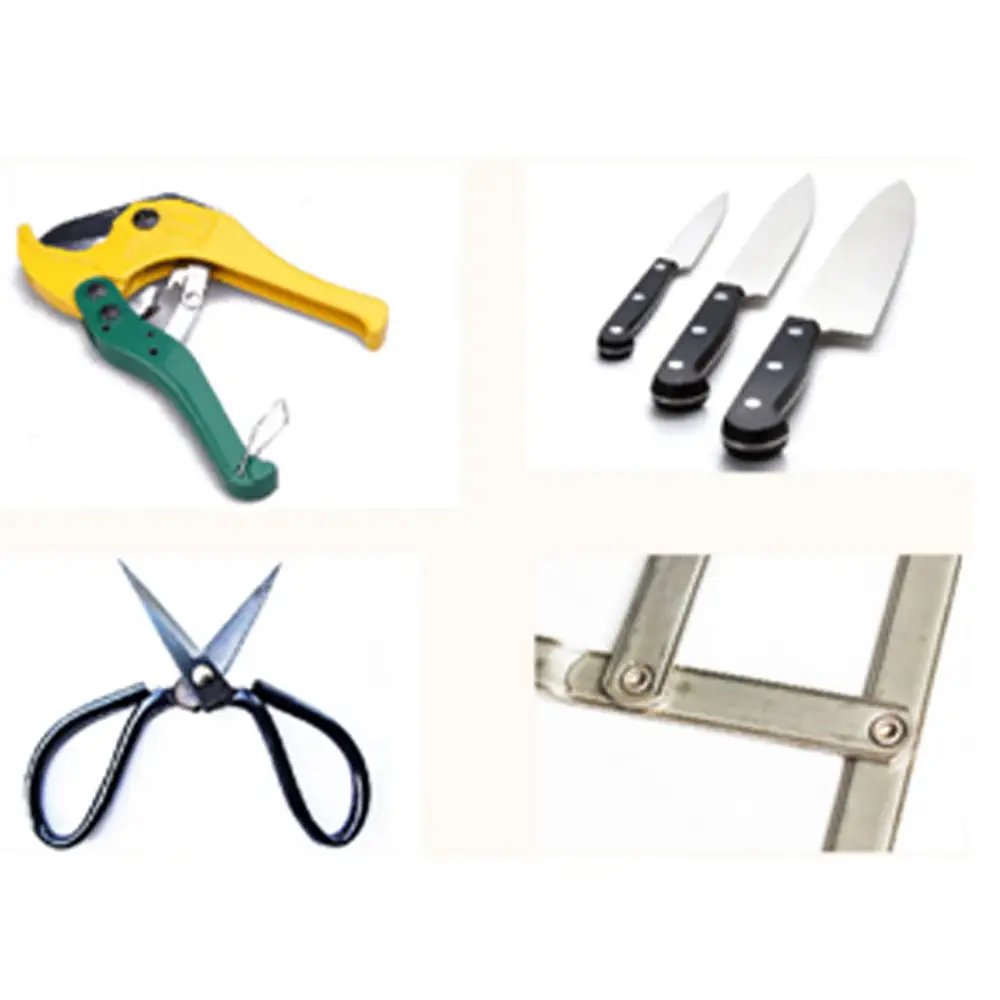
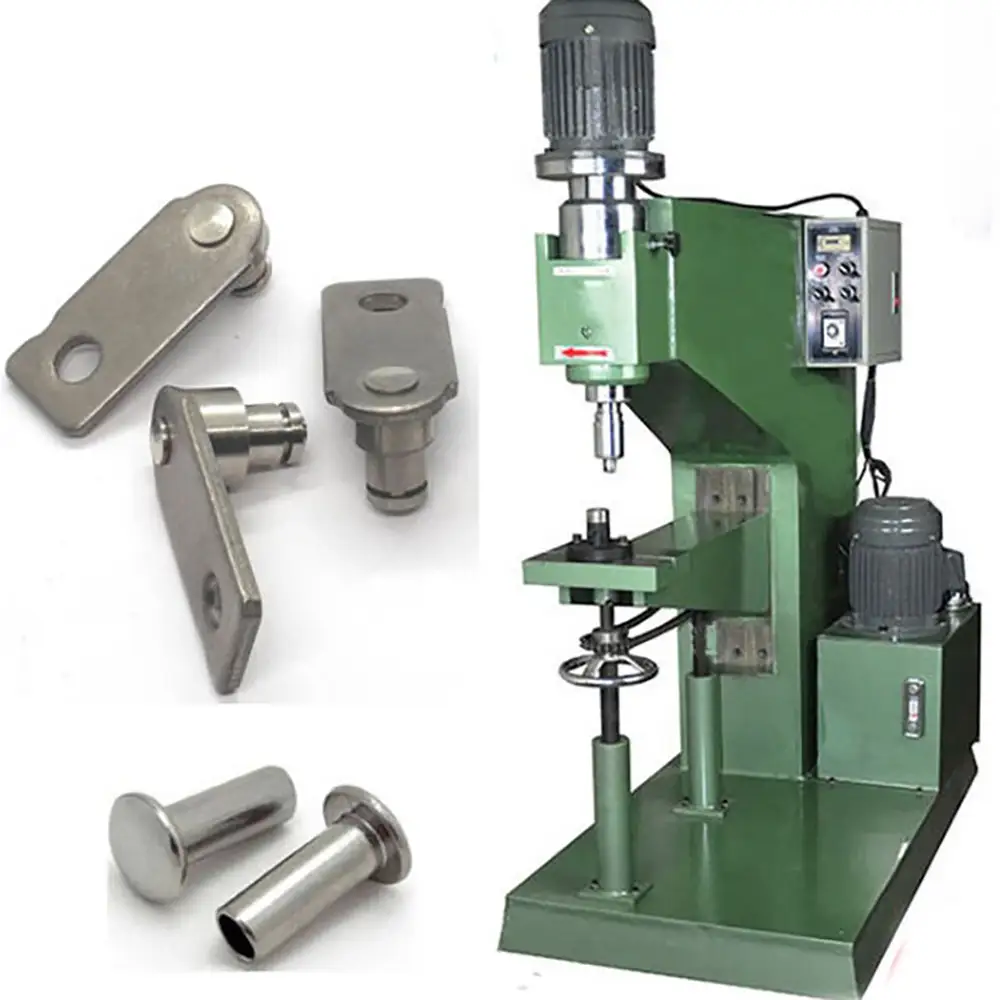
Suitable for riveting of solid rivets such as scissors, pliers, juicer blades, notebook shafts, LCD shafts, gas springs, piston rods, etc.
|
Model |
HSR-152 |
|
Riveting style |
hydraulic |
|
Rivet nail diameter |
Φ3-12mm(solid) |
|
nail length |
150mm |
|
Throat depth |
160mm |
|
Travel length |
0-40mm |
|
working time |
0.5-6sec |
|
Pressure |
430-1650kg |
|
Power |
2-3, HP |
|
Machine dimensions(L×W×H) |
1100×700×1600mm3 |
|
Net weight |
350kg |
|
Gross weight |
380kg |
|
Packing |
Wooden cases |
Multifunctional Hydraulic Riveting Machine for Solid Aluminum and Steel Nails
The Multifunctional Solid Aluminum and Steel Nail Hydraulic Riveting Machine for Hardware is designed for manufacturers that require reliable, powerful, and repeatable riveting of solid aluminum rivets, steel nails, and compatible metal fasteners. Using hydraulic force, the machine provides strong and controlled riveting performance for hardware manufacturing, metal component assembly, industrial fastening, and other production applications.
Unlike manual riveting methods that depend heavily on operator strength and technique, hydraulic riveting equipment uses a controlled mechanical system to generate consistent forming force. This makes it suitable for repetitive production where stable riveting quality, accurate positioning, and reliable fastening are important.
The multifunctional design allows the machine to work with different tooling configurations for various hardware products and fastener specifications. Depending on the application, customized dies, fixtures, rivet heads, and positioning systems can be developed to meet specific production requirements.
Hydraulic Riveting for Solid Aluminum and Steel Nails
Solid aluminum and steel fasteners are commonly used where a secure mechanical connection is required. Different metals have different hardness and forming characteristics, so the riveting machine needs to provide suitable force and tooling for the selected fastener.
Hydraulic riveting technology provides high mechanical force through a hydraulic system, making it suitable for applications where pneumatic or manual riveting may not provide enough forming capability.
The machine can be considered for:
Solid aluminum rivets
Solid steel rivets
Metal nails
Hardware fasteners
Metal brackets
Metal fittings
Industrial components
Sheet metal assemblies
Hardware accessories
Mechanical fastening applications
Actual riveting capability depends on the fastener material, diameter, hardness, workpiece thickness, tooling design, and required forming shape.
Multifunctional Hardware Riveting Machine
Hardware manufacturers often produce different components requiring different riveting positions and fastener sizes. A multifunctional hydraulic riveting machine provides flexibility by allowing suitable tooling and fixtures to be configured for different products.
With interchangeable tooling, manufacturers may be able to process multiple hardware models without purchasing completely separate machines for every application.
Typical applications include:
Metal hardware
Furniture hardware
Construction hardware
Industrial fittings
Metal brackets
Mechanical components
Automotive-related hardware
Agricultural hardware
Electrical hardware components
General metal assemblies
For custom hardware, the machine configuration can be evaluated according to product drawings, samples, fastener specifications, and required production volume.
Powerful Hydraulic Riveting Force
One of the main advantages of a hydraulic riveting machine is its ability to provide substantial and controlled forming force. This is especially useful for solid metal rivets and applications involving stronger materials.
During the riveting cycle, hydraulic pressure drives the riveting mechanism toward the workpiece. The tooling then deforms the end of the solid rivet or fastener to create a secure mechanical connection.
The controlled process can help improve:
Rivet forming consistency
Fastening strength
Production repeatability
Rivet positioning
Product appearance
Operator efficiency
Overall production stability
The appropriate hydraulic parameters should be determined according to the actual material and tooling requirements.
Solid Rivet Installation Process
Solid rivets require accurate positioning because the fastener must be properly supported while the rivet end is formed.
A typical operating process includes:
Prepare the hardware component and solid rivet.
Position the components in the dedicated fixture.
Insert the aluminum or steel rivet into the prepared hole.
Align the rivet with the upper and lower tooling.
Activate the hydraulic riveting cycle.
Apply controlled hydraulic force.
Form the rivet head or tail according to the tooling design.
Release and inspect the finished assembly.
The exact process can vary according to the rivet type, product geometry, and required finished rivet shape.
Aluminum Riveting Applications
Aluminum solid rivets are valued in applications where lightweight metal fastening is required. They can be used in suitable hardware and metal assembly applications where the material combination and mechanical requirements are compatible.
The hydraulic riveting machine can be equipped with dedicated tooling for aluminum rivets. Proper tooling helps control deformation and minimize unnecessary damage to the workpiece.
Potential applications include lightweight metal hardware, brackets, fittings, decorative hardware, equipment components, and other suitable aluminum riveting products.
Steel Riveting Applications
Steel rivets require greater forming force than many softer materials. Hydraulic riveting technology can therefore be useful for steel fastener applications that require controlled and substantial mechanical force.
Suitable applications may include industrial hardware, metal brackets, structural components, mechanical assemblies, and other products using compatible steel rivets.
The actual machine configuration should be selected according to the steel grade, rivet diameter, workpiece material, rivet length, and required finished shape.
Customized Dies and Tooling
Tooling is critical for achieving reliable riveting results. Different fastener sizes and product shapes require different forming dies.
We can support customized tooling solutions for applications involving:
Different rivet diameters
Different rivet lengths
Aluminum rivets
Steel rivets
Different rivet head shapes
Flat components
Curved components
Small hardware parts
Special positioning requirements
Multiple product models
Customized fixtures can also help hold components securely during the riveting cycle. This is particularly important for irregularly shaped hardware.
Improved Production Efficiency
Hydraulic riveting reduces the physical effort required from operators and provides a more standardized production process. For manufacturers producing large quantities of similar hardware components, consistent riveting cycles can help improve production workflow.
Instead of relying entirely on manual hammering or hand-operated tools, operators can use the hydraulic machine to perform repeated riveting operations with controlled force.
This can help manufacturers achieve:
Reduced operator fatigue
More consistent production
Faster repetitive operations
Improved fastening repeatability
Reduced manual force
Better process standardization
The actual production speed depends on the machine configuration, workpiece design, loading method, tooling, and operator workflow.
Suitable for Industrial B2B Manufacturing
The Multifunctional Hydraulic Riveting Machine is suitable for manufacturers that need dependable fastening equipment for industrial production. It can be used in factory assembly lines, hardware workshops, metal component manufacturing, and OEM production environments.
For high-volume applications, additional workholding, feeding, or automation systems may be considered. For lower-volume or frequently changing products, a flexible fixture and interchangeable tooling approach can provide useful production versatility.
Riveting Quality and Inspection
Quality control is essential when manufacturing riveted hardware. Each finished connection should be checked according to the product's technical requirements.
Common inspection points include:
Rivet head formation
Rivet alignment
Fastening strength
Rivet deformation
Surface condition
Workpiece damage
Connection consistency
Final product appearance
For new applications, sample testing should be performed using the actual rivets, hardware components, materials, and proposed tooling before mass production.
OEM and Custom Hydraulic Riveting Solutions
Different customers may require different hydraulic riveting configurations. The machine can be evaluated and customized according to production requirements.
OEM solutions may include customized dies, fixtures, working heads, feeding systems, control configurations, and machine structures.
Customers can provide product samples, drawings, rivet dimensions, material specifications, and production requirements so that an appropriate riveting solution can be developed.
Why Choose Our Multifunctional Hydraulic Riveting Machine?
1. Strong Hydraulic Riveting Force
The hydraulic system provides powerful mechanical force suitable for solid aluminum and steel rivet applications.
2. Multifunctional Design
The machine can be configured for different hardware products, rivet sizes, and fastening requirements.
3. Solid Rivet Compatibility
Suitable tooling can be developed for compatible solid aluminum, steel, and other metal rivets.
4. Customized Tooling
Dedicated dies, molds, and fixtures can be supplied according to product drawings and fastener specifications.
5. Consistent Riveting Results
Controlled hydraulic force supports repeatable rivet forming and consistent fastening quality.
6. Wide Hardware Applications
The machine can be used for hardware, metal components, fittings, brackets, industrial assemblies, and other suitable products.
7. Production Efficiency
Hydraulic operation reduces repetitive manual force and supports a more standardized manufacturing process.
8. OEM Manufacturing Support
Customized machine configurations and tooling solutions can be developed for specific B2B production requirements.
FAQ
1. What is a Hydraulic Riveting Machine?
A hydraulic riveting machine uses hydraulic pressure to generate controlled mechanical force for installing and forming rivets or compatible metal fasteners.
2. Can this machine rivet solid aluminum nails?
Yes. With appropriate tooling and machine configuration, it can be used for compatible solid aluminum rivets or nails.
3. Can it rivet steel nails?
Yes. Hydraulic riveting is suitable for applications requiring substantial forming force, including compatible steel rivets and fasteners.
4. What hardware products can be riveted?
The machine can be configured for various hardware components, metal fittings, brackets, industrial components, furniture hardware, and other suitable assemblies.
5. Is the machine multifunctional?
Yes. Different dies, fixtures, and tooling configurations can allow the machine to handle different riveting applications.
6. Can the riveting tooling be customized?
Yes. Customized upper and lower dies, fixtures, and positioning systems can be developed according to the rivet and product specifications.
7. Can one machine handle different rivet sizes?
Depending on the machine configuration, interchangeable tooling can allow different compatible rivet sizes to be processed.
8. Is hydraulic riveting stronger than manual riveting?
Hydraulic riveting provides controlled mechanical force and repeatable forming, while the actual connection strength depends on the rivet, materials, dimensions, tooling, and process parameters.
9. Can this machine be used for mass production?
Yes. It is suitable for repetitive hardware riveting operations and can be integrated into production workflows depending on the required automation level.
10. Can automatic feeding be added?
Depending on the rivet shape and application, automatic or semi-automatic feeding systems may be considered.
11. How do I select the correct hydraulic riveting machine?
Selection should consider rivet material, diameter, length, hardness, workpiece material, thickness, required riveting force, product geometry, and production volume.
12. Do you provide OEM and customized solutions?
Yes. Customized machine configurations, tooling, fixtures, and automation options can be evaluated based on product samples, drawings, and production requirements.
Prev:
Double Heads Riveting Machine
Next:
Pneumatic Cornes Riveting Machine for Clothes and Hardware
TAG:
Industrial Riveting Machine,
Metal Riveting Machine,
Rivet Setting Machine,
Hydraulic Rivet Machine,
Hydraulic Fastening Machine,
Hydraulic Riveting Press,
Hydraulic Rivet Press,
Solid Riveting Machine,
Heavy Duty Riveting Machine,
Rivet Assembly Machine,
Industrial Rivet Machine,
Automatic Riveting Machine,
Solid Rivet Machine,
Rivet Installation Machine,
Metal Fastening Machine,
Rivet Press Machine,
Hydraulic Riveting Machine,
Hardware Riveting Machine,
Aluminum Riveting Machine,
Industrial Fastening Equipment,
Steel Riveting Machine,
Hardware Fastening Machine,
Metal Hardware Riveting Machine,
Steel Rivet Machine,
Aluminum Rivet Machine,
Hardware Fastening Equipment,
Multifunctional Riveting Machine,
Solid Aluminum Rivet Machine,
Related Category:
Hydraulic Riveting Machine,Multifunctional Riveting Machine,Solid Aluminum Nail Riveting Machine China, suppliers, manufacturers, factory, customized, wholesale, quotation, made in China