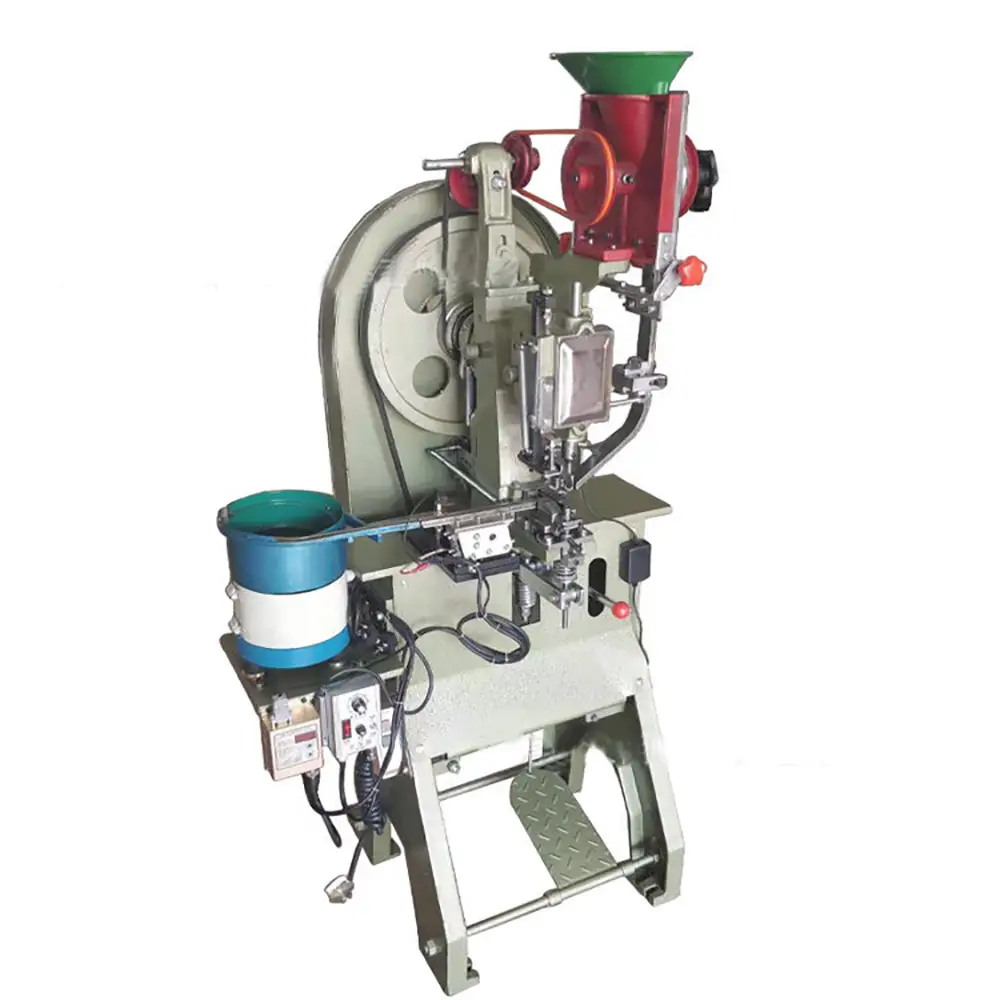
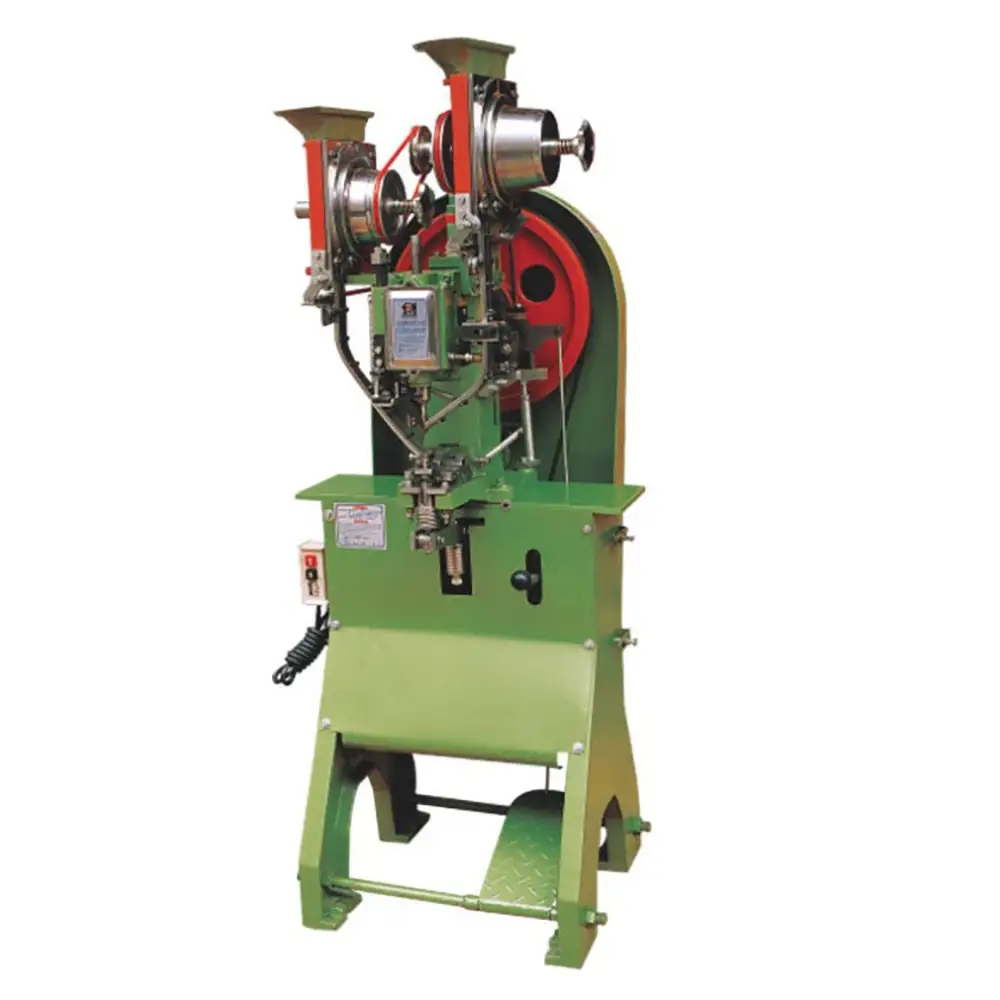
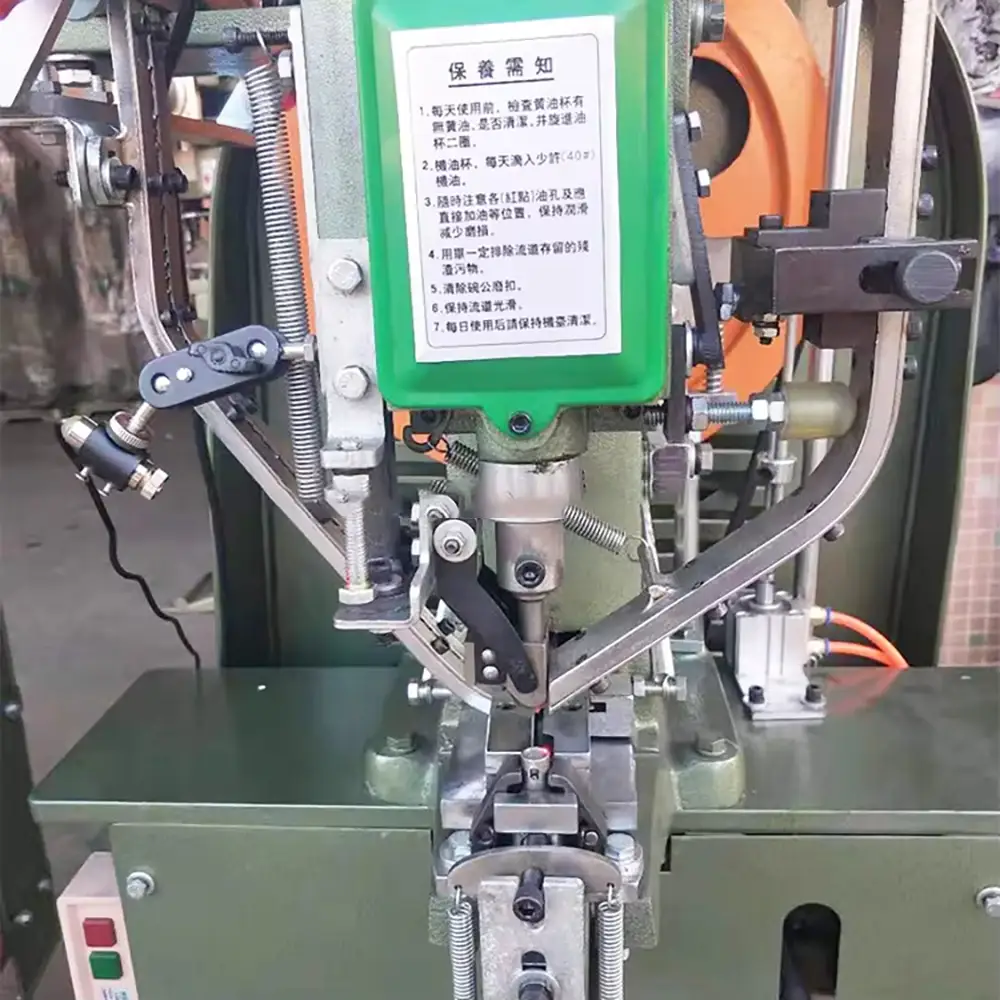
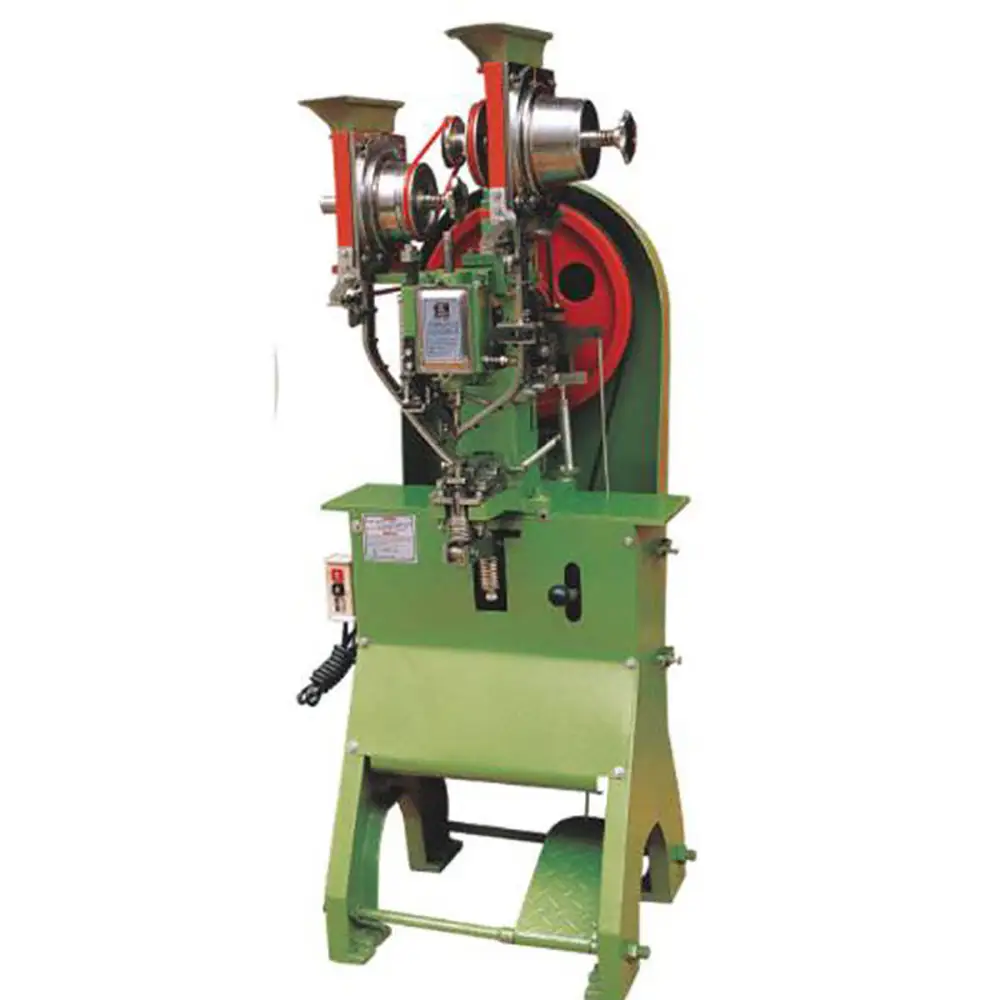
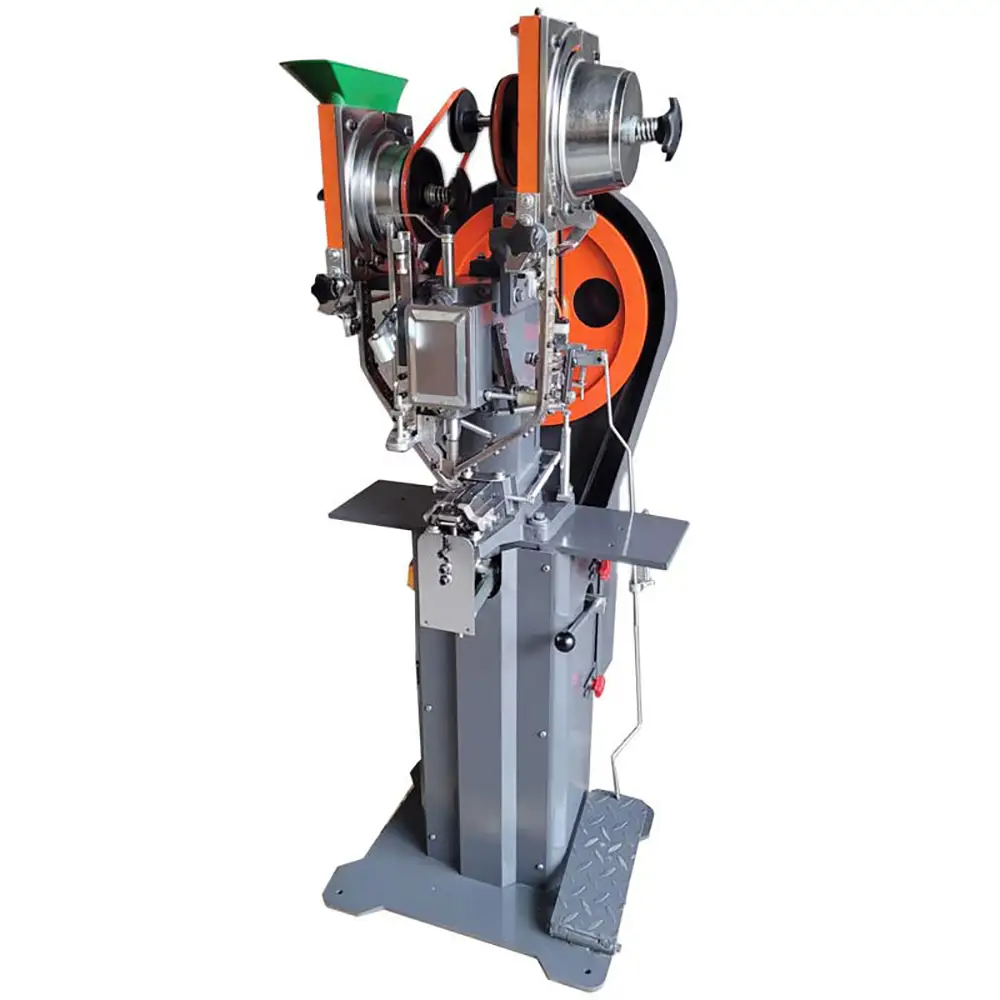
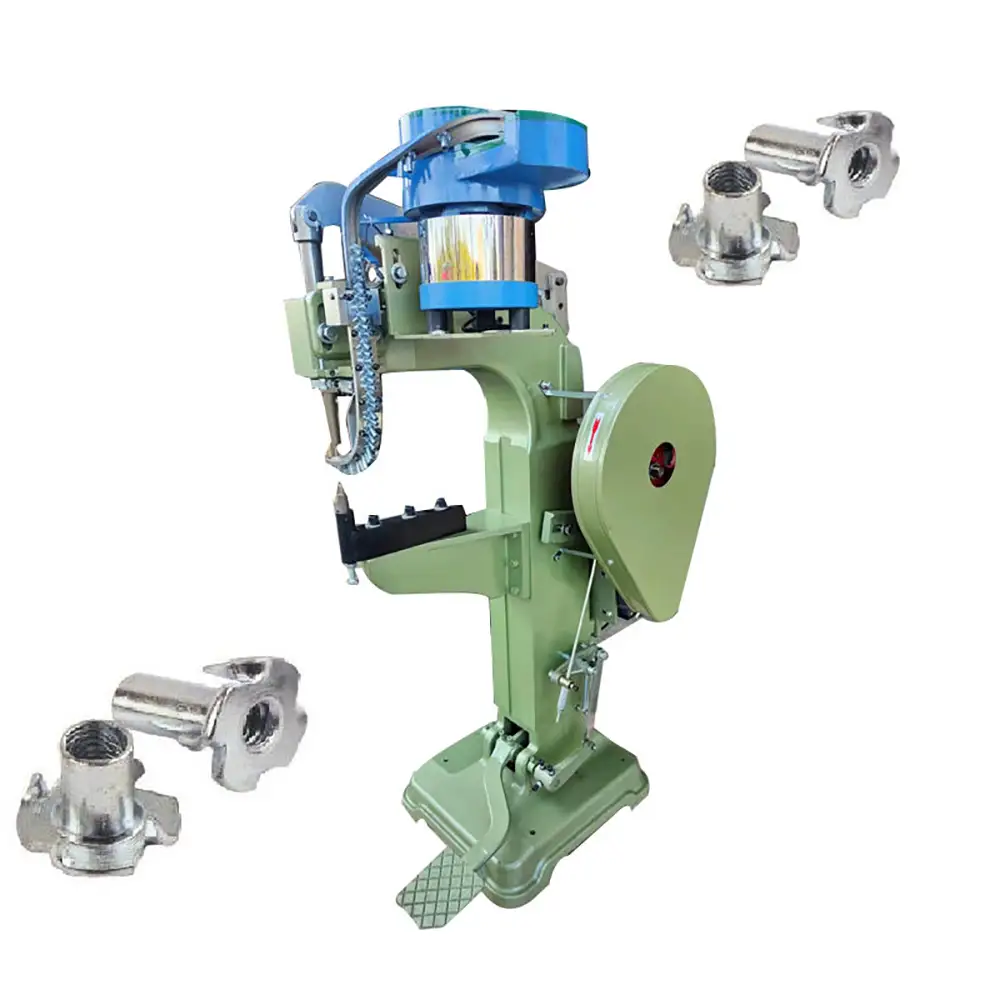
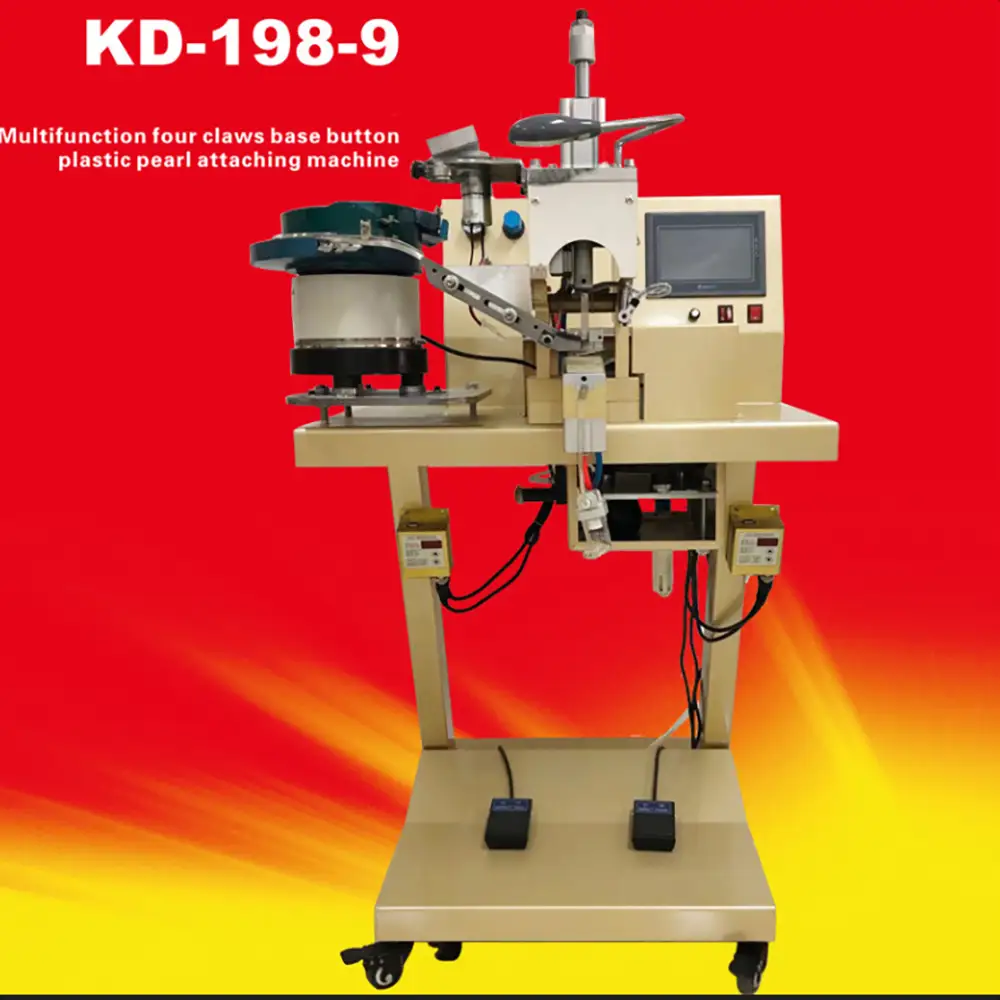
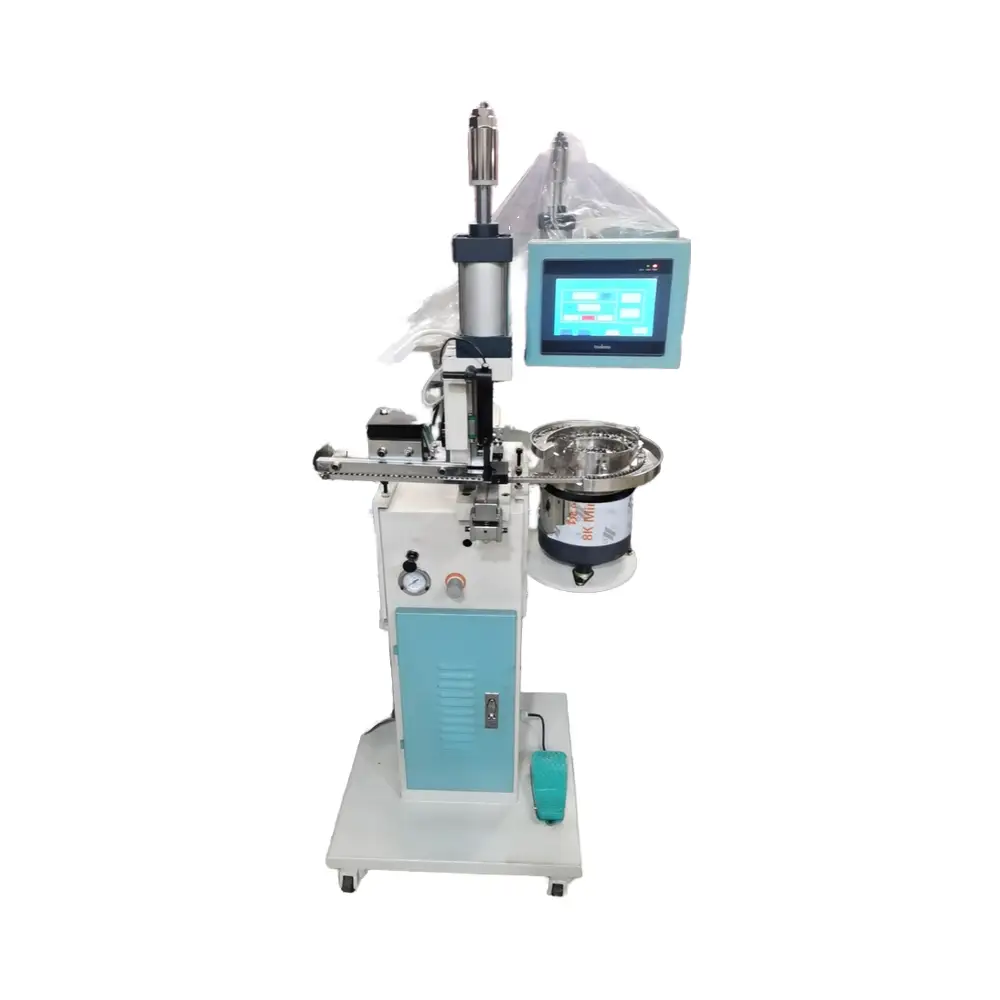
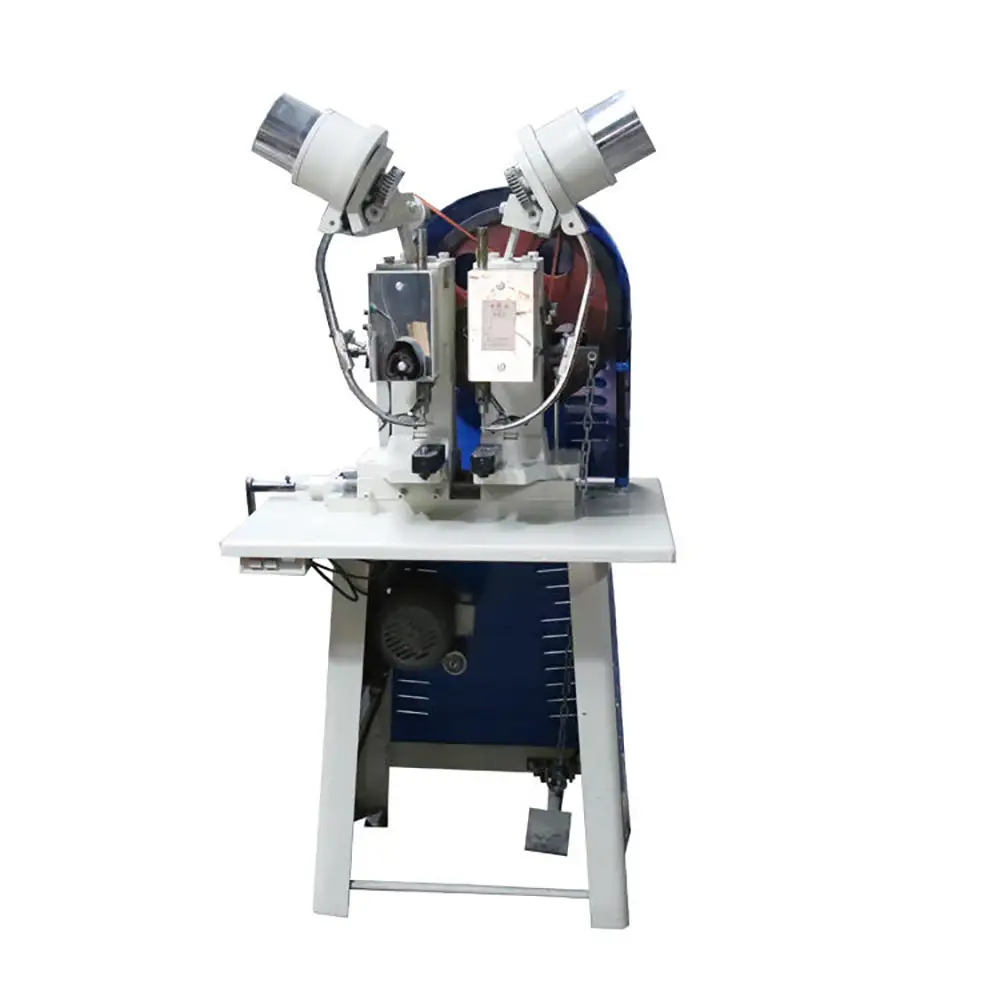
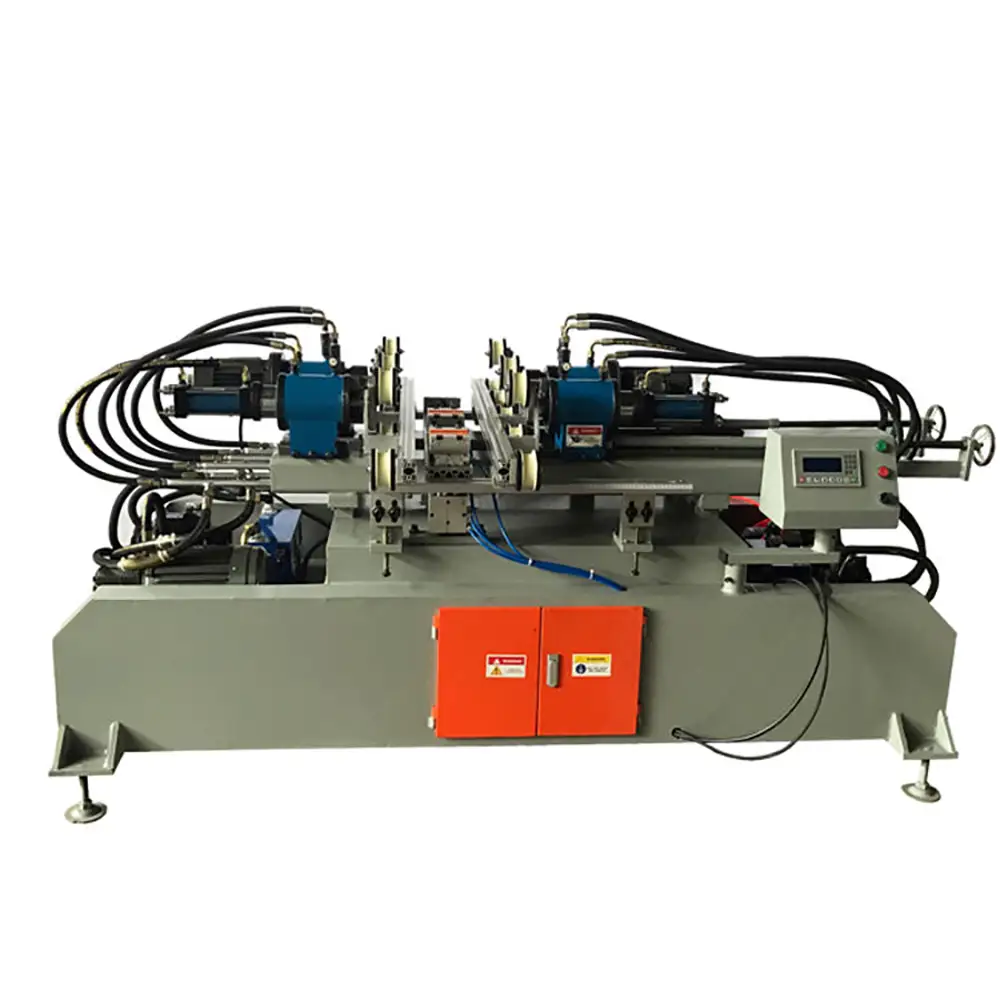
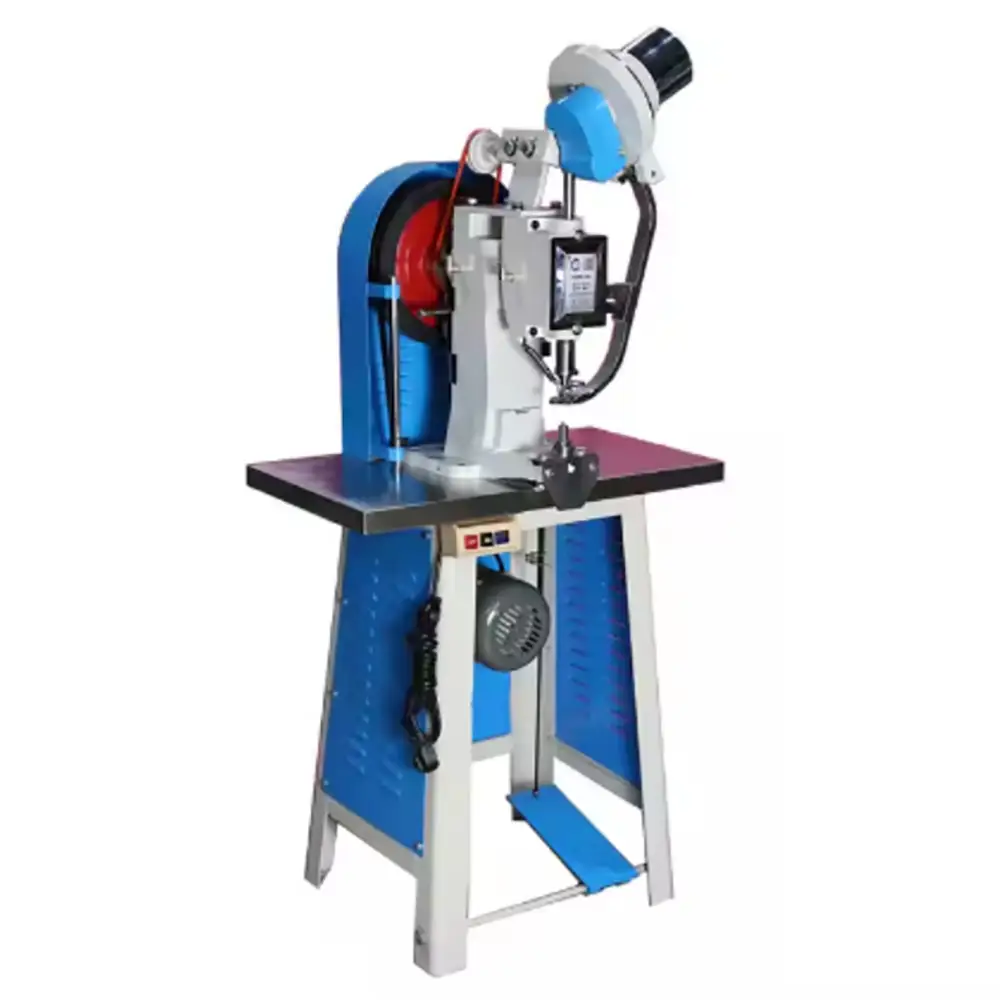
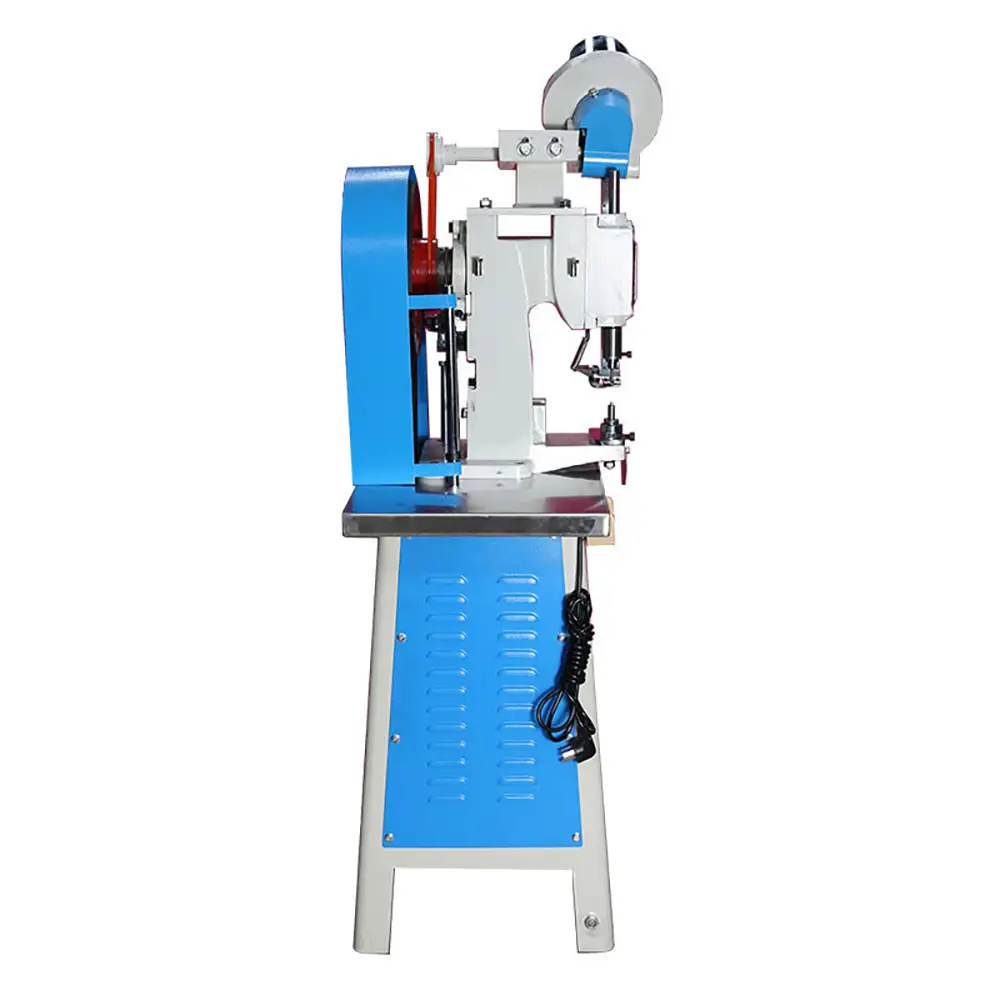
1 Double rivet up and below riveting machine for clothing shoes bag
2 Features:Applicable to: uppers, leather goods, clothing, medical equipment and other products, automatic feeding up and down, riveting completed in one time
|
Rivet ability |
Φ5-15mm |
|
Rivet diameter |
3-12mm |
|
Rivet length |
3-8mm |
|
Throat depth |
130mm |
|
Motor |
1/2HP |
|
size |
600*650*500mm |
|
Net weight |
180kg
|
Double Rivet Up and Below Riveting Machine for Clothing, Shoes and Bags
The Double Rivet Up and Below Riveting Machine is an industrial fastening machine designed to install two rivets from the upper and lower sides of a workpiece during the riveting process. It is particularly suitable for clothing, shoes, bags, leather goods, straps, belts, luggage, and other products that require efficient and consistent double-rivet fastening.
Compared with single-rivet operations, an up-and-below riveting configuration can help manufacturers complete complementary fastening operations in one working cycle. This can reduce repeated manual positioning and improve production efficiency for products requiring two-sided or paired rivet installation.
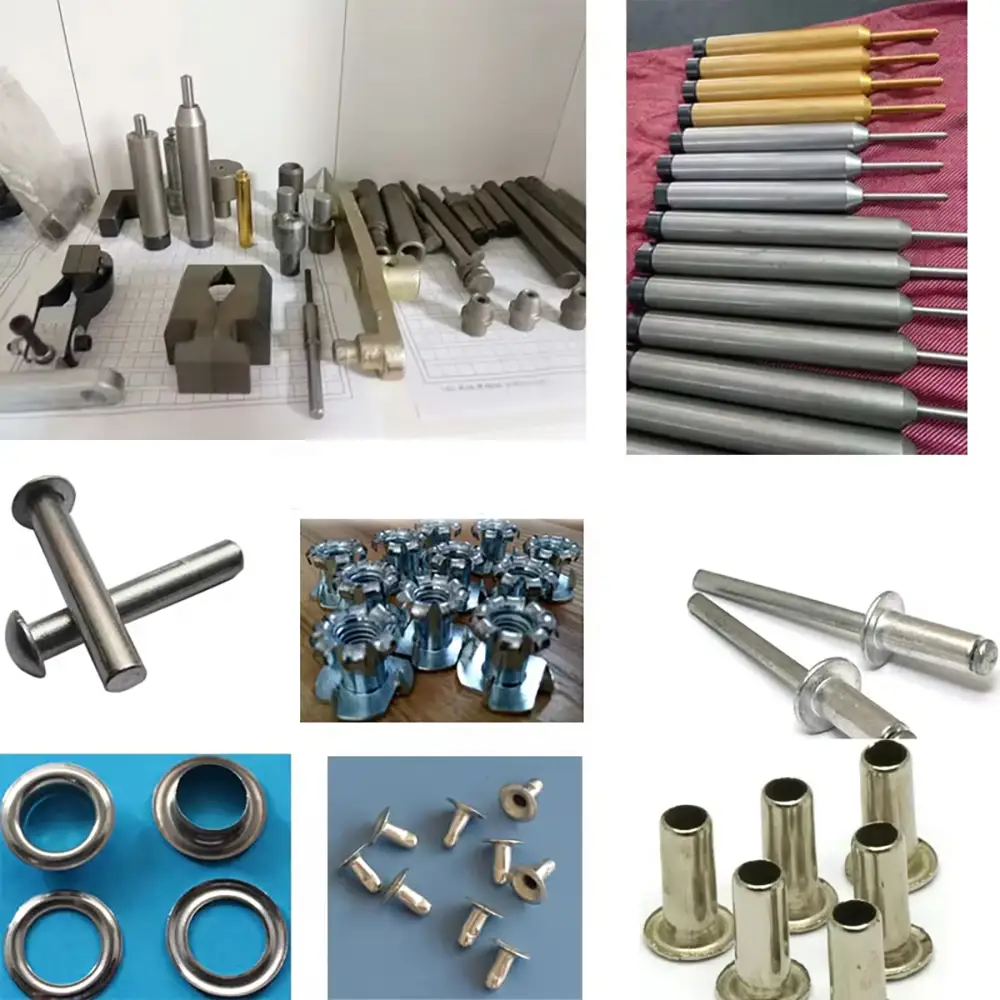
The machine can be configured with suitable riveting dies, punches, fixtures, and feeding systems according to the rivet dimensions and product design. For manufacturers producing large quantities of similar products, automatic or semi-automatic double riveting can provide a more standardized production process.
What Is a Double Rivet Up and Below Riveting Machine?
A Double Rivet Up and Below Riveting Machine is designed to perform riveting operations from both the upper and lower sides of a workpiece.
The upper and lower riveting heads work together to set the corresponding rivets, allowing two rivets to be installed in a coordinated process. Depending on the machine configuration, the rivets can be manually loaded or automatically supplied through a feeding system.
This type of machine is especially useful when the product requires two rivets positioned at corresponding locations or when simultaneous upper-and-lower riveting can simplify the assembly process.
The actual riveting method depends on the rivet type, product structure, workpiece material, and required finished appearance.
Double Riveting for Clothing
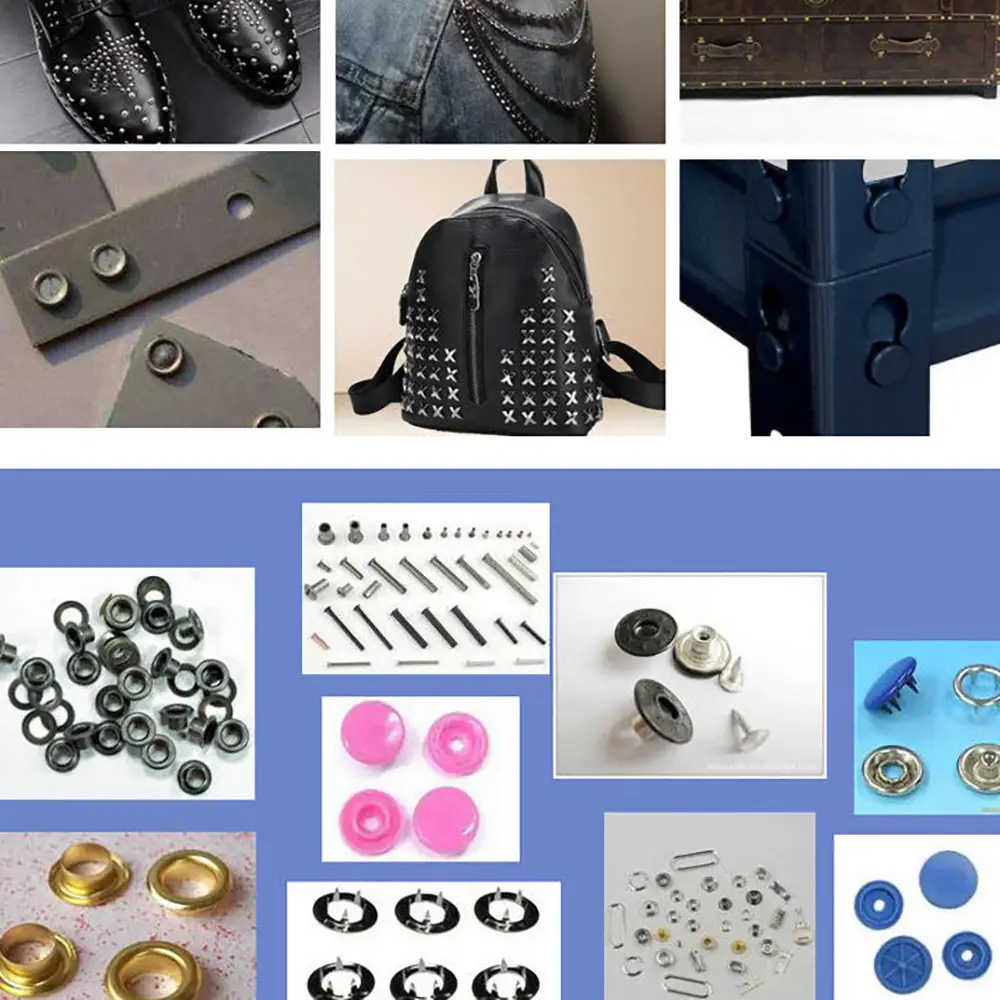
Clothing manufacturers often use rivets for denim garments, workwear, jackets, decorative apparel, straps, pockets, reinforcement points, and fashion accessories.
The Double Rivet Up and Below Riveting Machine can be used for suitable clothing applications where two rivets need to be installed efficiently and consistently.
Customized fixtures can help position fabric, leather, or composite materials accurately before the riveting cycle. The tooling can also be selected according to the rivet head style and desired appearance.
For soft materials, appropriate tooling and controlled riveting force are important to prevent excessive deformation or unwanted marks around the rivet.
Shoe Riveting Applications
Shoes and footwear products frequently contain riveted components such as straps, buckles, eyelets, decorative elements, reinforcement pieces, and other accessories.
A double riveting machine can streamline repetitive fastening operations during footwear production. The workpiece can be positioned in a dedicated fixture before the upper and lower riveting heads perform the fastening operation.
For footwear applications, machine tooling should be matched to the shoe construction and riveting location. Different shoe styles may require different fixtures because of variations in shape, thickness, and accessibility.
Bag and Leather Product Riveting
Bags, luggage, backpacks, handbags, wallets, belts, and other leather products often use rivets for both functional and decorative purposes.
The machine can be configured for suitable rivets used to connect handles, straps, buckles, reinforcement pieces, decorative hardware, and other components.
For leather and synthetic materials, consistent positioning is particularly important because incorrect riveting can damage the material or create an undesirable appearance.
A customized workholding fixture can help maintain the correct position during the riveting cycle and improve repeatability during batch production.
Up and Below Riveting Structure
The key characteristic of this machine is its upper-and-lower riveting arrangement.
Instead of performing separate riveting operations at different stations, the machine can bring the corresponding upper and lower riveting tools together around the workpiece.
This configuration can be useful for products where two rivets need to be installed at the same time or where the two sides of the workpiece need to be processed in a coordinated manner.
Depending on the product design, the machine can use manual loading, semi-automatic feeding, or automatic rivet feeding systems.
Automatic Rivet Feeding
Automatic feeding can further improve the productivity of the Double Rivet Riveting Machine.
A feeding system can supply rivets to the appropriate riveting positions, reducing the need for operators to manually place individual rivets.
The feeding mechanism must be matched to the rivet dimensions, head shape, length, and material. Proper orientation is also important for stable automatic operation.
For custom projects, sample testing with the actual rivets is recommended before finalizing the feeding configuration.
Customized Tooling
Different clothing, shoe, and bag products have different shapes and fastening positions. A universal fixture may not always provide the required positioning accuracy.
Customized tooling can include:
Upper riveting dies
Lower riveting dies
Rivet punches
Product positioning fixtures
Workpiece supports
Automatic feeding components
Special guide components
Adjustable positioning systems
Customized tooling allows the machine to be adapted to the specific product geometry and riveting requirements.
Production Efficiency
For high-volume manufacturing, repetitive manual riveting can consume significant labor and create variations between operators.
A dedicated double riveting machine can standardize the fastening sequence and reduce unnecessary handling.
The machine can help operators complete more consistent riveting operations while reducing repetitive hand movements. When combined with automatic feeding, the production workflow can become even more efficient.
Actual production speed depends on the rivet type, workpiece design, operator loading method, feeding system, machine configuration, and riveting cycle.
Suitable Rivet Types
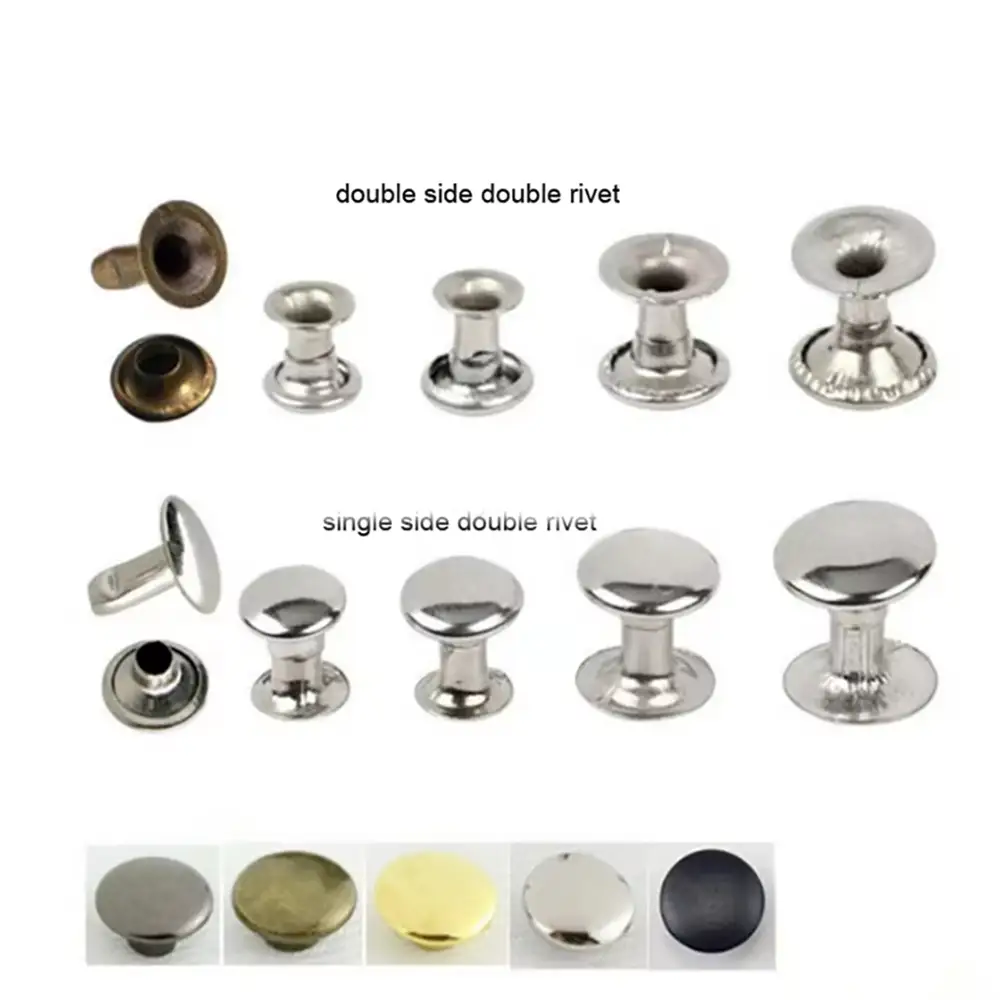
The machine can be configured for suitable rivet types used in clothing, footwear, bags, leather goods, and accessories.
Applications may include:
Metal Rivets
Double Cap Rivets
Tubular Rivets
Hollow Rivets
Semi-Tubular Rivets
Decorative Rivets
Clothing Rivets
Leather Rivets
Shoe Rivets
Bag Hardware Rivets
The actual rivet range should be confirmed based on the machine model and tooling configuration.
Applications
The Double Rivet Up and Below Riveting Machine can be used for a broad range of products, including:
Clothing
Jeans
Shoes
Boots
Handbags
Backpacks
Luggage
Leather Goods
Belts
Straps
Wallets
Garment Accessories
Fashion Accessories
Outdoor Gear
Canvas Products
Industrial Fabric Products
Its suitability depends on the rivet type, workpiece structure, material thickness, and fastening requirements.
Benefits for Manufacturers
Double Riveting Operation:
The machine can perform coordinated upper-and-lower riveting for suitable applications.
Improved Consistency:
Controlled machine operation helps reduce variations in rivet setting.
Reduced Manual Work:
Automatic or semi-automatic operation can reduce repetitive hand riveting.
Customized Fixtures:
Product-specific fixtures help maintain accurate positioning.
Flexible Applications:
The machine can be configured for clothing, shoes, bags, leather goods, and other products.
Improved Productivity:
A dedicated riveting station can streamline repetitive production operations.
Better Finished Appearance:
Proper tooling and positioning can help achieve consistent rivet placement and appearance.
OEM Customization:
Machine configuration can be developed according to specific product and production requirements.
Quality Control
Riveting quality depends on accurate positioning, suitable tooling, rivet dimensions, material characteristics, and machine settings.
Manufacturers should inspect rivet appearance, positioning, deformation, and fastening strength according to their product requirements.
For clothing, shoes, and bags, visual appearance is particularly important. The finished rivet should be properly positioned without excessive marks, cracks, deformation, or damage to the surrounding material.
For customized production, sample testing should be performed before mass manufacturing.
Maintenance
Routine maintenance helps maintain stable riveting performance. Operators should regularly inspect the upper and lower riveting heads, punches, dies, fixtures, feeding components, and fasteners.
Rivet feeding components should be kept clean to reduce feeding problems. Tooling should also be checked for wear because worn dies or punches can affect rivet appearance and fastening quality.
Following the manufacturer's maintenance and operating instructions can help reduce downtime and extend equipment service life.
Why Choose Our Double Rivet Up and Below Riveting Machine?
Up and Below Riveting Design – Designed for coordinated upper-and-lower riveting operations.
Double Rivet Capability – Suitable for products requiring two rivets in one production cycle.
Wide Application Range – Suitable for clothing, shoes, bags, leather goods, belts, luggage, and accessories.
Customized Tooling – Riveting dies, punches, and fixtures can be designed around the product.
Automatic Feeding Options – Suitable feeding systems can reduce manual rivet loading.
Consistent Production – Controlled riveting helps improve repeatability between products.
OEM Support – Machine configuration can be customized according to production requirements.
Sample Testing – Actual products and rivets can be tested to determine a suitable machine and tooling configuration.
FAQ
1. What is a Double Rivet Up and Below Riveting Machine?
It is a riveting machine designed to install two rivets using upper and lower riveting mechanisms in a coordinated operation.
2. What products can this machine be used for?
It is suitable for clothing, shoes, bags, leather goods, belts, luggage, straps, accessories, and other products requiring double riveting.
3. Can it rivet leather products?
Yes. It can be configured for suitable leather, synthetic leather, canvas, and other flexible materials when the appropriate tooling and riveting parameters are selected.
4. Can it be used for shoe manufacturing?
Yes. Suitable shoe straps, buckles, decorative components, reinforcement parts, and other footwear assemblies can be processed.
5. Can it be used for bags and luggage?
Yes. It can be used for suitable bag handles, straps, buckles, reinforcement points, and decorative hardware.
6. Does the machine automatically feed two rivets?
The machine can be configured with suitable automatic feeding systems. The exact feeding method depends on the rivet type, dimensions, and machine configuration.
7. Can the riveting tooling be customized?
Yes. Upper and lower dies, punches, fixtures, and positioning components can be customized according to the product.
8. What rivets can the machine use?
Depending on the configuration, it can work with suitable clothing rivets, leather rivets, tubular rivets, hollow rivets, semi-tubular rivets, decorative rivets, and other compatible fasteners.
9. Is this machine suitable for high-volume production?
Yes. A dedicated double riveting machine can be suitable for repetitive production, particularly when automatic feeding and customized fixtures are used.
10. Can the machine be used for different products?
Potentially, yes. Different products may require different fixtures and tooling. A machine can be configured for multiple applications when the riveting requirements are compatible.
11. What information should I provide for a quotation?
Provide the rivet dimensions and material, product samples or drawings, material thickness, riveting positions, production volume, and desired automation level.
12. Can I send samples for testing?
Yes. Providing actual rivets and product samples is recommended. Sample testing can help verify feeding, positioning, riveting quality, and finished appearance.
Prev:
CNC Multi-station Hydraulic Rotary Riveting Machine for Rivet Machine
Next:
Feed Automatically Riveting Machine Use for Brake Block Clutch Tog Baggage Trolley Ladder Helmet and Wiper
TAG:
Industrial Riveting Machine,
Industrial Riveting Equipment,
Rivet Fastening Machine,
Rivet Setting Machine,
Rivet Assembly Machine,
Automatic Riveting Machine,
Automatic Rivet Feeding Machine,
Rivet Installation Machine,
Automatic Rivet Machine,
Automatic Fastening Machine,
Clothing Rivet Machine,
Belt Riveting Machine,
Strap Riveting Machine,
Leather Fastening Machine,
Garment Riveting Machine,
Luggage Riveting Machine,
Shoe Rivet Machine,
Handbag Riveting Machine,
Clothing Riveting Machine,
Leather Riveting Machine,
Shoe Riveting Machine,
Bag Riveting Machine,
Leather Goods Riveting Machine,
Double Head Riveting Equipment,
Double Head Riveting Machine,
Automatic Double Rivet Machine,
Double Rivet Machine,
Double Rivet Up And Below Riveting Machine,
Double Riveting Machine,
Up And Below Riveting Machine,
Related Category:
Double Rivet Up and Below Riveting Machine, Double Rivet Machine, Double Riveting Machine, Up and Below Riveting Machine China, suppliers, manufacturers, factory, customized, wholesale, quotation, made in China