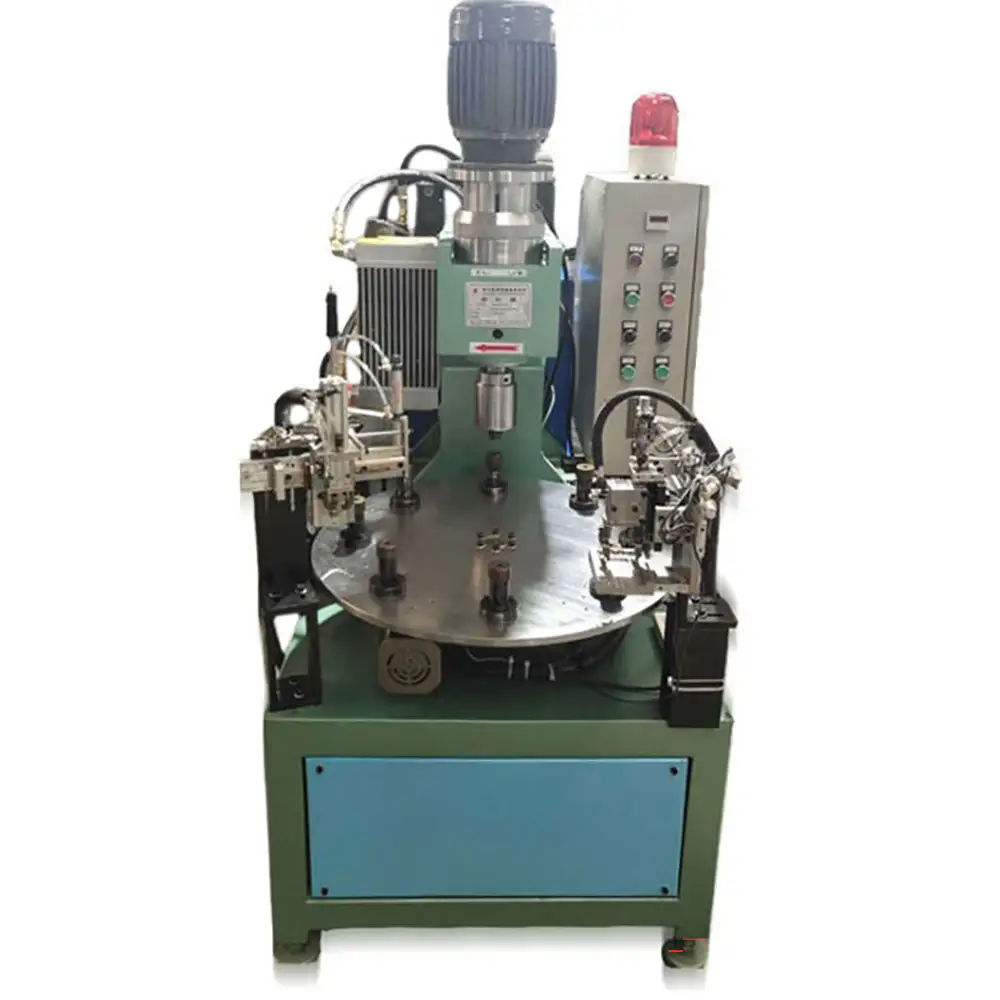
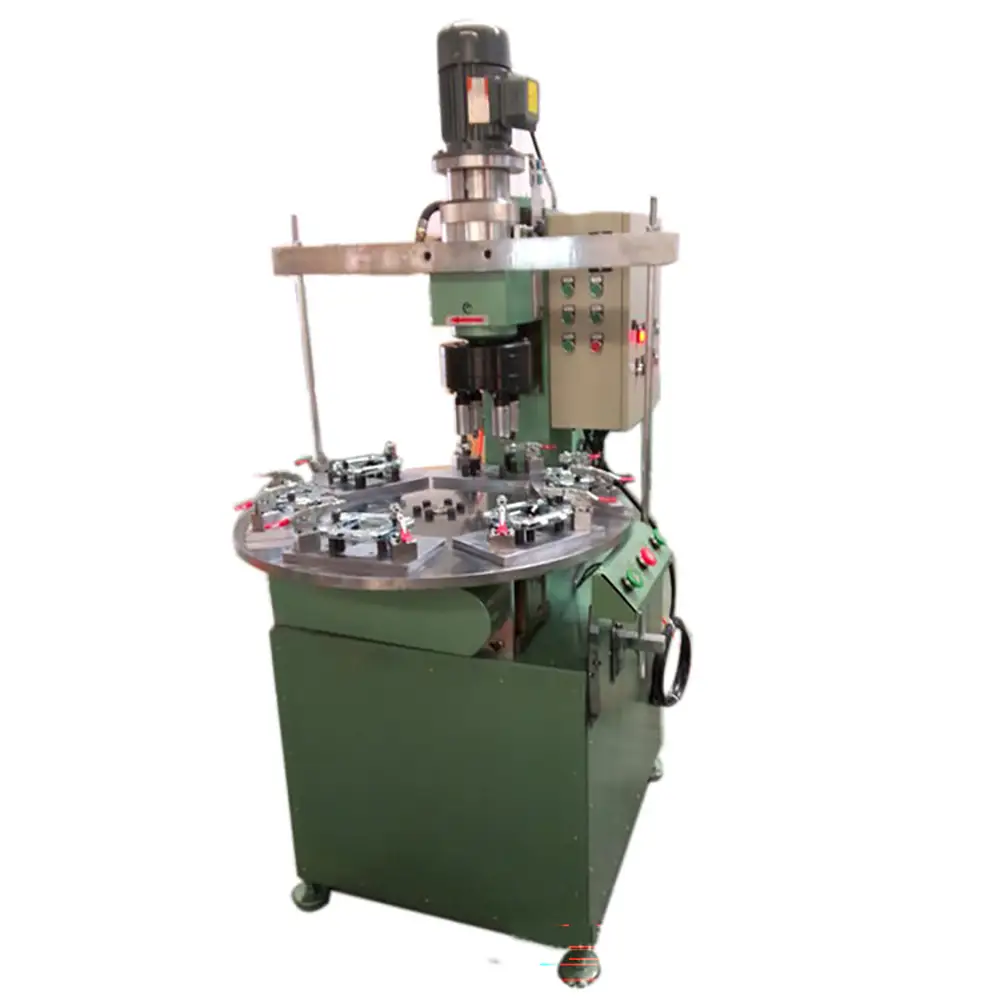
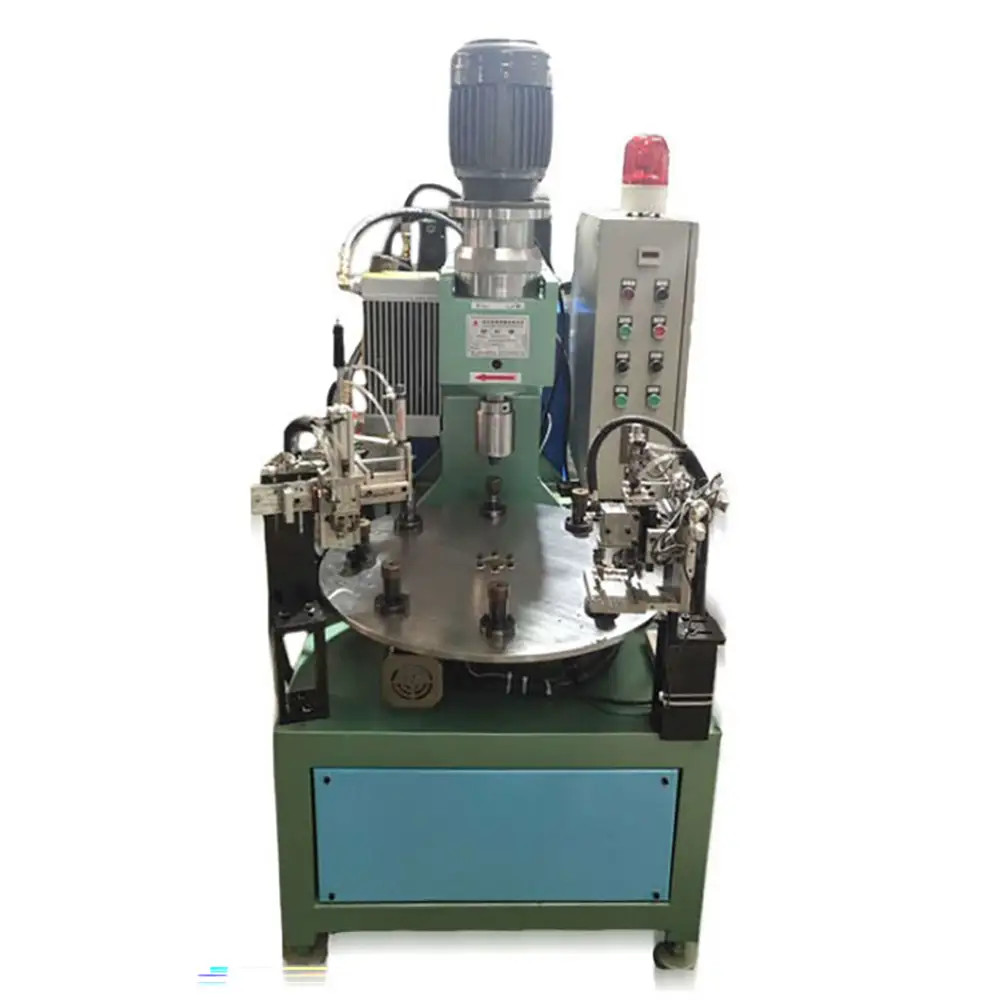
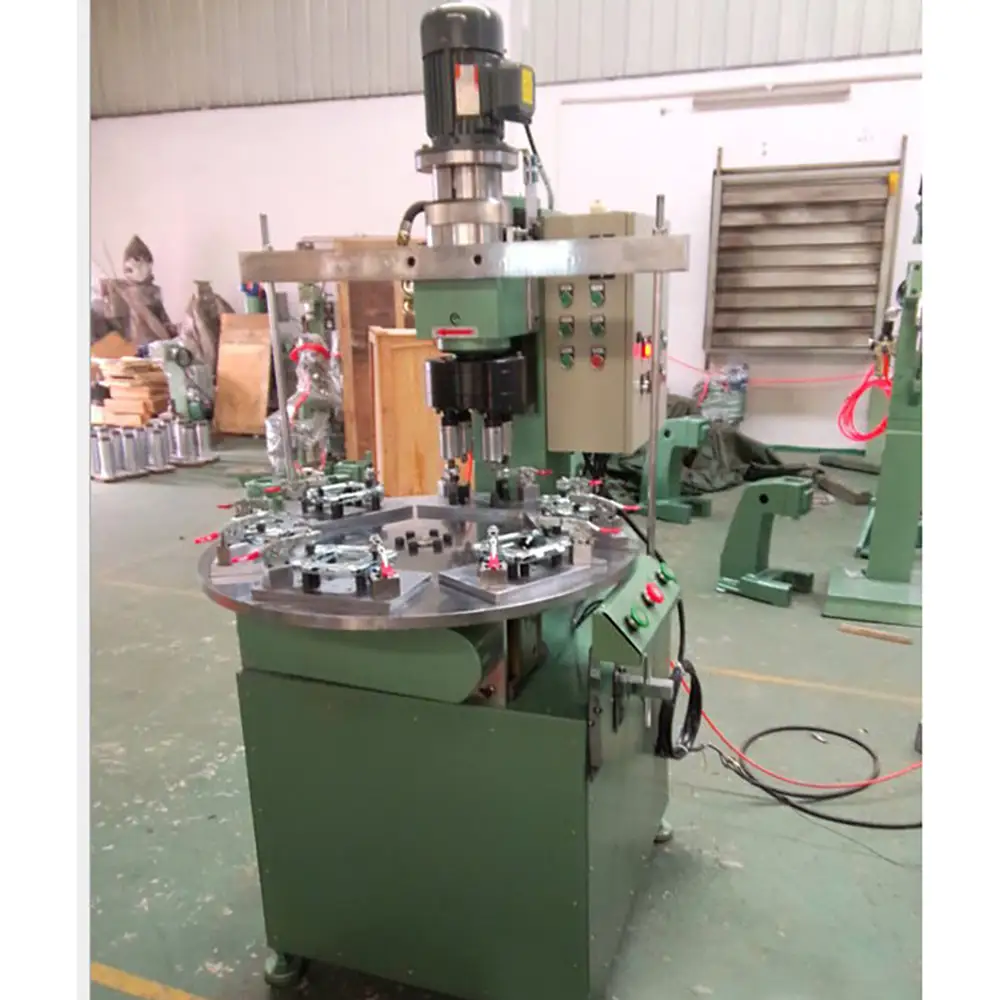
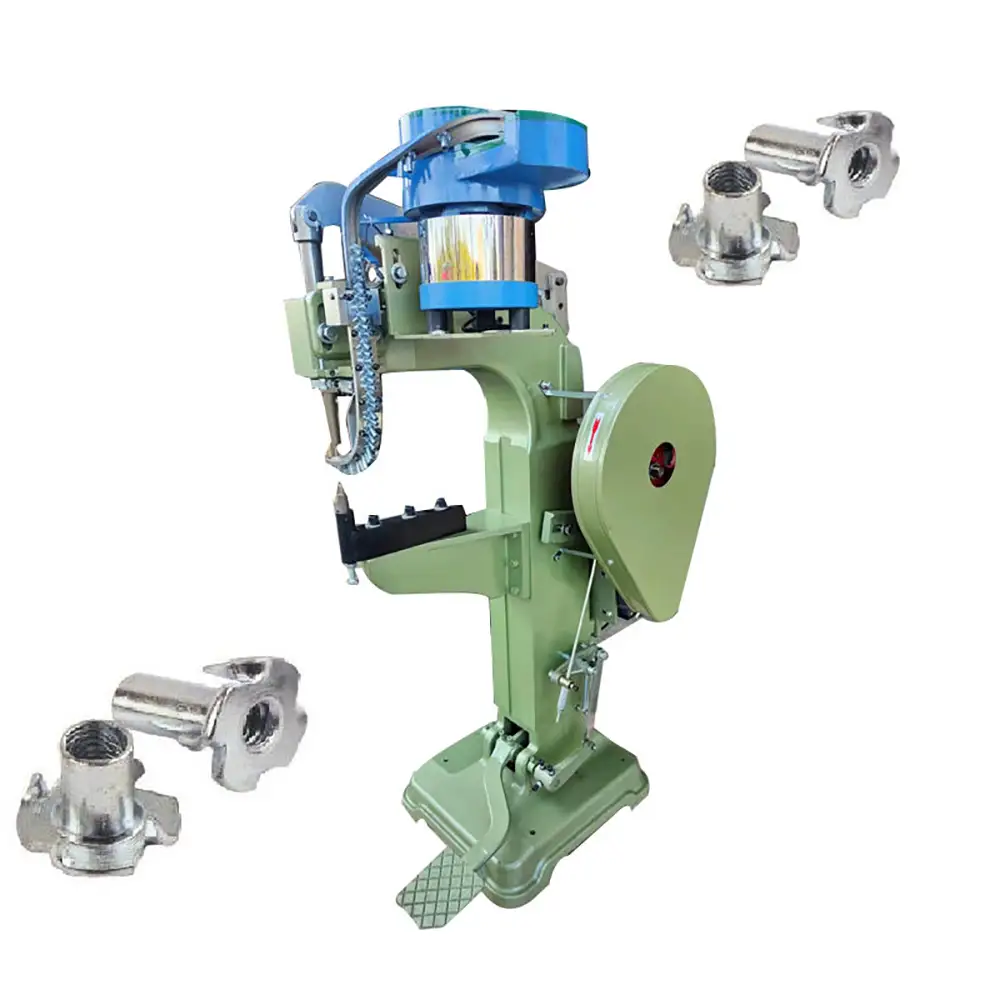
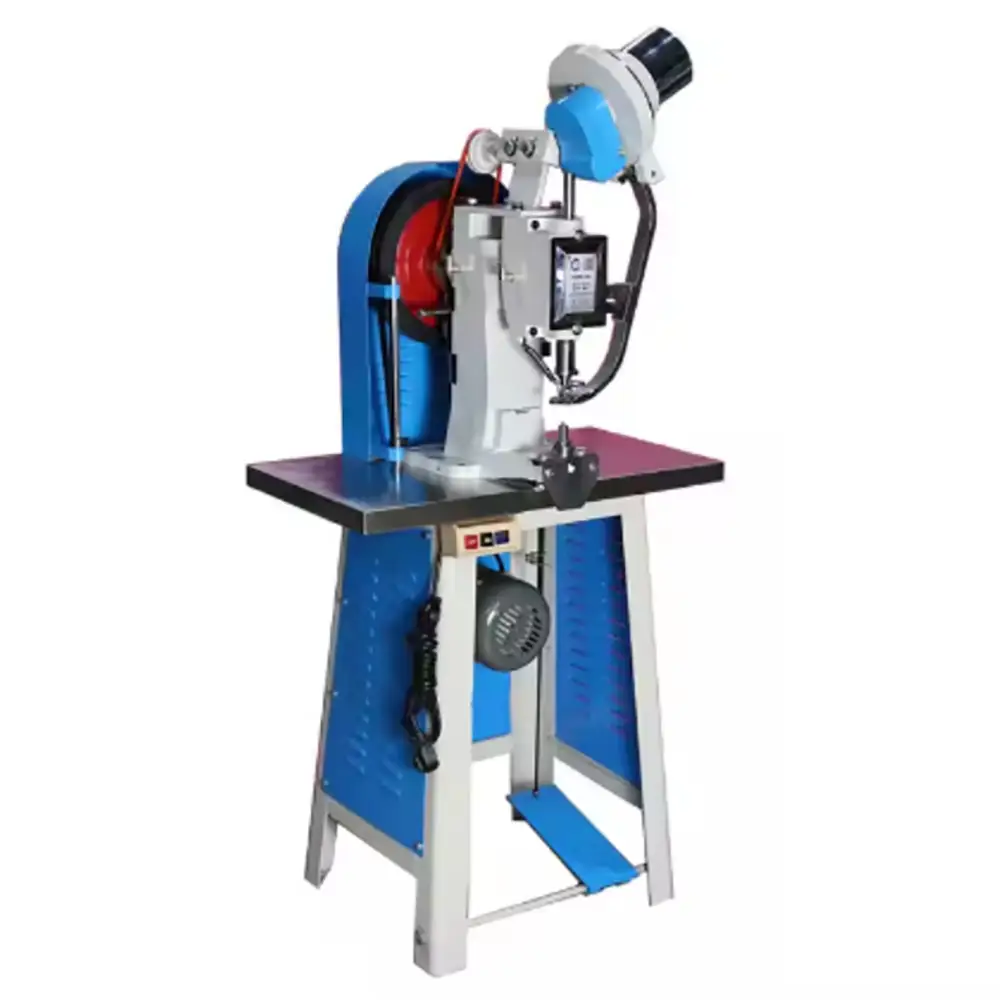
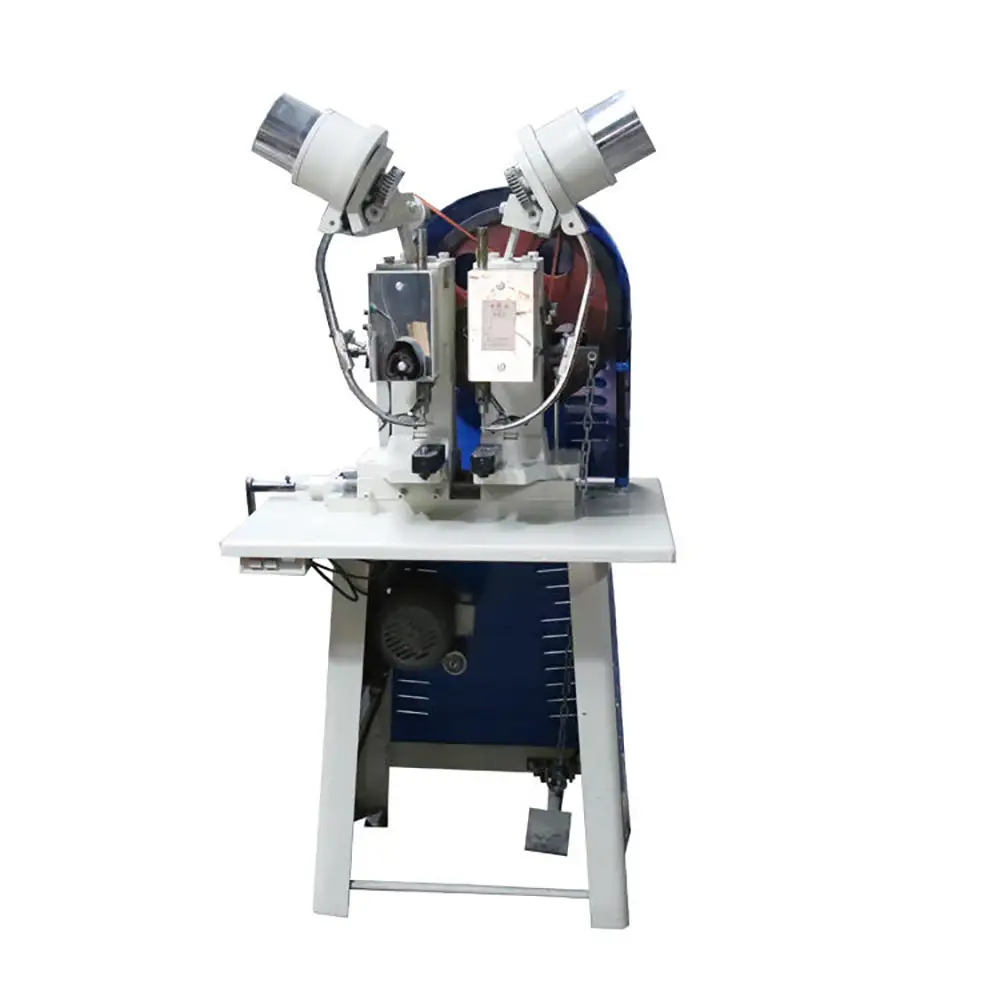
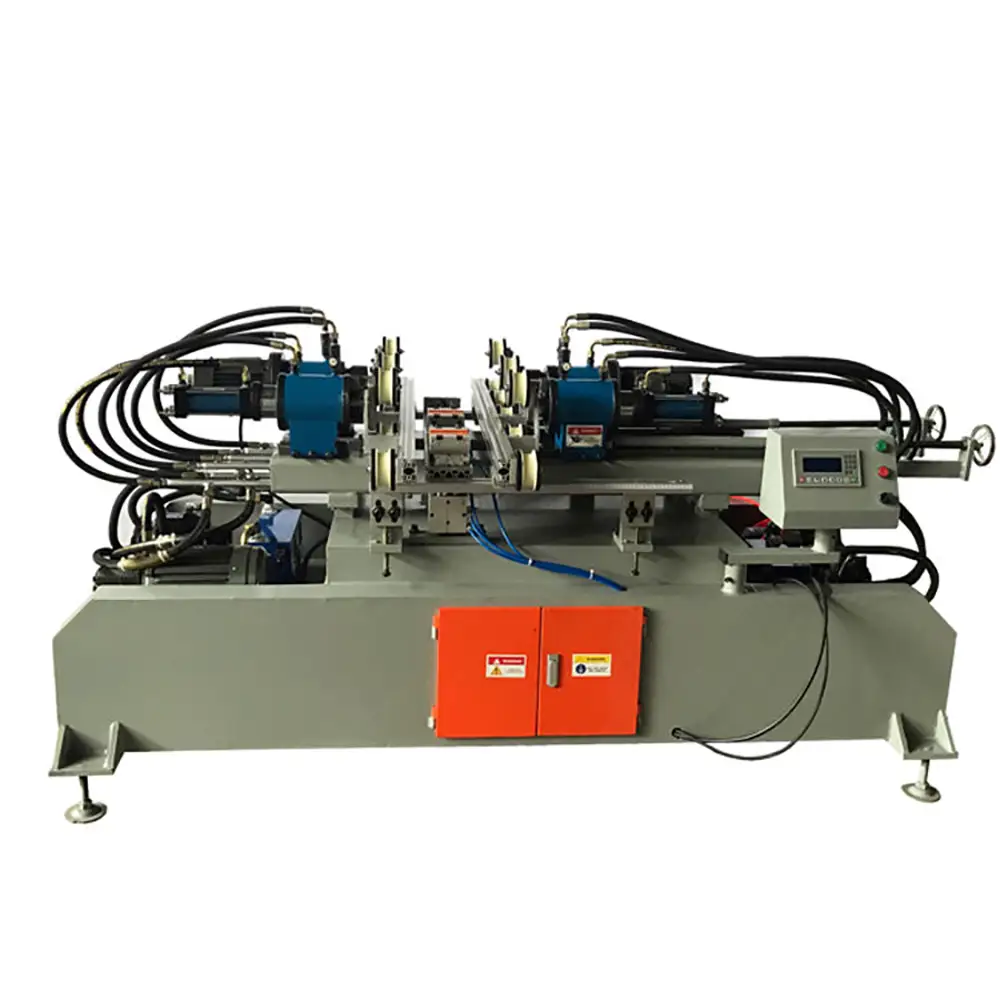
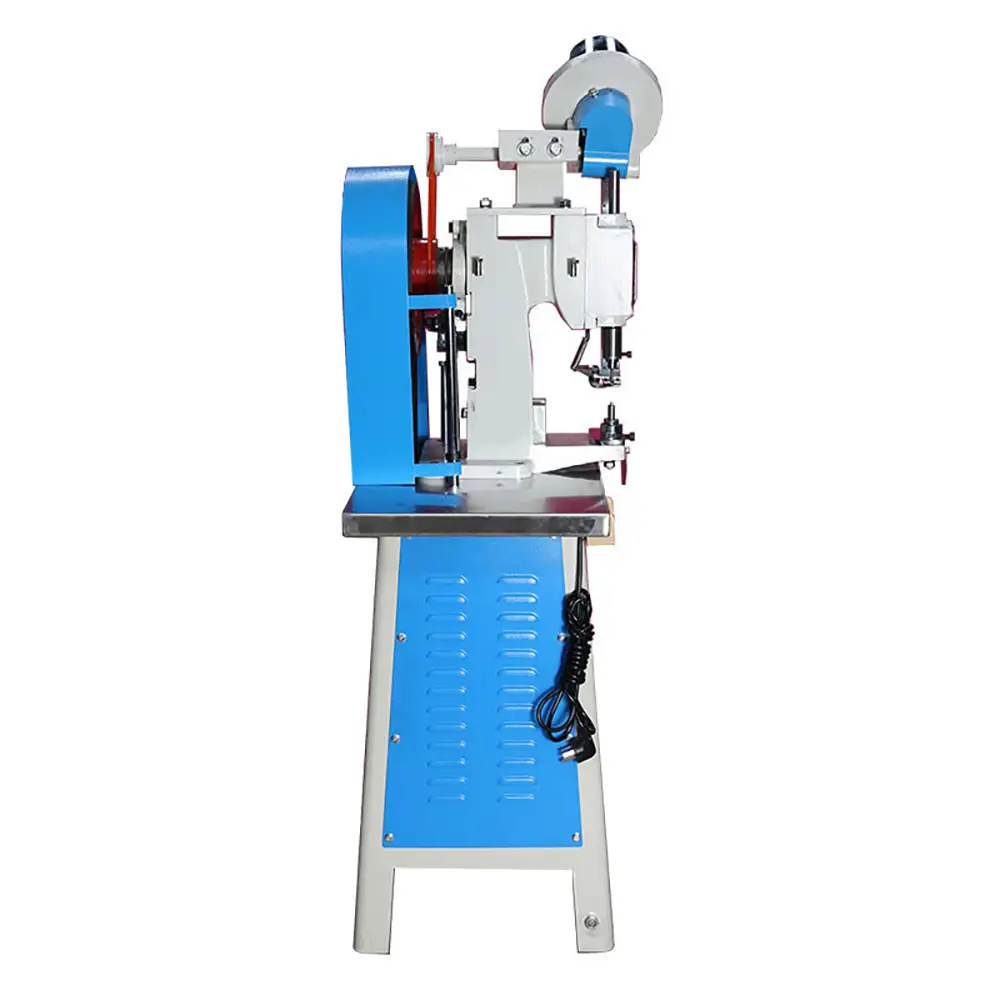
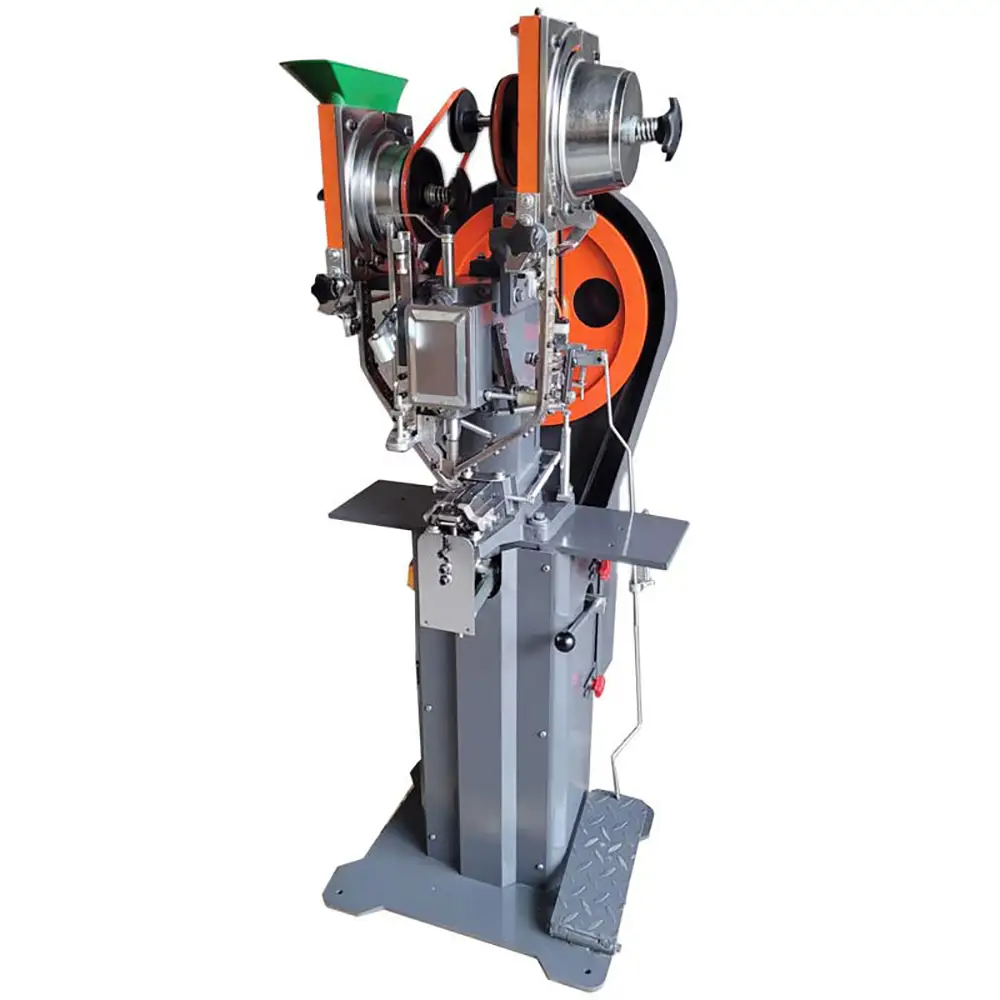
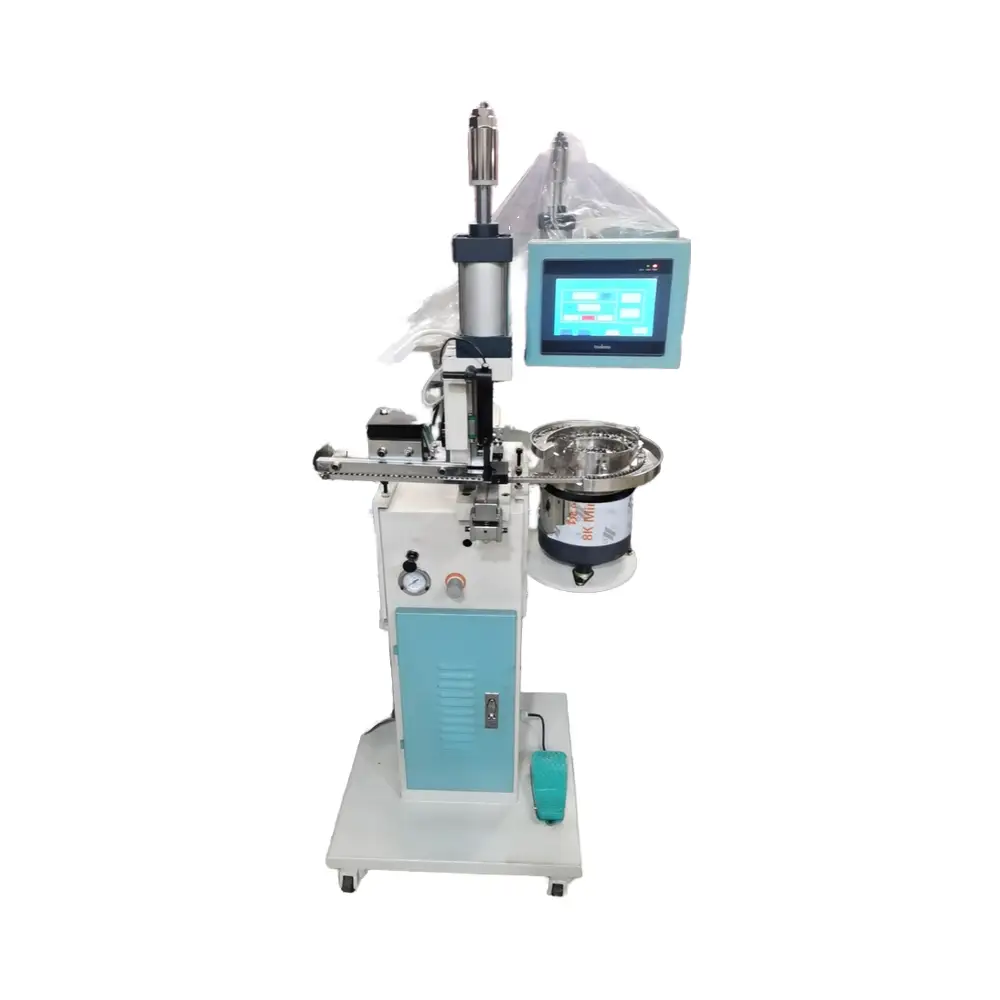
1 CNC multi-station hydraulic rotary riveting machine for rivet machine
2 Features: manual placing, rotary disc feeding, hydraulic rotary riveting, automatic unloading, precision machining, stable working state
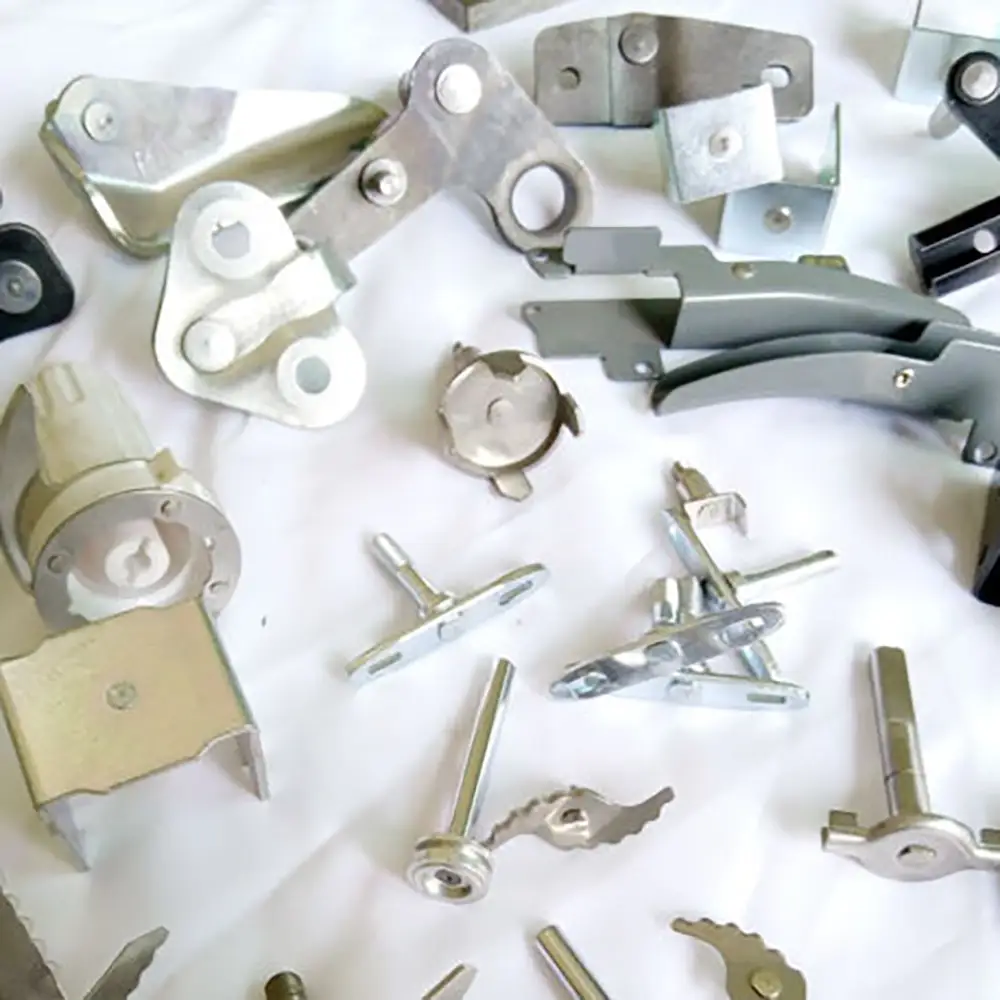
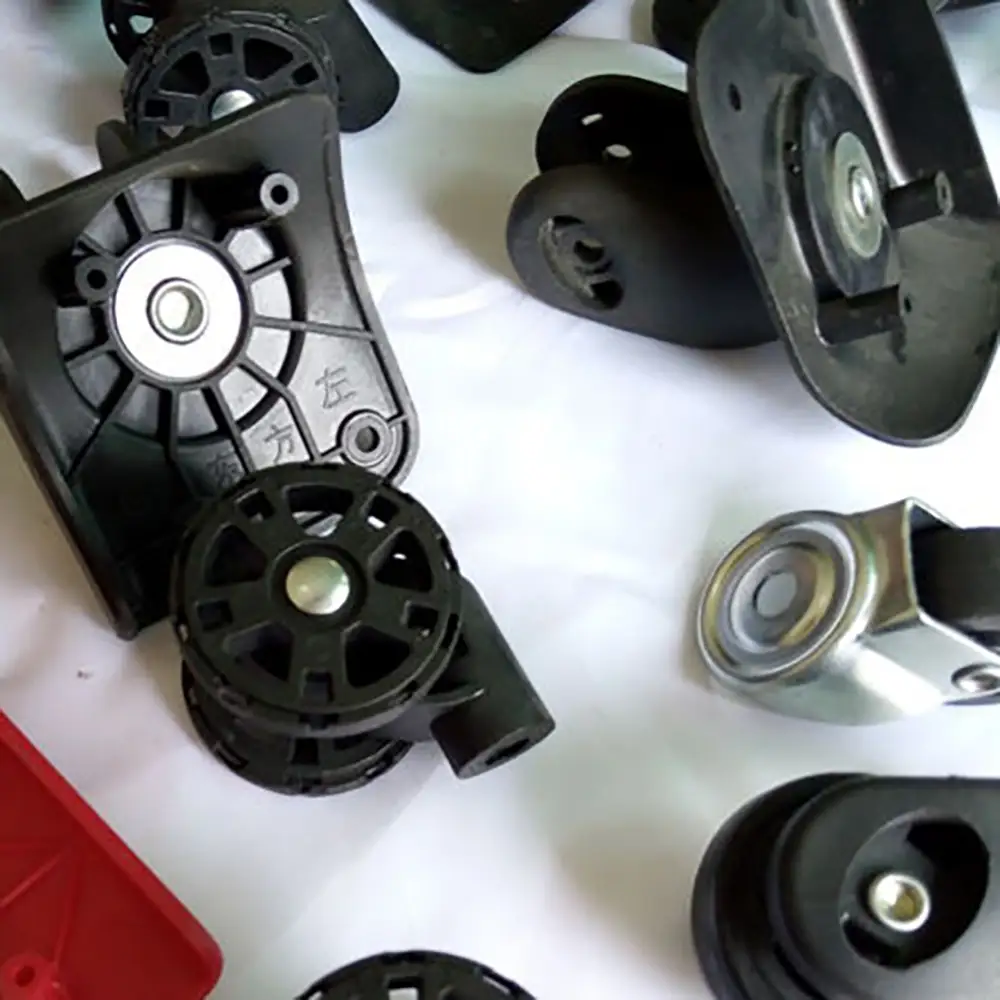
3Usage:suitable for auto parts, bicycle parts, catering appliances, toys and various hardware accessories, such as: alloy ladder industry's wipers, hinges, hinges, scissors, kneading machine blades, solid nail riveting for chairs
.
|
Rivet ability |
Solid Φ3-12mm |
Rivet length
|
200mm |
|
Throat depth |
120mm |
|
Motor |
2HP |
|
Most tremendous pressure |
400-1600kg/cm2 |
|
Net weight |
400kg |
CNC Multi-Station Hydraulic Rotary Riveting Machine
The CNC Multi-Station Hydraulic Rotary Riveting Machine is an advanced industrial fastening solution designed for manufacturers that require accurate, repeatable, and efficient riveting operations. Combining CNC control, hydraulic riveting force, rotary tooling, and multiple working stations, the machine is designed to streamline production processes involving repetitive rivet fastening.
Compared with conventional single-station riveting equipment, a multi-station configuration can allow different assembly operations to be completed around a rotating worktable or indexing system. This can reduce unnecessary workpiece handling and improve production flow for components requiring several riveting positions or sequential operations.
The machine is suitable for a broad range of industrial applications, including metal hardware, automotive components, mechanical parts, electrical products, furniture hardware, brackets, hinges, fasteners, and other assemblies requiring reliable mechanical riveting.
The actual machine configuration can be customized according to the rivet type, product geometry, number of riveting positions, production volume, required riveting force, and automation level.
What Is a CNC Multi-Station Hydraulic Rotary Riveting Machine?
A CNC Multi-Station Hydraulic Rotary Riveting Machine combines several technologies into one production system.
CNC control allows the riveting sequence and machine movement to be managed according to programmed production parameters.
Hydraulic power provides controlled riveting force suitable for applications that require stable and repeatable forming or fastening.
Rotary or indexing operation allows the workpiece to move between multiple stations, reducing the need for operators to reposition the product manually.
Multi-station processing allows different riveting or assembly operations to be organized within the same production cycle.
This configuration makes the machine particularly useful for manufacturers looking to improve automation and production consistency.
CNC Control System
The CNC control system provides programmable control over the machine's operating sequence.
Depending on the machine configuration, parameters may include riveting position, cycle sequence, indexing movement, operating timing, and other production settings.
A programmable control system can help manufacturers standardize the riveting process across production batches.
It can also make production changeovers easier when different products require different operating sequences, provided that the machine and tooling are designed for those applications.
For custom projects, the control system can be configured according to the required production workflow.
Multi-Station Riveting
The multi-station design is one of the main advantages of this machine.
Instead of completing every riveting operation at one position and manually moving the product to another location, the workpiece can be transferred between multiple stations through a rotary indexing system.
Depending on the application, stations may be used for:
Rivet Feeding
Rivet Positioning
Pre-Assembly
Riveting
Secondary Riveting
Inspection
Product Discharge
The actual station arrangement depends on the product and manufacturing process.
For components requiring several rivets, a multi-station configuration can help reduce handling and create a more organized production workflow.
Hydraulic Riveting System
Hydraulic power provides controlled force for riveting operations.
Compared with purely manual riveting, hydraulic equipment can deliver a more consistent fastening process when the correct tooling and machine parameters are selected.
The hydraulic system can be configured according to the rivet material, rivet dimensions, workpiece structure, and required deformation.
Hydraulic riveting is suitable for applications involving metal components and other assemblies where stable forming force is important.
The required force should always be determined through actual application testing rather than assuming one machine setting will work for every rivet.
Rotary Indexing Mechanism
The rotary mechanism moves the workpiece between designated processing stations.
A rotary table or indexing system can improve production flow by keeping the workpiece within the same general machine area while different operations are completed.
This is particularly useful for products requiring several riveting positions.
Accurate indexing is important because each riveting station needs to align correctly with the corresponding workpiece location.
The machine can therefore be configured with dedicated fixtures and positioning systems according to the product geometry.
Automatic Rivet Feeding
The CNC Multi-Station Hydraulic Rotary Riveting Machine can be equipped with automatic rivet feeding systems.
Automatic feeding reduces manual rivet placement and can improve production efficiency for high-volume manufacturing.
The feeding mechanism should be matched to the rivet dimensions, head shape, length, material, and orientation requirements.
Depending on the application, different feeding mechanisms can be considered.
For custom projects, testing the actual rivets before final machine configuration is recommended to confirm reliable feeding and positioning.
Precision Tooling
Tooling plays an important role in achieving consistent riveting results.
The riveting punch, die, fixture, guide components, and workpiece support should be designed according to the product and rivet geometry.
Custom tooling can help maintain accurate positioning and reduce problems such as misalignment, incomplete riveting, excessive deformation, or surface damage.
For multi-station machines, each station can be equipped with dedicated tooling for its specific operation.
Industrial Applications
CNC hydraulic rotary riveting machines can be used in many industrial sectors.
Typical applications include:
Automotive Components
Motorcycle Components
Metal Hardware
Electrical Components
Mechanical Assemblies
Furniture Hardware
Door And Window Hardware
Brackets
Hinges
Locks
Fasteners
Machinery Components
Industrial Accessories
Consumer Products
Sheet Metal Assemblies
The suitability of the machine depends on the specific rivet, workpiece, production process, and required fastening performance.
Automotive Riveting Applications
Automotive manufacturing often requires repeatable fastening of brackets, linkages, hinges, support components, and other metal assemblies.
A CNC multi-station riveting system can organize several riveting operations within one automated production process.
Dedicated fixtures can hold automotive components in the correct position while the machine performs the required riveting sequence.
For safety-critical automotive components, manufacturers should establish appropriate process validation and quality-control procedures.
Advantages of Multi-Station CNC Riveting
A multi-station CNC hydraulic riveting machine can provide several production benefits.
Reduced Workpiece Handling:
The rotary indexing system can transfer products between stations without repeated manual repositioning.
Consistent Riveting:
Programmable machine operation can help standardize the riveting process.
Improved Production Flow:
Multiple operations can be organized into one integrated production system.
Hydraulic Riveting Force:
Controlled hydraulic force is suitable for many industrial metal riveting applications.
Automatic Feeding Options:
Automatic rivet feeding can reduce repetitive manual loading.
Customizable Tooling:
Product-specific dies and fixtures can be developed for different components.
CNC Programmability:
Production parameters and sequences can be configured according to the application.
Automation Potential:
The machine can be developed as a standalone system or potentially integrated into a larger production line.
Production Efficiency
For high-volume production, reducing unnecessary handling can have a significant effect on overall workflow.
A multi-station rotary design allows different operations to be organized around a common indexing process. This can help reduce operator movement and improve the utilization of the machine.
When combined with automatic rivet feeding and CNC control, the machine can provide a more automated production environment.
Actual cycle time depends on the number of stations, rivet type, product geometry, loading method, riveting force, tooling, and programmed sequence.
Custom CNC Riveting Solutions
Every industrial riveting application has different requirements.
Custom solutions can include:
Multi-Station Rotary Tables
Automatic Rivet Feeders
CNC Control Systems
Hydraulic Power Units
Customized Riveting Heads
Special Dies And Punches
Product Fixtures
Automatic Workpiece Loading
Product Discharge Systems
Safety Guarding
Production-Line Integration
Customized Software And Controls
Manufacturers can provide product drawings, rivet samples, workpiece samples, production targets, and process requirements to help determine the appropriate machine configuration.
Quality Control
Consistent riveting requires control of several factors.
These include rivet dimensions, rivet material, hole diameter, workpiece thickness, riveting force, tooling alignment, indexing accuracy, and machine settings.
A suitable quality-control process may include visual inspection, dimensional inspection, rivet-height measurement, alignment checks, and fastening-strength testing.
For critical components, destructive or non-destructive testing can be incorporated according to the manufacturer's quality requirements.
The machine provides a controlled production process, but final product validation should always be based on the customer's specific application and applicable standards.
Maintenance
Regular maintenance helps maintain stable machine performance.
Operators should inspect the hydraulic system, riveting heads, punches, dies, rotary indexing mechanism, fixtures, rivet feeders, sensors, and other wear components.
Hydraulic components should be maintained according to the manufacturer's recommended procedures. Rivet feeding channels should be kept clean to minimize feeding interruptions.
Tooling should also be inspected regularly because worn or damaged tooling can affect riveting quality and product appearance.
Proper maintenance and operator training can help reduce downtime and extend machine service life.
Why Choose Our CNC Multi-Station Hydraulic Rotary Riveting Machine?
CNC Controlled Operation – Programmable control helps standardize the riveting process.
Multi-Station Design – Multiple production operations can be organized within one rotary system.
Hydraulic Riveting Force – Suitable for industrial applications requiring controlled and repeatable forming force.
Rotary Indexing System – Helps reduce unnecessary workpiece handling between operations.
Automatic Feeding Options – Rivet feeding systems can reduce manual loading.
Customized Tooling – Dies, punches, fixtures, and positioning components can be developed for specific products.
Industrial Production Capability – Designed for repetitive manufacturing and automated production environments.
OEM & Custom Solutions – Machine configuration can be tailored to product geometry, rivet specifications, and production requirements.
FAQ
1. What is a CNC Multi-Station Hydraulic Riveting Machine?
It is an industrial riveting system that combines CNC control, hydraulic riveting force, and multiple rotary or indexing stations to perform repeatable fastening operations.
2. What is the advantage of a multi-station riveting machine?
A multi-station configuration can reduce workpiece handling and allow several operations to be organized within one production cycle.
3. What is the purpose of the rotary table?
The rotary table or indexing mechanism moves the workpiece between different processing stations while maintaining controlled positioning.
4. Can the machine automatically feed rivets?
Yes. An automatic rivet feeding system can be integrated depending on the rivet type, dimensions, and production requirements.
5. What types of rivets can be used?
The machine can be configured for compatible solid, semi-tubular, tubular, hollow, or other rivet types depending on the tooling and application.
6. Can the machine be used for automotive parts?
Yes. It can be configured for suitable automotive brackets, hinges, mechanical components, linkages, and other riveted assemblies.
7. Can the tooling be customized?
Yes. Riveting dies, punches, fixtures, guides, and positioning systems can be customized according to the product.
8. Is the machine suitable for high-volume production?
Yes. The multi-station design, CNC control, hydraulic riveting, and automatic feeding options make it suitable for many repetitive production applications.
9. Can different products be processed on the same machine?
Potentially. If the products have compatible riveting requirements, interchangeable tooling and fixtures can be developed for different applications.
10. Can the machine be integrated into an automated production line?
Depending on the configuration, the machine can be designed for integration with automatic loading, unloading, inspection, conveyors, or other production equipment.
11. What information is required for a machine quotation?
Useful information includes rivet size and material, product drawings, workpiece dimensions, riveting positions, required production volume, number of riveting points, and desired automation level.
12. Should I provide samples before ordering?
Yes. Providing actual rivets and workpiece samples is recommended. Sample testing can help determine the appropriate hydraulic force, tooling, feeding method, indexing arrangement, and machine configuration.
Prev:
Two Stations Full Automatic Aluminium Alloy Ladder Expanding and Riveting Machine
Next:
Double Rivet up and Below Riveting Machine for Clothing Shoes Bag
TAG:
Industrial Riveting Machine,
Metal Riveting Machine,
Rivet Fastening Machine,
Rivet Setting Machine,
Precision Riveting Machine,
Hydraulic Rivet Machine,
Hydraulic Rivet Press,
Hydraulic Riveting Equipment,
Rivet Assembly Machine,
Industrial Rivet Machine,
Automatic Riveting Machine,
Rotary Rivet Machine,
Rotary Riveting Machine,
Automatic Rivet Feeding Machine,
Industrial Fastening Machine,
Automatic Hydraulic Rivet Machine,
Rivet Installation Machine,
Multi-Head Riveting Machine,
Custom Riveting Machine,
CNC Rivet Press,
Automatic Riveting Equipment,
Automatic Rivet Machine,
CNC Riveting Machine,
Automatic Hydraulic Riveting Machine,
Multi-Station Rivet Machine,
CNC Riveting Equipment,
Hydraulic Rotary Riveting Machine,
Multi-Station Riveting Machine,
CNC Multi-Station Hydraulic Riveting Machine,
CNC Hydraulic Riveting Machine,
Related Category:
CNC Multi-Station Hydraulic Rotary Riveting Machine, CNC Hydraulic Riveting Machine, Multi-Station Riveting Machine China, suppliers, manufacturers, factory, customized, wholesale, quotation, made in China