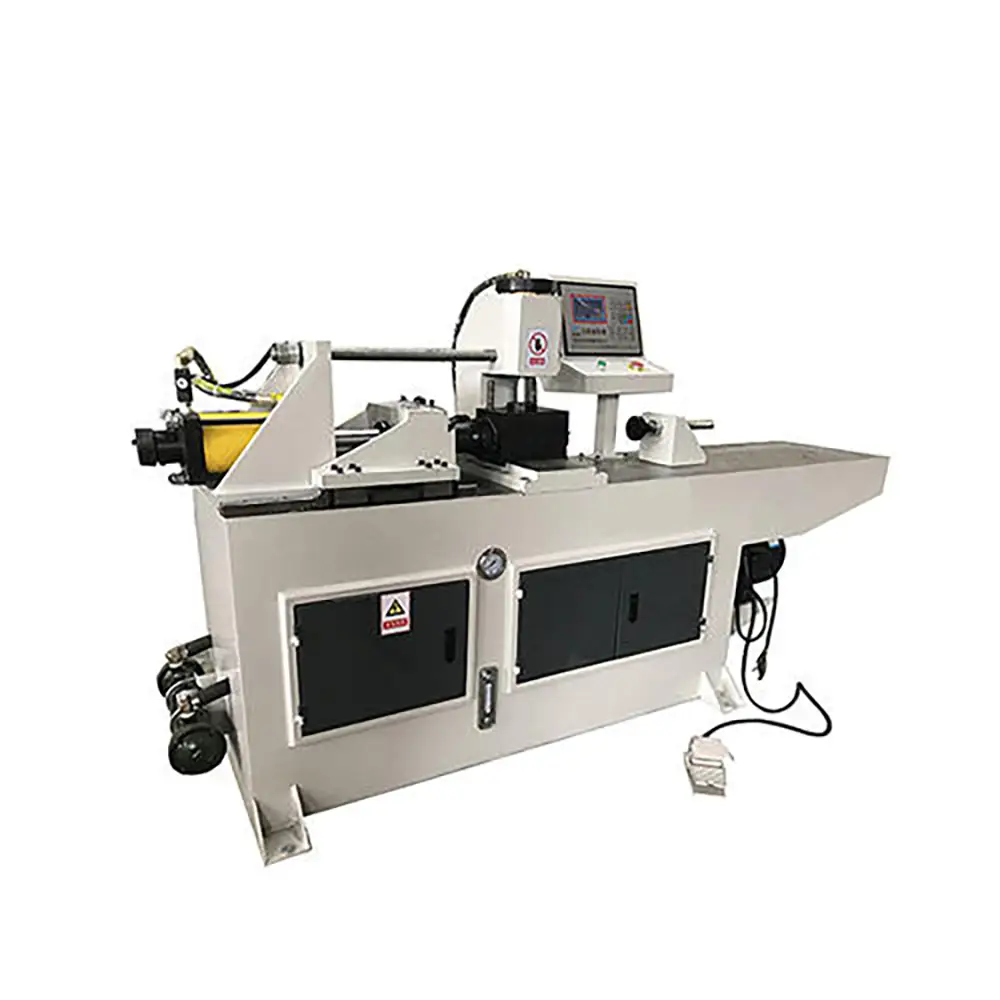
|
Power supply |
AC380V 50HZ |
|
Total power |
8kw |
|
Spindle power |
4kw |
|
Feed speed |
0-1500mm/min |
|
Processing pipe Dia |
φ80-300mm |
|
Processing square tube |
80x80-300x300mm |
|
Bevel angle |
30°/37.5°/45° |
|
Culter head Dia |
φ100mm |
|
Workable height |
900-1000mm |
|
Operation mode |
HMI PLC touch screen |
|
Touch screen size |
7” |
|
Net weight |
1600kg |
|
Machine size |
2160x1370x1860mm |
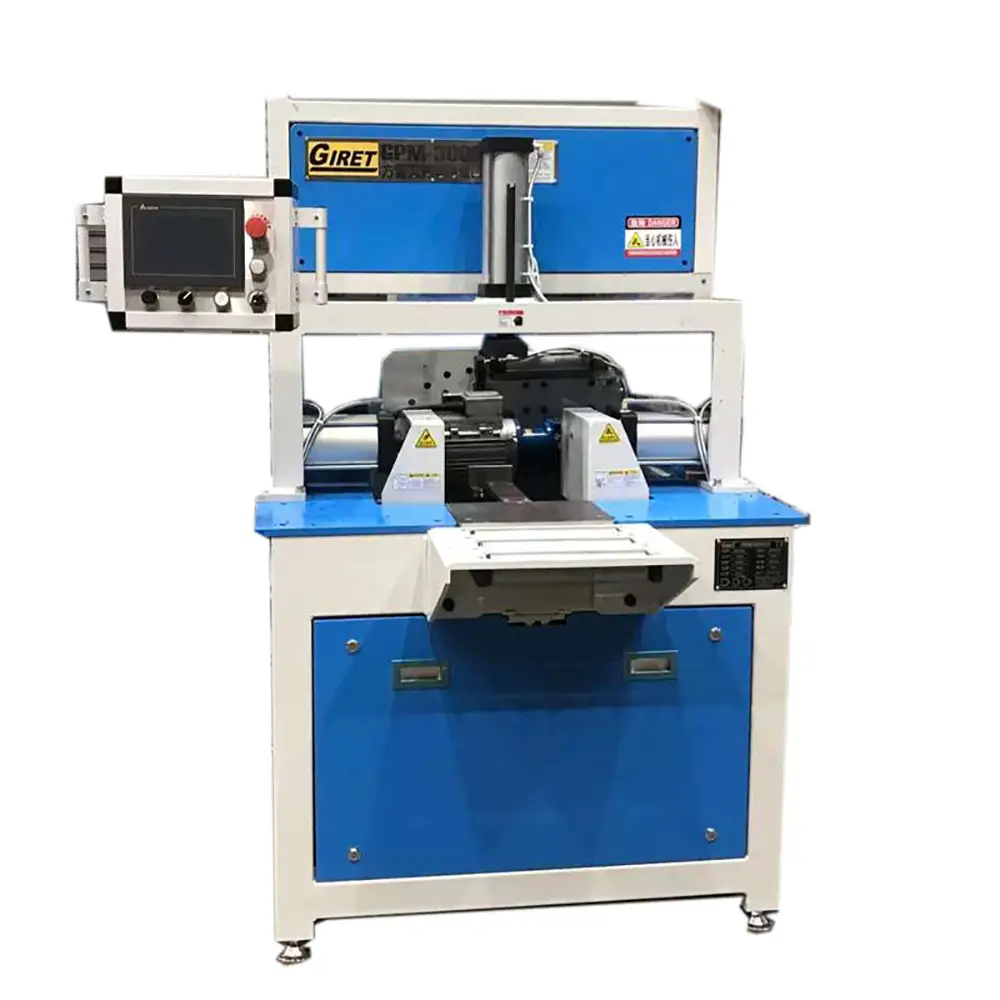
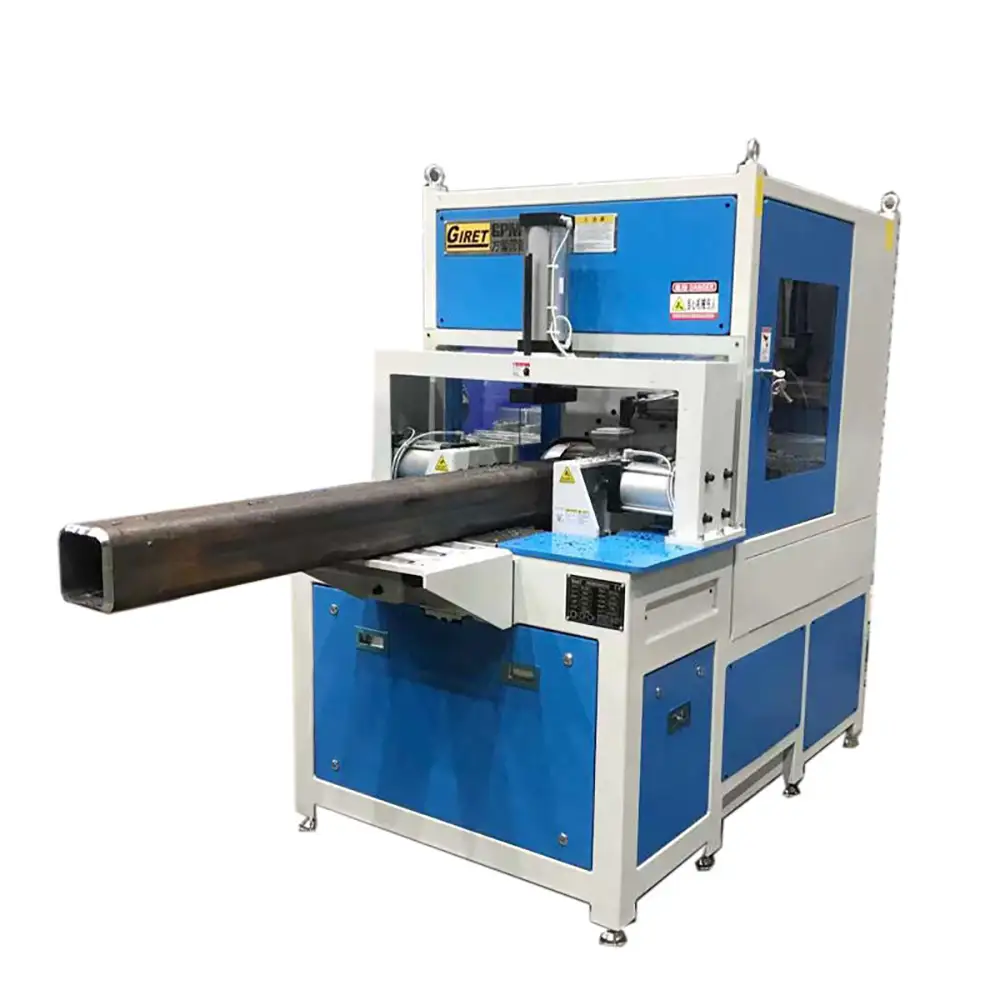
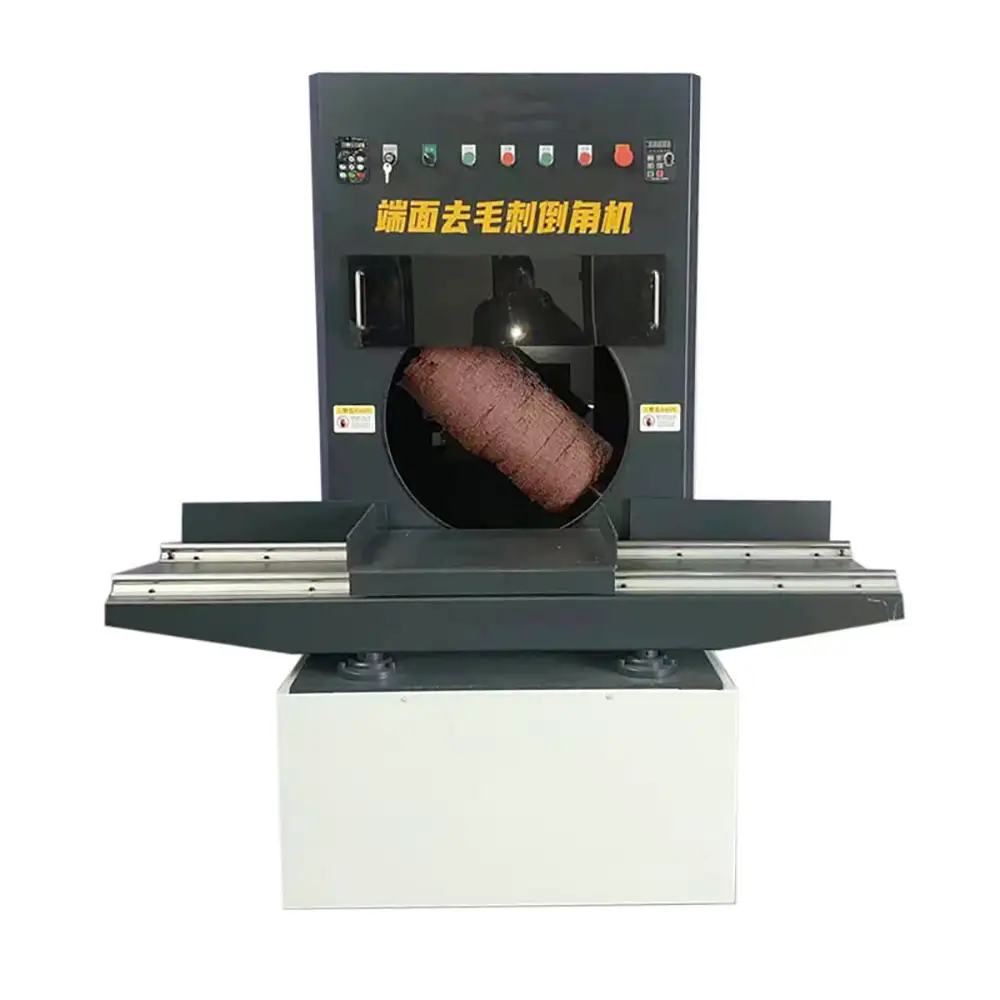
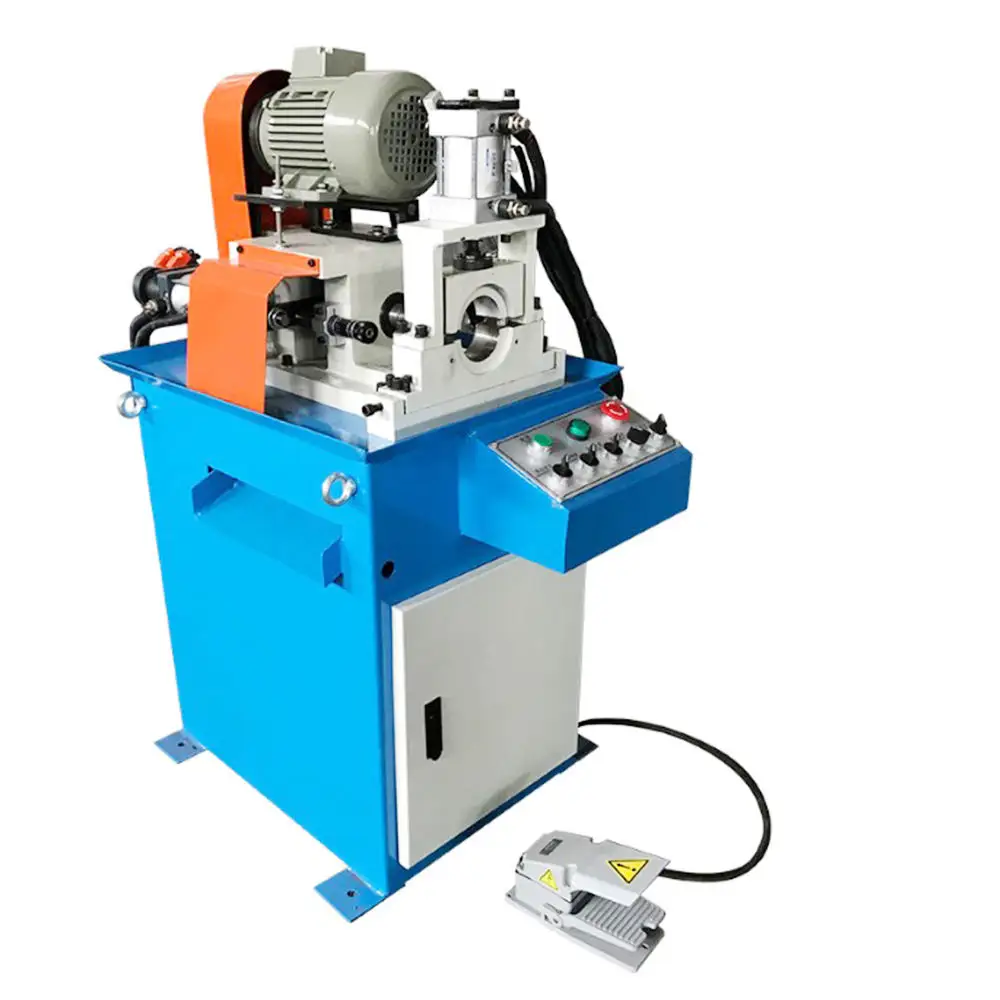
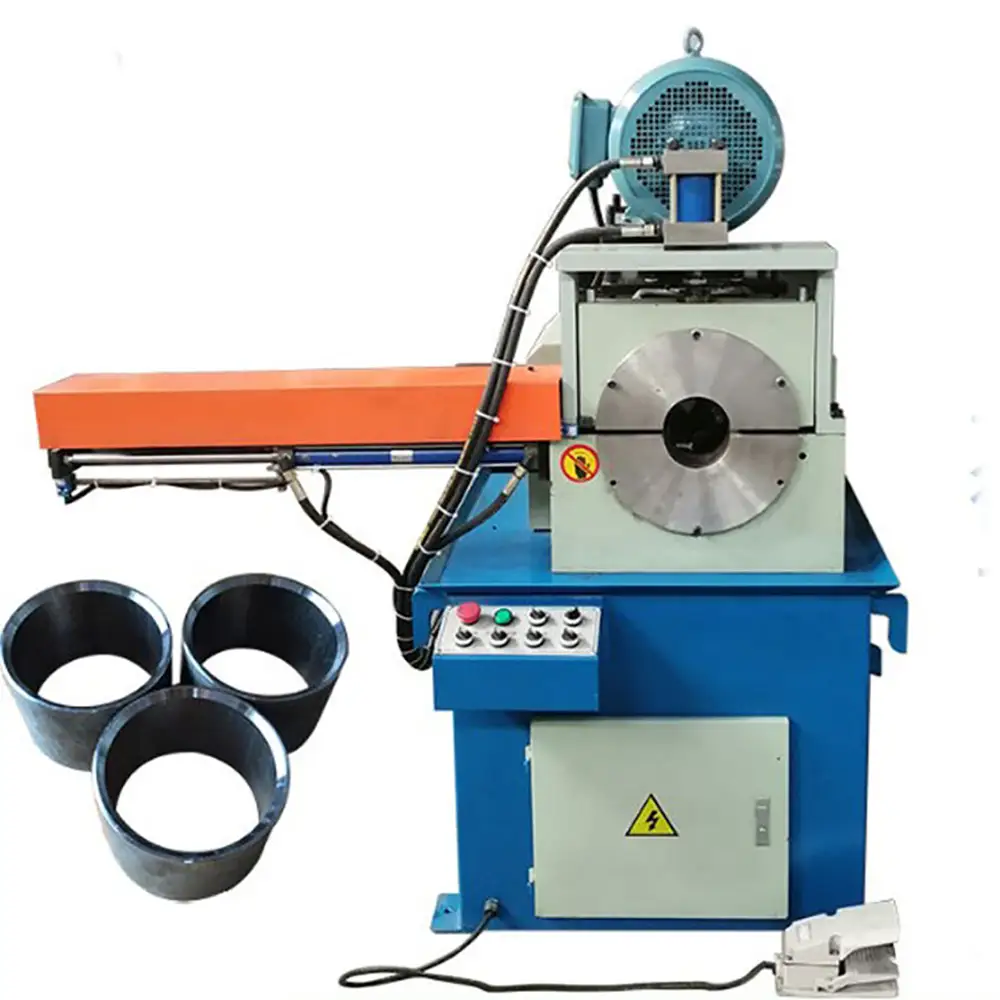
Multifunction PLC Beveling and Chamfering Machine for Round and Square Tubes
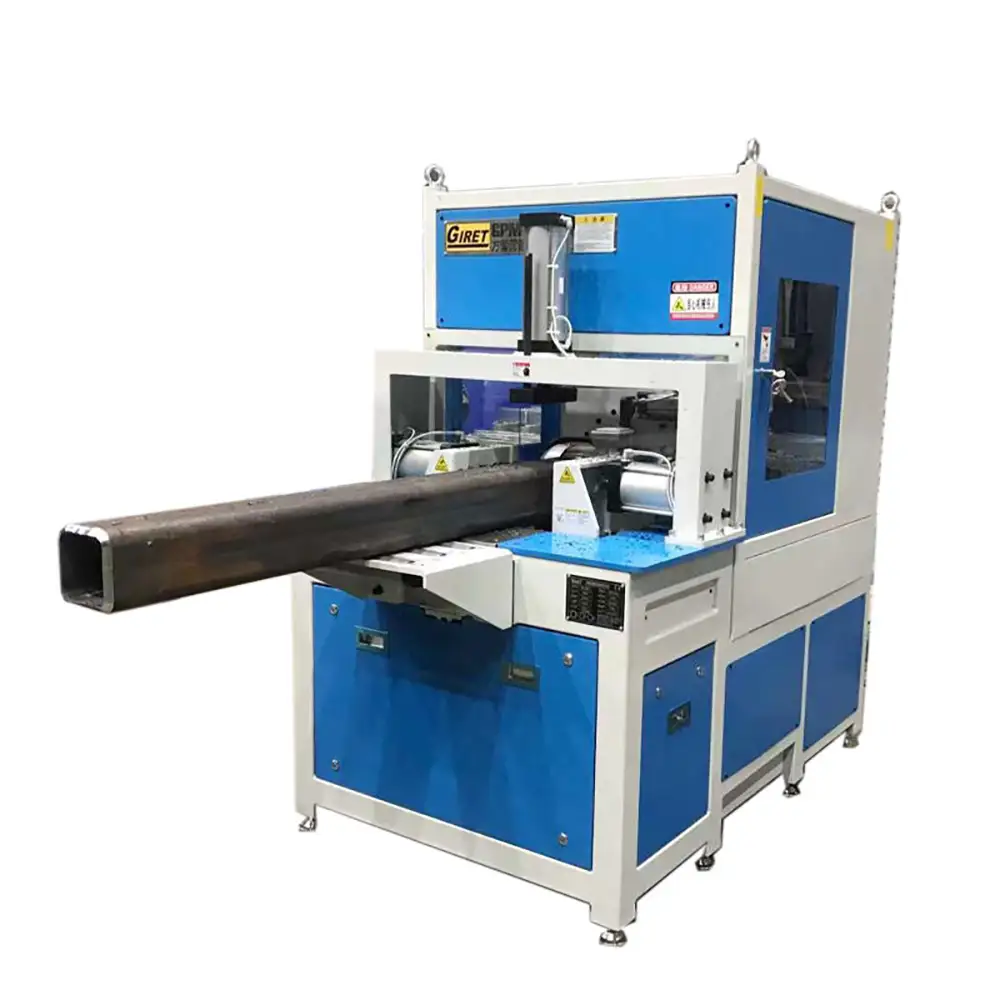
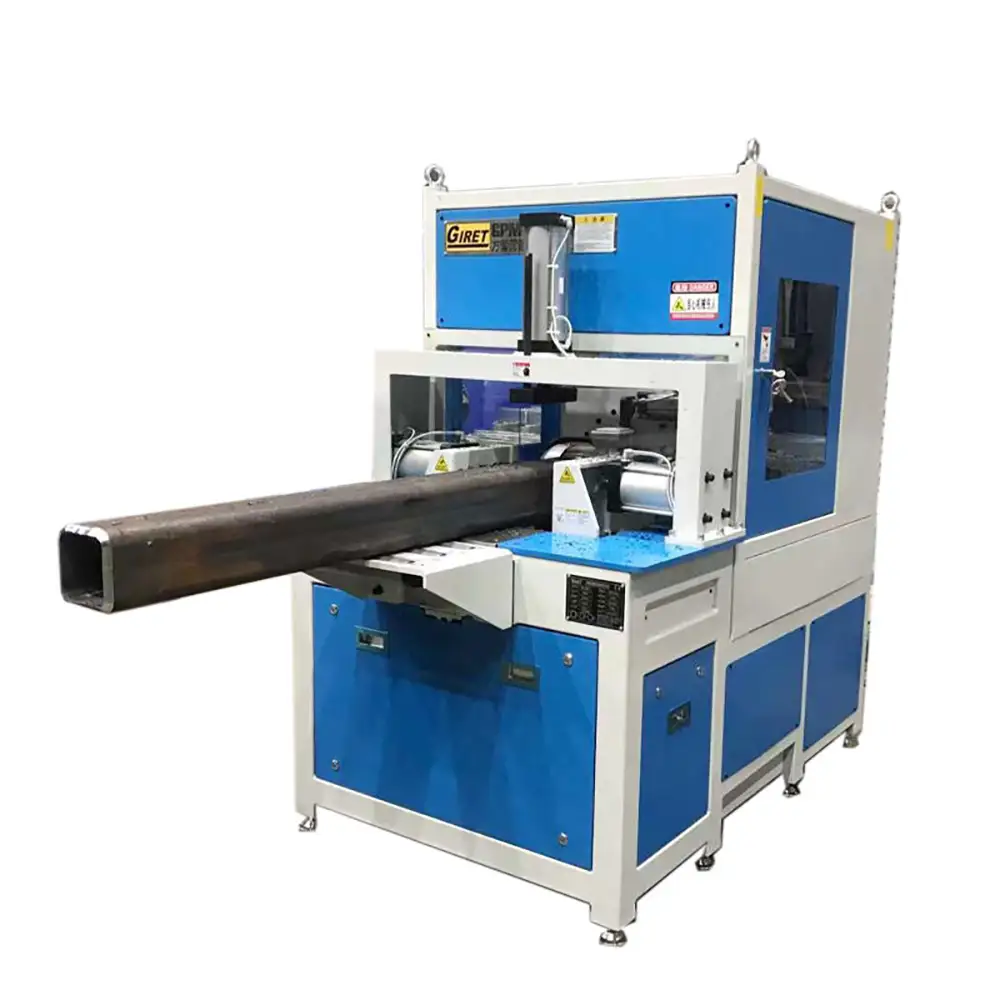
The Multifunction PLC Beveling Chamfering Machine for Round and Square Tube is designed for efficient end processing of metal tubes,pipes,and compatible hollow sections. Combining PLC-based machine control with beveling and chamfering functions,the equipment provides a practical solution for manufacturers that require repeatable tube end preparation and consistent edge finishing.
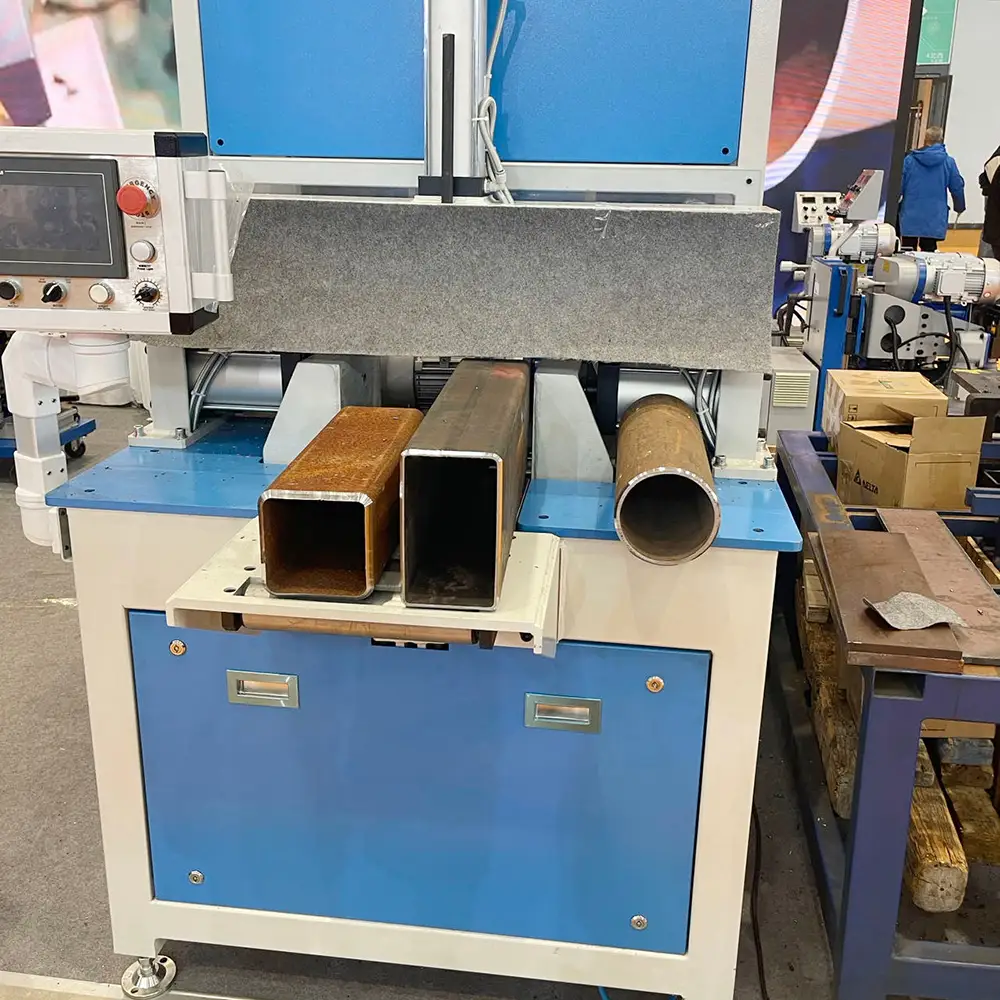
The machine can be configured for suitable round tubes,round pipes,square tubes,and other compatible metal profiles. Depending on the tooling and machine design,it may perform end chamfering,beveling,deburring,and related edge preparation operations.
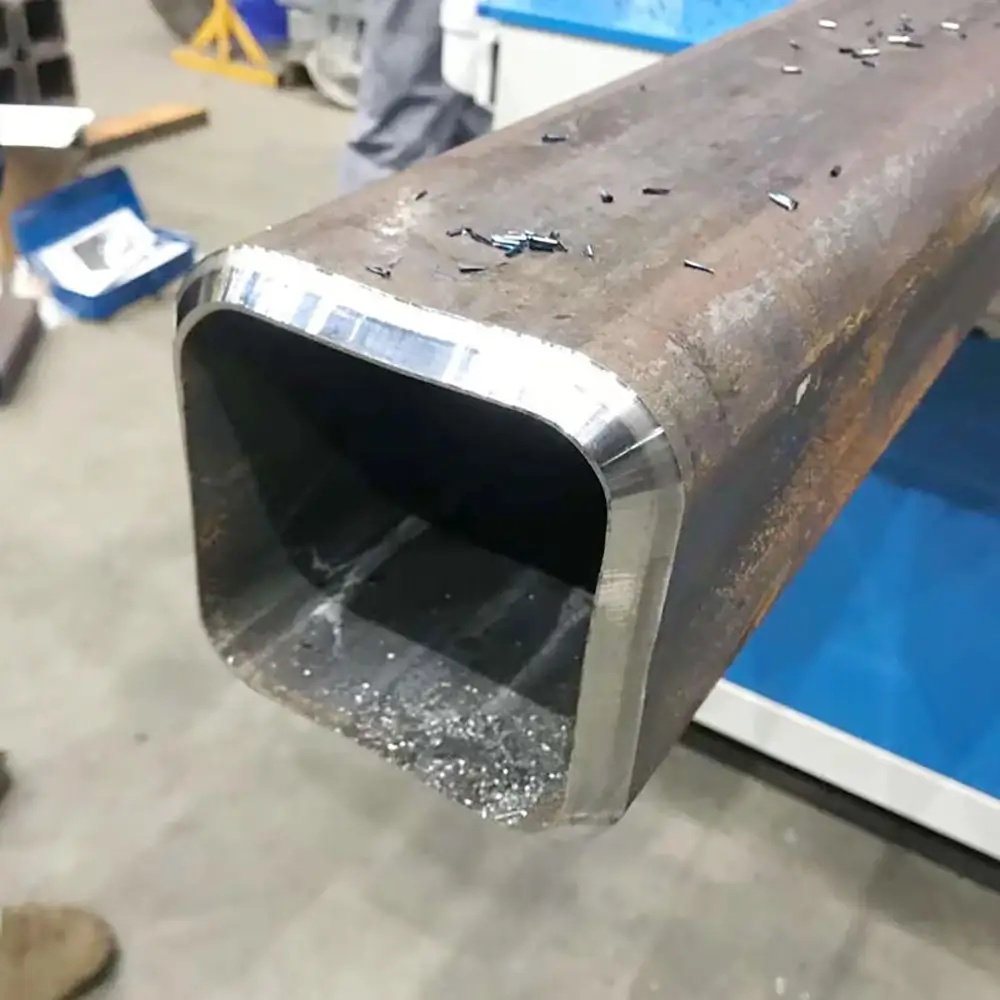
Beveling creates an angled edge or prepared surface at the end of a workpiece,while chamfering generally creates a defined angled edge to remove sharp corners or prepare the tube for another manufacturing process.
These operations are commonly used before welding,assembly,threading,fitting,coating,or other downstream processes.
The PLC control system provides a programmable platform for managing machine sequences and operating functions. Actual automation level,positioning method,tool movement,and available PLC functions depend on the selected machine configuration.
PLC Control System
A PLC-based control system can help coordinate the machine's operating sequence and make repetitive tube processing easier to manage.
Depending on the configuration,the PLC may control functions such as clamping,tool movement,feeding,processing cycles,and other machine operations.
For manufacturers processing batches of similar tubes,the programmable control system can help reduce repetitive manual operation and improve process consistency.
Operators can establish suitable processing parameters according to the material,profile dimensions,bevel requirements,and tooling.
The exact PLC functions and interface should be confirmed according to the machine model and selected control system.
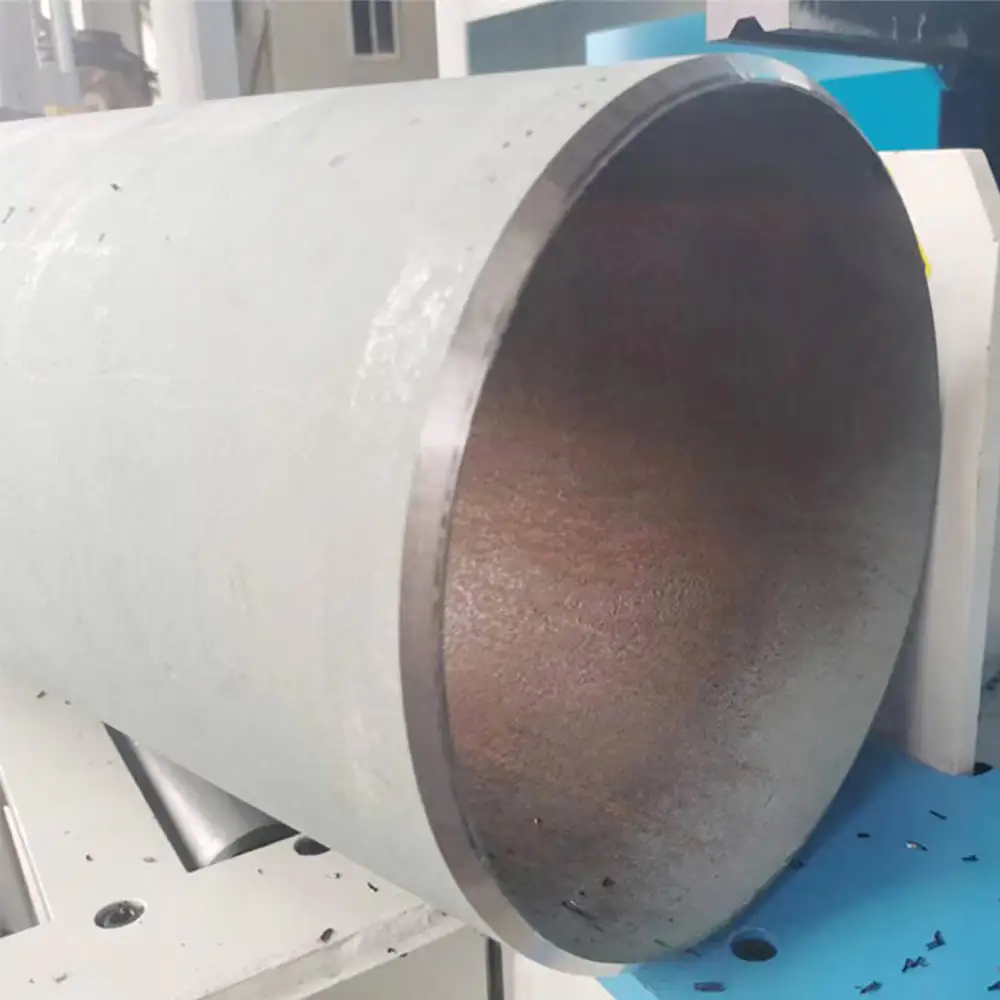
Round Tube Chamfering
Round tubes are widely used in construction,automotive,furniture,fitness equipment,HVAC,machinery,and general metal fabrication.
The machine can be configured with suitable tooling for processing compatible round tubes and pipes.
Chamfering a round tube end can remove sharp edges and create a defined edge profile. This can make the tube easier to handle and prepare it for welding,assembly,fitting,or other downstream processes.
The actual tube diameter,wall thickness,and chamfer dimensions depend on the machine's rated capacity and tooling configuration.
For thin-wall round tubes,proper clamping pressure is particularly important to avoid deformation during processing.
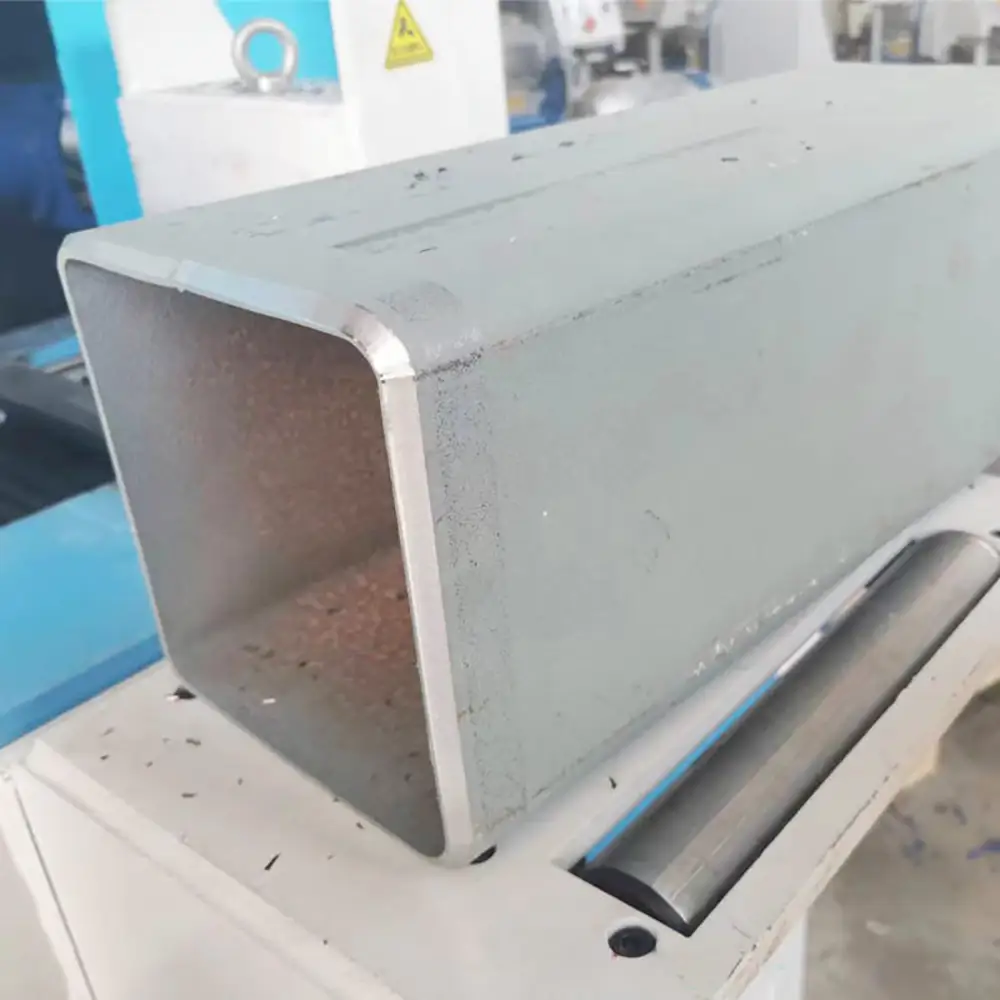
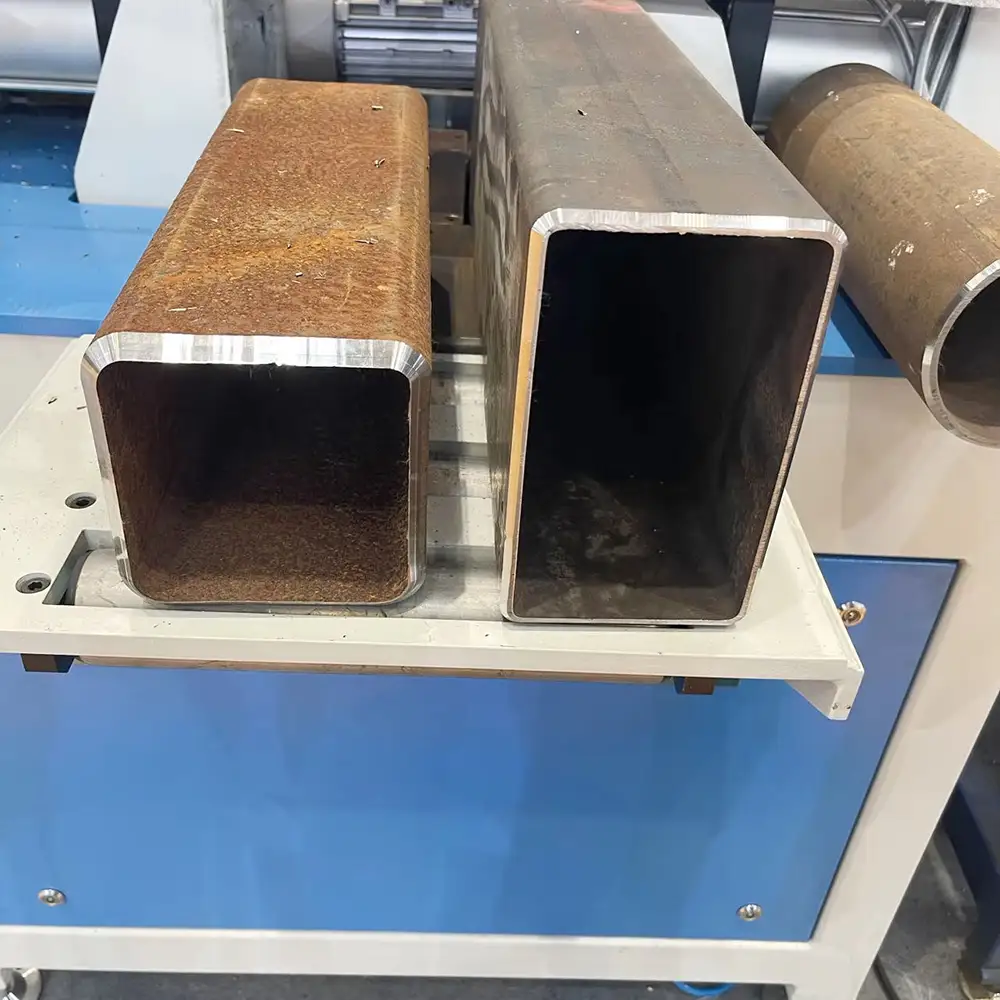
Square Tube Chamfering
Square tubes have four external corners and a different cross-sectional geometry from round tubes. Processing square tube ends therefore requires tooling and workholding designed for the profile.
The multifunction machine can be configured for suitable square steel tubes,square stainless steel tubes,aluminum square tubes,and other compatible hollow sections.
Depending on the tooling,the machine can perform edge chamfering or end beveling according to the required application.
Square tube processing is common in:
Steel structures
Furniture manufacturing
Racking systems
Guardrails
Construction components
Agricultural machinery
Automotive frames
Doors and windows
Metal fabrication
The actual profile dimensions and processing capability should be confirmed according to the machine configuration.
Tube Beveling Function
Beveling is often used to prepare a tube or pipe end for welding.
A controlled bevel can create a suitable edge geometry for welding joints and other fabrication processes. The required bevel angle,depth,and root geometry depend on the welding method and application.
For structural steel or pipe fabrication,the required bevel may be different from a simple chamfer intended to remove sharp edges.
Customers should provide technical drawings or welding specifications when a specific bevel profile is required.
The appropriate cutting or machining tool should be selected according to material grade,wall thickness,and desired bevel geometry.
Tube End Chamfering and Deburring
Cutting metal tubes can leave burrs and sharp edges. End deburring and chamfering can improve workpiece handling and prepare the tube for subsequent manufacturing.
The machine can be configured to perform suitable end finishing operations depending on its tooling.
A typical processing workflow may include:
Tube loading
Workpiece positioning
Clamping
Tool engagement
End beveling or chamfering
Deburring
Tool retraction
Workpiece unloading
PLC control can help coordinate these operations according to the machine design.
Multiple Metal Materials
The machine can be configured for a variety of compatible metals,including:
Carbon steel
Mild steel
Stainless steel
Aluminum
Alloy steel
Other compatible metal tubes
Different materials have different cutting and machining characteristics.
Carbon steel may require different tooling parameters from stainless steel or aluminum. Tool selection,cutting speed,feed rate,and clamping should therefore be matched to the actual workpiece.
For specialized materials or precision applications,sample testing is recommended before mass production.
Stable Workpiece Clamping
Proper clamping is essential for maintaining consistent tube end geometry.
Round tubes can rotate if they are not securely held,while square tubes require proper alignment to ensure the tool contacts the intended edges.
The machine can use suitable fixtures or clamping mechanisms according to the workpiece shape and dimensions.
For thin-wall tubing,excessive clamping pressure can deform the profile. For heavy steel tubes,stronger workholding may be required to resist machining forces.
Correct alignment between the workpiece and processing tool also contributes to repeatable results.
Production Efficiency
The combination of PLC control and multifunction processing can help improve production efficiency for repetitive tube preparation.
Instead of manually guiding tools for every workpiece,the operator can use a programmed processing sequence according to the machine configuration.
Production output depends on tube dimensions,material,bevel geometry,tooling,loading method,clamping time,and processing cycle.
For high-volume manufacturing,the machine may be integrated with automatic feeding,cutting,sorting,or other tube-processing equipment.
Actual productivity should be evaluated using the complete production cycle rather than the nominal machine speed alone.
Tooling and Bevel Quality
Tooling directly affects the quality of beveling and chamfering.
Different materials and tube geometries may require different cutter designs. Tool wear can also affect bevel dimensions,surface condition,and burr formation.
Regular tool inspection helps maintain consistent processing.
For applications requiring a specific bevel angle or dimensional tolerance,customers should provide drawings,samples,or welding specifications so appropriate tooling can be selected.
Industrial Applications
The multifunction PLC tube beveling and chamfering machine can be used in many industries,including:
Steel structure manufacturing
Metal furniture production
Automotive components
Agricultural machinery
Construction equipment
HVAC equipment
Pipe fabrication
Racking systems
Guardrail manufacturing
Doors and windows
Fitness equipment
Machinery manufacturing
General metal fabrication
The actual application range depends on machine capacity,tooling,and workpiece specifications.
Maintenance and Safety
Routine maintenance is important for stable operation. Operators should inspect cutting tools,clamping fixtures,PLC and electrical components,guide systems,motors,and other moving parts according to the manufacturer's recommendations.
Metal chips should be removed from the working area regularly.
Because beveling and chamfering involve moving cutting tools,operators should keep hands away from the processing area during operation.
Emergency stops,guards,electrical protection,and other safety features depend on the actual machine configuration and applicable local requirements. Operators should receive appropriate training before using the machine.
Custom & OEM Solutions
Different tube-processing applications require different dimensions,bevel angles,and production methods.
The machine can therefore be customized with suitable tooling,clamping systems,feeding mechanisms,PLC programs,workpiece supports,and processing heads.
For OEM and ODM projects,customers can provide tube shape,outer dimensions,wall thickness,material,workpiece length,bevel angle,chamfer dimensions,and production volume.
Drawings or samples are recommended for applications requiring customized end geometry.
Why Choose Us
PLC-Controlled Processing – Provides programmable control of machine sequences and repetitive tube end-processing operations.
Multifunction Beveling & Chamfering – Supports different tube end preparation requirements within one machine configuration.
Round & Square Tube Applications – Designed for compatible round pipes,round tubes,square tubes,and related metal profiles.
Repeatable End Finishing – Controlled workholding and tooling can help maintain consistent chamfer and bevel results.
Multiple Material Options – Can be configured for suitable carbon steel,stainless steel,aluminum,alloy steel,and other metals.
Flexible Industrial Applications – Suitable for steel structures,furniture,automotive,construction,HVAC,racking,and general fabrication.
Custom Tooling & PLC Programs – Processing tools,fixtures,feeding systems,and control sequences can be customized.
OEM & ODM B2B Support – Suitable for manufacturers,distributors,wholesalers,and industrial equipment buyers.
FAQs
1. What is a PLC tube beveling machine?
It is a tube-processing machine that uses a PLC control system to coordinate beveling,chamfering,clamping,and other machine functions according to its configuration.
2. Can it process round tubes?
Yes. Suitable round tubes and pipes can be processed when their dimensions are within the machine's rated range.
3. Can it process square tubes?
Yes. With appropriate fixtures and tooling,the machine can process compatible square tubes and hollow sections.
4. What is the difference between beveling and chamfering?
Beveling generally creates a larger prepared angled surface,often for welding preparation. Chamfering typically creates a smaller angled edge for edge finishing or assembly preparation.
5. Can the machine remove tube-end burrs?
With suitable tooling,it can perform deburring together with chamfering or beveling for compatible workpieces.
6. What materials can be processed?
Depending on the machine configuration,it can process carbon steel,mild steel,stainless steel,aluminum,alloy steel,and other compatible metal tubes.
7. Can it process thin-wall tubes?
Potentially yes,provided that the machine and clamping system are suitable. Proper clamping pressure is important to avoid deformation.
8. Is the machine fully automatic?
The PLC provides programmable control,but the actual automation level depends on the machine configuration. Loading and unloading may still require operator involvement unless an automatic feeding system is included.
9. Can the bevel angle be customized?
The bevel angle and geometry can generally be adjusted through suitable tooling and machine configuration. Exact specifications should be confirmed for the selected model.
10. What affects beveling quality?
Material,wall thickness,tube geometry,tool condition,cutting speed,feed rate,clamping,and machine alignment all affect the final result.
11. Can the machine be integrated into a production line?
Depending on the configuration,it can be combined with suitable automatic feeding,cutting,sorting,and other tube-processing equipment.
12. What information should I provide for a quotation?
Provide tube shape,outer dimensions,wall thickness,length,material,bevel angle,chamfer dimensions,production volume,and desired automation level. Drawings or samples are also helpful.
Prev:
Precise Square and Round Tube Chamfering Machine - Ensure Neat and Accurate Chamfers
Next:
Multifunction Metal End Face Deburring Chamfering Polishing Machine
TAG:
Pipe End Processing Machine,
Tube End Processing Machine,
Metal Tube Processing Machine,
Metal Pipe Processing Machine,
Automatic Tube Processing Machine,
Automatic Pipe Processing Machine,
Metal Tube Processing Equipment,
Pipe End Beveling Machine,
Pipe Edge Chamfering Machine,
Tube Edge Chamfering Machine,
Tube Chamfering And Deburring Machine,
Pipe Chamfering And Deburring Machine,
Tube End Beveling Machine,
Metal Tube Beveling Machine,
Automatic Pipe Beveling Machine,
Steel Pipe Beveling Machine,
Pipe End Finishing Machine,
Tube End Finishing Machine,
Metal Tube End Finishing Machine,
Metal Pipe Deburring Machine,
Automatic Tube End Chamfering Machine,
Automatic Pipe End Chamfering Machine,
Pipe End Chamfering Machine,
Tube End Chamfering Machine,
Steel Tube Chamfering Machine,
Stainless Steel Tube Chamfering Machine,
Precision Pipe Chamfering Machine,
Industrial Pipe Chamfering Machine,
Metal Pipe End Chamfering Machine,
Metal Tube Chamfering Machine,
Related Category:
PLC Beveling Machine,PLC Chamfering Machine,Tube Beveling Machine,Tube Chamfering Machine,Round Tube Chamfering Machine China, suppliers, manufacturers, factory, customized, wholesale, quotation, made in China