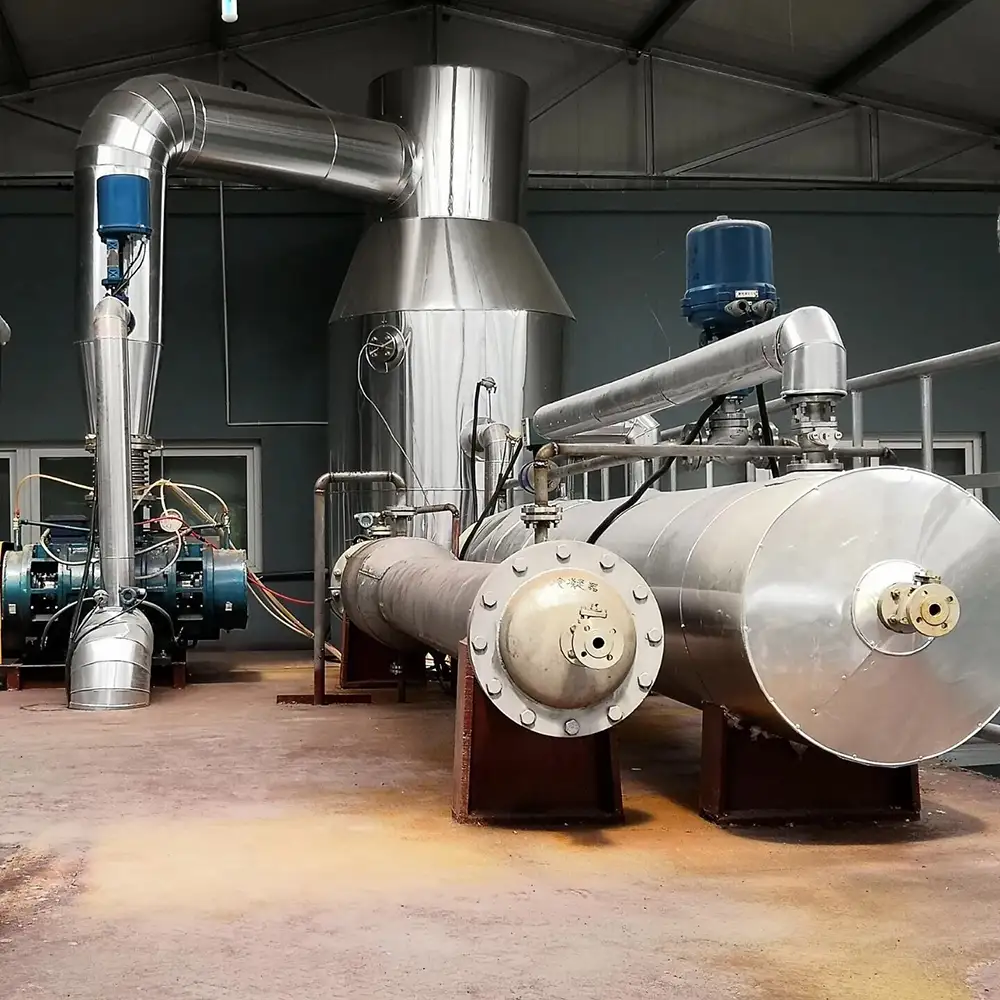
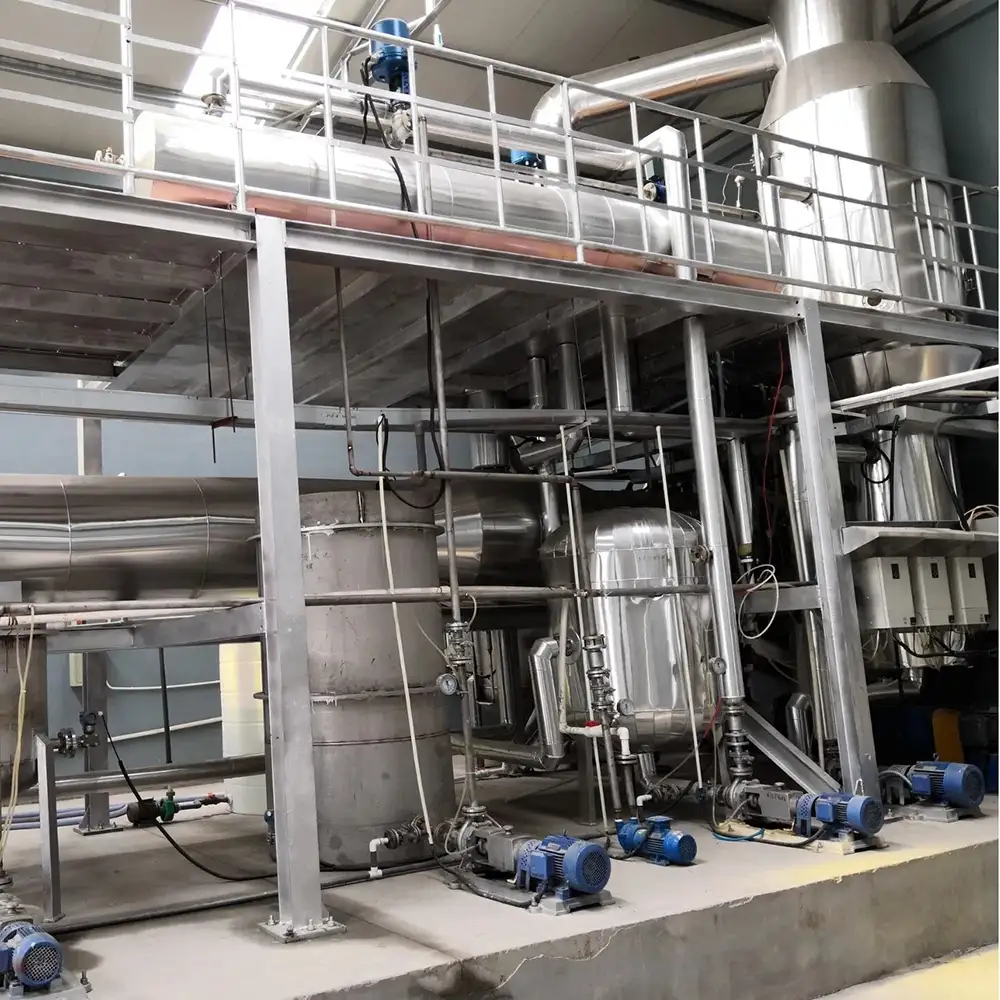
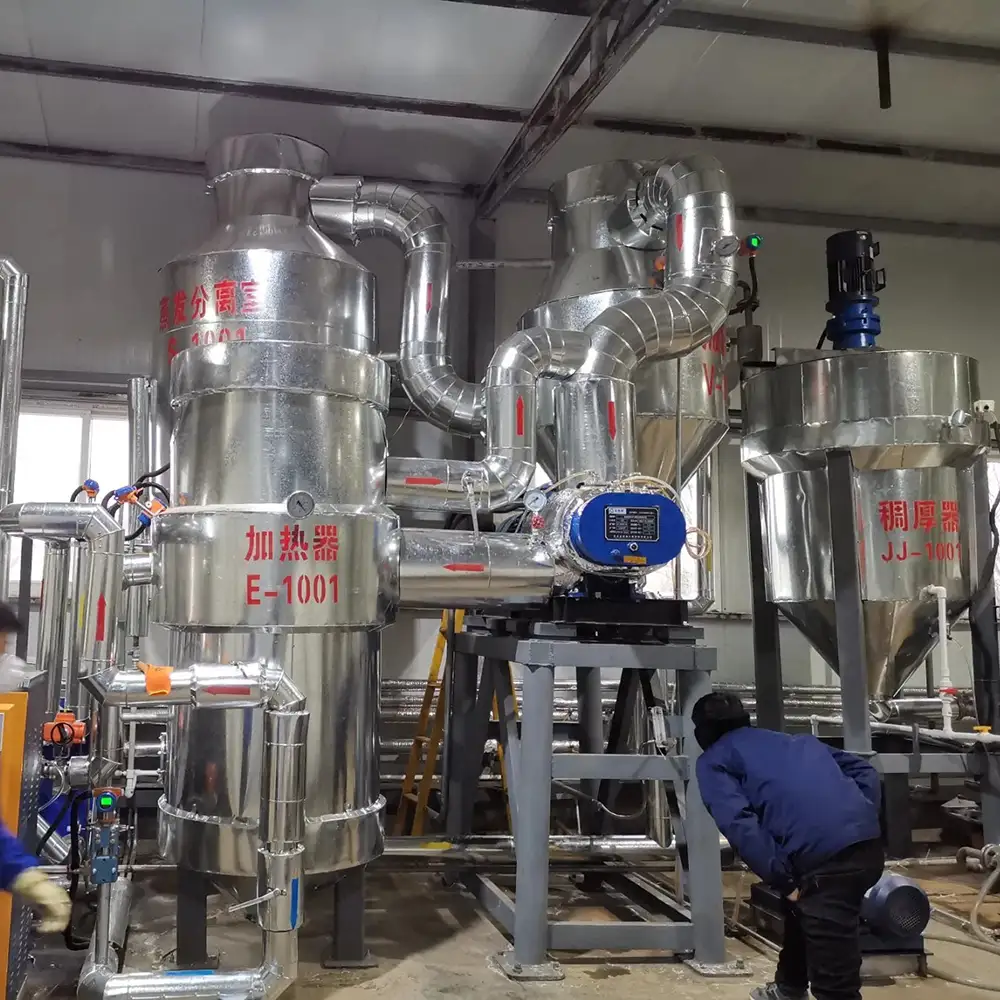
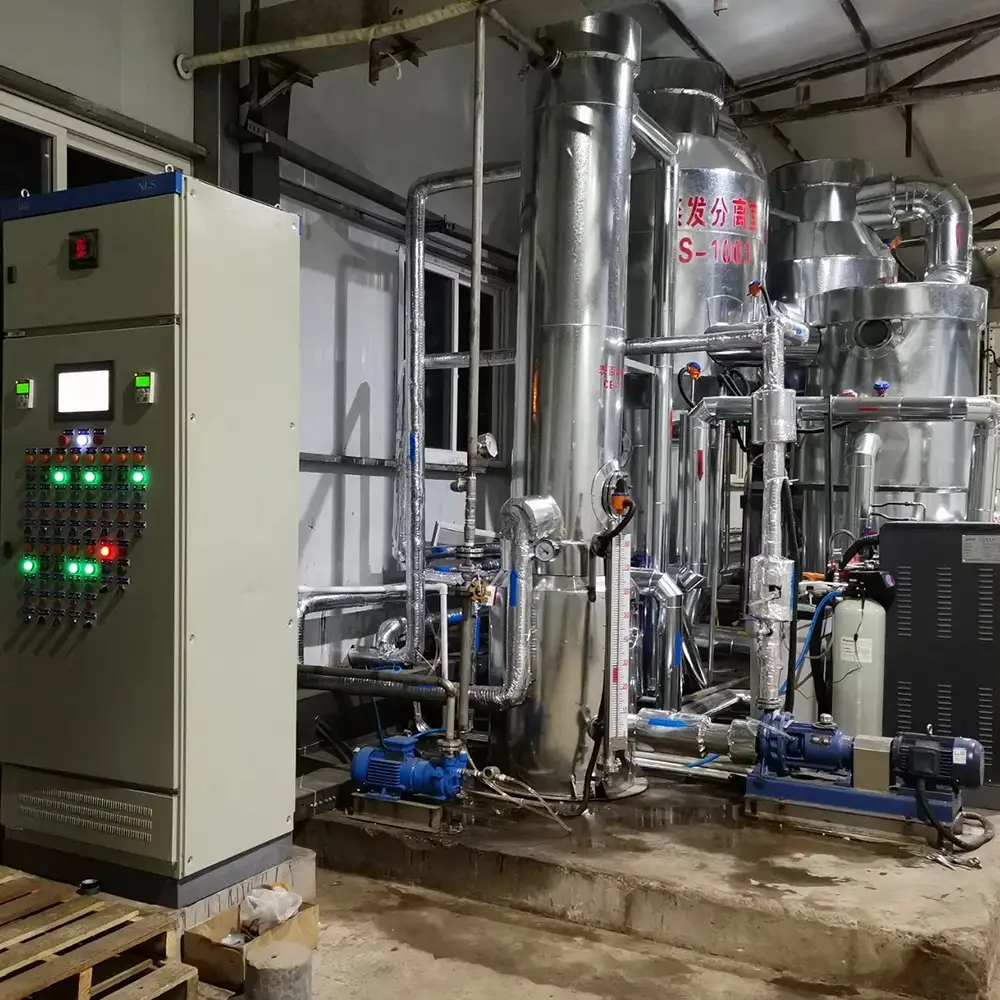
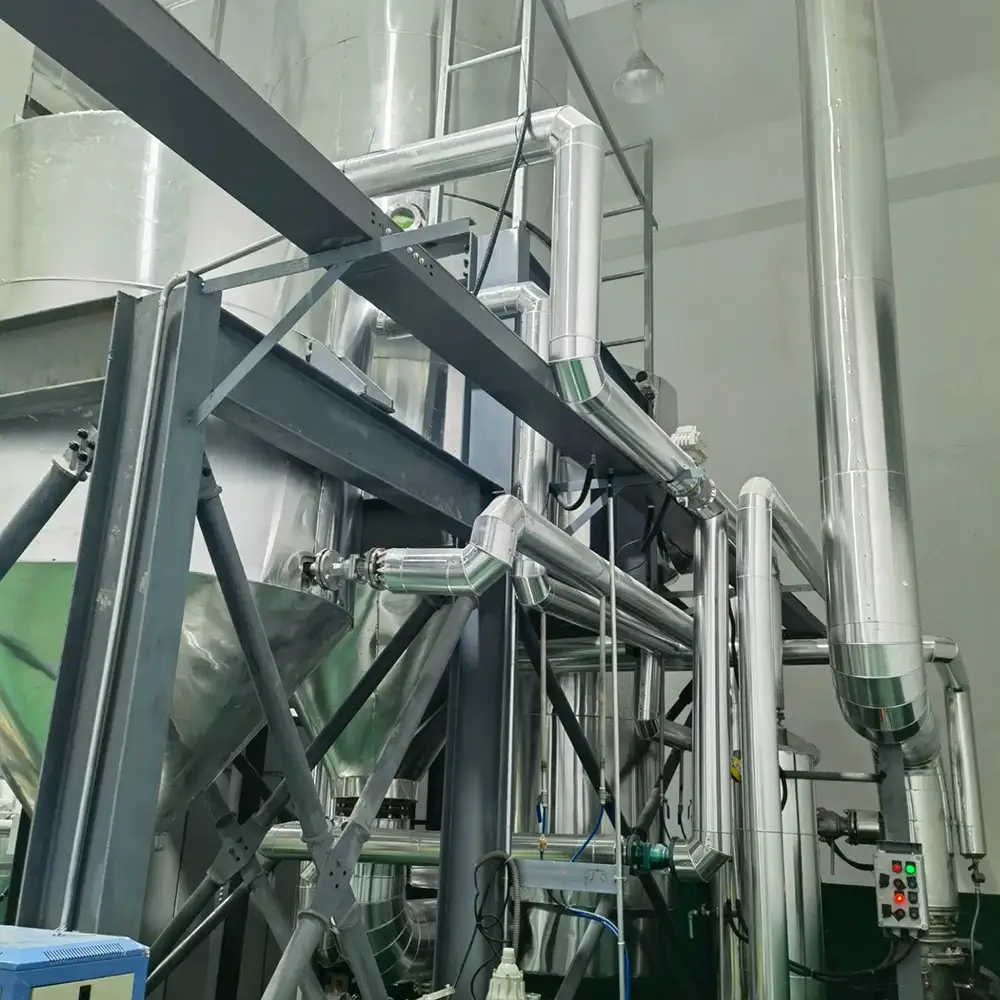
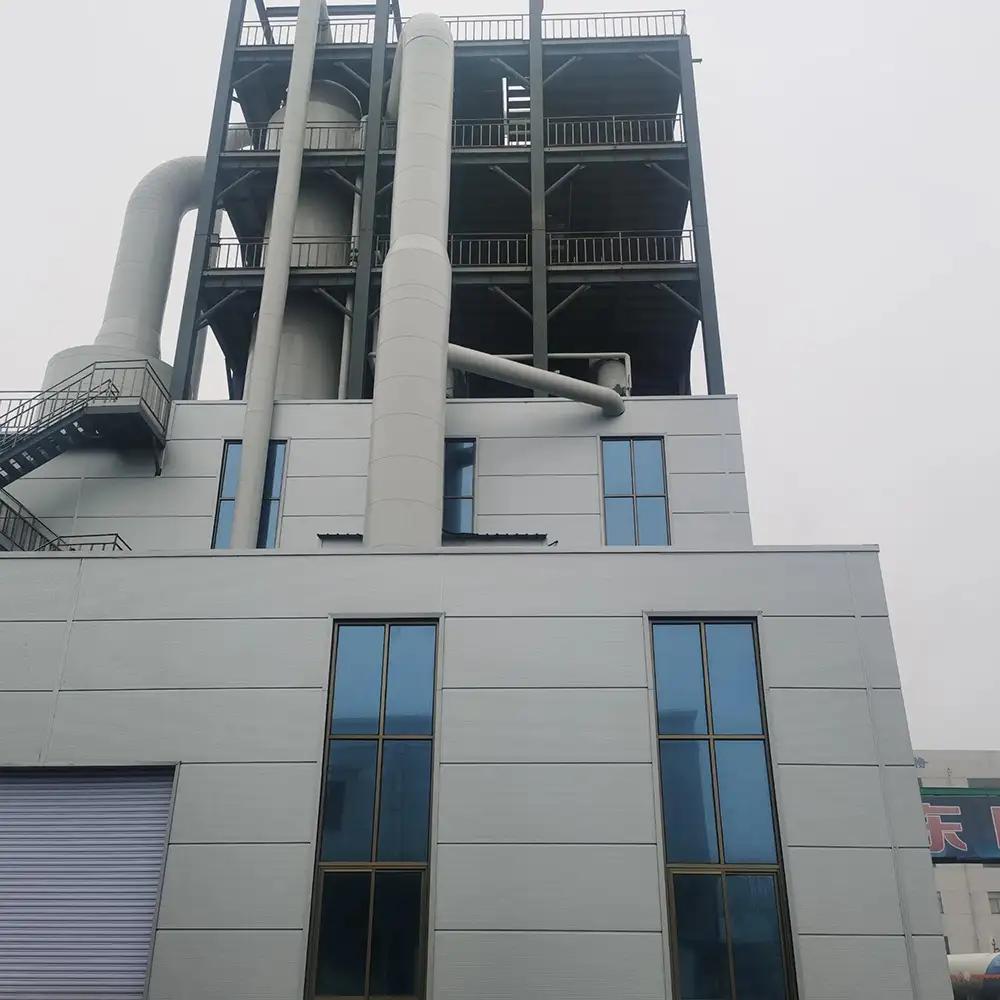
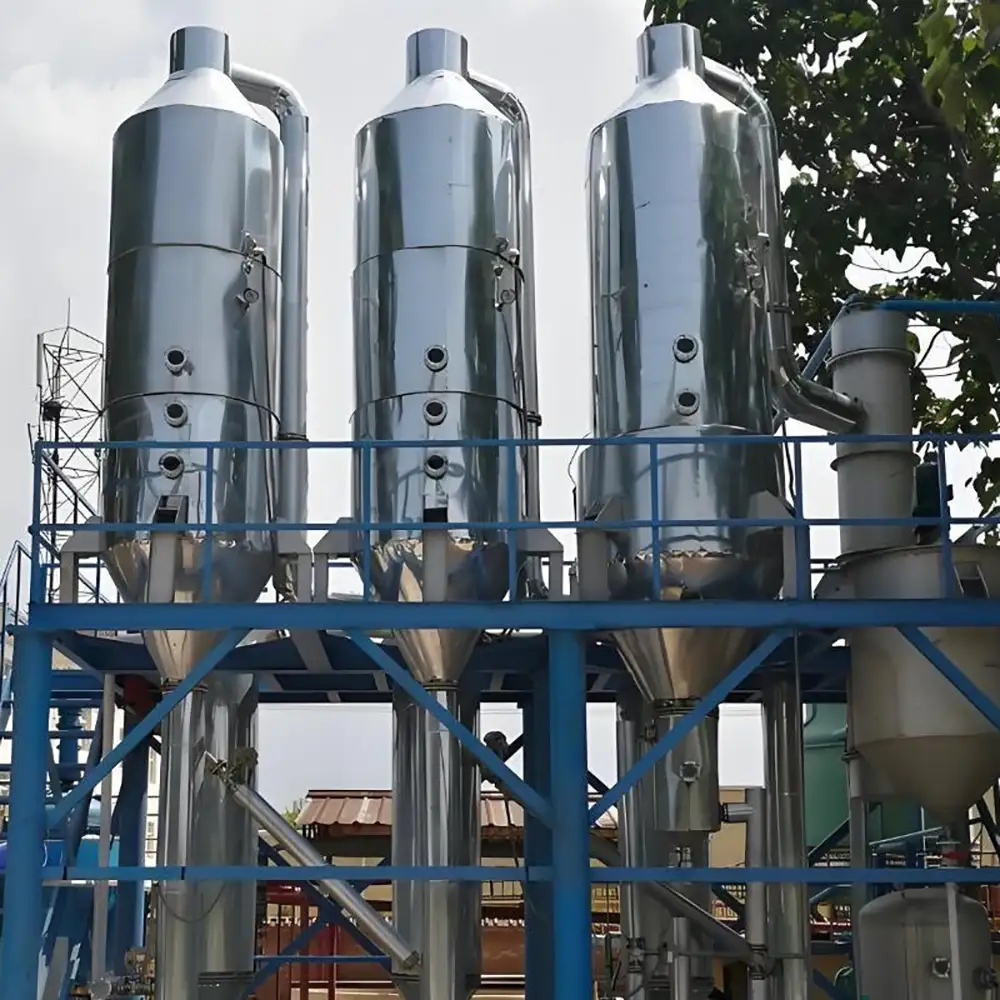
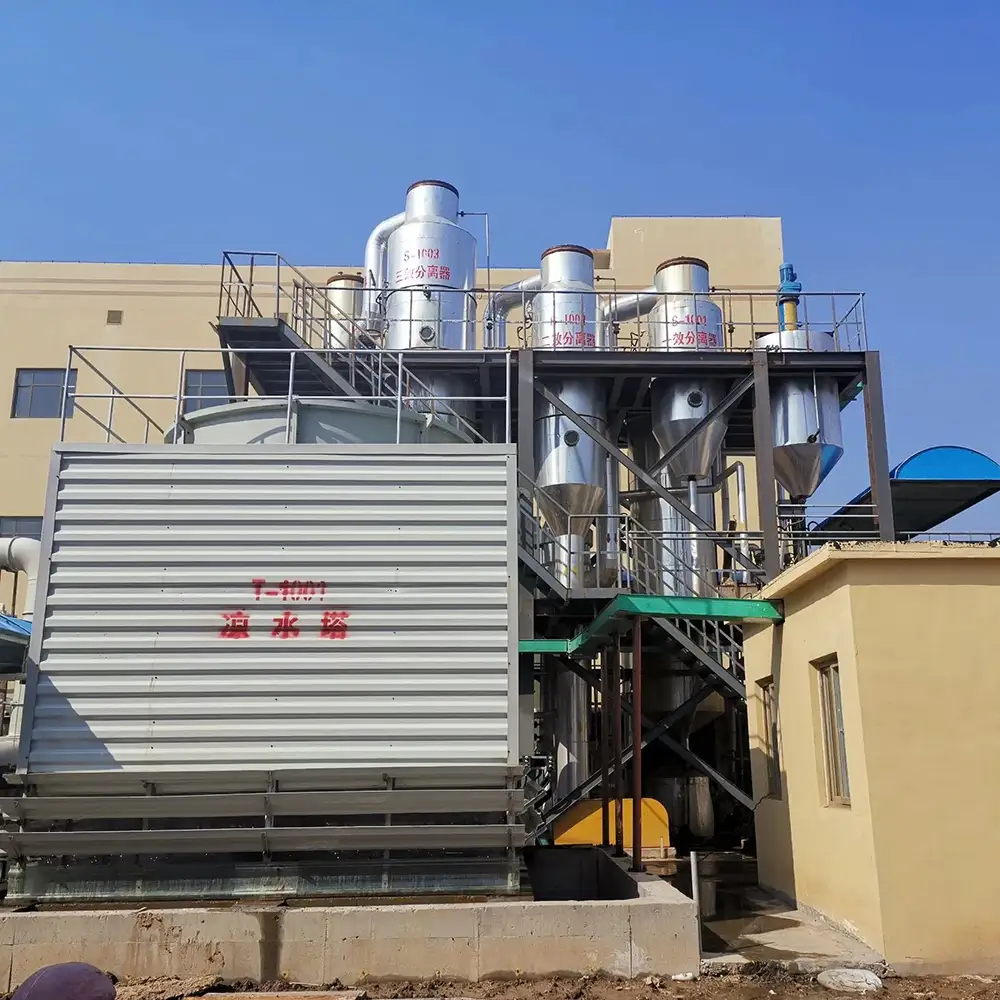
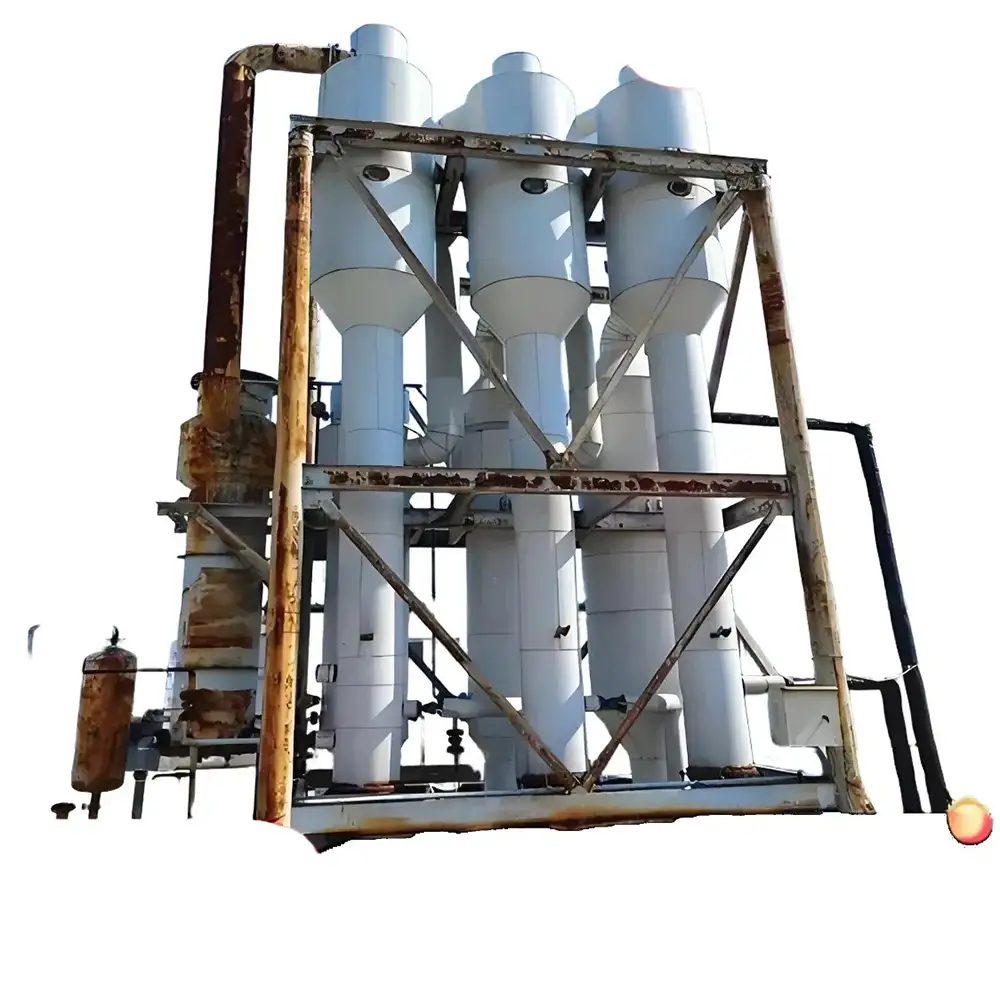
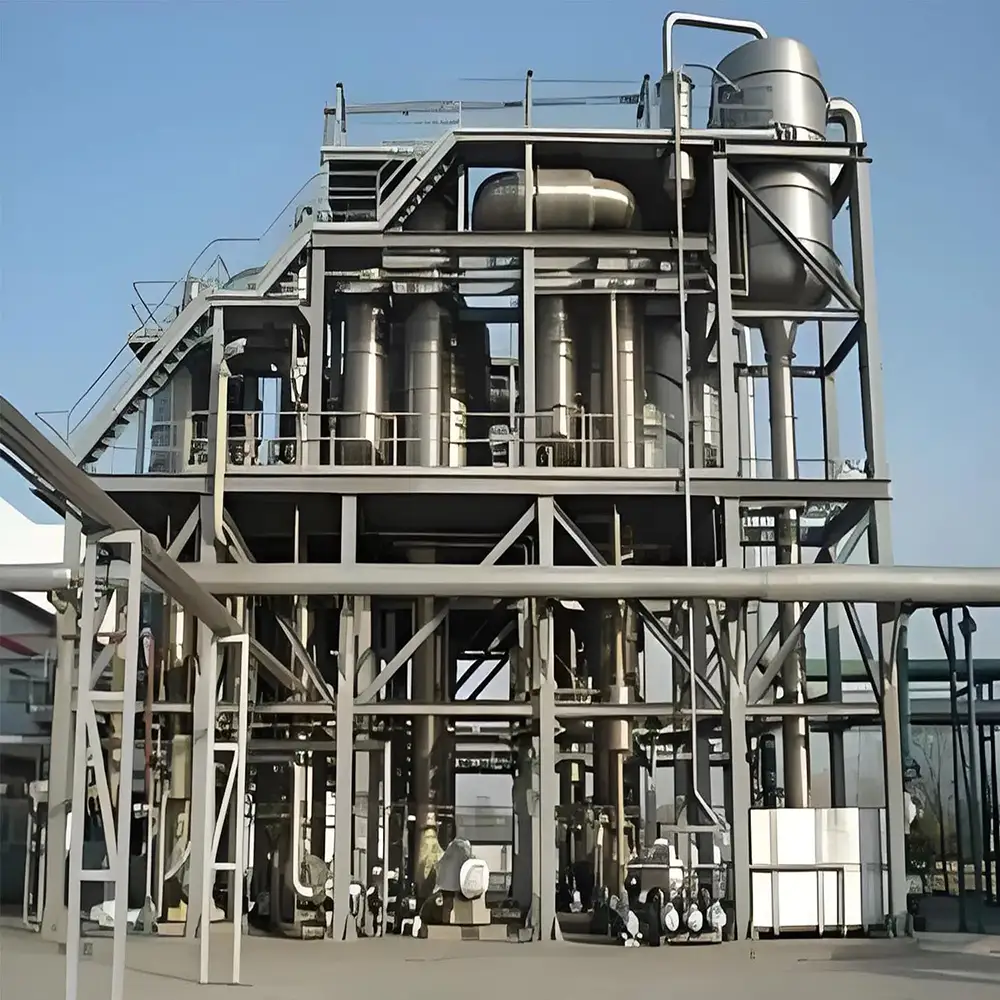
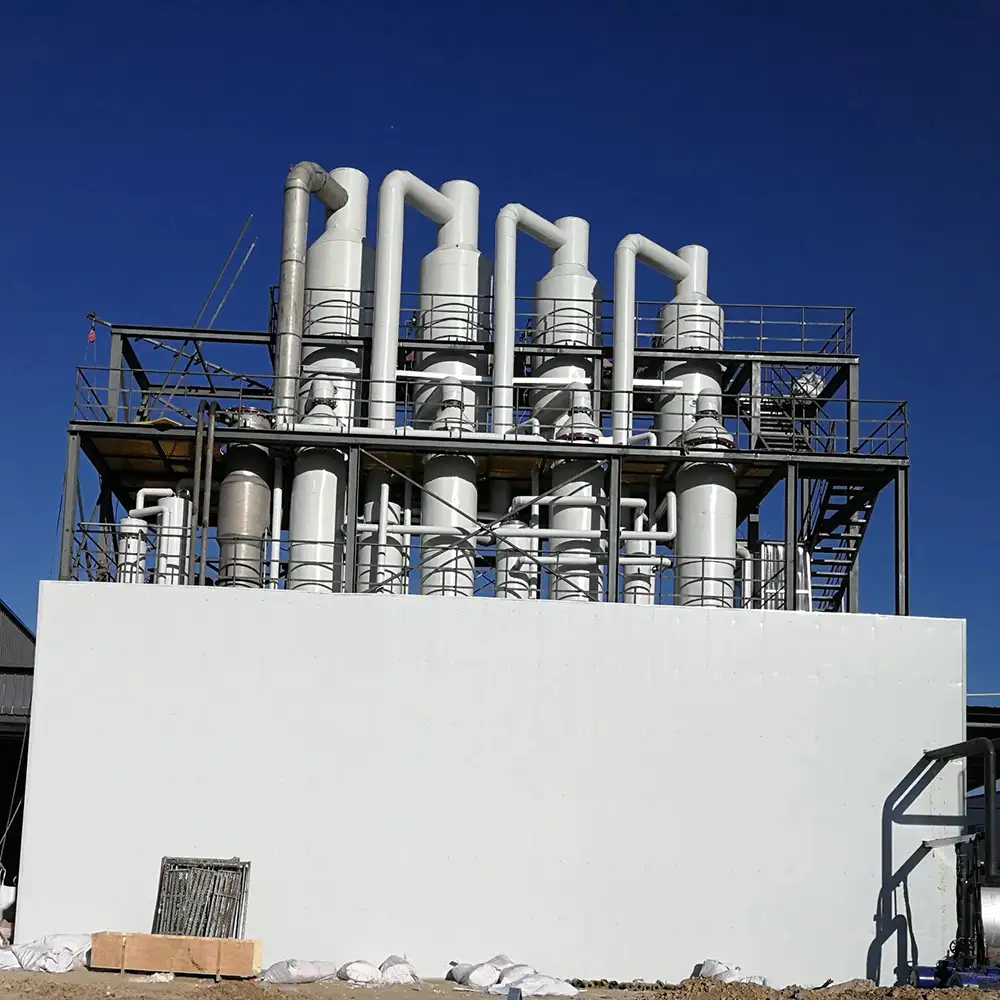
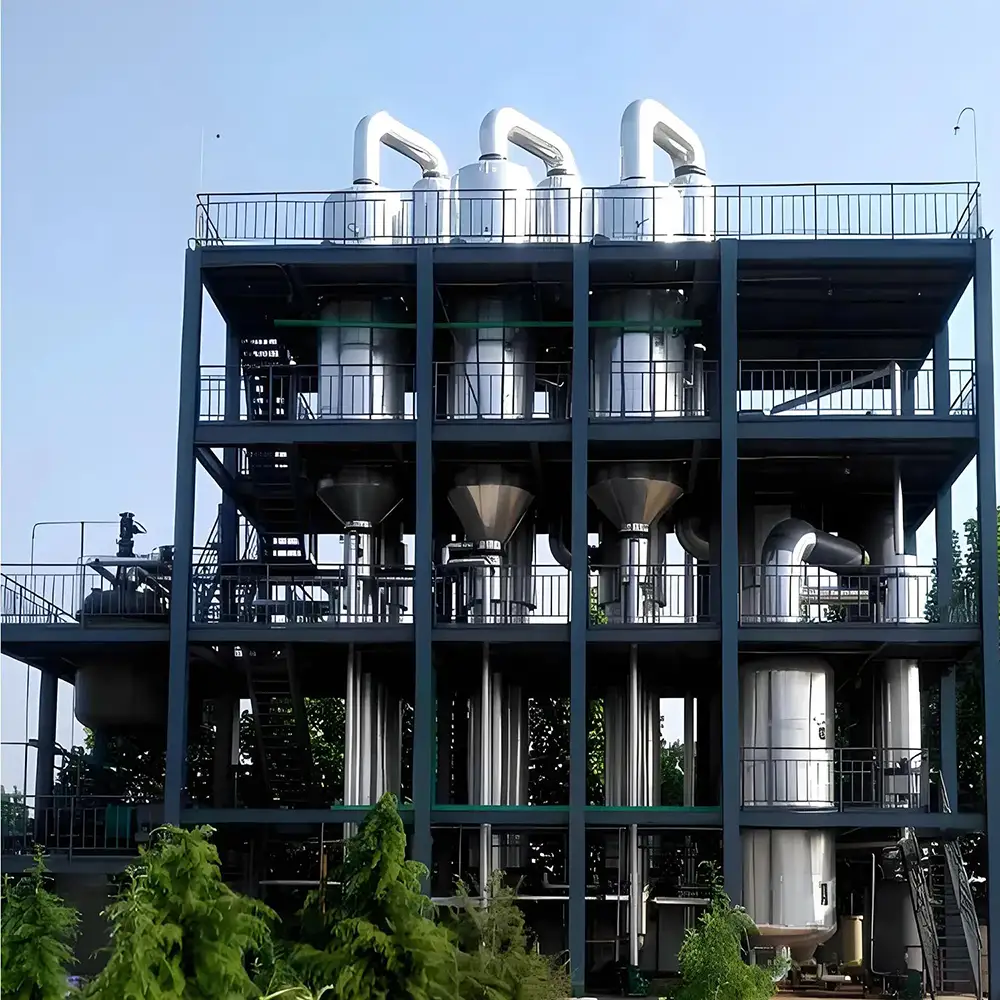
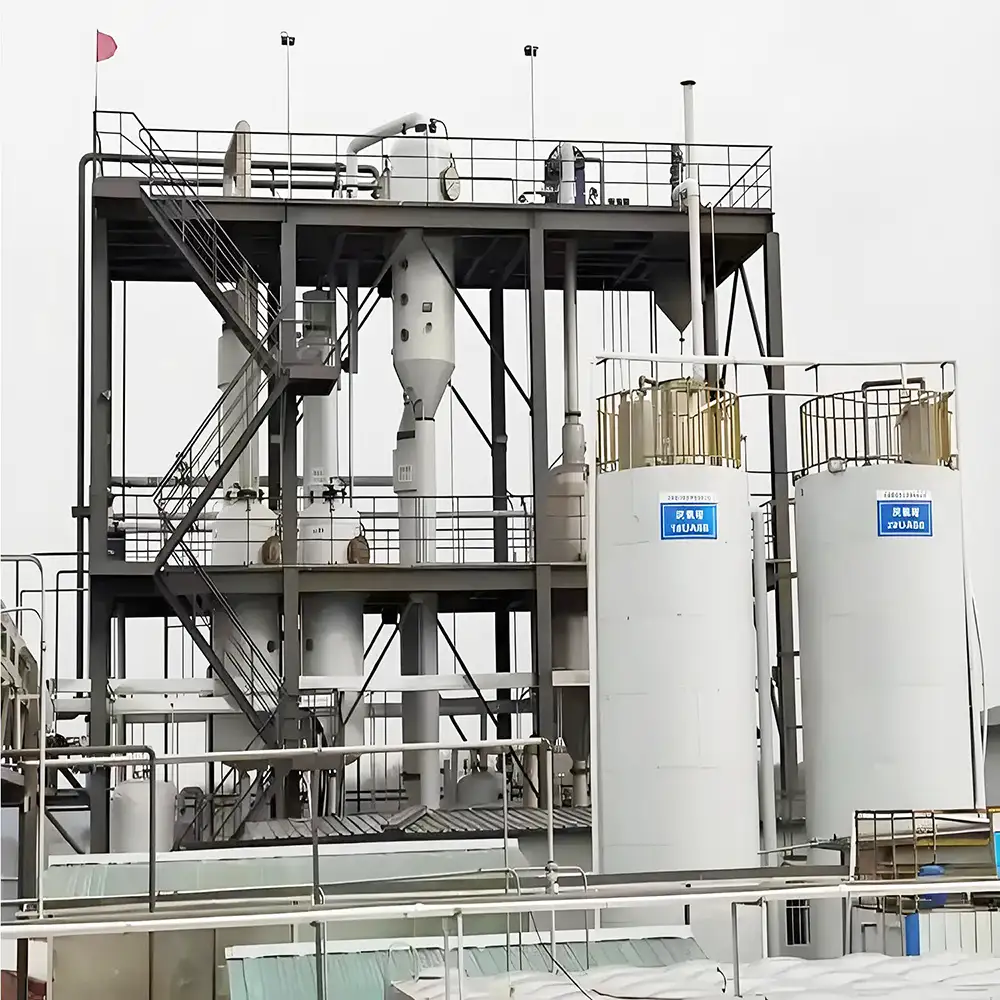
MVR evaporator (mechanical vapor recompression) is an advanced technology that reutilizes the energy from its own secondary steam, thereby significantly reducing the reliance on external energy sources. This technology was successfully implemented in Germany and France as early as the 1960s across various industries including chemical, pharmaceutical, paper, wastewater treatment, and seawater desalination. The operational principle involves compressing low-temperature steam using a compressor to increase its temperature and pressure, thus enhancing its enthalpy. The compressed steam is then condensed in a heat exchanger to fully utilize its latent heat. Apart from the initial startup phase, only a minimal amount of fresh steam is required throughout the entire evaporation process. In contrast to multi-effect evaporation, where secondary steam from one effect cannot be directly used as the primary heat source without additional energy input, MVR evaporators can compress all secondary steam generated within the system.
The solution circulates through a falling film evaporator via a material circulation pump within the heating tubes. Fresh steam outside the tubes heats the initial steam, causing the solution to heat up and boil, generating secondary steam which is then drawn into the turbocharger fan. After being supercharged, the secondary steam's temperature increases, allowing it to enter the heating chamber as a heating source for continuous circulation and evaporation. Once normal operation commences, the turbine compressor continuously draws in and supercharges the secondary steam, converting it into heated steam for ongoing circulation and evaporation. The resulting condensed water is eventually discharged.
The Mechanical Vapor Recompression MVR Water/Wastewater Treatment Equipment is an advanced industrial evaporation and concentration system designed for water treatment, wastewater reduction, resource recovery, and high-efficiency industrial evaporation applications. MVR technology uses mechanical vapor recompression to recycle secondary vapor generated during evaporation, significantly reducing the need for continuous external steam input compared with conventional evaporation processes.
MVR evaporation systems are widely used where industrial wastewater contains dissolved salts, chemicals, organic substances, minerals, or other components that require concentration and water separation. By recovering and recompressing vapor within the evaporation process, an MVR system can improve thermal efficiency and reduce operating energy requirements.
|
Model NO. |
GSRF |
Handling method |
physicochemical treatment |
|
Usage |
Cutting fluid wastewater, sodium sulfate wastewater, corn pulp wastewater, electroplating wastewater, pharmaceutical industry, fine chemical industry, non-ferrous metal industry, electronics industry, petrochemical industry, automotive industry |
Trademark |
|
|
Types |
Package, Compact, Small, Mini |
Applications |
Industrial, Municipal, Domestic, Medical, Ship |
|
Craft |
Flocculation sedimentation method |
Features |
Water Clarification, Filtration, Purification |
|
Service Life |
20 Years |
Operation |
Automatic |
|
Steel Plate Thickness |
>8mm |
Function |
Remove Suspended solids |
|
Voltage |
220V/ 380V/ Customerized |
Installation Type |
Onground |
|
Colour |
Grey/Silver/Blue/Balck/Customerized |
Use for |
Mineral, Printing, Chemical, Dyeing, Starch |
|
Material |
Carbon Steel, Stain Steel, FRP, PE, PP |
Certificate |
SGS, ISO |
|
Transport Package |
Container Standard Packing |
Specification |
Carbon steel anti-corrosion |
|
Production Capacity |
5000 Sets/Year |
Origin |
China |
Main principle:
Mechanical vapor recompression (MVR) evaporator utilizes the secondary steam generated in the evaporator, which is compressed by a compressor to increase pressure, temperature, and enthalpy. It is then sent to the heating chamber of the evaporator as heating steam, maintaining the boiling state of the feed liquid, while the heating steam itself condenses into water. In this way, the steam that was originally intended to be discarded is fully utilized, latent heat is recovered, and thermal efficiency is improved. The economy of steam production is equivalent to 20 effects of multi effect evaporation, reducing the demand for external heating and cooling resources, energy consumption, and pollution.
Mechanical Vapor Recompression Technology
Mechanical Vapor Recompression is based on the principle of recovering secondary vapor produced during evaporation. Instead of allowing the vapor to leave the system as waste, a mechanical compressor raises its pressure and temperature so that the vapor can be reused as a heating medium.
This internal vapor circulation makes MVR systems particularly attractive for applications requiring continuous evaporation and concentration. The exact energy consumption and operating performance depend on wastewater characteristics, evaporation temperature, concentration ratio, system capacity, and equipment configuration.
MVR Wastewater Treatment
The MVR Wastewater Treatment Equipment can be used as part of an industrial wastewater treatment process where evaporation and concentration are required. It can separate water from dissolved or suspended substances and reduce the volume of concentrated wastewater requiring further treatment or disposal.
MVR evaporation is especially useful for wastewater streams that are difficult to treat using conventional biological or membrane processes because of high salinity, high dissolved solids, or specific chemical characteristics.
Energy-Efficient Evaporation
A major advantage of MVR technology is the recycling of vapor energy. The mechanical compressor increases the vapor temperature so that the vapor can be reused within the evaporator.
This reduces dependence on fresh steam and can help lower thermal energy consumption. Actual energy savings depend on the specific process conditions and should be evaluated according to the customer's wastewater composition and operating requirements.
Industrial Wastewater Concentration
Industrial wastewater may contain valuable materials, dissolved salts, or concentrated contaminants. An MVR evaporation system can remove a significant portion of the water and produce a concentrated stream for subsequent treatment, recovery, crystallization, or disposal.
The concentration process can help reduce wastewater volume and may simplify downstream treatment requirements.
Water Recovery
In suitable applications, evaporated water can be condensed and collected as a relatively clean condensate stream. Depending on the wastewater characteristics and required treatment level, the recovered water may be suitable for reuse after additional treatment or polishing.
Water recovery requirements should be evaluated according to the feed composition, target water quality, and overall plant process.
Reduced Wastewater Volume
Wastewater disposal can represent a significant operating cost for industrial facilities. By concentrating wastewater through evaporation, an MVR system can reduce the volume of liquid waste requiring transportation, further treatment, or disposal.
This can be particularly beneficial for facilities with limited wastewater disposal capacity or high disposal costs.
Suitable For High TDS Wastewater
High total dissolved solids wastewater can present challenges for conventional treatment technologies. MVR evaporation can be used to concentrate high-TDS streams where evaporation is technically appropriate.
The final equipment configuration should consider salt content, scaling potential, viscosity, corrosion characteristics, boiling point elevation, and required concentration level.
Multiple Industrial Applications
MVR evaporation technology can be applied across a wide range of industries. Typical applications include chemical processing, pharmaceutical manufacturing, food and beverage production, metal finishing, electroplating, textile processing, mining, and other industrial processes.
Each application requires process evaluation because wastewater composition can vary significantly between industries.
Corrosion And Material Selection
Wastewater can contain corrosive chemicals, chlorides, acids, alkalis, and other aggressive components. Therefore, proper material selection is an important part of MVR equipment design.
Depending on the process conditions, evaporator components, heat-transfer surfaces, piping, tanks, and other wetted parts can be selected according to the chemical composition and operating environment.
Scaling Control
Scaling and fouling can affect evaporator heat-transfer efficiency and long-term operation. MVR systems can be designed with suitable circulation arrangements, cleaning procedures, temperature control, and process parameters to help manage fouling.
The wastewater composition should be analyzed before system selection so that appropriate evaporator technology and cleaning strategy can be considered.
Automated Process Control
An MVR evaporation system can incorporate automatic control of temperature, pressure, liquid level, vapor circulation, feeding, discharge, and compressor operation.
Automation helps operators monitor the evaporation process and maintain stable operating conditions. Control system configuration can be adapted according to the project requirements and plant integration needs.
Continuous Operation
Industrial wastewater treatment often requires continuous processing rather than intermittent batch treatment. MVR systems can be configured for continuous evaporation and concentration, helping integrate the equipment into an existing industrial wastewater treatment line.
Continuous operation can also provide more stable process conditions and predictable wastewater handling.
Compact Process Design
Because vapor energy is recycled internally, MVR evaporation systems can provide an efficient alternative to some conventional multi-effect evaporation arrangements. The overall system footprint depends on capacity, evaporator configuration, compressor size, pretreatment requirements, and auxiliary equipment.
The system can be engineered according to available installation space and plant process requirements.
Integration With Other Treatment Technologies
MVR evaporation does not necessarily have to operate as a standalone wastewater treatment system. It can be integrated with pretreatment, filtration, membrane systems, crystallizers, condensate polishing, sludge treatment, or other downstream processes.
For zero liquid discharge projects, MVR evaporation may serve as an important concentration stage before crystallization or final solids handling.
Customized MVR System
Wastewater treatment requirements vary significantly between industries and production facilities. A suitable MVR system should therefore be selected according to wastewater flow rate, composition, temperature, TDS, pH, COD, scaling tendency, required recovery rate, and target concentrate.
Customers can provide laboratory analysis, wastewater samples, flow data, process diagrams, and treatment objectives for technical evaluation.
B2B Industrial Water Treatment Solution
The Mechanical Vapor Recompression MVR Evaporation System provides an industrial solution for companies seeking to reduce wastewater volume, recover water, concentrate dissolved substances, and improve evaporation efficiency.
It is suitable for industrial plants, process manufacturers, wastewater treatment projects, chemical facilities, pharmaceutical production, food processing, metal finishing, and other applications requiring advanced evaporation technology.
Key Features
Mechanical Vapor Recompression Technology
Energy-Efficient Evaporation
Industrial Wastewater Concentration
Water Recovery Capability
High-TDS Wastewater Applications
Continuous Evaporation Operation
Automatic Process Control
Reduced Wastewater Volume
Customized Material Selection
Scaling And Fouling Management
Modular Process Configuration
Integration With ZLD Systems
Main Applications
Industrial Wastewater Treatment
High-TDS Wastewater
Chemical Wastewater
Pharmaceutical Wastewater
Food And Beverage Wastewater
Metal Finishing Wastewater
Electroplating Wastewater
Textile Wastewater
Mining Wastewater
Brine Concentration
Water Recovery
Zero Liquid Discharge Systems
FAQs
1. What Is MVR In Wastewater Treatment?
MVR stands for Mechanical Vapor Recompression. It recycles secondary vapor generated during evaporation by mechanically compressing it and reusing it as a heating source within the evaporation system.
2. What Is An MVR Evaporator Used For?
An MVR evaporator is used to concentrate wastewater, reduce liquid waste volume, recover water, and separate water from dissolved substances in suitable industrial applications.
3. Does MVR Reduce Energy Consumption?
MVR technology can significantly reduce external steam requirements because vapor generated during evaporation is recycled. Actual energy consumption depends on process conditions and wastewater characteristics.
4. Can MVR Treat High-TDS Wastewater?
Yes. MVR evaporation can be suitable for certain high-TDS wastewater streams. Feed composition, scaling potential, viscosity, and required concentration should be evaluated before equipment selection.
5. Can The System Recover Water?
Yes. The evaporated water can be condensed as a condensate stream. Whether the recovered water can be directly reused depends on the required water quality and may require additional polishing treatment.
6. Can MVR Be Used For Zero Liquid Discharge?
MVR evaporation can serve as a concentration stage in a Zero Liquid Discharge system. Additional crystallization or solids-handling equipment may be required depending on the wastewater characteristics and ZLD target.
7. What Industries Use MVR Evaporation?
MVR technology can be used in chemical, pharmaceutical, food and beverage, metal finishing, electroplating, textile, mining, and other industrial wastewater applications.
8. How Is Scaling Controlled?
Scaling can be managed through appropriate evaporator design, process control, circulation, pretreatment, cleaning procedures, and operating parameters. The correct strategy depends on the wastewater composition.
9. Can The MVR System Be Customized?
Yes. Evaporator type, materials, compressor configuration, automation, capacity, pretreatment, condensate treatment, and downstream equipment can be designed according to project requirements.
10. What Information Is Needed For MVR System Selection?
Important information includes wastewater flow rate, chemical composition, TDS, COD, pH, temperature, required evaporation capacity, target concentration, water recovery requirements, and operating schedule. Laboratory analysis is recommended for accurate system design.
Why Choose Us
Professional MVR Evaporation Technology
We provide industrial evaporation and wastewater concentration solutions based on Mechanical Vapor Recompression technology for applications requiring efficient water separation and wastewater volume reduction.
Application-Based System Design
MVR equipment should be selected according to actual wastewater characteristics. We evaluate flow rate, TDS, chemical composition, temperature, scaling tendency, and concentration requirements to determine a suitable system configuration.
Customized Material Selection
Different wastewater streams can have very different corrosion characteristics. Equipment materials and wetted components can be selected according to the customer's chemical conditions and operating requirements.
Integrated Treatment Solutions
MVR evaporation systems can be integrated with pretreatment, filtration, membrane systems, condensate treatment, crystallization, and other wastewater treatment processes according to the overall plant design.
Factory Direct B2B Support
We provide technical communication, process consultation, equipment configuration, project documentation, export packaging, shipping coordination, and after-sales support for international industrial customers.
Project And Sample Evaluation
Customers can provide wastewater analysis, laboratory test results, flow data, samples, process diagrams, and treatment objectives for technical assessment before equipment selection.
Prev:
MVR Evaporator High Salt Wastewater Equipment Pharmaceutical Factory Evaporation Crystallization
Next:
Industrial Wastewater Treatment/Seawater Desalination
TAG:
Industrial Wastewater Treatment Equipment,
Industrial Wastewater Treatment,
Wastewater Treatment Equipment,
Wastewater Treatment System,
Industrial Water Treatment Equipment,
Industrial Wastewater Management,
Water Treatment Equipment,
ZLD Wastewater Treatment,
Industrial Water Recovery,
Zero Liquid Discharge,
Evaporation Concentration System,
Wastewater Volume Reduction,
Brine Concentration Equipment,
Forced Circulation Evaporator,
Industrial Vacuum Evaporator,
Brine Evaporation System,
Vacuum Evaporator,
Multiple Effect Evaporator,
MVR Concentration System,
MVR Evaporation System,
Mechanical Vapor Recompression System,
Industrial Evaporation System,
Industrial Wastewater Concentration,
Wastewater Concentration Equipment,
High TDS Wastewater Treatment,
High TDS Wastewater Evaporator,
Wastewater Evaporation System,
MVR Evaporator,
Industrial Wastewater Evaporator,
Wastewater Recycling Equipment,
Related Category:
Mechanical Vapor Recompression MVR, MVR Water Treatment Equipment, MVR Wastewater Treatment Equipment, MVR Evaporator, M China, suppliers, manufacturers, factory, customized, wholesale, quotation, made in China