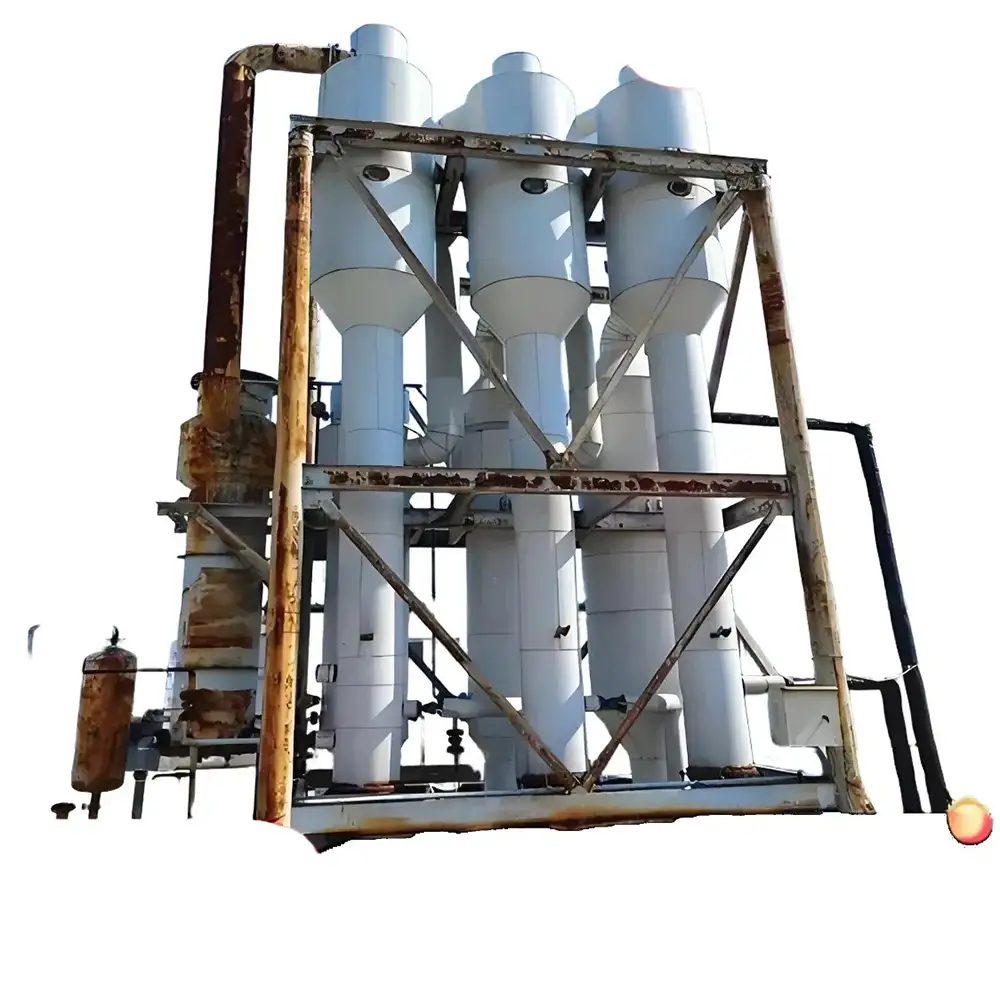
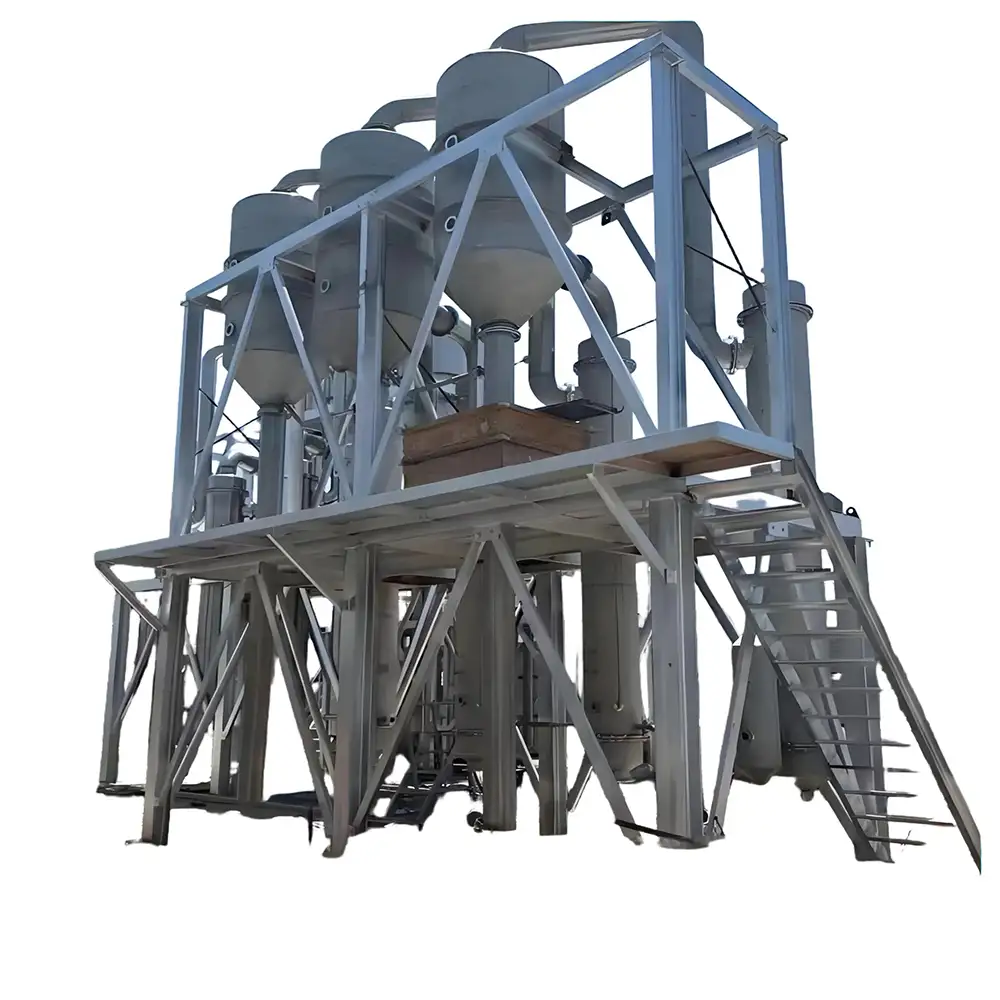
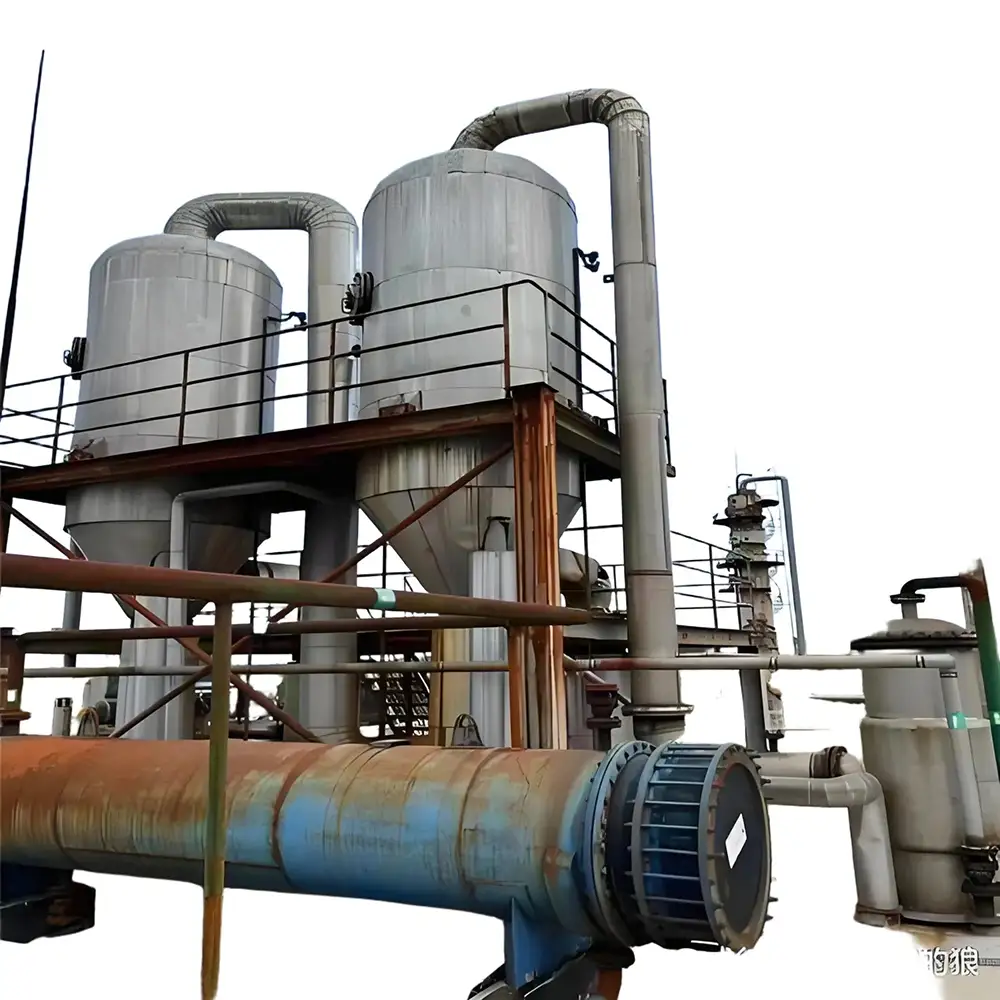
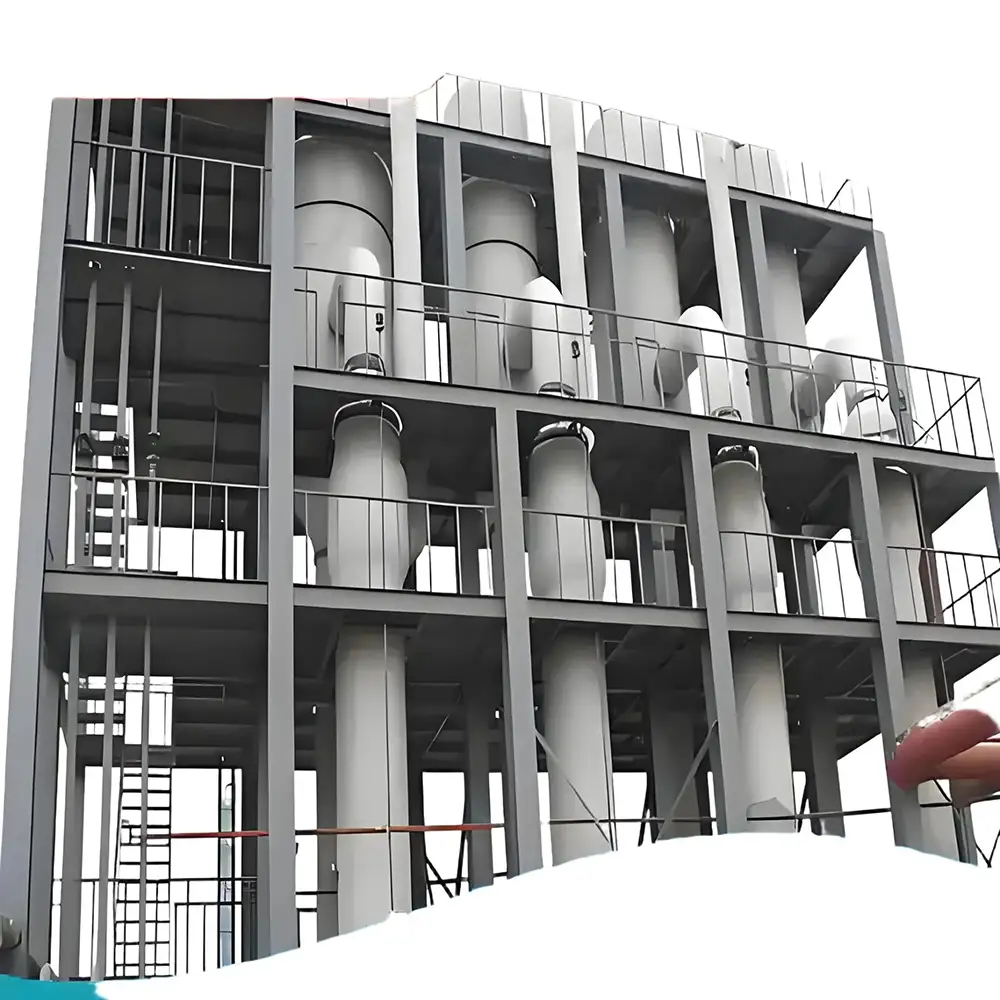
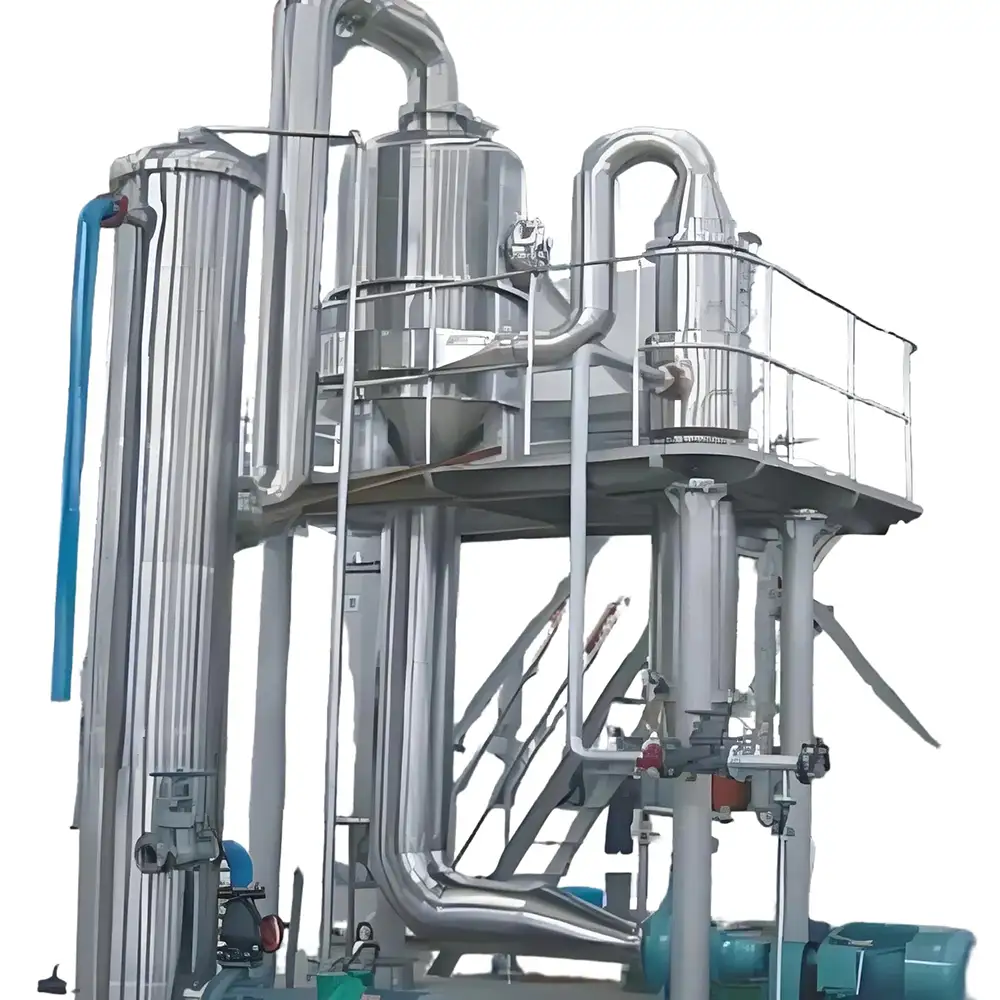
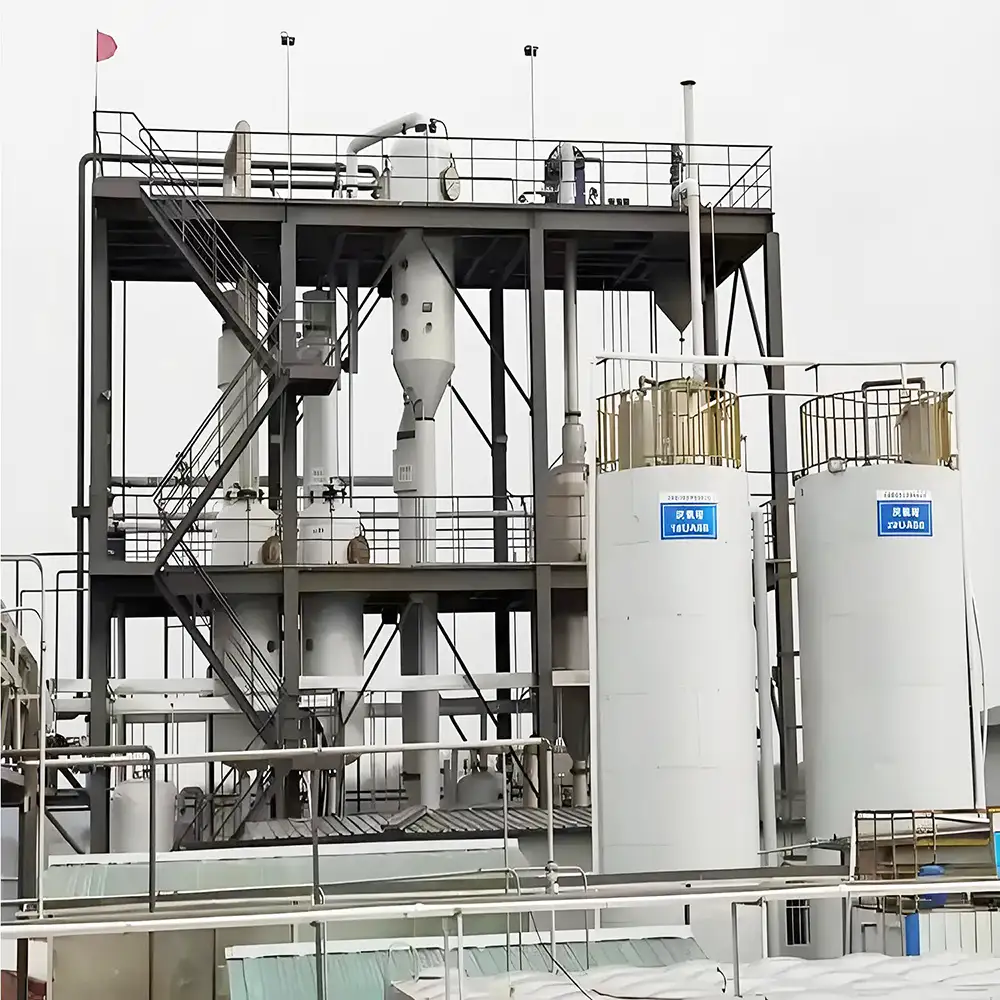
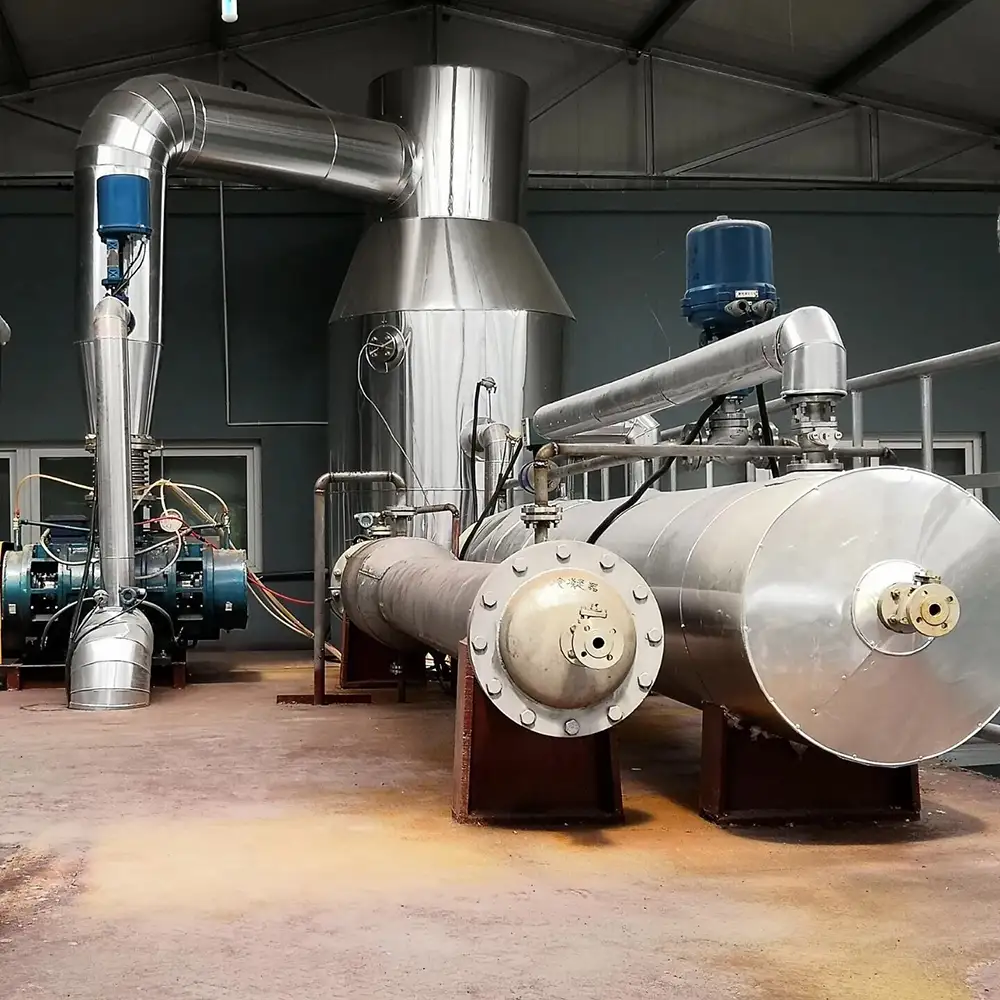
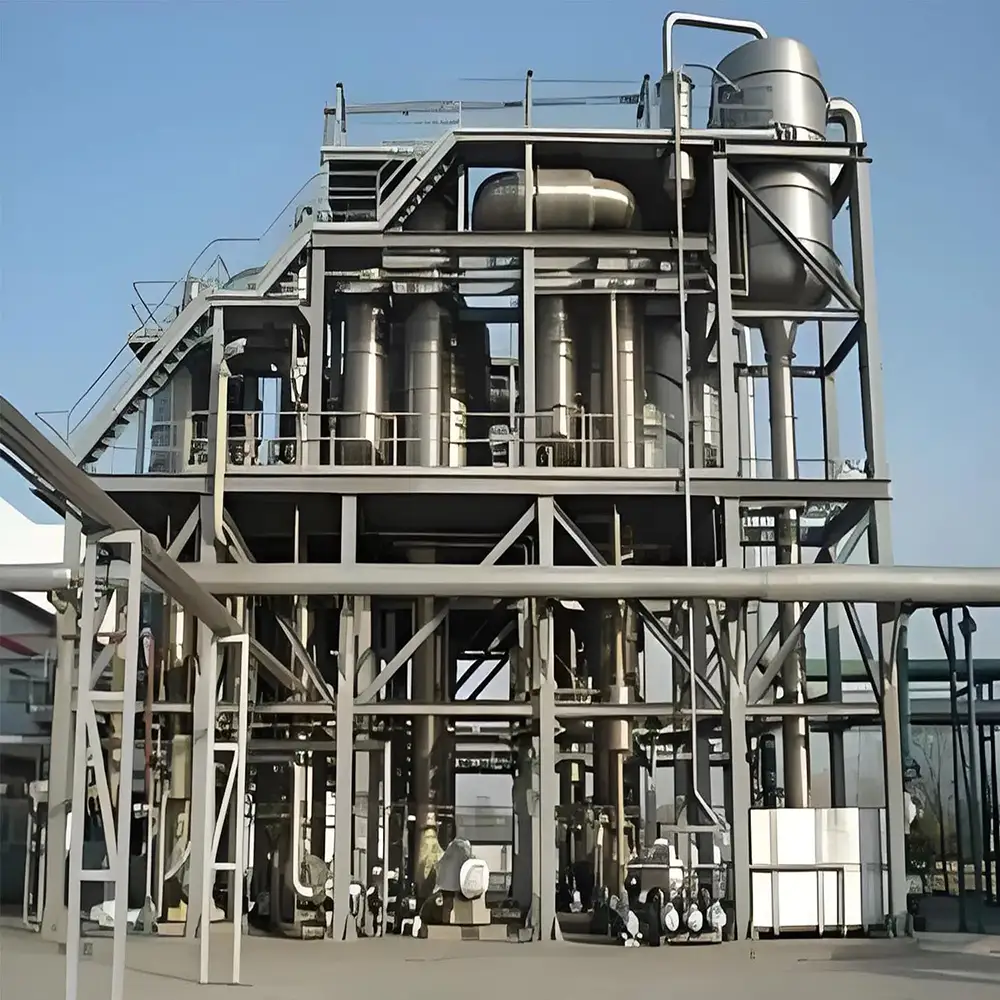
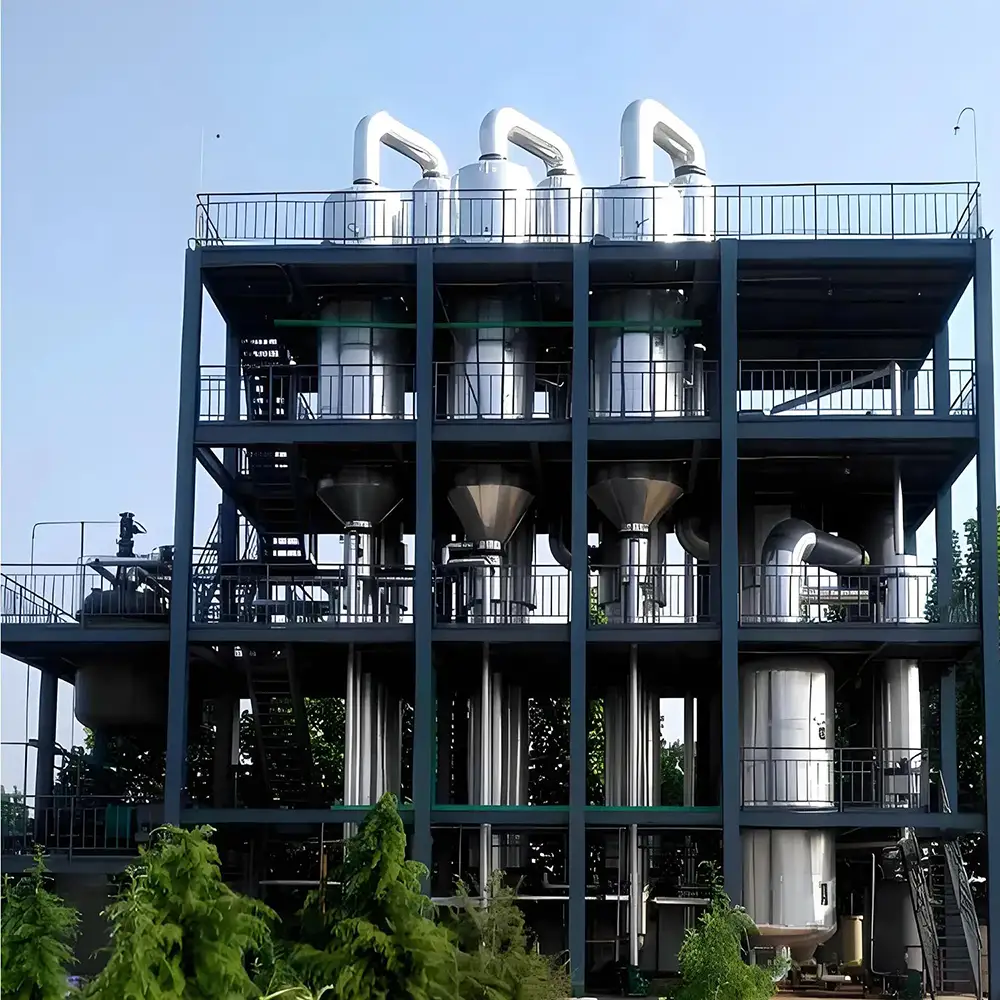
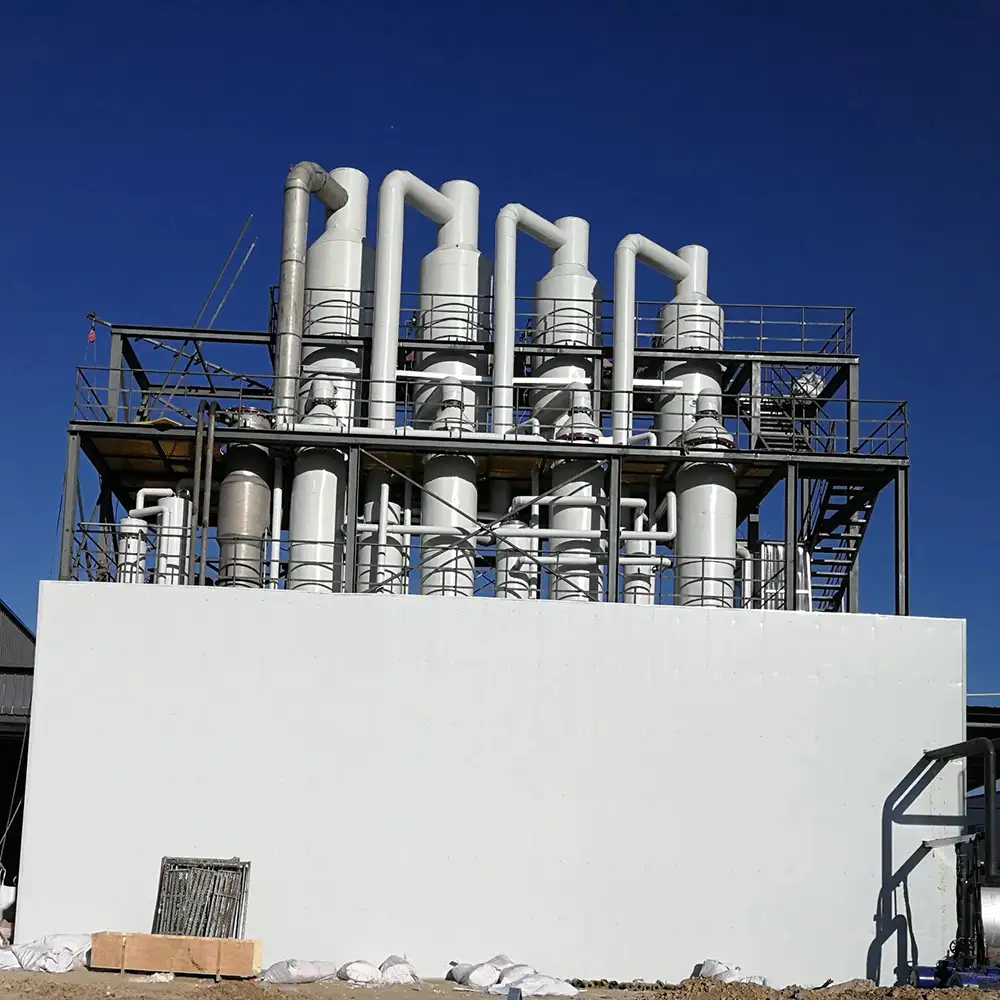
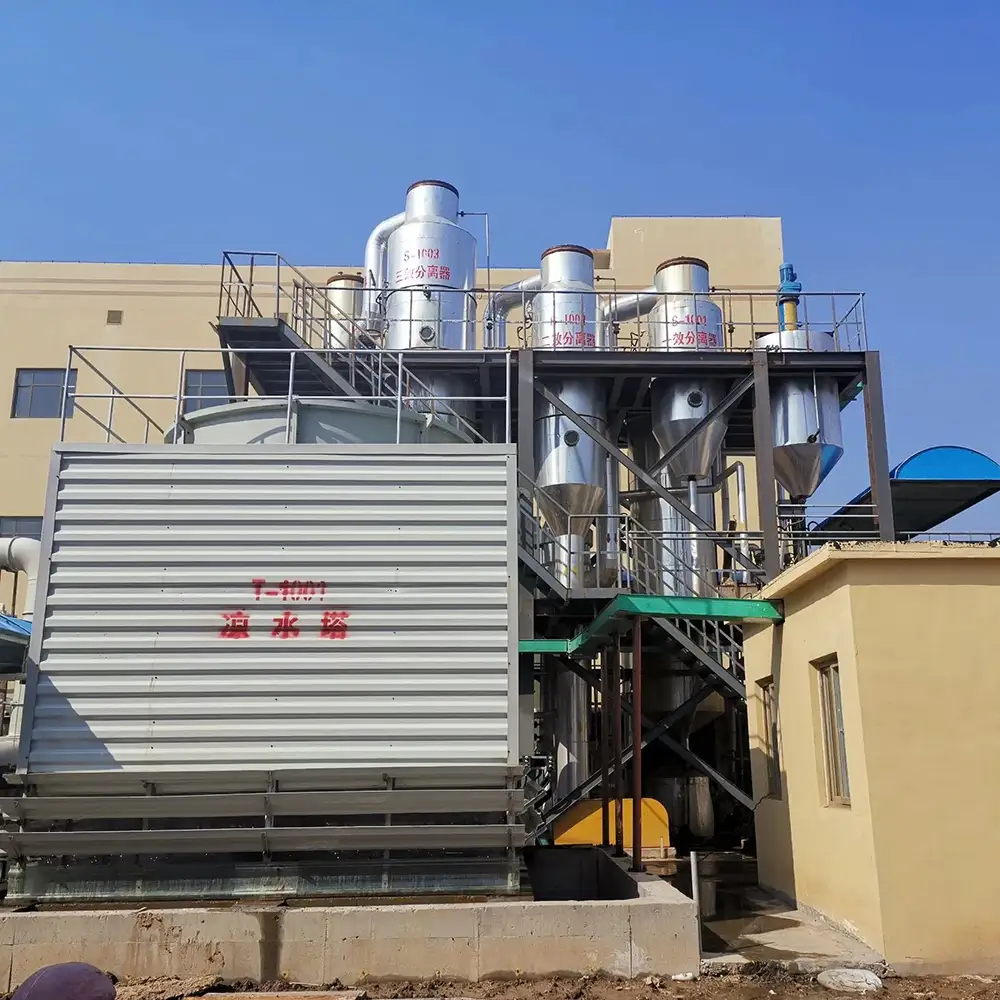
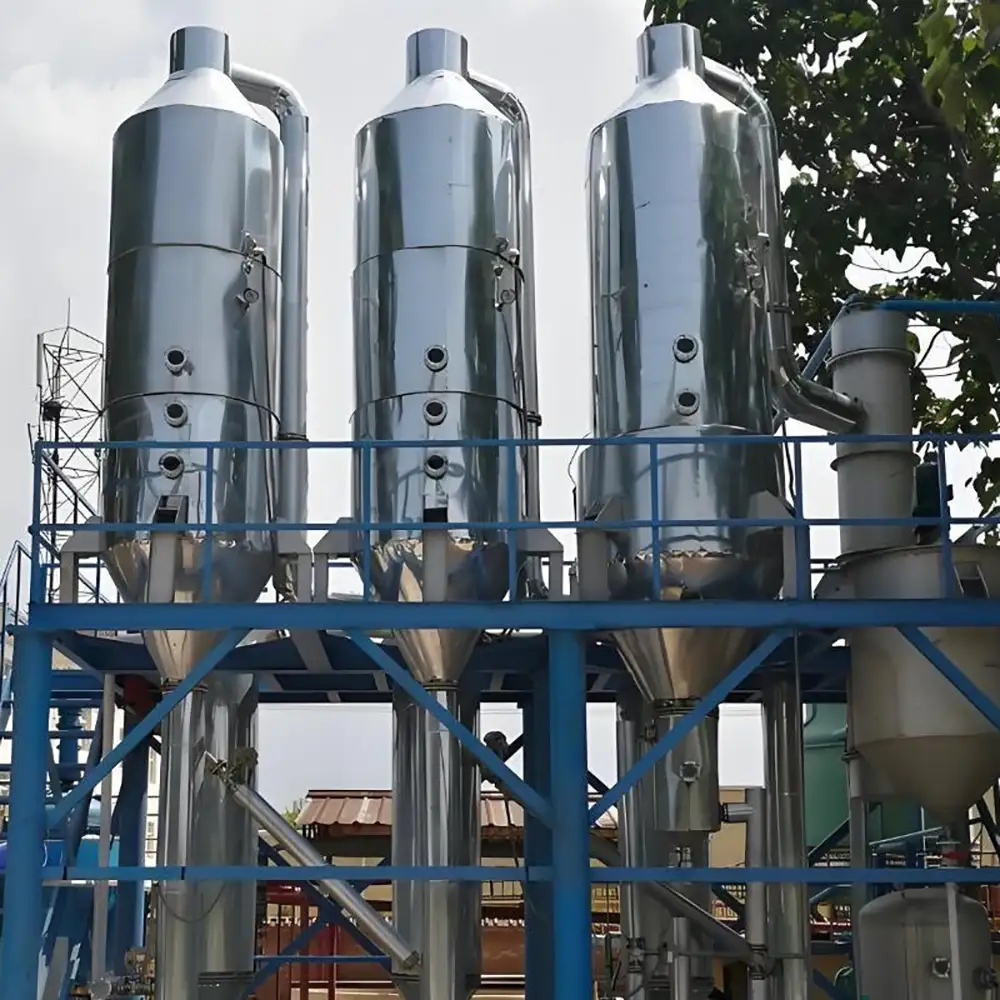
MVR stands for Mechanical Vapor Recovery. MVR is a technology that reuses the energy generated by its own secondary steam to reduce the demand for external energy. This technology is applied in industries such as chemical, pharmaceutical, papermaking, sewage treatment, and seawater desalination.
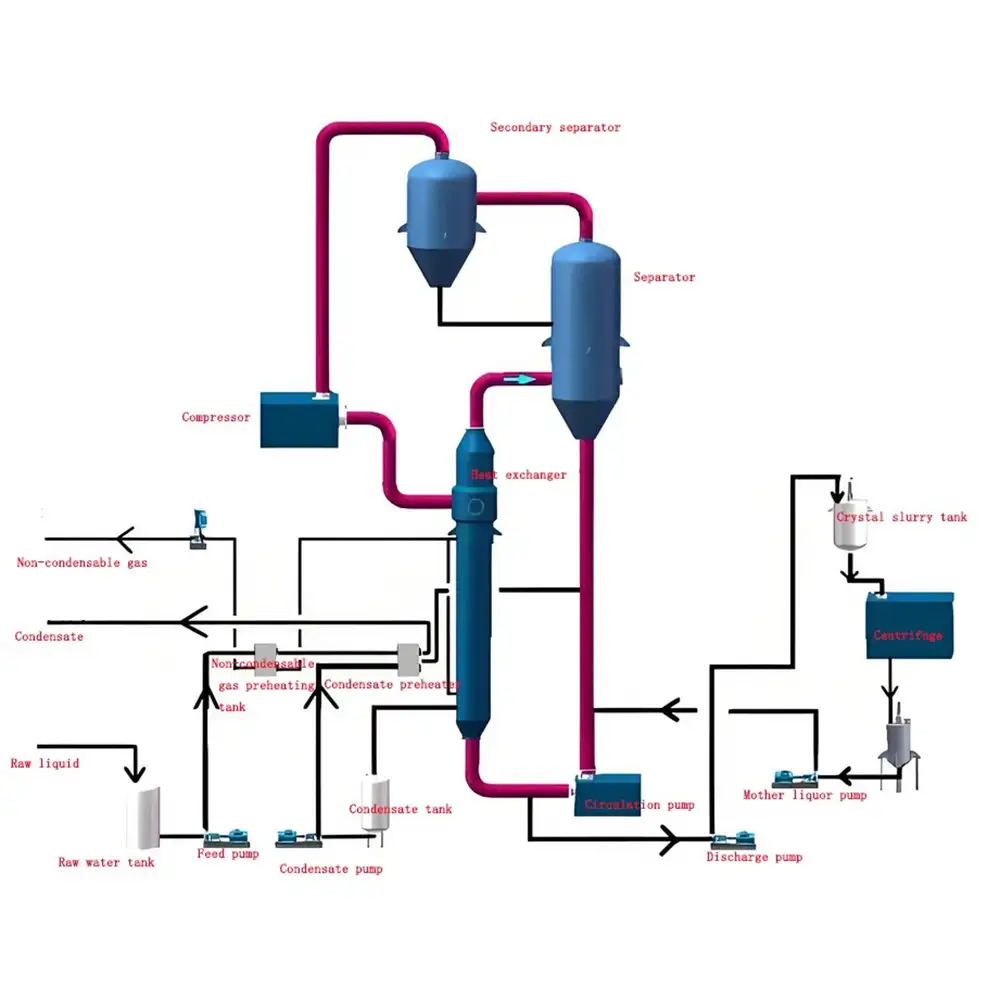
The working process involves the compression of low-temperature steam by a compressor, which increases the temperature and pressure, increases the enthalpy, and then enters a heat exchanger for condensation to fully utilize the latent heat of the steam. Except for starting the car, only a small amount of steam is required during the entire evaporation process.
In the process of multi effect evaporation, the secondary steam of one effect of the evaporator cannot be directly used as the heat source of the main effect, but can only be used as the heat source of the secondary effect or several secondary effects. As a heat source for this effect, additional energy must be provided to increase its temperature (pressure). The steam jet pump can only compress a portion of the secondary steam, while the MVR evaporator can compress all the secondary steam in the evaporator The solution is circulated in a falling film evaporator through a material circulation pump in the heating tube. The initial steam is heated by fresh steam outside the tube, which heats and boils the solution to produce secondary steam. The generated secondary steam is sucked in by a turbocharged fan, and after being pressurized, the temperature of the secondary steam increases and enters the heating chamber as a heating source for circulating evaporation. After normal start-up, the turbo compressor sucks in secondary steam, which is then pressurized and converted into heated steam. This continuously circulates and evaporates, and the evaporated water is eventually discharged as condensed water.
Product Description
|
Model NO. |
GSRF |
Handling method |
physicochemical treatment |
|
Usage |
Cutting fluid wastewater, sodium sulfate wastewater, corn pulp wastewater, electroplating wastewater, pharmaceutical industry, fine chemical industry, non-ferrous metal industry, electronics industry, petrochemical industry, automotive industry |
Trademark |
|
|
Types |
Package, Compact, Small, Mini |
Applications |
Industrial, Municipal, Domestic, Medical, Ship |
|
Craft |
Flocculation sedimentation method |
Features |
Water Clarification, Filtration, Purification |
|
Service Life |
20 Years |
Operation |
Automatic |
|
Steel Plate Thickness |
>8mm |
Function |
Remove Suspended solids |
|
Voltage |
220V/ 380V/ Customerized |
Installation Type |
Onground |
|
Colour |
Grey/Silver/Blue/Balck/Customerized |
Use for |
Mineral, Printing, Chemical, Dyeing, Starch |
|
Material |
Carbon Steel, Stain Steel, FRP, PE, PP |
Certificate |
SGS, ISO |
|
Transport Package |
Container Standard Packing |
Specification |
Carbon steel anti-corrosion |
|
Production Capacity |
5000 Sets/Year |
Origin |
China |
Main principle:
Mechanical vapor recompression (MVR) evaporator utilizes the secondary steam generated in the evaporator, which is compressed by a compressor to increase pressure, temperature, and enthalpy. It is then sent to the heating chamber of the evaporator as heating steam, maintaining the boiling state of the feed liquid, while the heating steam itself condenses into water. In this way, the steam that was originally intended to be discarded is fully utilized, latent heat is recovered, and thermal efficiency is improved. The economy of steam production is equivalent to 20 effects of multi effect evaporation, reducing the demand for external heating and cooling resources, energy consumption, and pollution.The MVR evaporator increases the energy of the secondary steam through the compressor and reuses it to heat the material, realizing the recycling of steam heat energy.
The specific process is as follows:
1. Evaporation process: The material is heated and evaporated inside the evaporator, and the generated steam is compressed by the compressor, and the pressure and temperature increase.
2. Steam compression: The high-pressure steam enters the evaporator again through the compressor as a heat source to continue heating the material.
3. Condensation separation: The mixture of evaporated steam and material is separated by the gas-liquid separator, the steam returns to the compressor, and the material is collected.
Industrial Wastewater Treatment/Seawater Desalination /Mvr
Industrial Wastewater Treatment/Seawater Desalination /Mvr
Structural composition The MVR evaporator is mainly composed of the following parts:
1. Evaporator body: It is the place where the material is concentrated. It is usually composed of a shell and tube heat exchanger to increase the heat transfer area.
2. Compressor: Compress the secondary steam to increase its energy for reheating the material.
3. Gas-liquid separator: Separate the steam from the concentrated liquid to ensure efficient operation.
4. Control system: Real-time monitoring and adjustment of temperature, pressure and other parameters to ensure that the equipment operates in the best state.
The Industrial Wastewater Treatment / Seawater Desalination system is an integrated water treatment solution designed to process industrial wastewater, seawater, and other challenging water sources. Depending on the water quality and treatment objectives, the system can combine pretreatment, filtration, reverse osmosis, desalination, disinfection, and water recovery technologies to produce treated water suitable for industrial reuse or other specified applications.
Water scarcity, increasing wastewater discharge requirements, and rising demand for reliable industrial water supplies have made advanced water treatment an important part of modern manufacturing operations. Industrial wastewater treatment and seawater desalination systems can help factories reduce freshwater consumption, recover usable water, and improve overall water management.
Industrial Wastewater Treatment
Industrial wastewater can contain suspended solids, oils, organic compounds, dissolved salts, heavy metals, chemicals, and other contaminants. Treatment requirements vary significantly depending on the production process.
A complete wastewater treatment system can be configured with suitable pretreatment and purification technologies according to the actual water analysis. Depending on the application, treatment may include screening, sedimentation, coagulation, filtration, activated carbon, ultrafiltration, reverse osmosis, disinfection, or other processes.
Seawater Desalination
Seawater contains high concentrations of dissolved salts and requires specialized desalination technology before it can be used as a freshwater source.
Reverse osmosis is widely used for seawater desalination because it uses membrane separation to remove dissolved salts and many other contaminants. A properly designed Seawater Desalination System can convert seawater into treated water for industrial processes, utility applications, or other suitable uses.
Reverse Osmosis Desalination
Reverse osmosis uses pressure to force water through a semipermeable membrane while rejecting a significant portion of dissolved salts and other contaminants.
For seawater applications, high-pressure pumping and suitable pretreatment are important because seawater contains salts, suspended particles, microorganisms, and other substances that can affect membrane performance. The exact operating pressure, recovery rate, membrane configuration, and energy consumption depend on the feed water and system design.
Industrial RO Water Treatment
Industrial reverse osmosis systems can be used to produce purified water for manufacturing processes, boilers, cooling systems, cleaning, food processing, electronics, and other applications.
The RO system can be installed as a standalone treatment stage or integrated with pretreatment and post-treatment equipment. Additional treatment may be required when specific water quality standards are needed.
Pretreatment System
Effective pretreatment is an important part of both industrial wastewater treatment and seawater desalination. Pretreatment can help remove larger particles, suspended solids, oils, microorganisms, and other substances that may negatively affect downstream equipment.
Depending on the feed water, pretreatment can include multimedia filtration, cartridge filtration, ultrafiltration, chemical dosing, activated carbon, dissolved air flotation, or other suitable technologies.
Water Recovery And Reuse
Water recovery allows treated wastewater or desalinated water to be returned to industrial processes instead of relying entirely on fresh water.
Recovered water may be suitable for cooling towers, process washing, equipment cleaning, irrigation where permitted, or other non-potable industrial applications. The actual reuse application depends on the treated water quality and local requirements.
Wastewater Recycling
Industrial wastewater recycling can reduce freshwater demand and lower the amount of wastewater discharged from a facility.
A recycling system can be designed to treat selected wastewater streams and return recovered water to the production process. This approach can be particularly useful for factories operating in areas with limited water resources or high wastewater disposal costs.
Brackish Water Treatment
In addition to seawater, reverse osmosis technology can be used for suitable brackish water sources. Brackish water generally has lower salinity than seawater but still requires desalination before many industrial or potable applications.
The membrane system and operating conditions should be selected according to the actual feed water salinity, temperature, pressure, and required product water quality.
Water Quality Monitoring
Water treatment systems can incorporate monitoring and control instruments for important process parameters such as pressure, flow, conductivity, pH, temperature, and tank levels.
Automatic monitoring allows operators to observe system conditions and identify changes in feed water or equipment performance. The control system can be configured according to the required level of automation.
Energy-Efficient Water Treatment
Energy consumption is an important consideration for desalination, especially when treating seawater with high-pressure reverse osmosis.
Energy-efficient pumps, suitable membrane selection, optimized recovery rates, and appropriate pretreatment can help improve overall system performance. Actual energy consumption depends on seawater conditions, product water requirements, system capacity, and operating parameters.
Modular System Configuration
Industrial water treatment projects can vary significantly in capacity and process requirements. Modular equipment allows suitable treatment stages to be combined according to the application.
A system may include pretreatment, filtration, RO desalination, UV or chemical disinfection, storage tanks, dosing systems, and post-treatment equipment. The final configuration is determined by the feed water analysis and target water quality.
Industrial Applications
Industrial wastewater treatment and seawater desalination can be used in many industries, including manufacturing, chemical processing, food and beverage, pharmaceuticals, power generation, mining, marine facilities, hotels, offshore projects, and other water-intensive operations.
Each industry has different water quality requirements, so system design should be based on actual water analysis rather than using a universal configuration.
Compact And Automated Operation
Modern water treatment systems can be designed with integrated control panels, pumps, valves, sensors, dosing systems, and membrane modules.
Automation can reduce manual intervention and help operators manage filtration, pressure, flow, backwashing, chemical dosing, and other treatment processes. The degree of automation can be selected according to the project requirements.
Customized Water Treatment Solution
There is no single treatment process suitable for every wastewater or seawater source. Feed water characteristics such as TDS, turbidity, hardness, COD, BOD, oil content, pH, temperature, and microbial contamination should be evaluated before system selection.
Customers can provide water analysis reports, flow rates, required capacity, desired product water quality, and intended water reuse application for technical evaluation.
B2B Water Treatment Solution
The Industrial Wastewater Treatment and Seawater Desalination System provides a practical solution for industrial companies seeking reliable water purification, desalination, wastewater recycling, and water recovery.
The system can be engineered as part of a new treatment plant or integrated into an existing industrial water management system.
Key Features
Industrial Wastewater Treatment
Seawater Desalination
Reverse Osmosis Technology
Industrial Water Recycling
High-Salinity Water Treatment
Brackish Water Desalination
Multi-Stage Pretreatment
Water Recovery And Reuse
Automatic Process Monitoring
Modular System Configuration
Energy-Efficient Operation
Customized Treatment Solutions
Main Applications
Industrial Wastewater Treatment
Seawater Desalination
Brackish Water Treatment
Industrial Water Recycling
Manufacturing Plants
Chemical Industry
Food And Beverage Processing
Pharmaceutical Industry
Power Plants
Mining Operations
Marine Facilities
Industrial Water Reuse
FAQs
1. What Is An Industrial Wastewater Treatment System?
It is a system designed to remove contaminants from industrial wastewater so the treated water can be discharged, reused, recycled, or further processed according to the required water quality.
2. What Is A Seawater Desalination System?
A seawater desalination system removes dissolved salts and other contaminants from seawater to produce treated freshwater for suitable industrial or other applications.
3. Is Reverse Osmosis Used For Seawater Desalination?
Yes. Seawater reverse osmosis is one of the widely used technologies for desalinating seawater. Proper pretreatment and high-pressure pumping are important parts of the system.
4. Can Industrial Wastewater Be Recycled?
Yes. Suitable industrial wastewater can be treated and recycled for applications such as process water, cooling, washing, or other approved industrial uses.
5. Can The System Treat Brackish Water?
Yes. Reverse osmosis and other suitable treatment technologies can be configured for brackish water treatment according to the feed water quality.
6. What Pretreatment Is Required Before RO?
Pretreatment depends on the feed water. Possible processes include filtration, cartridge filtration, chemical dosing, activated carbon, ultrafiltration, or other technologies designed to protect the RO membranes.
7. How Is Desalinated Water Used?
Desalinated water can be used for industrial processes, cleaning, cooling, utility systems, and other applications where the treated water quality meets the required specifications.
8. Can The Water Treatment System Be Automated?
Yes. Automated systems can monitor and control pressure, flow, conductivity, pH, tank levels, pumps, valves, and other process parameters.
9. Can The System Be Customized?
Yes. Treatment stages, capacity, membrane configuration, pumps, tanks, control systems, and pretreatment can be configured according to water quality and project requirements.
10. What Information Is Needed For System Design?
Customers should provide feed water analysis, water source, flow rate, TDS, turbidity, pH, temperature, major contaminants, required product water quality, operating hours, and intended water reuse or discharge application.
Why Choose Us
Complete Industrial Water Treatment Solutions
We provide integrated solutions for industrial wastewater treatment, seawater desalination, brackish water treatment, reverse osmosis, water recycling, and water recovery applications.
Application-Based System Design
Water quality varies significantly between different sources and industries. We evaluate feed water characteristics and treatment objectives to determine suitable pretreatment, filtration, desalination, and post-treatment processes.
Reverse Osmosis Expertise
Our systems can incorporate suitable RO technology for industrial water purification, seawater desalination, and brackish water treatment applications.
Customized Process Configuration
Treatment capacity, membrane selection, pretreatment, pumps, tanks, dosing systems, controls, and post-treatment can be configured according to the customer's project requirements.
Factory Direct B2B Support
We provide technical communication, system configuration, documentation, equipment packaging, shipping coordination, installation guidance, and after-sales support for international industrial customers.
Water Analysis-Based Evaluation
Customers can provide laboratory water analysis reports, wastewater samples, flow requirements, and target water quality for technical evaluation before selecting the treatment system.
Prev:
Mechanical Vapor Recompression Mvr Water/Wastewater Treatment Equipment
Next:
Industrial High Salt Wastewater Evaporation Crystallizer Amino Acid Evaporator Wastewater Multi-Effect Mvr Evaporator
TAG:
Industrial Water Treatment System,
Industrial Wastewater Treatment Equipment,
Industrial Wastewater Treatment,
Wastewater Treatment Equipment,
Reverse Osmosis Water Treatment,
Wastewater Reuse System,
Industrial Water Treatment Plant,
Wastewater Treatment System,
Industrial Water Treatment,
Industrial Water Recycling,
Water Treatment Plant,
Industrial Wastewater Management,
Industrial Water Recovery,
Zero Liquid Discharge,
Industrial Desalination System,
Membrane Filtration System,
Membrane Water Treatment,
Ultrafiltration Water Treatment,
Desalination RO System,
Industrial Ultrafiltration,
Water Treatment RO System,
Wastewater Recycling Equipment,
Water Reclamation System,
Industrial Wastewater Recycling,
Wastewater Reclamation System,
Industrial Water Purification,
Water Purification System,
Industrial RO Water Treatment,
RO Water Treatment Plant,
Seawater RO Plant,
Related Category:
Industrial Wastewater Treatment, Seawater Desalination System, Industrial Water Treatment System, Seawater Desalination China, suppliers, manufacturers, factory, customized, wholesale, quotation, made in China