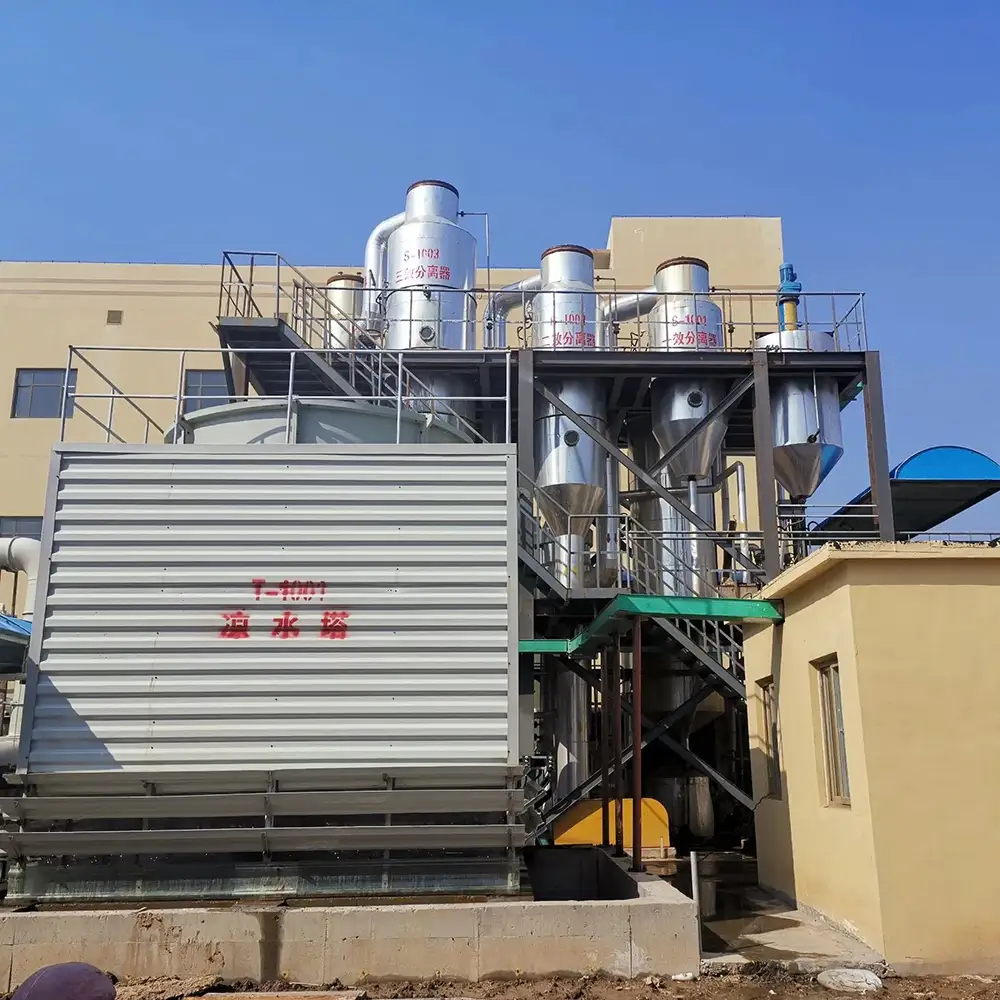
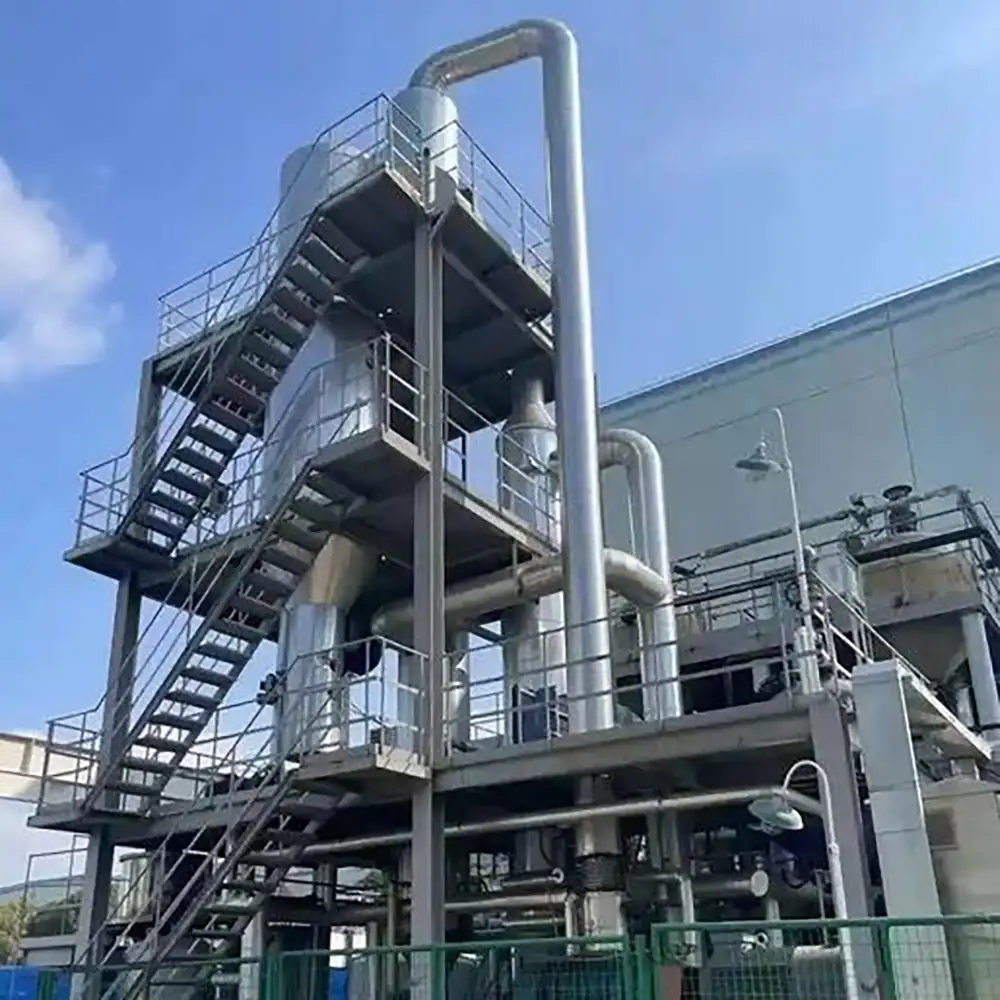
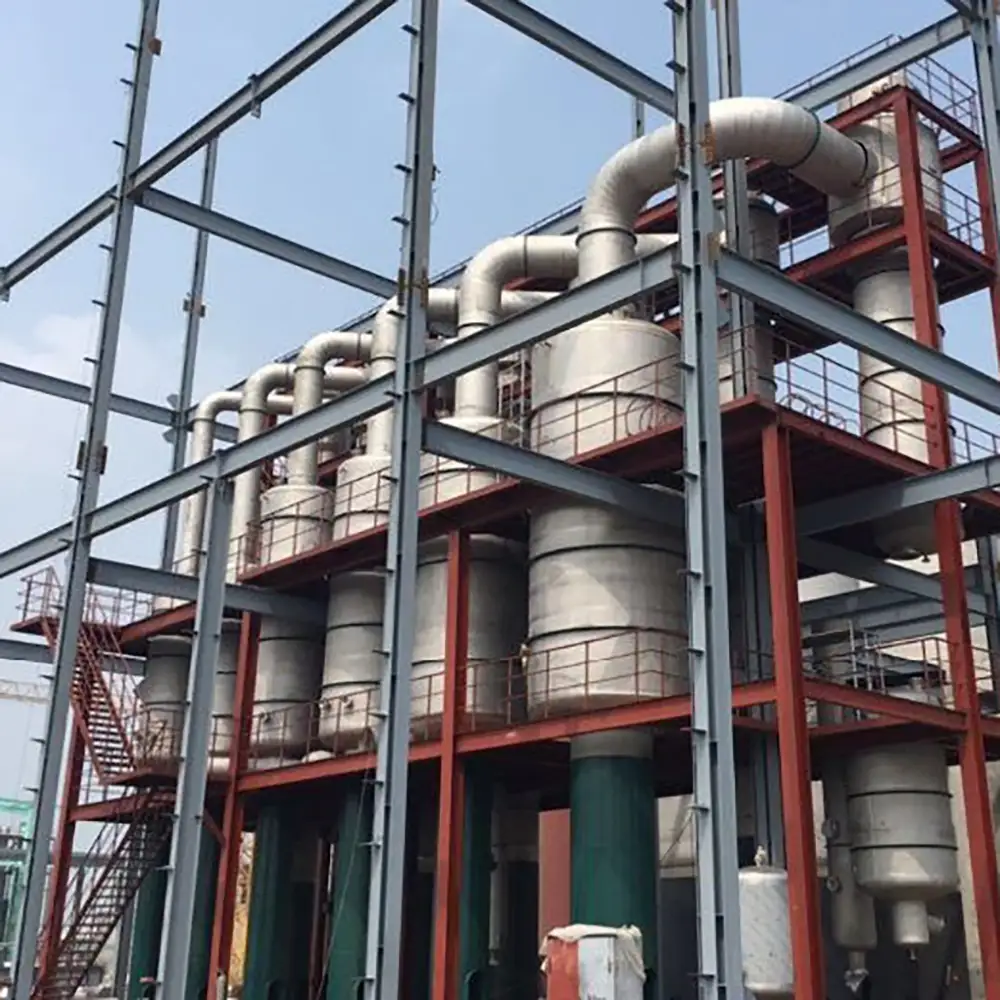
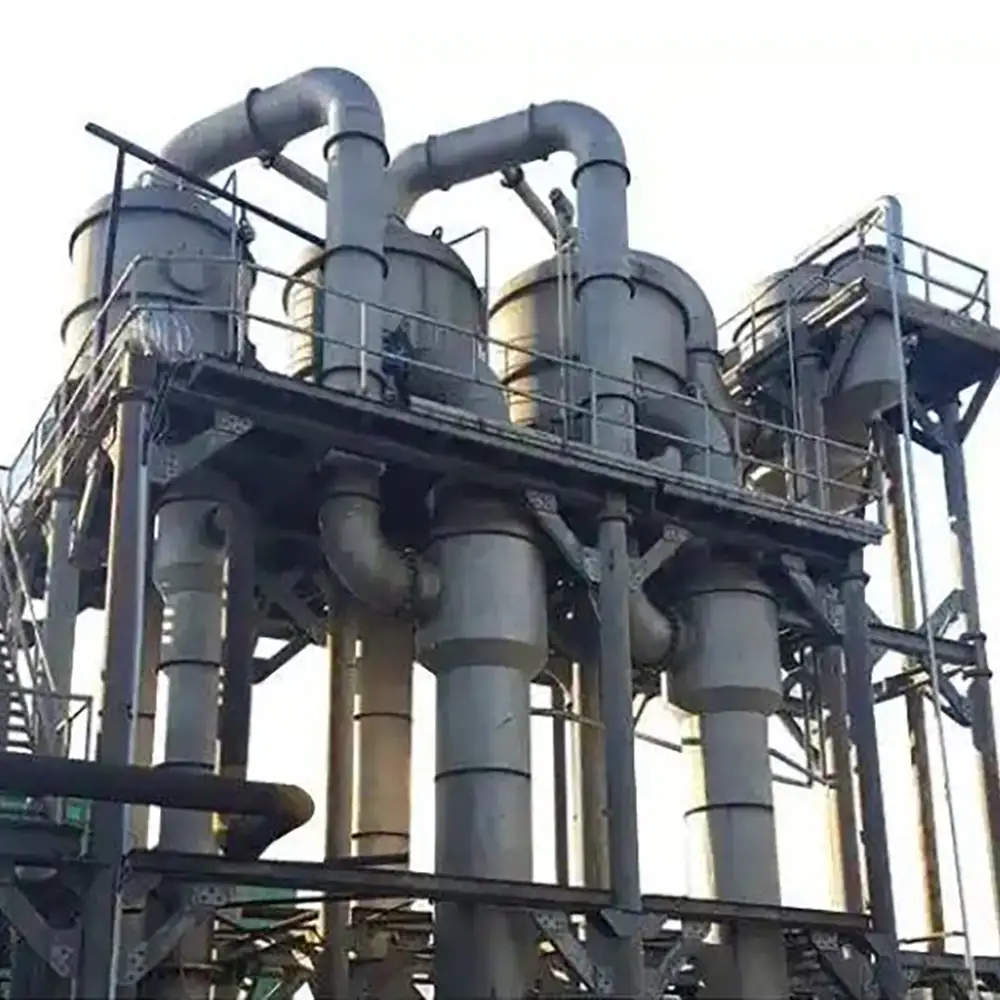
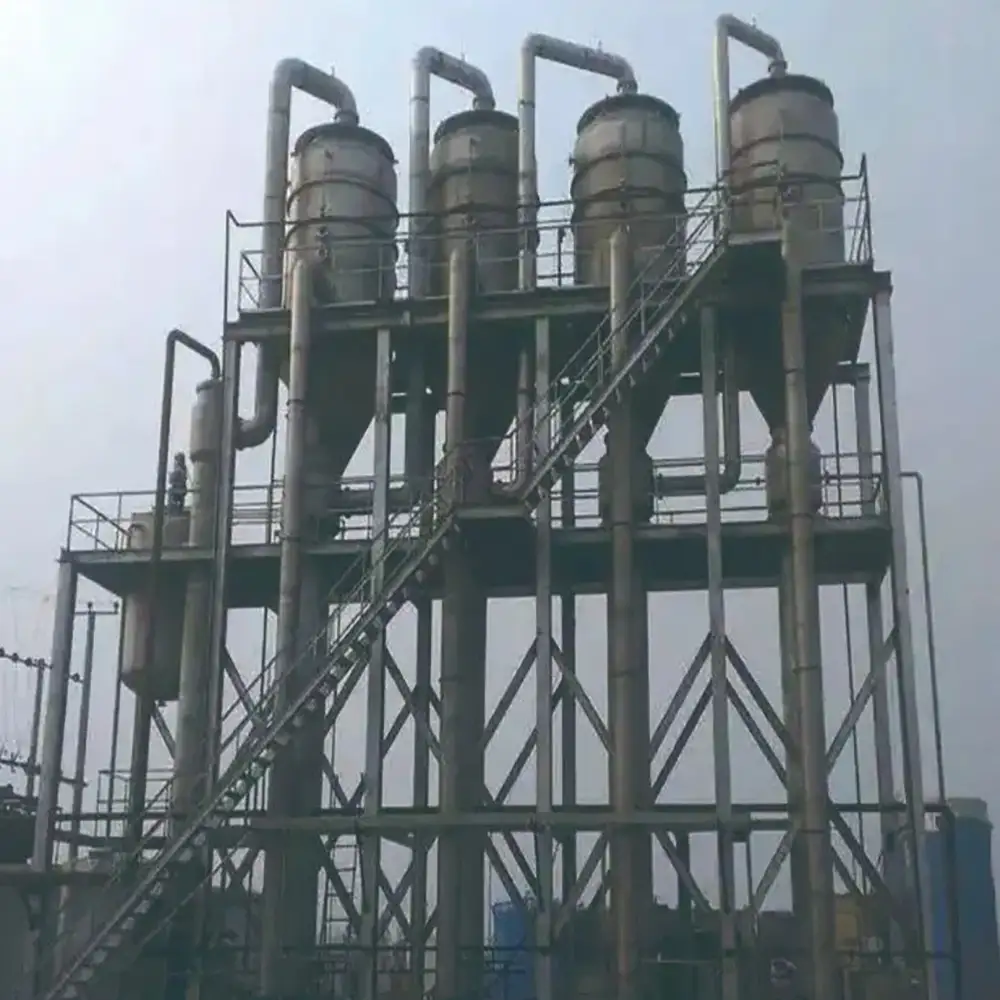
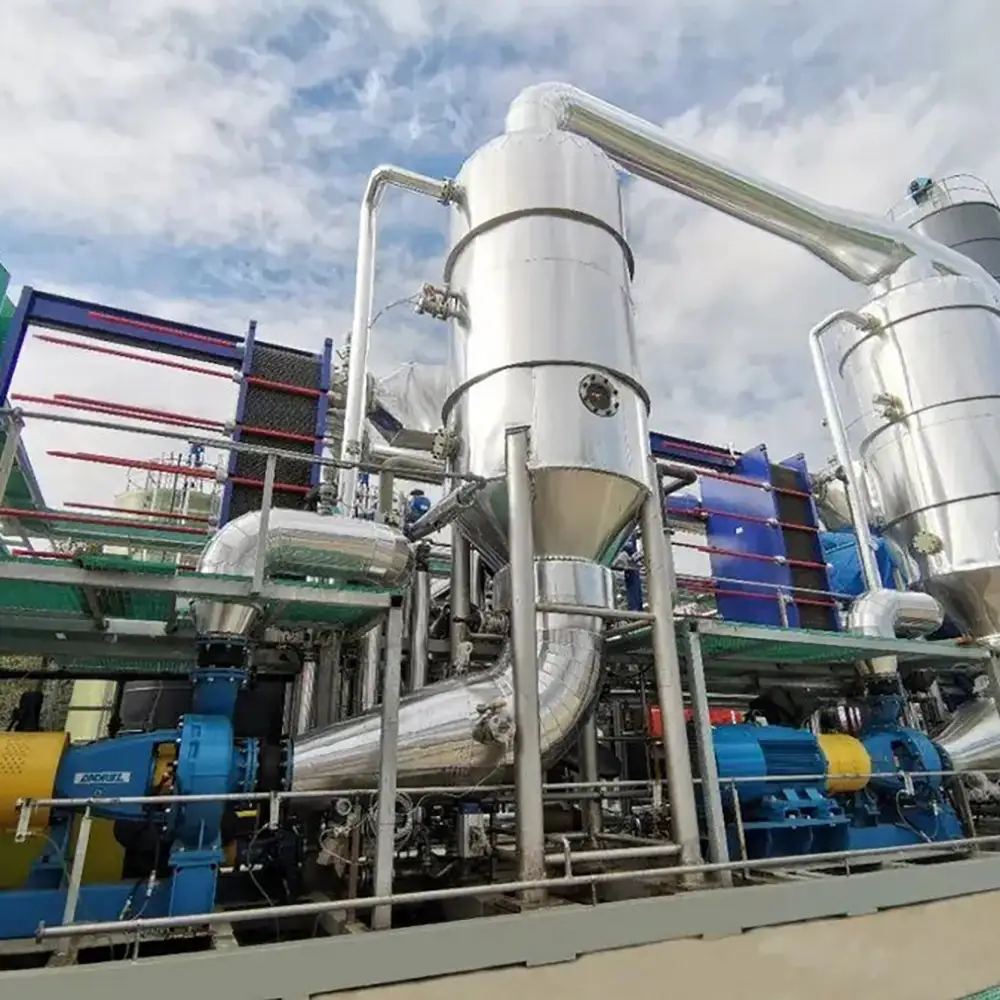
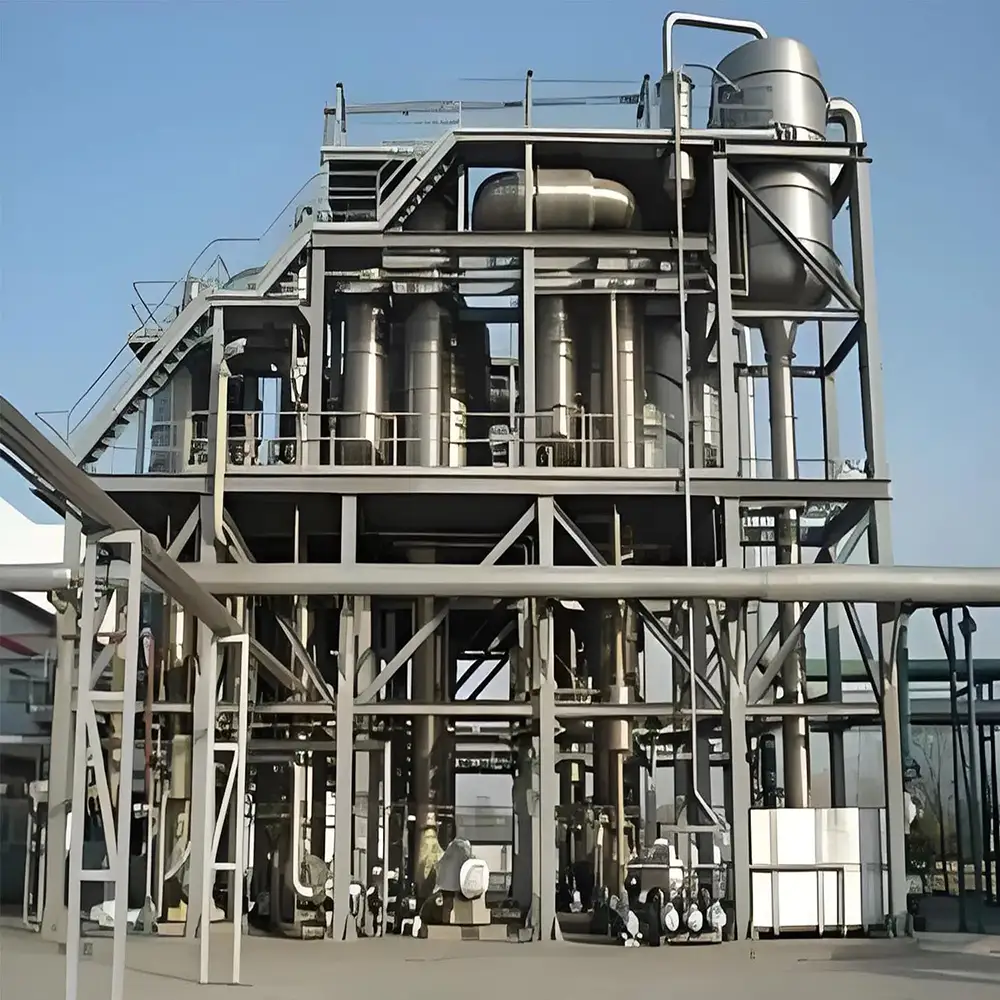
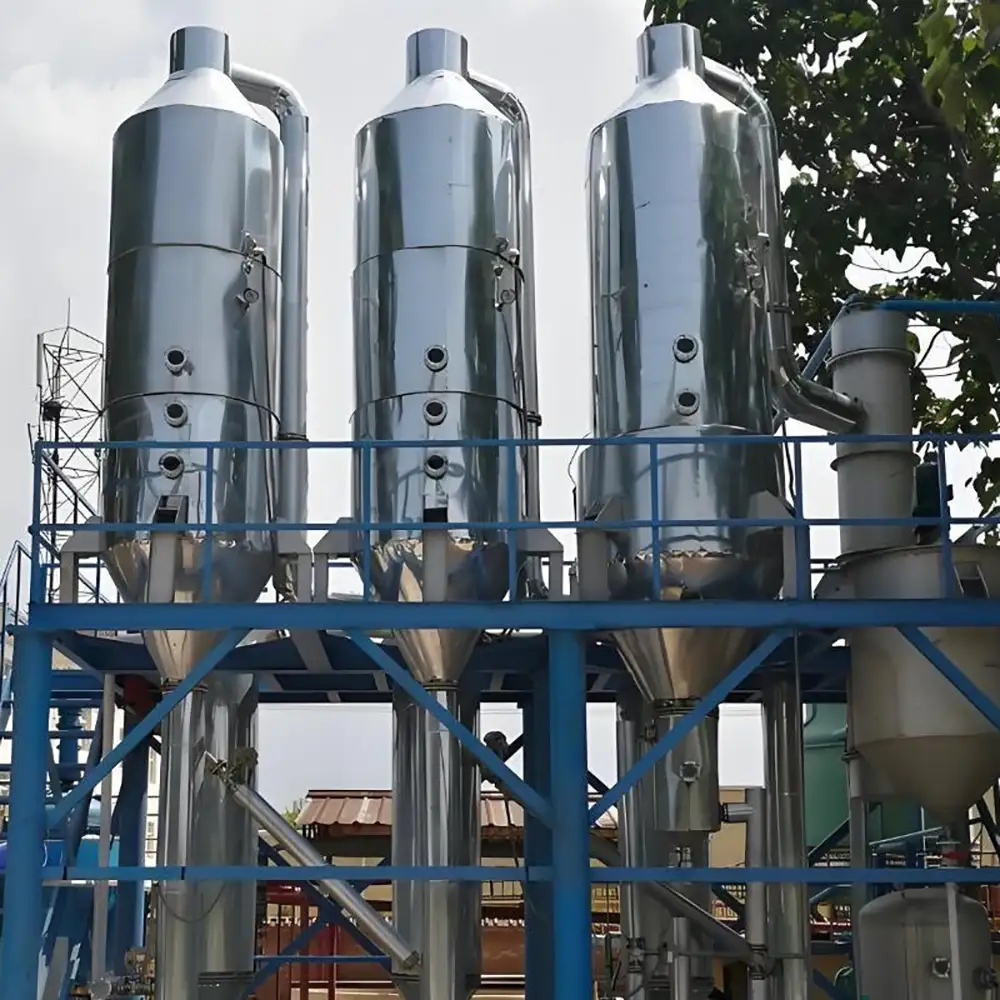
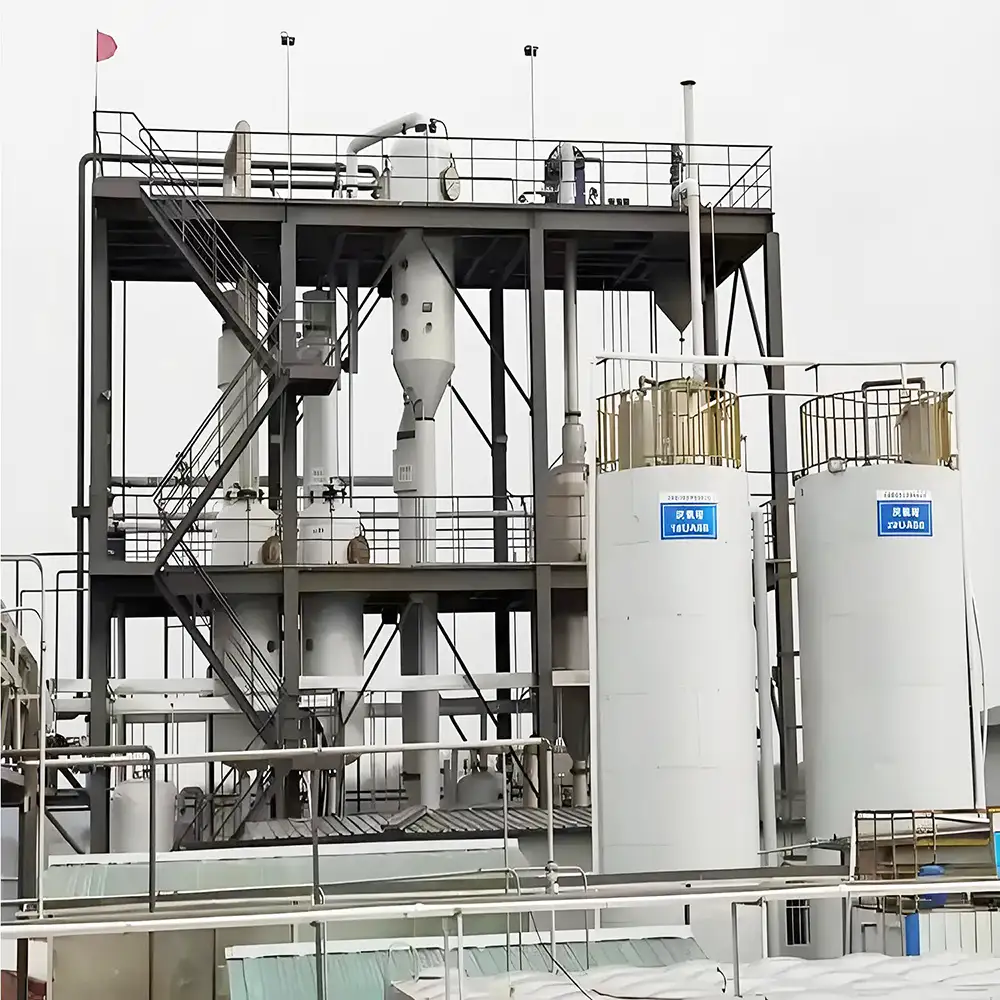
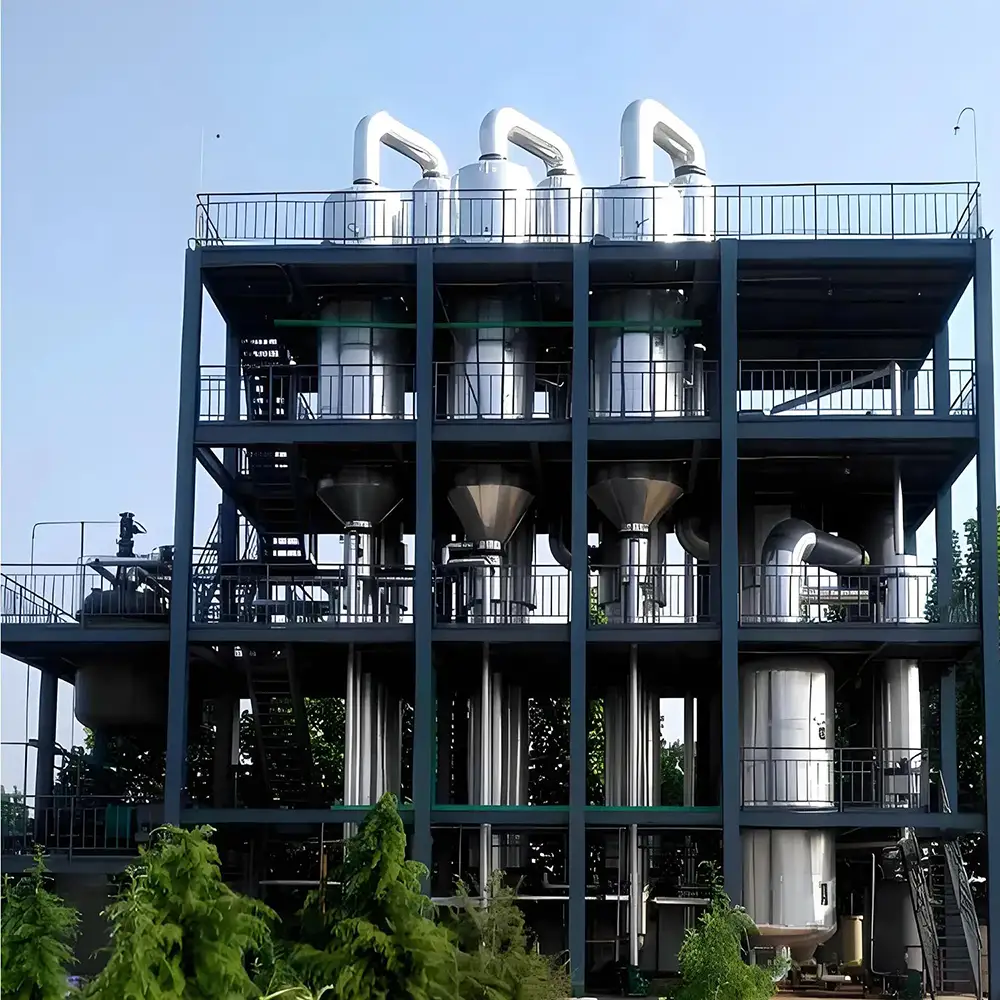
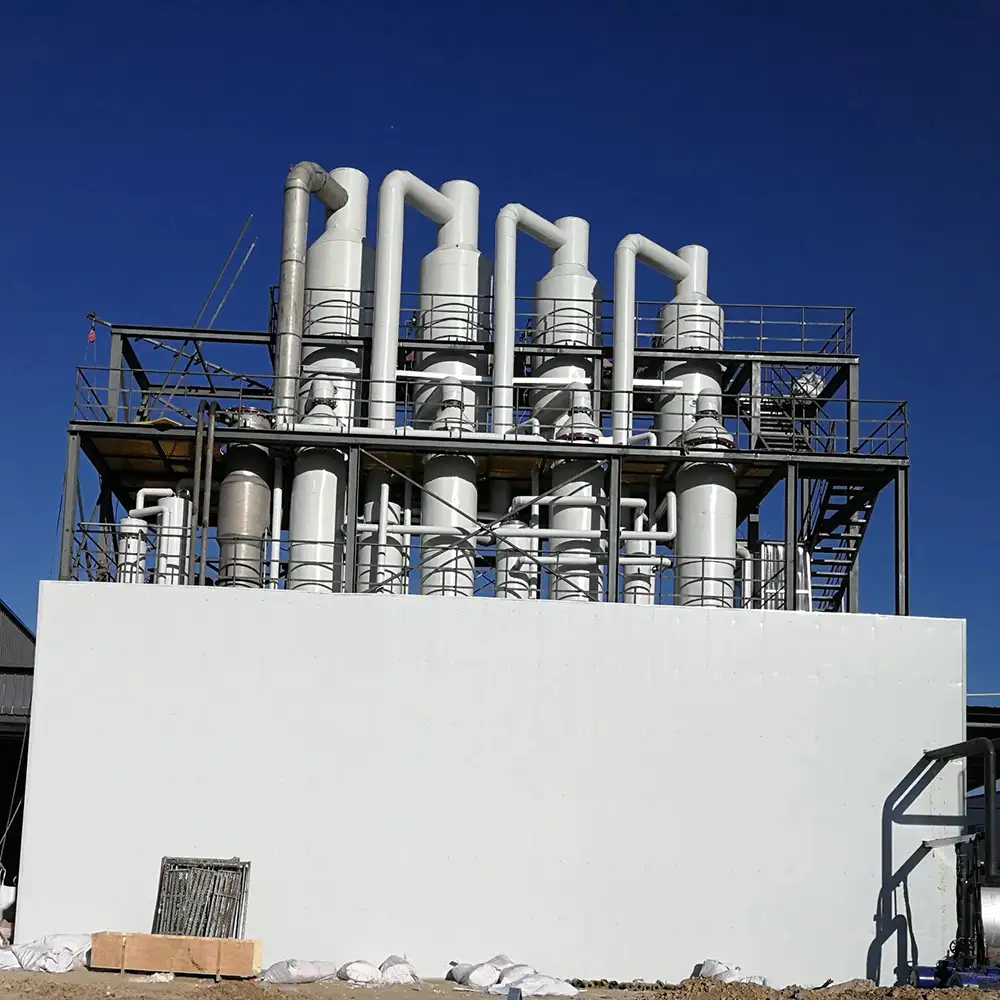
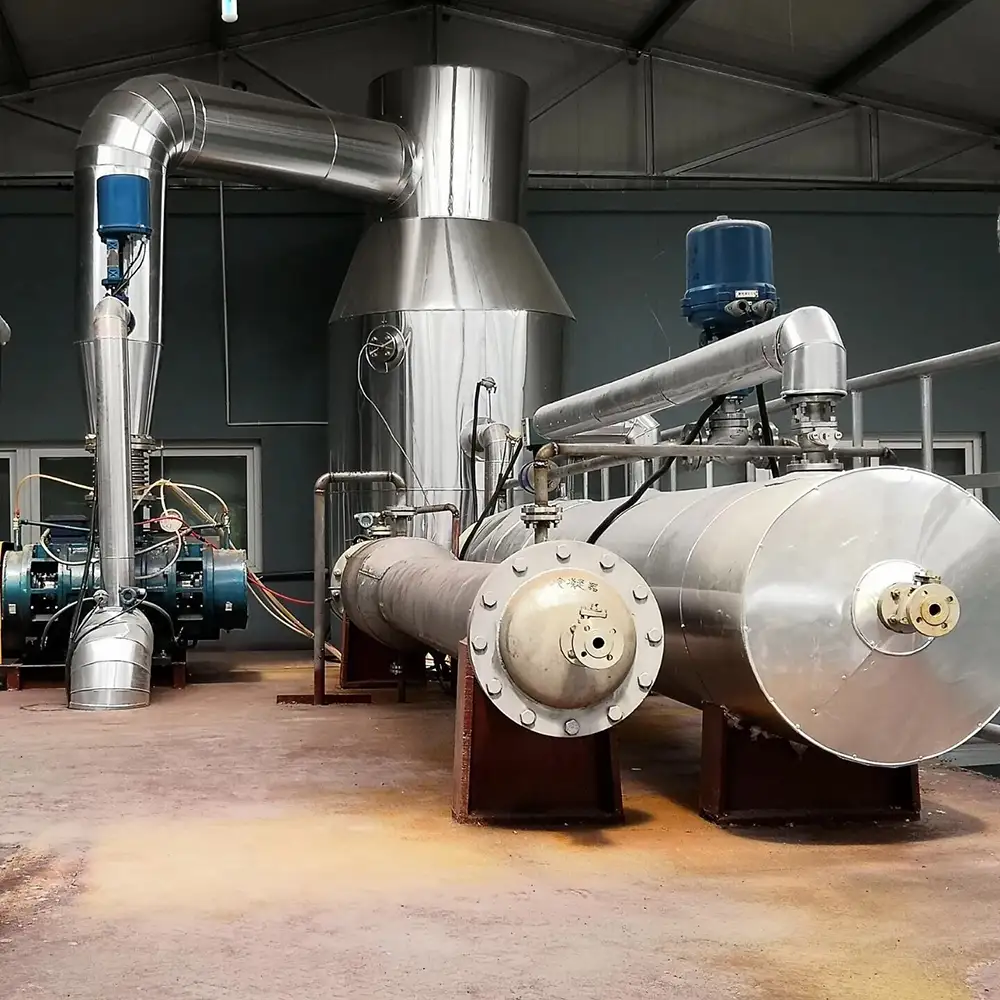
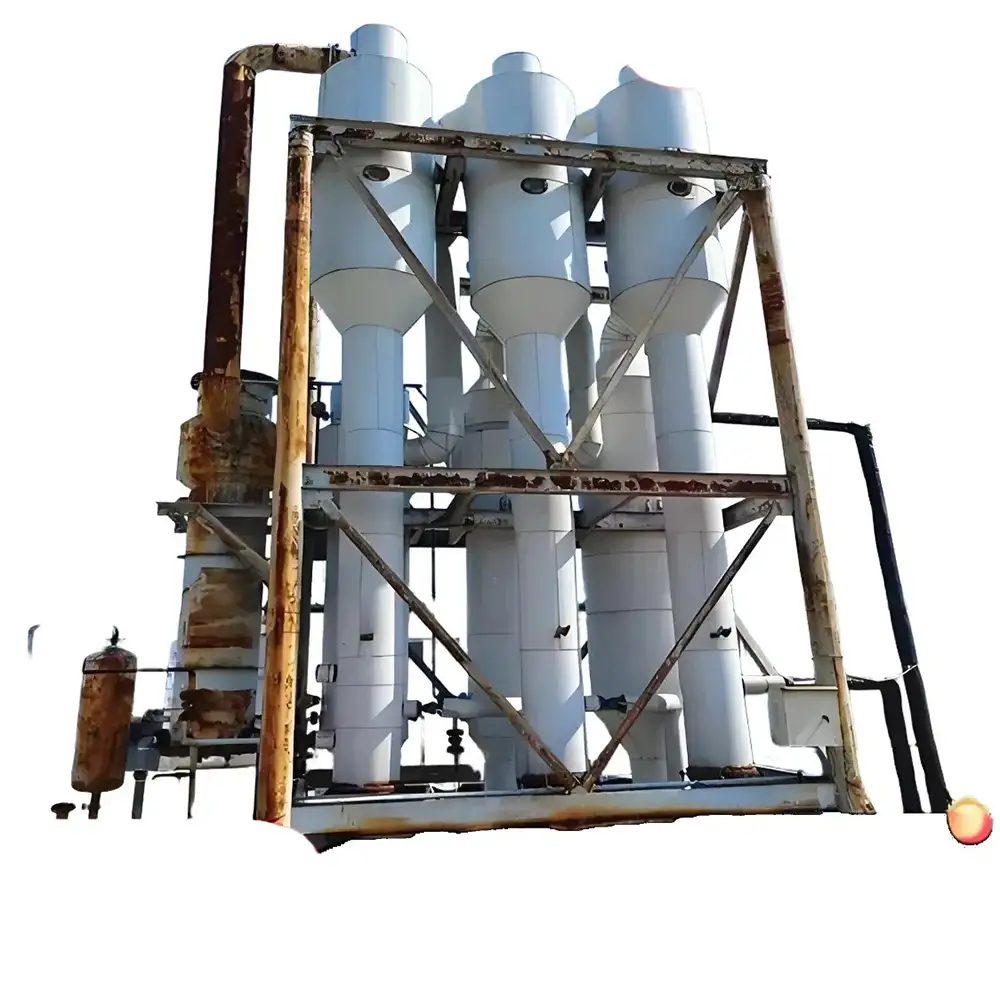
MVR stands for Mechanical Vapor Recovery. MVR is a technology that reuses the energy generated by its own secondary steam to reduce the demand for external energy. This technology is applied in industries such as chemical, pharmaceutical, papermaking, sewage treatment, and seawater desalination.
The working process involves the compression of low-temperature steam by a compressor, which increases the temperature and pressure, increases the enthalpy, and then enters a heat exchanger for condensation to fully utilize the latent heat of the steam. Except for starting the car, only a small amount of steam is required during the entire evaporation process.
In the process of multi effect evaporation, the secondary steam of one effect of the evaporator cannot be directly used as the heat source of the main effect, but can only be used as the heat source of the secondary effect or several secondary effects. As a heat source for this effect, additional energy must be provided to increase its temperature (pressure). The steam jet pump can only compress a portion of the secondary steam, while the MVR evaporator can compress all the secondary steam in the evaporator The solution is circulated in a falling film evaporator through a material circulation pump in the heating tube. The initial steam is heated by fresh steam outside the tube, which heats and boils the solution to produce secondary steam. The generated secondary steam is sucked in by a turbocharged fan, and after being pressurized, the temperature of the secondary steam increases and enters the heating chamber as a heating source for circulating evaporation. After normal start-up, the turbo compressor sucks in secondary steam, which is then pressurized and converted into heated steam. This continuously circulates and evaporates, and the evaporated water is eventually discharged as condensed water.
High-Salt Wastewater MVR Evaporator for Food and Pharmaceutical Industries
The Food and Pharmaceutical Industry Wastewater Treatment Equipment is an advanced MVR evaporation system designed for challenging industrial wastewater streams with high salt content, high total dissolved solids (TDS), organic compounds, and other concentrated pollutants. This High-Salt Wastewater MVR Evaporator combines mechanical vapor recompression technology with vacuum evaporation to efficiently concentrate wastewater, recover water, reduce liquid waste volume, and support zero liquid discharge (ZLD) treatment processes.
Food processing and pharmaceutical manufacturing generate different types of wastewater throughout production. Food industry wastewater may contain dissolved salts, organic matter, sugars, proteins, cleaning chemicals, and concentrated process residues. Pharmaceutical wastewater can contain salts, solvents, active ingredients, chemical compounds, and difficult-to-degrade substances. When conventional biological or membrane treatment cannot achieve the required concentration or discharge target, industrial evaporation provides an effective advanced treatment solution.
MVR Evaporation Technology
MVR stands for Mechanical Vapor Recompression. During the evaporation process, secondary vapor generated from wastewater is collected and compressed by an MVR compressor. The compressed vapor increases in pressure and temperature and is then reused as a heating source.
This vapor recycling process significantly reduces the need for continuous external steam compared with conventional evaporation technologies. As a result, an MVR evaporator can provide efficient wastewater concentration while helping reduce thermal energy consumption.
The actual energy performance depends on wastewater characteristics, evaporation capacity, operating temperature, concentration ratio, equipment configuration, and other process conditions.
High-Salt Wastewater Treatment
High-salt wastewater can be difficult to treat because excessive dissolved solids may affect biological systems and create high osmotic pressure for membrane processes. High concentrations of salts can also increase the risk of scaling and fouling in downstream equipment.
The MVR evaporator separates water from non-volatile dissolved substances through controlled evaporation. Water is converted into vapor and subsequently condensed, while salts and other non-volatile components remain in the concentrated liquid.
For applications requiring further salt recovery, the concentrated stream can be transferred to a crystallization or solid-liquid separation process.
Food Industry Wastewater Treatment
Food and beverage processing plants generate wastewater from washing, cleaning, cooking, fermentation, concentration, production, and equipment sanitation operations.
Depending on the process, wastewater may contain high concentrations of dissolved solids and organic substances. After appropriate pretreatment, an MVR evaporator can be used to concentrate difficult wastewater streams and reduce the volume requiring further treatment or disposal.
Potential applications include food processing wastewater, beverage wastewater, dairy wastewater, fermentation wastewater, sugar processing wastewater, starch wastewater, seasoning and sauce wastewater, and other concentrated food-industry streams.
The evaporation system can be integrated with pretreatment, biological treatment, membrane filtration, or other processes according to the specific wastewater characteristics.
Pharmaceutical Wastewater Treatment
Pharmaceutical manufacturing wastewater can have complex and variable compositions. Depending on the production process, wastewater may contain salts, organic compounds, solvents, residual chemicals, and other substances requiring specialized treatment.
MVR evaporation can be used as an advanced concentration process for selected pharmaceutical wastewater streams. It can reduce wastewater volume and recover condensate while concentrating non-volatile dissolved components.
For pharmaceutical projects, proper wastewater analysis and process testing are important before equipment selection. Factors such as corrosion, foaming, viscosity, scaling, volatility, and heat sensitivity should be considered when designing the evaporation system.
Vacuum Evaporation for Lower-Temperature Operation
The evaporator can operate under vacuum conditions to lower the boiling temperature of the wastewater. Lower-temperature evaporation can be beneficial for certain wastewater streams containing heat-sensitive organic substances or components that may experience thermal degradation at higher temperatures.
Vacuum operation also supports stable evaporation under controlled process conditions. Depending on the application, the system can include vacuum pumps, condensers, circulation pumps, heating systems, sensors, valves, and automatic control equipment.
Water Recovery and Wastewater Reduction
One of the main benefits of industrial wastewater evaporation is substantial volume reduction. Instead of sending the entire wastewater stream to final disposal, the system separates water from concentrated dissolved substances.
The generated vapor is condensed into recovered water. Depending on the wastewater composition and required quality, the condensate can potentially be reused after additional polishing or treatment.
Recovered water may be suitable for selected industrial applications such as equipment cleaning, cooling, process water, or other non-potable uses when the required water-quality standards are satisfied.
ZLD and Advanced Wastewater Treatment
The High-Salt Wastewater MVR Evaporator can serve as an important component of a Zero Liquid Discharge system. In a typical ZLD process, wastewater may first undergo pretreatment and membrane concentration. The concentrated stream is then sent to an MVR evaporator for further water recovery and concentration.
When the remaining liquid reaches a high concentration, a crystallizer or other solid-liquid separation equipment may be used to recover salts or produce a manageable solid residue.
This integrated process can significantly reduce liquid waste discharge and support industrial water reuse strategies.
Automatic Process Control
The MVR evaporation system can be equipped with an automatic control system for stable continuous operation. Key parameters such as temperature, pressure, vacuum, liquid level, flow rate, evaporation rate, and compressor operation can be monitored and controlled.
Automated valves, pumps, sensors, and control devices help coordinate the evaporation process and reduce manual intervention. Alarm functions can also assist operators in identifying abnormal operating conditions.
Flexible Industrial Configuration
Different food and pharmaceutical wastewater streams require different treatment conditions. The MVR evaporator can therefore be configured according to wastewater flow rate, salt concentration, TDS, organic content, viscosity, scaling tendency, foaming behavior, corrosiveness, and required water recovery.
Material selection and heat-transfer components can also be considered according to the chemical characteristics of the wastewater.
The system can be designed as an independent evaporation unit or integrated into a complete industrial wastewater treatment line.
Why Choose Us
Choosing an MVR evaporator for food or pharmaceutical wastewater requires careful consideration of wastewater composition, evaporation capacity, energy consumption, corrosion resistance, scaling control, condensate quality, and downstream treatment requirements.
Our MVR wastewater evaporation solutions are designed for demanding industrial applications and can be configured according to individual project conditions.
Key advantages include:
Efficient MVR mechanical vapor recompression technology
Suitable for high-salt and high-TDS wastewater
Designed for food and pharmaceutical wastewater applications
Vacuum operation for controlled low-temperature evaporation
Significant wastewater volume reduction
Potential condensate recovery and water reuse
Compatible with ZLD and crystallization systems
Automatic process monitoring and control options
Flexible evaporation capacity and system configuration
Suitable for continuous industrial wastewater treatment
A properly engineered evaporation system can help industrial facilities reduce wastewater disposal volume, improve water recovery, optimize energy utilization, and achieve more demanding wastewater management targets.
FAQs
1. What is an MVR evaporator?
An MVR evaporator uses mechanical vapor recompression to recycle secondary vapor as a heating source. This improves thermal energy utilization and can reduce external steam requirements.
2. Can this evaporator treat high-salt wastewater?
Yes. MVR evaporation is well suited for selected high-salt and high-TDS wastewater streams because it can concentrate dissolved salts while recovering water.
3. Is it suitable for pharmaceutical wastewater?
Yes. It can be used for suitable pharmaceutical wastewater streams after evaluating composition, volatility, corrosion, scaling, foaming, and other process characteristics.
4. Can food industry wastewater be treated by MVR evaporation?
Yes. Applications may include selected food, beverage, dairy, fermentation, sugar, starch, and other concentrated wastewater streams.
5. Does the MVR evaporator recover water?
Yes. Water vapor generated during evaporation can be condensed to produce recovered condensate. Additional treatment may be required depending on the intended reuse.
6. What is the difference between MVR and conventional evaporation?
MVR recycles and compresses secondary vapor so that it can be reused as a heating source. This can substantially improve energy efficiency compared with conventional evaporation systems.
7. Can the system be used for ZLD?
Yes. An MVR evaporator can be integrated with RO, pretreatment, crystallization, filtration, and other equipment as part of a complete ZLD process.
8. How can scaling be controlled?
Scaling control depends on wastewater chemistry and operating conditions. Proper pretreatment, process design, circulation, cleaning procedures, and operating parameter control can help reduce scaling risks.
9. How is the evaporator capacity selected?
Capacity is selected according to wastewater flow rate, inlet and outlet concentration, evaporation temperature, salt content, water recovery target, and required operating conditions.
10. Can the equipment be designed for different wastewater characteristics?
Yes. The evaporation system can be configured according to wastewater composition, concentration, viscosity, corrosiveness, scaling tendency, required capacity, and treatment objectives.
Prev:
Vacuum Industrial Multi Effect Mvr Evaporator for Waste Water Treatment
Next:
MVR/ Industrial Equipment / Pharmaceutical / Epoxy Resin Wastewater Treatment
TAG:
Food Industry Wastewater Treatment,
Food Processing Wastewater Treatment,
Food Wastewater Treatment,
Wastewater Treatment Equipment,
Industrial Water Treatment,
ZLD Evaporator,
Zero Liquid Discharge,
High Salt Wastewater Treatment,
Vacuum Evaporator,
MVR Evaporation System,
Mechanical Vapor Recompression Evaporator,
Industrial Evaporation Equipment,
Wastewater Concentration Equipment,
High TDS Wastewater Treatment,
High TDS Wastewater Evaporator,
Industrial MVR Evaporator,
MVR Evaporator,
Industrial Wastewater Evaporator,
High Salt Wastewater Evaporator,
Multi Effect Evaporator,
Water Recovery System,
ZLD System,
Wastewater Reduction System,
Wastewater Concentrator,
MVR Wastewater Treatment,
Mechanical Vapor Recompression,
Brine Evaporator,
Concentrated Wastewater Treatment,
Vacuum Evaporation System,
Pharmaceutical Wastewater Treatment,
Related Category:
Food Industry Wastewater Treatment Equipment, Pharmaceutical Wastewater Treatment Equipment, High-Salt Wastewater MVR Ev China, suppliers, manufacturers, factory, customized, wholesale, quotation, made in China