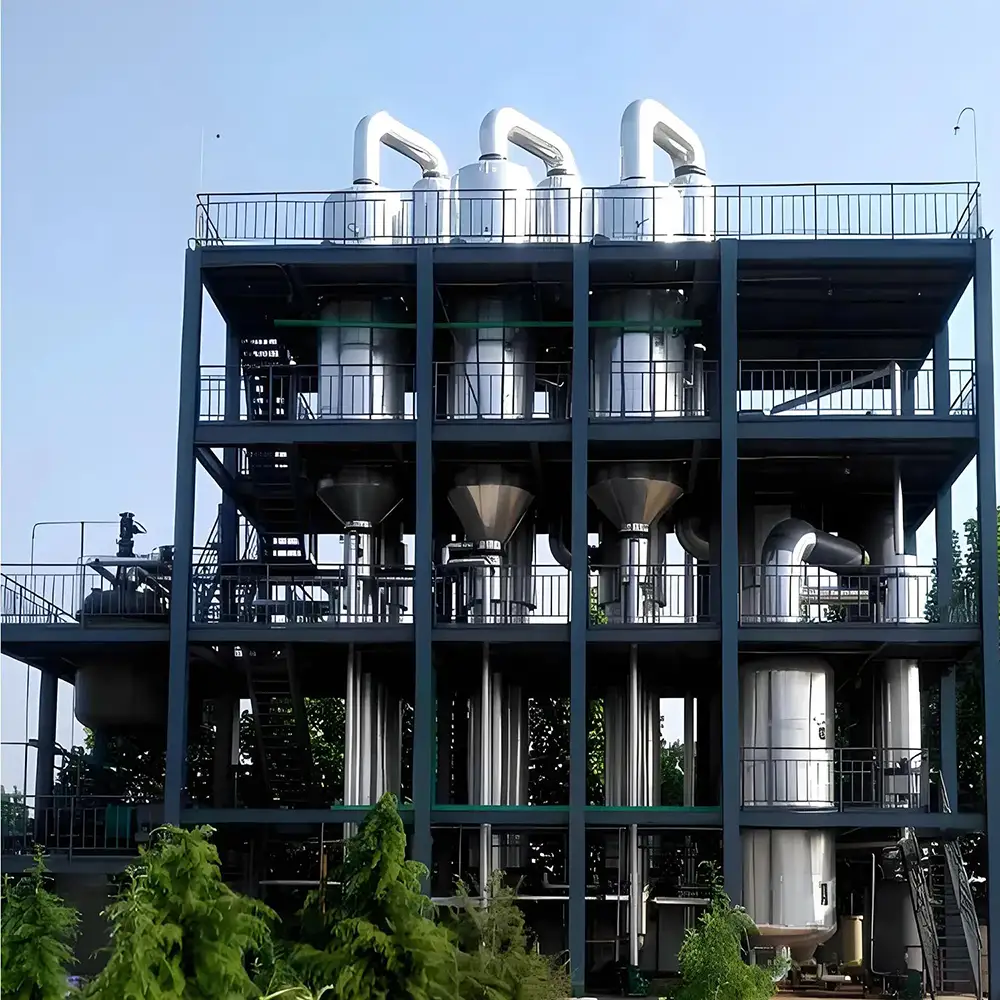
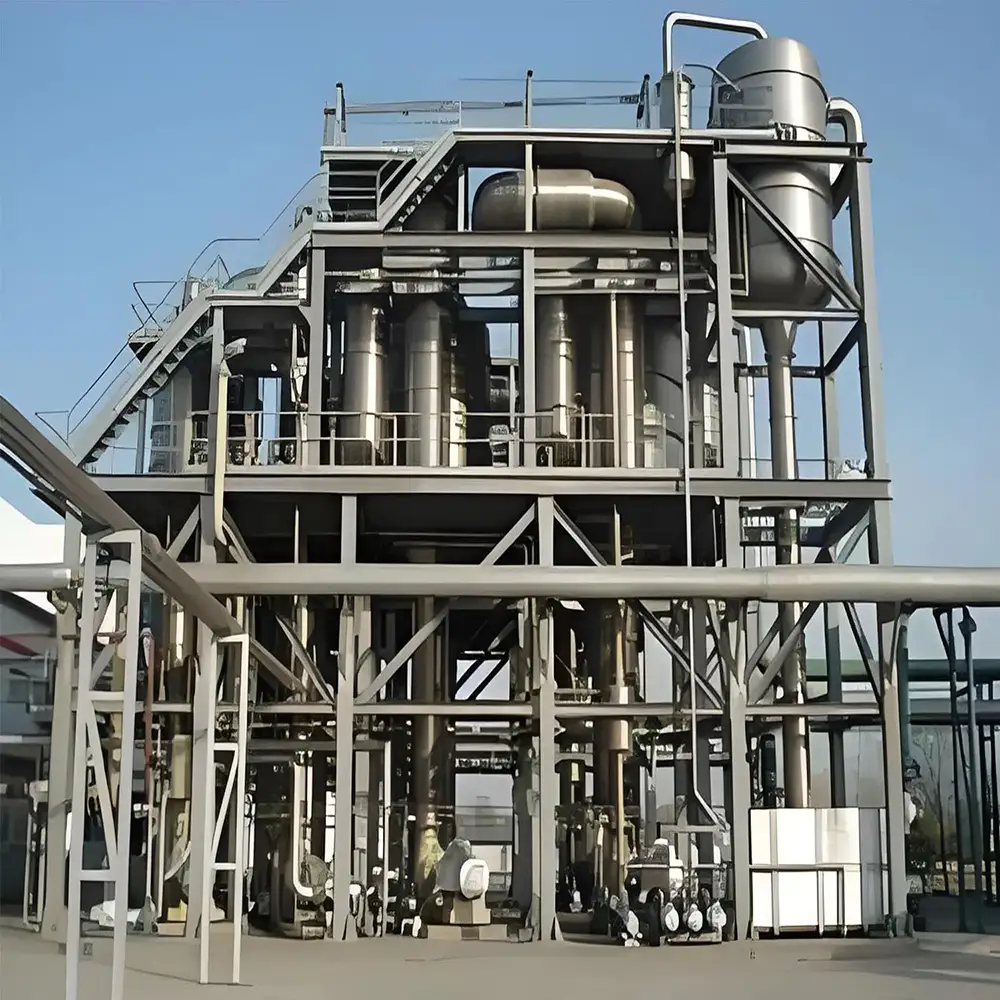
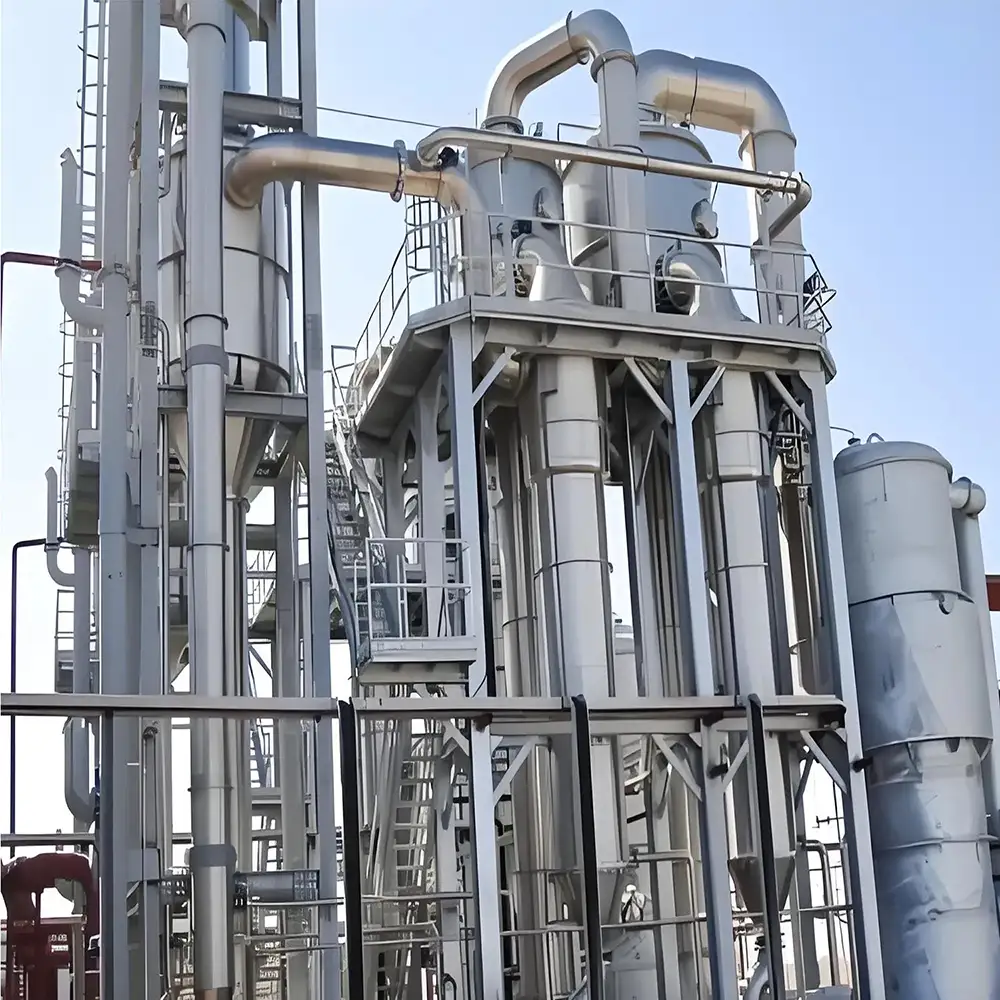
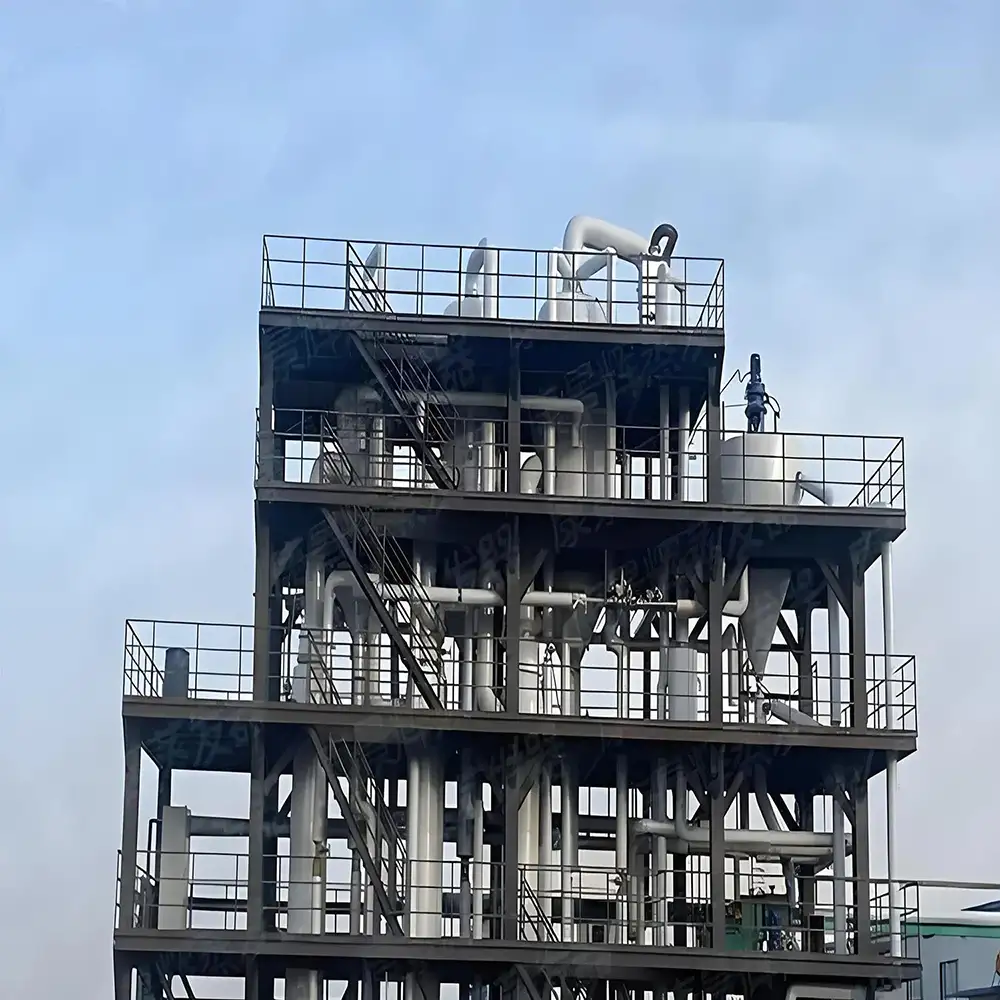
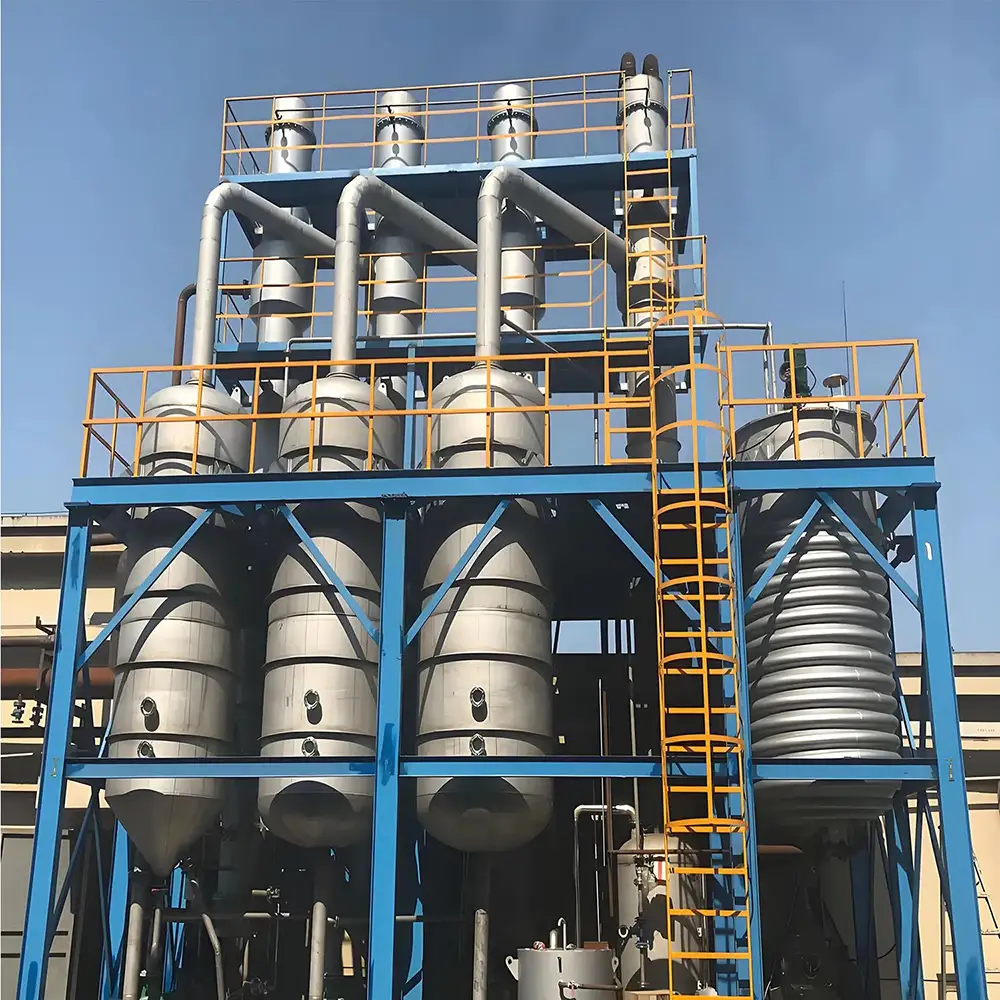
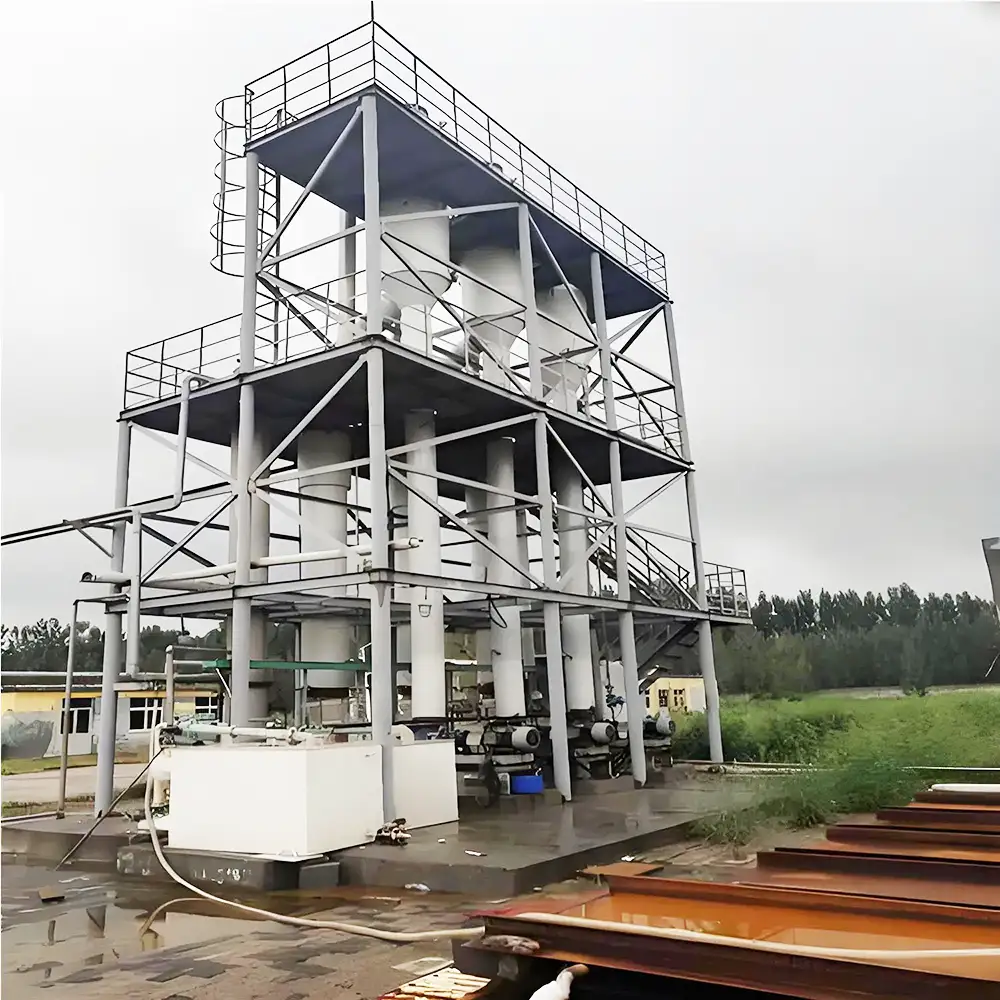
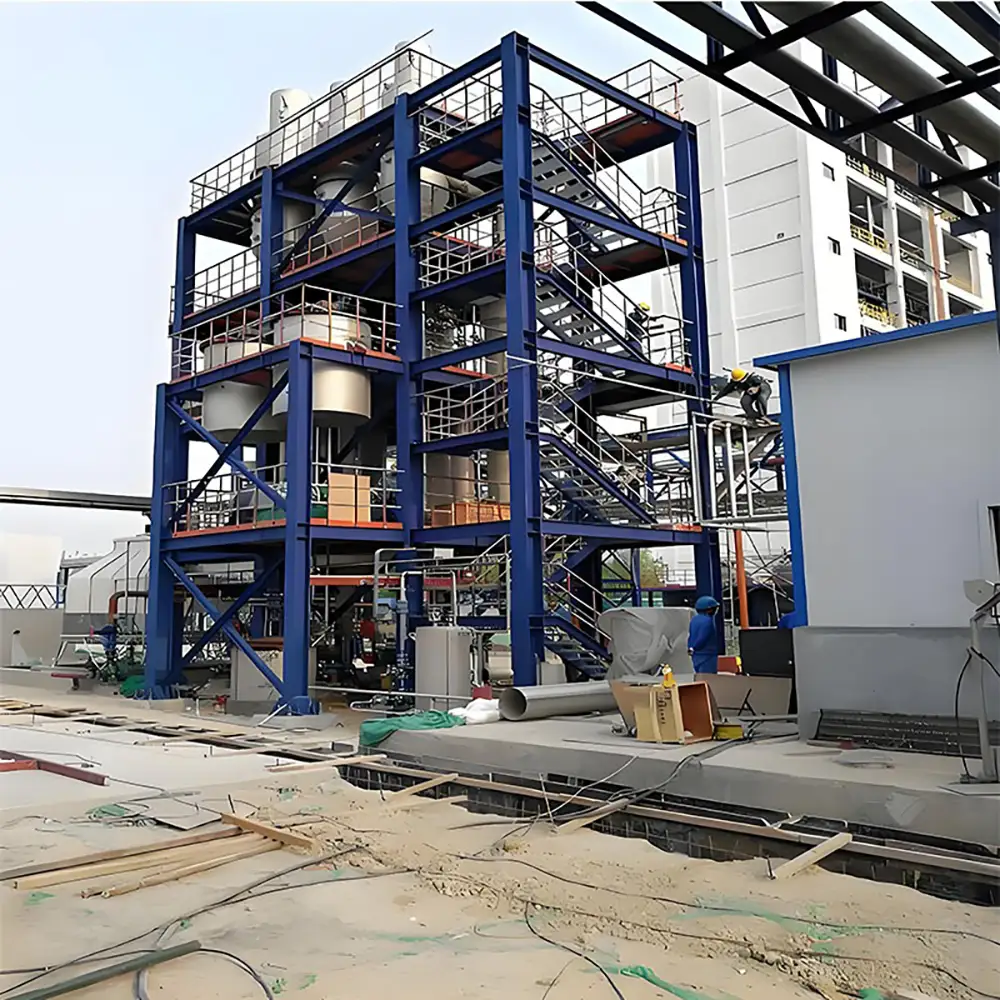
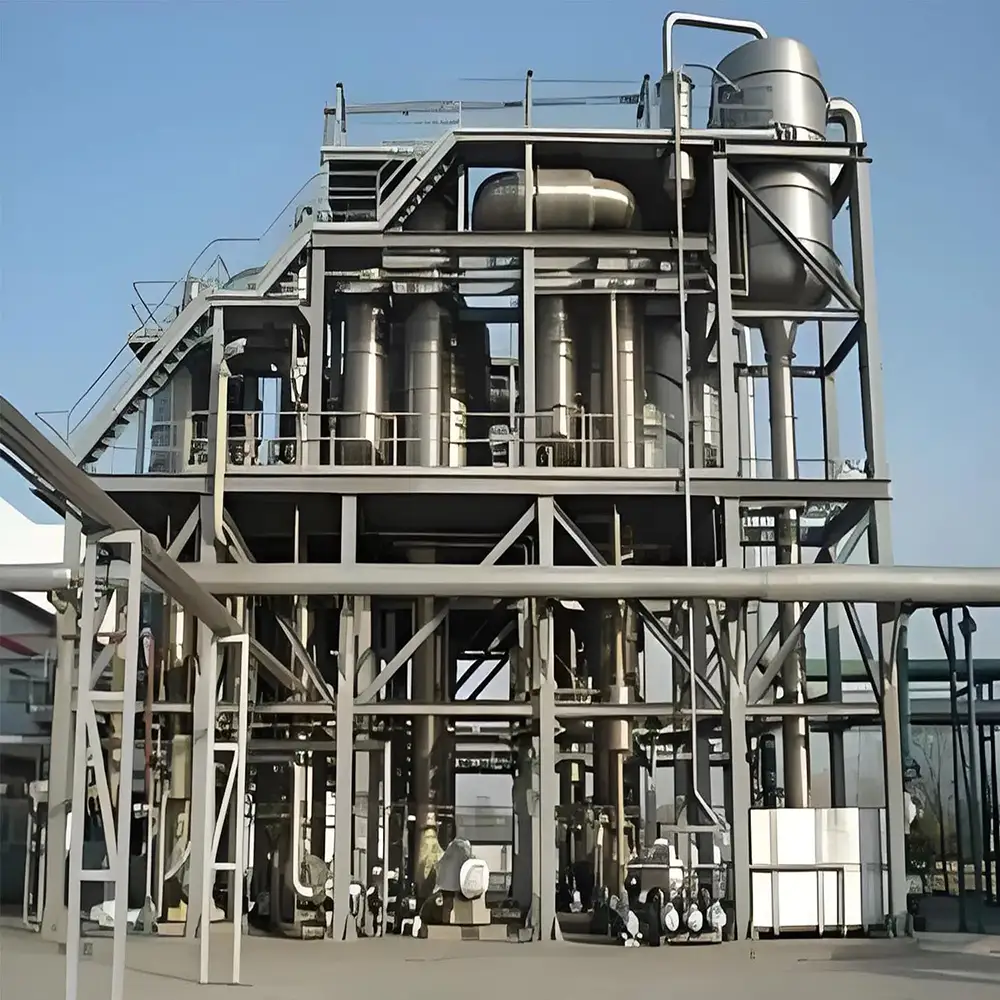
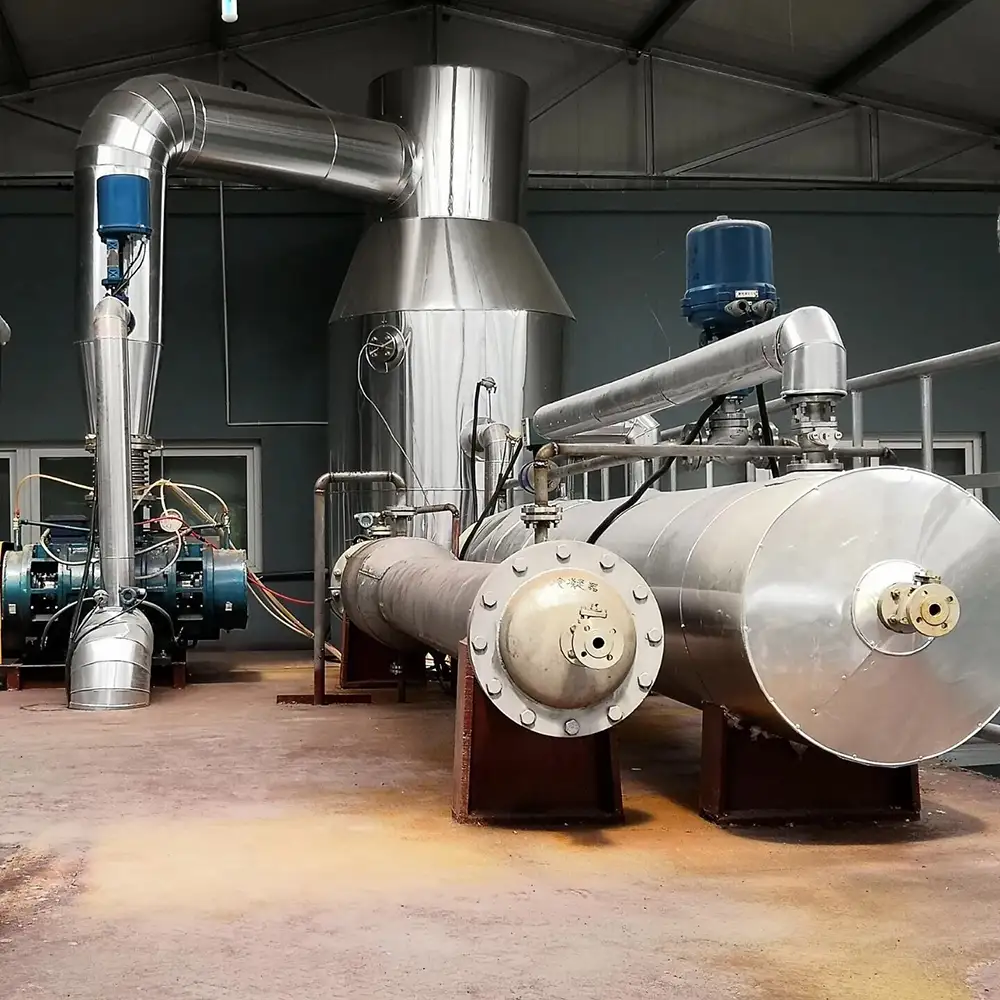
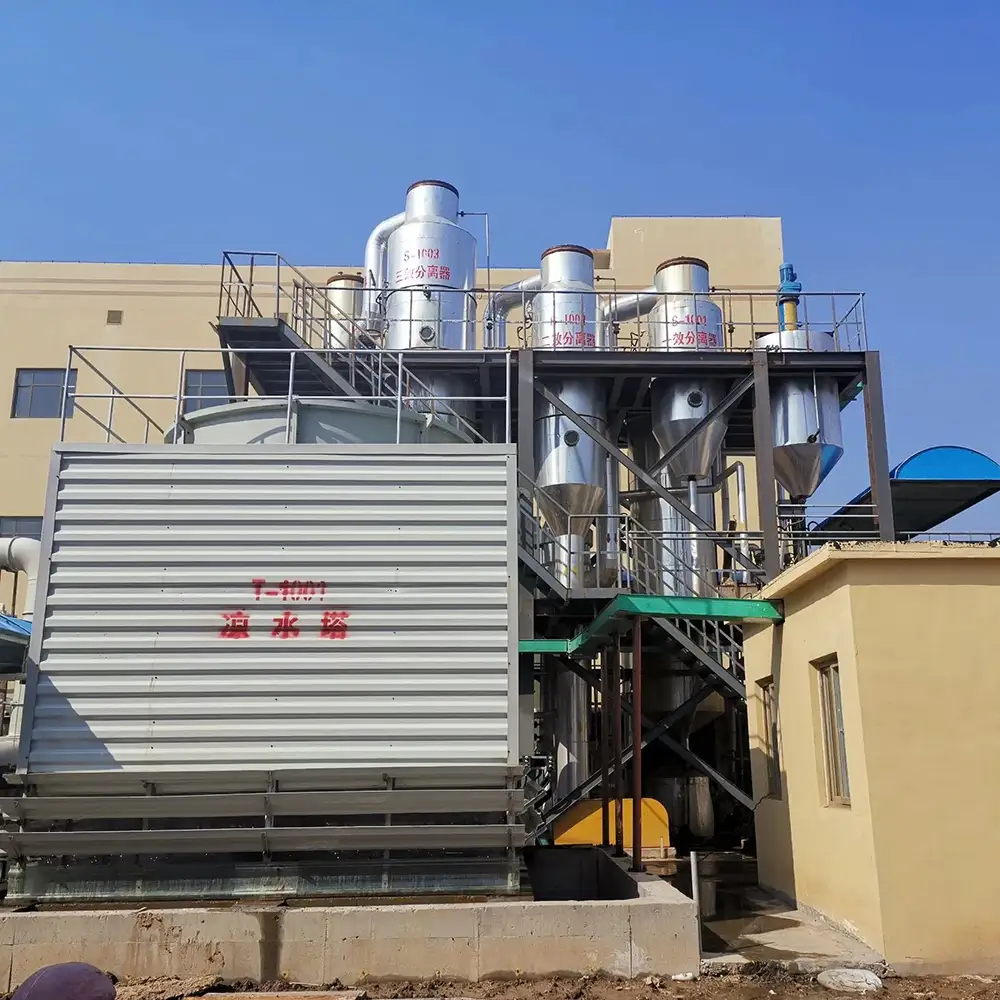
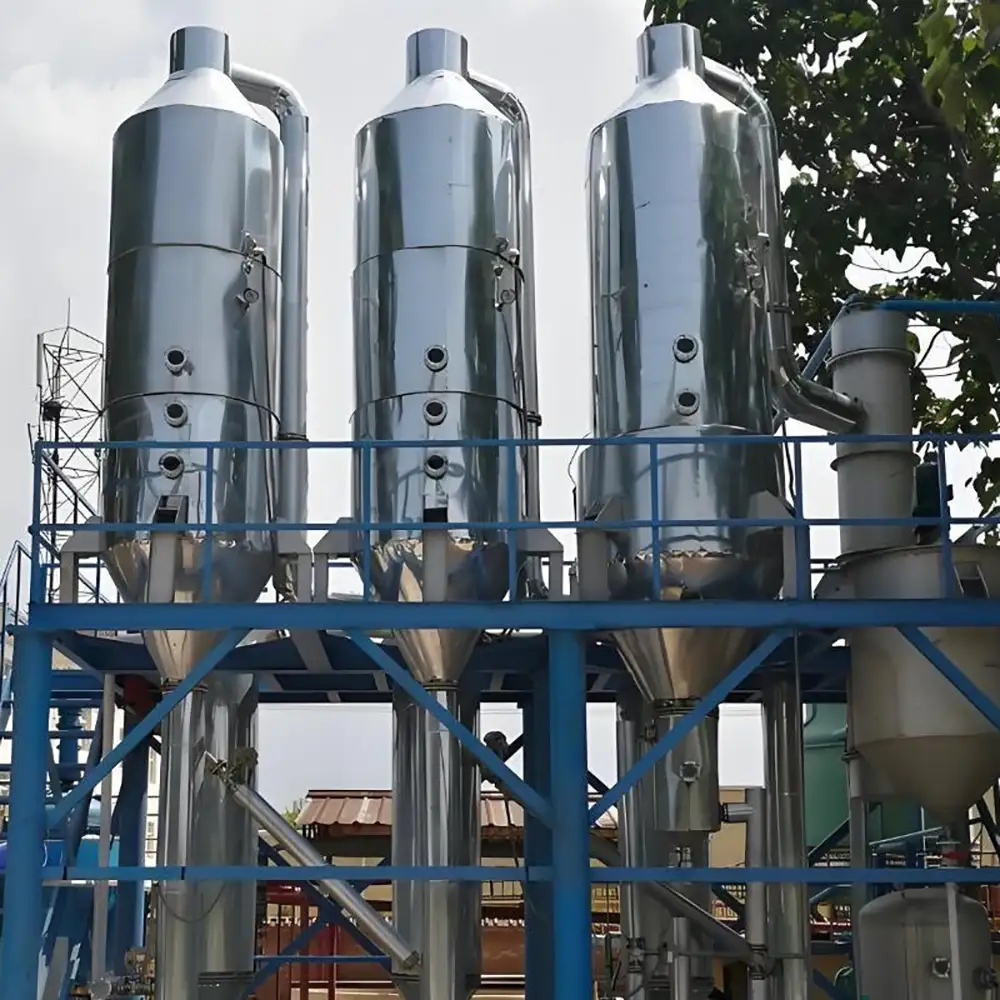
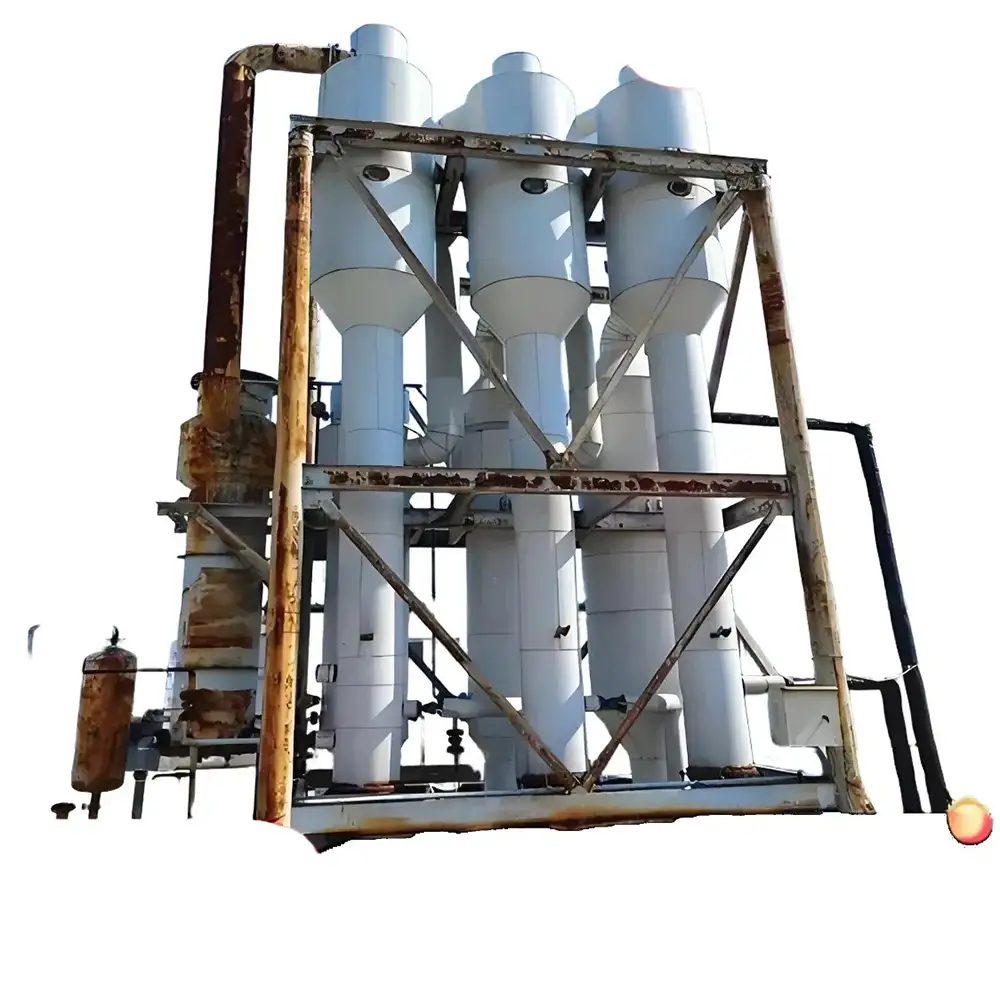
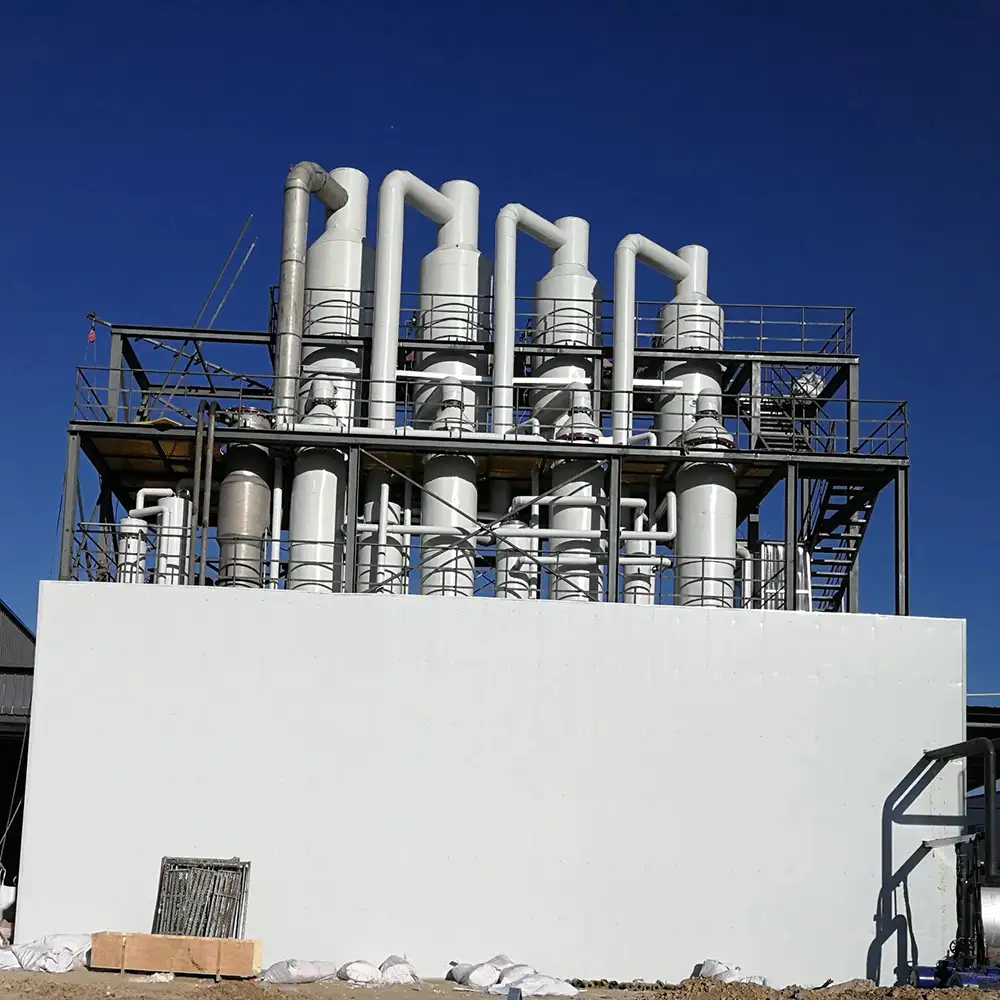
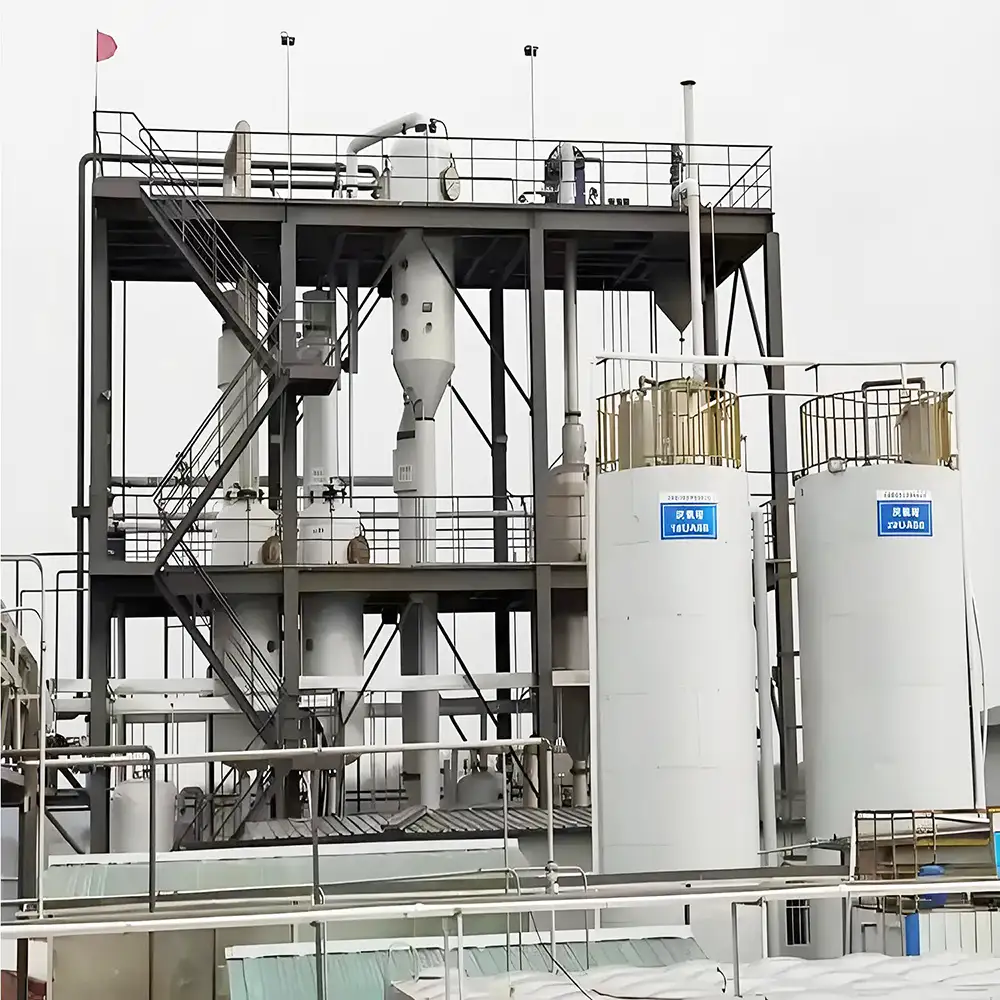
MVR stands for Mechanical Vapor Recovery. MVR is a technology that reuses the energy generated by its own secondary steam to reduce the demand for external energy. This technology is applied in industries such as chemical, pharmaceutical, papermaking, sewage treatment, and seawater desalination.
Automatic Yeast Wastewater Industrial M Falling Film Vacuum Evaporator
The Automatic Yeast Wastewater Industrial M Falling Film Vacuum Evaporator is an industrial evaporation and concentration system designed for challenging wastewater streams with high salt content, dissolved solids, organic matter, and other concentrated pollutants. It is particularly suitable for yeast wastewater and industrial wastewater applications where conventional biological or membrane treatment processes may have limitations.
By combining falling film evaporation, vacuum operation, automatic process control, and concentrated wastewater treatment, the system can reduce wastewater volume and recover or separate water and dissolved solids. When integrated with crystallization equipment, it can also support high-salt wastewater crystallization and Zero Liquid Discharge (ZLD) treatment processes.
The system is suitable for food and fermentation industries, yeast production, chemical manufacturing, pharmaceutical processing, industrial wastewater treatment, and other applications requiring advanced evaporation technology.
The working process involves the compression of low-temperature steam by a compressor, which increases the temperature and pressure, increases the enthalpy, and then enters a heat exchanger for condensation to fully utilize the latent heat of the steam. Except for starting the car, only a small amount of steam is required during the entire evaporation process.
In the process of multi effect evaporation, the secondary steam of one effect of the evaporator cannot be directly used as the heat source of the main effect, but can only be used as the heat source of the secondary effect or several secondary effects. As a heat source for this effect, additional energy must be provided to increase its temperature (pressure). The steam jet pump can only compress a portion of the secondary steam, while the MVR evaporator can compress all the secondary steam in the evaporator The solution is circulated in a falling film evaporator through a material circulation pump in the heating tube. The initial steam is heated by fresh steam outside the tube, which heats and boils the solution to produce secondary steam. The generated secondary steam is sucked in by a turbocharged fan, and after being pressurized, the temperature of the secondary steam increases and enters the heating chamber as a heating source for circulating evaporation. After normal start-up, the turbo compressor sucks in secondary steam, which is then pressurized and converted into heated steam. This continuously circulates and evaporates, and the evaporated water is eventually discharged as condensed water.
|
Model NO. |
GSRF |
Handling method |
physicochemical treatment |
|
Usage |
Cutting fluid wastewater, sodium sulfate wastewater, corn pulp wastewater, electroplating wastewater, pharmaceutical industry, fine chemical industry, non-ferrous metal industry, electronics industry, petrochemical industry, automotive industry |
Trademark |
|
|
Types |
Package, Compact, Small, Mini |
Applications |
Industrial, Municipal, Domestic, Medical, Ship |
|
Craft |
Flocculation sedimentation method |
Features |
Water Clarification, Filtration, Purification |
|
Service Life |
20 Years |
Operation |
Automatic |
|
Steel Plate Thickness |
>8mm |
Function |
Remove Suspended solids |
|
Voltage |
220V/ 380V/ Customerized |
Installation Type |
Onground |
|
Colour |
Grey/Silver/Blue/Balck/Customerized |
Use for |
Mineral, Printing, Chemical, Dyeing, Starch |
|
Material |
Carbon Steel, Stain Steel, FRP, PE, PP |
Certificate |
SGS, ISO |
|
Transport Package |
Container Standard Packing |
Specification |
Carbon steel anti-corrosion |
|
Production Capacity |
5000 Sets/Year |
Origin |
China |
Main principle:
Mechanical vapor recompression (MVR) evaporator utilizes the secondary steam generated in the evaporator, which is compressed by a compressor to increase pressure, temperature, and enthalpy. It is then sent to the heating chamber of the evaporator as heating steam, maintaining the boiling state of the feed liquid, while the heating steam itself condenses into water. In this way, the steam that was originally intended to be discarded is fully utilized, latent heat is recovered, and thermal efficiency is improved. The economy of steam production is equivalent to 20 effects of multi effect evaporation, reducing the demand for external heating and cooling resources, energy consumption, and pollution.
Falling Film Vacuum Evaporation Technology
Falling film evaporation uses a thin liquid film flowing over the heating surface of an evaporator. The large heat-transfer area and thin liquid layer can promote efficient heat transfer and evaporation.
Vacuum operation lowers the boiling temperature of the wastewater, allowing evaporation to take place at a lower temperature than atmospheric-pressure evaporation. This can help reduce thermal stress and improve the suitability of the equipment for heat-sensitive wastewater streams.
The combination of falling film technology and vacuum operation provides an efficient approach for concentrating wastewater with high dissolved-solids content.
Yeast Wastewater Treatment
Yeast production and fermentation processes can generate wastewater containing organic compounds, suspended solids, salts, nutrients, and other dissolved substances. The composition can vary depending on raw materials, fermentation processes, washing operations, and production conditions.
For wastewater streams that remain difficult to treat after conventional pretreatment, evaporation can provide an additional concentration and volume-reduction step.
The evaporator can separate a significant portion of water from the wastewater while concentrating salts and non-volatile substances in the residual liquid. Depending on the process design, the recovered condensate may be further treated for reuse or discharge.
High-Salt Wastewater Concentration
High-salt wastewater can be difficult to process using conventional biological treatment because elevated salinity may inhibit microorganisms. Membrane systems can also face scaling, osmotic pressure, and concentrate-management challenges as dissolved solids increase.
Vacuum evaporation provides a thermal separation process that is less dependent on biological activity. It can concentrate dissolved salts and other non-volatile components while producing a vapor stream that can be condensed into a relatively cleaner water phase.
This makes falling film vacuum evaporation suitable for high-salinity industrial wastewater concentration and advanced wastewater reduction applications.
High-Salt Wastewater Crystallization
When wastewater is concentrated beyond the solubility limit of certain salts, crystallization can occur. A properly designed evaporation and crystallization system can therefore convert dissolved salts into solid crystals that can be separated from the remaining liquid.
The evaporator can be integrated with crystallizers, separators, condensers, feed tanks, circulation systems, and solid-liquid separation equipment to create a complete high-salt wastewater treatment process.
The actual crystallization performance depends on wastewater composition, salt concentration, solubility characteristics, temperature, evaporation rate, and operating conditions.
Automatic Process Control
Automatic operation is important for industrial evaporation systems because feed conditions and operating parameters can change during continuous production.
The system can monitor and control parameters such as feed flow, evaporation temperature, vacuum level, heating temperature, liquid level, circulation flow, condensate flow, and other important operating conditions.
Automated control can help maintain stable evaporation performance and reduce the need for continuous manual adjustment. It can also provide alarms and protective functions when operating parameters move outside the defined range.
Energy-Efficient Evaporation
Energy consumption is a major consideration in industrial wastewater evaporation. The falling film design provides efficient heat transfer, while vacuum operation can reduce the required boiling temperature.
Depending on the system configuration, multiple-effect evaporation, mechanical vapor recompression (MVR), thermal vapor recompression, heat recovery, or other energy-saving technologies may be incorporated.
MVR technology can recycle the energy contained in secondary vapor and use it as a heating source, significantly reducing external steam requirements in suitable applications.
The appropriate energy-saving configuration depends on wastewater characteristics, evaporation capacity, target concentration, operating temperature, and available utilities.
Condensate Recovery
During evaporation, water contained in the wastewater is converted into vapor and subsequently condensed. The resulting condensate can be collected and subjected to additional treatment if necessary.
Depending on the wastewater composition and system design, recovered water may be suitable for reuse in selected industrial processes after meeting the required quality standards.
Water recovery can help reduce freshwater consumption and improve overall resource efficiency.
Industrial Applications
The Automatic M Falling Film Vacuum Evaporator can be used in various industries with difficult-to-treat wastewater, including:
Yeast Production
Fermentation Industry
Food Processing
Beverage Production
Chemical Manufacturing
Pharmaceutical Industry
Biochemical Production
Industrial Salt Wastewater
Dyeing and Textile Processing
Electroplating and Surface Treatment
Specialty Chemical Production
Zero Liquid Discharge Systems
The equipment configuration should be selected according to wastewater composition, flow rate, salt content, COD, suspended solids, scaling tendency, boiling-point elevation, and required final treatment performance.
Compact and Continuous Industrial Operation
Compared with conventional open evaporation methods, a controlled vacuum evaporator provides a more enclosed and automated treatment process.
The falling film configuration can provide efficient heat transfer while maintaining continuous wastewater circulation. Automated valves, pumps, sensors, and control systems help coordinate different process stages.
The equipment can also be integrated with pretreatment units, filters, reverse osmosis systems, MVR systems, crystallizers, centrifuges, dryers, or other wastewater treatment equipment to form a complete treatment line.
Maintenance and Reliable Operation
Regular maintenance is essential for maintaining heat-transfer efficiency and stable evaporation performance. Heat-transfer surfaces should be inspected and cleaned according to the characteristics of the wastewater.
Scaling and fouling are important considerations when treating high-salt wastewater. Proper pretreatment, appropriate operating conditions, periodic cleaning, and suitable material selection can help reduce these risks.
Routine inspection of pumps, valves, vacuum systems, sensors, heating components, separators, and condensate systems helps maintain long-term operating reliability.
Why Choose Us
Selecting a wastewater evaporator requires careful evaluation of wastewater characteristics, evaporation capacity, energy consumption, crystallization requirements, and final water quality.
Our evaporation solutions focus on:
Falling Film Technology: Thin-film heat transfer supports efficient evaporation and continuous processing.
Vacuum Operation: Lower boiling temperatures can improve thermal efficiency and process flexibility.
High-Salt Wastewater Treatment: Suitable for concentrated industrial wastewater and difficult-to-treat saline streams.
Crystallization Support: Can be integrated with crystallization and solid-liquid separation equipment.
Automatic Control: Monitoring and control systems support stable industrial operation.
Energy-Saving Options: MVR, multiple-effect evaporation, and heat recovery can be considered for suitable applications.
Water Recovery: Evaporation and condensation can support industrial water recovery and reuse.
Flexible Integration: Can be connected with RO, pretreatment, crystallization, filtration, and ZLD systems.
Industrial Reliability: Designed for continuous wastewater treatment applications.
Frequently Asked Questions
1. What is a falling film vacuum evaporator?
A falling film vacuum evaporator is an industrial evaporation system in which wastewater flows as a thin film over heated surfaces while vacuum conditions lower the boiling temperature.
2. Can it treat yeast wastewater?
Yes. The system can be used for yeast and fermentation wastewater concentration when the wastewater characteristics are suitable for thermal evaporation.
3. Is it suitable for high-salt wastewater?
Yes. Vacuum evaporation is widely applicable to industrial wastewater containing high concentrations of dissolved salts and other non-volatile substances.
4. Can the system produce salt crystals?
It can support salt crystallization when integrated with an appropriate crystallization and solid-liquid separation process. The actual result depends on wastewater composition and salt solubility.
5. What is the advantage of vacuum evaporation?
Vacuum operation reduces the boiling temperature, which can help lower thermal requirements and make the process suitable for certain heat-sensitive wastewater streams.
6. Can an MVR system be integrated?
Yes. MVR technology can be incorporated into suitable evaporation systems to recycle secondary vapor and reduce external steam consumption.
7. What happens to the evaporated water?
The vapor is condensed into condensate. Depending on its quality, it can be further treated for reuse or handled according to the required discharge standard.
8. Does high-salt wastewater cause scaling?
Scaling can occur depending on salt composition and concentration. Pretreatment, proper operating conditions, cleaning procedures, and appropriate evaporator design are important for controlling fouling and scaling.
9. Can the evaporator be used in a ZLD system?
Yes. Falling film evaporation can serve as part of a Zero Liquid Discharge system, typically together with pretreatment, RO or other concentration equipment, crystallization, and solid-liquid separation.
10. What information is needed to select an evaporator?
Important information includes wastewater flow rate, temperature, salt concentration, COD, TDS, suspended solids, pH, scaling characteristics, required evaporation capacity, desired condensate quality, and final concentration or crystallization requirements.
Prev:Sorry, no information
Next:
Reliable Mvr Evaporator Biotechnology Industry Chemical Industry for Wastewater Treatment Multi Effect Evaporator
TAG:
Industrial Wastewater Treatment Equipment,
Food Industry Wastewater Treatment,
Industrial Wastewater Treatment System,
Industrial Wastewater Treatment,
Wastewater Reuse System,
Chemical Wastewater Treatment,
ZLD Wastewater Treatment,
ZLD Evaporator,
Zero Liquid Discharge,
Salt Crystallization Equipment,
Wastewater Volume Reduction,
Brine Concentration Equipment,
High Salinity Wastewater Treatment,
High Salt Wastewater Treatment,
Industrial Vacuum Evaporator,
Multiple Effect Evaporation System,
MVR Evaporation System,
Mechanical Vapor Recompression Evaporator,
Industrial Evaporation Equipment,
Wastewater Concentration Equipment,
Wastewater Concentration System,
High TDS Wastewater Treatment,
High TDS Wastewater Evaporator,
Industrial Salt Wastewater Treatment,
Wastewater Evaporation System,
Evaporation Crystallizer,
Industrial Wastewater Crystallizer,
MVR Evaporator,
MVR Wastewater Evaporator,
Industrial Wastewater Evaporator,
Related Category:
Falling Film Vacuum Evaporator, Yeast Wastewater Evaporator, Industrial Wastewater Evaporator, High Salt Wastewater Trea China, suppliers, manufacturers, factory, customized, wholesale, quotation, made in China