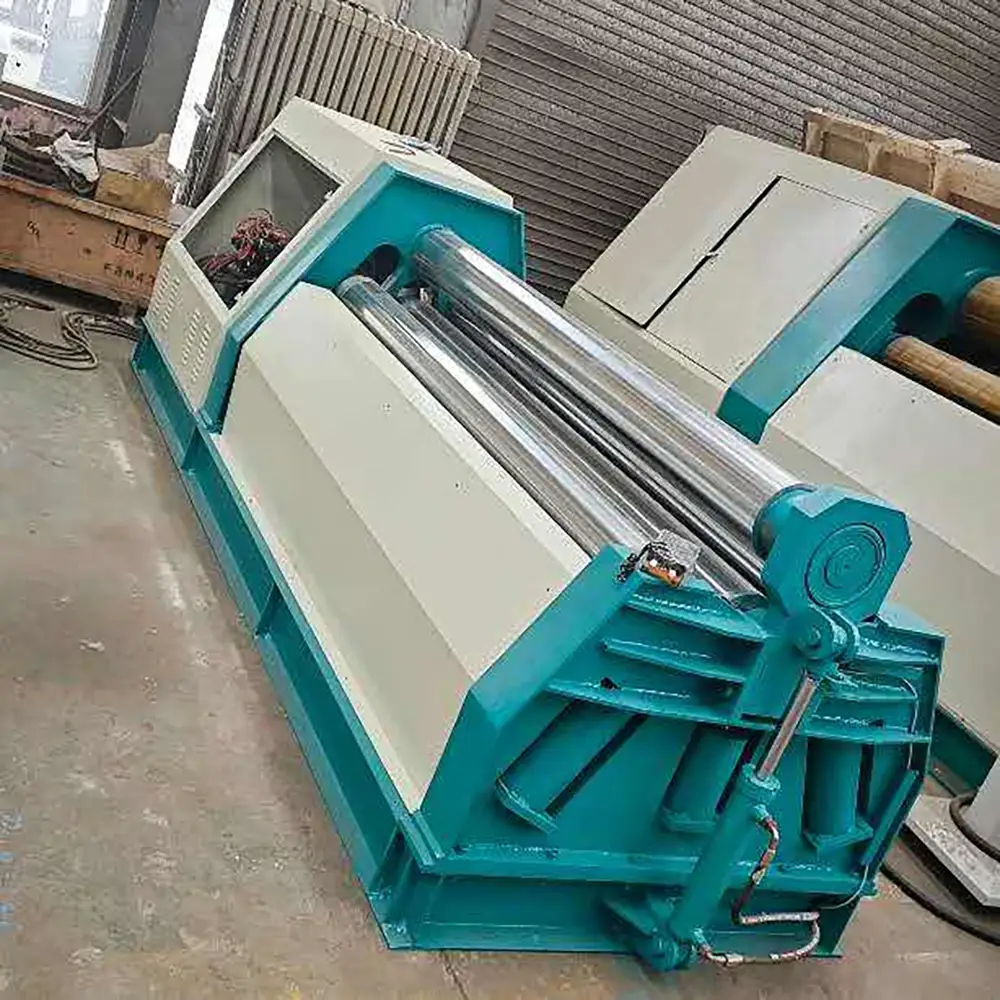
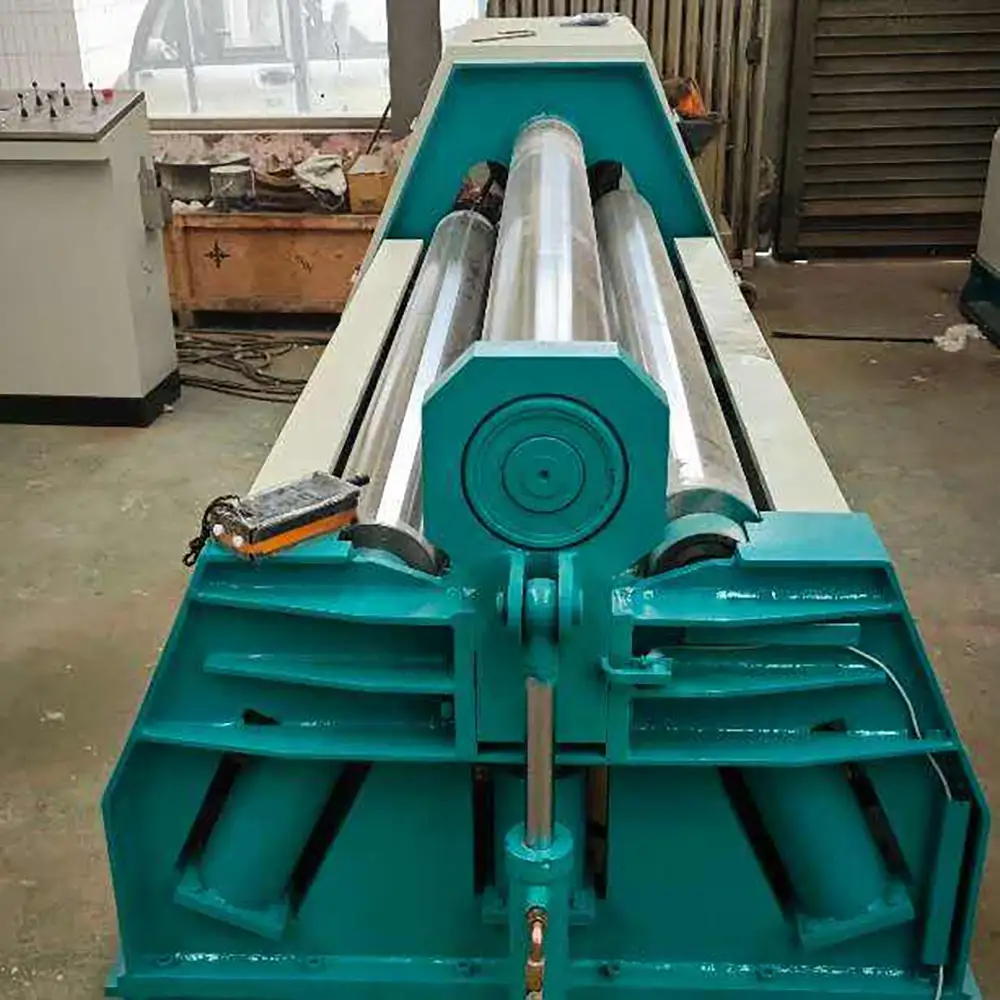
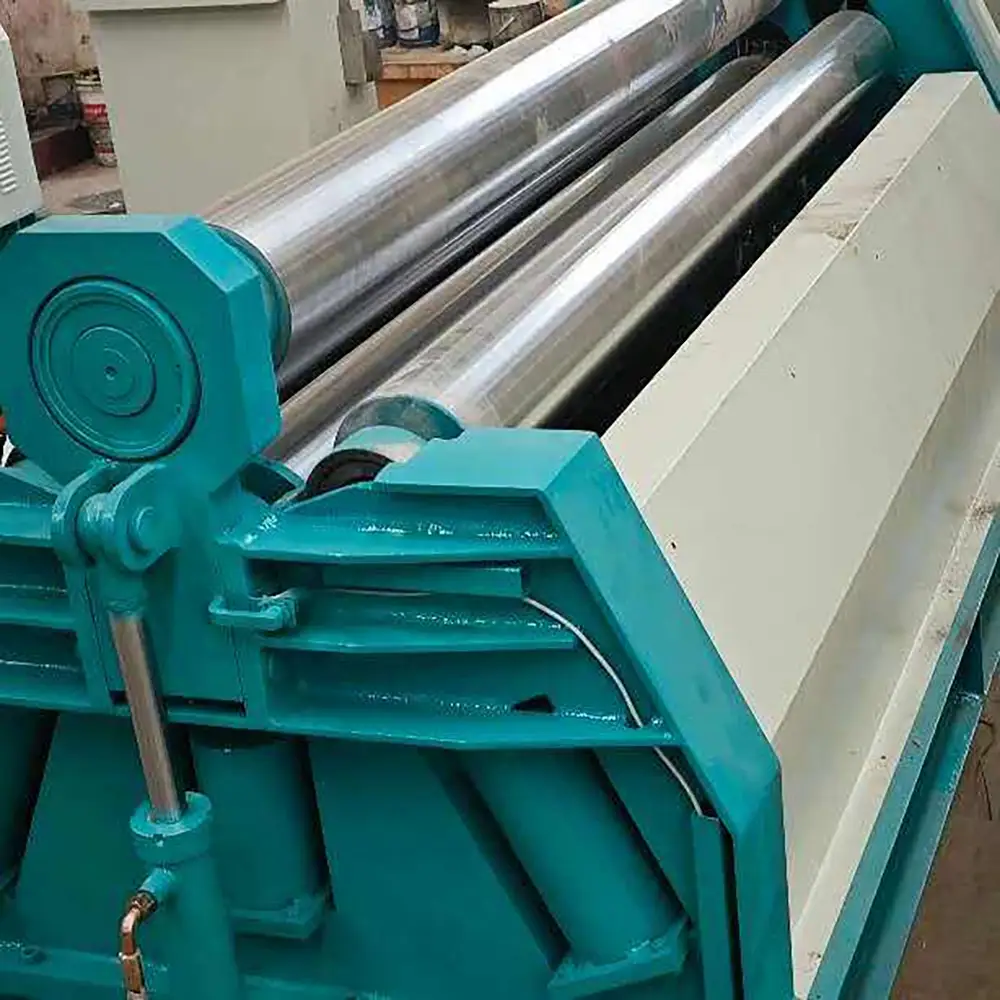
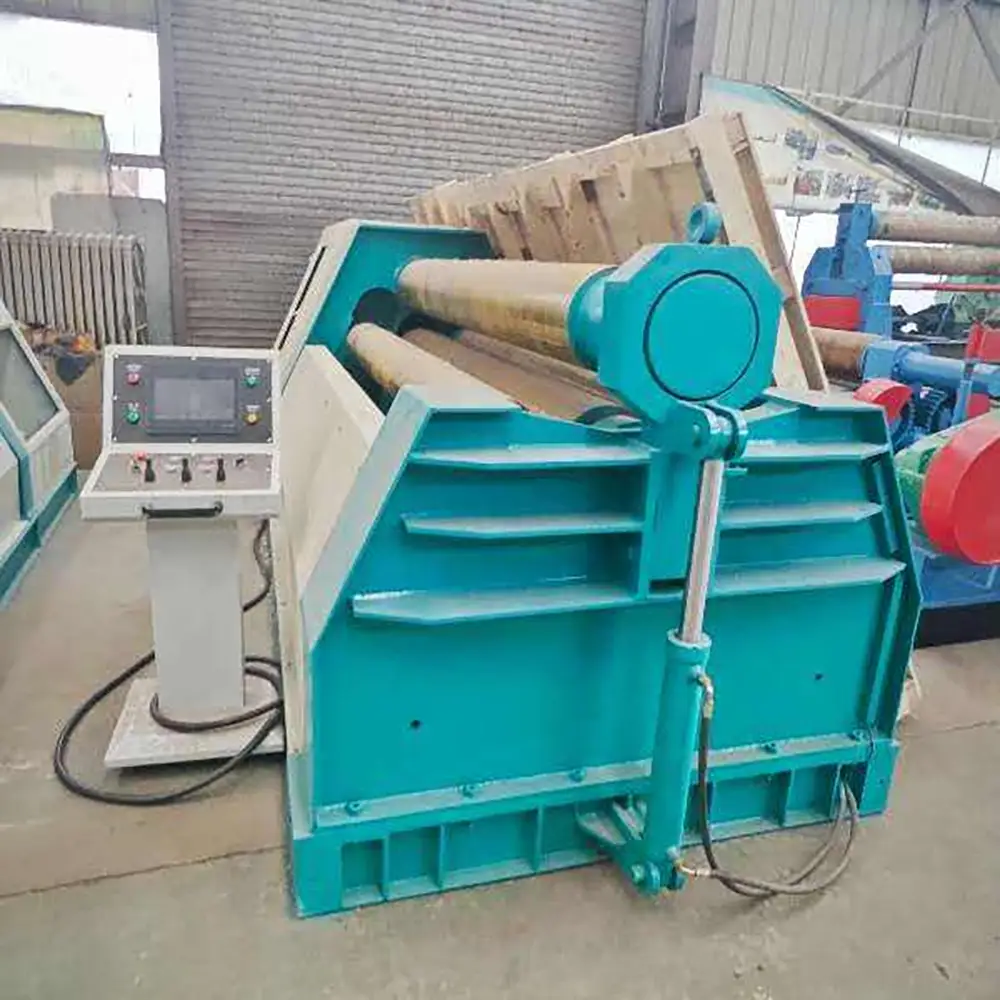
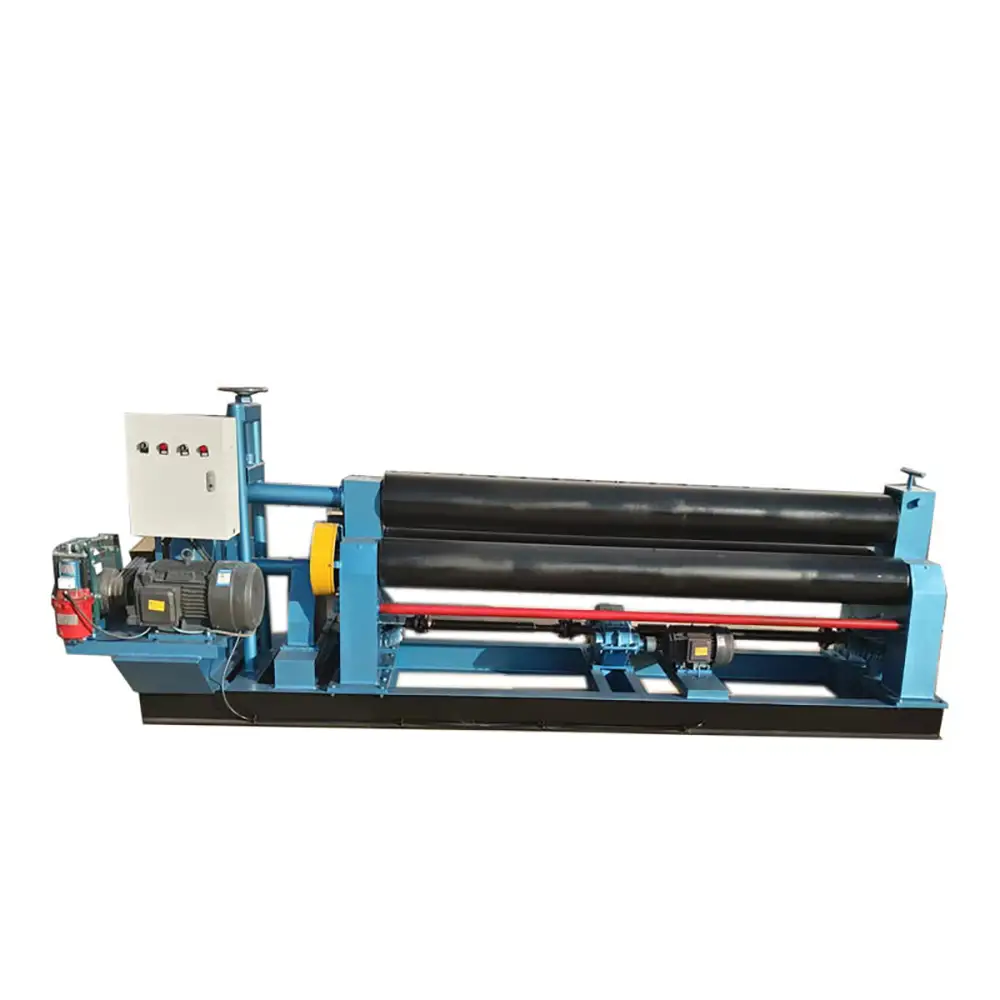
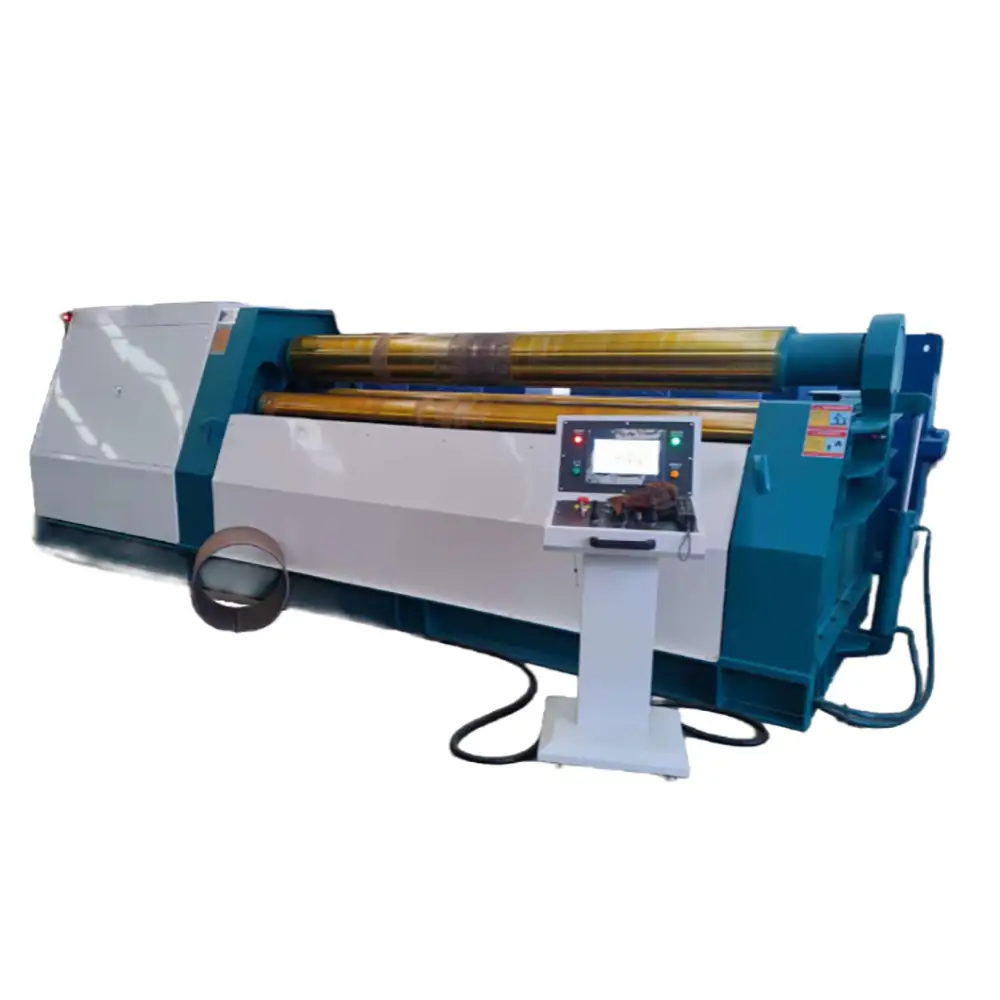
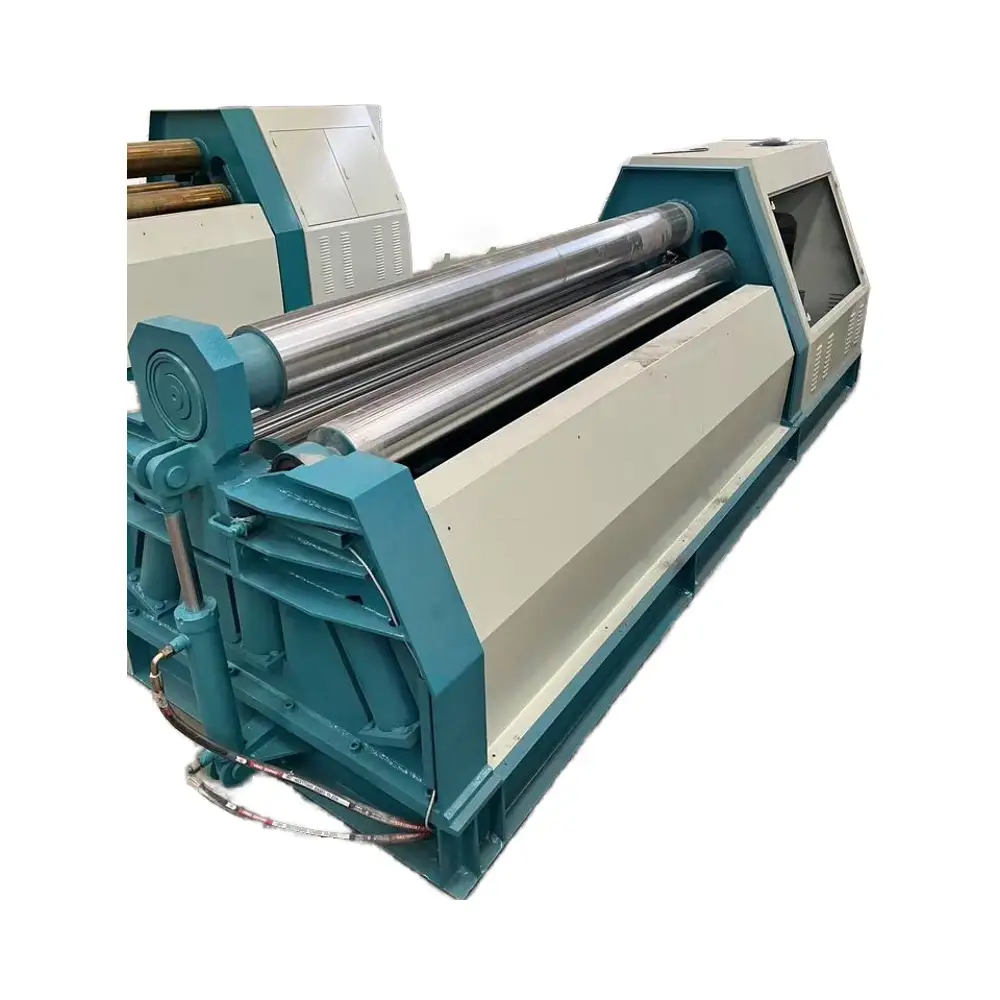
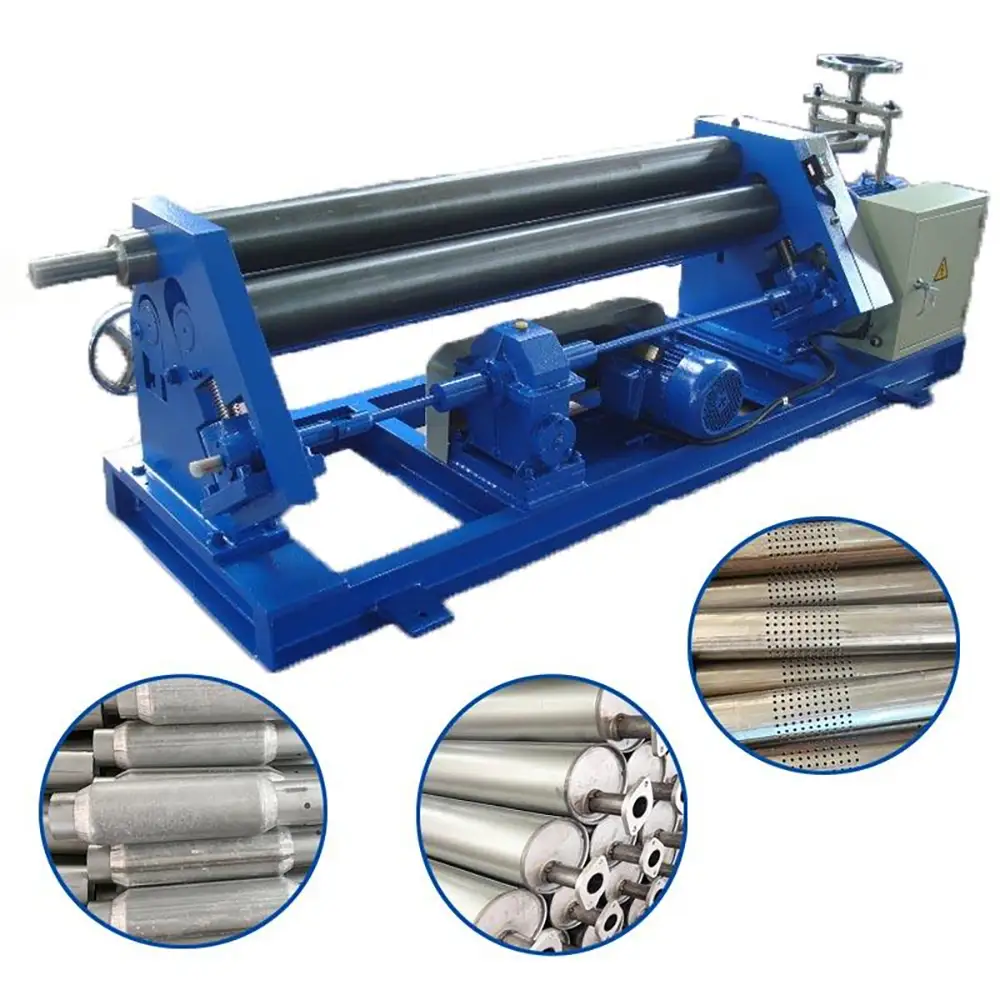
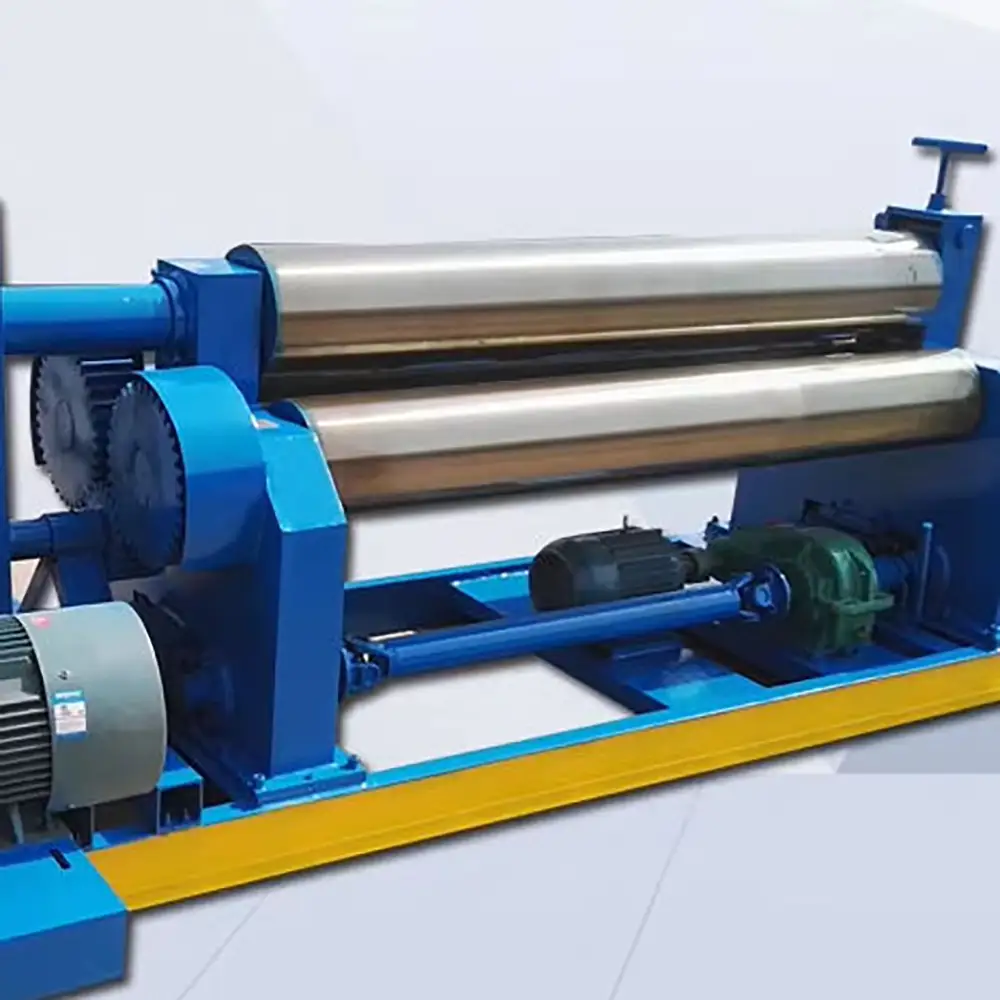
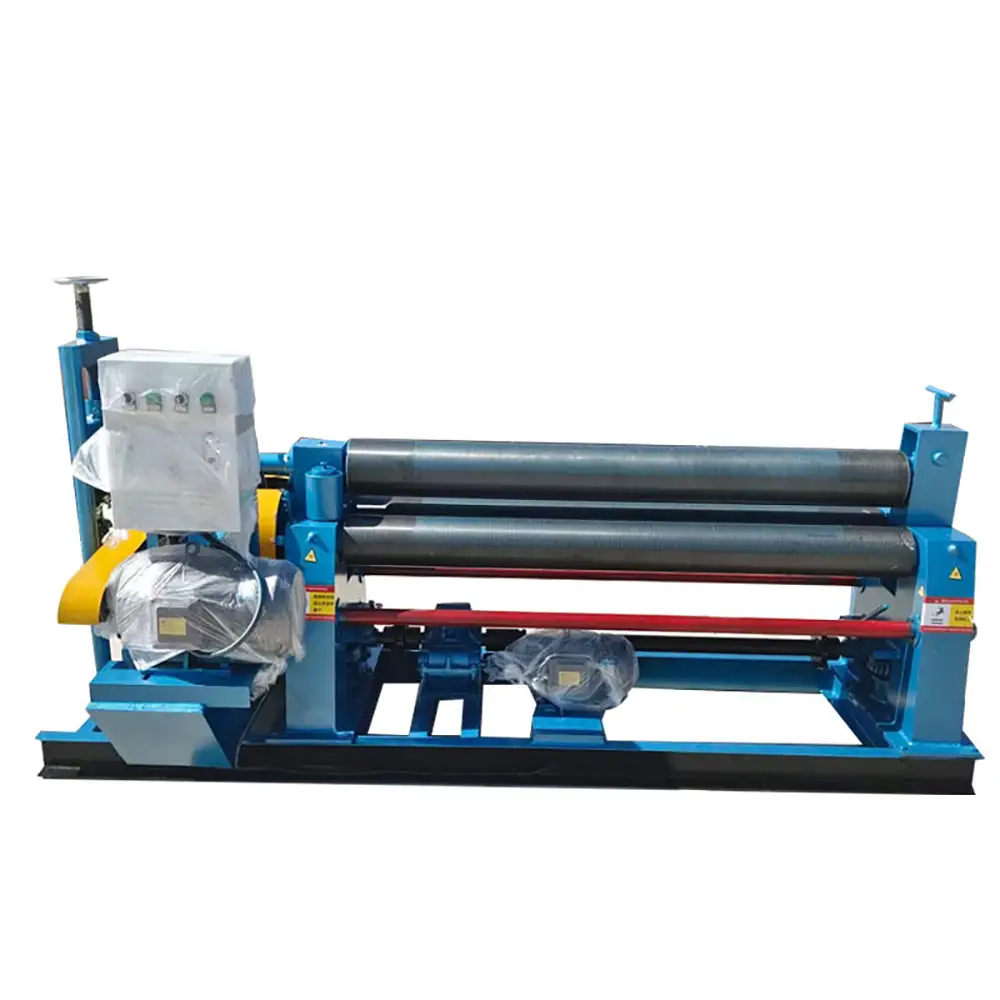
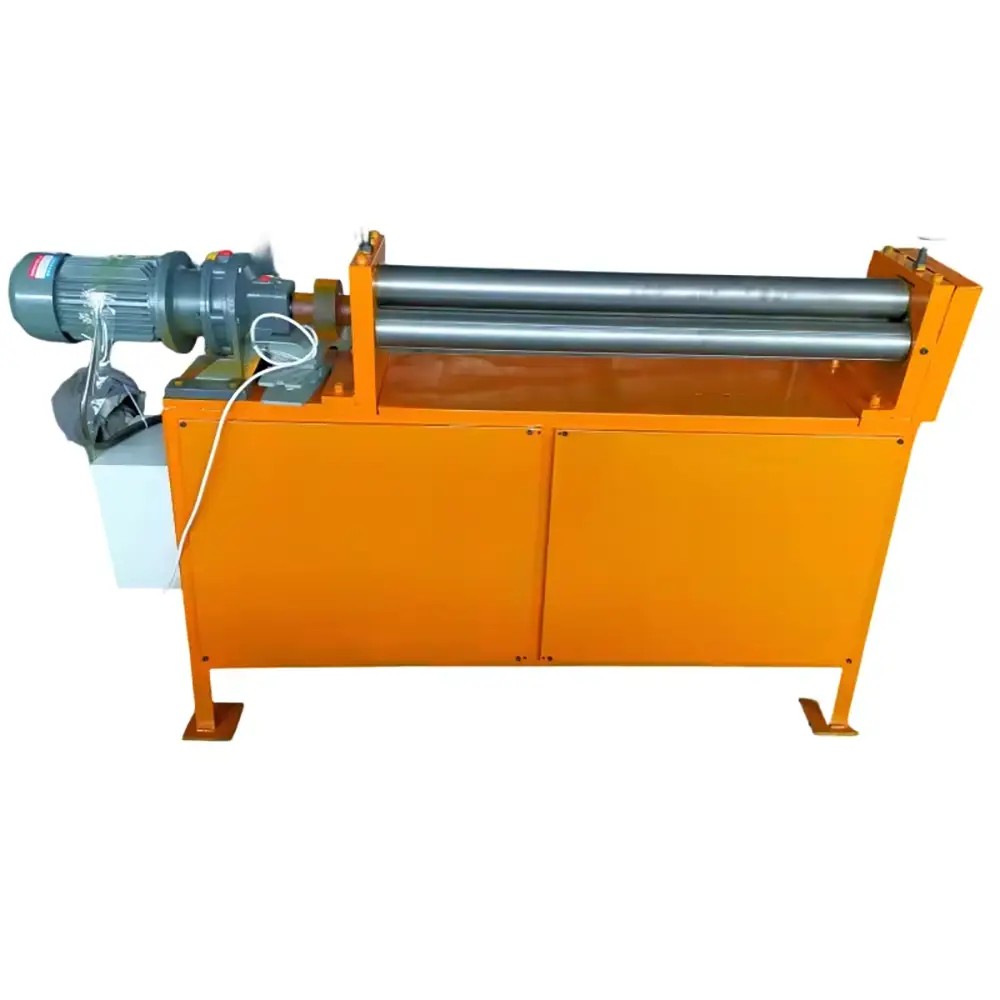
Manual Plate Rolling Machine for Chemical Reactors and Water Storage Silos for Aluminum and Carbon Steel Engine Core Component
W11-2x1300 Mechanical Fully Automatic Plate Rolling Machine Technical Specifications
1. Symmetrical Up-Adjustable Three-Roll Plate Rolling Machine
This machine is a mechanically driven three-roll plate rolling machine used for bending steel plates into cylindrical, arc-shaped,
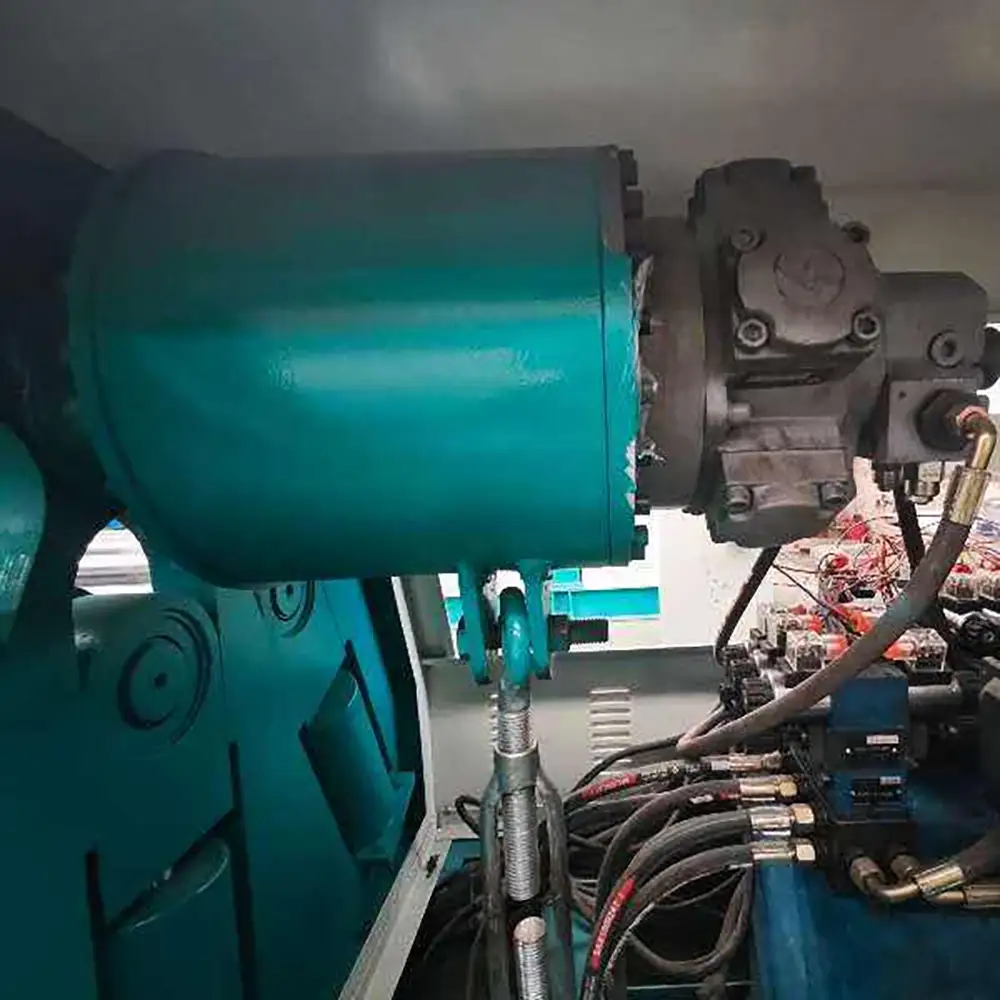
or conical forms. 2. The upper roll pressing is powered by an auxiliary motor, which drives a worm gear, screw-nut mechanism to apply bending force.
3. The rolling drive is powered by the main motor, which transmits torque through a main reducer and open gears to rotate the lower roll, serving as the primary rolling force. Design & Inspection Standards
1. JB/T 8796-1998 – Plate Rolling Machine Accuracy
2. JB/T 3185.1-1999 – Technical Conditions for Small & Medium Three-Roll Plate Rolling Machines
3. JB/T 8797-1998 – Types & Basic Parameters of Small & Medium Plate Rolling Machines
4. JB/T 1829-1997 – General Technical Conditions for Metalforming Machinery
5. GB 17120-1997 – Safety Requirements for Metalforming Machinery
6. JB/T 5594-1992 – General Technical Requirements for Assembly
7. GB/T 5526.1-1996 – General Technical Conditions for Industrial Electrical Equipment
|
No |
Component |
Manufacturer |
|
1 |
Work Rolls |
Luli Group |
|
2 |
Roll End Bearings |
Wafangdian |
|
3 |
Main Drive Motor |
Rongcheng Motors / Domestic Brands |
|
4 |
Auxiliary Motor |
Rongcheng Motors / Domestic Brands |
|
5 |
Reducer |
Shanghai Manufacturer |
|
6 |
Electrical Components |
Domestic Brands |
|
7 |
Auxiliary Reducer |
Shanghai Manufacturer |
|
8 |
Self-Lubricating Bearings |
Jiashan, Zhejiang |
The Manual Plate Rolling Machine is a practical metal forming solution for workshops, fabrication companies, maintenance departments, and industrial manufacturers that need controlled bending of aluminum, carbon steel, and other formable metal plates. It is suitable for producing cylindrical shells, curved components, chemical reactor parts, tanks, engine-related components, ducts, and customized fabricated metal structures.
Unlike fully automated CNC plate rolling equipment, a manual plate roller provides a straightforward operating system that allows the operator to control the forming process directly. This makes it useful for small-batch production, repair work, prototypes, custom fabrication, and applications where production flexibility is more important than high-volume automation.
The machine can be configured according to plate thickness, working width, material type, required rolling diameter, and application requirements.
Manual Plate Rolling Technology
A manual plate rolling machine uses mechanical roller adjustment and manual operation to gradually bend flat metal plates into cylindrical or curved shapes. The operator controls the position of the rollers and guides the workpiece through the forming process.
This simple operating principle makes the machine relatively easy to use and maintain. It is particularly suitable for fabrication workshops that handle different workpieces rather than producing one standardized component continuously.
Proper roller adjustment and material alignment are important for achieving consistent results. Actual rolling accuracy depends on the machine structure, roller design, material properties, plate thickness, operator technique, and forming parameters.
Chemical Reactor Fabrication
Chemical reactors and related process equipment often require cylindrical shells, covers, transition sections, and other curved metal components. A plate rolling machine provides the initial forming process for converting flat metal plate into cylindrical shells that can later be welded, machined, inspected, and assembled.
Depending on the reactor design, materials may include carbon steel, stainless steel, aluminum, or specialized alloys. Material selection should always follow the requirements of the chemical process, temperature, pressure, corrosion environment, and applicable engineering standards.
For chemical equipment applications, the rolling machine is one part of the overall fabrication process. Welding, heat treatment where required, non-destructive testing, dimensional inspection, and pressure testing may be necessary depending on the finished equipment and applicable regulations.
Aluminum Plate Rolling
Aluminum is lightweight and relatively easy to form, but its surface can be susceptible to scratches and deformation if the forming process is not properly controlled.
The manual plate roller can be used for suitable aluminum plate applications when the machine is configured for the required thickness and width. Operators can gradually adjust the rollers to achieve the desired curved or cylindrical profile.
For applications involving decorative or finished aluminum surfaces, protective measures can help minimize surface damage during loading and rolling.
Carbon Steel Plate Bending
Carbon steel is one of the most widely used materials in industrial fabrication. It is commonly used for tanks, structural components, machinery housings, pressure-related components, ducts, and general fabricated products.
The manual plate rolling machine can be used for carbon steel plate forming within its rated capacity. Because carbon steel grades vary in strength, the required forming force and achievable rolling diameter can also vary.
When selecting the machine, buyers should consider material grade, maximum thickness, working width, minimum rolling diameter, and production requirements rather than selecting equipment based only on nominal plate thickness.
Engine Core Component Fabrication
The machine can also support the production of curved metal components used in machinery and engine-related assemblies. Depending on the component design, rolled plate sections may be used as housings, covers, cylindrical shells, structural supports, ducts, or other fabricated parts.
For engine core components requiring precise dimensional tolerances, the rolling operation may be followed by machining, welding, heat treatment, grinding, or inspection. The final accuracy depends on the complete manufacturing process rather than the rolling operation alone.
Flexible Workshop Applications
One of the main advantages of manual plate rolling equipment is its flexibility. It can be used for a variety of workpieces without requiring complex CNC programming.
Typical applications include:
Chemical reactor shells
Industrial tanks
Stainless steel cylinders
Carbon steel cylinders
Aluminum curved components
Engine and machinery housings
Metal ducts
Pipe sections
Equipment covers
Boiler components
General fabricated metal parts
Custom cylindrical components
This flexibility makes the machine suitable for workshops serving multiple industries and handling different project requirements.
Simple Operation and Maintenance
Manual plate rolling machines generally use a straightforward mechanical structure. With fewer electronic control components than sophisticated CNC systems, they can be practical for workshops looking for accessible equipment.
Operators should receive appropriate training in material loading, roller adjustment, workpiece alignment, forming sequence, and safe operation. Proper setup is important because incorrect roller positioning can lead to uneven bending, excessive springback, or inconsistent cylindrical geometry.
Routine maintenance should include inspection and lubrication of bearings, gears, adjustment mechanisms, rollers, and other mechanical components. Keeping the forming surfaces clean can also help protect workpiece quality.
Small-Batch and Custom Production
The machine is especially useful for small and medium-sized fabrication projects where each workpiece may have different dimensions. Instead of programming a complex CNC sequence for every job, the operator can manually adjust the rollers according to the required forming process.
This makes manual plate rolling attractive for prototype production, maintenance departments, repair workshops, educational facilities, custom fabrication companies, and manufacturers with diverse low-volume orders.
For high-volume production requiring highly repeatable automatic cycles, a CNC or hydraulic plate rolling machine may be more appropriate.
Precision and Forming Quality
Although the machine is manually operated, good forming results can be achieved through proper machine setup, operator experience, accurate plate preparation, and controlled rolling passes.
Important factors include plate flatness, material thickness, material strength, roller alignment, roller diameter, target cylinder diameter, and springback. Multiple rolling passes may be used when appropriate to gradually achieve the desired shape.
For components used in chemical equipment or engine-related assemblies, dimensional inspection after rolling is recommended before proceeding to welding or machining.
Safety-Oriented Operation
Metal plate rolling involves pinch points and significant mechanical forces. Operators should keep hands and loose clothing away from moving rollers and follow established loading and unloading procedures.
Depending on the machine configuration, safety-oriented features may include protective guards, emergency stop mechanisms, mechanical locking devices, and other protective provisions.
Operators should always follow the manufacturer's instructions and applicable workplace safety requirements.
Why Choose Us?
Simple Manual Operation – Straightforward mechanical control makes the machine suitable for workshops and custom fabrication.
Multi-Material Capability – Designed for suitable aluminum, carbon steel, stainless steel, and other formable metal plates.
Chemical Equipment Applications – Suitable for forming cylindrical shells and curved components used in chemical reactor and process equipment fabrication.
Flexible Workshop Production – Well suited to prototypes, repair work, custom orders, and small-batch manufacturing.
Reliable Mechanical Structure – A practical mechanical design can simplify routine inspection, maintenance, and operation.
Engine Component Support – Can be used for forming selected cylindrical and curved machinery or engine-related components.
Custom Configuration – Working width, plate capacity, roller dimensions, and other specifications can be selected according to application requirements.
OEM & B2B Service – We support manufacturers, fabricators, distributors, and industrial buyers with technical consultation, customized equipment, OEM/ODM solutions, and export services.
FAQs
1. What is a manual plate rolling machine?
A manual plate rolling machine is a mechanical forming machine that allows an operator to manually adjust the rollers and bend flat metal plates into cylindrical or curved shapes.
2. Can it be used for chemical reactor fabrication?
Yes. It can form cylindrical shells and other curved metal sections used during the fabrication of chemical reactors and process equipment, subject to the required material and machine capacity.
3. Can it roll aluminum plate?
Yes. Suitable aluminum plates can be rolled when their thickness, width, and forming requirements are within the machine's rated capacity.
4. Can it roll carbon steel?
Yes. Carbon steel is a common application for plate rolling machines. The actual capacity depends on the steel grade, thickness, width, and required rolling diameter.
5. Can it process stainless steel?
Depending on the machine configuration, suitable stainless steel plates can also be formed. Stainless steel may require greater forming force and different rolling parameters because of its strength and springback.
6. Can it manufacture engine components?
It can support the forming of selected cylindrical and curved engine or machinery components. The final component may require additional welding, machining, heat treatment, or inspection.
7. Is a manual plate roller suitable for small-batch production?
Yes. Manual operation is particularly useful for custom work, prototypes, repair jobs, and small-batch production involving different workpiece dimensions.
8. What determines the minimum rolling diameter?
The minimum rolling diameter depends on roller diameter, machine design, plate thickness, material strength, working width, and the required forming process.
9. Is the machine difficult to operate?
The operating principle is relatively straightforward, but proper training is still necessary. Operators should understand roller adjustment, material alignment, forming passes, and safe operating procedures.
10. How do I select the correct machine?
Provide the material type and grade, maximum plate thickness, maximum plate width, desired cylinder diameter, production volume, and intended application. These details help determine the appropriate machine configuration.
11. Can the machine be customized?
Yes. Working width, roller diameter, forming capacity, mechanical configuration, and other specifications can be customized according to production requirements.
12. What maintenance does a manual plate roller require?
Routine maintenance generally includes lubrication, inspection of rollers and bearings, checking adjustment mechanisms, inspecting gears and mechanical connections, and keeping the machine clean.
Prev:
Iron Sheet Bender 3 Roller Metal Sheet Bending Machine Plate Rolling Machine
Next:
Three-Roll Stainless Steel Plate Rolling Machine Bending Conveyor Roller Drums Includes Bending Services
TAG:
Industrial Metal Forming Machine,
Steel Plate Rolling Machine,
Metal Rolling Machine,
Metal Plate Bending Machine,
Steel Plate Bending Machine,
Metal Plate Rolling Machine,
Industrial Plate Rolling Machine,
Carbon Steel Plate Rolling Machine,
Metal Fabrication Equipment,
Manual Sheet Metal Bending Machine,
Aluminum Bending Machine,
Stainless Steel Plate Rolling Machine,
Aluminum Plate Rolling Machine,
Cylinder Rolling Machine,
Metal Cylinder Rolling Machine,
Cylinder Bending Machine,
Engine Component Forming Machine,
Steel Fabrication Machine,
Industrial Plate Roller,
Manual Plate Rolling Machine,
Custom Metal Bending,
Metal Bending Services,
Plate Rolling Services,
Manual Steel Rolling Machine,
Manual Steel Bending Machine,
Industrial Cylinder Forming Machine,
Engine Component Fabrication,
Engine Parts Manufacturing,
Metal Component Forming,
Custom Plate Rolling,
Related Category:
Manual Plate Rolling Machine,Chemical Reactor Plate Rolling Machine,Manual Plate Roller,Aluminum Plate Rolling Machine,C China, suppliers, manufacturers, factory, customized, wholesale, quotation, made in China