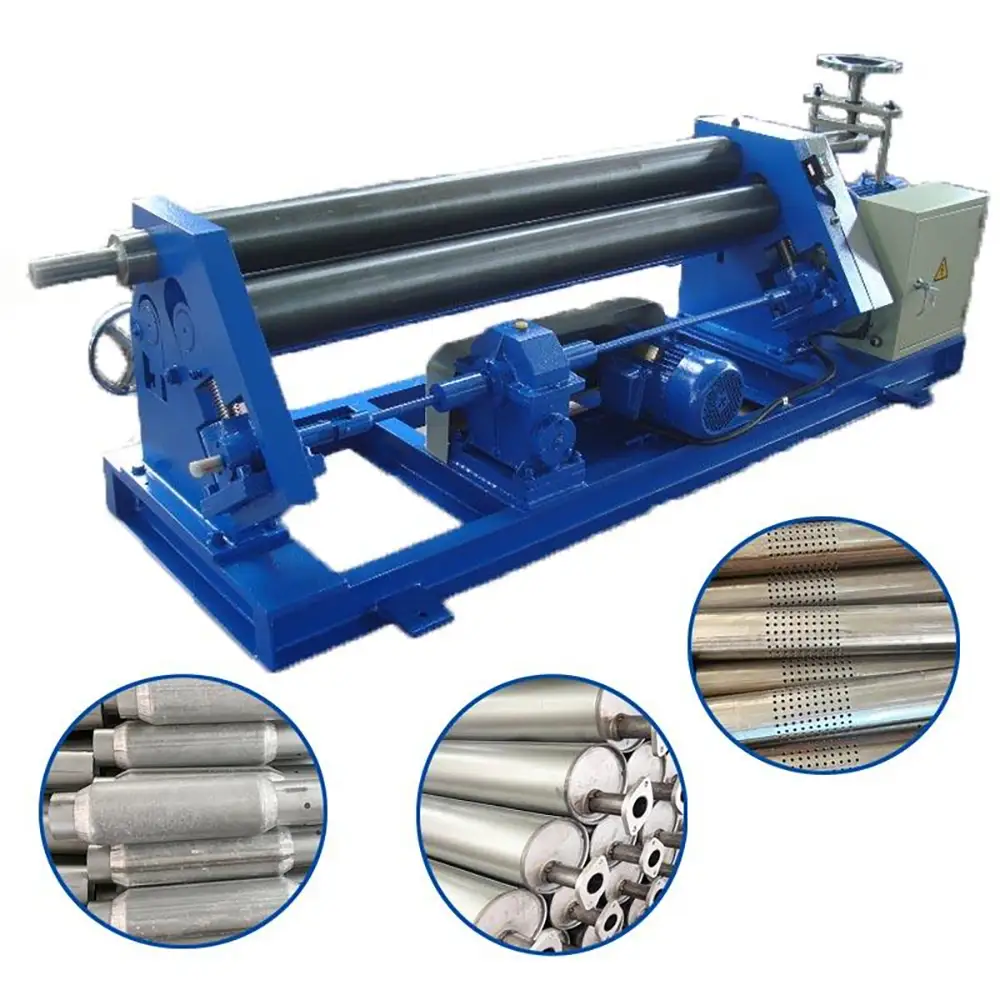
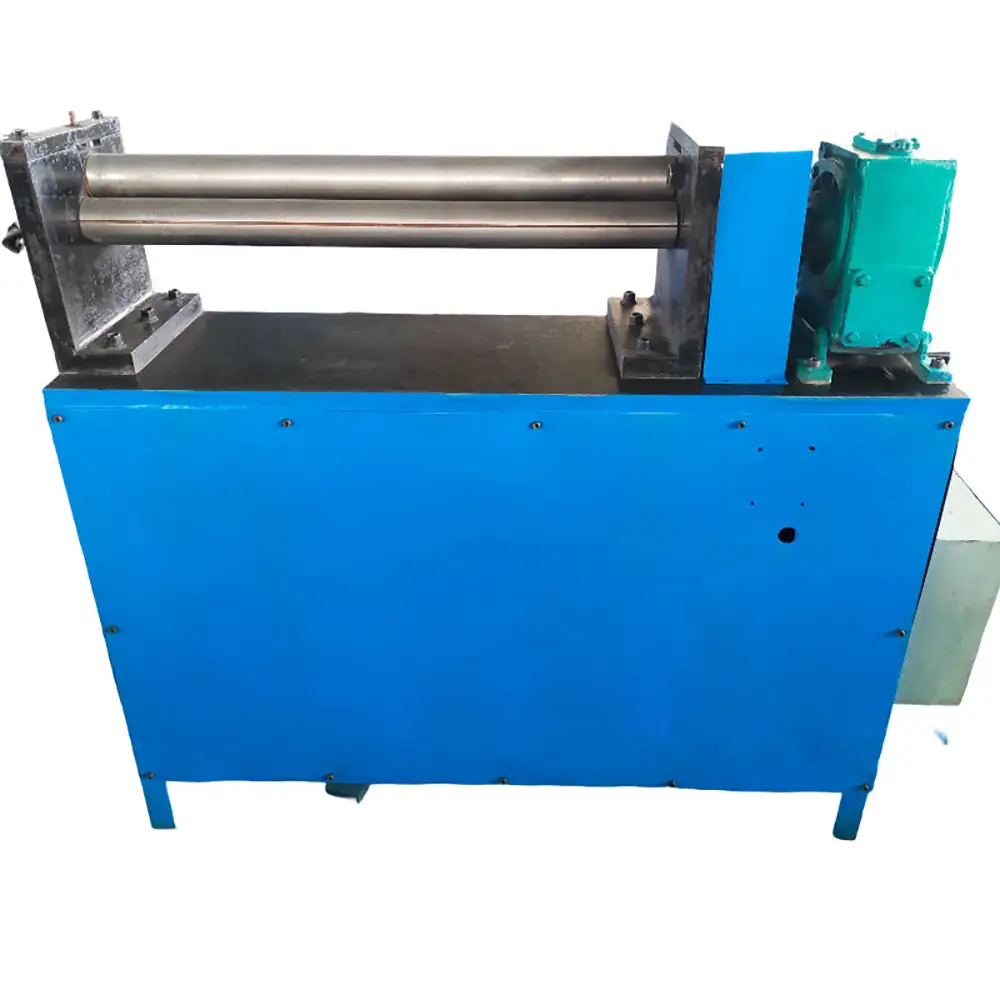
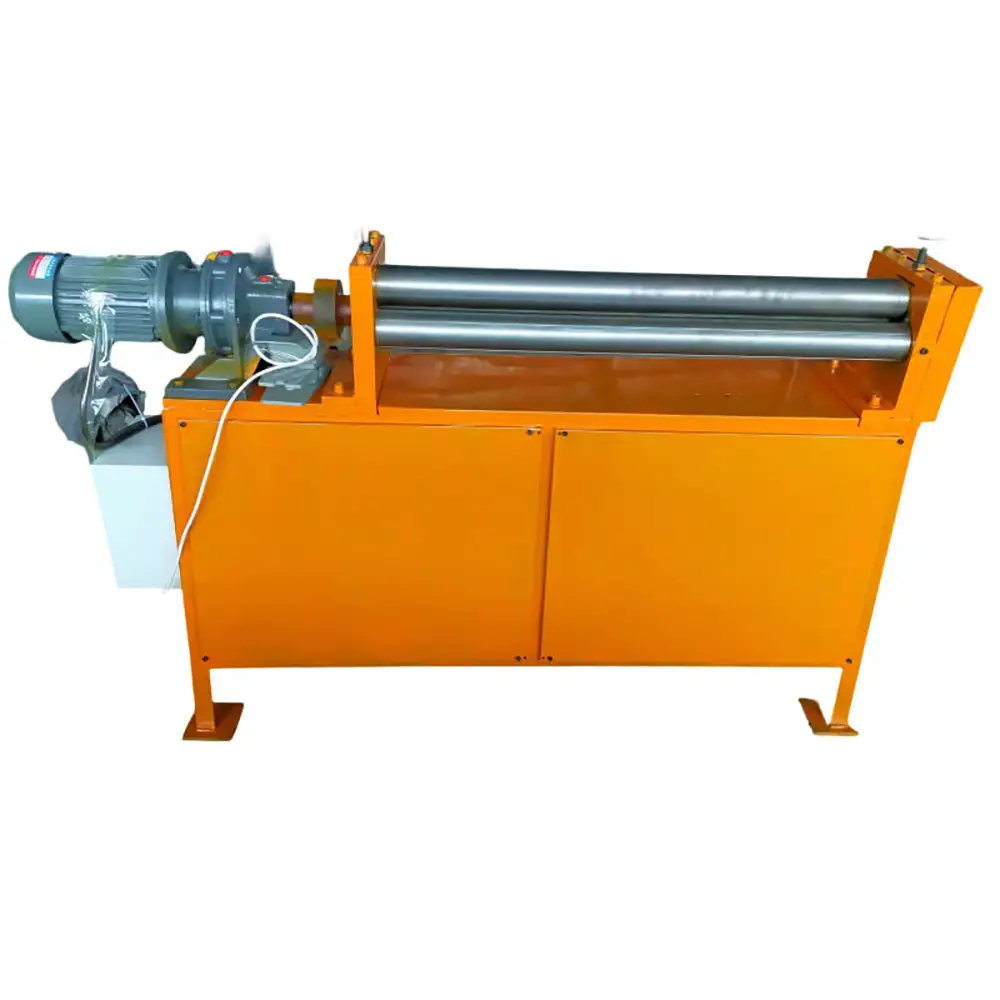
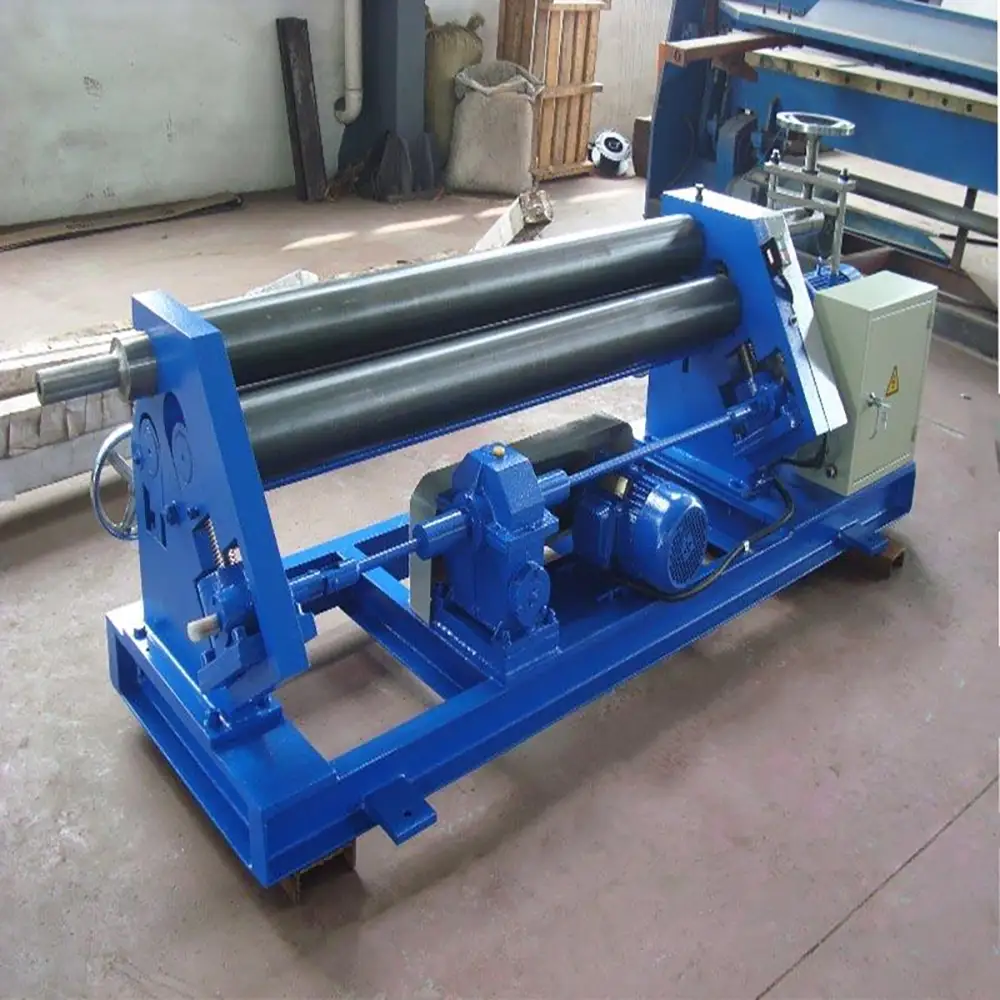
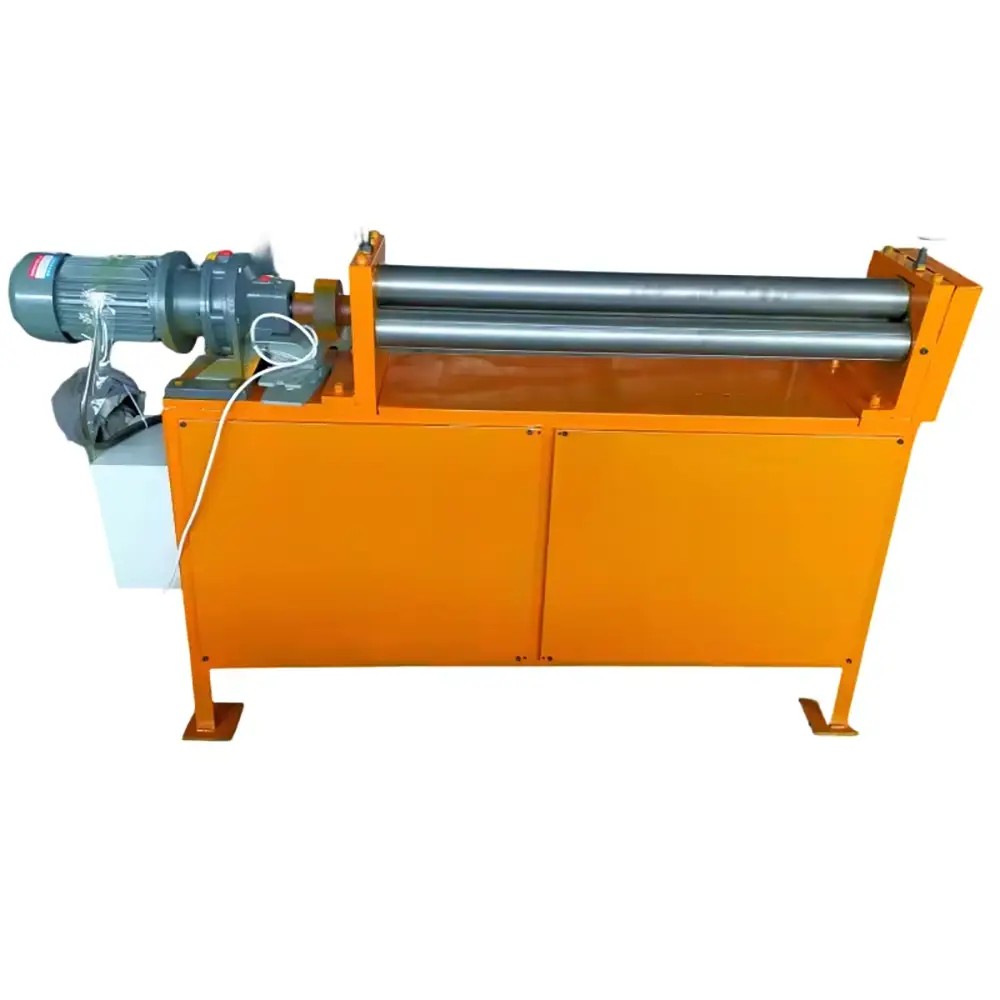
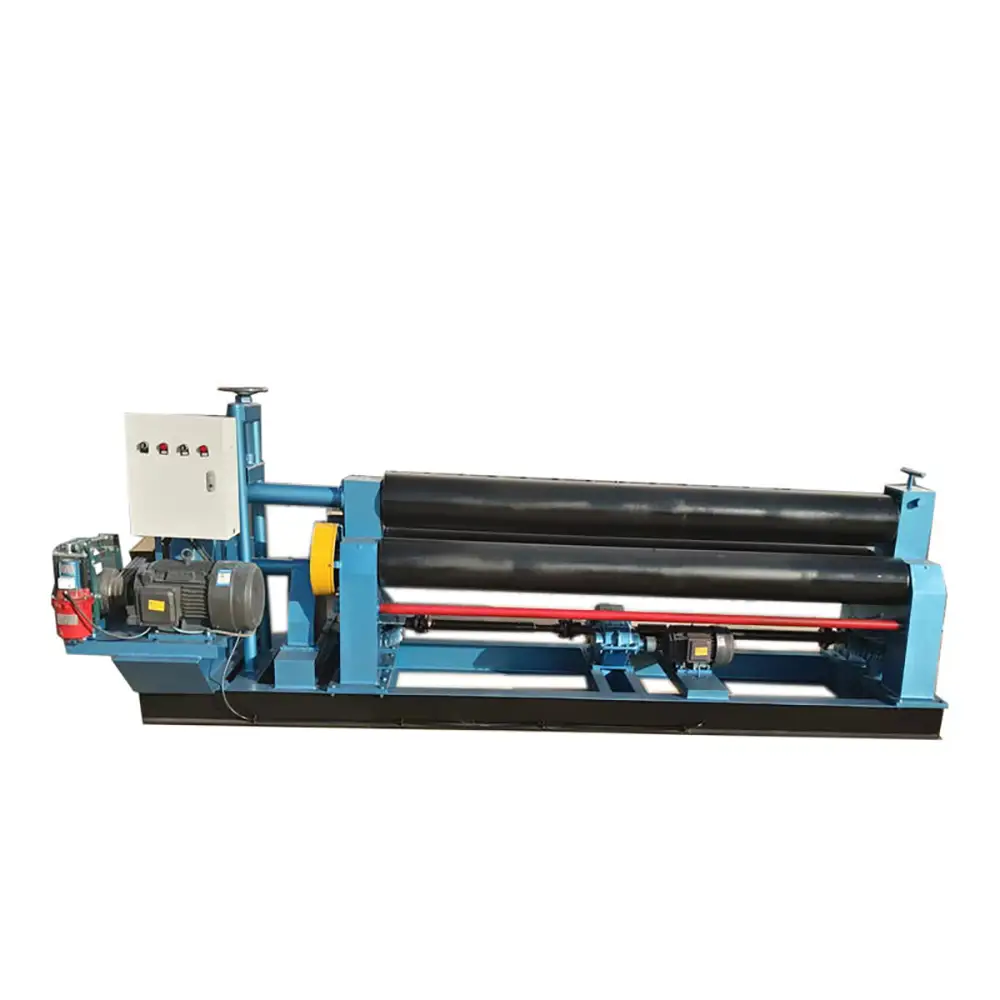
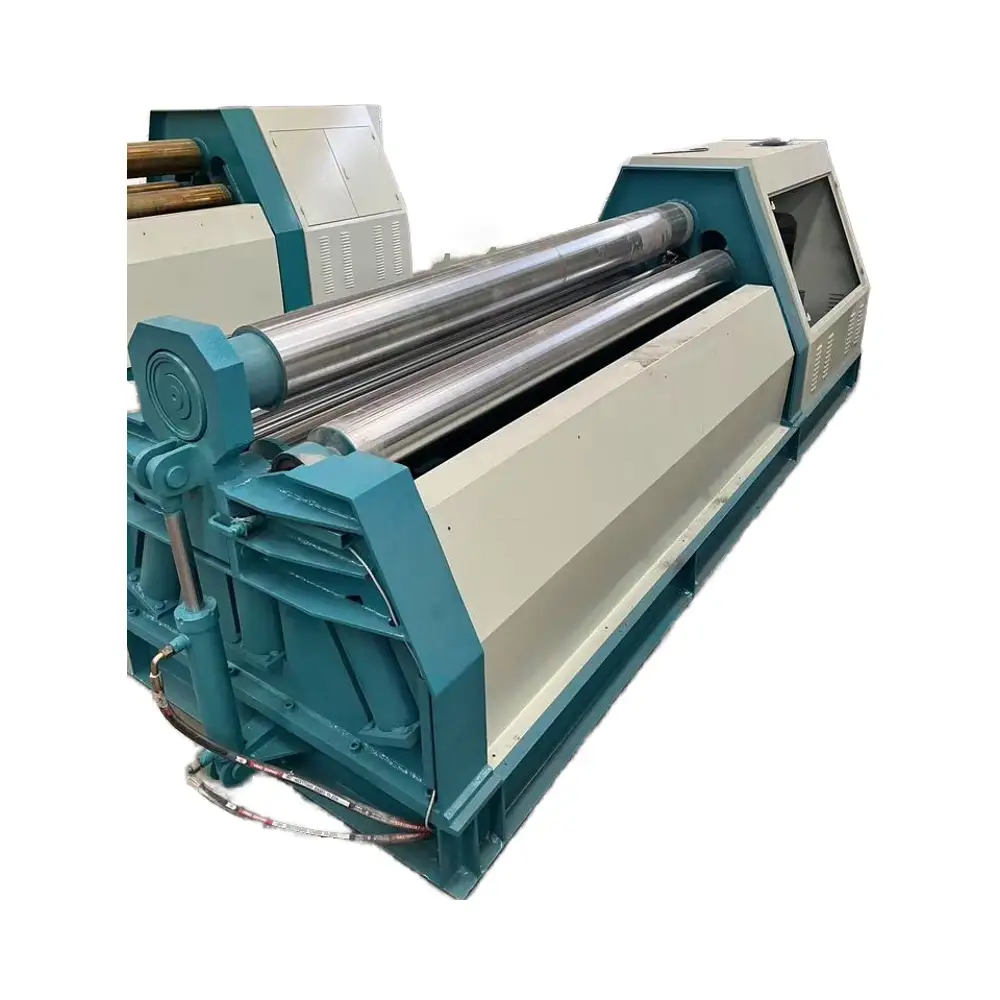
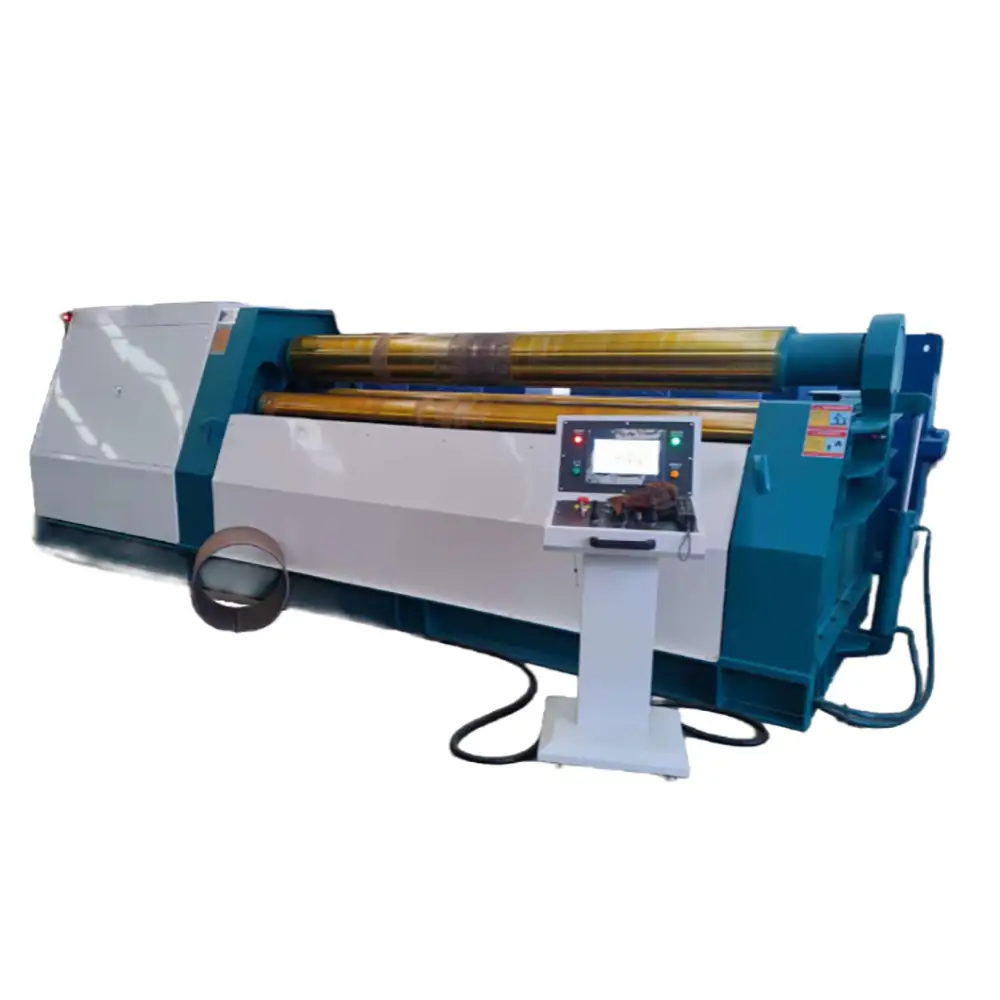
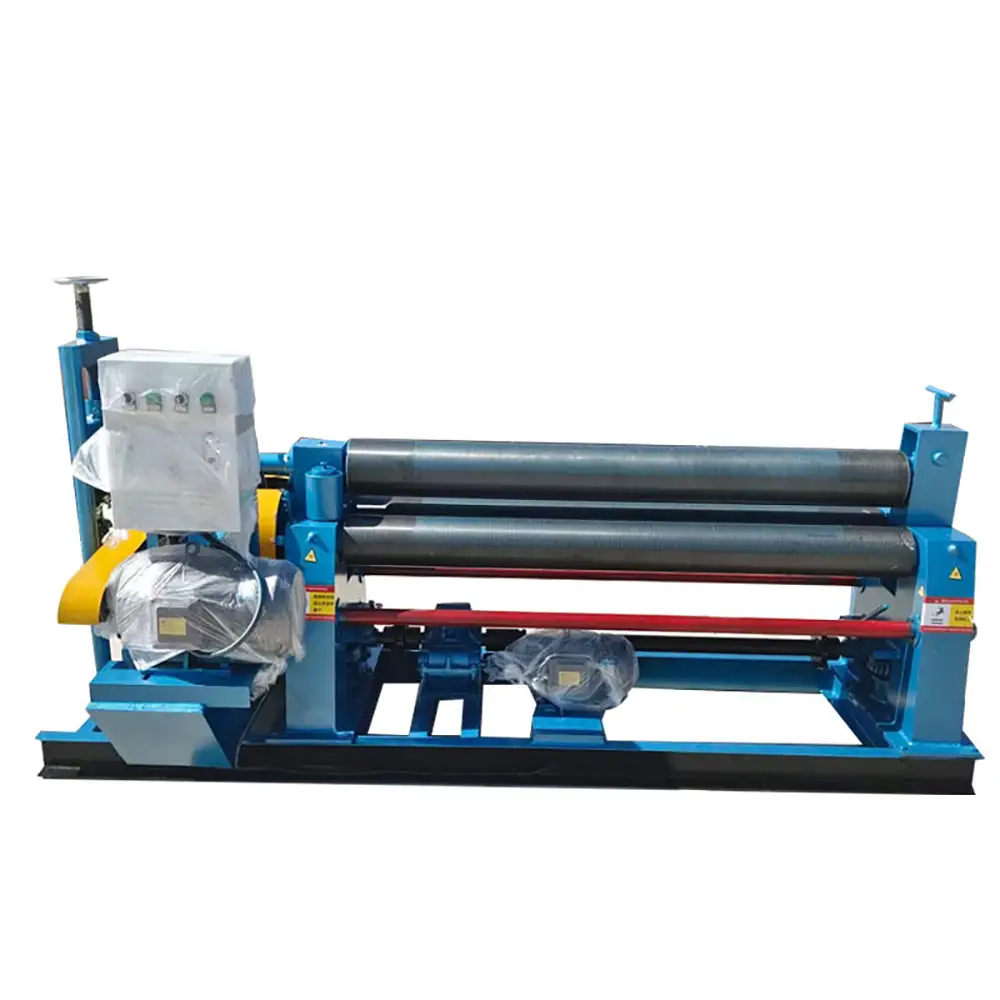
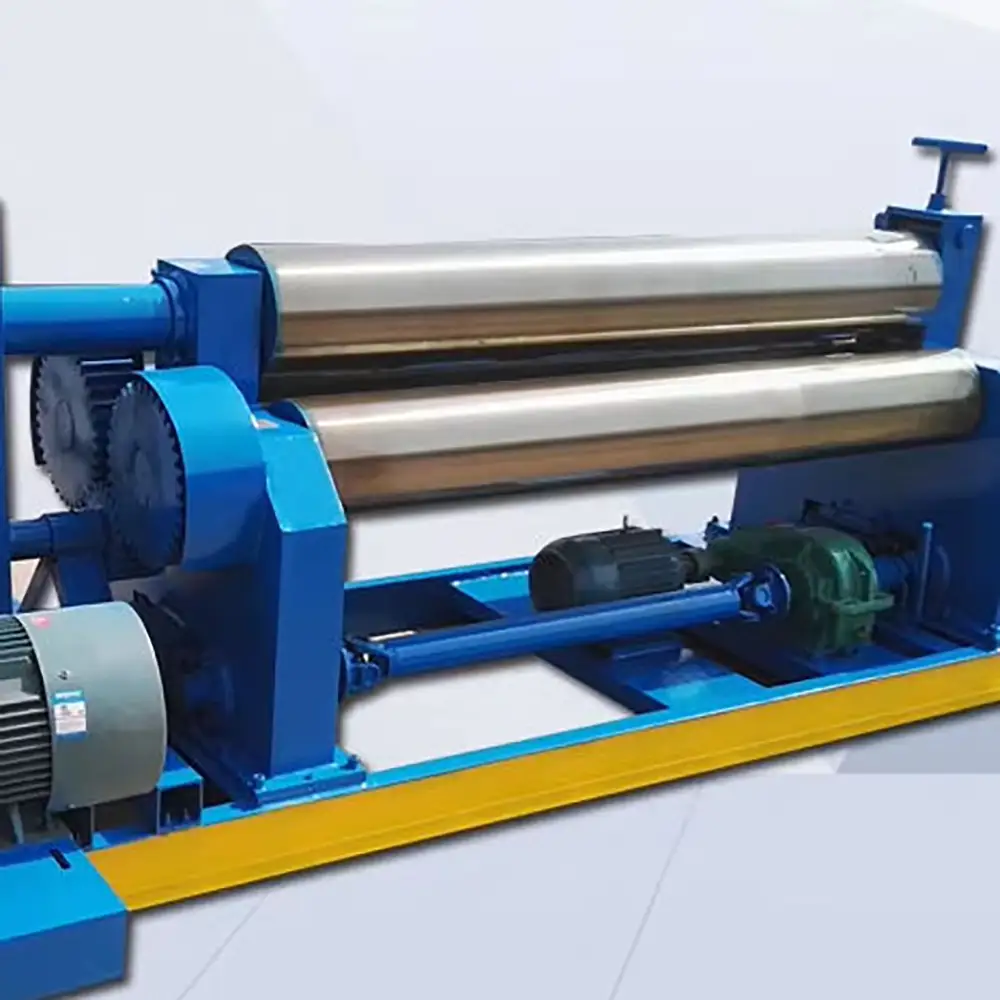
Overall dimensions: 1700*600*1200mm
The equipment features a compact structure. The frame is integrally welded with 50*50 angle iron, free from welding defects such as incomplete penetration or slag inclusion.
The worktable plate thickness is 20 mm, and the wall plate thickness is 30 mm. Both have undergone stress relief treatment to eliminate residual internal stress, ensuring sufficient strength and stability of the equipment.
Roller material: 45# carbon steel, quenched and tempered to guarantee the strength and toughness of the roller shafts.
Roller specifications: diameter 70 mm, length L≥750 mm; quantity: 3 pieces, all identical. 1.2 The equipment operates smoothly without abnormal noise.
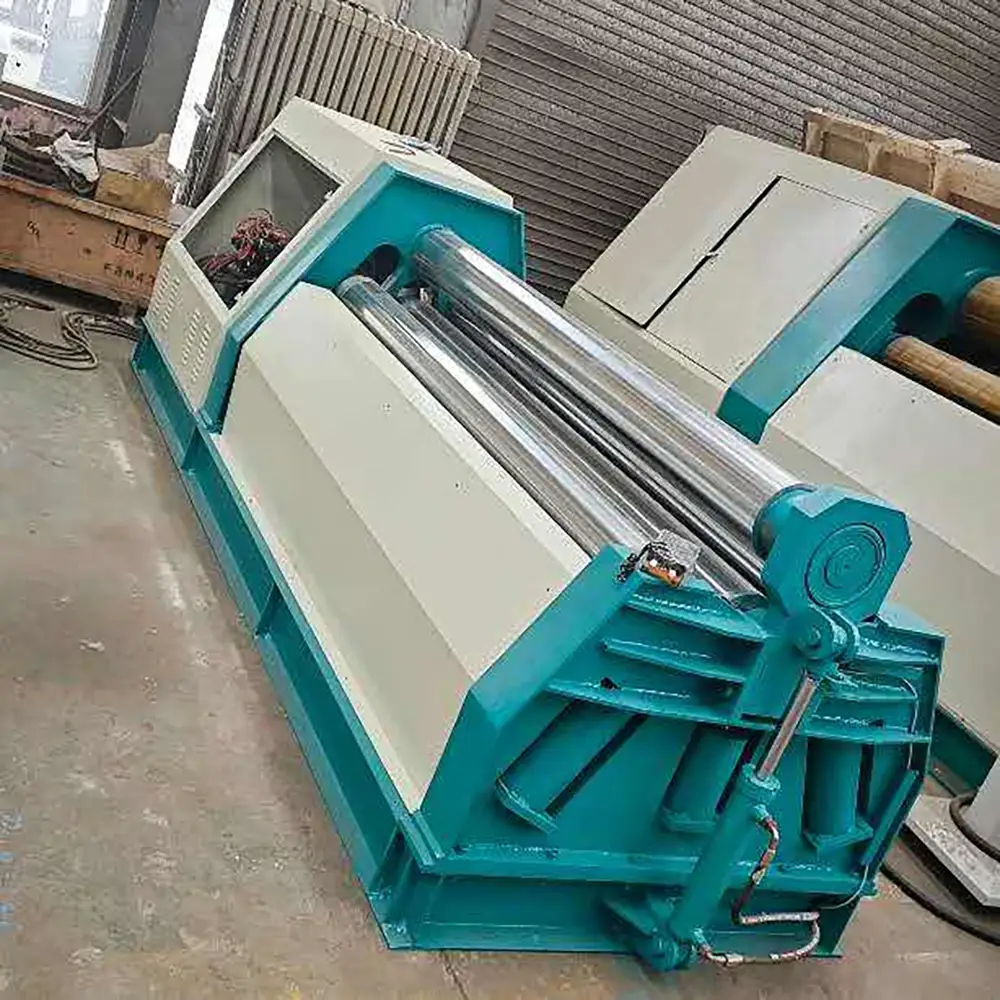
The 3 Rolls Automatic Iron CNC Cone Rolling Machine with Stainless Steel Rolling Capability is a specialized metal forming machine designed for producing conical and tapered sheet metal components. With a three-roll structure, automatic operation, CNC control, and motorized rolling, it provides an efficient solution for manufacturers producing exhaust cones, reducers, transition sections, ducts, funnels, and other tapered components.
Cone rolling requires more precise control than conventional cylindrical plate rolling because the two sides of the sheet travel through the forming area at different effective circumferential speeds. Correct roller adjustment, workpiece positioning, material preparation, and forming parameters are therefore important for achieving the required cone geometry.
This machine is suitable for compatible iron, carbon steel, stainless steel, and other sheet materials according to its rated working capacity. It can also be incorporated into an exhaust production line, where rolled cone sections are subsequently welded, ground, inspected, and assembled.
The actual processing capacity depends on the machine model, material grade, sheet thickness, sheet width, cone dimensions, roller configuration, CNC system, and production requirements.
Three-Roll Cone Rolling Design
The machine uses three forming rolls to progressively transform flat sheet metal into a tapered or conical shape. The three-roll configuration provides controlled support and forming during the rolling process.
Depending on the workpiece design, the production process may involve pre-bending, cone rolling, adjustment, and final shaping. Proper blank preparation is also important because the dimensions and geometry of the initial sheet directly influence the finished cone.
The machine can be used for both prototype work and repetitive production when the required material and cone dimensions are within the equipment's rated range.
Automatic CNC Operation
The CNC control system helps operators manage important rolling parameters and repeat production settings. This can be particularly useful for manufacturers producing multiple batches of similar exhaust components.
Once suitable parameters have been established, operators can use standardized settings for recurring workpieces. CNC control can reduce the need for repeated manual adjustments and help organize production procedures.
Actual forming accuracy depends on machine construction, CNC control, material properties, roller adjustment, blank accuracy, tooling, and operator setup. For precision applications, sample processing with the actual material is recommended.
Motorized Rolling System
The motorized rolling mechanism provides powered movement of the forming rolls, reducing the physical effort required for sheet metal forming compared with purely manual equipment.
Motorized operation is especially useful for repetitive industrial production and larger workpieces where controlled roll movement is important.
The actual motor power, rolling speed, and production cycle depend on the selected machine configuration. These specifications should be confirmed according to the required sheet dimensions and production volume.
Iron and Stainless Steel Applications
The machine can be configured for suitable iron-based materials, carbon steel, and stainless steel within its rated forming capacity.
Carbon steel is commonly used for general exhaust components, industrial ducts, reducers, and fabricated metal parts. Stainless steel is widely used when corrosion resistance, heat resistance, appearance, or long-term durability is important.
Stainless steel typically has different forming behavior and springback characteristics compared with mild steel. Therefore, stainless steel thickness, grade, and required cone dimensions should be considered when selecting the machine.
For high-strength steel, special alloys, or unusual materials, technical evaluation should be performed before production.
Exhaust Production Line Applications
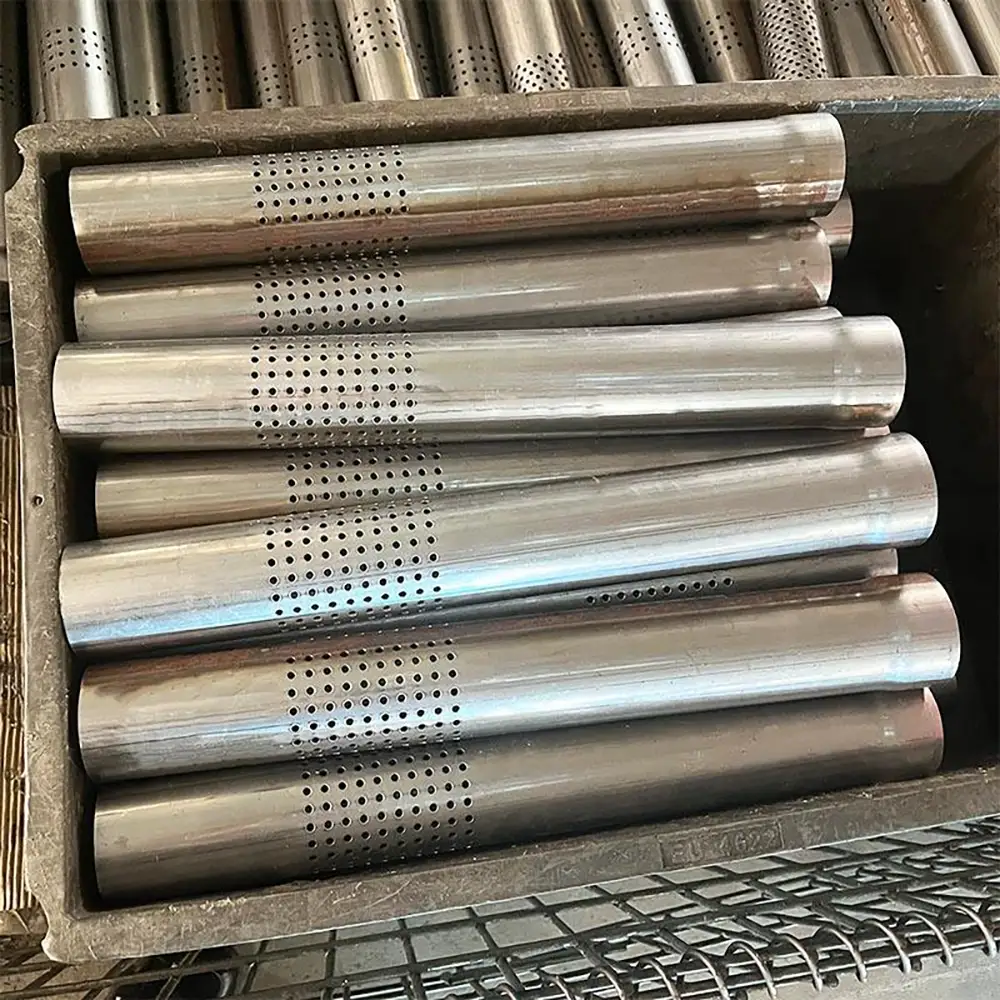
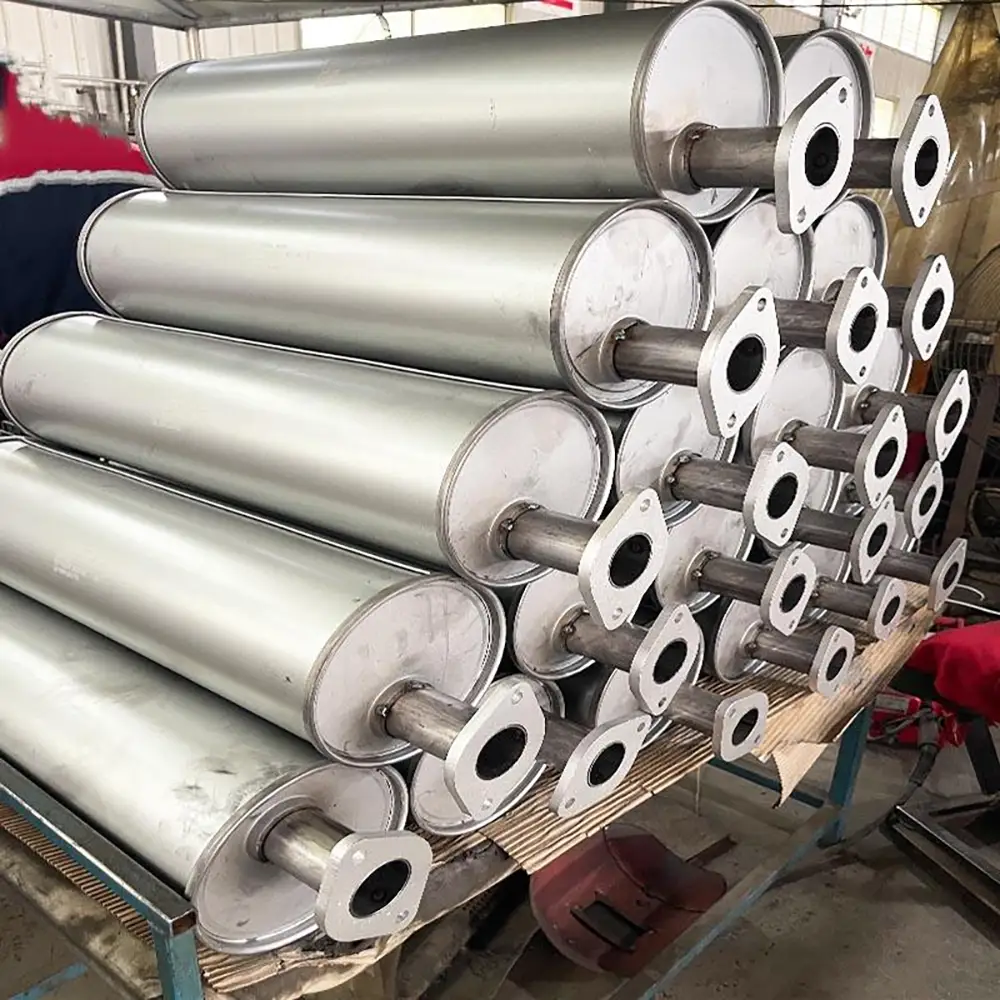
A major application for this machine is the production of tapered exhaust components.
Automotive and industrial exhaust systems may require cones, reducers, collectors, transition sections, adapters, and other components that connect different pipe diameters. These parts must be formed consistently to simplify subsequent welding and assembly.
A typical exhaust manufacturing workflow may include:
Sheet Cutting → Edge Preparation → Cone Rolling → Seam Welding → Grinding → Inspection → Assembly
The actual production sequence varies according to the exhaust product and factory process.
The cone rolling machine can serve as an important forming stage within this production line, preparing tapered components for downstream welding and finishing.
Other Industrial Applications
Although exhaust manufacturing is an important application, the machine is not limited to automotive exhaust components. It can also be used for producing:
Conical Ducts
Metal Reducers
Industrial Funnels
Metal Hoppers
Ventilation Components
Chimney Components
Transition Sections
Conical Tanks
Dust Collection Components
Custom Tapered Metal Parts
Fabricated Stainless Steel Components
The suitability for each application depends on the material dimensions and required cone geometry.
Cone Dimensions and Machine Selection
Selecting the correct machine requires more than simply identifying the material. Buyers should consider the complete geometry of the finished cone.
Important specifications include:
Maximum Rolling Width
Maximum Sheet Thickness
Minimum Cone Diameter
Maximum Cone Diameter
Cone Angle
Material Grade
Material Yield Strength
Required Rolling Radius
Production Volume
CNC Control Requirements
Motor Configuration
The small-end diameter, large-end diameter, cone angle, sheet thickness, and material strength can all affect machine selection.
For an accurate quotation, customers should provide product drawings or detailed dimensions whenever possible.
High-Safety Equipment Design
The machine is designed for controlled industrial operation, and safety-oriented features may be incorporated according to the selected configuration. Depending on the machine model, these may include emergency stop functions, electrical protection, operator controls, protective devices, and other safety-related components.
However, “high safety” should not be interpreted as a universal certification or guarantee of compliance with every country's regulations. Safety requirements vary by destination market and machine configuration.
Operators should receive appropriate training, follow the manufacturer's operating instructions, use suitable personal protective equipment, and keep hands and clothing away from moving rolls and forming areas.
Production Efficiency
Automatic CNC cone rolling can help improve production consistency for repeated manufacturing orders. Standardized parameters can reduce unnecessary setup work and make it easier to reproduce commonly manufactured cone dimensions.
This is particularly valuable for exhaust production lines where multiple similar components may be produced continuously.
Actual production efficiency depends on sheet size, material thickness, cone geometry, loading method, operator workflow, CNC settings, and downstream processes such as welding and grinding.
Quality Control
Quality control is important when producing tapered components because the finished cone must often connect with pipes, mufflers, flanges, ducts, or other components.
Typical inspection points can include:
Small-End Diameter
Large-End Diameter
Cone Angle
Overall Length
Roundness
Seam Alignment
Edge Position
Surface Condition
Accurate blank preparation and consistent roller adjustment can help improve finished-part repeatability.
For exhaust applications, dimensional inspection before welding can help reduce fitting problems during later assembly.
Maintenance
Routine maintenance helps maintain stable machine performance. Operators should regularly inspect forming rolls, bearings, drive components, electrical systems, CNC controls, fasteners, protective devices, and other relevant components.
The roller surfaces should be kept clean and free from material buildup. Lubrication should be performed according to the manufacturer's recommendations.
Electrical and CNC maintenance should be performed by appropriately qualified personnel when required. Preventive maintenance can help reduce unexpected downtime and support reliable long-term production.
OEM and Custom Manufacturing
Different exhaust manufacturers have different requirements for cone dimensions, material grades, sheet thicknesses, production volumes, and automation levels.
For OEM and custom projects, the machine can be evaluated according to the customer's actual products. Buyers can provide drawings, samples, material specifications, photographs, and production targets to help determine an appropriate machine configuration.
The 3 Rolls Automatic CNC Cone Rolling Machine provides a specialized solution for manufacturers producing iron and stainless steel tapered components. With three-roll forming, motorized operation, CNC control, and applications in exhaust production lines, it offers a flexible approach to repeatable cone rolling and industrial sheet metal forming.
FAQs
1. What is a 3-roll CNC cone rolling machine?
It is a sheet metal forming machine that uses three rolls and CNC-controlled operation to form flat metal sheets into tapered or conical components.
2. Can it process stainless steel?
Yes. The machine can be configured for suitable stainless steel grades and thicknesses within its rated forming capacity.
3. Can it process iron and carbon steel?
Yes. Suitable iron-based materials and carbon steel can be processed when their dimensions and mechanical properties are within the machine's working range.
4. Is it suitable for exhaust production?
Yes. It can be used to manufacture exhaust cones, reducers, transition sections, collectors, and other tapered components for exhaust systems.
5. What does the CNC system do?
The CNC system helps manage rolling parameters and repeat production settings, making recurring cone-forming operations easier to standardize.
6. What does the motorized system provide?
The motorized rolling system provides powered roll movement, reducing manual effort and supporting more consistent industrial forming operations.
7. Can the machine make different cone sizes?
Yes. Different cone sizes can be produced within the machine's rated working range. The required small-end diameter, large-end diameter, cone angle, and material thickness should be provided for machine selection.
8. What determines the maximum rolling thickness?
Maximum thickness depends on material strength, sheet width, machine structure, roller configuration, motor capacity, and the rated specifications of the selected model.
9. Can it be integrated into an exhaust production line?
Yes. It can be positioned as the cone-forming stage within a workflow that may include cutting, welding, grinding, inspection, and assembly.
10. What safety features can be included?
Depending on configuration, the machine may include emergency stops, electrical protection, operator controls, protective devices, and other safety-related features.
11. Can the machine be customized?
Yes. Machine capacity, CNC configuration, working dimensions, motor configuration, and other specifications can be evaluated according to the application.
12. What information is needed for a quotation?
Provide material grade, sheet thickness, sheet width, cone small-end diameter, large-end diameter, cone angle, production volume, and product drawings if available.
Why Choose Us
Three-Roll Cone Forming – Designed specifically for producing tapered and conical sheet metal components.
Automatic CNC Operation – Supports standardized rolling parameters and repeatable production for recurring workpieces.
Motorized Rolling – Powered roll movement helps reduce manual effort and supports industrial production workflows.
Iron & Stainless Steel Processing – Suitable for compatible iron, carbon steel, stainless steel, and other materials within rated capacity.
Exhaust Production Applications – Designed for exhaust cones, reducers, collectors, transition sections, and related components.
Safety-Oriented Configuration – Can incorporate emergency stops, operator controls, electrical protection, and protective devices according to configuration.
Custom Machine Solutions – Machine capacity and configuration can be evaluated according to cone dimensions, material, thickness, and production volume.
Prev:
4-Axis CNC Pyramid Plate Roller | Precision Bending for Steel Cylinders
Next:
3 Rolls Automatic CNC Cone Rolling Machine for Iron & Stainless Steel High Safety Equipment for Exhaust Production Line
TAG:
Cone Forming Machine,
Automatic Metal Forming Machine,
Sheet Metal Forming Equipment,
Exhaust Production Equipment,
Automatic Cone Rolling Machine,
Stainless Steel Cone Rolling Machine,
Steel Cone Rolling Machine,
Carbon Steel Cone Rolling Machine,
CNC Cone Rolling Machine,
Metal Cone Rolling Machine,
Metal Cone Forming Machine,
Conical Sheet Metal Rolling Machine,
Metal Reducer Forming Machine,
Metal Sheet Rolling Machine,
Three Roll Plate Rolling Machine,
Three Roll Cone Rolling Machine,
Automatic Sheet Metal Rolling Machine,
Iron Sheet Rolling Machine,
Exhaust Manufacturing Machine,
CNC Metal Forming Machine,
Sheet Metal Cone Rolling Machine,
Automatic CNC Cone Rolling Machine,
Stainless Steel Rolling Machine,
Industrial Cone Rolling Equipment,
CNC Sheet Metal Rolling Machine,
Exhaust Cone Rolling Machine,
Exhaust Reducer Rolling Machine,
Automotive Exhaust Cone Machine,
Exhaust Production Line Machine,
Stainless Steel Exhaust Machine,
Related Category:
3 Rolls Automatic CNC Cone Rolling Machine,Iron Cone Rolling Machine,Stainless Steel Cone Rolling Machine,CNC Cone Rolli China, suppliers, manufacturers, factory, customized, wholesale, quotation, made in China