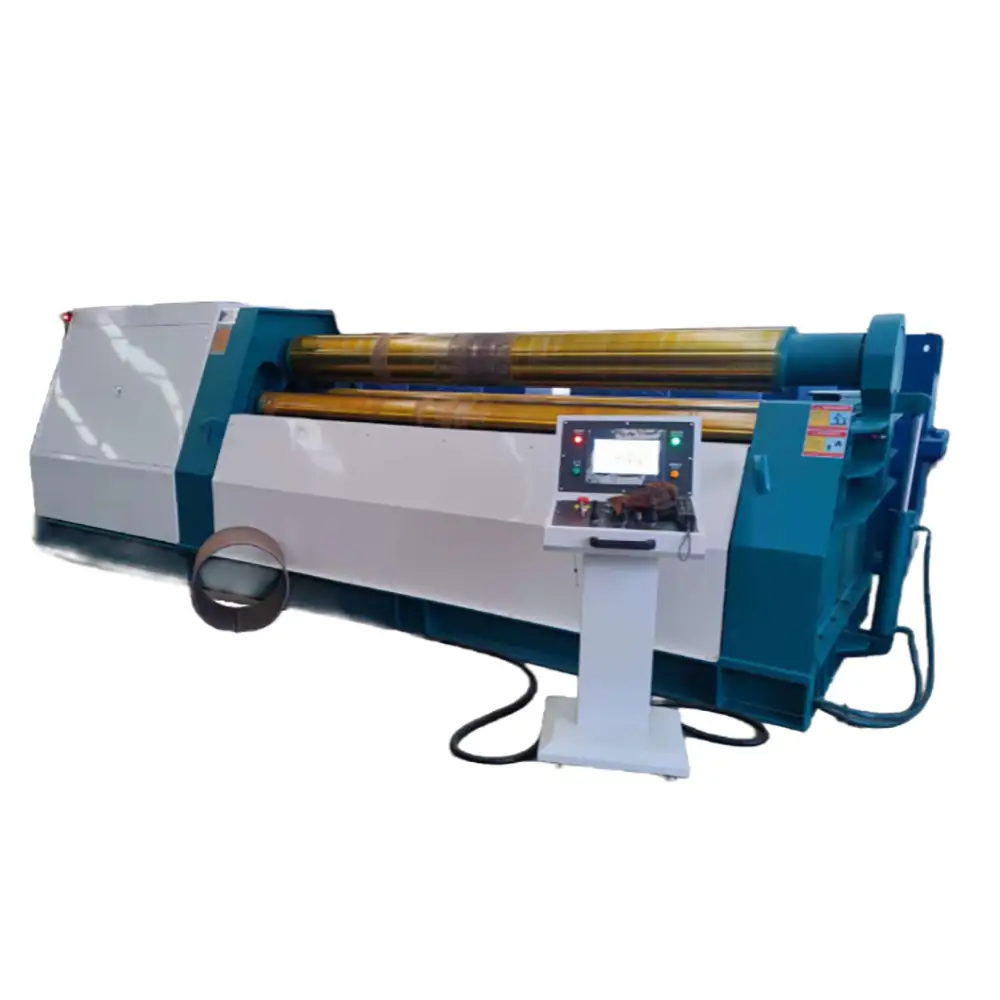
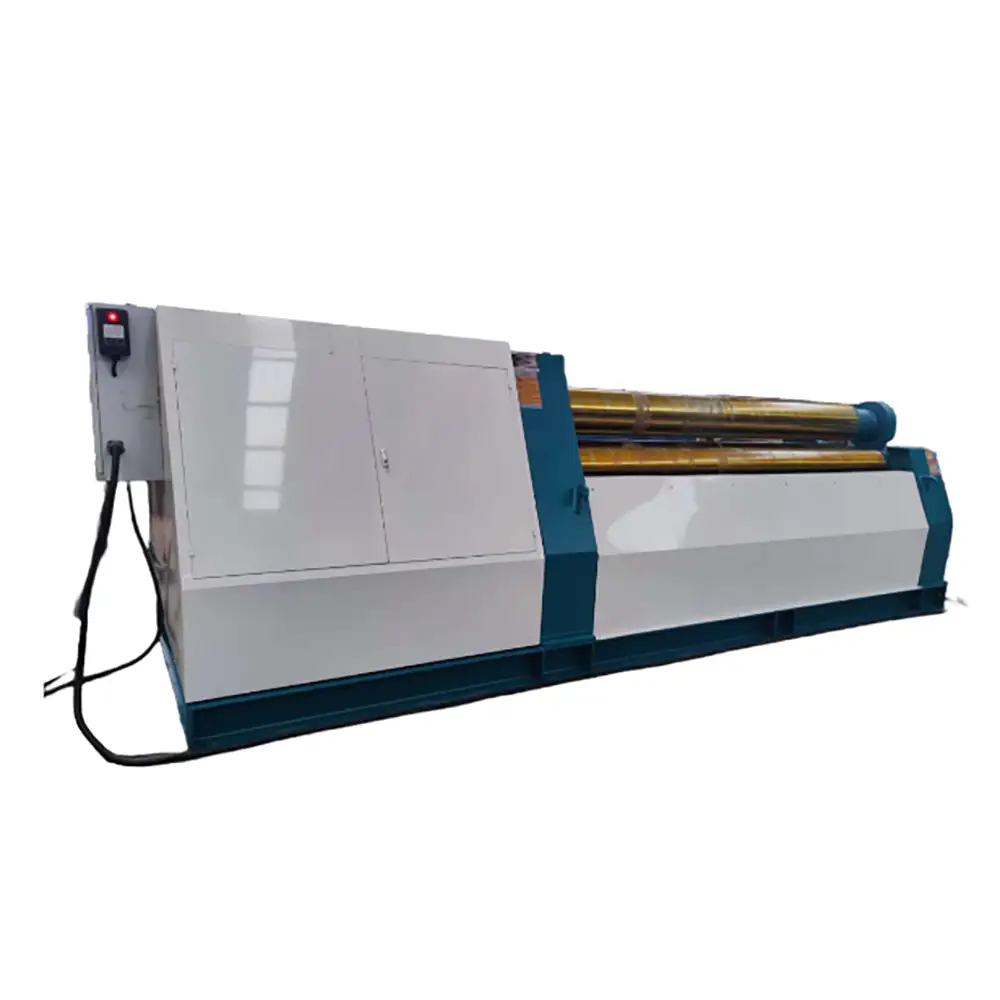
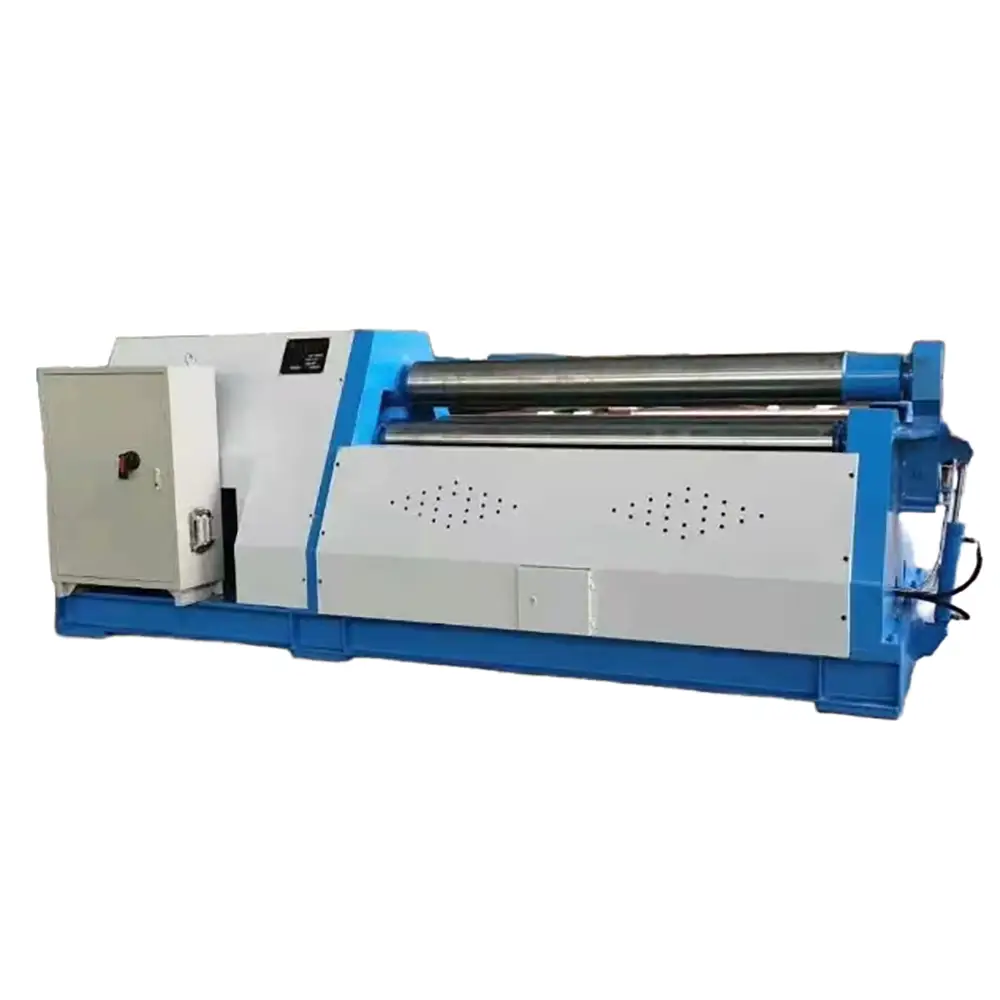
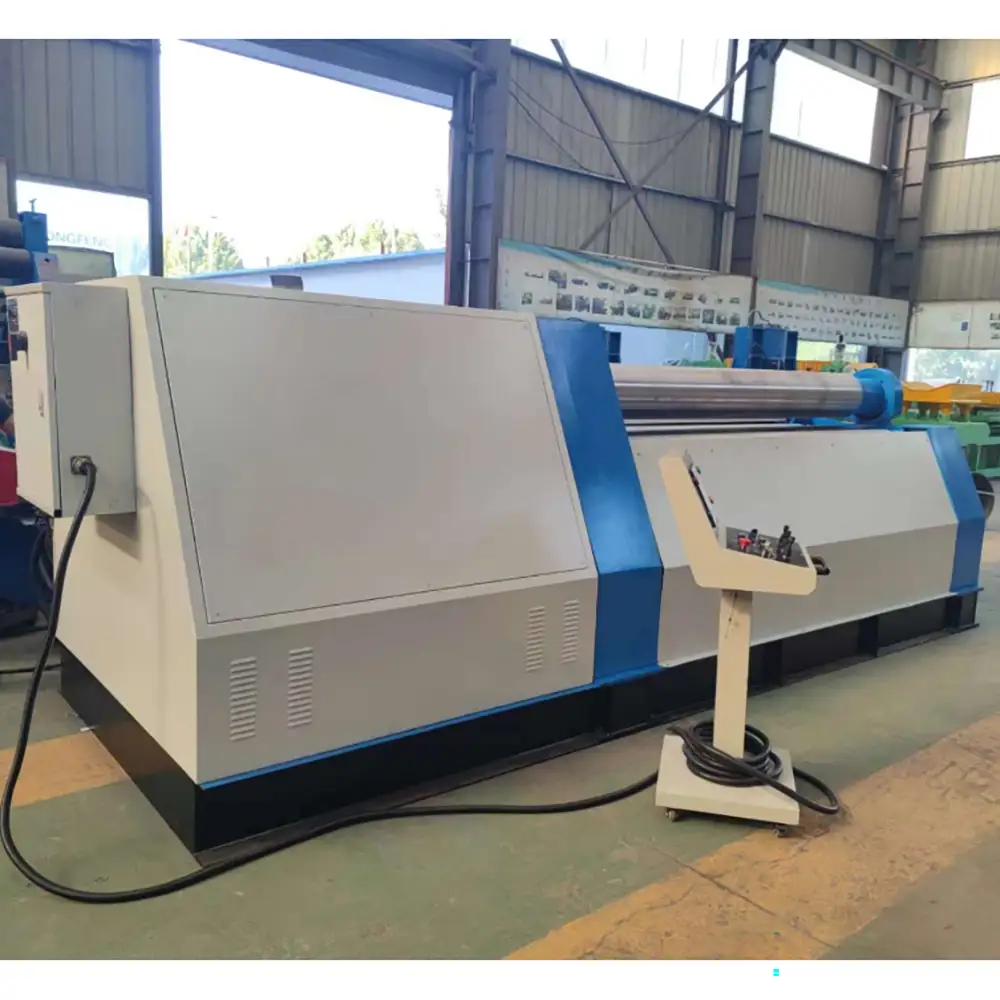
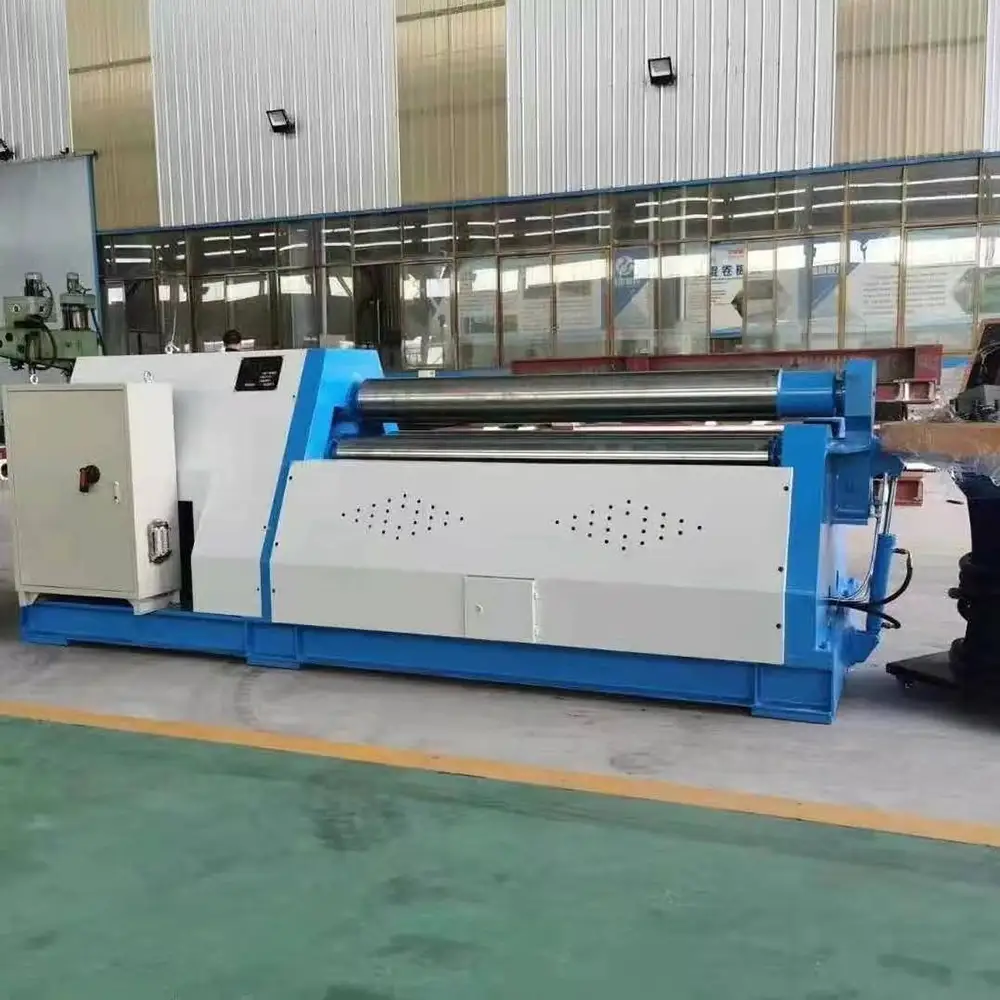
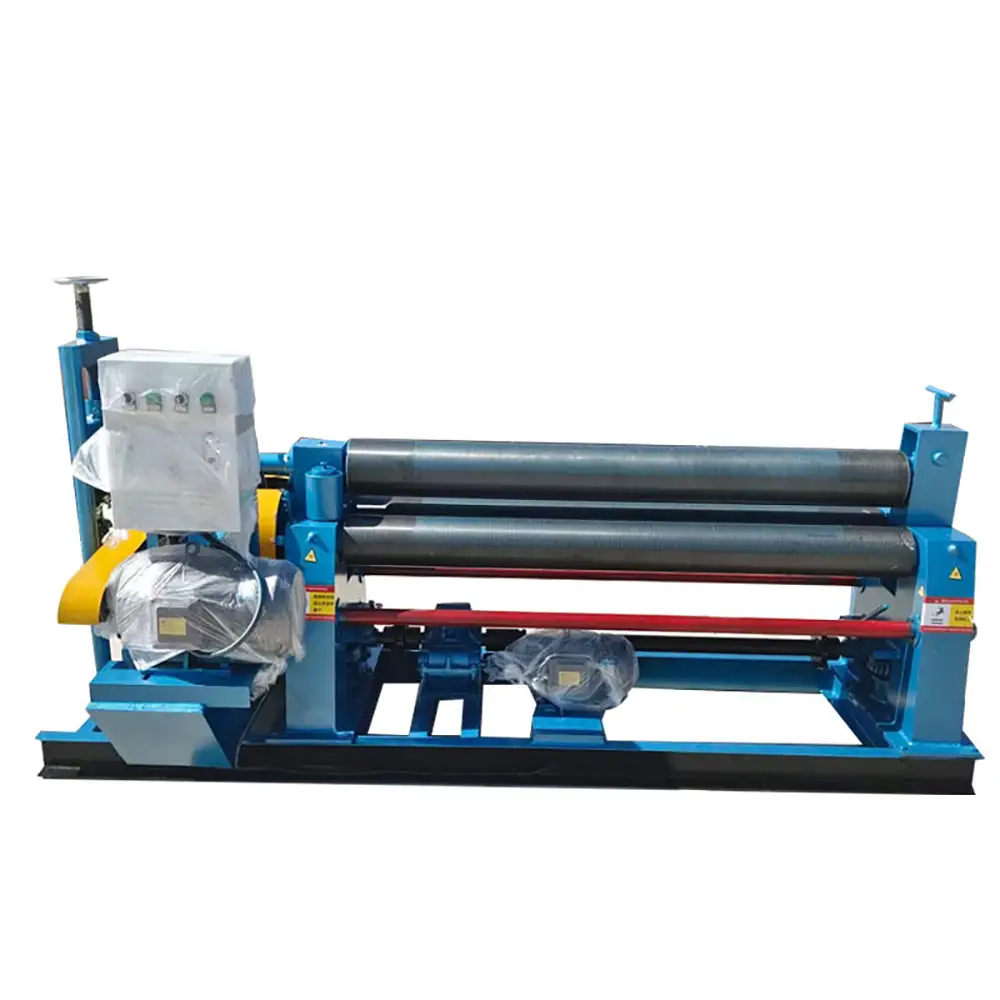
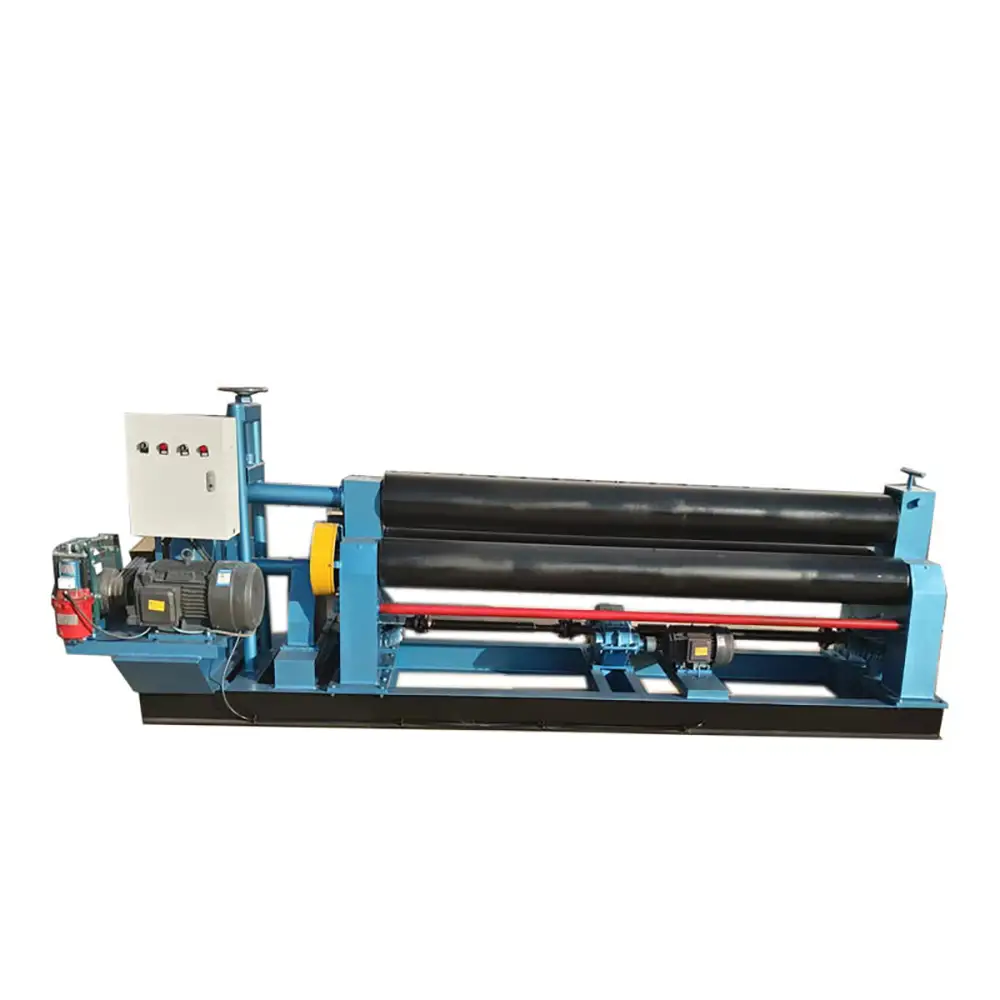
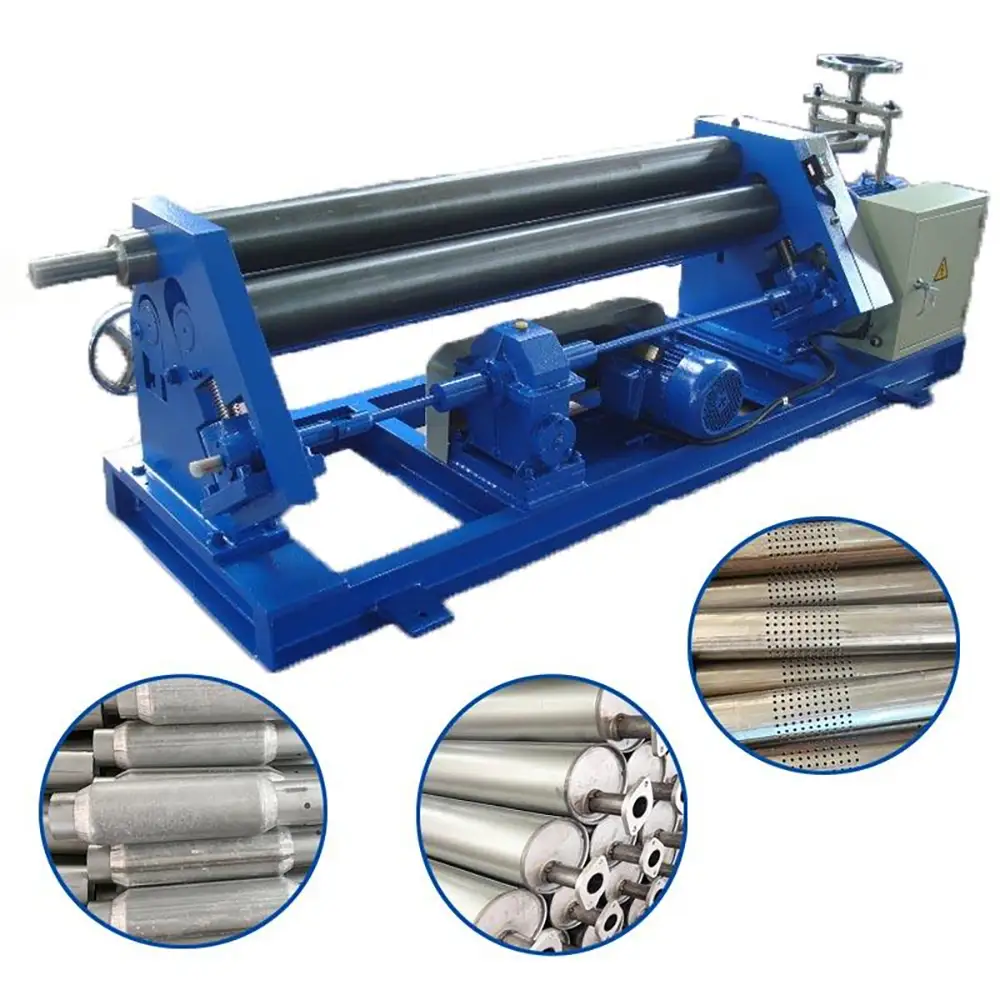
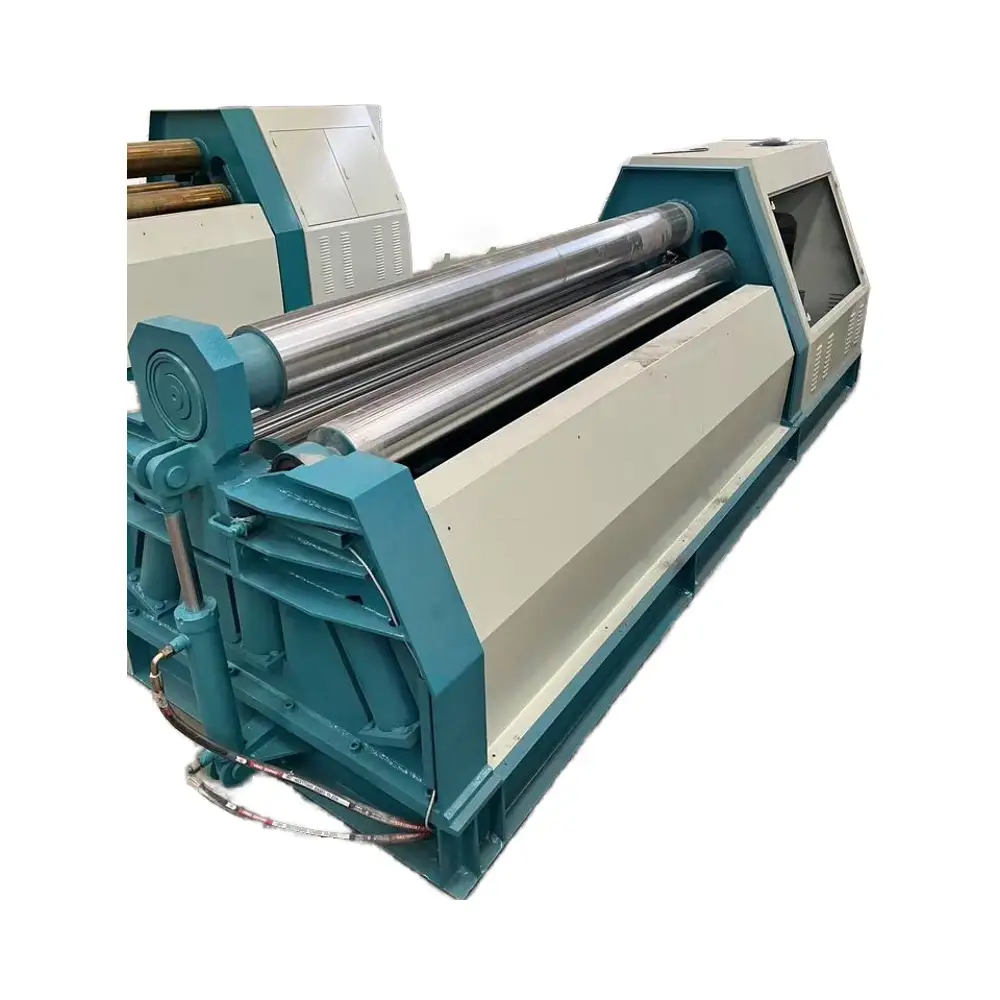
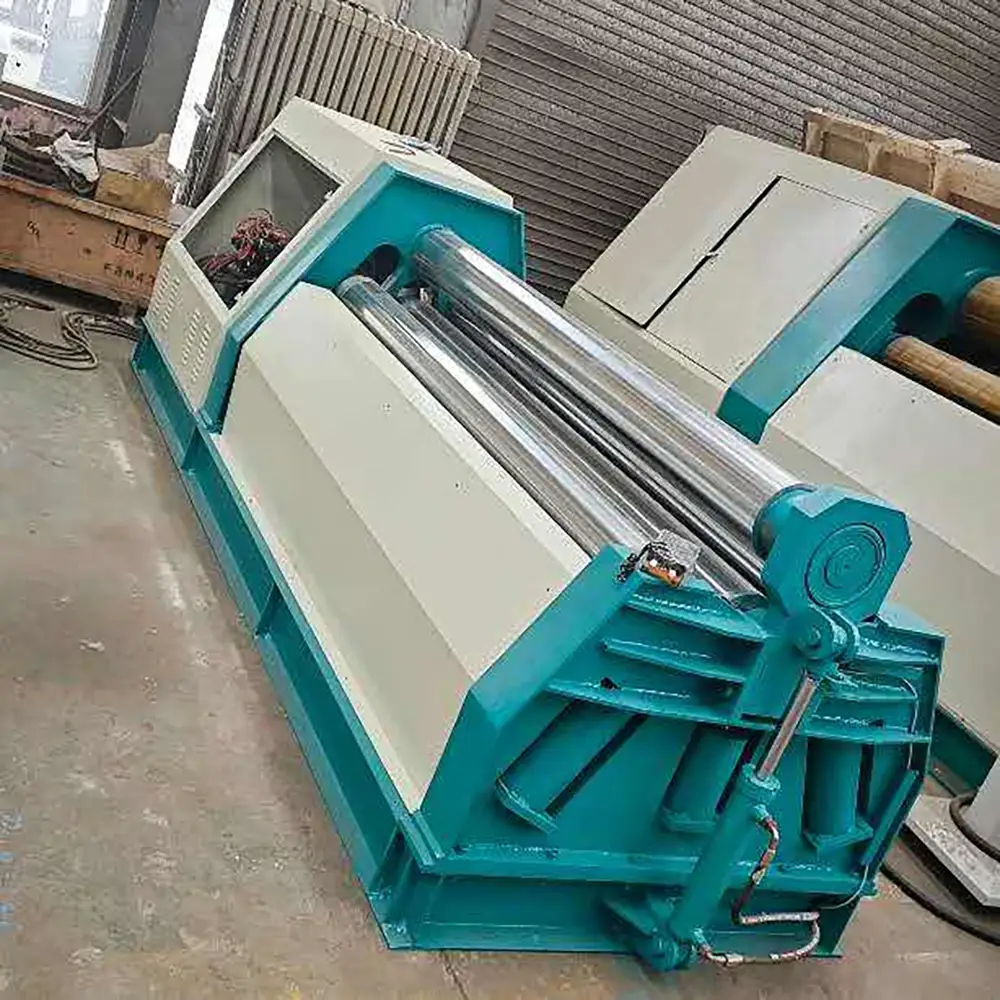
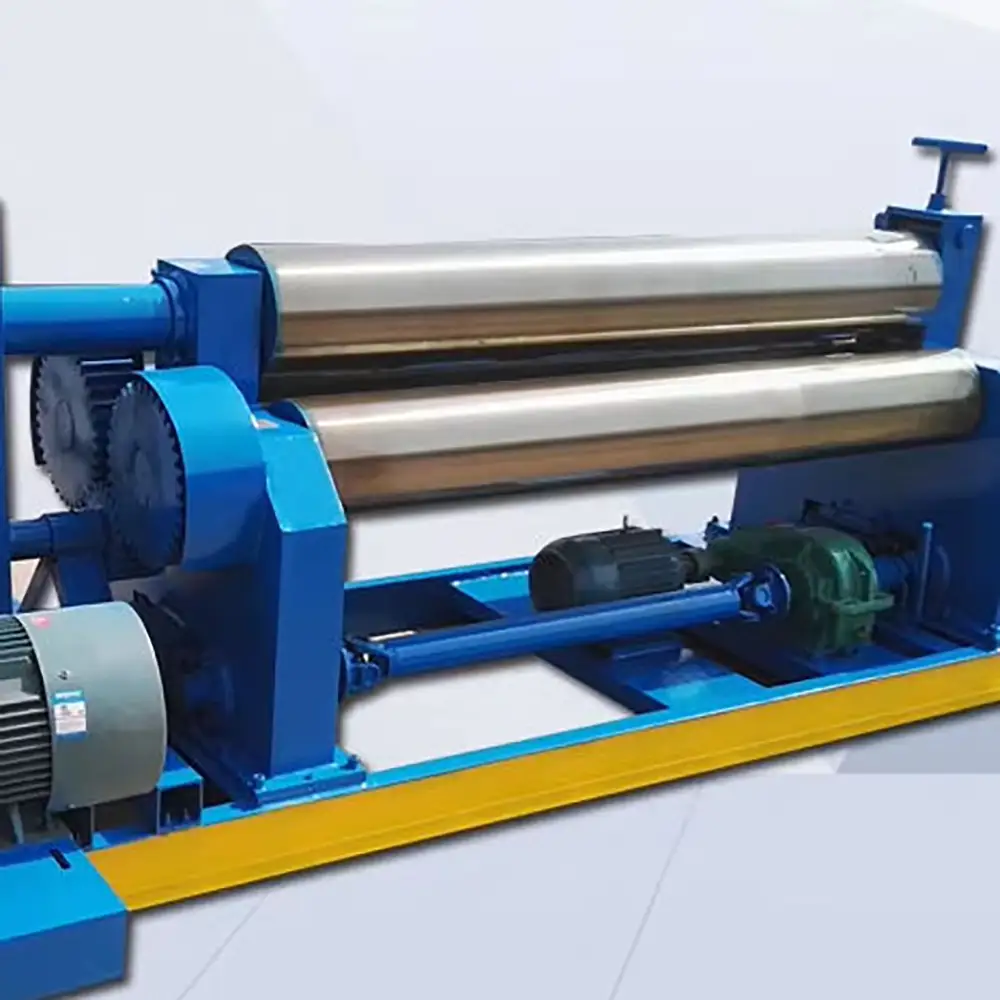
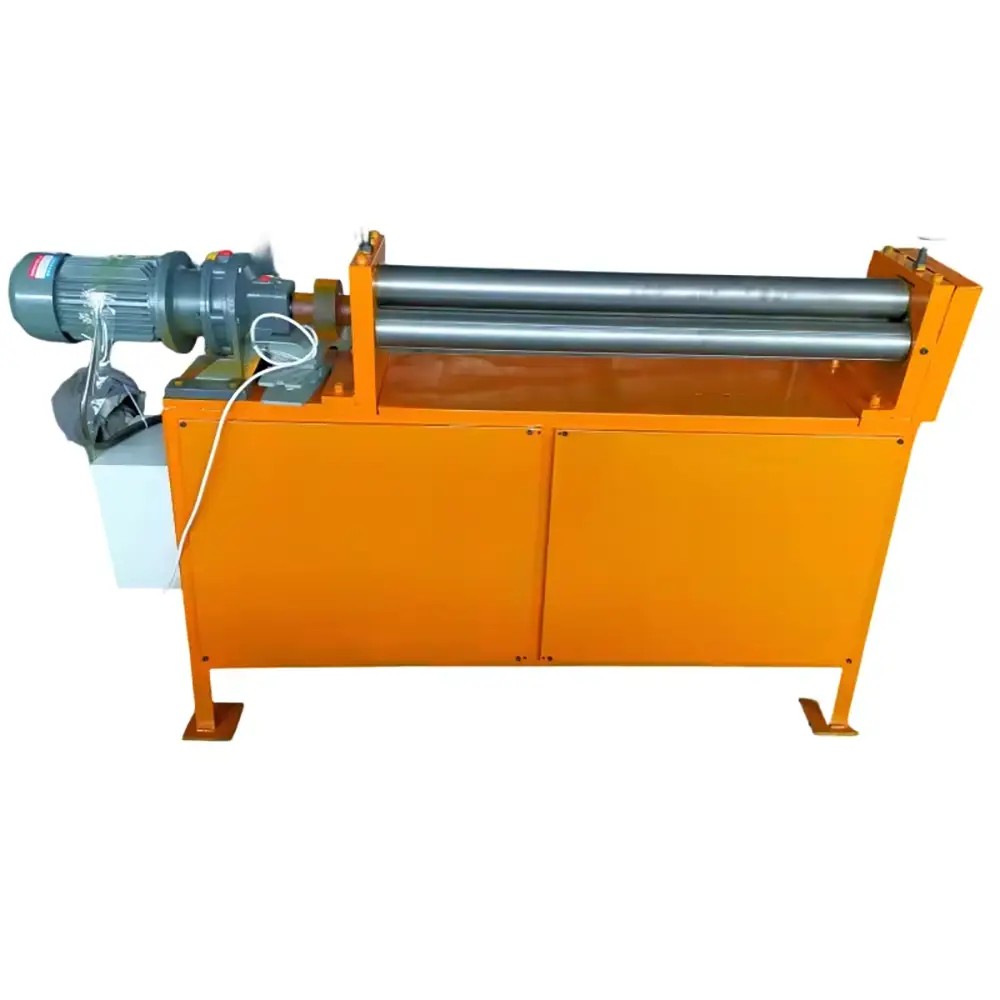
The 4-Axis CNC Pyramid Plate Roller is an advanced metal forming machine designed for precision plate bending, cylinder rolling, and high-efficiency fabrication of steel and other metal components. With CNC-controlled operation and a pyramid-style roller arrangement, this plate rolling machine provides accurate and repeatable forming for manufacturers producing cylindrical shells, tanks, pipes, pressure vessel components, and other curved metal structures.
Compared with conventional plate rollers, a 4-axis CNC configuration provides greater control over the movement of the forming rollers. This allows operators to manage the bending process more accurately and achieve consistent results across repeated production jobs. The machine can be configured for different plate thicknesses, widths, materials, and cylinder diameters according to production requirements.
|
item |
value |
|
max. working length (mm) |
2500 |
|
max. plate thickness (mm) |
6 |
|
motor power (kw) |
5.5 |
|
machine type |
Roller-Bending Machine |
|
key selling points |
Automatic |
|
Upper roll diameter |
210MM |
|
Lower roll diameter |
190MM |
|
Side roller diameter |
170MM |
|
Plate yield limit |
≤245Mpa |
Precision 4-Axis CNC Control
The CNC control system is one of the key advantages of this 4-axis pyramid plate roller. Instead of relying entirely on manual roller adjustment, the machine can coordinate multiple roller movements according to programmed forming parameters. This improves repeatability and helps reduce setup variation between workpieces.
Operators can establish appropriate rolling parameters based on material thickness, plate width, material characteristics, target diameter, and required forming sequence. Once the process has been properly configured, repeat production can be performed more efficiently while maintaining consistent forming quality.
Actual positioning accuracy and finished cylinder geometry depend on machine configuration, material properties, tooling condition, plate preparation, and production parameters.
Pyramid Roller Configuration for Cylinder Forming
The pyramid roller arrangement is designed to provide controlled deformation as the steel plate passes between the forming rolls. The plate is gradually bent until the required cylindrical or curved shape is achieved.
This configuration is suitable for applications where manufacturers need to convert flat metal plates into cylindrical shells and other curved components. The rolling process can be adjusted for different diameters and material conditions within the rated capacity of the machine.
For demanding applications, proper pre-bending and rolling procedures are important for minimizing straight-edge sections and achieving the desired cylinder geometry. CNC control can help operators maintain a repeatable forming sequence from one workpiece to the next.
Designed for Steel Cylinder Production
The 4-Axis CNC Pyramid Plate Roller is particularly suitable for manufacturers producing steel cylinders, tanks, ducts, pipe sections, structural components, and fabricated metal assemblies. It can process common carbon steel as well as selected stainless steel and other formable metal plates when the machine is correctly configured for the material.
Material strength and springback should always be considered when selecting a plate rolling machine. Stainless steel and high-strength materials may require different forming parameters compared with mild steel. Machine capacity should therefore be selected according to the actual material grade, thickness, plate width, and target diameter.
Efficient Plate Rolling for Industrial Fabrication
For fabrication shops and industrial manufacturers, production efficiency depends not only on forming speed but also on setup time, repeatability, operator control, and downstream processing. CNC plate rolling helps streamline these factors by allowing forming parameters to be organized and repeated for similar production orders.
The machine can be used as an individual plate rolling system or integrated into a larger metal fabrication workflow. After rolling, cylindrical workpieces may proceed to longitudinal seam welding, circumferential welding, grinding, inspection, coating, or assembly depending on the final product.
This makes the 4-axis plate roller a practical solution for manufacturers looking to improve the consistency of cylindrical metal forming while reducing unnecessary manual adjustment.
Applications
The machine can be used in a wide range of industrial applications, including:
Steel cylinder manufacturing
Pressure vessel fabrication
Storage tank production
Industrial tank manufacturing
Pipe and tube fabrication
HVAC duct production
Boiler and heat exchanger components
Wind tower and structural fabrication
Chemical equipment manufacturing
Petroleum and energy equipment
General metal fabrication
Custom cylindrical component production
The final application determines the required machine capacity, roller diameter, working width, motor or hydraulic system, CNC configuration, and other technical parameters.
Flexible Machine Configuration
Different manufacturers have different requirements, so a plate rolling machine should be selected according to the actual production process rather than a single nominal specification. Important factors include maximum plate thickness, effective rolling width, minimum rolling diameter, material tensile strength, roller diameter, working speed, and required pre-bending capability.
A 4-axis CNC system can be configured to support production environments ranging from small-batch custom fabrication to repetitive industrial manufacturing. Optional features and control configurations may also be available depending on the machine model and customer requirements.
CNC Operation and Production Repeatability
CNC-controlled plate rolling provides a more organized approach to production. Operators can input or adjust forming parameters through the control system and monitor machine operation during the rolling cycle.
For repeated cylinder production, consistent roller positioning helps reduce variation between workpieces. This can be especially useful when several components must maintain similar diameters and dimensions before welding or assembly.
However, CNC automation does not eliminate the need for correct process setup. Operators should verify material condition, plate dimensions, roller alignment, tooling condition, and forming parameters before production.
Quality Control and Maintenance
Reliable cylinder forming depends on both machine construction and regular maintenance. Roller surfaces should be inspected periodically for damage, contamination, or excessive wear. Hydraulic, electrical, lubrication, and mechanical systems should be maintained according to the manufacturer's recommendations.
Before rolling, plates should be checked for correct dimensions, surface condition, and material characteristics. Proper alignment between the plate and rollers is also important for maintaining consistent forming results.
Routine maintenance can help extend machine service life, reduce unexpected downtime, and maintain stable production performance.
Safety-Oriented Design
Industrial plate rolling involves substantial mechanical forces, so appropriate safety measures are essential. Depending on the configuration, the machine may incorporate emergency stop controls, protective devices, electrical safeguards, controlled roller movement, and other safety-oriented features.
Operators should receive appropriate training and follow the manufacturer's operating instructions and applicable local workplace safety requirements. Safety procedures should be established for loading, positioning, rolling, unloading, maintenance, and troubleshooting.
Why Choose Our 4-Axis CNC Pyramid Plate Roller?
4-Axis CNC Control – Coordinated roller movement provides greater control over the plate forming process and supports repeatable production.
Precision Cylinder Forming – Designed for accurate rolling of steel plates into cylindrical shells and other curved metal components.
Industrial Construction – Built for demanding metal fabrication environments and continuous production applications.
Flexible Material Capability – Suitable for various formable metals when machine capacity and configuration are correctly selected.
Repeatable Production – CNC-controlled parameters help reduce variation between similar workpieces.
Wide Application Range – Suitable for tanks, cylinders, ducts, pipe sections, pressure vessel components, and general fabrication.
Custom Machine Configuration – Roller dimensions, capacity, control system, and other specifications can be selected according to production requirements.
OEM & B2B Support – We support manufacturers, distributors, fabricators, and industrial buyers with technical consultation, machine configuration, OEM solutions, and export services.
FAQs
1. What is a 4-axis CNC pyramid plate roller?
A 4-axis CNC pyramid plate roller is a CNC-controlled metal forming machine designed to bend flat plates into cylindrical and curved shapes. Its multi-axis control provides coordinated adjustment of the forming rollers.
2. What materials can this plate rolling machine process?
It can be configured for materials such as carbon steel, stainless steel, and other formable metals. The actual material range depends on thickness, width, strength, machine capacity, and roller configuration.
3. Can it roll steel cylinders?
Yes. Steel cylinder production is one of the main applications of this type of plate rolling machine. The required machine specification depends on the cylinder diameter, plate thickness, width, and material grade.
4. What is the advantage of CNC control?
CNC control allows forming parameters and roller movements to be managed more precisely, helping improve repeatability and reduce manual adjustment during repeated production.
5. Can the machine roll stainless steel?
Yes, provided the machine is configured for the required stainless steel grade and thickness. Stainless steel may require different forming parameters because of its strength and springback characteristics.
6. Can it perform pre-bending?
Depending on the specific configuration, the machine can support pre-bending operations as part of the plate forming process. The required setup should be confirmed according to the desired cylinder diameter and plate dimensions.
7. What determines the minimum rolling diameter?
The minimum rolling diameter depends on factors including roller diameter, roller arrangement, plate thickness, material strength, working width, and machine design.
8. Is this machine suitable for pressure vessel manufacturing?
It can be used for forming cylindrical shells and components used in pressure vessel fabrication. However, the machine and production process must meet the applicable engineering, material, welding, inspection, and regulatory requirements for the intended application.
9. Can the machine be customized?
Yes. Machine capacity, working width, roller configuration, CNC controls, hydraulic system, electrical components, and other features can be configured according to customer requirements.
10. How do I select the right plate roller?
Provide the material type and grade, maximum plate thickness, maximum plate width, minimum and maximum cylinder diameter, production volume, and required forming process. These details help determine an appropriate machine configuration.
11. Is operator training required?
Yes. Operators should be properly trained in machine operation, material handling, roller adjustment, CNC parameter setting, emergency procedures, and maintenance.
12. Can this machine be integrated into a production line?
Yes. It can be used as part of a broader fabrication workflow involving plate cutting, rolling, welding, grinding, inspection, and finishing. Integration depends on the customer's production process.
Prev:
4 Rolls Plate Auto Iron Cnc Cone Rolled Steel Machine Cold Automatic Hydraulic Rolling Machines
Next:
3 Rolls Automatic Iron CNC Cone Rolled Stainless Steel Motor Machine with High Safety for Exhaust Production Line
TAG:
Sheet Metal Rolling Machine,
Metal Forming Machine,
Steel Plate Rolling Machine,
Plate Rolling Equipment,
CNC Metal Bending Machine,
Hydraulic Plate Rolling Machine,
CNC Plate Rolling Machine,
Heavy Duty Plate Rolling Machine,
Steel Plate Bending Machine,
Metal Plate Rolling Machine,
Industrial Plate Bending Machine,
CNC Plate Bending Machine,
Pressure Vessel Plate Rolling Machine,
Cylinder Rolling Machine,
Steel Tank Rolling Machine,
Metal Cylinder Forming Machine,
Cylinder Bending Machine,
Plate Bending Equipment,
Steel Fabrication Machine,
Steel Cylinder Rolling Machine,
Industrial Plate Roller,
Plate Roller Machine,
Steel Cylinder Bending Machine,
Steel Plate Forming Machine,
Industrial Cylinder Rolling Machine,
Automatic CNC Plate Roller,
Precision Metal Rolling Machine,
CNC Steel Plate Roller,
Precision Plate Rolling Machine,
CNC Pyramid Plate Roller,
Related Category:
4-Axis CNC Pyramid Plate Roller,4-Axis Plate Rolling Machine,CNC Pyramid Plate Roller,Precision Plate Rolling Machine,St China, suppliers, manufacturers, factory, customized, wholesale, quotation, made in China