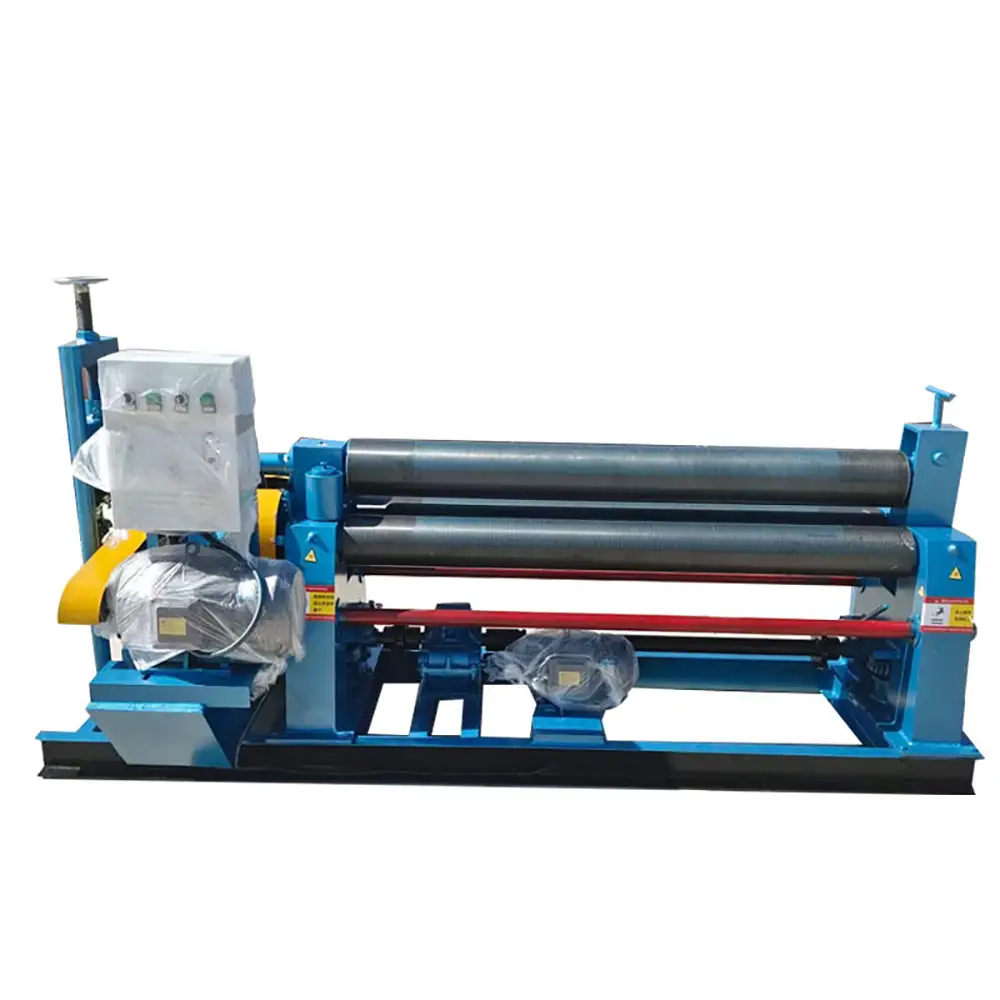
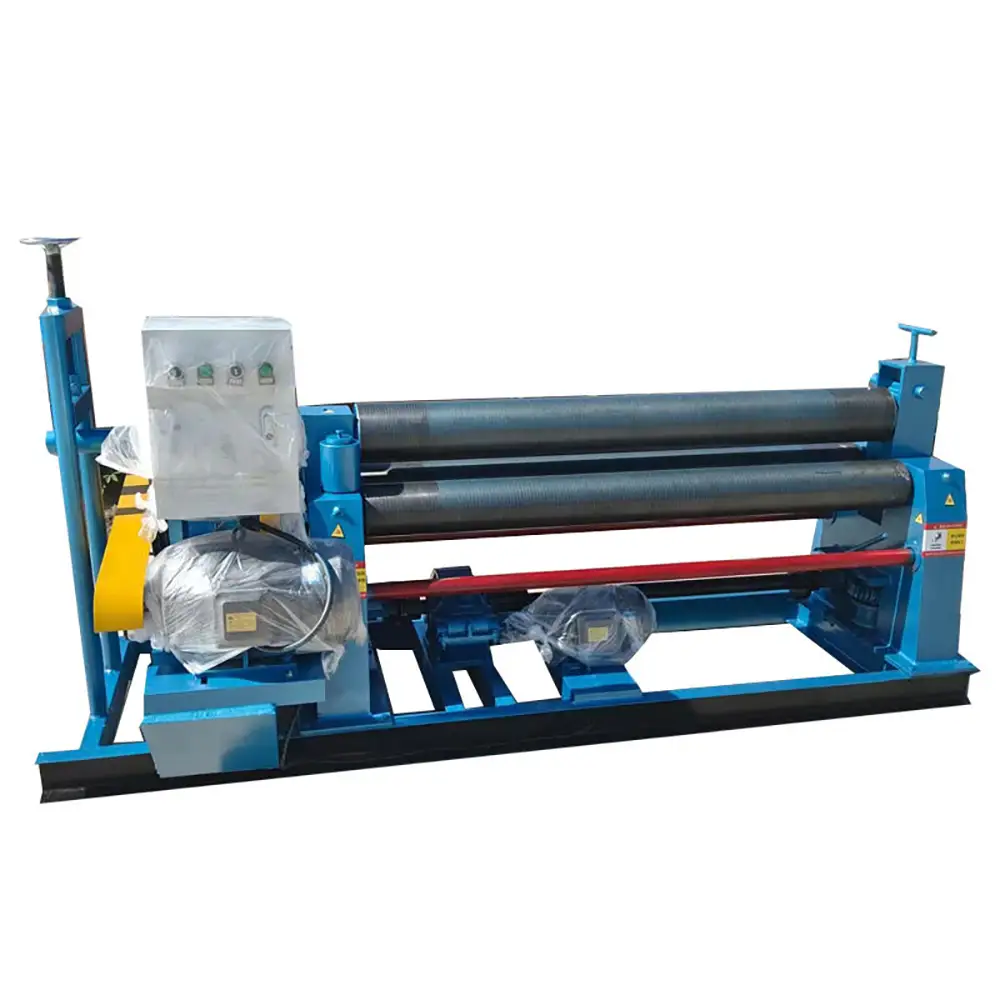
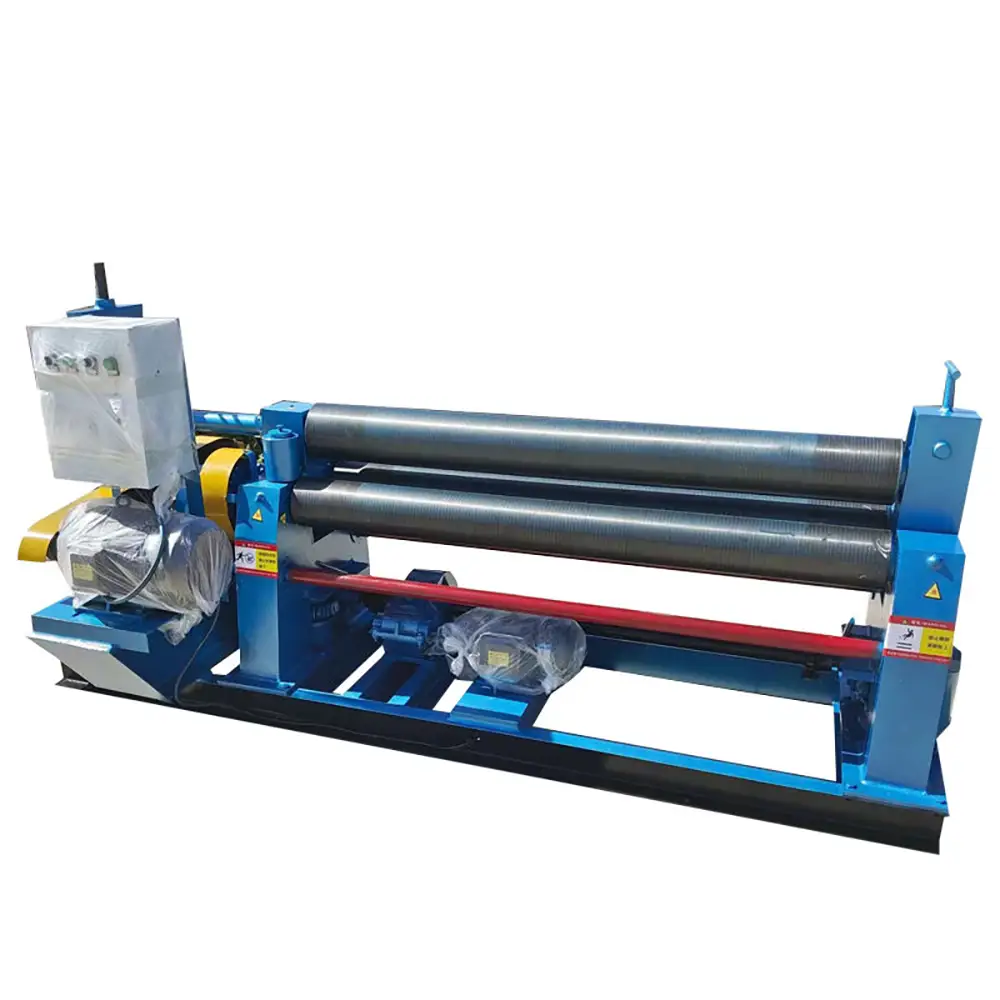
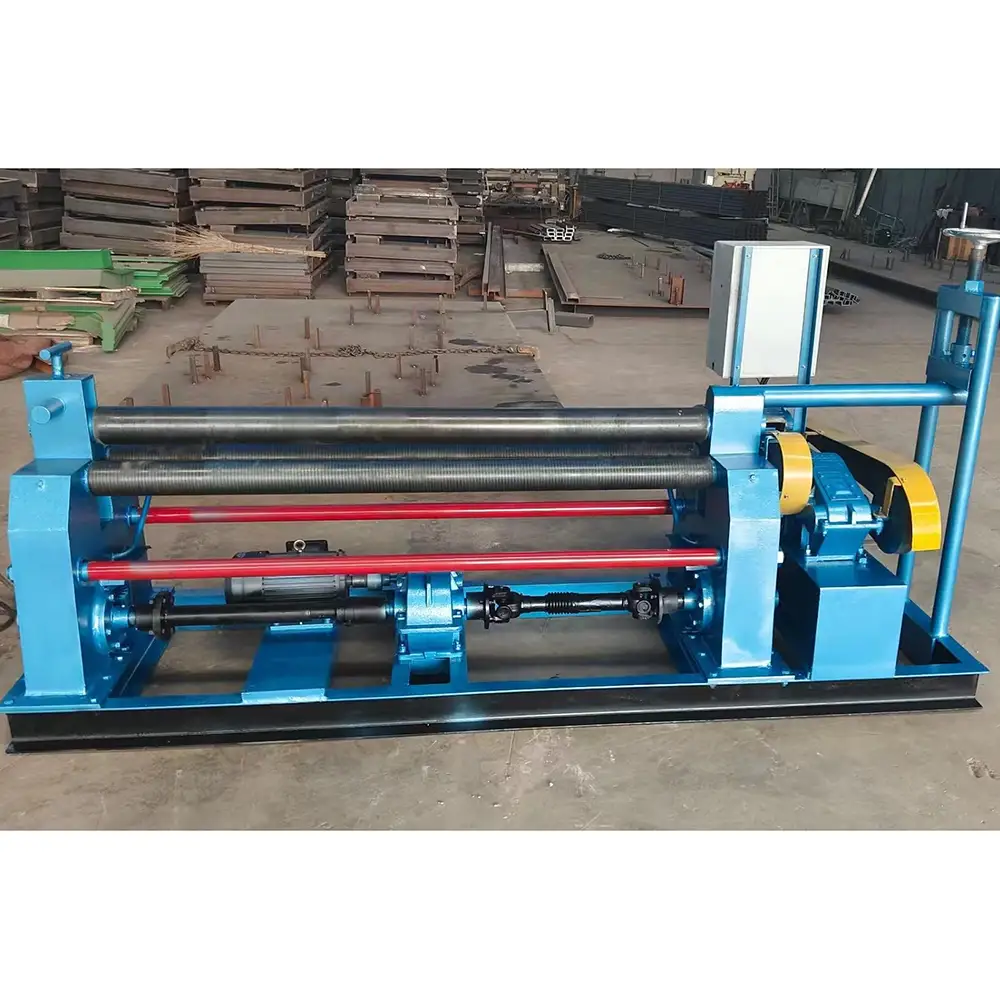
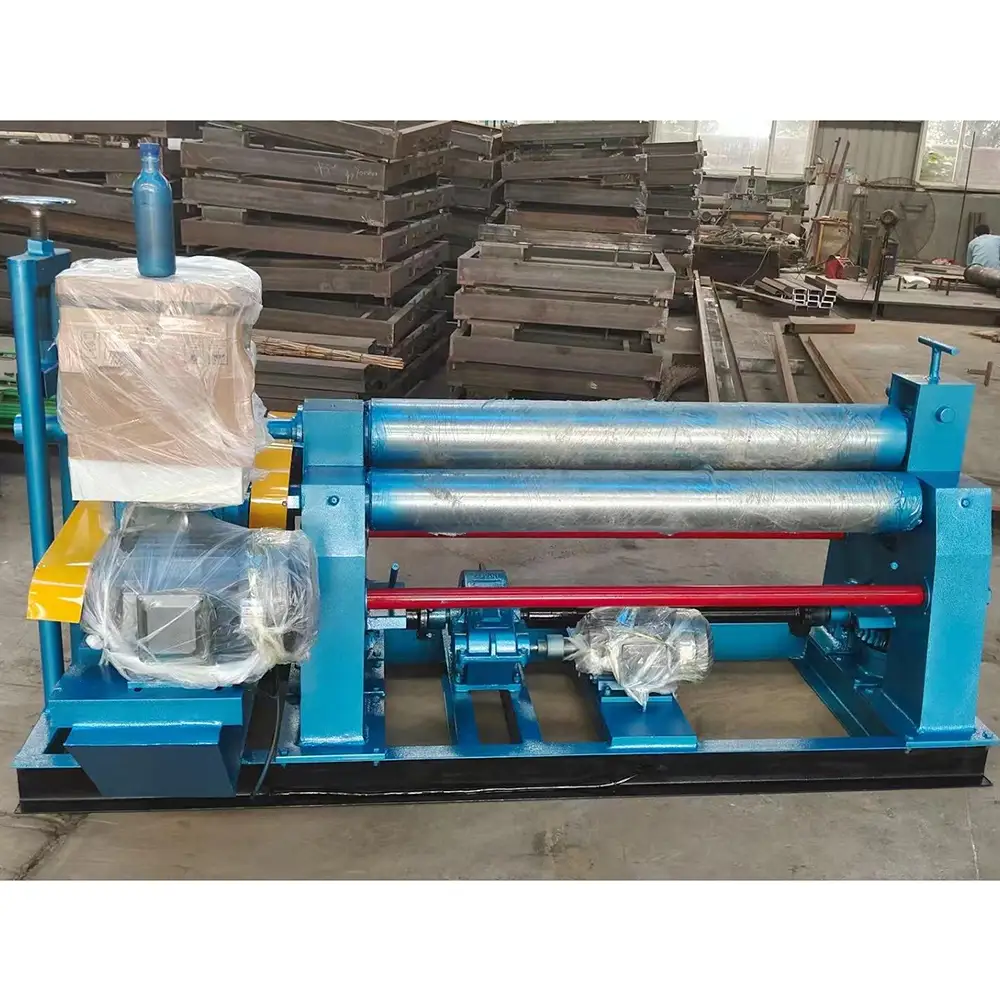
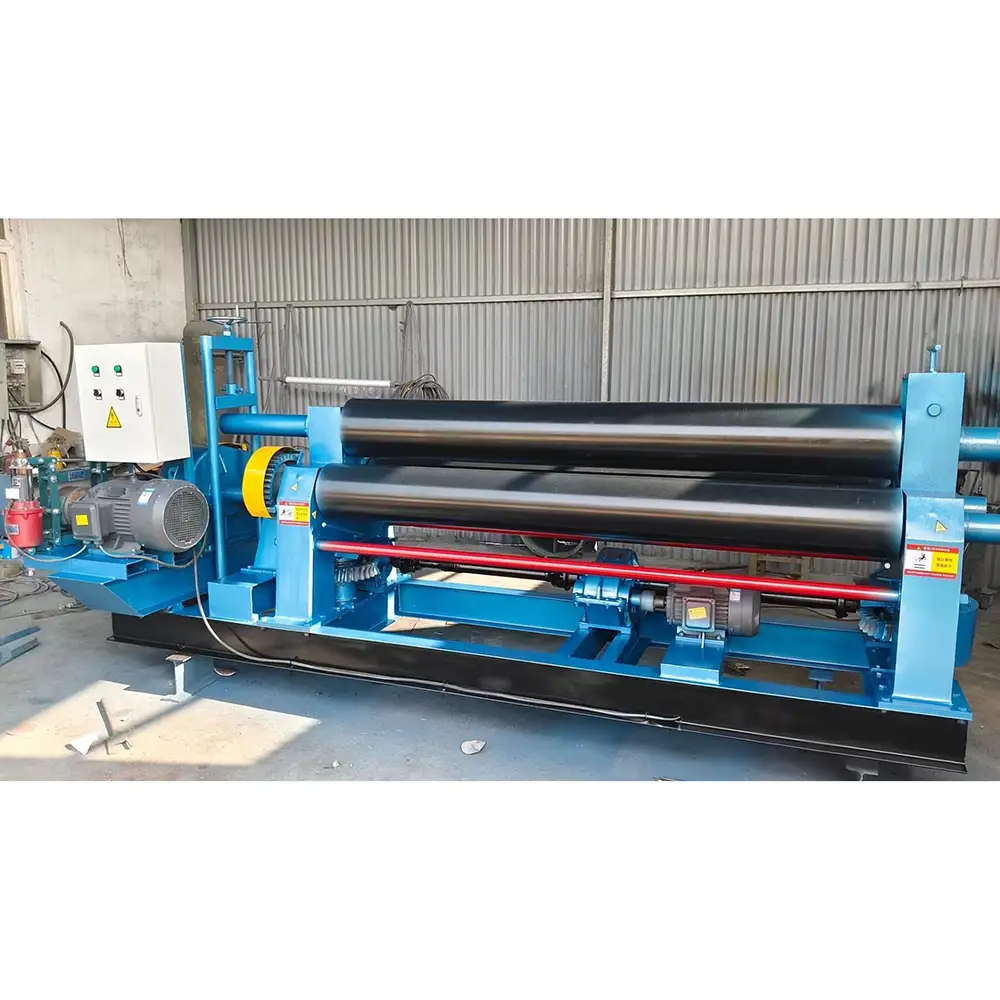
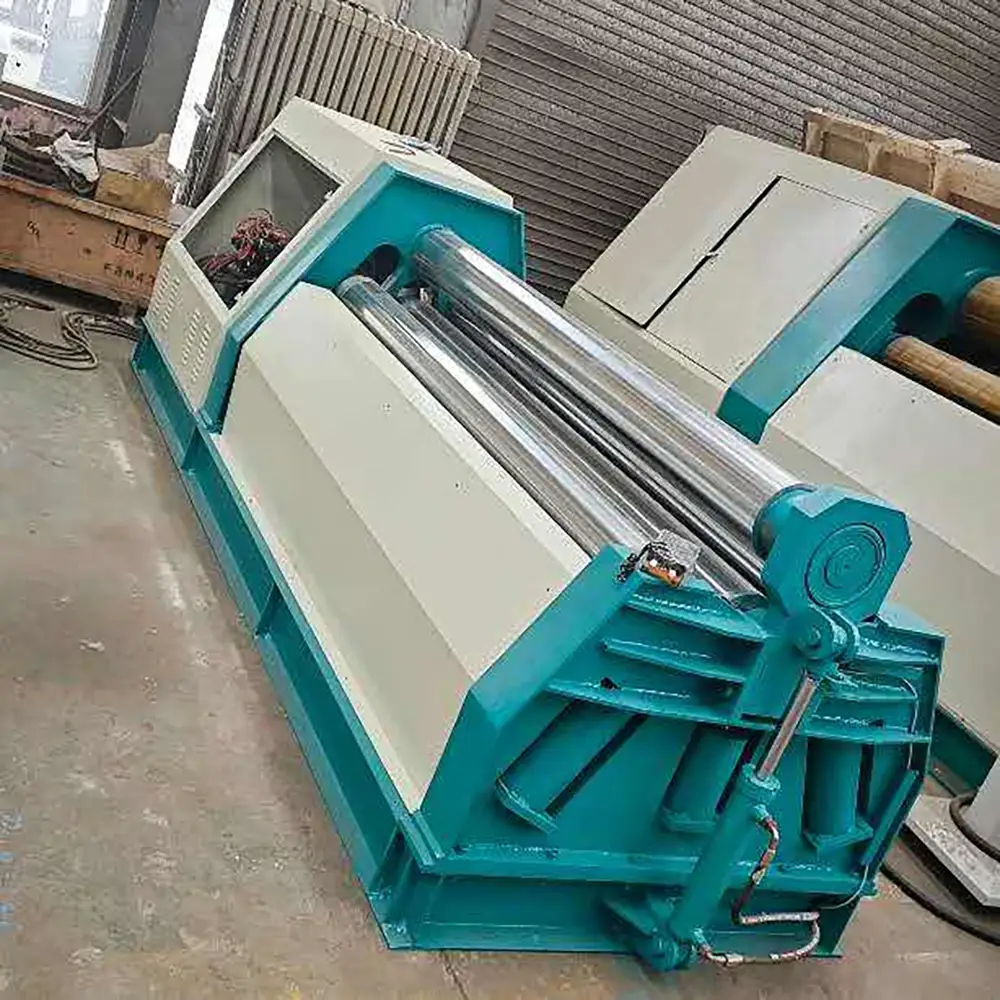
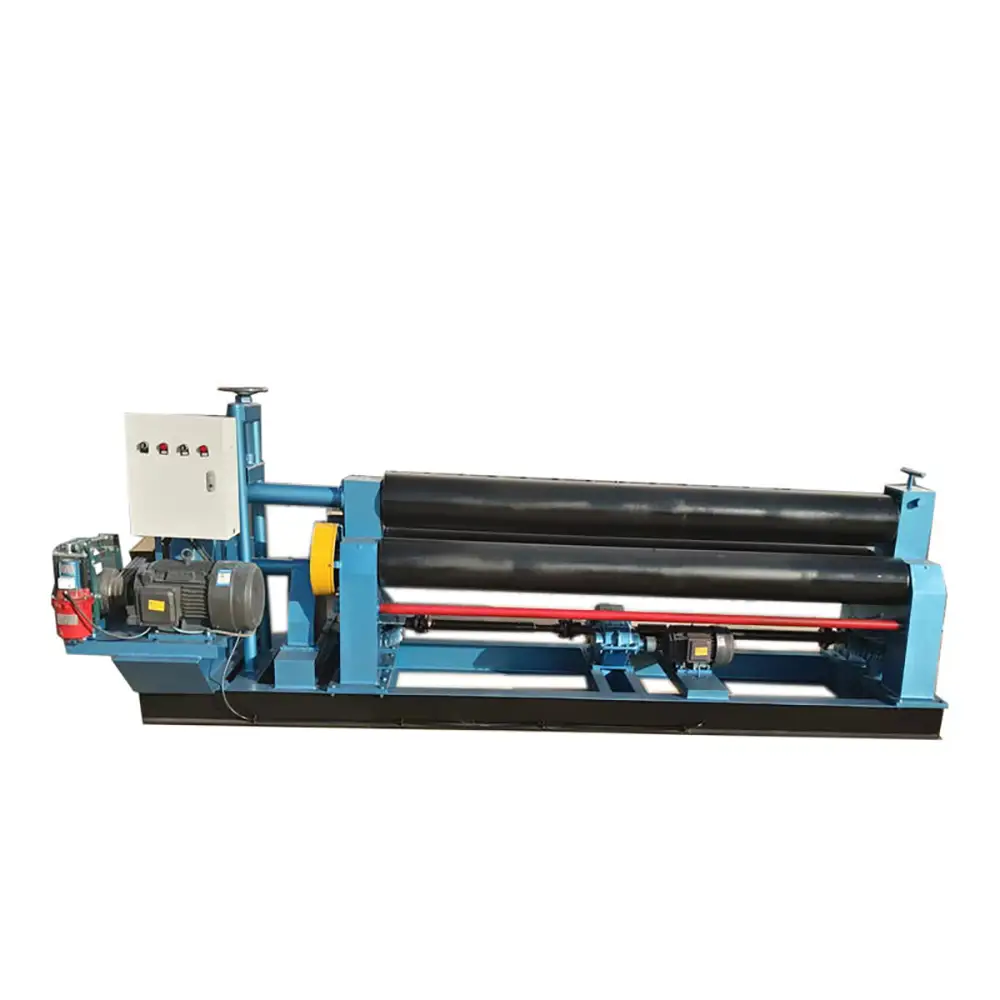
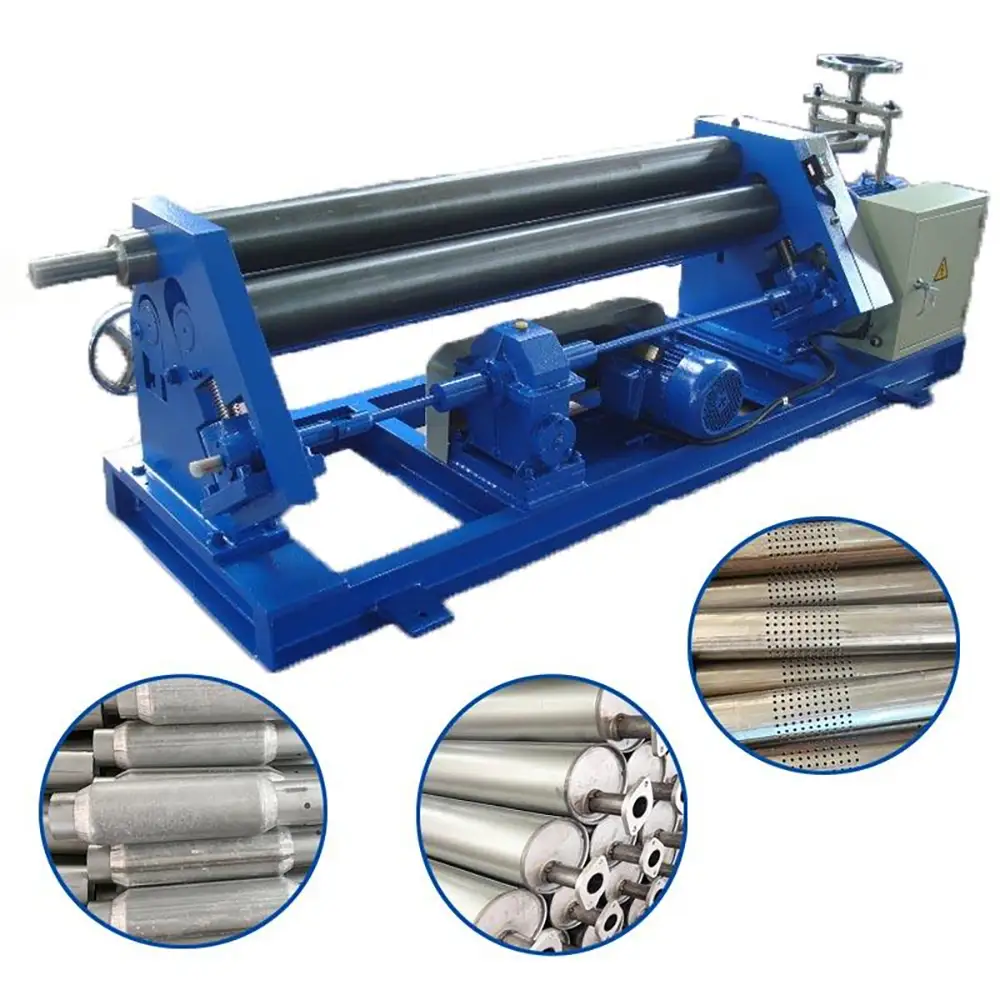
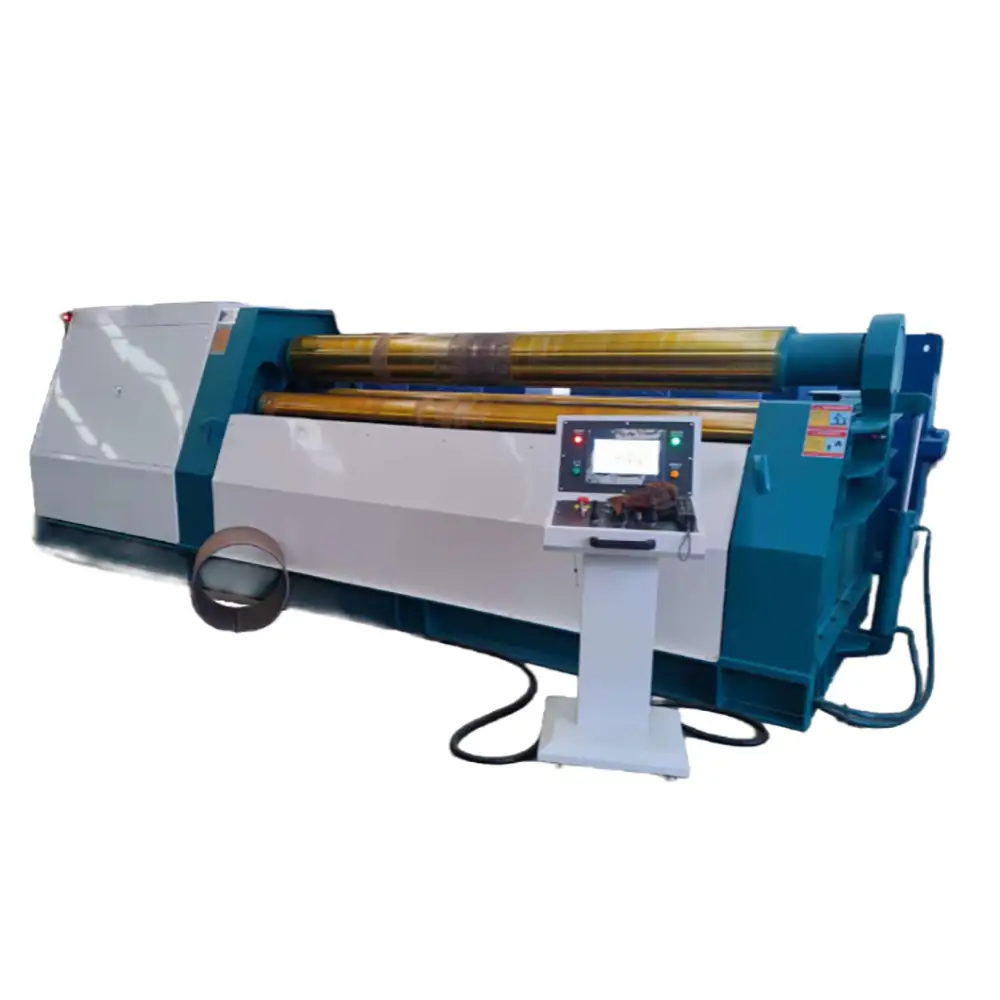
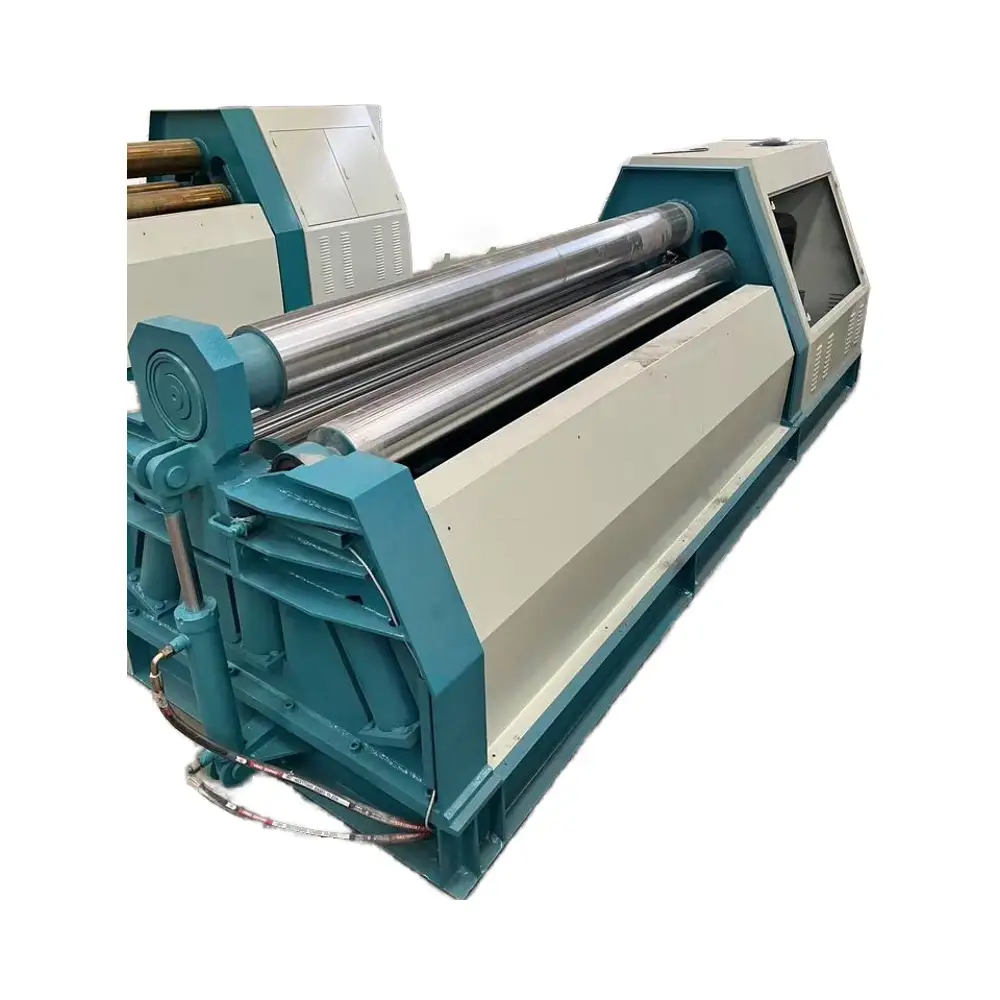
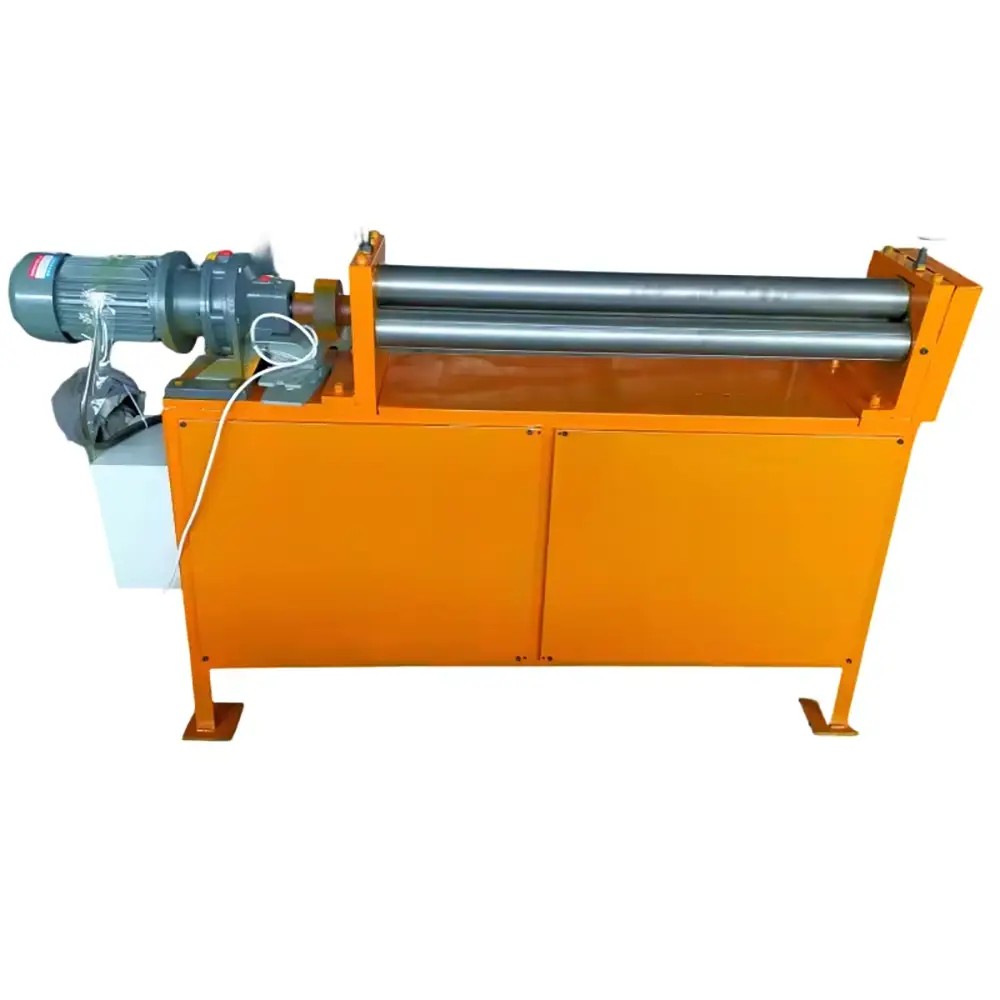
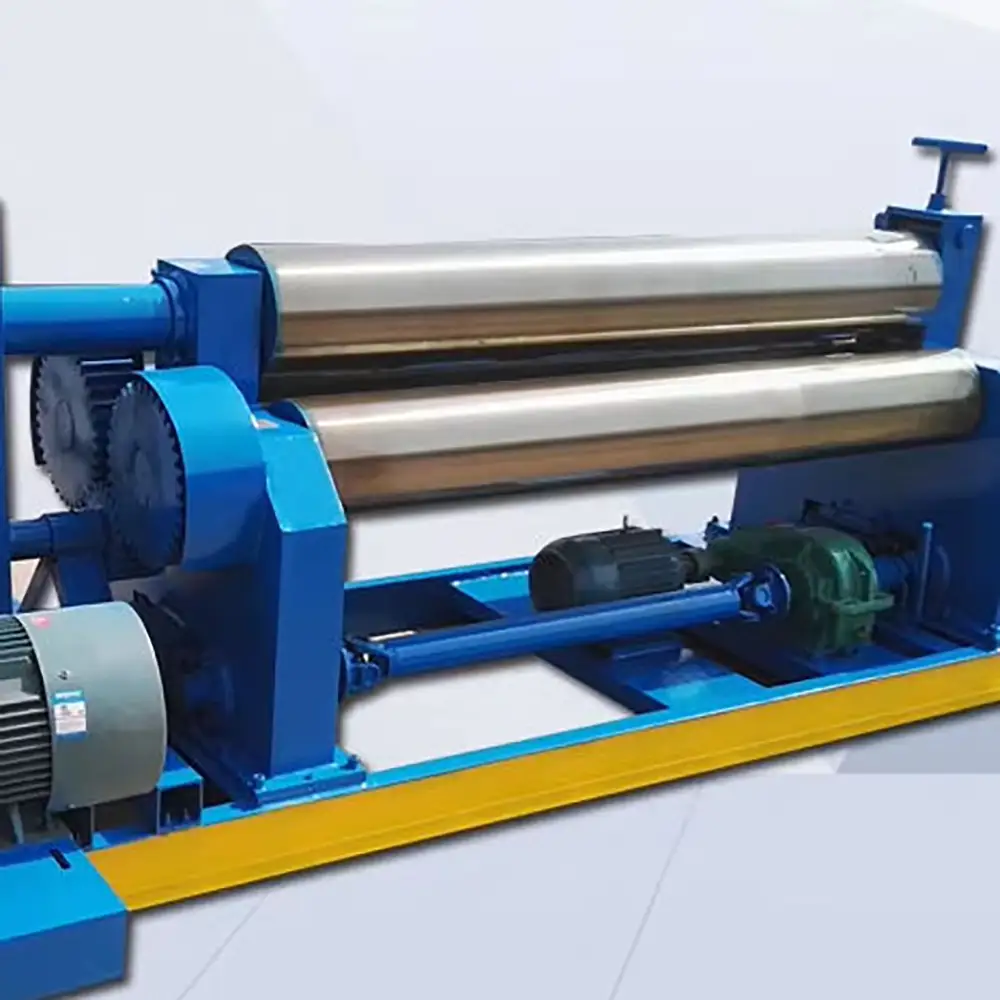
The Iron Sheet Bender 3 Roller Metal Sheet Bending Machine is a practical metal forming solution designed for bending iron, carbon steel, stainless steel, aluminum, and other suitable metal sheets and plates into cylindrical or curved shapes. With a three-roller forming structure, the machine provides controlled bending for workshops, fabrication companies, machinery manufacturers, and industrial metalworking applications.
Also known as a 3-roll plate rolling machine, this equipment gradually forms flat metal sheets by passing the workpiece between rotating rollers. The operator can adjust the roller position and forming process according to the material thickness, width, strength, and desired finished diameter.
The machine is suitable for general fabrication as well as custom production of cylindrical shells, tanks, ducts, pipes, covers, structural components, and other curved metal parts.
|
Maximum coil width |
2500mm |
|
Maximum plate thickness |
16mm(235) |
|
Upper roll diameter |
255mm |
|
Lower roll diameter |
205mm |
|
Coiling speed |
About 4.5m/min |
|
Main reducer |
400 |
|
Sub-reducer |
250 |
|
Main motor power |
11KW |
|
Sub-motor power |
4KW |
|
Machine size |
4400*1600*1700mm |
|
weight |
4000kg |
3-Roller Metal Sheet Bending Technology
The three-roller configuration consists of forming rollers arranged to guide and bend the workpiece progressively. As the metal sheet passes through the rollers, controlled deformation gradually produces the required curved or cylindrical profile.
Compared with simple manual bending methods, a plate rolling machine provides a more controlled forming process for larger or longer sheets. The achievable results depend on roller diameter, machine rigidity, plate thickness, material properties, working width, and operator settings.
For cylindrical production, multiple rolling passes may be used to gradually reach the required diameter. Proper alignment and plate preparation are important for maintaining consistent forming quality.
Iron and Steel Sheet Bending
Iron and carbon steel are widely used in industrial fabrication because of their strength, availability, and versatility. The 3-roller sheet bending machine can be configured for suitable iron and steel sheets according to the required thickness and width.
Different steel grades have different yield strengths and springback characteristics. Therefore, the actual forming capacity should be evaluated according to the material grade rather than thickness alone.
For heavier steel plates, a machine with greater structural rigidity, roller diameter, drive capacity, and forming force may be required.
Stainless Steel and Aluminum Applications
In addition to iron and carbon steel, the machine can be used for suitable stainless steel and aluminum sheet applications when correctly configured.
Stainless steel typically has different springback characteristics from mild steel and may require appropriate forming parameters. Aluminum is relatively lightweight but can be sensitive to surface marking during handling.
For finished or polished materials, operators can use suitable handling procedures and surface protection to reduce scratches and cosmetic damage during the rolling process.
Plate Rolling for Cylindrical Components
One of the main applications of a three-roller plate rolling machine is cylindrical forming. Flat sheets can be progressively rolled into cylindrical shells for further welding and fabrication.
Typical cylindrical applications include:
Storage tanks
Industrial tanks
Pipe sections
Metal ducts
Cylindrical housings
Machine covers
Boiler components
Conveyor components
Chemical equipment shells
General fabricated cylinders
After rolling, the formed workpiece can proceed to longitudinal seam welding, grinding, machining, inspection, painting, or assembly according to the final product requirements.
Flexible Metal Forming
The machine is designed to support different production requirements. It can be used for small-batch custom fabrication as well as repeated industrial production.
For workshops handling different materials and dimensions, a 3-roll plate roller provides flexibility without requiring complex CNC programming for every workpiece.
Operators can adjust the forming process according to the required diameter and material characteristics. For production involving highly repetitive parts and tighter automated process control, CNC or hydraulic plate rolling equipment may be considered.
Production Efficiency
A three-roller plate rolling machine can help reduce the manual labor associated with forming large metal sheets. Instead of using multiple manual bending operations, the plate can be progressively shaped through the rollers.
Production efficiency depends on plate size, material, target diameter, number of forming passes, loading method, operator experience, and downstream operations.
For manufacturers producing tanks, cylinders, ducts, and other curved components, the plate roller can become an important part of the overall metal fabrication workflow.
Precision and Finished Quality
The quality of a rolled metal component depends on several factors. These include plate flatness, cutting accuracy, material thickness, roller alignment, roller surface condition, forming sequence, machine rigidity, and springback.
For components requiring consistent dimensions, operators should verify the finished diameter and geometry after rolling. Additional correction or finishing operations may be required depending on the application.
When forming stainless steel or higher-strength materials, proper process parameters are particularly important because springback can affect the final shape.
Simple Workshop Operation
The three-roller sheet bender is suitable for fabrication shops that require practical and accessible metal forming equipment. Depending on the machine configuration, mechanical or powered roller movement can be used to assist the forming process.
Operators should be trained to correctly load the sheet, align the material, adjust the rollers, monitor the forming process, and safely remove the finished workpiece.
The machine should be installed on a suitable foundation and operated according to the manufacturer's instructions.
Industrial Applications
The 3-roller metal sheet bending machine can be used across many industries, including:
Metal fabrication
Steel structure manufacturing
Tank manufacturing
HVAC duct production
Chemical equipment
Petroleum equipment
Boiler manufacturing
Machinery manufacturing
Agricultural equipment
Conveyor equipment
Automotive components
General industrial fabrication
Its broad application range makes it a useful addition to workshops that need reliable sheet and plate forming capabilities.
Maintenance and Safety
Regular maintenance helps maintain stable forming performance. Rollers, bearings, gears, drive components, adjustment mechanisms, and lubrication points should be inspected according to the manufacturer's recommendations.
Plate rolling involves significant mechanical force and pinch points. Operators should keep hands and loose clothing away from moving rollers and follow proper loading and unloading procedures.
Depending on the machine configuration, safety-oriented features may include emergency stop controls, protective guards, mechanical locking systems, and other protective devices.
Why Choose Us?
Three-Roller Forming Design – Provides controlled bending for iron, steel, stainless steel, aluminum, and other suitable metal sheets.
Wide Plate Rolling Applications – Suitable for cylinders, tanks, ducts, pipes, housings, and general fabricated components.
Flexible Metal Processing – Supports different materials and workpiece dimensions when selected within the machine's rated capacity.
Practical Workshop Solution – Suitable for fabrication shops, custom manufacturers, repair operations, and industrial production.
Reliable Mechanical Structure – Designed for stable roller operation and repeated metal forming applications.
Efficient Cylindrical Forming – Progressive rolling helps transform flat sheets into cylindrical and curved components.
Custom Machine Configuration – Working width, forming capacity, roller dimensions, drive system, and other specifications can be configured according to requirements.
OEM & B2B Support – We provide technical consultation, customized machine solutions, OEM/ODM services, and international B2B export support.
FAQs
1. What is a 3-roller metal sheet bending machine?
It is a plate forming machine that uses three rollers to progressively bend flat metal sheets or plates into cylindrical and curved shapes.
2. Can this machine bend iron sheets?
Yes. The machine is designed for suitable iron and steel sheets within its rated thickness, width, and forming capacity.
3. Can it roll carbon steel?
Yes. Carbon steel is a common material for three-roller plate rolling machines. The actual capacity depends on the steel grade and plate dimensions.
4. Can it bend stainless steel?
Yes, when the machine is properly configured for the required stainless steel grade and thickness. Stainless steel may require different forming parameters because of its strength and springback.
5. Can it bend aluminum sheets?
Yes. Suitable aluminum sheets can be formed when the material thickness and dimensions are within the machine's capabilities.
6. What products can be made with this machine?
Typical products include tanks, cylinders, pipes, ducts, machine housings, covers, boiler components, conveyor components, and other curved metal parts.
7. Can it make complete cylinders?
Yes. The plate can be progressively rolled into a cylindrical shell. A longitudinal seam may then be welded to close the cylinder.
8. What determines the minimum rolling diameter?
The minimum diameter depends on roller diameter, machine structure, plate thickness, material strength, working width, and forming method.
9. Is this machine suitable for small workshops?
Yes. Three-roller plate rollers are widely used in workshops and fabrication businesses that require flexible metal bending for different projects.
10. Does it require CNC control?
Not necessarily. Manual or mechanically powered three-roller machines can be suitable for many applications. CNC is more useful when automated repeatability and complex production control are required.
11. How should the correct machine be selected?
Consider material type, maximum thickness, maximum working width, required rolling diameter, production volume, and desired level of automation.
12. Can the machine be customized?
Yes. Machine dimensions, roller specifications, forming capacity, drive system, controls, and other features can be customized according to production requirements.
Prev:
3-roller Rolling Machine Multifunction Rolling Machine
Next:
Manual Plate Rolling Machine for Chemical Reactors and Aluminum and Carbon Steel Engine Core Component
TAG:
Sheet Metal Roller Machine,
Sheet Metal Rolling Machine,
Metal Forming Equipment,
Metal Forming Machine,
Steel Plate Rolling Machine,
Plate Rolling Equipment,
Metal Rolling Machine,
Metal Plate Bending Machine,
Hydraulic Plate Rolling Machine,
CNC Plate Rolling Machine,
Metal Sheet Bending Machine,
Steel Plate Bending Machine,
Industrial Plate Rolling Machine,
Metal Sheet Rolling Machine,
Carbon Steel Plate Rolling Machine,
Metal Fabrication Equipment,
Aluminum Sheet Bending Machine,
Stainless Steel Sheet Bending Machine,
Sheet Metal Roller,
Plate Rolling Machine,
Automatic Plate Rolling Machine,
Stainless Steel Plate Rolling Machine,
Aluminum Plate Rolling Machine,
Cylindrical Metal Rolling Machine,
Cylinder Rolling Machine,
Metal Cylinder Forming Machine,
Cylinder Bending Machine,
Plate Bending Equipment,
Steel Fabrication Machine,
Steel Cylinder Rolling Machine,
Related Category:
Iron Sheet Bender,3 Roller Sheet Bending Machine,3-Roller Plate Rolling Machine,Metal Sheet Bending Machine,Plate Rollin China, suppliers, manufacturers, factory, customized, wholesale, quotation, made in China