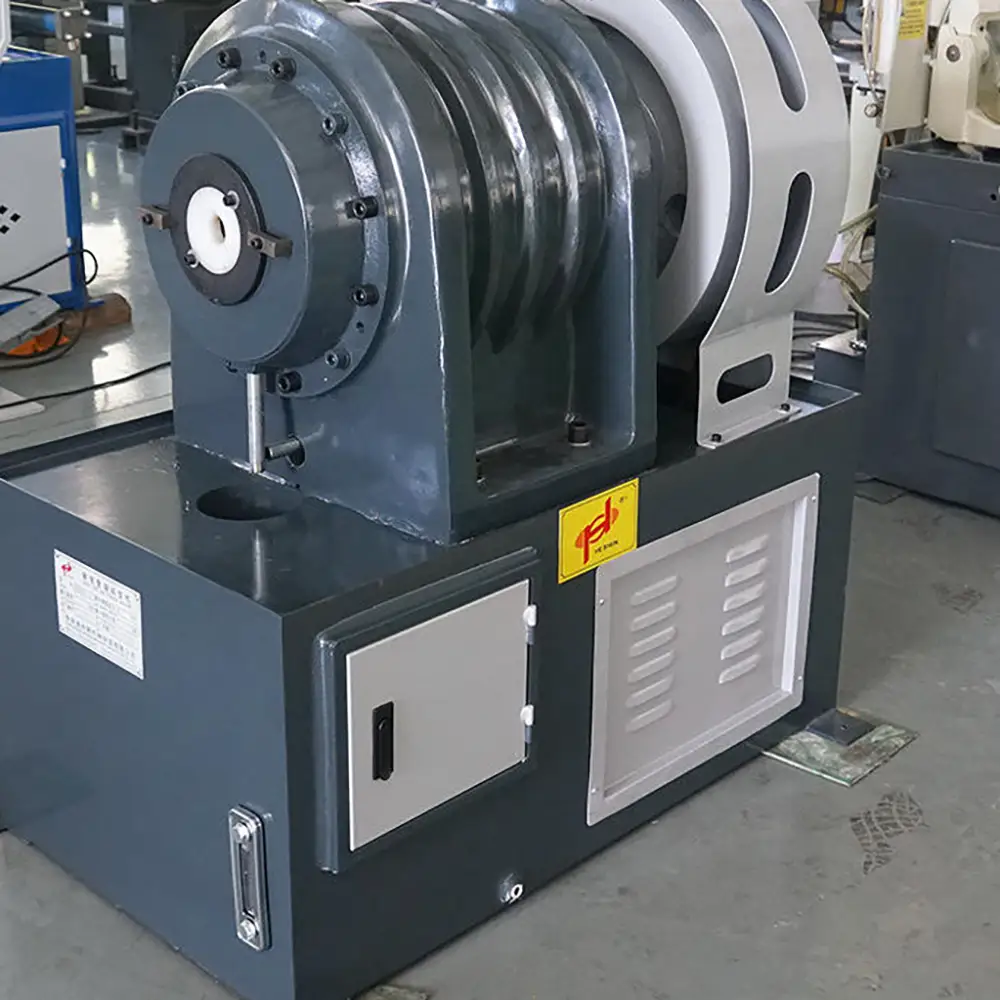
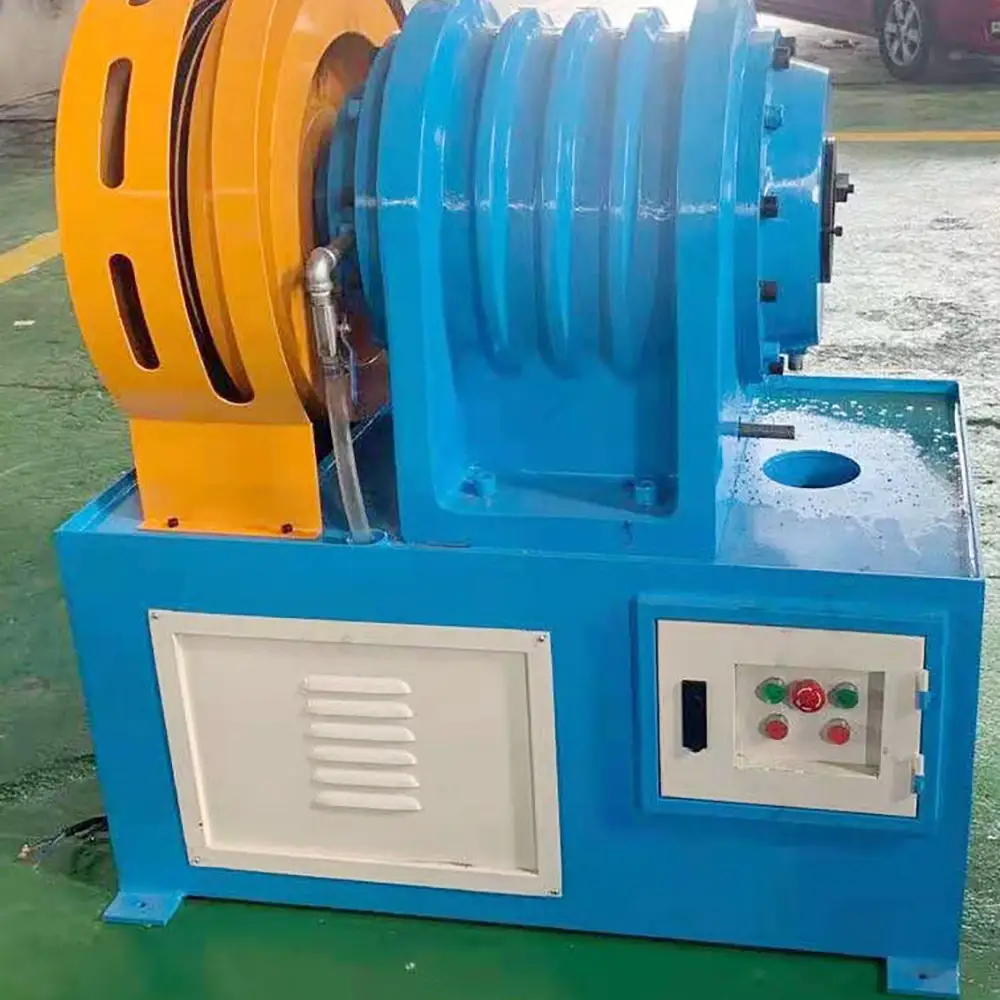
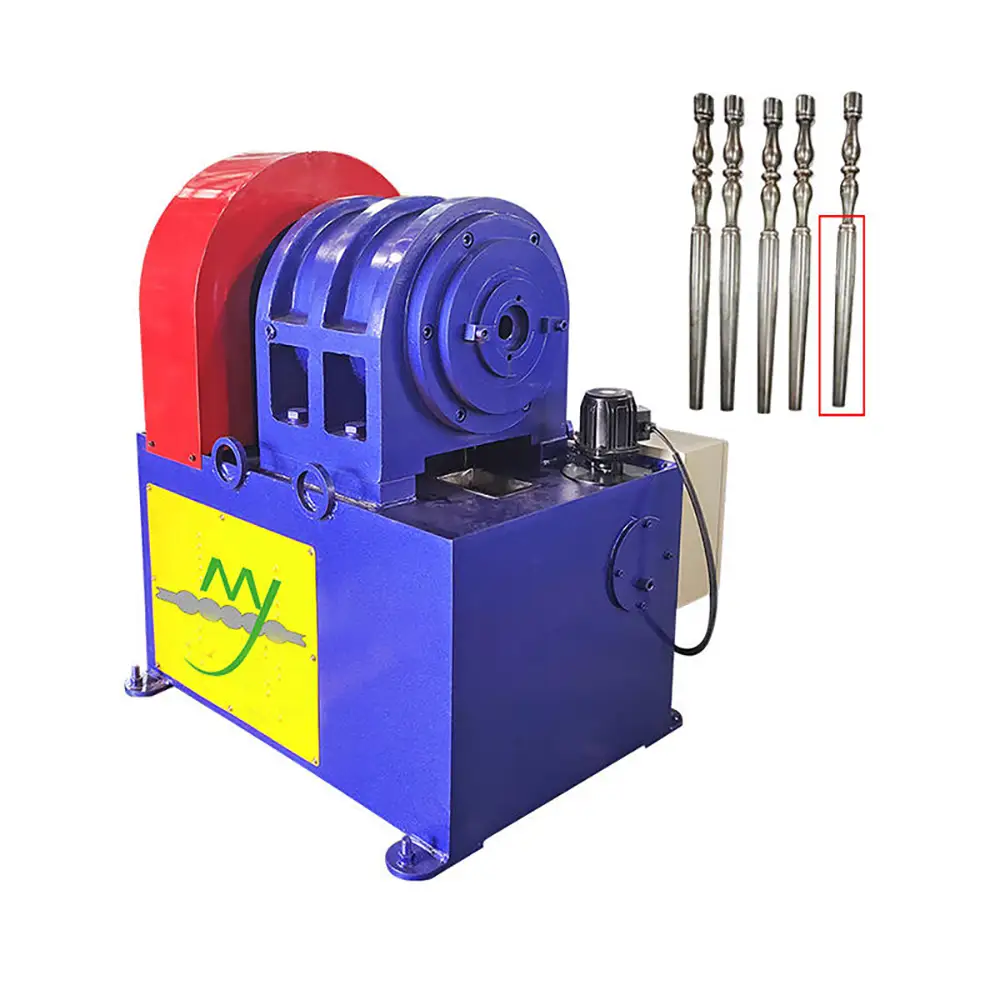
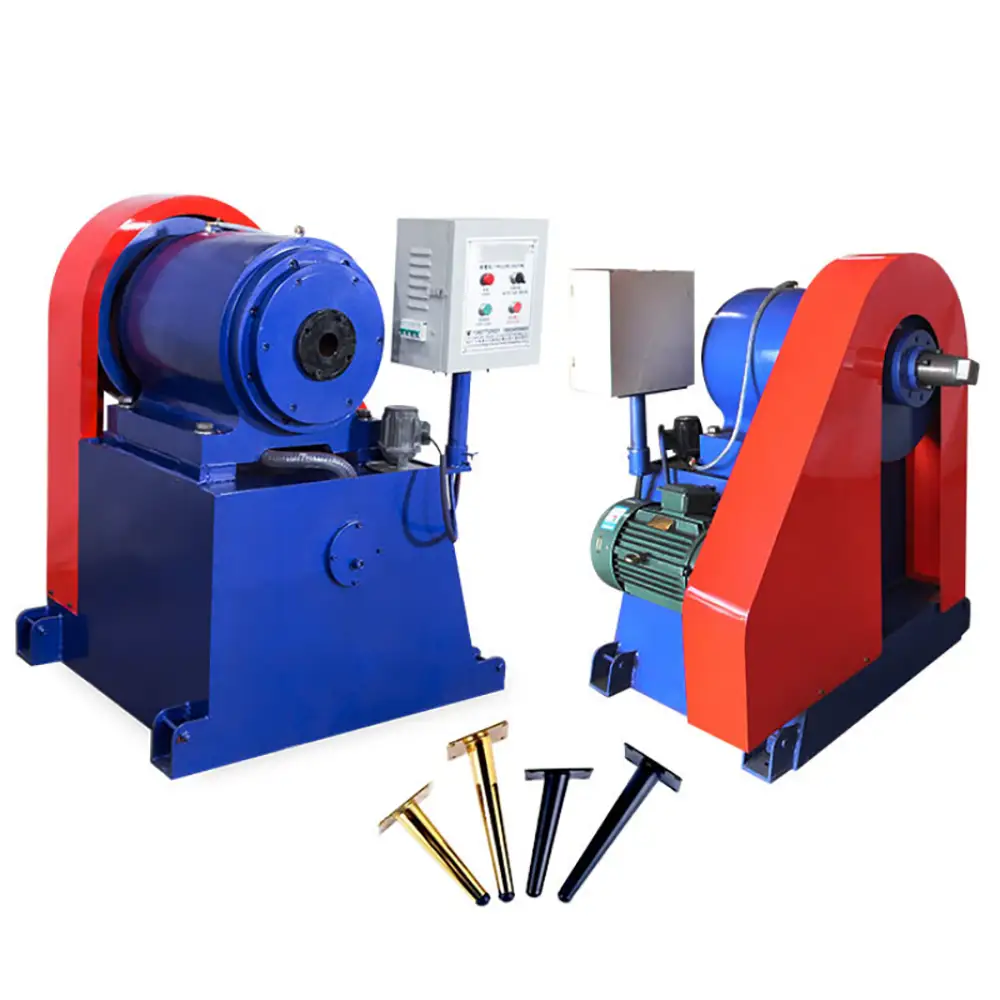
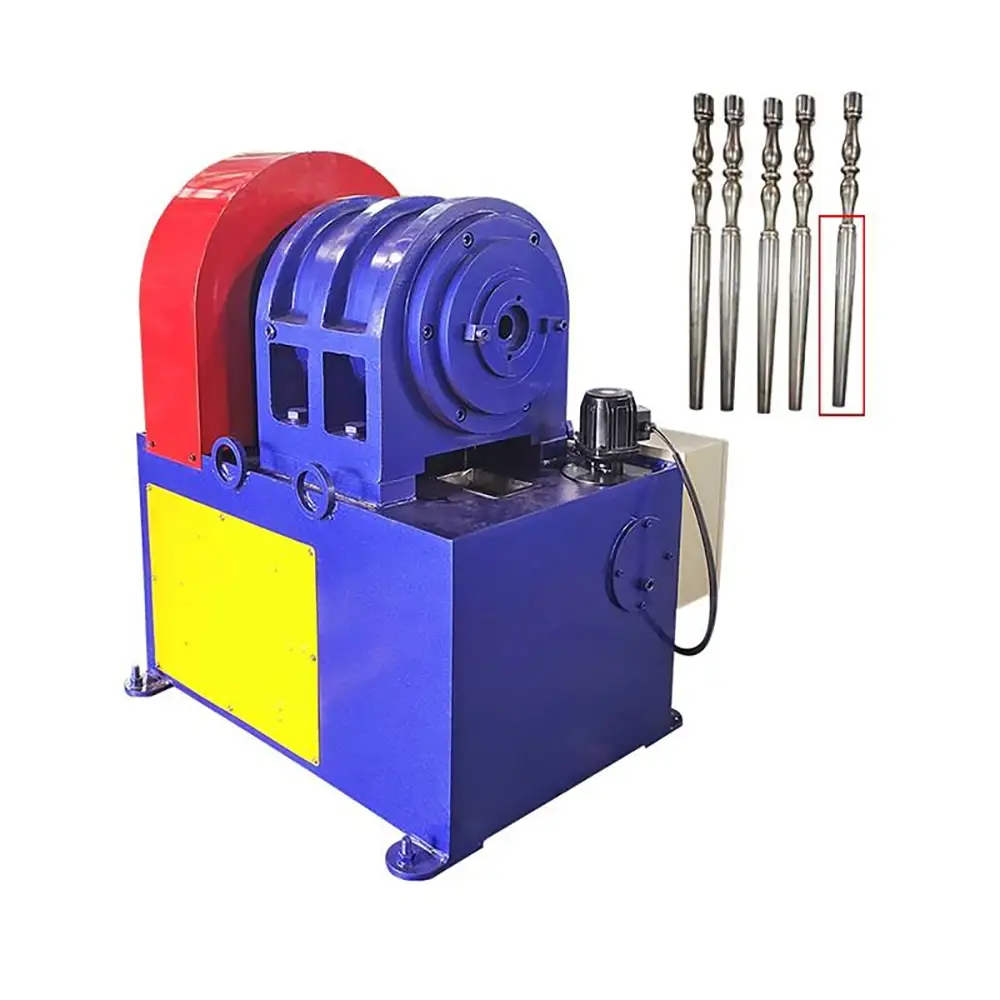
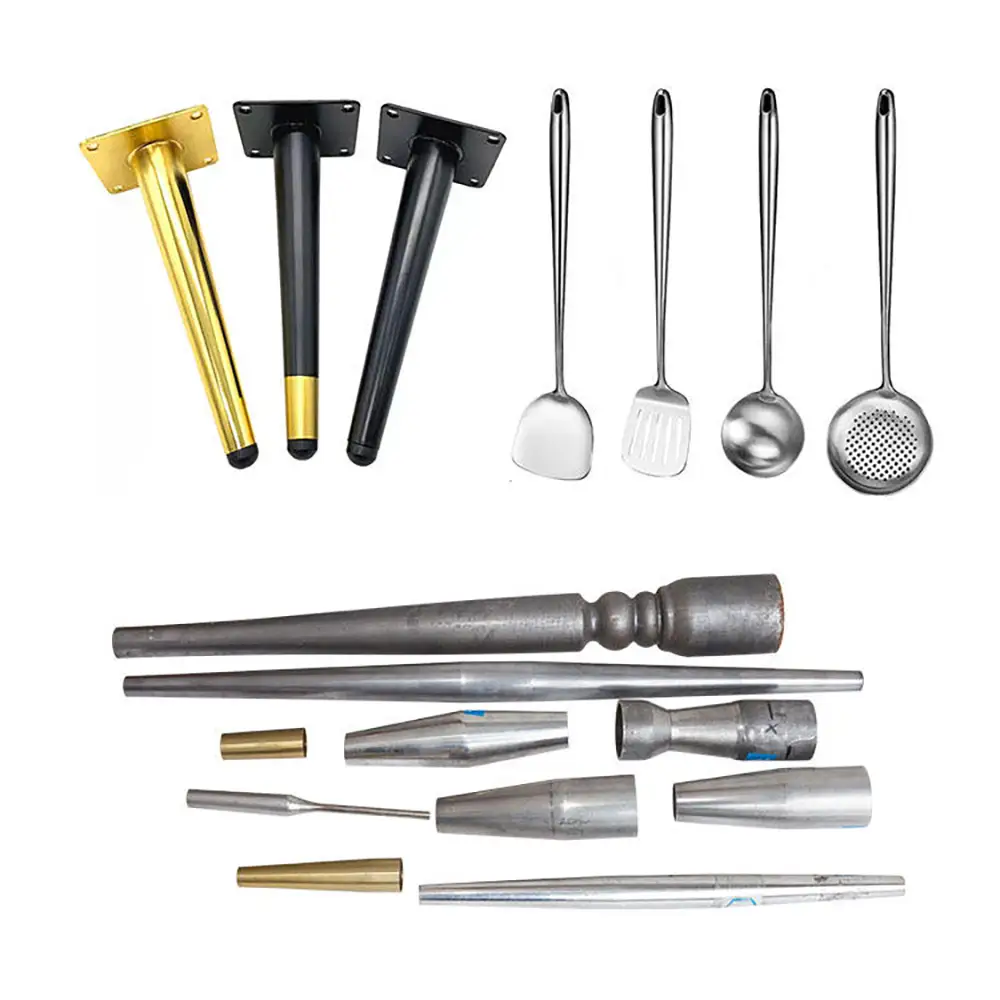
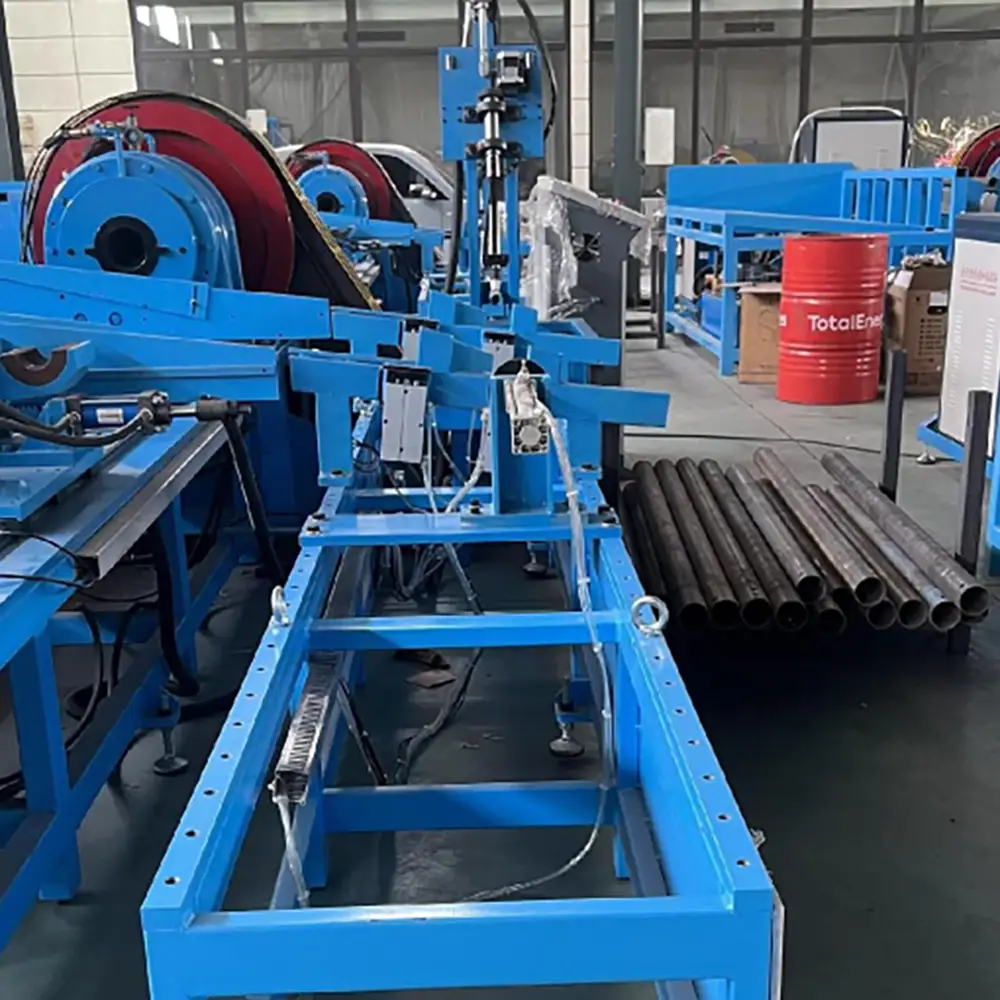
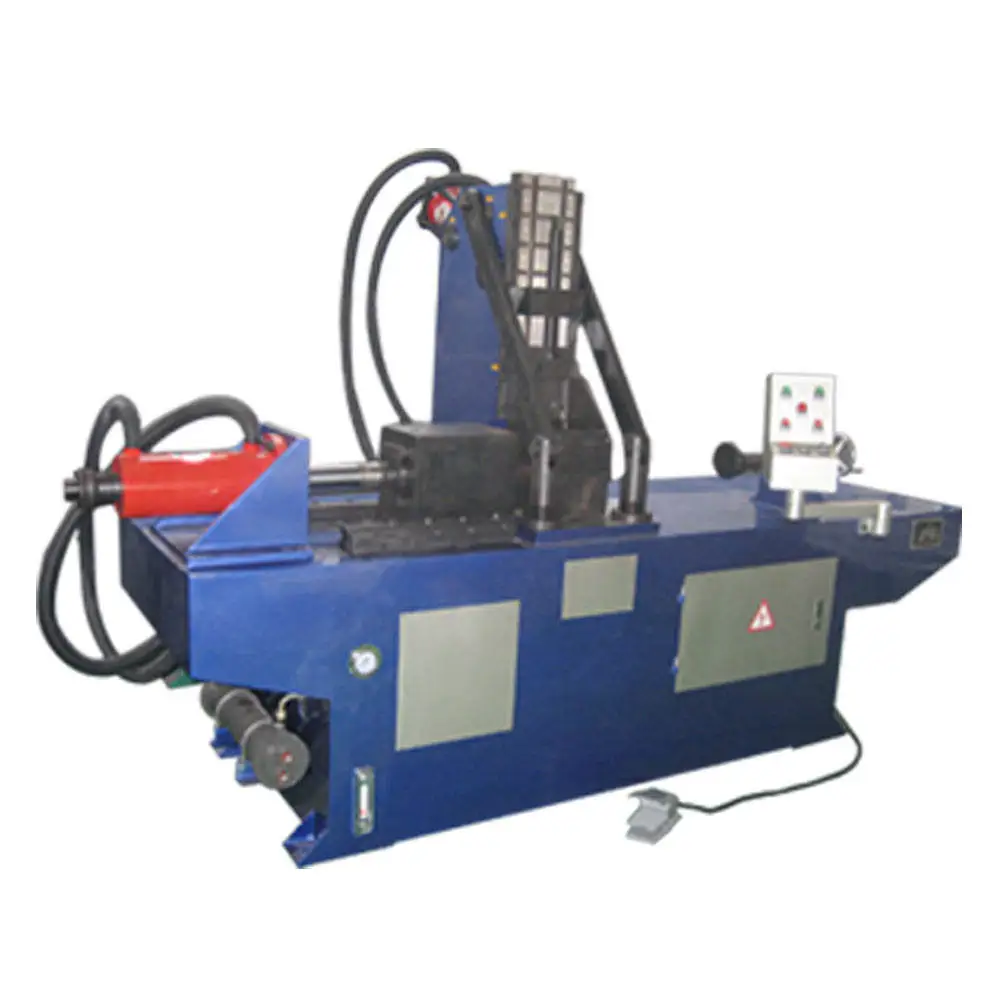
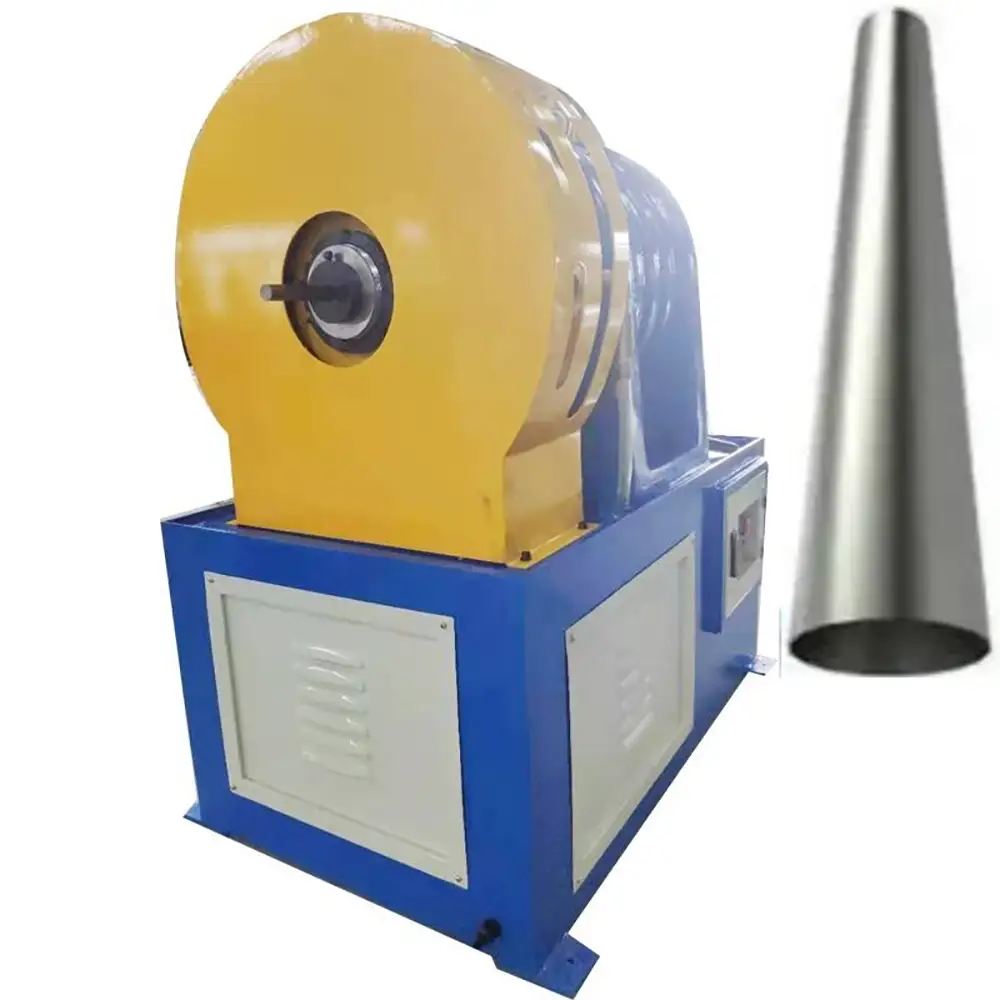
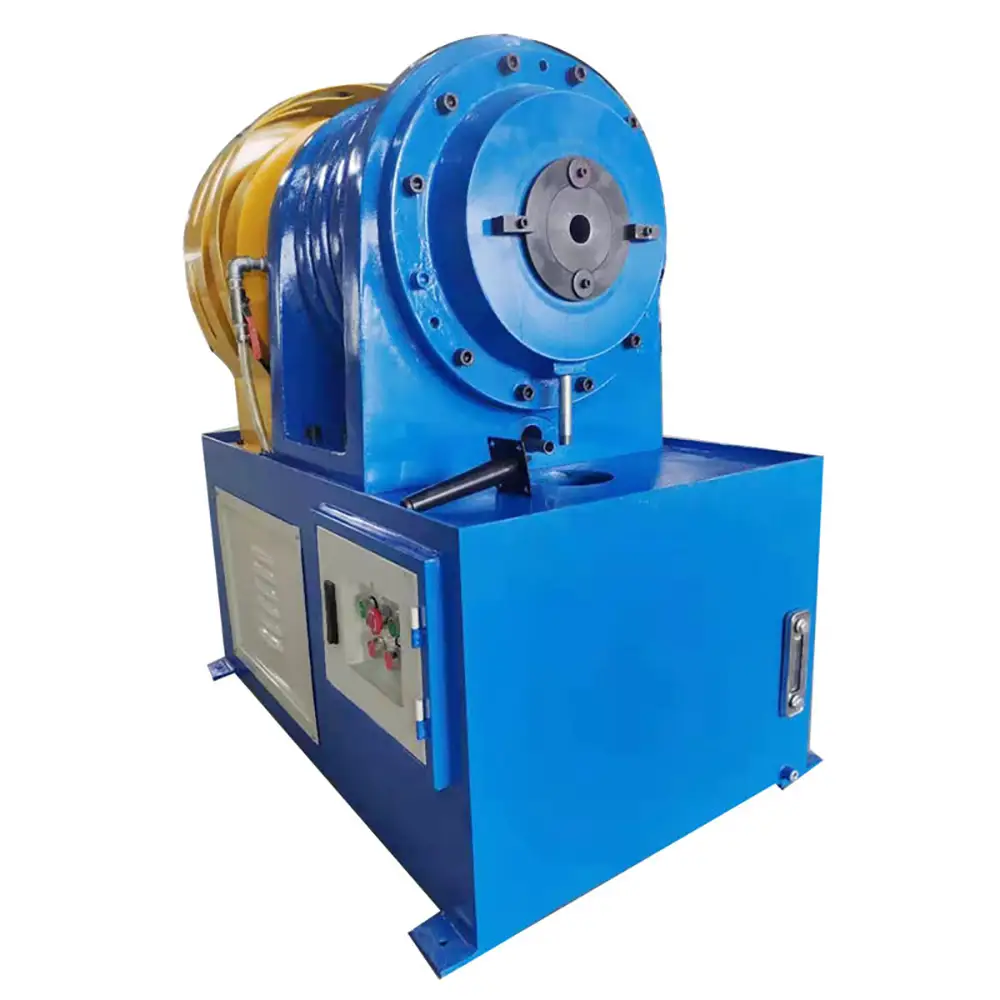
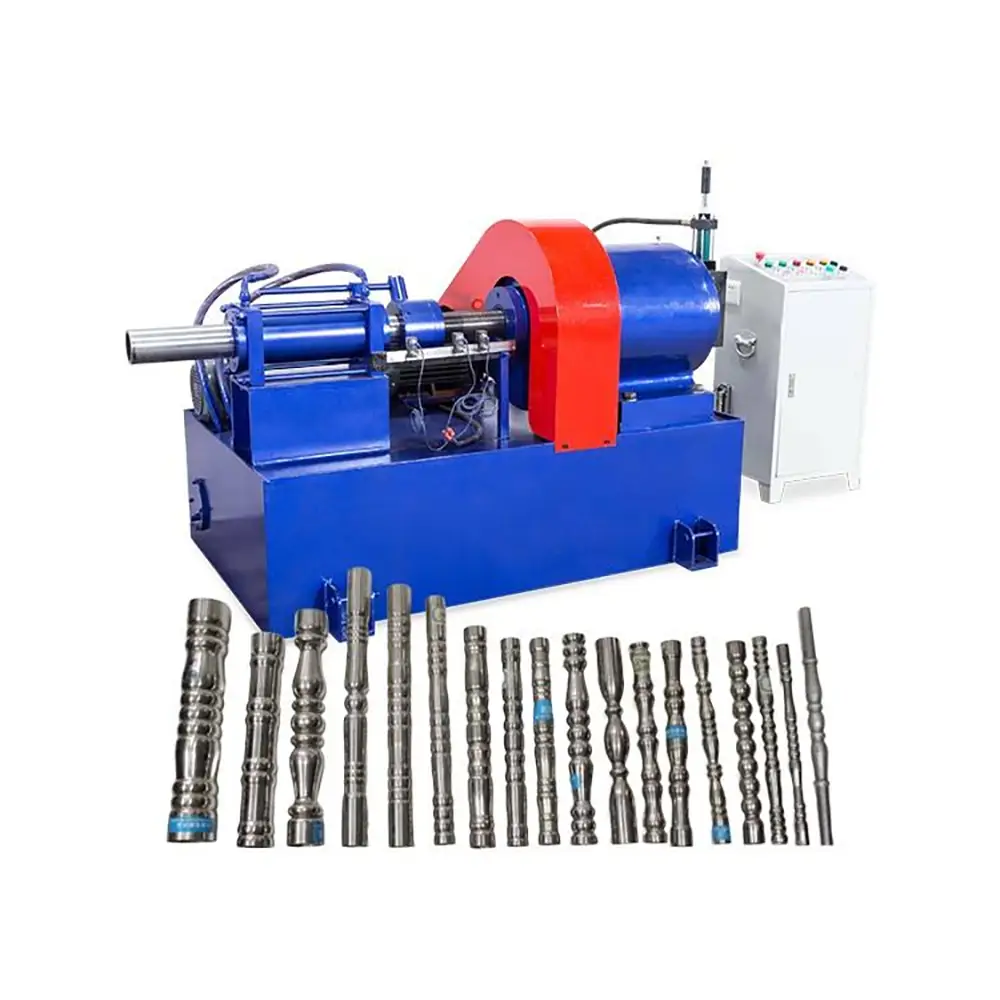
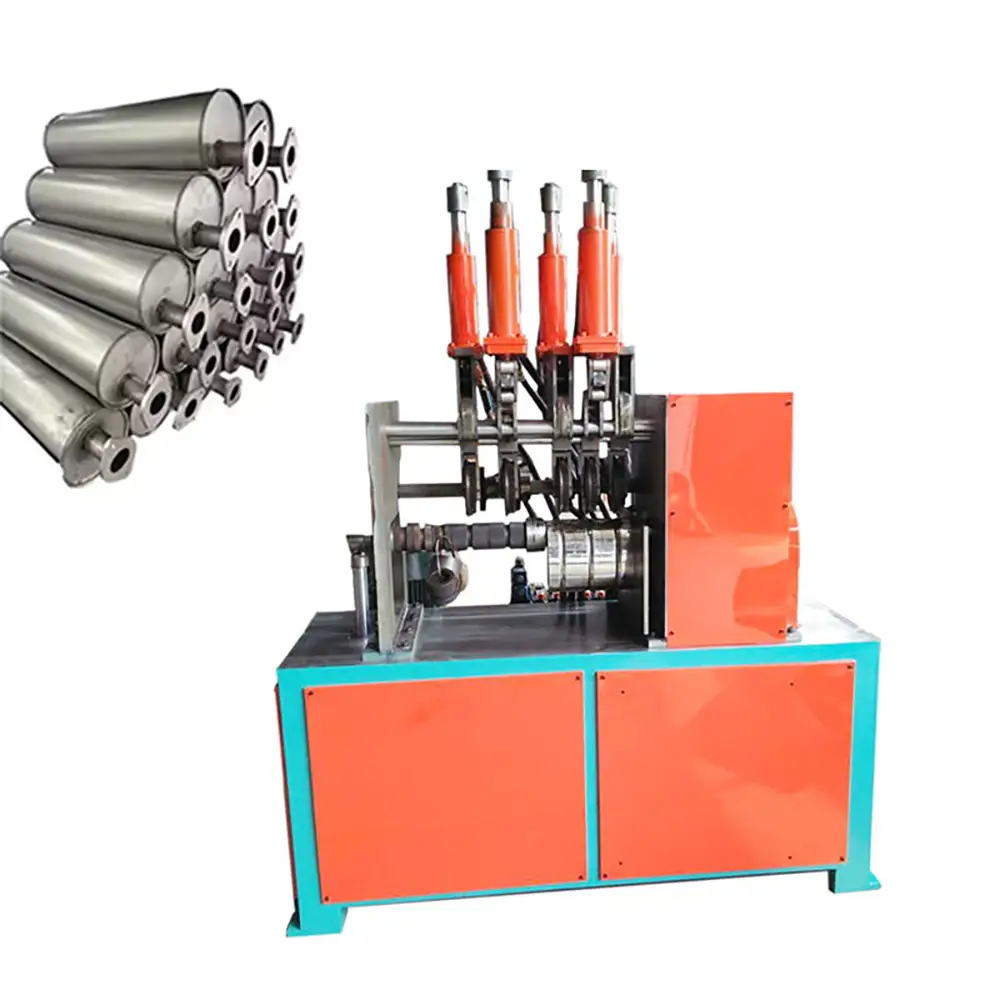
1. New structure, easier to replace internal parts.
2. Small noise below 60 decibel.
3. 3-5 seconds forming high efficiency/ 2000-4000 tubes a day.
4. The 6-level motor in high power and strength, thick stainless steel pipes also available.
5.Tube mold can be adjusted & customized.
6.Welcome customized machine size.
|
Machine Model |
50*300 |
50*450 |
76*600 |
76*800 |
|
Machine size(MM) |
1200*900*1200 |
1060*760*1160 |
1600*1300*1500 |
1900*1500*1500 |
|
Mold Size(MM) |
300*42*44 |
450*42*44 |
600*60*50 |
800*60*50 |
|
Processing range(MM) |
φ12- φ50 |
φ12- φ50 |
φ18- φ76 |
φ18- φ76 |
|
Workpiece thickness(MM) |
0.68-1.5 |
0.68-1.5 |
1.0-20 |
1.0-25 |
|
Forming length(MM) |
280 |
430 |
580 |
780 |
|
Molding time(S/Second) |
5-10 |
5-10 |
5-10 |
5-10 |
|
Main motor(KW) |
3.0 |
5.5 |
7.5-11 |
7.5-15 |
|
The total weight of equipment(KG) |
1100 |
1300 |
3200 |
3800 |
|
Packing size(L-W*H)(MM) |
1250*950*1300 |
1200*800*1350 |
1660*1350*1600 |
1960*1560*1750 |
Iron Steel Pipe Tapering Machine for Customized Sizes and Shaft Tapering
The Iron Steel Pipe Tapering Machine is designed for controlled tapering and end-forming operations on suitable steel pipes,iron pipes,metal tubes,and shaft-type workpieces. With support for customized sizes and tooling configurations,the machine can be adapted to different industrial production requirements where a tapered or reduced end profile is required.
Pipe tapering is commonly used to prepare tubular components for connection,assembly,welding,insertion,joining,or integration with other mechanical components. A dedicated tapering machine provides a controlled forming process compared with manual methods and can be integrated into repetitive manufacturing workflows.
The Shaft Taper Machine concept can also be applied to suitable shaft-like or cylindrical metal components when the required taper geometry can be produced using compatible tooling. Actual workpiece dimensions,material thickness,taper angle,and forming capacity depend on the selected machine configuration.
Steel Pipe Tapering Process
Steel pipe tapering involves reducing or reshaping a selected section of a pipe to create a tapered end or transition profile.
The process may be performed using dedicated forming dies,rollers,pressing tools,or other mechanical or hydraulic forming components depending on the machine design.
The final geometry is determined by the tooling and forming parameters. Different pipe diameters and wall thicknesses may require different tooling configurations.
For manufacturers processing multiple pipe sizes,the ability to change tooling or configure the machine for different workpieces can provide greater production flexibility.
Customers should provide the required pipe dimensions and finished taper specifications before selecting the appropriate machine.
Customized Pipe Sizes
One of the important features of this type of equipment is the ability to support customized sizes.
Industrial customers may process pipes with different outside diameters,wall thicknesses,lengths,and taper requirements. Rather than relying on a single standard workpiece,the machine can be evaluated according to the actual production range.
Customization may involve:
Pipe outside diameter
Pipe wall thickness
Taper length
Taper angle
Finished end diameter
Workpiece length
Material type
Tooling configuration
Workholding method
The actual range should be confirmed according to the machine structure and available tooling.
For OEM production,customers can provide technical drawings,samples,or dimensional requirements so that the tapering system can be matched to the intended application.
Shaft Taper Machine Applications
The term Shaft Taper Machine refers to equipment or a forming configuration used to produce tapered sections on suitable cylindrical or shaft-type components.
Depending on the machine structure,the equipment may be considered for applications involving:
Steel shafts
Tubular shafts
Metal rods
Cylindrical components
Pipe-like shafts
Mechanical support components
Customized tubular parts
Not every shaft application is identical. Solid shafts and hollow pipes have different forming characteristics and may require different processing methods.
For solid shafts,the required tapering process may involve turning,machining,forging,or another process rather than tube forming. Therefore,the machine configuration should be selected according to whether the workpiece is hollow or solid and according to the required finished geometry.
Iron and Steel Pipe Processing
Iron and steel pipes are widely used in construction,machinery,industrial equipment,transportation,energy systems,and general fabrication.
A pipe tapering machine can help manufacturers prepare selected pipe ends for downstream processes.
Typical applications may include:
Steel structure components
Mechanical tubes
Construction pipes
Industrial frames
Machinery components
Agricultural equipment
Automotive components
Furniture tubes
Support structures
Custom fabricated pipe assemblies
Carbon steel,mild steel,and other suitable steel grades can be evaluated according to their forming characteristics.
Material hardness,strength,wall thickness,and workpiece dimensions all influence the required forming force and tooling design.
Controlled End Forming
Dedicated end-forming equipment can help create more consistent taper profiles across repeated workpieces.
During production,the pipe is positioned in a suitable fixture or workholding system before the forming operation begins. The machine then applies the required forming movement according to its mechanical or hydraulic configuration.
Proper workpiece positioning is important because even a small positioning difference can affect the finished taper length or end diameter.
For production requiring tight dimensional tolerances,first-piece inspection and regular dimensional checks should be incorporated into the manufacturing process.
Tooling for Different Taper Profiles
Tooling is one of the most important components of a pipe tapering machine.
Different products may require different taper angles,transition lengths,and finished diameters. Dedicated forming dies or other tooling can therefore be developed according to the customer's product design.
Custom tooling can be considered for:
Straight taper ends
Reduced pipe ends
Conical transitions
Stepped end profiles
Customized connection sections
Special tubular end shapes
The actual forming method depends on material properties and workpiece geometry.
For OEM applications,customers should provide detailed drawings showing the original pipe dimensions and required finished dimensions.
Production Efficiency
A dedicated tapering machine can help reduce repetitive manual forming work in industrial pipe production.
For batch manufacturing,the same tooling and machine settings can be used for similar workpieces,helping establish a standardized production procedure.
Production efficiency depends on the machine cycle,workpiece size,material,forming depth,tooling design,loading method,and operator workflow.
For high-volume production,the tapering machine can be integrated with material handling,feeding,cutting,welding,inspection,and other downstream processes where appropriate.
Applications in Fabrication and Manufacturing
The machine can be used across different metalworking industries where suitable pipe or tubular components require tapered ends.
Potential applications include:
Steel pipe manufacturing
Metal tube fabrication
Machinery manufacturing
Agricultural machinery
Construction equipment
Automotive components
Furniture manufacturing
Steel structure fabrication
Industrial equipment
Custom metal fabrication
For manufacturers serving multiple industries,the ability to customize tooling and workpiece sizes can make the equipment more adaptable to different product requirements.
Material Compatibility
The machine can be configured for suitable iron,carbon steel,mild steel,and other compatible metal pipes.
Stainless steel and other alloys may also be processed when the machine and tooling are designed for the required material properties.
Different metals have different levels of strength,ductility,and springback. These characteristics influence the forming process.
Before purchasing,the customer should specify the exact material grade,pipe dimensions,wall thickness,and desired taper profile.
For unfamiliar materials or demanding applications,sample testing is recommended to verify forming results.
Quality Control
Consistent tapering requires control of several production factors.
Important inspection points may include:
Finished end diameter
Taper angle
Taper length
Wall deformation
Roundness
Workpiece alignment
Surface condition
Overall dimensional consistency
Operators can inspect initial samples before starting a production batch. Periodic inspections can also help identify tooling wear or changes in machine setup.
For critical industrial components,the required tolerances should be specified before machine selection.
Maintenance and Safety
Routine maintenance helps maintain stable forming performance.
Operators should inspect tooling,fixtures,mechanical components,hydraulic systems if equipped,electrical connections,and other wear parts according to the manufacturer's maintenance recommendations.
The work area should remain clean and free from loose material.
Pipe forming involves substantial mechanical force. Operators should receive appropriate training and keep hands and other body parts away from moving tooling during operation.
Emergency stops,guards,electrical protection,and other safety features depend on the machine configuration and applicable local requirements.
Custom & OEM Pipe Tapering Solutions
Different industries require different pipe dimensions and taper geometries. For this reason,the machine can be developed as a Custom & OEM solution.
Customers can provide:
Pipe drawings
Material specifications
Outside diameter
Wall thickness
Finished end dimensions
Taper angle
Taper length
Production quantity
Required forming method
Based on this information,the machine structure,tooling,fixtures,and operating configuration can be evaluated.
This approach is suitable for manufacturers,distributors,industrial equipment suppliers,metal fabrication companies,and international B2B buyers requiring customized pipe tapering equipment.
Why Choose Us
Steel Pipe Tapering Capability – Designed for controlled tapering and end forming of suitable iron,steel,and metal pipes.
Customized Sizes – Machine and tooling configurations can be developed around different pipe diameters,wall thicknesses,and finished dimensions.
Shaft Tapering Applications – Suitable configurations can be evaluated for tubular shafts and other compatible cylindrical components.
Custom Tooling – Tapering dies and workholding components can be developed for specific end geometries.
Repeatable Production – Dedicated forming equipment can help standardize repetitive pipe tapering operations.
Flexible Material Options – Can be configured for suitable carbon steel,mild steel,iron,and other compatible metal materials.
Industrial Applications – Suitable for machinery,construction,steel fabrication,agricultural equipment,automotive,and general metalworking.
OEM & ODM Support – Machine configuration and tooling can be developed according to customer drawings,samples,and production requirements.
FAQs
1. What is a steel pipe tapering machine?
A steel pipe tapering machine is equipment designed to reduce or reshape a selected section of a metal pipe to create a tapered or customized end profile.
2. What is a shaft taper machine?
A shaft taper machine is a machine or forming configuration designed for producing tapered sections on suitable cylindrical or shaft-type workpieces. The appropriate process depends on whether the shaft is hollow or solid.
3. Can the machine process iron pipes?
Suitable iron or iron-based pipes can be evaluated according to their dimensions,material properties,and forming requirements.
4. Can steel pipe sizes be customized?
Yes. Machine tooling and fixtures can be designed or selected according to the required pipe diameter,wall thickness,taper length,and finished end dimensions.
5. What materials can be tapered?
Depending on the machine configuration,suitable carbon steel,mild steel,iron,stainless steel,and other compatible metal materials may be processed.
6. Can the taper angle be customized?
Yes. The taper geometry can be determined by the forming tooling and workpiece requirements. Custom dies may be developed for special taper angles.
7. Can the machine taper both small and large pipes?
Potentially,but the actual pipe size range depends on the machine structure,forming force,fixtures,and tooling. The required pipe dimensions should be provided before selection.
8. Can custom tooling be supplied?
Yes. Custom tapering dies,fixtures,and workholding components can be developed according to customer drawings or samples.
9. Is this machine fully automatic?
Not necessarily. The operating method may be manual,semi-automatic,or automated depending on the selected machine configuration.
10. What affects pipe tapering quality?
Material properties,wall thickness,tooling design,forming force,workpiece positioning,machine rigidity,and forming parameters all affect the final taper.
11. Can stainless steel pipes be tapered?
Yes,when the machine and tooling are properly matched to the stainless steel grade,wall thickness,and required forming geometry.
12. What information is needed for a quotation?
Provide the pipe or shaft material,outside diameter,wall thickness or shaft diameter,workpiece length,taper angle,taper length,finished dimensions,production volume,and drawings or samples if available.
Iron Steel Pipe Tapering Machine,Steel Pipe Tapering Machine,Shaft Taper Machine,Pipe End Tapering Machine,Steel Tube Ta China, suppliers, manufacturers, factory, customized, wholesale, quotation, made in China