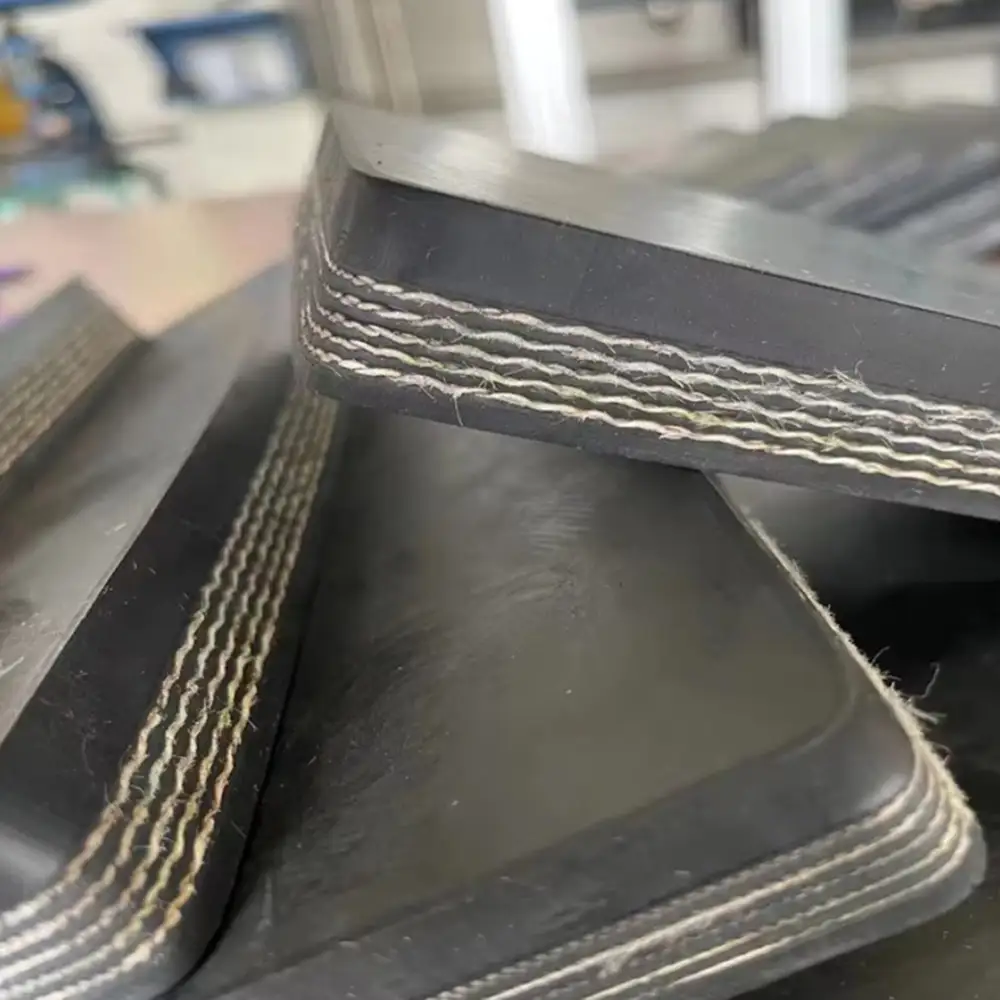
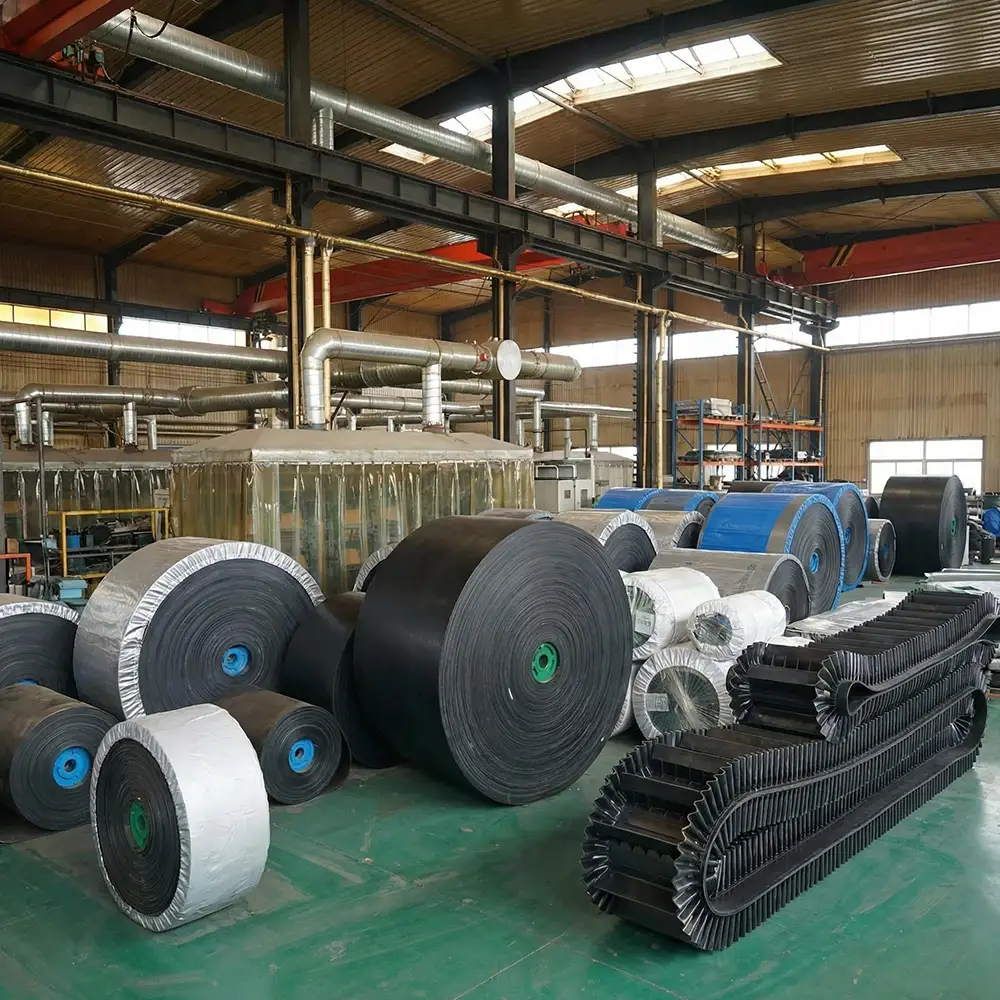
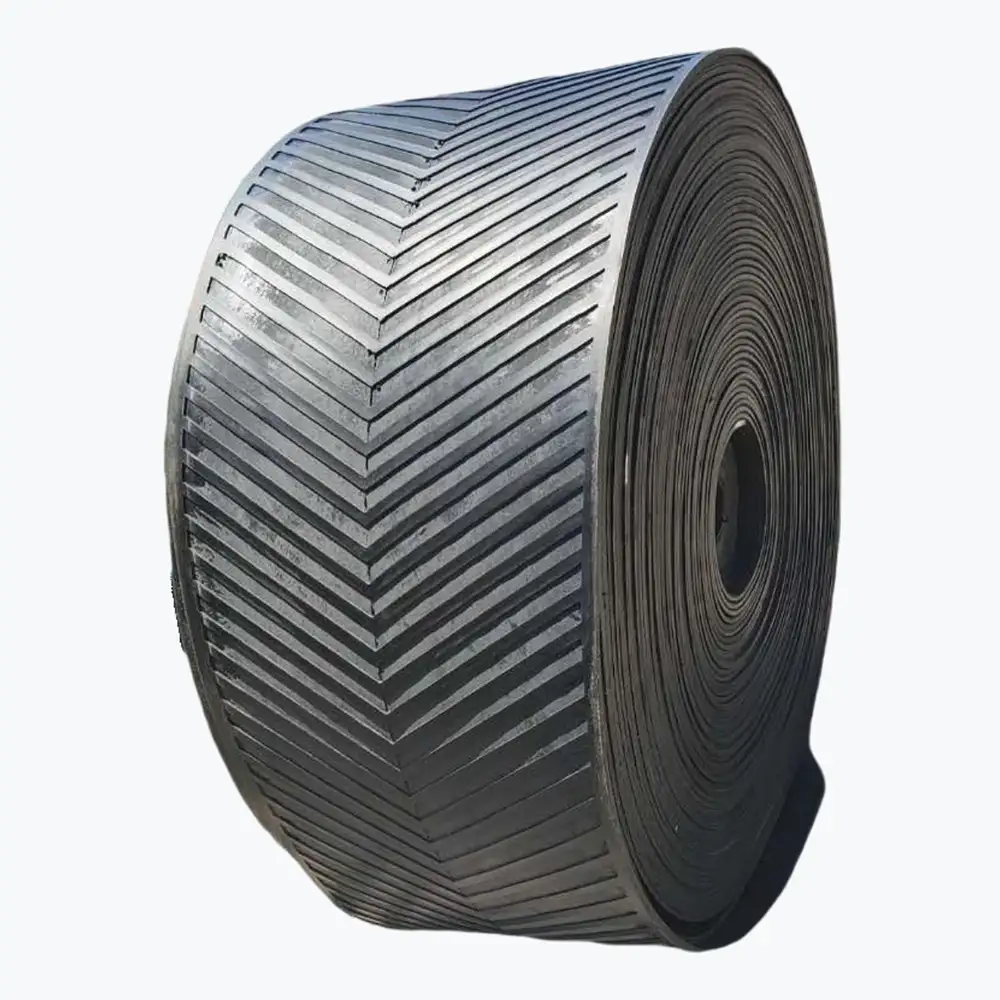
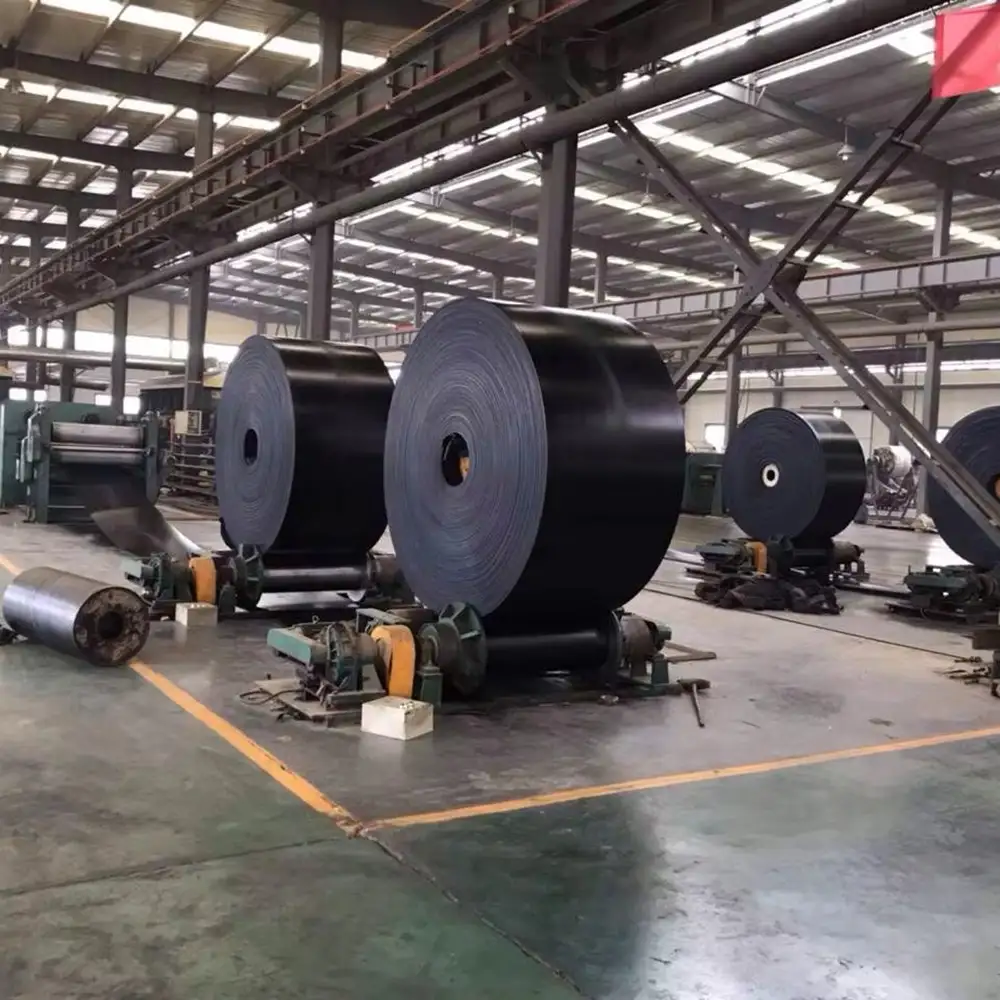
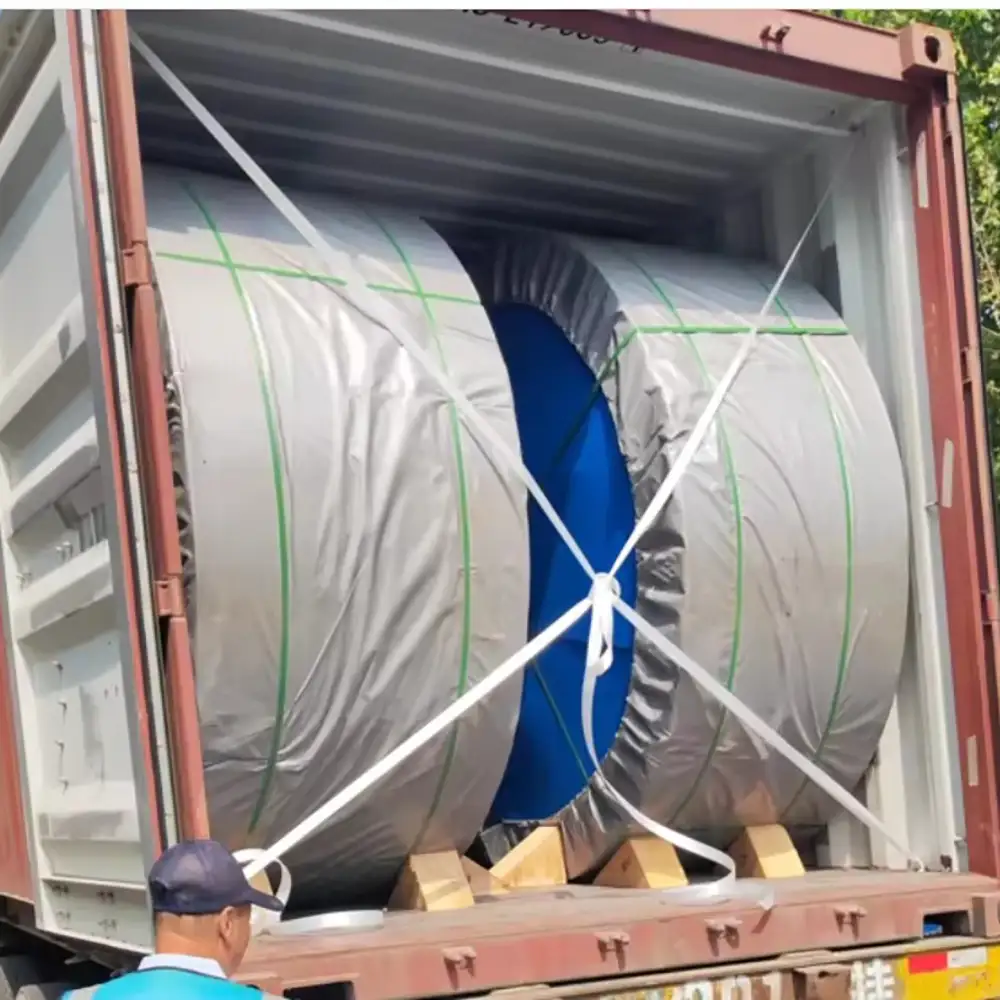
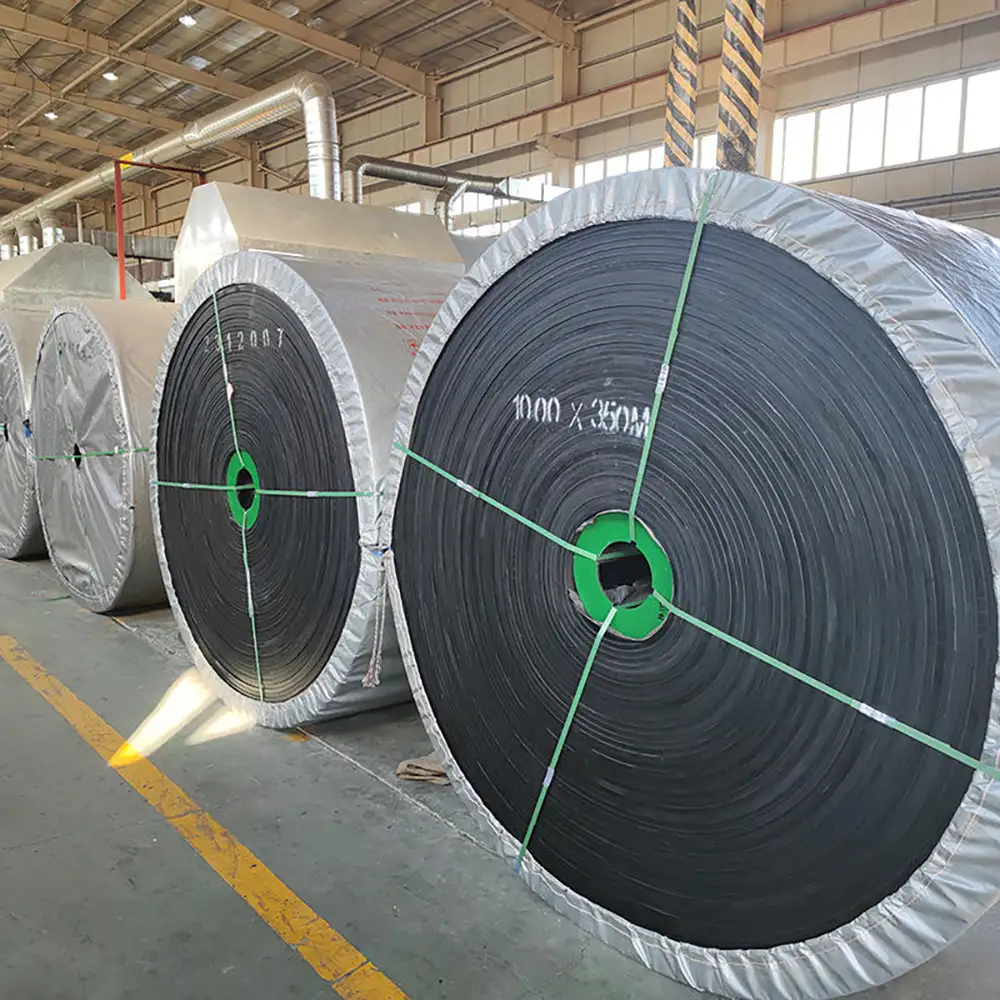
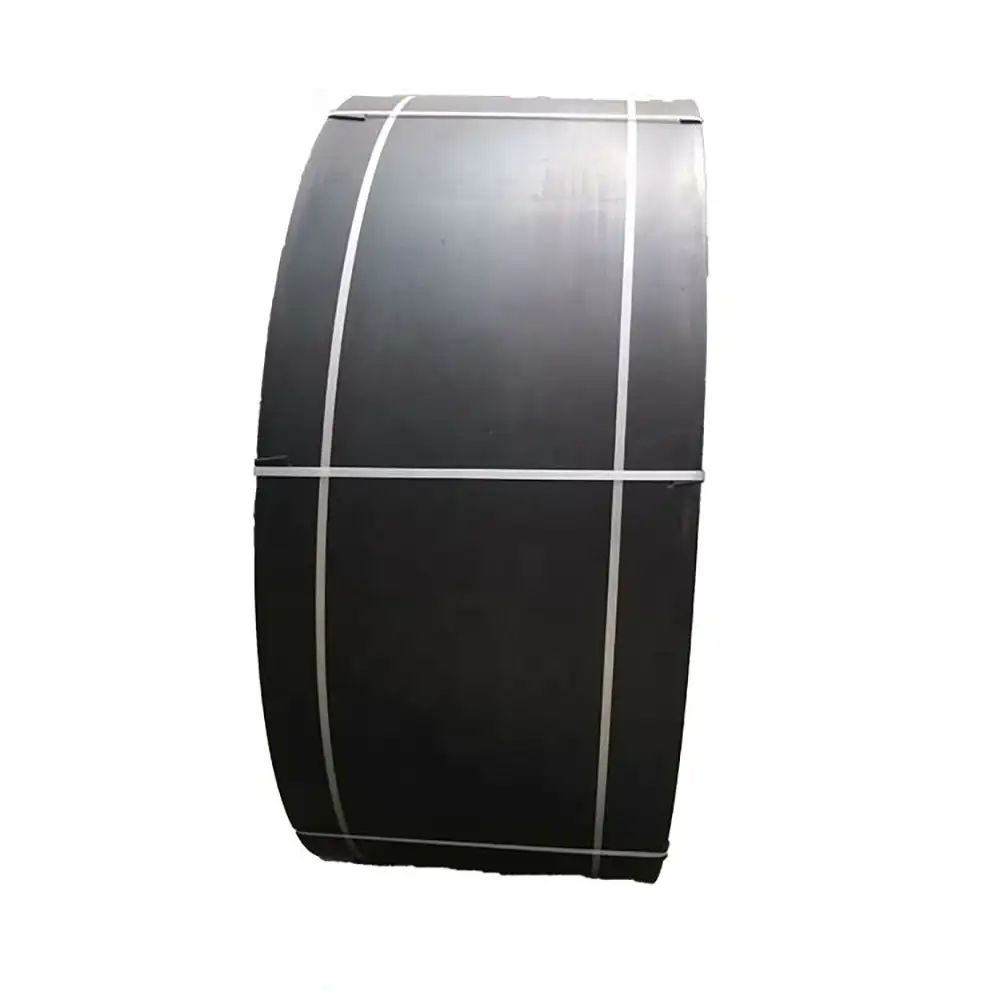
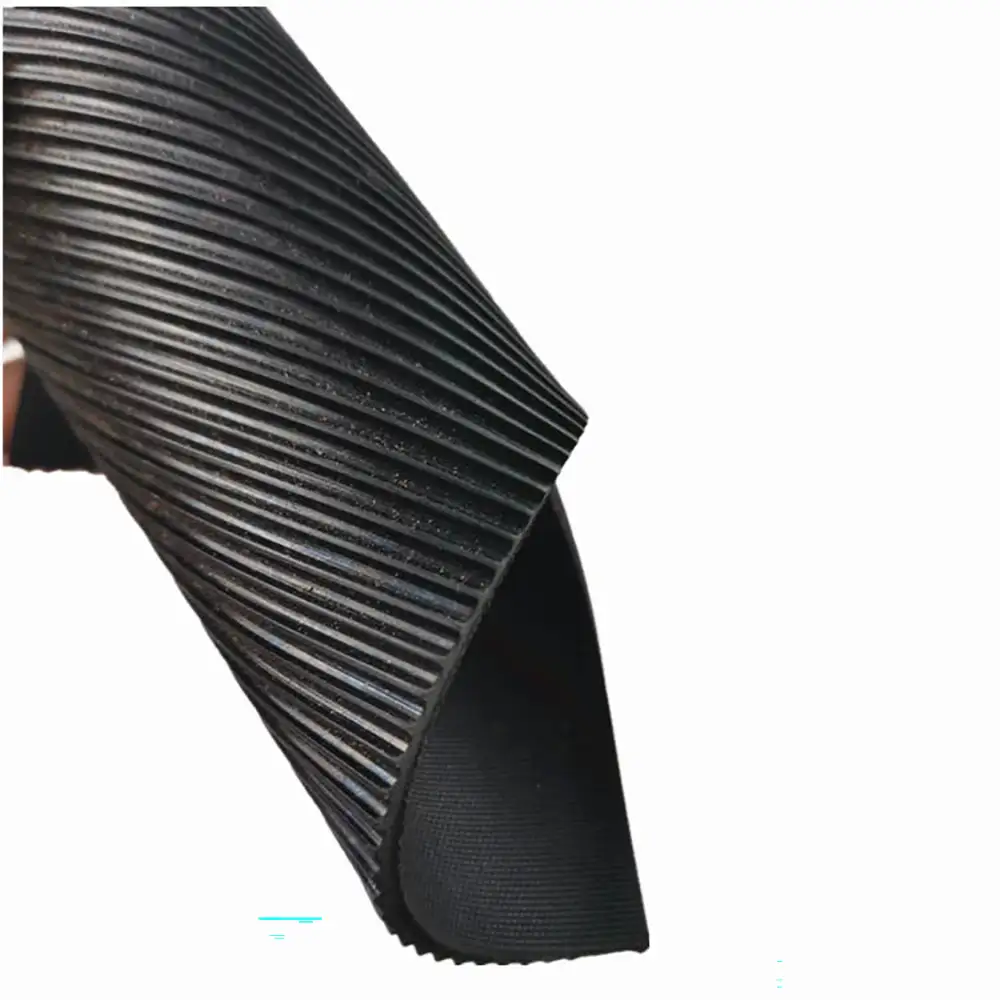
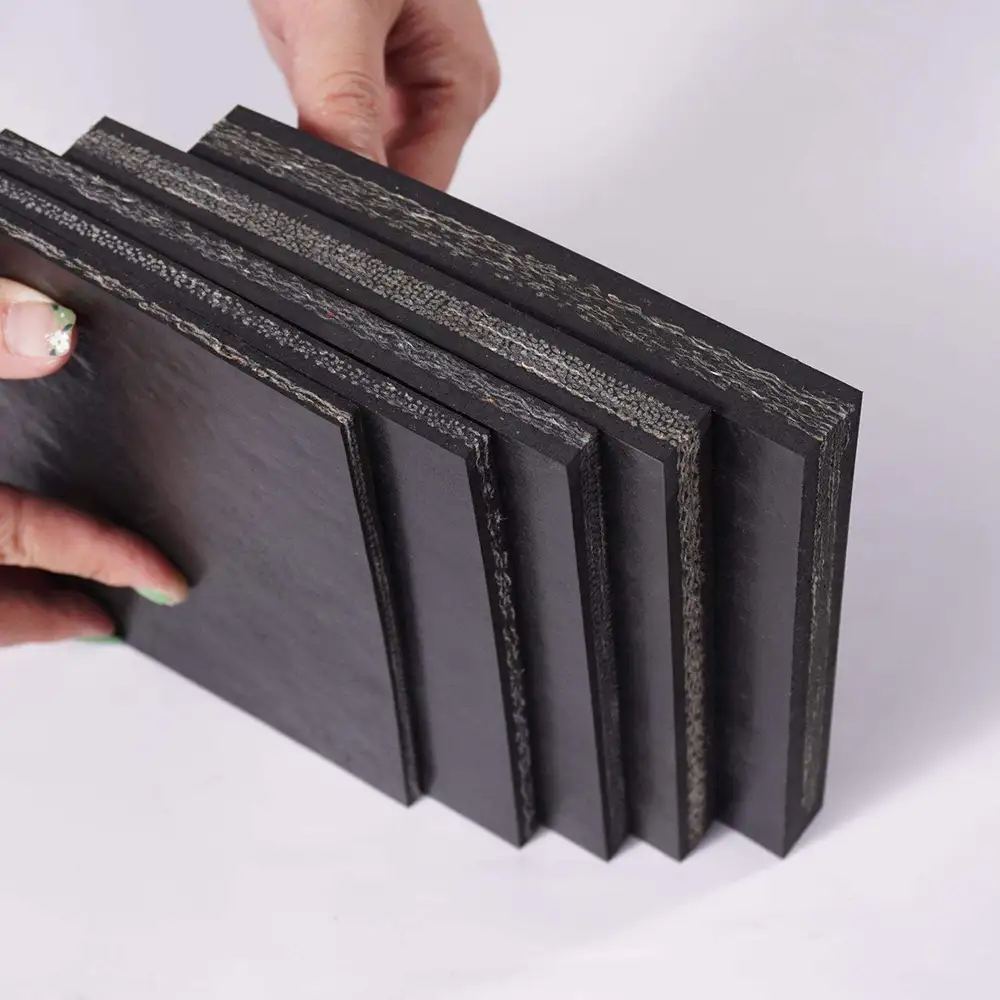
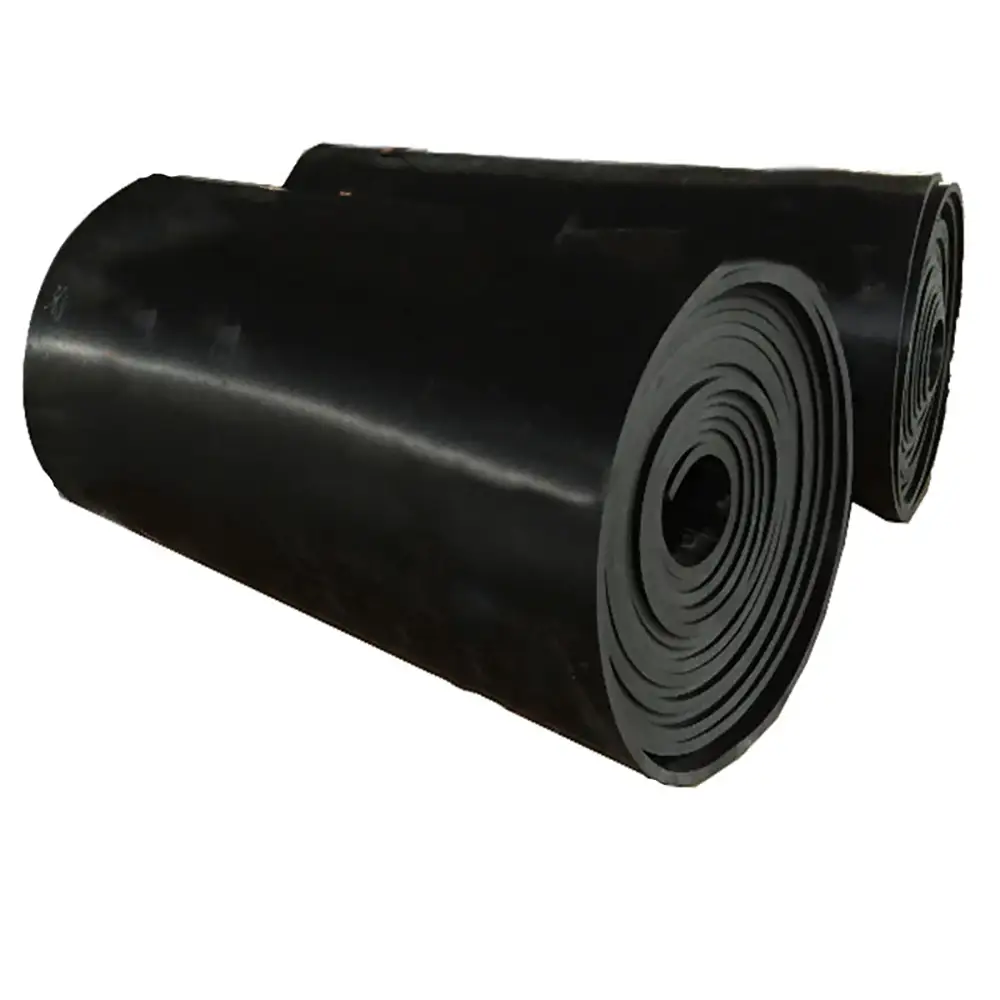
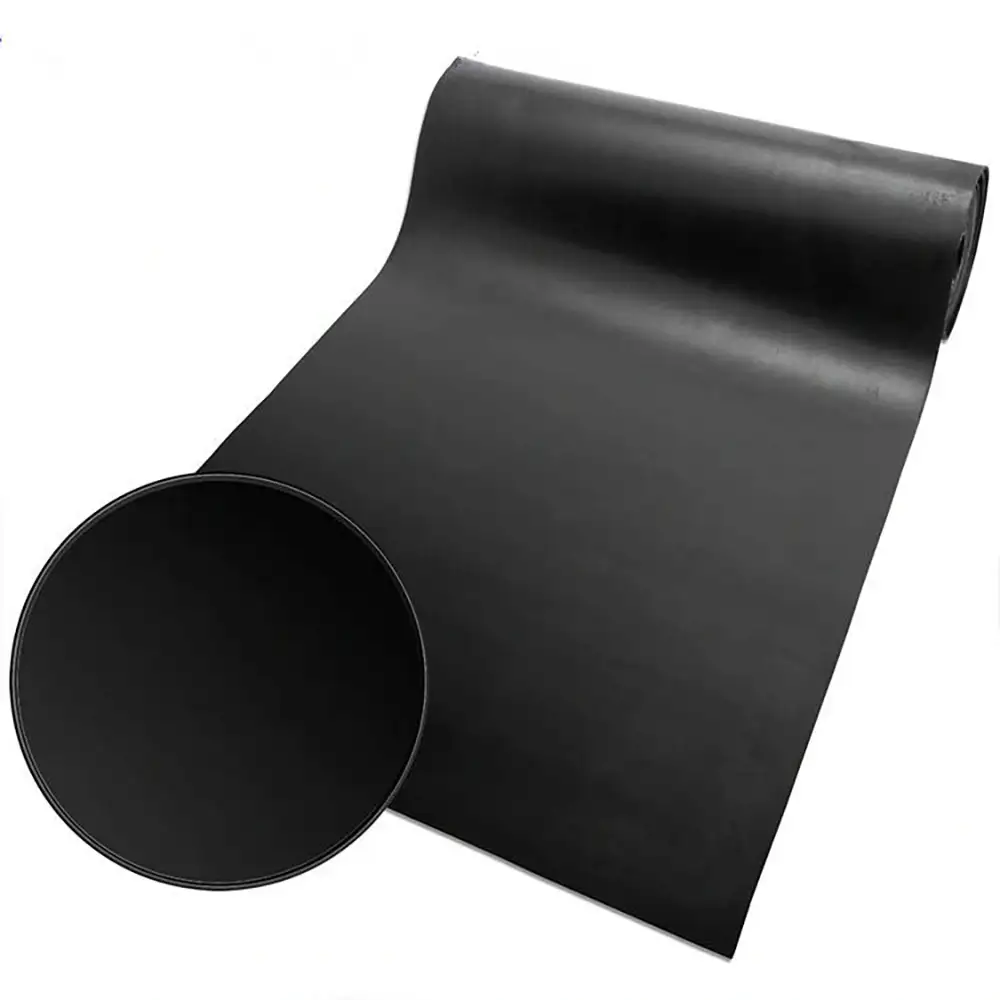
Applications : Oil resistant conveyor belt has good oil resistance and organic solvent resistance. It is fit for carrying materials including oil and organic solvent. Characteristies:Overlay glue is NBR which has good oil resistance According to consumer’s ordering we choose strengthen material.
Recycling operations
Wood processing/sawmills
Fertilizer
Chemical industry
Rural co-ops and traders in agricultural commodities
Foodstuffs industry
Waste utilization and composting
Mills
Oil sand
Fire Heat Cold And Oil Resistant Conveyor Belt
Fire, Heat, Cold And Oil Resistant Conveyor Belt is a specialized rubber conveyor belt designed for demanding material handling environments where more than one performance requirement must be considered. Depending on the selected rubber compound and belt construction, the belt can be engineered to address fire-related requirements, elevated temperatures, low-temperature environments and contact with oily or greasy materials.
These conveyor belts are used in industries such as mining, coal handling, steel, cement, chemical processing, recycling, aggregate, ports, manufacturing and other bulk material handling operations. The combination of environmental and mechanical requirements makes proper belt selection especially important.
Fire resistance, heat resistance, cold resistance and oil resistance are different performance characteristics. A belt should therefore be specified according to the actual operating environment rather than assuming that every multi-resistant belt has the same level of resistance to every hazard.
What Is A Fire Heat Cold And Oil Resistant Conveyor Belt?
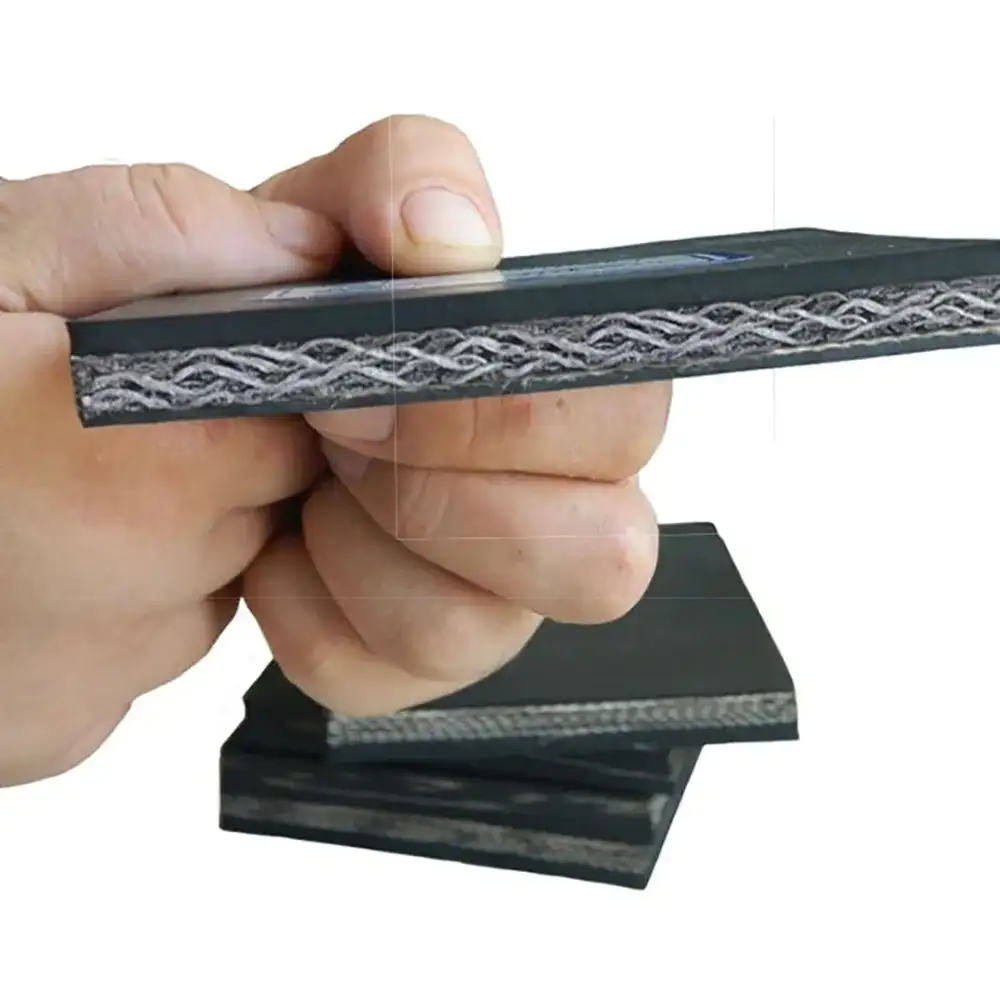
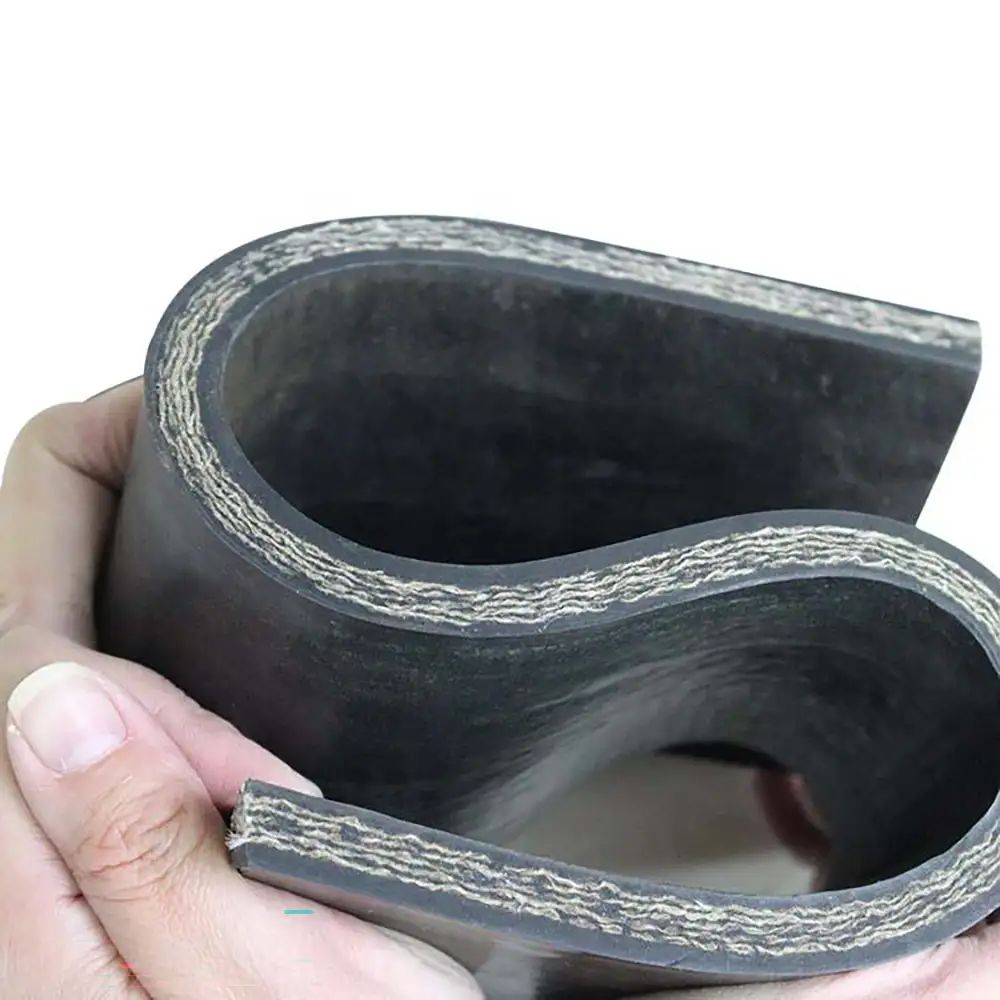
A multi-resistant conveyor belt normally consists of a reinforced carcass and specially formulated rubber covers. The carcass provides tensile strength, dimensional stability and flexibility, while the rubber covers protect the reinforcement from conveyed materials and environmental exposure.
Depending on the conveyor system, textile reinforcement such as EP or NN can be used. For long-distance, high-tension or demanding conveying systems, steel cord construction may also be considered.
The rubber compound is selected according to the required properties. A customer may require resistance to heat and oil, cold and oil, or a combination of several environmental conditions.
The final specification should be determined from the actual application, chemical exposure, material temperature, ambient temperature, mechanical loading and applicable safety requirements.
Fire Resistant Conveyor Belt
Fire-resistant conveyor belts are designed for applications where fire performance is an important safety consideration. They are commonly used in selected coal mining, power, industrial and bulk material handling applications.
Fire resistance should not be confused with heat resistance. A belt designed to handle hot materials is not automatically suitable for an application requiring a specific flame-resistance or fire-safety classification.
For underground mining and other regulated environments, the required fire-resistance and antistatic properties should be confirmed against the applicable local or industry standard before purchase.
Heat Resistant Conveyor Belt
Heat-resistant conveyor belts are designed for conveying materials or operating in environments where elevated temperatures could degrade conventional rubber.
Typical applications can include steel plants, cement plants, foundries, metallurgy, coke handling and selected mineral processing operations.
Heat resistance depends on the rubber formulation, material temperature, exposure duration, particle size, belt speed and cooling conditions. A continuous high-temperature application can impose very different requirements from intermittent contact with warm material.
The appropriate belt should therefore be selected according to the actual temperature profile rather than relying on a general "heat resistant" description.
Cold Resistant Conveyor Belt
Cold-resistant conveyor belts are designed to maintain suitable flexibility and mechanical performance in low-temperature environments.
They can be considered for outdoor conveyors, cold-region mining, ports, aggregate plants, agriculture, storage facilities and other applications where ambient temperatures may become low.
At low temperatures, rubber can become harder and less flexible. A suitable cold-resistant formulation helps reduce this problem and supports reliable belt operation.
The actual minimum operating temperature depends on the rubber compound, belt construction, mechanical conditions and duration of exposure.
Oil Resistant Conveyor Belt
Oil-resistant conveyor belts are designed for applications where the belt may contact oily, greasy or oil-contaminated materials.
They can be considered for recycling, automotive parts handling, industrial manufacturing, chemical processing, machinery-related material handling and selected mining applications.
Not all oils affect rubber in the same way. Petroleum-based oils, mineral oils, vegetable oils and animal fats can have different effects on different elastomers. Oil resistance should therefore be evaluated according to the actual substance and concentration.
Key Features And Benefits
A properly specified multi-resistant conveyor belt can offer several important advantages:
Fire-resistant options for selected safety-critical applications
Heat-resistant rubber compounds for hot material handling
Cold-resistant formulations for low-temperature environments
Oil-resistant compounds for oily or greasy materials
Reinforced carcass for continuous conveying
Flexible textile constructions for suitable conveyor systems
Heavy-duty options for bulk material handling
Custom belt dimensions and cover specifications
Compatibility with different industrial conveyor designs
Potential combination of multiple resistance properties
The important point is that these properties must be engineered together. Improving one characteristic does not automatically provide equivalent performance in another.
Industrial Applications
Coal Mining
Coal conveying may require a combination of fire-related safety requirements, abrasion resistance and mechanical durability. Underground applications may have additional regulatory requirements.
Steel Plants
Steel mills and metallurgical facilities may convey hot, abrasive or oily materials. Heat resistance, abrasion resistance and mechanical strength may all need to be considered.
Cement Plants
Cement and clinker handling can involve elevated temperatures, dust and abrasive materials. Belt construction and cover properties should be selected for the actual conveying process.
Chemical Industry
Chemical facilities may handle materials with oil, chemical or temperature-related exposure. Compatibility with the actual material should be confirmed before selection.
Recycling
Recycling systems may encounter oily components, mixed materials and sharp objects. Oil resistance may need to be combined with abrasion or tear resistance.
Aggregate And Mining
Mining and aggregate conveyors often require durable reinforcement and abrasion-resistant covers. If the environment also involves extreme cold, heat or oily materials, additional compound requirements may be necessary.
EP, NN And Steel Cord Construction
The reinforcement structure plays an important role in conveyor belt performance.
EP Conveyor Belt: EP fabric uses polyester in the longitudinal direction and polyamide in the transverse direction. It provides a useful balance of tensile strength, flexibility and dimensional stability for many industrial conveyors.
NN Conveyor Belt: NN construction uses nylon fabric reinforcement and can provide good flexibility and resistance to repeated bending.
Steel Cord Conveyor Belt: Steel cord construction is designed for applications requiring high longitudinal tensile strength, including suitable long-distance and high-tension conveyor systems.
The appropriate carcass depends on belt length, tension, conveying capacity, pulley configuration, operating conditions and system design.
How To Select The Right Multi-Resistant Belt
Before ordering, provide as much application information as possible.
Material Temperature: Give the actual temperature of the conveyed material and whether exposure is continuous or intermittent.
Ambient Temperature: Identify the lowest and highest expected environmental temperatures.
Oil Type: Specify whether the belt contacts mineral oil, petroleum products, vegetable oil, animal fat or another substance.
Fire Requirements: Identify any required fire-resistance, flame-resistance or antistatic standard.
Material Characteristics: Consider particle size, density, moisture, sharp edges and abrasiveness.
Conveyor Parameters: Belt width, length, speed, capacity, inclination and loading conditions affect belt selection.
Pulley Diameter: The carcass and belt thickness should be compatible with the conveyor pulley system.
Cover Thickness: Select top and bottom cover thickness according to wear, impact and environmental conditions.
Custom Manufacturing
A professional conveyor belt manufacturer can develop a specification around the customer's actual working environment.
Customization may include belt width, length, tensile grade, ply construction, cover thickness, rubber compound, edge construction and surface characteristics.
For applications requiring several resistance properties, customers should provide the complete operating profile. This allows the supplier to consider the interaction between temperature, oil, cold, fire requirements and mechanical loading.
OEM and ODM production can support conveyor system integrators, mining companies, industrial equipment manufacturers, distributors and international B2B buyers.
Installation And Maintenance
Proper installation is essential for maximizing conveyor belt service life. Check pulley alignment, idler condition, belt tracking and take-up settings before operation.
During use, inspect the belt regularly for cracking, hardening, softening, swelling, delamination, abnormal wear, edge damage and splice deterioration.
For hot-material applications, inspect loading areas and transfer points for excessive thermal exposure. For oil-related applications, remove accumulated contaminants when appropriate. In cold environments, pay particular attention to flexibility, tracking and splice behavior.
Fire-resistant or safety-rated belts should be maintained according to the applicable safety procedures and manufacturer recommendations.
Why Choose Us
As a professional industrial conveyor belt manufacturer and supplier, we provide customized rubber conveyor belt solutions for demanding applications.
Multi-Resistance Solutions: We can evaluate combined requirements for heat, cold, oil and fire-related performance.
Application-Based Selection: Belt specifications are developed around actual operating conditions.
Multiple Carcass Options: EP, NN and steel cord constructions can be considered according to conveyor requirements.
Custom Dimensions: Width, length, tensile grade, plies and cover thickness can be customized.
Industrial Experience: Solutions are available for mining, coal, steel, cement, chemical, recycling and bulk material handling.
OEM & ODM Support: Customized production is available for industrial customers and distributors.
B2B Export Support: We support international buyers with product specifications and customized requirements.
Quality-Focused Manufacturing: Production and inspection processes are designed to maintain consistent belt construction and dimensions.
FAQs
1. What Is A Fire, Heat, Cold And Oil Resistant Conveyor Belt?
It is a conveyor belt designed with rubber compounds and construction intended to address multiple environmental requirements, including fire-related performance, temperature exposure and contact with oily materials.
2. Is One Belt Resistant To All Four Conditions?
A belt can be engineered for multiple resistance properties, but the actual performance depends on the compound and specification. The required conditions should be confirmed before production.
3. Is Heat Resistance The Same As Fire Resistance?
No. Heat resistance concerns performance under elevated temperatures, while fire or flame resistance concerns the belt's behavior under specified fire-related conditions.
4. Can This Belt Be Used For Coal Mining?
Yes, suitable versions can be used in coal handling and mining applications. Underground mining may require specific fire-resistance and antistatic requirements that must be confirmed.
5. Can The Belt Handle Hot Steel Materials?
Suitable heat-resistant conveyor belts can be considered for steel and metallurgical applications. The actual material temperature and exposure duration must be provided for proper selection.
6. Is The Belt Suitable For Cold Weather?
Cold-resistant formulations can be used for low-temperature applications. The actual minimum operating temperature should be confirmed for the selected compound.
7. Is This Conveyor Belt Oil Proof?
Oil-resistant rubber compounds are designed for contact with specified oils and oily materials, but no rubber compound should be considered universally resistant to every oil or chemical.
8. What Reinforcement Can Be Used?
EP, NN and steel cord constructions can be considered depending on conveyor length, tension, capacity, pulley configuration and operating conditions.
9. Can You Customize The Belt?
Yes. Belt width, length, tensile strength, ply construction, cover thickness, rubber compound and other specifications can be customized.
10. What Information Is Needed For A Quote?
Provide the belt width and length, conveying material, capacity, speed, temperature range, oil or chemical exposure, fire requirements, conveyor inclination and other available system information.
Prev:
Checker Rubber Sheet, Rubber Matting & Flooring, Checker Rubber Matting / Flooring
Next:
Acid and Alkali-resistant Conveyor Belt
TAG:
Steel Cord Conveyor Belt,
Industrial Rubber Conveyor Belt,
Heavy Duty Rubber Conveyor Belt,
Fire Resistant Coal Conveyor Belt,
Heat Resistant Steel Conveyor Belt,
Multi Ply Conveyor Belt,
Oil Resistant Industrial Conveyor Belt,
Industrial Heat Resistant Conveyor Belt,
Industrial Fire Resistant Conveyor Belt,
Heavy Duty Heat Resistant Conveyor Belt,
Heat Resistant Mining Conveyor Belt,
Fire Resistant Mining Conveyor Belt,
Oil Resistant Mining Conveyor Belt,
Heavy Duty Cold Resistant Conveyor Belt,
Cold Resistant Mining Conveyor Belt,
Heavy Duty Oil Resistant Conveyor Belt,
Industrial Cold Resistant Conveyor Belt,
Industrial Oil Resistant Conveyor Belt,
Fire Resistant Conveyor Belting,
Heat Resistant Conveyor Belting,
Heavy Duty Fire Resistant Conveyor Belt,
Oil Resistant Conveyor Belting,
Oil Resistant Rubber Conveyor Belt,
Cold Resistant Rubber Conveyor Belt,
Cold Resistant Conveyor Belting,
Multi Resistant Conveyor Belt,
Multi Resistant Rubber Conveyor Belt,
Conveyor Equipment,
Heat Resistant Conveyor Belt,
Oil Resistant Conveyor Belt,
Related Category:
Fire Resistant Conveyor Belt, Heat Resistant Conveyor Belt, Cold Resistant Conveyor Belt, Oil Resistant Conveyor Belt China, suppliers, manufacturers, factory, customized, wholesale, quotation, made in China