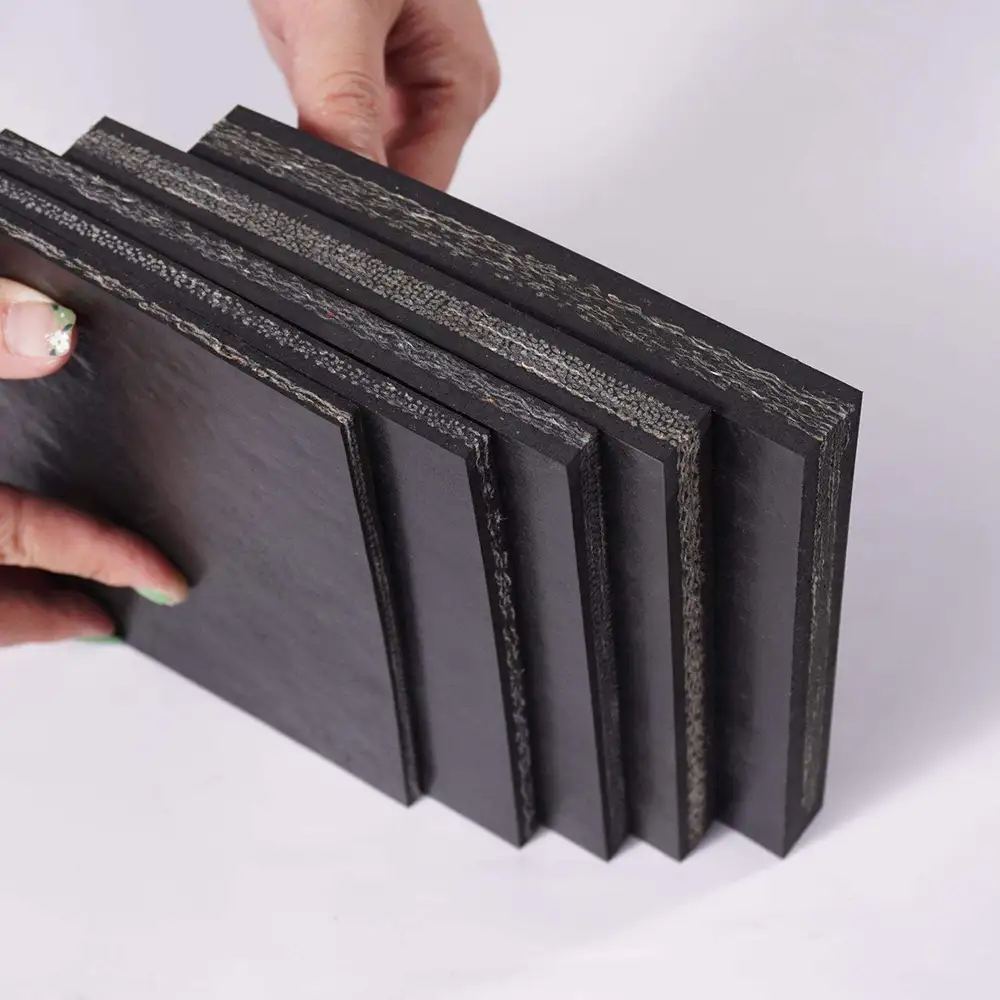
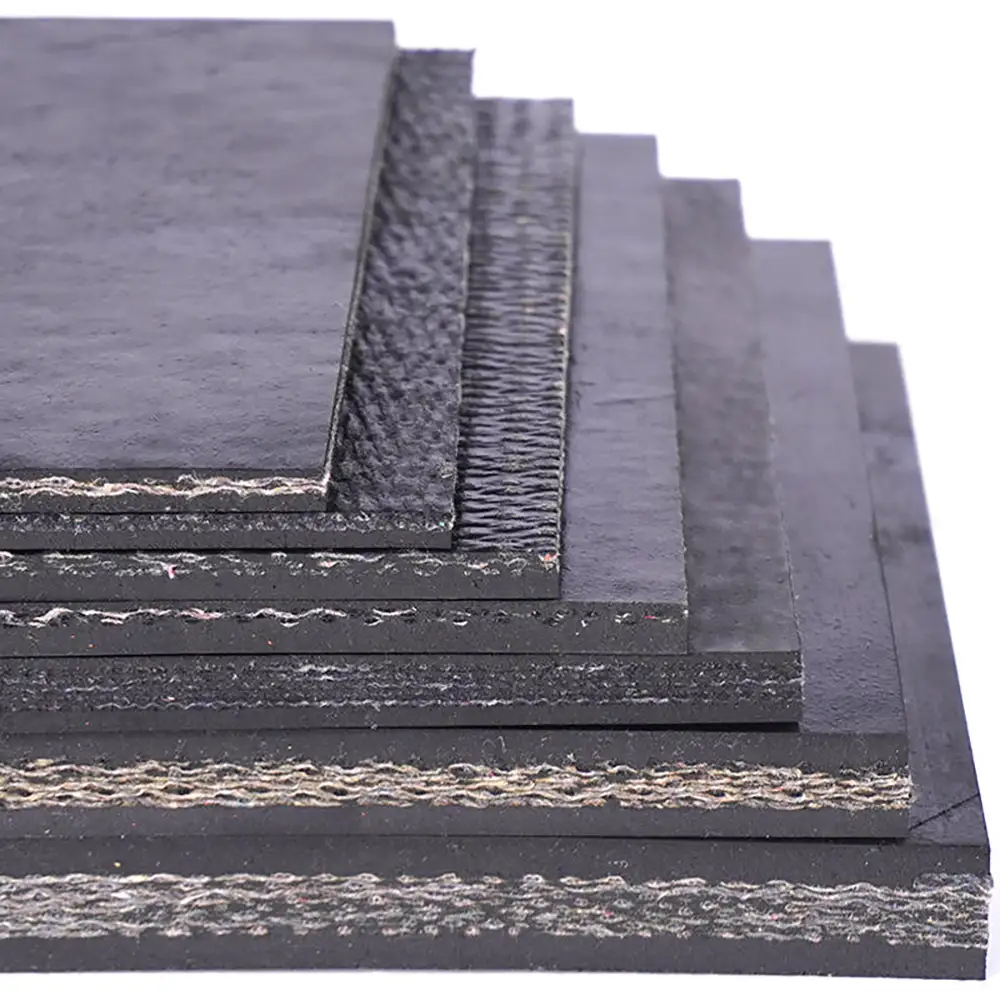
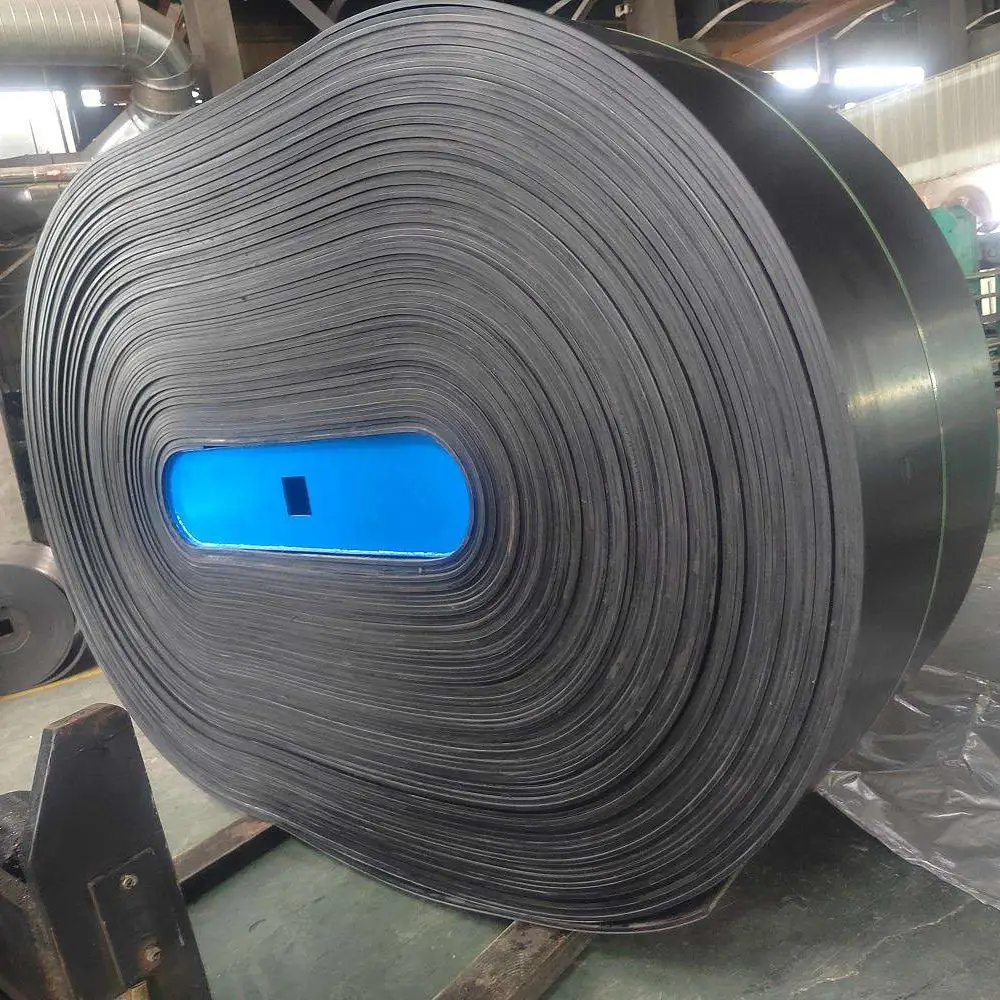
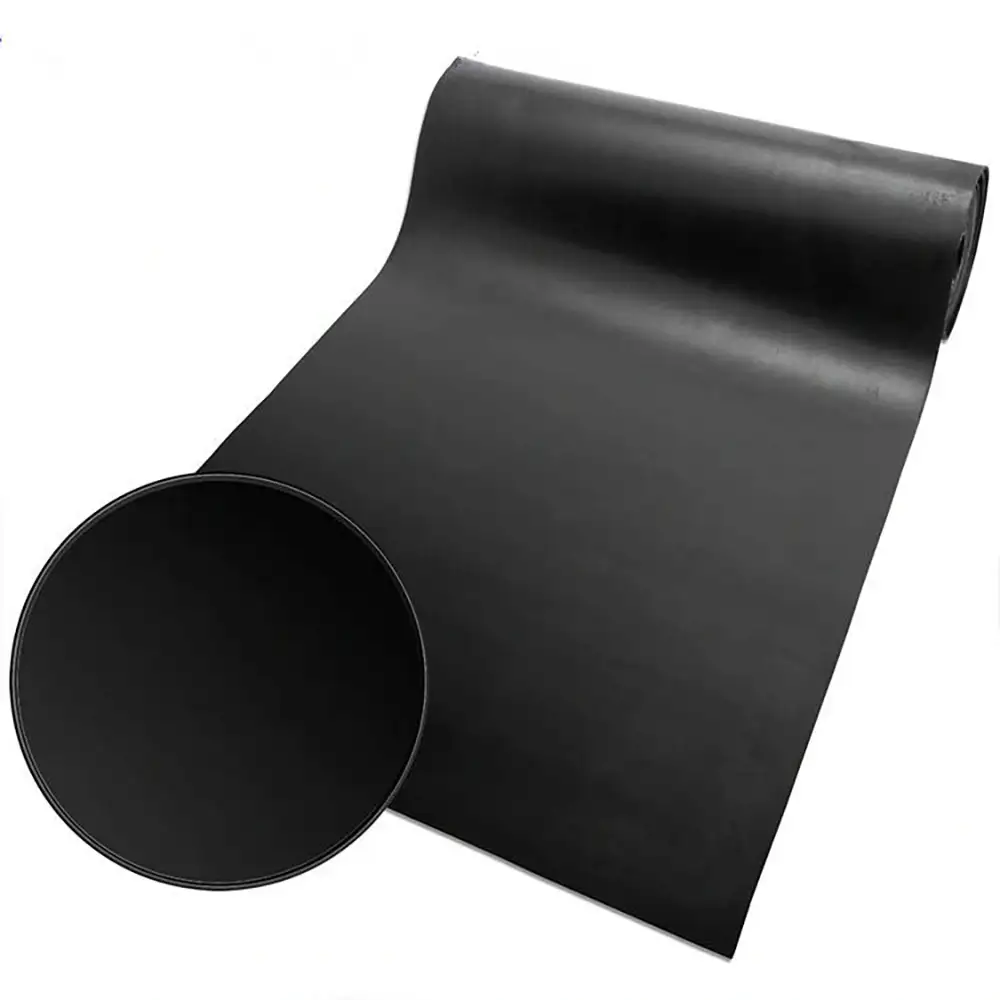
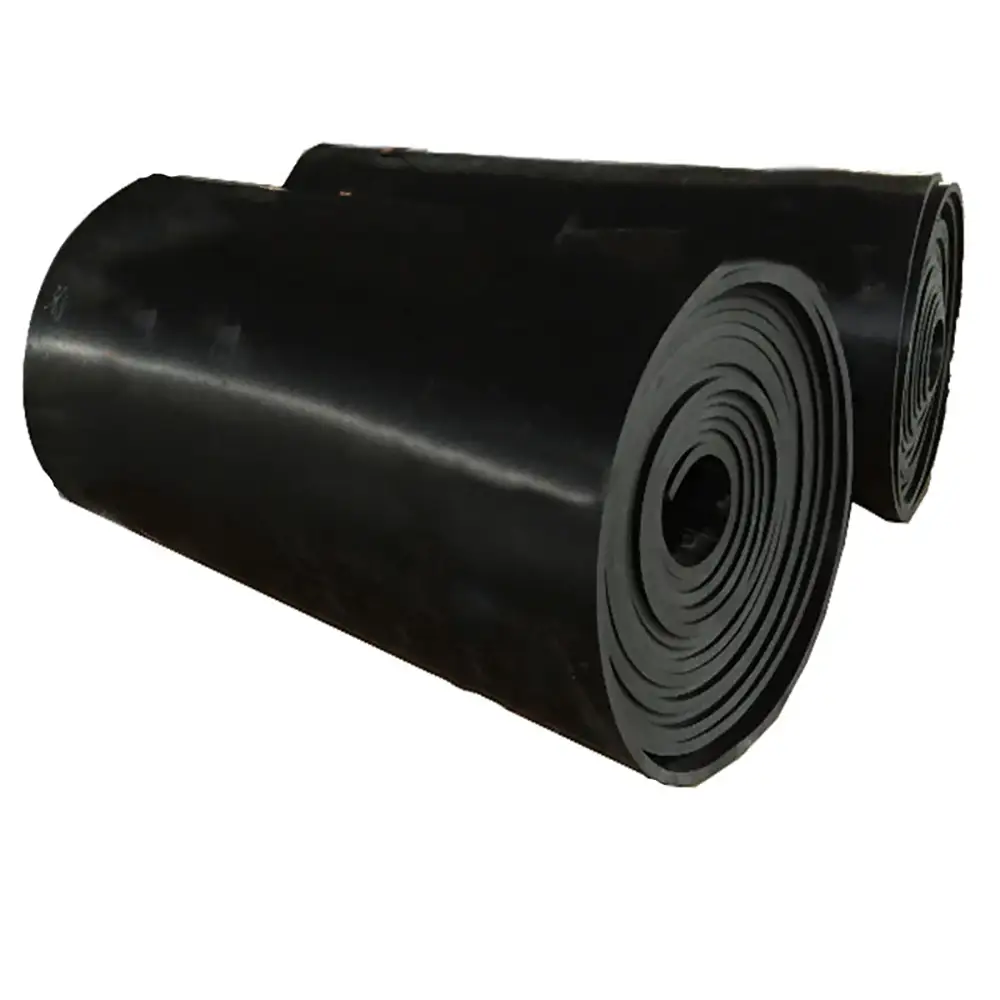
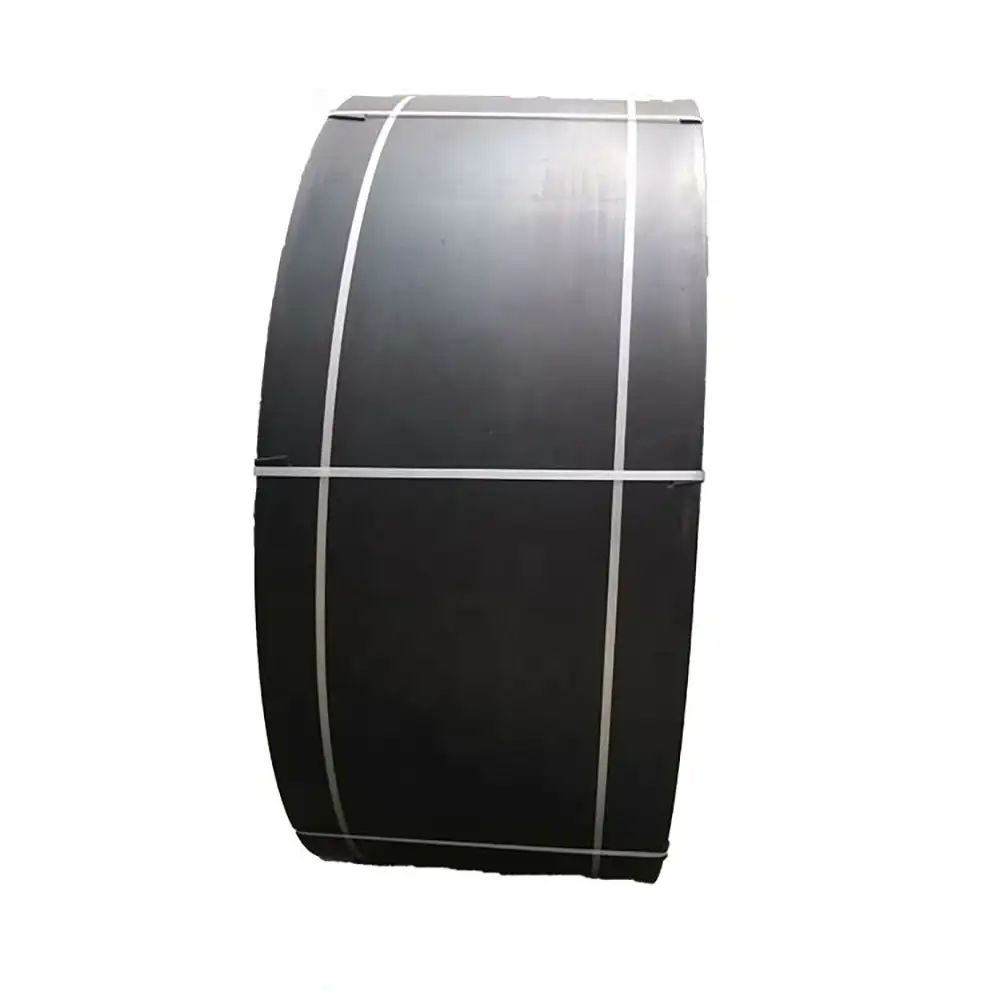
Endless Rubber Conveyor Belt/Industrial Belt of Textile Construction of Ep/Nn/Ar for Mining/Coais/Port/Chemical Industry
Textile Conveyor Belt,Conveyor belts with a Textile Carcass
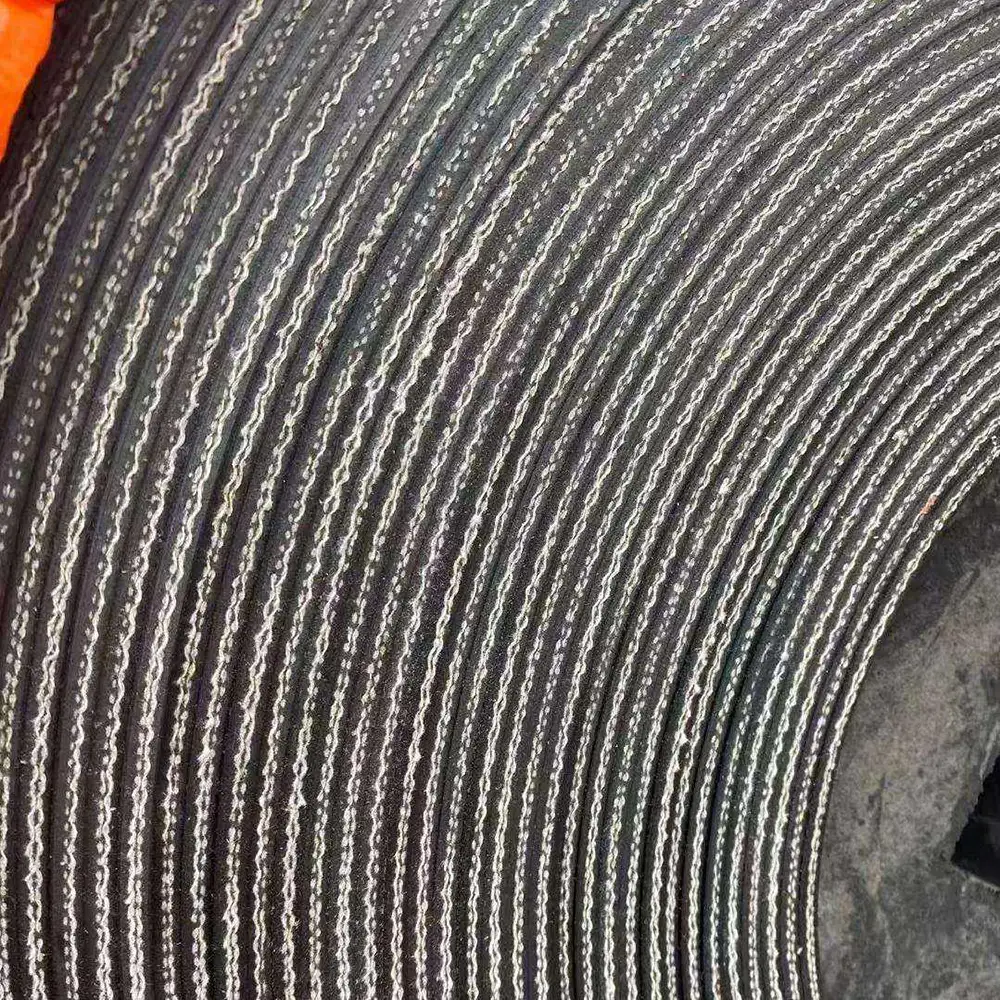
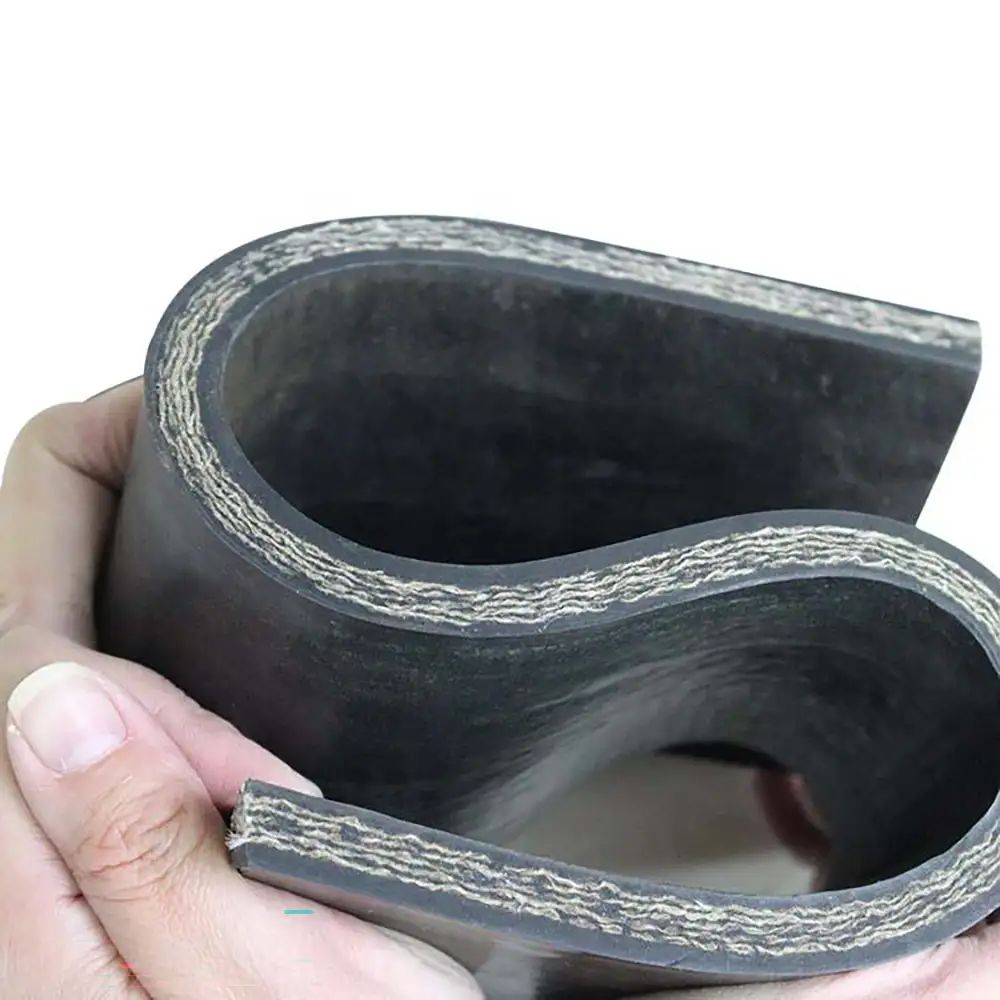
Textile conveyor belts are widely used in industrial material handling systems to transport bulk materials and packaged products continuously and efficiently. Featuring a textile carcass reinforced with woven fabric layers, these belts provide a practical combination of tensile strength, flexibility, dimensional stability, and reliable conveying performance.
Conveyor belts with a textile carcass are available in several reinforcement constructions, including EP polyester fabric, NN nylon fabric, and other textile configurations. The appropriate carcass depends on belt tension, conveyor length, belt speed, pulley diameter, material characteristics, and operating environment.
Textile conveyor belts are commonly used in mining, quarrying, coal handling, aggregate processing, cement plants, power generation, ports, warehouses, recycling facilities, agriculture, and general industrial conveying. Different rubber cover compounds can also be selected to address abrasion, heat, oil, weather, or other application requirements.
|
Shipping ways |
1. By sea from Qingdao port. 2. By express: DHL/UPS/FEDEX ,etc 3. By air |
|
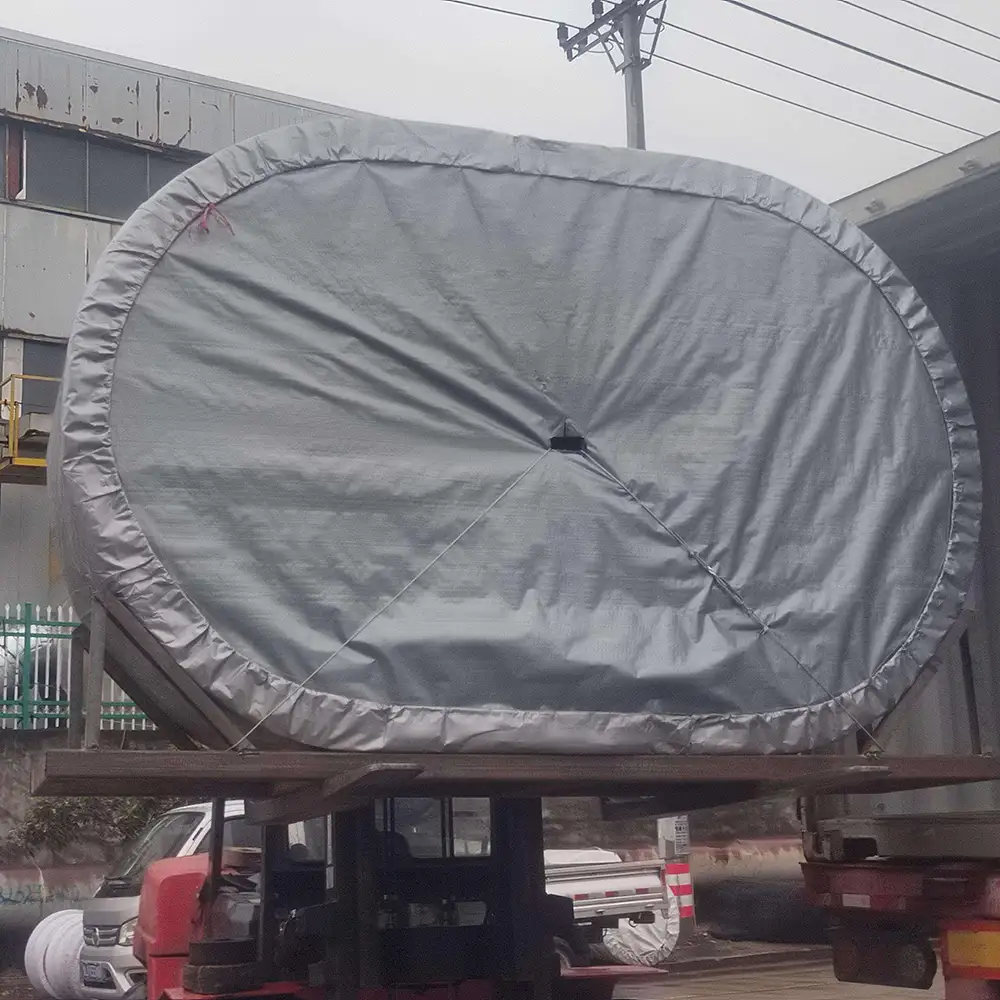
Package |
Normally PE bag+carton or customized as customer's request |
|
Trade Term |
Ex-works; FOB Qingdao ; CIF |
|
Payment Term |
Sample mold: 100% prepaid,MP Mould: 50% deposit by T/T in advance, balance 50% paid after samples approval |
Goods: 50% deposit, 50% before shipment
|
What Is A Textile Conveyor Belt?
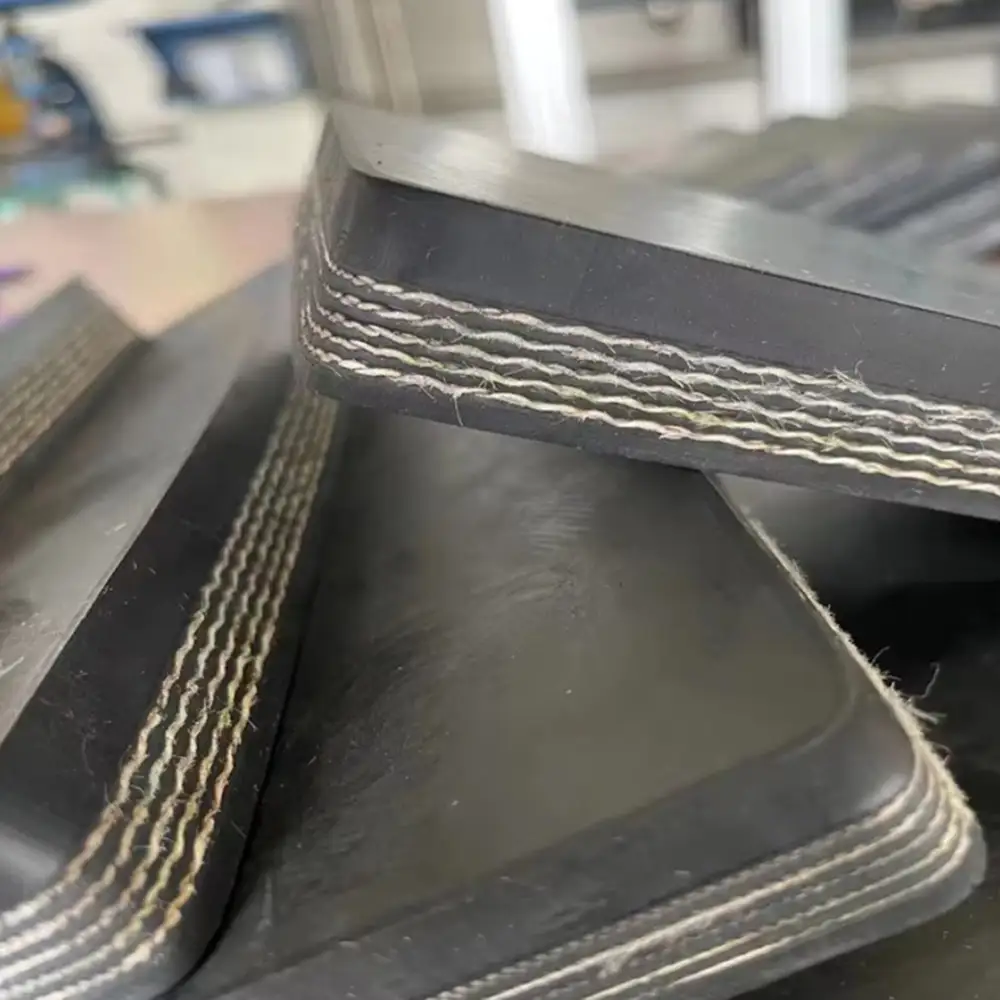
A textile conveyor belt is a continuous conveyor belt constructed with one or more textile reinforcement layers inside the rubber belt body. The textile carcass serves as the primary load-bearing component, while the top and bottom rubber covers protect the reinforcement and provide the working surface.
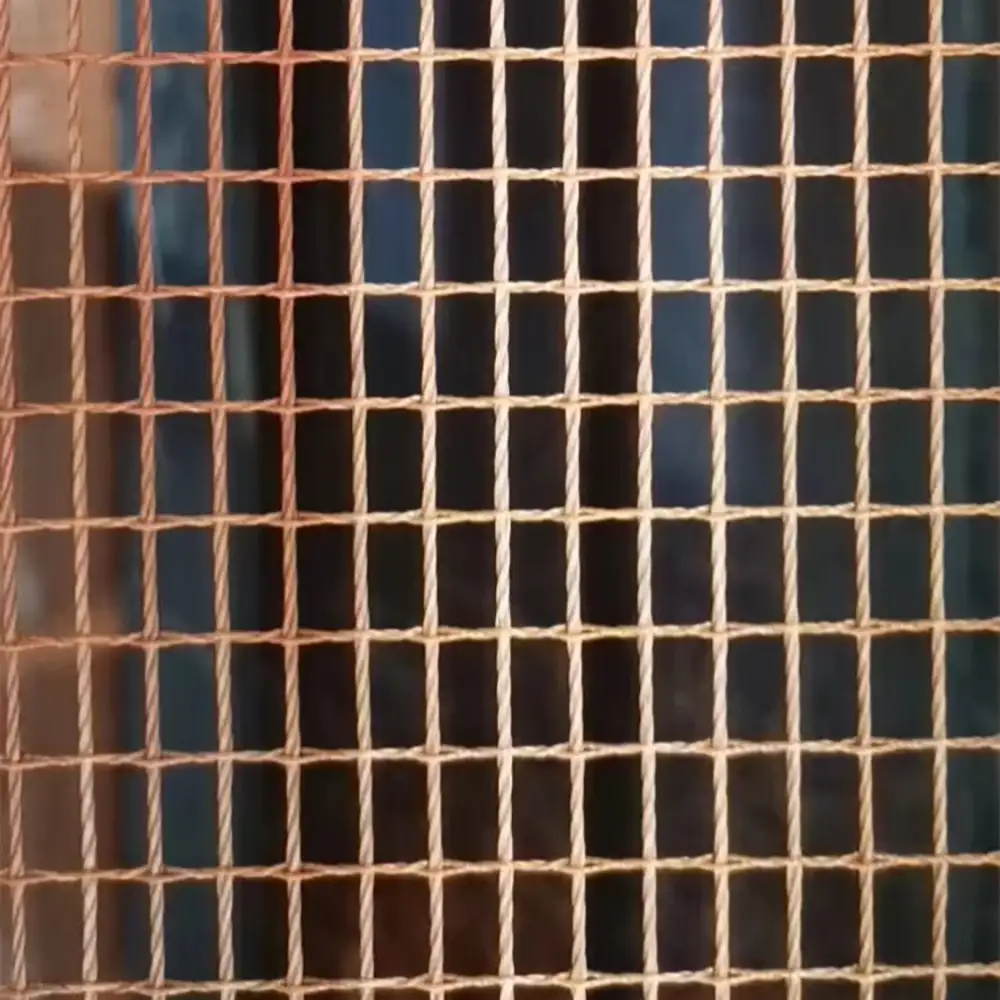
Unlike steel cord conveyor belts, which use steel cables as their longitudinal tensile members, textile conveyor belts use synthetic or natural textile materials. Modern industrial belts commonly use polyester, nylon, or combinations of textile fibers.
The term "textile carcass" describes the internal reinforcement structure rather than the belt's external surface. A belt can therefore have a textile carcass while still having a rubber top cover designed for heavy-duty bulk material conveying.
EP Textile Conveyor Belt
EP conveyor belts are one of the most widely used textile carcass constructions for industrial conveying. EP refers to polyester in the longitudinal direction and polyamide in the transverse direction of the fabric.
The polyester longitudinal reinforcement provides tensile strength and dimensional stability, while the polyamide transverse component contributes flexibility and resistance to transverse stresses.
EP belts are suitable for many bulk material handling applications and are available in different tensile grades and ply configurations. They can be manufactured with different cover thicknesses and rubber compounds according to the intended application.
NN Textile Conveyor Belt
NN conveyor belts use nylon fabric reinforcement. Nylon provides flexibility and good resistance to dynamic bending, making NN construction suitable for conveyor systems requiring repeated flexing.
NN belts can be considered for mining, quarrying, aggregate, material handling, and other industrial applications. The appropriate construction should be determined from conveyor tension, pulley diameter, loading conditions, and other system parameters.
Key Features And Benefits
Flexible Textile Reinforcement
Textile carcasses provide flexibility that allows the belt to travel around conveyor pulleys and through properly designed conveyor structures.
Reliable Tensile Performance
Multiple textile plies or appropriate fabric constructions can provide the tensile strength required for different conveyor applications.
Good Dimensional Stability
EP fabric construction can provide relatively low elongation, helping maintain stable conveyor operation when properly tensioned.
Abrasion Resistant Options
For coal, rock, aggregate, ore, and other abrasive materials, suitable abrasion-resistant cover compounds can be specified.
Heat Resistant Options
Where hot materials are conveyed, heat-resistant rubber compounds may be available depending on the belt design and operating requirements.
Oil Resistant Options
For applications involving oily or greasy materials, an appropriate oil-resistant cover compound can be considered.
Weather Resistant Options
Outdoor conveyors can require resistance to sunlight, moisture, temperature changes, and other environmental conditions. Suitable cover formulations can be selected when available.
Customizable Construction
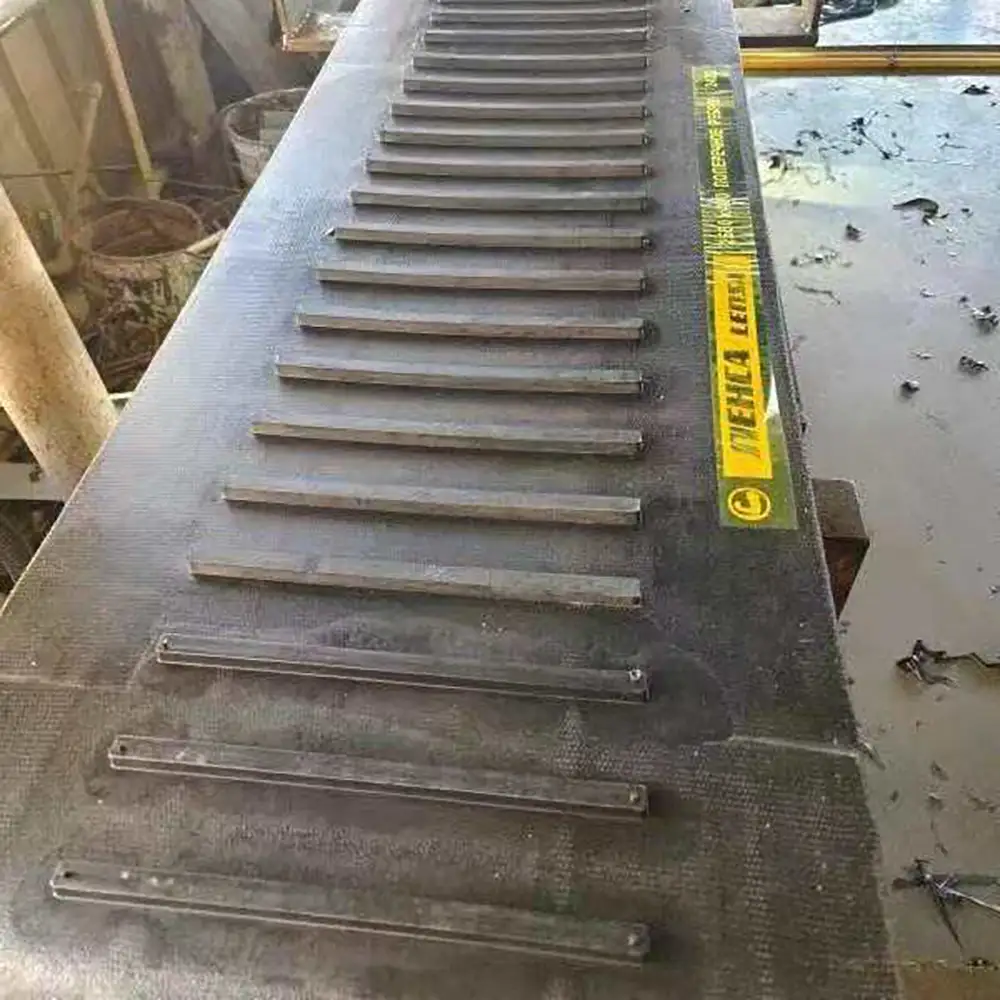
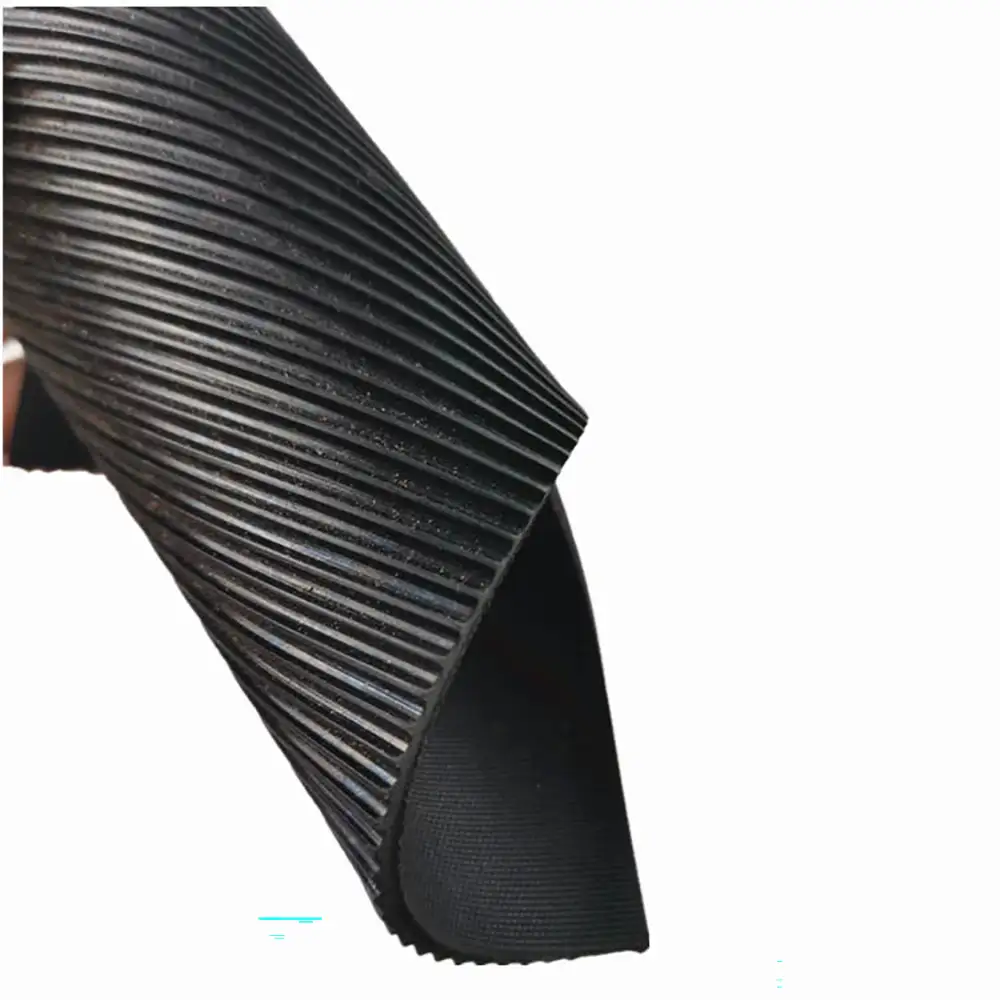
Belt width, length, carcass type, tensile grade, number of plies, cover thickness, rubber grade, edge construction, and surface pattern can be customized according to project requirements.
Applications Of Textile Carcass Conveyor Belts
Textile conveyor belts are suitable for a broad range of applications, including:
Mining
Coal Handling
Quarrying
Aggregate Processing
Stone Crushing Plants
Sand Processing
Cement Plants
Power Plants
Ports And Terminals
Bulk Material Handling
Recycling Plants
Agriculture
Grain Handling
Warehousing
Manufacturing
Construction Material Transportation
The belt should always be matched to the material and operating conditions. For example, a belt used for iron ore may require different cover characteristics from one used for grain or packaged goods.
Textile Carcass Construction And Belt Selection
Selecting the correct textile conveyor belt begins with understanding the conveyor system.
Important parameters include belt width, conveyor length, conveying capacity, belt speed, material density, maximum lump size, conveyor inclination, loading impact, belt tension, pulley diameter, and environmental conditions.
For abrasive materials such as rock, crushed stone, iron ore, and aggregate, abrasion resistance is an important consideration. For coal mining, especially underground applications, additional flame-resistant and antistatic requirements may apply.
EP and NN carcasses should also be selected according to the mechanical requirements of the conveyor. Longer and higher-tension conveyors may require a different reinforcement construction from short conveyors.
Textile Conveyor Belt For Mining
Mining applications place significant demands on conveyor belts. Coal, ore, rock, and aggregate can cause surface abrasion and impact during loading and transportation.
Textile carcass conveyor belts can provide an effective solution for many mining and quarry conveyors when the belt construction is correctly matched to the conveyor design.
For underground coal mines, the belt must be selected according to the applicable mine safety regulations, including any requirements for flame resistance, antistatic performance, and certification.
For surface mining, quarrying, and aggregate operations, abrasion resistance, impact conditions, conveyor length, and outdoor weather exposure may be more significant considerations.
Installation And Maintenance
Proper conveyor alignment is essential for textile belt performance. Before commissioning, inspect the conveyor frame, pulleys, idlers, take-up system, belt cleaners, and loading points.
The belt should be installed with appropriate tension and tracking adjustments. Excessive tension can increase mechanical stress, while insufficient tension can contribute to slipping and tracking problems.
During operation, regularly inspect the top cover, bottom cover, belt edges, joints, and textile carcass for signs of damage or abnormal wear.
Keep loading zones clean and properly aligned. Material buildup on pulleys and idlers can affect tracking and increase belt wear.
Regular preventive maintenance can help identify developing problems before they result in unexpected conveyor downtime.
Why Choose Us
We provide textile conveyor belt solutions for mining, quarrying, aggregate, coal handling, cement, power generation, ports, recycling, agriculture, and general industrial applications.
Our product range can include EP fabric conveyor belts, NN conveyor belts, multi-ply textile belts, abrasion-resistant conveyor belts, heat-resistant belts, oil-resistant belts, weather-resistant belts, and other application-specific constructions.
We can help customers organize key technical requirements such as belt width, length, carcass type, tensile grade, ply construction, cover thickness, rubber compound, and application environment.
As an industrial conveyor belt manufacturer and supplier, we support international B2B customers including mining companies, conveyor system integrators, engineering contractors, distributors, wholesalers, and purchasing departments.
OEM and custom requirements can also be discussed according to the project. We can provide support with technical communication, production coordination, quality inspection, packaging, and export logistics.
Our goal is to provide a practical conveyor belt sourcing solution that matches the belt construction with the customer's actual conveying conditions.
Frequently Asked Questions
1. What is a textile conveyor belt?
A textile conveyor belt is a conveyor belt reinforced with textile fabric layers inside the belt carcass. Common reinforcement materials include polyester and nylon.
2. What does textile carcass mean?
The textile carcass is the internal reinforcement structure that provides the conveyor belt with its primary tensile and structural properties.
3. What is an EP conveyor belt?
An EP conveyor belt uses polyester in the longitudinal direction and polyamide in the transverse direction of the textile reinforcement.
4. What is the difference between EP and NN conveyor belts?
EP belts use polyester/polyamide fabric, while NN belts use nylon fabric. Their mechanical characteristics differ, so selection should be based on the conveyor system and operating conditions.
5. Are textile conveyor belts suitable for mining?
Yes. Textile carcass belts are widely used in mining, quarrying, coal handling, aggregate, and mineral processing applications.
6. Can textile conveyor belts handle abrasive materials?
Yes, when manufactured with an appropriate abrasion-resistant cover compound. The correct belt grade depends on the material and operating conditions.
7. Can textile conveyor belts be used for coal?
Yes. Coal conveyor belts can use textile carcass constructions. Underground coal mining may require additional flame-resistant and antistatic characteristics.
8. Can the textile carcass conveyor belt be customized?
Yes. Width, length, carcass construction, tensile grade, ply number, cover thickness, rubber compound, and other specifications can be discussed according to project requirements.
9. How do I select the correct textile conveyor belt?
Consider the material, belt width, conveyor length, speed, capacity, inclination, belt tension, pulley diameter, loading impact, temperature, and environmental conditions.
10. Can you provide OEM textile conveyor belts?
Yes. OEM and customized conveyor belt production can be discussed based on technical specifications, dimensions, packaging, labeling, and order requirements.
Request A Quote
If you are sourcing a textile conveyor belt with a textile carcass, send us your belt width, length, material, conveyor speed, capacity, tensile requirement, and operating environment. We can help identify a suitable EP, NN, or other textile-reinforced conveyor belt construction for your application.
Prev:
Tear Resistant Conveyor Belt, Conveyor Engineering, Design and Technology Services
Next:
Mining Conveyor Belt, Conveyor Belts for Coal, Iron Ore Mining
TAG:
Industrial Rubber Conveyor Belt,
Multi Ply Conveyor Belt,
Heat Resistant Conveyor Belt,
Oil Resistant Conveyor Belt,
Fire Resistant Conveyor Belt,
Mining Conveyor Belt,
Antistatic Conveyor Belt,
Flame Resistant Conveyor Belt,
Weather Resistant Conveyor Belt,
Bulk Material Conveyor Belt,
Sand Conveyor Belt,
Material Handling Conveyor Belt,
Ore Conveyor Belt,
Coal Conveyor Belt,
Quarry Conveyor Belt,
Aggregate Conveyor Belt,
Coal Handling Conveyor Belt,
Mining Rubber Conveyor Belt,
Coal Mining Conveyor Belt,
Stone Crusher Conveyor Belt,
Abrasion Resistant Conveyor Belt,
Iron Ore Conveyor Belt,
Heavy Duty Conveyor Belt,
Polyester Reinforced Conveyor Belt,
Polyester Rubber Conveyor Belt,
Industrial Fabric Conveyor Belt,
Heavy Duty Fabric Conveyor Belt,
EP Fabric Conveyor Belt,
Polyester Conveyor Belt,
EP Rubber Conveyor Belt,
Related Category:
Textile Conveyor Belt,Conveyor Belt With Textile Carcass,Textile Carcass Conveyor Belt,EP Conveyor Belt China, suppliers, manufacturers, factory, customized, wholesale, quotation, made in China