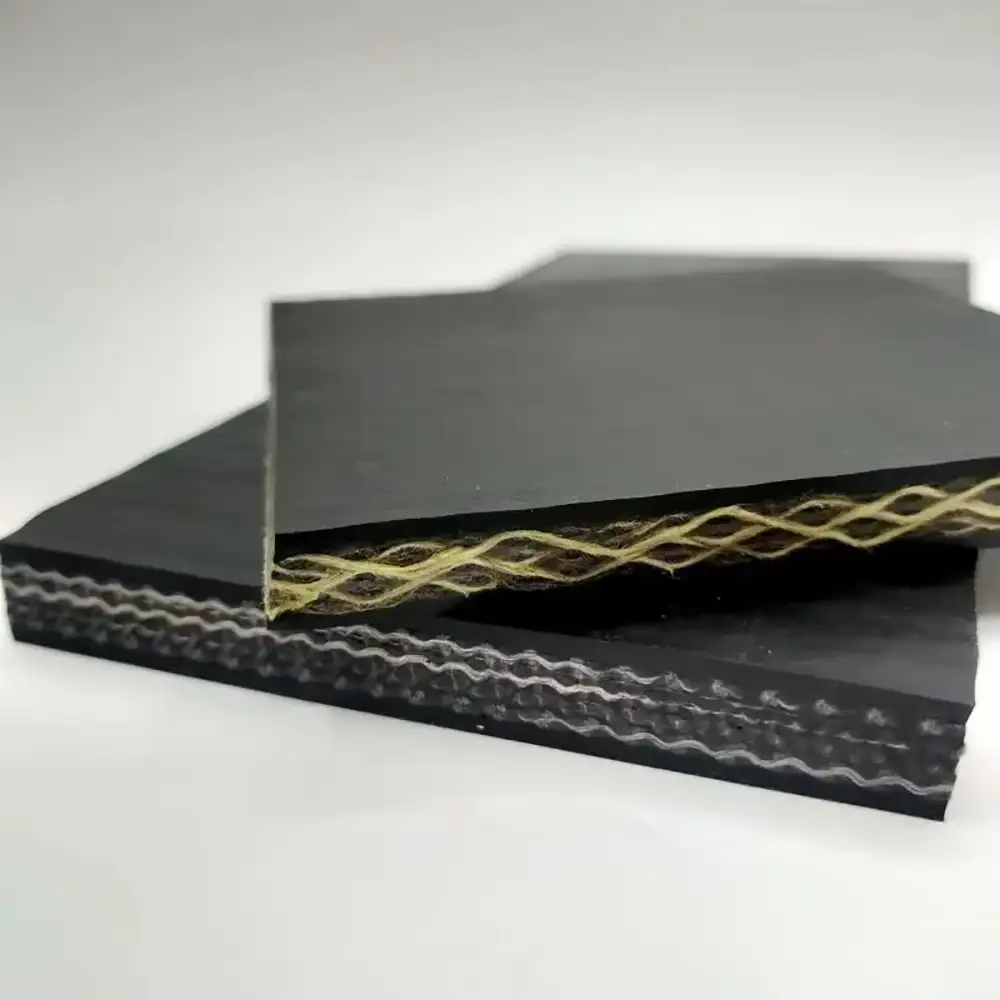
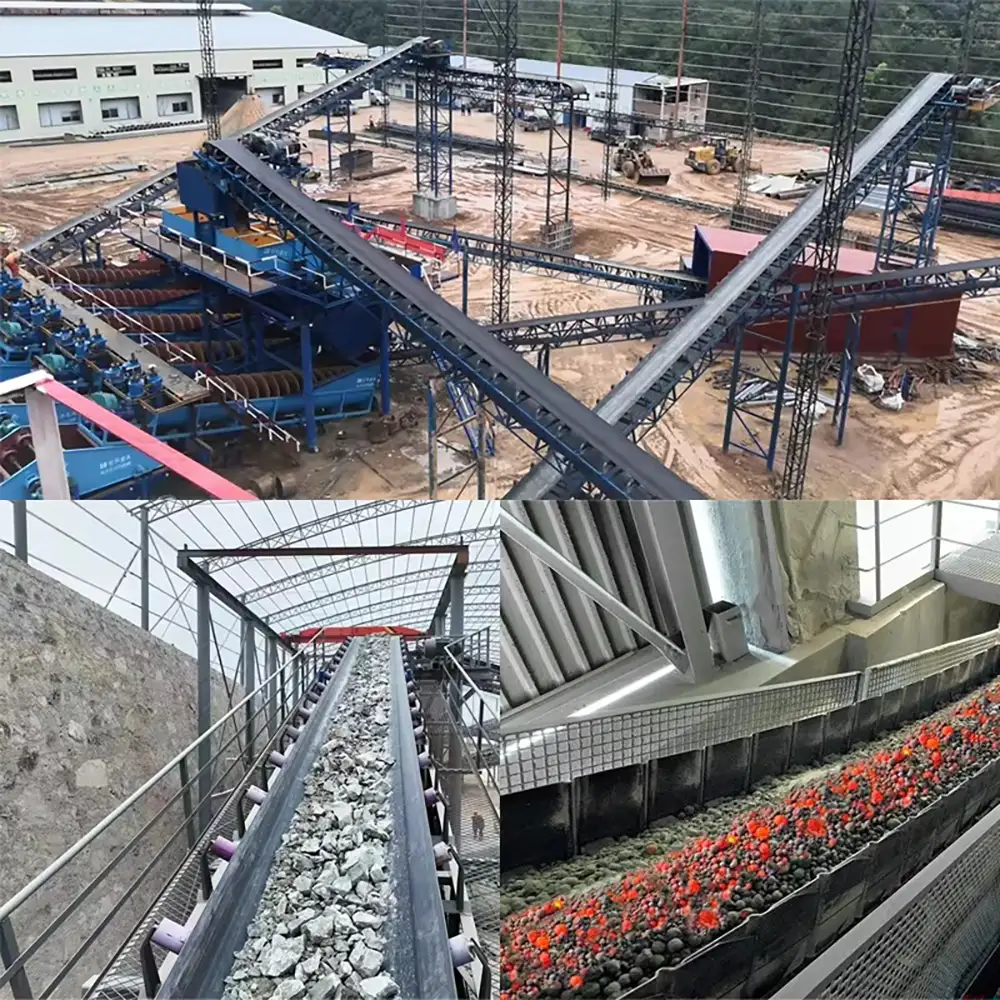
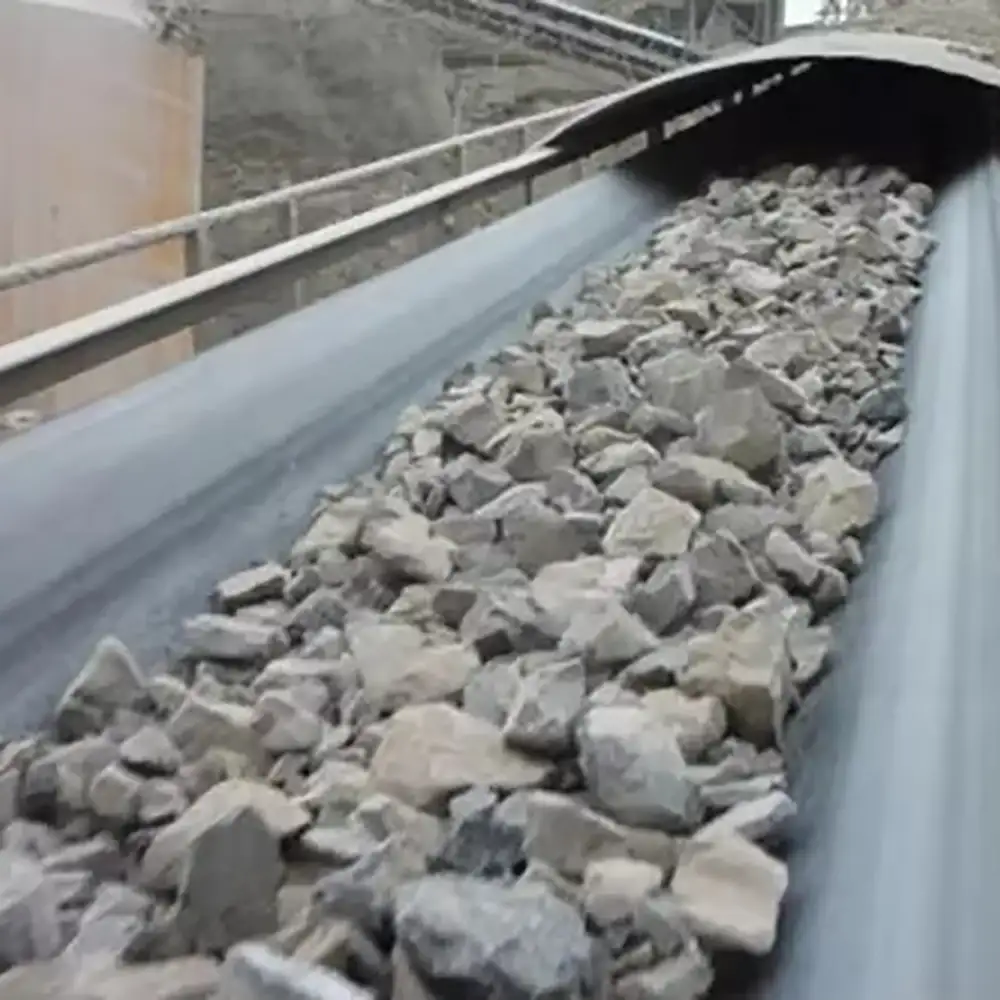
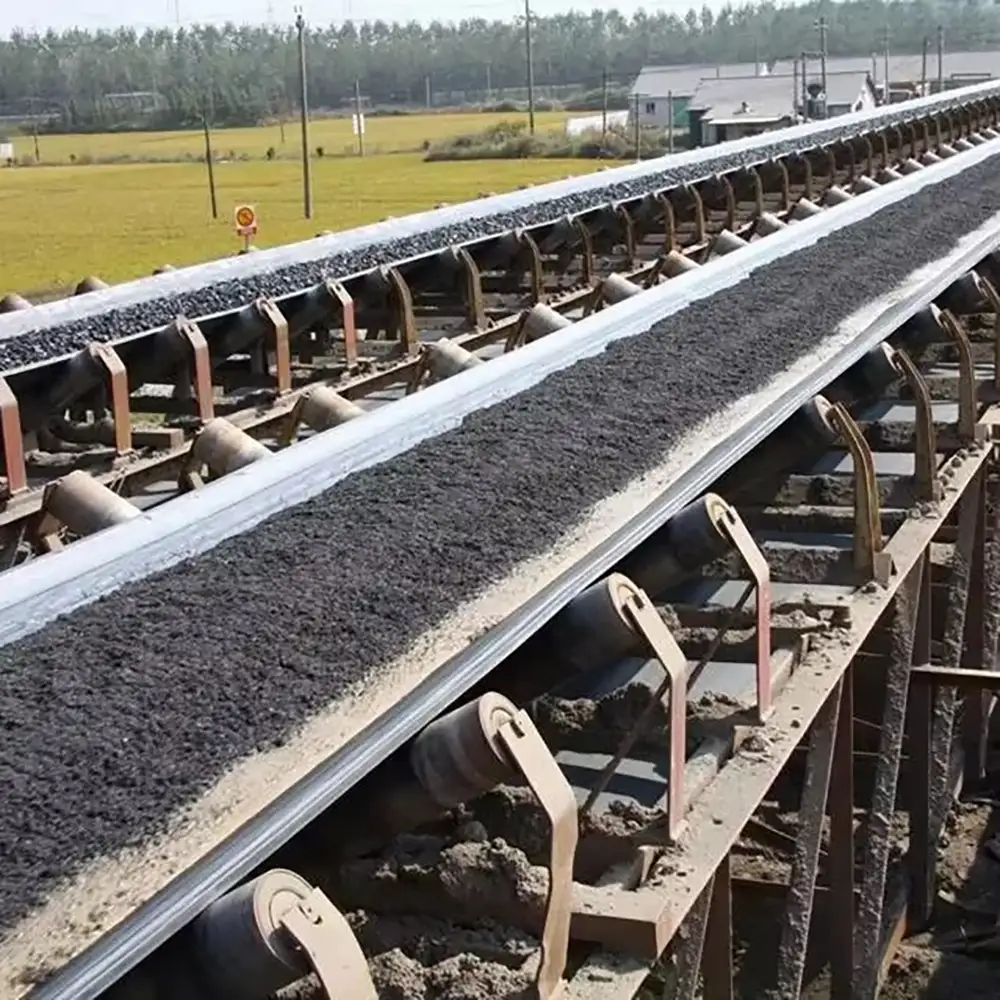
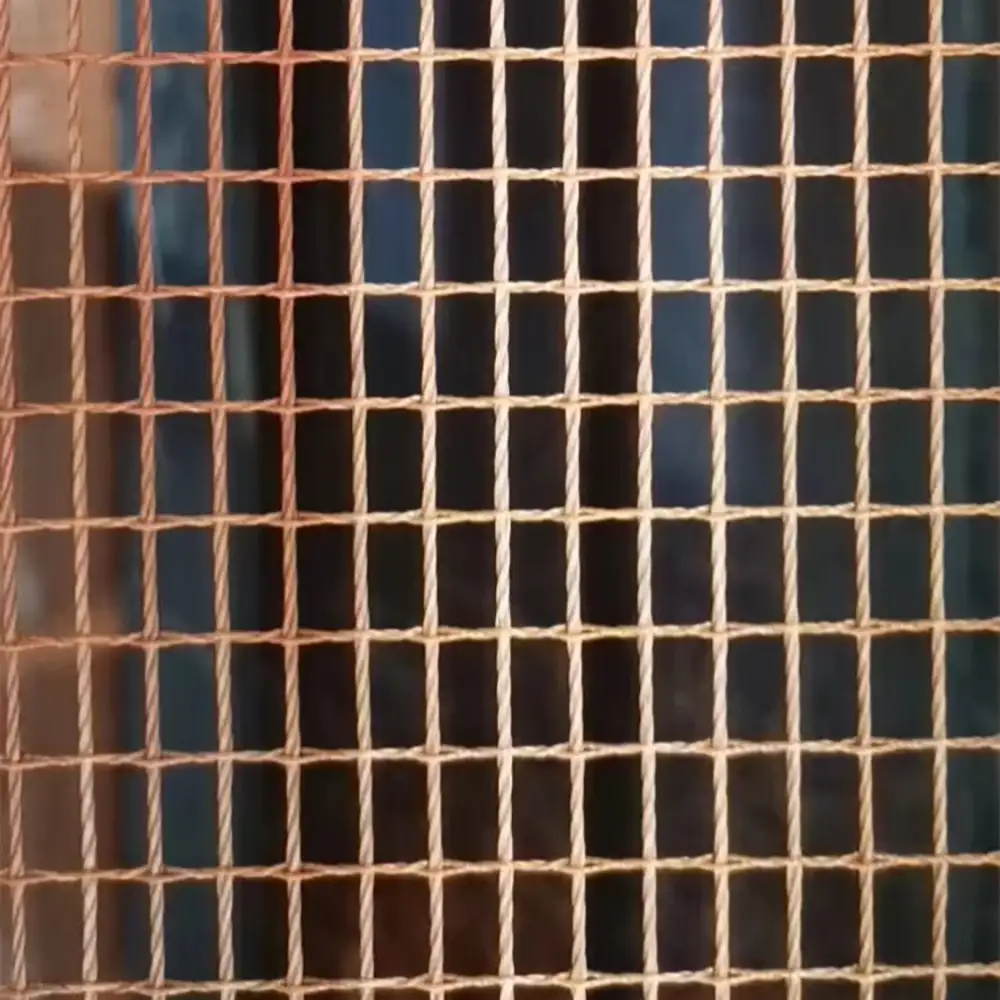
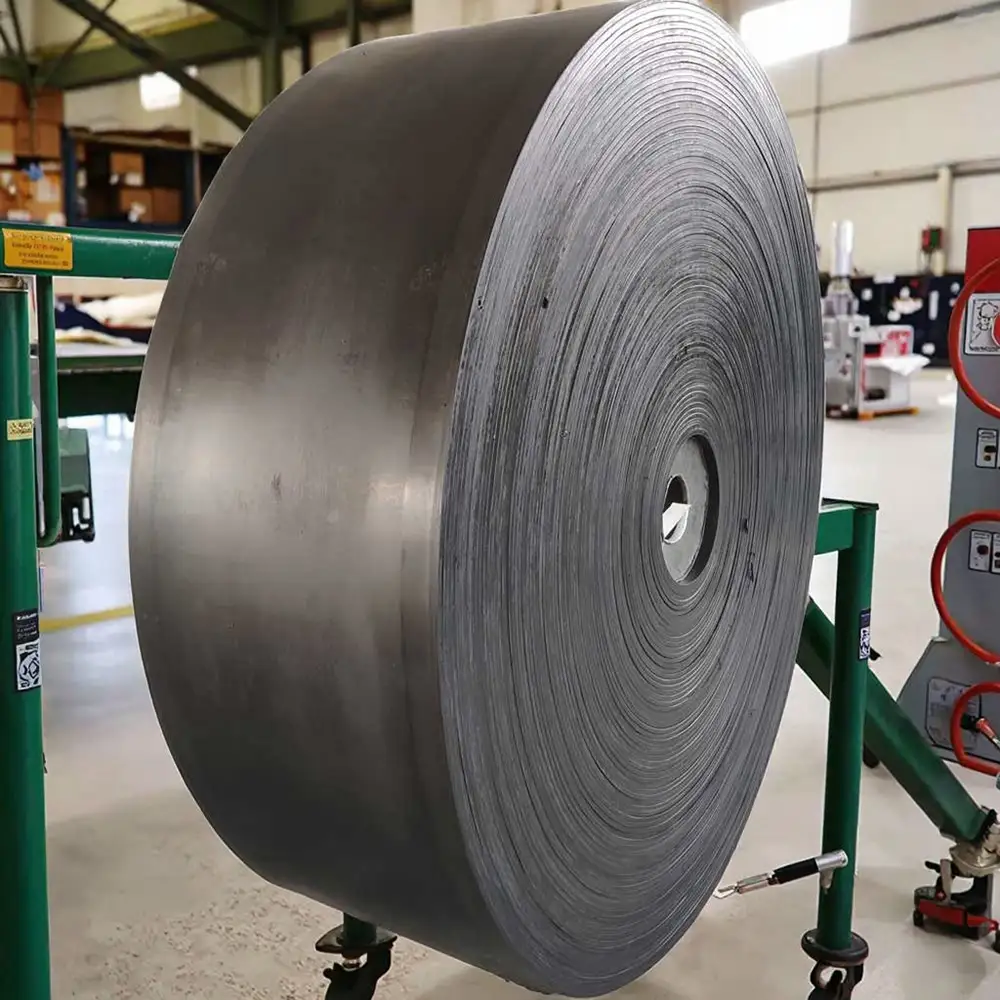
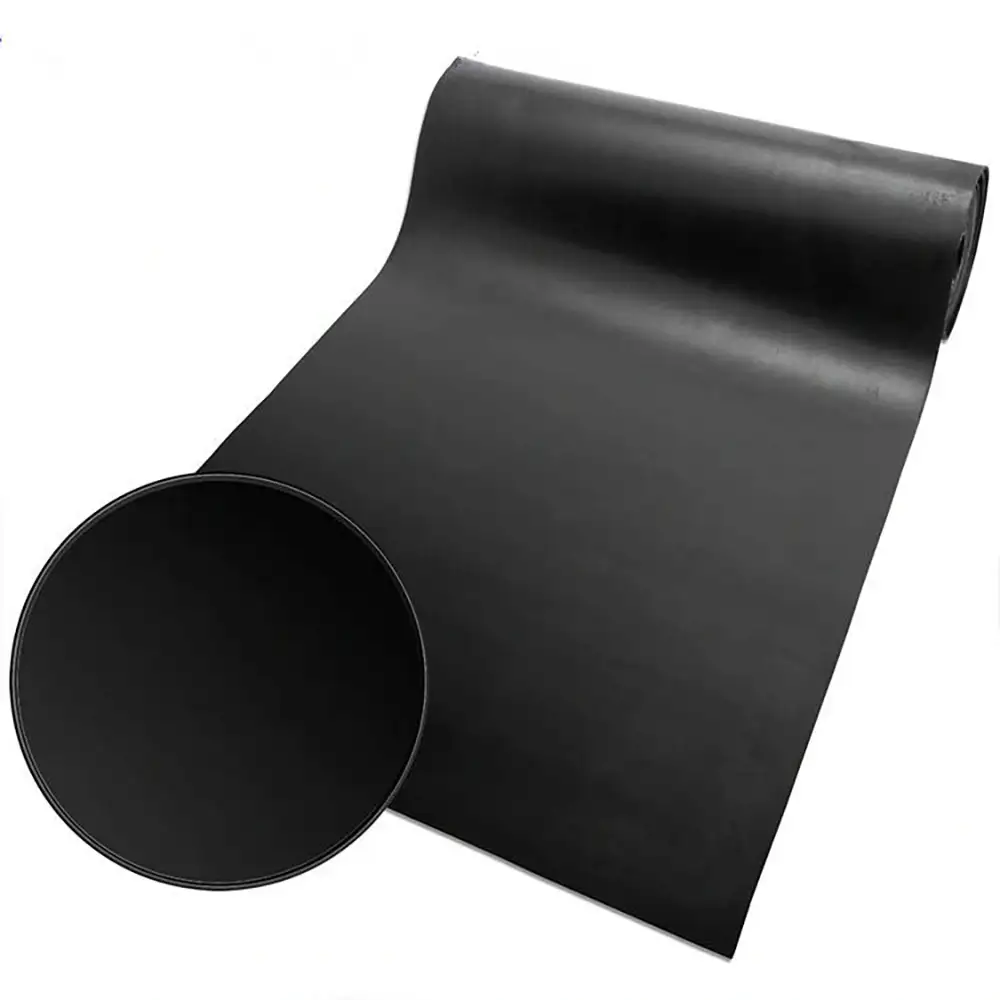
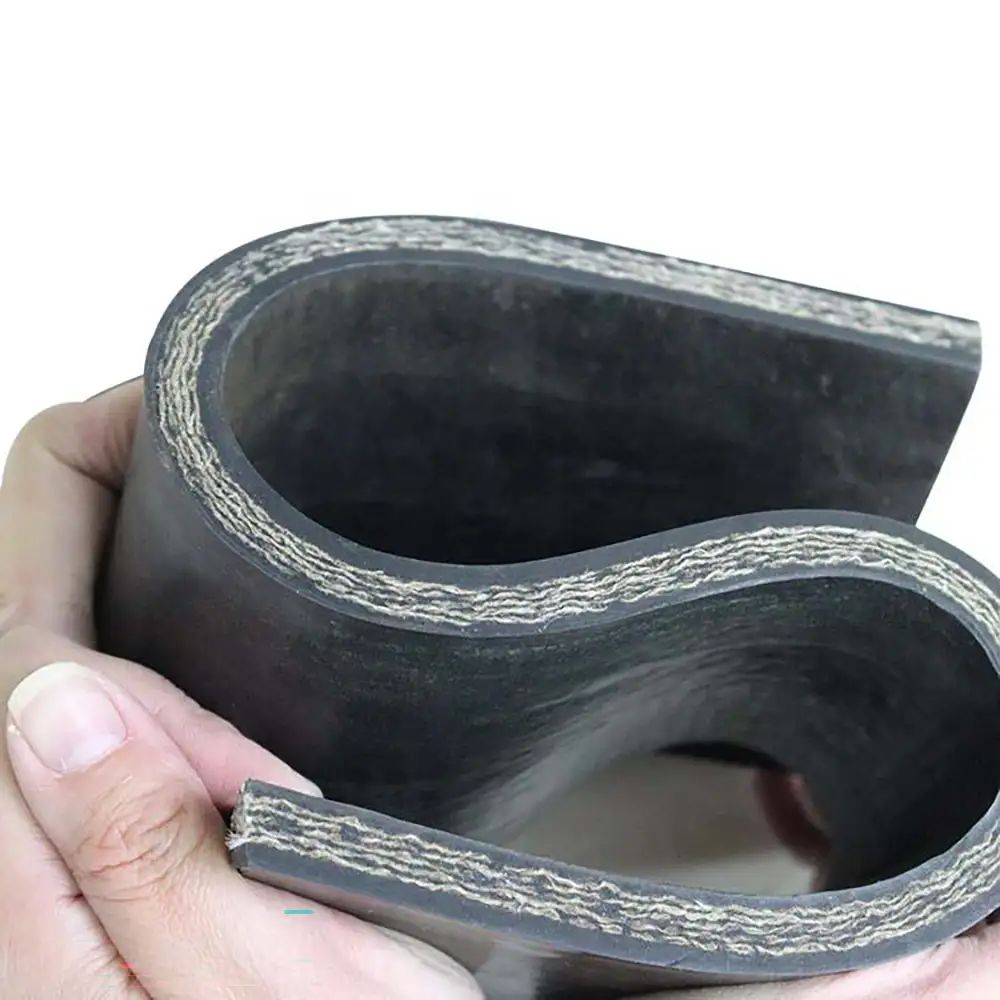
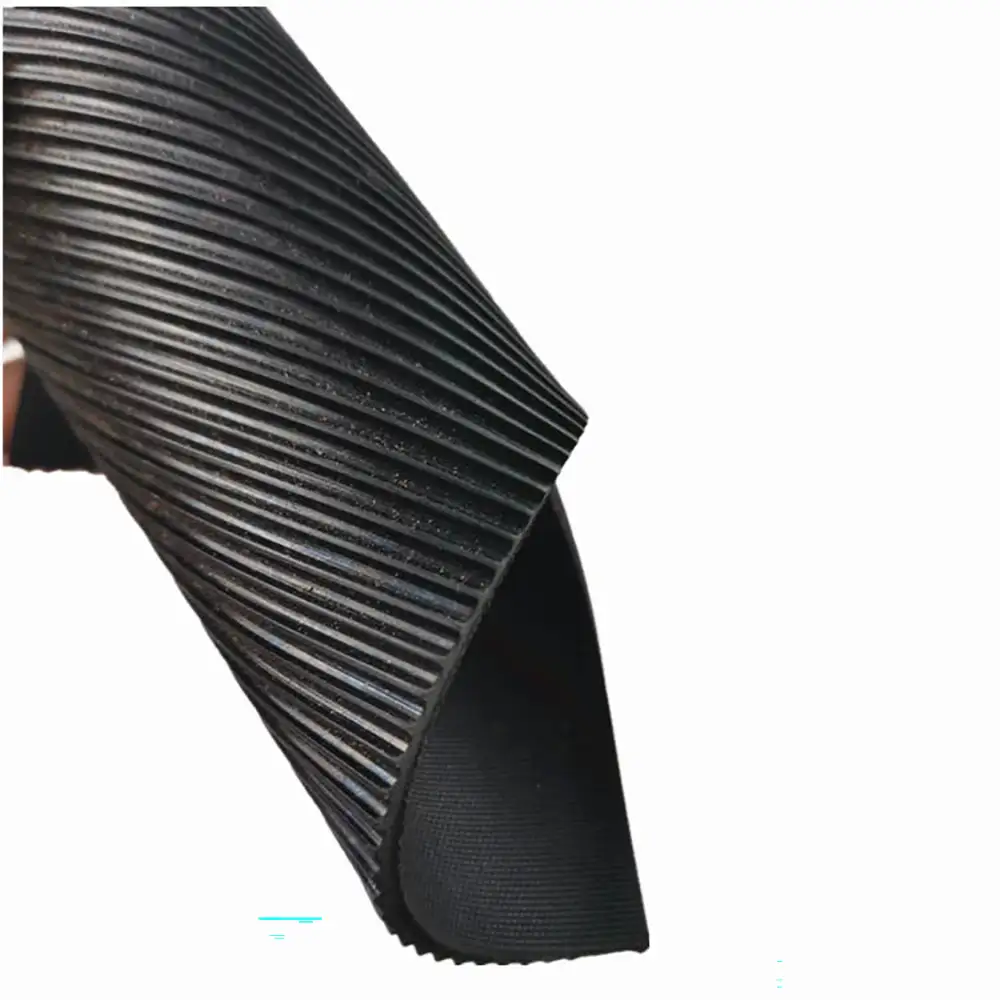
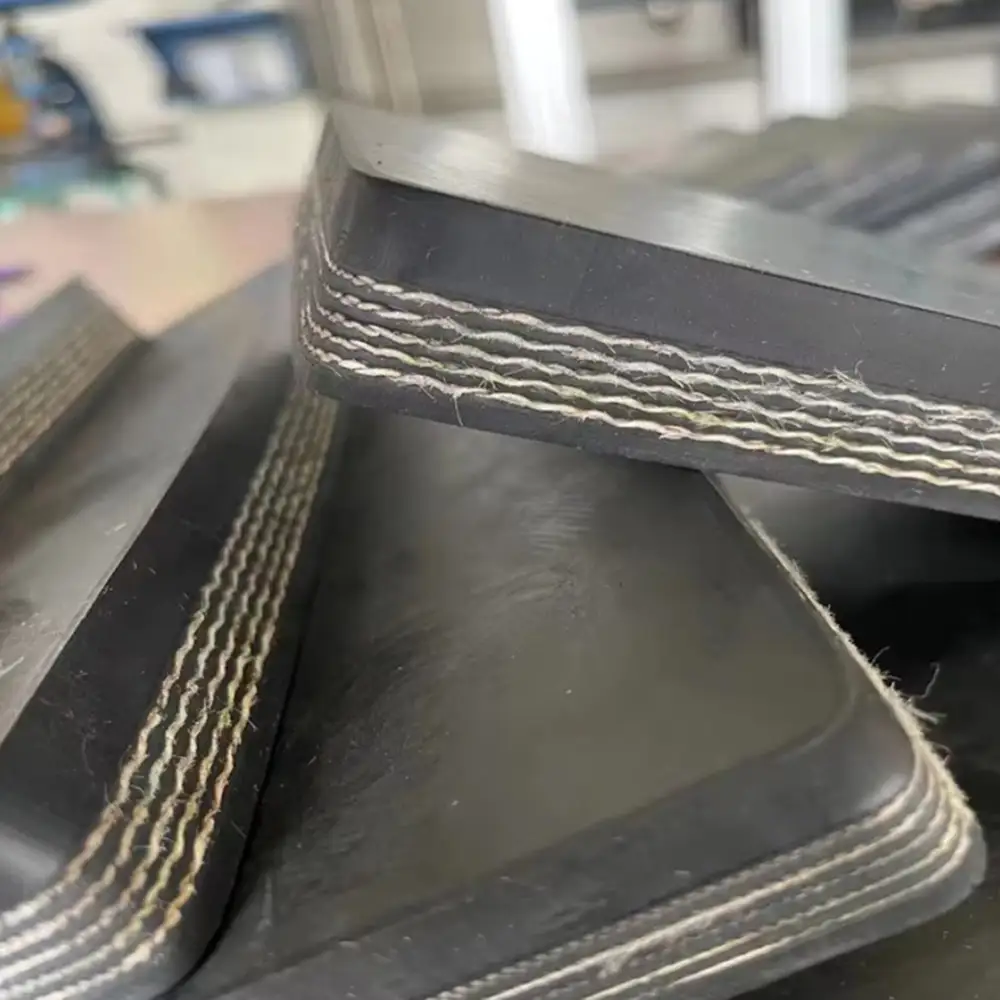
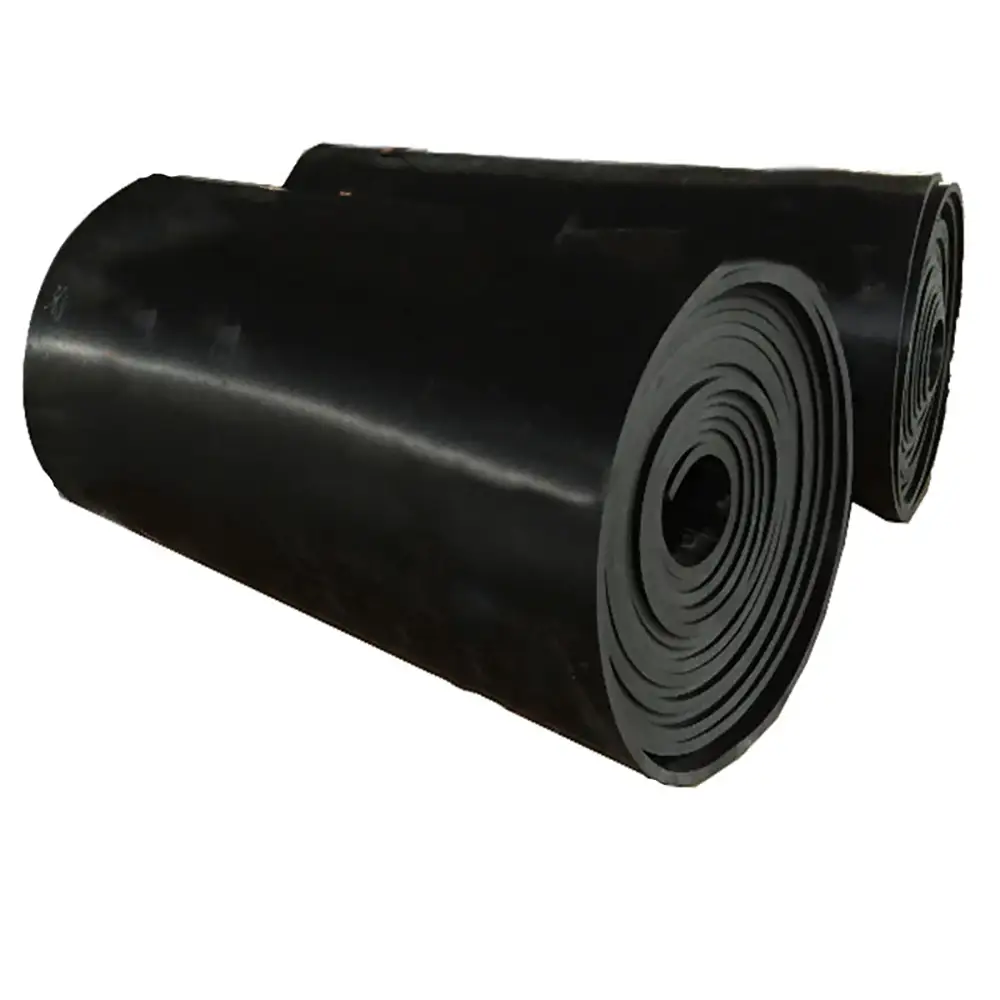
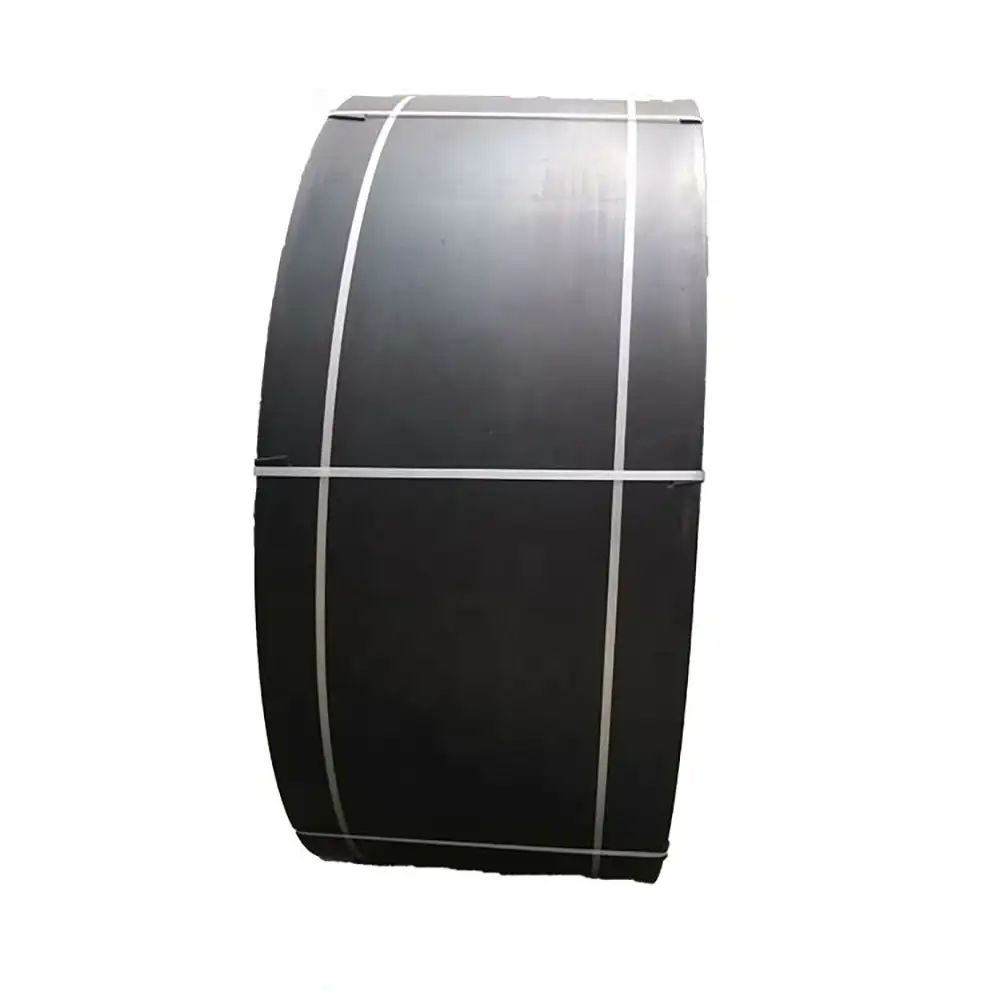
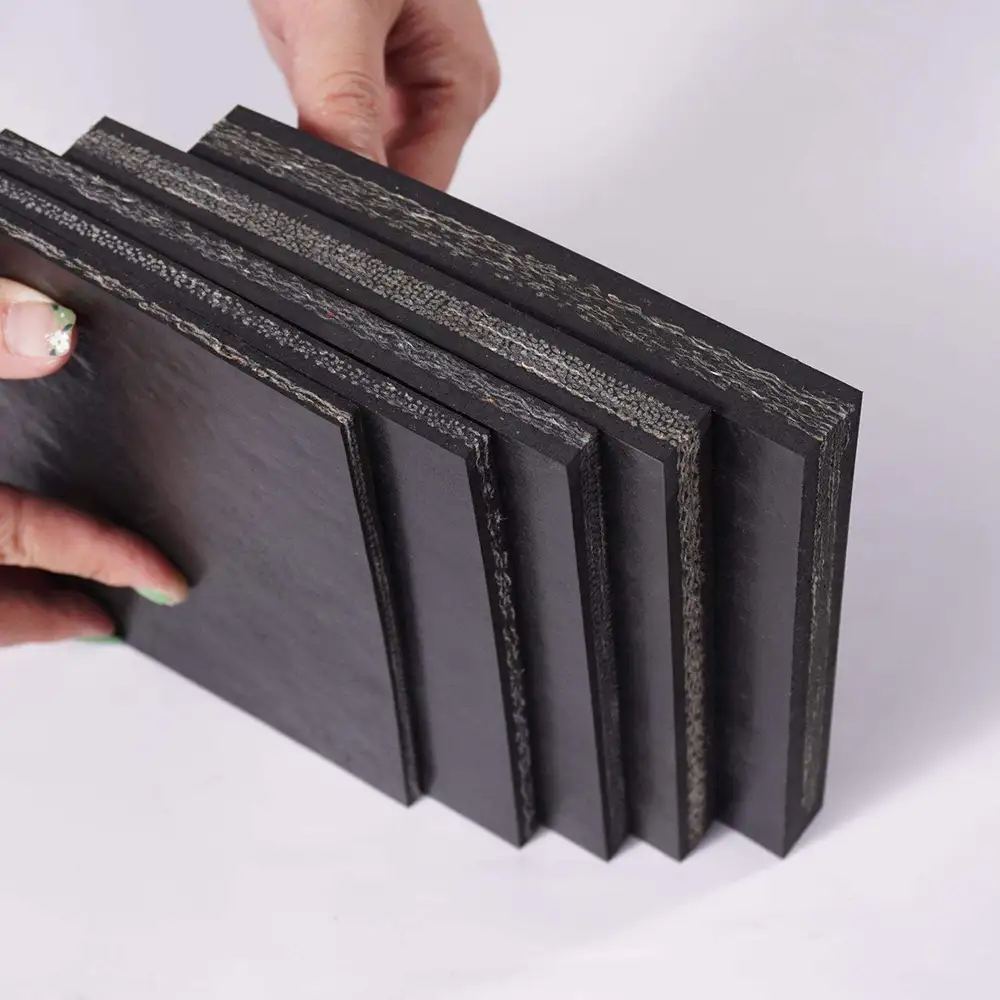
The Oil-Resistant, Acid And Alkali Resistant, Tear-Resistant, Heat-Resistant, Cold-Resistant, Wear-Resistant Conveyor Belt is made of the multilayer rubber cotton canvas 'polyester cotton' covered with the high temperature or heat resistant rubbers, which are bonded through high temperature vulcanization, it is applicable to conveying of the coke, cement, clinker and hot casting etc.
|
|
type |
type I |
type II |
type III |
|
variable range |
|
Hardness |
Difference before and after ageing (IRHD) |
|
±20 |
Max. Value after ageing (IRHD) |
85 |
|
Tensile strength |
variable rate in performance ≤ |
25 |
30 |
40 |
|
Min. value after ageing Mpa |
12 |
10 |
5 |
|
Rate of elongation at break |
variable rate in performance% ≤ |
50 |
55 |
|
Min. value after ageing |
200 |
180 |
5,The heat resistance conveyor belt abrasive wear of the cover rubber
Type
Item
level |
Abrasive wear |
type I |
type II |
type III |
First quality |
0.8 |
1.0 |
1.0 |
accepts |
1.0 |
1.2 |
1.2 |
6,The heat resistance conveyor belt layer to layer adhesion strength
Item |
interlayer of cloth |
cover layer and cloth interlayer |
|
Thickness of the cover layer≤1.5mm |
Thickness of the cover layer>1.5mm |
|
The average value of the longitudinal specimen shall be no less than |
3.0 |
2.2 |
2.6 |
|
The peak value of the longitudinal specimen |
2.0 |
1.6 |
2.0 |
Mining Conveyor Belt For Coal And Iron Ore Mining
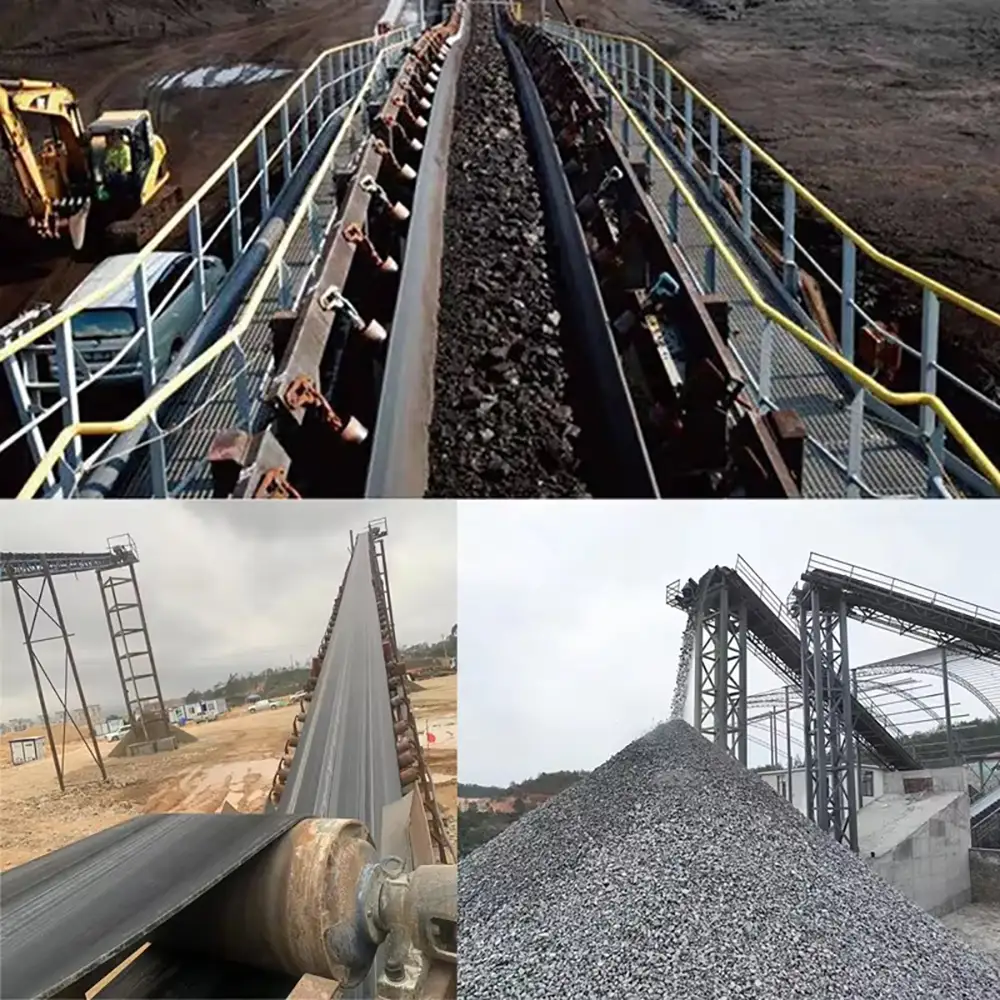
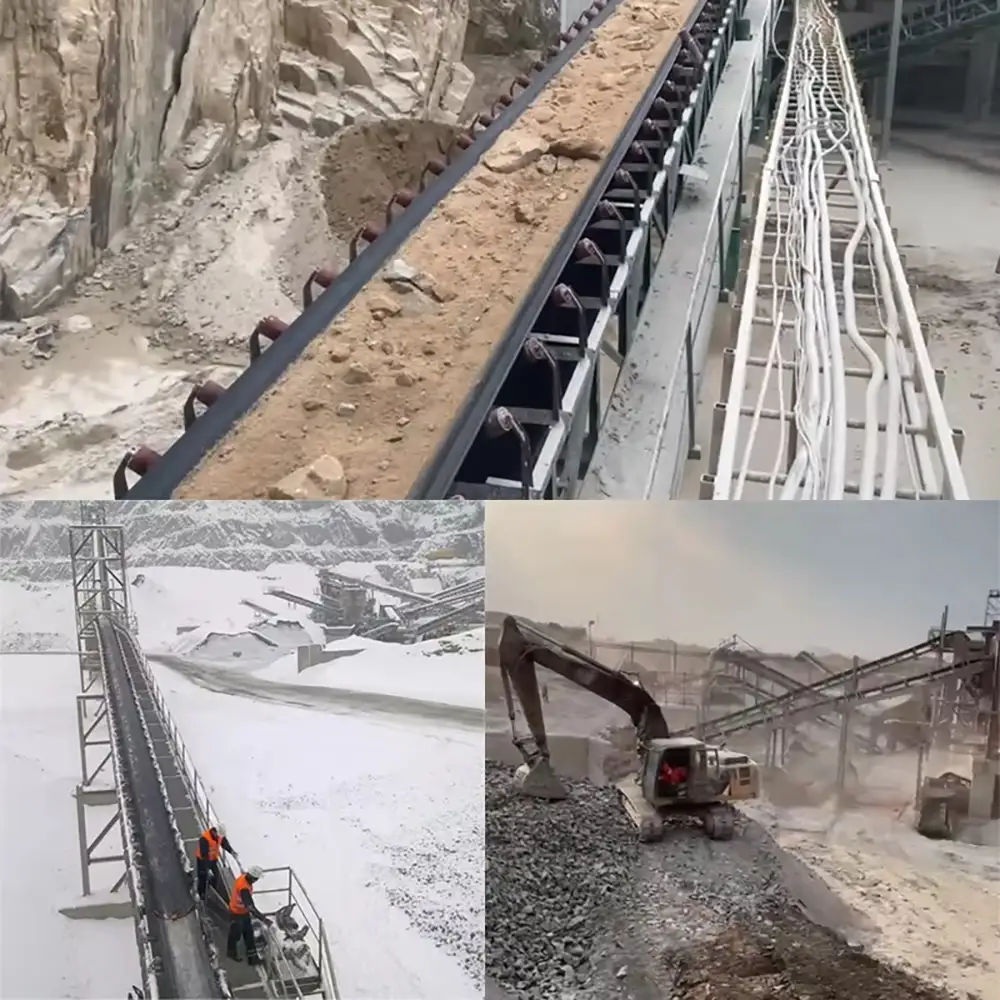
Mining conveyor belts are essential components of modern bulk material transportation systems, providing continuous and efficient movement of coal, iron ore, rock, overburden, aggregates, and other mined materials. Compared with truck-based transportation, a properly engineered conveyor system can provide continuous material flow across mines, processing plants, stockyards, transfer stations, and loading facilities.
Conveyor belts for coal and iron ore mining must withstand demanding operating conditions, including heavy loads, abrasive materials, impact at loading points, long conveying distances, changing elevations, and continuous operation. The belt construction therefore needs to be selected according to the actual conveyor system rather than simply choosing a standard belt by width.
Mining conveyor belts can be manufactured with different carcass constructions, including EP fabric, NN fabric, and steel cord reinforcement. Cover rubber can also be selected according to abrasion, heat, oil, weather, flame, and other application requirements.
What Is A Mining Conveyor Belt?
A mining conveyor belt is a continuous reinforced belt designed to transport bulk materials through mining and mineral processing operations. The belt travels over carrying idlers and return idlers and around drive, tail, bend, and other pulleys to create a continuous conveying loop.
The carcass provides the belt with its primary tensile and structural properties, while the rubber covers protect the reinforcement from the conveyed material and operating environment.
For coal mining, the belt may require specific flame-resistant and antistatic properties, particularly for underground applications. For iron ore mining, abrasion resistance and resistance to impact from heavy, sharp material can be particularly important.
The appropriate belt specification depends on the complete conveyor design and applicable industry standards.
Conveyor Belts For Coal Mining
Coal conveyor belts are used to transport mined coal from extraction areas to crushers, preparation plants, storage areas, power plants, ports, and other processing or transportation facilities.
Coal can create demanding conveying conditions because of its bulk density, particle size, dust, and continuous loading. Underground coal mine conveyors can also have additional safety requirements.
For underground coal applications, buyers should verify the required flame resistance, antistatic characteristics, certification, and regulatory compliance for the specific mine and country.
Surface coal conveyors may have different requirements depending on conveyor length, material temperature, weather exposure, loading conditions, and system configuration.
Conveyor Belts For Iron Ore Mining
Iron ore is a dense and abrasive bulk material, so conveyor belts used in iron ore mining require appropriate mechanical strength and cover durability.
Iron ore conveyor belts can be used in extraction areas, crushing plants, screening systems, beneficiation facilities, stockpiles, and loading terminals.
At transfer points, large ore particles can generate significant impact. Proper chute design, impact idlers, belt construction, and loading control should therefore be considered together.
Abrasion-resistant cover compounds are commonly considered for iron ore conveying applications, while the carcass construction is selected according to belt tension, conveyor length, and engineering requirements.
EP Fabric Conveyor Belt
EP conveyor belts use polyester in the longitudinal direction and polyamide in the transverse direction of the fabric reinforcement. This construction provides a useful combination of tensile strength, flexibility, dimensional stability, and relatively low elongation.
EP belts are widely used for mining, quarrying, coal handling, aggregate, cement, power generation, and general bulk material transportation.
Multiple fabric plies can be used depending on the required belt strength and conveyor design. The cover rubber can also be selected for general-purpose, abrasion-resistant, heat-resistant, oil-resistant, weather-resistant, or other application requirements where available.
Steel Cord Conveyor Belt
Steel cord conveyor belts use steel cables as the longitudinal tensile reinforcement. They are commonly considered for long-distance, high-tension, high-capacity, or otherwise demanding conveyor systems.
Steel cord construction can provide high tensile strength with relatively low elongation, making it suitable for certain large mining conveyors.
The correct steel cord belt specification depends on conveyor length, belt tension, pulley arrangement, belt speed, material load, splice design, and other engineering parameters.
Key Features And Benefits
Heavy-Duty Construction
Mining conveyor belts are designed for demanding bulk material transportation. Appropriate reinforcement and cover construction help the belt withstand continuous mechanical loads.
Abrasion Resistance
Coal, iron ore, rock, and aggregate can cause substantial surface wear. An appropriate abrasion-resistant cover can help extend belt service life under suitable operating conditions.
Impact Protection
Large and heavy material can create impact at loading points. Belt selection should be coordinated with chute design and impact protection equipment.
High Tensile Strength
EP and steel cord carcasses provide different levels and types of tensile performance for various conveyor configurations.
Low Elongation Options
Certain reinforced constructions can provide dimensional stability and controlled elongation, which is important for long conveyor systems.
Flexible Performance
The belt needs to flex around pulleys and operate through the conveyor structure without excessive mechanical stress. The carcass should therefore be matched to the minimum pulley diameter and system design.
Custom Cover Compounds
Depending on the application, different cover compounds may be available for abrasion, heat, oil, weather, flame, or other environmental conditions.
Mining Applications
Mining conveyor belts can be used for:
Coal Mining
Underground Coal Handling
Surface Coal Mining
Iron Ore Mining
Iron Ore Processing
Mineral Processing
Quarrying
Rock Transportation
Aggregate Handling
Overburden Transportation
Crushing Plants
Screening Plants
Stockpile Conveyors
Port And Ship Loading
Power Plant Fuel Handling
Cement And Bulk Material Plants
The belt specification should be selected based on the material and actual operating conditions.
How To Select A Mining Conveyor Belt
Start by identifying the material being conveyed. Coal, iron ore, limestone, rock, gravel, and other materials have different density, particle size, abrasiveness, and loading characteristics.
Next, determine the belt width, conveyor length, belt speed, capacity, conveyor inclination, maximum lump size, loading method, and belt tension.
The required carcass should then be selected. EP and NN fabric belts are commonly used for many mining applications, while steel cord belts may be considered for higher-tension or long-distance systems.
Cover selection is equally important. For abrasive iron ore and rock, abrasion resistance may be a key consideration. For coal mining, flame-resistant and antistatic requirements may apply depending on the installation.
Finally, consider pulley diameter, splice method, operating temperature, weather exposure, and applicable standards.
Installation And Maintenance
Correct alignment is essential for stable belt tracking. Before operation, inspect pulleys, idlers, take-up equipment, belt cleaners, loading chutes, and other conveyor components.
During operation, regularly monitor belt tracking, tension, cover wear, edge condition, splice condition, and material buildup.
Loading points should be maintained to prevent excessive impact and uneven loading. Damaged idlers or pulleys should be repaired or replaced promptly because they can accelerate belt wear.
For long-distance mining conveyors, scheduled inspection and preventive maintenance can help identify problems before they develop into major belt failures.
Why Choose Us
We supply mining conveyor belts for coal, iron ore, rock, aggregate, quarrying, and other bulk material handling applications.
Our product range can include EP fabric reinforced conveyor belts, NN conveyor belts, steel cord conveyor belts, abrasion-resistant belts, heat-resistant belts, flame-resistant belts, and other application-specific constructions according to project requirements.
We understand that a mining conveyor belt is part of a complete transportation system. Our team can work with customers to organize belt width, length, tensile strength, carcass type, cover grade, thickness, application environment, and other important parameters.
We support international B2B customers including mining companies, conveyor system integrators, engineering contractors, distributors, wholesalers, equipment suppliers, and industrial purchasing departments.
OEM and custom production can also be discussed for qualified projects. We can support technical communication, production coordination, quality inspection, packaging, and export logistics to help customers source suitable conveyor belts for demanding mining operations.
Frequently Asked Questions
1. What type of conveyor belt is used for mining?
Mining applications can use EP, NN, steel cord, solid-woven, and other conveyor belt constructions. The appropriate type depends on conveyor tension, length, material, capacity, and operating conditions.
2. What conveyor belt is used for coal?
Coal conveyors can use different belt constructions depending on whether the system is underground or surface-based. Underground coal applications may require specific flame-resistant and antistatic properties.
3. What conveyor belt is suitable for iron ore?
Iron ore conveyor systems commonly require belts with suitable tensile strength and abrasion-resistant cover properties. The actual selection depends on ore size, loading impact, conveyor length, and system tension.
4. What is an EP mining conveyor belt?
An EP belt uses polyester/polyamide fabric reinforcement. It provides a combination of tensile strength, flexibility, and dimensional stability for many bulk material handling applications.
5. When should I use a steel cord conveyor belt?
Steel cord belts are often considered for long-distance or high-tension conveyor systems. The final selection should be based on engineering calculations and the complete conveyor design.
6. Are mining conveyor belts abrasion resistant?
Many mining belts are available with abrasion-resistant cover compounds. The appropriate grade should be selected according to the material being transported and operating conditions.
7. Can mining conveyor belts be used underground?
Yes, conveyor belts are widely used in underground mining. However, underground coal mine applications may have additional flame-resistant, antistatic, certification, and safety requirements.
8. Can the mining conveyor belt be customized?
Yes. Width, length, carcass type, tensile grade, cover thickness, rubber compound, edge construction, and other specifications can be discussed according to the conveyor system.
9. What information is needed for a mining belt quotation?
Provide belt width, length, material, conveyor speed, capacity, inclination, maximum lump size, tensile requirements, cover requirements, and whether the conveyor is underground or surface-based.
10. How can conveyor belt service life be improved?
Correct belt selection, conveyor alignment, proper tension, controlled loading, suitable idlers and pulleys, effective cleaning, regular inspections, and timely maintenance can all contribute to reliable belt operation.
Request A Quote
If you are sourcing mining conveyor belts for coal or iron ore mining, send us your belt width, length, material type, conveyor capacity, speed, inclination, tensile requirements, and application environment. We can help develop a suitable conveyor belt specification for your mining project.
Prev:
Textile Conveyor Belt, Conveyor belts with a Textile Carcass
Next:
PVG Weave Whole Core Fire Resistant Conveyor Belt For Mining
TAG:
Steel Cord Conveyor Belt,
Industrial Rubber Conveyor Belt,
Heavy Duty Rubber Conveyor Belt,
Multi Ply Conveyor Belt,
Heat Resistant Conveyor Belt,
Fire Resistant Conveyor Belt,
Mining Conveyor Belt,
Antistatic Conveyor Belt,
Flame Resistant Conveyor Belt,
Abrasion Resistant Rubber Conveyor Belt,
Bulk Material Conveyor Belt,
Material Handling Conveyor Belt,
Ore Conveyor Belt,
Rock Conveyor Belt,
Coal Conveyor Belt,
Quarry Conveyor Belt,
Aggregate Conveyor Belt,
Coal Handling Conveyor Belt,
Mining Rubber Conveyor Belt,
Coal Mining Conveyor Belt,
Abrasion Resistant Conveyor Belt,
Iron Ore Conveyor Belt,
Polyester Rubber Conveyor Belt,
EP Fabric Conveyor Belt,
Polyester Conveyor Belt,
EP Rubber Conveyor Belt,
EP Conveyor Belt,
Fabric Reinforced Conveyor Belt,
Rubber Conveyor Belt,
Mining Conveyor Belting,
Related Category:
Mining Conveyor Belt,Conveyor Belts For Coal,Iron Ore Mining Conveyor Belt,Coal Mining Conveyor Belt,Iron Ore Conveyor B China, suppliers, manufacturers, factory, customized, wholesale, quotation, made in China