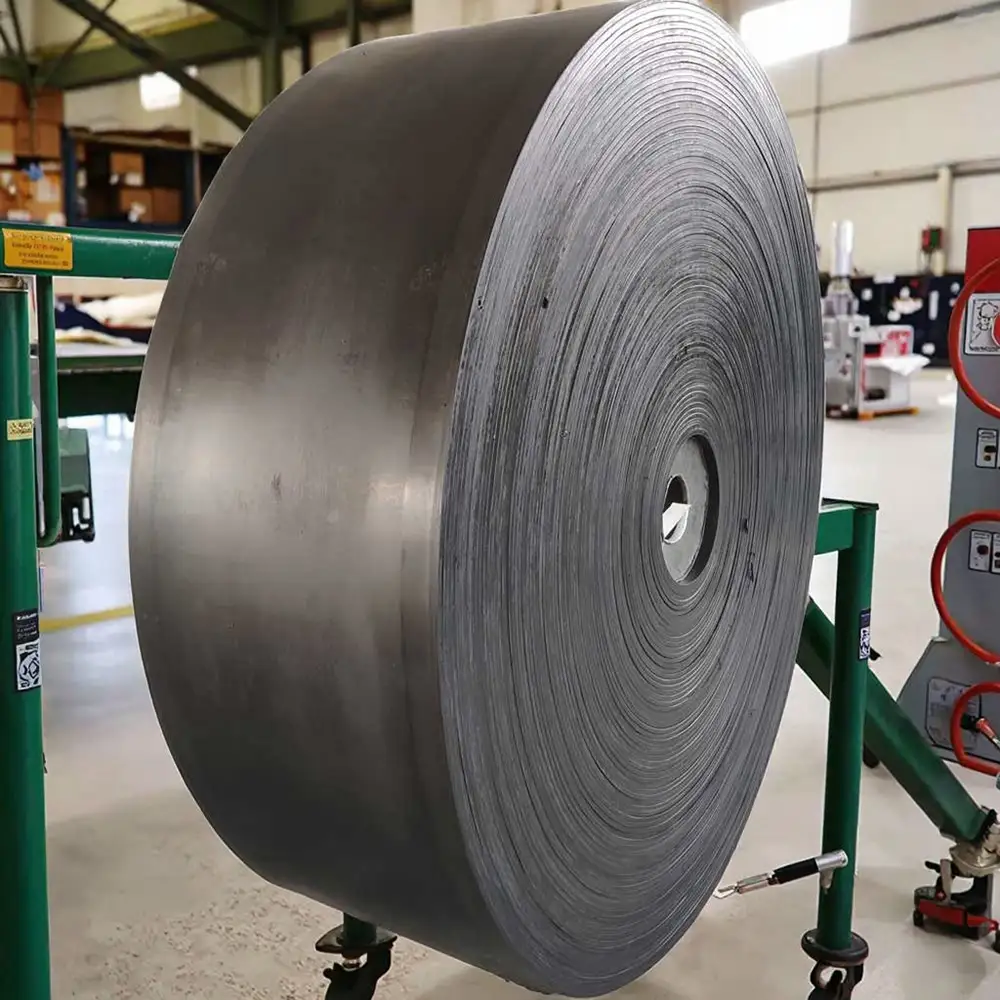
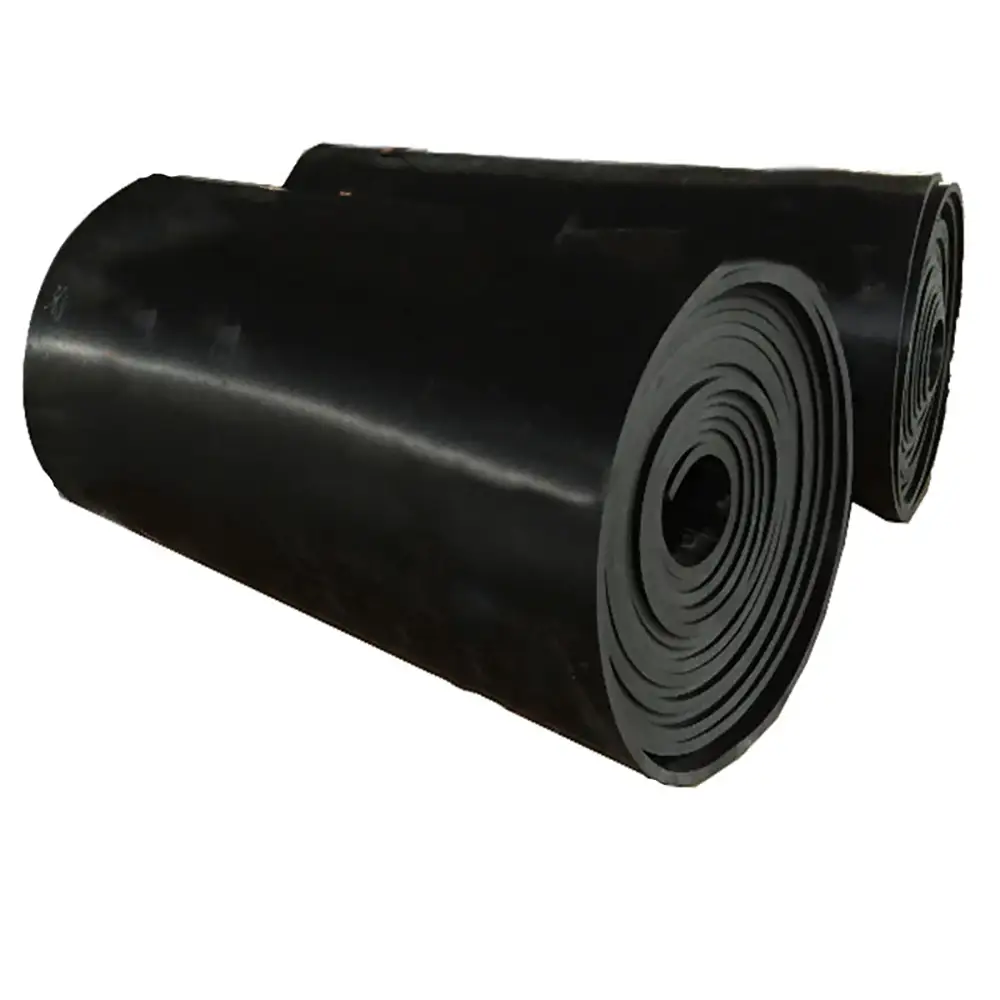
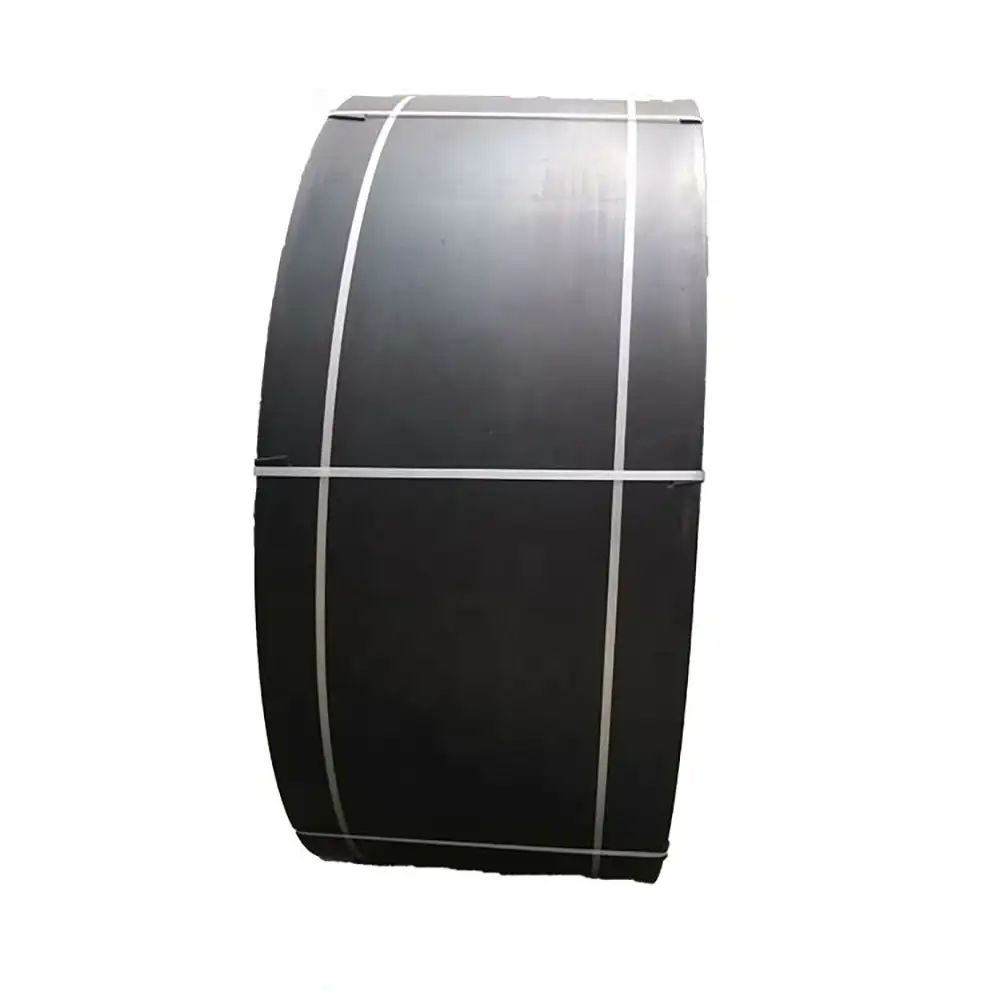
1.Common original roll packing:Load up to 20 tons, structure using gold Cylindrical iron core, tape UV canvas bag, simple structure, easy for domestic transportation.
2.Standard ellipse roll packing:Load of 40 tons, use a metal structure Skeleton, high overall strength, which can effectively protect belt from harm, packing frame length and height can be adjusted according to customer requirements. UV canvas packing tape cylindrical bag.
3.Circular sealed packing:Metal frame, the overall high intensity
Specification :
Type
of
Sidewall |
Block Height
(H) |
Block Width
(BW) |
Wave Distance
(T) |
Bottom Plate Width
(BF) |
Square Meter
/m
(SK) |
Adapted Clapboard
(H) |
Clapboard type |
Bottom Plate Width
(BF) |
Square Meter
/m
(SK) |
|
S |
60 |
44 |
42 |
45 |
0.61 |
50 |
TC |
55 |
0.55 |
|
S |
80 |
44 |
42 |
50 |
0.75 |
75 |
TC |
70 |
1.29 |
|
S |
120 |
44 |
42 |
50 |
1.69 |
110 |
TC |
100 |
1.76 |
|
S |
160 |
65 |
65 |
80 |
2.68 |
150 |
TC |
100 |
2.24 |
|
S |
200 |
70 |
65 |
90 |
3.53 |
180 |
TC |
160 |
3.39 |
|
S |
240 |
80 |
65 |
90 |
4.75 |
220 |
TC |
160 |
5.00 |
|
S |
300 |
90 |
70 |
95 |
7.03 |
280 |
TC |
180 |
7.05 |
Physical Performance of Cover Rubber :
|
Grade of Cover Rubber |
Tensile Strength
Mpa,≥ |
Elongation
at Break
% ≥ |
Abrasion Loss
mm3≤ |
Change rate of
tensile strength and elongation
at break after
70℃x168h aging |
|
laceration resistant type(H) |
24 |
450 |
120 |
-25 ~ +25 |
|
abrasion resistant type(D) |
18 |
400 |
100 |
-25 ~ +25 |
|
ordinary type(L) |
15 |
350 |
200 |
-25 ~ +25 |
EP Rubber Conveyor Belt for Sand, Mine, Stone Crusher and Coal Material
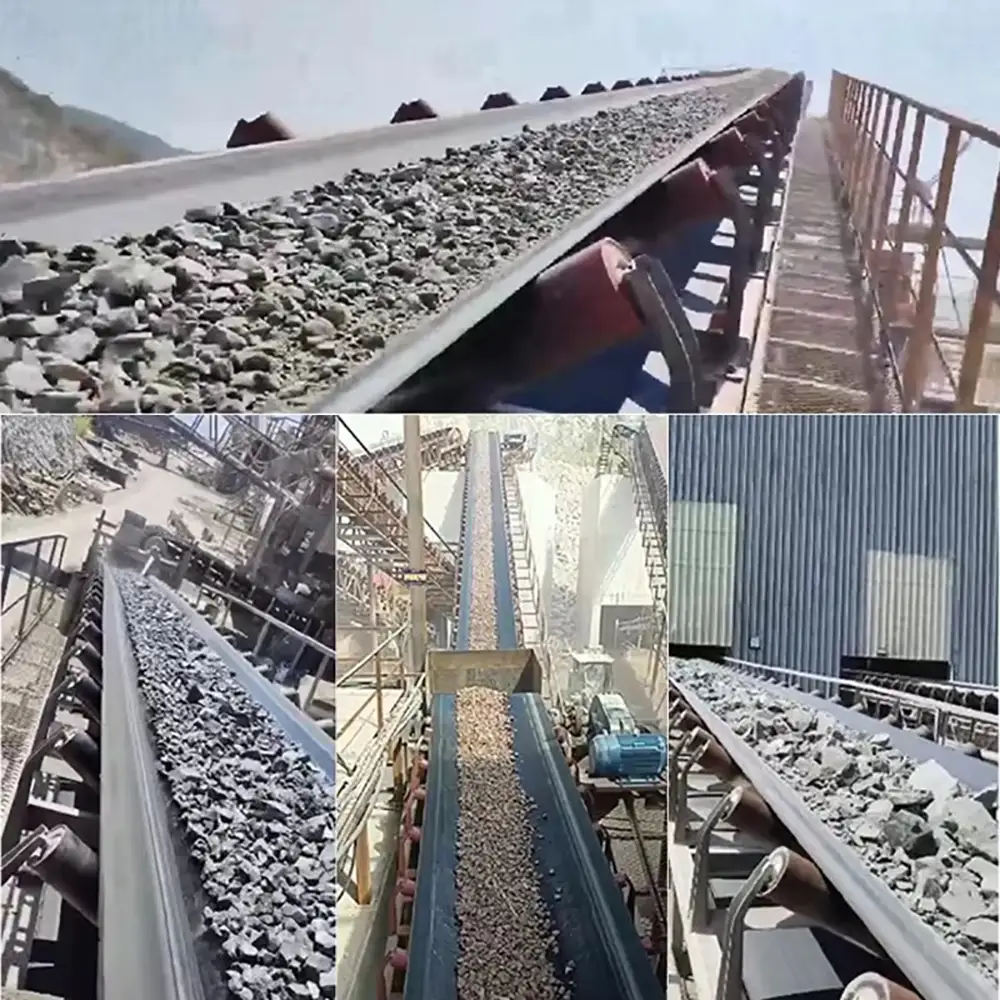
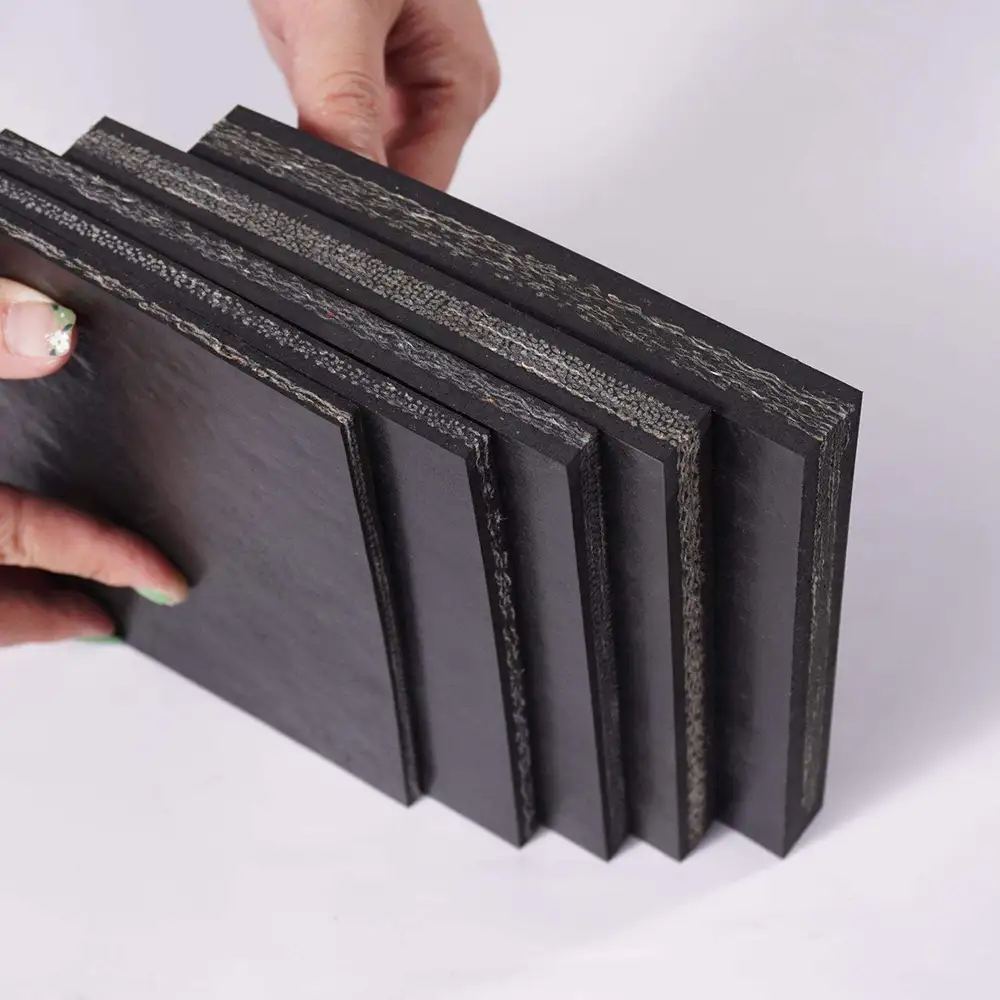
An EP rubber conveyor belt for sand, mine, stone crusher, and coal material is a fabric-reinforced industrial conveyor belt designed for continuous transportation of bulk materials. EP conveyor belts are widely used in mining, quarrying, aggregate processing, stone crushing plants, sand production, coal handling, cement, power generation, and general material-handling systems.
The term EP refers to a fabric reinforcement structure that generally uses polyester in the longitudinal direction and polyamide or nylon in the transverse direction. This construction provides a useful balance of tensile strength, flexibility, dimensional stability, and relatively low elongation.
Sand, crushed stone, coal, and mined materials can place significant demands on conveyor belts. Abrasion, impact, dust, moisture, heavy loading, and continuous operating cycles can contribute to belt wear. Choosing an appropriate carcass construction and rubber cover compound helps match the belt to the actual conveying conditions.
What Is an EP Rubber Conveyor Belt?
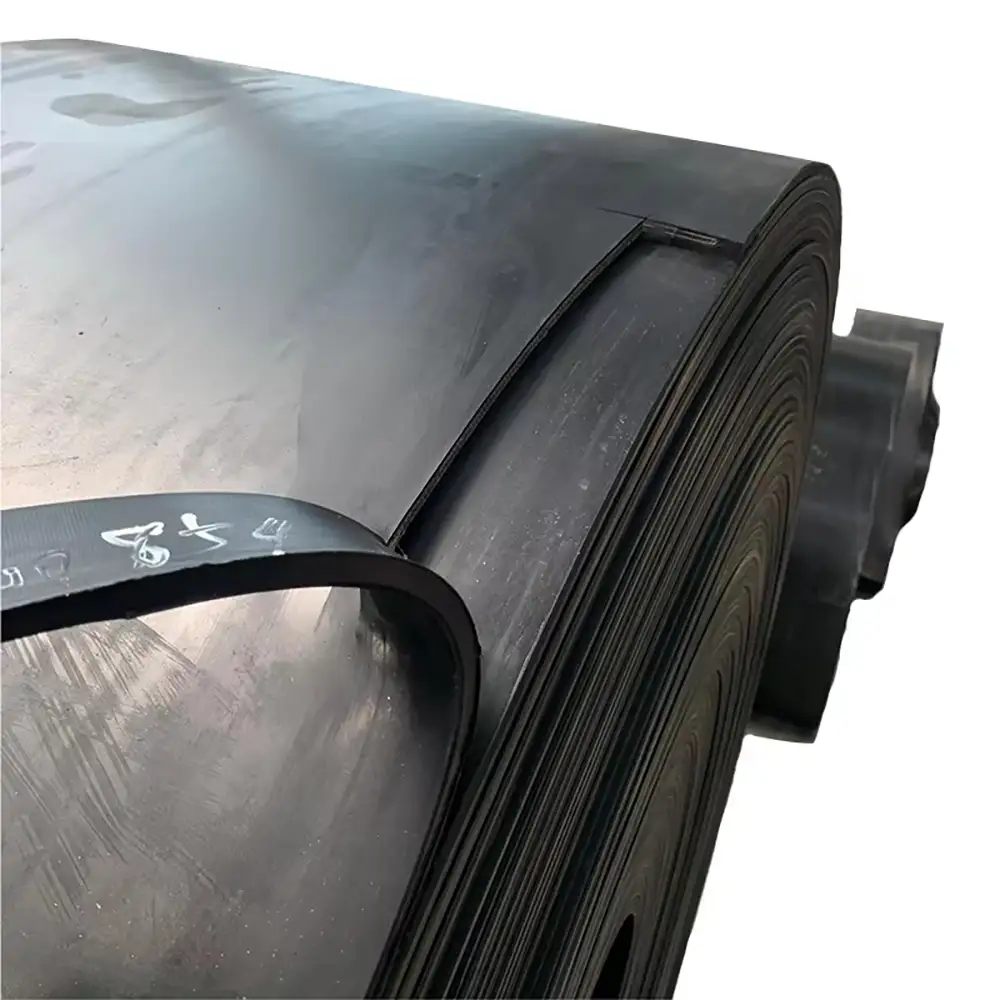
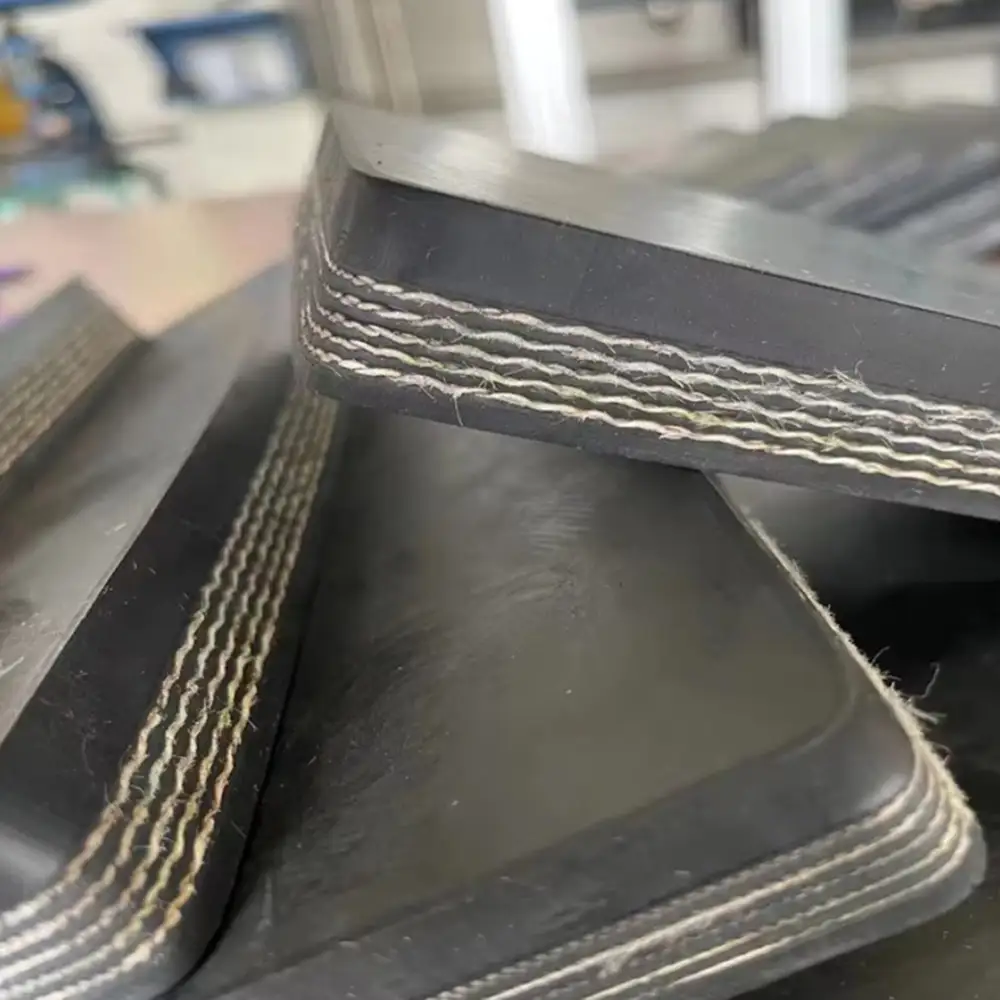
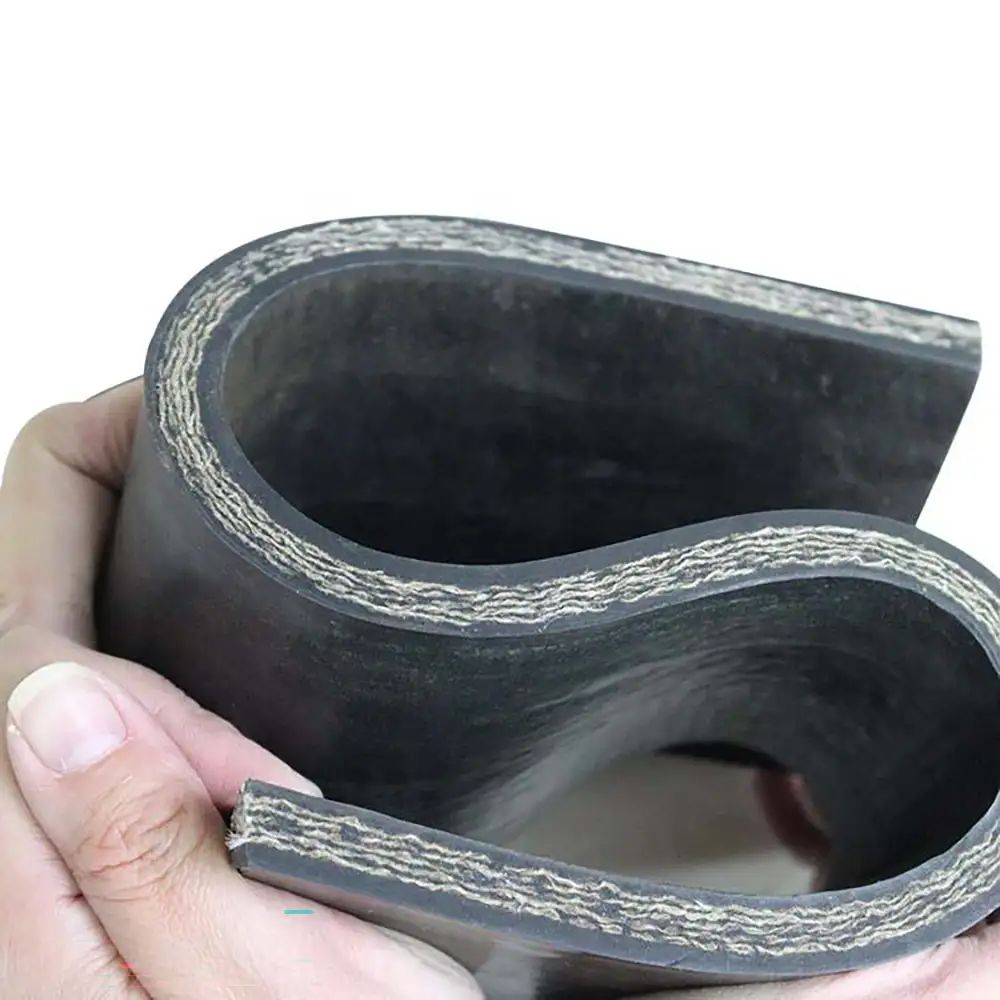
An EP rubber conveyor belt consists of rubber covers surrounding one or more layers of fabric reinforcement. The top cover contacts the conveyed material, while the bottom cover runs over idlers and conveyor components.
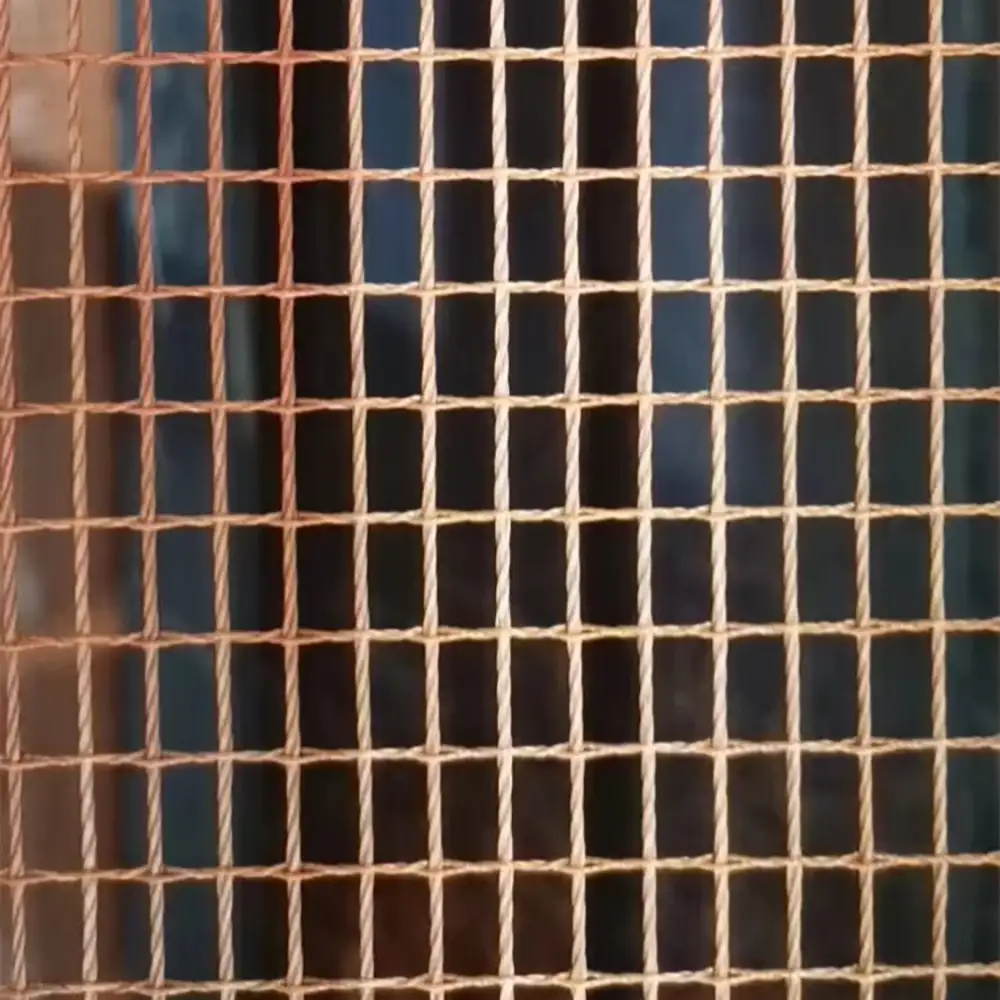
The EP fabric carcass provides the primary tensile reinforcement. Polyester in the longitudinal direction provides good tensile performance and dimensional stability, while the transverse reinforcement contributes to flexibility and carcass stability.
EP belts can be manufactured in different tensile strengths, ply configurations, belt widths, and cover thicknesses. Rubber compounds can also be selected for different operating environments.
For sand, mine, stone crusher, and coal applications, the appropriate belt should be selected based on the conveyor system rather than simply the material name.
Key Features of EP Conveyor Belts
Polyester Fabric Reinforcement
EP fabric provides good longitudinal tensile strength and dimensional stability. It is suitable for many industrial conveyor applications where a balance between strength and flexibility is required.
Flexible Carcass Construction
The belt needs to bend around pulleys during operation. EP fabric construction provides flexibility while maintaining the structural support required for continuous conveying.
Low Elongation
Polyester reinforcement generally provides relatively low elongation compared with some other fabric constructions. This can support stable conveyor operation when belt tension and system design are properly matched.
Abrasion-Resistant Rubber Covers
Sand, crushed stone, rock, and coal can produce continuous surface wear. Suitable abrasion-resistant rubber compounds can help protect the belt cover in demanding applications.
Impact Capability
Stone crusher and mining conveyors may receive material with substantial impact energy. Belt selection should account for material size, loading height, transfer chute design, and impact conditions.
Customizable Construction
EP rubber conveyor belts can be customized according to belt width, length, tensile strength, number of plies, cover thickness, rubber compound, and other requirements.
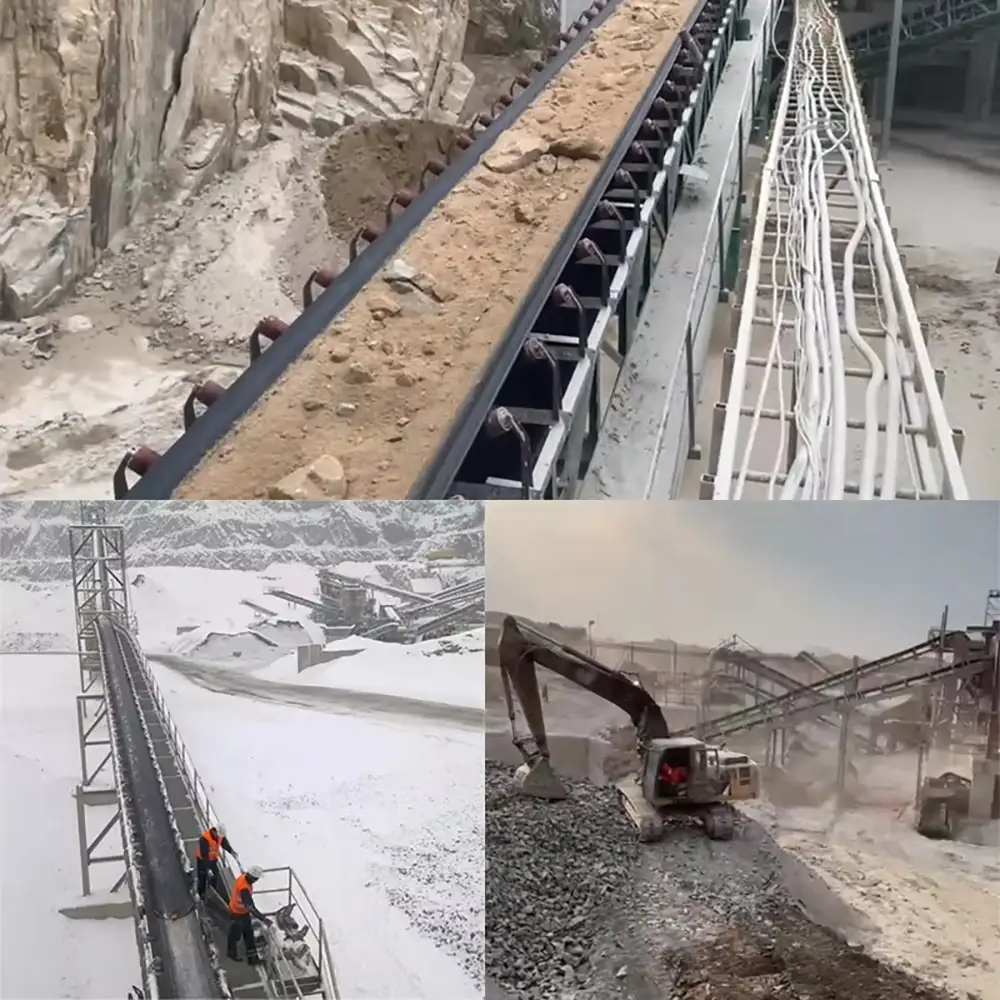
Applications for Sand Conveying
Sand conveyor belts are commonly used in sand production, aggregate processing, quarrying, construction material handling, and bulk storage systems.
A conveyor can move sand from screening equipment to stockpiles, hoppers, bins, or loading stations. Fine sand generally creates different impact conditions from large rock, but continuous contact can still produce belt surface wear.
When conveying wet sand, additional attention may be required for belt cleaning, tracking, material buildup, and conveyor component maintenance.
The rubber compound and belt construction should be selected according to the actual sand characteristics and operating environment.
Applications in Mining
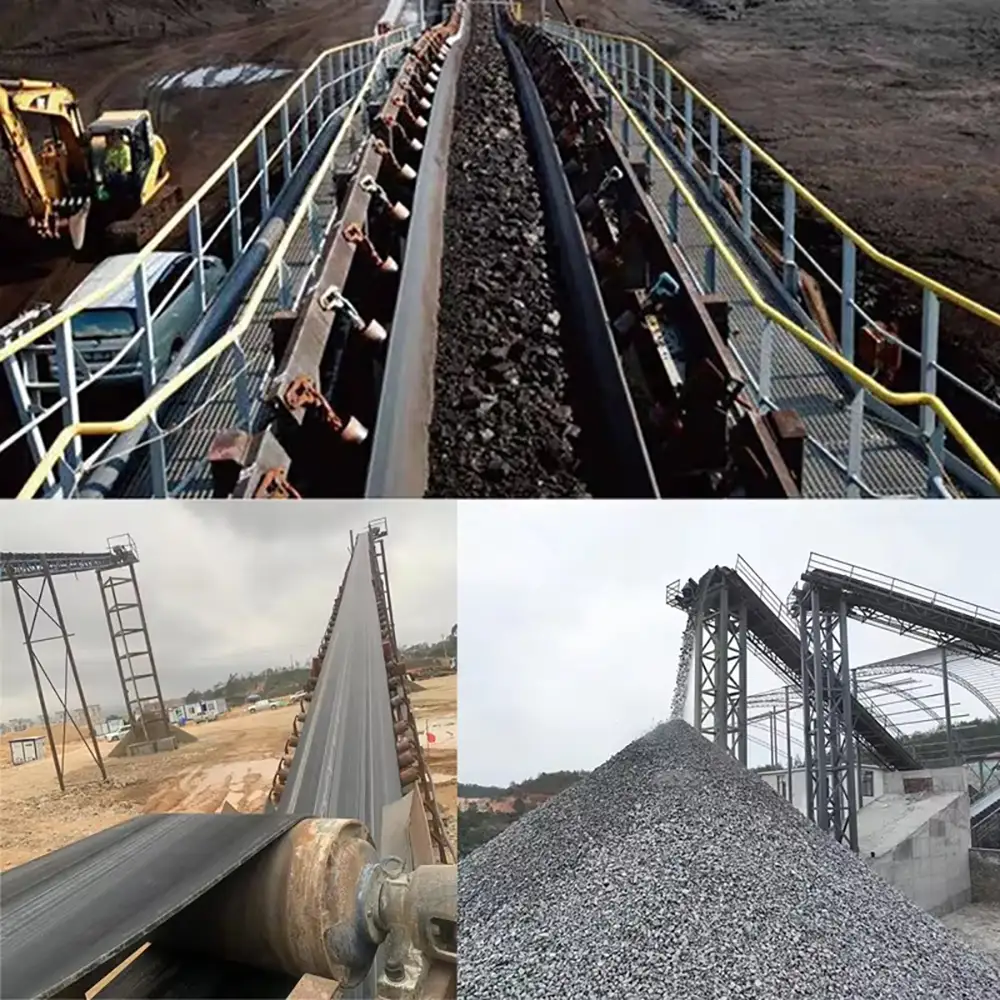
Mining conveyor systems can use EP rubber conveyor belts to transport coal, ore, rock, aggregate, and other bulk materials.
Mine conveyors may connect extraction areas with crushers, screens, processing equipment, stockpiles, and loading facilities. Surface mining, quarrying, and mineral processing applications can involve long operating hours and abrasive materials.
For long-distance or high-tension mining conveyors, belt selection may require engineering evaluation. While EP fabric belts are suitable for many applications, steel-cord conveyor belts can also be considered when higher longitudinal tensile strength is required.
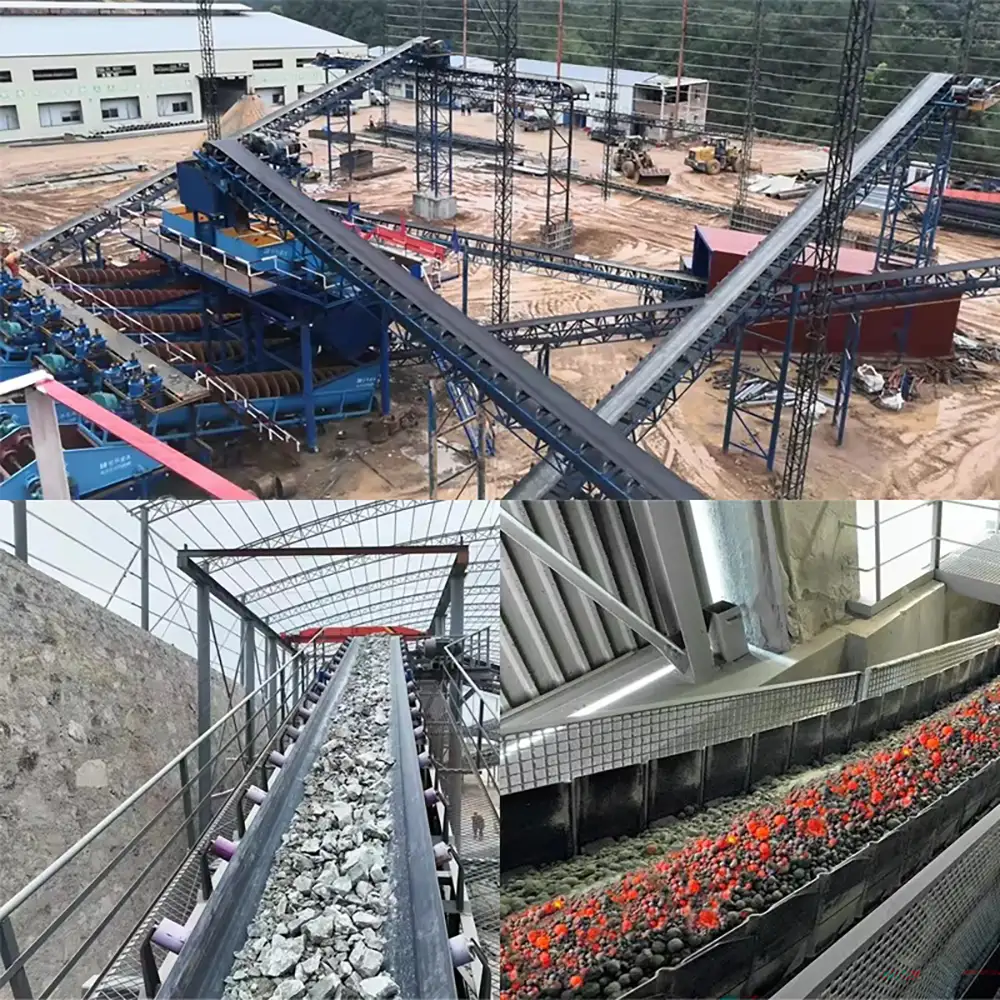
Applications in Stone Crusher Plants
Stone crusher plants depend on conveyors to transfer material between crushers, feeders, vibrating screens, stockpiles, and loading areas.
A typical crushing line may include a feeder, primary crusher, secondary crusher, screening equipment, and several conveyor sections. Each conveyor can have different operating conditions.
Primary crusher discharge may involve larger rock and higher impact. Secondary and screening conveyors may transport smaller crushed aggregate. Finished material conveyors may carry sand, gravel, or graded stone.
For this reason, the belt should be selected according to the specific conveyor position, material size, belt speed, loading method, and expected wear.
Applications for Coal Material
EP rubber conveyor belts can also be used in suitable coal handling systems. Coal conveyor systems may transport coal between mining areas, preparation plants, crushers, stockpiles, transfer stations, and loading facilities.
Coal can contain rock and other abrasive particles, so belt cover selection is important. Some coal mining environments also have specific requirements for flame resistance and antistatic performance.
Where specialized safety performance is required, the belt specification should identify the applicable local or mine-specific standard before production. A general-purpose EP belt should not automatically be assumed to meet the requirements of a regulated underground coal mining installation.
EP Conveyor Belt Construction
The overall performance of an EP rubber conveyor belt depends on the combination of its carcass and rubber covers.
The top cover protects the belt from the transported material. The EP fabric carcass provides tensile reinforcement. The bottom cover protects the belt while it runs over idlers and around pulleys.
The number of fabric plies can influence overall belt strength and flexibility. Cover thickness can be selected according to abrasion and impact requirements.
For specialized environments, rubber compounds can be considered for abrasion, heat, oil, weather, flame, or other properties. The appropriate selection depends on actual working conditions.
How to Choose the Right EP Rubber Conveyor Belt
Before purchasing an EP conveyor belt, consider the following factors:
Material Type: Sand, coal, crushed stone, ore, gravel, and other materials have different characteristics.
Particle Size: Large and sharp particles can increase impact and abrasion.
Conveyor Width: Belt width should match the required conveying capacity and system design.
Tensile Strength: Required strength depends on conveyor length, loading, belt weight, starting conditions, and system configuration.
Number of Plies: Ply construction influences strength, flexibility, and overall belt thickness.
Cover Thickness: Select suitable cover thickness according to material abrasiveness and impact conditions.
Belt Speed: Operating speed influences material flow and loading behavior.
Conveyor Inclination: Inclined conveyors may require appropriate surface characteristics and system design.
Operating Environment: Temperature, moisture, weather exposure, oil, dust, and mine-specific conditions should be considered.
Installation and Maintenance
Correct installation is important for EP conveyor belt performance. Before installation, inspect pulleys, idlers, conveyor frames, cleaners, take-up equipment, and transfer chutes.
The conveyor should be properly aligned, and belt tension should be adjusted according to the recommended installation procedure. Poor alignment can result in mistracking, edge wear, and uneven stress.
During operation, inspect the belt regularly for cuts, cracks, abrasion, edge damage, exposed reinforcement, and splice deterioration.
At stone crusher and mining transfer points, check for excessive impact and material spillage. Conveyor cleaners should be properly adjusted to remove material without causing unnecessary belt wear.
Regular maintenance of idlers, pulleys, scrapers, and loading equipment can help maintain stable conveyor operation.
Custom EP Rubber Conveyor Belt
We supply customized EP rubber conveyor belts for sand plants, mines, stone crusher plants, coal handling systems, quarries, aggregate processing facilities, cement plants, and other industrial applications.
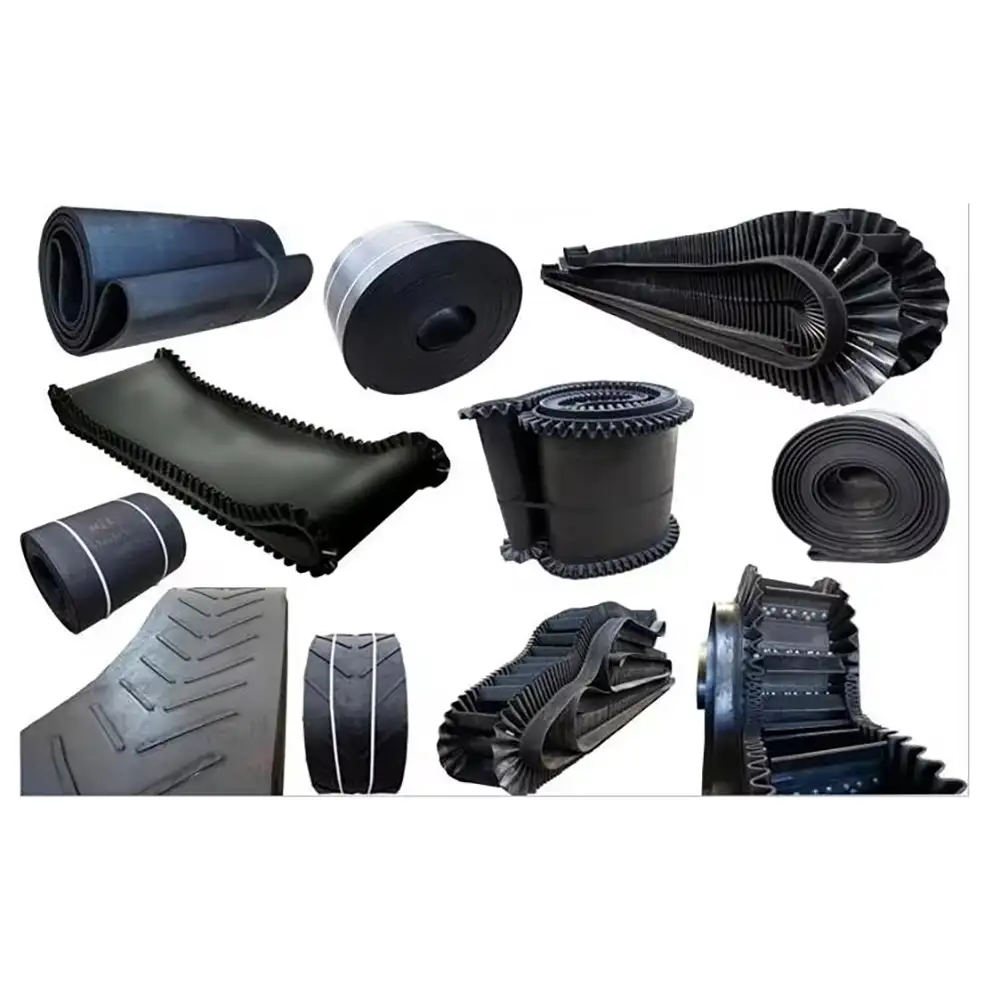
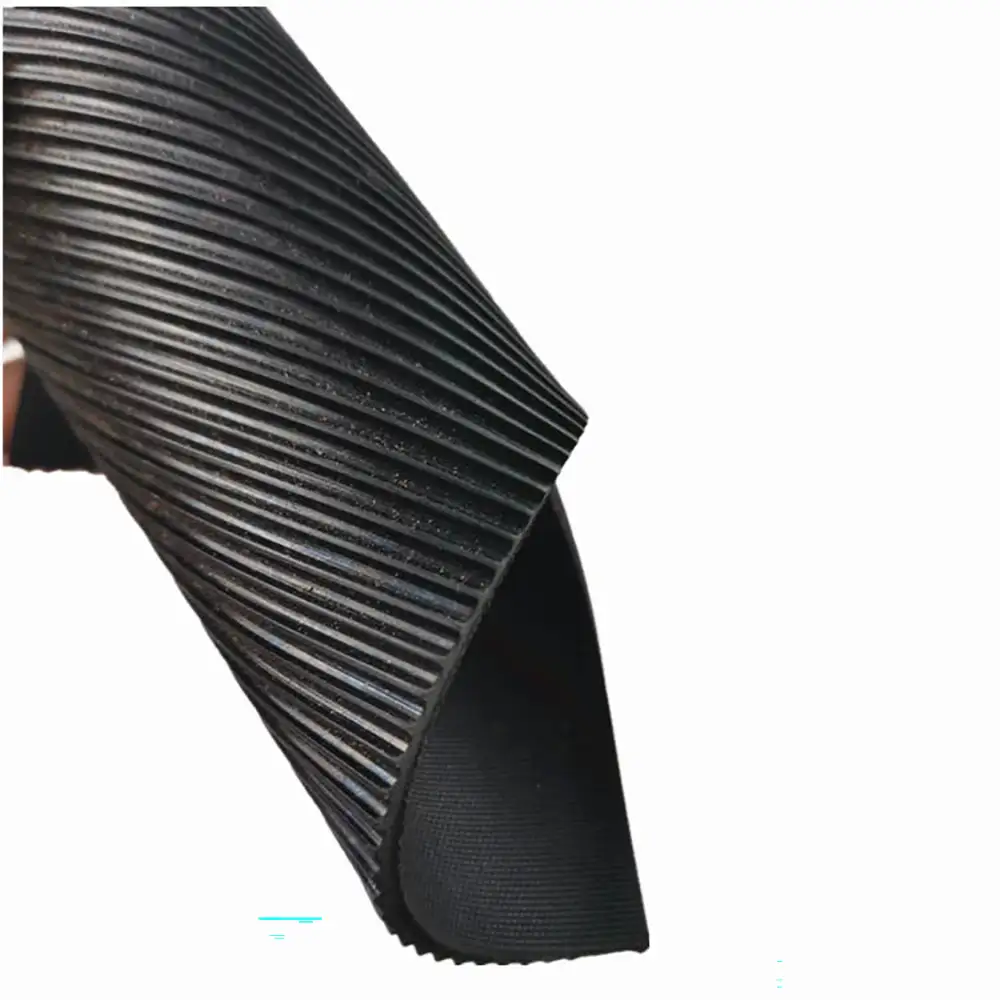
Customization can include belt width, length, tensile strength, number of plies, EP fabric construction, cover thickness, rubber compound, edge construction, and surface pattern.
Depending on application requirements, specialized rubber properties such as abrasion resistance, heat resistance, oil resistance, weather resistance, flame resistance, or antistatic performance can be considered.
OEM and bulk supply services are available for conveyor manufacturers, mining companies, stone crusher plant builders, distributors, contractors, and industrial purchasing departments.
Why Choose Us?
EP Conveyor Belt Manufacturing: We supply fabric-reinforced rubber conveyor belts for industrial bulk material handling.
Multiple Applications: Suitable belt constructions can be supplied for sand, mining, crushed stone, coal, gravel, and aggregate.
Durable Rubber Covers: Cover compounds can be selected according to abrasion and environmental requirements.
Custom Belt Construction: Width, length, tensile strength, plies, cover thickness, and rubber properties can be customized.
Application-Based Support: We consider material characteristics and conveyor parameters when recommending belt construction.
OEM & ODM Service: Custom production is available for distributors, contractors, conveyor manufacturers, and project suppliers.
B2B Export Supply: We support industrial bulk orders and international conveyor belt requirements.
Technical Assistance: Customers can provide conveyor specifications, drawings, or application details for product matching.
FAQs
1. What does EP mean on a rubber conveyor belt?
EP generally refers to a fabric reinforcement using polyester in the longitudinal direction and polyamide or nylon in the transverse direction.
2. Can EP conveyor belts be used for sand?
Yes. EP rubber conveyor belts can be used for sand conveying in aggregate plants, sand production facilities, quarries, and construction material handling systems.
3. Are EP belts suitable for stone crusher plants?
Yes. Suitable EP belts can be used on many crusher plant conveyors. The belt construction should be selected according to rock size, impact conditions, conveyor speed, and loading requirements.
4. Can an EP conveyor belt transport coal?
Yes. EP conveyor belts can be used in suitable coal handling applications. Where mine-specific flame or antistatic requirements apply, the appropriate specialized belt specification should be confirmed.
5. Are EP conveyor belts abrasion resistant?
Abrasion resistance depends on the rubber cover compound. Suitable abrasion-resistant cover grades can be selected for abrasive materials such as crushed rock, gravel, coal, and aggregate.
6. What is the difference between EP and NN conveyor belts?
EP belts use polyester in the longitudinal reinforcement direction, while NN belts use nylon fabric. Their mechanical characteristics differ, so selection should be based on the conveyor application.
7. Can EP rubber conveyor belts be customized?
Yes. Belt width, length, tensile strength, number of plies, cover thickness, rubber compound, and other specifications can be customized.
8. What belt is suitable for large crushed stone?
A suitable heavy-duty belt should be selected based on rock size, material weight, impact conditions, conveyor capacity, and transfer-point design. An abrasion- and impact-appropriate construction may be required.
9. How do I maintain an EP conveyor belt?
Regularly inspect tracking, tension, cover wear, edges, splices, idlers, pulleys, and loading points. Correct alignment and timely maintenance can help reduce premature wear.
10. What information is needed for an EP conveyor belt quotation?
Provide belt width, length, tensile strength if known, number of plies, cover thickness, material type, particle size, conveyor speed, conveyor length, inclination, and operating environment.
Request a Quote
If you need an EP rubber conveyor belt for sand, mine, stone crusher, coal, or other bulk materials, send us your conveyor specifications and application requirements. We can provide a customized belt construction for mining, quarrying, aggregate processing, crushing plants, and industrial material handling.
Prev:
PVC and PVG Entire Core Fire Resistant Rubber Conveyor Belt
Next:Sorry, no information
TAG:
Steel Cord Conveyor Belt,
Industrial Rubber Conveyor Belt,
Heavy Duty Rubber Conveyor Belt,
Multi Ply Conveyor Belt,
Mining Conveyor Belt,
Bulk Material Conveyor Belt,
Sand Conveyor Belt,
Gravel Conveyor Belt,
Material Handling Conveyor Belt,
Rock Conveyor Belt,
Coal Conveyor Belt,
Quarry Conveyor Belt,
Aggregate Conveyor Belt,
Coal Handling Conveyor Belt,
Mining Rubber Conveyor Belt,
Coal Mining Conveyor Belt,
Stone Crusher Conveyor Belt,
Abrasion Resistant Conveyor Belt,
Heavy Duty Conveyor Belt,
Polyester Rubber Conveyor Belt,
EP Fabric Conveyor Belt,
Polyester Conveyor Belt,
EP Rubber Conveyor Belt,
Polyester Fabric Conveyor Belt,
EP Multi Ply Conveyor Belt,
EP Conveyor Belt,
Textile Conveyor Belt,
Fabric Reinforced Conveyor Belt,
Rubber Conveyor Belt,
Coal Mine Conveyor Belt,
Related Category:
EP Rubber Conveyor Belt,EP Conveyor Belt,Sand Conveyor Belt,Mining Conveyor Belt,Stone Crusher Conveyor Belt China, suppliers, manufacturers, factory, customized, wholesale, quotation, made in China