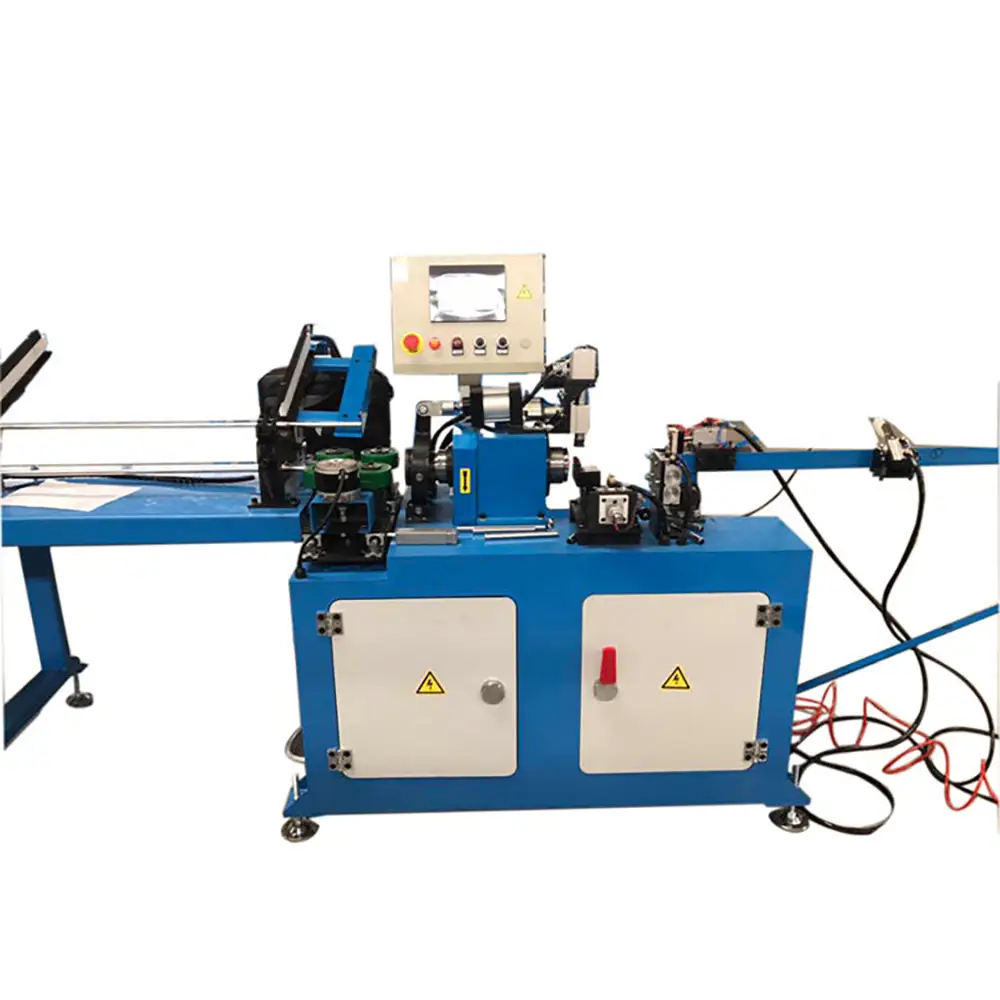
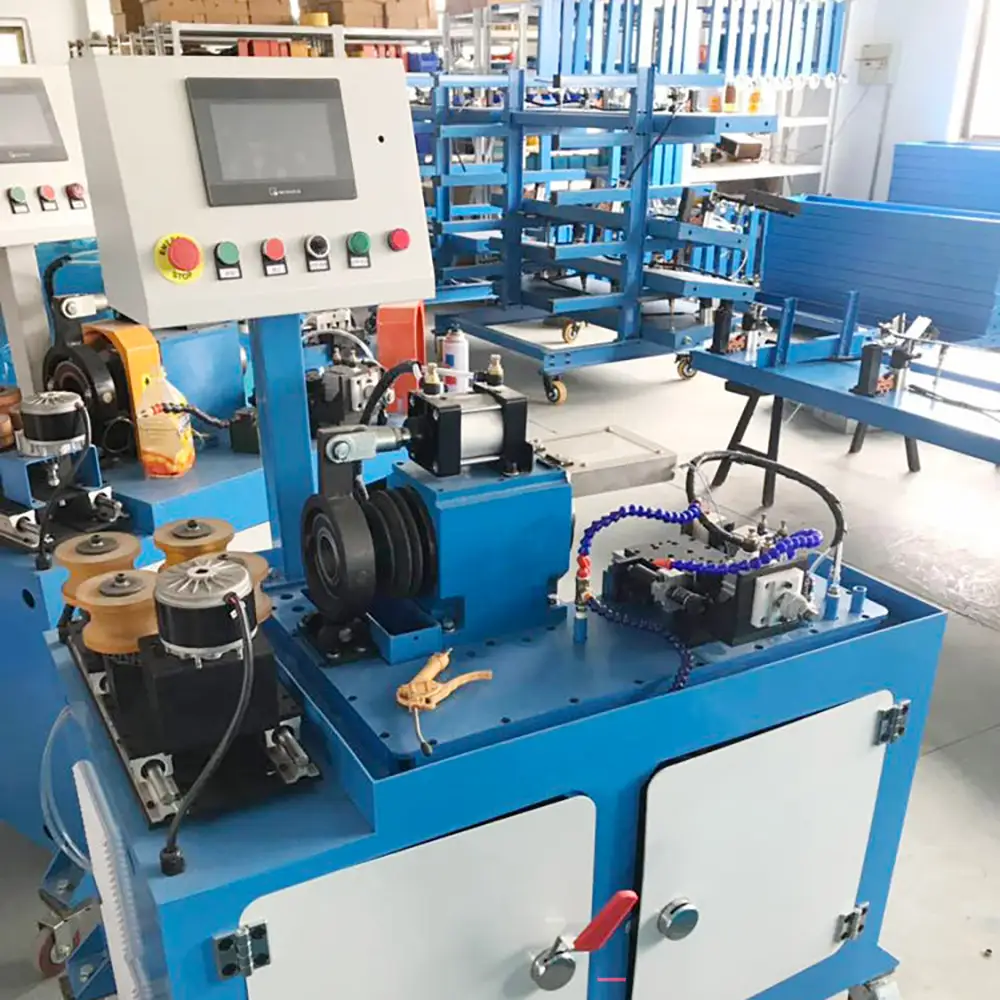
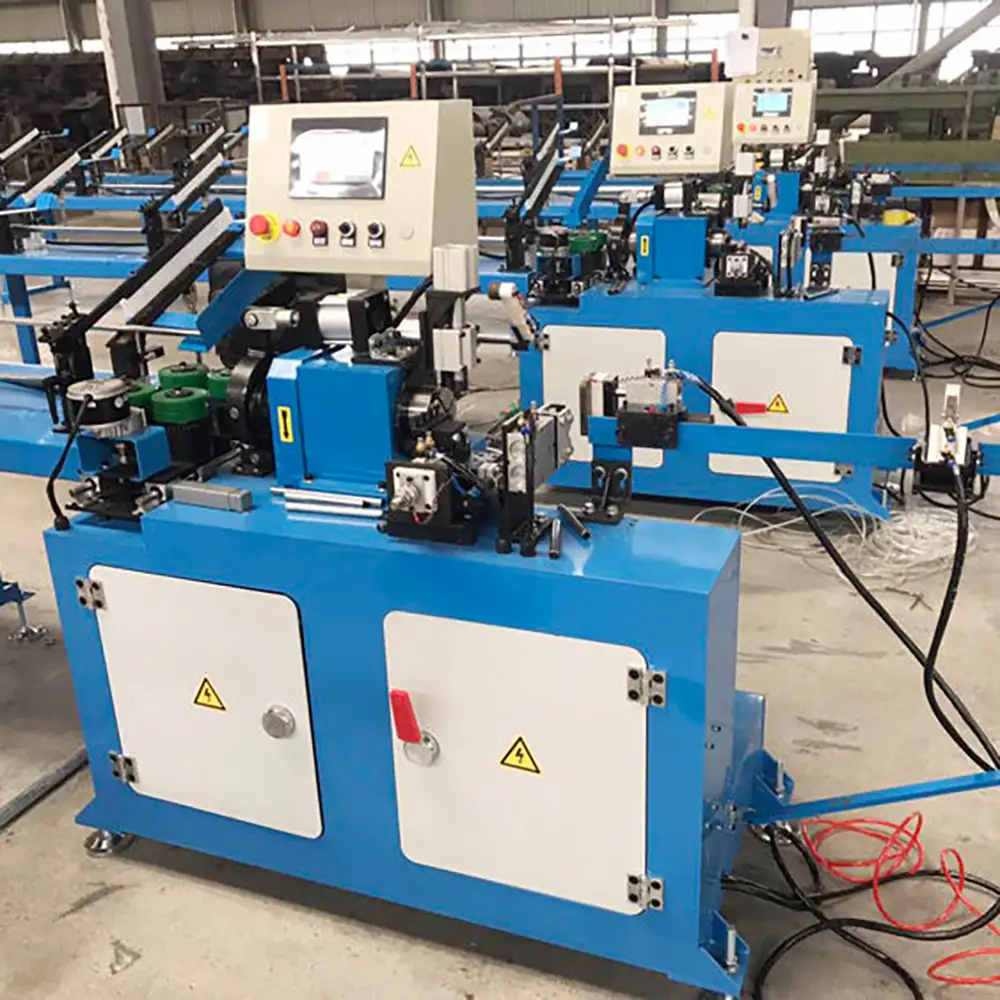
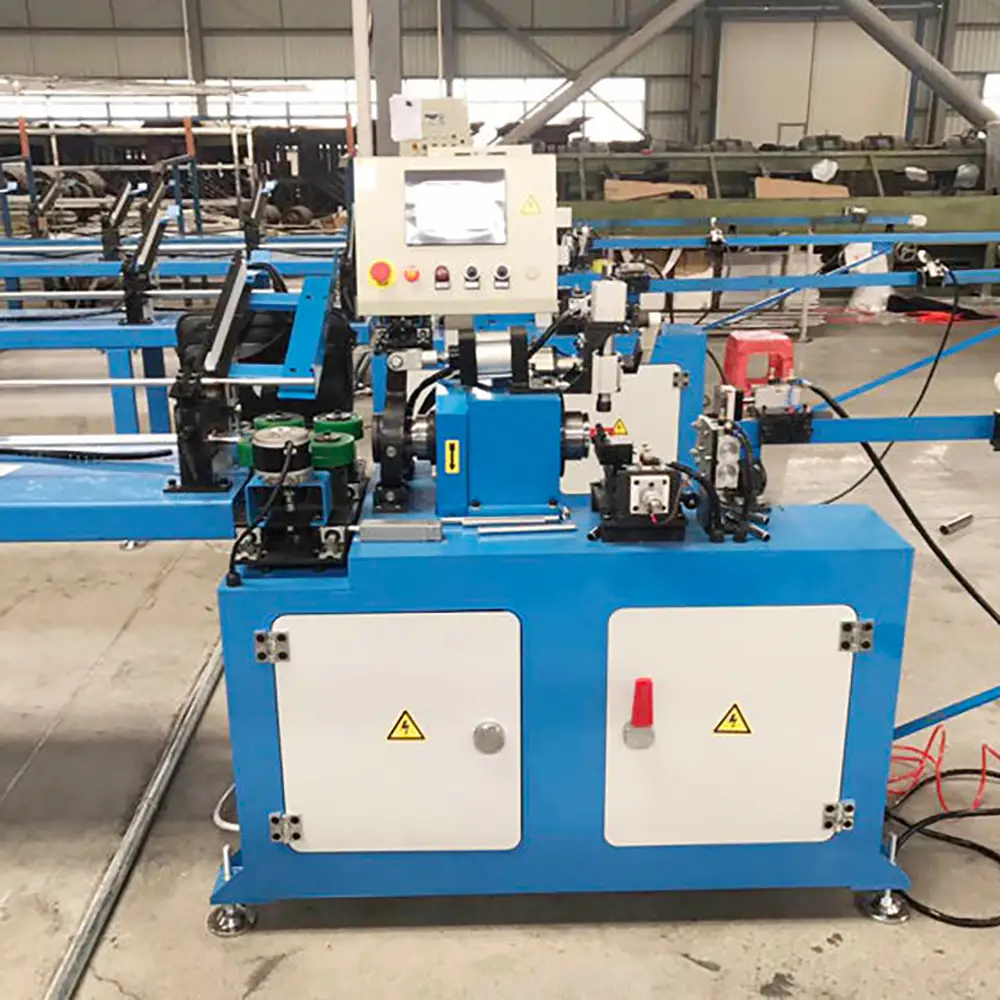
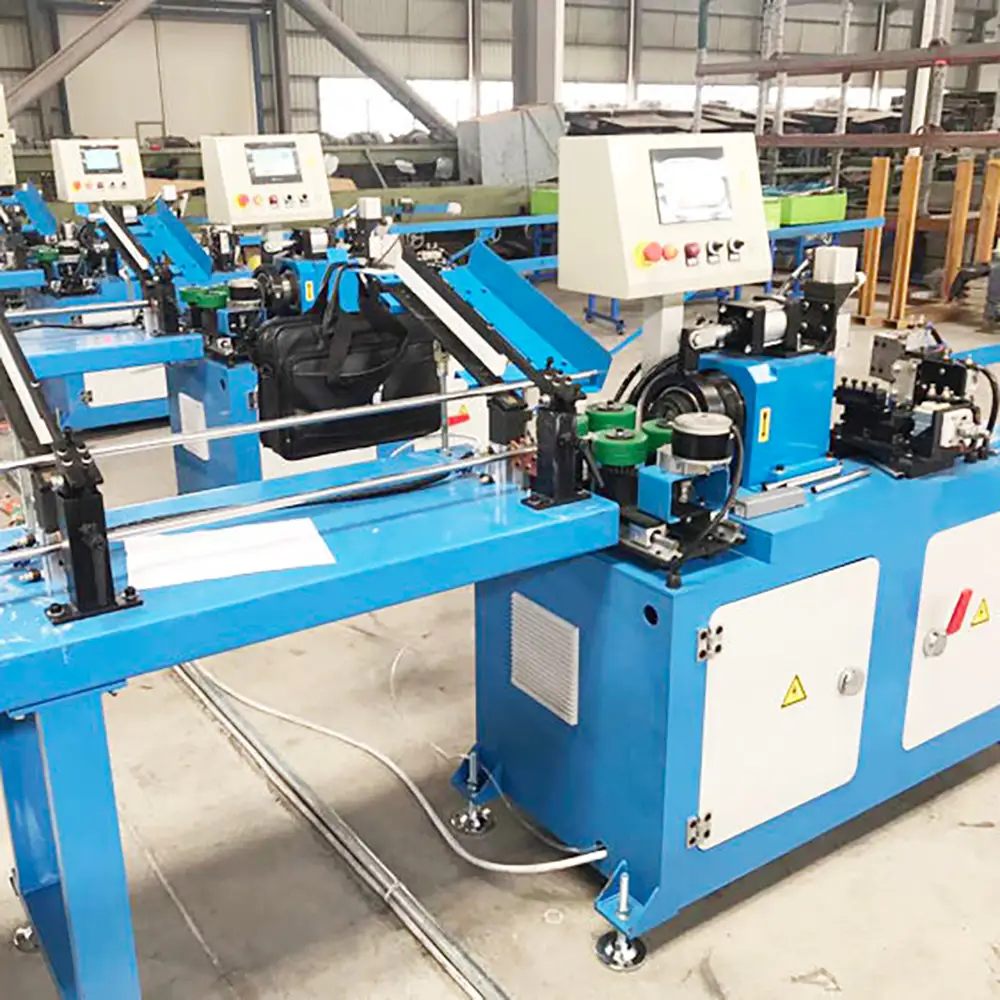
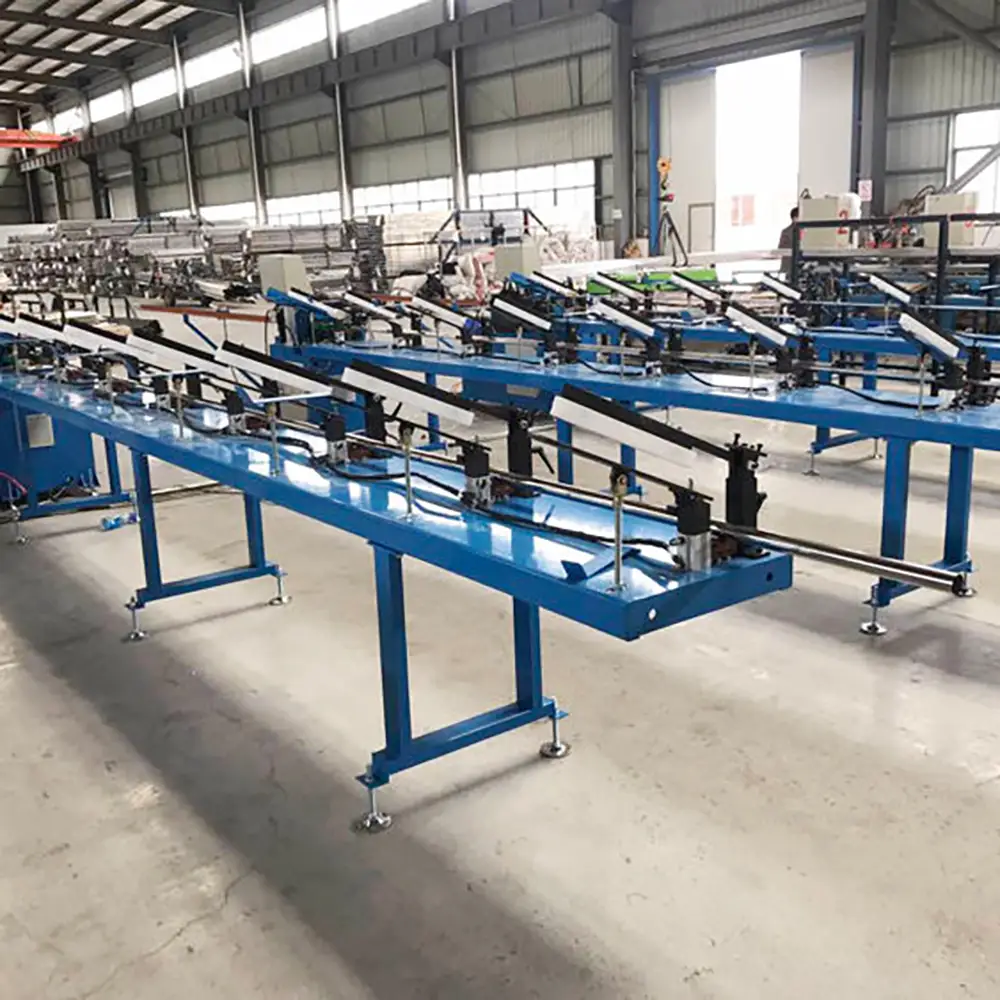
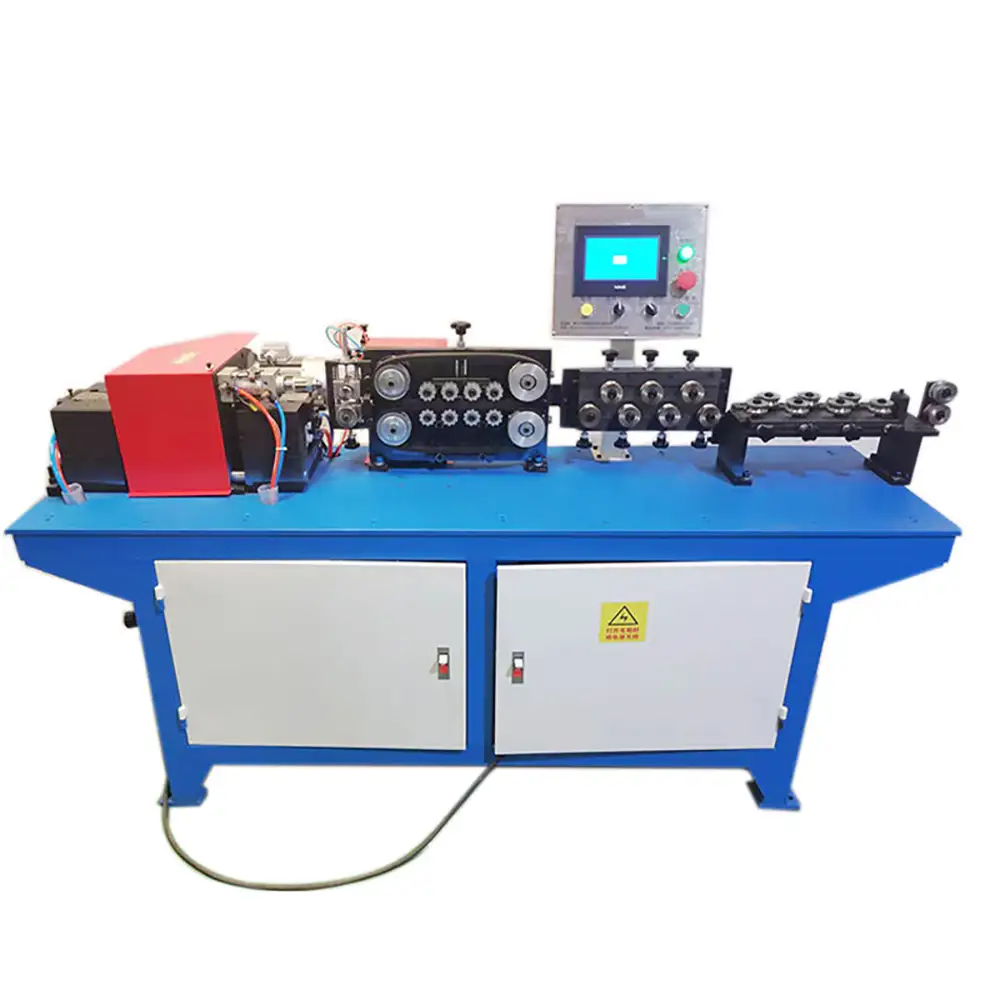
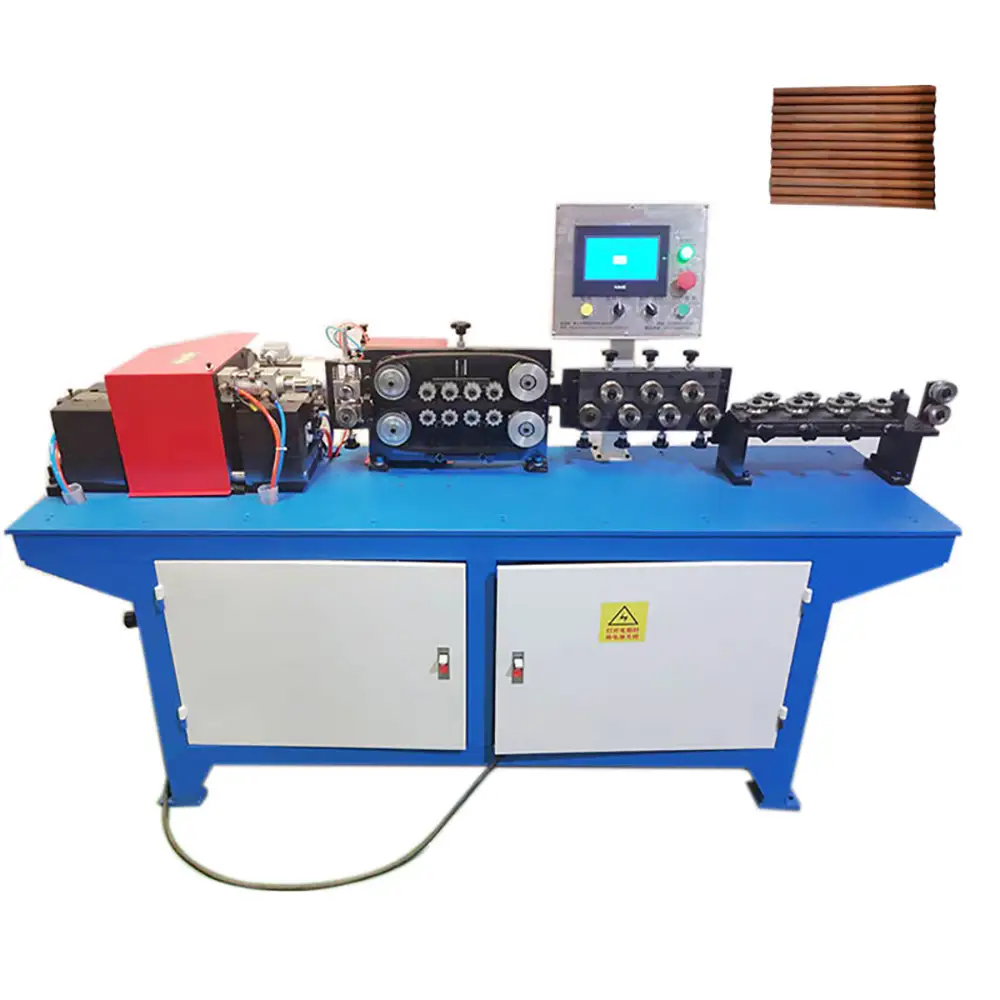
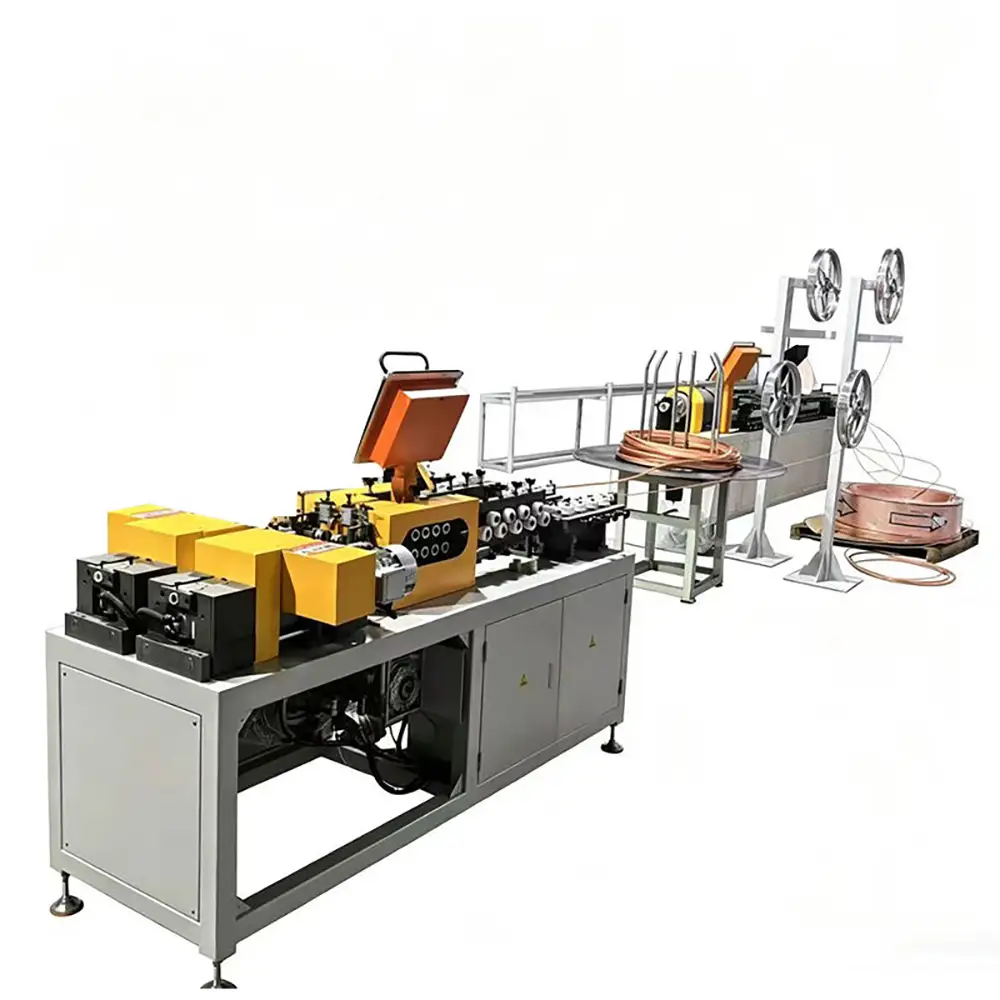
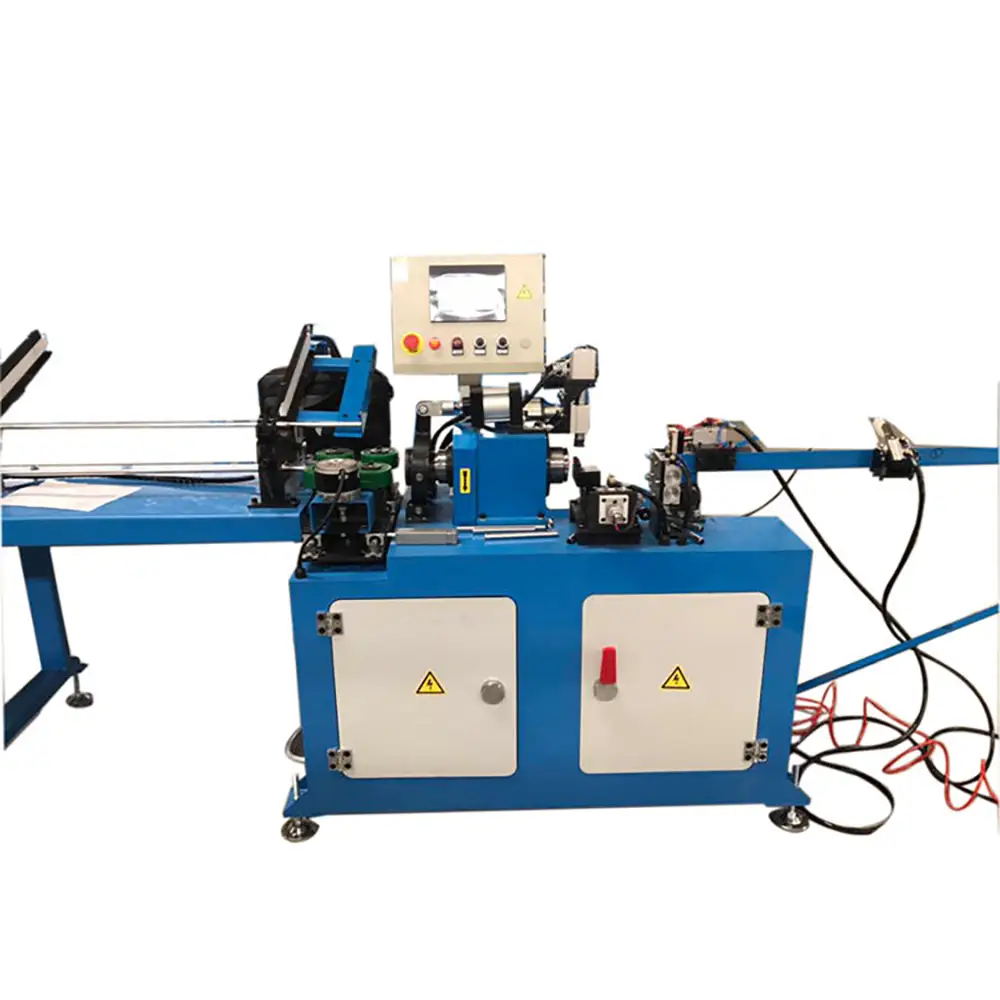
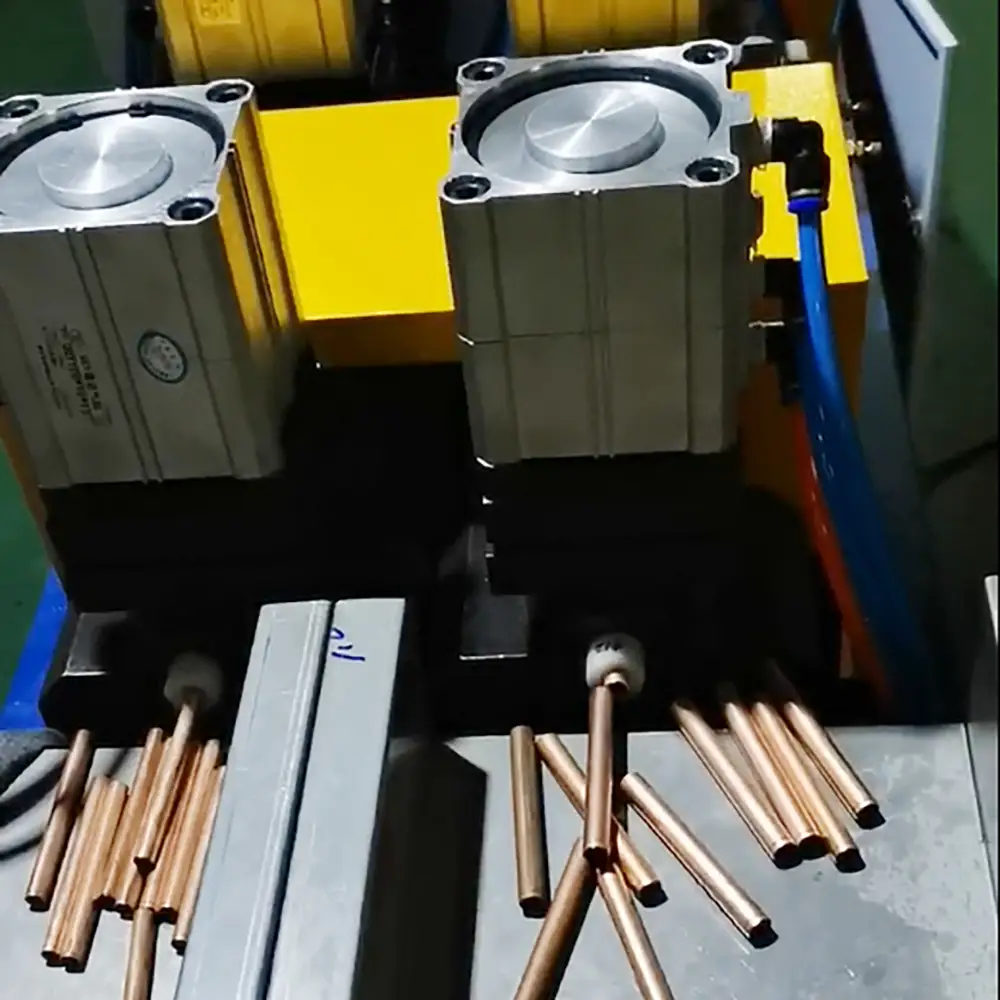
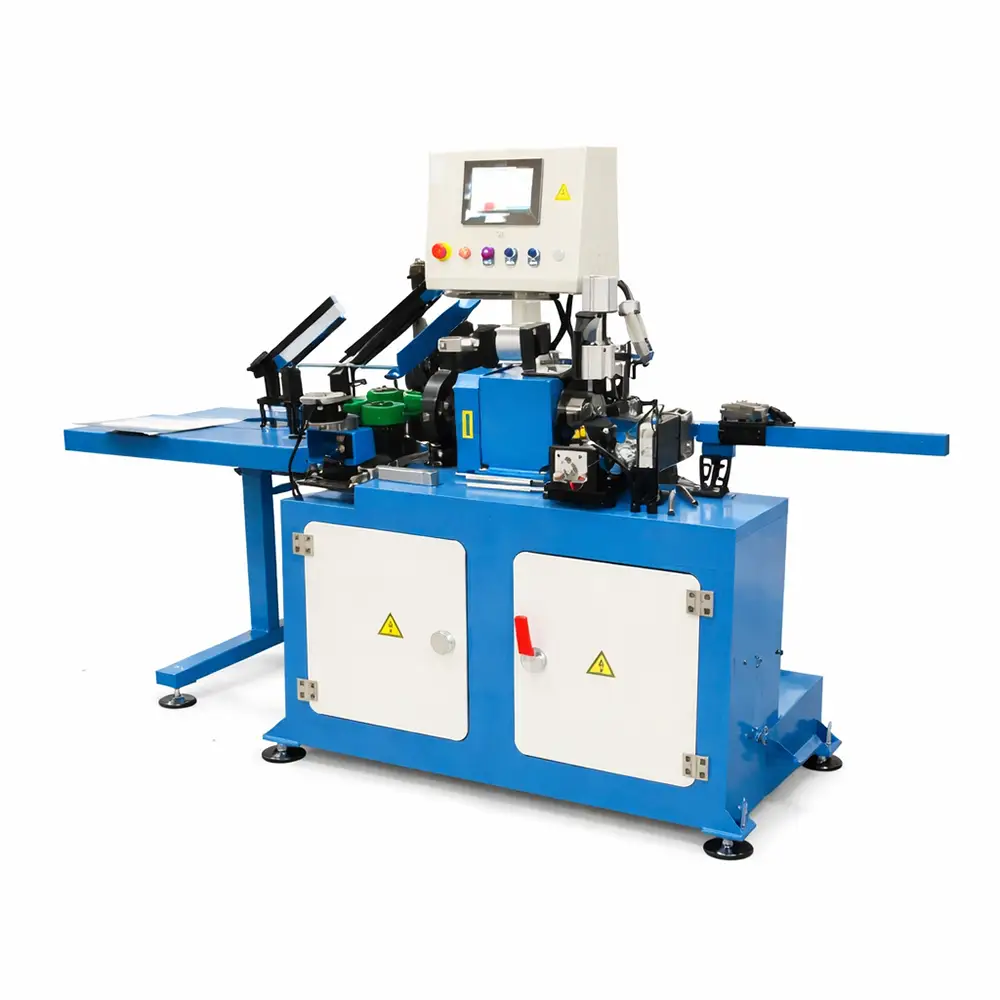
Basic equipment parameters
* Feeding method: 4-wheel traction automatic feeding
* Sizing method: activities depend on sizing
* Fixed length accuracy: +/- 0.2mm
* Clamping method: pneumatic
* Cutting feed method: pneumatic + hydraulic buffer
* Lathe knife cutting blade: CNC threaded blade or alloy blade (3 * 6 * 200)
* Action mode: 4-wheel traction automatic feeding → signal induction of backing fixed length → clamping → cutting → automatic reset → complete one processing.
*The body is welded and assembled by steel plate heat treatment, the structure is strong and stable.
Products Description
|
Item |
Specification |
|
Electrical control |
PLC+ touch screen |
|
Spindle speed |
400/800RPM |
|
Motor power |
1.5kw |
|
Linear guide |
Shangyin 15type |
|
Fixture |
Yonghe |
|
Air source pressure |
0.4-0.6mpa |
|
Voltage |
380/415/ customized |
|
Main structure size |
8500x650x1500 |
|
Weight |
500kg
|
Thin Pipe Cold Saw Cutting Machine for Stainless Steel Pipes
The Thin Pipe Cold Saw Cutting Machine is designed for accurate and repeatable cutting of thin metal pipes and tubes, with a particular focus on compatible stainless steel pipe applications. Using a cold saw cutting system, the machine provides a controlled method for separating tubular workpieces into specified lengths while supporting consistent production quality.
Thin-wall stainless steel pipes are widely used in furniture, automotive components, architectural fabrication, industrial equipment, HVAC systems, plumbing, and general metal fabrication. Compared with thick-wall pipes, thin tubes can be more sensitive to clamping pressure, vibration, heat generation, and cutting deformation. A properly configured cold saw cutting machine can address these requirements through suitable workholding, blade selection, feeding, and cutting parameters.
The machine can be configured according to pipe diameter, wall thickness, material, cutting length, production volume, and automation requirements. Actual cutting capacity and accuracy depend on the complete machine configuration and the characteristics of the workpiece.
Cold Saw Cutting Principle
Cold saw cutting uses a circular saw blade designed for metal cutting. The blade removes material through controlled tooth engagement rather than relying on an abrasive wheel.
For stainless steel and thin-wall tubing, the blade must be selected according to the material and tube dimensions. Tooth geometry, blade diameter, blade material, cutting parameters, lubrication, and machine rigidity can all affect the final result.
When the cutting system is properly matched to the workpiece, cold saw processing can provide repeatable tube lengths and controlled cut edges for downstream fabrication.
Designed for Thin Pipe Cutting
Thin pipes require careful handling during cutting. Excessive clamping force can deform the tube, while insufficient clamping can allow movement or vibration during the cutting cycle.
The workholding system should therefore be selected according to tube diameter and wall thickness. For very thin tubing, additional support or specialized fixtures may be appropriate.
The goal is to keep the tube stable while minimizing unnecessary deformation. This is especially important for stainless steel tubes used in visible architectural, furniture, or precision assembly applications.
Stainless Steel Pipe Cutting
Stainless steel offers corrosion resistance and a clean appearance, making it an important material for industrial and commercial tube fabrication.
However, stainless steel can have different cutting characteristics from carbon steel or aluminum. Proper blade selection and cutting parameters are therefore essential.
The machine can be evaluated for suitable stainless steel grades according to the required pipe diameter, wall thickness, cutting length, and production volume.
Customers should provide the stainless steel grade whenever possible because material characteristics can influence blade selection and cutting conditions.
Precision Pipe Cutting
The machine is intended for repeatable pipe cutting rather than one-off manual cutting. Automated or CNC-controlled feeding and positioning can help reduce variation between individual workpieces.
Consistent positioning is particularly useful when many stainless steel tubes need to be cut to the same length before welding, bending, machining, or assembly.
Actual cutting accuracy depends on several factors, including:
Pipe diameter
Wall thickness
Stainless steel grade
Cutting length
Feeding accuracy
Clamping stability
Blade condition
Machine rigidity
Cutting parameters
Workpiece straightness
For applications requiring a defined dimensional tolerance, customers should provide drawings or samples so the cutting process can be evaluated against the actual requirements.
Automatic Pipe Cutting
Depending on the selected configuration, the machine can include automatic feeding, positioning, clamping, cutting, and production cycling.
Automatic operation reduces repetitive manual measuring and positioning. This can improve workflow efficiency when processing large batches of identical or standardized tube components.
The actual automation level depends on the feeding and material-handling system. An automatic machine may still require an operator for material loading, parameter setting, production monitoring, quality inspection, and maintenance.
Saw Blade Selection
Saw blade selection has a direct effect on tube cutting performance. Stainless steel, carbon steel, aluminum, copper, and brass require different cutting approaches.
For stainless steel thin-wall tubing, the blade should be selected based on the material grade, tube diameter, wall thickness, desired cut quality, production volume, and machine specifications.
Important blade-related factors include:
Tooth geometry
Tooth pitch
Blade diameter
Blade material
Cutting speed
Feed rate
Lubrication
Workpiece support
Using an application-appropriate blade can help improve cut consistency and control blade wear.
Clean and Consistent Tube Ends
The quality of the finished tube end is important for downstream manufacturing. Cut tubes may be used directly in assembly or may undergo welding, bending, drilling, machining, polishing, or other processes.
Cold saw cutting can produce controlled tube ends when the machine and tooling are correctly matched to the material.
Depending on the final application, secondary operations such as deburring, chamfering, cleaning, or end finishing may still be required. The need for these processes depends on the customer's edge-quality requirements.
Applications
The Thin Pipe Cold Saw Cutting Machine can support many industries that process stainless steel and other compatible metal tubes.
Stainless Steel Furniture
Furniture manufacturers use stainless steel tubing for chairs, tables, racks, kitchen equipment, display systems, and decorative structures. Consistent cutting lengths help simplify welding and assembly.
Automotive Components
Metal tubes are used in various automotive structures and components. The machine can be evaluated for compatible tube-cutting applications according to the component design and material.
Architectural Fabrication
Stainless steel tubing is commonly used for railings, frames, decorative structures, partitions, and other architectural products. Accurate cutting can improve downstream fabrication efficiency.
Industrial Equipment
Manufacturers can process tubes for equipment frames, guards, supports, brackets, and mechanical structures.
HVAC and Plumbing
Suitable stainless steel and other metal pipes can be cut into specified lengths for piping systems, fittings, and installation-related applications.
General Metal Fabrication
Fabrication workshops can use the machine for batch cutting of standardized metal tubes and pipes.
Workpiece Clamping and Support
Proper clamping is particularly important when cutting thin-wall pipe. The workpiece needs to remain stable while avoiding excessive compression.
For round stainless steel tubes, suitable clamping surfaces can distribute the holding force more evenly. For thin or delicate tubing, customized fixtures may be required.
The correct clamping method depends on pipe diameter, wall thickness, material, tube length, and production requirements.
Automatic Feeding and Material Handling
For higher-volume production, automatic feeding can improve the workflow by reducing manual tube positioning.
Depending on the configuration, the feeding system can deliver tubing to the cutting area, position it to the required length, and prepare the next section for processing.
Material loading and finished-piece collection can also be incorporated into a larger production system.
The actual production rate depends on cutting length, tube size, feeding speed, blade condition, loading method, and machine configuration.
Flexible Cutting Lengths
Different production orders may require different tube lengths. A programmable control system can make it easier to change cutting parameters between production jobs.
For repeated batch production, the operator can establish the required cutting sequence and monitor the resulting pieces.
When multiple tube specifications are processed on the same machine, changes may be required to fixtures, guides, blade selection, or machine parameters.
Quality Control
Quality control should begin with incoming tube inspection and continue throughout the cutting process.
Important inspection points may include:
Tube diameter
Wall thickness
Cut length
Tube deformation
End squareness
Burr condition
Surface condition
Overall dimensional consistency
Blade wear should also be monitored. As a blade becomes worn, cutting resistance and edge quality may change.
For high-precision applications, sample cutting and dimensional verification should be completed before full-scale production.
Maintenance
Routine maintenance helps maintain reliable cutting performance. Operators should inspect the saw blade, feeding mechanism, clamping system, guides, drive components, lubrication points, electrical controls, and safety devices.
Metal chips should be removed from the cutting area regularly. The blade should be inspected for wear, damage, and changes in cutting performance.
Lubrication and other maintenance procedures should follow the machine manufacturer's recommendations.
Safety
Cold saw machines contain rotating blades and moving mechanical components. Operators should follow the manufacturer's operating procedures and applicable workplace safety requirements.
Machine guards, emergency stops, protective devices, chip-control systems, and other safety features should be provided according to the selected machine configuration and local regulations.
Operators should wear appropriate personal protective equipment and ensure that the tube is correctly supported and clamped before starting a cutting cycle.
OEM and ODM Services
For distributors, fabrication companies, tube manufacturers, and industrial production plants, OEM and ODM support can provide additional flexibility.
Machine configuration can be evaluated according to tube diameter, wall thickness, stainless steel grade, cutting length, production volume, automation requirements, feeding method, fixtures, and factory layout.
Customers can provide drawings, tube samples, material specifications, required cutting lengths, and target production volumes for application evaluation.
Why Choose Us
1. Thin-Wall Tube Application Focus
The machine can be configured for suitable thin stainless steel pipe and tube cutting applications.
2. Cold Saw Technology
The cold saw system provides a controlled metal cutting method for repeatable tube processing.
3. Stainless Steel Compatibility
Suitable configurations can be evaluated for different stainless steel tube and pipe applications.
4. Automatic Cutting Options
Automatic feeding, positioning, clamping, and cutting can reduce repetitive manual operations.
5. Consistent Production
Controlled feeding and cutting help support repeatable tube lengths for batch manufacturing.
6. Flexible Tooling
Saw blades, fixtures, guides, and other components can be selected according to material and workpiece requirements.
7. OEM and ODM Support
Customized machine configurations are available for distributors and industrial production projects.
8. Application-Based Engineering
Tube drawings, samples, material grades, and production requirements can be used to evaluate the appropriate cutting solution.
FAQs
1. What is a cold saw cutting machine?
A cold saw cutting machine uses a circular metal-cutting blade to cut pipes and tubes into specified lengths. It is commonly used for repeatable industrial metal cutting.
2. Can this machine cut thin stainless steel pipes?
Yes. It can be configured for suitable thin-wall stainless steel pipe applications. Correct clamping, blade selection, support, and cutting parameters are important.
3. Why is cold saw cutting suitable for stainless steel tubes?
Cold saw cutting provides controlled mechanical cutting and can deliver repeatable tube lengths when the blade and machine settings are correctly matched to the stainless steel material.
4. Can it cut round stainless steel pipes?
Yes. The machine is suitable for round pipe applications when the workholding system is matched to the pipe diameter and wall thickness.
5. Can it cut square or rectangular tubes?
Some machine configurations can process square and rectangular tubing. The required fixtures and cutting range should be confirmed for the specific profile.
6. Can the machine automatically feed the pipe?
Automatic feeding can be provided depending on the machine configuration. The feeding system should be selected according to tube size, length, and production requirements.
7. Will cutting thin pipe cause deformation?
Thin-wall tubes can deform if clamping pressure or cutting conditions are not properly controlled. Suitable fixtures, support, blade selection, and process parameters help minimize this risk.
8. Does cold saw cutting eliminate burrs?
Not necessarily. Cut-edge quality depends on the material, blade, cutting parameters, blade condition, and machine setup. Some applications may require additional deburring.
9. How accurate is the cutting?
Actual accuracy depends on the tube material, dimensions, machine configuration, feeding system, clamping, blade condition, and cutting parameters. Specific tolerances should be confirmed for the application.
10. How do I choose the correct saw blade?
Blade selection depends on stainless steel grade, pipe diameter, wall thickness, required cut quality, production volume, and machine specifications.
11. Can the machine cut different pipe lengths?
Yes. Programmable cutting parameters can support different cutting lengths depending on the machine control and feeding configuration.
12. What information should I provide for a quotation?
Please provide pipe material and grade, outside diameter, wall thickness, required cutting lengths, production volume, cutting tolerance, and drawings or samples if available.
Prev:
Brass Copper Aluminum Small Diameter Tube Copper Pipe Cutting Machine
Next:
Thin Pipe Stainless Steel Cutting Machine Cold Saw Cutter
TAG:
Stainless Steel Tube Processing Machine,
Automatic Tube Processing Machine,
Automatic Pipe Processing Machine,
Stainless Steel Pipe Processing Machine,
Tube Cutting Equipment,
Pipe Cutting Equipment,
Stainless Steel Pipe Cutting Machine,
Metal Tube Cutting Machine,
Stainless Steel Tube Cutting Machine,
Metal Pipe Cutting Machine,
Automatic Tube Cutting Machine,
Automatic Pipe Cutting Machine,
CNC Tube Cutting Machine,
Round Pipe Cutting Machine,
Round Tube Cutting Machine,
Precision Tube Cutting Machine,
Automatic Stainless Steel Tube Cutting Machine,
CNC Metal Pipe Cutter,
CNC Metal Tube Cutter,
Automatic Metal Tube Cutter,
Metal Tube Cutting Equipment,
Industrial Tube Cutting Machine,
CNC Pipe Cutting Machine,
Automatic Stainless Steel Pipe Cutting Machine,
Industrial Pipe Cutting Machine,
Pipe Cutting Machinery,
Precision Pipe Cutting Machine,
Tube Cutting Machinery,
Metal Pipe Cutter,
Metal Tube Cutter,
Related Category:
Thin Pipe Cold Saw Cutting Machine,Stainless Steel Pipe Cutting Machine,Cold Saw Pipe Cutting Machine,Thin Pipe Cutting China, suppliers, manufacturers, factory, customized, wholesale, quotation, made in China