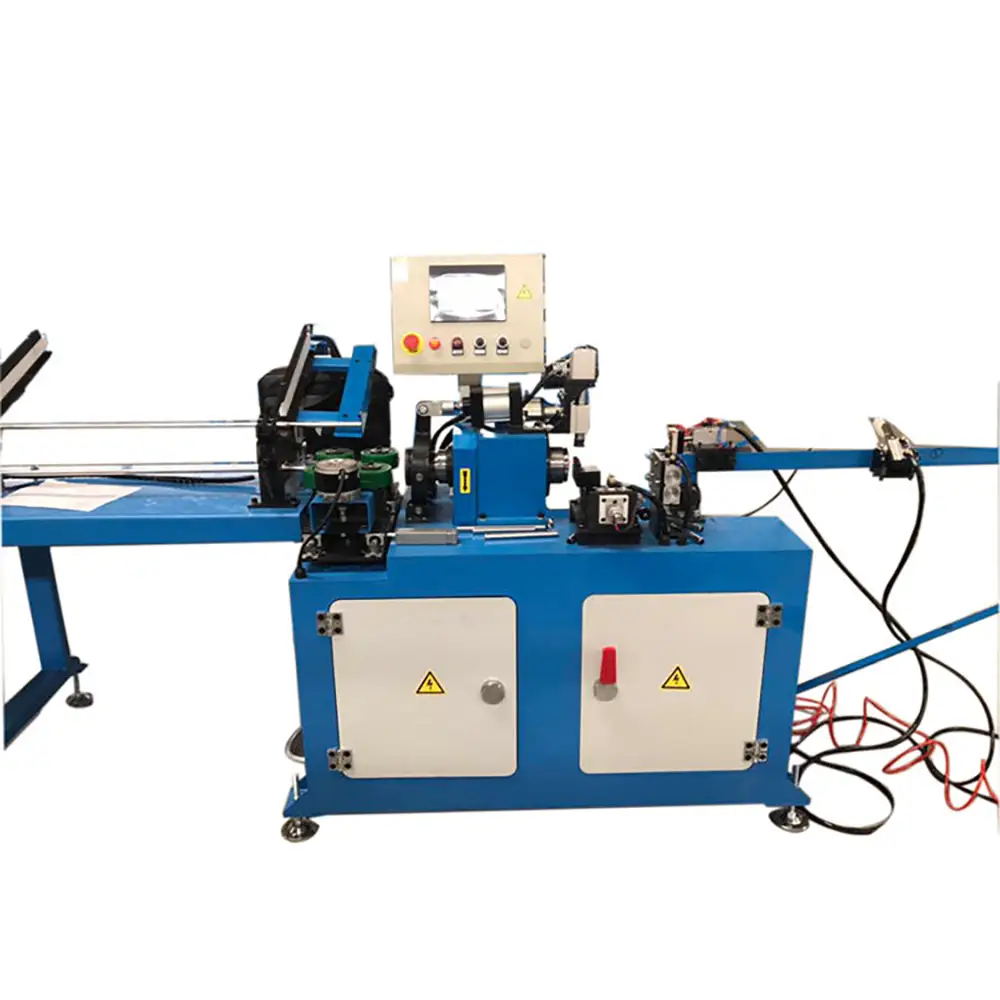
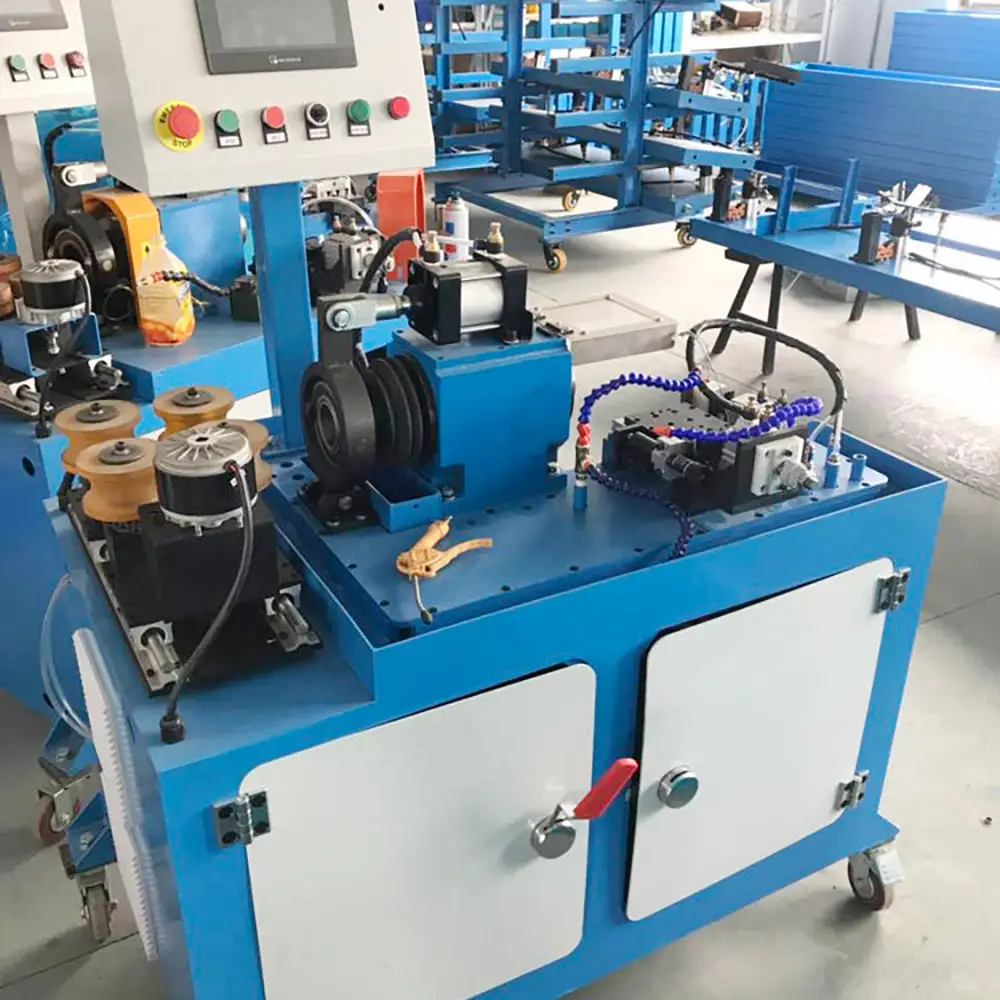
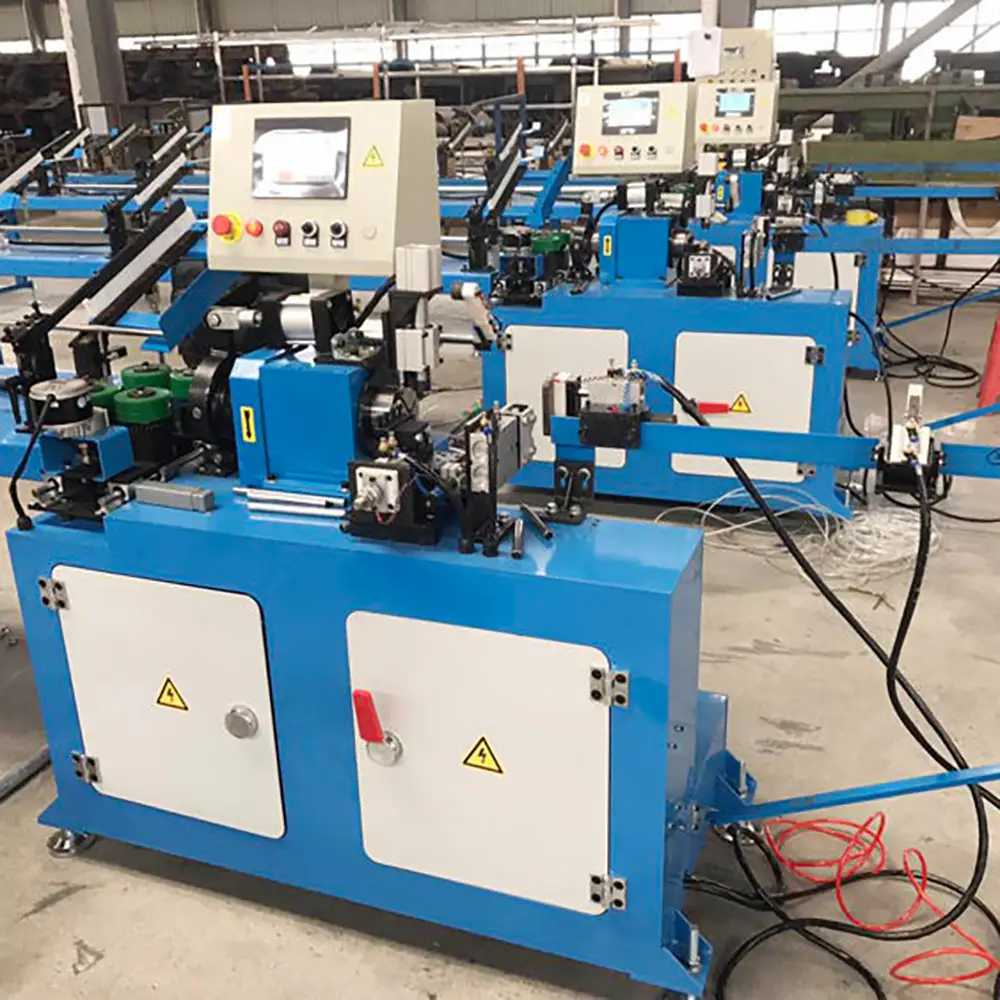
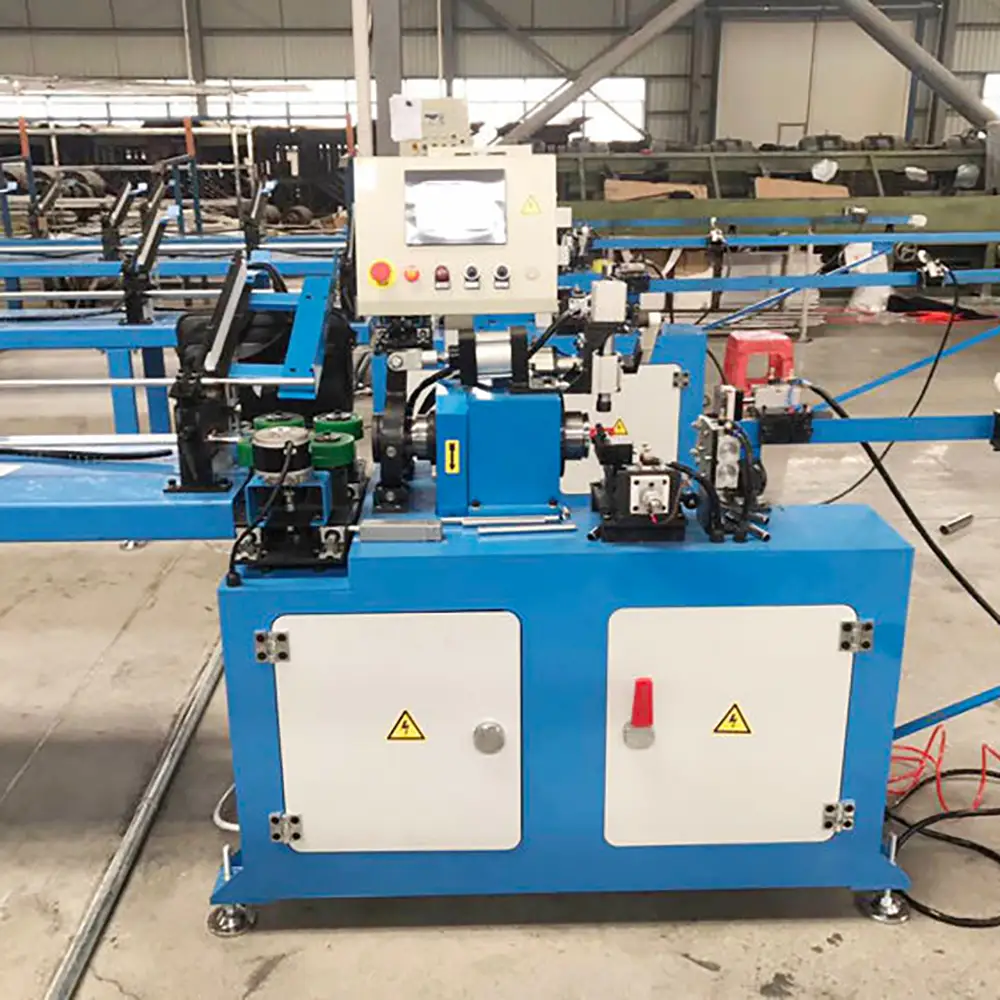
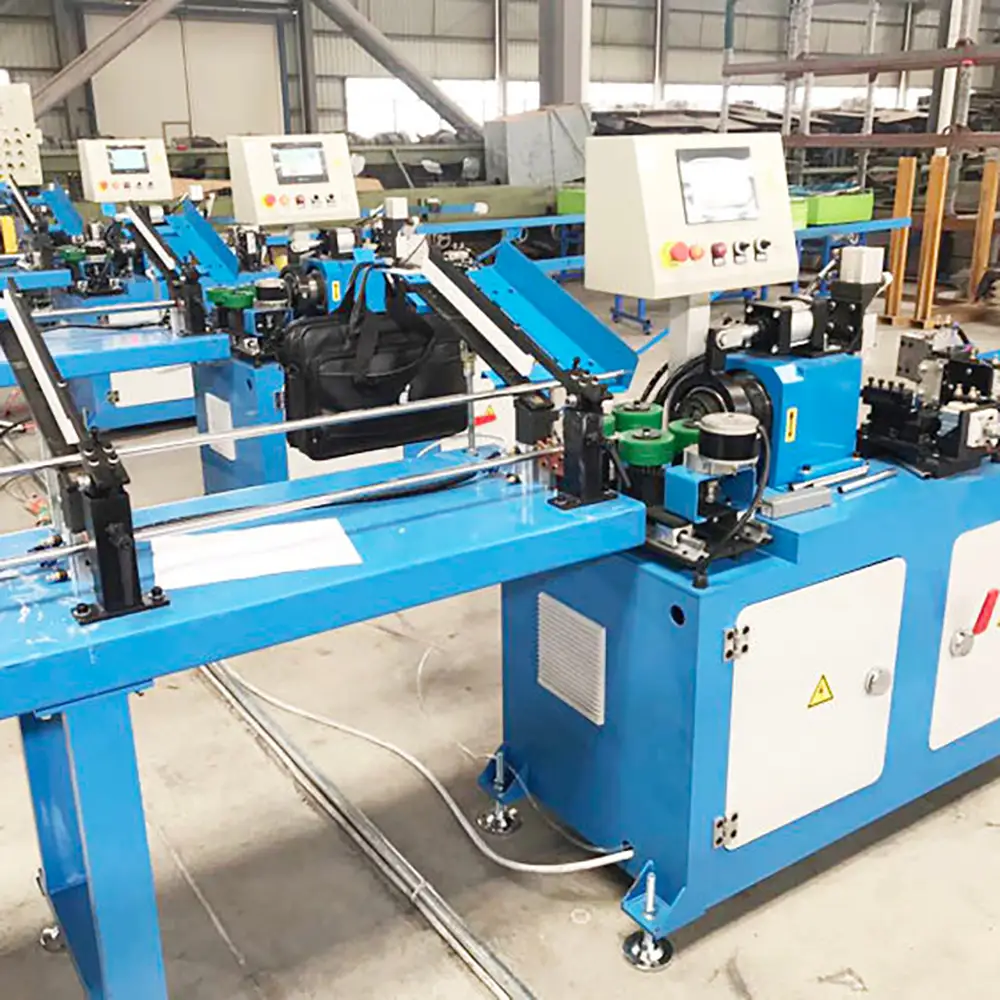
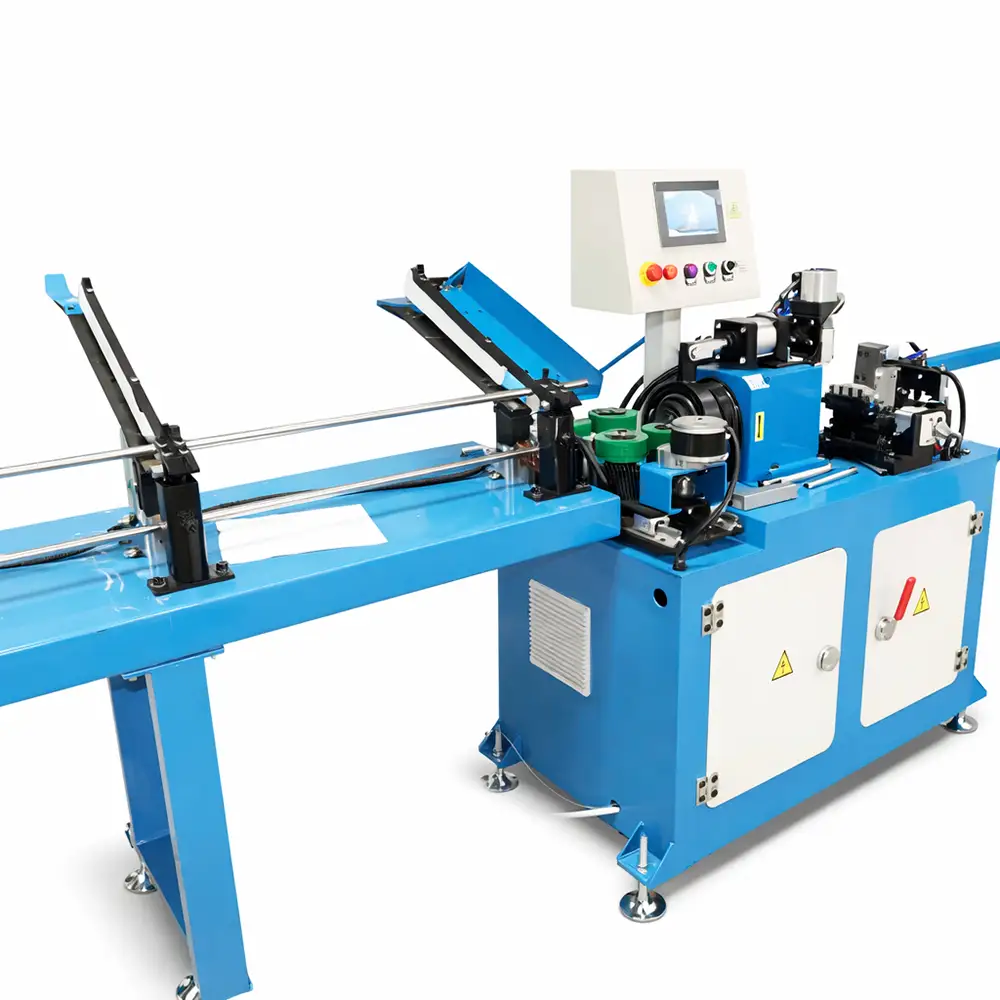
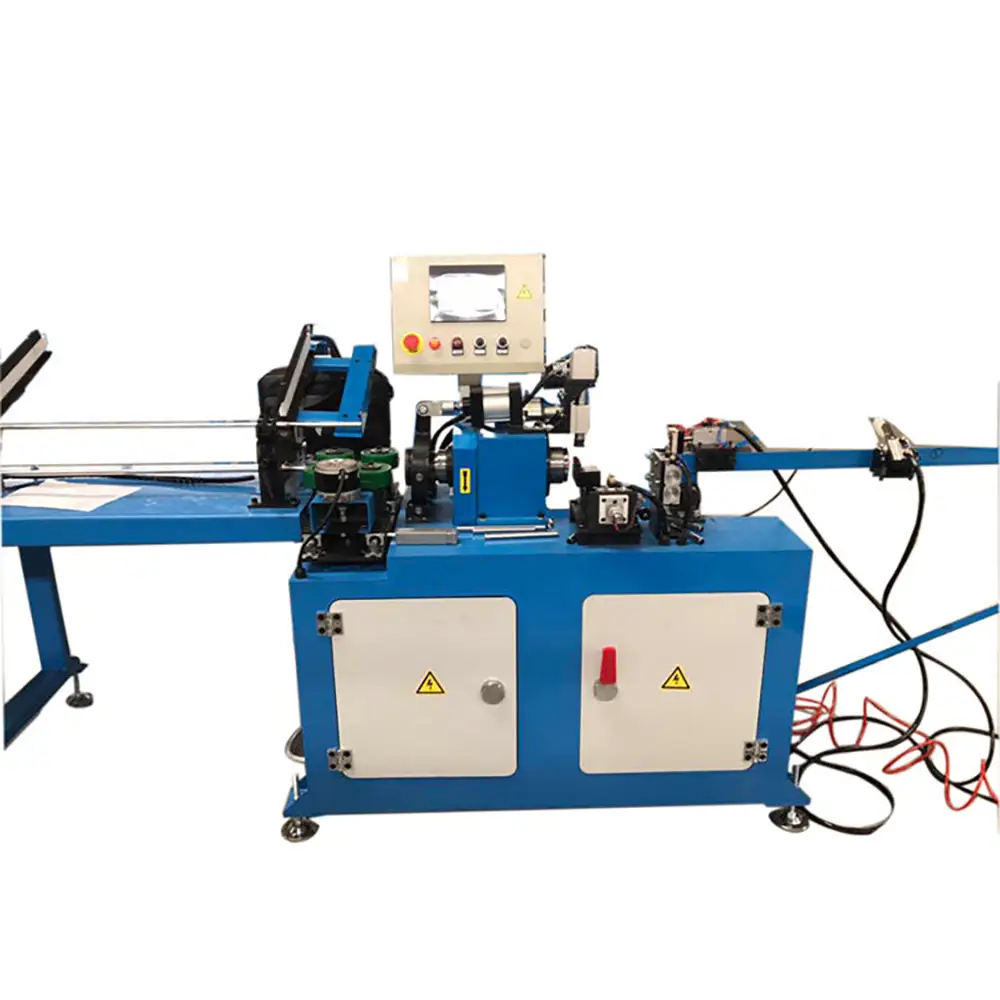
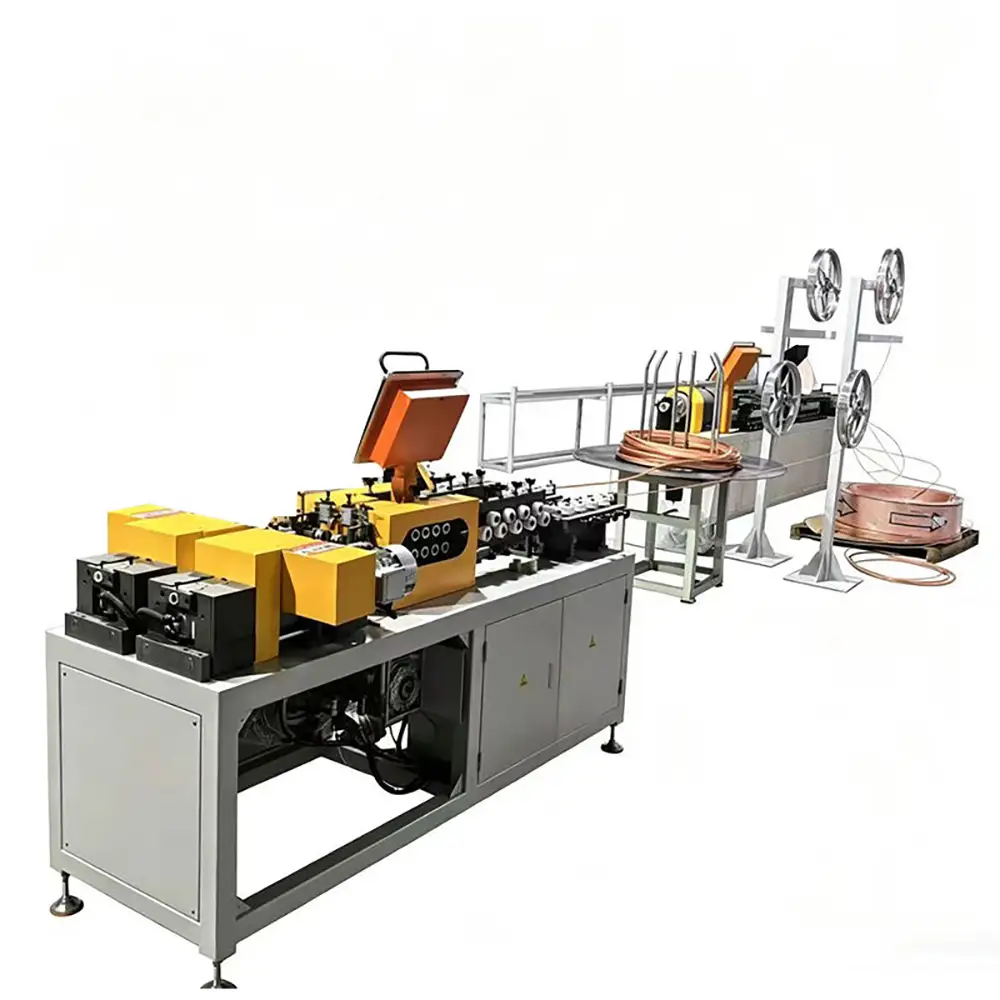
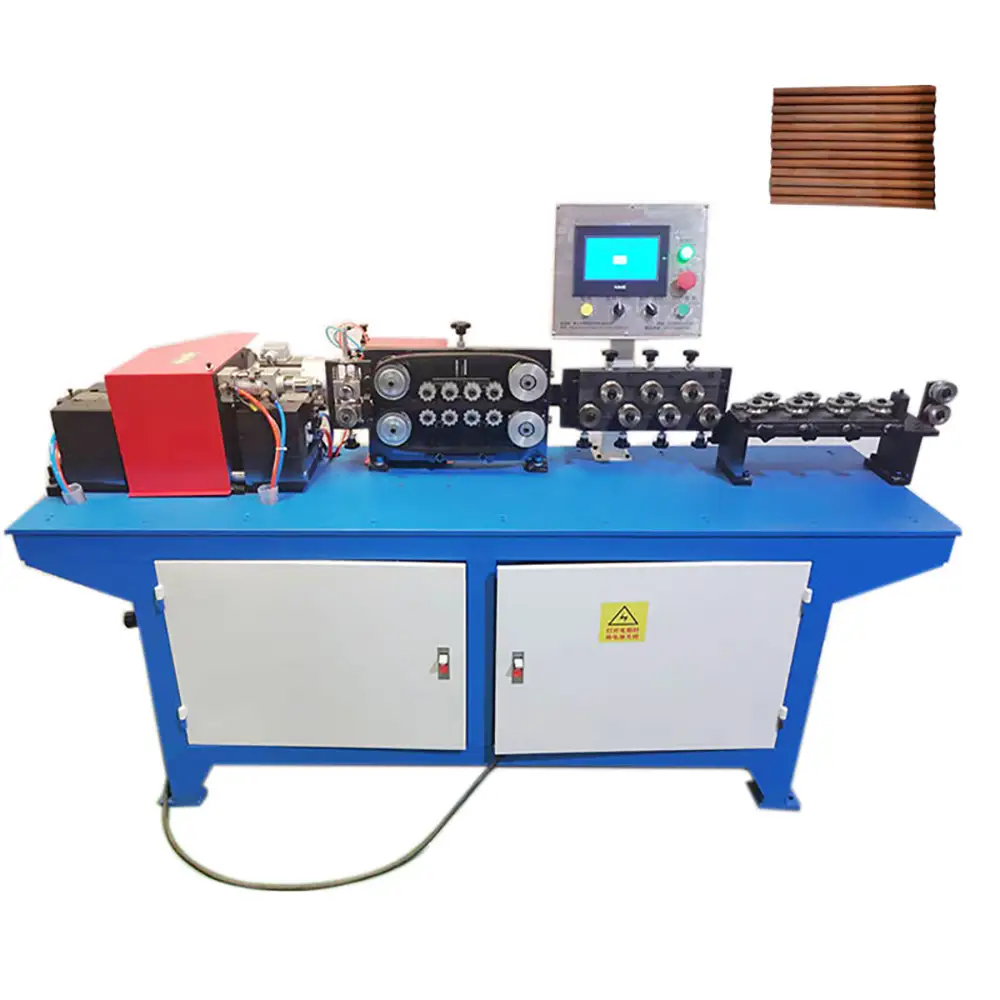
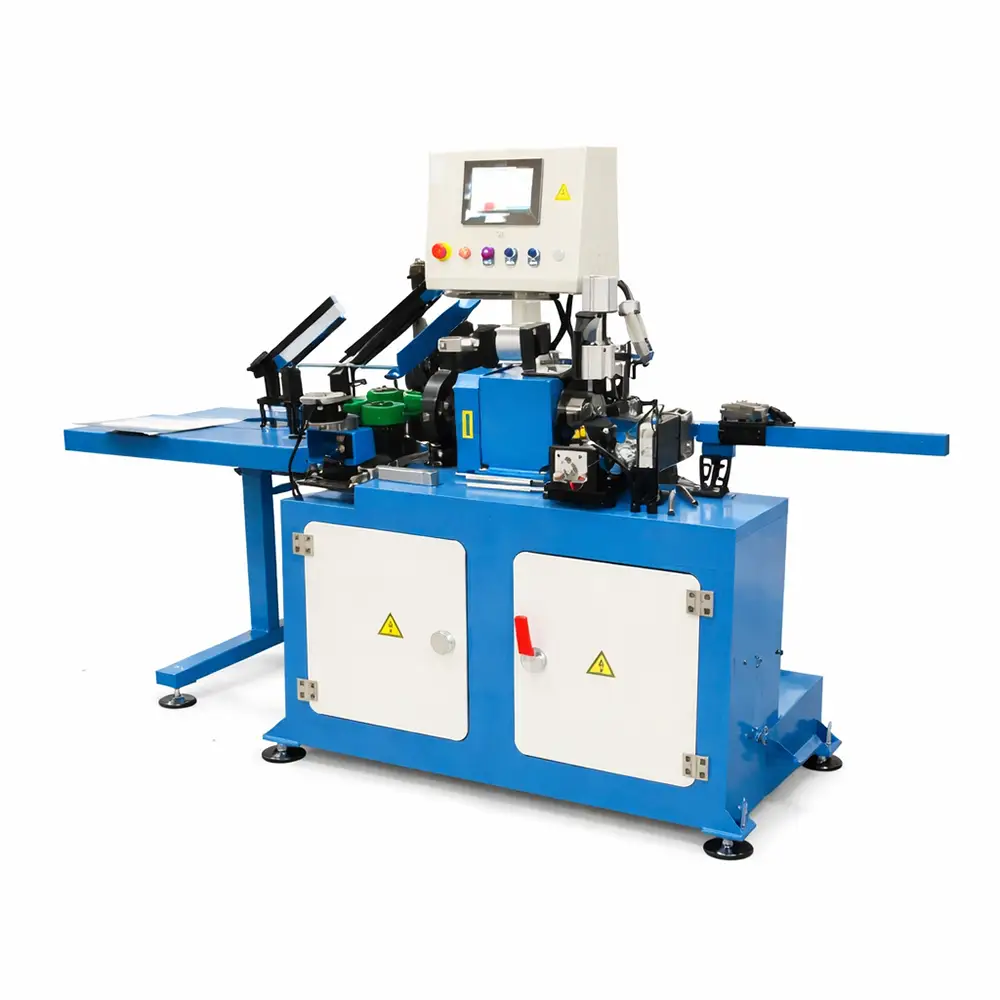
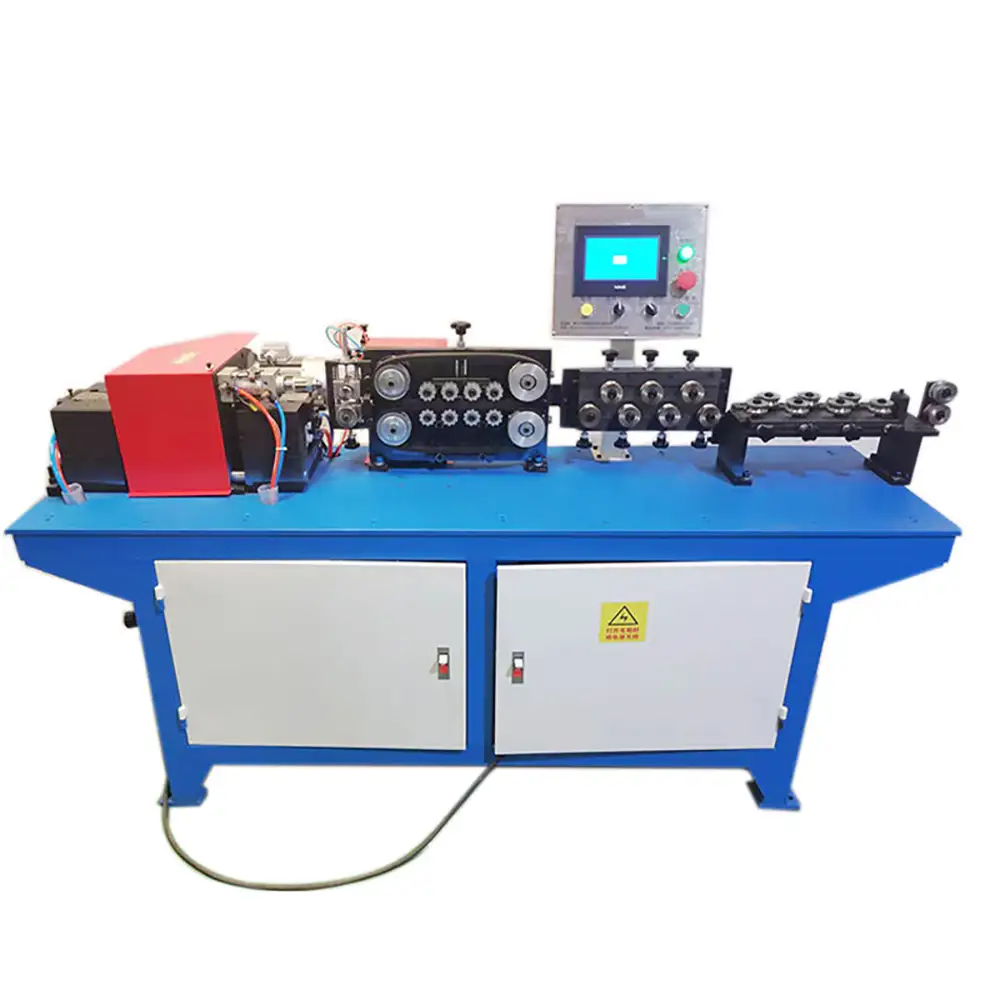
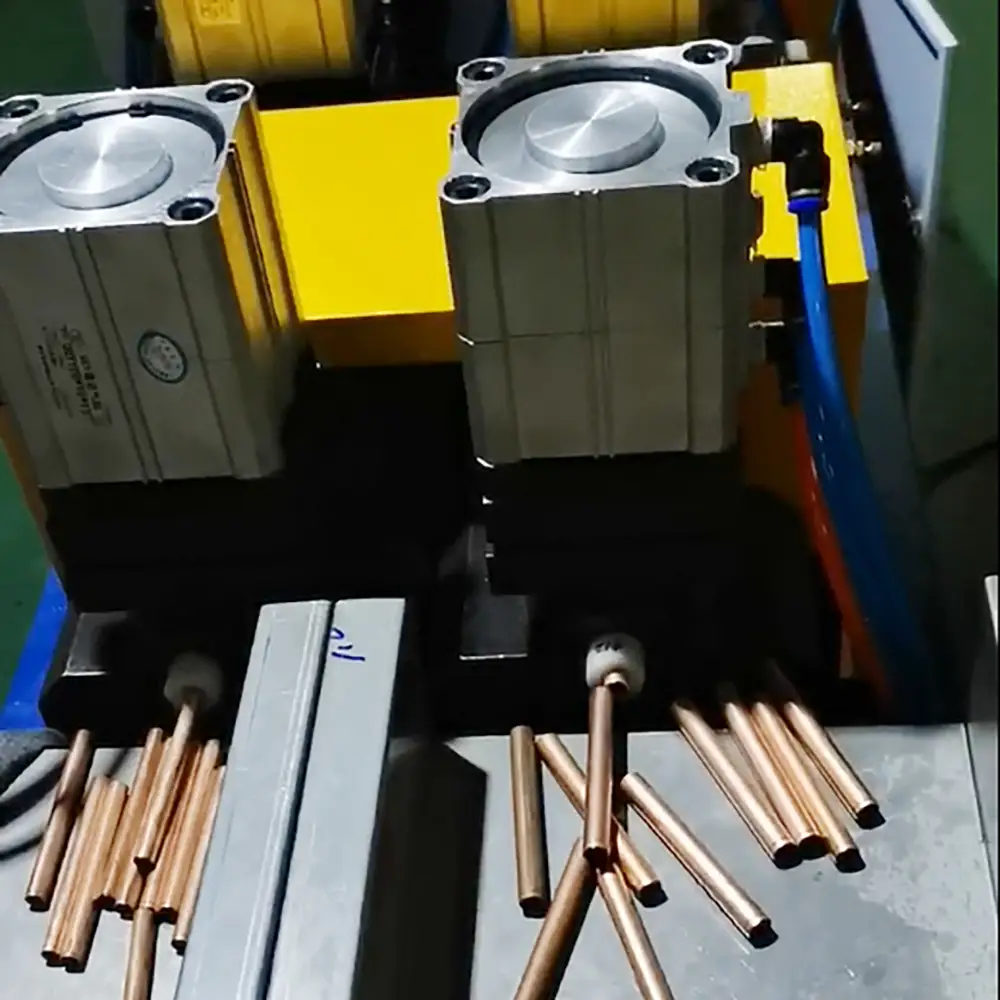
* Feeding method: 4-wheel traction automatic feeding * Sizing method: activities depend on sizing
* Fixed length accuracy: +/- 0.2mm
* Clamping method: pneumatic
* Cutting feed method: pneumatic + hydraulic buffer
* Lathe knife cutting blade: CNC threaded blade or alloy blade (3 * 6 * 200)
* Action mode: 4-wheel traction automatic feeding → signal induction of backing fixed length → clamping → cutting → automatic reset → complete one processing.
*The body is welded and assembled by steel plate heat treatment, the structure is strong and stable. Products Description
|
Item |
Specification |
|
Electrical control |
PLC+ touch screen |
|
Spindle speed |
400/800RPM |
|
Motor power |
1.5kw |
|
Linear guide |
Shangyin 15type |
|
Fixture |
Yonghe |
|
Air source pressure |
0.4-0.6mpa |
|
Voltage |
380/415/ customized |
|
Main structure size |
8500x650x1500 |
|
Weight |
500kg |
Industrial CNC Rotary Tube Cutting Machine for Metal Pipes
The Industrial CNC Rotary Tube Cutting Machine for Metal Pipes is designed for manufacturers that need accurate, repeatable, and efficient cutting of metal tubes and pipes. Combining CNC control, rotary workpiece processing, automatic feeding functions, and saw blade cutting technology, this machine provides a practical solution for industrial tube fabrication and high-volume metalworking applications.
Compared with manual pipe cutting, a CNC-controlled rotary tube cutting system can provide more consistent positioning, cutting length, and production repeatability. It is suitable for factories processing batches of metal pipes, tubes, profiles, and other cylindrical or compatible workpieces where dimensional consistency and production efficiency are important.
The machine can be configured according to tube diameter, wall thickness, material, cutting length, production volume, and automation requirements. Actual processing capability should be confirmed based on the workpiece drawings, material specifications, and required cutting tolerances.
CNC-Controlled Tube Cutting
The CNC control system allows operators to establish cutting parameters and production sequences according to the workpiece requirements. Depending on the machine configuration, functions may include automatic feeding, positioning, clamping, rotary movement, cutting, and repeated cycle operation.
CNC control reduces the need for repeated manual measurement and positioning. Once the correct parameters and tooling are established, the machine can maintain a consistent production process across multiple workpieces.
This makes the equipment particularly useful for manufacturers producing standardized tube components, where repeatability is more important than simply performing individual manual cuts.
Rotary Cutting Structure
The rotary cutting design is suitable for processing round tubes and pipes and can be adapted to specific metal profiles according to the machine configuration. The workpiece is securely positioned and clamped before the saw blade performs the cutting operation.
Rotary tube processing can help maintain stable contact between the cutting tool and workpiece. Proper workholding is especially important when processing thin-wall tubes, small-diameter pipes, or materials that may deform under excessive clamping pressure.
For applications involving square, rectangular, oval, or specially shaped profiles, the appropriate fixture, blade, and machine configuration should be confirmed in advance.
Automatic Saw Blade Cutting
The machine uses a saw blade cutting method for separating metal tubes and pipes into specified lengths. Saw cutting is widely used for applications where clean, consistent cuts and efficient batch production are required.
The saw blade selection depends on the material being processed. Carbon steel, stainless steel, aluminum, copper, brass, and other metals have different cutting characteristics, so blade type, tooth configuration, cutting parameters, lubrication, and workholding should be selected according to the specific application.
For demanding production environments, proper blade selection can also help extend tool life and maintain consistent cut quality.
Precision Metal Pipe Processing
Precision is a key consideration in CNC tube cutting. The machine is designed to provide repeatable positioning and cutting for industrial metal pipe applications. CNC-controlled feeding and positioning can reduce dimensional variation caused by manual operation.
Actual cutting tolerance depends on many factors, including tube material, diameter, wall thickness, cutting length, blade condition, machine configuration, feeding accuracy, clamping method, and production environment.
For applications requiring strict dimensional tolerances, customers should provide technical drawings or sample workpieces so the appropriate machine configuration and cutting process can be evaluated.
Wide Range of Metal Tube Applications
The Industrial CNC Rotary Tube Cutting Machine can be used for various metal tube and pipe processing applications. Depending on the configuration, common materials may include carbon steel, stainless steel, aluminum, copper, brass, and other compatible metals.
Typical applications include:
Automotive tube components
Motorcycle components
Bicycle frames and parts
Furniture tubes
Metal shelving
HVAC and refrigeration components
Plumbing and piping components
Industrial equipment
Agricultural machinery
Construction components
Steel fabrication
Electrical equipment
General metalworking
Custom tube fabrication
Different materials require different cutting parameters and tooling. Testing with representative samples is recommended when processing a new material or unusual tube specification.
Automatic Feeding and Production Efficiency
For production environments, automatic feeding can significantly reduce repetitive manual handling. The tube is supplied to the cutting area, positioned according to the programmed requirements, clamped, and processed through the cutting cycle.
Depending on the configuration, the system can support repeated cutting operations with reduced operator intervention. This is particularly valuable for factories producing multiple pieces of the same length or standardized tube components.
Actual production speed and cycle time vary according to tube diameter, wall thickness, material, cut length, loading method, blade selection, machine configuration, and operator workflow. Production testing is recommended when a specific output target is required.
Stable Workpiece Clamping
Proper clamping is essential for accurate tube cutting. The machine can be configured with a suitable workholding system to secure the tube during feeding and cutting.
Stable clamping helps reduce movement and vibration during the cutting process. This can contribute to better cut consistency and reduce the risk of workpiece deformation.
For thin-wall tubing, lightweight aluminum tubing, copper pipe, or small-diameter tubes, the clamping pressure should be carefully matched to the material and tube structure.
Clean and Consistent Cutting
Saw blade cutting can provide a practical solution for producing repeatable tube sections. Depending on the material, blade, and cutting parameters, the finished edge may require minimal secondary processing.
For applications where the cut edge must meet specific finishing requirements, additional operations such as deburring, chamfering, cleaning, or end finishing may be integrated into the production process.
The required finishing method depends on the final application and customer quality requirements.
CNC Tube Cutting for Industrial Production
The machine is suitable for small-batch, medium-volume, and larger-scale industrial production depending on the selected configuration. CNC programming allows production parameters to be adjusted for different tube lengths and cutting jobs.
Manufacturers can use the same basic machine platform for multiple production requirements by changing cutting programs, fixtures, blades, and other application-specific components.
For factories producing different tube specifications, it is important to evaluate the complete range of required diameters, wall thicknesses, lengths, and materials before selecting the machine.
Production Workflow
A typical CNC tube cutting workflow includes material loading, tube feeding, positioning, clamping, CNC-controlled cutting, workpiece discharge, and quality inspection.
Before production, the operator should verify:
Tube material and dimensions
Required cutting length
Blade selection
Clamping condition
CNC cutting parameters
Lubrication or cooling requirements
Finished cut quality
This structured workflow helps improve production consistency and makes the machine easier to integrate into an industrial fabrication environment.
Machine Configuration and Customization
Every tube cutting application has different requirements. Machine configuration can be customized according to tube size, cutting length, material type, production volume, automation level, and factory layout.
Optional features may include automatic feeding, material storage, collection systems, customized fixtures, measuring systems, chip collection, and production-line integration, depending on the machine design.
Customers can provide tube drawings, material specifications, required lengths, target production volume, and sample workpieces for machine selection and engineering evaluation.
Maintenance and Blade Management
Routine maintenance helps keep the CNC rotary tube cutting machine operating consistently. Operators should regularly inspect the saw blade, clamping components, feeding mechanism, guides, drive system, electrical components, and lubrication points.
The saw blade is a consumable component and should be replaced or serviced when cutting performance decreases. Continuing to use a worn or damaged blade can negatively affect cut quality and machine operation.
Keeping the cutting area clean and removing chips and metal debris also helps maintain reliable operation.
Safety Considerations
Metal tube cutting machines contain moving mechanisms and rotating cutting tools, so proper operating procedures are essential. Operators should use appropriate personal protective equipment and follow the machine manufacturer's operating instructions.
Guards, emergency-stop systems, interlocks, chip protection, and other safety features should be selected according to the machine configuration and applicable workplace regulations.
Before production begins, operators should receive appropriate training and verify that the workpiece is correctly positioned and securely clamped.
OEM and ODM Manufacturing Support
For distributors, machinery dealers, fabrication companies, and industrial manufacturers, OEM and ODM services can provide greater flexibility. Machine specifications, fixtures, feeding systems, electrical configurations, branding, and production-line integration can be developed according to project requirements.
As a professional metalworking equipment supplier, we can evaluate your tube material, dimensions, production requirements, cutting length, and automation needs to help determine a suitable CNC tube cutting solution.
Why Choose Us
1. Industrial CNC Technology
CNC control provides repeatable positioning and cutting for professional metal tube production.
2. Automatic Production Options
Automatic feeding and cycling can reduce repetitive manual handling and improve production workflow.
3. Precision Saw Blade Cutting
The saw blade cutting system is suitable for accurate and repeatable tube and pipe separation.
4. Flexible Material Applications
The machine can be configured for compatible carbon steel, stainless steel, aluminum, copper, brass, and other metal tubes.
5. Customized Machine Configuration
Tube diameter, wall thickness, cutting length, tooling, fixtures, and automation can be evaluated according to your application.
6. B2B Production Support
We support machinery distributors, manufacturers, workshops, and industrial production projects.
7. OEM and ODM Services
Customized machine specifications, branding, fixtures, and production solutions are available according to project requirements.
8. Application-Based Engineering
Providing drawings, material information, samples, and production targets allows us to recommend a more suitable machine configuration.
FAQs
1. What materials can this CNC tube cutting machine process?
Depending on the configuration, it can be used for compatible carbon steel, stainless steel, aluminum, copper, brass, and other metal tubes. Material-specific blades and cutting parameters should be selected.
2. Is this an automatic pipe cutting machine?
The machine can be configured with automatic feeding, positioning, clamping, and cutting functions. The actual automation level depends on the selected configuration.
3. Can it cut round metal pipes?
Yes. The rotary structure is particularly suitable for round tubes and pipes. Fixtures should be selected according to the tube dimensions.
4. Can it process square or rectangular tubes?
Some configurations can process square or rectangular profiles. The exact capability depends on the machine structure, tooling, and workholding system.
5. Is the cutting length programmable?
CNC control can support programmable cutting operations depending on the machine configuration. Multiple cutting lengths can be managed through appropriate production programs.
6. How accurate is the cutting?
Actual cutting accuracy depends on material, tube size, wall thickness, blade condition, feeding system, clamping, machine configuration, and operating conditions. Specific tolerances should be confirmed according to the application.
7. Can it cut thin-wall tubes?
It can be configured for suitable thin-wall tube applications, but clamping force, blade selection, support, and cutting parameters are particularly important to prevent deformation.
8. Does the machine require an operator?
The operator is generally responsible for loading material, setting parameters, monitoring operation, and performing quality checks. The required operator involvement depends on the automation configuration.
9. Can the machine be customized?
Yes. Machine configuration can be evaluated according to tube diameter, wall thickness, material, cutting length, production volume, automation requirements, and factory layout.
10. What information should I provide for a quotation?
Please provide the tube material, outer diameter or profile dimensions, wall thickness, required cutting lengths, production volume, desired automation level, and drawings or samples if available.
Prev:
Automatic Rotary Pipe Tube Cutting Machine Metal Stainless Steel Saw Blade Tube Cutter
Next:
Tube Copper Pipe Brass Copper Aluminum Cutting Machine
TAG:
Pipe Processing Machine,
Tube Processing Machine,
Industrial Pipe Processing Machine,
Automatic Tube Processing Machine,
Metal Tube Processing Equipment,
Metal Pipe Processing Equipment,
Industrial Tube Processing Machine,
Tube Cutting Equipment,
Pipe Cutting Equipment,
Metal Tube Cutting Machine,
Stainless Steel Tube Cutting Machine,
Metal Pipe Cutting Machine,
Automatic Tube Cutting Machine,
Steel Tube Cutting Machine,
Automatic Pipe Cutting Machine,
CNC Tube Processing Machine,
CNC Tube Cutting Machine,
Round Pipe Cutting Machine,
Round Tube Cutting Machine,
Precision Tube Cutting Machine,
Copper Tube Cutting Machine,
Aluminum Tube Cutting Machine,
Precision Metal Cutting Machine,
CNC Metal Pipe Cutter,
CNC Metal Tube Cutter,
Automatic Metal Tube Cutter,
Metal Tube Cutting Equipment,
CNC Pipe Cutting Machine,
CNC Tube Cutter,
CNC Pipe Cutter,
Related Category:
Industrial CNC Rotary Tube Cutting Machine, CNC Rotary Tube Cutting Machine, Metal Pipe Cutting Machine, Automatic Tube China, suppliers, manufacturers, factory, customized, wholesale, quotation, made in China