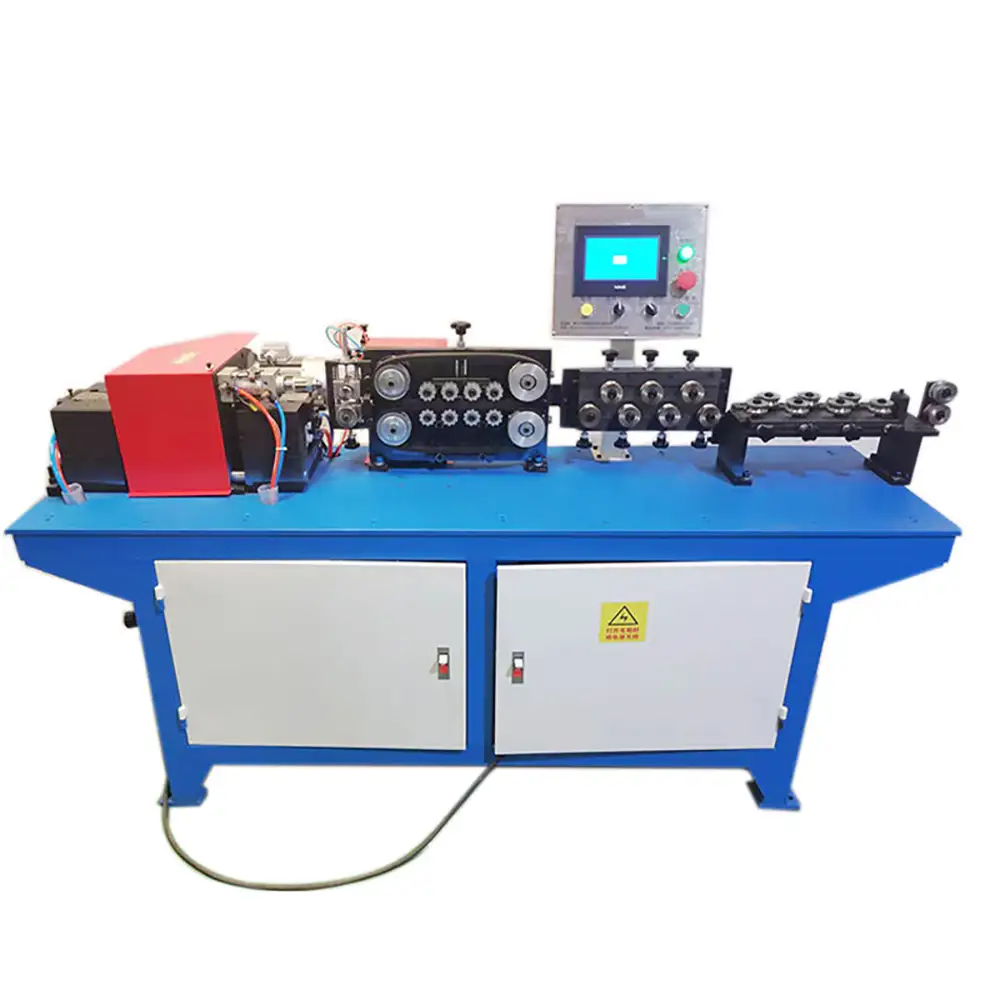
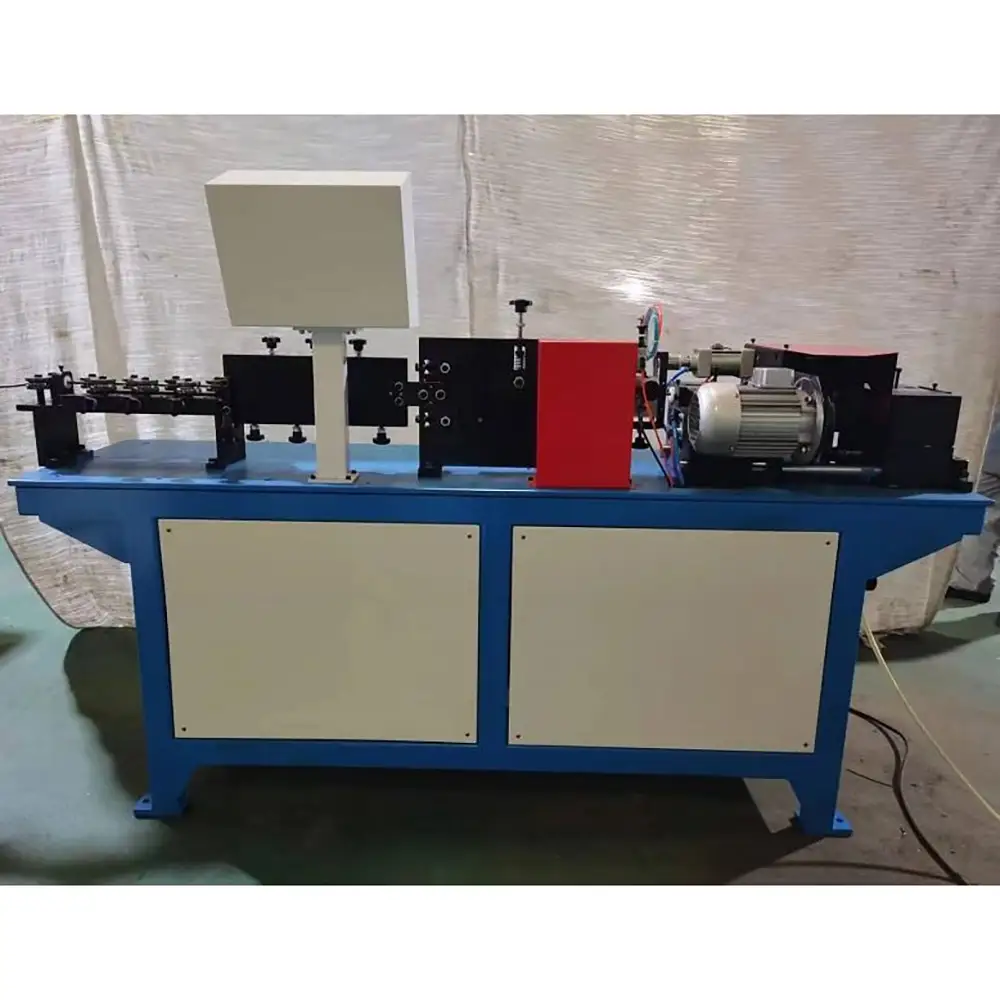
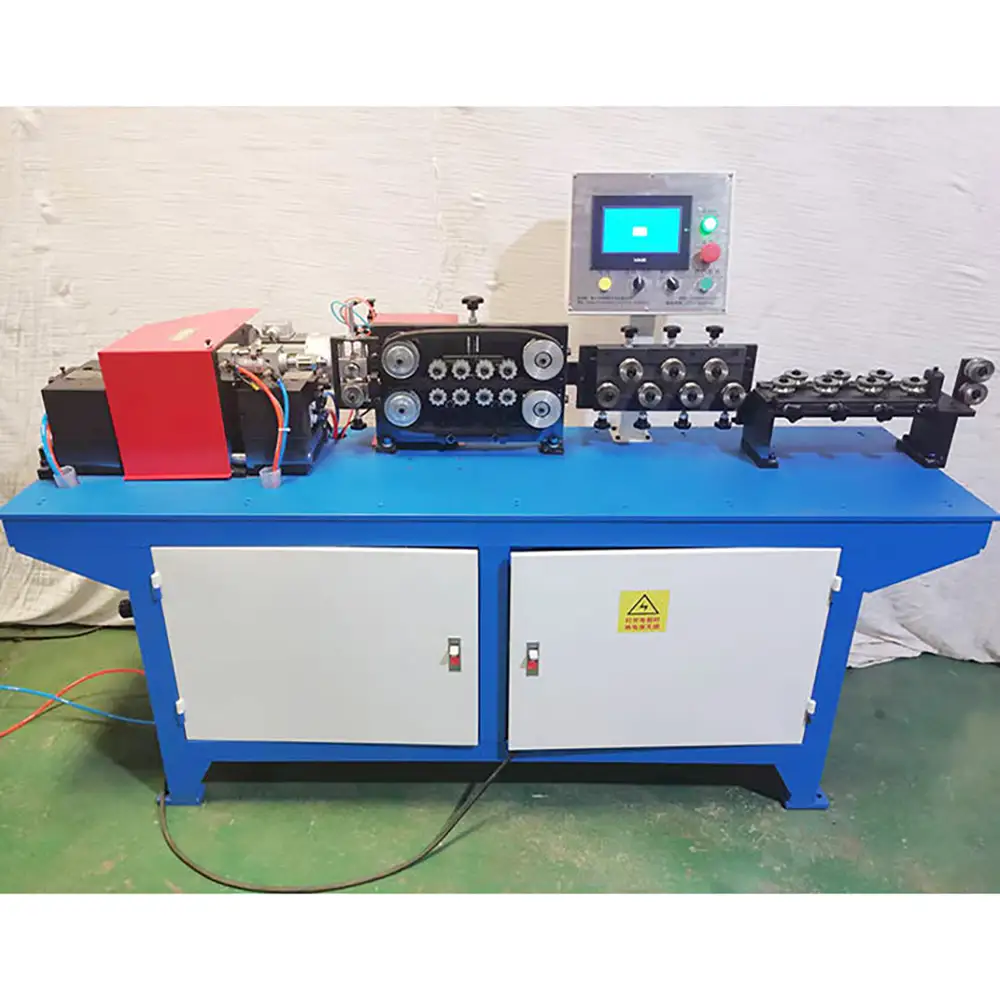
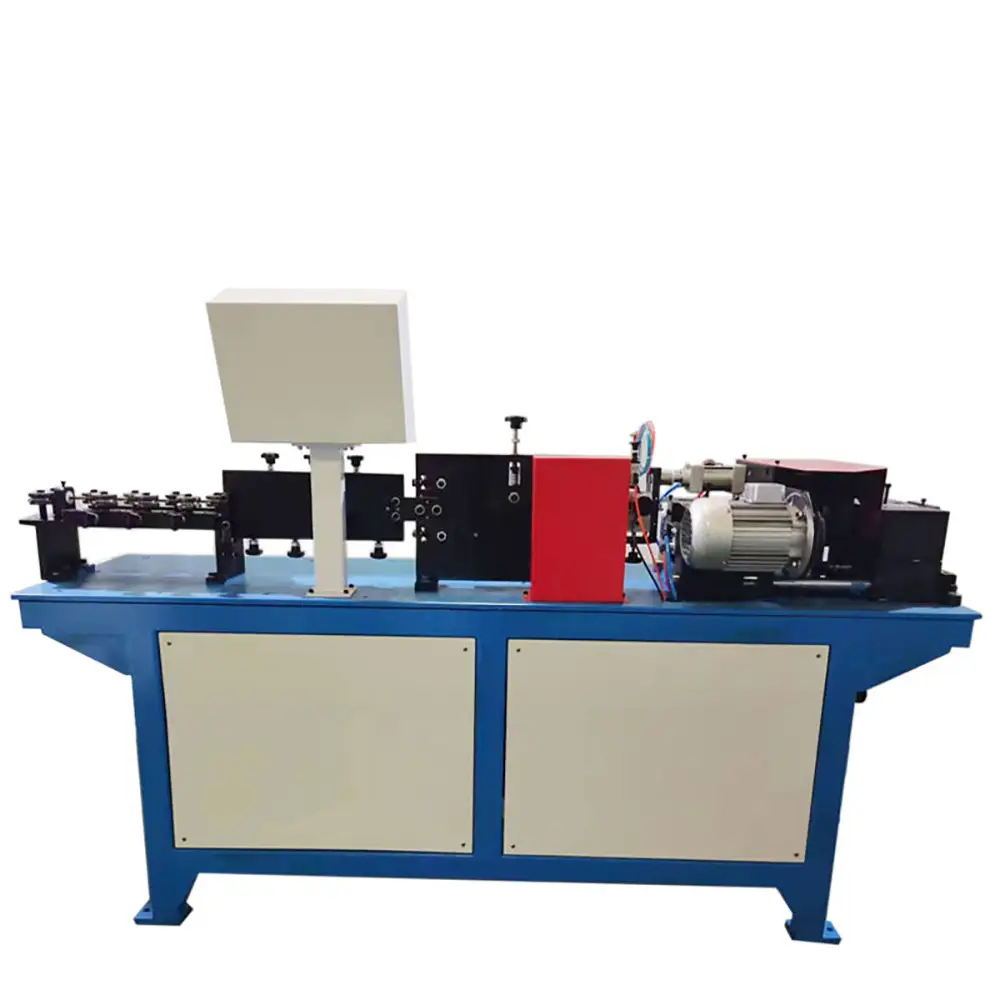
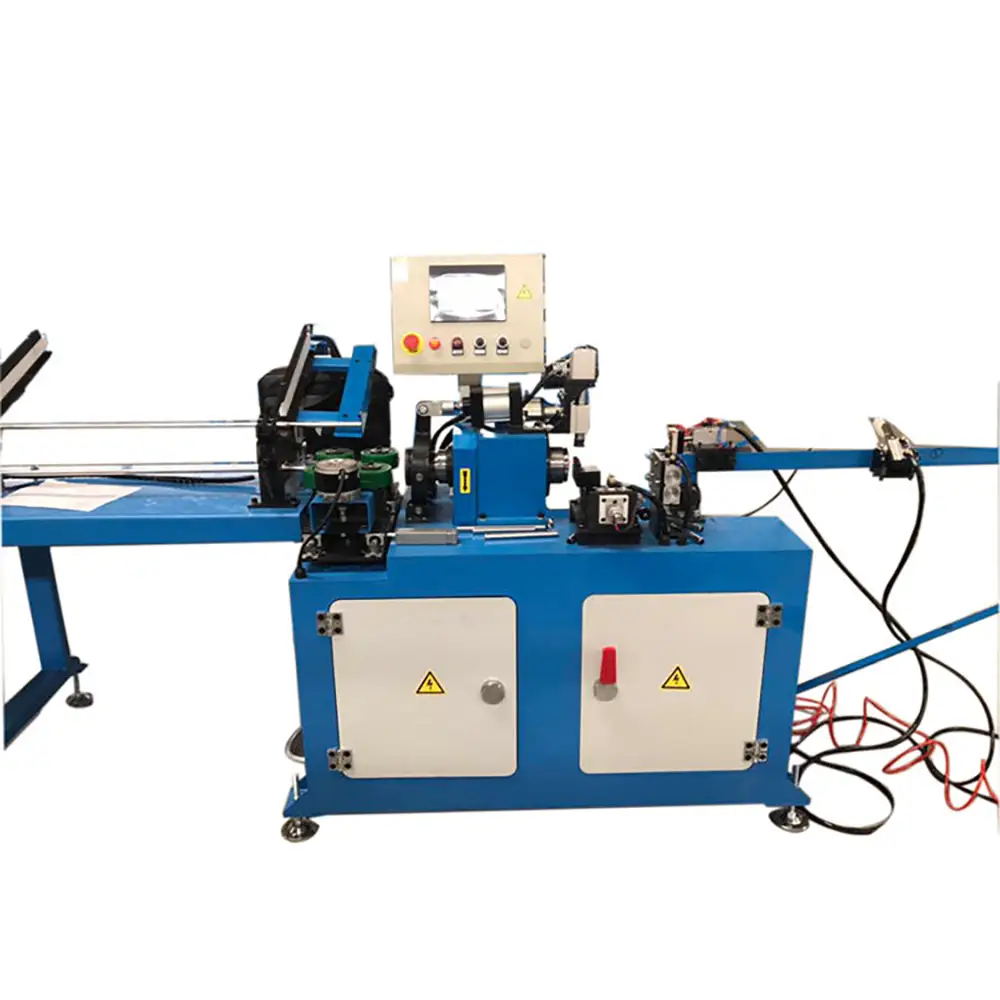
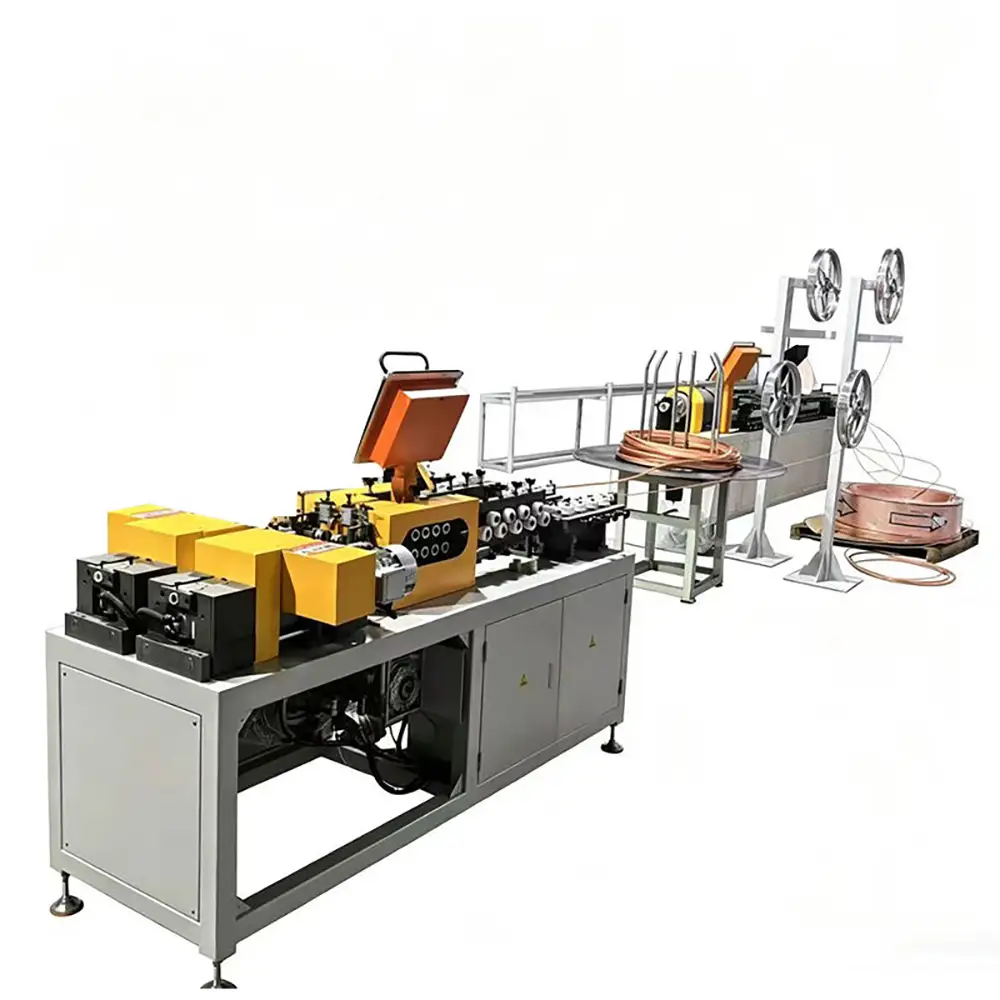
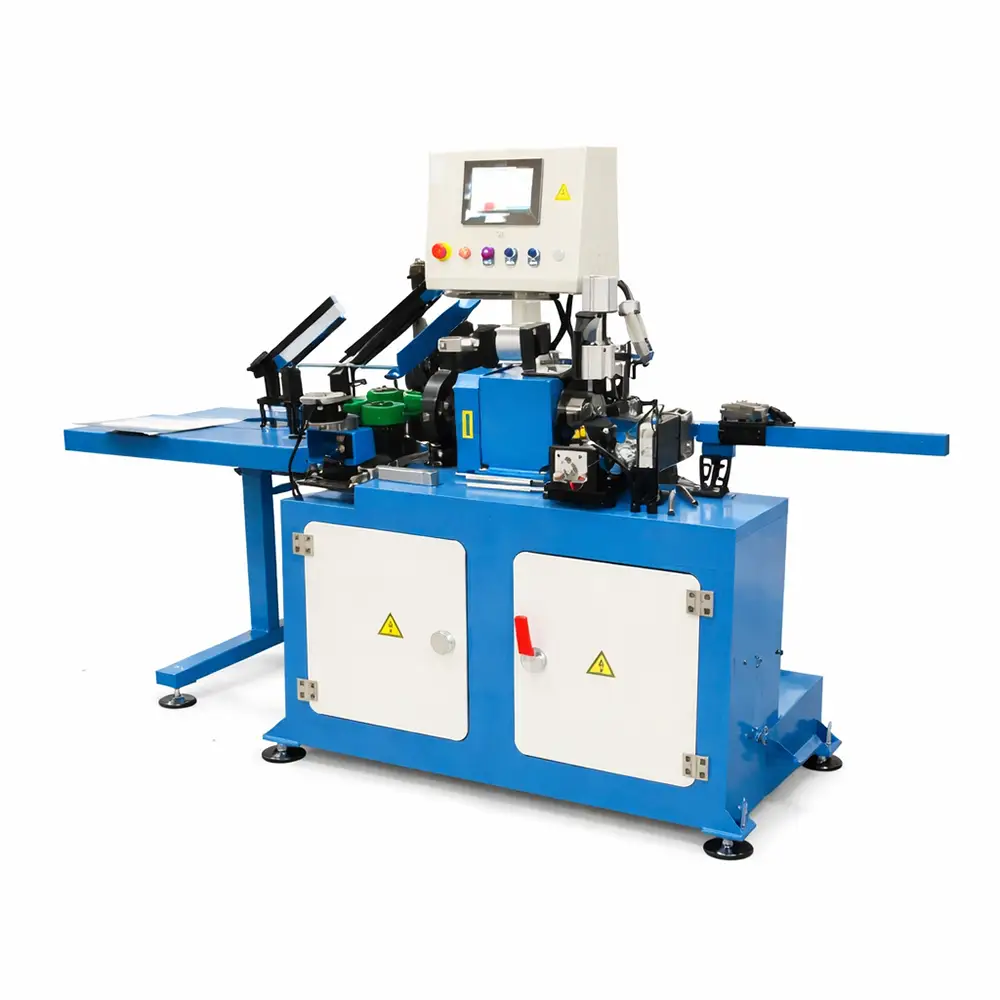
|
model |
18B |
|
Applicable pipe |
Copper tube, |
|
Pipe diameter |
Φ4-Φ19mm |
|
Pipe wall thickness |
0.3-1.0mm |
|
Cutting length |
55 mm minimum, unlimited |
|
Feeding length |
60mm-any lenght |
|
working pressure |
0.6-0.8MPa |
|
Cutting blade specification |
φ32.2*Φ15*10.2 |
|
Way of working |
Automatic feeding, fixed length encoder |
|
way to control |
LCD display frequency, PLC control, frequency conversion operation |
|
moulds |
Clamping die, guide sleeve, feeding belt, straightening wheel |
|
Motor Power |
2KW, 3 phase |
|
size |
2150*650*1350mmmm
|
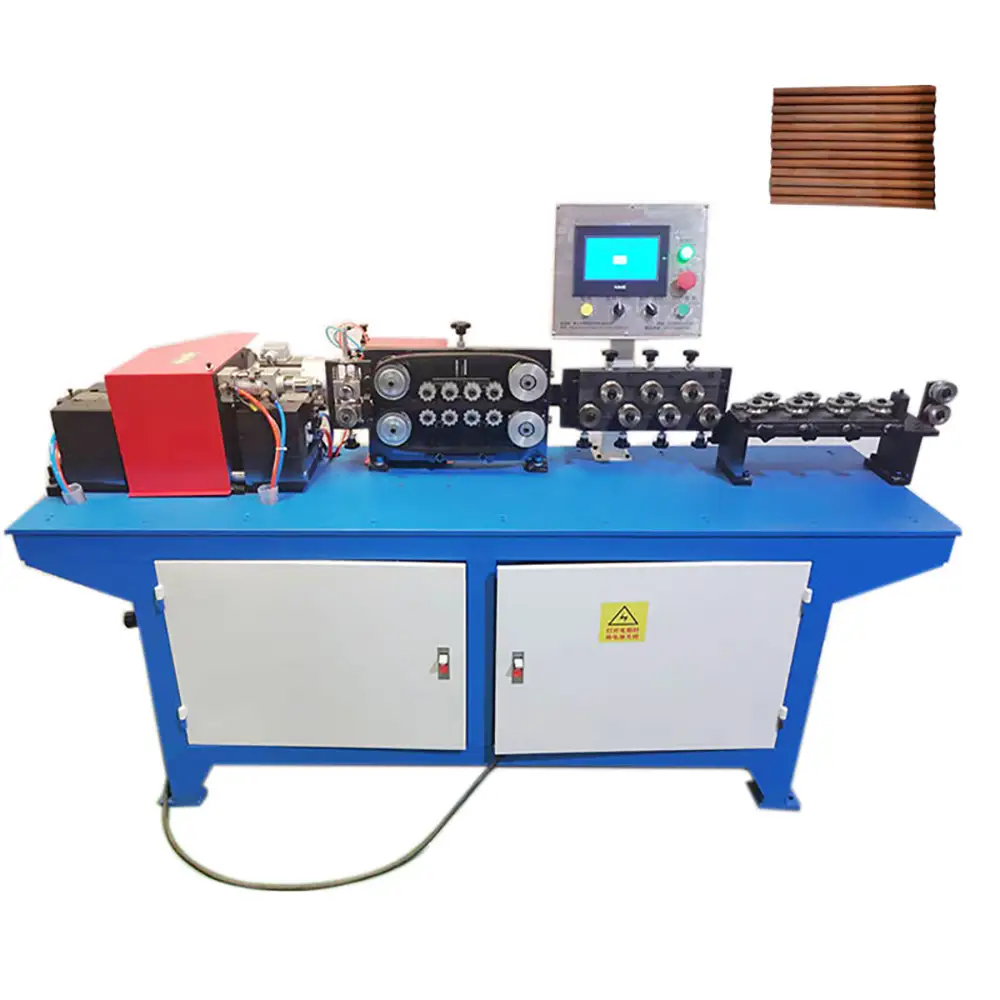
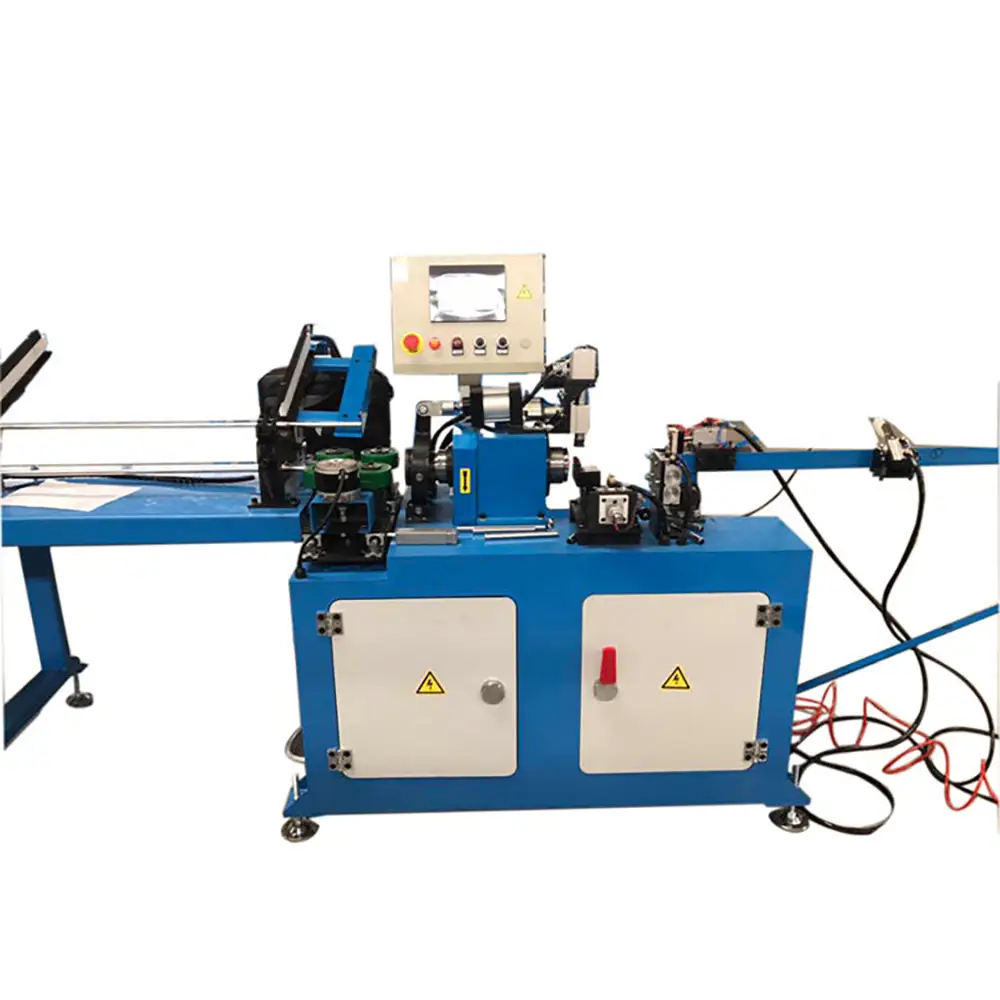
Brass Copper Aluminum Small Diameter Tube Cutting Machine
The Brass Copper Aluminum Small Diameter Tube Cutting Machine is designed for manufacturers that need accurate and repeatable cutting of small-diameter non-ferrous metal tubes and pipes. It is suitable for compatible copper, brass, and aluminum tubing used in industrial manufacturing, HVAC, refrigeration, plumbing, electrical components, automotive parts, furniture, and general metal fabrication.
Small-diameter tubes require careful control during cutting because their relatively small cross-section can make them more sensitive to vibration, deformation, burr formation, and inaccurate positioning. A properly configured tube cutting machine can address these requirements through stable workholding, controlled feeding, suitable cutting tools, and application-specific cutting parameters.
Copper, brass, and aluminum also have different mechanical properties and cutting characteristics. Therefore, one cutting setup should not automatically be assumed to be suitable for every material. Blade selection, clamping method, cutting parameters, lubrication, and feeding conditions should be evaluated according to the actual tube specification.
The machine can be configured according to tube diameter, wall thickness, material, cutting length, production volume, and required automation level. Actual processing capacity and cutting tolerance should be confirmed based on the customer's workpieces and production requirements.
Small Diameter Tube Cutting
Small-diameter tubing is used in many precision manufacturing applications. Compared with larger pipes, small tubes can be more sensitive to clamping pressure and movement during cutting.
Stable workholding is therefore essential. The tube should be positioned accurately and securely while avoiding excessive force that could flatten or deform the tubing.
The machine can be evaluated for different small tube diameters and wall thicknesses. For particularly thin-wall tubing, specialized fixtures, guides, or support systems may be required.
Customers should provide the minimum and maximum tube diameter and wall thickness when selecting the machine.
Copper Pipe Cutting
Copper tubing is widely used in HVAC, refrigeration, plumbing, heat-exchange equipment, electrical applications, and industrial systems.
Copper is relatively soft and ductile, which means improper clamping or unsuitable cutting conditions can affect the tube shape or finished edge. Proper tooling and workholding are important for maintaining consistent results.
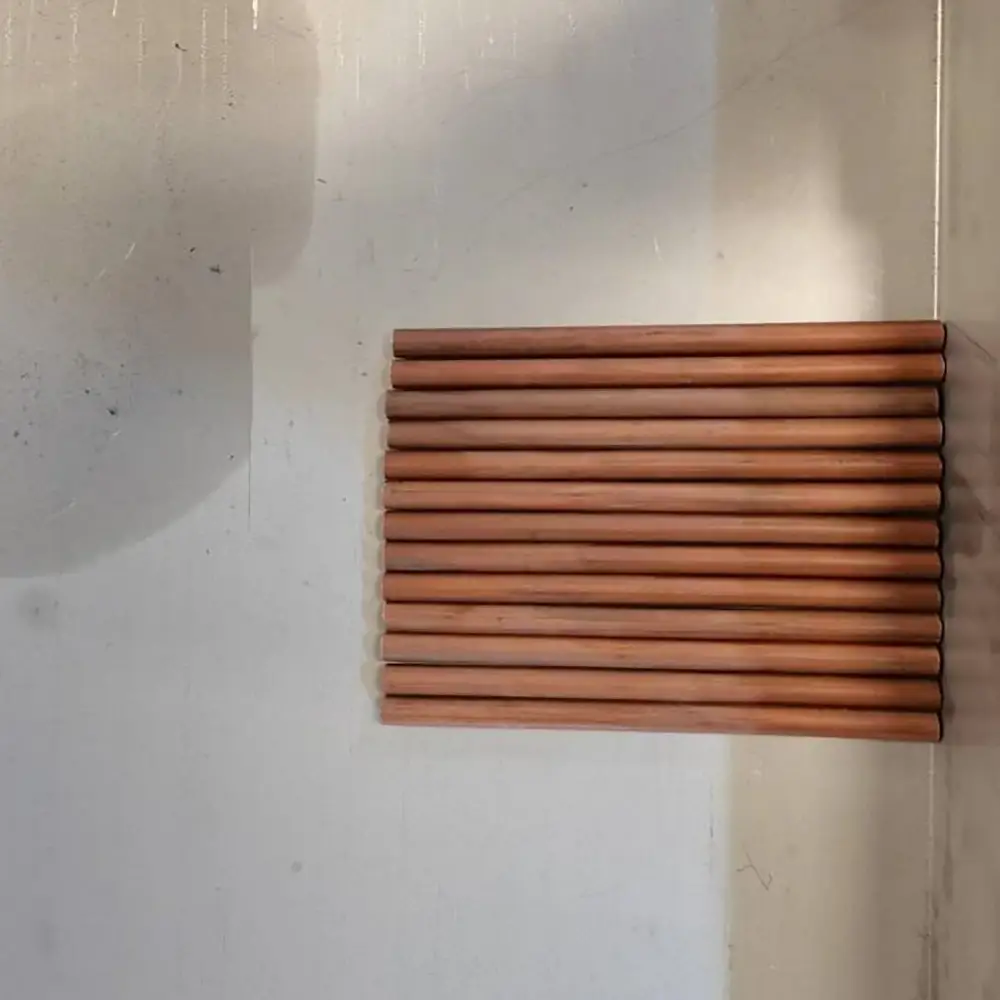
The machine can be configured for suitable copper pipe and tube applications, including batch cutting into specified lengths.
For refrigeration or assembly applications, the finished tube end may need to meet specific requirements for roundness, burr level, and cleanliness. Secondary deburring or end finishing can be considered when required.
Brass Tube Cutting
Brass tubes and pipes are used in valves, fittings, connectors, plumbing components, decorative products, instrumentation, and mechanical parts.
Brass has different cutting characteristics from copper and aluminum. Blade selection and cutting parameters should therefore be optimized for the actual brass alloy and tube dimensions.
A stable feeding and clamping system helps maintain repeatable tube positioning. For production orders requiring large quantities of brass tubes with identical lengths, automated feeding and programmable cutting can help reduce repetitive manual measurement.
Aluminum Tube Cutting
Aluminum tubing is widely used because of its lightweight properties and corrosion resistance. Common applications include automotive components, furniture, heat-transfer equipment, frames, electrical products, and general fabrication.
Aluminum is softer than many steel materials and can produce different chip and cutting behavior. The appropriate blade, tooth geometry, cutting parameters, and workholding should be selected accordingly.
For thin-wall aluminum tubing, excessive clamping pressure should be avoided because the tube can be easily deformed.
Non-Ferrous Metal Tube Processing
Copper, brass, and aluminum are non-ferrous metals and require application-specific cutting strategies.
The machine can be evaluated for:
Copper Tubes
Copper Pipes
Brass Tubes
Brass Pipes
Aluminum Tubes
Aluminum Pipes
Small-Diameter Profiles
Other Compatible Non-Ferrous Tubing
Material grade, tube diameter, wall thickness, cutting length, and production volume should be considered when selecting the machine configuration.
Precision Cutting and Repeatability
For industrial tube production, repeatability is often more important than simply making an individual cut.
Automatic feeding and positioning can reduce manual measuring errors and help produce consistent tube lengths across a production batch.
Actual cutting accuracy depends on several factors, including:
Tube Diameter
Wall Thickness
Material Properties
Tube Straightness
Cutting Length
Feeding Accuracy
Clamping Stability
Blade Condition
Machine Structure
Cutting Parameters
If a project requires a specific dimensional tolerance, customers should provide drawings or samples so the complete cutting process can be evaluated.
Automatic Tube Feeding
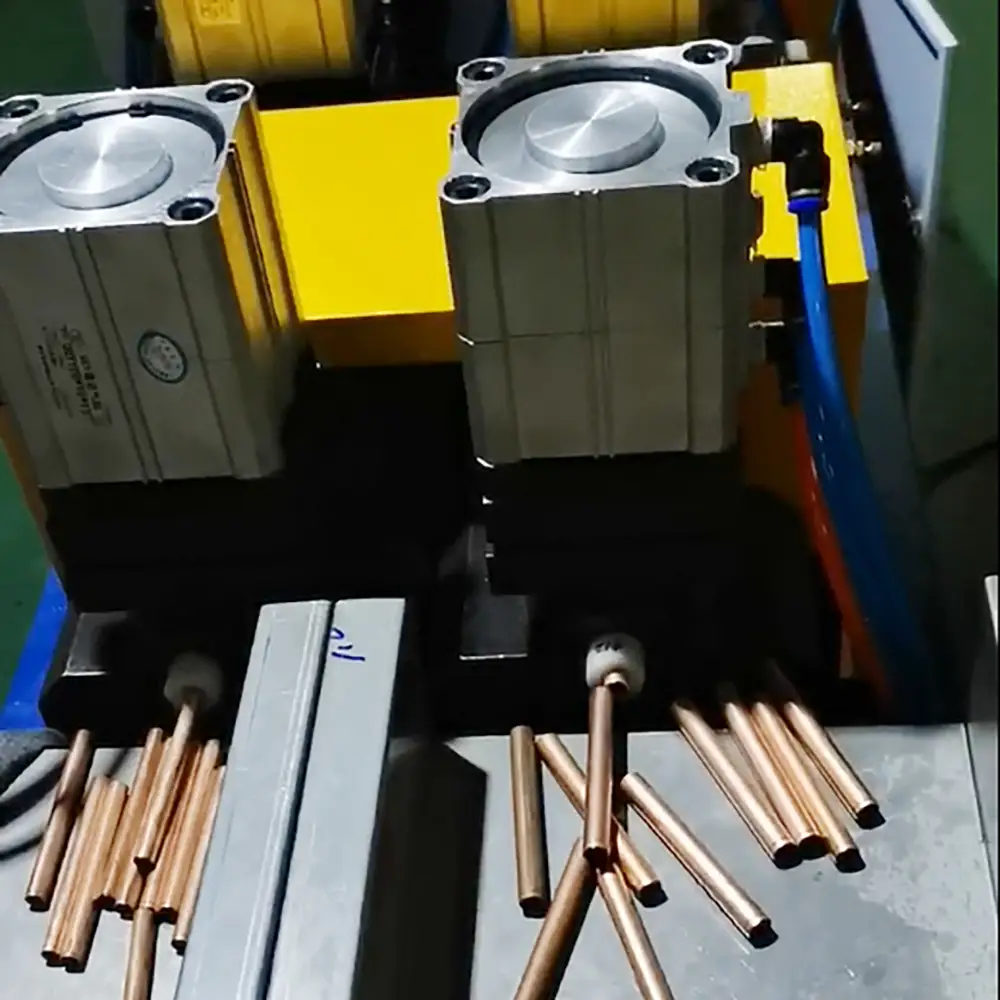
Depending on the selected machine configuration, automatic feeding can be used to supply small-diameter tubes to the cutting area.
An automatic feeding system can reduce repetitive manual loading and positioning. It is particularly useful when large quantities of tubes need to be cut into standardized lengths.
The feeding system should be matched to the tube diameter, tube length, material characteristics, and production volume.
Automatic feeding does not necessarily mean fully unmanned operation. Operators may still need to load raw material, monitor the machine, perform quality inspections, and manage blade replacement or maintenance.
Tube Clamping and Workholding
Small tubes require appropriate clamping to prevent movement while avoiding deformation.
A properly designed fixture supports the tube during cutting and helps maintain the required position. For very small or thin-wall tubes, customized tooling may be required.
Clamping pressure should be appropriate for the material. Copper and aluminum, for example, may require different workholding considerations than harder brass alloys.
The final clamping design should be selected based on actual tube dimensions and production conditions.
Cutting Tool Selection
Cutting tool selection has a significant effect on finished quality. Copper, brass, and aluminum should not automatically use identical blade specifications.
Important factors include:
Material Type
Material Grade
Tube Diameter
Wall Thickness
Cutting Length
Production Volume
Required Edge Quality
Machine Specifications
The appropriate saw blade or cutting tool can help control burrs, improve cutting consistency, and extend tool life.
Clean Tube Ends
Finished tube ends are important for downstream assembly. Tubes may be welded, brazed, flared, bent, machined, assembled, or connected to fittings after cutting.
A controlled cutting process can help produce consistent tube ends. However, the exact edge condition depends on the material, blade, machine settings, and workpiece characteristics.
Depending on the application, additional deburring, chamfering, brushing, or cleaning may be required.
For HVAC and refrigeration tubing, cleanliness and end condition may be particularly important before subsequent joining or assembly processes.
Applications
The Small Diameter Tube Cutting Machine can be used in a variety of industries.
HVAC and Refrigeration
Copper and aluminum tubing are widely used in air-conditioning and refrigeration systems. Cutting tubes to consistent lengths can support coil, piping, and component assembly.
Plumbing and Fittings
Copper and brass pipes are commonly used in plumbing products, valves, connectors, and fittings. Repeatable tube cutting can improve preparation for downstream manufacturing.
Electrical Components
Copper and brass tubes can be used in electrical and conductive components. Controlled cutting helps prepare components for further fabrication.
Automotive Manufacturing
Small metal tubes can be used for fluid lines, structural components, heat-transfer systems, and other automotive applications depending on the material and design.
Furniture Manufacturing
Aluminum and brass tubing can be processed into frames, supports, decorative components, and other furniture parts.
Heat Exchangers
Copper and aluminum tubes are commonly used in heat-transfer equipment. Accurate tube cutting can support subsequent assembly and processing.
Industrial Fabrication
General manufacturers can use the machine to prepare standardized tube sections for welding, brazing, bending, machining, and assembly.
Production Efficiency
For batch manufacturing, automatic tube cutting can reduce repetitive manual measurement and handling.
Once the appropriate cutting program, tooling, and workholding have been established, repeated tube cutting can be performed with a consistent process.
Overall production efficiency depends on tube diameter, wall thickness, cut length, feeding method, material loading, blade changes, inspection requirements, and machine configuration.
For high-volume projects, automatic feeding and finished-piece collection can be evaluated as part of a larger production system.
Flexible Cutting Lengths
Different customers may require different tube lengths. A programmable cutting system can make it easier to adjust production parameters for different orders.
For example, a manufacturer may need multiple batches of copper tubes with different cut lengths or brass tubes prepared for different assemblies.
Changing cutting lengths does not necessarily require changing the complete machine setup, although tooling or feeding adjustments may be required depending on the specific machine design.
Quality Control
Quality control should cover both the incoming tube material and finished products.
Important inspection points may include:
Tube Diameter
Wall Thickness
Cut Length
Tube Roundness
Cut Squareness
Burr Condition
Surface Condition
Deformation
Overall Dimensional Consistency
For precision production, sample inspection can be performed at the beginning of a production run and periodically during operation.
Monitoring blade wear is also important because tool condition can directly influence cut quality.
Maintenance
Routine maintenance helps maintain reliable tube cutting performance. Operators should regularly inspect the cutting tool, clamping system, feeding mechanism, guides, drive components, lubrication points, and electrical controls.
Metal chips should be removed from the cutting area. The blade should be inspected for wear and replaced when cutting performance becomes unsuitable.
Maintenance intervals should follow the machine manufacturer's recommendations and actual operating conditions.
Safety
Although small tubes are relatively lightweight, the cutting machine contains rotating cutting tools and moving mechanical components.
Operators should follow the manufacturer's operating instructions and applicable workplace safety requirements. Guards and emergency-stop systems should be provided according to the machine configuration.
Appropriate personal protective equipment should be used, and the tube should always be properly supported and clamped before cutting.
OEM and ODM Manufacturing Support
For tube manufacturers, HVAC suppliers, plumbing component manufacturers, automotive parts companies, machinery distributors, and metal fabrication businesses, OEM and ODM support can provide greater flexibility.
Machine configuration can be evaluated according to material, tube diameter, wall thickness, cutting length, production volume, feeding requirements, workholding, and automation.
Customers can provide tube drawings, samples, material specifications, required cutting lengths, and target production volume for application evaluation.
Why Choose Us
1. Small-Diameter Tube Expertise
The machine can be configured for suitable small copper, brass, aluminum, and other compatible metal tubes.
2. Multi-Material Capability
Application-specific configurations can be evaluated for copper, brass, aluminum, and other non-ferrous tubing.
3. Precision Cutting
Controlled feeding, positioning, and cutting can support consistent tube lengths in batch production.
4. Automatic Production Options
Automatic feeding and positioning can reduce repetitive manual handling.
5. Flexible Workholding
Fixtures and clamping systems can be selected according to tube diameter, wall thickness, and material.
6. Application-Specific Tooling
Saw blades and cutting parameters can be selected according to the characteristics of copper, brass, aluminum, or other materials.
7. OEM and ODM Services
Customized machine configurations can support distributors, manufacturers, and specialized production projects.
8. B2B Engineering Support
Tube drawings, samples, material grades, production volumes, and cutting requirements can be evaluated for machine selection.
FAQs
1. What materials can this small-diameter tube cutting machine process?
Depending on configuration, the machine can process suitable copper, brass, aluminum, and other compatible non-ferrous metal tubes.
2. Can it cut small copper pipes?
Yes. It can be configured for suitable small-diameter copper pipe and tube applications. The tube diameter and wall thickness should be provided for machine selection.
3. Can it cut brass tubes?
Yes. Brass tubing can be processed with appropriate tooling and cutting parameters selected for the specific brass material and tube dimensions.
4. Is the machine suitable for aluminum tubes?
Yes. Suitable aluminum tube applications can be evaluated. Because aluminum is relatively soft, proper blade selection and clamping are important.
5. Can copper, brass, and aluminum use the same saw blade?
Not necessarily. These materials have different cutting characteristics. Blade selection should be based on the specific material, tube dimensions, and required cut quality.
6. Can the machine cut thin-wall tubes?
Yes, suitable thin-wall applications can be evaluated. Proper clamping and support are important to prevent tube deformation.
7. Can it automatically feed small tubes?
Automatic feeding can be provided depending on the machine configuration. The feeding system should match the tube dimensions and production requirements.
8. Can it cut different tube lengths?
Yes. Programmable cutting parameters can support different cutting lengths depending on the machine control and feeding configuration.
9. Will the tube ends require deburring?
It depends on the material, blade, cutting parameters, and required finished-edge quality. Some applications may require secondary deburring or chamfering.
10. How accurate is the cutting?
Actual cutting accuracy depends on tube diameter, wall thickness, material, feeding accuracy, clamping, blade condition, and machine configuration. Specific tolerances should be confirmed for the application.
11. What industries use small-diameter tube cutting machines?
Common applications include HVAC, refrigeration, plumbing, automotive, electrical components, heat exchangers, furniture, industrial equipment, and general metal fabrication.
12. What information is needed for a quotation?
Please provide material and grade, tube outside diameter, wall thickness, required cutting lengths, production volume, required tolerance, automation requirements, and drawings or samples if available.
Prev:Sorry, no information
Next:
Thin Pipe Cold Saw Cutting Machine Stainless Steel Pipe Cutting Machine Cutter
TAG:
Copper Tube Processing Machine,
Aluminum Tube Processing Machine,
Small Tube Processing Machine,
Small Pipe Processing Machine,
Tube Cutting Equipment,
Pipe Cutting Equipment,
Metal Tube Cutting Machine,
Metal Pipe Cutting Machine,
Automatic Tube Cutting Machine,
Automatic Pipe Cutting Machine,
CNC Tube Cutting Machine,
Round Pipe Cutting Machine,
Round Tube Cutting Machine,
Precision Tube Cutting Machine,
Copper Tube Cutting Machine,
Copper Pipe Cutting Machine,
Automatic Copper Tube Cutting Machine,
Aluminum Tube Cutting Machine,
Aluminum Pipe Cutting Machine,
Automatic Aluminum Tube Cutting Machine,
CNC Metal Tube Cutter,
Automatic Metal Tube Cutter,
Metal Tube Cutting Equipment,
Industrial Tube Cutting Machine,
CNC Pipe Cutting Machine,
Industrial Pipe Cutting Machine,
Precision Pipe Cutting Machine,
Metal Pipe Cutter,
Metal Tube Cutter,
Small Tube Cutting Machine,
Related Category:
Small Diameter Tube Cutting Machine,Brass Tube Cutting Machine,Copper Tube Cutting Machine China, suppliers, manufacturers, factory, customized, wholesale, quotation, made in China