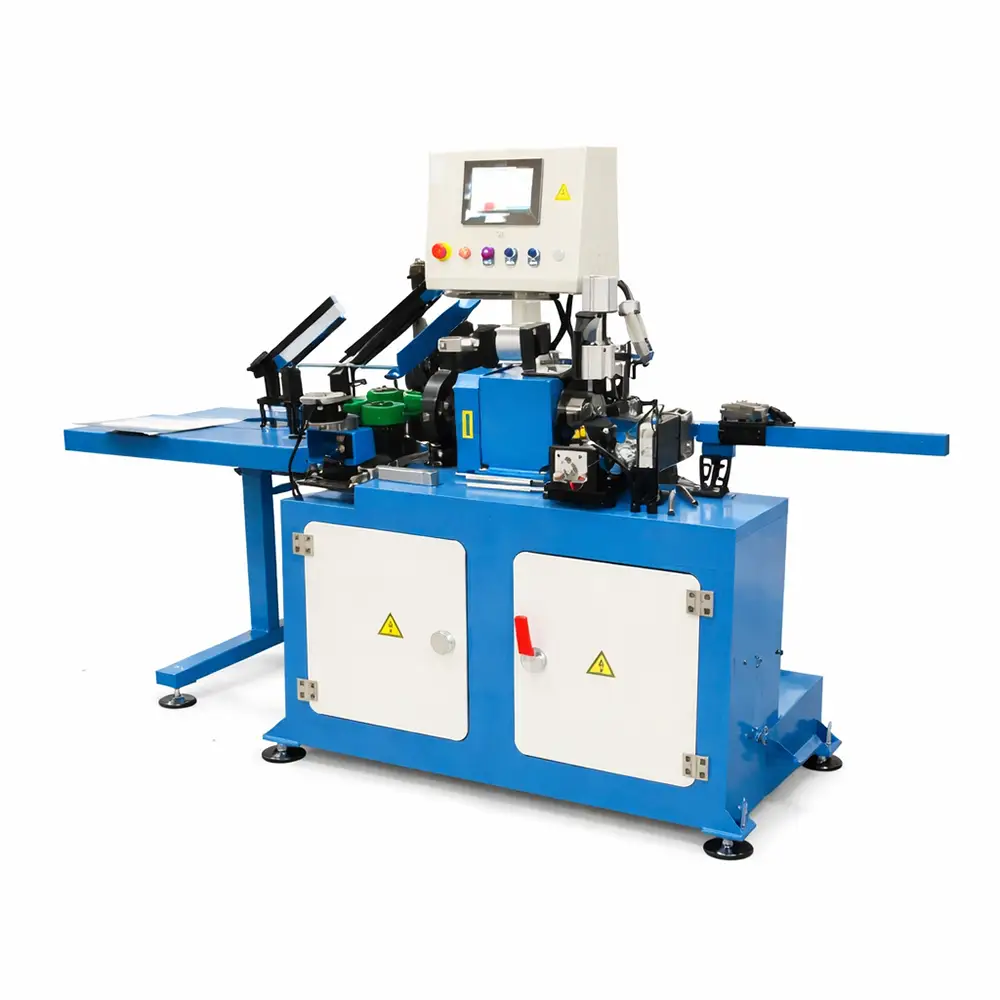
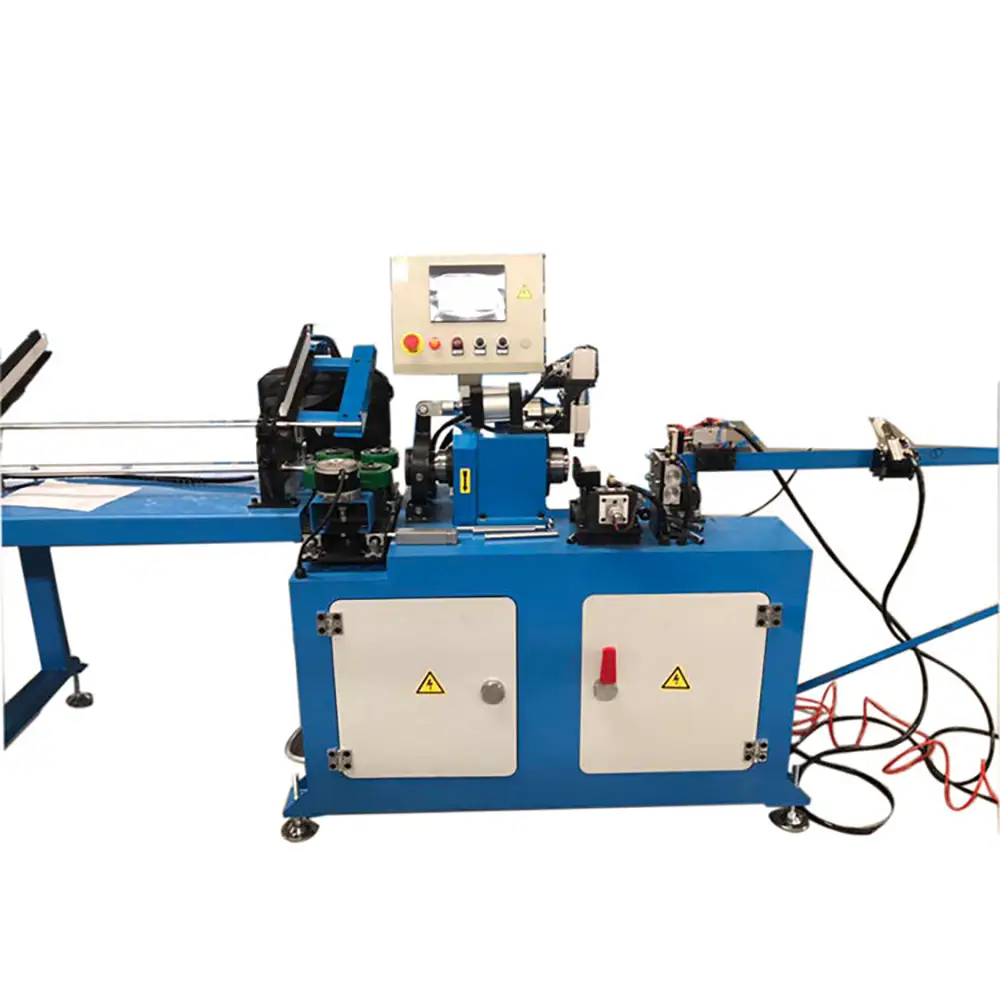
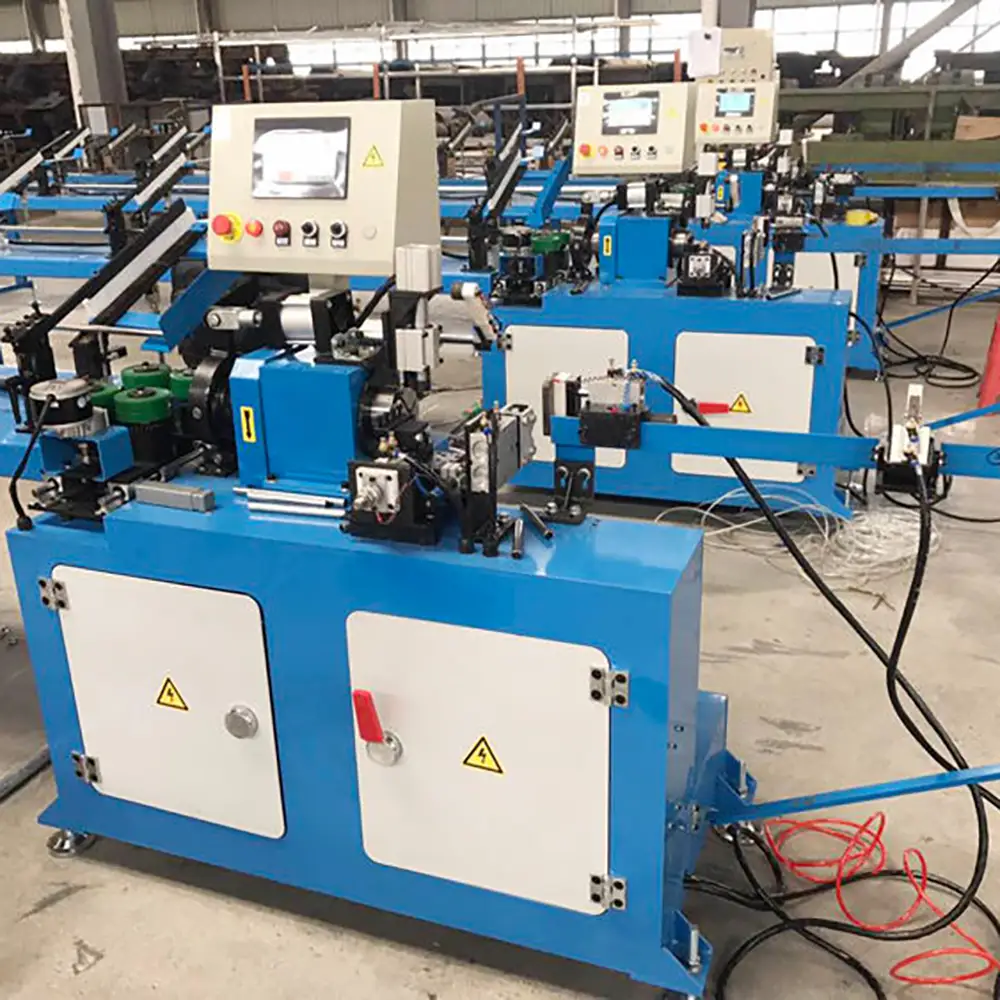
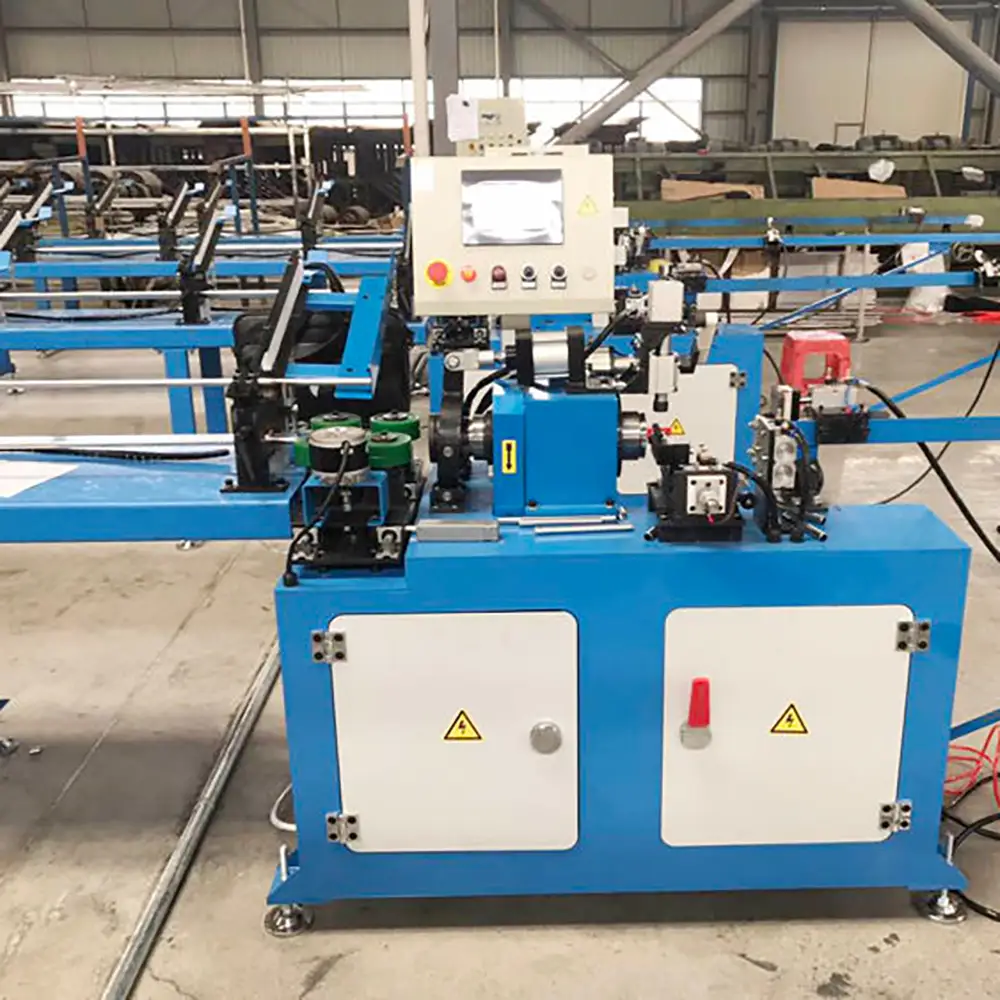
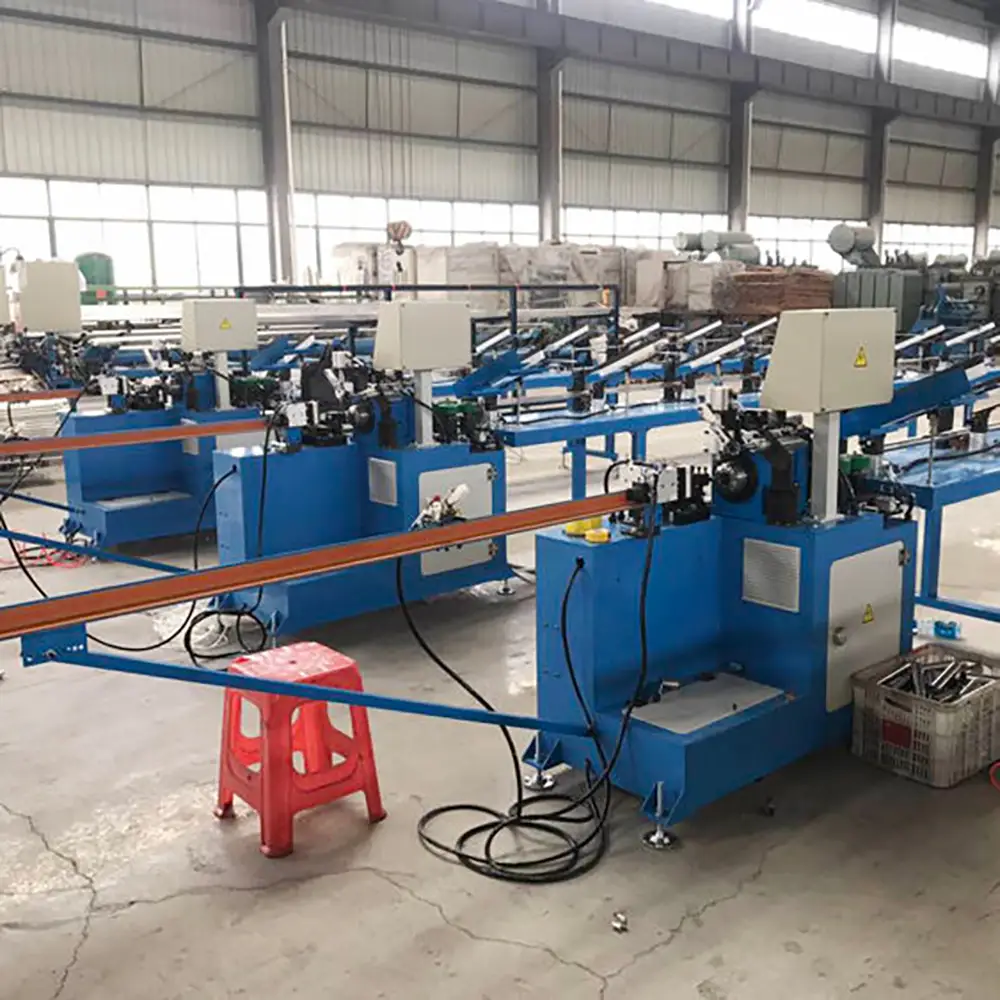
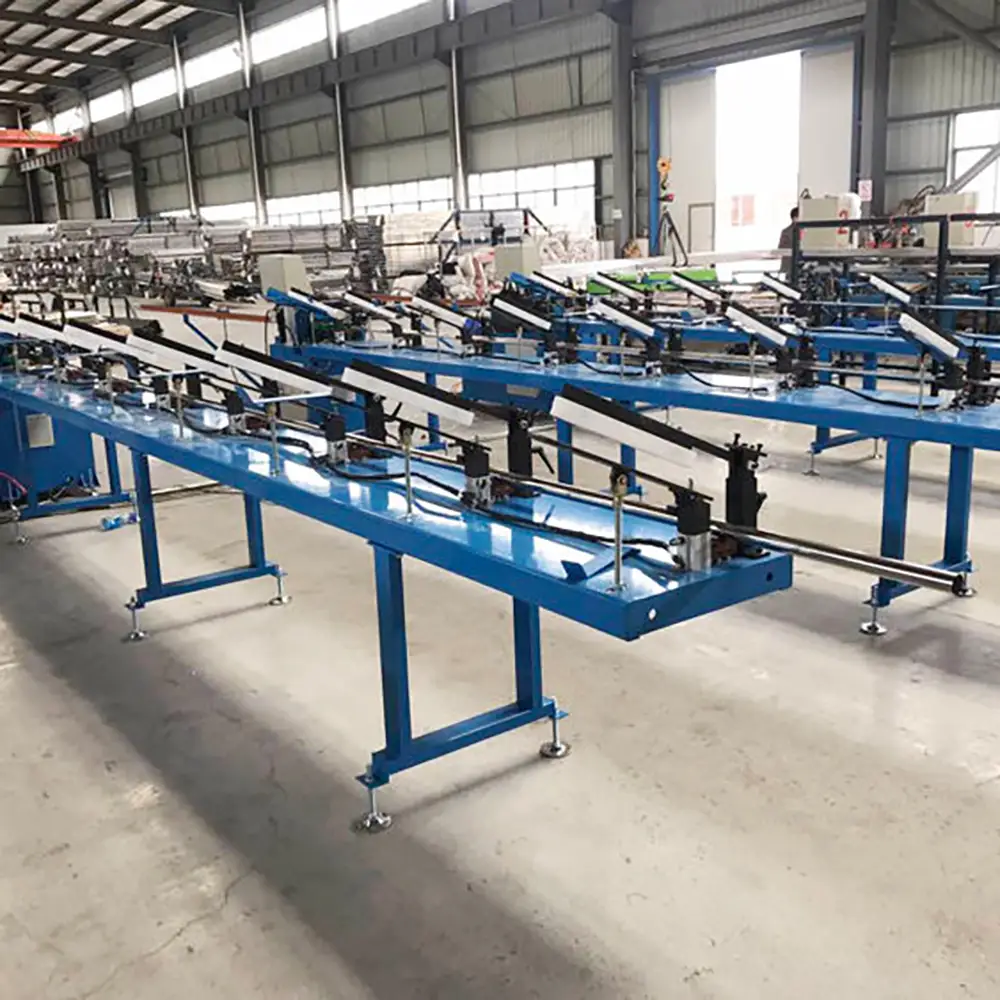
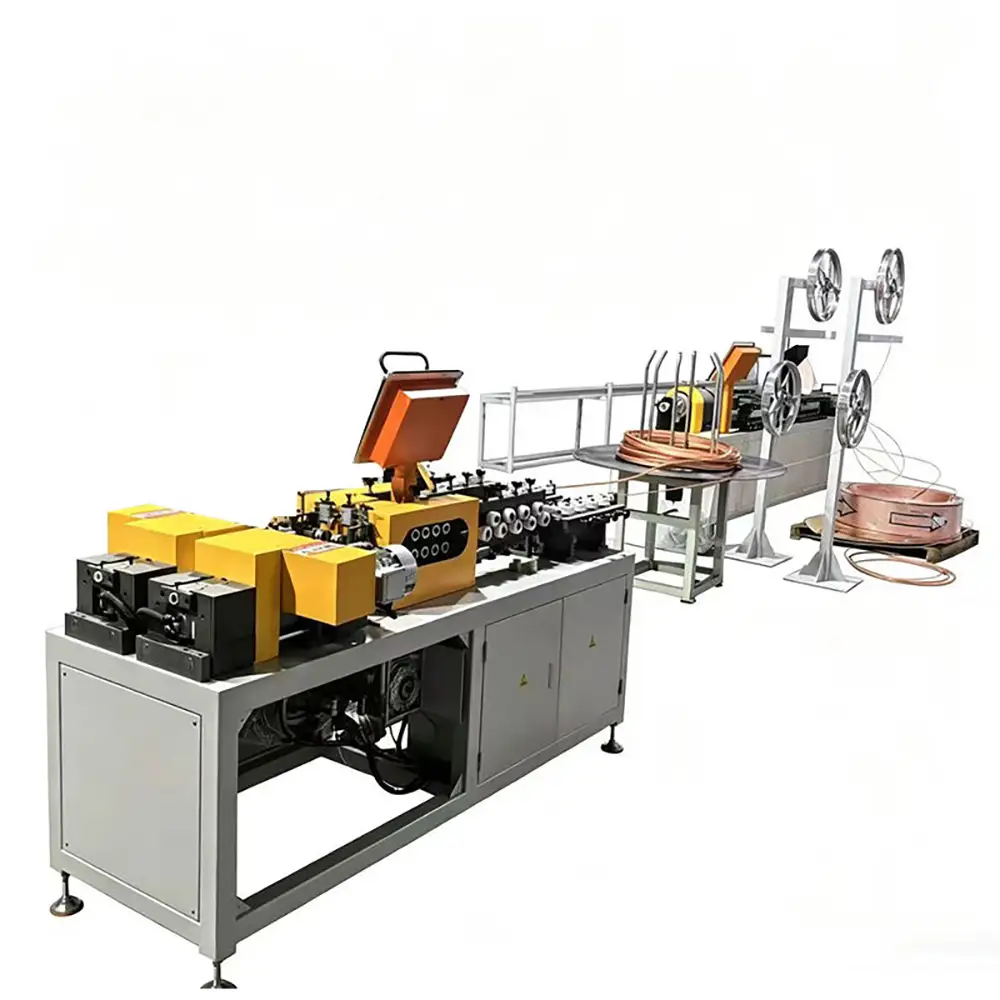
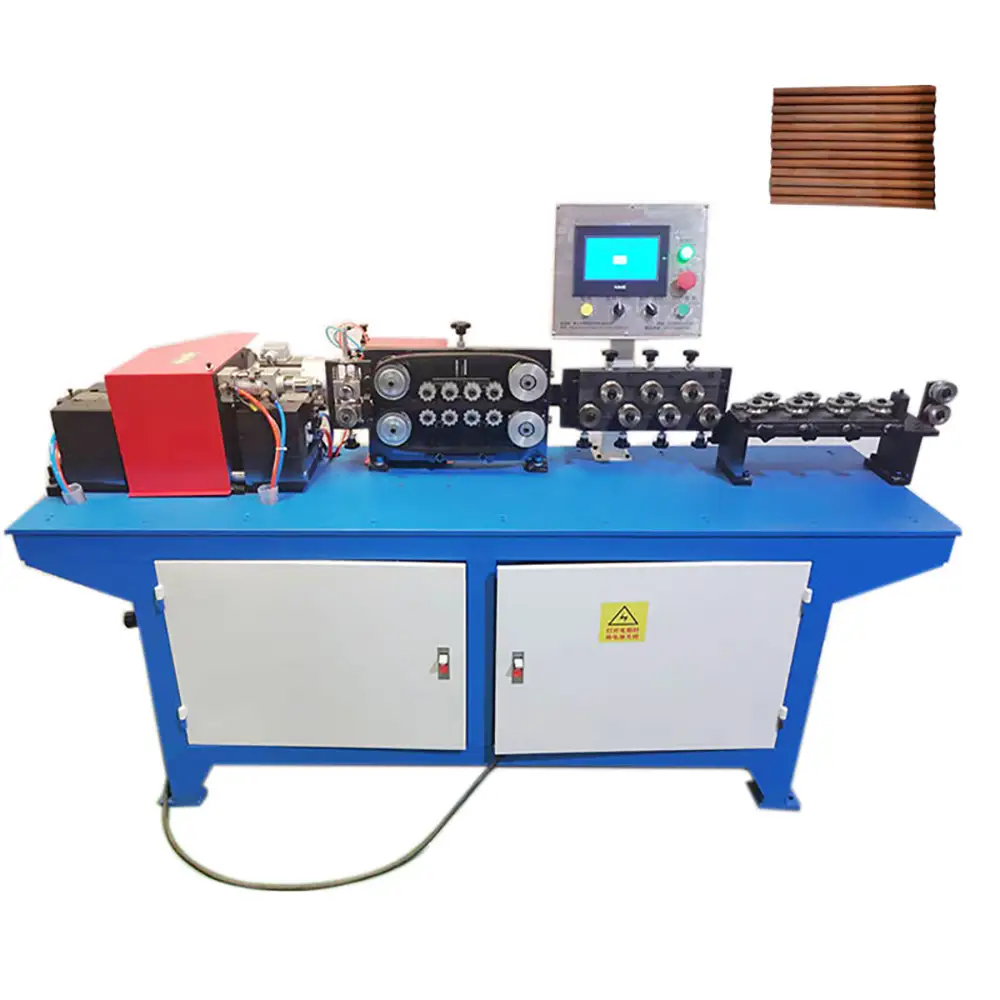
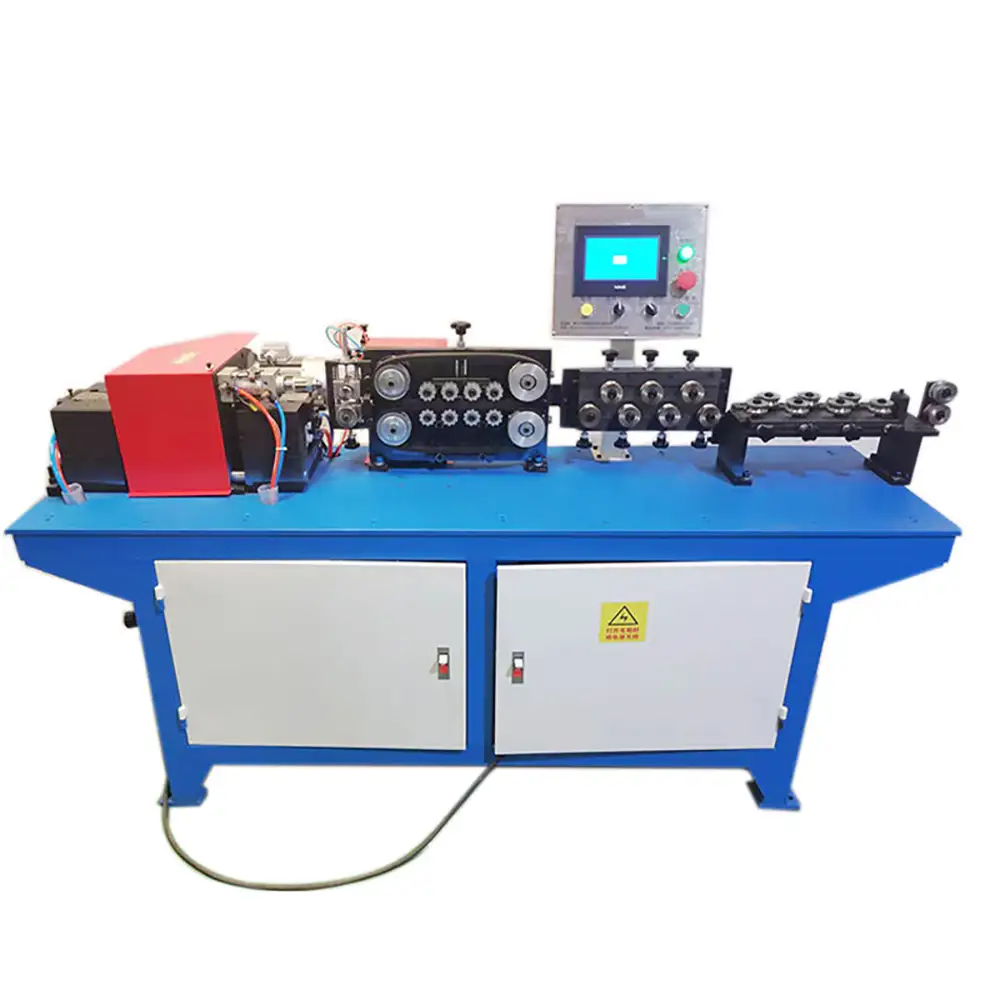
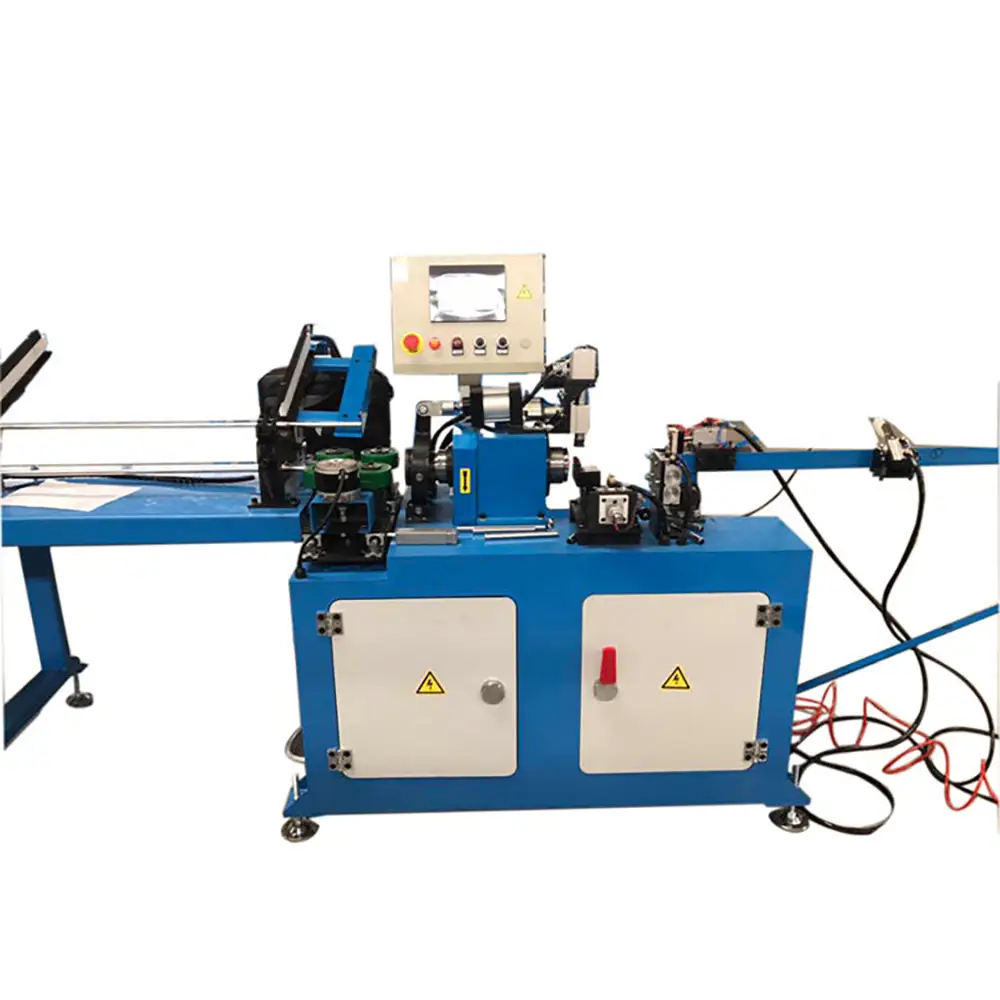
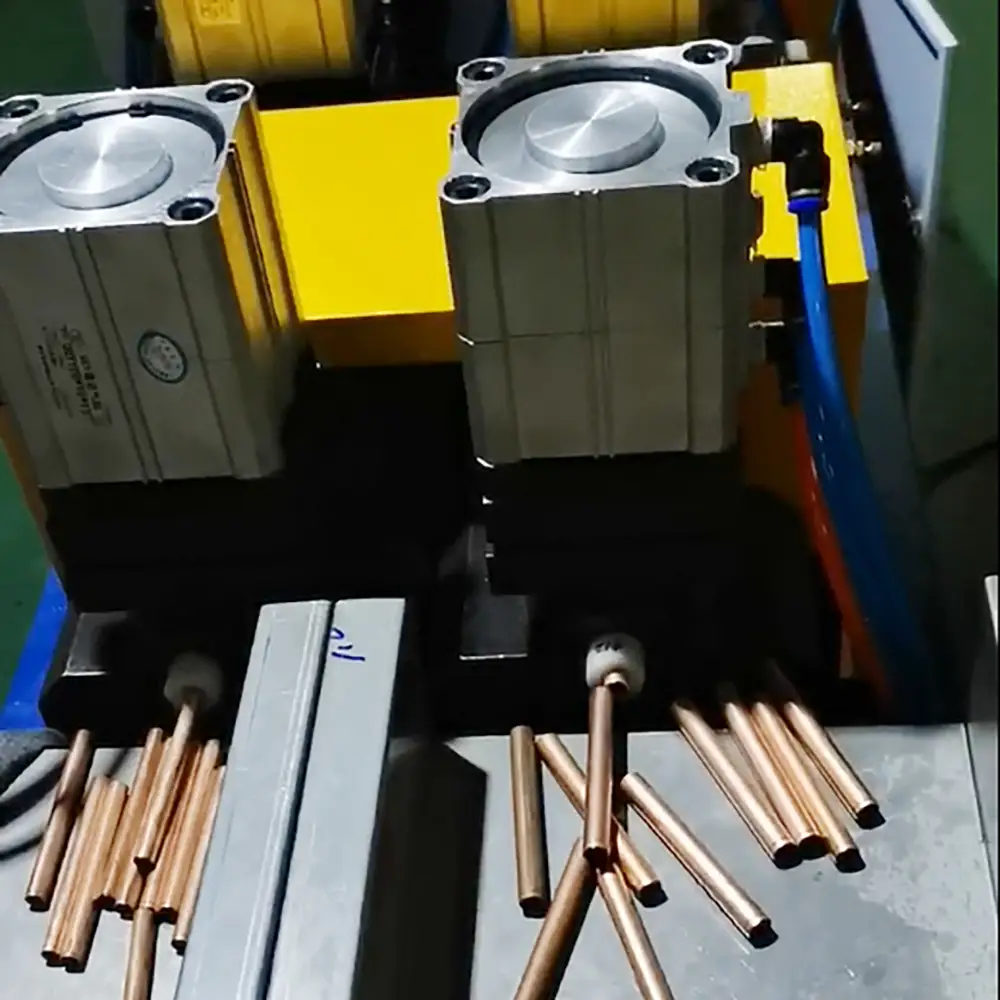
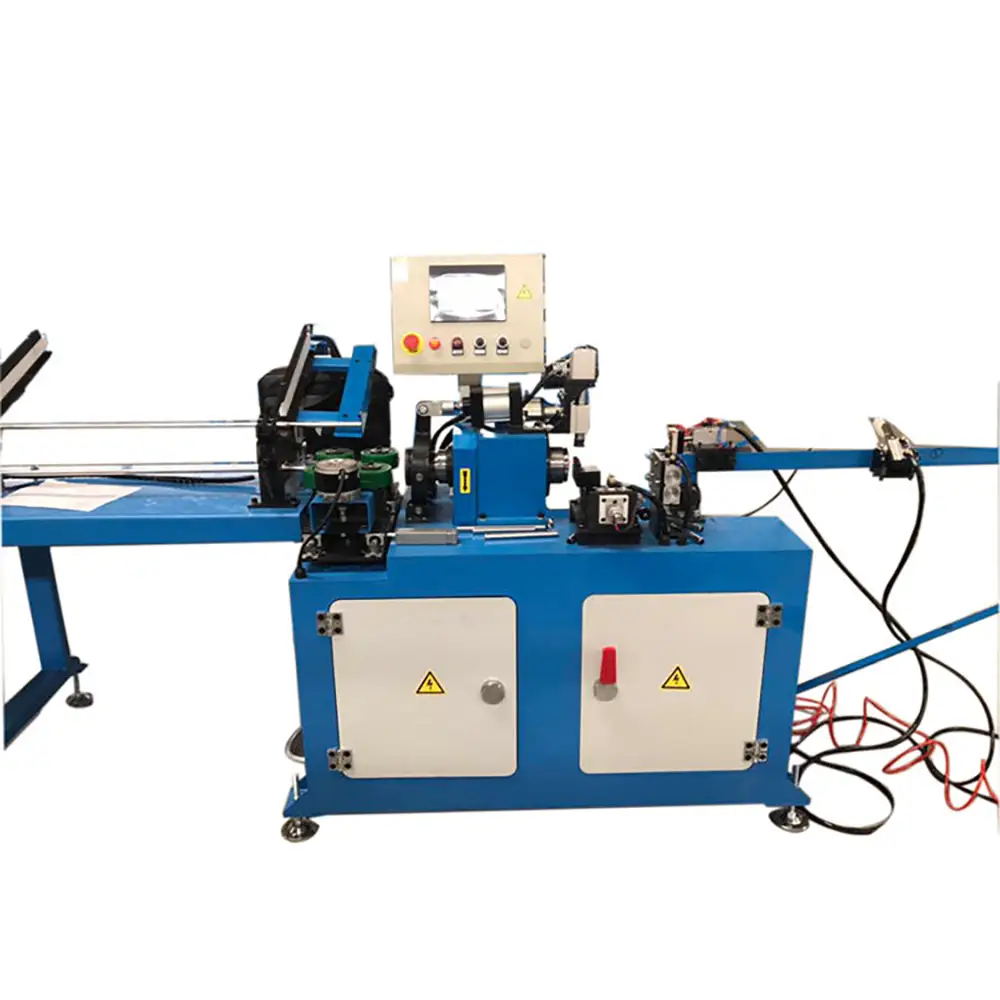
* Feeding method: 4-wheel traction automatic feeding * Sizing method: activities depend on sizing
* Fixed length accuracy: +/- 0.2mm
* Clamping method: pneumatic
* Cutting feed method: pneumatic + hydraulic buffer
* Lathe knife cutting blade: CNC threaded blade or alloy blade (3 * 6 * 200)
* Action mode: 4-wheel traction automatic feeding → signal induction of backing fixed length → clamping → cutting → automatic reset → complete one processing.
*The body is welded and assembled by steel plate heat treatment, the structure is strong and stable. Products Description
|
Item |
Specification |
|
Electrical control |
PLC+ touch screen |
|
Spindle speed |
400/800RPM |
|
Motor power |
1.5kw |
|
Linear guide |
Shangyin 15type |
|
Fixture |
Yonghe |
|
Air source pressure |
0.4-0.6mpa |
|
Voltage |
380/415/ customized |
|
Main structure size |
8500x650x1500 |
|
Weight |
500kg |
Automatic Rotary Pipe Tube Cutting Machine for Metal and Stainless Steel
The Automatic Rotary Pipe Tube Cutting Machine is designed for efficient and repeatable cutting of metal pipes and tubes, including compatible stainless steel tubing. With a rotary workholding structure and saw blade cutting system, this machine provides a practical solution for manufacturers that need consistent tube lengths and reliable production performance.
Automatic tube cutting is widely used in metal fabrication, automotive components, furniture manufacturing, industrial equipment, construction products, plumbing components, and other applications where tubes and pipes must be cut into precise sections.
Compared with manual cutting methods, an automatic rotary tube cutting machine can reduce repetitive measuring and positioning operations while providing a more consistent production workflow. Depending on the configuration, automatic functions may include material feeding, positioning, clamping, rotary processing, saw blade cutting, and workpiece discharge.
The actual processing range and cutting accuracy depend on tube dimensions, material, wall thickness, cutting length, blade selection, machine configuration, and production requirements.
Rotary Tube Cutting Principle
The rotary cutting structure is designed to securely hold and process tubular workpieces. The tube is positioned in the work area and clamped before the saw blade performs the cutting operation.
Rotary processing is especially suitable for round pipes and tubes because the workpiece can be securely supported during cutting. Stable workholding helps reduce movement and vibration, which can contribute to consistent cutting results.
For square, rectangular, oval, or specially shaped profiles, an appropriate fixture and machine configuration may be required. Customers should provide profile dimensions when requesting a solution for non-round tubes.
Automatic Pipe Cutting Operation
The automatic configuration is designed to reduce repetitive manual operations during tube production. Depending on the selected system, the machine can automatically feed the material, position the cutting length, clamp the tube, perform the saw cutting cycle, and continue with the next workpiece.
This type of workflow is particularly useful for batch production. Once the correct cutting parameters and tooling have been established, operators can focus more on material loading, process monitoring, quality inspection, and routine machine management.
Automatic operation does not necessarily mean completely unmanned production. The required level of operator involvement depends on the feeding system, material handling arrangement, automation package, and factory workflow.
Stainless Steel Tube Cutting
Stainless steel is widely used for industrial pipes, food-processing equipment, architectural products, automotive components, medical equipment, furniture, and general fabrication.
Cutting stainless steel requires appropriate saw blade selection, cutting parameters, workholding, and machine setup. Stainless steel can generate significant heat during cutting, so proper blade selection and process control are important for maintaining cutting performance and tool life.
The machine can be configured for suitable stainless steel tube applications according to the required tube diameter, wall thickness, cutting length, and production volume.
For a specific stainless steel grade or demanding tolerance requirement, customers should provide material information and drawings for application evaluation.
Metal Tube Saw Blade Cutting
The saw blade is a key component of the tube cutting process. Different metal materials require different blade specifications and cutting conditions.
For example, stainless steel, carbon steel, aluminum, copper, and brass have different mechanical and thermal characteristics. A blade suitable for one material may not provide the same performance on another material.
Blade tooth geometry, blade diameter, cutting speed, feed rate, lubrication, clamping, and workpiece dimensions should therefore be considered together.
Using the correct blade can help achieve cleaner cuts, improve production consistency, and reduce unnecessary blade wear.
Precision and Repeatability
One of the main advantages of an automatic tube cutting machine is repeatability. When cutting multiple tubes to the same programmed length, automated feeding and positioning can reduce variation caused by manual measurement.
Actual cutting accuracy depends on the complete production system. Factors include:
Tube outer diameter
Tube wall thickness
Material properties
Required cutting length
Feeding accuracy
Clamping stability
Saw blade condition
Machine structure
Cutting parameters
Operator setup
For applications requiring a specific dimensional tolerance, the tolerance should be confirmed based on actual workpiece conditions rather than assuming a universal accuracy specification.
Applications for Metal Pipes and Tubes
The Automatic Rotary Pipe Tube Cutting Machine can serve many industrial tube-processing applications.
Common applications include:
Automotive Manufacturing: Cutting tubing for exhaust components, chassis structures, supports, frames, and other compatible components.
Stainless Steel Fabrication: Processing stainless steel tubes for industrial, architectural, commercial, and equipment applications.
Furniture Manufacturing: Cutting metal tubes for tables, chairs, shelving, frames, and other furniture structures.
Construction: Preparing steel or stainless steel pipe sections for fabrication and installation.
HVAC and Plumbing: Cutting compatible pipes and tubes to specified lengths for downstream assembly.
Industrial Machinery: Producing standardized tube components for equipment frames, guards, supports, and mechanical assemblies.
Agricultural Equipment: Processing tubing used in machinery structures and fabricated components.
General Metal Fabrication: Supporting manufacturers that require repeatable tube cutting for batch production.
Automatic Material Feeding
For higher-volume production, an automatic feeding system can help reduce manual tube positioning. Depending on the machine configuration, material can be supplied to the cutting area and positioned according to the programmed cutting length.
Automatic feeding is particularly useful when many pieces need to be cut to the same or different programmed lengths.
The overall production efficiency depends on tube size, material loading, cutting length, blade condition, feeding method, operator workflow, and machine configuration.
For long tubes or high-volume applications, material support and collection systems can also be considered to improve the overall production process.
Workpiece Clamping and Stability
Stable clamping is essential for tube cutting. The workpiece needs to remain securely positioned during the saw cutting cycle.
Correct clamping helps reduce vibration and movement and can improve repeatability. At the same time, excessive clamping force may deform thin-wall tubing.
This is especially important for thin stainless steel tubes, aluminum tubes, copper tubes, and small-diameter tubing. The appropriate fixture and clamping pressure should be selected according to the workpiece structure.
Cut Quality and End Finishing
The saw blade cutting process can produce consistent tube ends when the blade, machine, and material are correctly matched.
Depending on the final application, the cut tube may require additional operations such as deburring, chamfering, cleaning, or end finishing.
For products used in assembly applications, removing sharp edges and burrs may be necessary before the tube moves to welding, bending, forming, or final assembly.
The required finishing quality should be defined according to the customer's production standards.
Flexible Production for Different Tube Sizes
Manufacturers often need to process multiple tube specifications. A suitable automatic rotary tube cutting machine can be configured around the required diameter range and production requirements.
Changing between tube sizes may require adjustments to fixtures, feeding guides, clamping components, saw blades, or machine parameters.
For factories processing multiple diameters, customers should provide the minimum and maximum tube sizes along with wall thickness and cutting length requirements. This information helps determine the appropriate machine configuration.
CNC and Automated Control
A CNC or programmable control system can simplify repetitive tube cutting operations. Operators can enter or select production parameters according to the required cutting job.
Depending on the configuration, the control system may coordinate feeding, positioning, clamping, cutting, and production cycling.
Automation can improve process consistency and reduce repetitive manual measurement. It can also make production easier to standardize when multiple operators work with the same machine.
Machine Customization
Tube cutting requirements vary significantly between industries. Machine configuration can therefore be evaluated according to the actual production application.
Customization may involve:
Tube diameter range
Wall thickness
Cutting length
Material type
Saw blade specification
Feeding method
Automatic loading
Workpiece support
Collection system
Customized fixtures
Electrical configuration
Production-line integration
Providing tube drawings, material grades, sample workpieces, required cutting lengths, and target production volume is recommended when requesting a quotation.
Maintenance and Blade Replacement
Regular maintenance is important for stable automatic tube cutting. Operators should inspect the saw blade, clamping system, feeding mechanism, guides, drive components, lubrication system, and electrical controls according to the manufacturer's maintenance schedule.
The saw blade should be inspected regularly for wear, damage, and cutting performance. A worn blade can increase cutting resistance, generate excessive heat, and affect the finished edge.
Metal chips and debris should also be removed from the cutting area regularly to maintain a clean and reliable working environment.
Safety During Tube Cutting
Saw blade cutting equipment involves rotating cutting components and moving mechanical systems. Operators should follow the manufacturer's operating instructions and applicable workplace safety requirements.
Appropriate machine guarding, emergency-stop systems, protective devices, chip protection, and other safety features should be provided according to the machine configuration and local regulations.
Operators should use suitable personal protective equipment and ensure that the tube is properly supported and clamped before beginning the cutting cycle.
OEM and ODM Tube Cutting Solutions
For machinery distributors, metal fabrication companies, industrial manufacturers, and production plants, OEM and ODM services can provide additional flexibility.
Machine specifications, fixtures, feeding systems, branding, electrical configurations, and production-line integration can be developed according to project requirements.
We can evaluate your tube material, diameter, wall thickness, cutting length, production volume, and automation requirements to help determine a suitable automatic rotary tube cutting solution.
Why Choose Us
1. Automatic Tube Processing
Automatic feeding, positioning, clamping, and cutting options can reduce repetitive manual operations.
2. Rotary Cutting Structure
The rotary workholding design provides a practical solution for round metal pipes and tubes.
3. Stainless Steel Compatibility
The machine can be configured for suitable stainless steel tube cutting applications with appropriate tooling and parameters.
4. Saw Blade Cutting Technology
The saw cutting system is suitable for repeatable industrial tube and pipe cutting.
5. Flexible Material Processing
Compatible configurations can be evaluated for stainless steel, carbon steel, aluminum, copper, brass, and other metal tubes.
6. Custom Machine Configuration
Tube size, wall thickness, cutting length, fixtures, feeding systems, and automation can be customized according to production requirements.
7. OEM and ODM Support
Customized equipment solutions can support distributors, manufacturers, and industrial production projects.
8. Application-Based Service
Workpiece drawings, material information, samples, and production targets can be used to evaluate the appropriate machine configuration.
FAQs
1. What materials can this automatic tube cutting machine process?
Depending on configuration, the machine can process suitable stainless steel, carbon steel, aluminum, copper, brass, and other compatible metal tubes.
2. Is this machine suitable for stainless steel pipes?
Yes. It can be configured for suitable stainless steel tube and pipe cutting applications. The blade and cutting parameters should be selected according to the stainless steel grade and tube dimensions.
3. What is the difference between rotary tube cutting and ordinary pipe cutting?
Rotary tube cutting uses a rotary workholding or processing arrangement designed to securely handle tubular workpieces. The exact cutting mechanism depends on the machine configuration.
4. Can it automatically feed the tube?
Automatic feeding can be included depending on the machine configuration. Feeding capacity and material handling requirements should be confirmed according to the tube dimensions.
5. Can it cut different tube lengths?
Yes. Programmable cutting parameters can support different required lengths when the machine is properly configured for the application.
6. Can it cut square and rectangular tubes?
Some configurations can process square and rectangular profiles. The required fixture and machine specifications should be confirmed before ordering.
7. Is the machine suitable for thin-wall stainless steel tubes?
It can be configured for suitable thin-wall applications. Careful selection of clamping pressure, blade, support, and cutting parameters is important to prevent deformation.
8. Does the machine require an operator?
Operator involvement depends on the automation package. Even with automatic feeding and cutting, operators may be required for loading material, monitoring production, inspection, and maintenance.
9. How should I select the saw blade?
Blade selection depends on material, tube diameter, wall thickness, cutting length, required edge quality, and production conditions. Application-specific blade selection is recommended.
10. Can the machine be customized?
Yes. Feeding, fixtures, cutting range, automation, material support, electrical configuration, and other functions can be evaluated according to customer requirements.
11. What information is needed for a quotation?
Provide the material, tube diameter or profile dimensions, wall thickness, cutting length, required production volume, automation requirements, and drawings or samples when available.
12. Can this machine be integrated into a production line?
Yes. Depending on the configuration, feeding, collection, inspection, and other material-handling equipment can be integrated into a broader tube-processing workflow.
Prev:
Thin Pipe Stainless Steel Cutting Machine Cold Saw Cutter
Next:
Industrial CNC Rotary Tube Cutting Machine for Metal Pipes Automatic Saw Blade Precision Cutter
TAG:
Metal Tube Processing Machine,
Pipe Processing Machine,
Tube Processing Machine,
Stainless Steel Tube Processing Machine,
Metal Pipe Processing Machine,
Automatic Tube Processing Machine,
Automatic Pipe Processing Machine,
Tube Cutting Equipment,
Pipe Cutting Equipment,
Stainless Steel Pipe Cutting Machine,
Metal Tube Cutting Machine,
Stainless Steel Tube Cutting Machine,
Metal Pipe Cutting Machine,
Automatic Tube Cutting Machine,
Automatic Pipe Cutting Machine,
CNC Tube Cutting Machine,
Round Pipe Cutting Machine,
Round Tube Cutting Machine,
Precision Tube Cutting Machine,
Automatic Stainless Steel Tube Cutting Machine,
CNC Metal Pipe Cutter,
CNC Metal Tube Cutter,
Automatic Metal Tube Cutter,
Metal Tube Cutting Equipment,
Industrial Tube Cutting Machine,
CNC Pipe Cutting Machine,
Automatic Stainless Steel Pipe Cutting Machine,
Industrial Pipe Cutting Machine,
Pipe Cutting Machinery,
Precision Pipe Cutting Machine,
Related Category:
Automatic Rotary Pipe Cutting Machine,Automatic Tube Cutting Machine,Rotary Pipe Cutting Machine China, suppliers, manufacturers, factory, customized, wholesale, quotation, made in China