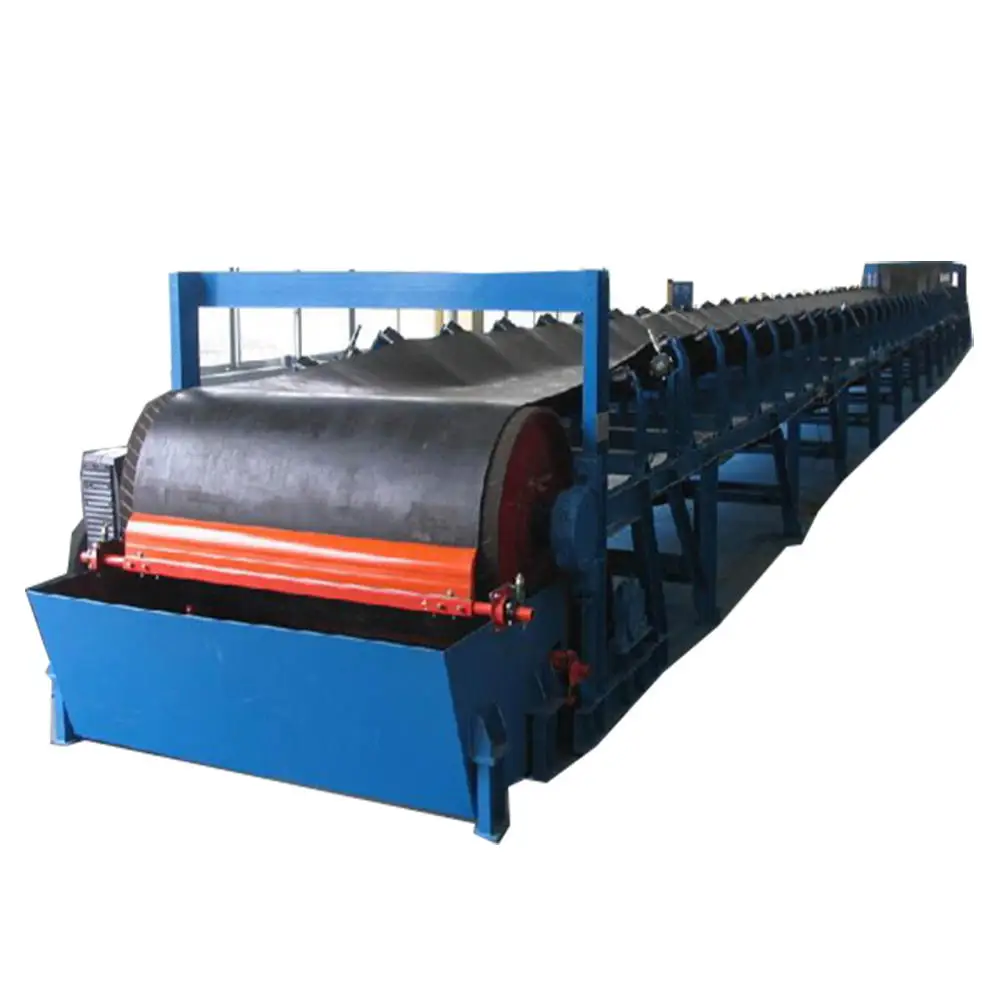
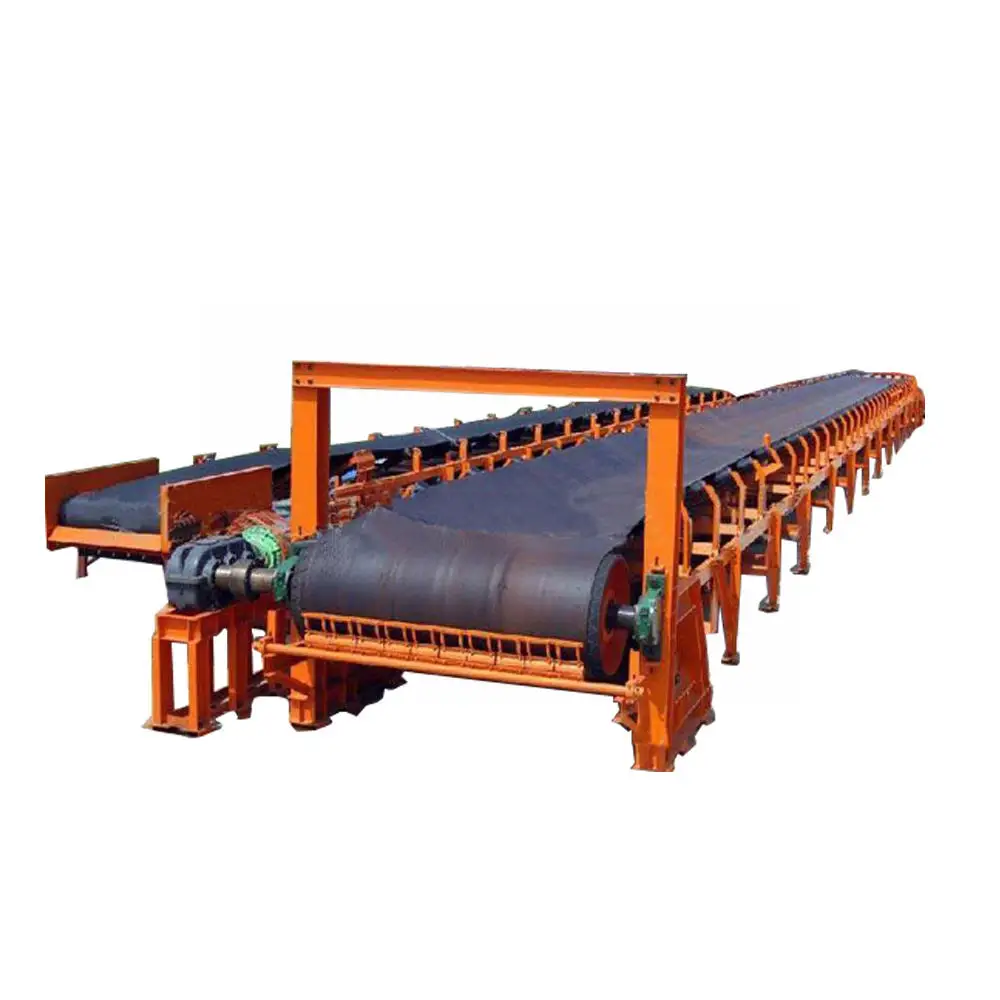
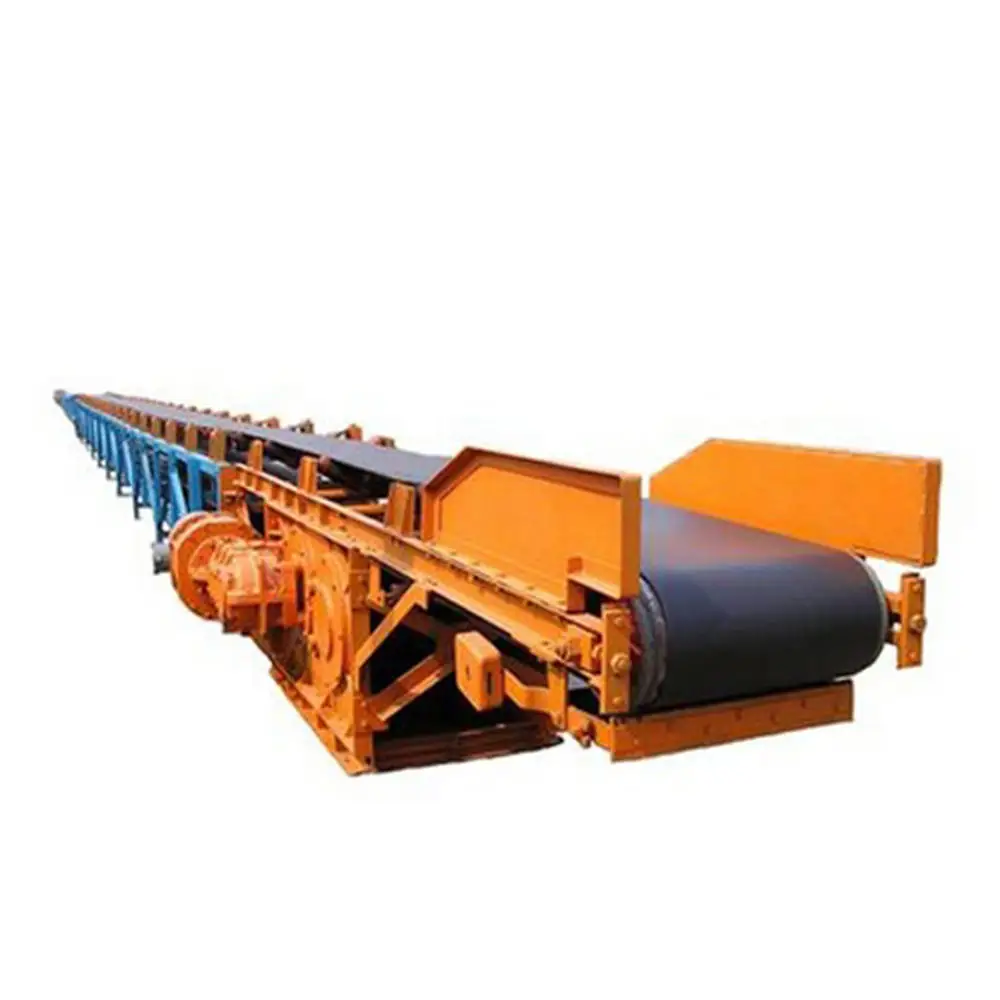
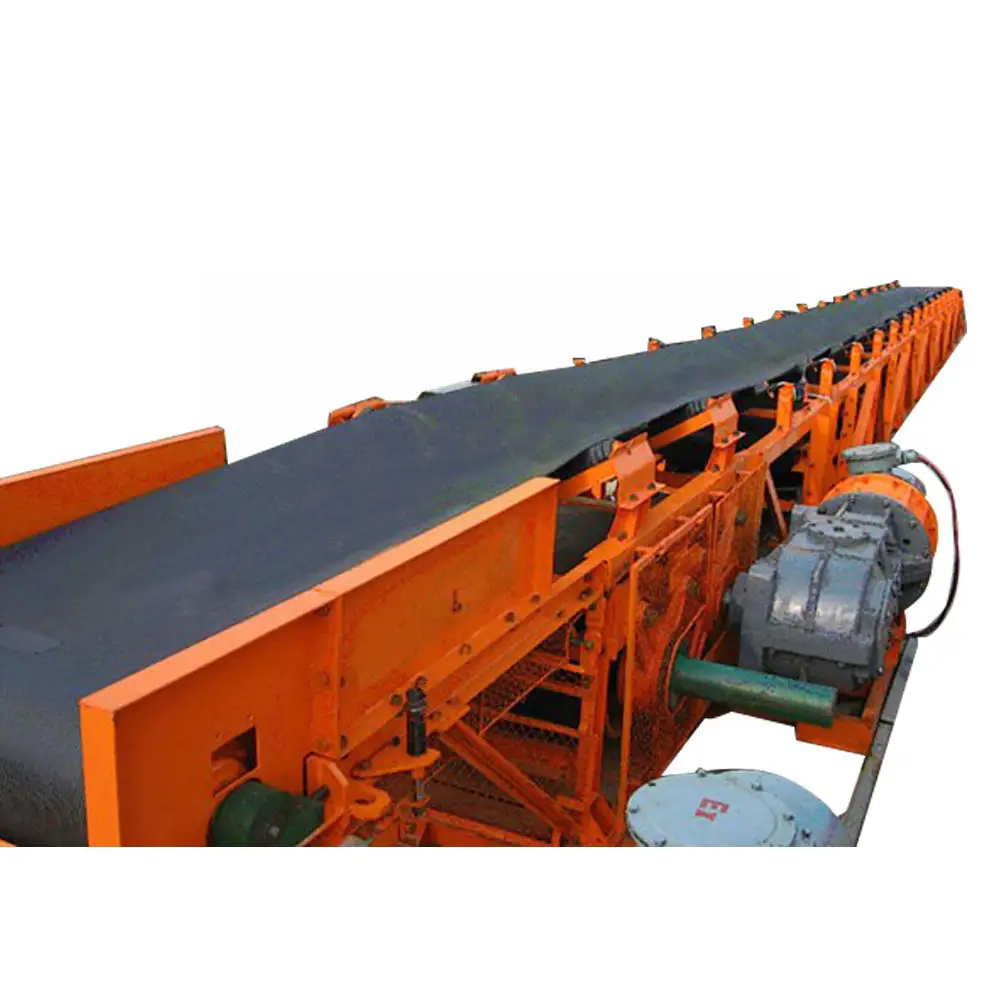
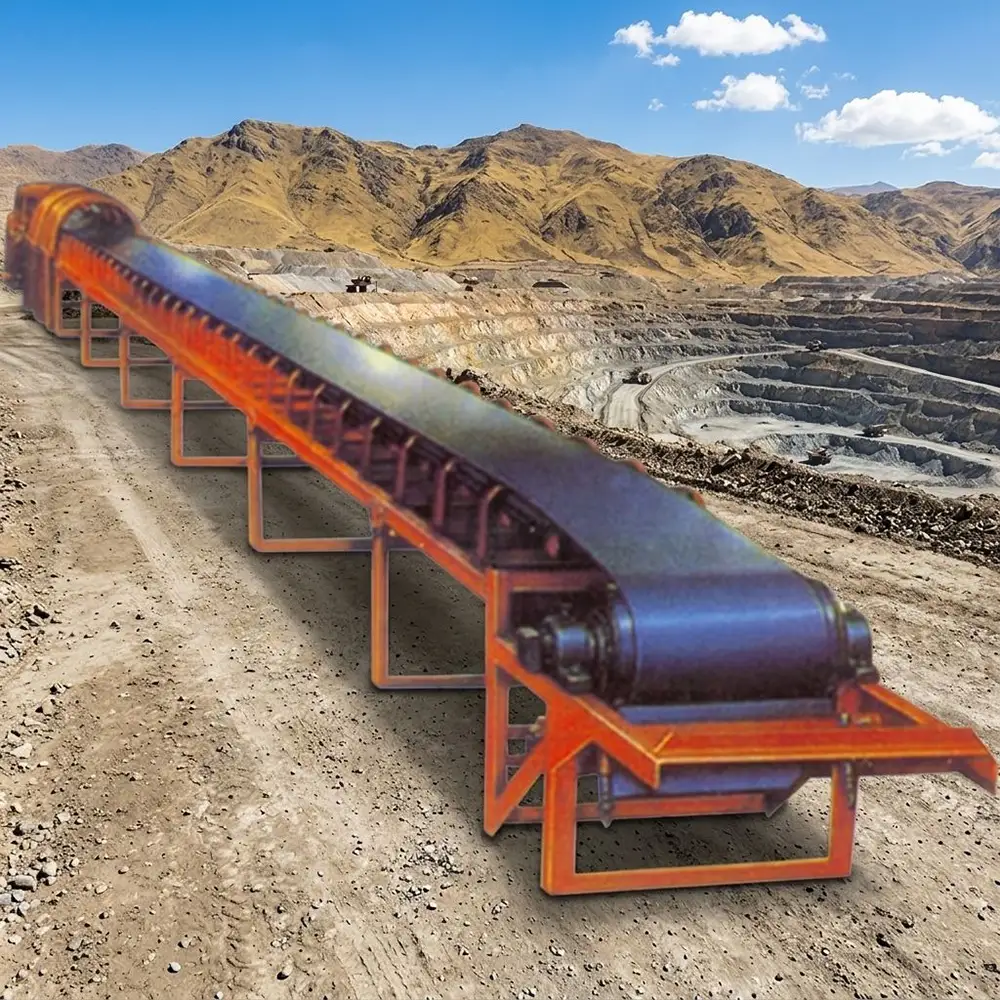
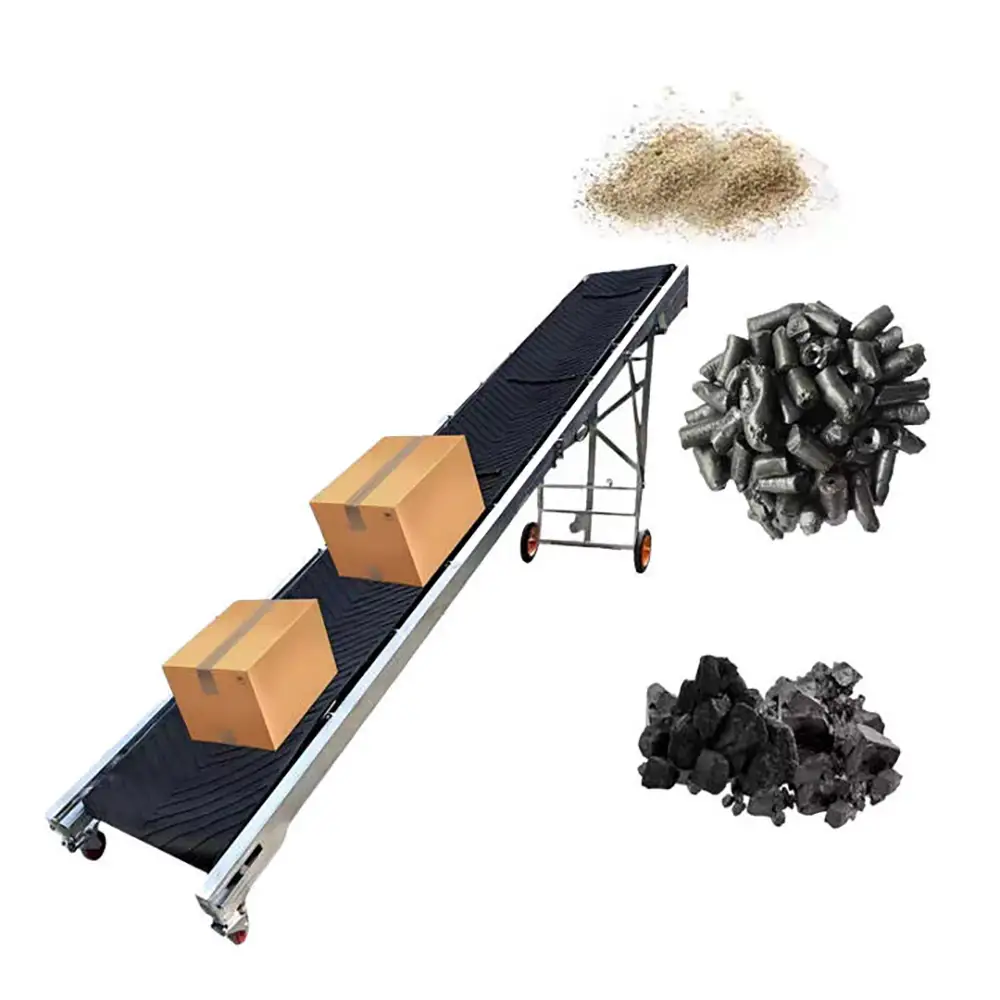
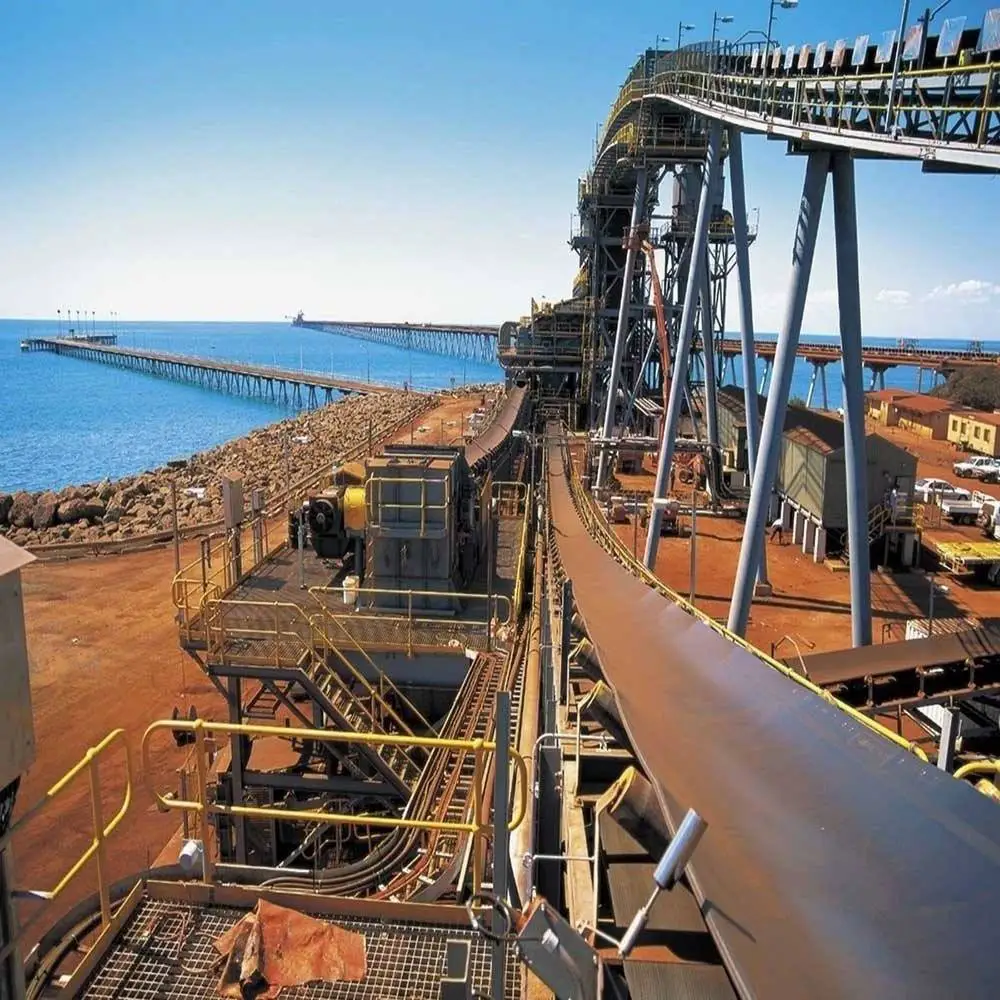
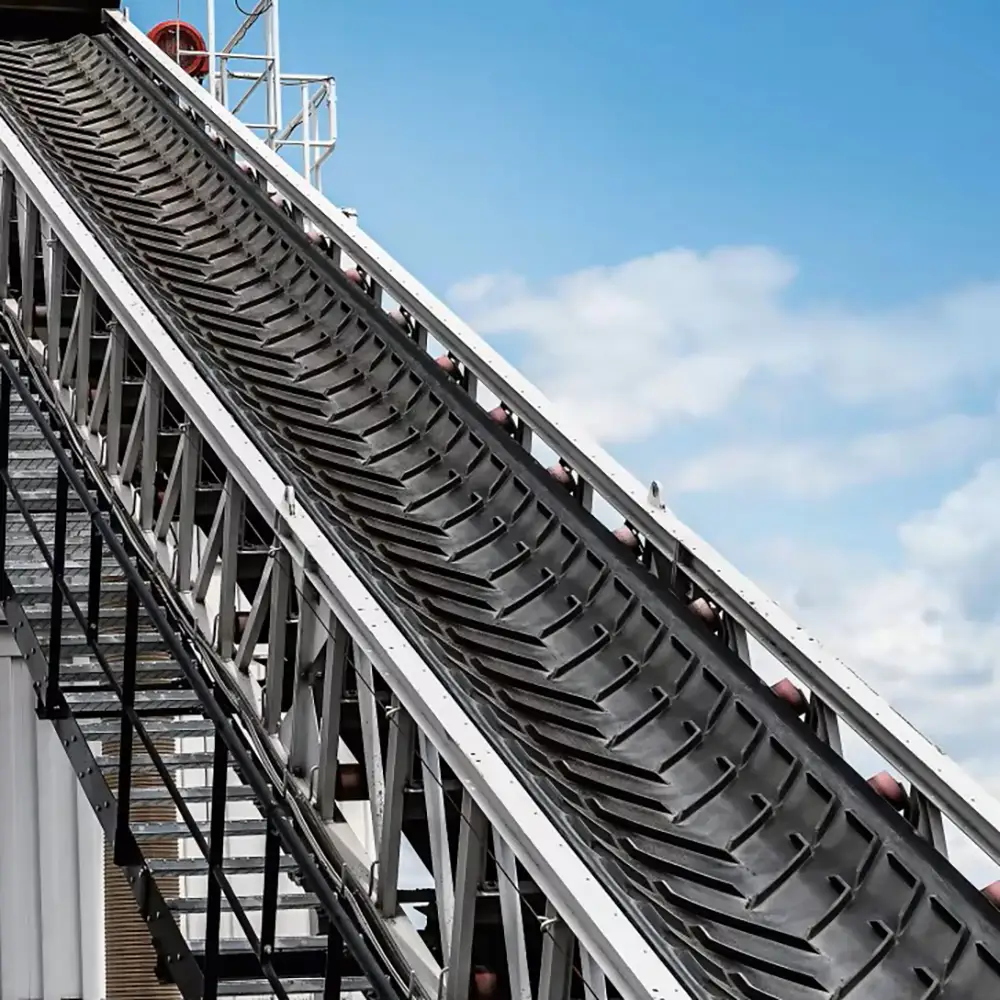
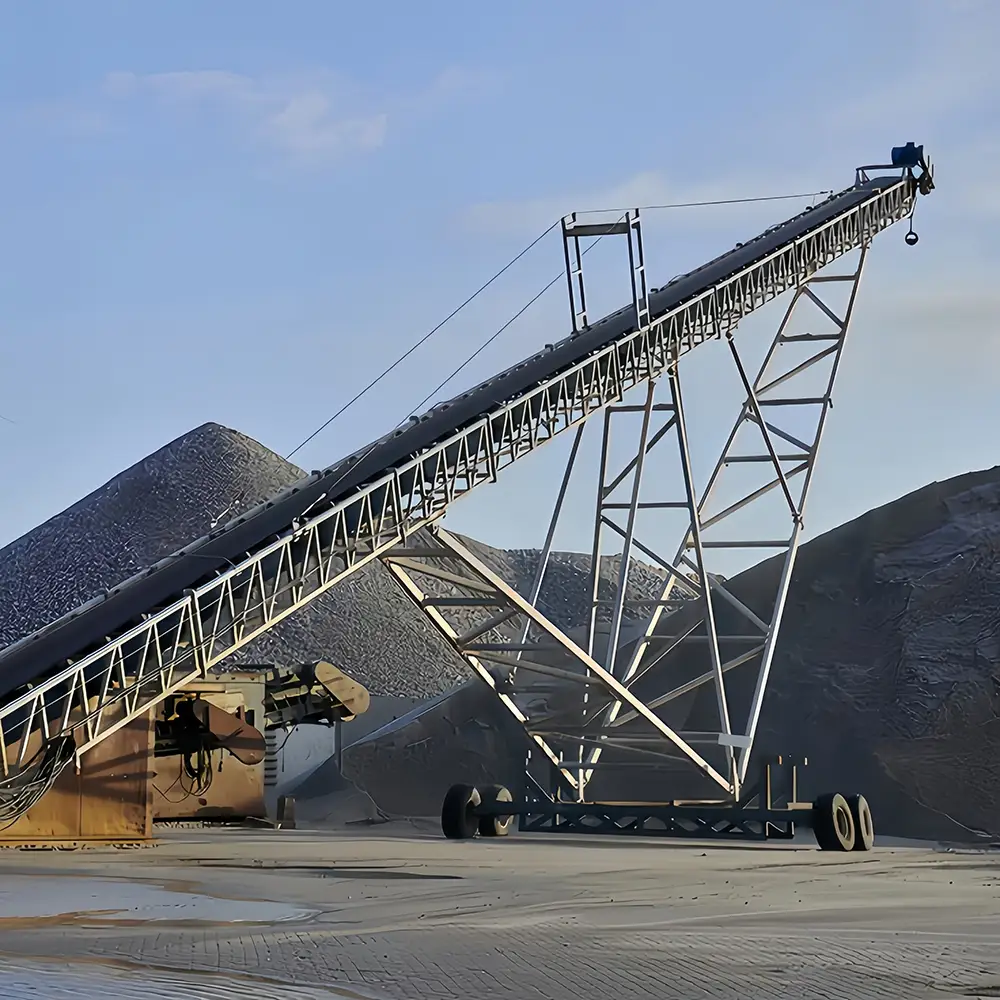
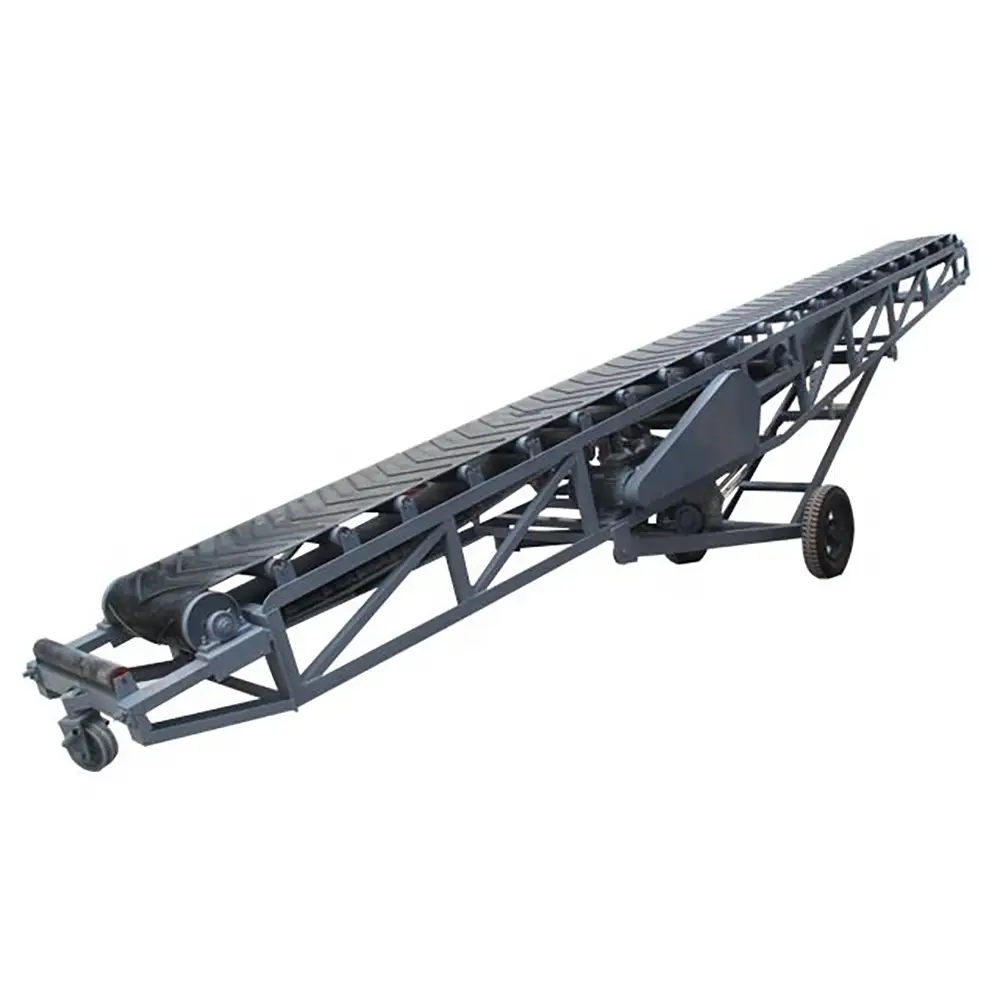
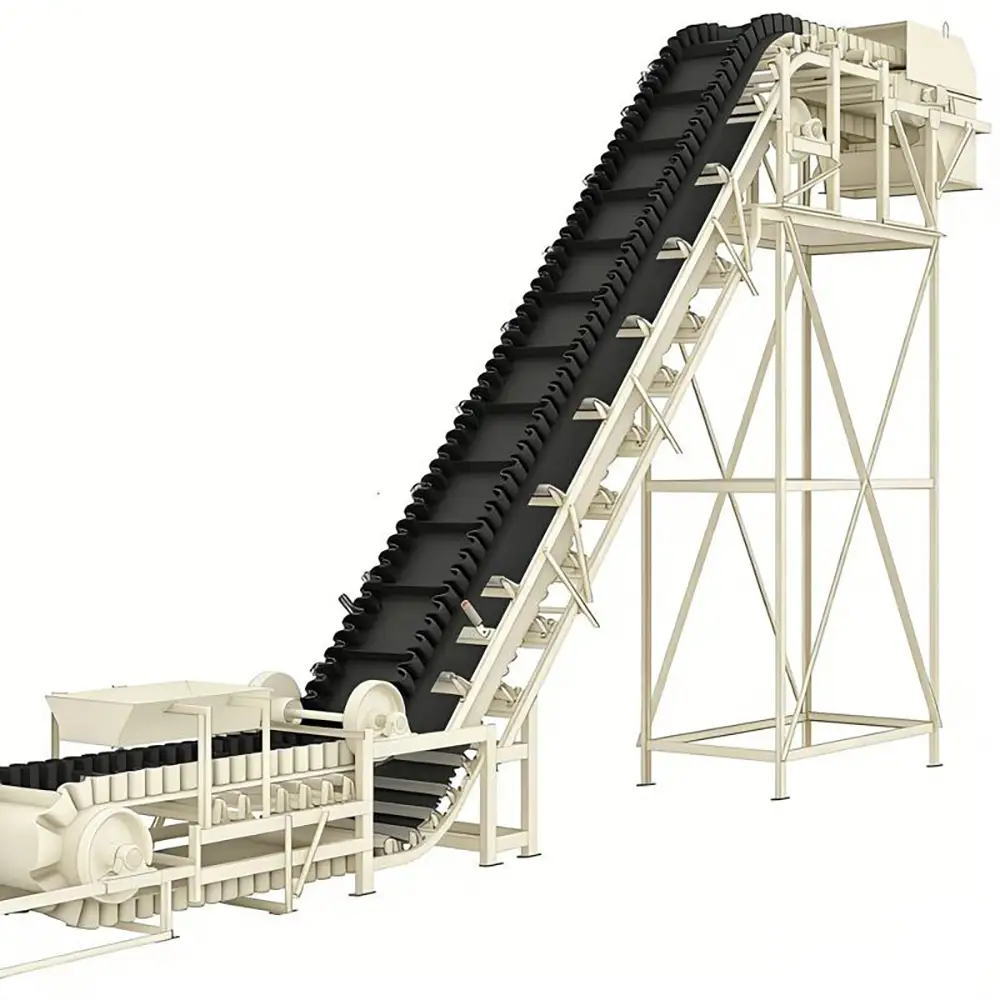
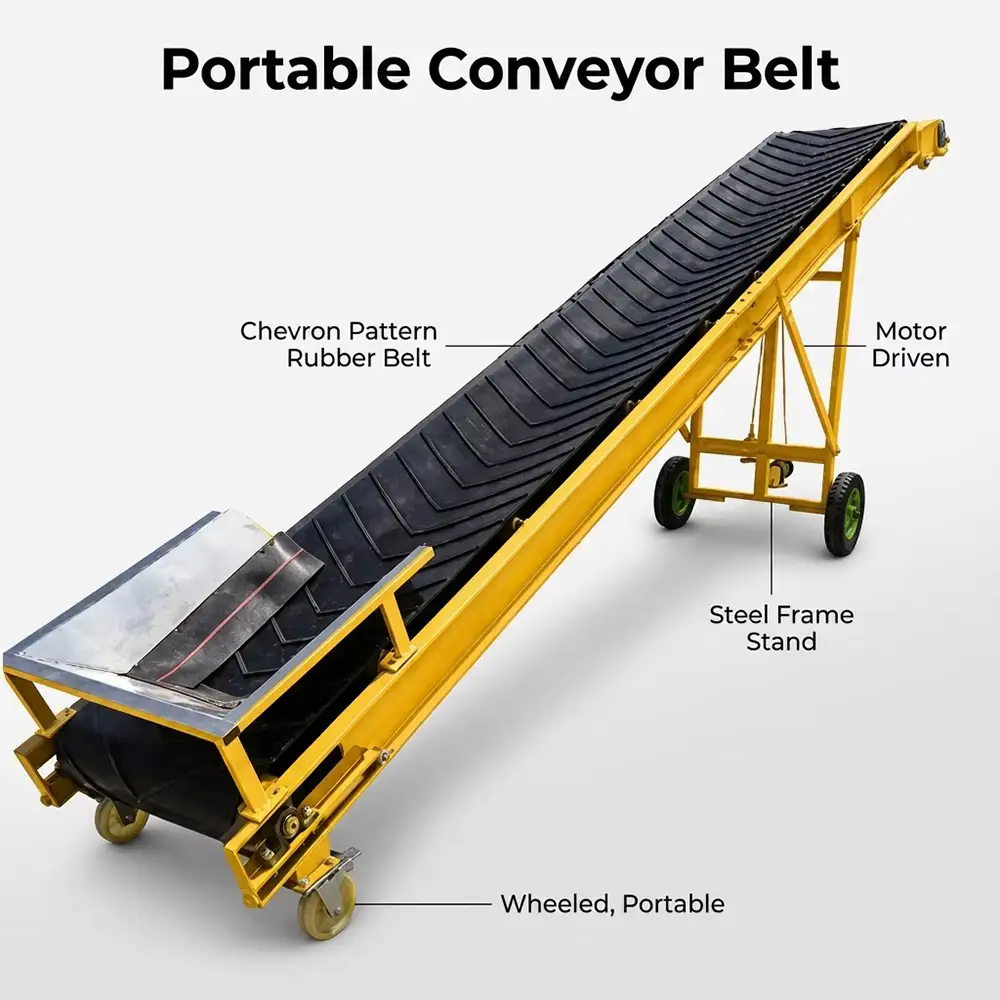
TD75 belt conveyor has the advantages of big conveying capacity, ;low running cost, simple structure, convenient repair and standard parts, so it is widely used to convey loose materials and finished products in mining, metallurgy, coal industry etc.. The working temperature is from -10ºC to +40ºC and the temperature of conveying material is under 70ºC. Heat resistant belt should be choosed when the material temperature is between 80-120ºC. Tt is suitable to adopt acidity resistant, alkalinity resistant, corrosivity resistant or oil resistant rubber belt or plastic belt when conveying acid, alkalic, corrosive materials or materials containing oil and organic solvent.
Features
1. High-efficiency
2. Standard parts.
3. Simple structure
4. Easy Maintenance
5. low running cost
|
Carrier roller |
Belt speed (m/s) |
Belt width (mm) |
|
500 |
650 |
800 |
1000 |
1200 |
1400 |
|
Conveying capacity (t/h) |
|
Grooved rollers |
0.8 |
78 |
131 |
/ |
/ |
/ |
/ |
|
1.0 |
97 |
164 |
278 |
435 |
655 |
891 |
|
1.25 |
122 |
206 |
348 |
544 |
819 |
1115 |
|
1.6 |
156 |
264 |
445 |
696 |
1048 |
1427 |
|
2.0 |
191 |
323 |
546 |
853 |
1284 |
1748 |
|
2.5 |
232 |
391 |
661 |
1033 |
1556 |
2118 |
|
3.15 |
/ |
/ |
824 |
1233 |
1858 |
2528 |
|
4.0 |
/ |
/ |
/ |
/ |
2202 |
2996 |
|
Parellel rollers |
0.8 |
41 |
67 |
118 |
/ |
/ |
/ |
|
1.0 |
52 |
88 |
147 |
230 |
345 |
469 |
|
1.25 |
66 |
110 |
184 |
288 |
432 |
588 |
|
1.6 |
84 |
142 |
236 |
368 |
553 |
753 |
|
2.0 |
103 |
174 |
289 |
451 |
677 |
922 |
|
2.5 |
125 |
131 |
350 |
546 |
821 |
1117 |
TD75 Belt Conveyor, Belt Conveying Equipment
The TD75 Belt Conveyor is a continuous bulk material handling machine designed for reliable transportation of coal, ore, limestone, aggregate, sand, gravel, cement materials, and other industrial products. As a widely used type of Belt Conveying Equipment, the TD75 conveyor is suitable for mining, metallurgy, coal processing, cement production, quarrying, power plants, ports, construction materials, and general industrial applications.
The TD75 belt conveyor uses a continuous rubber conveyor belt supported by carrying and return rollers. An electric motor and gearbox drive the belt, allowing materials to move steadily from the feeding point to the discharge point. Its relatively simple structure, flexible layout, and continuous conveying capability make it suitable for both individual material transfer and integration into complete production lines.
Depending on project requirements, the conveyor can be supplied in different belt widths, lengths, speeds, capacities, inclination angles, and drive configurations.
What Is a TD75 Belt Conveyor?
The TD75 Belt Conveyor is a traditional fixed belt conveying system designed for continuous transportation of bulk materials. The "TD75" designation is commonly associated with a standardized belt conveyor series used in industrial material handling applications.
The conveyor can be configured for horizontal, inclined, or suitable downhill transportation. It can also be arranged with different loading and discharge points according to the plant layout.
Typical materials include:
Coal
Iron ore
Copper ore
Limestone
Crushed stone
Aggregate
Gravel
Sand
Cement materials
Gypsum
Fertilizer
Grain
Biomass
Industrial raw materials
The system is particularly useful where materials must be transported continuously over a defined route.
TD75 Belt Conveyor Construction
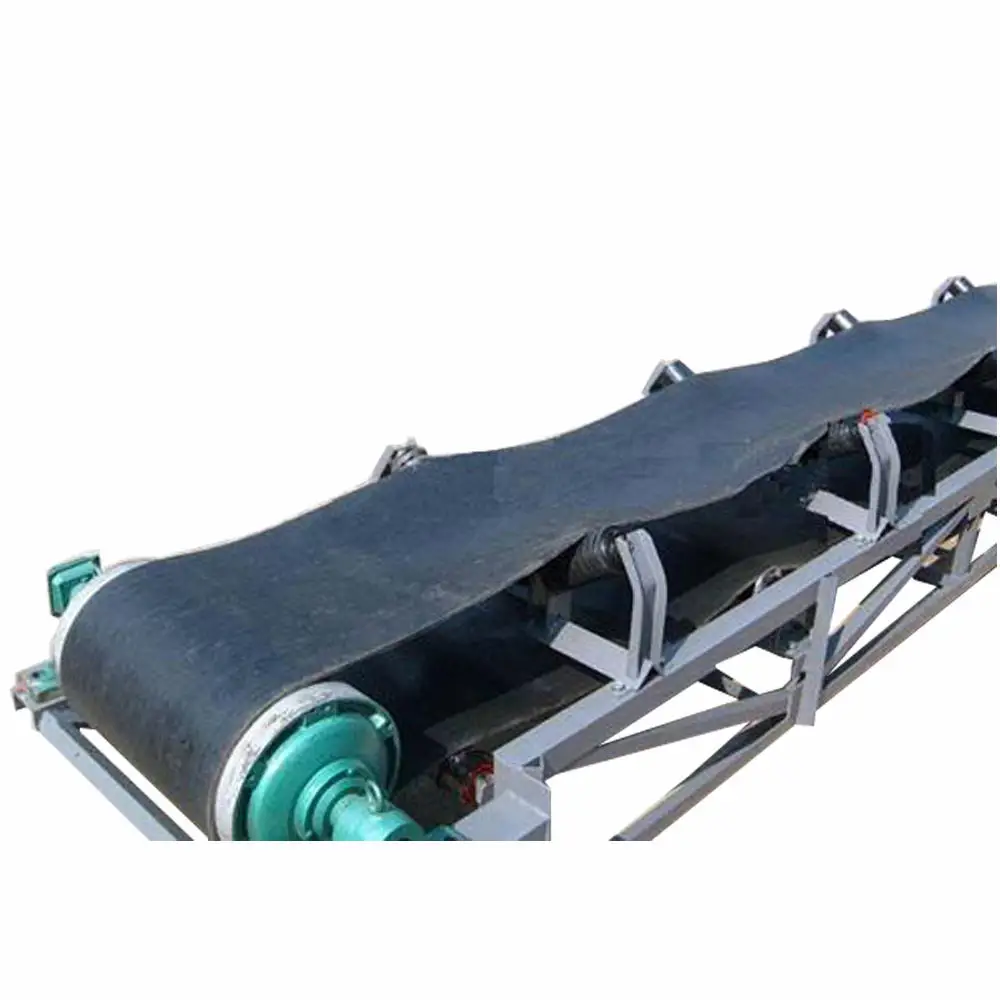
A typical TD75 conveyor consists of a conveyor belt, head pulley, tail pulley, carrying rollers, return rollers, drive unit, tensioning device, conveyor frame, feeding hopper, discharge chute, and supporting structure.
The conveyor belt provides the material-carrying surface. For mining and aggregate applications, suitable rubber belts can be selected according to tensile strength, wear resistance, material characteristics, and operating conditions.
The drive system normally consists of an electric motor, gearbox, coupling, and drive pulley. It supplies the torque required to move both the belt and the transported material.
The carrying idlers support the loaded belt, while return rollers support the empty belt on the return side.
The tensioning system maintains suitable belt tension and helps compensate for belt elongation during operation.
Main Components
Conveyor Belt
The belt is selected according to material type, conveying capacity, belt speed, conveyor length, inclination, and working environment.
For abrasive materials such as crushed rock and ore, wear-resistant belt options can be considered to improve service life.
Drive Unit
The drive unit provides the mechanical power required for continuous belt movement. Motor and gearbox specifications depend on conveyor length, load, belt speed, inclination, and conveying resistance.
Carrying Idlers
Carrying rollers support the loaded belt and help maintain the appropriate trough shape for bulk material transportation.
Return Idlers
Return rollers support the empty belt as it travels back toward the loading end.
Pulleys
The head pulley transfers driving force to the belt, while the tail pulley guides the belt at the opposite end. Additional bend or snub pulleys can be incorporated where required by the conveyor layout.
Conveyor Frame
The steel frame supports the belt, rollers, pulleys, and other components. It can be designed for fixed installation and different conveying distances.
Tensioning Device
A suitable tensioning arrangement helps maintain belt tension and stable belt tracking during operation.
Feed Hopper and Discharge Chute
Hoppers and chutes help control material flow at loading and unloading points and can be customized for connection with other machinery.
How Does a TD75 Belt Conveyor Work?
The operating principle of the TD75 conveyor is straightforward.
Material is supplied to the conveyor through a hopper, feeder, chute, or upstream processing machine. The electric motor drives the gearbox and drive pulley.
As the drive pulley rotates, friction between the pulley and conveyor belt causes the belt to move continuously along the conveyor frame.
The loaded belt is supported by carrying rollers as it travels toward the discharge point. At the head pulley, the belt changes direction and the material leaves the belt and enters a stockpile, hopper, crusher, screen, storage system, truck loading point, or another conveyor.
The empty belt then returns along the lower section through the return rollers and travels back to the feeding end.
This continuous loop allows the TD75 Belt Conveyor to operate as part of a stable, automated material handling process.
Mining and Industrial Applications
Mining
The TD75 conveyor can transport ore, coal, crushed rock, and mineral materials between mining and processing areas.
It can be installed downstream of crushers, screens, feeders, or other mineral processing equipment.
Coal Handling
Coal handling facilities can use belt conveyors to move coal between stockpiles, crushers, screens, transfer stations, and loading systems.
Cement Industry
The conveyor can transport limestone, gypsum, coal, additives, and other bulk materials used in cement production.
Quarrying and Aggregate
Crushed stone, gravel, sand, and aggregate can be continuously transported from crushers and screens to stockpiles or subsequent processing stages.
Power Plants
Belt conveying equipment can be used in bulk fuel and material handling systems where continuous transportation is required.
Ports and Terminals
The conveyor can transfer bulk materials between storage areas, loading systems, processing equipment, and transportation facilities.
Key Advantages of TD75 Belt Conveyor
Continuous Conveying
The TD75 provides continuous material transportation, making it suitable for production lines with stable material flow.
Heavy-Duty Configuration
The conveyor can be equipped with suitable belts, rollers, frames, and drive systems for demanding industrial applications.
Flexible Layout
The conveyor can be designed with different lengths, widths, inclinations, loading points, and discharge arrangements.
High Material Handling Capacity
Appropriate belt width and speed can provide efficient transportation of large volumes of bulk materials.
Long-Distance Conveying
The system can be configured for relatively long conveying routes and multiple transfer points.
Easy Integration
TD75 conveyors can be connected with crushers, vibrating screens, feeders, hoppers, silos, stockpiles, and other material handling machinery.
Lower Manual Handling
Continuous mechanical transportation can reduce manual material movement and help improve production workflow.
Customizable Design
Specifications can be adjusted according to material characteristics, required capacity, plant layout, and working environment.
TD75 Belt Conveyor Selection Guide
Choosing the correct conveyor requires several important parameters.
Material Type: Identify the material being transported, such as coal, ore, limestone, aggregate, sand, or cement materials.
Material Particle Size: Maximum particle size is important for belt width, loading equipment, and impact protection.
Bulk Density: Material density affects conveyor capacity and drive power requirements.
Capacity: Specify the desired throughput, normally in tons per hour.
Conveyor Length: Total conveying distance affects structural requirements and drive configuration.
Belt Width: Belt width should be matched to material size and required conveying capacity.
Belt Speed: The appropriate speed depends on capacity, material characteristics, loading conditions, and dust control requirements.
Inclination: Horizontal and inclined configurations have different belt and power requirements.
Operating Environment: Outdoor, dusty, wet, corrosive, or abrasive environments may require specialized components.
Maintenance
Regular inspection is essential for reliable TD75 conveyor operation.
Operators should periodically inspect the conveyor belt, rollers, pulleys, bearings, motor, gearbox, tensioning device, frame, fasteners, and transfer points.
Belt tracking and tension should be checked regularly. Misalignment can result in edge wear, material spillage, and premature belt damage.
Worn rollers should be replaced promptly. Material buildup around pulleys and rollers should be removed to reduce friction and tracking problems.
The drive system and gearbox should be serviced according to the recommended maintenance schedule.
For dusty mining and cement applications, appropriate dust suppression, covers, belt cleaners, and skirting can help improve the working environment and reduce material loss.
Safety Features
A TD75 conveyor can be equipped with suitable safety devices depending on the project configuration.
Possible equipment includes emergency stop switches, pull-cord emergency switches, belt misalignment protection, speed monitoring, guards, protective covers, and other monitoring devices.
Access areas around drive units, pulleys, and moving components should be appropriately guarded. Maintenance and inspection should be performed only after the conveyor has been safely stopped and isolated according to applicable procedures.
OEM and Custom Belt Conveying Equipment
Although the TD75 series provides a standardized foundation, conveyor systems can be configured to meet individual project requirements.
We can customize conveyor length, belt width, conveying capacity, belt speed, drive power, support structure, inclination, feeding arrangement, discharge height, and transfer points.
Additional equipment may include feed hoppers, discharge chutes, belt cleaners, skirt boards, dust covers, impact beds, maintenance walkways, protective guards, and control systems.
For larger projects, TD75 conveyors can be integrated into complete Mining Conveyor Systems, aggregate plants, cement material handling systems, coal handling facilities, and other bulk material processing lines.
Why Choose Us?
We provide TD75 Belt Conveyor and customized Belt Conveying Equipment for mining, cement, coal, quarrying, aggregate, power generation, construction materials, and industrial material handling.
TD75 Belt Conveyor Solutions
Heavy-Duty Conveyor Configurations
Customized Belt Width and Length
Reliable Drive and Transmission Systems
Suitable for Mining and Cement Applications
Wear-Resistant Belt Options
Professional Conveyor System Design
Flexible Horizontal and Inclined Layouts
Integration With Crushing and Screening Equipment
OEM and Custom Manufacturing
Factory Direct Supply
Technical Support and After-Sales Service
We can configure the conveyor according to material type, required capacity, conveying distance, elevation, site layout, and operating environment to create a practical and reliable material handling solution.
FAQs
1. What is a TD75 Belt Conveyor?
A TD75 Belt Conveyor is a fixed continuous belt conveying machine used to transport bulk materials in mining, cement, coal, quarrying, aggregate, and industrial applications.
2. What materials can a TD75 conveyor transport?
It can transport coal, ore, limestone, aggregate, crushed stone, sand, gravel, cement materials, gypsum, fertilizer, biomass, and other suitable bulk products.
3. Is TD75 suitable for mining?
Yes. With an appropriate heavy-duty configuration, it can be used for ore, coal, crushed rock, and other mining materials.
4. Can the TD75 conveyor be used in a cement plant?
Yes. It can transport limestone, gypsum, coal, additives, and other bulk materials within cement production and material handling systems.
5. Can the conveyor length be customized?
Yes. Conveyor length can be designed according to the conveying distance and plant layout.
6. Can the belt width be customized?
Yes. Belt width can be selected according to material particle size, required capacity, and belt speed.
7. Can a TD75 conveyor transport materials uphill?
Yes. Suitable inclined configurations can be designed. The maximum practical inclination depends on material characteristics, belt type, and conveying requirements.
8. How is the motor power selected?
Motor power depends on conveying capacity, conveyor length, material weight, belt speed, inclination, and total conveying resistance.
9. Can TD75 conveyors be connected to other equipment?
Yes. They can be integrated with feeders, crushers, vibrating screens, hoppers, stockpiles, silos, and other conveying systems.
10. What information is needed to select a TD75 conveyor?
Please provide the material type, required capacity, particle size, conveying length, lifting height or inclination, belt width if known, feeding height, discharge height, and power supply. A site layout or application drawing is also helpful.
Prev:Sorry, no information
Next:
DT II Type Fixed Belt Conveyor, Mining Conveyor, Cement Industry Belt Conveying Equipment
TAG:
Mining Belt Conveyor,
Industrial Belt Conveyor,
Bulk Material Conveyor,
Mining Material Handling,
Material Handling Conveyor,
Industrial Conveyor Equipment,
Limestone Conveyor,
Coal Conveyor,
Continuous Belt Conveyor,
Aggregate Conveyor,
Quarry Conveyor,
Stone Conveyor,
Heavy Duty Conveyor,
Long Distance Belt Conveyor,
Fixed Conveyor System,
Mining Conveyor System,
Mining Conveyor,
Ore Conveyor,
Cement Conveyor,
Cement Plant Conveyor,
Belt Conveyor System,
Heavy Duty Belt Conveyor,
Fixed Belt Conveyor,
Belt Conveying Equipment,
TD75 Belt Conveyor,
TD75 Conveyor,
TD75 Belt Conveying Equipment,
TD75 Belt Conveyor System,
Belt Conveyor Equipment,
Related Category:
TD75 Belt Conveyor, TD75 Belt Conveying Equipment, TD75 Conveyor, Fixed Belt Conveyor, Heavy Duty Belt Conveyor China, suppliers, manufacturers, factory, customized, wholesale, quotation, made in China