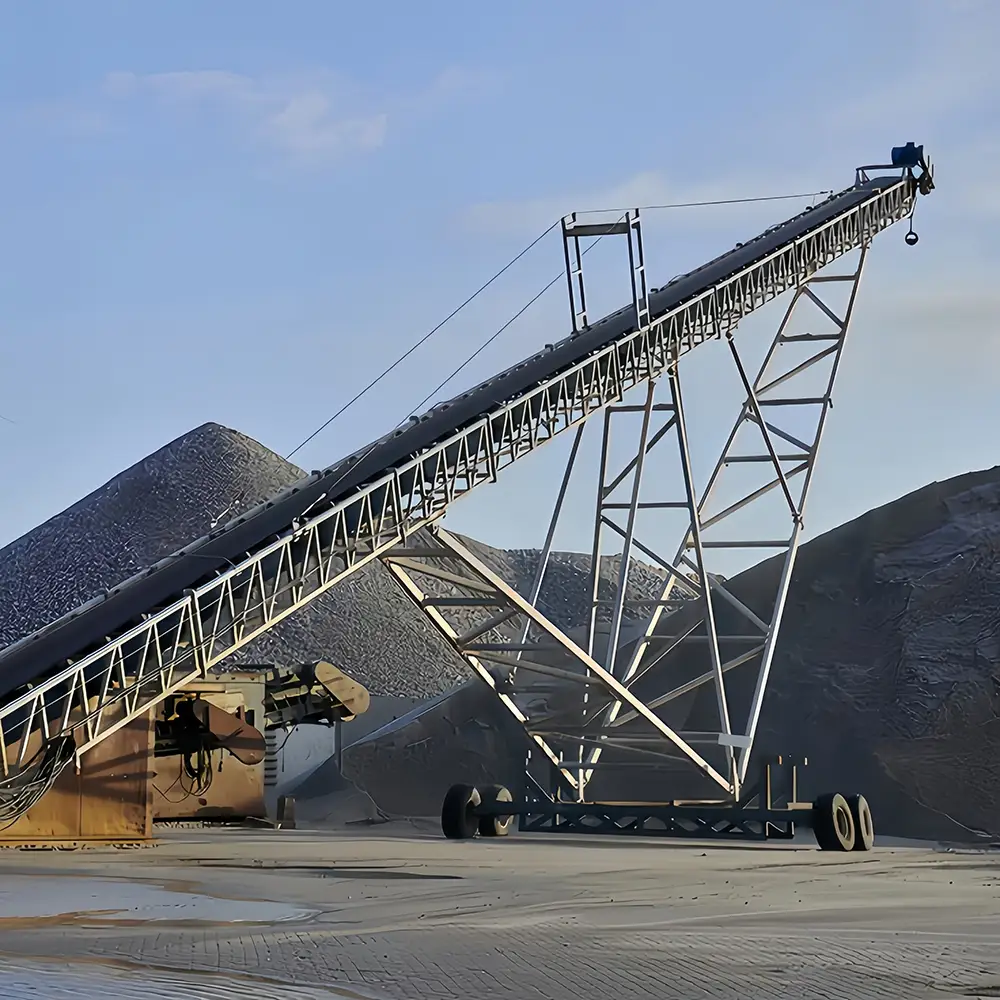
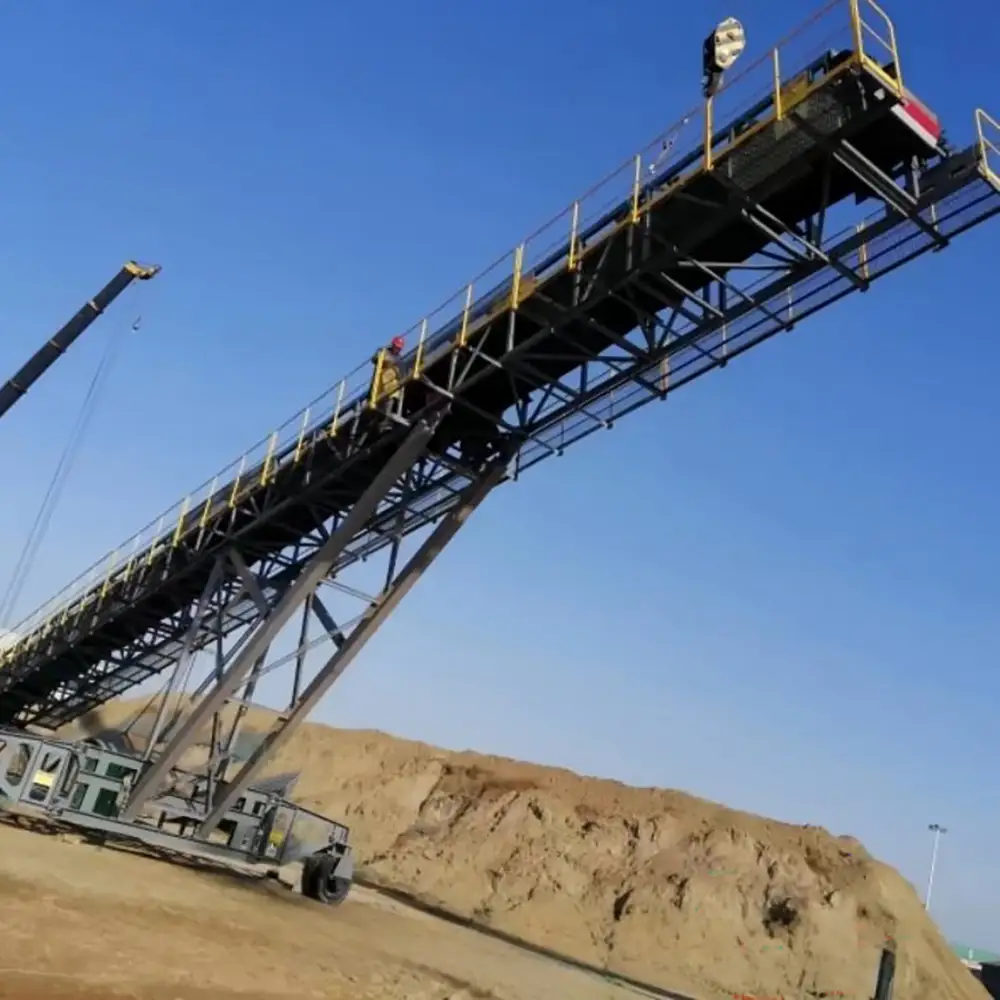
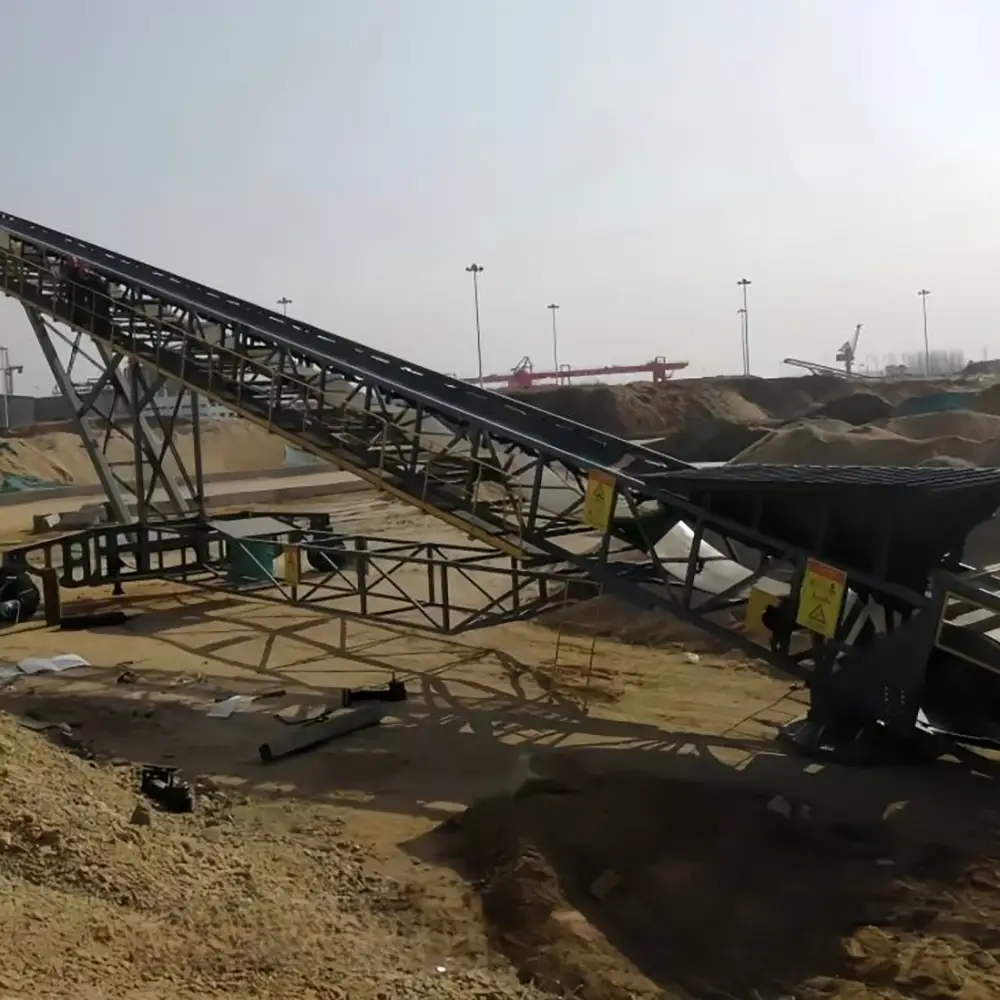
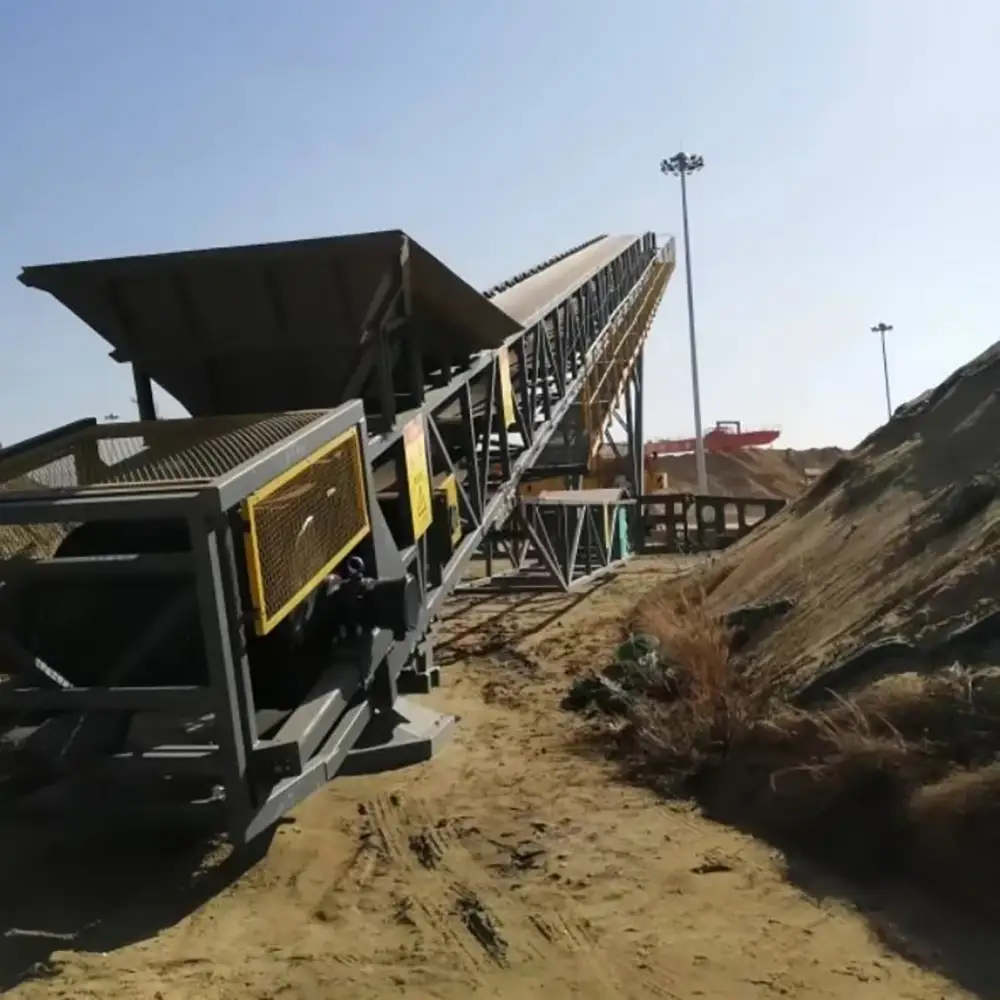
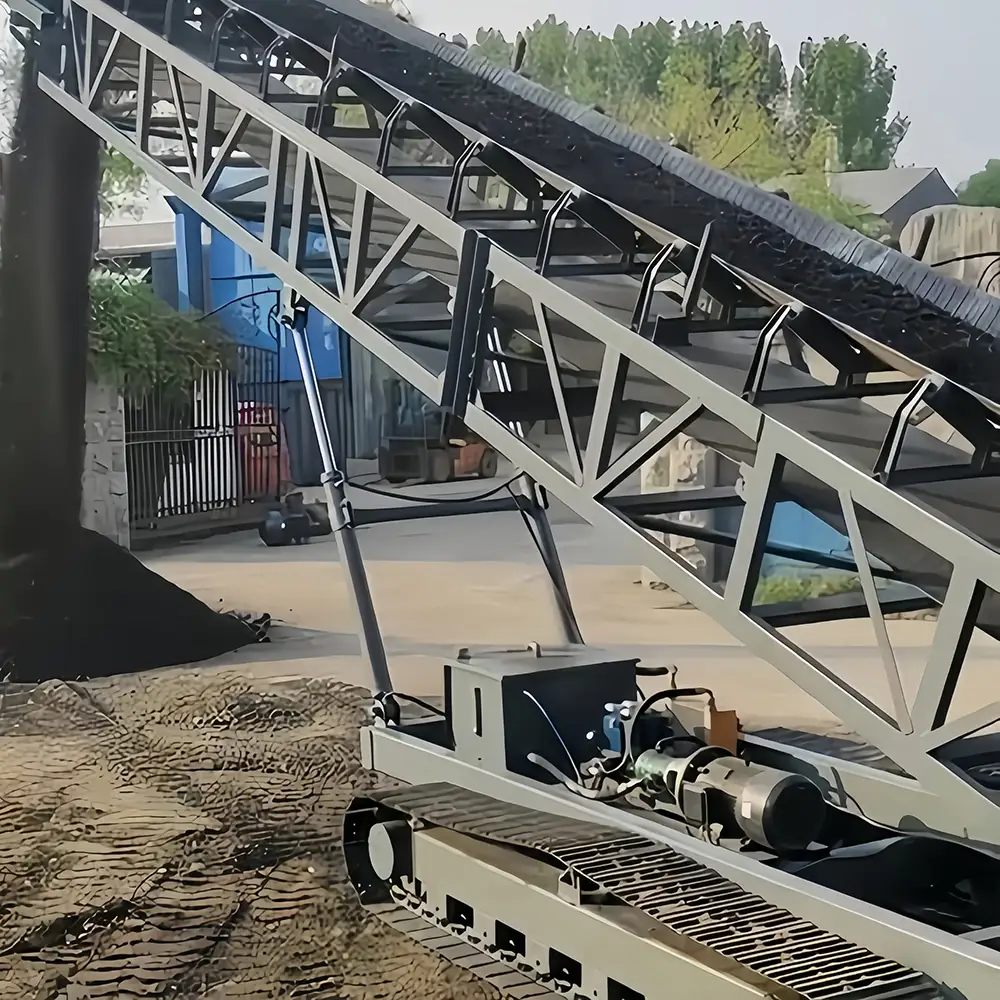
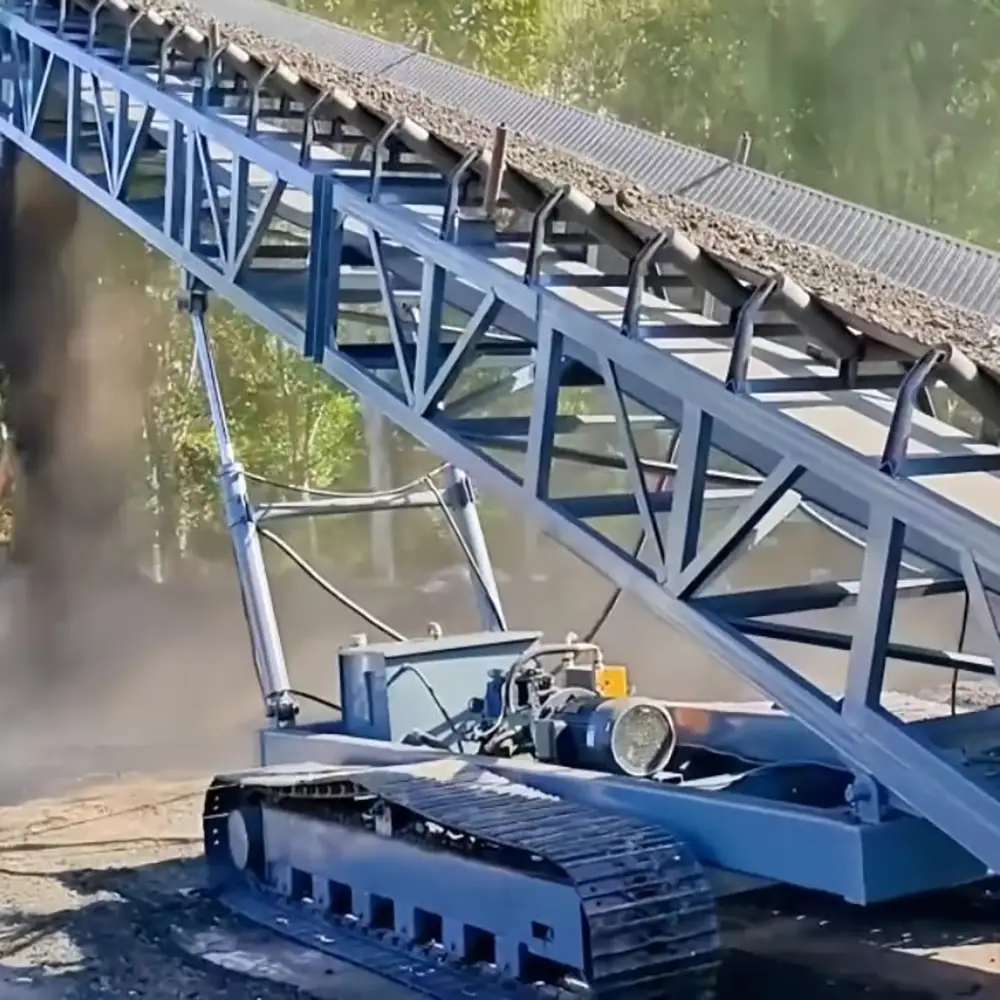
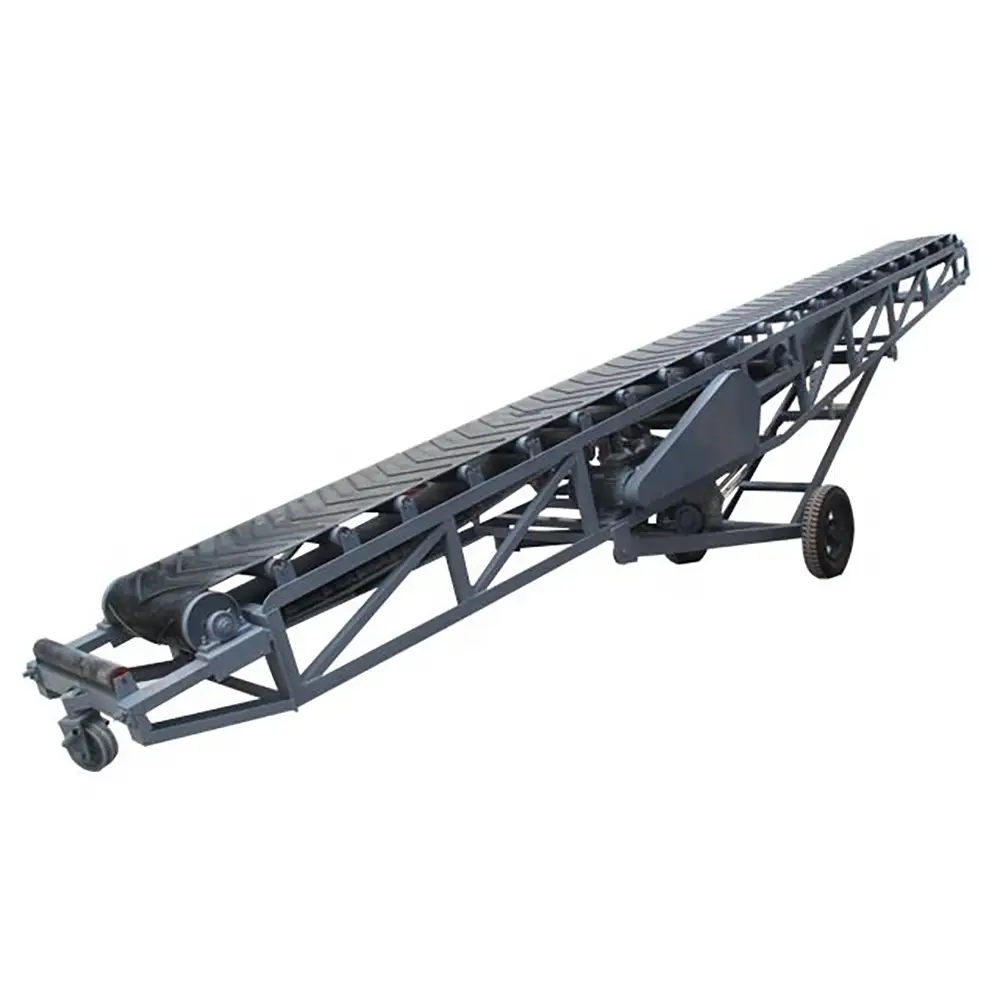
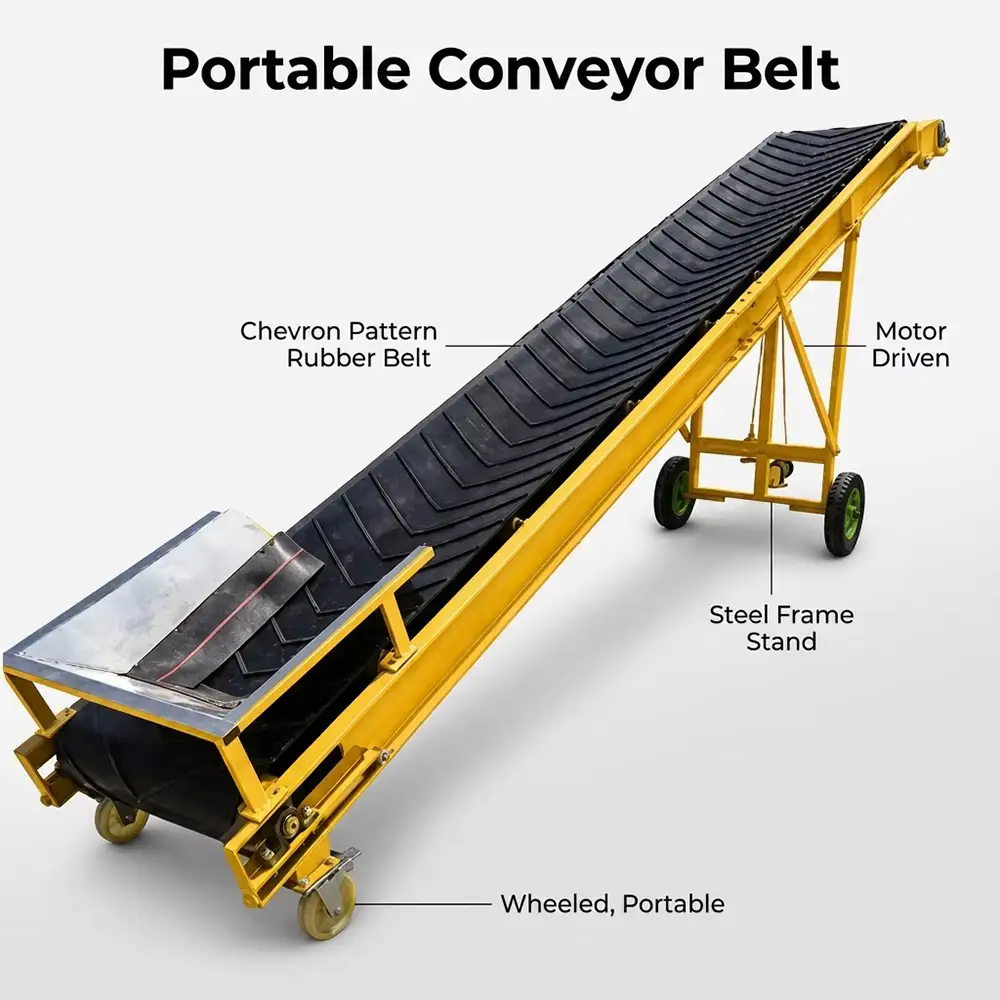
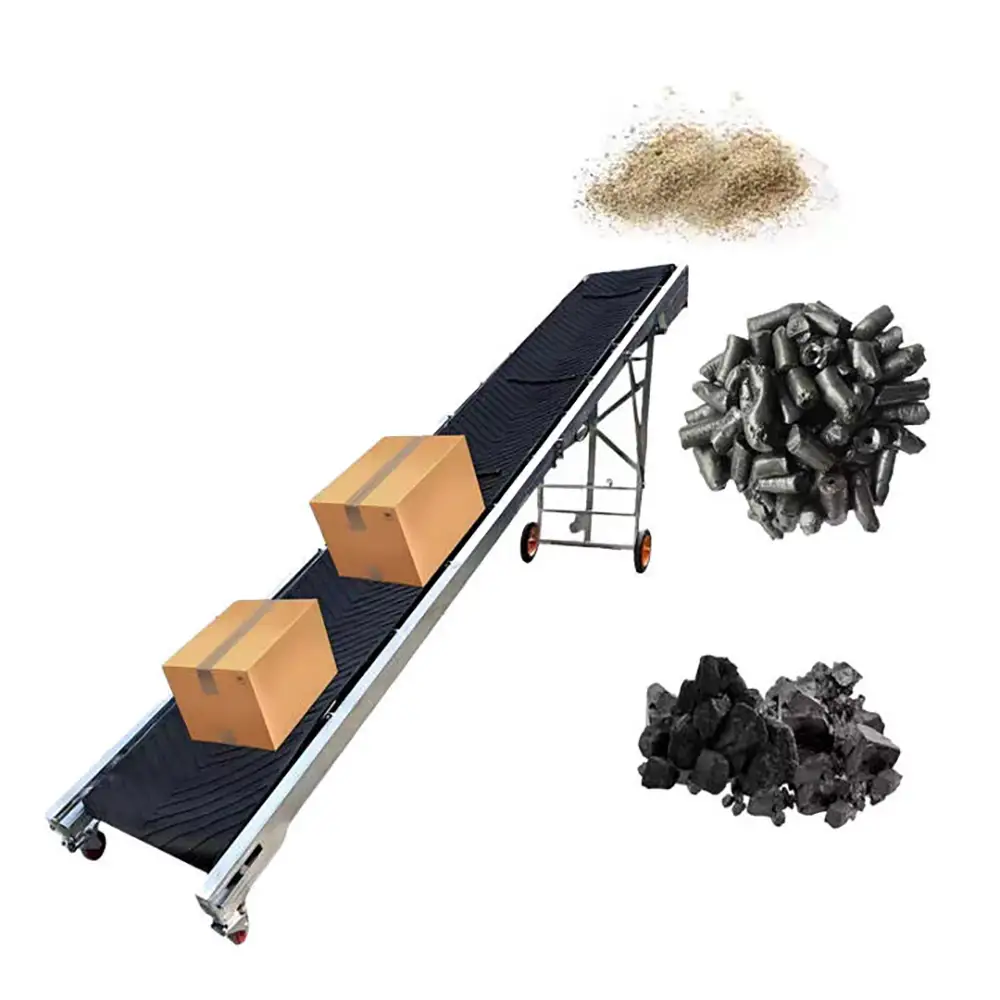
Portable Rubber Belt Conveyor Wheeled Motor Driven Incline Conveyor for Construction Quarry Mining Aggregate Transport
Designed to meet the diverse needs of industries, these conveyors represent a fusion of efficiency, durability, and versatility.
|
Machine frame |
#201SS, 304SS, stainless steel , painted steel |
|
Belt character |
PP belt, PVC belt, PU belt, stainless steel belt |
|
Production capacity |
4-8.5m3/H |
|
Machine height |
7650mm, or customized. |
|
Voltage |
Three phase AC 380v, 50HZ,60HZ |
|
Power Supply |
1.2KW |
|
Weight |
850KG |
|
Packing size |
8090mm(L)*760mm(W)*680(H) |
Inclined Belt Conveyor, Mine Equipment Conveyor
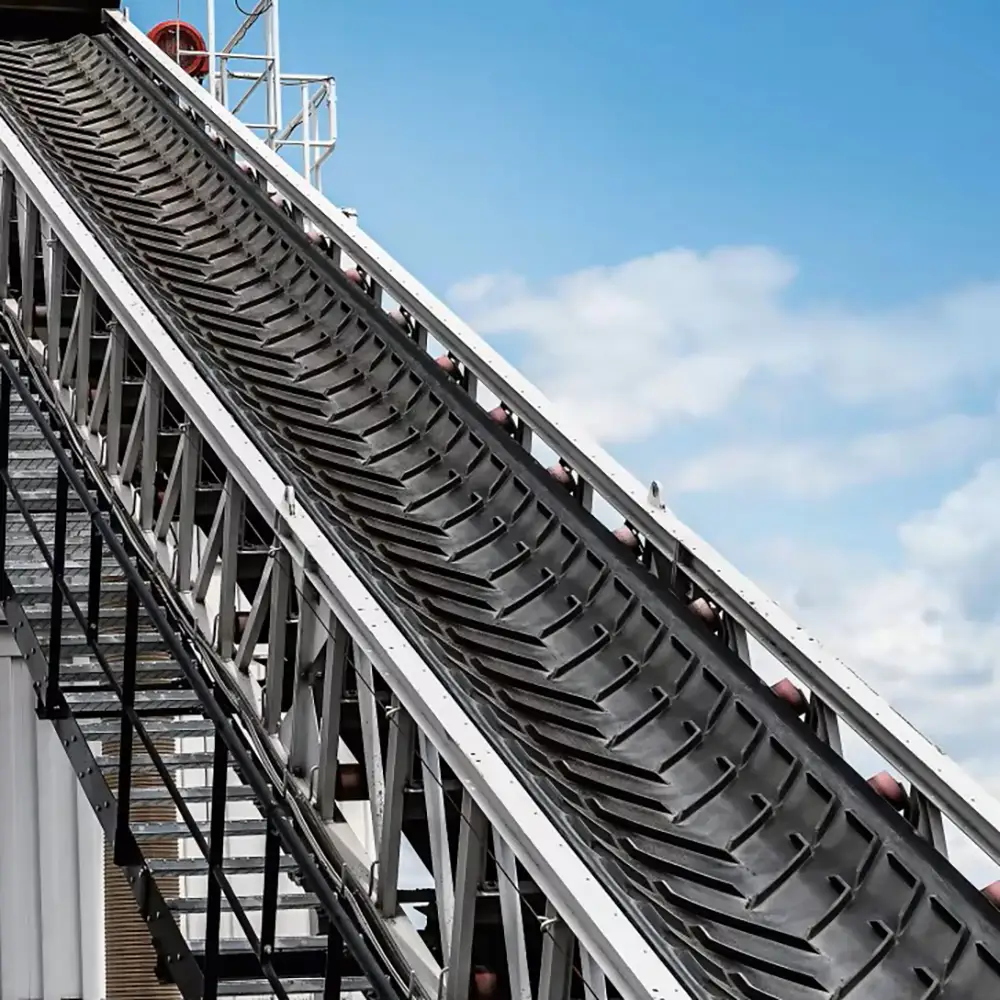
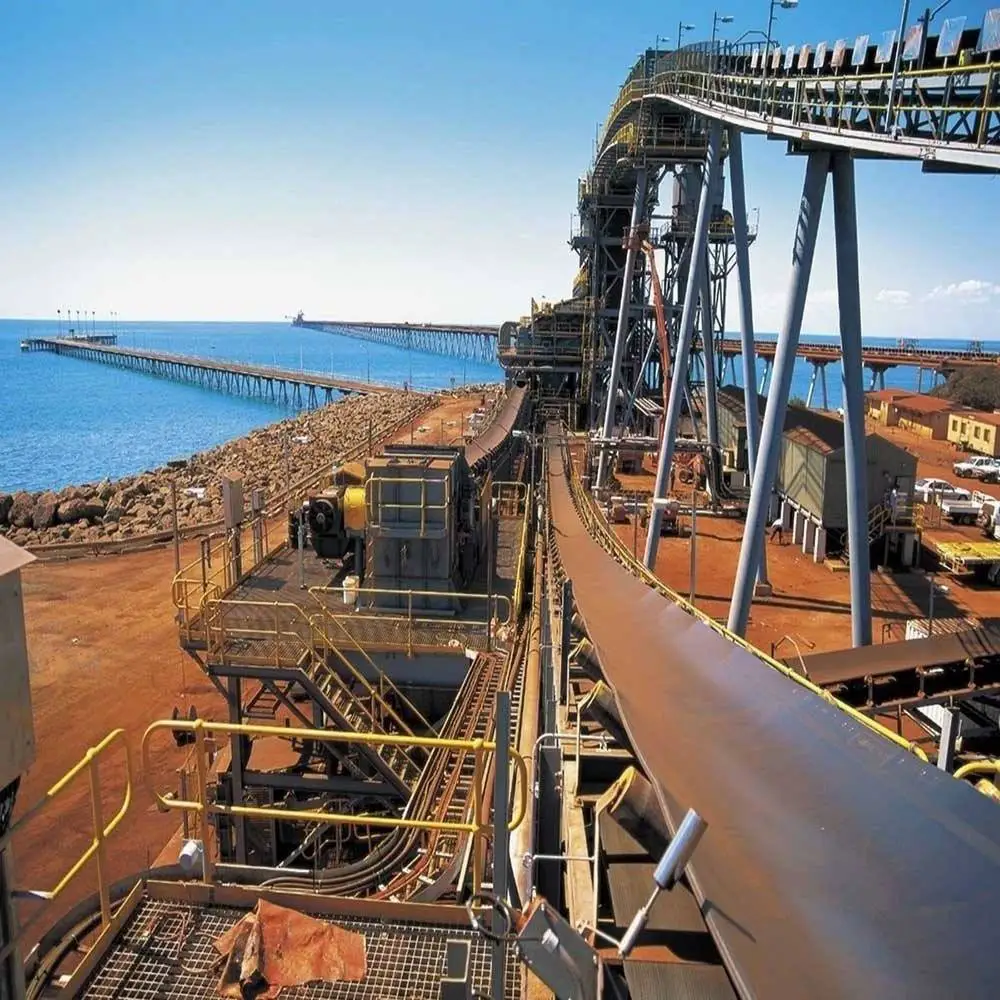
An Inclined Belt Conveyor is a continuous material handling system designed to transport bulk materials from a lower elevation to a higher elevation. As a type of Mine Equipment Conveyor, it is widely used in mining, quarrying, aggregate processing, coal handling, construction materials, recycling, and other industries that require reliable vertical or inclined transportation.
Compared with horizontal conveyors, inclined belt conveyors provide an efficient solution when materials need to move between different processing levels, stockpiles, hoppers, crushers, screens, and loading points. The conveyor angle, belt type, cleat configuration, frame structure, and drive system can be customized according to the material and site conditions.
For demanding mining environments, the conveyor can be designed with a heavy-duty frame, reinforced belt, durable rollers, high-performance drive motor, and protective components to withstand continuous operation and abrasive materials.
What Is an Inclined Belt Conveyor?
An inclined belt conveyor uses a continuously moving belt to carry materials upward or downward along an inclined route. The belt is driven by an electric motor and transmission system, while rollers or slider beds support the loaded belt.
Depending on the application, the conveyor can transport materials such as:
Coal
Iron ore
Copper ore
Limestone
Gravel
Sand
Crushed stone
Cement
Aggregate
Wood chips
Recycled materials
Construction waste
Bulk industrial materials
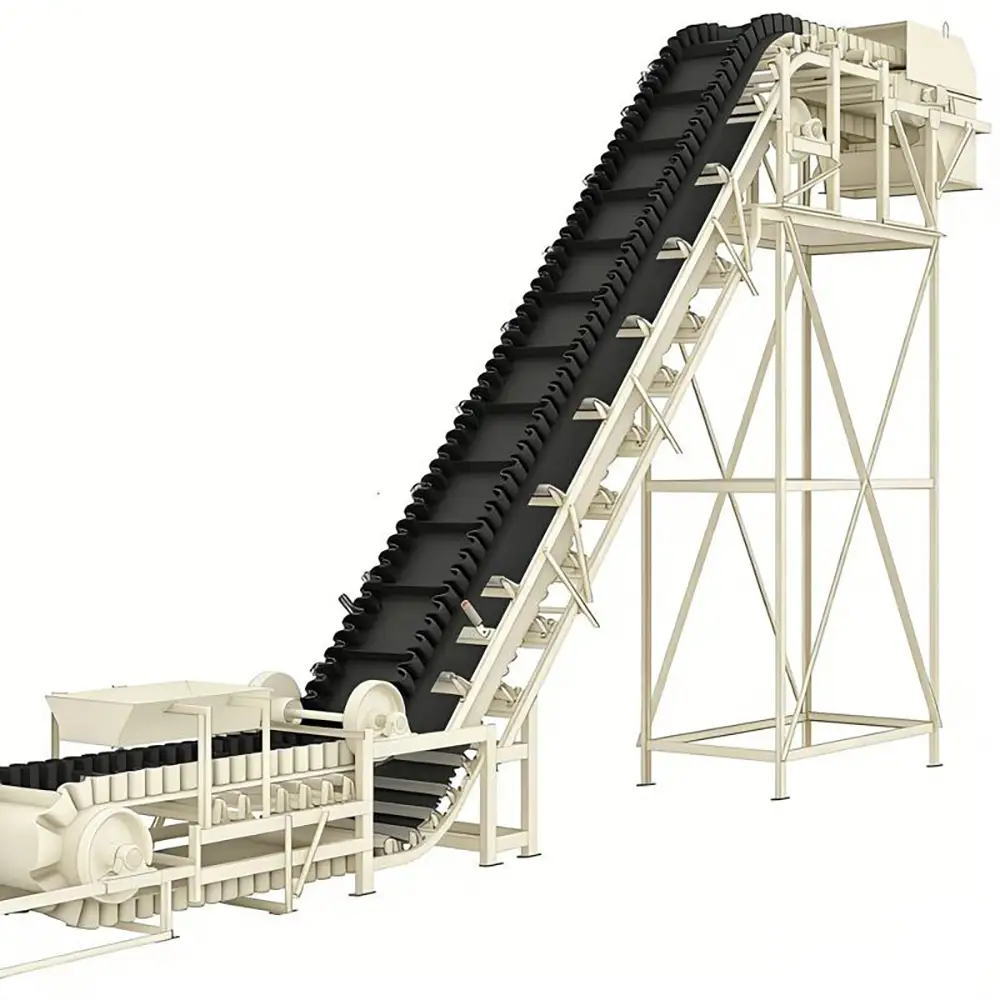
For applications involving steep inclines or materials that tend to slide backward, cleated belts, corrugated sidewall belts, or specially textured belts can be used to improve material retention and conveying stability.
Heavy-Duty Mine Equipment Conveyor
Mining applications typically require conveyors that can operate under heavy loads, abrasive materials, dust, vibration, and extended working cycles. A Mine Equipment Conveyor can therefore be configured with reinforced components for demanding conditions.
The conveyor frame can be manufactured from structural steel with sufficient strength to support the belt, rollers, and transported material. Heavy-duty carrying rollers reduce belt sag and help maintain stable material transportation.
The drive section provides the required torque for starting and continuously operating the loaded conveyor. Depending on conveyor length and capacity, the system can be equipped with a suitable motor, gearbox, pulley, and tensioning arrangement.
A properly selected belt is particularly important for mining applications. Rubber conveyor belts with appropriate tensile strength and wear resistance can provide better service life when transporting sharp-edged or abrasive materials.
Main Components
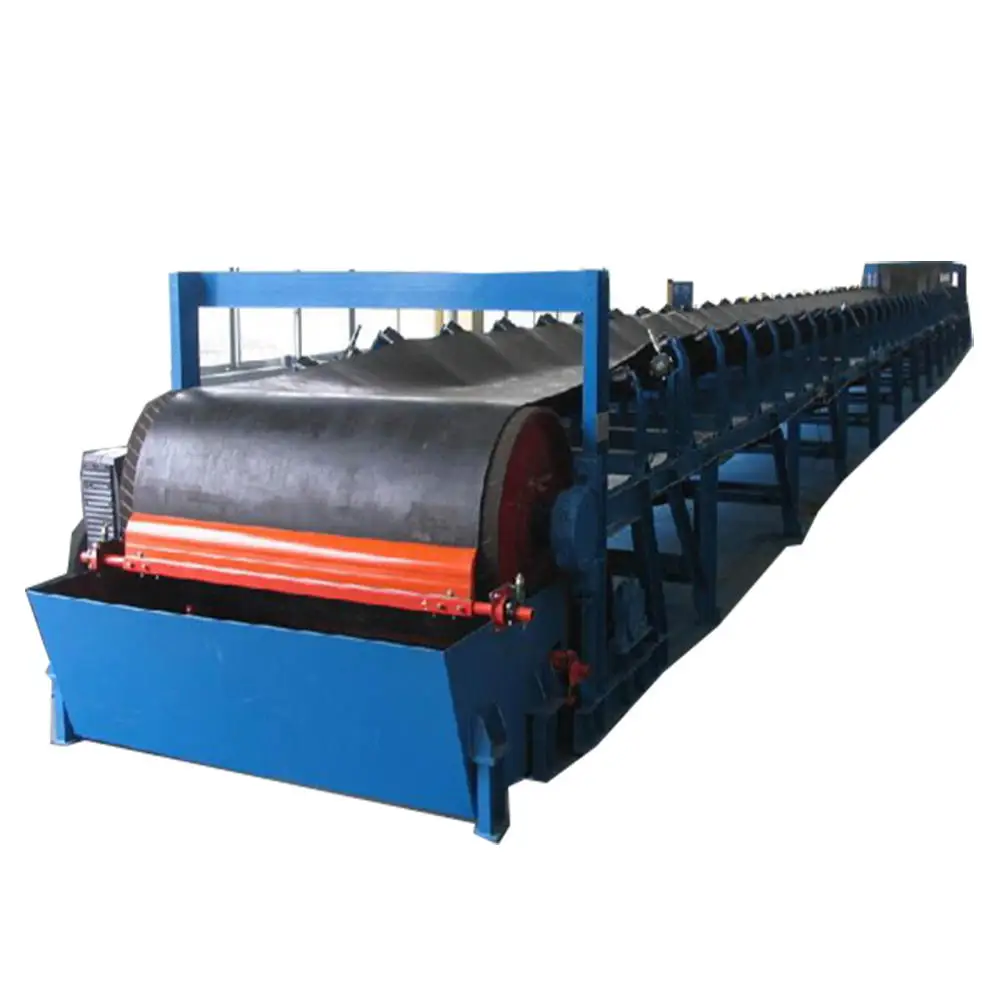
A typical inclined belt conveyor consists of several major components:
Conveyor Belt
The belt is the main conveying surface and is selected according to material type, weight, particle size, temperature, and operating environment. Different rubber compounds and belt constructions can be supplied for general industrial or heavy-duty mining applications.
Drive Unit
The drive unit normally includes an electric motor, gearbox, coupling, and drive pulley. The power rating depends on conveyor length, inclination, material capacity, belt speed, and total conveying resistance.
Idler Rollers
Carrying idlers support the loaded belt, while return rollers support the empty belt on the return section. Impact rollers may also be installed below loading points to absorb material impact.
Conveyor Frame
The structural frame maintains belt alignment and supports the conveyor components. It can be designed as a fixed steel frame or configured for particular installation requirements.
Tensioning System
A suitable tensioning device maintains the required belt tension and compensates for belt elongation during operation. Screw, gravity, or other tensioning configurations can be selected according to conveyor design.
Hopper and Chute
Feed hoppers and discharge chutes help control material flow and reduce spillage. They can be customized to connect the conveyor with crushers, screens, feeders, bins, or other equipment.
Applications
The Inclined Belt Conveyor is suitable for a wide range of bulk material handling applications.
Mining
In mining operations, the conveyor can transport ore, coal, mineral materials, and crushed rock between different processing stages.
Quarrying and Aggregate
Quarries and aggregate plants use inclined conveyors to move crushed stone, gravel, sand, and other bulk materials from crushers and screens to stockpiles or subsequent processing equipment.
Coal Handling
Heavy-duty belt conveyors can transport coal from underground or surface mining operations to transfer points, storage areas, processing equipment, and loading systems.
Construction Materials
The conveyor can be used for limestone, cement materials, sand, gravel, and other construction-related bulk products.
Recycling
Inclined conveyors can transfer recycled materials, construction waste, scrap, and sorted materials between different processing levels.
How Does an Inclined Belt Conveyor Work?
Material is loaded onto the conveyor belt through a hopper, feeder, or upstream machine. The motor drives the pulley, causing the belt to circulate continuously around the conveyor frame.
As the belt travels upward along the inclined section, the material is carried toward the discharge end. Carrying rollers support the loaded belt and help reduce running resistance.
At the discharge point, the material leaves the belt through the head pulley and chute. The empty belt then returns along the lower section and repeats the conveying cycle.
For inclined applications, belt speed and inclination must be selected carefully. Excessive inclination may cause material rollback or sliding, particularly when handling fine or wet materials. Cleats, sidewalls, textured belts, or other anti-slip designs can be considered when greater conveying angles are required.
Key Advantages
Efficient Elevation Transfer: Moves bulk materials between different elevations without requiring additional lifting equipment.
Continuous Operation: Provides continuous material transportation for production and processing lines.
High Conveying Capacity: Suitable for both moderate and high-volume bulk material handling.
Heavy-Duty Construction: Reinforced frames, rollers, pulleys, and belts can be configured for demanding applications.
Flexible Layout: Conveyor length, width, height, inclination, discharge height, and feeding position can be customized.
Wide Material Compatibility: Suitable for coal, ore, stone, aggregate, sand, gravel, and many other bulk materials.
Easy Integration: Can be connected with crushers, screens, feeders, hoppers, bins, washing equipment, and other processing machinery.
Reduced Manual Handling: Automates material transportation and reduces dependence on manual labor.
Inclined Belt Conveyor Selection Guide
When selecting a conveyor, buyers should consider several operating parameters.
Material: Identify the type, density, particle size, moisture, temperature, and abrasiveness of the material.
Capacity: Determine the required conveying capacity, normally expressed in tons per hour or another suitable unit.
Conveyor Length: Measure the horizontal conveying distance and required elevation.
Inclination: The conveying angle affects belt selection, capacity, motor power, and material retention.
Belt Width: Belt width should correspond to the required capacity and material size.
Belt Speed: Higher belt speeds can increase capacity but must be compatible with the material and loading conditions.
Drive Power: Motor power should be calculated according to load, length, inclination, belt speed, and conveying resistance.
Site Conditions: Consider outdoor installation, dust, rain, temperature, corrosion, and available installation space.
Custom Conveyor Solutions
Every mine and processing plant has different material flow requirements. We can provide customized Inclined Belt Conveyor solutions based on conveyor length, belt width, conveying capacity, inclination angle, feeding height, discharge height, and installation layout.
Options may include different belt materials, cleats, skirt boards, impact beds, dust covers, walkways, guards, hoppers, chutes, speed controls, and protection systems.
For complete production lines, the conveyor can also be integrated with crushers, vibrating screens, feeders, magnetic separators, washing systems, and stockpiling equipment.
Maintenance and Safety
Regular maintenance helps maintain conveyor performance and extend service life. Operators should inspect belt tracking, belt tension, roller condition, pulley surfaces, bearings, fasteners, and drive components regularly.
Material buildup should be removed from pulleys and rollers to reduce belt tracking problems. Damaged or excessively worn rollers should be replaced promptly.
For mining environments, emergency stop systems, guards, pull-cord switches, belt misalignment protection, and other safety devices can be incorporated according to the conveyor design and applicable requirements.
Why Choose Us?
We provide Inclined Belt Conveyor and Mine Equipment Conveyor solutions for mining, quarrying, aggregate, construction, recycling, and industrial material handling applications.
Heavy-Duty Conveyor Construction
Customized Conveyor Dimensions
Multiple Belt Options
Suitable for Mining and Quarry Applications
Professional Conveyor System Design
Complete Drive and Tensioning Solutions
Integration With Crushing and Screening Equipment
OEM and Custom Manufacturing Available
Factory Direct Supply
Technical Support and After-Sales Service
Our goal is to provide a conveyor system that matches the customer's material characteristics, capacity requirements, installation conditions, and production process rather than offering a one-size-fits-all solution.
FAQs
1. What materials can an inclined belt conveyor transport?
It can transport coal, ore, crushed stone, gravel, sand, aggregate, limestone, cement materials, recycled materials, and many other bulk products.
2. Is an inclined belt conveyor suitable for mining?
Yes. Heavy-duty configurations can be designed for mining, quarrying, coal handling, and mineral processing applications.
3. How do I choose the correct belt width?
Belt width depends mainly on required capacity, material particle size, bulk density, belt speed, and conveyor configuration.
4. Can the conveyor angle be customized?
Yes. The inclination can be designed according to material characteristics, required elevation, belt type, and site conditions.
5. Can it transport large rocks?
Yes. For large and heavy materials, the conveyor can be equipped with a suitable heavy-duty belt, reinforced frame, impact rollers, and appropriate loading equipment.
6. Can the conveyor be used outdoors?
Yes. Outdoor configurations can include suitable structural protection and components selected for dust, moisture, temperature, and other environmental conditions.
7. Can you customize the conveyor length?
Yes. Conveyor length, belt width, feeding height, discharge height, inclination, and other dimensions can be customized.
8. What drive system is used?
Electric motors combined with gearboxes and drive pulleys are commonly used. The drive power is selected according to the conveyor's operating parameters.
9. Can it be integrated with a crusher?
Yes. An inclined conveyor can be connected with crushers, vibrating screens, feeders, hoppers, stockpiling systems, and other processing equipment.
10. What information is needed for a quotation?
Please provide the material type, required capacity, conveying length, elevation or inclination, belt width if known, feeding height, discharge height, and preferred power supply. A layout or site drawing is also helpful for custom system design.
Prev:
DY Portable Belt Conveyor, Mobile Type Belting Conveyor
Next:
Large Angle Rib Belt Conveyor, Skirt Conveyor
TAG:
Conveyor Equipment,
Mining Belt Conveyor,
Industrial Belt Conveyor,
Bulk Material Conveyor,
Mining Material Handling,
Material Handling Conveyor,
Coal Conveyor,
Continuous Belt Conveyor,
Aggregate Conveyor,
Quarry Conveyor,
Stone Conveyor,
Heavy Duty Conveyor,
Mining Conveyor System,
Mining Conveyor,
Ore Conveyor,
Belt Conveyor System,
Heavy Duty Belt Conveyor,
Inclined Belt Conveyor,
Mining Equipment,
Inclined Conveyor System,
Industrial Conveyor System,
Mine Equipment Conveyor,
Incline Conveyor,
Inclined Conveyor,
Related Category:
Inclined Belt Conveyor, Mine Equipment Conveyor, Mining Belt Conveyor, Incline Conveyor, Inclined Conveyor System China, suppliers, manufacturers, factory, customized, wholesale, quotation, made in China