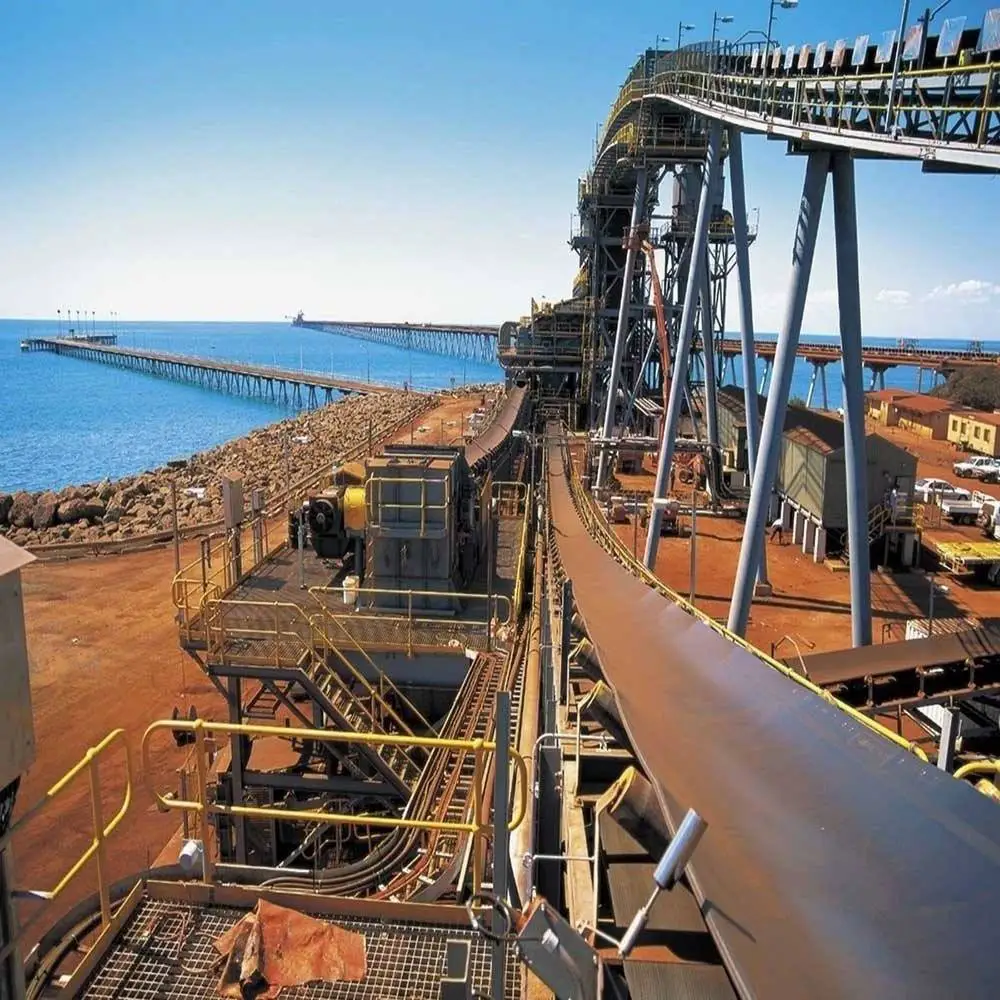
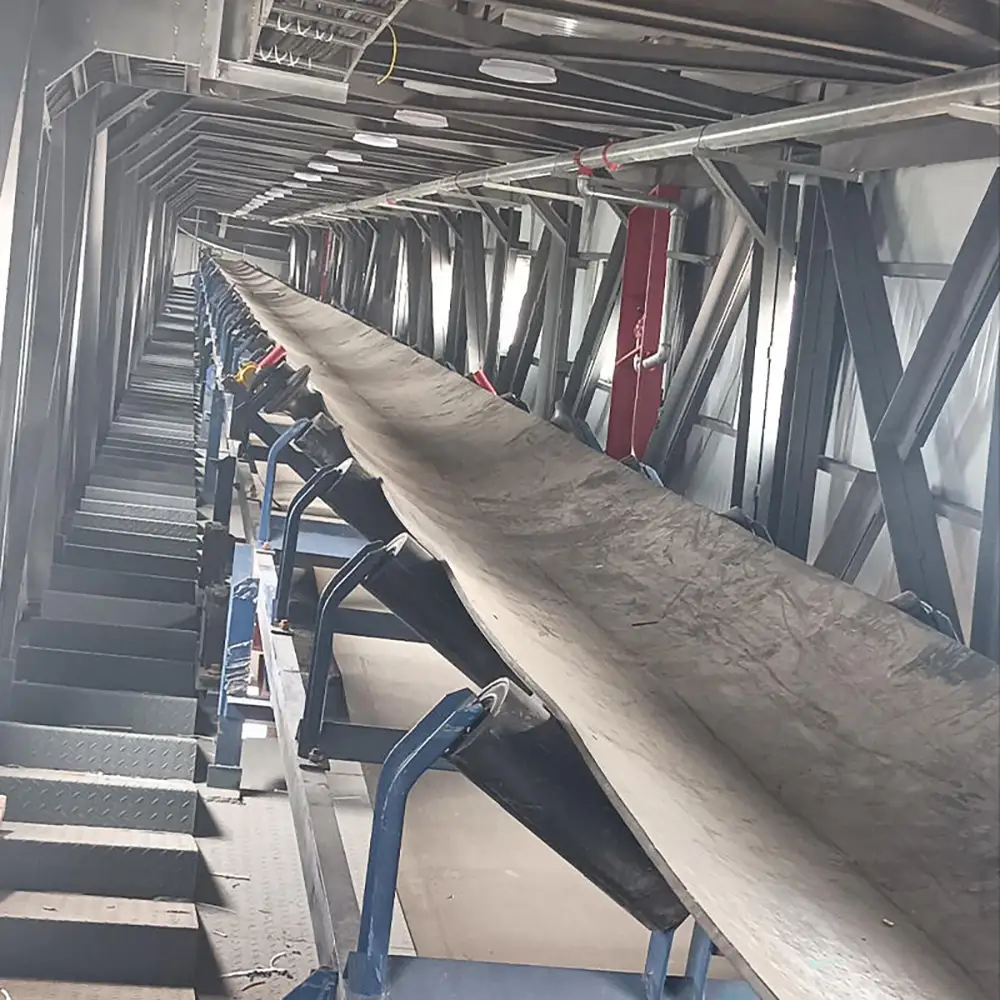
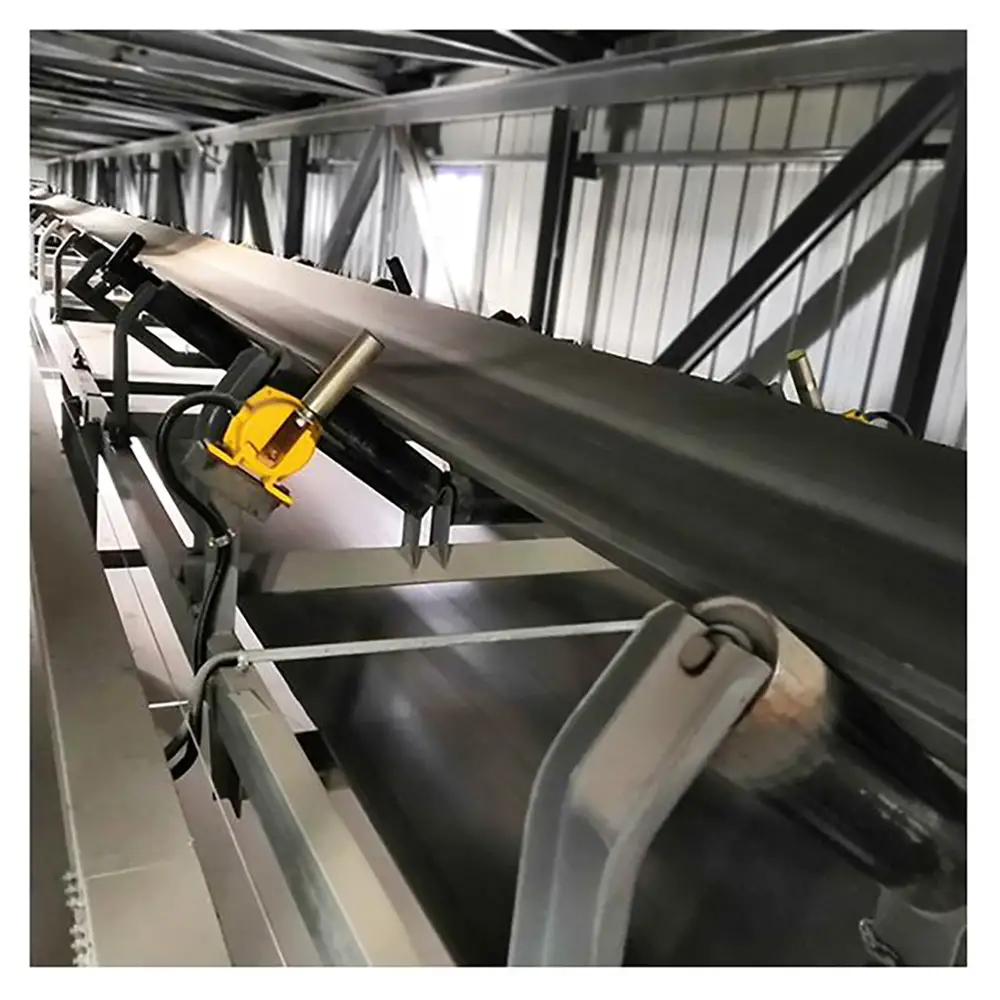
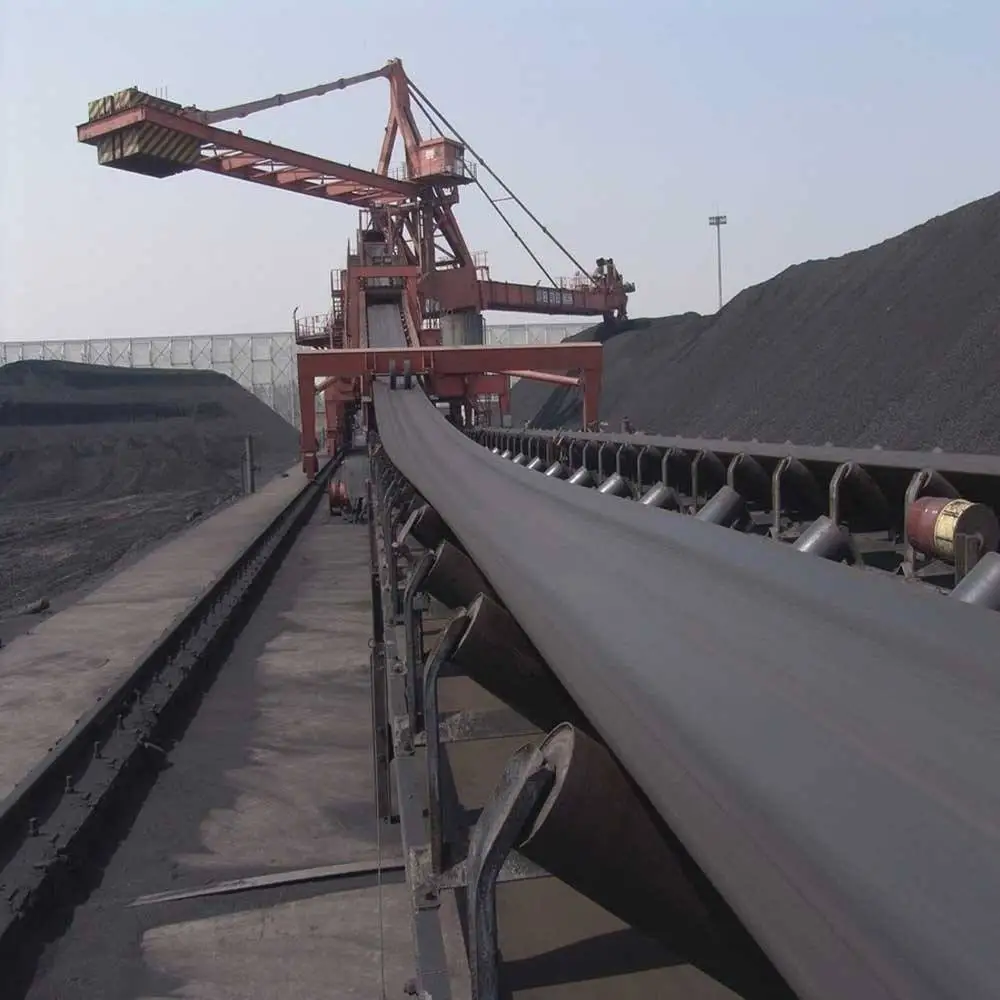
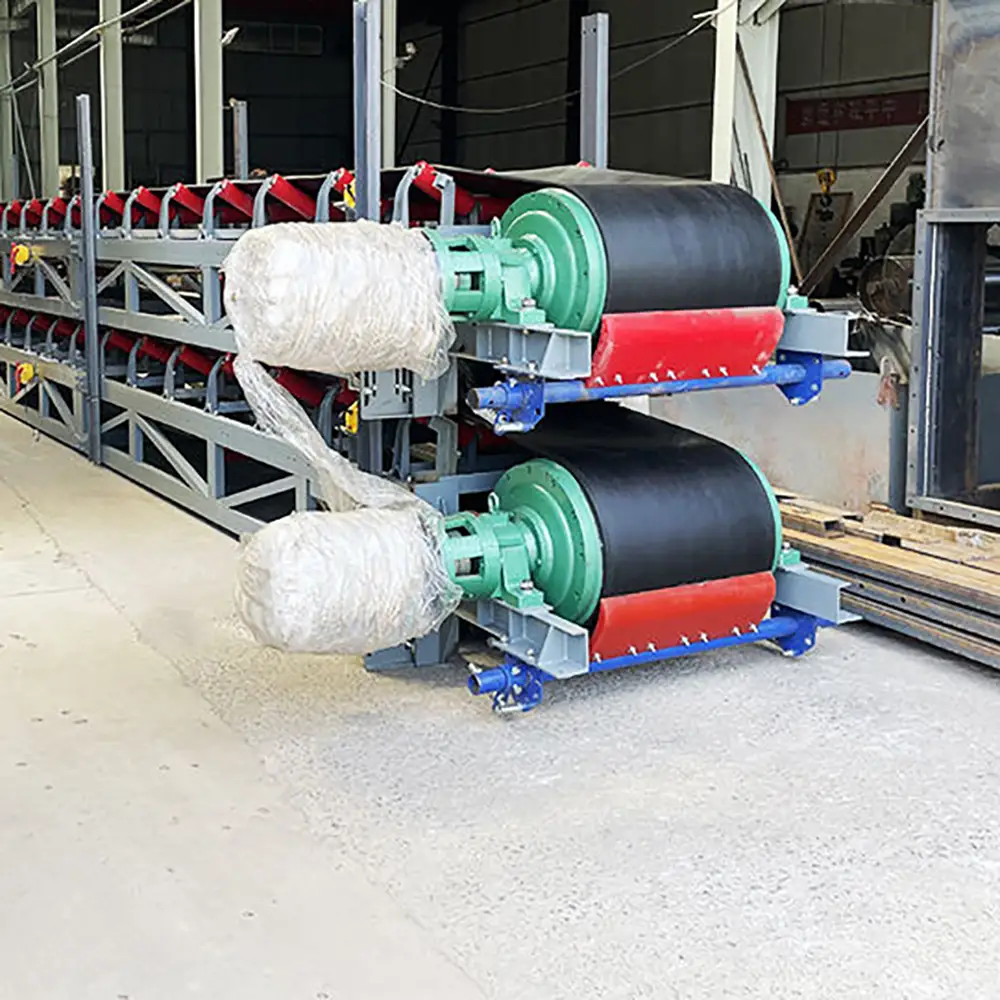
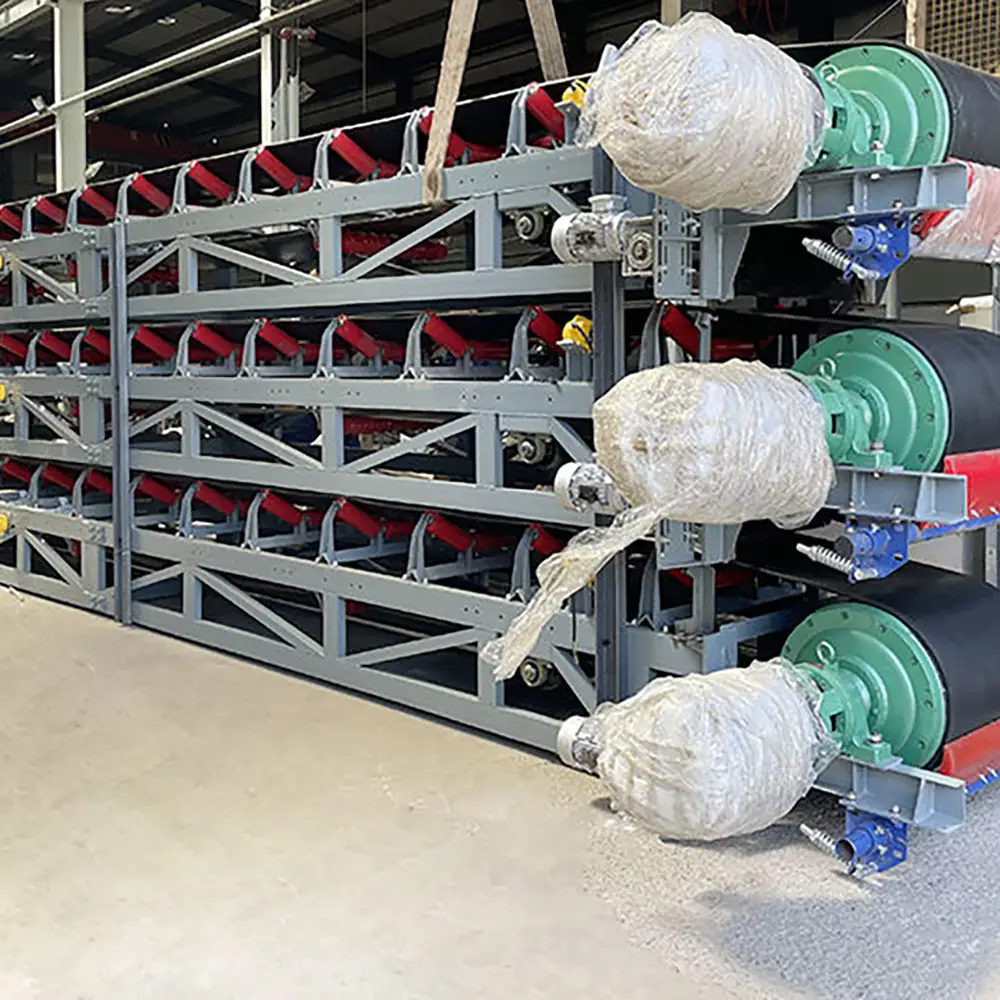
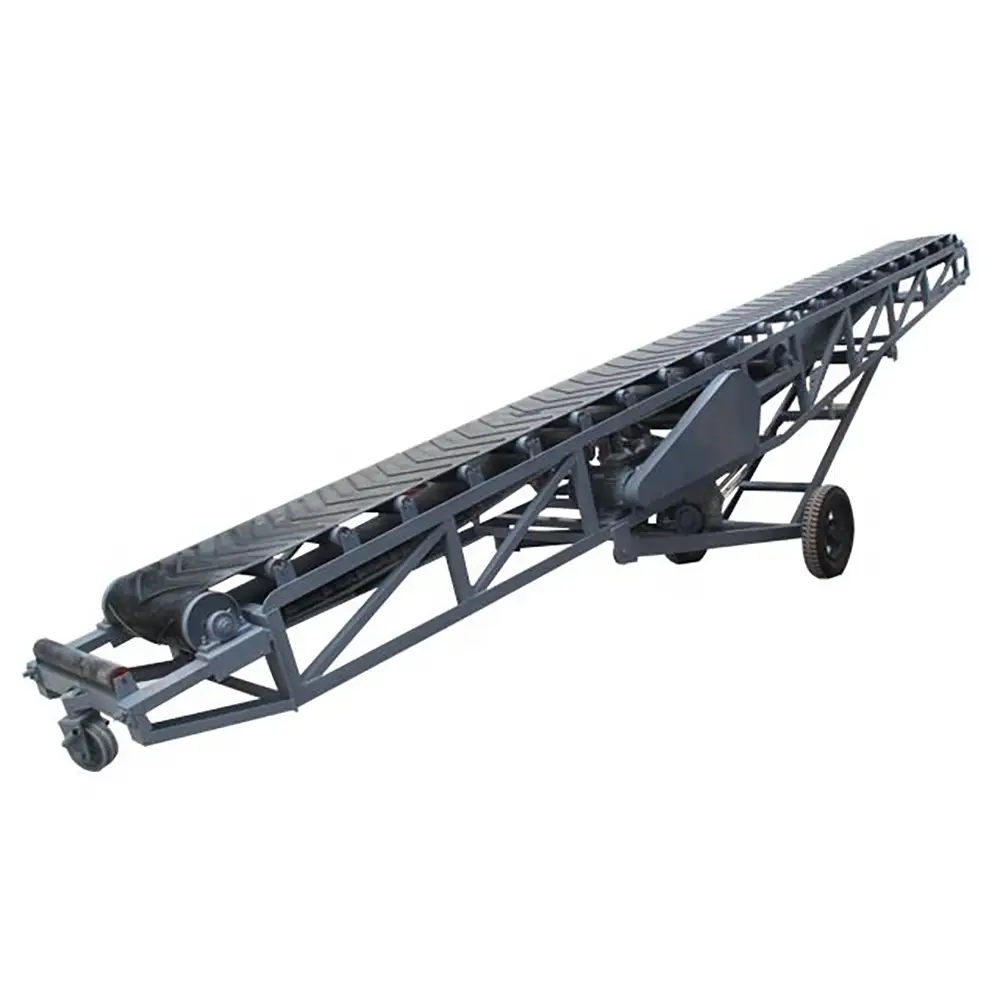
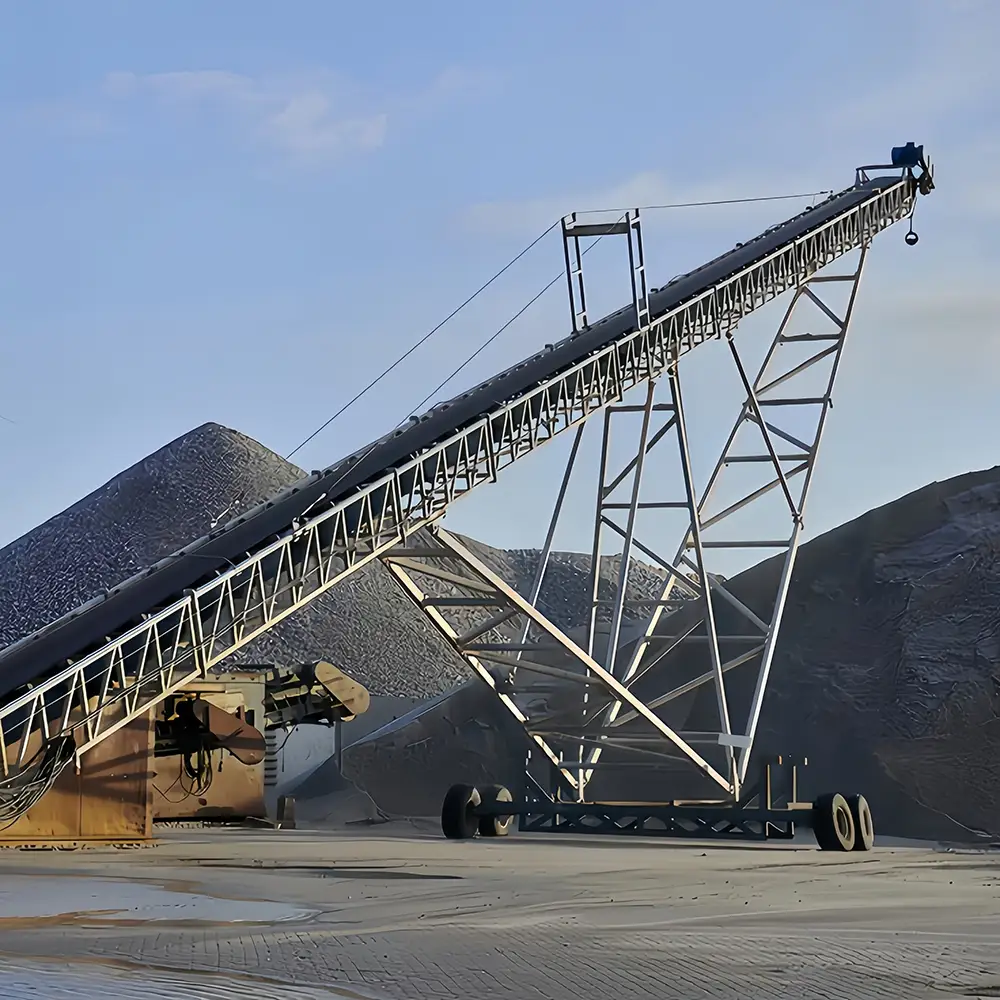
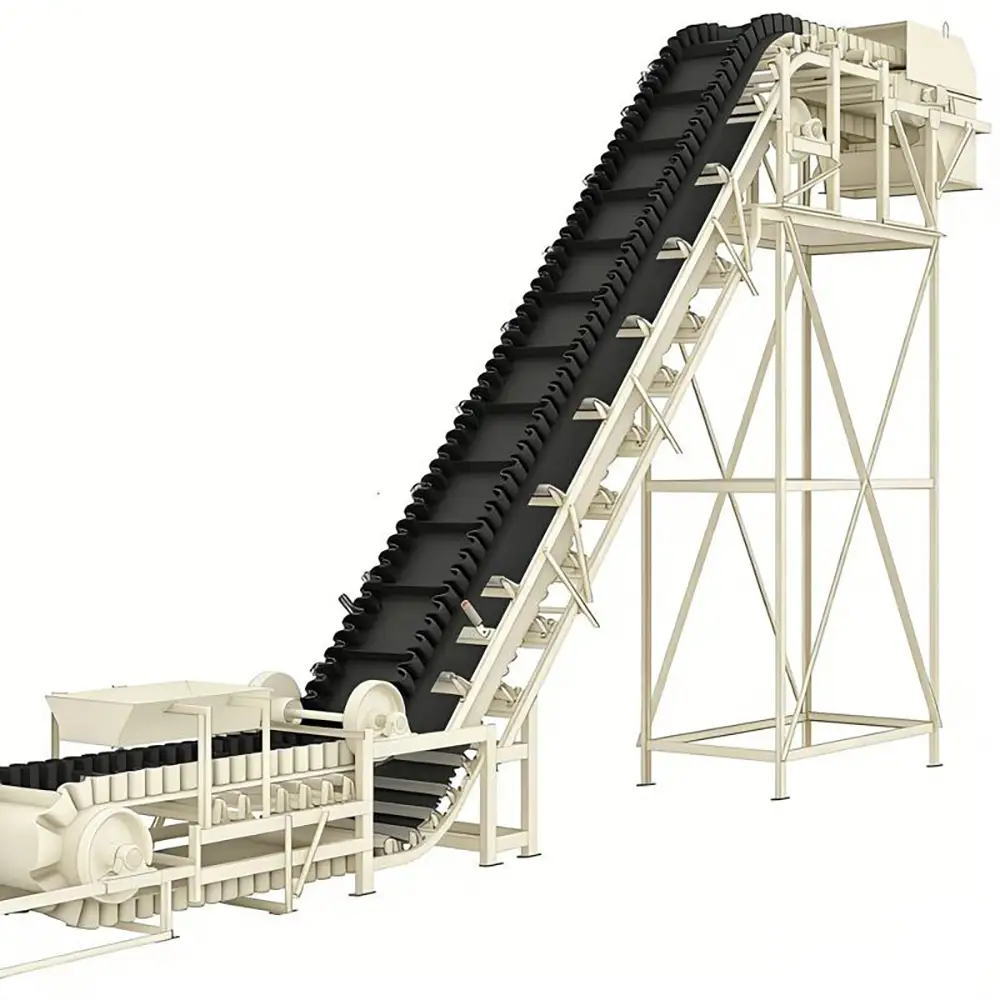
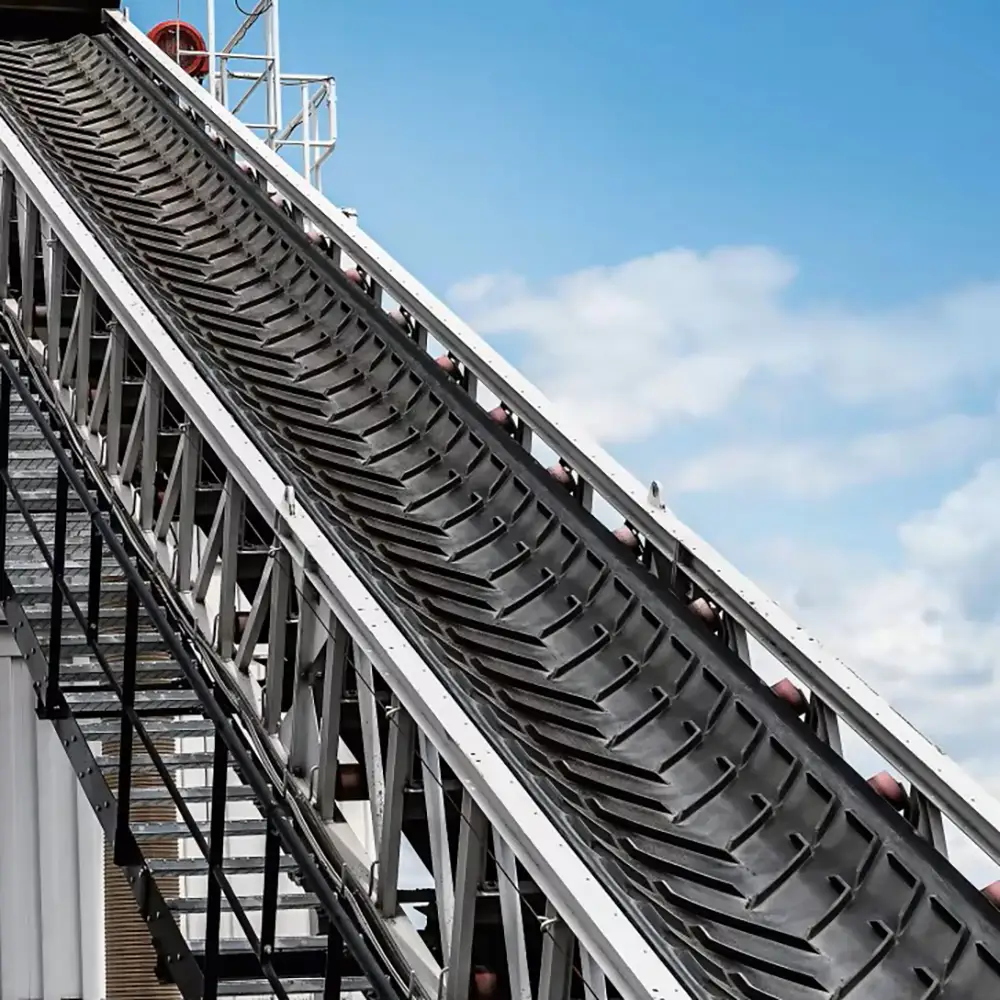
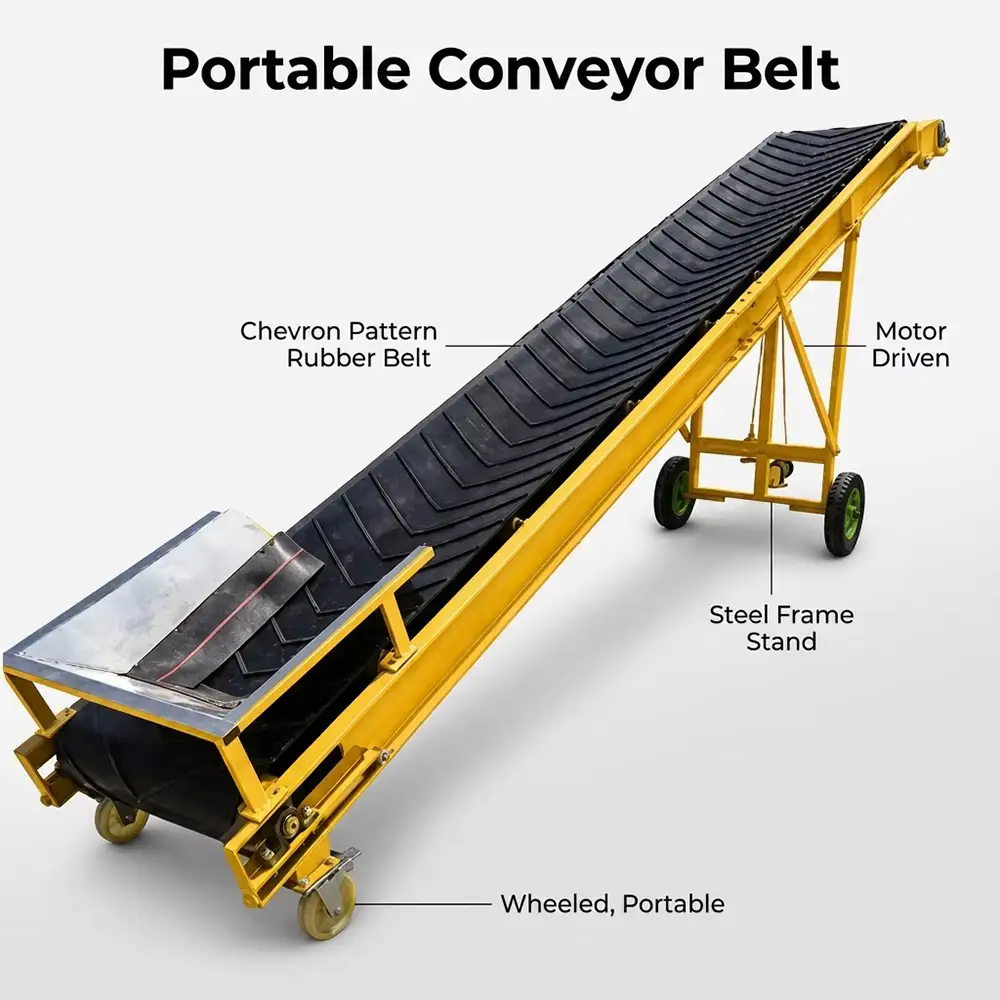
The product is used to transport in mining and cement industry, it is universal, convenient-maintain, simple-manufactured, and interchangeable, which can save a good quantity of construction invest, and accelerate progress; When used on the ground, it only need a small occupation space and reduce the capitalized cost.
Technique Feature
The product adopts the ordinary smooth conveyor belt or the deep-groove carrier roller device, which solve the key technology for transporting raw coal in large obliquity; The Max obliquity is 30° For upward, and 25° For downward, and the moisture content of the raw coal reaches 20%, which has achieved the international advanced level.
1 the starting device adopts the wet soft starting system. It is a satisfactory starting device which can realize the motor start with no-load, and there are many advantages such as high comprehensive performance, low power consumption and so on.
2 the brake device adopts KZP self-cooling disc brake device and the main technique features are as follows:
1 when the control system or dragging system power down suddenly, the dragging motor is over-speed, the conveyor belt slipping, or other parking instructions for protection happens, it ensure to stop smoothly;
2 when starting on-load, it has good start-controlled performance coordinating with the electric control device;
3 coordinating with the electric control device, the parking deceleration of the belt conveyer keeps between 0.1m/s2 and 0.25m/s2;
4 the hydraulic control system adopts double circuit structure with high reliability;
5 the brake device brakes 10 times per hour; The temperature of the brake disc surface is below 150, and there's no sparks;
6 the Max brake moment is adjusted conveniently;
3 the control system adopts BSY-5/127 or KZ W1-660(X) explosion-proof type belt conveyer electric control device. The control cabinet adopts the PLC as the control core with all kinds of special and common protections. The optional console is used by the operator, and has the perfect display function of the fault type, speed, and current.
We cooperate with the Transportation and Control Technique Research Institution of Shandong University of Science and Technology, and we are engaged in the whole and key parts design, the key technological development, and the key device manufacture of the belt conveyer in the coal and cement industry.
We manufacture the large angle belt conveyor, DTII / telescopic / movable type light belt conveyor, and drag chain conveyor, etc.
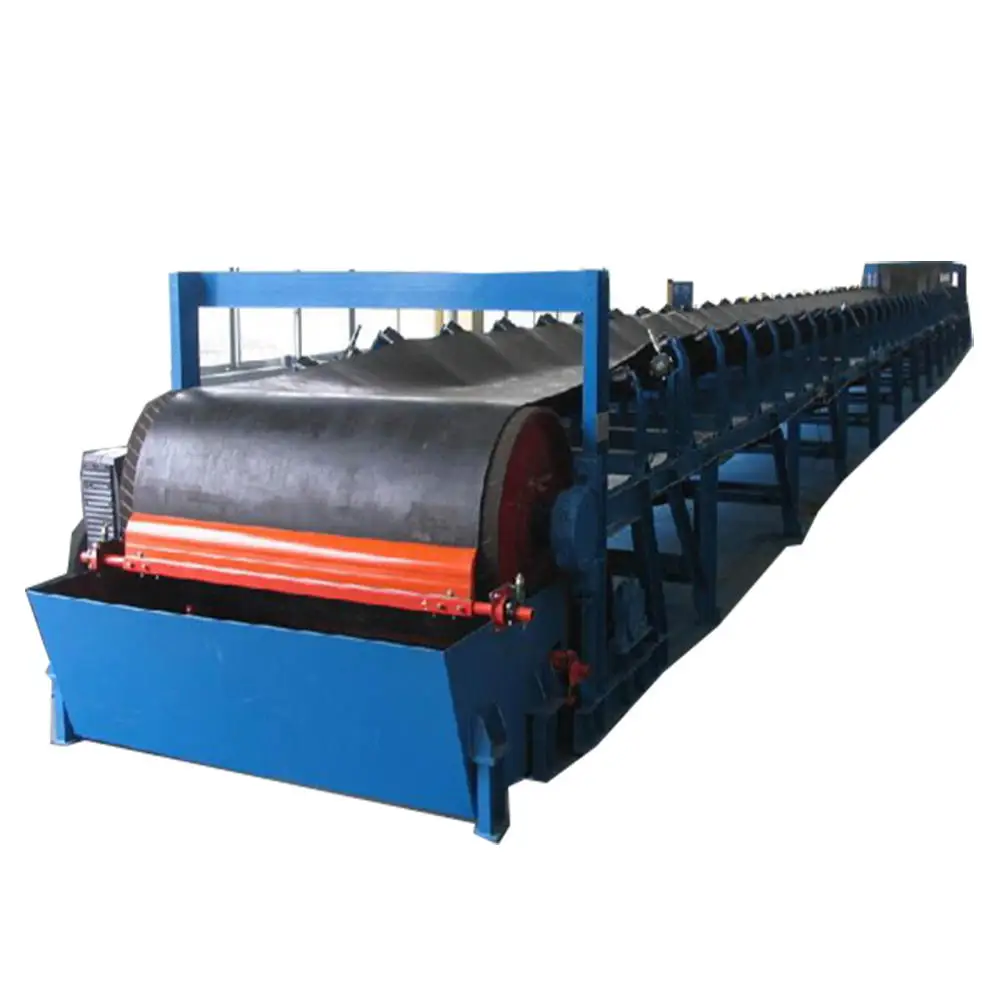
DTII-type General Fixed Belt Conveyor
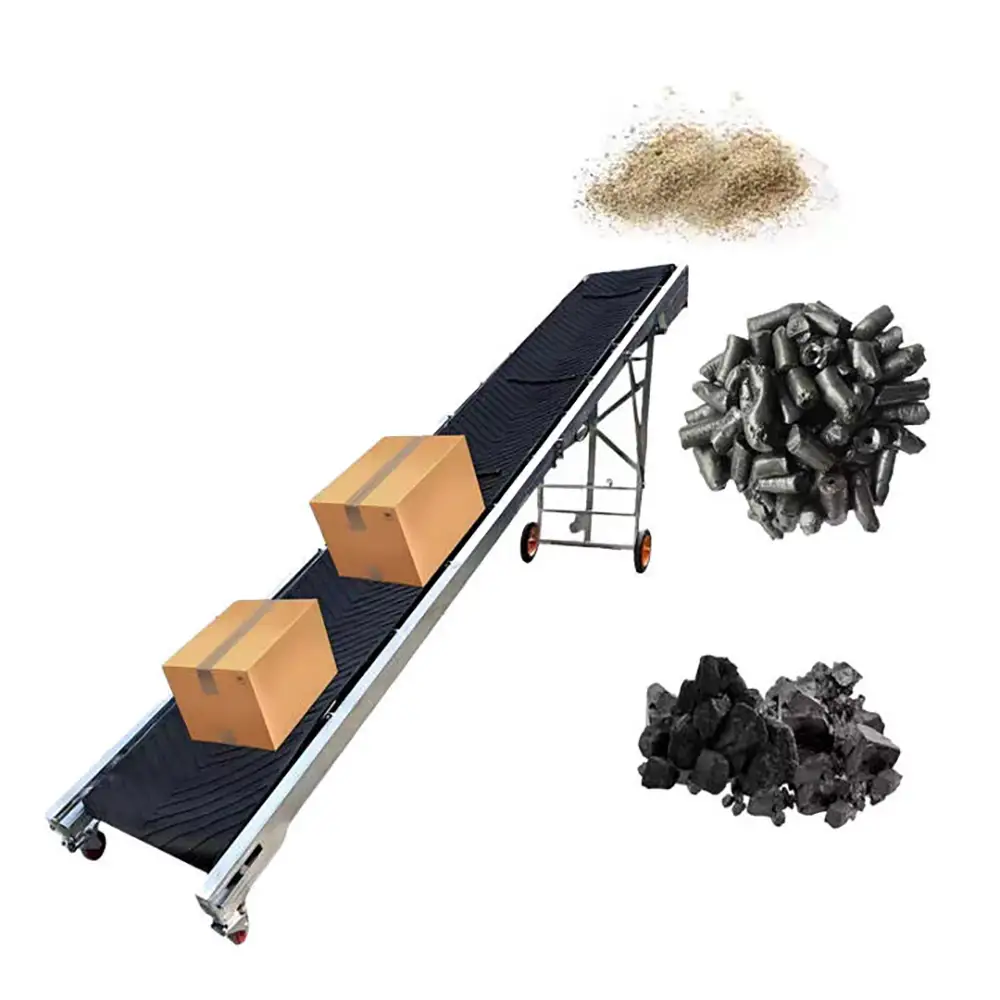
DTII-type general fixed belt conveyer is a widely used transport equipment in chemical, coal, metallurgy, building materials, electricity, food, and transportation industry. It applies to transport the bulk materials and its transportation capacity is 0.5-0.25t/m3, and also can transport the packed products.
|
Belt width |
speed |
speed |
speed |
speed |
speed |
speed |
speed |
|
500 |
0.8 |
1.0 |
1.25 |
2.0 |
3.15 |
4.0 |
5.6 |
|
650 |
0.8 |
1.0 |
1.25 |
2.0 |
|
|
|
|
800 |
0.8 |
1.0 |
1.25 |
2.0 |
|
|
|
|
1000 |
0.8 |
1.0 |
1.25 |
2.0 |
|
|
|
|
1400 |
|
1.0 |
1.25 |
2.0 |
3.15 |
|
|
|
2000 |
|
|
|
|
|
4.0 |
|
|
2400 |
|
|
|
|
|
|
5.6 |
DT II Type Fixed Belt Conveyor, Mining Conveyor, Cement Industry Belt Conveying Equipment
The DT II Type Fixed Belt Conveyor is a heavy-duty continuous material handling machine designed for transporting bulk materials over horizontal or inclined conveying routes. As a widely applicable type of Mining Conveyor and Cement Industry Belt Conveying Equipment, it provides reliable and continuous transportation for coal, ore, limestone, aggregate, sand, gravel, cement materials, and other bulk products.
The fixed belt conveyor is designed for permanent installation in industrial plants, mines, quarries, cement production facilities, ports, power plants, warehouses, and large material processing systems. Compared with mobile conveyors, its fixed structure is intended for stable, long-term operation along a predetermined conveying route.
The DT II type configuration can be engineered according to conveying capacity, belt width, belt speed, conveyor length, inclination, material characteristics, and plant layout.
What Is a DT II Type Fixed Belt Conveyor?
A DT II Type Fixed Belt Conveyor is a stationary belt conveying system consisting of a continuous conveyor belt supported by rollers and driven by a motorized drive system.
The conveyor is permanently installed at the required location and can transport material continuously from a feeding point to a discharge point.
Depending on the project, the system can be used for:
Coal
Iron ore
Copper ore
Limestone
Cement materials
Clinker-related bulk materials
Sand
Gravel
Crushed stone
Aggregate
Fertilizer
Grain
Industrial raw materials
Other bulk materials
Its continuous operating principle makes it suitable for high-volume material transportation between different stages of an industrial process.
DT II Belt Conveyor Construction
The conveyor frame provides the structural foundation for the complete conveying system. It supports the carrying rollers, return rollers, belt, drive assembly, tensioning equipment, and other components.
The conveyor belt is continuously driven around the head and tail pulleys. Carrying idlers support the loaded belt, while return rollers support the empty belt.
The drive system normally includes an electric motor, gearbox, coupling, and drive pulley. Depending on conveyor length and capacity, the system can be configured with suitable drive arrangements to provide the required operating torque.
A tensioning device maintains appropriate belt tension and compensates for belt elongation during operation.
Main Components
Conveyor Belt
The belt is the main material-carrying component. Its specifications are selected according to material type, capacity, belt speed, conveyor length, and working environment.
For mining and cement applications, wear-resistant and high-strength rubber belts can be selected when handling abrasive materials.
Drive Unit
The drive unit provides the power needed to move the belt and loaded material. Motor and gearbox specifications are determined according to the conveyor's conveying resistance and operating conditions.
Carrying Rollers
Carrying rollers support the loaded belt and help maintain its conveying shape. Troughing idler arrangements can be used for bulk material transportation.
Return Rollers
Return rollers support the empty belt on the return side and help maintain smooth belt circulation.
Head and Tail Pulleys
The head pulley transfers driving force to the belt, while the tail pulley guides the belt at the opposite end.
Tensioning Device
The tensioning system maintains suitable belt tension and helps improve belt tracking and operational stability.
Conveyor Frame
The fixed steel frame provides support for the complete conveyor assembly and is designed according to load, span, installation conditions, and conveyor layout.
Feed Hopper and Discharge Chute
Hoppers and chutes provide controlled material transfer between the belt conveyor and other processing or storage equipment.
Mining Conveyor Applications
The DT II Type Fixed Belt Conveyor is widely suitable for mining and mineral processing applications.
It can transport extracted ore, coal, crushed rock, limestone, and other minerals from mining areas to crushers, screens, stockpiles, transfer stations, or processing equipment.
For abrasive materials, suitable belt, roller, pulley, and impact protection configurations can help improve operational durability.
Long-distance belt conveyor systems can also be designed for large-scale material transportation where continuous conveying is required.
Cement Industry Belt Conveying Equipment
Cement plants require reliable material transportation between raw material storage, crushing, grinding, blending, clinker production, storage, and finished-product handling areas.
Fixed belt conveyors can transport limestone, gypsum, coal, clinker-related materials, additives, and other suitable bulk materials.
Depending on the production process, conveyors can be connected with crushers, feeders, hoppers, storage bins, transfer towers, screens, and other equipment to create a continuous material handling network.
How Does the Fixed Belt Conveyor Work?
Material is introduced onto the conveyor through a hopper, feeder, chute, or upstream processing machine.
The electric motor transfers power through the gearbox and coupling to the drive pulley. The rotating drive pulley moves the continuous belt along the conveyor route.
As the belt travels, carrying rollers support the loaded belt and maintain stable material transportation.
At the discharge end, material leaves the belt as it passes around the head pulley. The material can then enter a hopper, stockpile, crusher, screen, storage system, or another conveyor.
The empty belt travels back along the return section toward the loading point, completing the continuous conveying cycle.
Advantages of DT II Fixed Belt Conveyor
Continuous Material Transportation
The system provides continuous conveying for production lines requiring stable bulk material flow.
Heavy-Duty Construction
The fixed structure can be engineered for demanding mining, cement, quarry, and aggregate applications.
High Conveying Capacity
Suitable belt width, speed, drive power, and roller configuration can be selected for high-volume material handling.
Stable Operation
A permanently installed conveyor provides a stable conveying route and is suitable for long-term industrial operation.
Long-Distance Conveying
Fixed belt conveyors can be designed for relatively long conveying distances and integrated with multiple transfer points.
Flexible Configuration
Belt width, length, speed, inclination, capacity, drive configuration, and support structure can be customized.
Easy Integration
The conveyor can be connected with crushers, vibrating screens, feeders, hoppers, silos, storage systems, and other equipment.
Reduced Manual Handling
Continuous mechanical conveying reduces the need for manual transportation and helps improve production efficiency.
Inclined and Horizontal Conveying
The DT II conveyor can be configured for horizontal conveying or suitable inclined conveying applications.
Horizontal conveyors are commonly used for transferring bulk material between adjacent processing areas, storage locations, and production equipment.
Inclined configurations can move materials to higher or lower elevations. When the inclination increases, belt selection and material characteristics become increasingly important.
For steep-angle applications, specialized cleated or sidewall conveyor designs may be more appropriate than a standard fixed belt conveyor.
How to Select the Right Belt Conveyor
Several technical parameters should be considered before selecting the equipment.
Material Type: Specify coal, ore, limestone, cement materials, aggregate, sand, gravel, or another bulk product.
Material Density: Bulk density affects conveying capacity and required drive power.
Particle Size: Maximum particle size should be considered when selecting belt width, loading system, and impact protection.
Capacity: Provide the required conveying capacity in tons per hour or another suitable unit.
Conveyor Length: The total conveying distance affects the structural design and drive arrangement.
Elevation: Specify the required lifting height or conveying inclination.
Belt Width: Belt width should be matched to the material size and required throughput.
Belt Speed: Speed should be selected according to capacity, material characteristics, dust generation, and operating conditions.
Environment: Outdoor, dusty, wet, corrosive, or high-temperature conditions may require specialized components.
Safety and Maintenance
Regular maintenance is essential for reliable conveyor operation. Operators should inspect the belt, rollers, pulleys, bearings, drive motor, gearbox, tensioning system, fasteners, and conveyor frame.
Belt alignment and tension should be checked regularly. Damaged rollers should be replaced promptly to prevent belt damage and unnecessary resistance.
Material buildup should be removed from pulleys, rollers, and transfer points. Belt cleaners and suitable skirting can help control material carryback and spillage.
Safety equipment such as emergency stop systems, pull-cord switches, belt misalignment protection, guards, and other protective devices can be incorporated according to the conveyor design and applicable requirements.
OEM and Custom Belt Conveyor Solutions
Industrial conveying systems often have different requirements depending on the plant layout and material characteristics. We can provide customized DT II Type Fixed Belt Conveyor solutions based on conveyor length, belt width, capacity, inclination, material type, transfer points, and installation conditions.
Optional configurations can include different drive arrangements, belt cleaners, dust covers, skirt boards, impact beds, walkways, maintenance platforms, protective guards, hoppers, chutes, and control systems.
For complete mining or cement production lines, the conveyor can also be integrated with crushing, screening, feeding, grinding, storage, and loading equipment.
Why Choose Us?
We provide DT II Type Fixed Belt Conveyor solutions for mining, cement, quarrying, aggregate, coal handling, construction materials, power plants, and industrial bulk material transportation.
Heavy-Duty Fixed Conveyor Construction
Suitable for Mining Applications
Cement Industry Conveying Solutions
Continuous Bulk Material Transportation
Customized Belt Width and Conveyor Length
Multiple Drive and Tensioning Configurations
Wear-Resistant Belt Options
Professional Conveyor System Design
Integration With Crushing and Screening Equipment
OEM and Custom Manufacturing
Factory Direct Supply
Technical Support and After-Sales Service
Our conveyor solutions are configured around the customer's material, capacity, conveying distance, elevation, plant layout, and operating environment.
FAQs
1. What is a DT II Type Fixed Belt Conveyor?
It is a stationary continuous belt conveying machine designed for long-term transportation of bulk materials in mining, cement, quarrying, and industrial applications.
2. What materials can it transport?
It can transport coal, ore, limestone, aggregate, sand, gravel, crushed stone, cement materials, and many other suitable bulk products.
3. Is it suitable for cement plants?
Yes. Fixed belt conveyors can be used to transport limestone, coal, additives, and other bulk materials in different sections of a cement production facility.
4. Can it be used for mining?
Yes. Heavy-duty configurations are suitable for transporting ore, coal, crushed rock, and other mining materials.
5. Can the conveyor length be customized?
Yes. The conveyor can be designed according to the required conveying distance and plant layout.
6. Can the belt width be customized?
Yes. Belt width can be selected according to conveying capacity, material particle size, belt speed, and application requirements.
7. Can it transport material uphill?
Yes. The conveyor can be configured for suitable inclined conveying. The appropriate belt and inclination should be selected according to the material characteristics.
8. What determines the motor power?
Motor power depends on conveying capacity, conveyor length, material weight, belt speed, inclination, and total conveying resistance.
9. Can it connect with a crusher or vibrating screen?
Yes. The fixed belt conveyor can be integrated with crushers, vibrating screens, feeders, hoppers, stockpiles, and other material handling equipment.
10. What information is needed for a quotation?
Please provide material type, capacity, particle size, conveyor length, lifting height or inclination, belt width if known, feeding and discharge heights, working environment, and power supply. A plant layout or application drawing is helpful for system design.
Prev:
TD75 Belt Conveyor, Belt Conveying Equipment
Next:
Sidewall Belt Conveyor, Automatic Rubber Steep Sidewall Belt Conveyor Machine
TAG:
Mining Belt Conveyor,
Industrial Belt Conveyor,
Bulk Material Conveyor,
Mining Material Handling,
Material Handling Conveyor,
Industrial Conveyor Equipment,
Limestone Conveyor,
Coal Conveyor,
Continuous Belt Conveyor,
Aggregate Conveyor,
Quarry Conveyor,
Stone Conveyor,
Heavy Duty Conveyor,
Long Distance Belt Conveyor,
Fixed Conveyor System,
Mining Conveyor System,
Mining Conveyor,
Ore Conveyor,
Cement Conveyor,
Cement Plant Conveyor,
Belt Conveyor System,
Heavy Duty Belt Conveyor,
Fixed Belt Conveyor,
Belt Conveying Equipment,
Cement Material Handling,
Cement Industry Belt Conveyor,
DT II Belt Conveyor,
DT II Type Belt Conveyor,
Related Category:
DT II Type Fixed Belt Conveyor, Mining Conveyor, Cement Industry Belt Conveyor, Belt Conveying Equipment China, suppliers, manufacturers, factory, customized, wholesale, quotation, made in China