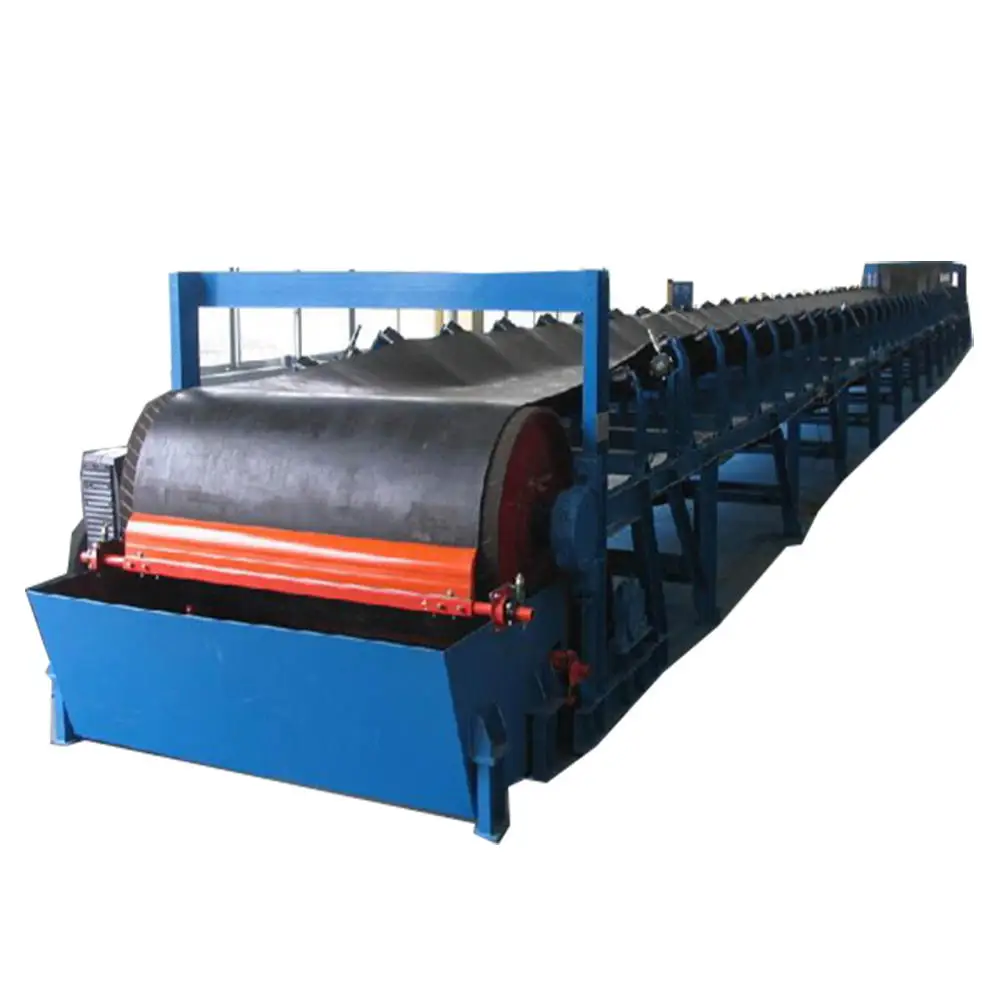
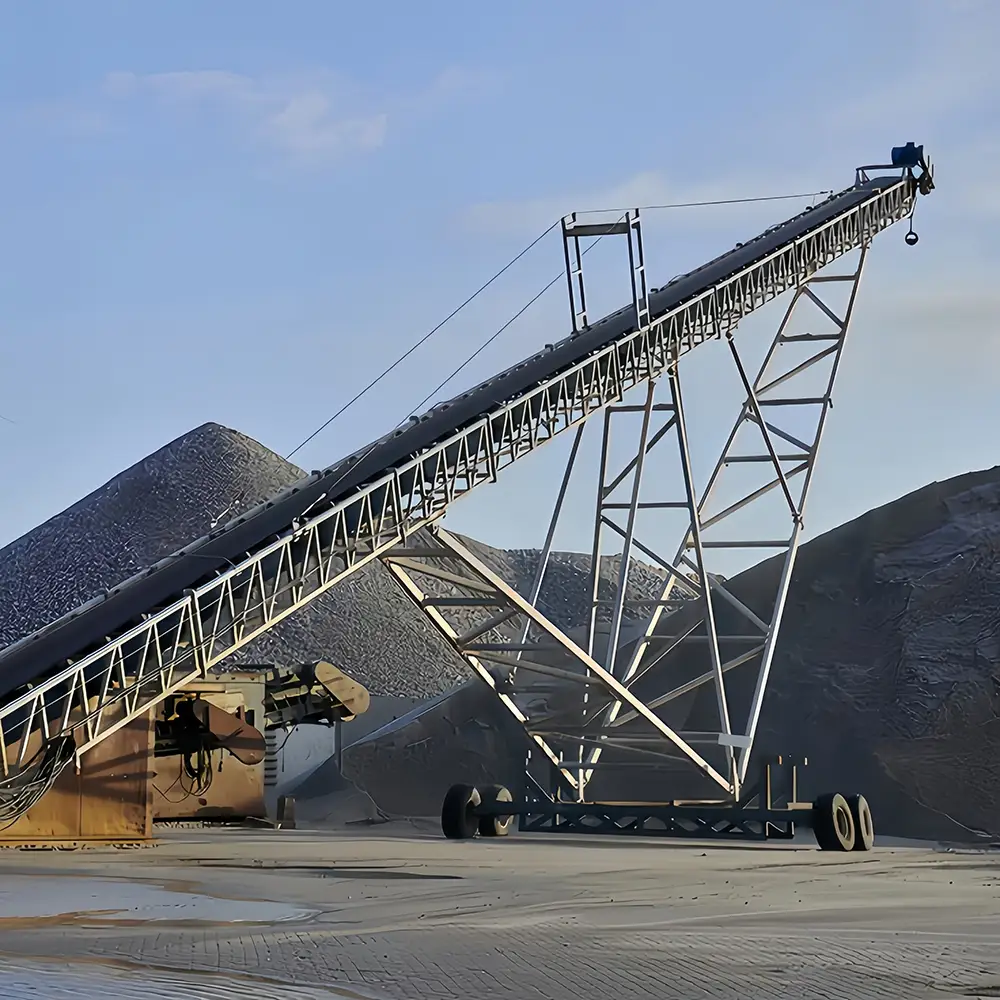
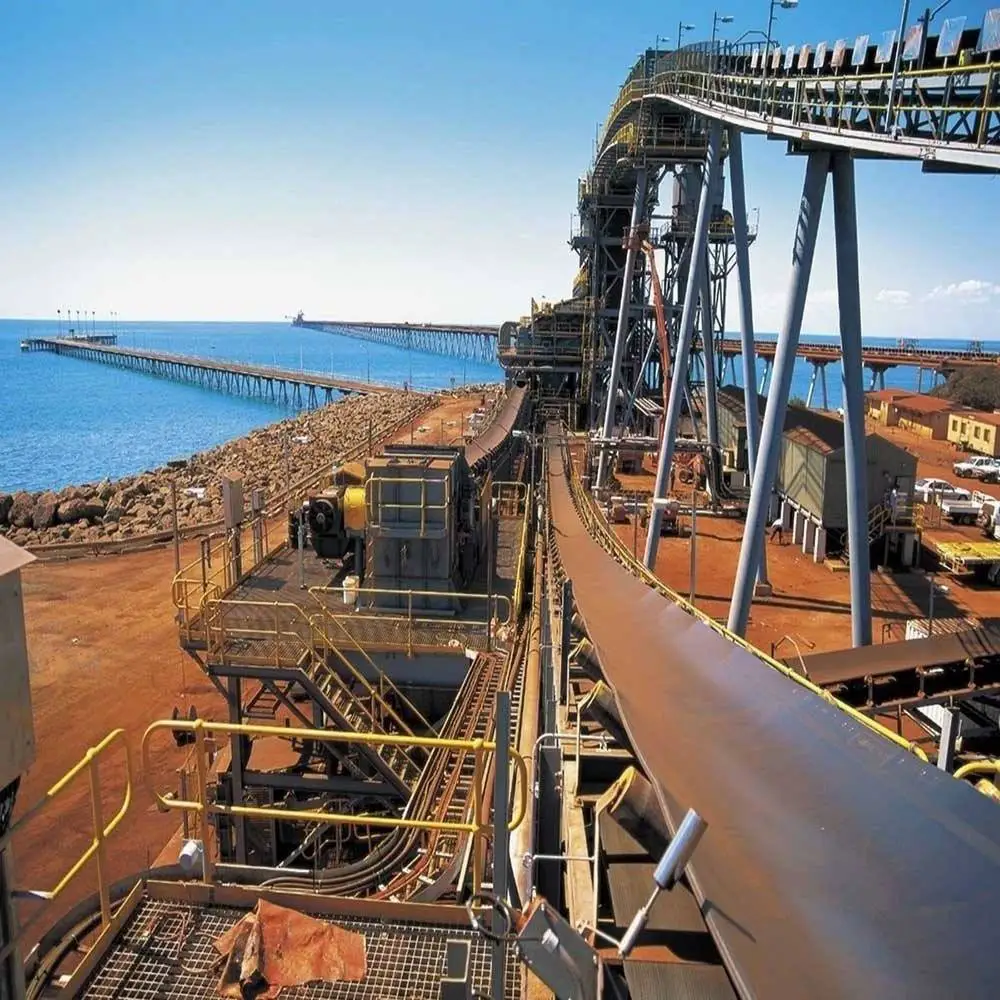
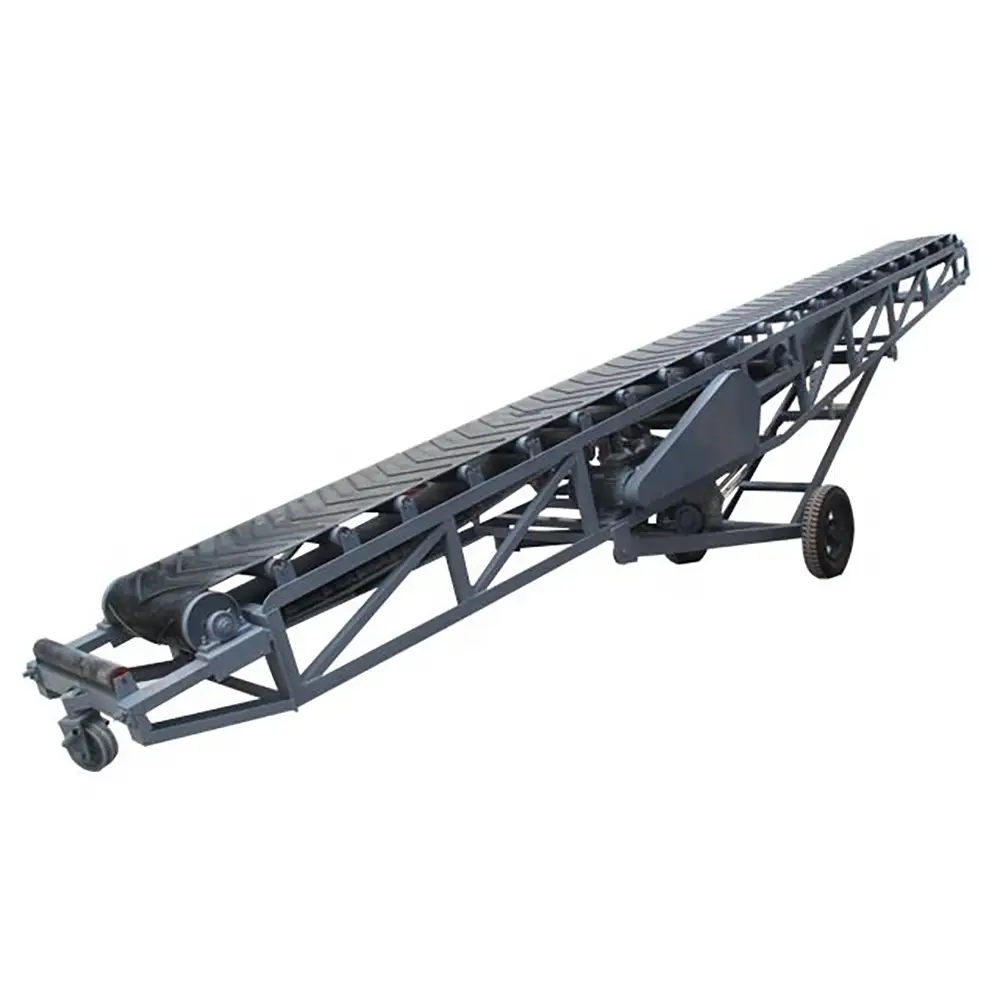
Large Angle Rib Belt Conveyor
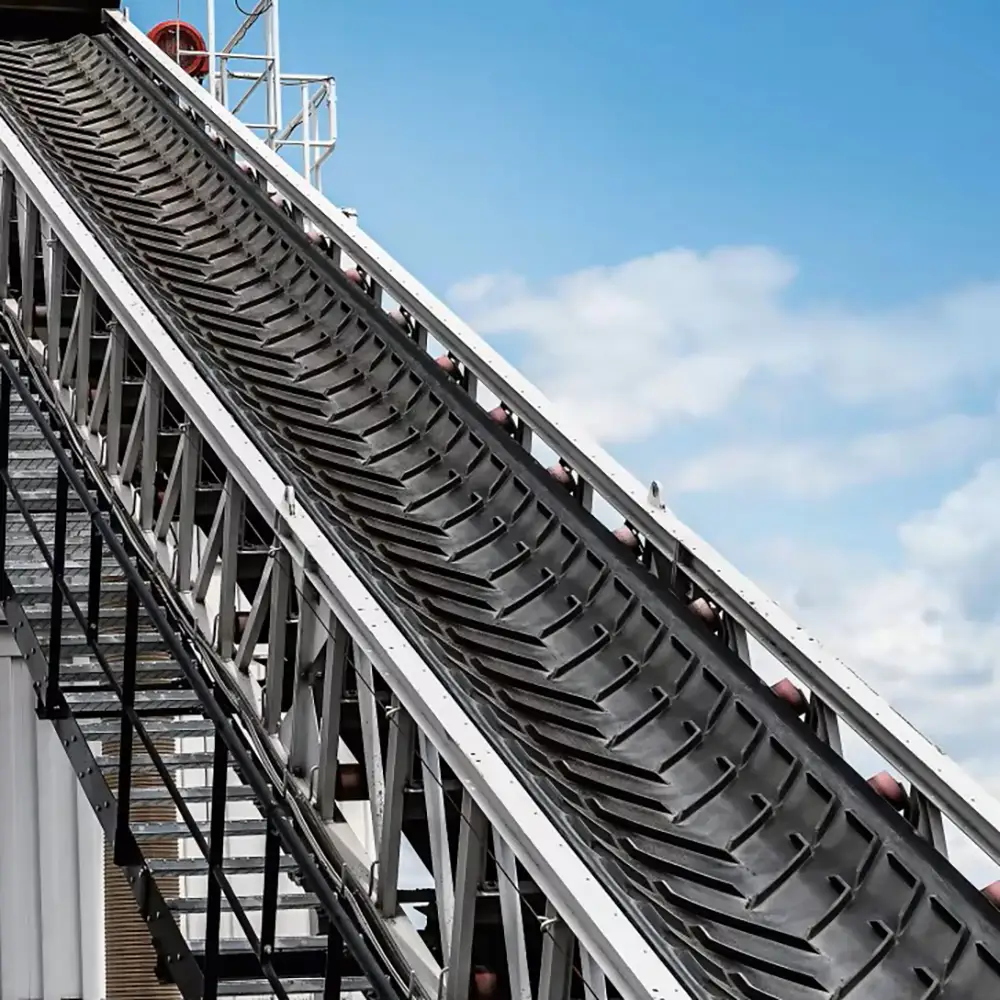
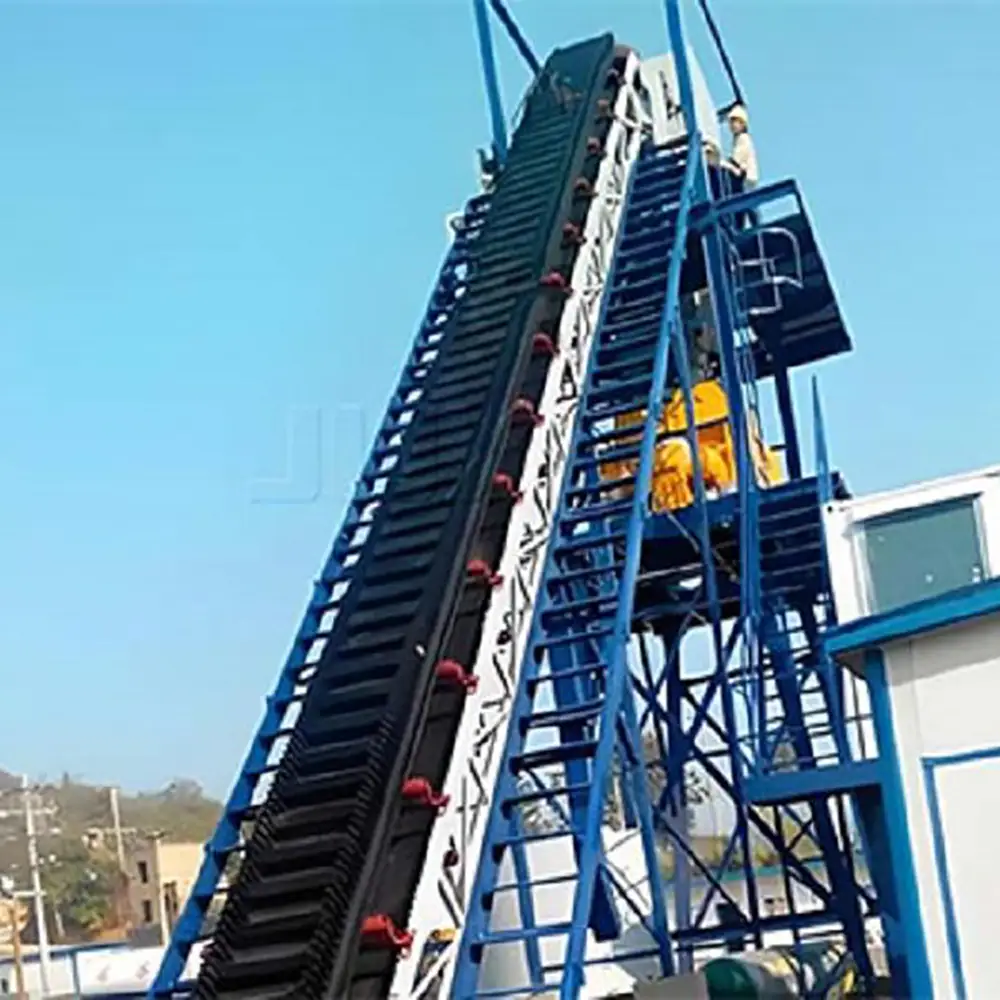
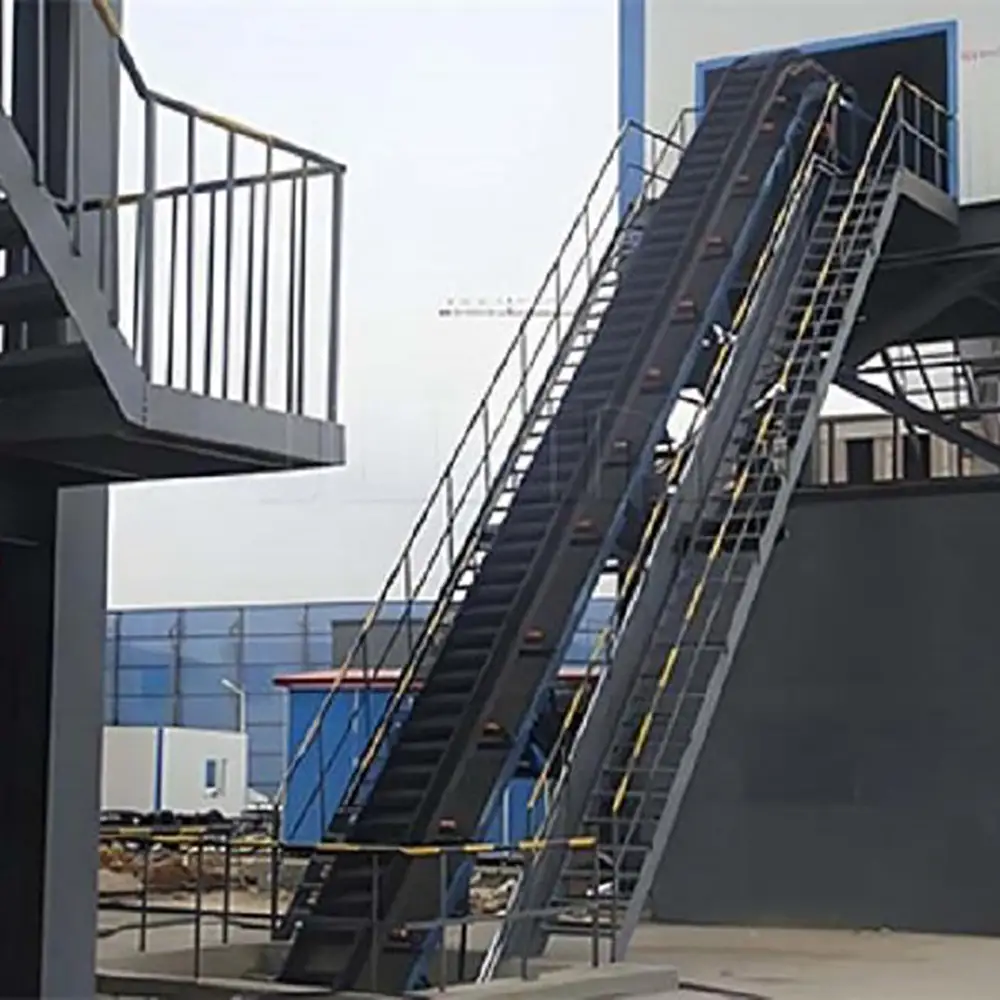
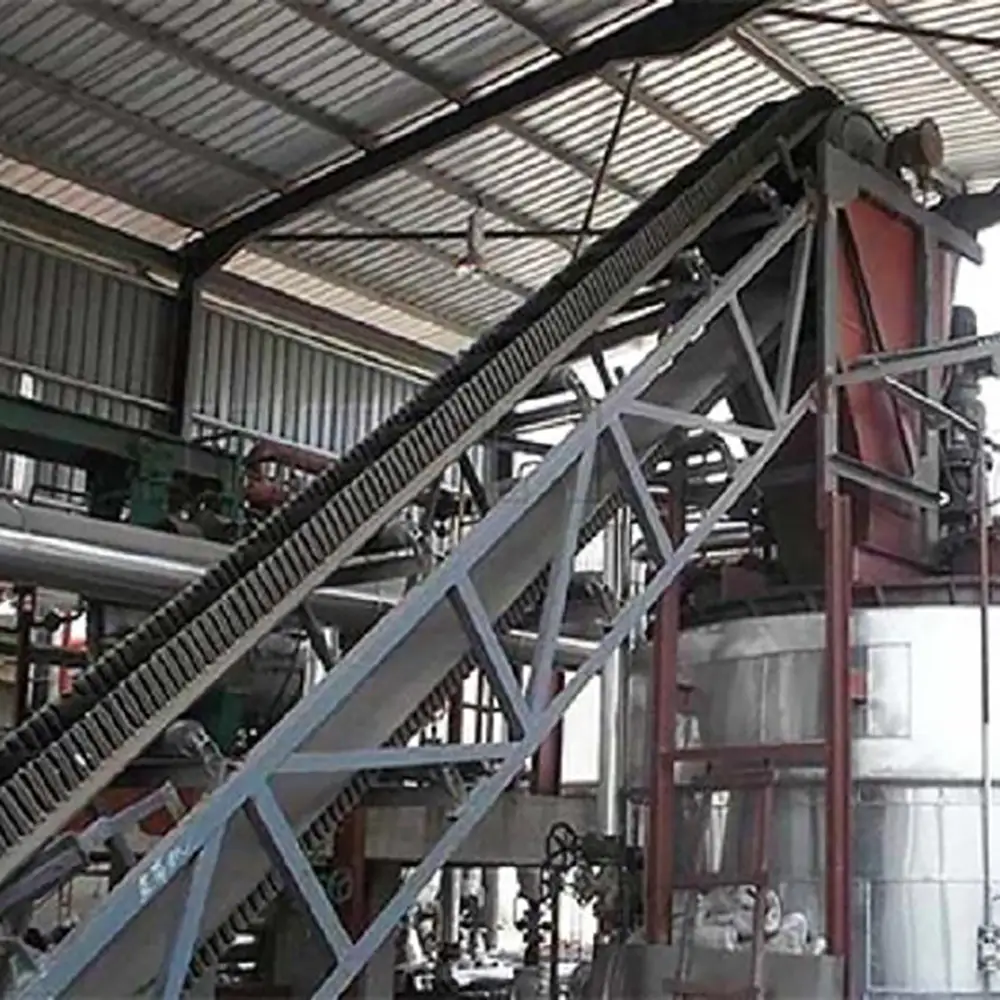
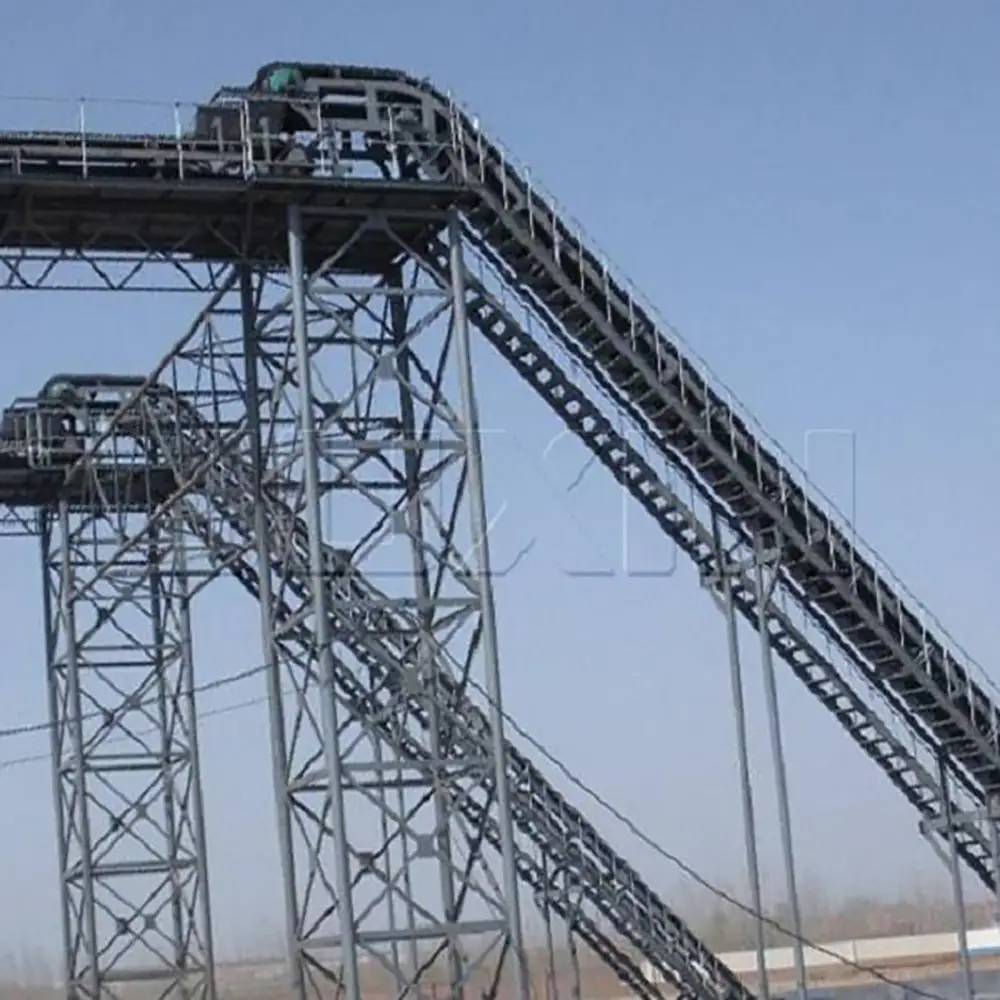
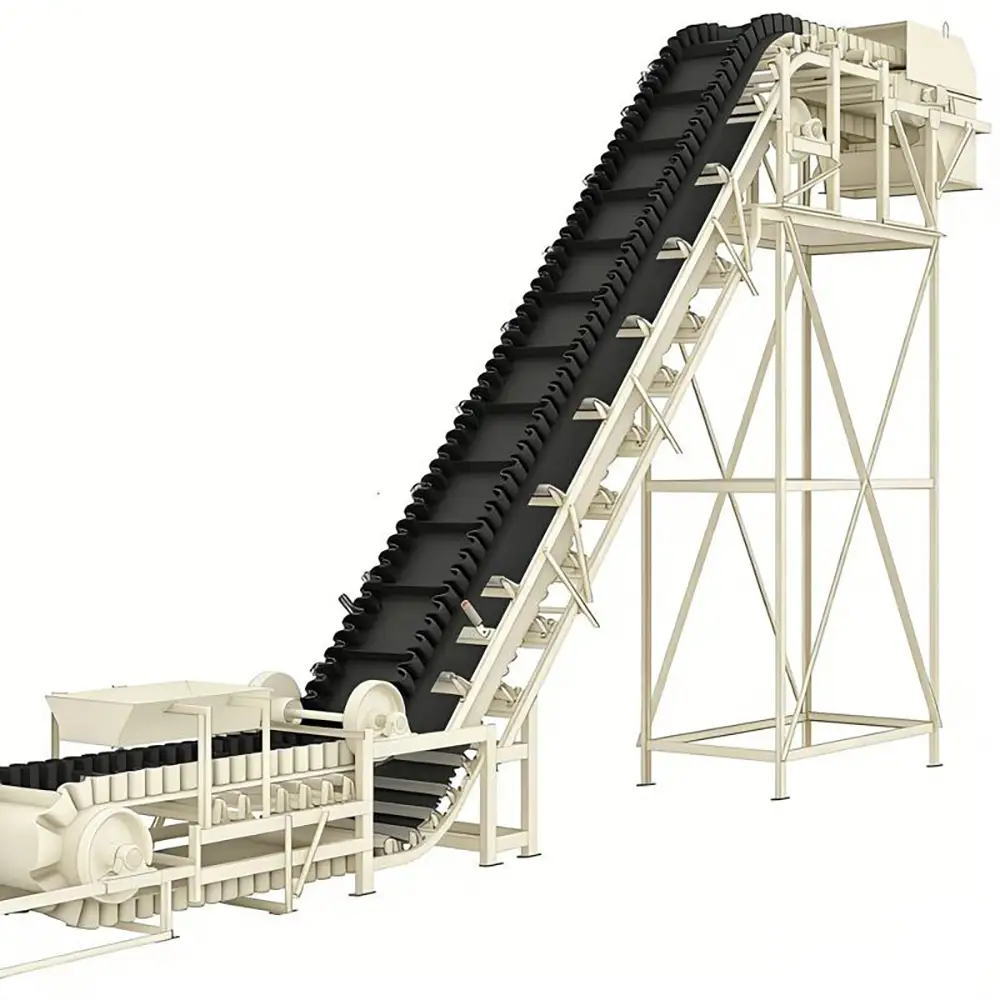
DJ type inclining belt conveyor are mainly applied to the continuous steep conveying for the bulk materials, which adopt the conveying belts equipped with corrugated sidewalls and transverse diaphragms with the of products conveying tilting angle of 0~90°(70° and below is preferred). This series of products are widely applied in the industries such as coal, grain, building materials, chemical, water and electricity, agriculture, port, and metallurgy, etc
|
Belt width(mm) |
300 |
400 |
500 |
650 |
800 |
1000 |
|
Rid height(mm) |
40 |
60 |
80 |
80 |
120 |
80 |
120 |
160 |
120 |
160 |
200 |
160 |
200 |
240 |
|
Volume (m3/h) |
30° |
16 |
28 |
36 |
50 |
70 |
74 |
105 |
122 |
135 |
164 |
204 |
240 |
300 |
359 |
|
45° |
12 |
19 |
25 |
33 |
60 |
49 |
90 |
106 |
116 |
142 |
175 |
195 |
240 |
310 |
|
60° |
9 |
15 |
19 |
23 |
41 |
35 |
61 |
75 |
78 |
100 |
120 |
137 |
165 |
210 |
|
90° |
5 |
9 |
11 |
15 |
24 |
23 |
36 |
45 |
46 |
60 |
85 |
82 |
120 |
145 |
Large Angle Rib Belt Conveyor, Skirt Conveyor & Steep Incline Conveyor System
1. Large Angle Rib Belt Conveyor Overview
A large angle rib belt conveyor is designed to transport bulk materials at steep inclines while helping prevent material from sliding or spilling backward. Also known as a corrugated sidewall belt conveyor or steep angle conveyor, this system uses a specially designed belt with raised sidewalls and cross cleats to retain materials during elevation changes.
Unlike conventional flat belt conveyors, large angle rib belt conveyors can move materials through limited vertical space and across significant height differences. They are widely used in mining, cement production, power plants, ports, chemical processing, agriculture, and bulk material handling facilities.
A skirt conveyor is commonly associated with material containment and controlled loading. Skirt boards or skirt rubber are installed along selected conveyor loading sections to help prevent material spillage and guide bulk materials onto the belt. Depending on the project, skirt components may be used alongside a corrugated sidewall belt or a conventional conveyor system.
Our large angle rib belt conveyor and skirt conveyor solutions can be configured according to material properties, conveying capacity, lifting height, installation layout, and operating conditions. The appropriate design helps support continuous transportation and efficient use of available plant space.
2. What Is a Large Angle Rib Belt Conveyor?
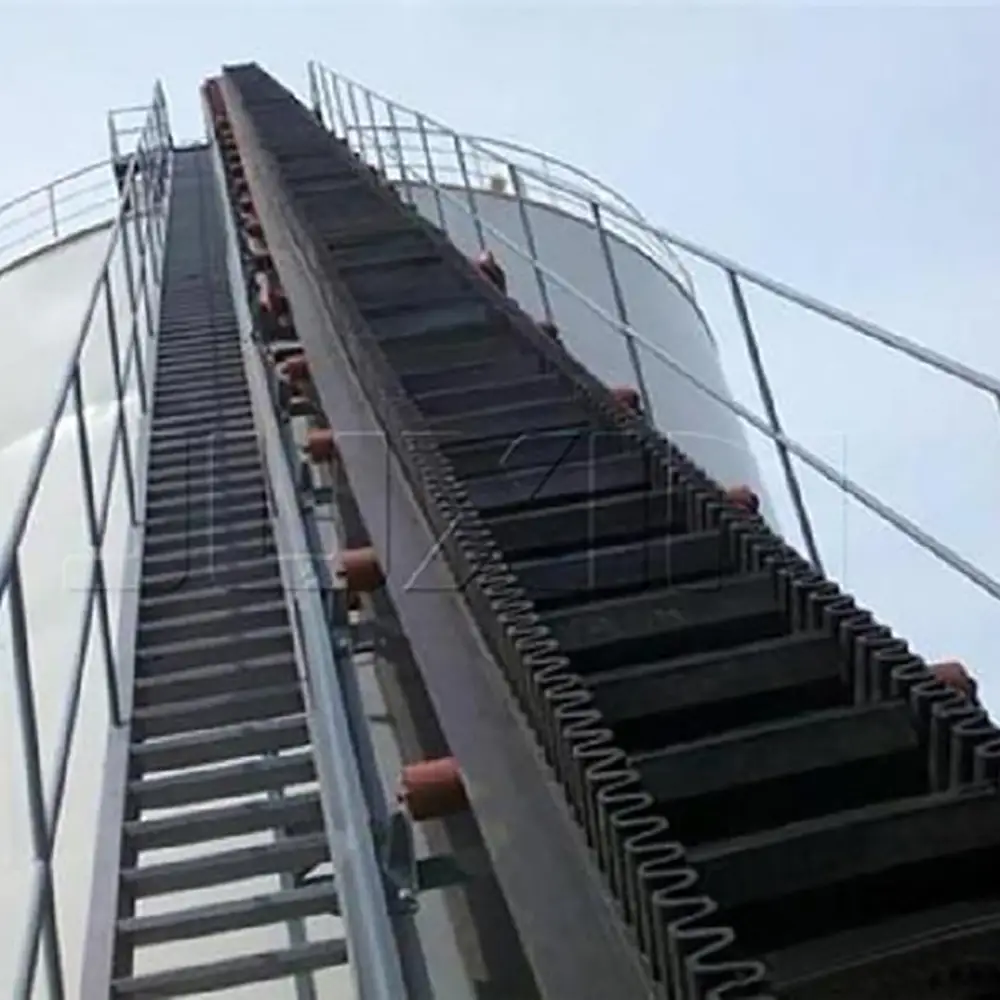
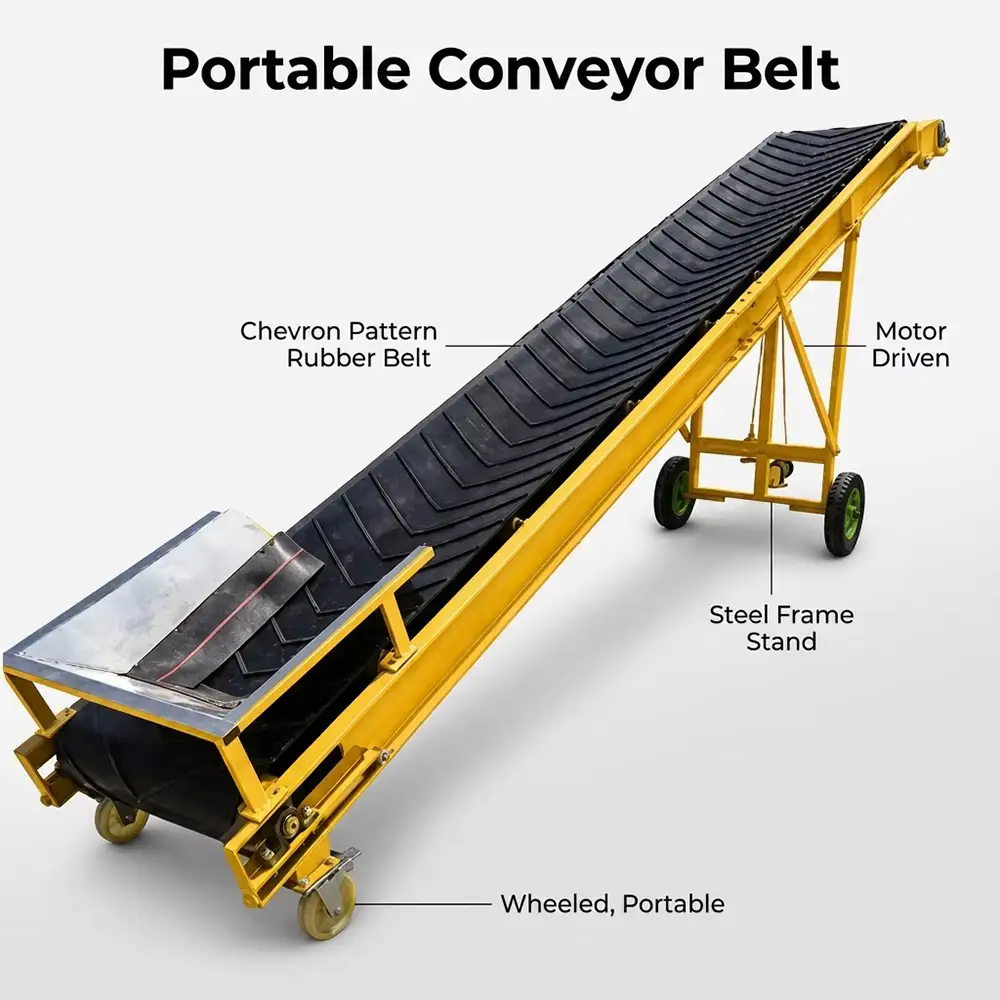
A large angle rib belt conveyor is an inclined conveying system that uses a belt equipped with corrugated sidewalls and transverse cleats. The sidewalls form flexible barriers along both edges of the belt, while the cleats create compartments or pockets that hold materials as the belt moves upward.
The corrugated sidewalls help contain bulk materials, and the cleats provide additional support against gravity. This construction allows the conveyor to transport selected materials at much steeper angles than ordinary flat belt conveyors.
Depending on the application, the belt may be configured with different sidewall heights, cleat profiles, belt widths, and rubber compounds. The system may also incorporate horizontal sections for feeding and discharge.
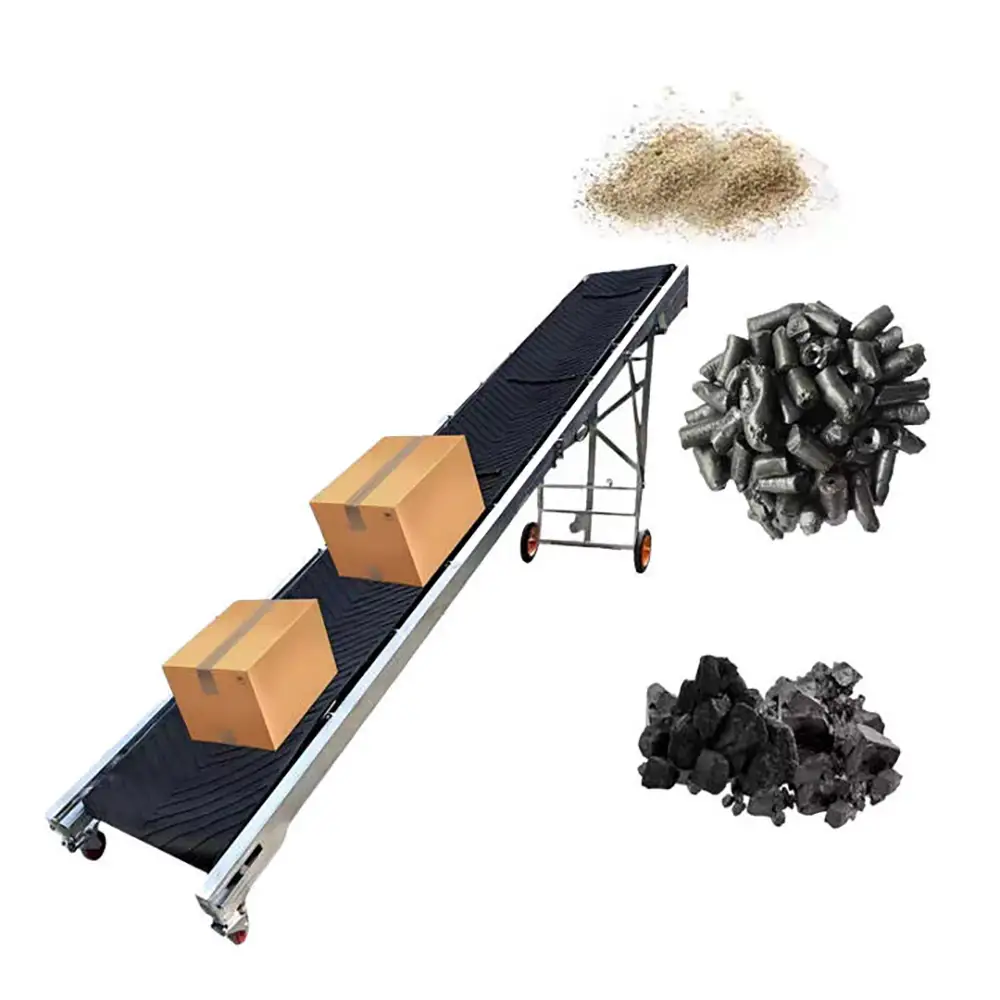
Large angle rib belt conveyors can be designed for different bulk materials, including coal, limestone, sand, gravel, fertilizer, grain, and selected ores. The actual maximum conveying angle depends on material characteristics, cleat design, belt speed, and system configuration.
3. Main Components of a Large Angle Rib Belt Conveyor
Corrugated Sidewall Belt
The corrugated sidewall belt is the main conveying component. Flexible sidewalls are bonded or otherwise integrated with the belt to create barriers that help retain material during inclined transportation.
Sidewall height and construction should be selected according to the material size, conveying angle, and required capacity.
Transverse Cleats
Cleats are installed across the belt at specified intervals. They help support the material and reduce backward movement during steep incline conveying.
Different cleat shapes and heights are available for different material characteristics and conveyor arrangements.
Skirt Board and Skirt Rubber
Skirt components are typically installed along loading zones to guide incoming material and reduce spillage. Skirt rubber can help create a controlled contact interface between the loading area and the belt.
Correct skirt positioning and adjustment are important. Excessive contact pressure may increase belt wear and friction.
Drive Unit
The drive unit includes the motor, gearbox, drive pulley, and associated components. It provides the torque needed to move the loaded belt and overcome conveying resistance.
Drive specifications depend on conveyor length, lifting height, material load, belt speed, and operating duty.
Supporting Structure and Rollers
The conveyor frame, pulleys, and supporting rollers maintain the belt path and carry the operating loads. Their configuration depends on the conveyor's geometry and whether it includes horizontal, inclined, or curved sections.
4. What Is a Skirt Conveyor?
A skirt conveyor generally refers to a belt conveyor equipped with skirt boards or skirt rubber along the loading area to help control material flow and reduce spillage.
When bulk materials are transferred from a chute, hopper, feeder, or upstream conveyor, the incoming stream may spread beyond the belt edges. Skirt boards create a controlled loading channel, helping guide the material onto the belt and reduce losses.
Skirt conveyor arrangements are common in mining, quarrying, cement plants, power stations, grain handling, and industrial bulk material transfer.
A skirt conveyor is not necessarily a steep angle conveyor. Skirt boards are primarily used for material containment at loading points, whereas corrugated sidewalls and cleats are the principal components that enable steep incline conveying. Both features may be incorporated into a larger material handling system where appropriate.
5. Applications of Large Angle Rib Belt Conveyors
Mining and Mineral Processing
Large angle conveyors can transport coal, ore, crushed rock, and other minerals from lower working areas to elevated processing equipment or stockpiles. Their compact layout can be useful where installation space is restricted.
Cement and Building Materials
Cement plants and building material facilities handle limestone, clinker, sand, and other bulk materials. Steep incline conveyors can transfer materials between storage, processing, and feeding stages.
Coal and Power Plants
Selected coal and bulk fuel handling systems use inclined conveyors to move material between unloading points, storage areas, feeders, and processing equipment.
Ports and Bulk Terminals
Bulk material terminals may use steep incline belt conveyors to transfer materials between ship unloading equipment, storage facilities, and downstream handling systems.
Agriculture and Grain Handling
Suitable conveyor configurations can transport grain, seeds, feed, and selected agricultural materials between storage and processing equipment. Belt and cleat selection should reflect the material's flow and handling characteristics.
Chemical and Fertilizer Production
Inclined belt systems can transfer fertilizer, granules, and other selected bulk materials. Material compatibility, contamination control, and cleaning requirements should be considered during design.
6. How a Large Angle Rib Belt Conveyor Works
The conveyor operates by moving material inside the compartments formed by its sidewalls and transverse cleats.
Step 1: Material Feeding
Bulk material enters the conveyor through a hopper, chute, feeder, or another controlled loading device. Skirt boards may guide the material and reduce spillage at the loading point.
Step 2: Material Retention
As the belt begins to incline, the corrugated sidewalls help prevent material from escaping over the edges. Transverse cleats support the material and form compartments that reduce backward movement.
Step 3: Inclined Transportation
The drive unit moves the belt along the conveyor structure. The cleats carry the material upward, while the sidewalls help maintain containment throughout the inclined section.
Step 4: Material Discharge
At the discharge point, the conveyor geometry and pulley arrangement allow material to leave the belt and enter a receiving chute, hopper, silo, or downstream conveyor.
Step 5: Belt Return
The empty belt travels back along the return section. The return arrangement is designed to accommodate the belt's sidewalls and cleats while maintaining suitable belt tracking and support.
7. Advantages of Large Angle Rib Belt Conveyors
Steep Incline Material Transportation
Corrugated sidewalls and cleats allow suitable bulk materials to be conveyed at steep angles, potentially reducing the need for multiple conventional conveyors.
Efficient Use of Space
The system can combine horizontal and inclined conveying sections in a compact layout, helping accommodate facilities with limited installation space.
Reduced Material Spillage
Sidewalls and appropriately designed cleats help contain material during inclined transportation. Skirt boards at loading points provide additional control over incoming material.
Flexible System Configuration
Belt width, sidewall height, cleat dimensions, and conveyor geometry can be selected according to the application and required conveying capacity.
Continuous Bulk Material Handling
When correctly integrated with feeding and discharge equipment, the conveyor can support continuous transportation between different stages of production.
Adaptation to Different Industries
Large angle rib belt conveyors can be engineered for various bulk materials, provided the belt construction and system design match the material's physical properties and operating environment.
8. How to Choose the Right Large Angle Rib Belt Conveyor
Choosing the appropriate conveyor requires consideration of both material properties and plant layout.
Conveying Capacity: Determine the required throughput in tons per hour and consider peak material flow.
Conveying Angle: Establish the required elevation change and horizontal distance. Select cleats and sidewalls according to the intended operating angle.
Material Characteristics: Evaluate particle size, bulk density, moisture, abrasiveness, and flow behavior.
Belt Width: Select a width that provides sufficient material capacity and suitable clearance between the material and sidewalls.
Sidewall Height: Consider the material depth and the risk of material overflow during operation.
Cleat Design: Select the cleat height, profile, and spacing according to the material and incline.
Loading and Discharge: Coordinate the feed chute, skirt arrangement, discharge chute, and connected equipment.
Operating Conditions: Consider temperature, dust, moisture, outdoor exposure, and expected operating hours.
Maintenance Access: Provide suitable access for inspecting the belt, cleats, sidewalls, pulleys, and drive components.
9. Installation, Operation, and Maintenance
Proper installation and maintenance help preserve belt performance and minimize unexpected downtime.
Before commissioning, inspect the conveyor structure, drive unit, belt alignment, tension, loading equipment, and safety guards. Verify that the sidewalls and cleats do not interfere with the pulleys, rollers, or supporting components.
During operation, monitor material distribution, belt tracking, vibration, unusual noise, and material spillage. Avoid excessive loading and sudden impact from oversized material.
Routine maintenance should include:
Inspecting sidewalls and cleats for tearing, separation, and wear.
Checking belt tracking, tension, and splice condition.
Inspecting pulleys, rollers, bearings, and drive components.
Checking skirt rubber for wear and correct adjustment.
Removing material buildup from loading and discharge areas.
Inspecting the conveyor frame, supports, and fasteners.
Testing emergency stops and other protective devices.
Following the manufacturer's lubrication and servicing recommendations.
Before maintenance, isolate the power supply and follow the required lockout procedures. Do not reach into moving belt, pulley, or cleat areas.
10. Custom Large Angle Rib Belt Conveyor and OEM Solutions
Every bulk material handling project has different elevation changes, material characteristics, capacity requirements, and installation limitations. Custom conveyor solutions can be configured to suit individual plant layouts and process requirements.
Available design considerations include belt width, sidewall height, cleat profile, conveyor length, inclination, drive power, feeding and discharge arrangements, skirt components, and supporting structure.
OEM configurations can also be coordinated with crushers, screens, hoppers, feeders, silos, and existing belt conveyor networks. Customers can provide conveying capacity, material specifications, layout drawings, elevation requirements, and operating conditions to support equipment selection.
An application-based design helps match the conveyor system to the production process and the practical requirements of installation and maintenance.
11. Why Choose Us?
Industrial Conveyor Solutions
We support bulk material handling requirements across mining, quarrying, cement, power, agriculture, and industrial production applications.
Flexible Belt Configurations
Different sidewall heights, cleat profiles, belt widths, and conveyor arrangements can be considered according to project specifications.
Application-Based Recommendations
We evaluate material properties, required throughput, conveying angle, layout restrictions, and operating conditions when discussing suitable equipment configurations.
Custom Manufacturing and OEM Support
Customized conveyor structures and belt configurations can be coordinated for specific production lines and material transfer requirements.
Practical Maintenance Considerations
Belt inspection, skirt adjustment, access to drive components, and replacement requirements can be considered during system selection.
Project Coordination
We can coordinate technical specifications, conveyor configuration details, and integration requirements to support equipment purchasing and project planning.
5. FAQs
Q1: What Is a Large Angle Rib Belt Conveyor?
A large angle rib belt conveyor is a steep incline conveyor that uses corrugated sidewalls and transverse cleats to retain bulk materials while transporting them upward or along an inclined route.
Q2: What Is the Difference Between a Rib Belt Conveyor and a Skirt Conveyor?
A rib belt conveyor typically uses corrugated sidewalls and cleats to retain material during steep incline conveying. A skirt conveyor generally uses skirt boards or skirt rubber near loading points to guide material and reduce spillage. They serve different functions and may be used together.
Q3: What Materials Can a Large Angle Belt Conveyor Transport?
Depending on belt design and operating conditions, it can transport coal, limestone, crushed stone, sand, gravel, ore, fertilizer, grain, and other suitable bulk materials.
Q4: What Is the Maximum Incline Angle?
The maximum practical angle depends on the material's flow characteristics, belt width, sidewall height, cleat design, loading depth, and operating conditions. The suitable angle should be confirmed through application-specific engineering.
Q5: What Are Corrugated Sidewalls Used For?
Corrugated sidewalls form flexible barriers along the belt edges. They help prevent bulk materials from spilling over the sides when the conveyor operates at an incline.
Q6: Why Are Cleats Installed on a Steep Angle Conveyor?
Cleats create compartments and provide support for bulk material as it travels upward. Their height and spacing influence material retention and conveying capacity.
Q7: What Is the Function of Skirt Rubber?
Skirt rubber helps guide incoming material onto the conveyor belt and reduces spillage around the loading area. Correct adjustment is important to avoid unnecessary friction and belt damage.
Q8: Can a Large Angle Rib Belt Conveyor Be Customized?
Yes. Belt width, sidewall height, cleat shape, conveyor length, incline, drive configuration, and loading and discharge arrangements can be considered according to project needs.
Q9: How Do You Maintain a Corrugated Sidewall Conveyor?
Regularly inspect the belt, sidewalls, cleats, splices, pulleys, rollers, drive components, and skirt rubber. Remove material buildup and follow the manufacturer's maintenance schedule.
Q10: What Information Is Needed for a Conveyor Quotation?
Provide the material type, bulk density, particle size, required capacity, conveyor length, lifting height, conveying angle, belt width requirements, loading arrangement, discharge position, and operating environment.
Prev:
Inclined Belt Conveyor, Mine Equipment Conveyor
Next:
Mobile Belt Conveyor for Stone and Mining Transport
TAG:
Chevron Belt Conveyor,
Heavy Duty Conveyor Belt,
Mining Belt Conveyor,
Quarry Belt Conveyor,
High Angle Belt Conveyor,
Sidewall Belt Conveyor,
Vertical Belt Conveyor,
Sidewall Conveyor Belt,
Industrial Belt Conveyor,
Bulk Material Conveyor,
Mining Material Handling,
Bulk Material Handling System,
Industrial Conveyor Equipment,
Aggregate Conveyor,
Inclined Belt Conveyor,
Cleated Belt Conveyor,
Corrugated Sidewall Belt Conveyor,
Steep Angle Belt Conveyor,
Steep Incline Conveyor,
Conveyor Transfer System,
Stone Conveyor System,
Ribbed Belt Conveyor,
Cement Belt Conveyor,
Inclined Material Conveyor,
Industrial Skirt Board,
Conveyor Skirt Rubber,
Conveyor Belt Skirting,
Conveyor Loading Skirt,
High Incline Conveyor,
Bulk Solids Conveyor,
Related Category:
Large Angle Rib Belt Conveyor, Skirt Conveyor, Steep Angle Belt Conveyor, Corrugated Sidewall Belt Conveyor, Sidewall Be China, suppliers, manufacturers, factory, customized, wholesale, quotation, made in China