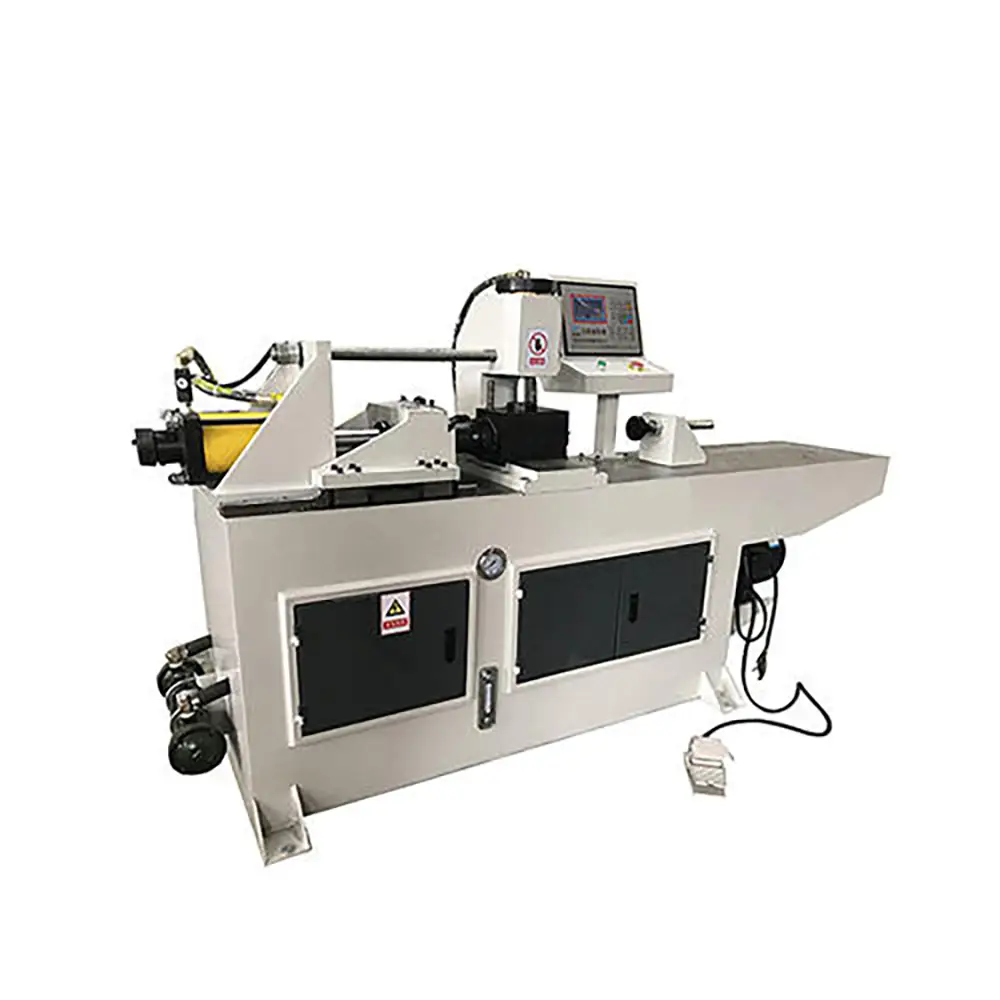
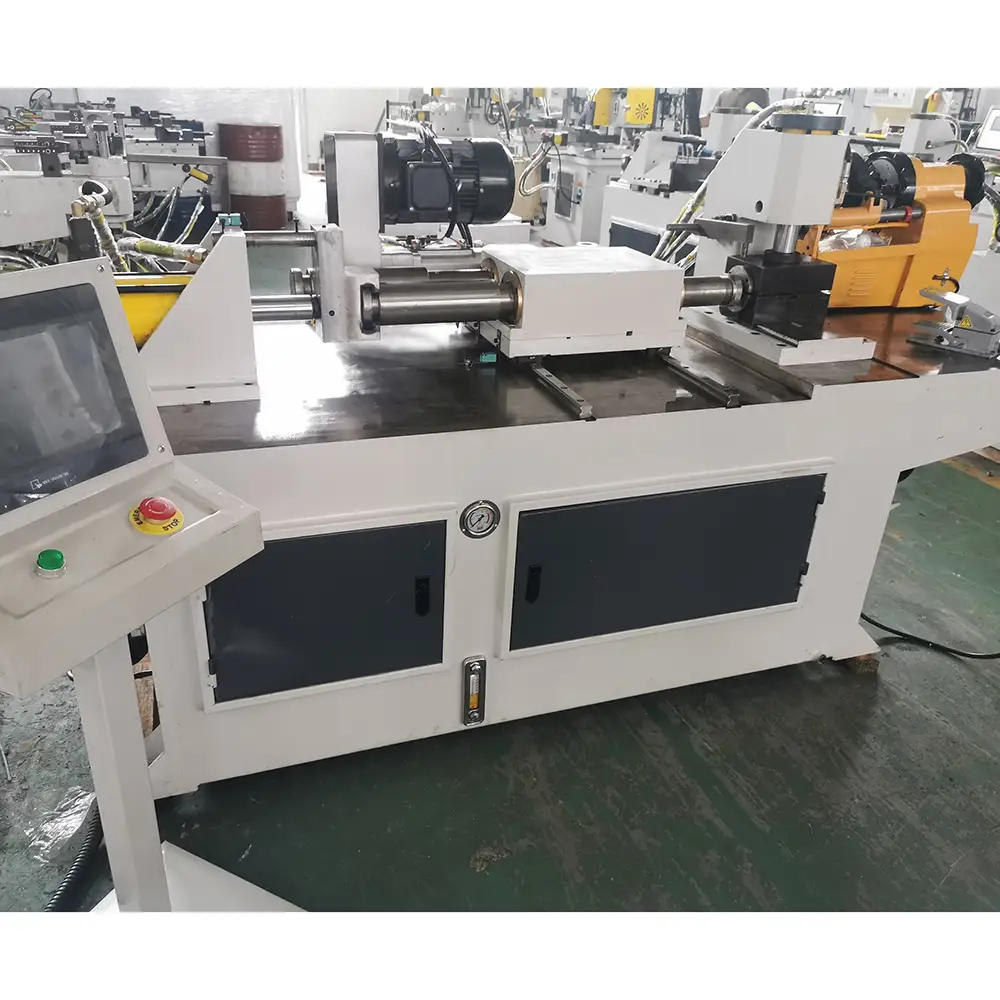
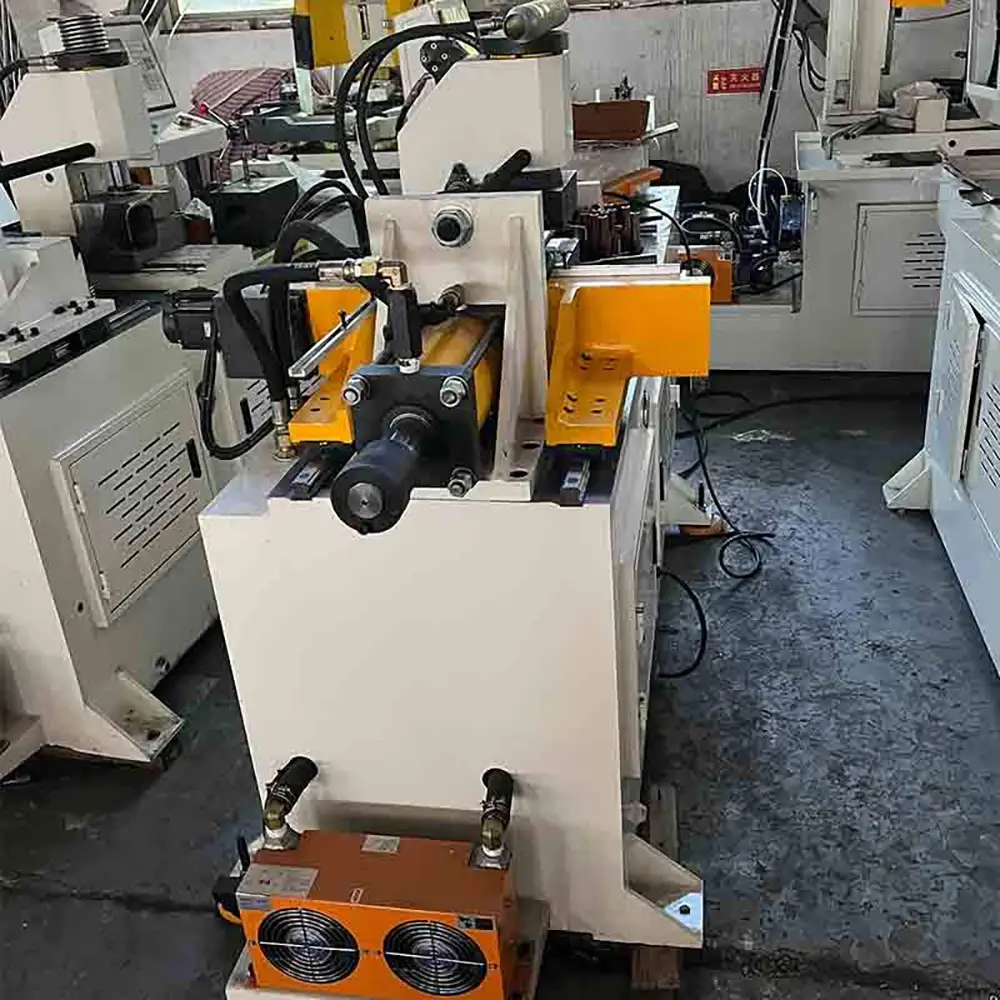
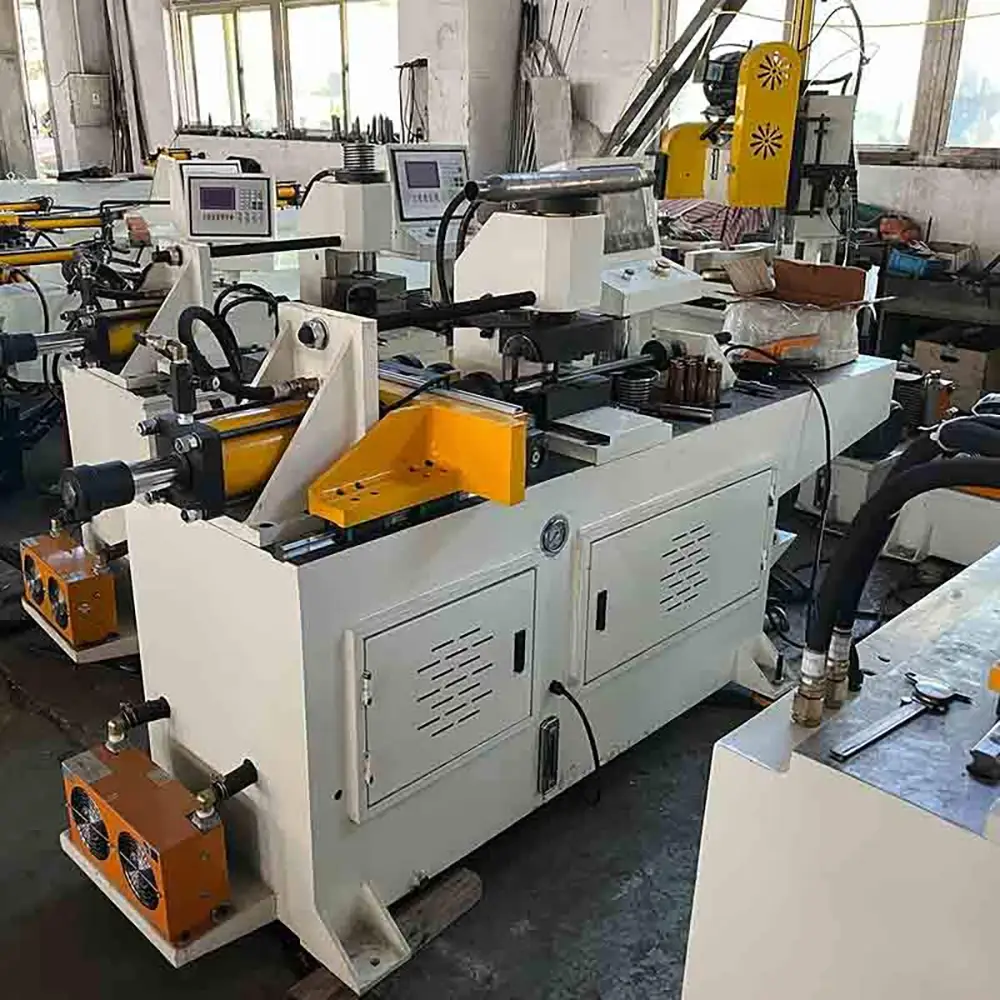
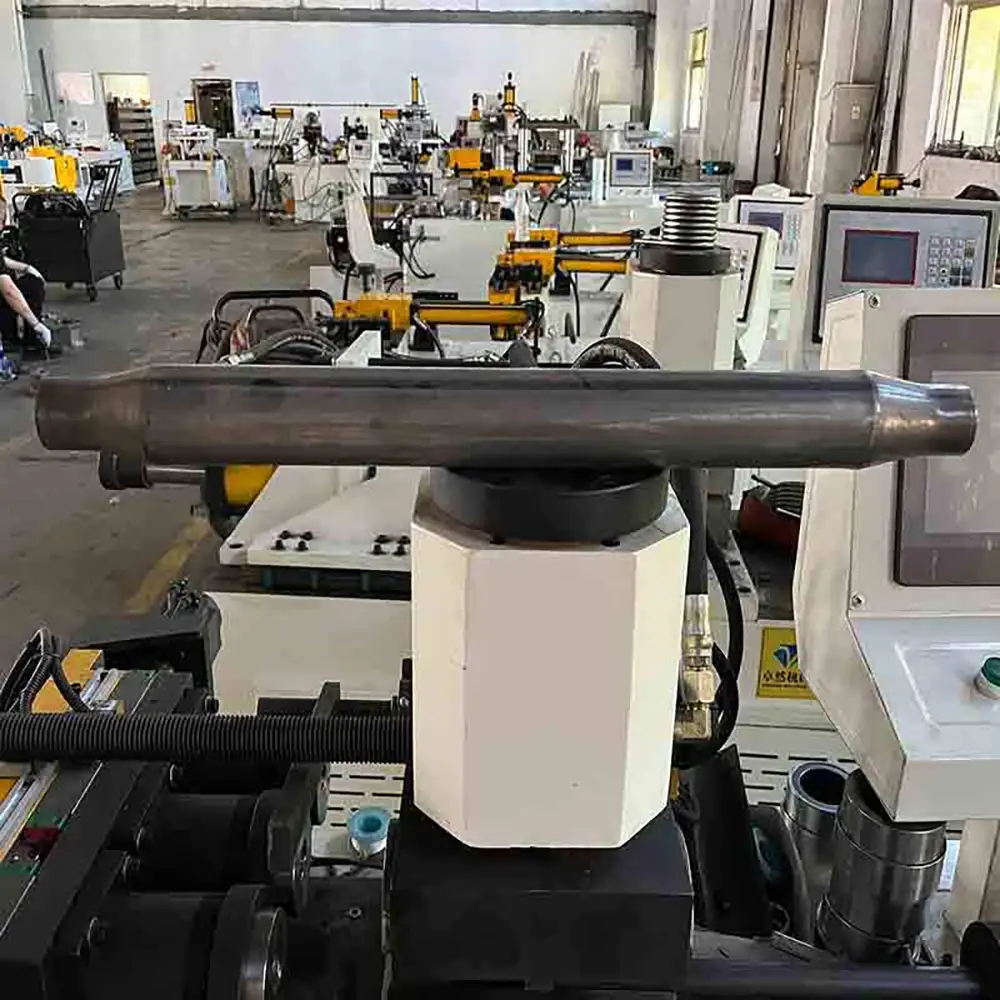
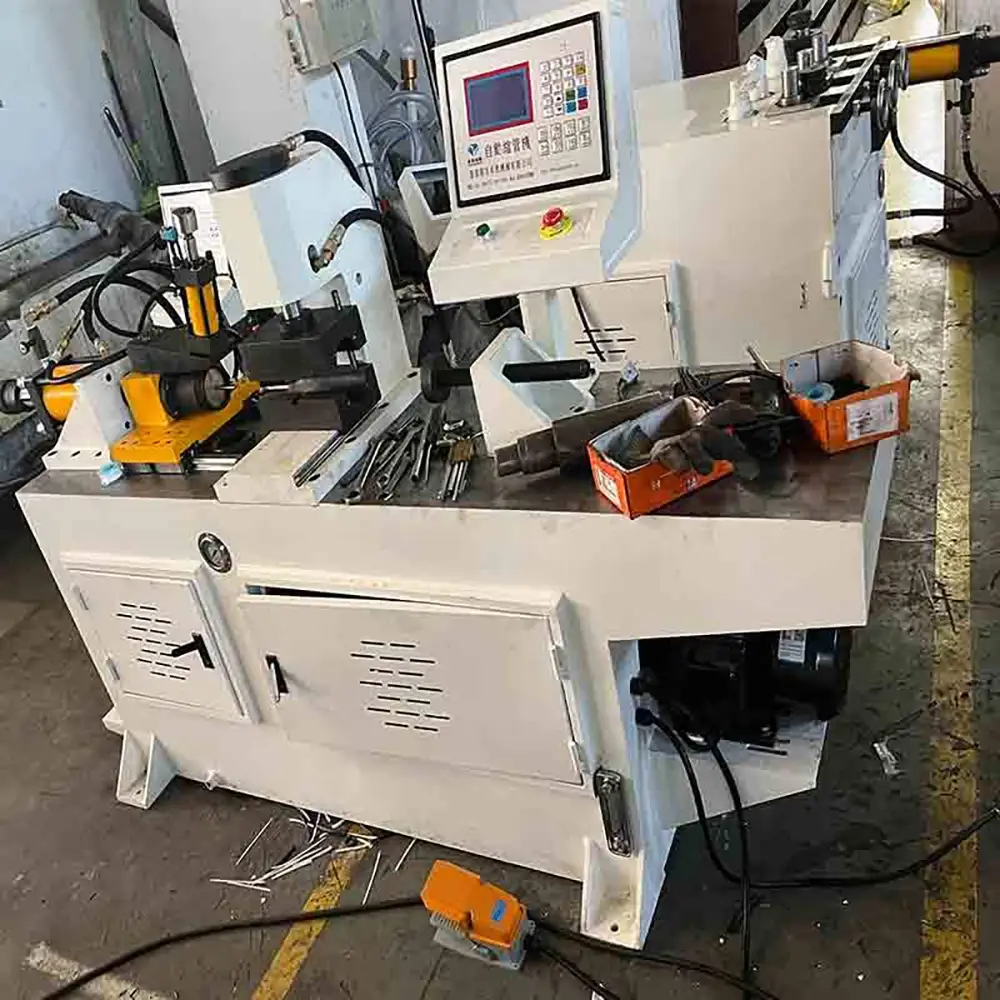
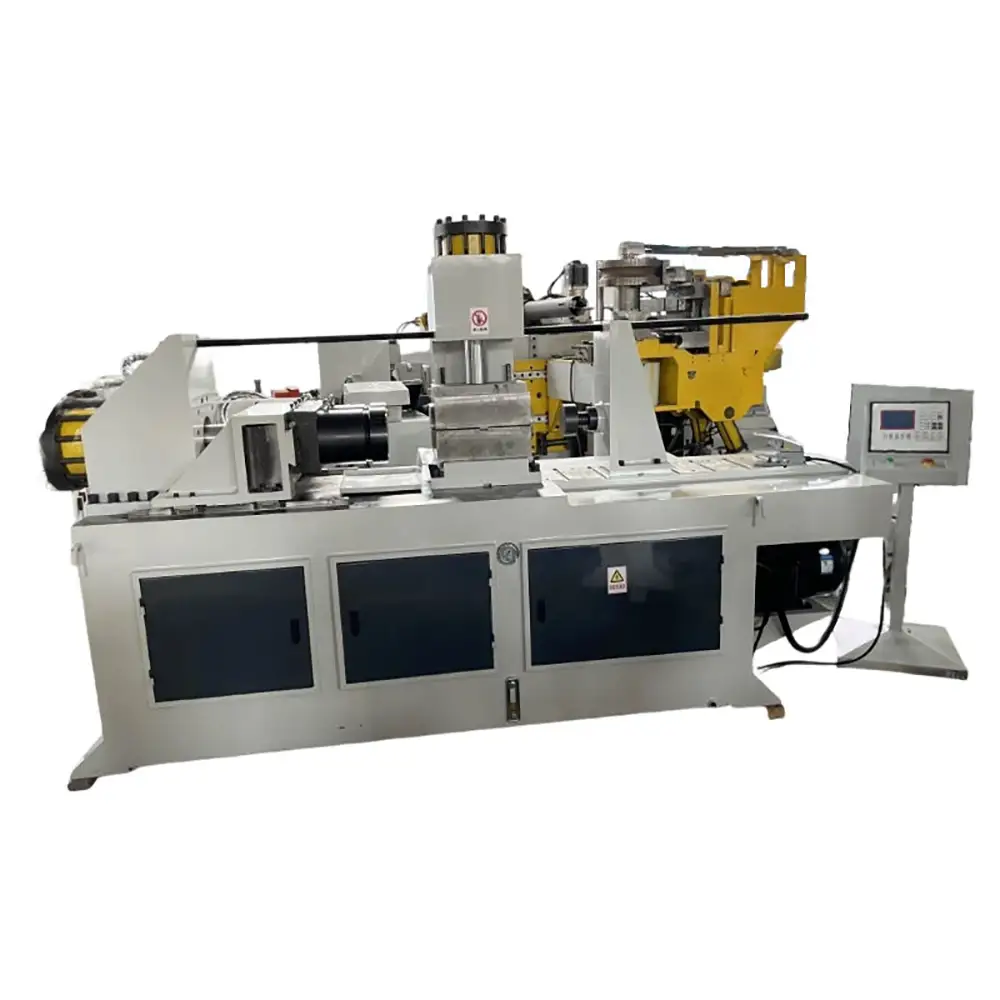
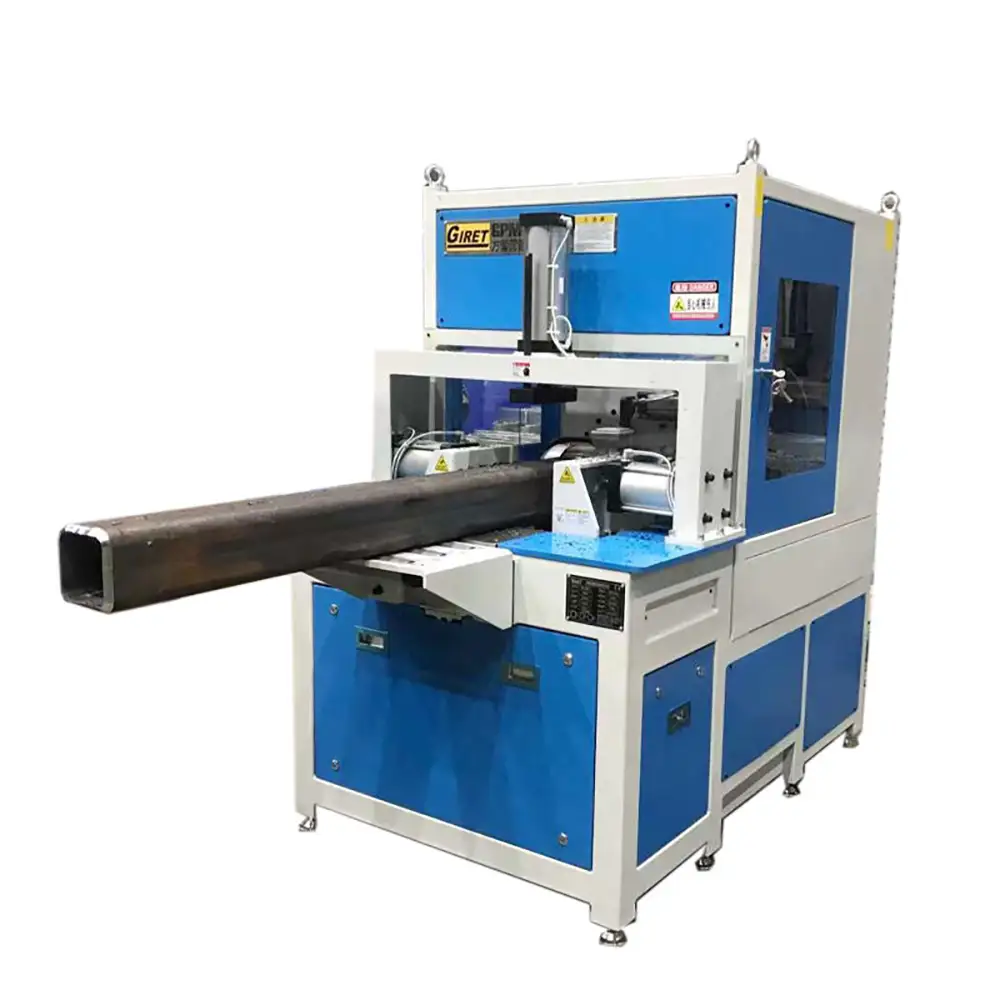
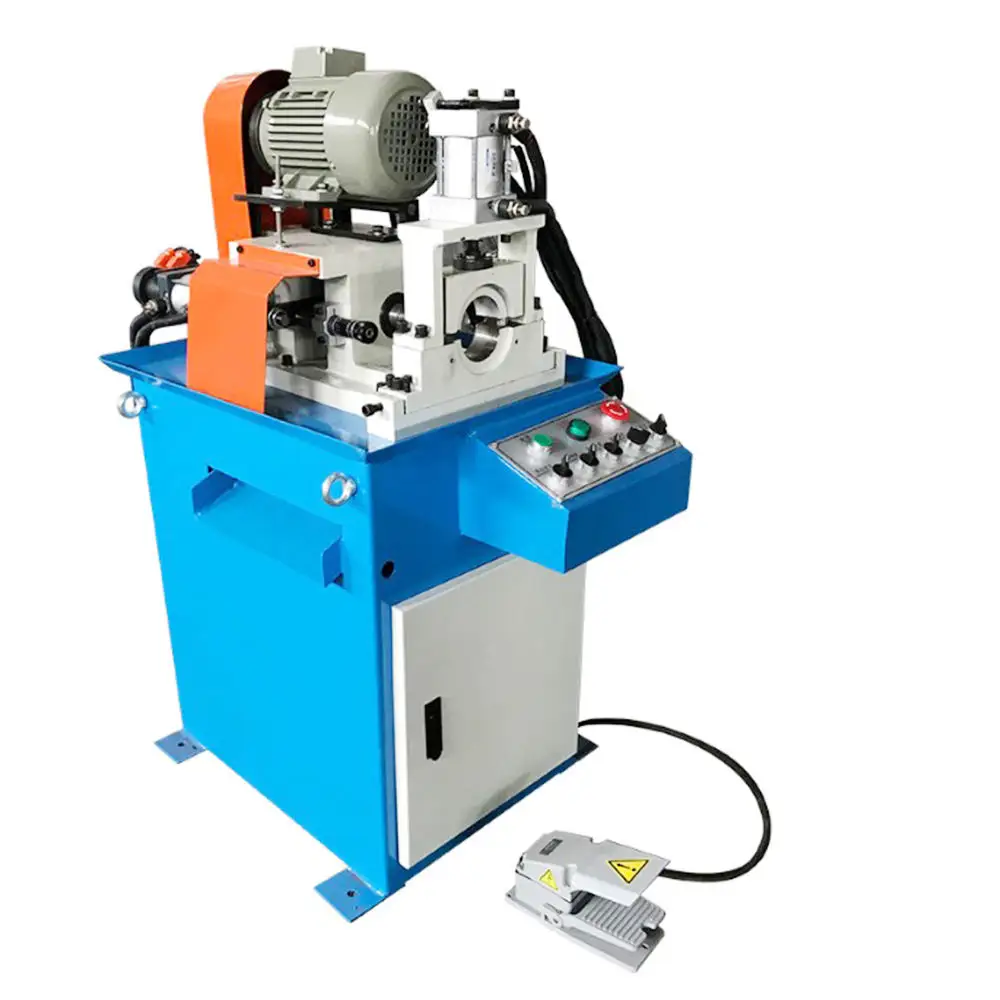
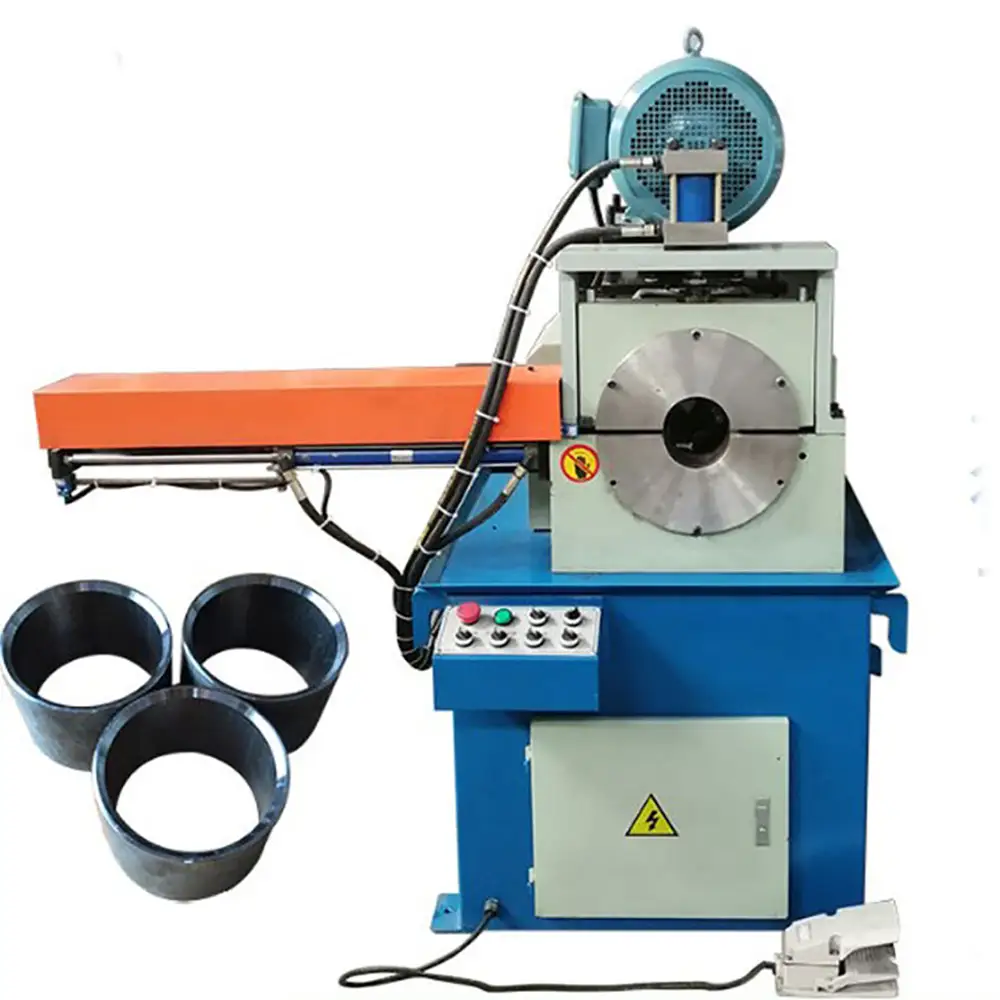
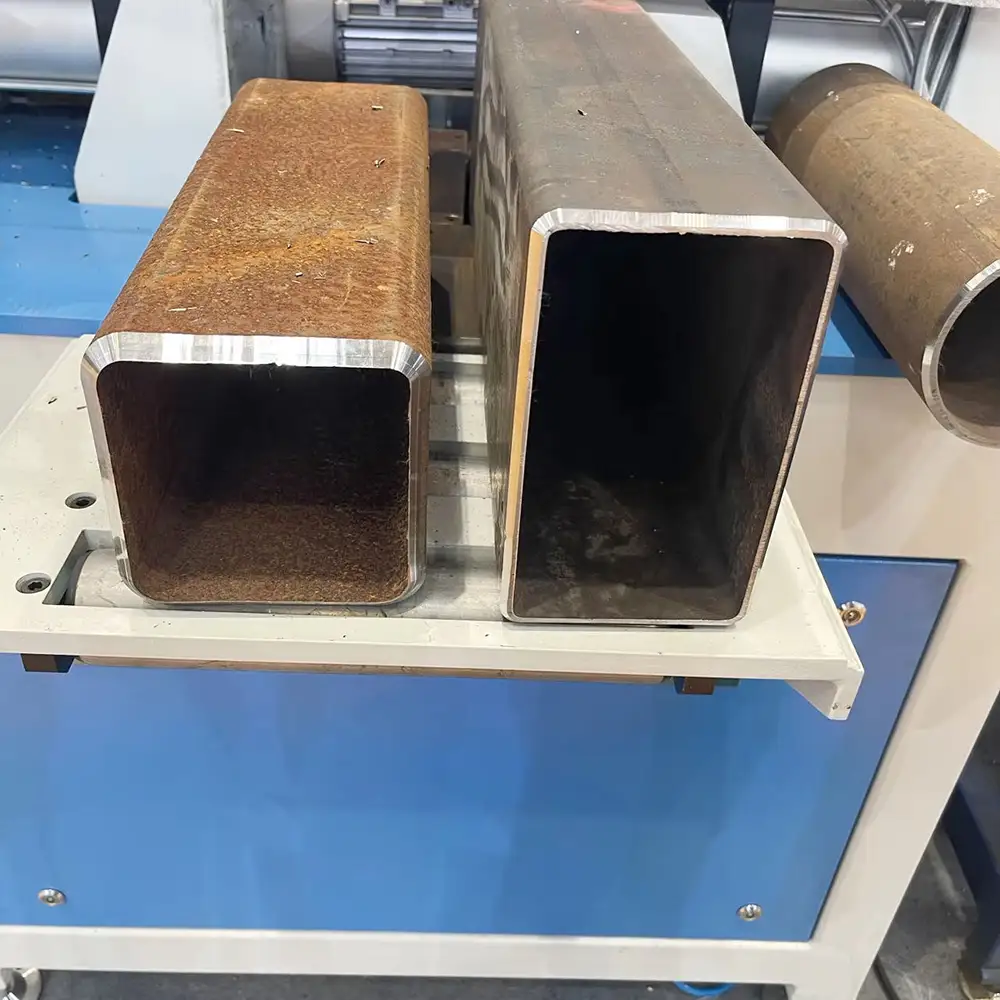
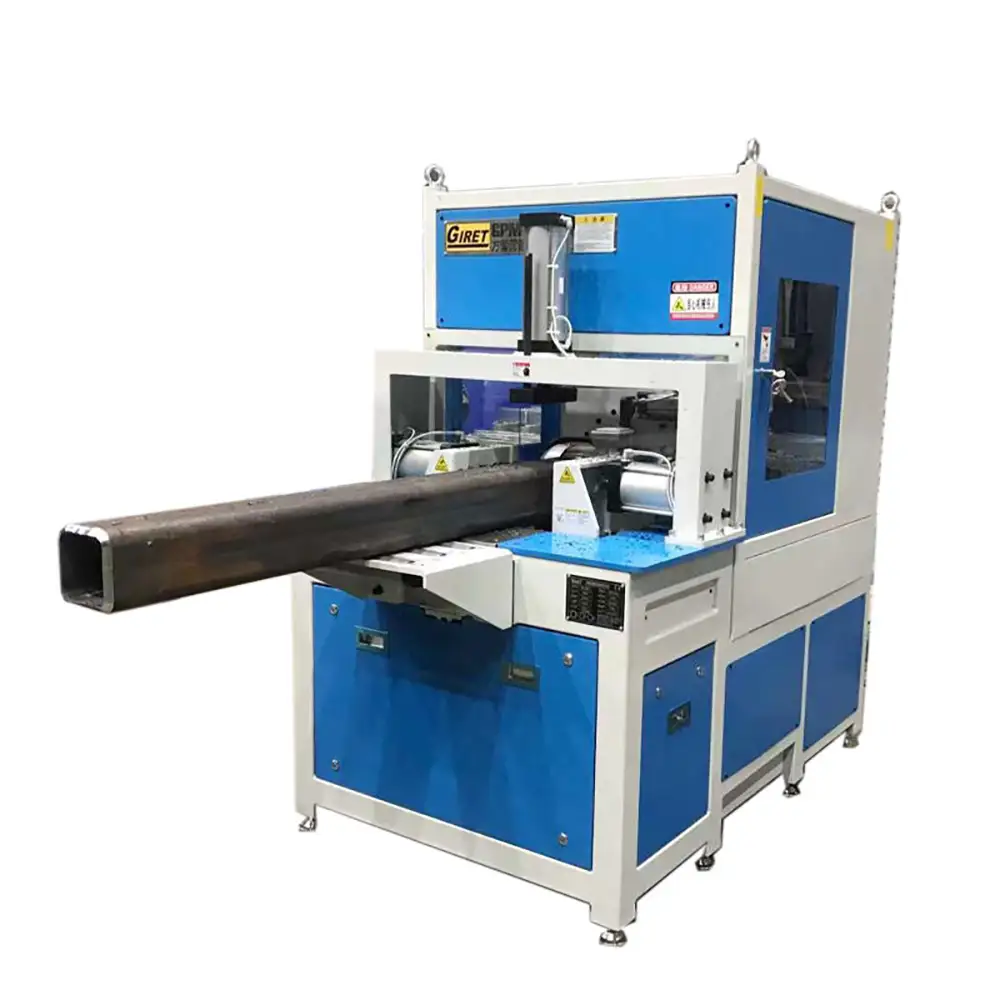
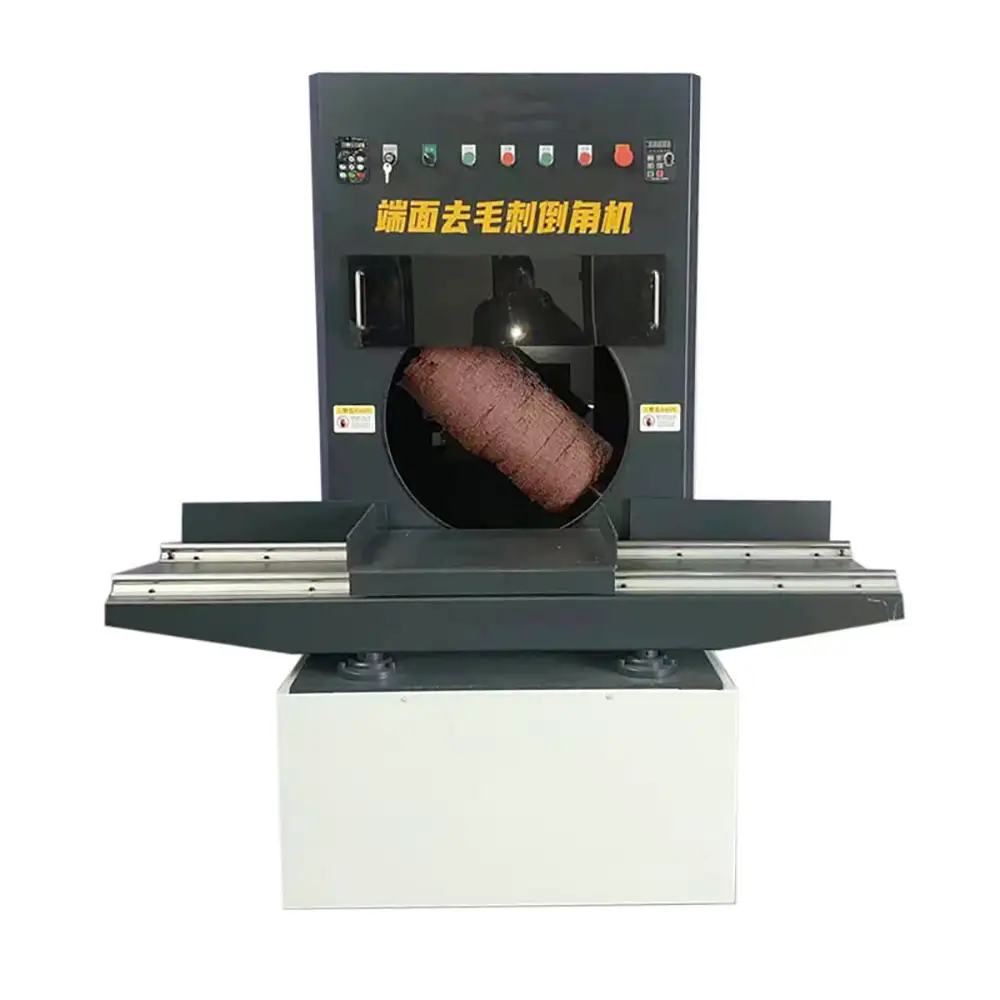
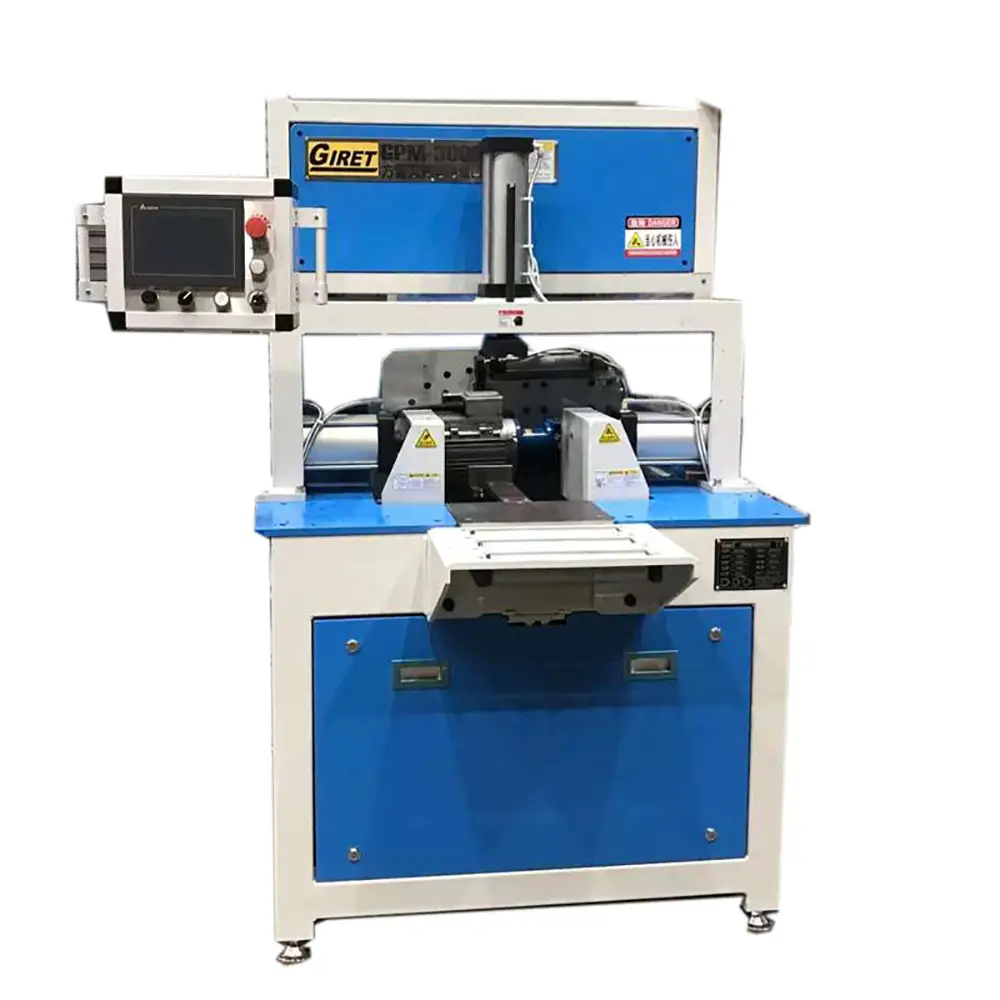
One-Piece Flare Automatic Tube End Forming Machine for Pipe Flaring
The One-Piece Flare Automatic Tube End Forming Machine is designed for efficient flaring and end forming of metal tubes and pipes used in machinery,automotive components,gearbox assemblies,bearing-related parts,gear components,and other industrial products. The one-piece flare forming concept provides a dedicated solution for creating a controlled flared or expanded tube end according to the required product geometry.
The machine can be configured for suitable stainless steel,aluminum,carbon steel,copper,and other compatible metal tubes. By using application-specific forming dies and workholding,the equipment can produce repeatable tube-end shapes for subsequent assembly,connection,positioning,or structural purposes.
Automatic tube end forming can reduce repetitive manual forming operations and help manufacturers establish a more consistent production process. Actual forming capacity,cycle time,diameter range,and finished dimensions depend on the selected machine configuration,tooling,material,and workpiece specifications.
One-Piece Flare Forming Process
The main function of this equipment is tube-end flaring. During the process,the end of a suitable metal tube is positioned inside the forming tooling and then expanded or shaped to create the required flare.
A one-piece flare can be designed to provide a specific end diameter,profile,or connection geometry.
The final shape depends on several factors,including:
Tube Outside Diameter
Tube Wall Thickness
Material Properties
Required Flare Diameter
Forming Depth
Tool Geometry
Clamping Method
Forming Force
Machine Configuration
For production applications,the forming die should be designed around the actual tube dimensions and finished product drawing.
Sample testing can be useful when the application requires specific dimensional tolerances or a specialized end profile.
Automatic Tube End Forming
The automatic operating concept is suitable for manufacturers that process repeated quantities of similar tubes.
A typical cycle may involve loading the tube,positioning it against a defined stop,clamping the workpiece,performing the flare-forming operation,and releasing the finished component.
Depending on the machine configuration,automatic functions may control forming movement,clamping,cycle timing,and other processing actions.
Automation can help reduce repetitive manual work and improve consistency between production pieces. However,the overall production rate depends on loading method,tooling,material,forming geometry,and the complete machine cycle.
For high-volume production,the machine can be integrated into a broader tube-processing workflow.
Stainless Steel Pipe Flaring
Stainless steel is widely used for components requiring corrosion resistance,mechanical strength,and a clean surface.
The machine can be configured for suitable stainless steel tube and pipe flaring applications. Because stainless steel grades have different strength and forming characteristics,appropriate tooling and forming parameters should be selected for the specific material.
Factors such as tube wall thickness,material grade,forming speed,clamping pressure,and die geometry can affect the finished flare.
Applications may include industrial tubing,automotive components,machinery assemblies,fluid-handling parts,and selected gearbox or bearing-related tubular components.
Customers should provide the stainless steel grade and tube dimensions when requesting a machine configuration.
Aluminum Pipe Flaring
Aluminum tubes are commonly used where low weight and corrosion resistance are important. They are found in automotive,transportation,heat-transfer,machinery,and other industrial applications.
The one-piece flare tube forming machine can be configured for suitable aluminum tubes with appropriate forming dies.
Aluminum has different deformation characteristics from stainless steel and carbon steel,so the forming process must be matched to the material. Excessive force or incorrect tooling can affect the tube surface,wall thickness,and final flare geometry.
Correct positioning and clamping are particularly important for maintaining consistent results during automatic production.
Gearbox Component Applications
Tube end forming can be used for selected tubular components associated with gearbox manufacturing.
Depending on the product design,the machine may be suitable for forming sleeves,covers,housings,shaft-related tubular components,or other parts requiring a flared or expanded tube end.
For gearbox production,the finished end shape may serve as an assembly interface,positioning surface,retaining structure,or connection area.
The actual suitability should be evaluated from the component drawing because gearbox parts can have very different materials,dimensions,and tolerance requirements.
Bearing and Gear Core Applications
The machine can also be considered for suitable tubular components used in bearing and gear assemblies.
Bearing-related parts may include sleeves,rings,covers,or other formed tubular components where an expanded or flared end is required.
For gear-related production,the machine may be used for selected tubular gear cores or supporting components when their geometry is compatible with tube end forming.
The term gear core can refer to different component designs depending on the customer's product. Therefore,the finished drawing and material specification should be reviewed before selecting tooling.
Tube End Forming Tooling
Tooling plays a critical role in producing a consistent flare. The forming die must match the tube diameter,wall thickness,material,and required end geometry.
Possible tooling concepts may support:
Tube Flaring
Tube Expanding
Tube Reducing
Tube Swaging
Tube Beading
Tube Necking
Tube End Shaping
The exact operations available depend on the machine configuration. A machine designed primarily for one-piece flaring should not be assumed to perform every type of end forming without the appropriate tooling.
Custom dies can be developed for specialized components and OEM production.
Workpiece Clamping and Positioning
Stable clamping is essential during tube flaring. The workpiece must remain correctly positioned while forming force is applied to the tube end.
A suitable fixture can help maintain tube concentricity and reduce movement during the forming process.
Different tube diameters and materials may require different clamps or supporting components.
For customized production,the workholding system can be designed around the customer's tube dimensions and production workflow.
Production Efficiency and Repeatability
Automatic end forming can improve production organization by providing a repeatable processing cycle.
For manufacturers producing large quantities of similar components,the machine can reduce repeated manual forming work and help maintain consistent production procedures.
Repeatability depends on machine rigidity,tooling precision,material consistency,workpiece positioning,clamping,and process settings.
Quality inspection should be performed on initial production pieces and periodically during production to confirm that the formed dimensions remain within the required tolerance.
Applications in Industrial Manufacturing
The one-piece flare automatic tube end forming machine can be used in various industries and applications,including:
Automotive Components
Gearbox Components
Bearing Components
Gear Core Components
Machinery Manufacturing
Stainless Steel Fabrication
Aluminum Tube Processing
Hydraulic Components
Pneumatic Components
Industrial Equipment
Furniture Tube Components
General Metal Fabrication
The actual application range depends on the tube dimensions,material,forming shape,and machine configuration.
Quality Control
Finished tube quality should be evaluated according to the customer's product drawings and specifications.
Important inspection points may include:
Flare Diameter
End Diameter
Forming Length
Wall Thickness Variation
Roundness
Concentricity
Surface Condition
Edge Condition
Overall Forming Consistency
For precision gearbox,bearing,or gear-related components,dimensional inspection is particularly important because the formed end may interact with other components during assembly.
Tool wear should also be monitored because changes in forming-tool geometry can affect the finished dimensions.
Maintenance and Safety
Regular maintenance helps maintain stable machine performance. Operators should inspect forming dies,clamps,mechanical components,electrical systems,and lubrication points according to the manufacturer's maintenance recommendations.
The forming area should be kept clear of unnecessary tools and material. Operators should never place hands inside the forming zone while the machine is operating.
Depending on the configuration,the machine may include emergency-stop controls,guards,and other safety-oriented features. Actual protective equipment should be confirmed according to the selected model and applicable local regulations.
Operators should receive appropriate training before using the machine.
OEM and Custom Tube Forming Solutions
Different customers require different tube sizes,materials,flare dimensions,and production volumes. The machine can therefore be configured around the specific application.
For quotation and technical evaluation,customers should provide:
Tube Material
Tube Outside Diameter
Tube Wall Thickness
Tube Length
Required Flare Diameter
Flare Profile
Production Volume
Dimensional Tolerance
Product Drawings
Product Samples
OEM and ODM solutions can include customized forming dies,fixtures,clamping systems,and machine configurations.
For manufacturers,distributors,and industrial purchasing agents,the equipment can be developed as a dedicated tube end forming solution for specialized production requirements.
Why Choose Us
One-Piece Flare Forming – Designed for controlled flaring of suitable metal tube and pipe ends.
Automatic Tube Processing – Helps reduce repetitive manual forming work and supports consistent production cycles.
Stainless Steel & Aluminum Compatibility – Can be configured for suitable stainless steel,aluminum,and other compatible metal tubes.
Industrial Component Applications – Suitable for selected gearbox,bearing,gear core,and machinery-related tubular components.
Application-Specific Tooling – Forming dies,clamps,and fixtures can be designed around the required tube geometry.
Repeatable Production – Stable positioning and automatic forming can support consistent processing for repeated workpieces.
Flexible Tube Forming Solution – Suitable for automotive,machinery,industrial equipment,and general metal fabrication applications.
OEM & ODM Support – Machine configuration and tooling can be developed according to customer drawings,samples,materials,and production requirements.
FAQs
1. What is a one-piece flare tube forming machine?
It is a tube end forming machine designed to expand or shape the end of a metal tube into a specified one-piece flare profile.
2. What does pipe flaring mean?
Pipe flaring is an end-forming process that expands or reshapes the tube end to create a larger opening or specified connection geometry.
3. Can it flare stainless steel tubes?
Yes. Suitable stainless steel tubes can be processed when the machine,forming dies,and parameters are correctly matched to the material and tube dimensions.
4. Can it flare aluminum pipes?
Yes. Aluminum tubes can be processed with suitable tooling and forming parameters.
5. Can it process carbon steel?
Depending on the machine configuration,carbon steel tubes can also be processed when the forming force and tooling are suitable.
6. What is a gear core in this application?
Gear core is a product-specific term that may describe a tubular or central component associated with a gear assembly. The exact application should be confirmed from the customer's component drawing.
7. Can the machine be used for gearbox components?
Yes. It can be considered for suitable tubular gearbox components that require a compatible flared or expanded end.
8. Can it process bearing-related components?
Yes. Suitable bearing sleeves,rings,covers,or other tubular parts may be processed when their geometry is compatible with the forming tooling.
9. What affects the quality of the flare?
Tube material,diameter,wall thickness,forming die geometry,clamping,forming force,positioning,and process parameters all affect the final flare.
10. Is the machine fully automatic?
The machine is designed for automatic tube end forming,but the overall degree of automation depends on the specific loading,clamping,control,and machine configuration.
11. Can custom forming dies be supplied?
Yes. Custom dies and fixtures can be developed according to tube dimensions,flare geometry,material,and production requirements.
12. What information is required for a quotation?
Please provide tube material,outside diameter,wall thickness,length,required flare dimensions,product drawing or sample,production volume,and required tolerances.
Prev:
Chamfering Round & Square Tube Machine - Craft Neat, Precision Chamfers
Next:
Multi-Function Chamfer Tapping Machine Specialized for Internal Screw Threads
TAG:
Pipe End Processing Machine,
Automatic Tube End Forming Machine,
Tube End Processing Machine,
Industrial Tube End Forming Machine,
Industrial Pipe End Forming Machine,
Automotive Tube End Forming Machine,
Stainless Steel Tube Forming Machine,
Stainless Steel Pipe End Forming Machine,
Tube End Forming Equipment,
Pipe Flaring Machine,
Pipe End Forming Equipment,
Pipe Beading Machine,
Tube Beading Machine,
Pipe Tapering Machine,
Pipe End Reducing Machine,
Tube Flaring Machine,
Tube Swaging Machine,
Pipe Swaging Machine,
Pipe Necking Machine,
Tube Necking Machine,
Tube Tapering Machine,
Tube End Reducing Machine,
Pipe Reducing Machine,
Pipe End Expanding Machine,
Tube Reducing Machine,
Tube End Forming Machine,
Pipe End Forming Machine,
Tube End Expanding Machine,
Hydraulic Tube End Forming Machine,
Metal Pipe End Forming Machine,
Related Category:
One-Piece Tube End Forming Machine,Automatic Tube End Forming Machine,One-Piece Pipe Flaring Machine,Automatic Pipe Flar China, suppliers, manufacturers, factory, customized, wholesale, quotation, made in China