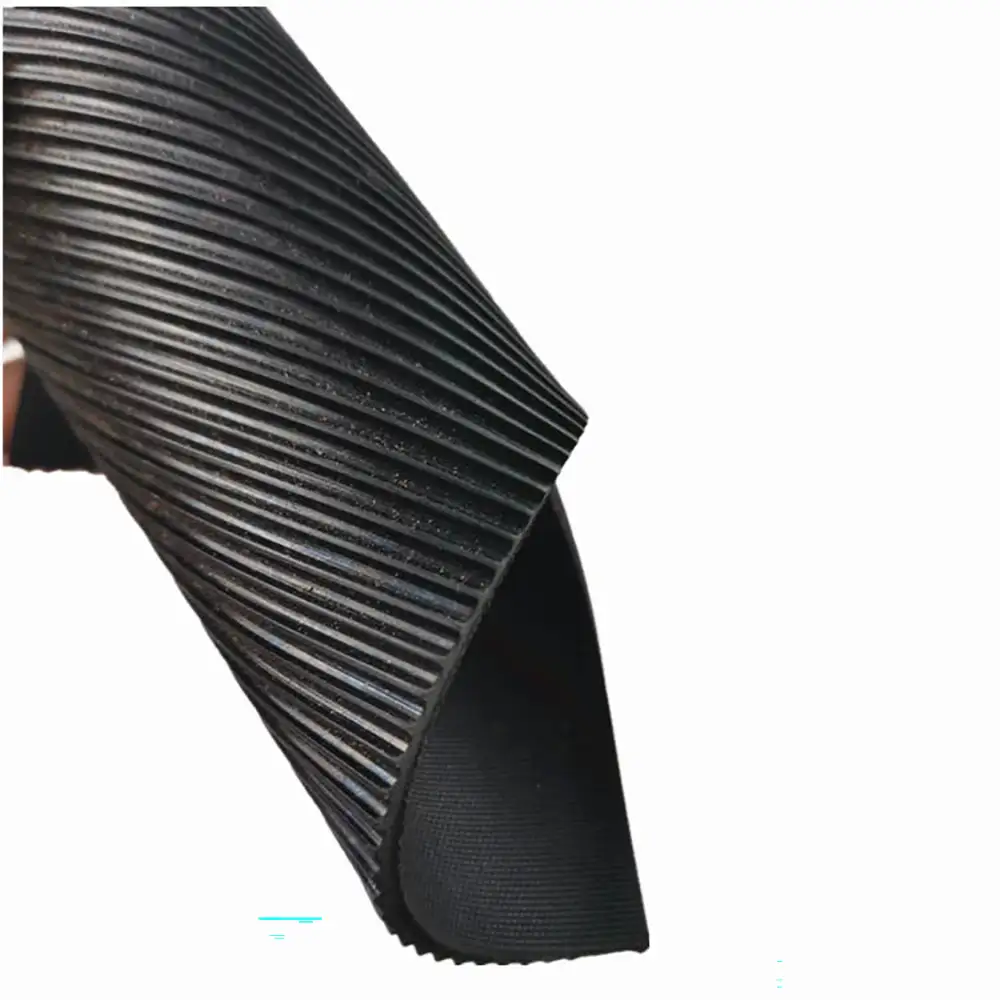
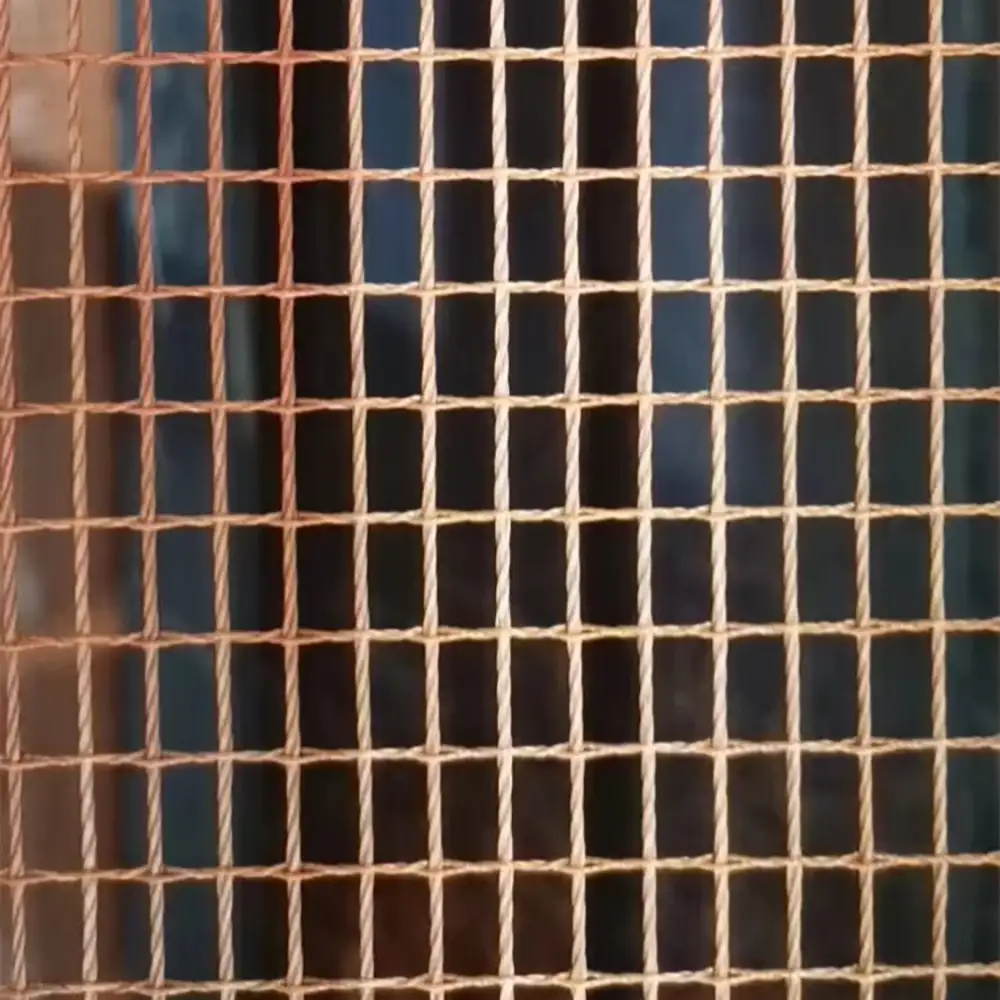
CONSTRUCTION
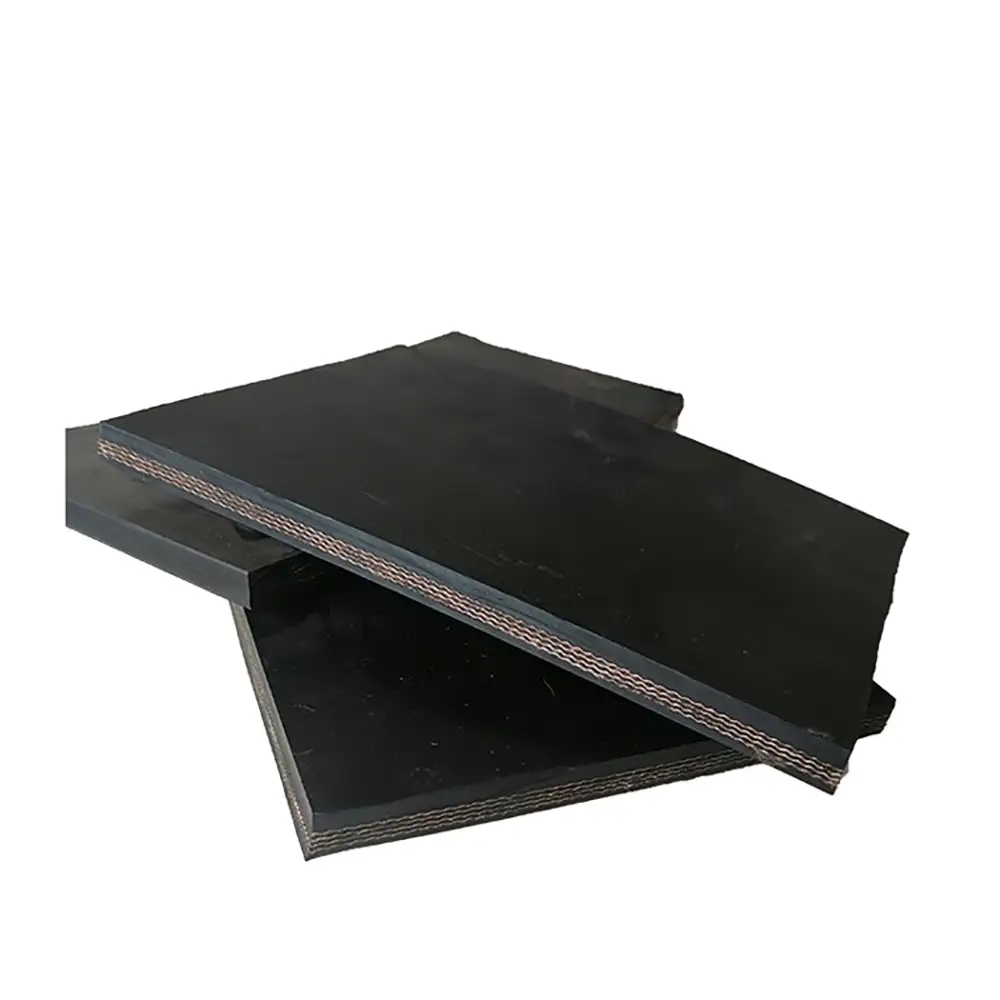
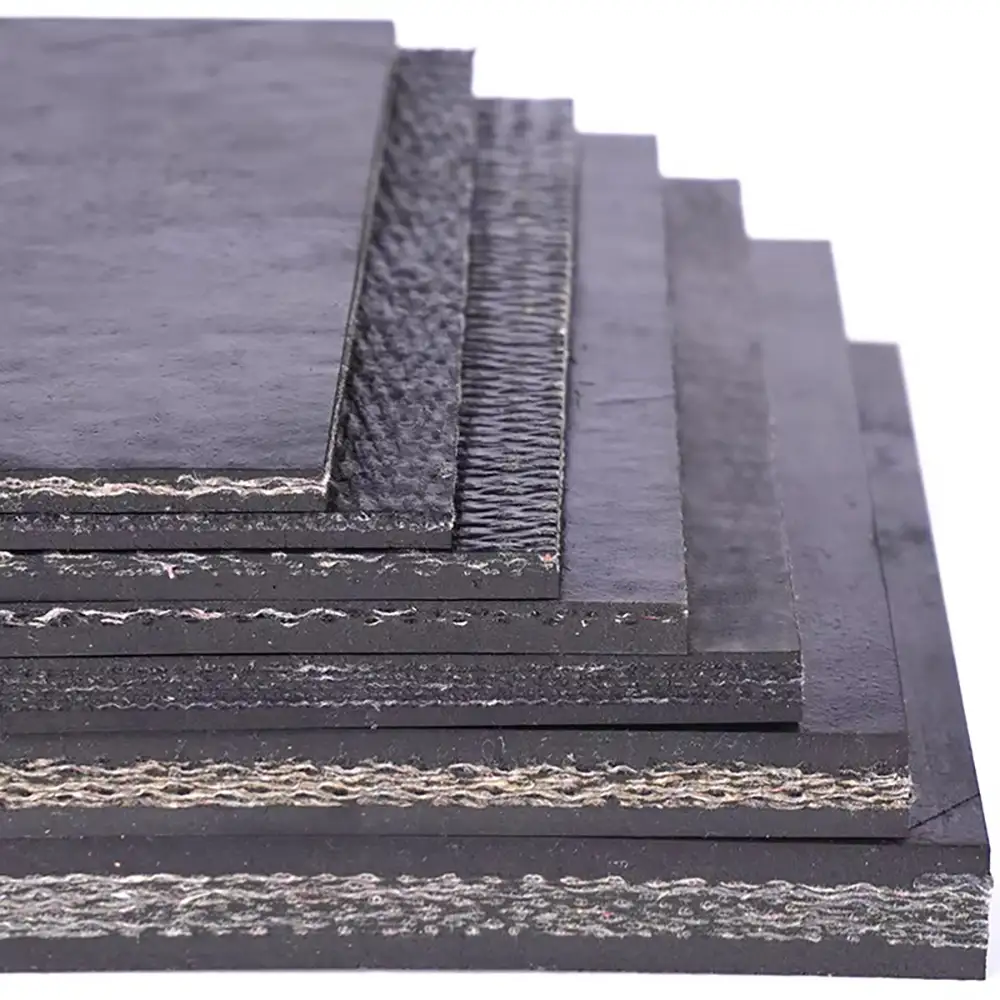
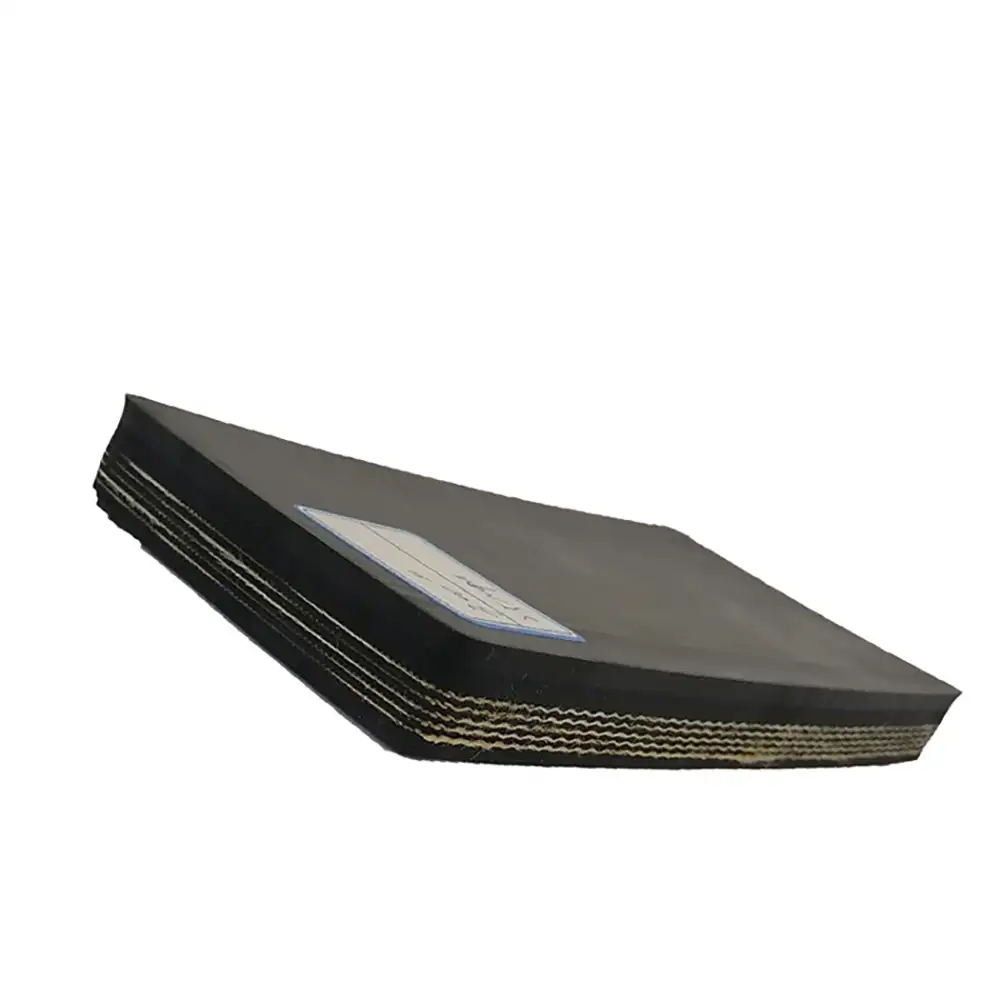
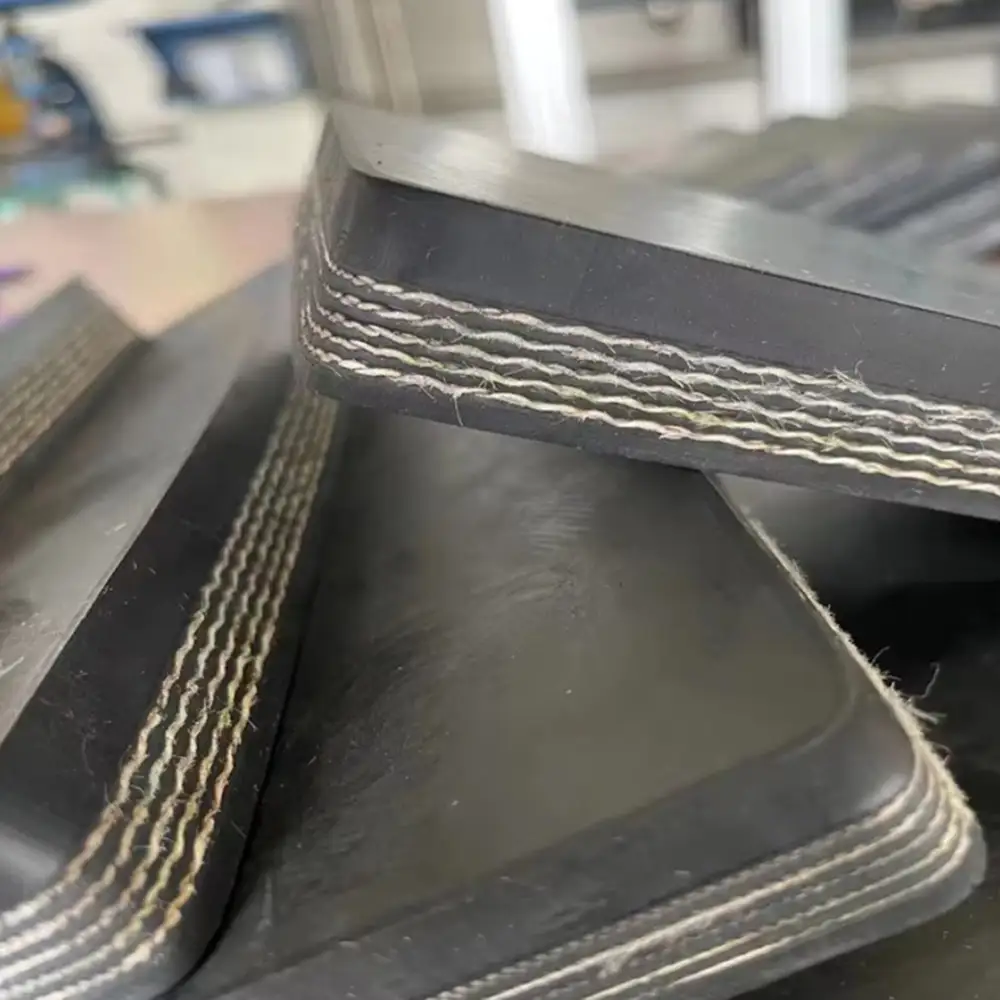
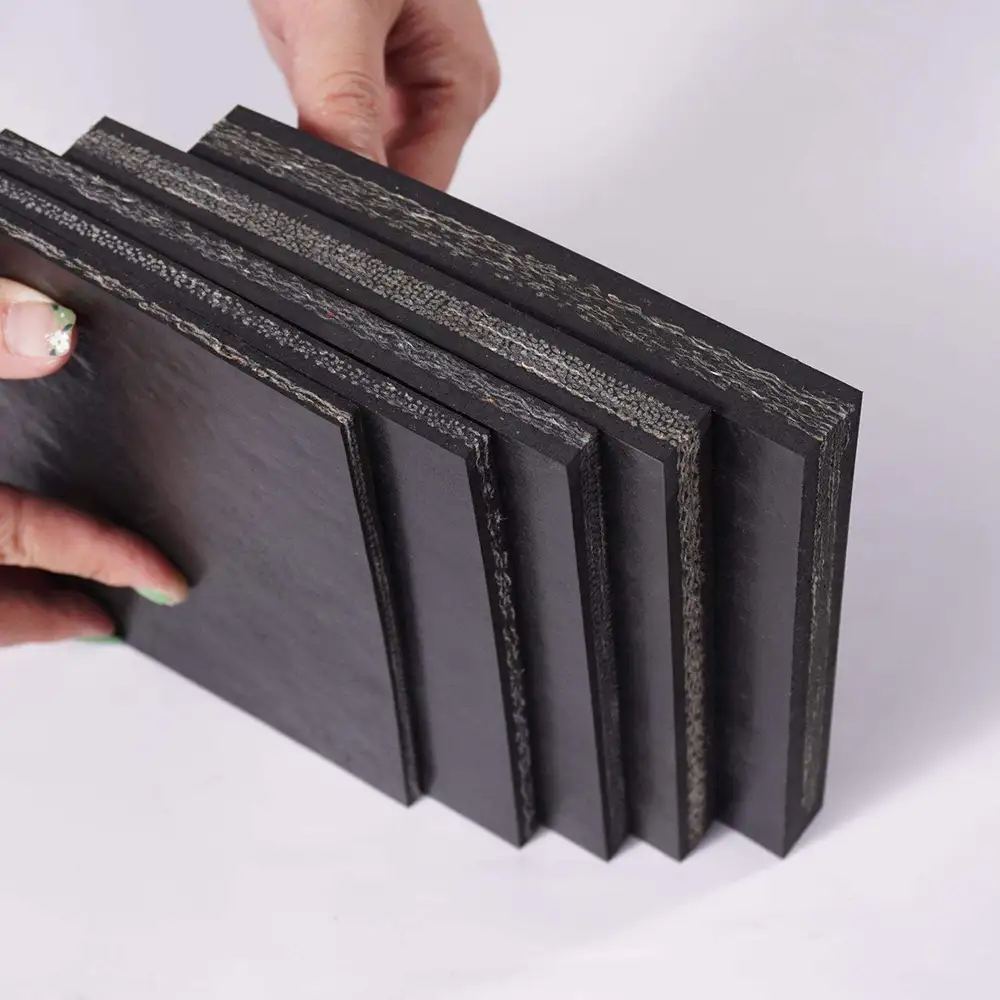
Conveyor belt generally consists of cover rubber, carcass and rubber skim coat. The reinforced breaker fabri is used for extra protection.
COVER RUBBER
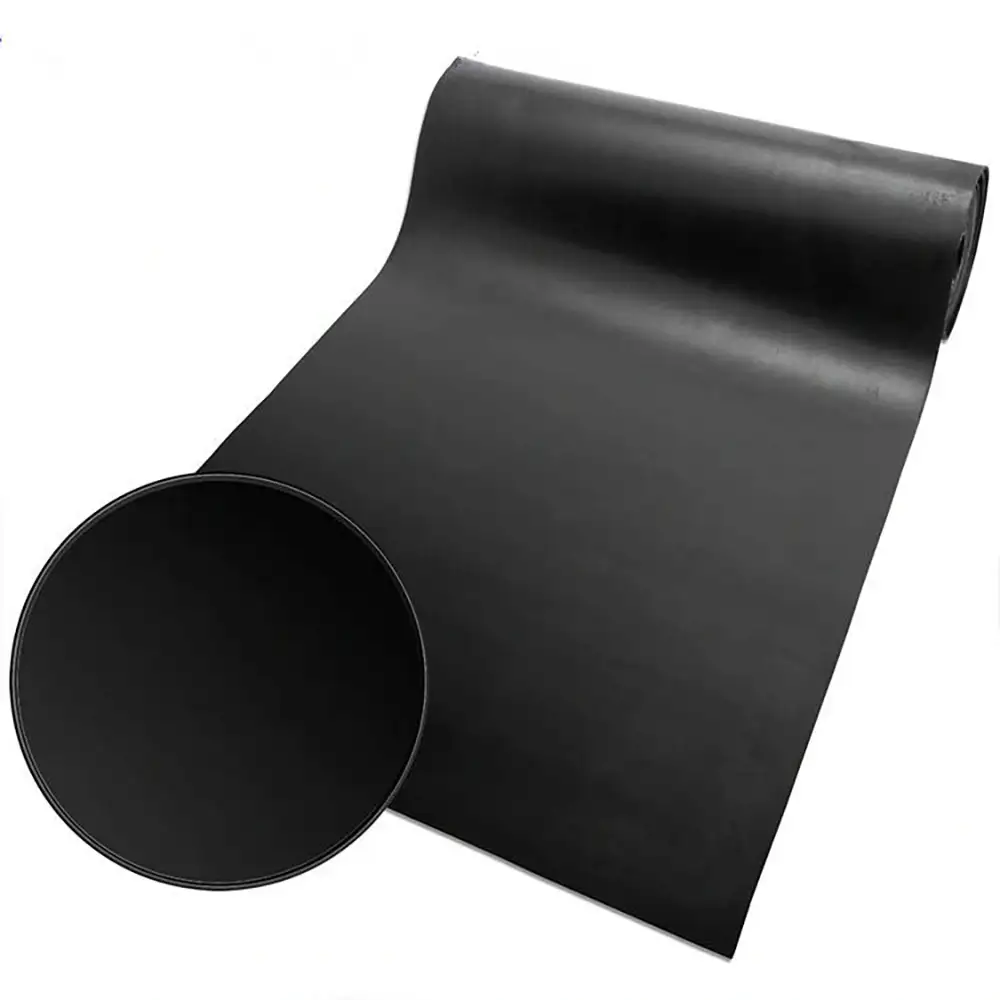
Covers of natural or synthetic rubber are designed to protect the carcass from abrasion, impact deterioration and other injurious influences. They are compounded to meet particular service confitions such as abrasion, oil, heat, fire, chemical resistant and antistiatic etc.
CARCASS
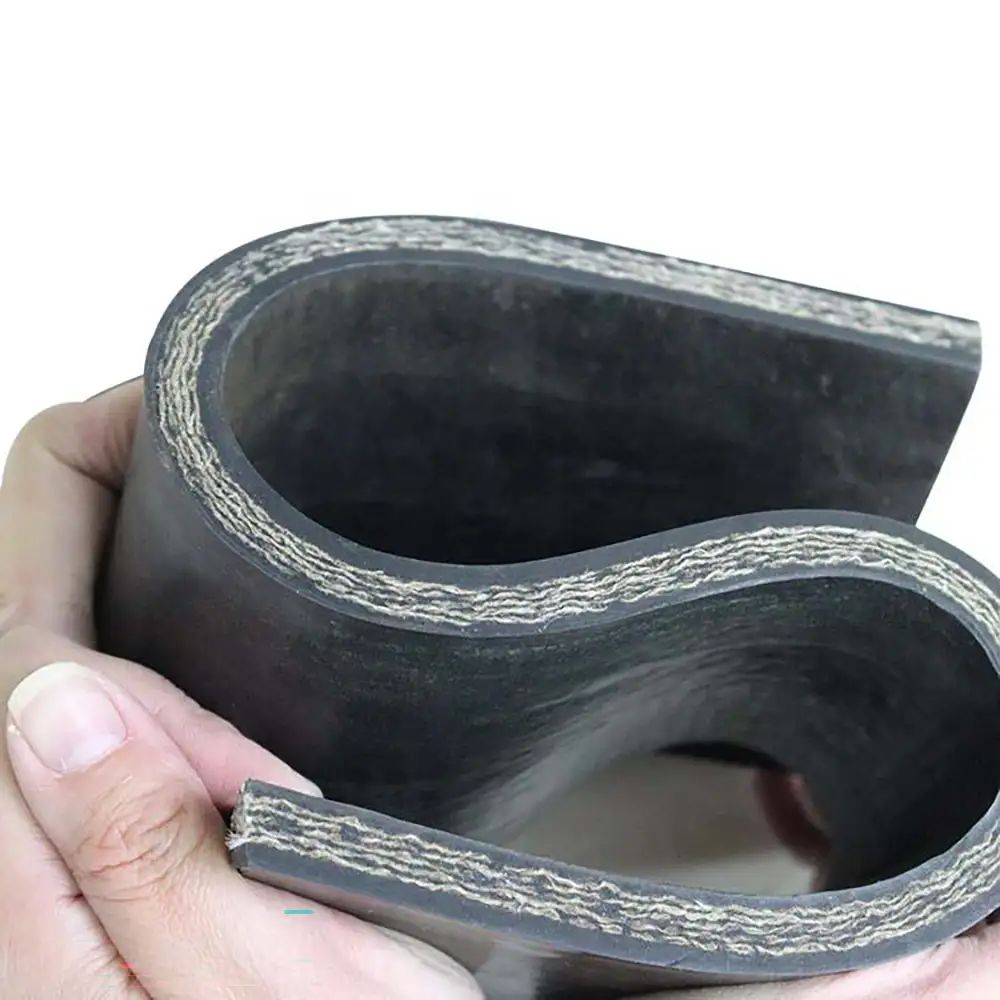
Carcass of a belt maintains the belt tension and suppliers structural atrength,it does all of the work in supporting and pulling the load. Carcass consists of multiple plies of rubber impregnated fabric bonded with friction and skim coats. The fabrics most commonly used are nylon, polyester and cotton,etc.
RUBBER SKIM COAT
An extra layer compound between plies that increases flex life and creates a more elastic lind so that plies flex without sparation. Skim coats cushion fabrics against impact and help protect againt moisture.
BREAKER FABRIC
A specically woven fabric between the cover and the carcass to improve adhesion and provide better resistance to cover stripping, gouging or tearing. This is normally used in belts handling primarilly crushed and sized material which gives great impact to the belt when lumps droip at a loading point.
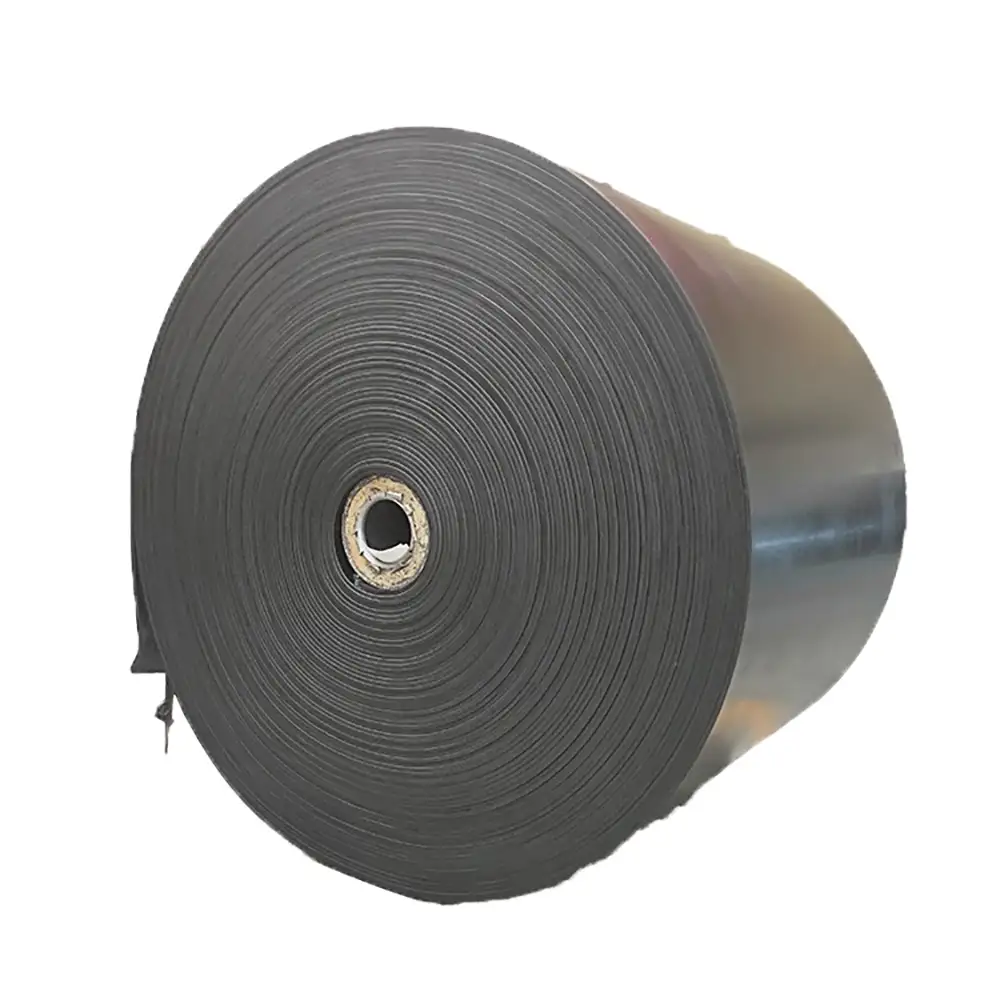
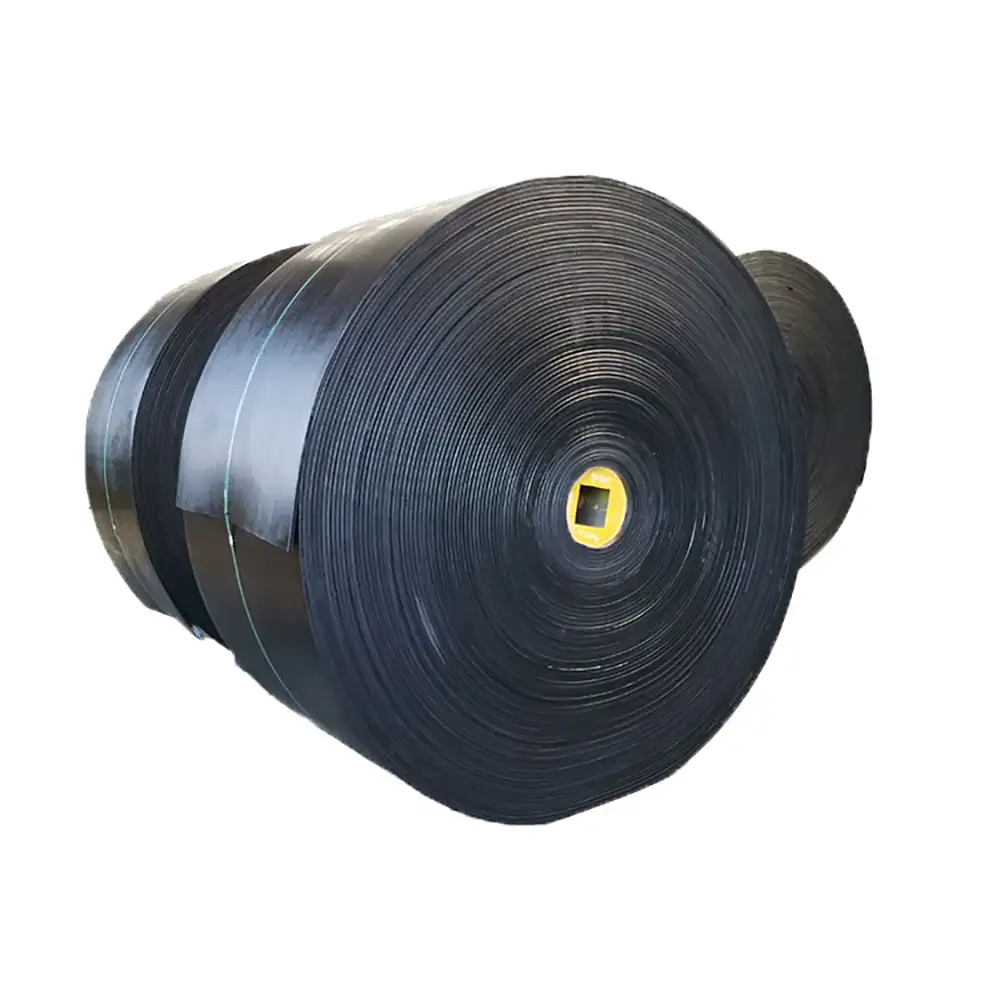
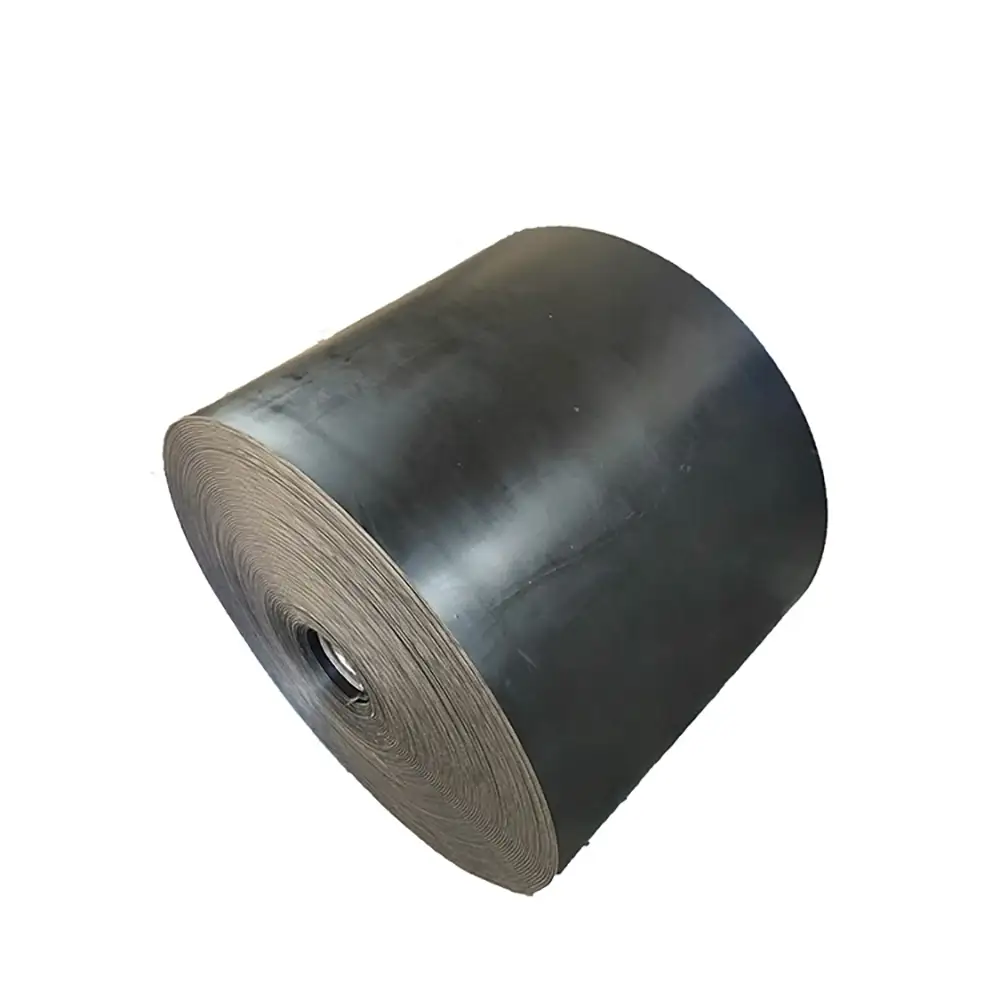
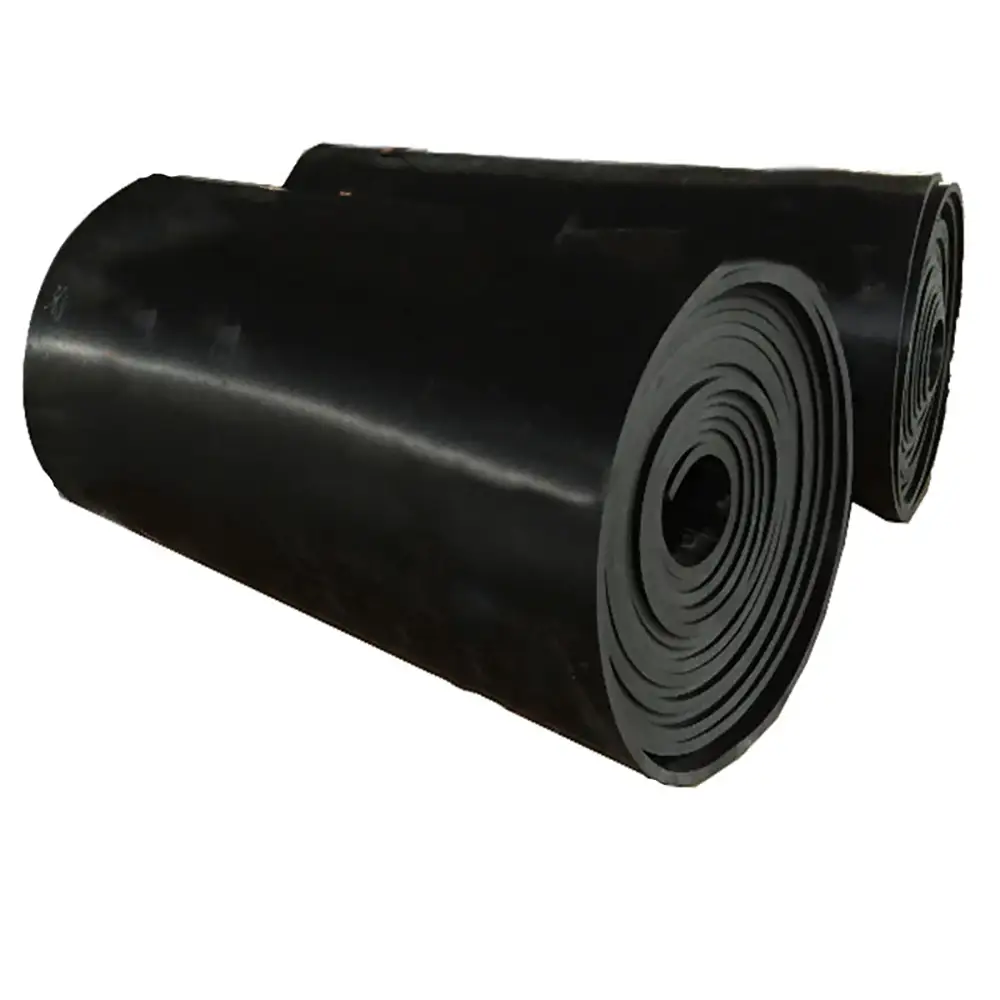
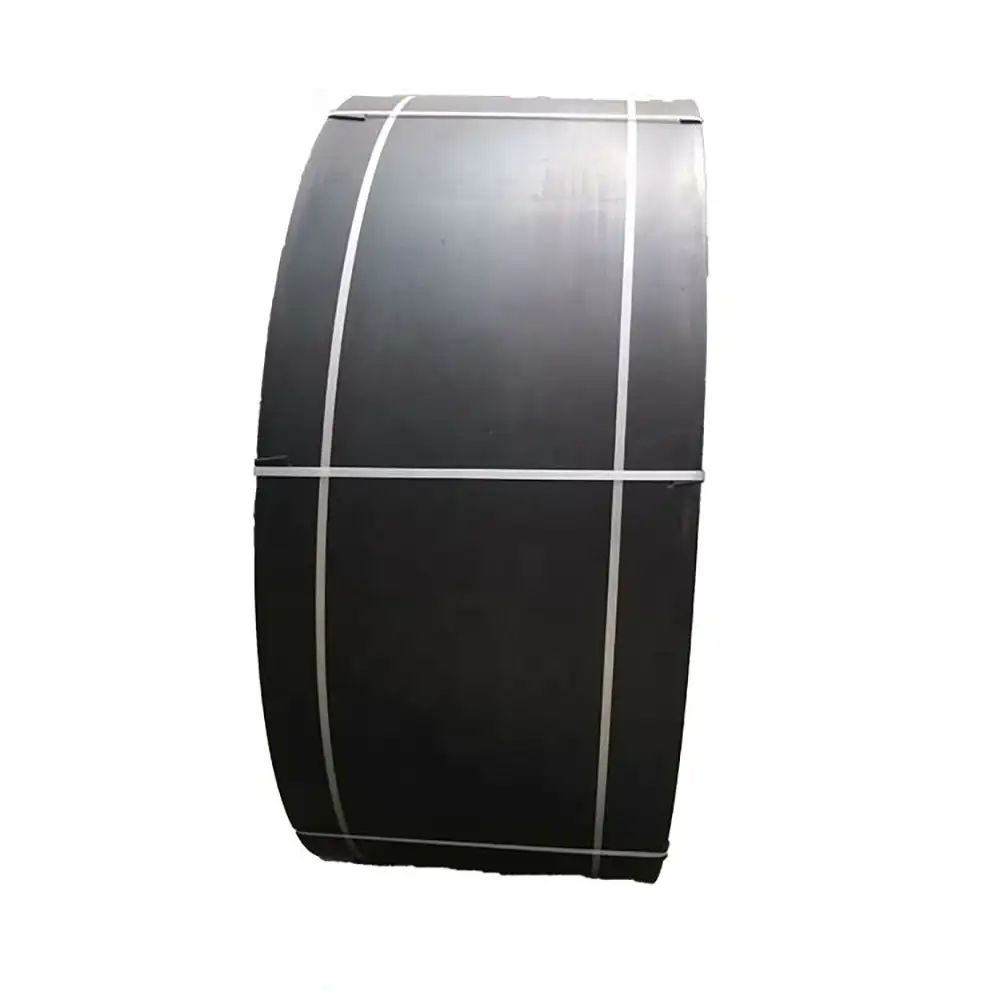
A multi ply conveyor belt is a rubber conveyor belt constructed with multiple layers of textile reinforcement to provide the strength, flexibility, and durability required for industrial material handling. Also called a multi-ply fabric conveyor belt, this type of belt is widely used for transporting bulk materials such as coal, rock, ore, gravel, sand, aggregate, cement materials, and industrial products.
The multiple fabric layers form the belt carcass, while rubber covers protect the reinforcement from abrasion, impact, environmental exposure, and contact with the conveyed material. Depending on the application, the fabric reinforcement may use polyester, nylon, or other textile constructions.
Multi-ply conveyor belts are available in different tensile grades, ply configurations, cover thicknesses, rubber compounds, and dimensions. This allows the belt to be selected according to conveyor length, belt tension, material characteristics, loading conditions, operating temperature, and environmental requirements.
For demanding applications, the rubber cover can be specified with properties such as abrasion resistance, heat resistance, oil resistance, weather resistance, flame resistance, or other application-specific characteristics.
What Is A Multi-Ply Fabric Conveyor Belt?
A multi-ply fabric conveyor belt contains several layers of textile reinforcement embedded between rubber layers. The fabric carcass provides the belt with tensile strength and structural support, while the rubber covers provide the conveying surface and protect the internal reinforcement.
Common fabric constructions include EP and NN.
EP conveyor belt fabric typically uses polyester in the longitudinal direction and polyamide in the transverse direction. This construction offers a useful combination of tensile strength, dimensional stability, flexibility, and relatively low elongation.
NN conveyor belt fabric uses nylon reinforcement and is commonly selected where flexibility and resistance to repeated bending are important.
The number of plies can vary according to the required belt strength and construction. More plies do not automatically mean a belt is suitable for every application; the complete carcass design, rubber cover, conveyor tension, pulley diameter, and operating conditions must all be considered.
Key Features Of Multi Ply Conveyor Belt
Multiple Fabric Reinforcement Layers
The multi-ply structure distributes tensile loads through multiple textile layers. This provides a strong and flexible carcass for continuous material conveying.
Flexible Conveyor Construction
Fabric-reinforced belts can provide useful flexibility around pulleys and conveyor transitions. Proper pulley sizing and belt tension remain important for reliable operation.
Good Load Carrying Capability
Multi-ply belts can be designed for a wide range of bulk material handling applications. The required tensile grade should be selected according to conveyor capacity, length, speed, and system tension.
Durable Rubber Covers
The top and bottom covers protect the textile carcass from material contact and operating conditions. Different rubber compounds can be selected according to application requirements.
Custom Performance Properties
Depending on the belt model and rubber formulation, the cover can be designed for abrasion, heat, oil, weather, flame, or other required properties.
Multi Ply Conveyor Belt Applications
Mining
Multi-ply fabric conveyor belts are widely used in mining operations for transporting coal, ore, rock, overburden, and other bulk materials.
The belt specification should be selected according to material lump size, abrasiveness, conveyor length, belt speed, capacity, and environmental conditions.
Quarry And Aggregate
Quarry plants and aggregate processing facilities use conveyor systems to transport crushed stone, gravel, sand, limestone, and other abrasive materials.
An abrasion-resistant rubber cover can be considered for applications involving highly abrasive products.
Coal Handling
Multi-ply rubber conveyor belts can be used in coal handling systems at mines, power plants, stockyards, and material terminals. For underground applications, any flame-resistant or antistatic requirements must be confirmed according to the applicable mine standards.
Cement Plants
Cement plants may use multi-ply conveyor belting for limestone, clinker-related materials, additives, aggregates, and other bulk products.
Where elevated material temperatures are present, an appropriate heat-resistant rubber compound should be selected.
Recycling
Recycling facilities can use fabric conveyor belts for transporting scrap, recycled aggregates, waste materials, packaging products, and other processed materials.
Belt cover selection should take into account sharp edges, impact, oil contamination, and other possible contaminants.
Agriculture
Multi-ply conveyor belts can be used in agricultural processing and bulk handling systems for grain, feed, seeds, fertilizer, and other materials.
General Industrial Material Handling
Manufacturing plants, warehouses, ports, logistics facilities, and other industrial operations can use multi-ply fabric belts for continuous material transport.
Multi Ply Fabric Conveyor Belt Construction
The carcass is one of the most important components of a multi-ply conveyor belt. Each textile layer contributes to the belt's overall strength and flexibility.
The top rubber cover is designed to contact the conveyed material, while the bottom cover interacts with idlers, pulleys, and other conveyor components.
Edge construction may also vary according to belt design. Depending on the application, customers may require different belt widths, lengths, tensile grades, ply numbers, and cover thicknesses.
The rubber compound is selected according to the operating environment. For abrasive materials, abrasion-resistant rubber may be appropriate. For hot materials, heat-resistant compounds can be considered. For oily materials, an oil-resistant formulation may be required.
Multi Ply vs Single Ply Conveyor Belt
The primary difference is the number of textile reinforcement layers within the carcass.
A multi-ply conveyor belt uses multiple fabric layers and can be designed for applications requiring higher carcass strength and specific flexibility characteristics.
A single-ply belt uses one primary fabric reinforcement layer and may be suitable for lighter-duty or application-specific conveyor systems.
However, belt selection should not be based solely on ply count. Tensile grade, fabric construction, rubber covers, belt dimensions, conveyor tension, and operating conditions are equally important.
Multi Ply vs Steel Cord Conveyor Belt
Multi-ply fabric belts use textile reinforcement, while steel cord belts use longitudinal steel cords.
Fabric belts are often selected for their flexibility and suitability for a broad range of conventional conveyor systems. Steel cord belts can be considered for long-distance, high-tension, and high-capacity conveyor systems where higher longitudinal tensile strength is required.
The correct construction depends on the complete conveyor design.
How To Choose The Right Multi Ply Conveyor Belt
Before ordering a multi-ply fabric conveyor belt, evaluate the following:
Belt Width
Belt Length
Required Tensile Strength
Number Of Plies
Fabric Type
Top Cover Thickness
Bottom Cover Thickness
Rubber Compound
Material Type
Material Lump Size
Material Density
Conveyor Speed
Conveyor Capacity
Conveyor Inclination
Pulley Diameter
Loading Impact
Operating Temperature
Oil Or Chemical Exposure
Environmental Conditions
Providing these details allows the belt specification to be matched more accurately to the actual conveyor system.
Installation And Maintenance
Correct installation is important for achieving reliable multi-ply conveyor belt performance. The conveyor frame should be properly aligned, pulleys should be correctly positioned, and idlers should rotate freely.
After installation, monitor belt tracking and tension. Persistent misalignment can cause edge damage and uneven wear.
Inspect the belt regularly for cuts, cracks, cover wear, edge damage, exposed fabric, and abnormal deformation. Loading points should also be inspected to ensure that material is not striking the belt with excessive impact.
Proper cleaning and material removal can help prevent buildup around pulleys and return components.
Splices should be inspected periodically, and the selected splicing method should be compatible with the belt construction and manufacturer's recommendations.
Custom Multi Ply Conveyor Belt
We can provide customized multi-ply fabric conveyor belts for different industrial applications. Depending on the product construction, customization may include belt width, length, tensile grade, ply number, fabric type, top cover thickness, bottom cover thickness, rubber compound, edge configuration, and surface design.
Additional properties such as abrasion resistance, heat resistance, oil resistance, weather resistance, flame resistance, or antistatic characteristics can be considered where appropriate.
For an accurate quotation, customers should provide conveyor dimensions, conveying material, belt speed, capacity, inclination, pulley diameter, operating temperature, and required belt performance.
Why Choose Us?
We provide multi-ply fabric conveyor belt solutions for mining, quarrying, coal handling, aggregate processing, cement, recycling, agriculture, and general industrial applications.
Multi-Ply Belt Expertise: We provide textile-reinforced rubber conveyor belt solutions for different industrial applications.
EP And NN Options: Different fabric constructions can be selected according to flexibility and tensile requirements.
Custom Specifications: Belt width, length, tensile grade, ply number, cover thickness, and rubber compound can be customized.
Application-Based Selection: We consider conveyed material and conveyor operating conditions when selecting belt construction.
Multiple Cover Properties: Abrasion, heat, oil, weather, and other rubber properties can be considered according to application.
OEM & Custom Manufacturing: Customized belt requirements are supported for industrial B2B customers.
Export Supply: We work with distributors, contractors, conveyor integrators, equipment manufacturers, and industrial users.
Quality-Focused Production: Manufacturing and inspection procedures are used to maintain consistent belt construction and product quality.
Frequently Asked Questions
1. What Is A Multi Ply Conveyor Belt?
A multi-ply conveyor belt is a rubber conveyor belt with multiple layers of textile reinforcement inside the carcass.
2. What Does Multi-Ply Fabric Mean?
Multi-ply fabric means that several layers of textile reinforcement are combined to form the belt carcass and provide structural strength.
3. What Fabrics Are Used In Multi-Ply Conveyor Belts?
Common reinforcement materials include polyester, nylon, and polyester-polyamide fabric constructions such as EP and NN.
4. What Is An EP Multi-Ply Conveyor Belt?
An EP multi-ply belt uses polyester-polyamide fabric reinforcement, with polyester generally providing longitudinal reinforcement and polyamide providing transverse reinforcement.
5. What Is An NN Conveyor Belt?
NN stands for a nylon-nylon textile construction. Nylon reinforcement provides useful flexibility and resistance to repeated bending.
6. Are Multi-Ply Conveyor Belts Suitable For Mining?
Yes. They are widely used for mining, quarrying, coal handling, aggregate, and other bulk material applications when properly specified.
7. Can A Multi-Ply Belt Handle Abrasive Materials?
Yes. An abrasion-resistant rubber cover can be selected for materials such as crushed stone, rock, gravel, ore, and aggregate.
8. Can Multi-Ply Conveyor Belts Be Heat Resistant?
Yes. A suitable heat-resistant rubber compound can be used for applications involving elevated-temperature materials. The allowable temperature depends on the specific belt construction and compound.
9. How Many Plies Should A Conveyor Belt Have?
There is no universal ply count. The appropriate number depends on required tensile strength, conveyor design, material load, belt dimensions, and operating conditions.
10. How Do I Order A Multi-Ply Conveyor Belt?
Provide the belt width, length, tensile requirement, material type, conveyor speed, capacity, inclination, pulley diameter, operating temperature, and any abrasion, heat, oil, flame, or antistatic requirements.
Prev:
Chevron Pattern Conveyor Belt with Herringbone pattern, U pattern, Column pattern
Next:
Cold Resistant Rubber Conveyor Belt
TAG:
Industrial Rubber Conveyor Belt,
Heavy Duty Rubber Conveyor Belt,
Multi Ply Conveyor Belt,
Heat Resistant Conveyor Belt,
Oil Resistant Conveyor Belt,
Fire Resistant Conveyor Belt,
Mining Conveyor Belt,
Antistatic Conveyor Belt,
Flame Resistant Conveyor Belt,
Weather Resistant Conveyor Belt,
Bulk Material Conveyor Belt,
Sand Conveyor Belt,
Gravel Conveyor Belt,
Material Handling Conveyor Belt,
Ore Conveyor Belt,
Rock Conveyor Belt,
Coal Conveyor Belt,
Quarry Conveyor Belt,
Aggregate Conveyor Belt,
Coal Handling Conveyor Belt,
Mining Rubber Conveyor Belt,
Coal Mining Conveyor Belt,
Stone Crusher Conveyor Belt,
Abrasion Resistant Conveyor Belt,
Heat Resistant Multi Ply Conveyor Belt,
Oil Resistant Multi Ply Conveyor Belt,
Iron Ore Conveyor Belt,
Abrasion Resistant Multi Ply Conveyor Belt,
Abrasion Resistant Fabric Conveyor Belt,
Mining Multi Ply Conveyor Belt,
Related Category:
Multi Ply Conveyor Belt,Multi-Ply Fabric Conveyor Belt,Multi Ply Fabric Conveyor Belt,Multi Ply Rubber Conveyor Belt China, suppliers, manufacturers, factory, customized, wholesale, quotation, made in China