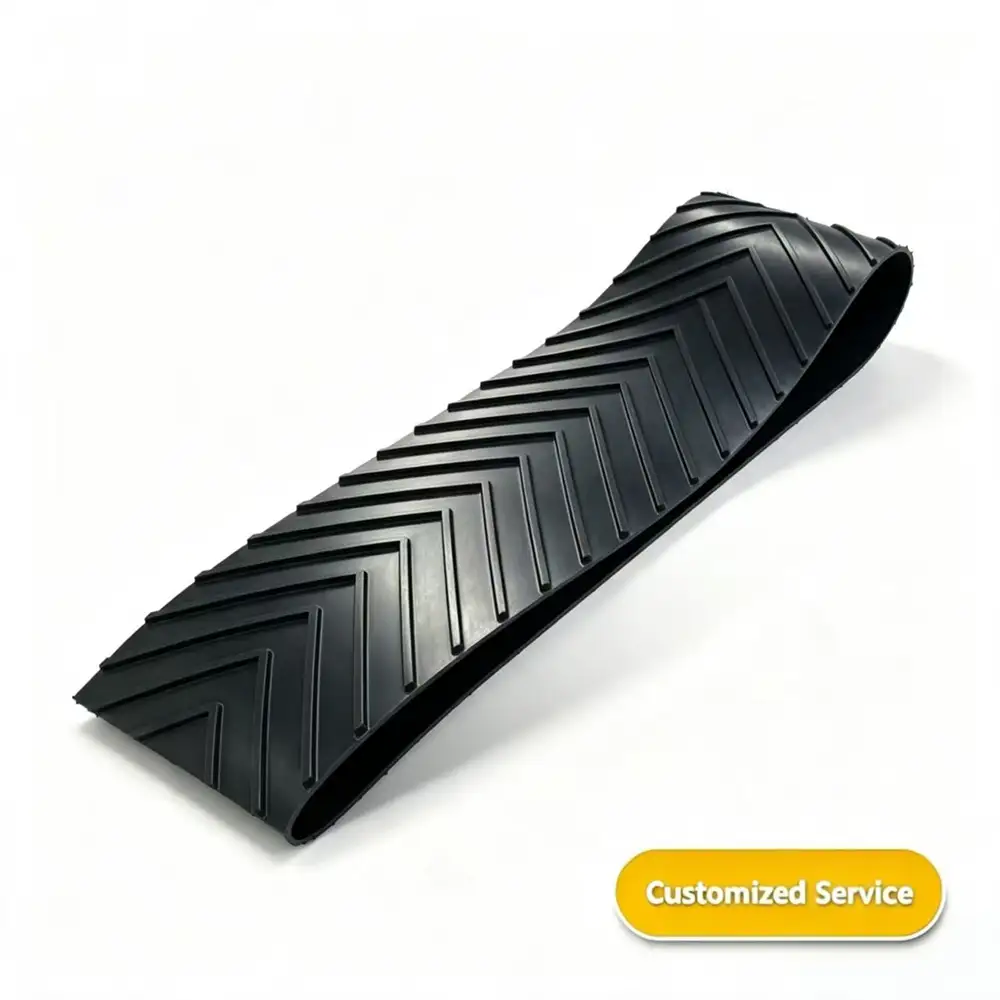
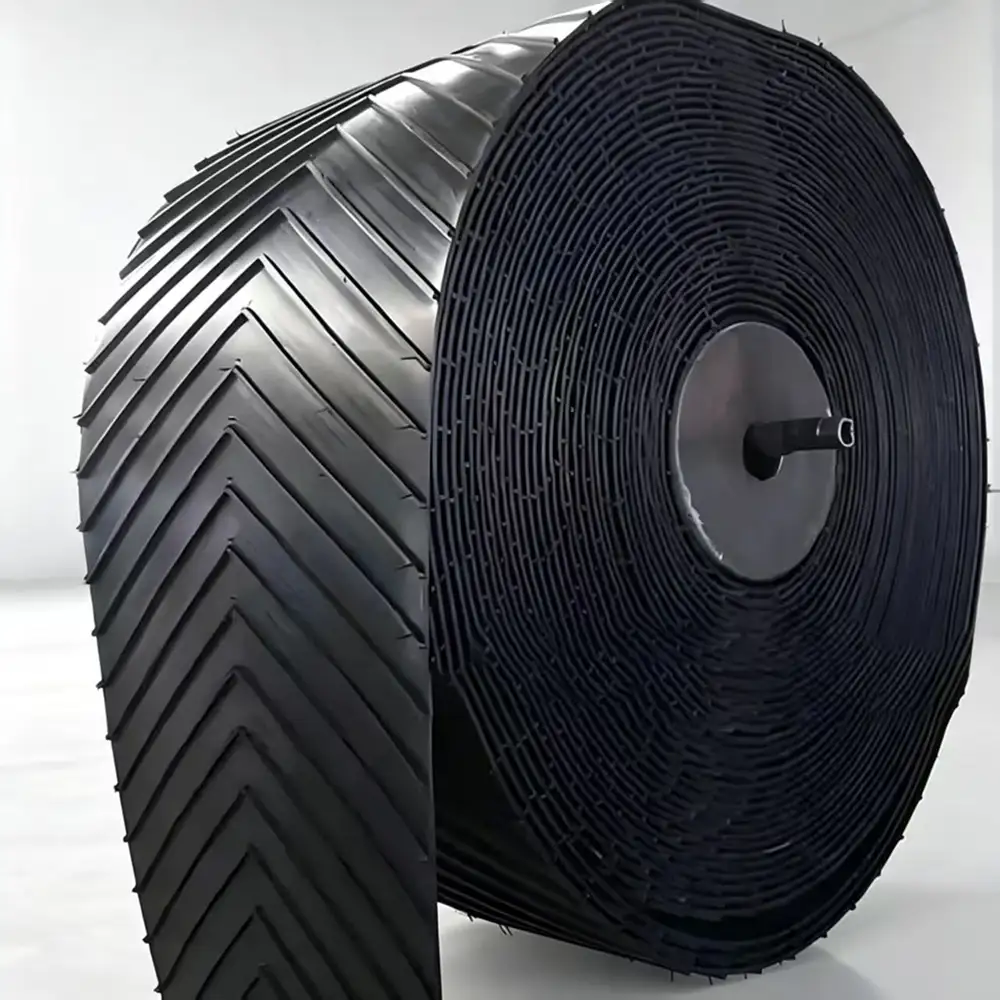
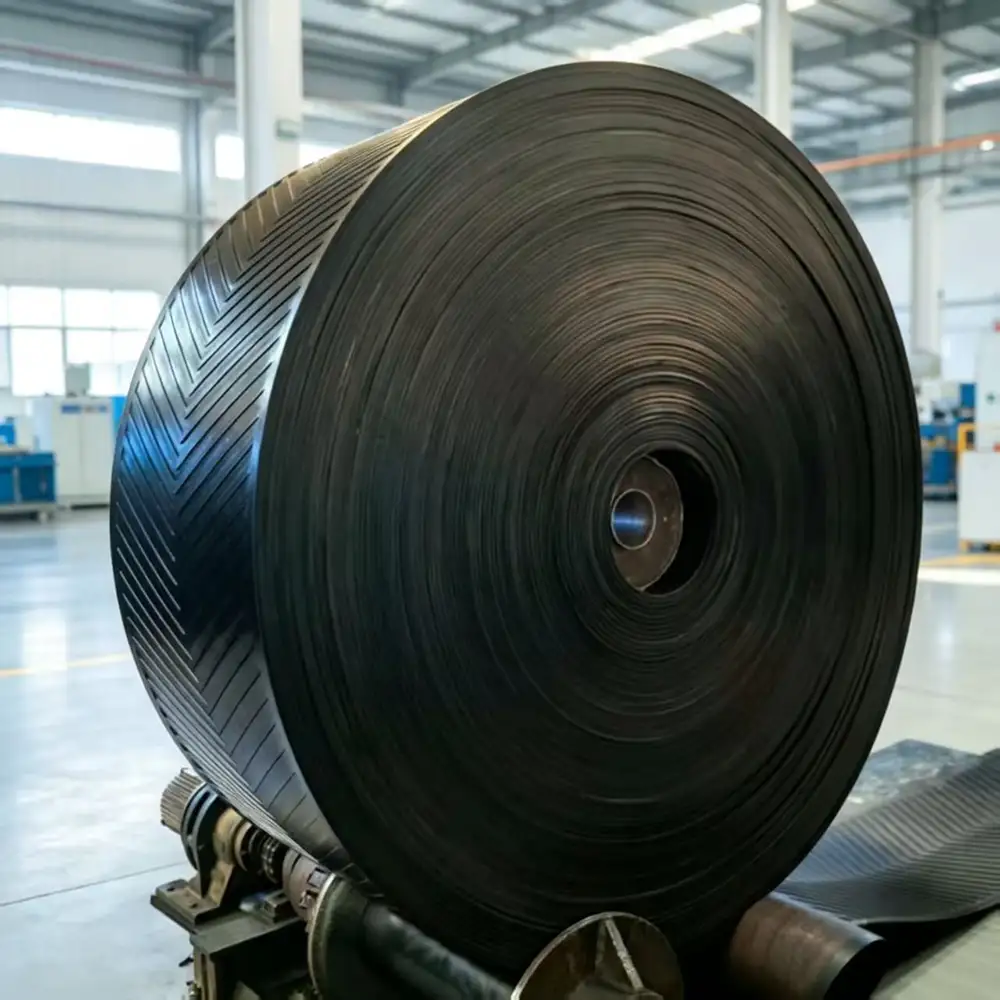
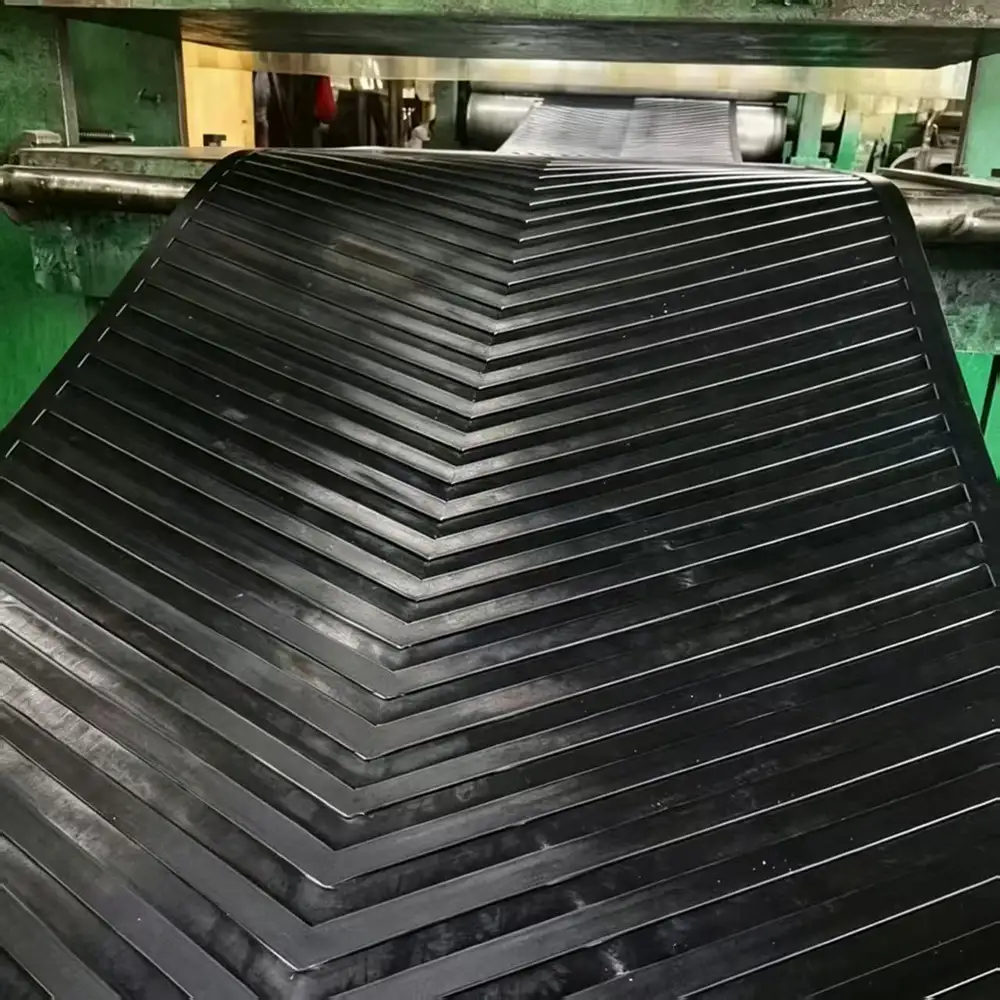
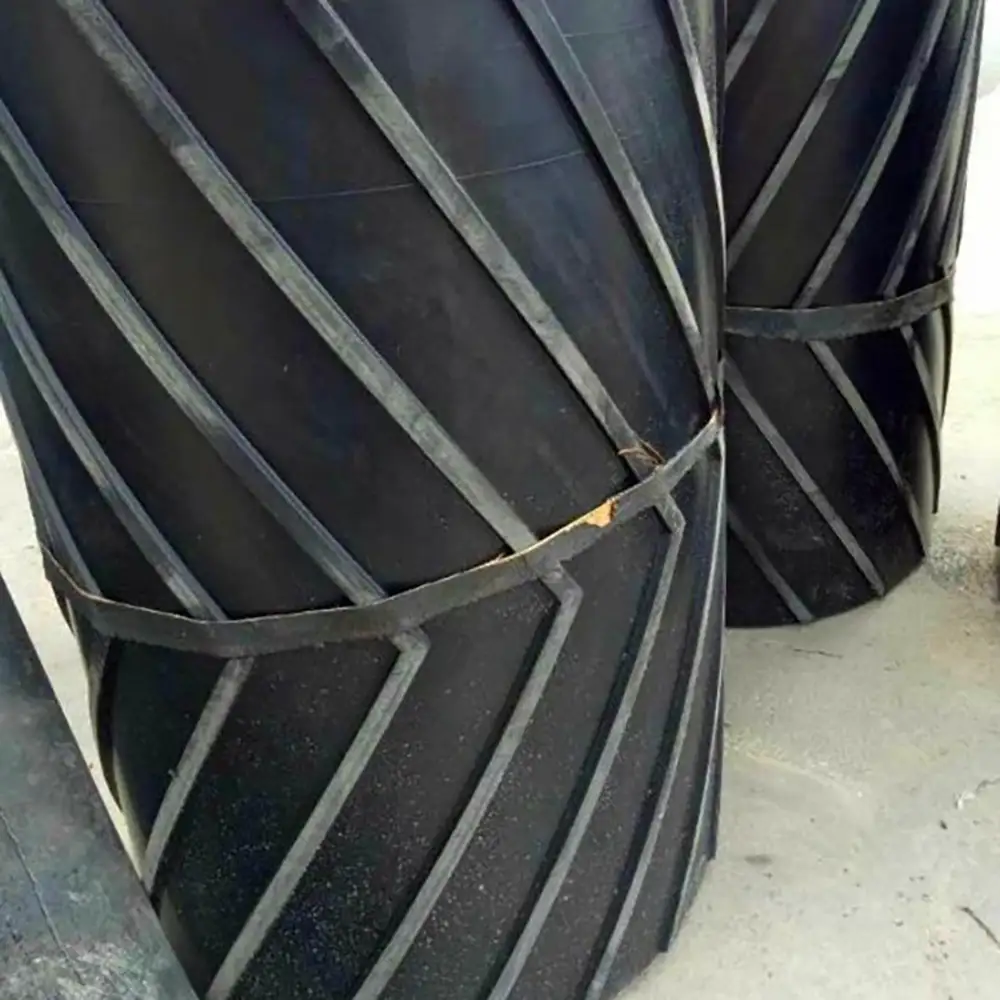
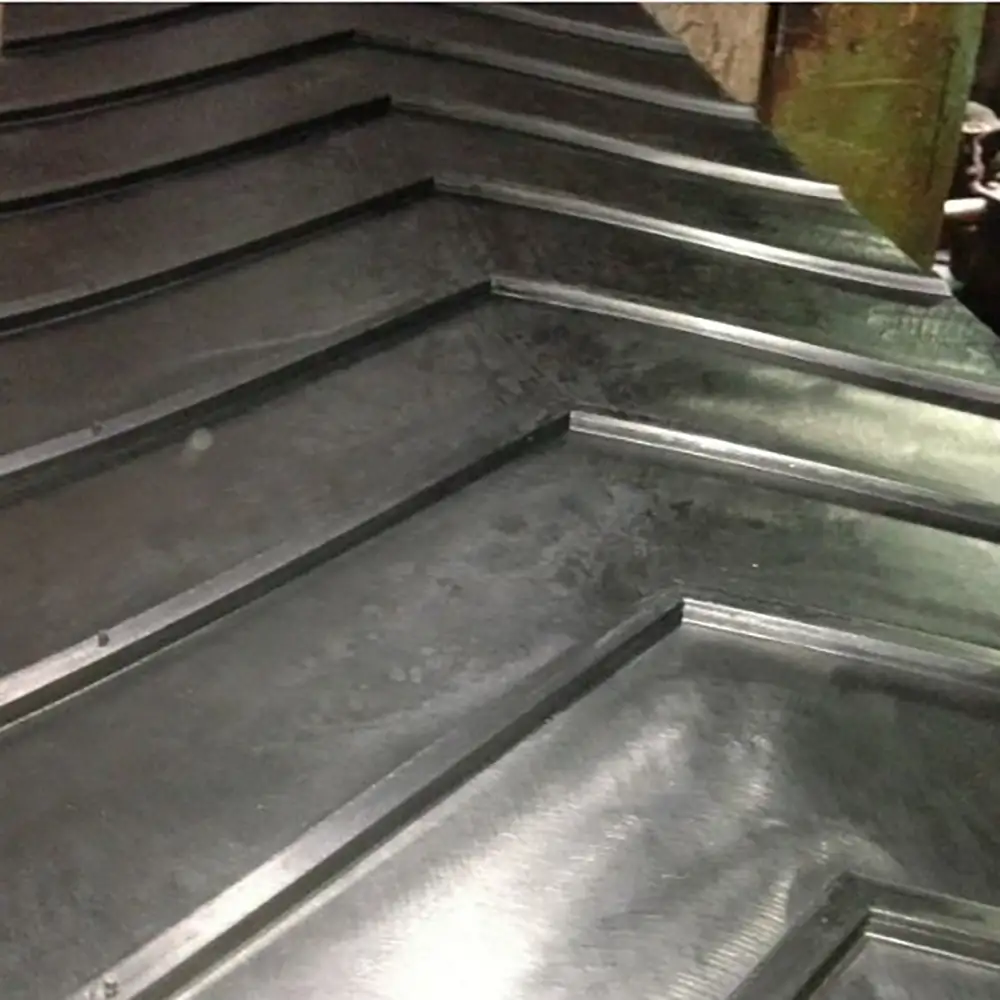
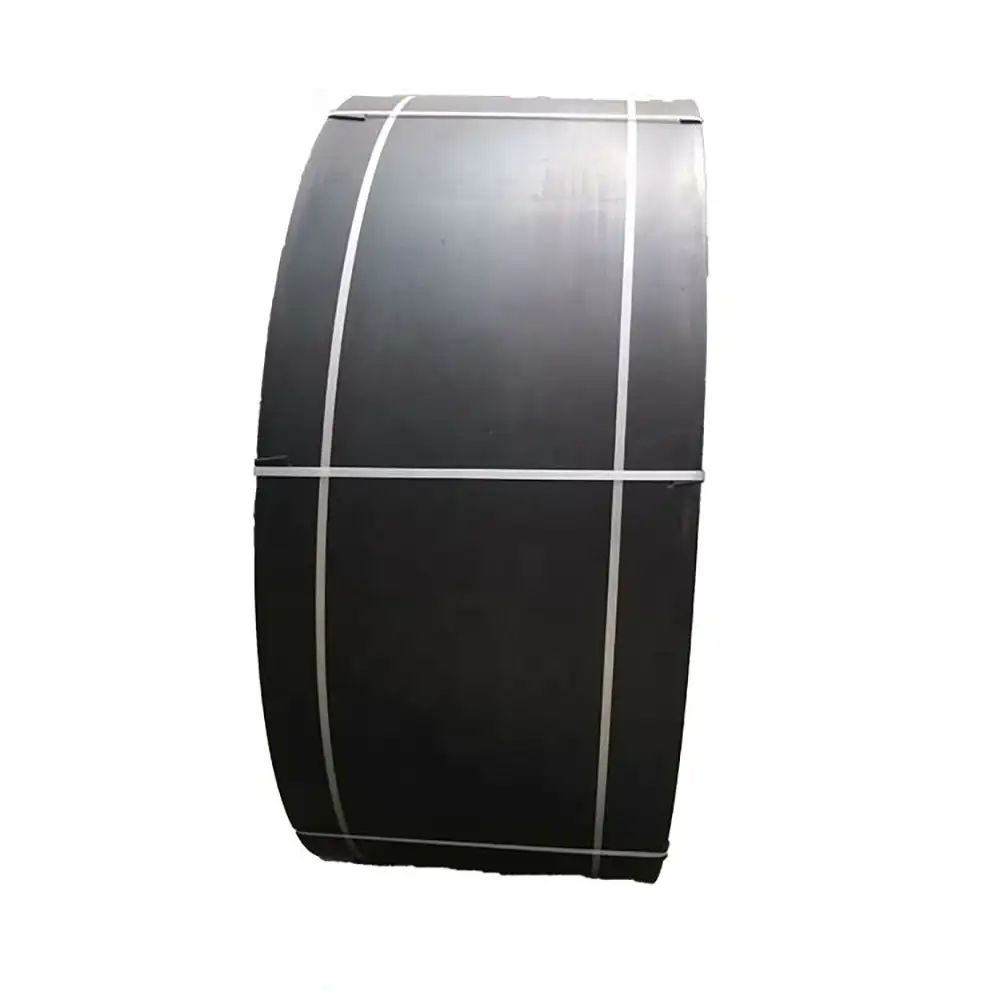
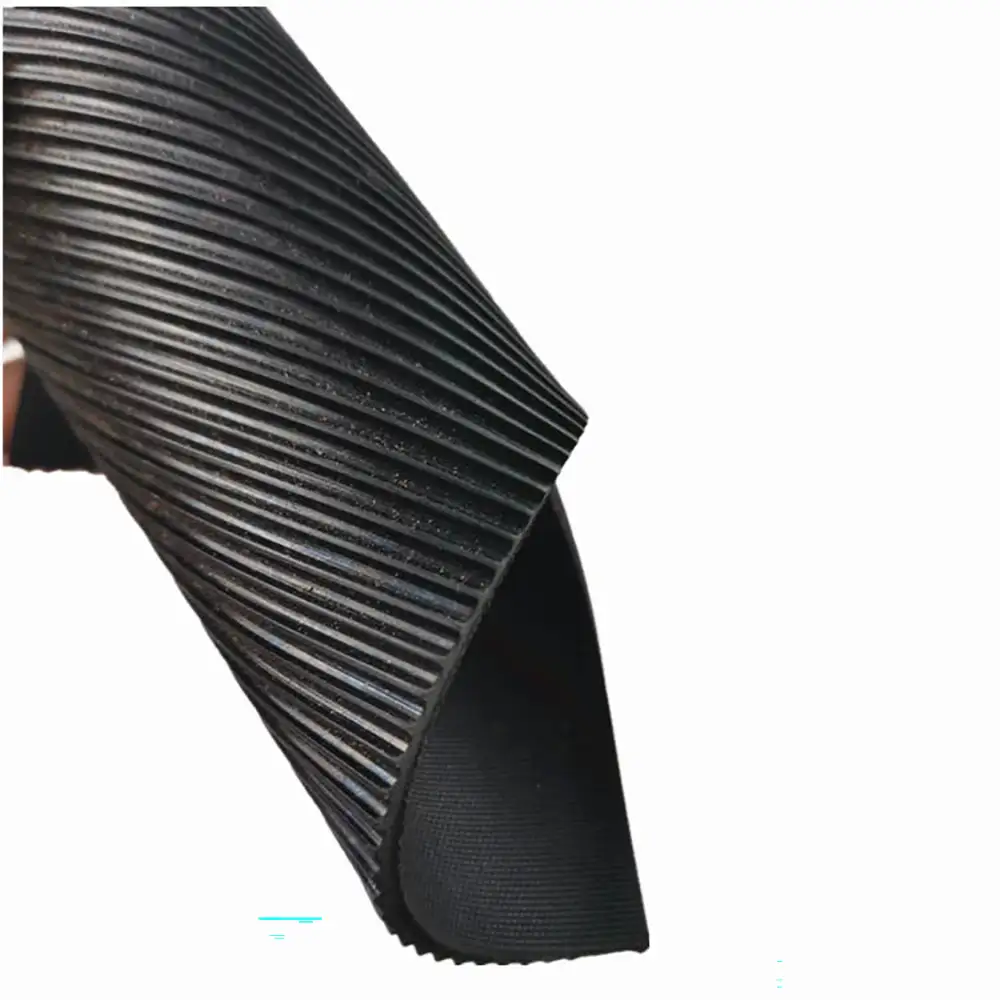
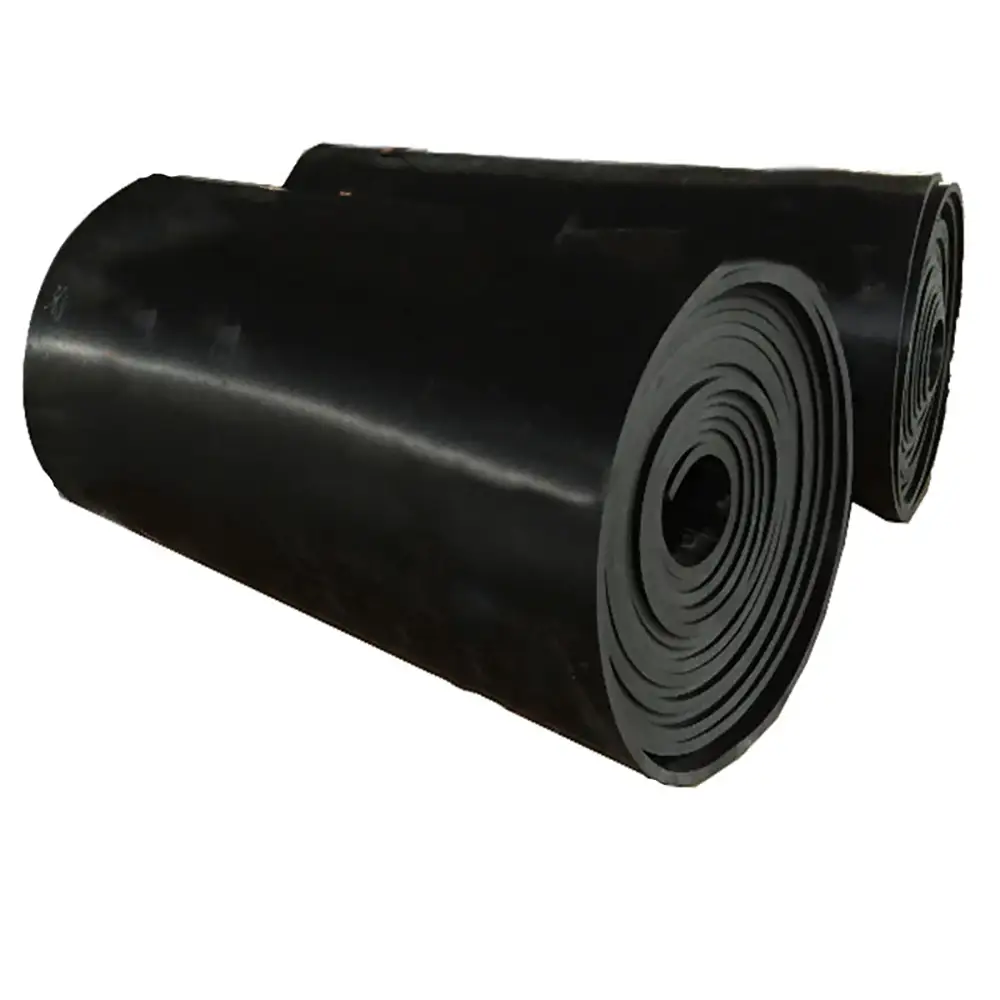
Chevron Pattern Conveyor Belt
Features:Suitable for conveying the bulk material,packed material at the inclination of not more than 40 .And it can improve the transportation capacity to prevent slipping.
Format:
Herringbone pattern, fishbone pattern. U pattern. Column pattern etc
Width of belt:300mm-2200mm
Height of pattern:5.10,15.20,25.30(mm)
Pattern pitch:125.200.250.330.400.500(mm)
Note:pattern can be designed according to the user's requirement .
Application:
When conveying decline angle is relatively big,the materials on common belt is easy to slip.In this case,a chevron belt should be selected.
Chevron conveyor belt is suitable for conveying coal,mineral sand,crops,ect.
Widely used in material conveying in mining ,power,building material and chemical industry .
A Chevron Pattern Conveyor Belt is a rubber conveyor belt with a raised surface pattern designed to improve traction and material stability during conveying. Compared with a conventional smooth conveyor belt, the patterned top surface provides additional grip between the belt and conveyed material, making it particularly useful for inclined and demanding material handling applications.
Common pattern configurations include Herringbone Pattern, U Pattern, and Column Pattern. Each pattern has a different geometric structure and can be selected according to the conveyed material, conveyor inclination, belt speed, particle size, and loading conditions.
Chevron conveyor belts are widely used in mining, quarrying, aggregate processing, coal handling, cement, agriculture, recycling, manufacturing, and general bulk material transportation. They can be manufactured with different carcass constructions, rubber compounds, belt widths, cover thicknesses, and tensile grades.
The appropriate pattern and belt construction should be selected as part of the complete conveyor system. Pattern geometry, material characteristics, conveyor angle, belt speed, and loading conditions all affect actual conveying performance.
What Is A Chevron Pattern Conveyor Belt?
A chevron pattern conveyor belt consists of a rubber conveyor belt with raised profiles molded or formed on the carrying surface. These profiles create additional contact between the belt and the conveyed material.
The primary purpose of the pattern is to reduce material sliding or rollback when conveying on an incline. The pattern can also help stabilize bulk materials during transportation.
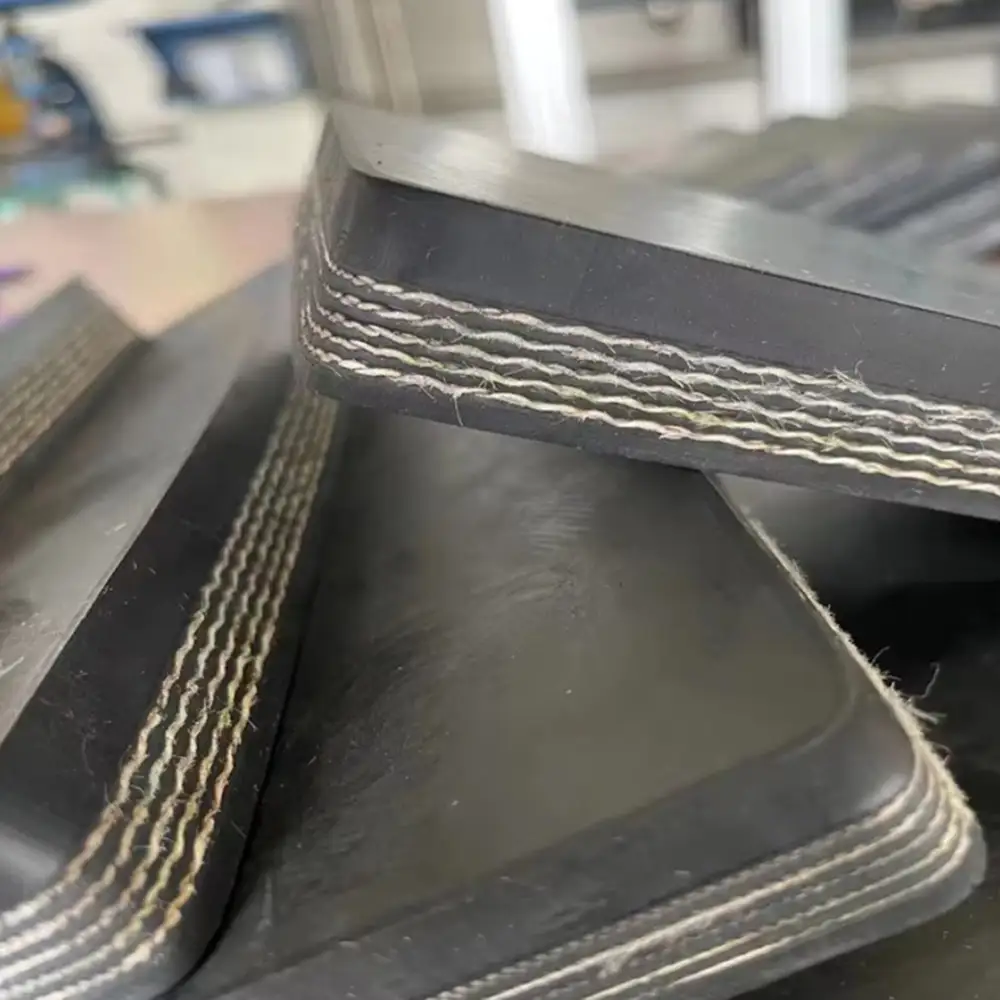
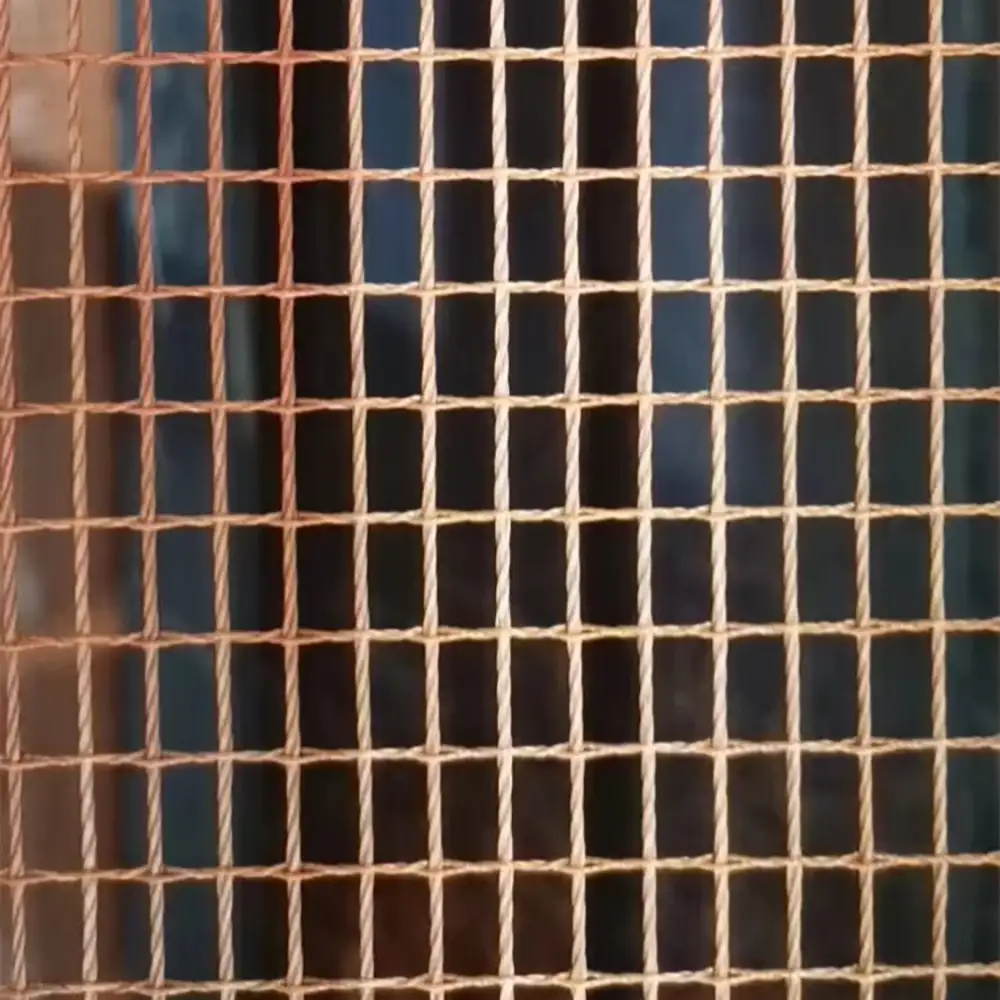
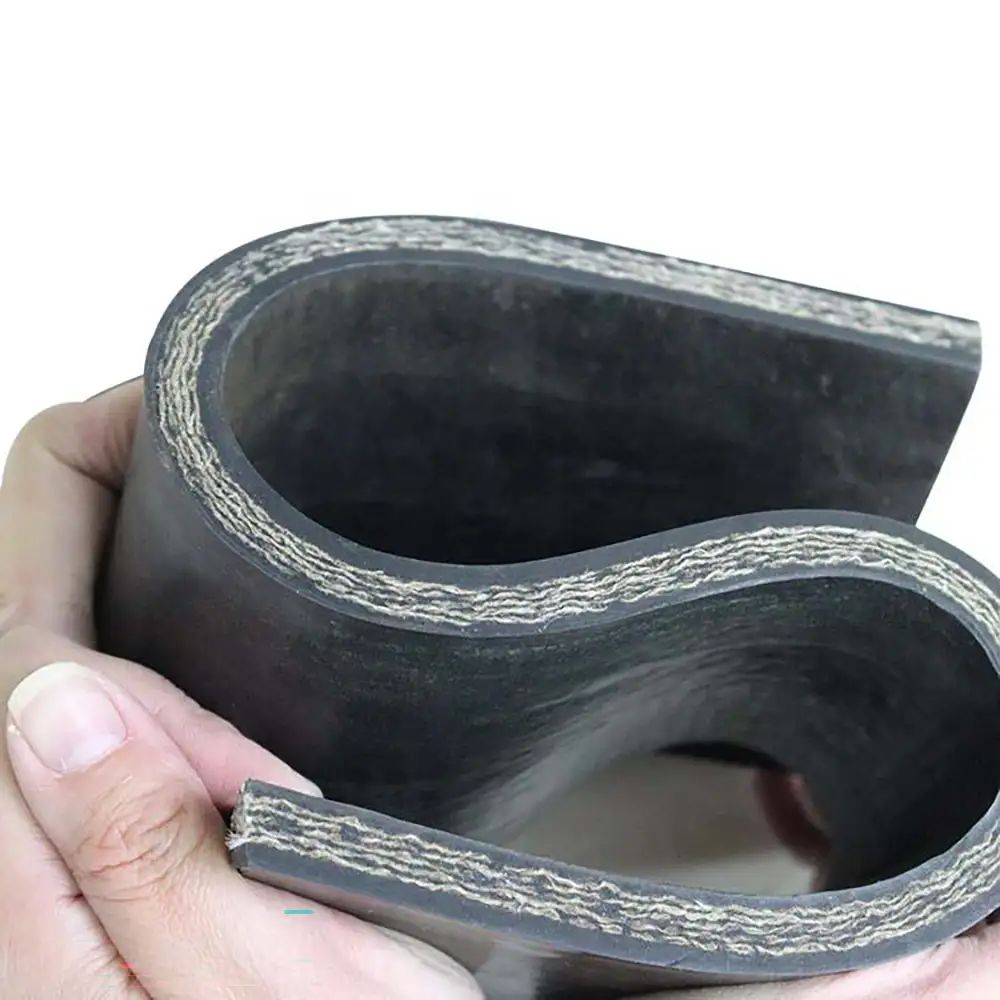
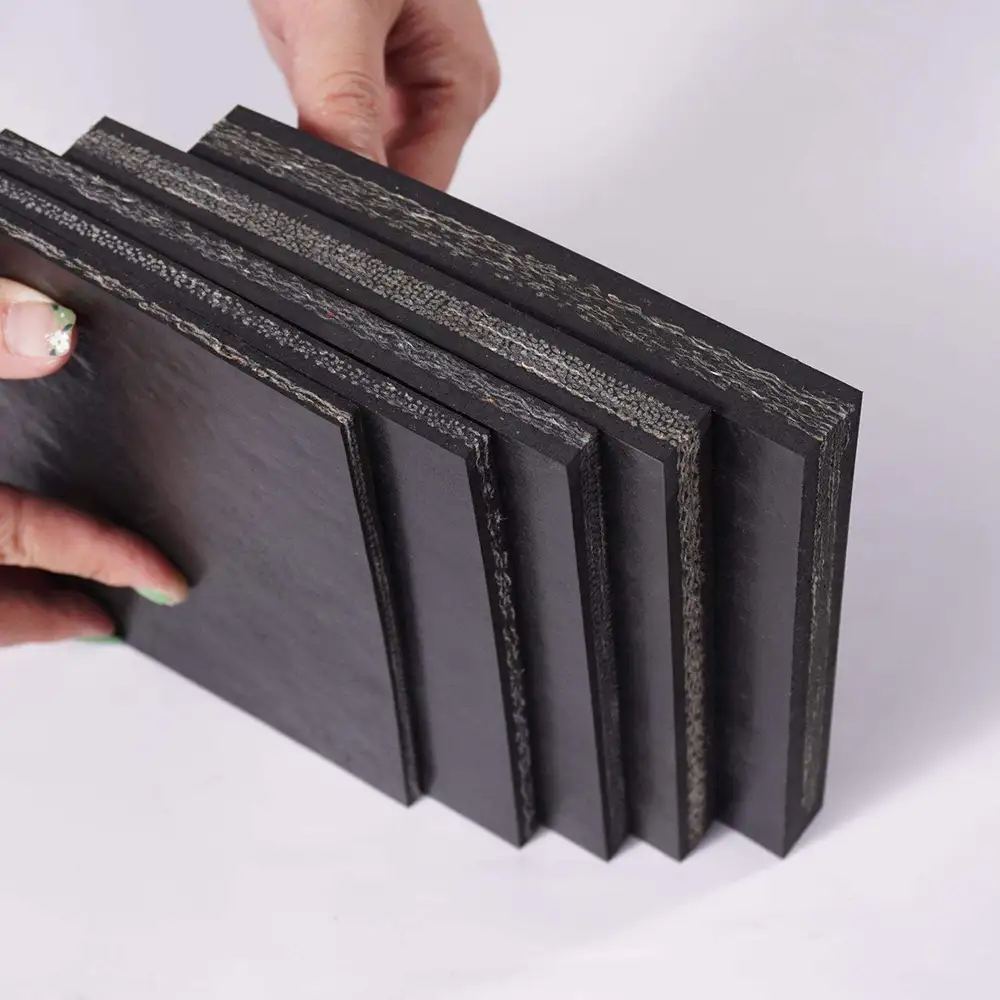
The belt carcass may use textile reinforcement such as EP or NN fabric, while high-tension applications may use other reinforcement constructions depending on the conveyor design.
The rubber compound can also be selected according to the operating environment. Depending on the application, options may include abrasion-resistant, heat-resistant, oil-resistant, weather-resistant, flame-resistant, or other specialized rubber compounds.
Herringbone Pattern Conveyor Belt
The Herringbone Pattern Conveyor Belt uses angled raised profiles arranged in a directional pattern resembling a herringbone structure. The pattern can provide additional traction and help guide bulk materials toward the center of the belt.
Herringbone profiles are commonly considered for inclined conveying applications involving materials such as coal, aggregate, gravel, sand, agricultural products, and packaged goods.
The exact herringbone geometry should be selected according to material characteristics and conveyor requirements. Profile height, width, spacing, and arrangement can affect cleaning, loading, discharge, and conveying performance.
U Pattern Conveyor Belt
A U Pattern Conveyor Belt uses raised rubber profiles arranged in a U-shaped configuration. This type of surface pattern can provide material support and traction while helping stabilize products on inclined conveyors.
U-shaped profiles can be considered for bulk material handling where additional grip is required without using a full sidewall conveyor construction.
Applications can include aggregate, coal, fertilizer, agricultural products, recycling materials, and general industrial conveying.
Column Pattern Conveyor Belt
A Column Pattern Conveyor Belt features repeated raised column-style profiles distributed across the carrying surface. The pattern creates additional contact points between the belt and conveyed material.
Column patterns may be suitable for applications where improved grip and material stability are required. The actual performance depends on the material, belt speed, conveyor angle, pattern dimensions, and complete conveyor configuration.
Key Features Of Patterned Conveyor Belts
Improved Material Grip
Raised rubber profiles increase surface contact and can help reduce material movement on inclined conveyors.
Better Inclined Conveying
Chevron and other patterned surfaces are commonly used where a smooth belt may not provide sufficient traction for the required conveyor angle.
Multiple Pattern Options
Herringbone, U pattern, Column pattern, and other designs can be selected according to application requirements.
Durable Rubber Construction
The belt can be manufactured with rubber compounds suitable for different industrial environments. Abrasion resistance may be particularly important when conveying rock, gravel, aggregate, and ore.
Flexible Carcass Options
EP and NN fabric constructions can be used for many industrial conveyor systems. The appropriate carcass depends on tensile requirements, conveyor length, flexibility, and operating conditions.
Applications
Mining
Patterned conveyor belts can be used for conveying coal, ore, rock, overburden, and other bulk materials on inclined conveyor sections.
Quarry And Aggregate
Crushed stone, gravel, sand, limestone, and other aggregate products can be conveyed using patterned rubber belts. An abrasion-resistant cover can be selected for abrasive materials.
Coal Handling
Chevron conveyor belts can help stabilize coal on inclined conveying systems. For underground coal mining, flame-resistant and antistatic requirements should be confirmed according to the applicable regulations and certification requirements.
Cement Plants
Cement plants may use patterned conveyor belts for limestone, aggregates, additives, and other bulk materials where inclined conveying is required.
Agriculture
Patterned belts can be used for grain, seed, feed, fertilizer, and other agricultural materials. The appropriate pattern should be selected according to the product characteristics.
Recycling
Recycling plants can use patterned rubber conveyor belts for transporting recycled materials, waste products, aggregates, and other bulk materials.
Manufacturing
Manufacturing facilities can use patterned belts for moving components, packaged products, raw materials, and other materials between different processing stages.
Chevron Pattern Selection
Choosing the correct pattern requires consideration of the complete conveyor system.
Important factors include:
Conveyor Inclination
Material Type
Material Size
Material Density
Moisture Content
Belt Width
Belt Speed
Conveyor Capacity
Belt Length
Loading Conditions
Discharge Method
Rubber Compound
Pattern Height
Pattern Spacing
Pulley Diameter
Environmental Conditions
Fine powders can behave differently from large rocks or agricultural products. A pattern suitable for one material may not provide the same performance with another material.
For very steep conveying applications, a conventional patterned belt may not be sufficient. Corrugated sidewall conveyor belts with transverse cleats may be considered when greater material containment is required.
Chevron Conveyor Belt vs Smooth Conveyor Belt
A smooth conveyor belt has a relatively flat carrying surface and is commonly used for horizontal or moderate-incline conveying.
A chevron or patterned conveyor belt has raised profiles that increase traction between the belt and material. This makes patterned belts particularly useful where material stability is important.
However, a patterned belt is not automatically better for every conveyor. The appropriate choice depends on conveyor angle, material properties, speed, capacity, and the desired conveying configuration.
Chevron Conveyor Belt vs Sidewall Conveyor Belt
Chevron belts improve traction through raised surface profiles, while sidewall conveyor systems use corrugated rubber sidewalls and transverse cleats to create carrying compartments.
For moderate inclined conveying, a chevron pattern may be sufficient. For very steep or vertical conveying, a sidewall belt system may provide greater material containment.
The correct system should be selected according to the required conveying angle, material characteristics, capacity, and available conveyor space.
Rubber Compound Selection
Pattern geometry is only one part of conveyor belt performance. The rubber compound should also be selected according to the application.
For crushed stone, rock, and aggregate, abrasion-resistant rubber may be required.
For elevated-temperature materials, a heat-resistant compound can be considered.
For oily materials, an oil-resistant compound may be more suitable.
For outdoor applications, weather-resistant rubber may be appropriate.
For specific mining environments, flame-resistant and antistatic requirements may also apply.
These properties depend on the actual belt formulation and should be confirmed against the intended operating conditions.
Installation And Maintenance
Proper installation helps maintain consistent belt tracking and pattern performance. The conveyor frame, pulleys, idlers, and take-up system should be correctly aligned.
Regularly inspect the belt for pattern wear, cuts, cracks, edge damage, abnormal abrasion, and tracking problems.
Material buildup should be removed where necessary, particularly around pulleys and return components. Belt cleaners should be selected so that they effectively clean the belt without unnecessarily damaging the raised surface pattern.
Correct tension is also important. Excessive or insufficient tension can contribute to tracking problems and premature belt deterioration.
Custom Chevron Pattern Conveyor Belt
We can supply customized patterned conveyor belt solutions according to industrial application requirements.
Customization may include belt width, length, tensile grade, carcass construction, cover thickness, rubber compound, pattern type, pattern height, pattern spacing, edge configuration, and other specifications.
Herringbone, U-shaped, Column, and other surface patterns can be considered depending on the product design and intended application.
Customers should provide conveyor angle, belt width, material type, capacity, belt speed, material lump size, operating temperature, and environmental conditions when requesting a quotation.
Why Choose Us?
We provide patterned rubber conveyor belt solutions for mining, quarrying, aggregate, coal handling, agriculture, recycling, manufacturing, and general material handling.
Multiple Pattern Options: Herringbone, U Pattern, Column Pattern, and other patterned surfaces can be considered.
Application-Based Selection: Pattern and belt construction are matched to material and conveyor conditions.
Custom Manufacturing: Belt width, length, tensile grade, cover thickness, and pattern specifications can be customized.
Multiple Rubber Compounds: Abrasion, heat, oil, weather, flame, and other properties can be considered according to application.
EP And NN Carcass Options: Textile reinforcement can be selected according to strength and flexibility requirements.
Industrial B2B Supply: We support distributors, contractors, conveyor integrators, and industrial end users.
OEM & Custom Service: Customized conveyor belt requirements are supported.
Quality-Focused Production: Manufacturing and inspection processes are used to maintain consistent belt construction.
Frequently Asked Questions
1. What Is A Chevron Pattern Conveyor Belt?
A chevron pattern conveyor belt is a rubber conveyor belt with raised profiles on its carrying surface to improve material grip and stability, particularly during inclined conveying.
2. What Is A Herringbone Conveyor Belt?
A Herringbone conveyor belt uses angled raised rubber profiles arranged in a herringbone-style pattern to provide additional traction and material stability.
3. What Is A U Pattern Conveyor Belt?
A U pattern conveyor belt has raised rubber profiles arranged in a U-shaped configuration. It can be used for inclined material handling where additional grip is required.
4. What Is A Column Pattern Conveyor Belt?
A Column pattern conveyor belt uses repeated raised column-style profiles across the belt surface to create additional contact with the conveyed material.
5. Are Chevron Belts Suitable For Mining?
Yes. Chevron conveyor belts are used in selected mining applications for coal, rock, ore, aggregate, and other bulk materials.
6. What Is The Main Advantage Of A Patterned Conveyor Belt?
The main functional purpose is to increase traction and help reduce material sliding or rollback on inclined conveyor sections.
7. Can A Chevron Belt Convey Coal?
Yes. Chevron belts can be used for coal handling. Specific underground mining applications may require flame-resistant and antistatic belt properties that must meet applicable requirements.
8. Can Patterned Conveyor Belts Be Heat Resistant?
Yes. A suitable heat-resistant rubber compound can be selected for applications involving elevated-temperature materials. The allowable temperature depends on the specific belt construction and rubber formulation.
9. Can The Pattern And Belt Size Be Customized?
Depending on the product design, belt width, length, carcass, cover thickness, rubber compound, and surface pattern specifications can be customized.
10. Is A Chevron Belt Suitable For Vertical Conveying?
Chevron belts are generally used for inclined conveying where additional traction is required. Very steep or vertical conveying may require a corrugated sidewall belt with cleats for greater material containment.
Prev:
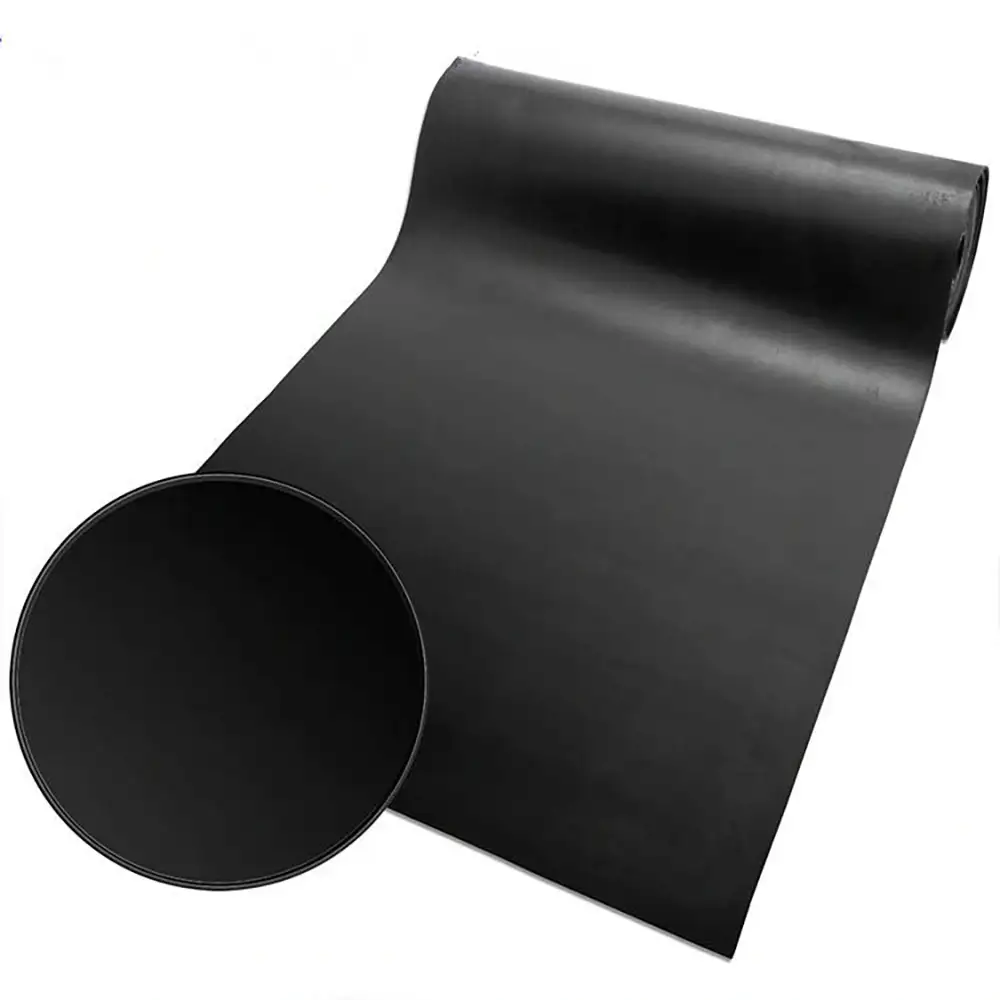
SBR Rubber Sheet, NBR EPDM Neoprene SBR Silicone Rubber Sheet
Next:
Muti Ply Conveyor Belt, Multi-ply Fabric Conveyor Belt
TAG:
Industrial Rubber Conveyor Belt,
Heavy Duty Rubber Conveyor Belt,
Heat Resistant Conveyor Belt,
Oil Resistant Conveyor Belt,
Fire Resistant Conveyor Belt,
EP Pattern Conveyor Belt,
Antistatic Conveyor Belt,
EP Chevron Conveyor Belt,
NN Chevron Conveyor Belt,
Nylon Chevron Conveyor Belt,
Fabric Chevron Conveyor Belt,
Textile Chevron Conveyor Belt,
Flame Resistant Conveyor Belt,
Heat Resistant Pattern Conveyor Belt,
Weather Resistant Conveyor Belt,
Abrasion Resistant Rubber Conveyor Belt,
Heat Resistant Chevron Conveyor Belt,
Oil Resistant Chevron Conveyor Belt,
Bulk Material Conveyor Belt,
Sand Conveyor Belt,
Gravel Conveyor Belt,
Material Handling Conveyor Belt,
Ore Conveyor Belt,
Rock Conveyor Belt,
Abrasion Resistant Chevron Conveyor Belt,
Abrasion Resistant Pattern Conveyor Belt,
Coal Conveyor Belt,
Quarry Conveyor Belt,
Coal Chevron Conveyor Belt,
Aggregate Conveyor Belt,
Related Category:
Chevron Pattern Conveyor Belt,Herringbone Conveyor Belt,U Pattern Conveyor Belt,Column Pattern Conveyor Belt China, suppliers, manufacturers, factory, customized, wholesale, quotation, made in China