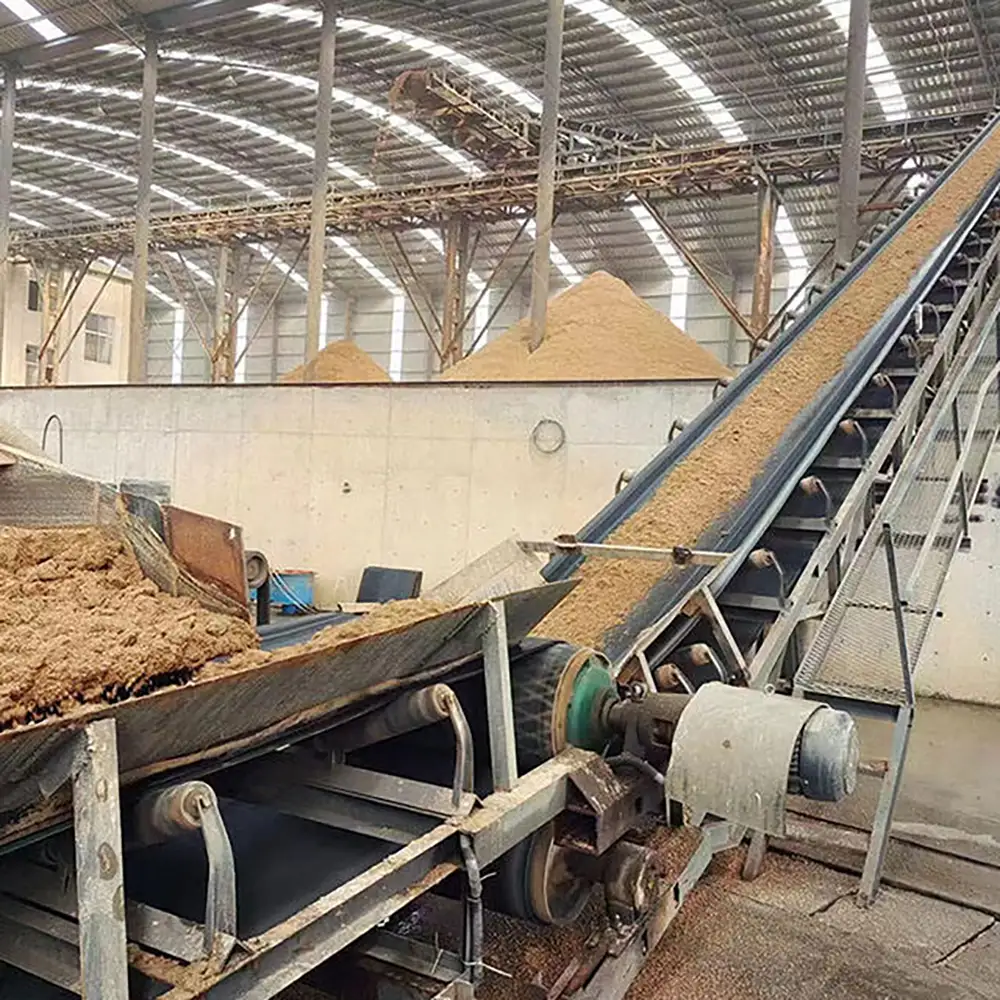
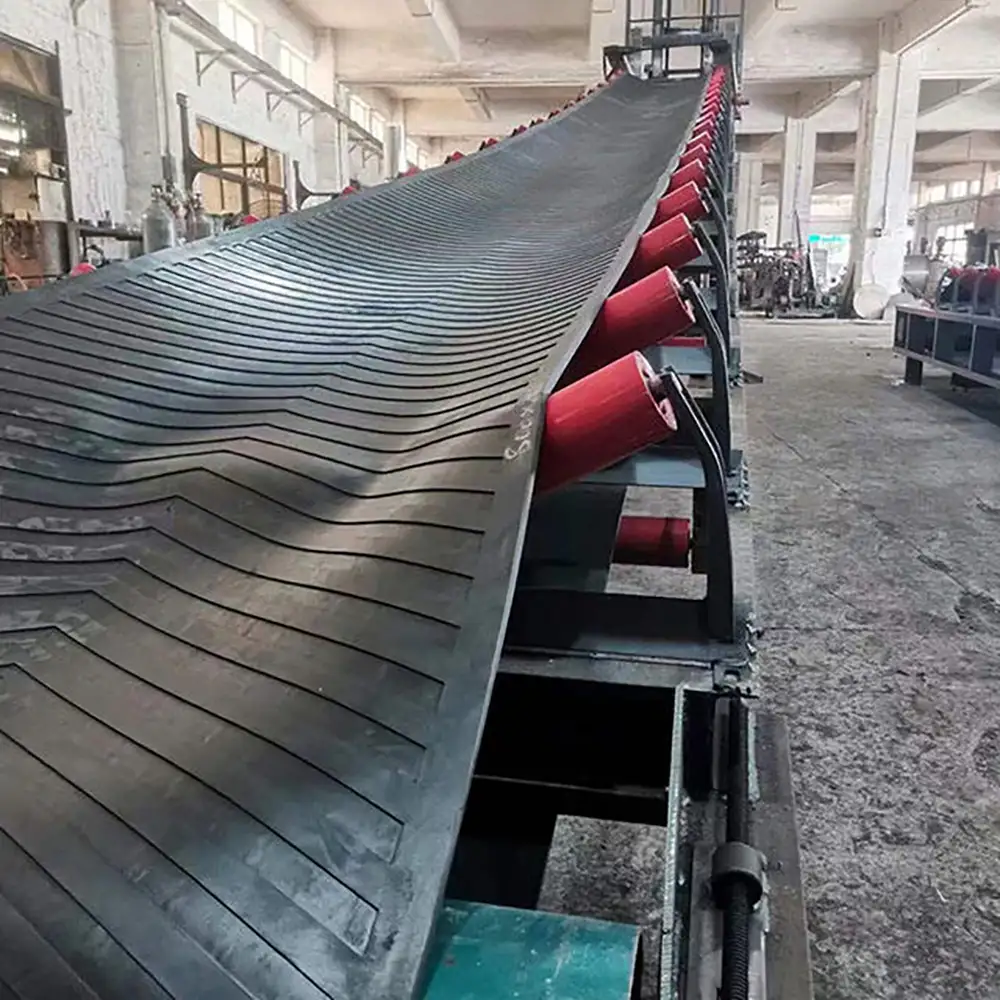
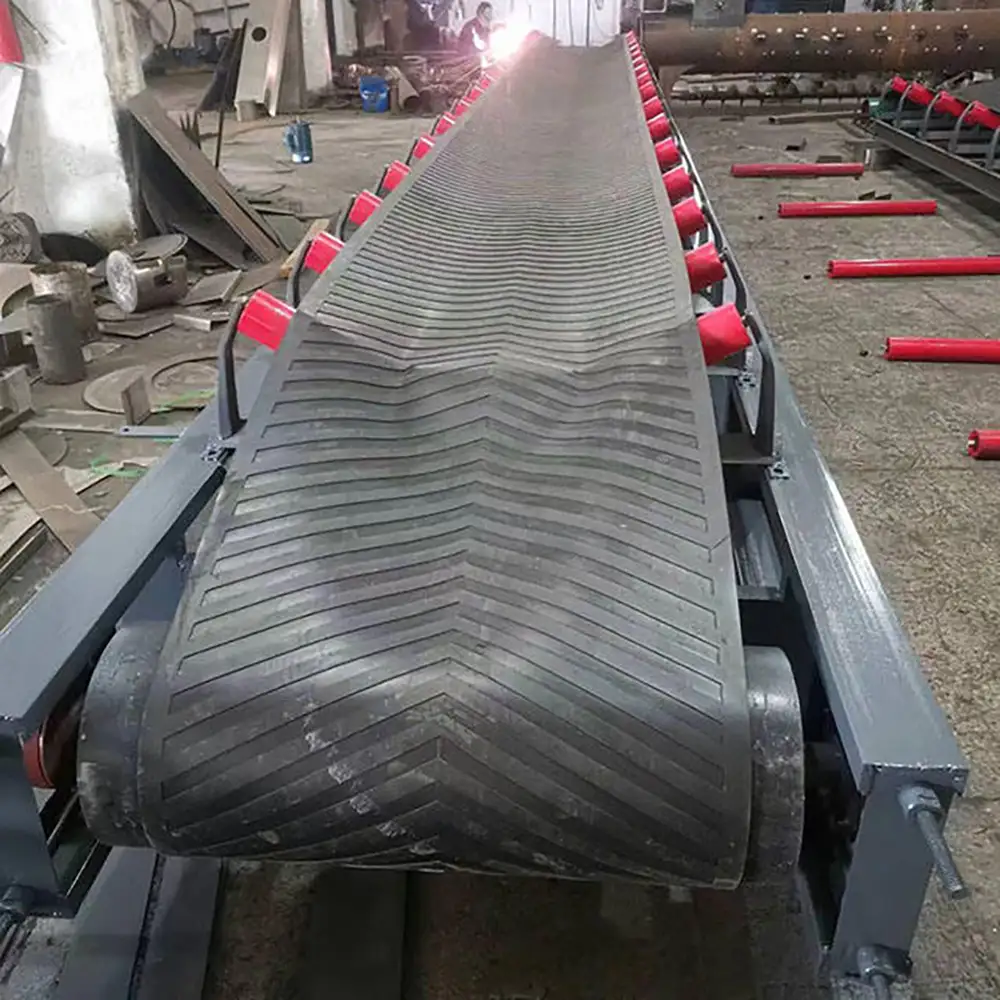
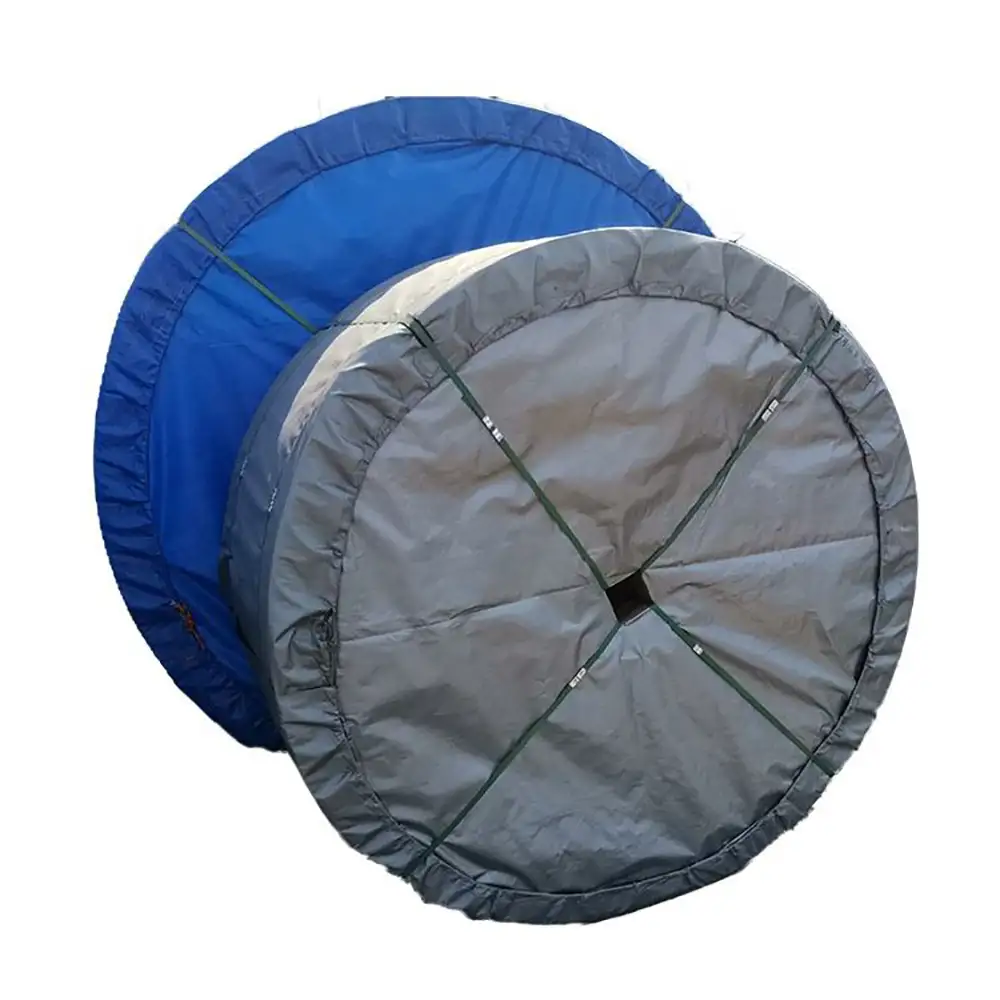
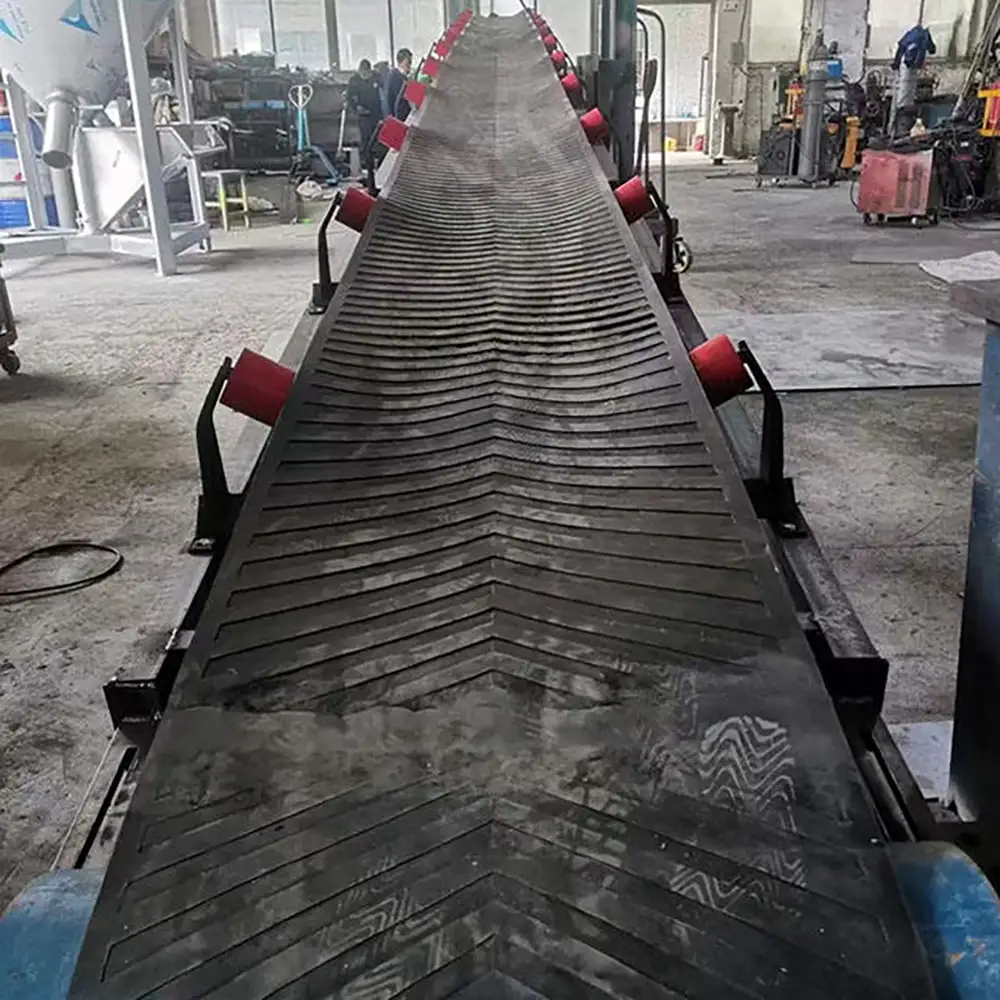
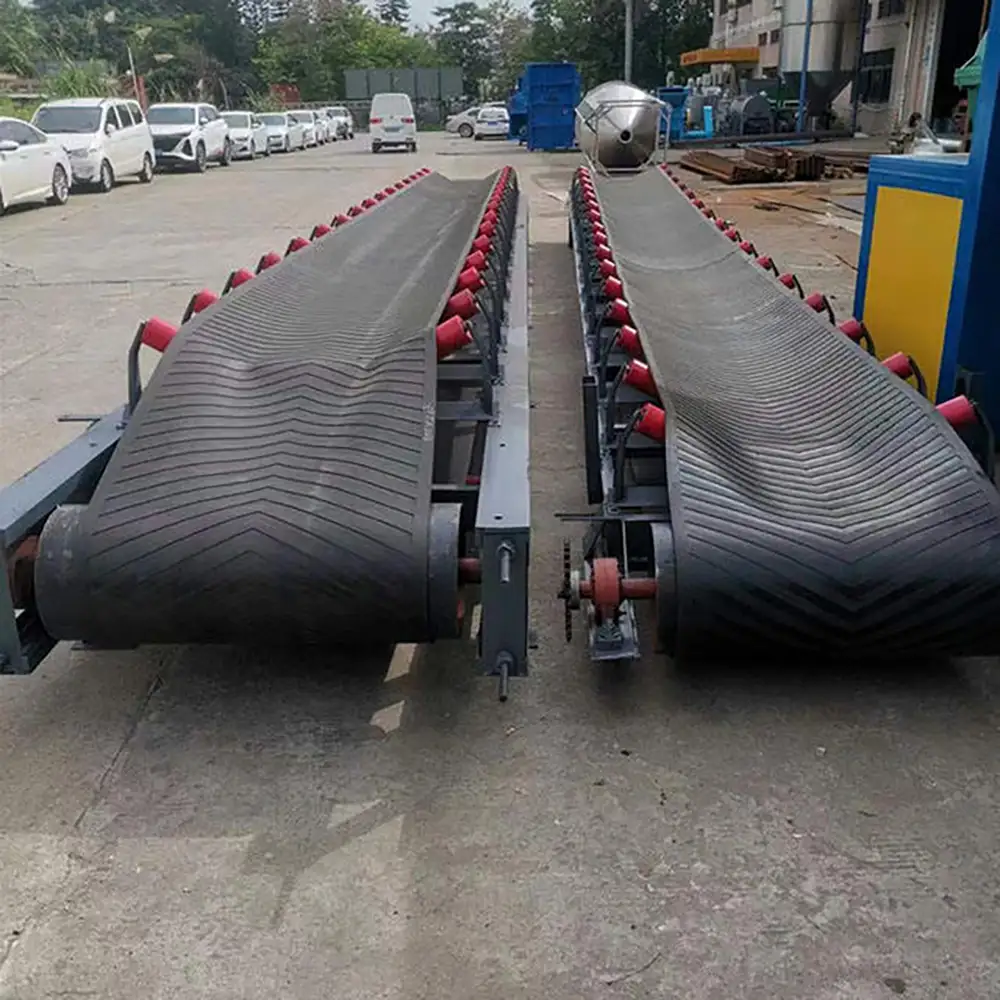
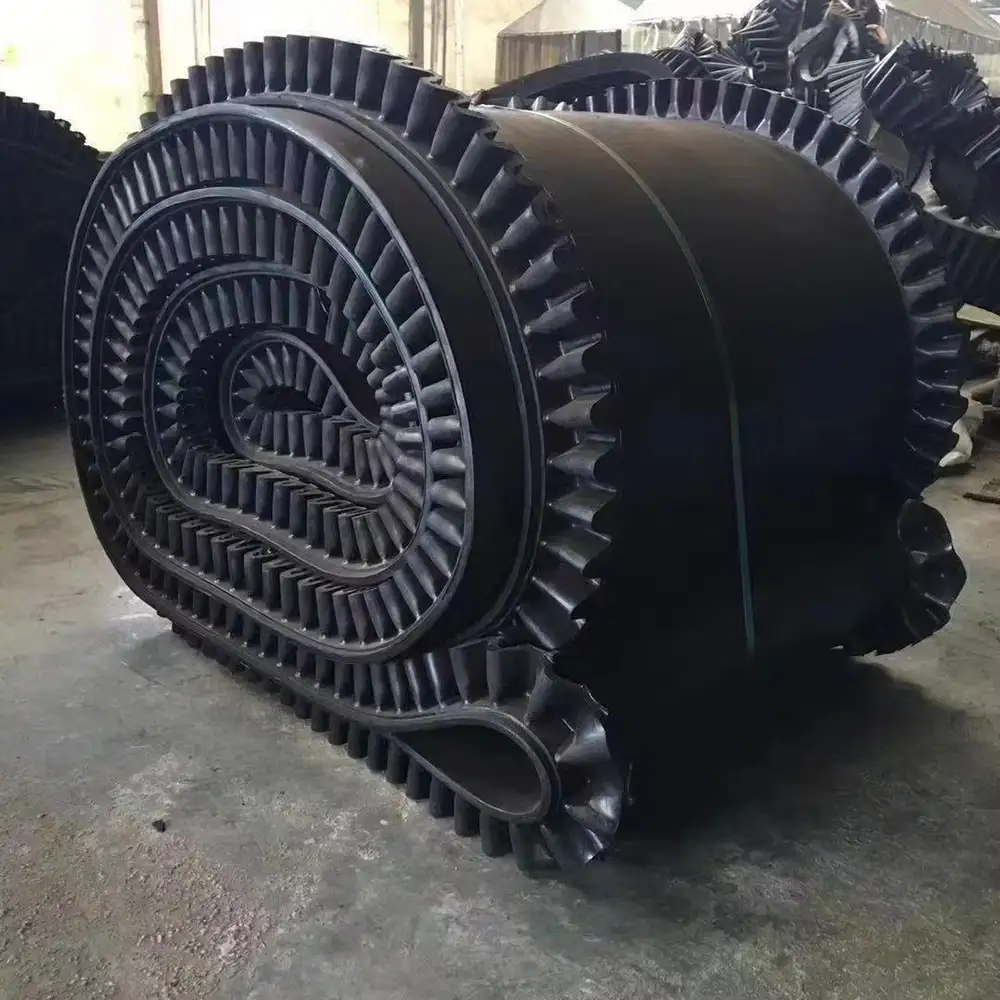
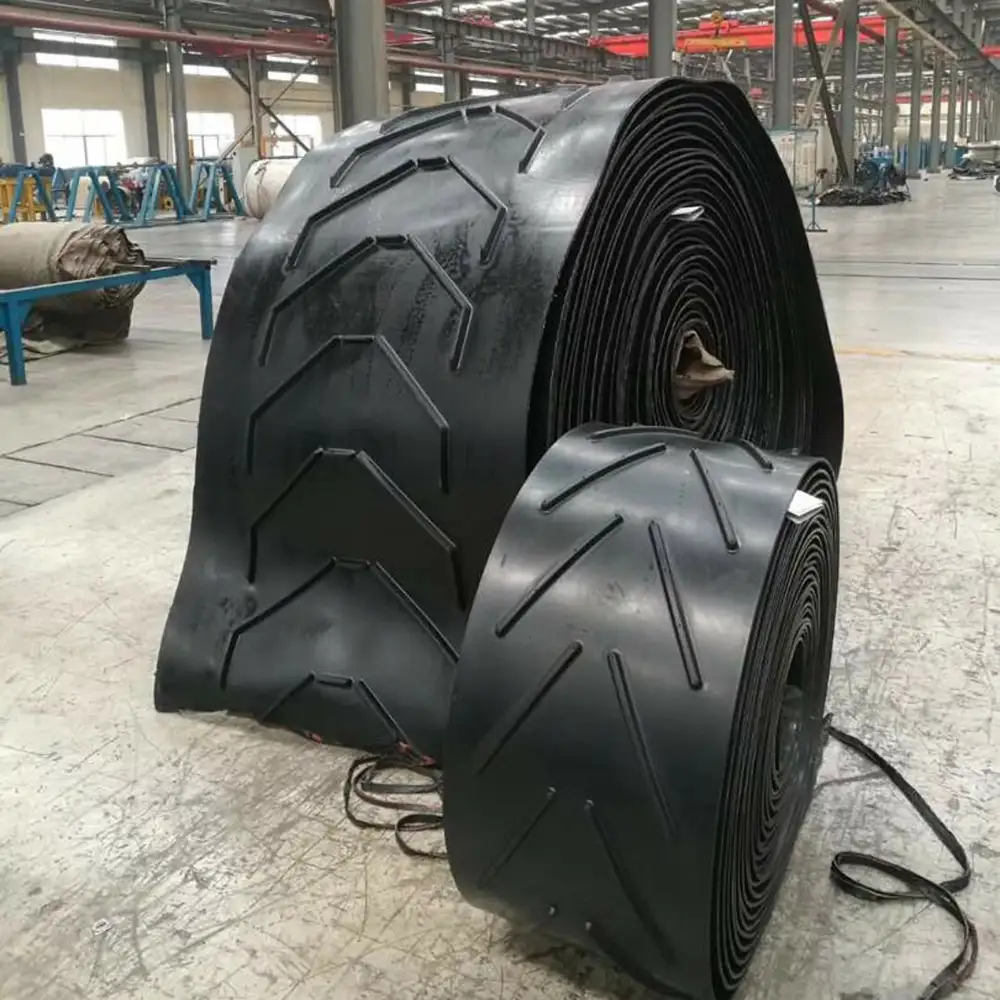
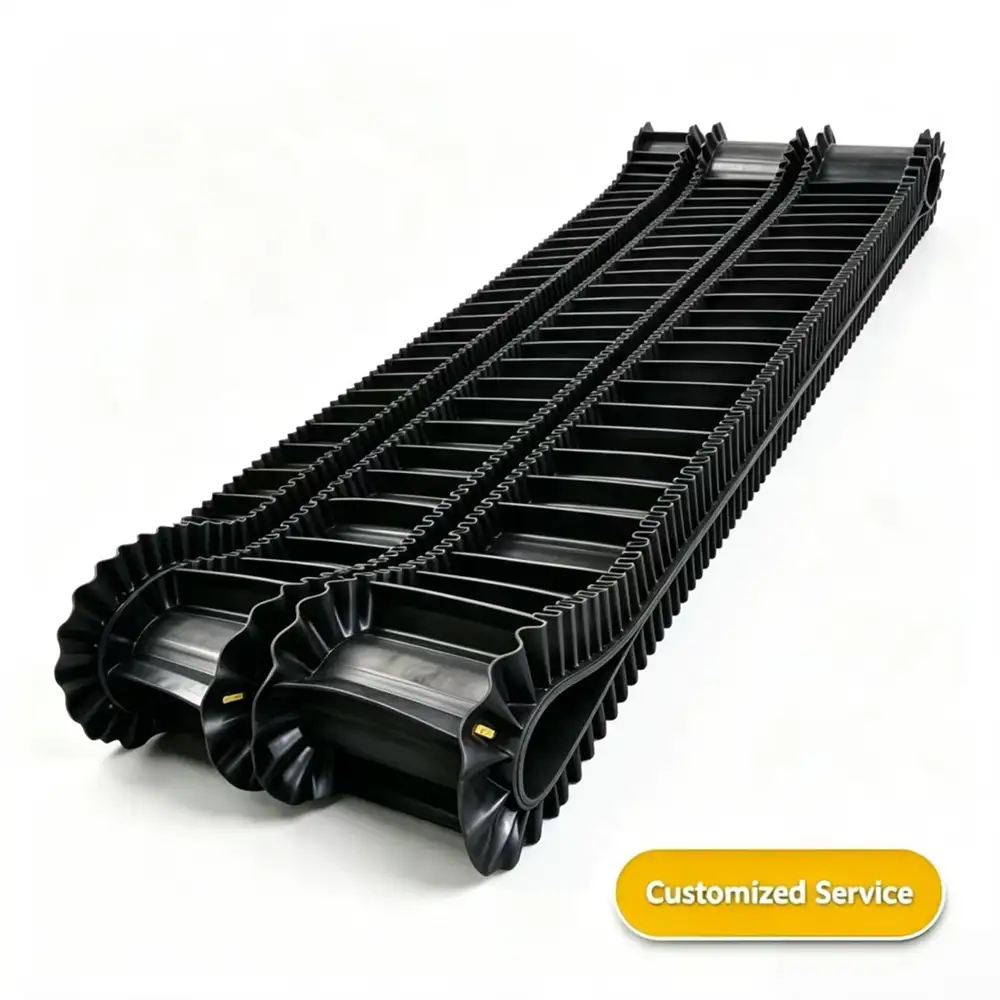
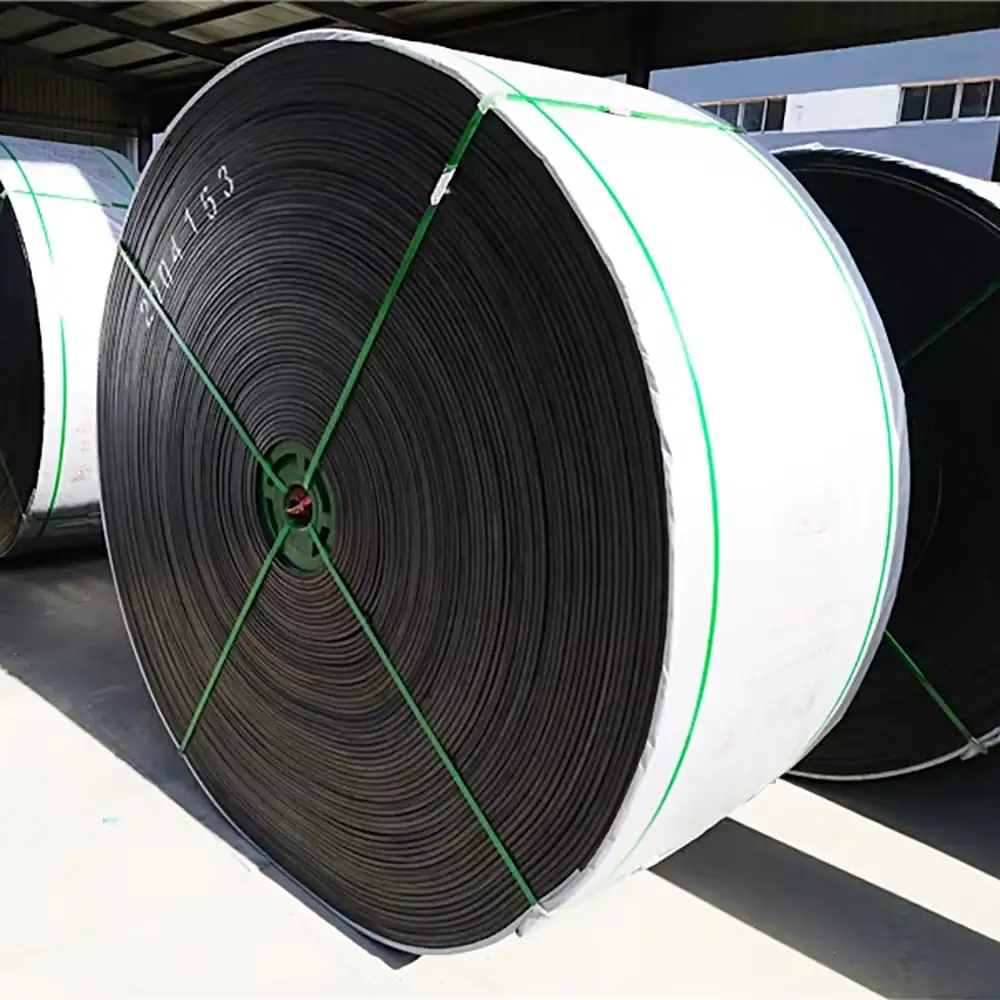
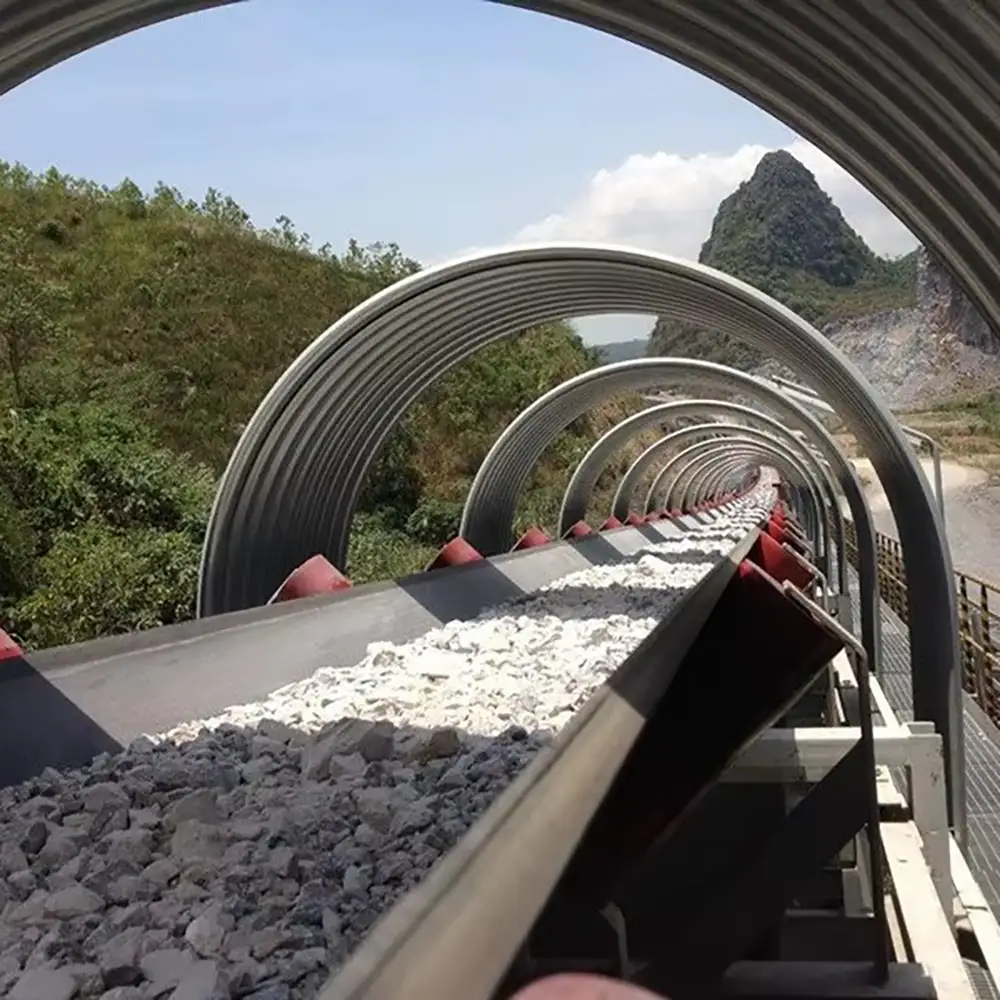
Mining machinery conveyor belt used for mining, gravel rock used rubber conveyor belt
Gravel Rock Rubber Conveyor Belt for Heavy-Duty Material Handling
A gravel rock rubber conveyor belt is designed for demanding material-handling applications where abrasive bulk materials such as rock, gravel, sand, dirt, crushed stone, and aggregates must be transported continuously. Heavy-duty belt conveyor systems provide an efficient alternative to repeated truck or loader movement, helping industrial facilities maintain a steady material flow between crushing, screening, washing, stockpiling, and loading operations.
Built with a reinforced rubber conveyor belt carcass and durable rubber covers, these conveyor belts can be configured for quarrying, mining, aggregate processing, construction material handling, recycling, concrete production, and other industries. The belt construction can be selected according to material size, weight, conveyor length, operating environment, belt speed, and loading conditions.
Main parameters:
|
Model |
B500 B650 B800 B1000 B1200 |
|
Width(mm) |
500-1200 |
|
Capacity(t/h) |
100-1400 |
|
Inclination(°) |
0-17 |
|
Applicatons |
It is widely used in the field of mining, metallurgy, chemical industry, port, dock transportation. |
What Is a Rock and Gravel Conveyor Belt?
A rock conveyor belt is a continuous flexible conveying component installed on a belt conveyor system. The belt travels around drive and tail pulleys and is supported by idlers or other conveyor components while carrying bulk material from one point to another.
For gravel, rock, and aggregate applications, the belt needs to withstand repeated contact with abrasive material. Large rocks can also create impact loads when they are transferred from crushers, hoppers, loaders, or other equipment.
A suitable heavy-duty conveyor belt therefore combines an appropriate reinforcement carcass with rubber covers designed for the intended working conditions. The exact belt construction should be selected according to the conveyor design rather than based only on the material name.
Key Features of Heavy-Duty Rubber Conveyor Belts
Abrasion-Resistant Rubber Covers
Rock, gravel, sand, and crushed aggregate can cause significant surface wear. A suitable abrasion-resistant rubber cover helps protect the belt during continuous conveying and can contribute to longer service life when correctly matched to the application.
Reinforced Conveyor Belt Carcass
The internal reinforcement provides the belt with its tensile strength and dimensional stability. Fabric-reinforced constructions such as EP or NN can be selected according to conveyor length, loading requirements, and system configuration. Steel-cord constructions may also be considered for applications requiring higher longitudinal strength.
Impact Resistance
Rock and aggregate conveyors may receive material from considerable heights. A suitable belt construction can help handle impact during loading. Belt selection should consider rock size, loading height, chute design, and transfer conditions.
Good Flexibility
The conveyor belt must flex around pulleys while maintaining stable operation. Proper carcass construction helps balance strength and flexibility for the complete conveyor system.
Continuous Material Handling
Unlike batch transportation using loaders or trucks, a conveyor system can provide a continuous material flow between processing stages. This makes belt conveyors useful for crushing, screening, conveying, and stockpiling operations.
Custom Construction
The belt can be specified according to width, length, tensile strength, carcass construction, cover thickness, rubber grade, and other application requirements.
Applications for Rock, Sand, Gravel, and Dirt
Heavy-duty conveyor systems are widely used in quarries, aggregate plants, mines, construction sites, sand processing facilities, recycling plants, and concrete material handling operations.
In quarry applications, conveyor belts can transport blasted or crushed rock between crushers, screens, stockpiles, and loading areas. Aggregate producers can use them for moving gravel, sand, crushed stone, limestone, and similar materials.
Construction material handling systems can use rubber conveyor belts to transfer dirt, soil, sand, and aggregates around processing or stockpiling areas. Recycling facilities may use suitable conveyor belts for moving recycled aggregate and construction debris.
The appropriate belt construction depends on the material characteristics. Fine sand presents different handling conditions from large angular rock, while wet material can require additional consideration for belt cleaning, tracking, and conveyor structure.
Conveyor Belt Construction
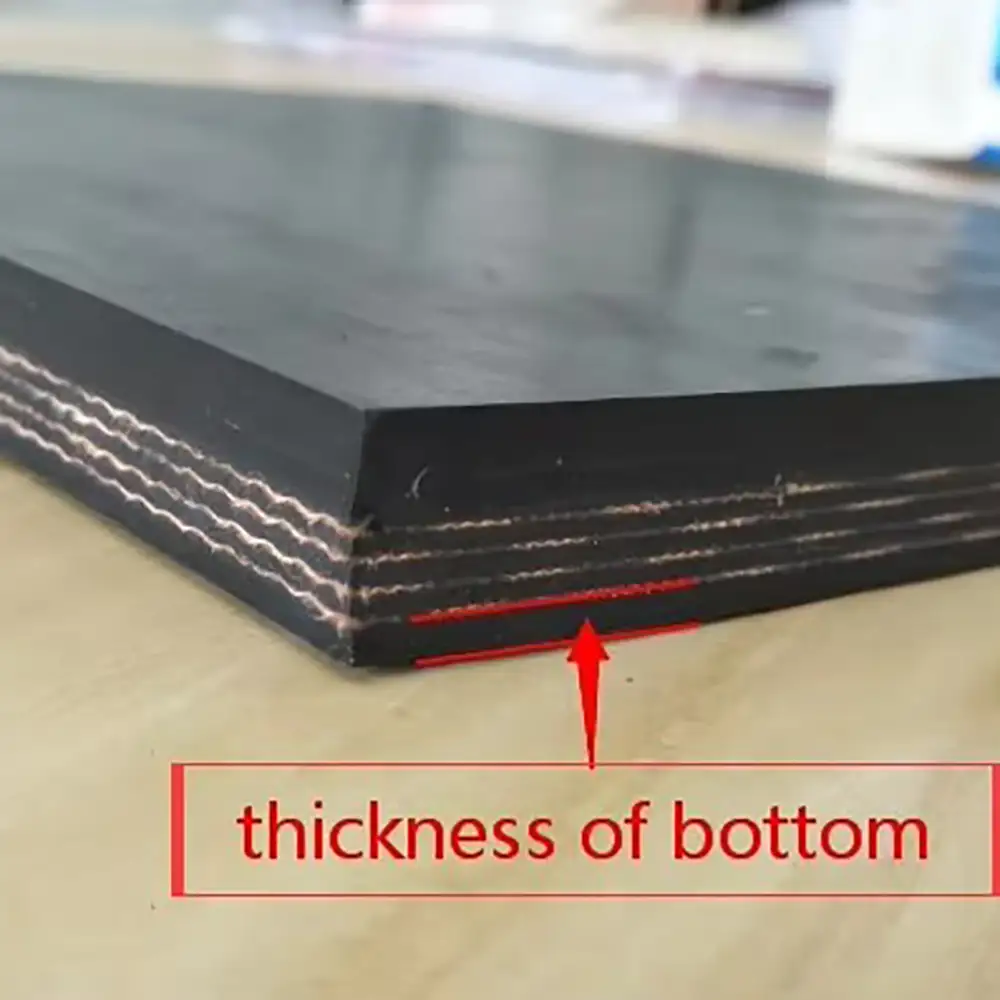
A typical heavy-duty rubber conveyor belt consists of a top cover, reinforcement carcass, bottom cover, and belt edges. The top cover contacts the conveyed material and therefore receives much of the abrasion and impact.
The reinforcement layer provides tensile strength. EP polyester/nylon fabric is widely used for industrial conveyor applications because it offers a combination of strength and flexibility. NN nylon fabric can be selected for applications where its particular flexibility and mechanical characteristics are appropriate.
For longer or higher-capacity conveyor systems, steel cord conveyor belts may be considered. The correct selection depends on the complete conveyor design and required belt performance.
How to Choose a Gravel Conveyor Belt
Several factors should be evaluated before purchasing a rock, sand, or gravel conveyor belt:
1. Material: Identify whether the belt will carry sand, gravel, limestone, crushed rock, dirt, coal, recycled aggregate, or mixed materials.
2. Particle Size: Large and sharp rocks can create greater impact and abrasion than fine materials.
3. Conveyor Length: Longer conveyors may require higher tensile-strength belt constructions.
4. Belt Width: Belt width should correspond to material volume, conveyor speed, loading method, and system capacity.
5. Belt Speed: Operating speed affects material loading, belt wear, and transfer performance.
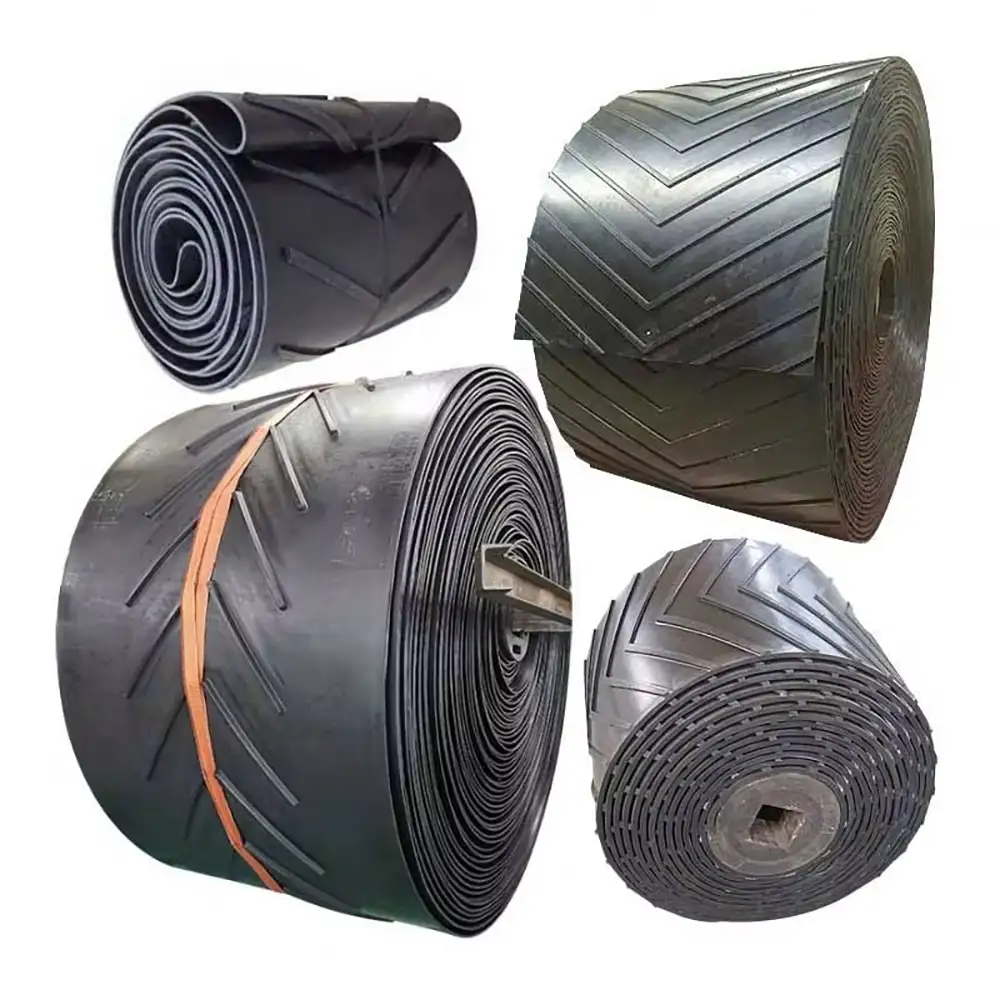
6. Conveyor Angle: Inclined conveyors may require a suitable surface pattern or additional conveying design considerations.
7. Loading Conditions: Consider transfer chute height, impact energy, material density, and loading method.
8. Environment: Outdoor conveyors may require suitable resistance to weather, moisture, temperature changes, or other environmental factors.
Installation and Maintenance
Proper conveyor installation plays an important role in belt performance. Before installation, inspect the conveyor frame, pulleys, idlers, scrapers, take-up system, and loading points. The conveyor should be correctly aligned to reduce tracking problems.
During operation, inspect the belt regularly for longitudinal cuts, edge damage, cover wear, splice problems, and abnormal deformation. Check belt tracking and tension, and make sure material is loaded centrally.
Transfer chutes should be designed to reduce unnecessary impact and prevent material from becoming trapped between the belt and conveyor components. Regularly removing material buildup around pulleys and idlers can also help maintain reliable operation.
For abrasive rock and gravel applications, preventive inspection is especially important because small cuts or cover damage can become larger problems if left untreated.
Custom Heavy-Duty Conveyor Belt Solutions
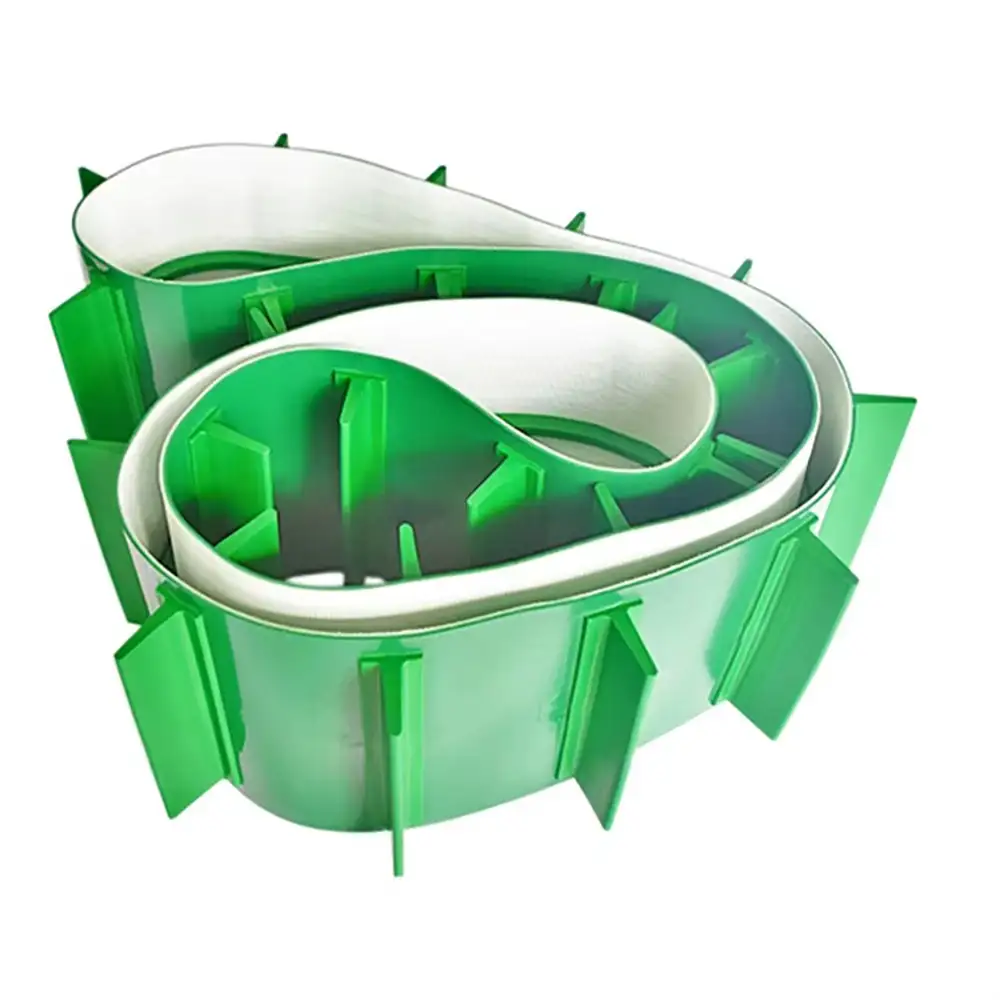
We supply customized rubber conveyor belts for quarry, aggregate, mining, construction, and industrial material-handling applications. Depending on the project, customers can specify belt width, length, tensile strength, carcass type, number of plies, cover thickness, rubber compound, edge construction, and surface pattern.
We can also support requirements for abrasion-resistant, heat-resistant, oil-resistant, weather-resistant, or other specialized rubber conveyor belt constructions when appropriate for the operating environment.
OEM production and bulk B2B orders can be arranged according to customer specifications, conveyor drawings, existing belt samples, or application information.
Why Choose Us?
Heavy-Duty Conveyor Belt Manufacturing: We focus on industrial rubber conveyor belt solutions for demanding material-handling applications.
Application-Based Selection: Belt construction can be matched to rock, gravel, sand, dirt, aggregate, and other bulk materials.
Durable Reinforcement: Fabric or steel-cord constructions can be selected according to conveyor requirements.
Abrasion-Resistant Options: Suitable rubber compounds are available for abrasive conveying applications.
Custom Specifications: Width, length, tensile strength, cover thickness, carcass, and other parameters can be customized.
OEM & ODM Support: We provide customized production for distributors, conveyor manufacturers, contractors, and industrial users.
B2B Export Supply: Products can be supplied for international quarrying, mining, construction, and aggregate projects.
Technical Assistance: We can help customers identify an appropriate belt construction based on conveyor operating conditions.
FAQs
1. What type of conveyor belt is used for gravel?
Heavy-duty rubber conveyor belts with suitable abrasion and impact resistance are commonly used for gravel. The exact belt construction depends on particle size, loading conditions, conveyor design, and operating environment.
2. Can a rubber conveyor belt transport large rocks?
Yes. Heavy-duty conveyor belts can be designed for rock and aggregate handling. Large rocks require careful consideration of belt carcass strength, impact conditions, loading height, and transfer chute design.
3. Are these belts suitable for sand?
Yes. Rubber conveyor belts can be used to transport sand in quarrying, aggregate processing, construction, and other bulk material-handling applications.
4. Can the same belt carry dirt and gravel?
A suitable general-purpose or abrasion-resistant belt may handle both materials, depending on the complete application. Material moisture, particle size, loading conditions, and belt speed should be considered.
5. What makes a conveyor belt suitable for rock?
The combination of reinforcement strength, rubber cover properties, impact capability, belt thickness, and overall construction determines suitability. Sharp and heavy rock generally requires more robust construction.
6. Can the conveyor belt be customized?
Yes. Belt width, length, tensile strength, carcass construction, number of plies, cover thickness, rubber compound, and surface pattern can be customized according to project requirements.
7. Are abrasion-resistant conveyor belts necessary for gravel?
They are often considered for abrasive aggregate applications. The appropriate cover grade should be selected according to the actual material and operating conditions.
8. Can these conveyor belts be used in quarries?
Yes. Quarry conveyor systems commonly transport crushed stone, limestone, gravel, sand, and other aggregates between processing and stockpiling stages.
9. How can I reduce rock impact on a conveyor belt?
Loading chute design, transfer height, impact idlers, proper belt construction, controlled material flow, and suitable loading practices can all help reduce unnecessary impact.
10. How do I order a heavy-duty rock conveyor belt?
Provide the belt width, length, tensile strength if known, material type, particle size, conveyor speed, conveyor length, inclination, and working environment. These details allow the appropriate belt construction to be selected.
Request a Quote
Looking for a gravel rock rubber conveyor belt manufacturer or heavy-duty belt conveyor system for rock, sand, dirt, and aggregates? Send us your conveyor specifications and application requirements. We can provide a suitable customized belt solution for quarrying, mining, construction, aggregate processing, and industrial material handling.
Prev:
Polyester Rubber Conveyor Belt for Coal Mine Industry
Next:
Polyester Conveyor Belt, Quality Polyester Canvas Conveyor Belts
TAG:
Steel Cord Conveyor Belt,
Industrial Rubber Conveyor Belt,
Heavy Duty Rubber Conveyor Belt,
Mining Conveyor Belt,
Industrial Conveyor Belt,
Bulk Material Conveyor Belt,
Sand Conveyor Belt,
Gravel Conveyor Belt,
Material Handling Conveyor Belt,
Rock Conveyor Belt,
Quarry Conveyor Belt,
Aggregate Conveyor Belt,
Mining Rubber Conveyor Belt,
Abrasion Resistant Conveyor Belt,
Heavy Duty Conveyor Belt,
Polyester Conveyor Belt,
EP Rubber Conveyor Belt,
EP Conveyor Belt,
Fabric Reinforced Conveyor Belt,
Rubber Conveyor Belt,
NN Conveyor Belt,
Stone Conveyor Belt,
Impact Resistant Conveyor Belt,
Crushed Stone Conveyor Belt,
Stone Belt Conveyor,
Sand Belt Conveyor,
Rock Rubber Conveyor Belt,
Crushed Rock Conveyor Belt,
Quarry Rubber Conveyor Belt,
Aggregate Rubber Conveyor Belt,
Related Category:
Gravel Rock Rubber Conveyor Belt,Heavy-Duty Conveyor Belt,Rock Conveyor Belt,Sand Conveyor Belt China, suppliers, manufacturers, factory, customized, wholesale, quotation, made in China