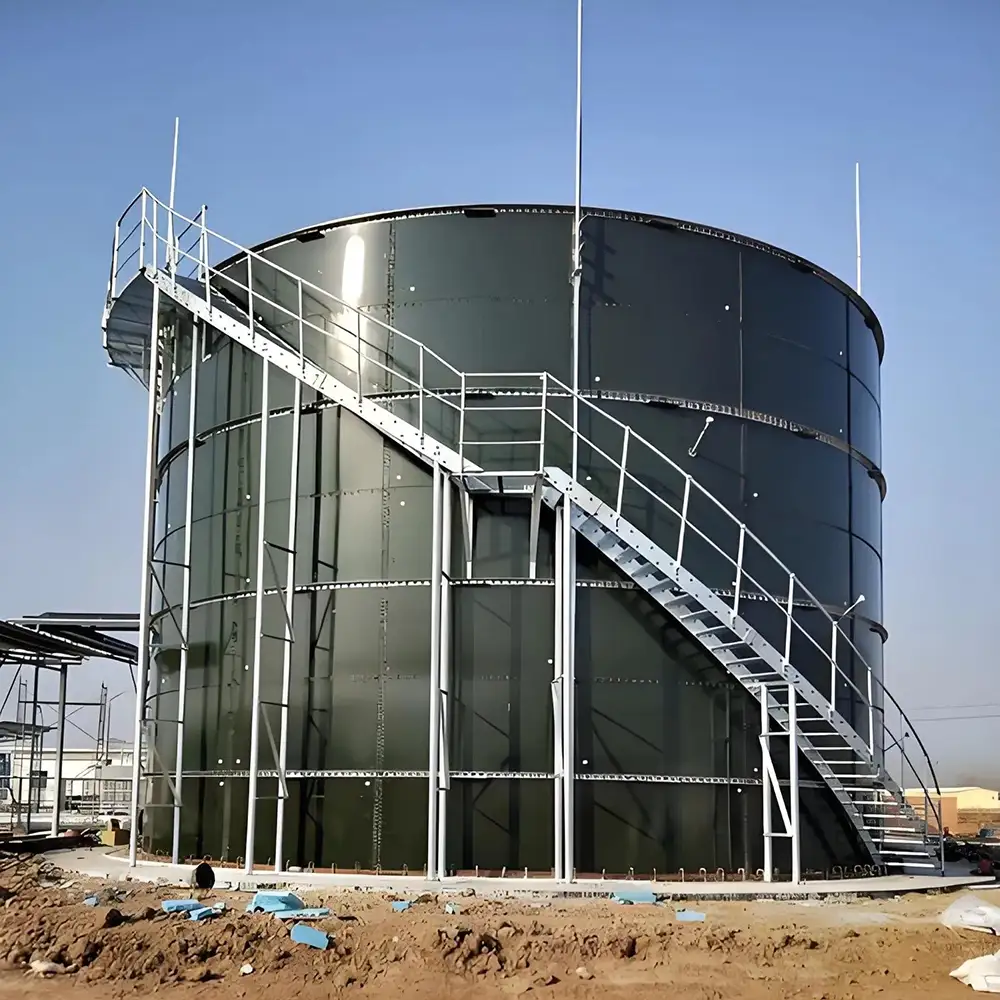
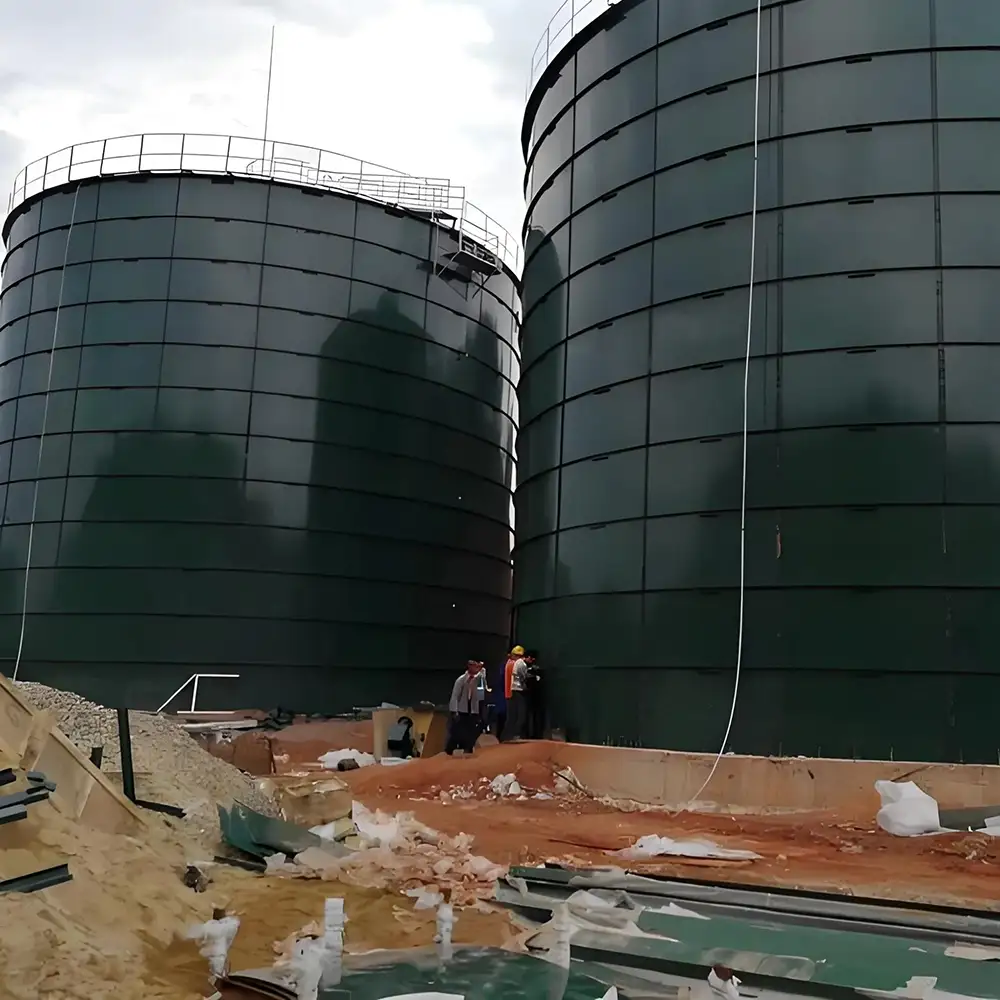
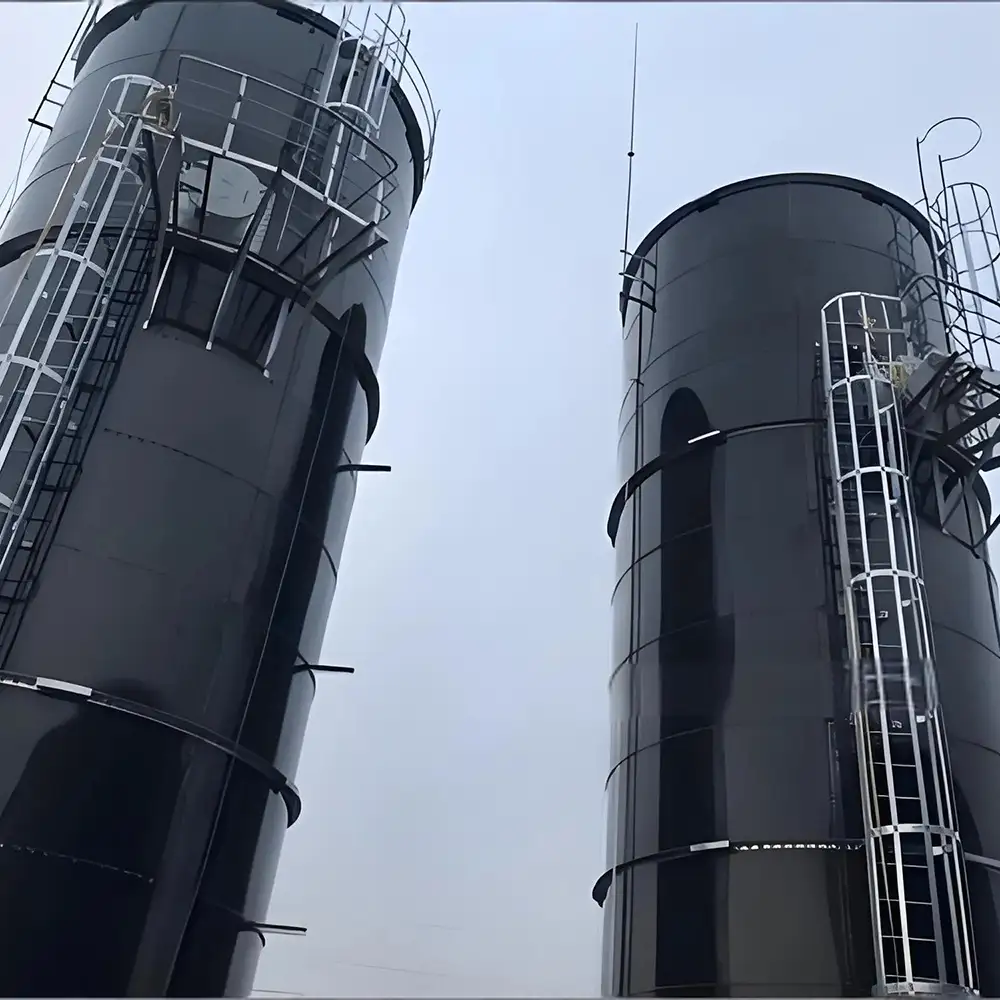
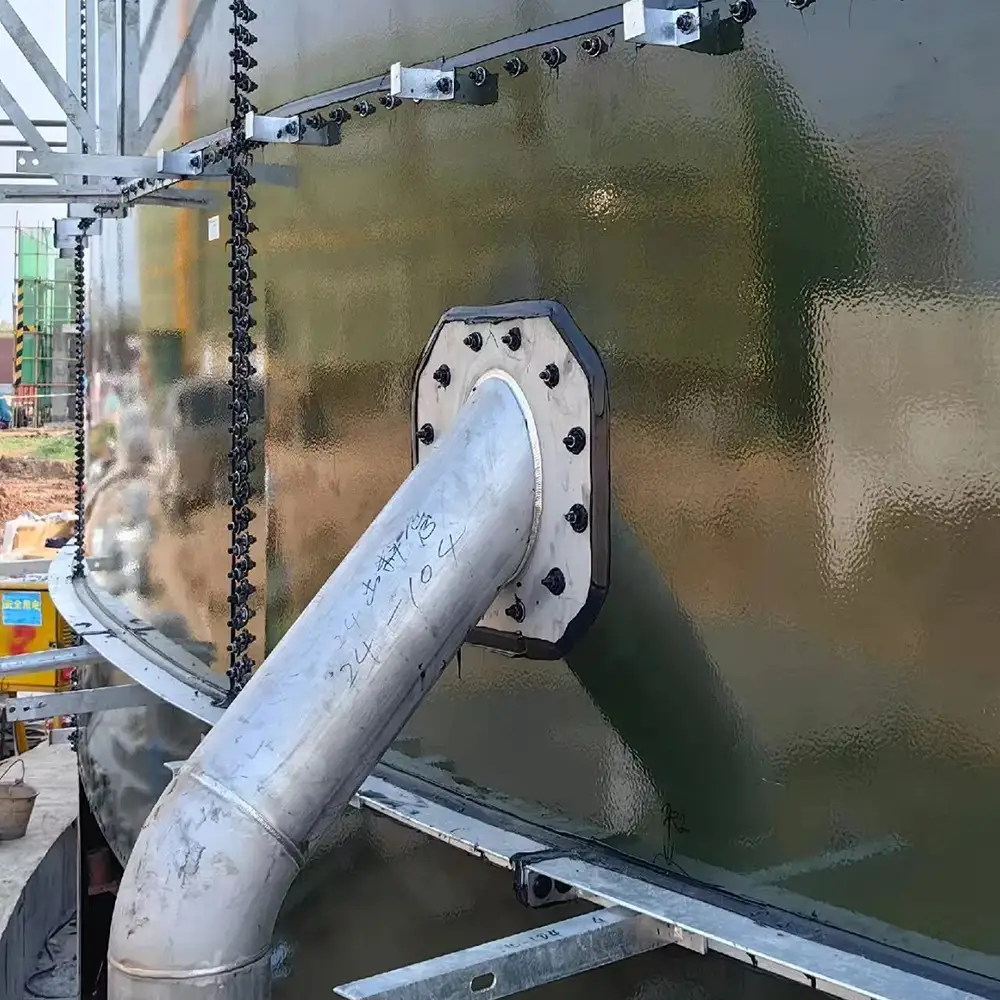
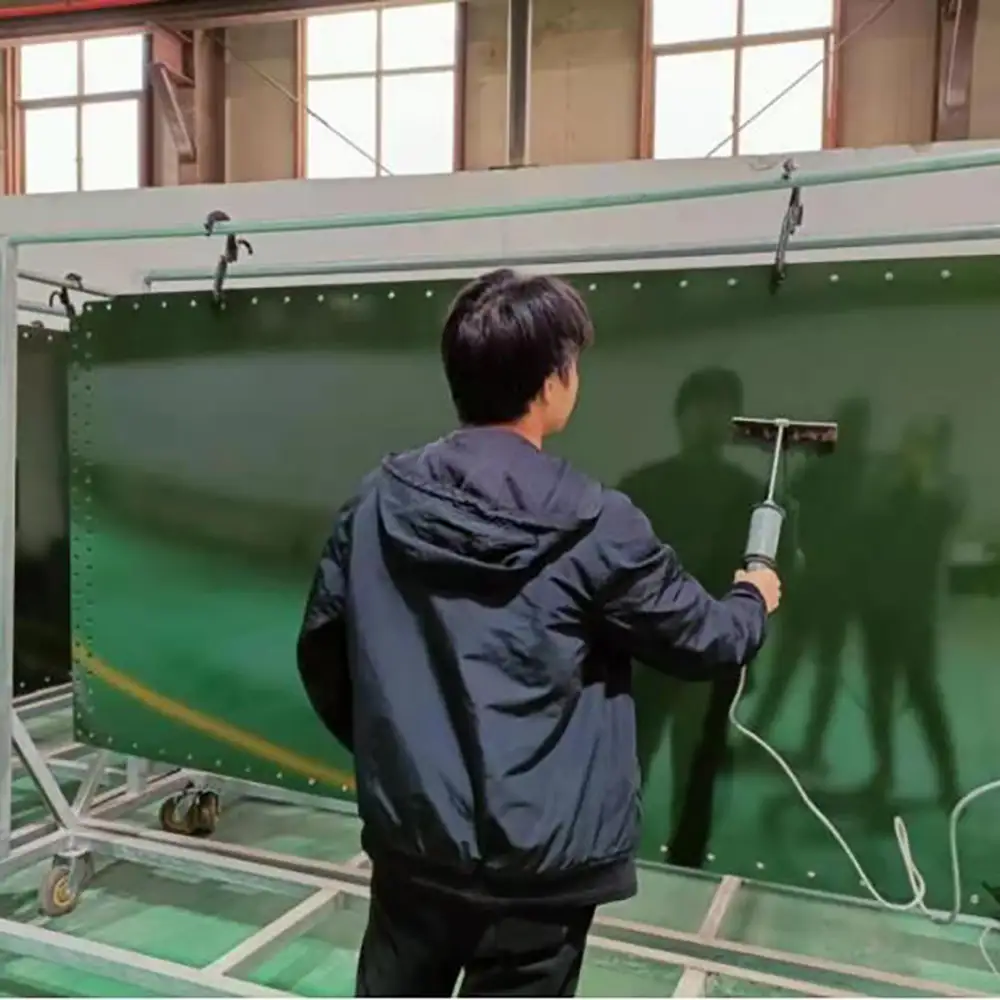
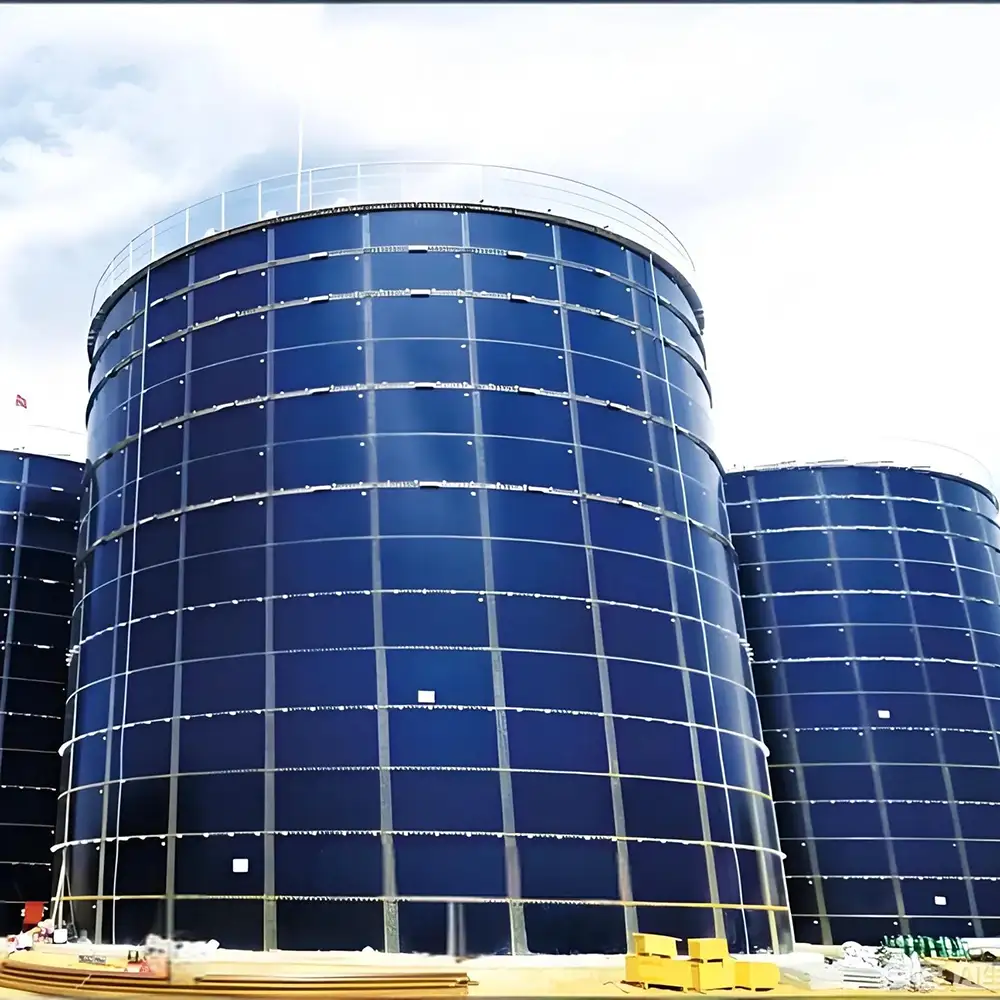
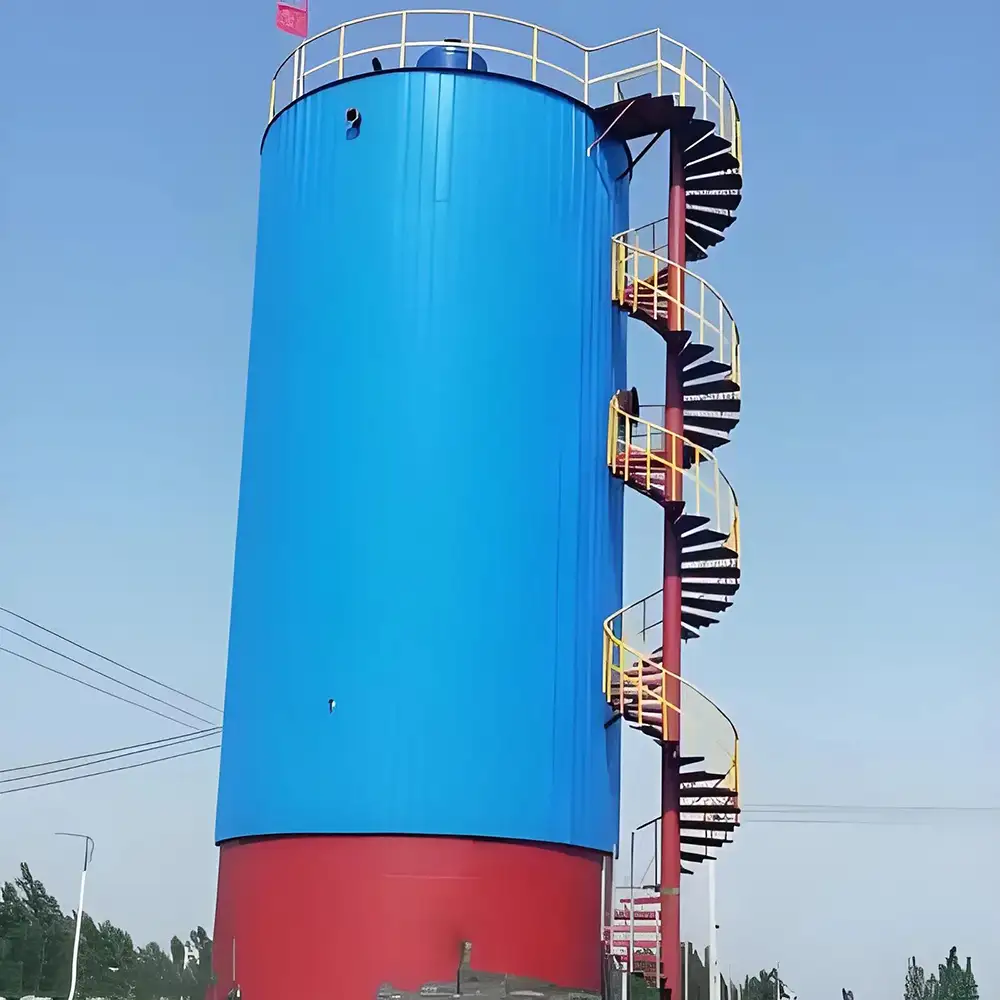
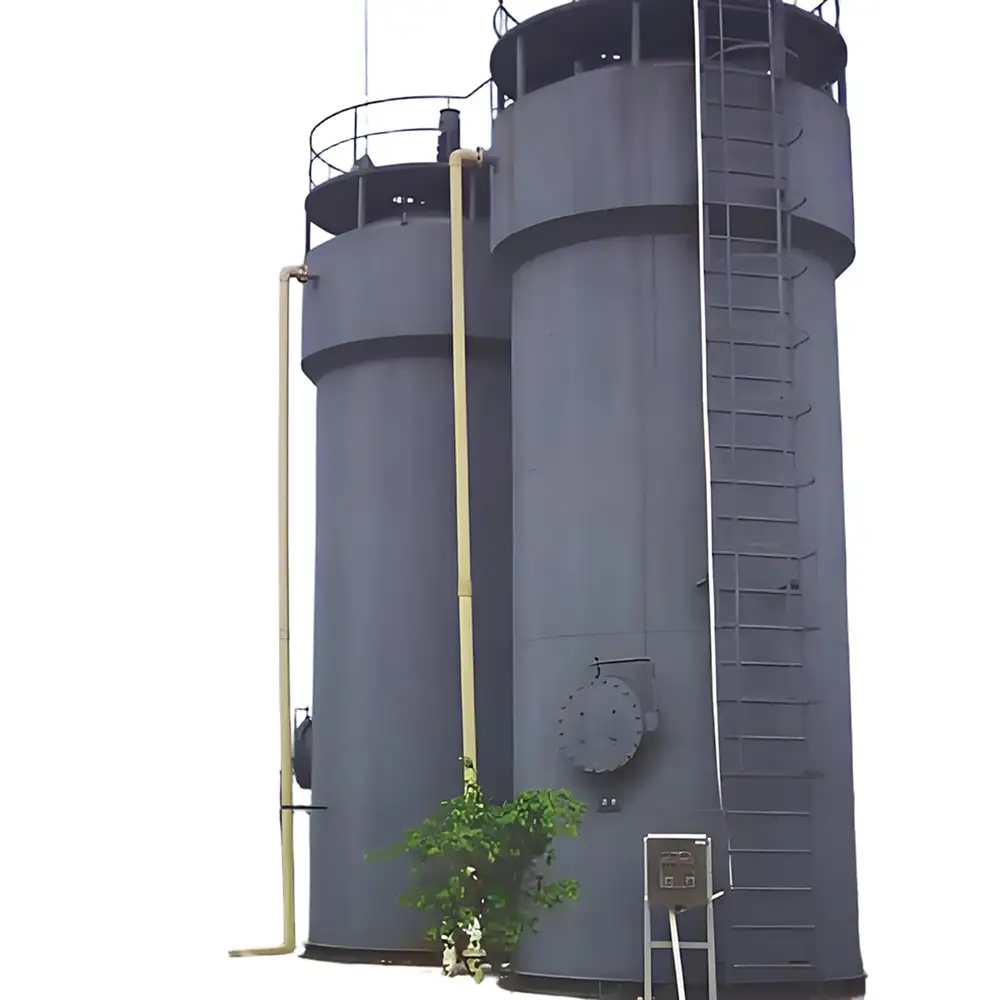
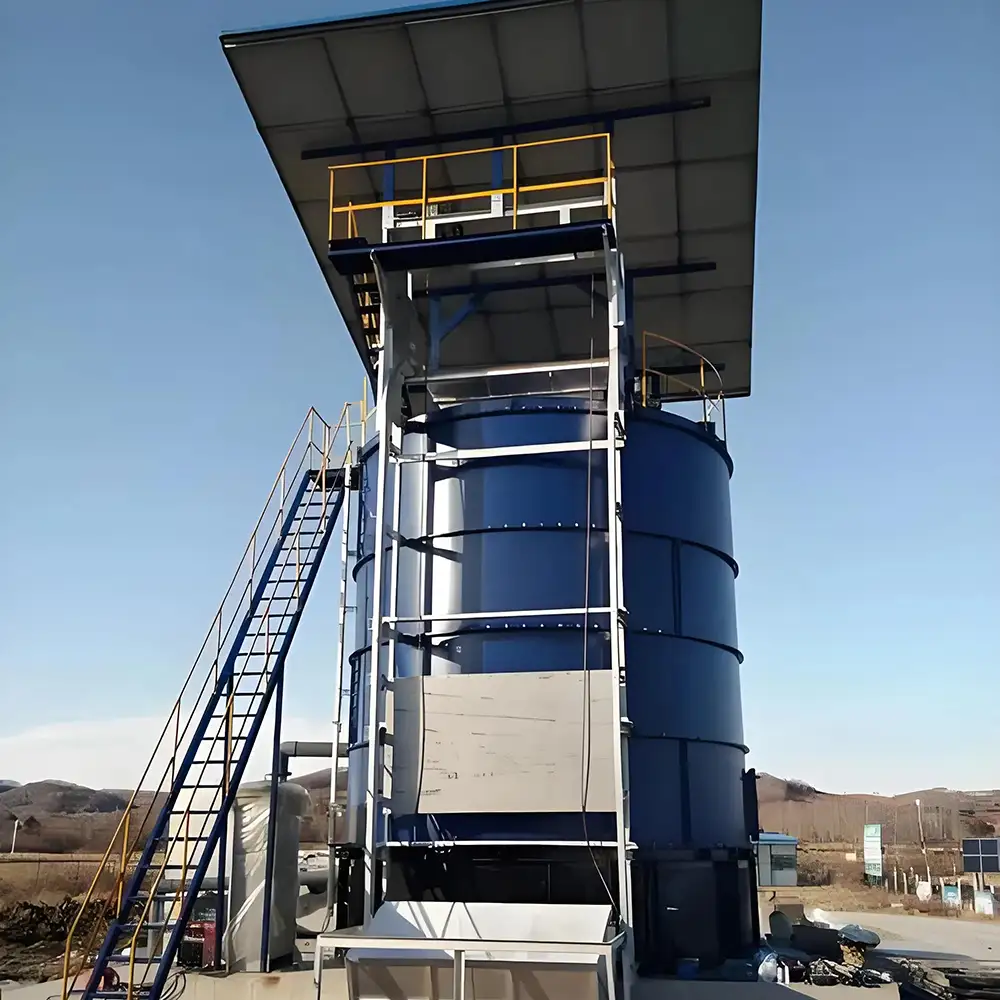
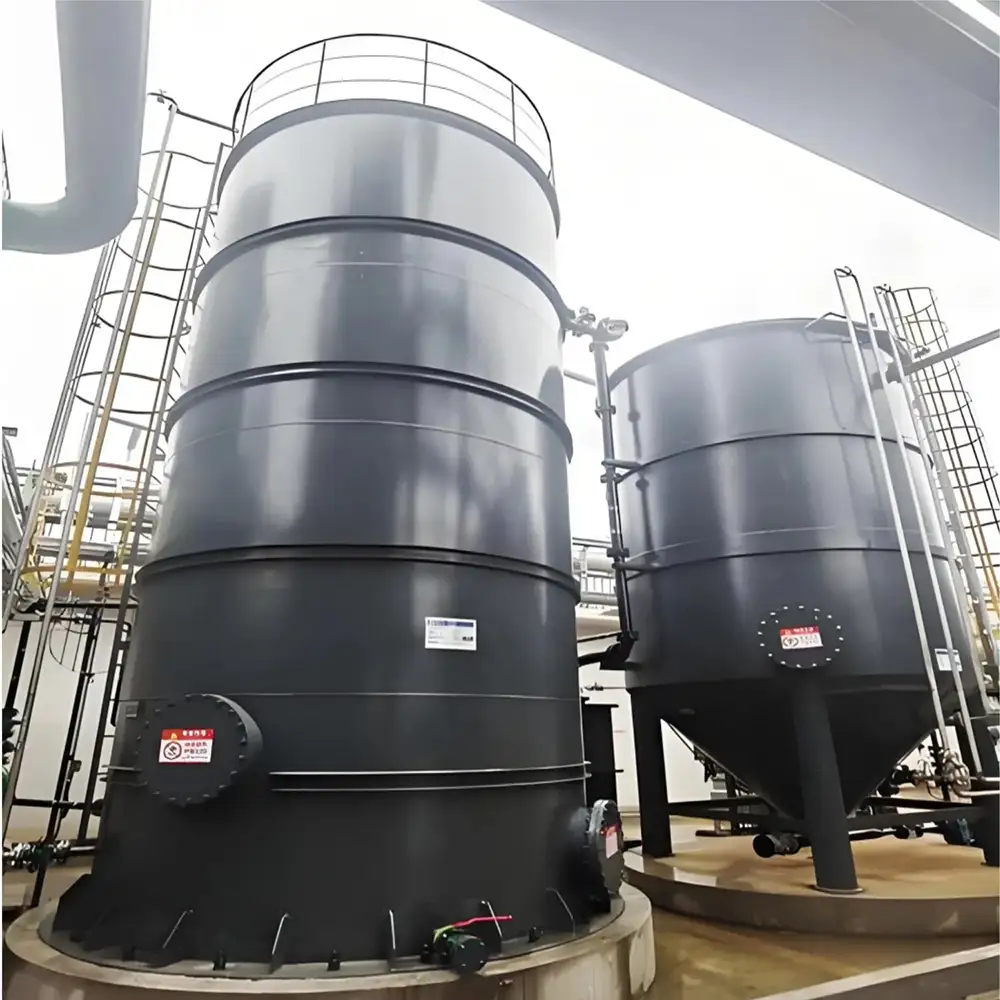
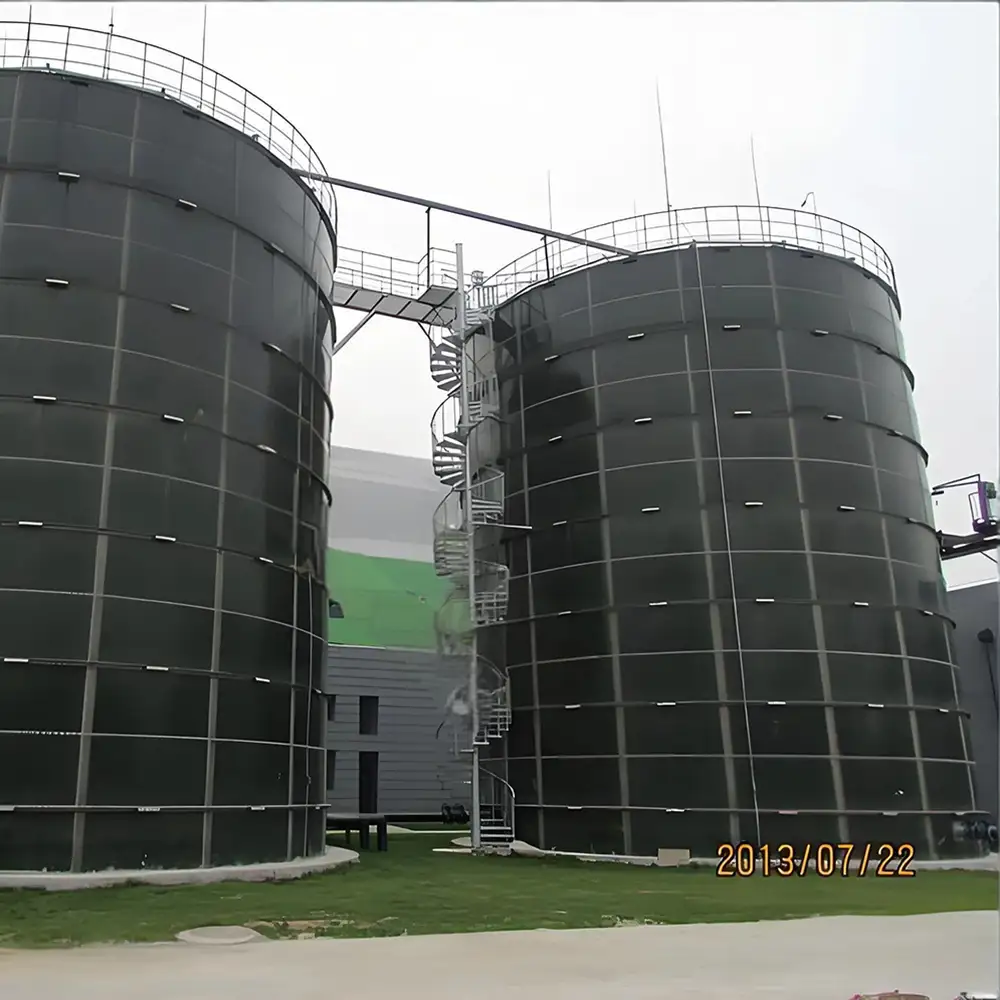
GFS bolted tank is made of glass fused to steel plate, special sealing material, self-locking screw and other materials. The thickness of enamel steel plate can reach to 20 mm, the most used steel plate thickness is 3~10 mm, steel plate has surface oil, contain rust, contain oxide skin, after shot blasting, sand and other pretreatment process, the steel plate surface will be clean. After 900 ºChigh temperature second enamelingl in electric furnace ,0.3 mm enamel coating is applied on both sides of steel plate. strong binding force between enamel coating and steel plate. Enamel coating can not only prevent tank corrosion, but also has the function of strong acid and alkali resistance. And has extremely strong wear resistance.
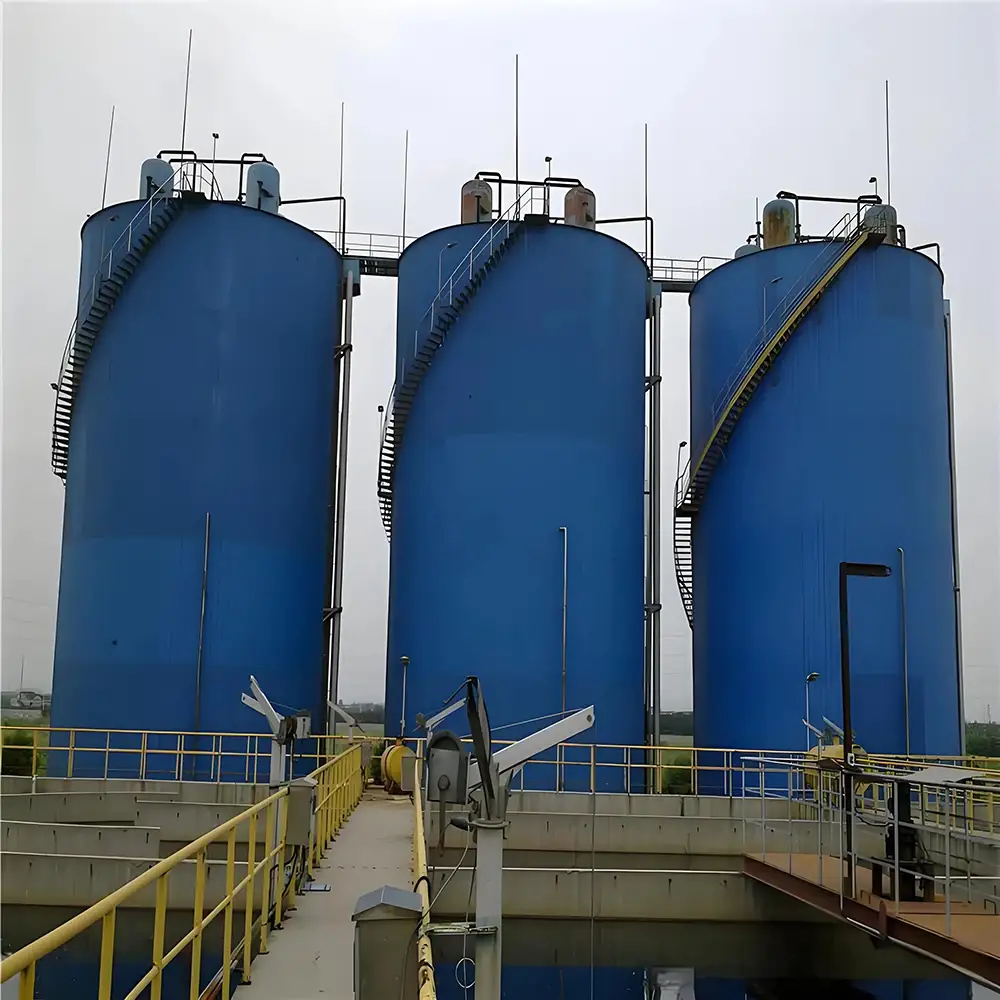
The Glass Lined Steel Organic Waste Treatment Reactor and Enamel Steel Agricultural Waste Treatment Reactor are engineered for organic waste treatment, agricultural waste management, wastewater treatment, fermentation, and biological processing applications. Combining a robust steel structure with a protective glass-lined or enamel surface, these reactors provide a durable solution for industrial and agricultural projects that require reliable containment of organic materials and process liquids.
Organic waste from farms, food processing facilities, livestock operations, agricultural production, and other industries can contain high levels of biodegradable matter, suspended solids, moisture, and potentially corrosive compounds. Proper treatment can help reduce waste volume, improve resource utilization, and support the production of compost, organic fertilizer, biogas, or treated process water depending on the overall system design.
The reactor can be configured for different treatment processes according to the characteristics of the incoming material and the customer's project requirements. Depending on the application, it may serve as a fermentation reactor, anaerobic treatment reactor, organic waste treatment tank, agricultural waste reactor, or part of a larger waste-to-resource processing system.
Glass Lined Steel Construction
Glass lined steel combines the mechanical strength of a steel tank structure with a protective glass-based coating on the internal surfaces. The glass lining provides a barrier between the stored or processed material and the underlying steel structure.
This construction is particularly useful for applications where corrosion resistance, hygienic internal surfaces, and long-term tank protection are important considerations.
The exact coating system, steel plate specification, tank dimensions, and internal configuration can be selected according to the project environment and treatment requirements.
Enamel Steel Agricultural Waste Reactor
Agricultural waste may include livestock manure, poultry manure, crop residues, agricultural processing residues, and other biodegradable materials. An Enamel Steel Agricultural Waste Treatment Reactor provides a dedicated vessel for controlled treatment of suitable agricultural waste streams.
Depending on the process, the reactor can support mixing, fermentation, biological degradation, anaerobic digestion, or other treatment stages.
For agricultural projects, the reactor can be integrated with solid-liquid separation equipment, feeding systems, gas collection equipment, dewatering machinery, composting systems, or organic fertilizer production lines.
Organic Waste Treatment Applications
Organic waste treatment requires controlled handling of biodegradable materials and process liquids. The reactor provides an enclosed environment that can be adapted to the selected treatment technology.
Suitable applications may include food waste treatment, agricultural waste processing, livestock manure treatment, organic wastewater treatment, and biomass fermentation.
The actual treatment process depends on feedstock characteristics, moisture content, organic loading, solids concentration, temperature, pH, retention requirements, and biological process design.
Suitable For Anaerobic Digestion
For projects using anaerobic digestion, the glass lined steel reactor can serve as an anaerobic treatment or digestion vessel when properly configured.
Anaerobic digestion uses microorganisms to break down biodegradable organic matter in an oxygen-limited environment. Depending on the feedstock and system design, biogas can be generated as a byproduct and collected for further treatment or utilization.
The reactor may be integrated with gas collection, desulfurization, dehydration, gas storage, and biogas utilization equipment as part of a complete anaerobic treatment system.
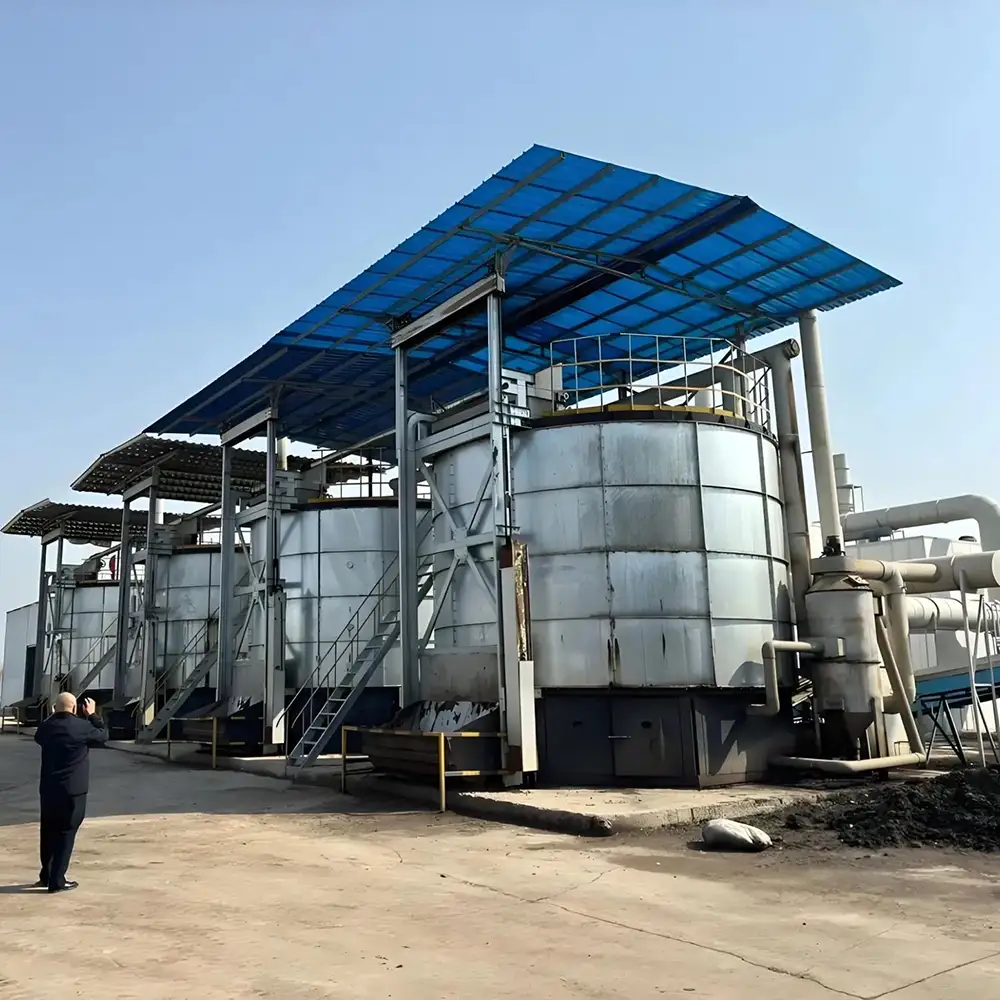
Aerobic Fermentation And Organic Fertilizer Processing
Not all organic waste projects require anaerobic digestion. Suitable reactor configurations can also be considered for aerobic fermentation and organic fertilizer production systems.
Agricultural residues, livestock manure, food waste, and other biodegradable materials can undergo controlled biological processing before being further processed into organic fertilizer or compost products.
Aeration, mixing, moisture control, temperature monitoring, and material residence time are important factors in aerobic treatment. The reactor configuration should therefore be selected according to the intended fermentation process.
Corrosion Protection
Waste treatment environments can expose equipment to moisture, organic acids, salts, gases, and other potentially corrosive substances. Protective enamel or glass-lined surfaces can help isolate the steel structure from the process environment.
This makes glass lined steel construction suitable for applications where corrosion resistance is an important design consideration.
Actual corrosion resistance depends on the coating system, operating conditions, chemical composition, temperature, cleaning procedures, and maintenance requirements. The customer's waste composition should be evaluated before selecting the final tank specification.
Modular Tank Assembly
Glass lined steel and enamel steel tanks can use modular panel construction, allowing large-capacity tanks to be assembled at the project location.
This approach can simplify transportation compared with transporting a single large welded tank. Individual panels can be manufactured, coated, inspected, packaged, and shipped before being assembled on site.
Modular construction is particularly useful for large agricultural, municipal, industrial, and environmental projects where tank capacity and installation conditions vary.
Flexible Reactor Configuration
Different organic waste treatment projects require different internal systems. The reactor can be configured with suitable inlets, outlets, mixing equipment, heating systems, inspection openings, gas collection components, and other accessories according to the process.
For anaerobic applications, gas-tight components and gas collection systems may be incorporated into the overall design. For aerobic fermentation, aeration and mixing equipment can be selected according to the treatment process.
Customers can provide waste composition, daily processing volume, solids content, treatment objective, operating temperature, and site conditions for technical evaluation.
Livestock And Poultry Waste Treatment
Livestock and poultry farms generate significant quantities of manure and wastewater. Proper treatment can help improve waste management and provide opportunities for resource recovery.
The reactor can be used as part of a farm waste treatment system for cattle manure, pig manure, poultry manure, and related agricultural waste streams.
Depending on the process design, treated material may be directed toward fertilizer production, composting, biogas recovery, or additional wastewater treatment.
Food And Organic Waste Processing
Food processing facilities, restaurants, agricultural processing plants, and other operations may generate biodegradable organic waste that requires controlled treatment.
A suitable reactor can provide an enclosed processing environment for organic materials before subsequent treatment or resource recovery.
Feedstock preparation may include sorting, crushing, mixing, solid-liquid separation, or other pretreatment steps depending on the waste characteristics.
Integration With Complete Treatment Systems
The reactor is not necessarily an isolated piece of equipment. It can be integrated into a complete organic waste treatment system.
A typical project may include waste collection, pretreatment, solid-liquid separation, reactor processing, gas collection, sludge dewatering, composting, fertilizer production, or treated-water processing.
The final system should be designed around the characteristics of the incoming waste and the desired treatment output.
Large-Volume Waste Treatment
Glass lined steel tanks are suitable for projects requiring larger treatment or storage capacities. Modular panel construction allows tank dimensions and capacity to be evaluated according to site conditions.
Large agricultural farms, food processing facilities, environmental projects, and industrial plants can use this type of reactor as part of centralized waste treatment infrastructure.
Tank capacity, diameter, height, coating specification, accessories, and internal equipment should be determined according to the project requirements.
B2B Project-Based Solutions
Waste treatment equipment is highly dependent on the application. A reactor suitable for agricultural manure may require a different configuration from one designed for food waste or industrial organic wastewater.
For this reason, B2B customers should provide detailed project information before selecting equipment. Important information includes waste type, daily volume, moisture content, solids concentration, temperature, pH, treatment objective, required capacity, site conditions, and preferred process.
Based on these parameters, suitable reactor dimensions, coating specifications, accessories, and treatment configurations can be evaluated.
Key Features
Glass Lined Steel Construction
Enamel Steel Tank Structure
Corrosion-Resistant Internal Surface
Organic Waste Treatment Applications
Agricultural Waste Treatment
Suitable For Anaerobic Digestion
Suitable For Aerobic Fermentation
Modular Panel Assembly
Flexible Internal Configuration
Large-Volume Treatment Capability
Suitable For Farm And Industrial Projects
Integrated Waste Treatment System Design
Main Applications
The Glass Lined Steel Organic Waste Treatment Reactor can be used for:
Agricultural Waste Treatment
Livestock Manure Treatment
Poultry Manure Treatment
Food Waste Treatment
Organic Waste Treatment
Organic Wastewater Treatment
Anaerobic Digestion
Biogas Production Systems
Aerobic Fermentation
Organic Fertilizer Production
Farm Waste Management
Industrial Organic Waste Treatment
FAQs
1. What Is A Glass Lined Steel Organic Waste Treatment Reactor?
It is a steel reactor or tank protected by a glass-based lining or enamel coating and designed for suitable organic waste treatment, fermentation, digestion, and related environmental applications.
2. What Is The Difference Between Glass Lined Steel And Enamel Steel?
In many industrial tank applications, the terms refer to steel structures protected by a durable glass or enamel coating. The exact coating formulation, application process, and technical specification depend on the tank design and manufacturer.
3. What Types Of Waste Can Be Treated?
Potential applications include agricultural waste, livestock manure, poultry manure, food waste, organic wastewater, and other suitable biodegradable waste streams. Feedstock characteristics should be evaluated before equipment selection.
4. Can It Be Used For Anaerobic Digestion?
Yes. With the appropriate reactor configuration and gas-tight system components, it can be used as part of an anaerobic digestion system.
5. Can It Be Used For Organic Fertilizer Production?
Yes. The reactor can be incorporated into organic fertilizer production systems using suitable agricultural, livestock, food, or other organic feedstocks.
6. Is The Tank Suitable For Agricultural Waste?
Yes. Agricultural waste treatment is one of the major applications. Suitable feedstocks can include livestock manure, poultry manure, crop residues, and agricultural processing waste.
7. Does The Reactor Have Corrosion Resistance?
The glass-lined or enamel-coated surface is designed to provide protection for the steel structure against suitable process environments. Actual corrosion resistance depends on chemical composition, temperature, coating specification, and operating conditions.
8. Can The Reactor Be Installed Outdoors?
Glass lined steel and enamel steel tanks can be designed for outdoor installation when the overall structure, foundation, weather protection, accessories, and operating conditions are properly considered.
9. Can The Reactor Be Customized?
Yes. Tank capacity, dimensions, coating specifications, inlets, outlets, mixing equipment, heating systems, gas collection components, and other accessories can be evaluated according to the project.
10. What Information Is Needed For A Project Quotation?
Customers should provide waste type, daily processing volume, moisture content, solids concentration, pH, temperature, treatment objective, required tank capacity, site conditions, and preferred treatment process. Waste samples or laboratory data can also assist technical evaluation.
Why Choose Us
Glass Lined Steel Tank Technology
We provide glass lined and enamel steel tank solutions for demanding organic waste, agricultural waste, wastewater, fermentation, and environmental applications.
Application-Based Reactor Design
Different feedstocks require different treatment conditions. We evaluate waste characteristics, process requirements, tank capacity, and operating conditions before recommending a suitable configuration.
Flexible Modular Construction
Modular tank assembly supports large-volume projects and can simplify transportation and on-site installation compared with conventional one-piece tank structures.
Corrosion Protection
The glass-lined or enamel-coated internal surface provides a protective barrier for suitable waste treatment environments where moisture and corrosive substances may be present.
Complete Waste Treatment Integration
The reactor can be integrated with pretreatment, separation, digestion, fermentation, biogas recovery, dewatering, composting, and organic fertilizer production equipment.
International Project Support
We support overseas customers with technical consultation, reactor configuration, drawings, equipment coordination, export packaging, installation guidance, and after-sales technical assistance.
Prev:
Glass-Fused-to-Steel Municipal Sewage Treatment Reactor, High Strength Enamel Assembled Water Treatment Reactor
Next:
Grease Trap Enamel-Coated Anaerobic Reactor for Agriculture Industrial
TAG:
Anaerobic Digestion Reactor,
Organic Wastewater Treatment Reactor,
Anaerobic Wastewater Treatment Reactor,
Organic Waste Treatment Equipment,
Agricultural Waste Treatment Equipment,
Organic Waste Treatment Reactor,
Enamel Anaerobic Reactor,
Organic Fertilizer Production Equipment,
Organic Waste Treatment System,
Organic Fertilizer Fermentation Reactor,
Agricultural Waste Treatment System,
Animal Waste Treatment Equipment,
Agricultural Waste Fermentation Tank,
Organic Waste Digestion Reactor,
Glass Lined Anaerobic Reactor,
Anaerobic Waste Treatment Reactor,
Organic Wastewater Treatment Tank,
Livestock Waste Treatment Reactor,
Livestock Manure Treatment Tank,
Poultry Manure Treatment Equipment,
Glass Fused To Steel Tank,
Organic Waste Fermentation Tank,
Enamel Steel Wastewater Treatment Tank,
Organic Waste Treatment Tank,
Agricultural Waste Treatment Reactor,
Agricultural Waste Treatment Tank,
Organic Waste Fermentation Reactor,
Agricultural Waste Fermentation Reactor,
Glass Fused To Steel Reactor,
Glass Lined Steel Organic Waste Treatment Reactor,
Related Category:
Glass Lined Steel Organic Waste Treatment Reactor, Enamel Steel Agricultural Waste Treatment Reactor, Glass Lined Steel China, suppliers, manufacturers, factory, customized, wholesale, quotation, made in China