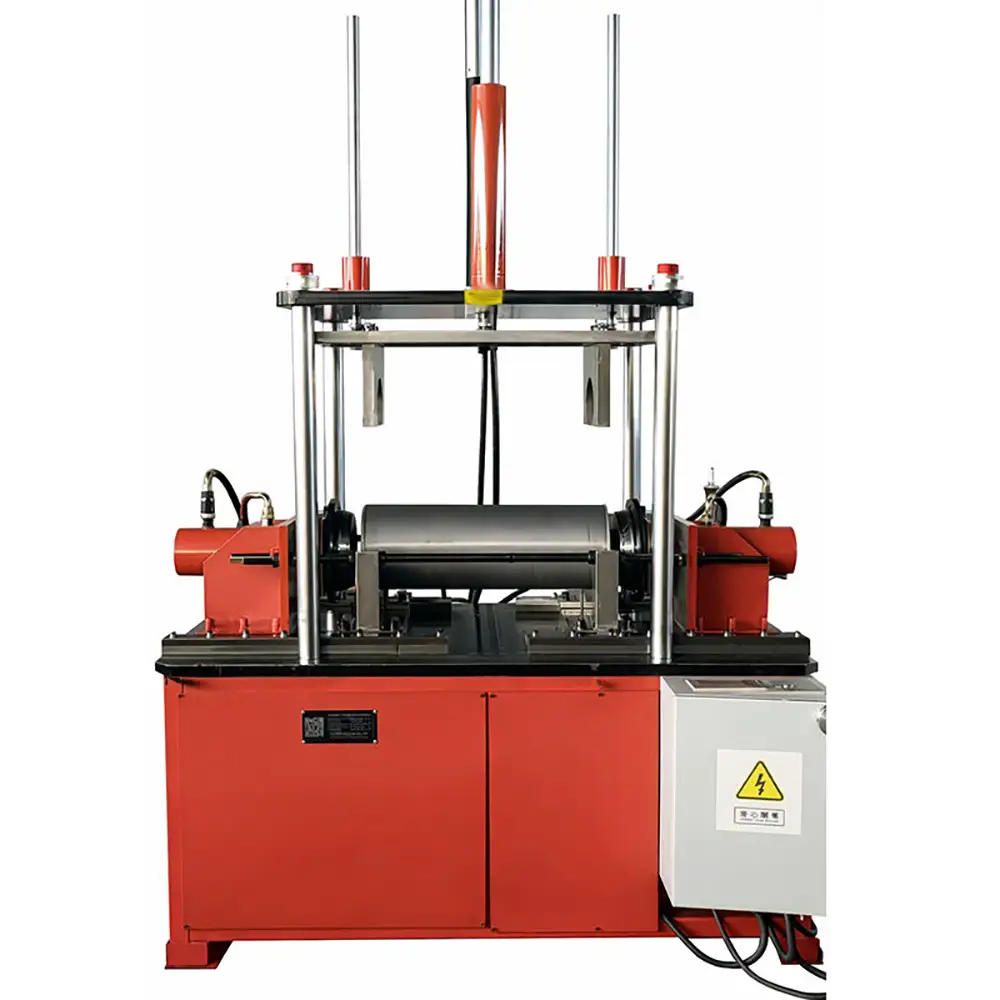
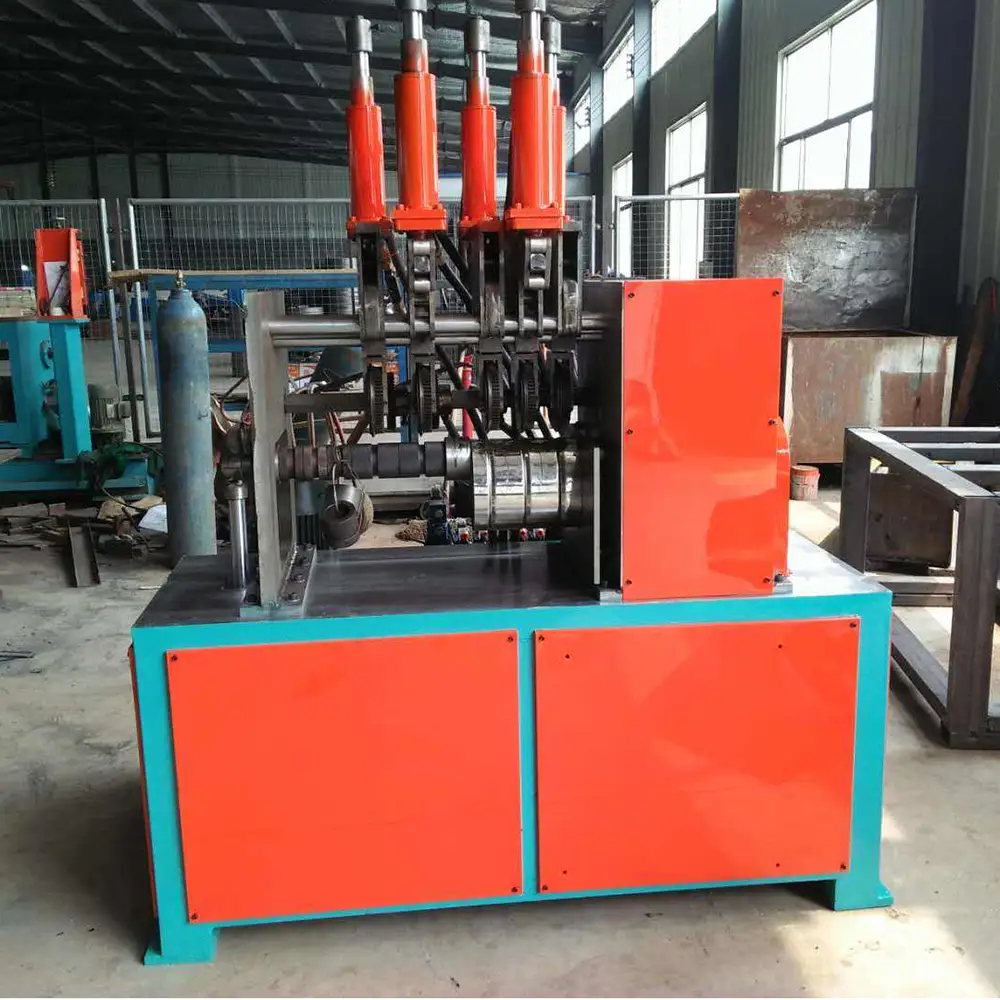
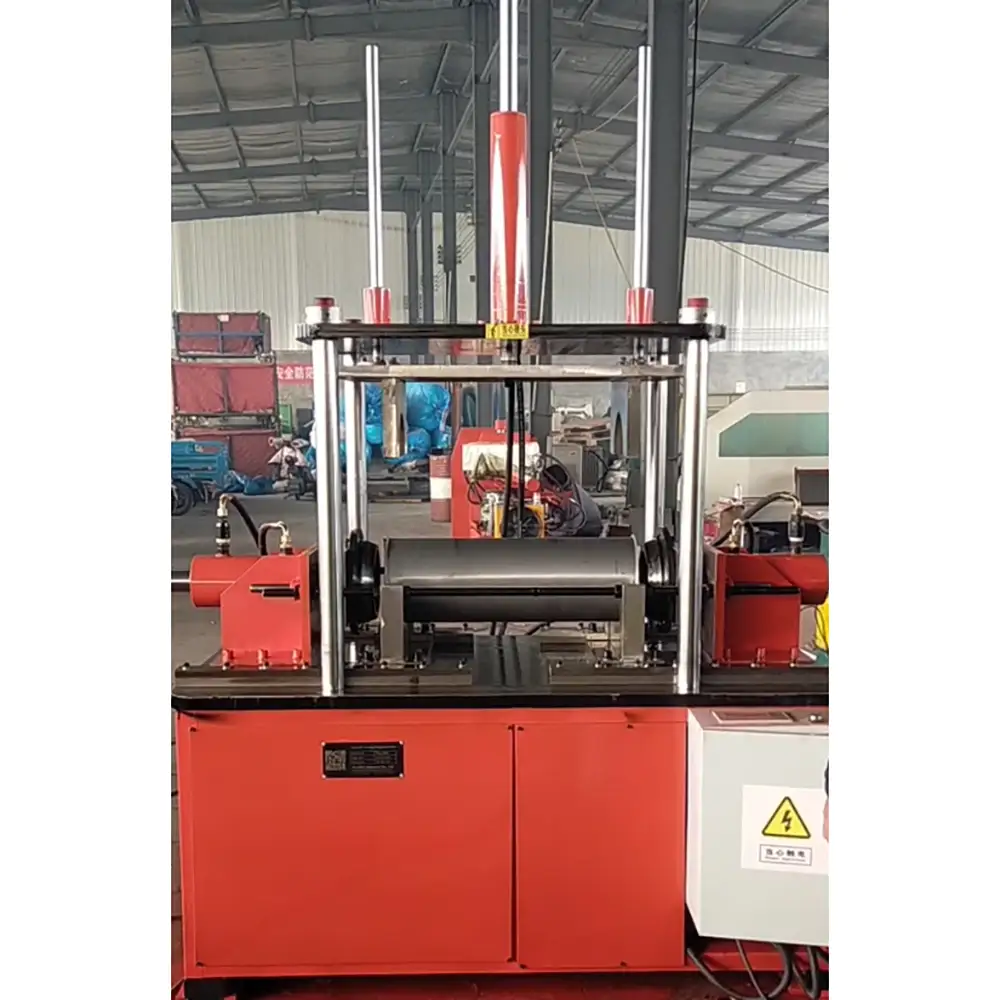
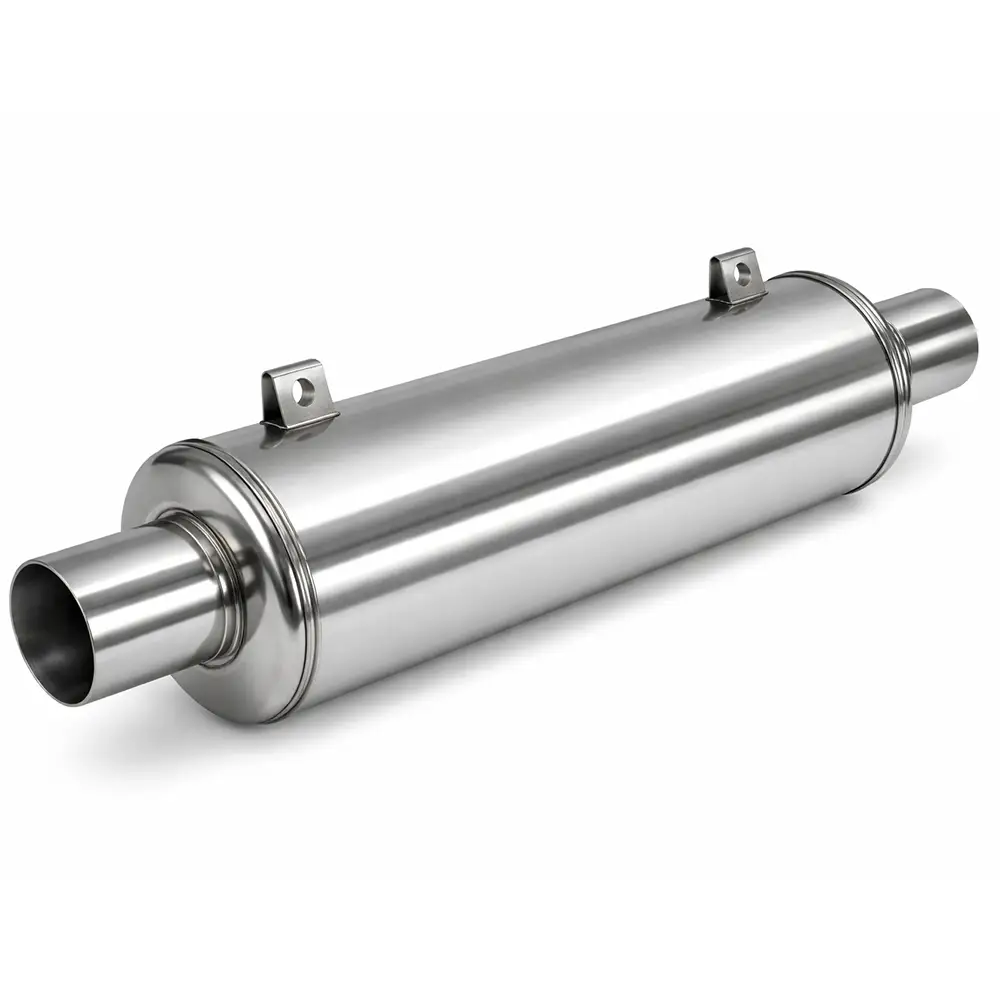
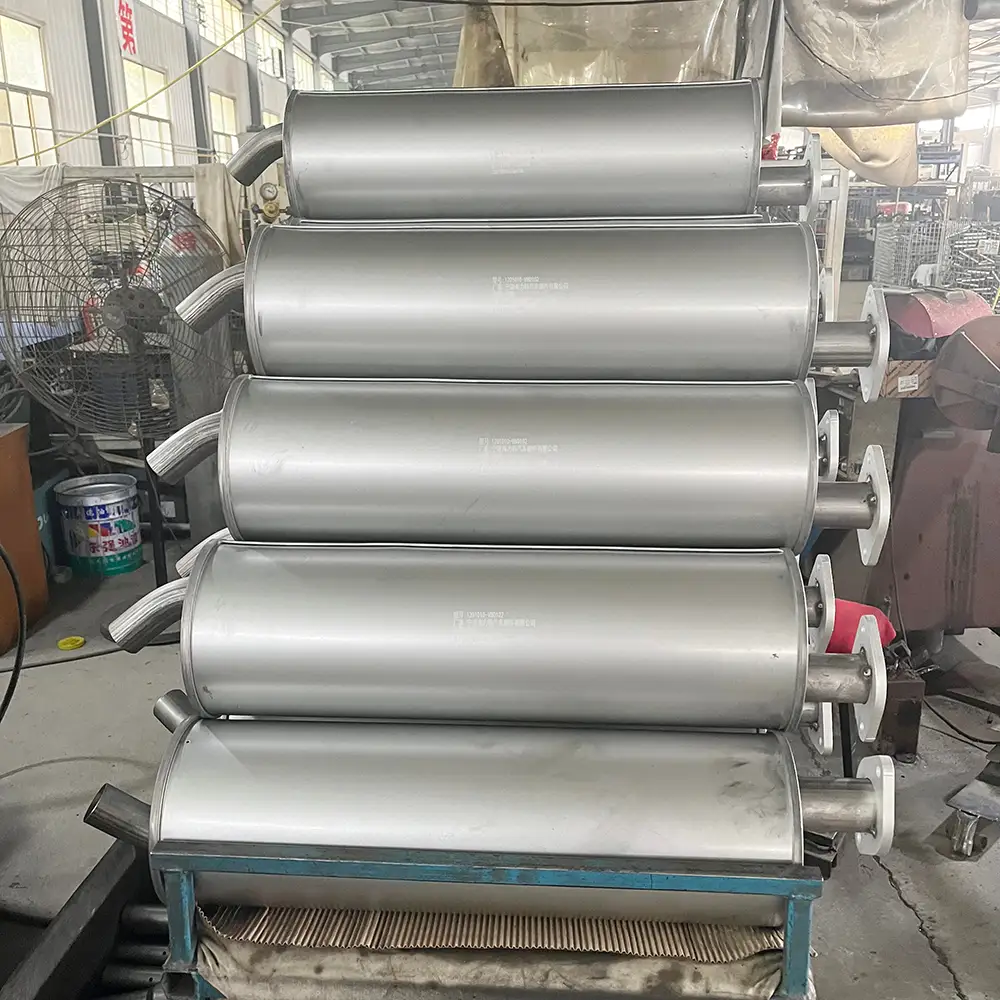
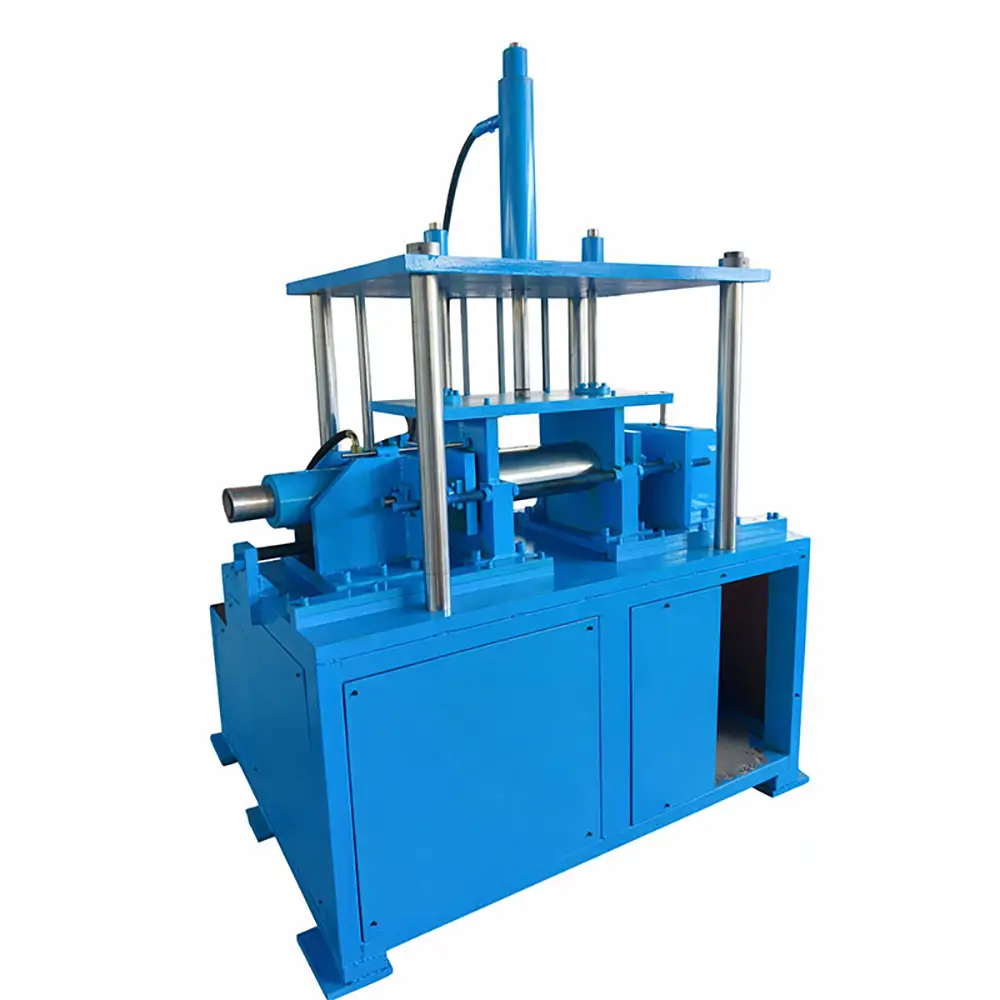
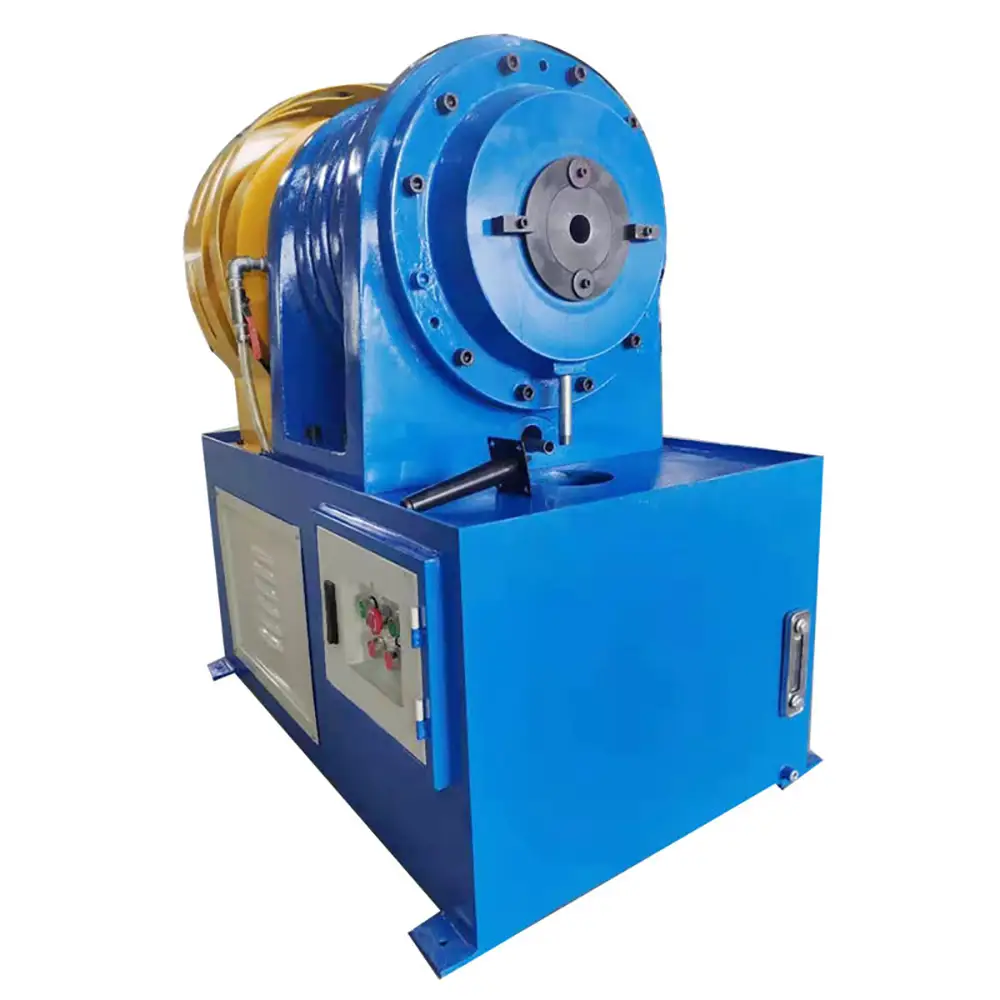
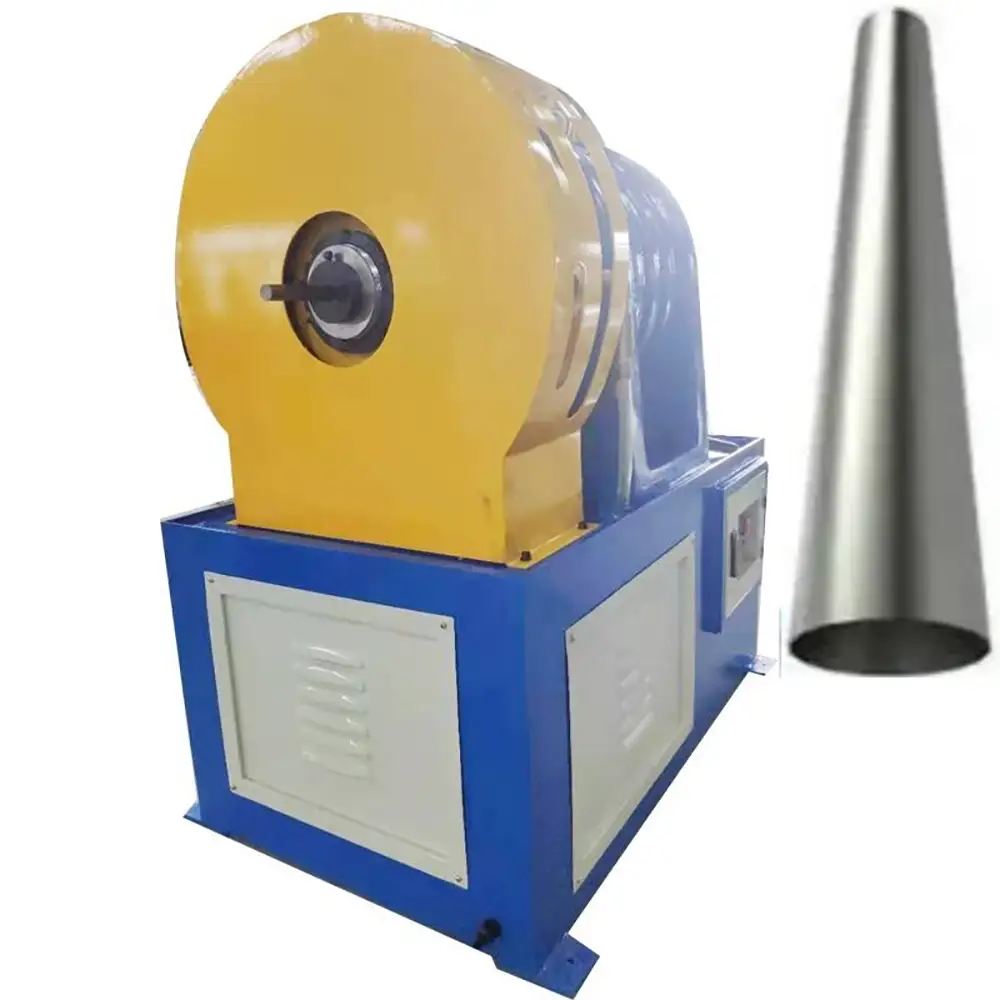
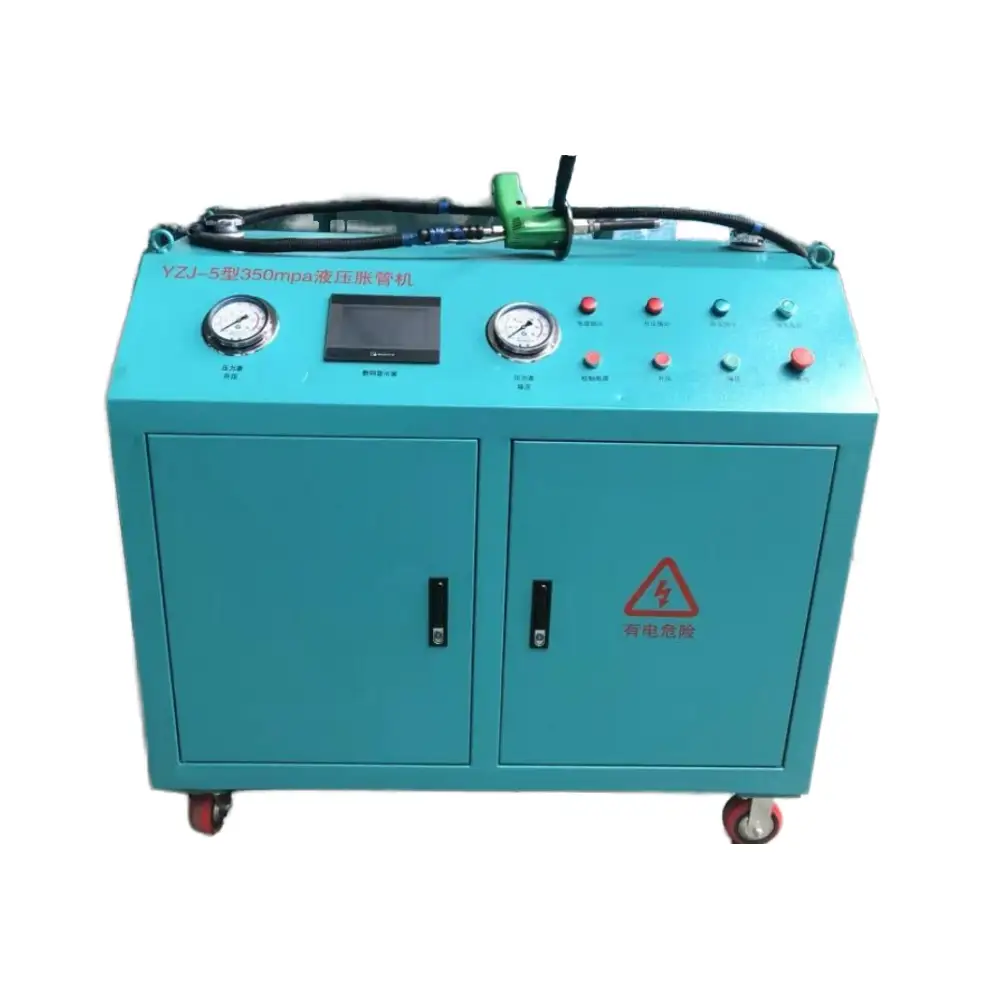
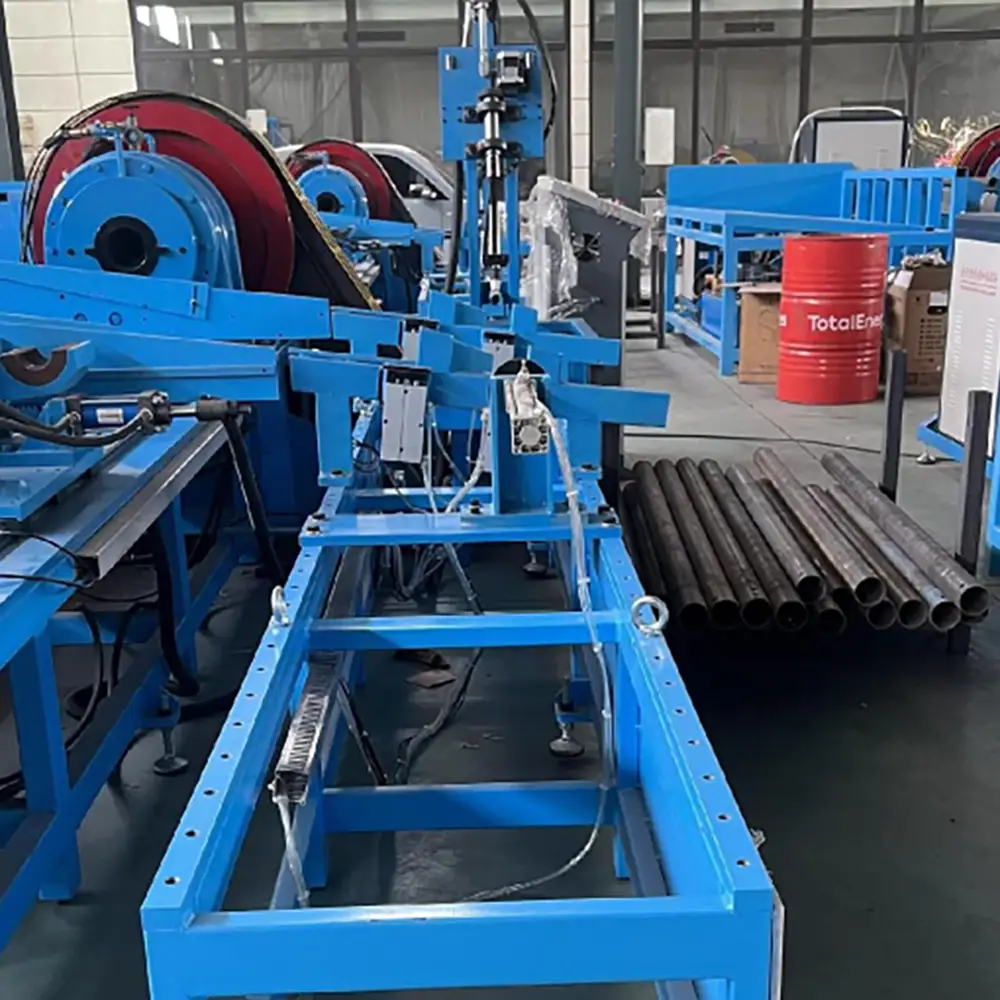
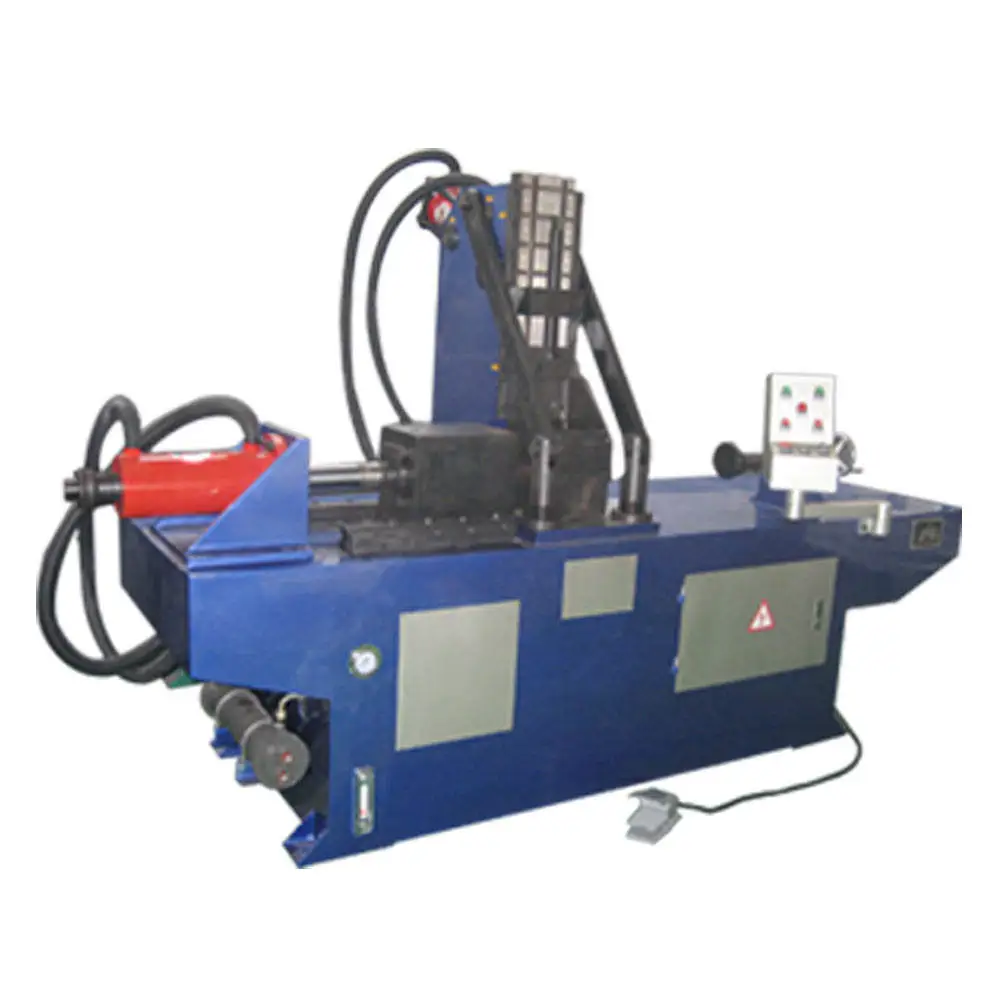
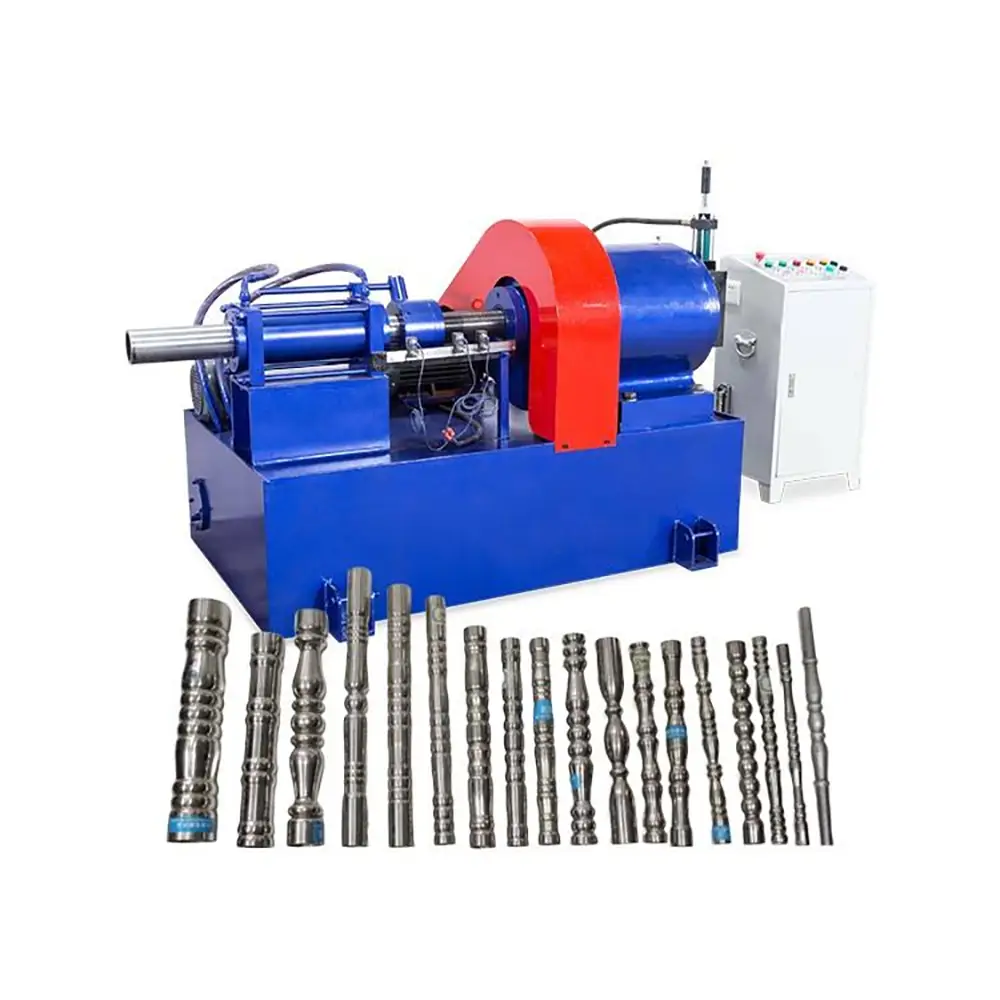
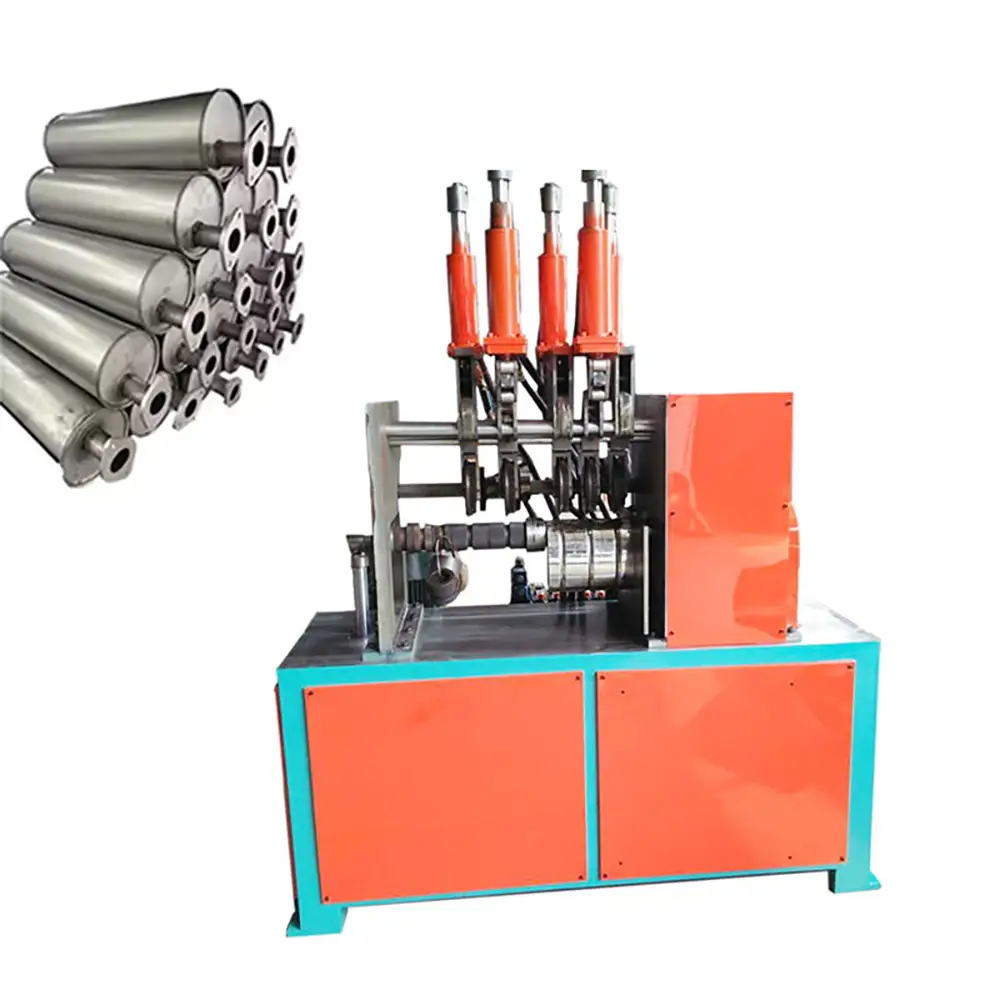
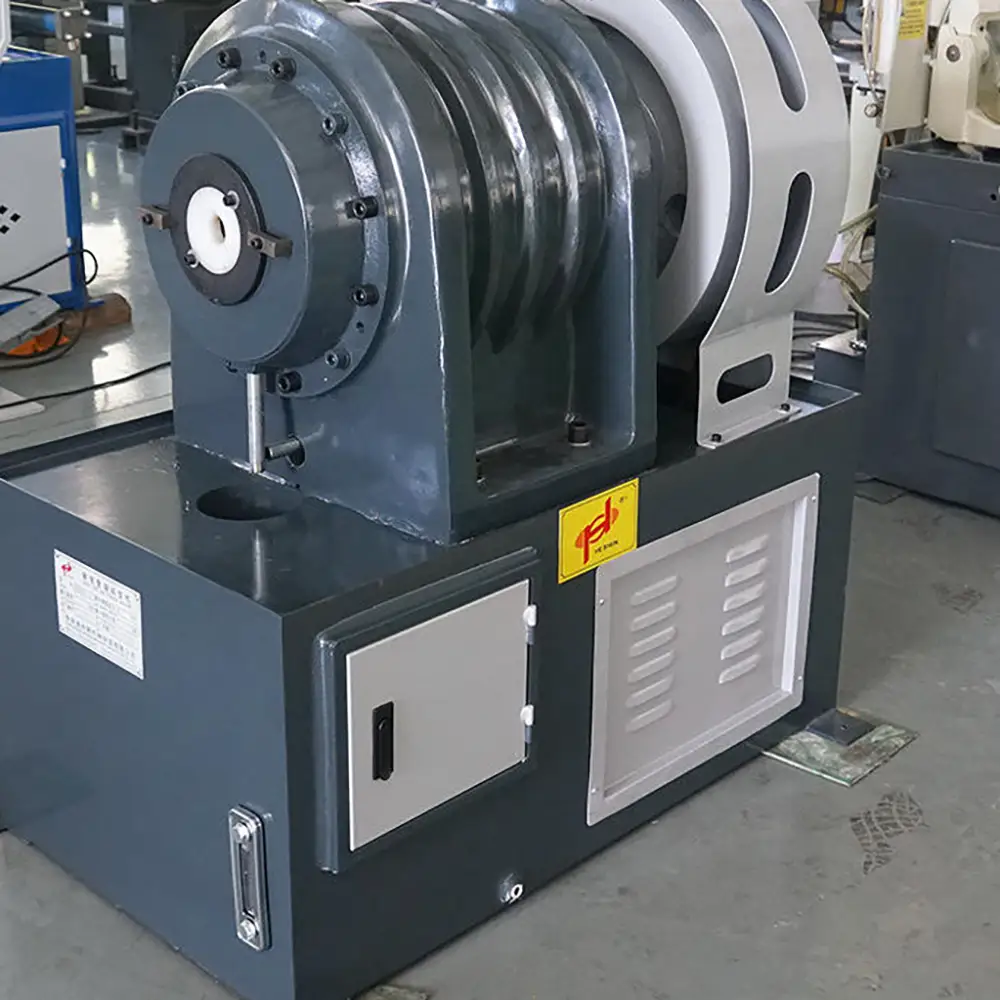
Professional Muffler Forming Solution: Designed for exhaust muffler and silencer production, supporting flanging, expanding, reducing, and forming in one machine.
Powerful Hydraulic System: Stable hydraulic pressure ensures smooth and precise forming without pipe deformation or wrinkling.
High Compatibility: Suitable for various pipe materials such as stainless steel, iron, and aluminum, and for different shapes like round, oval, and special pipes.
Custom Mold Available: Molds can be tailored to different muffler end shapes and production requirements, perfect for automotive exhaust manufacturing lines.
Durable & Easy Operation: Heavy-duty structure with user-friendly control panel for efficient and reliable long-term operation.
The electrical components utilised in the equipment are of the Chint brand. The main unit is equipped with a power motor rated at 5.5 kW.
This apparatus incorporates multiple protective features, including foot-operated switches for electrical controls and an emergency stop button.
All control circuits are fitted with overload and circuit-breaking protection.
Automated operation is achieved through a PLC controller.
The positioning mechanism possesses sufficient structural integrity, ensuring precise and reliable positioning whilst facilitating maintenance.
Automotive Exhaust Muffler Flanging Forming Machine for Muffler Manufacturing
The Automotive Exhaust Muffler Flanging Forming Machine is designed for manufacturers producing automotive exhaust mufflers,silencers,muffler shells,and related exhaust system components. The machine combines metal forming and flanging operations to help create the required edges,ends,and connection surfaces on exhaust components.
Muffler manufacturing often requires several forming processes to transform sheet metal or pre-formed cylindrical shells into finished exhaust components. Flanging is an important operation because it can create a defined edge or connection surface for subsequent assembly,welding,or joining.
This machine provides a dedicated solution for manufacturers looking to improve the consistency and efficiency of muffler and exhaust silencer production. Depending on the machine configuration,it can be integrated into a production line or used as an individual forming workstation.
Actual forming capacity,workpiece dimensions,hydraulic force,tooling configuration,and production speed depend on the specific machine model and customer requirements.
Muffler Flanging and Forming Process
Flanging involves forming the edge of a metal workpiece to create a controlled lip,flange,or connection surface. In muffler production,this process can be used on suitable exhaust shell components and other cylindrical or formed metal parts.
The forming process can help prepare the muffler shell for subsequent assembly operations. Depending on the product design,the flange may be used for joining two shell sections,installing internal components,or creating a connection interface.
The exact flange profile depends on the muffler design,material thickness,diameter,forming depth,and tooling.
Dedicated forming dies can be developed to match different muffler sizes and geometries. This allows manufacturers to select tooling according to their product range rather than relying on a single universal forming profile.
Automotive Exhaust Muffler Manufacturing
Automotive mufflers and silencers are commonly produced from metal materials that require controlled forming and joining processes. Stainless steel and carbon steel are widely used in exhaust component manufacturing,although the actual material depends on the vehicle application and product design.
A typical muffler manufacturing process may involve:
Sheet metal preparation
Tube forming
Shell rolling or forming
Welding
End forming
Flanging
Internal component assembly
Final welding
Leak testing
Surface finishing
The flanging forming machine can be positioned within this workflow according to the manufacturer's production process.
By using dedicated forming equipment,the operator can achieve more repeatable flange dimensions than with completely manual forming methods.
Hydraulic Muffler Forming
Depending on the machine configuration,hydraulic force can be used to perform the forming operation. Hydraulic systems provide controlled forming force and are commonly used for metal forming applications requiring substantial pressure.
The required forming force depends on the material type,material thickness,workpiece diameter,flange geometry,tooling design,and forming depth.
The machine should therefore be selected according to the actual muffler specifications rather than using motor power or hydraulic pressure alone as an indication of production capability.
For new muffler designs,testing with representative workpieces can help determine the appropriate tooling and forming parameters.
Muffler Shell Flanging
Muffler shells may require accurately formed edges before assembly. The flanging operation can create a consistent perimeter around the shell or tube end.
Proper positioning and clamping are important because the workpiece must remain centered during forming. Misalignment can result in uneven flange dimensions or deformation.
The machine can be equipped with suitable fixtures and forming dies according to the workpiece shape.
For manufacturers producing multiple muffler models,the tooling arrangement can be designed to support different product dimensions where practical.
Exhaust Silencer Manufacturing Applications
The equipment is suitable for a variety of exhaust-related products and metal components,including:
Automotive Mufflers
Exhaust Silencers
Muffler Shells
Exhaust Resonators
Exhaust System Components
Motorcycle Muffler Components
Truck Exhaust Components
Commercial Vehicle Exhaust Parts
Agricultural Machinery Exhaust Components
Industrial Silencer Components
The actual application range depends on the machine's forming capacity and tooling configuration.
For automotive suppliers,the machine can be used as part of a larger exhaust component manufacturing system.
Repeatable Production
Production consistency is important when manufacturing exhaust components because multiple parts may need to fit together during subsequent welding and assembly operations.
A dedicated flanging machine can reduce variation caused by manual forming. Controlled positioning and repeatable forming parameters can help maintain similar flange dimensions across production batches.
Actual repeatability depends on machine rigidity,tooling quality,workpiece positioning,material consistency,and operator procedures.
For higher-volume manufacturing,the machine can be combined with automatic feeding,workpiece handling,or other production equipment where supported by the machine configuration.
Tooling and Forming Dies
Tooling is one of the most important parts of a muffler flanging machine. The forming die determines the final flange shape and must be matched to the workpiece dimensions.
Tooling can be designed for different:
Muffler Diameters
Shell Lengths
Flange Widths
Flange Depths
Material Thicknesses
End Profiles
Connection Geometries
Custom tooling is particularly useful for automotive exhaust manufacturers with multiple muffler models.
Customers can provide drawings,samples,3D files,or finished-part dimensions so that the appropriate forming die concept can be evaluated.
Suitable Materials
The machine can be configured for compatible exhaust metal materials such as:
Stainless Steel
Carbon Steel
Mild Steel
Aluminized Steel
Other Suitable Sheet Metal
Material strength and thickness directly affect the required forming force and tooling design.
Stainless steel may require different forming parameters and tooling considerations compared with mild steel. Material springback should also be considered when designing the forming process.
Before production,testing is recommended when processing new materials or unfamiliar workpiece geometries.
Production Efficiency
Combining forming and flanging capabilities in dedicated equipment can reduce manual processing and improve workflow organization.
For manufacturers producing repeated muffler models,the machine can help standardize the forming operation and reduce dependence on manual measurement.
Production output depends on loading and unloading time,forming cycle,workpiece dimensions,tooling changes,material thickness,and operator workflow.
The machine should therefore be evaluated according to the complete production cycle rather than a single advertised processing parameter.
Quality Control
Quality inspection is important for muffler and silencer manufacturing. Finished workpieces can be checked for flange diameter,flange width,forming depth,roundness,alignment,and visible deformation.
For exhaust components that will be welded or assembled with other parts,dimensional consistency is especially important.
First-piece inspection can be used after tooling changes or product changes. Periodic inspection can also help identify tooling wear or process deviations during longer production runs.
Depending on the final application,additional leak testing and weld inspection may be required after subsequent manufacturing operations.
Applications in Automotive and Industrial Manufacturing
The Automotive Exhaust Muffler Flanging Forming Machine can be used by:
Automotive Exhaust Manufacturers
Muffler Manufacturers
Silencer Manufacturers
Automotive Parts Suppliers
Exhaust System Fabricators
Motorcycle Exhaust Manufacturers
Truck Parts Manufacturers
Agricultural Machinery Manufacturers
Metal Fabrication Companies
OEM Automotive Component Suppliers
It can be integrated into both small-batch and larger-volume manufacturing environments depending on the machine configuration.
Maintenance and Safety
Regular maintenance helps maintain stable forming performance. Operators should inspect the hydraulic system,oil level,hoses,cylinders,forming dies,fixtures,and electrical components according to the manufacturer's maintenance schedule.
Forming tools should be kept clean and inspected for wear. Damaged or excessively worn tooling can affect flange dimensions and workpiece quality.
Operators should receive appropriate training before using the machine. The working area should remain clear,and suitable guards,emergency stops,and other protective features should be used according to the actual machine configuration and applicable safety requirements.
Custom & OEM Muffler Manufacturing Solutions
Different exhaust manufacturers may require different forming diameters,flange profiles,production volumes,and material specifications.
The machine can therefore be developed or configured around specific customer requirements. Custom solutions may include forming dies,fixtures,hydraulic systems,workpiece positioning systems,controls,and production-line integration.
For OEM and ODM projects,customers can provide muffler drawings,samples,material information,dimensions,required flange profiles,and expected production volume.
This information allows the machine configuration and tooling requirements to be evaluated before manufacturing.
Why Choose Us
Dedicated Muffler Forming Solution — Designed specifically for exhaust muffler,silencer,and related metal component forming applications.
Flanging and Forming Capability — Supports controlled edge forming and flange production for suitable exhaust components.
Custom Forming Dies — Tooling can be developed according to muffler diameter,flange geometry,material thickness,and product design.
Repeatable Production — Dedicated machine operation can help reduce variation compared with completely manual forming.
Multiple Metal Materials — Suitable configurations can be developed for stainless steel,carbon steel,aluminized steel,and other compatible materials.
Flexible Production Integration — Can be used as a standalone machine or incorporated into a broader exhaust manufacturing workflow.
OEM & ODM Support — Machine configuration and tooling can be developed around customer drawings,samples,and production requirements.
B2B Manufacturing Service — Suitable for automotive parts manufacturers,muffler factories,exhaust suppliers,distributors,and industrial buyers.
FAQs
1. What is an automotive exhaust muffler flanging machine?
It is a metal forming machine designed to create a controlled flange or formed edge on suitable automotive muffler,silencer,and exhaust components.
2. What is the purpose of flanging a muffler?
Flanging can create an edge or connection surface used for joining,assembly,welding,or installing other exhaust system components.
3. What materials can the machine process?
Depending on the configuration,it can process suitable stainless steel,carbon steel,mild steel,aluminized steel,and other compatible metal materials.
4. Can it process stainless steel mufflers?
Yes. Stainless steel can be processed when the forming force,tooling,and machine configuration are matched to the material and workpiece dimensions.
5. Can the machine form different muffler sizes?
Different muffler sizes can be supported with suitable tooling and fixtures. The actual size range depends on the machine design.
6. Can custom flanging dies be supplied?
Yes. Custom forming dies can be designed according to the required flange diameter,width,depth,profile,and workpiece geometry.
7. Is this machine fully automatic?
Not necessarily. The operating method depends on the specific configuration. Semi-automatic and automated production options may be available.
8. Can it be integrated into an exhaust production line?
Yes. Depending on the machine design,it can be used as a standalone forming station or integrated into a broader exhaust manufacturing process.
9. What affects muffler forming quality?
Material properties,workpiece dimensions,tooling design,clamping,forming force,alignment,and forming parameters all influence the finished flange.
10. Is it suitable for motorcycle mufflers?
It can be suitable for compatible motorcycle exhaust components when the workpiece dimensions and tooling fall within the machine's operating range.
11. How do I select the right machine?
Provide muffler diameter,length,material type,material thickness,flange dimensions,production volume,and drawings or samples if available.
12. Can you provide OEM muffler manufacturing equipment?
Yes. Custom machine configurations,forming dies,fixtures,and other production solutions can be developed according to customer drawings and manufacturing requirements.
Prev:
Hydraulic Muffler End Flanging Forming Machine Motorcycle Car Exhaust Silencer Molding Flanging Manufacturing Machines
Next:Sorry, no information
TAG:
Exhaust Tube Forming Machine,
Exhaust Pipe Forming Machine,
Tube End Flanging Machine,
Pipe End Flanging Machine,
Exhaust Muffler Manufacturing Machine,
Muffler Forming Machine,
Muffler End Forming Machine,
Muffler Production Machine,
Muffler Flanging Machine,
Exhaust Silencer Manufacturing Machine,
Exhaust Pipe Flanging Machine,
Exhaust Tube Flanging Machine,
Exhaust Manufacturing Equipment,
Exhaust Component Manufacturing Machine,
Muffler Shell Manufacturing Machine,
Muffler Shell Forming Machine,
Muffler Manufacturing Equipment,
Muffler Production Equipment,
Automotive Exhaust Component Machine,
Automotive Exhaust Manufacturing Machine,
Stainless Steel Exhaust Forming Machine,
Cylindrical Metal Forming Machine,
Sheet Metal Flanging Machine,
Metal Muffler Flanging Machine,
Automotive Parts Forming Machine,
Automotive Metal Forming Machine,
Exhaust Flange Forming Machine,
Muffler Flange Forming Machine,
Exhaust Shell Forming Machine,
Stainless Steel Muffler Forming Machine,
Related Category:
Hydraulic Muffler Flanging Machine,Exhaust Muffler Forming Equipment,Automotive Exhaust Manufacturing Equipment,Metal Mu China, suppliers, manufacturers, factory, customized, wholesale, quotation, made in China